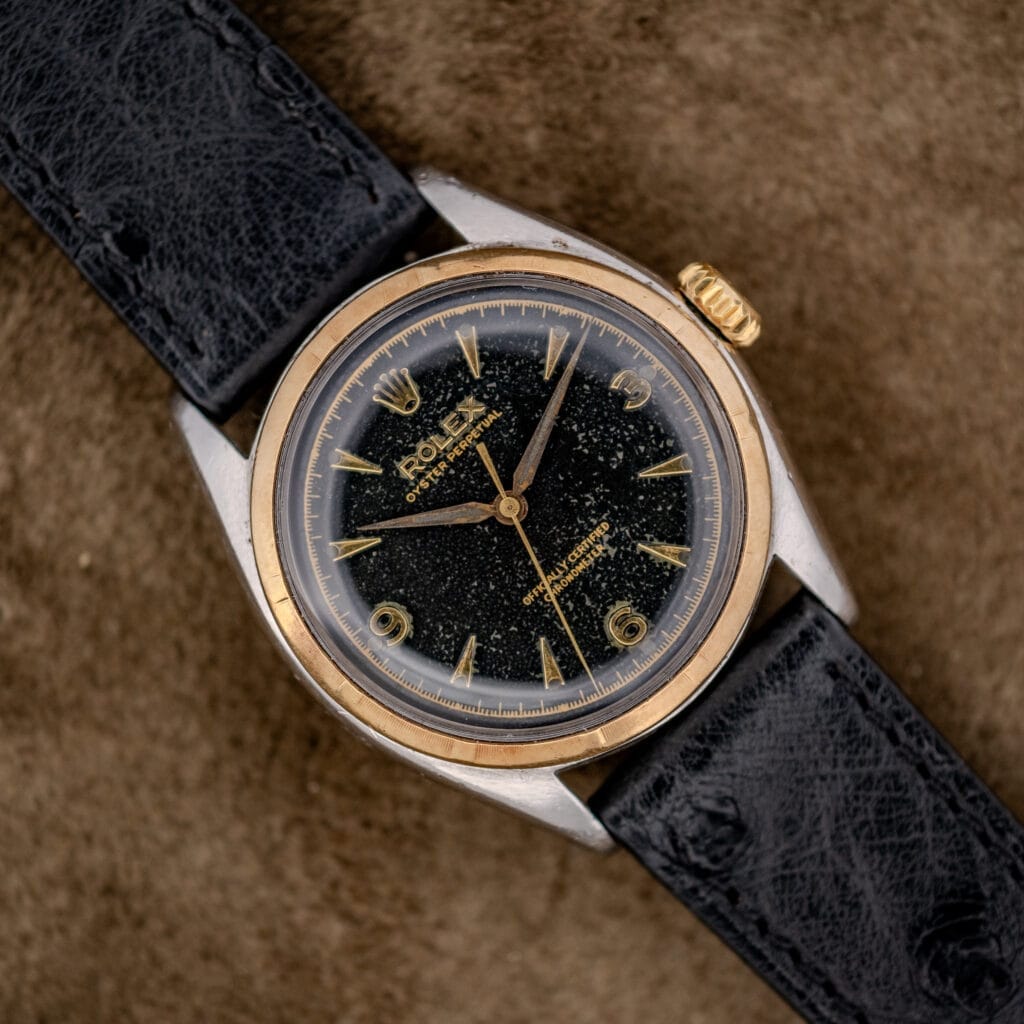
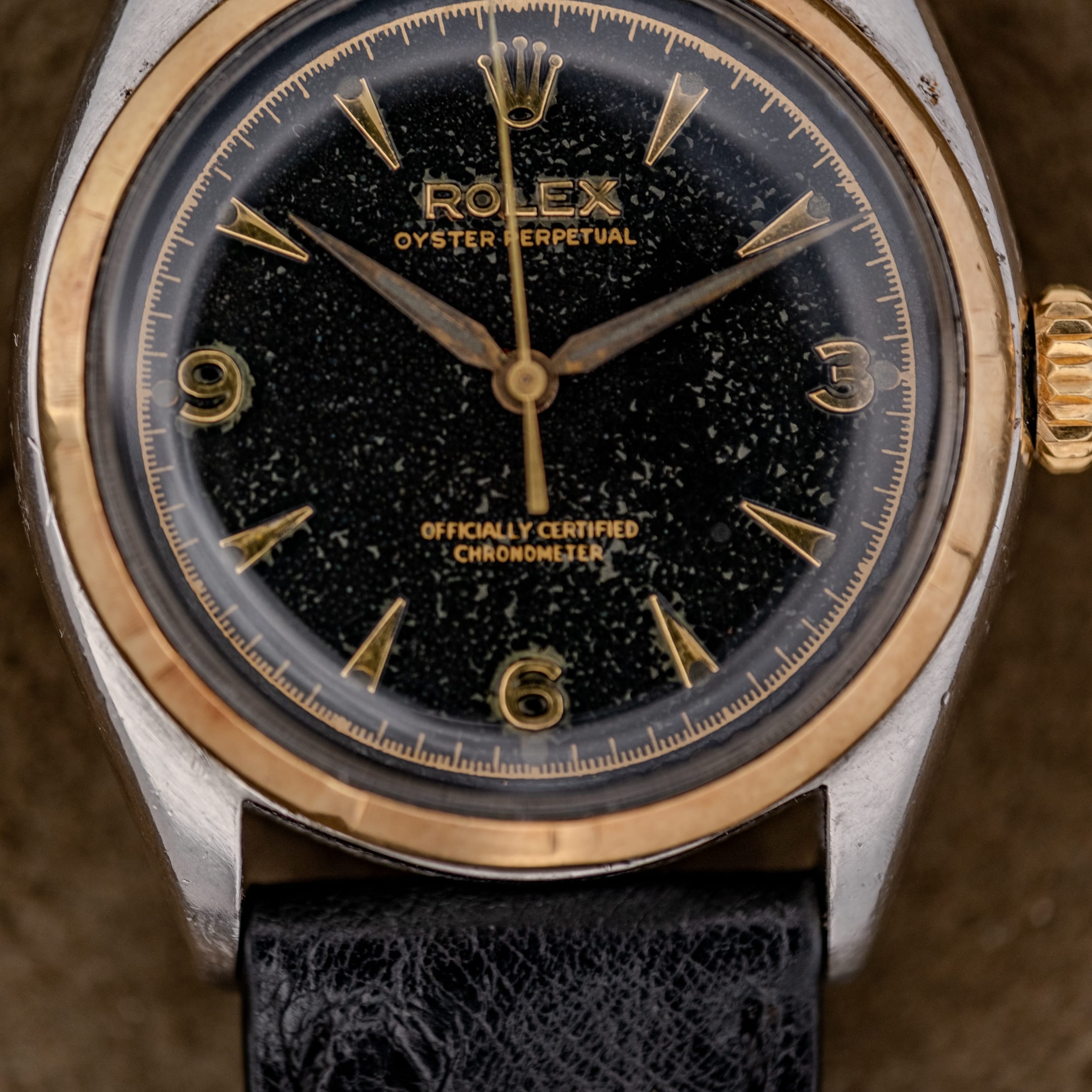

To us, the Reference 6107 is where the Bubble Back grows up. Rolex had spent two decades figuring out how to make the Perpetual rotor sit cleanly inside a waterproof Oyster case, and by the early 1950s they had landed on this configuration, a 34mm two-tone case in stainless steel with a gold-capped engine-turned bezel, the Super Oyster crown at 3, and the caliber 645 doing the work behind the dial. The Rolex Big Bubble Back lineage essentially ends here. What followed was the Datejust era, the screw-down crowns, the modern Oyster Perpetual line we all recognize. The 6107 is the last word in the original conversation.
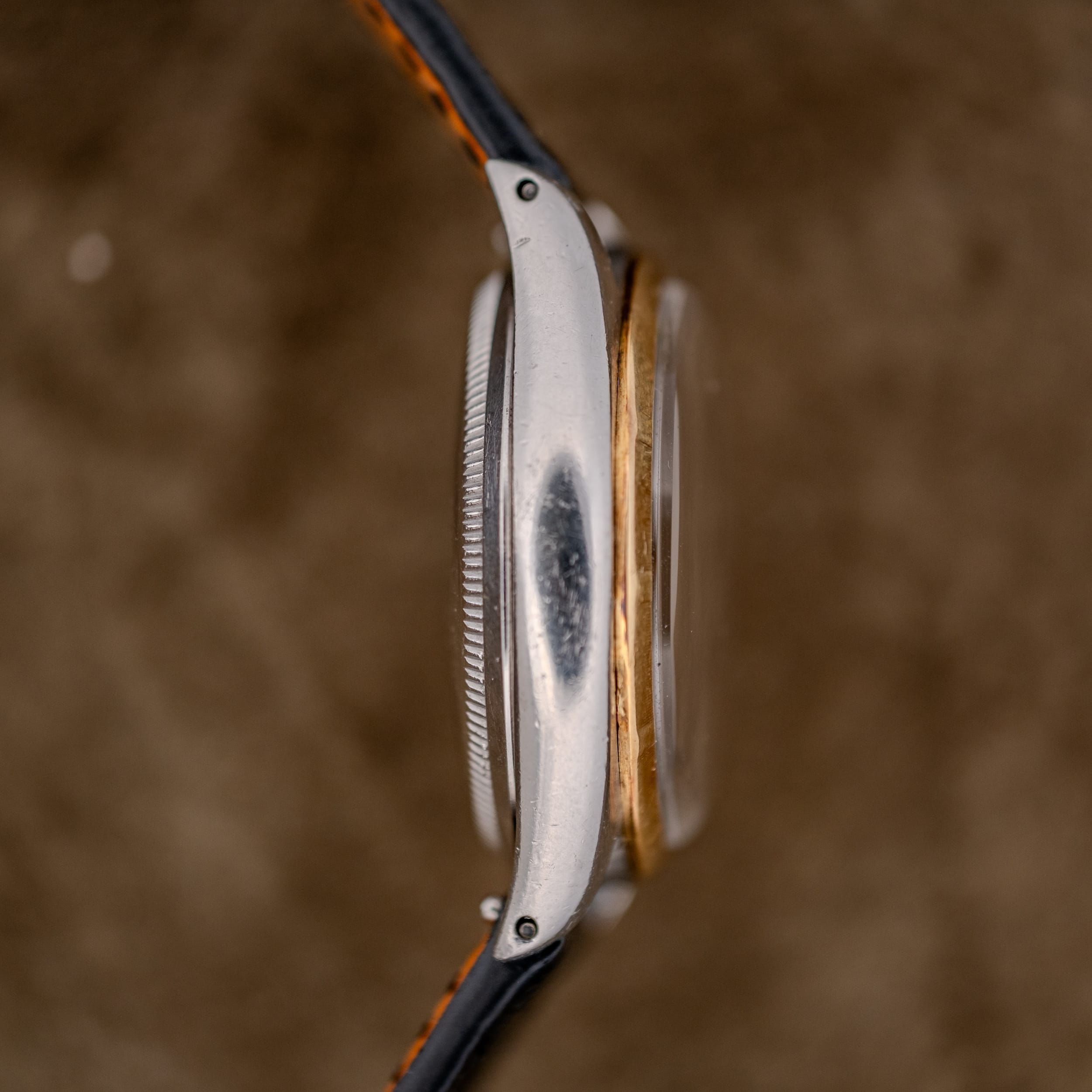
The Bubble Back family started in 1933 as Rolex’s answer to a design problem most of the industry was pretending didn’t exist. Self-winding rotors made movements thicker. Rolex’s solution was to dome the caseback hard enough to swallow the rotor’s height without giving up Oyster waterproof construction. The reference 6107 sits at the tail end of that arc, often called the “Semi Bubble Back” in collector literature because Rolex had by then slimmed the rotor architecture and tamed the dome a little. Calling it a “Big Bubble Back” still feels right when you handle one. The case profile is genuinely tall, the caseback still curves out into the wrist, and you feel the watch’s silhouette before you even read the dial.
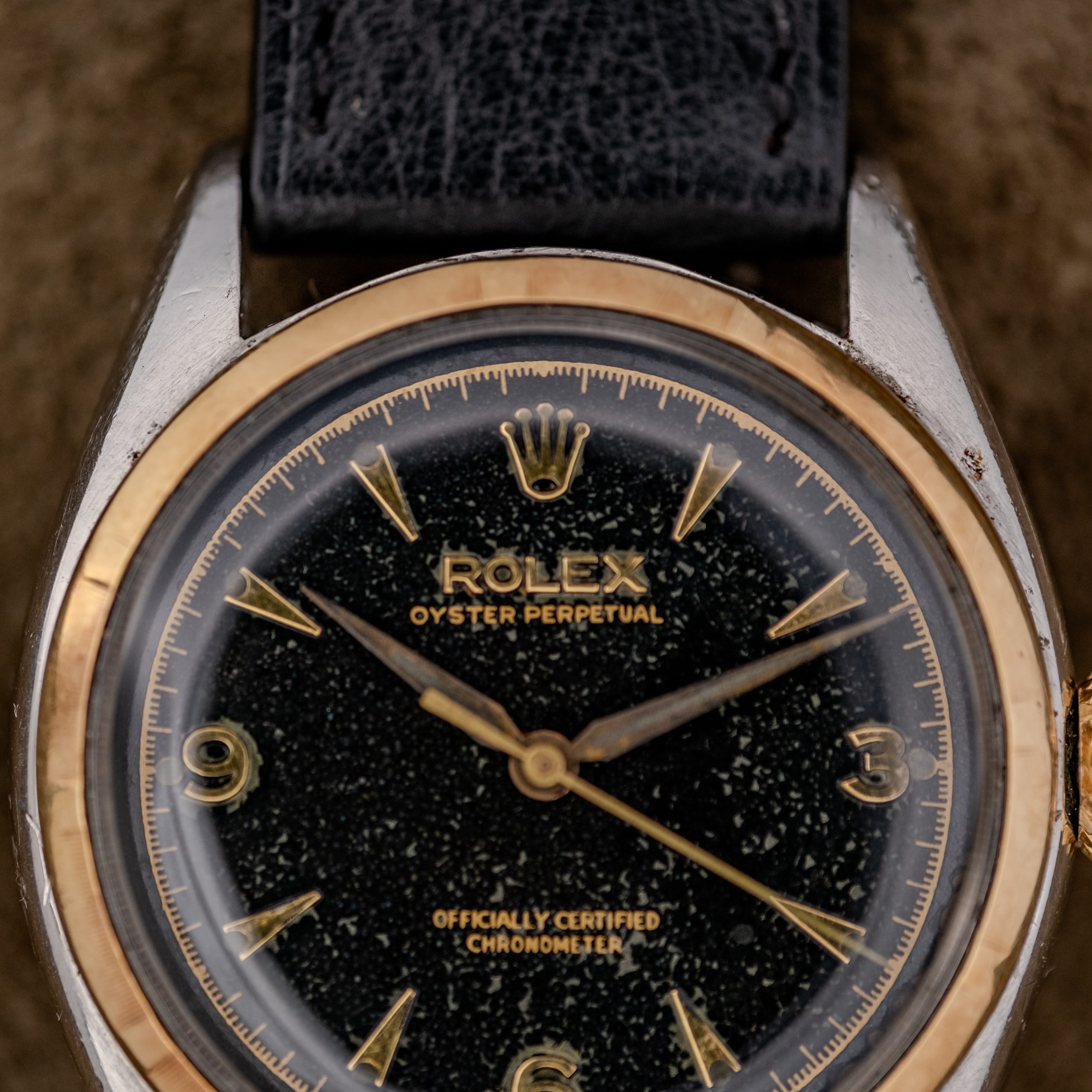
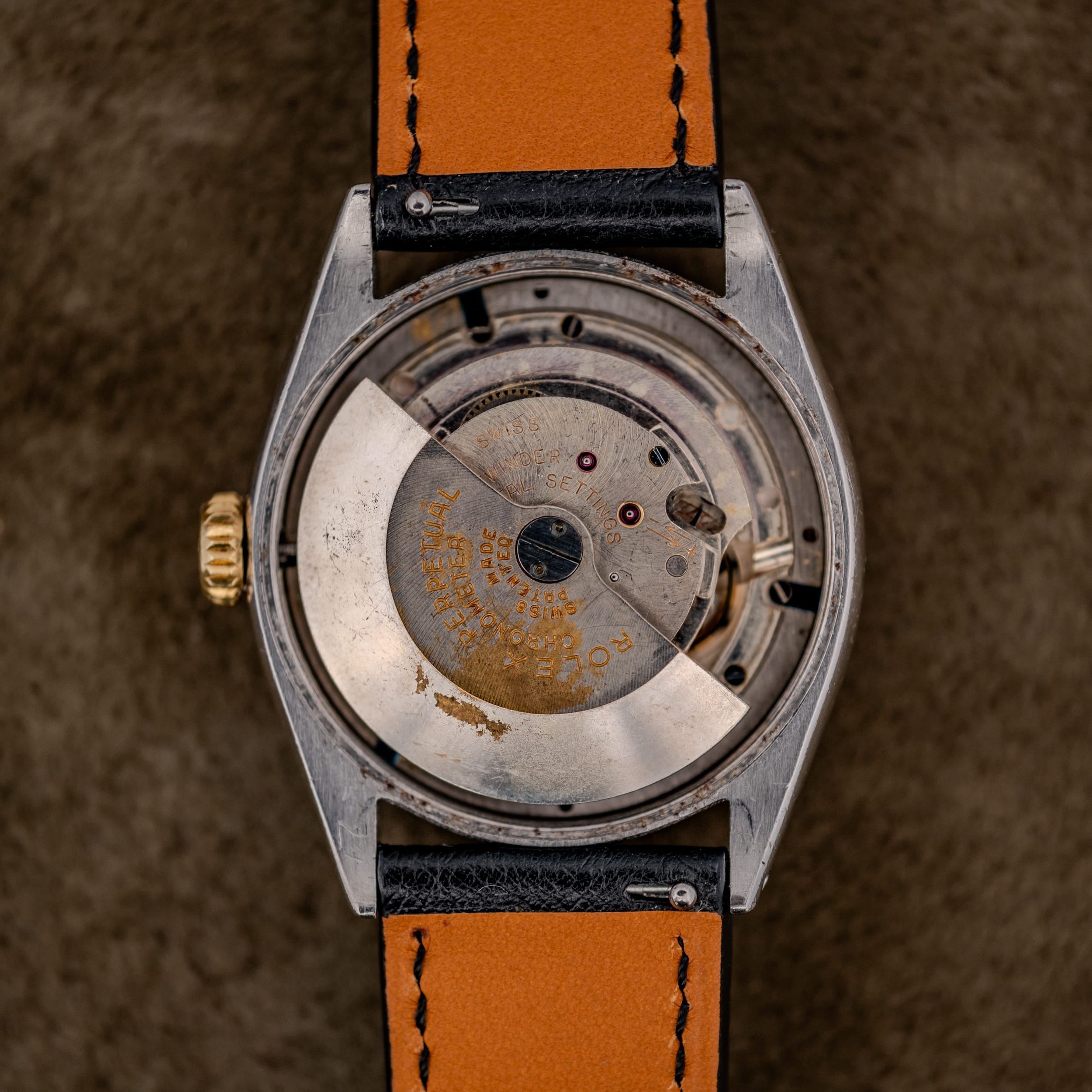
The caliber 645 is the quiet headline. Introduced in 1950, it is a 17-jewel automatic running at 18,000 vibrations per hour with a Breguet overcoil hairspring, Viberax shock protection, and roughly 41 hours of power reserve from the mainspring. The rotor is the modern full-rotor type, not the early bumper, which is part of why the 6107 wears thinner than the 1930s Bubble Backs even though the profile is still domed. Rolex submitted the 645 to the Bureaux Officiels de Contrôle de la Marche des Montres for chronometer certification, which is what earns this dial the “Officially Certified Chronometer” line under the centerpoint, and it is why the rotor is gilt-engraved ROLEX CHRONOMETER PERPETUAL PATENTED SWISS MADE rather than the simpler PERPETUAL signature on the earlier non-chronometer-grade automatics.
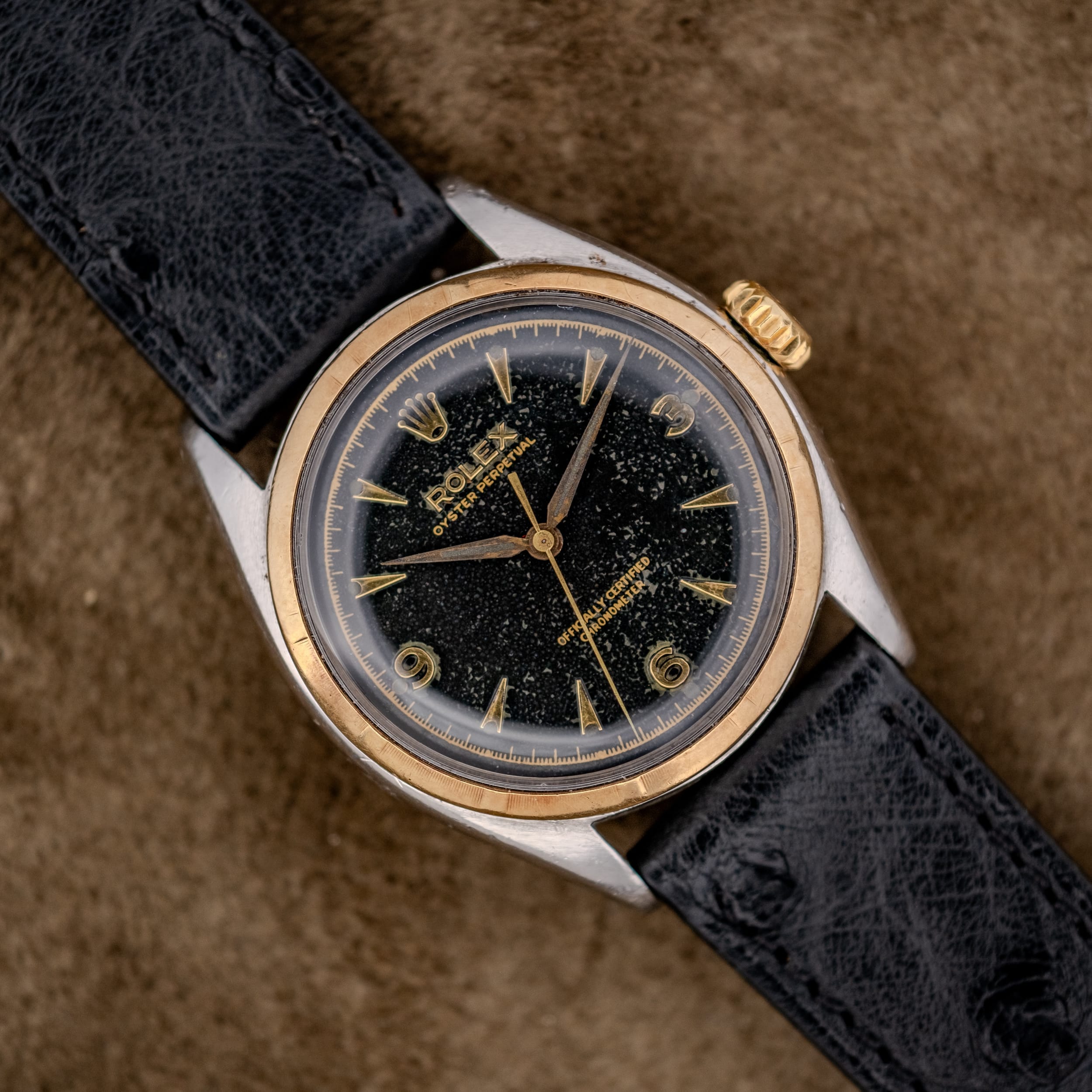
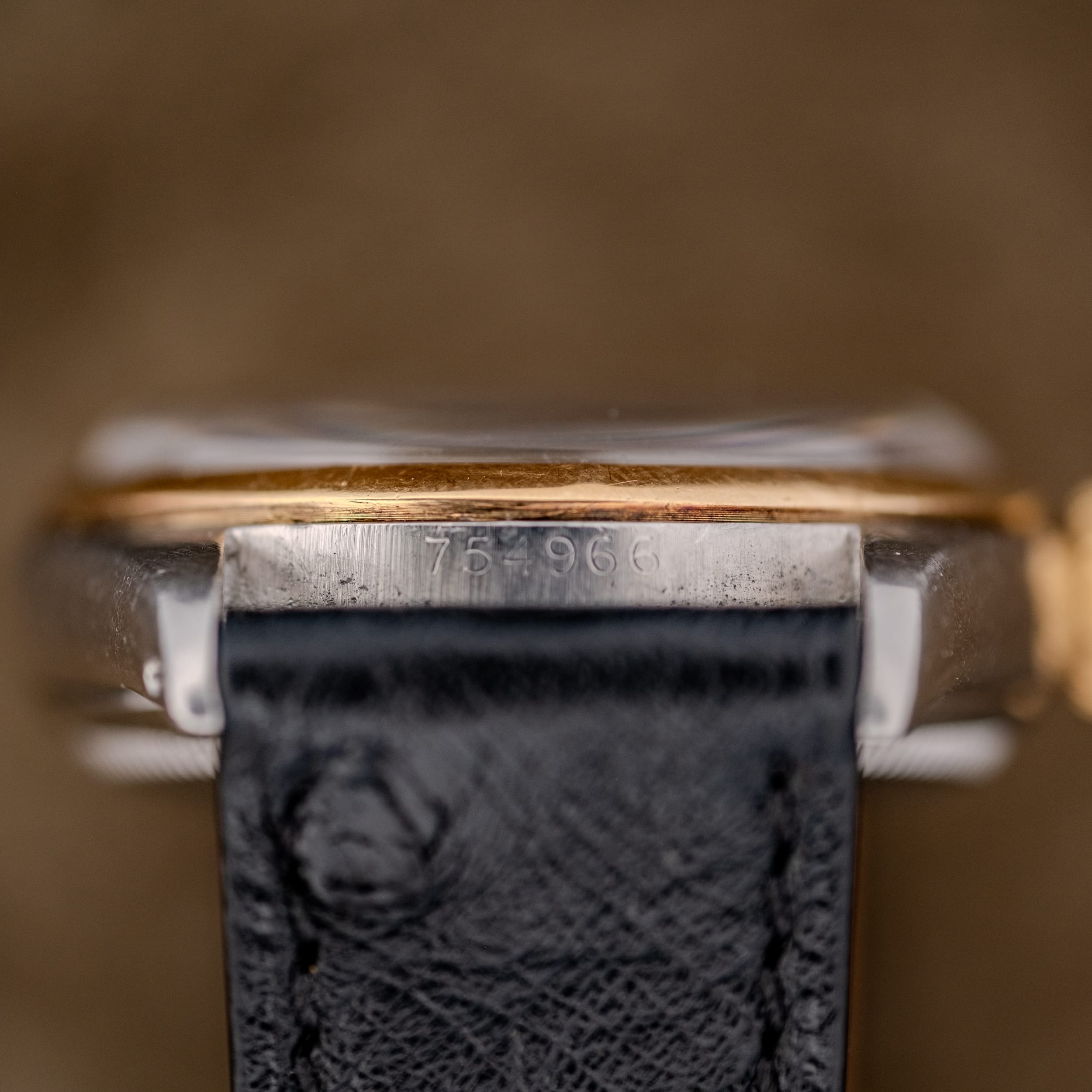
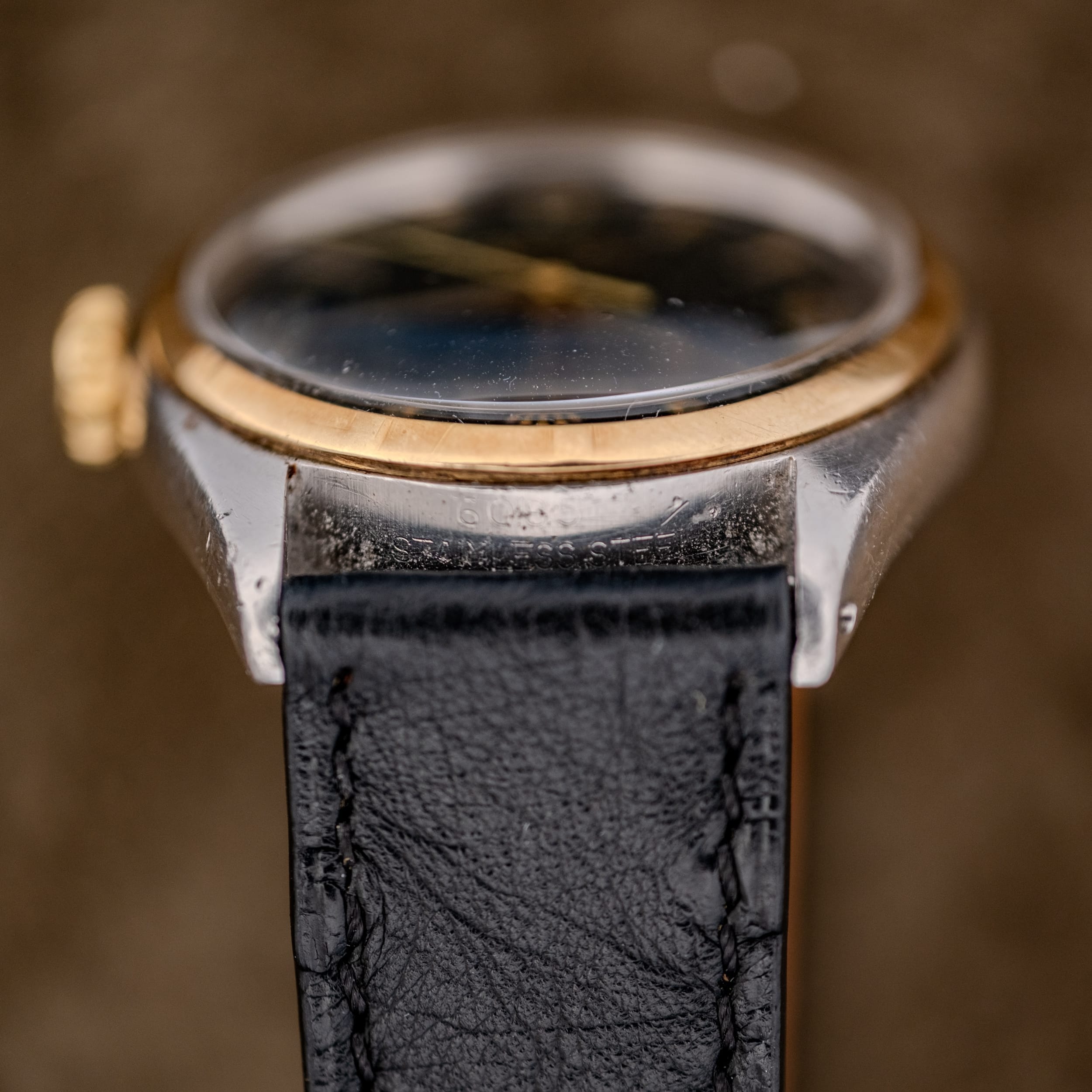
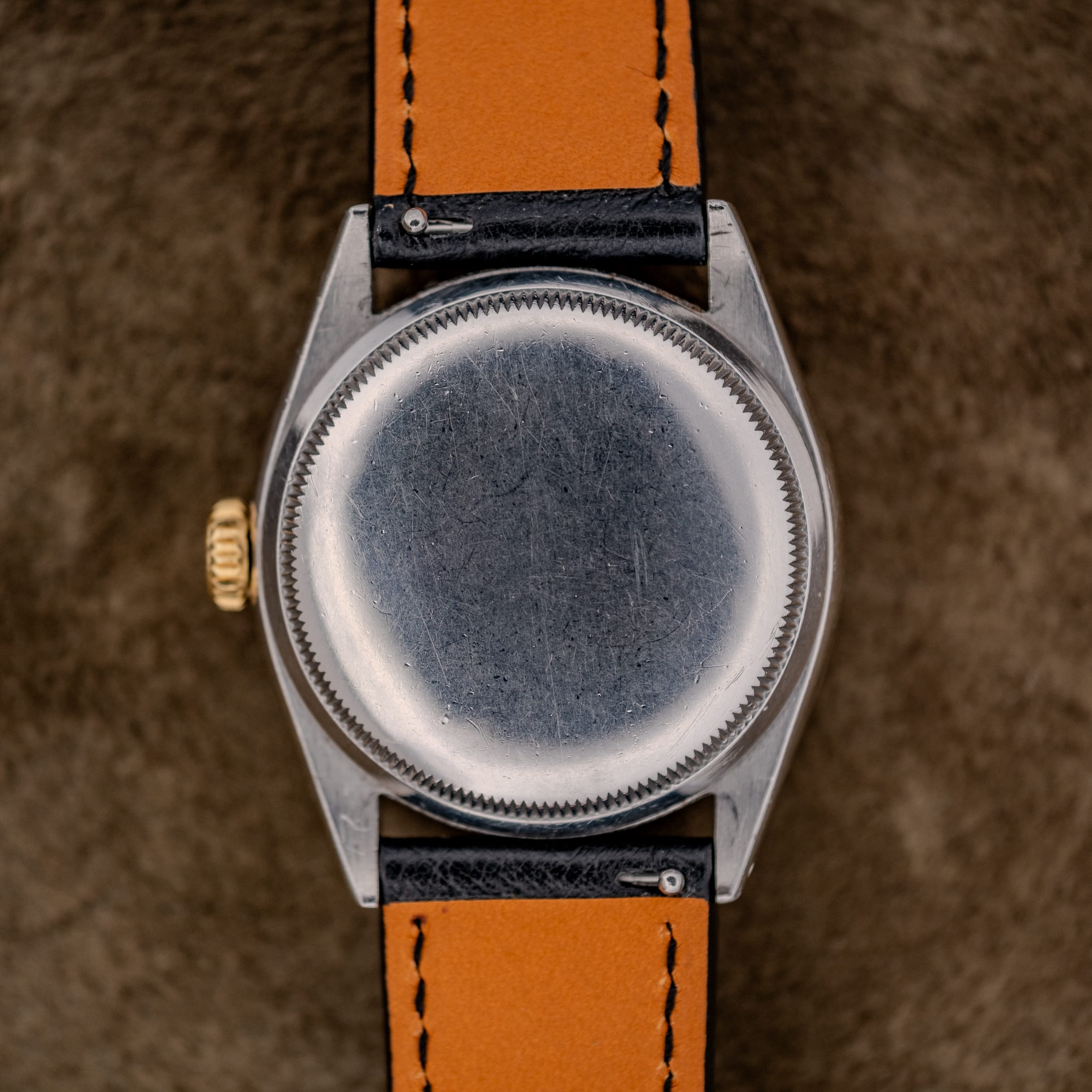
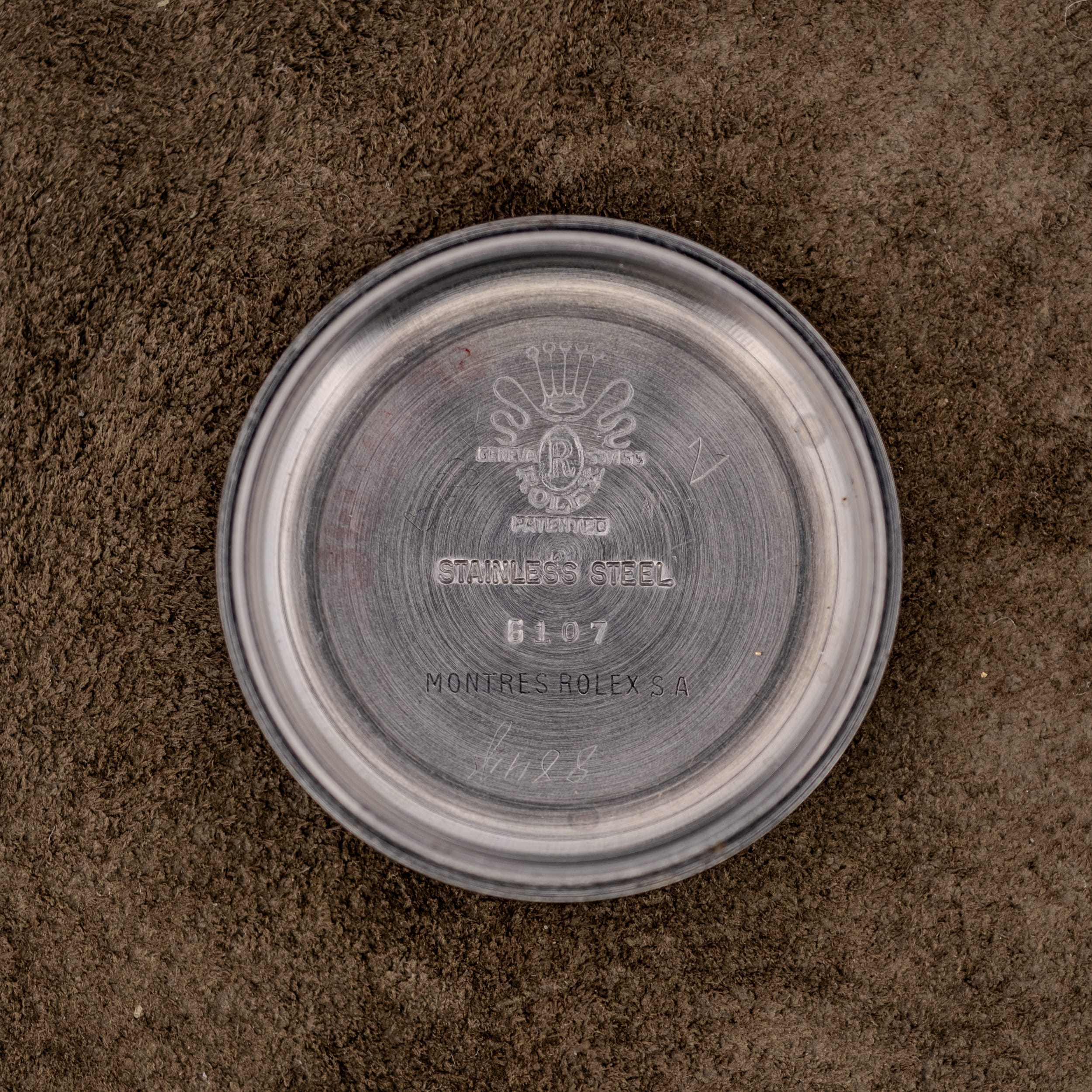
The case is 34mm across with a 19mm lug width and 40mm lug-to-lug, dimensions that read as small on paper and considerably larger in person because of the dome. The bezel is the gold-capped engine-turned variant Rolex offered alongside the all-steel and solid gold configurations, with vertical reeded engraving radiating outward to catch the light at any angle. The case body underneath is stainless steel, confirmed by the case-side stamping and the inner caseback, which reads ORIGINAL OYSTER PATENTED with the Rolex crown emblem, then STAINLESS STEEL, then 6107, then MONTRES ROLEX S.A. as you see in our photography. The outer caseback shows a soft, evenly polished finish with the characteristic high curve of the bubble back family. We have left the case honest. There is faint case wear visible along the polished flanks of the lugs and across the gold of the bezel, exactly the way a watch worn for 70 years should look.
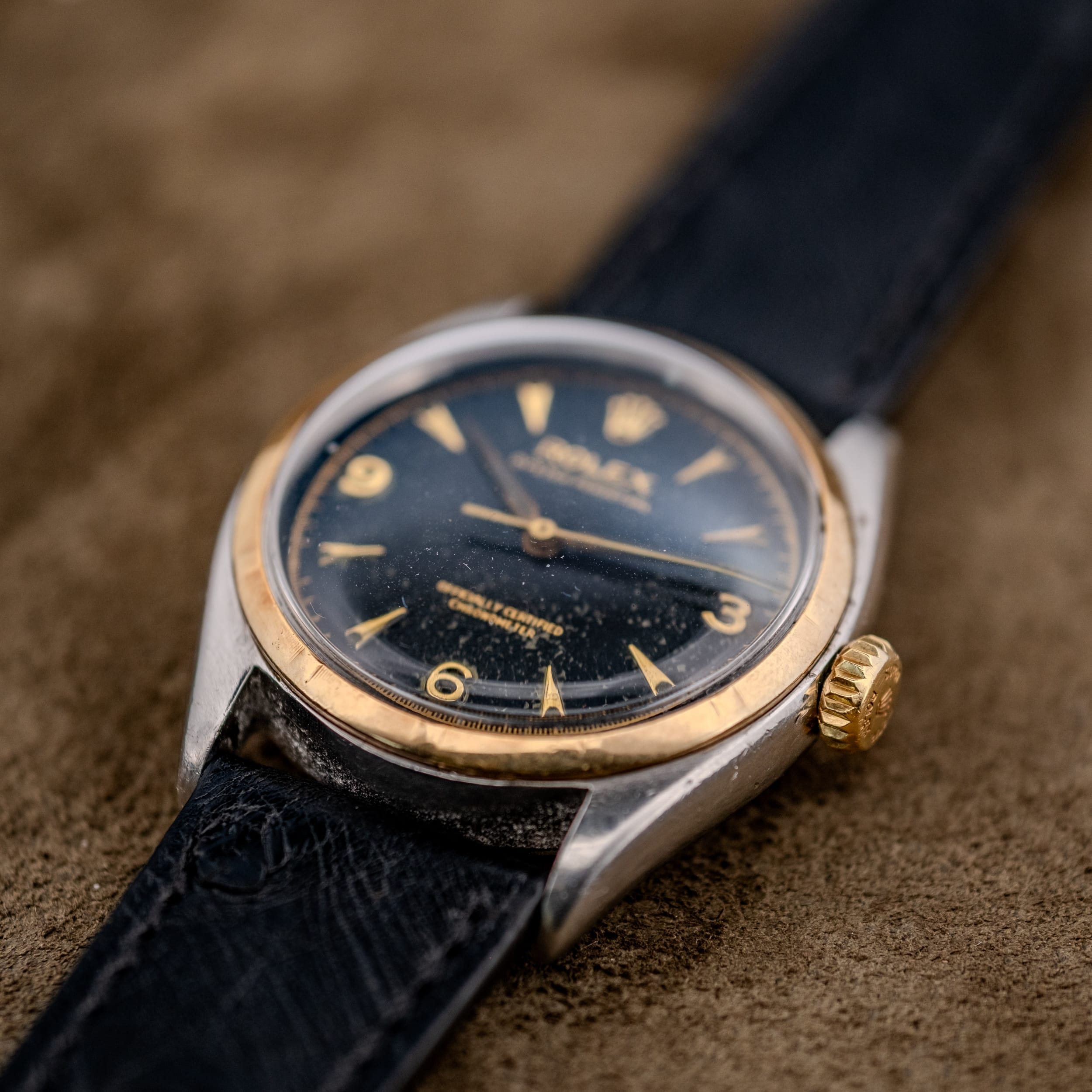
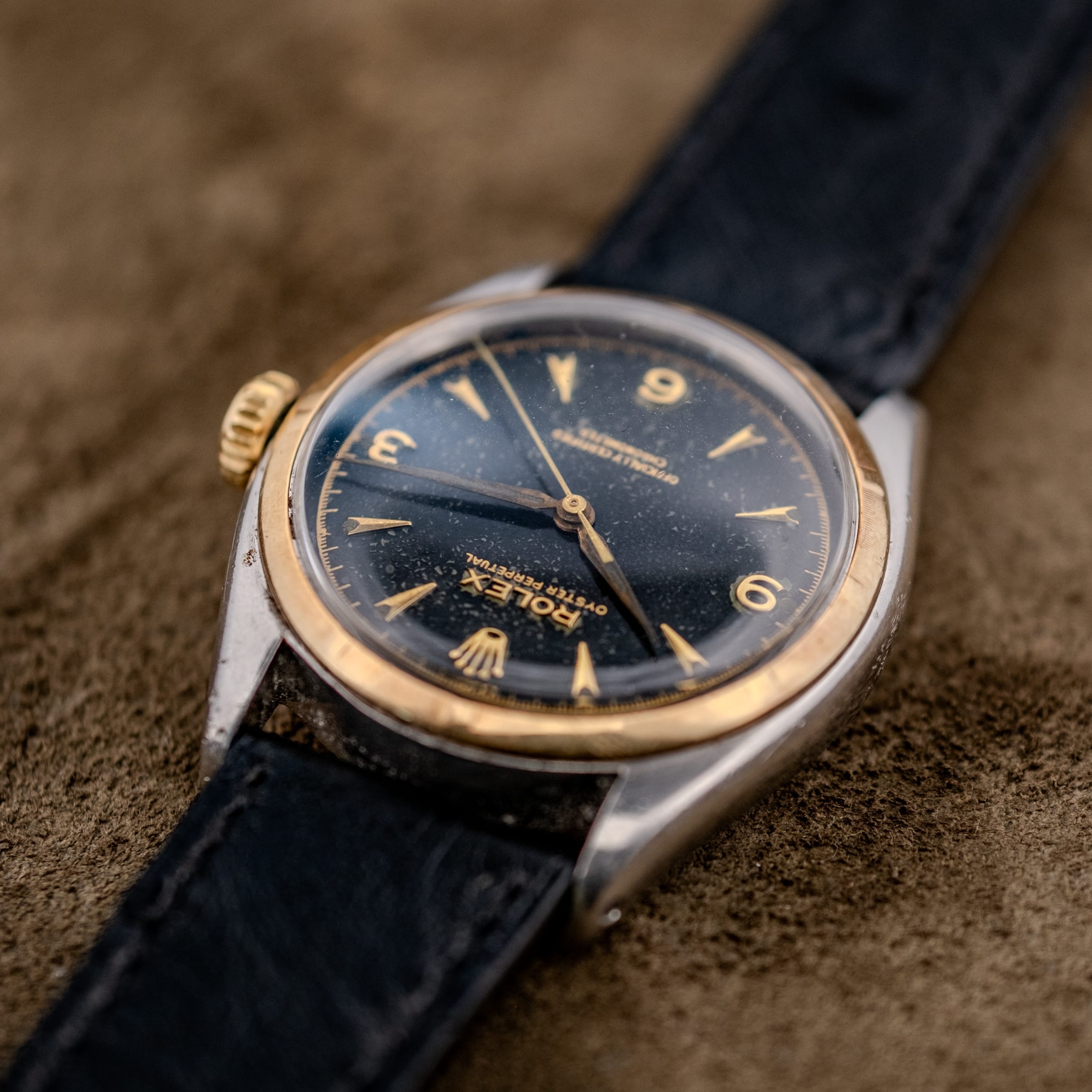
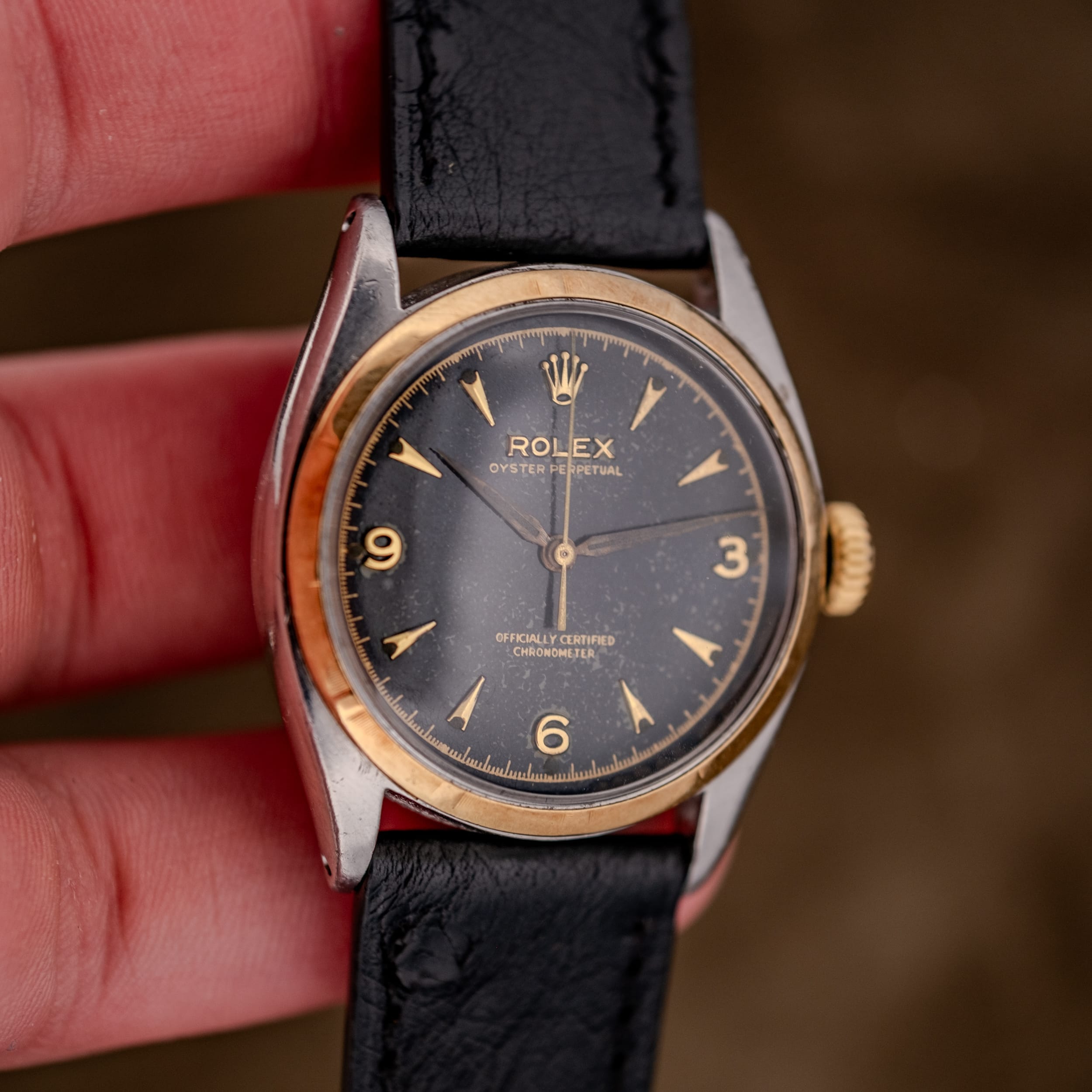
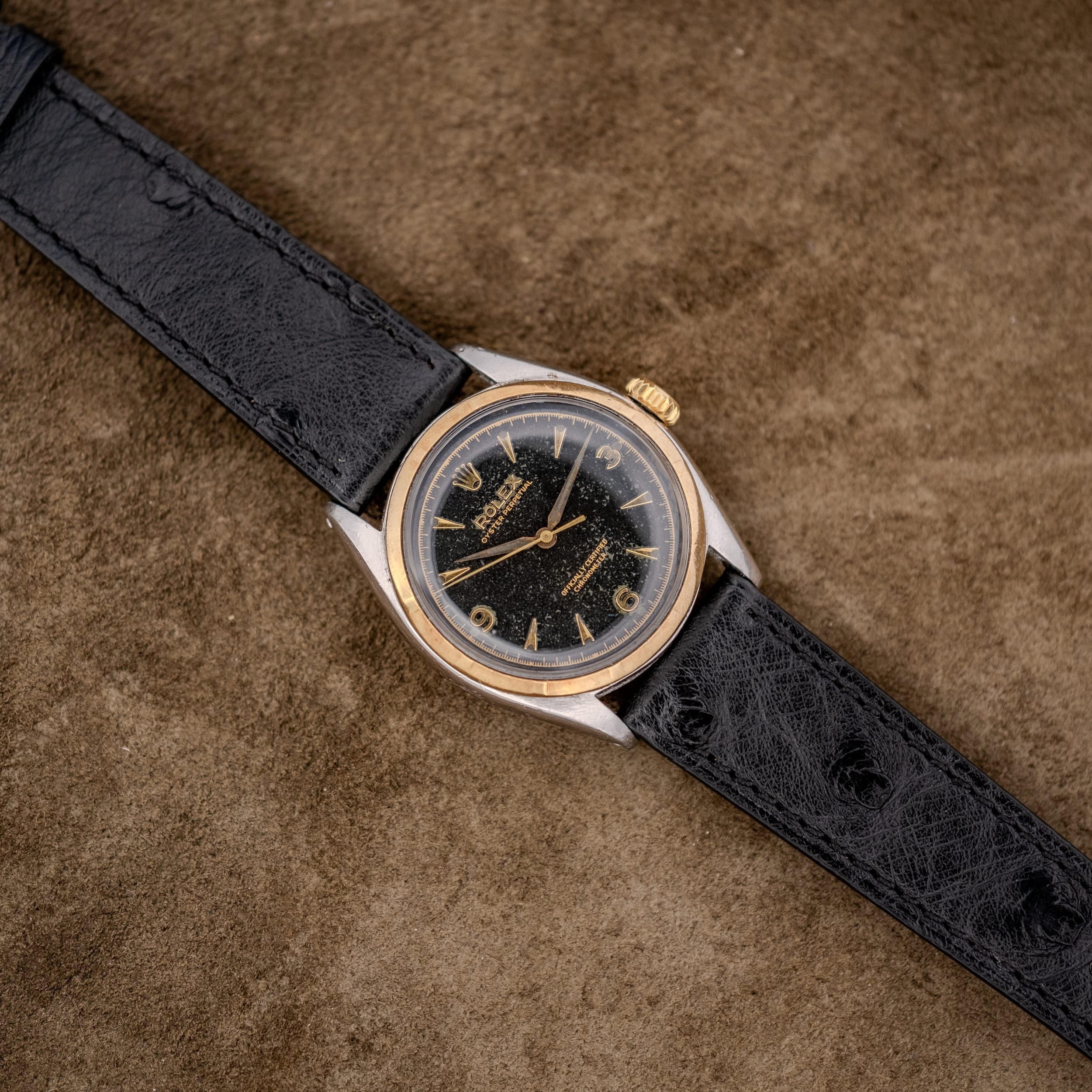
The dial is the part that pulls people in. It is a factory black lacquer gilt dial that has aged in a way we honestly love. Across the entire surface the lacquer has broken into a fine speckled patina that reads almost like a starry night sky against the black ground, with the gilt print and applied indices floating above. The gilt printing of ROLEX, OYSTER PERPETUAL, and OFFICIALLY CERTIFIED CHRONOMETER is fully intact. The hour markers are the early gilt configuration, with applied arrow indices at the even hour positions and applied raised gilt Arabic numerals at 3, 6, and 9. The hands are gilt dauphine for hours and minutes with a thin matching sweep seconds, all original to the watch. There is no lume on this dial, which is correct for the configuration, no date complication, and no afterthought signatures. The patina is structural to the dial’s character. It is not a defect, it is the dial’s biography, and we would never refinish it.
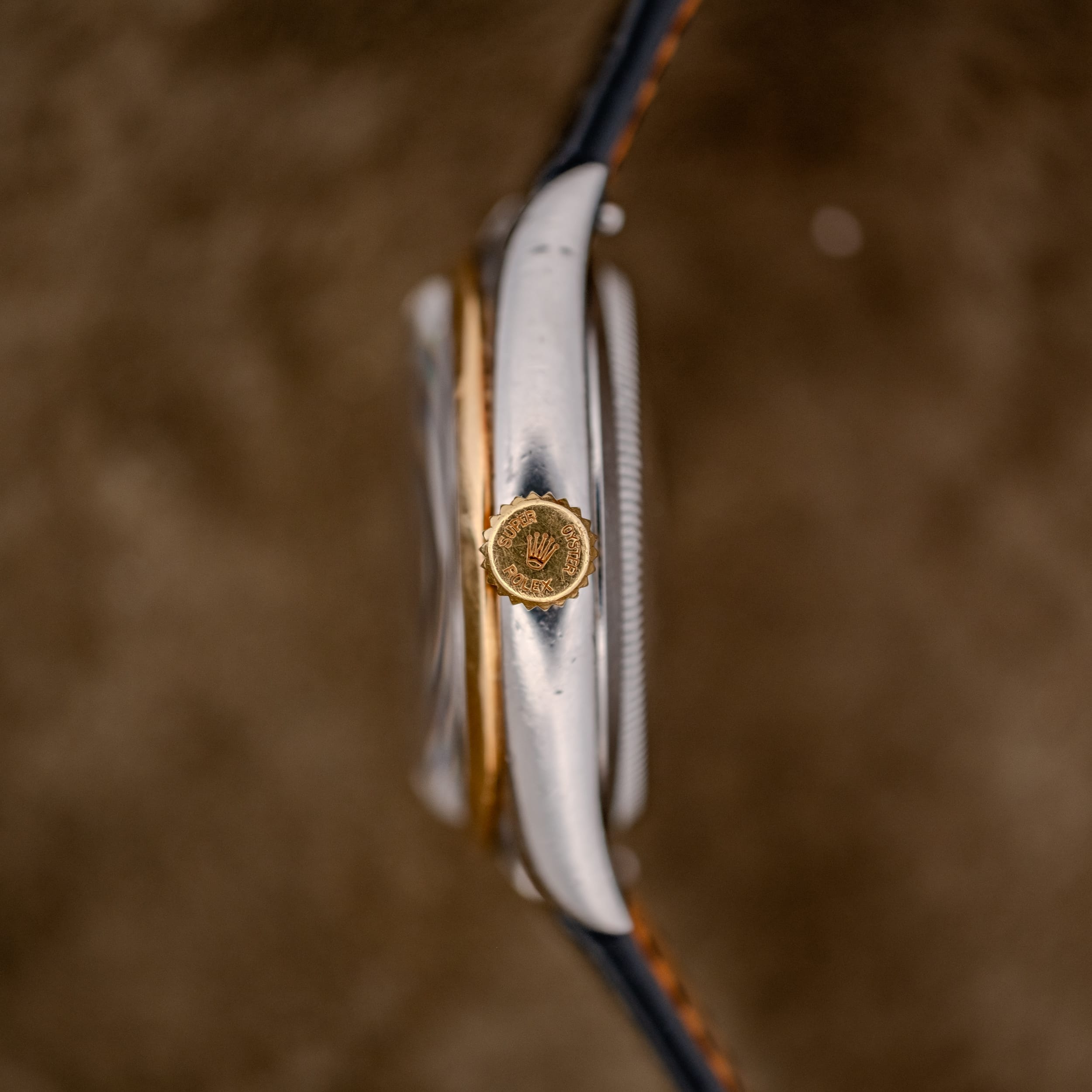
The crown is one of our favorite details on this example. It is the original gold-toned Super Oyster, signed SUPER OYSTER ROLEX around the perimeter with the Rolex crown logo at center, a press-down sealed crown unique to this transitional Bubble Back era before Rolex moved to the Twinlock screw-down architecture. Original Super Oyster crowns are notoriously hard to find on Reference 6107 examples today, and an unmolested one in matching gold tone with the bezel is a meaningful detail to us.
We have paired the watch with a black ostrich leather strap and our OTTUHR signed buckle. Ostrich works honestly well here, picking up the texture and depth of the speckled dial without pulling focus from the case’s two-tone construction.
Serviced in-house at OTTUHR and backed by our 2-year mechanical warranty, this is the configuration of vintage Rolex we genuinely chase. Original Super Oyster crown, factory gilt dial with character we could never recreate, the gold-capped engine-turned bezel still catching light, and the caliber 645 underneath running clean within five seconds a day in our timing checks. For the collector who already understands what the modern Oyster Perpetual line owes to the Bubble Back era, who values the speckled aging of a real factory gilt dial over a refinished one, and who wants the last and arguably most resolved Rolex Big Bubble Back reference on the wrist, this is the kind of watch we honestly built OTTUHR around.