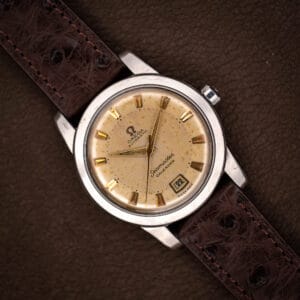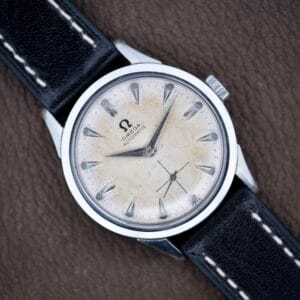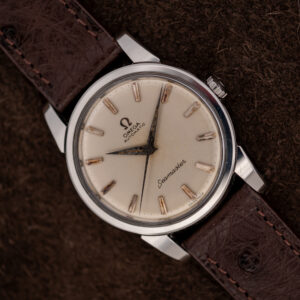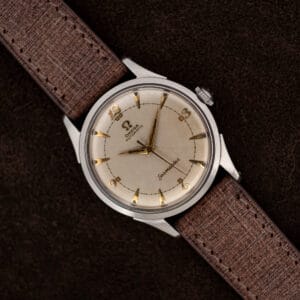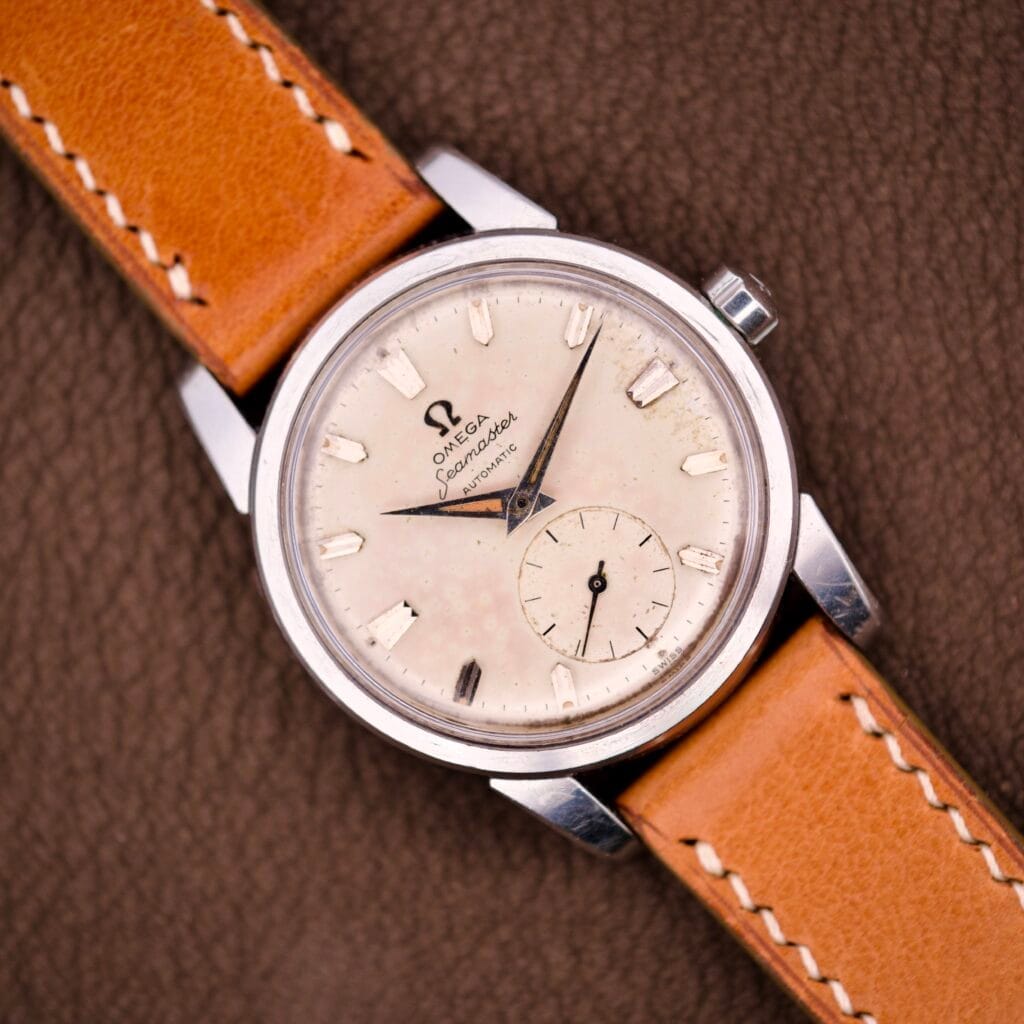
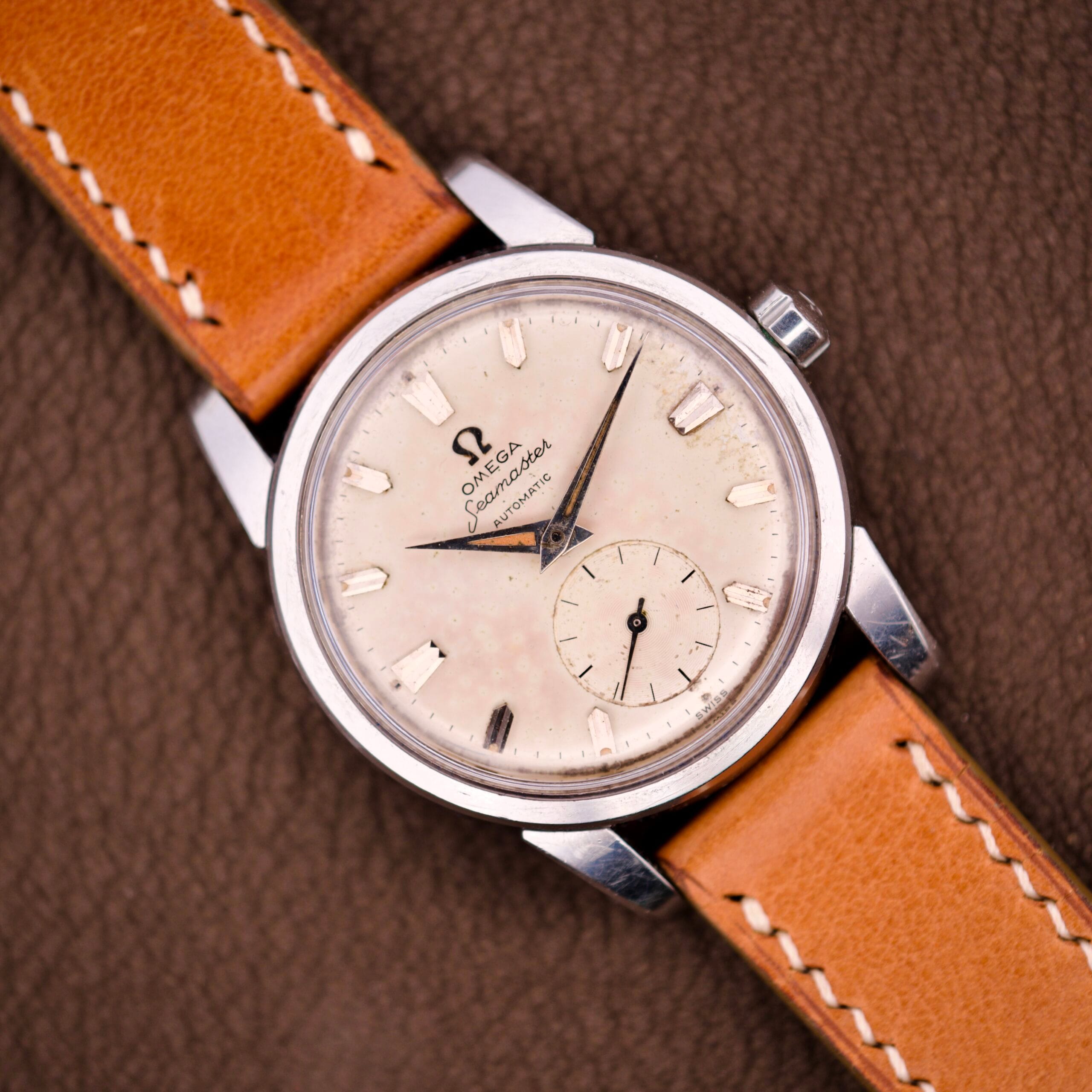
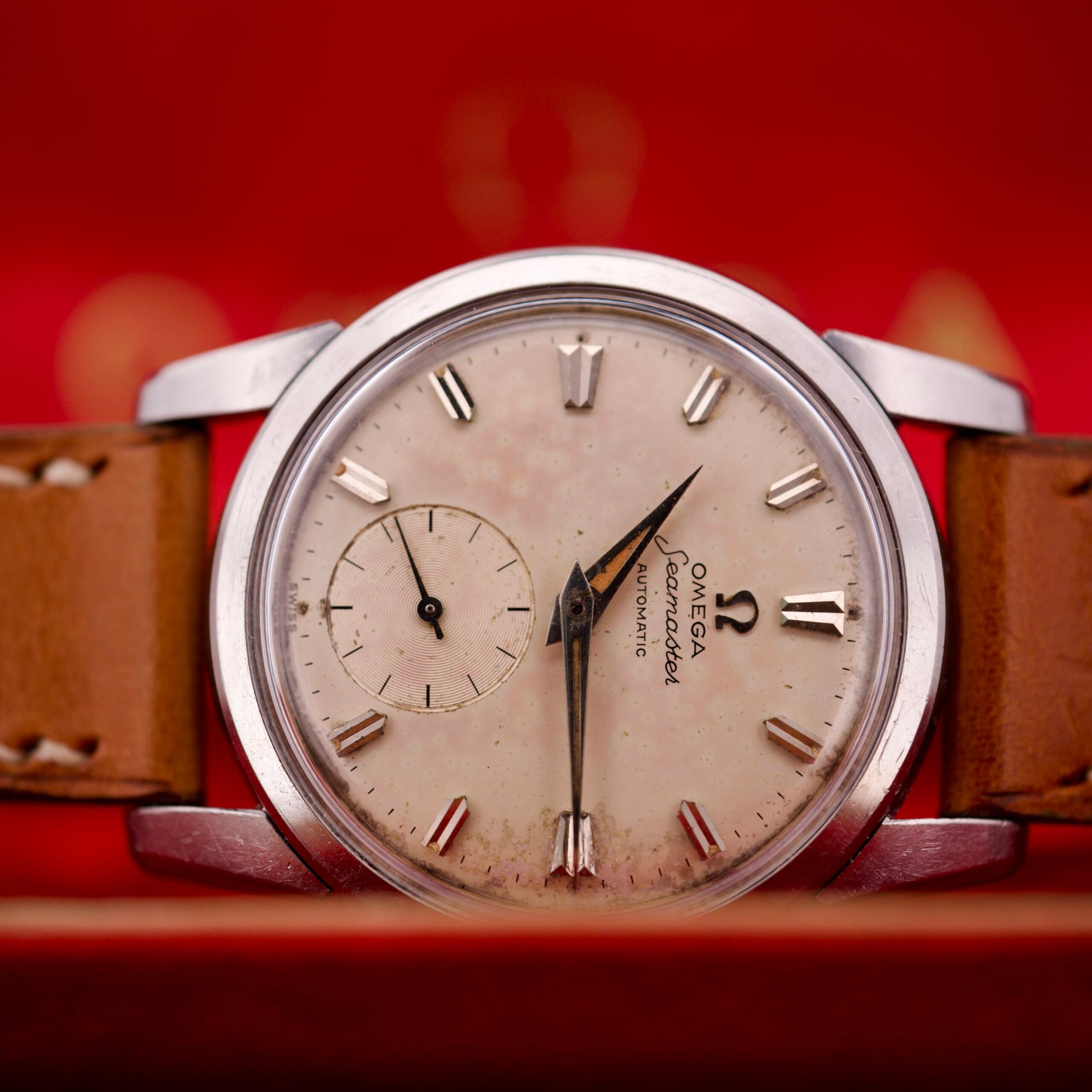
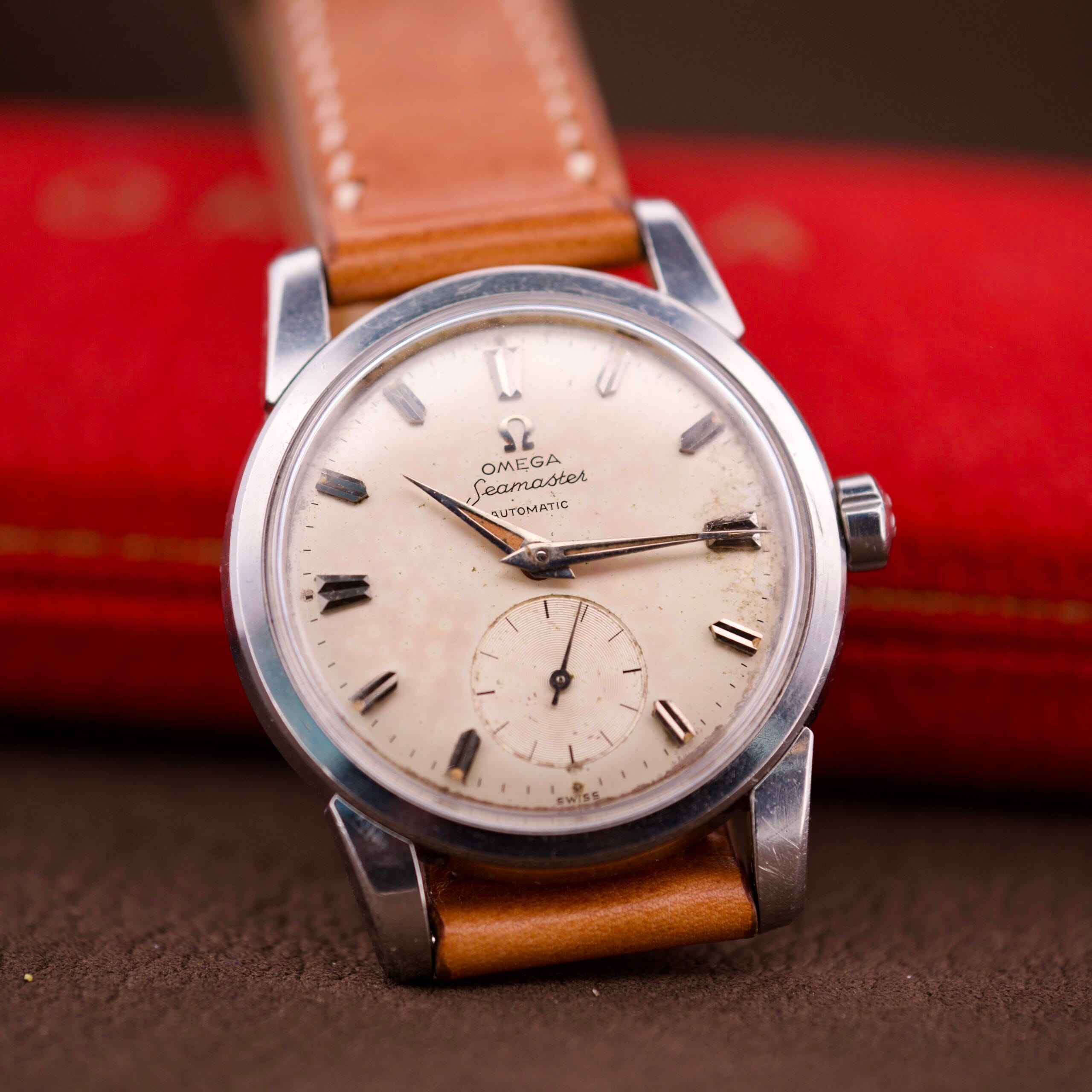
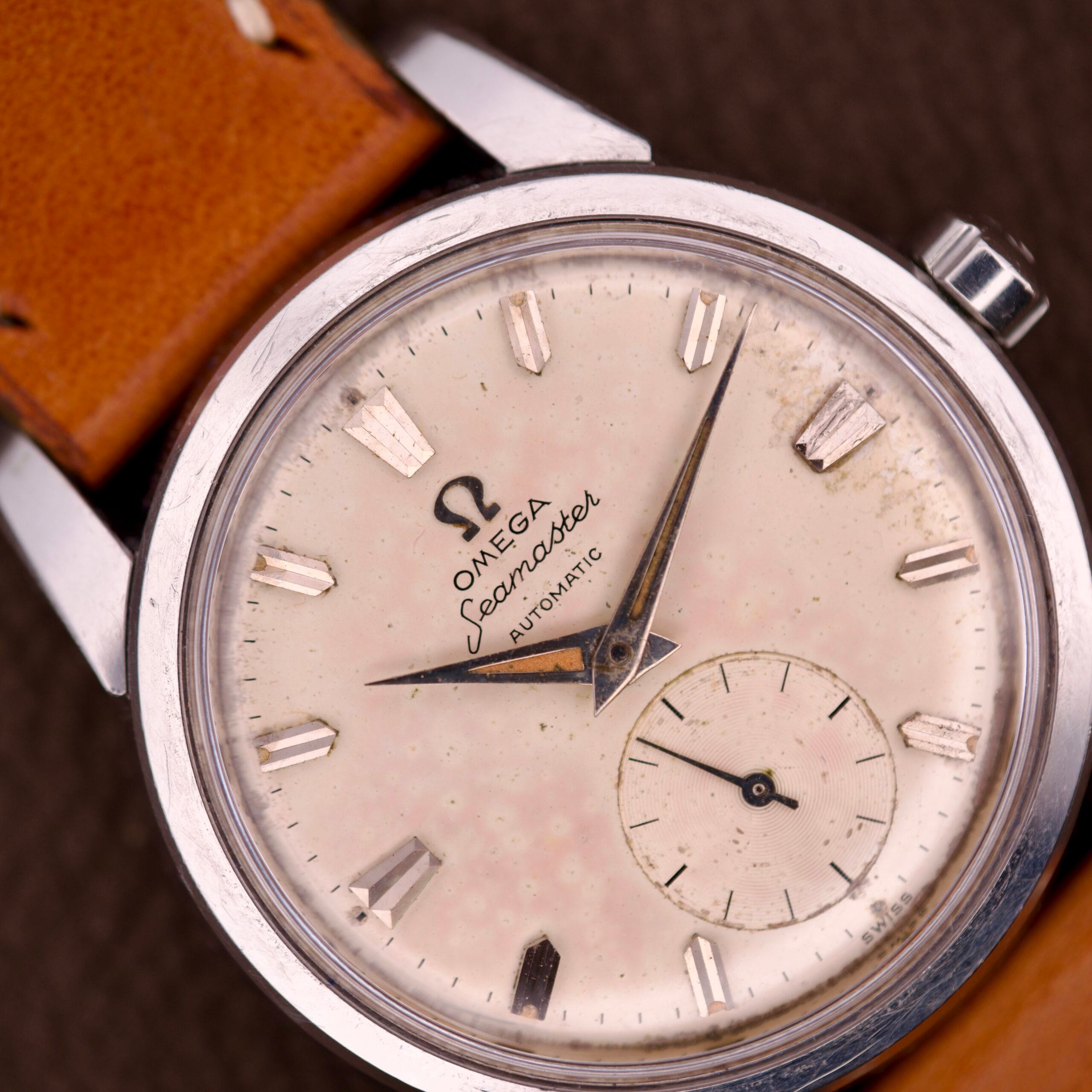
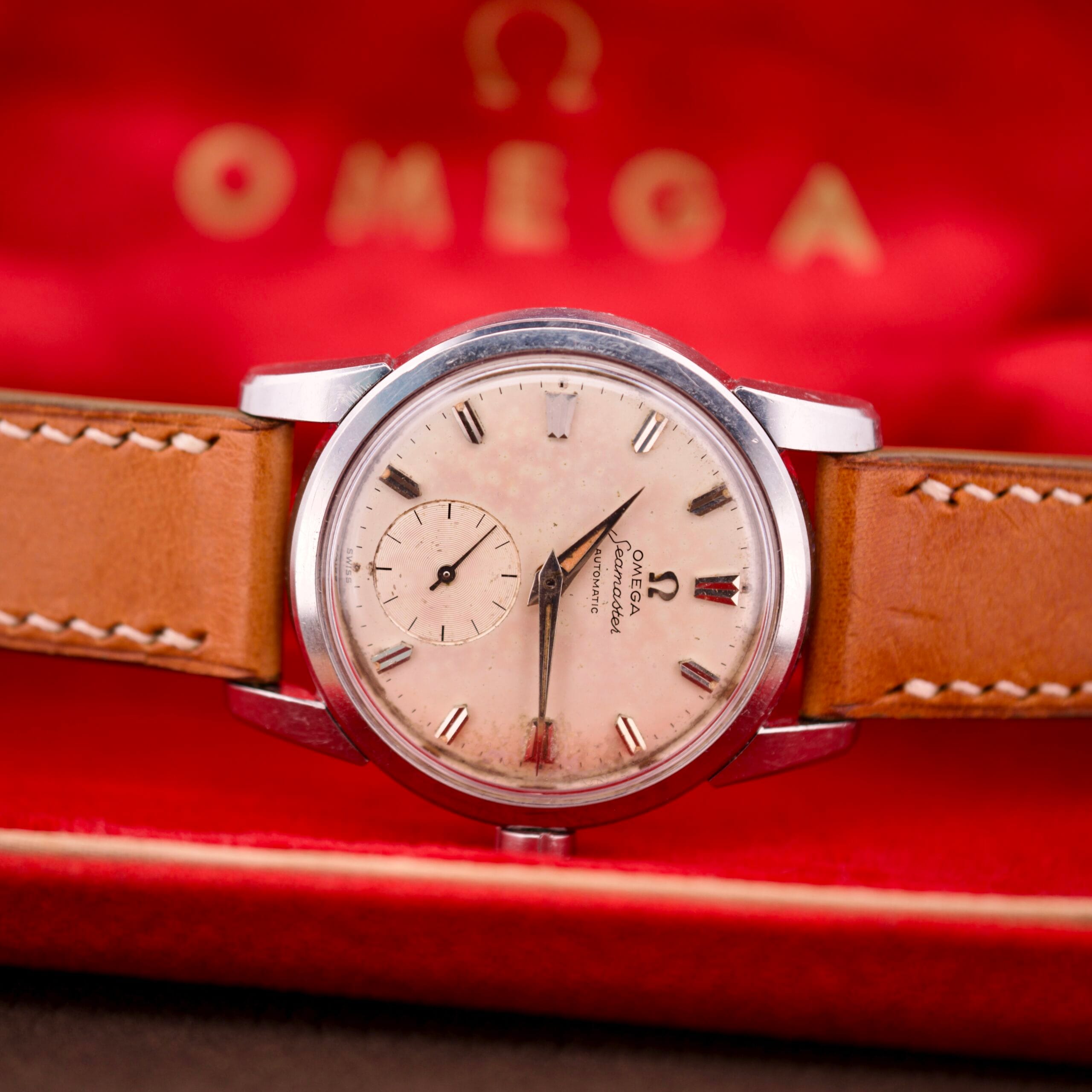
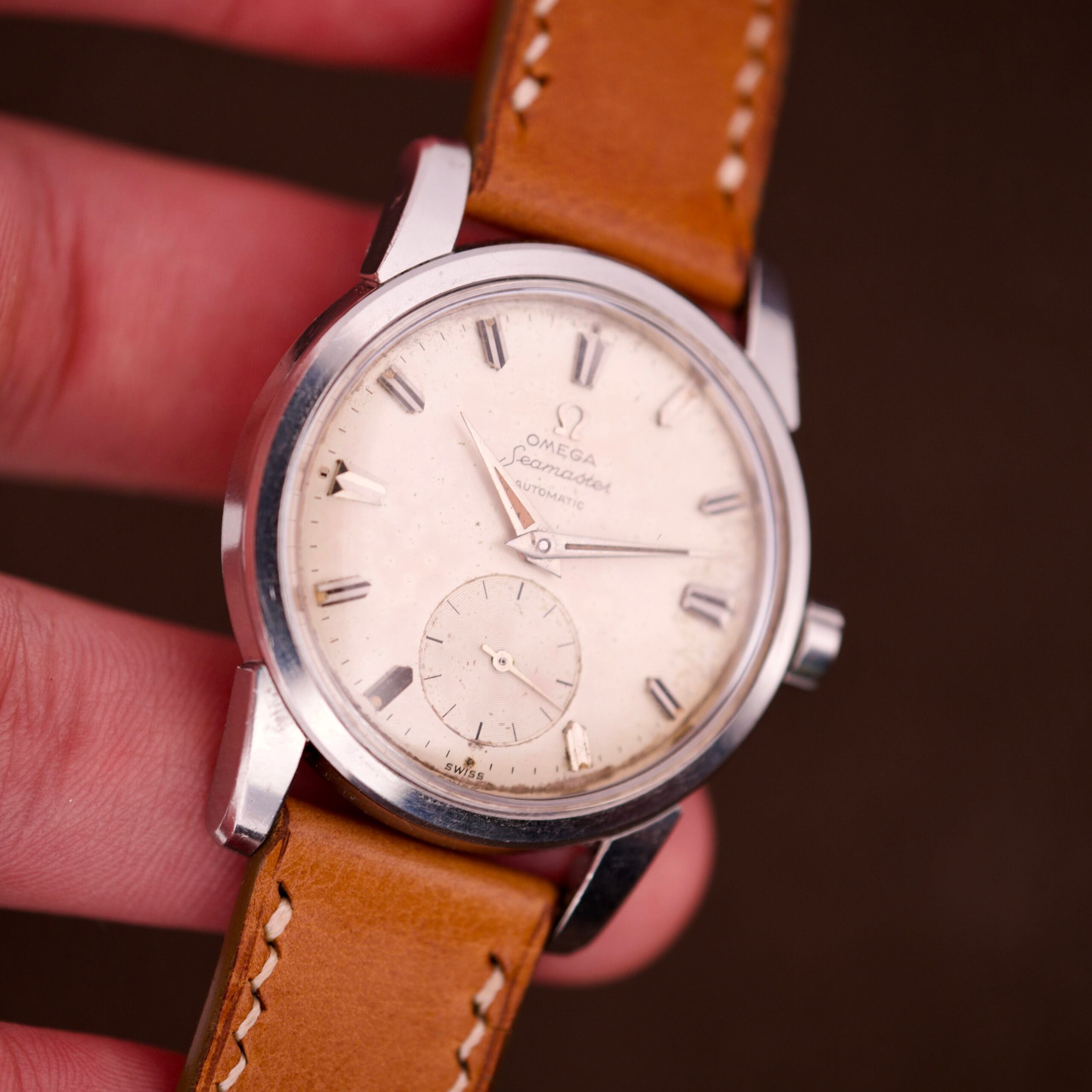

Every now and then a 1950s Seamaster crosses our bench that has done its aging in exactly the right way, and to us this Ref. 2848 is one of those examples. The dial has spotted unevenly into a warm cream, the dauphine hands have darkened into the kind of grey that you only get from genuine half-century use, and the case still has the soft polished flanks that Omega gave the early Seamaster line before the sports-watch era took over. It is a wonderfully honest example of what an Omega Seamaster Automatic looked like at the very beginning of the modern full-rotor era.
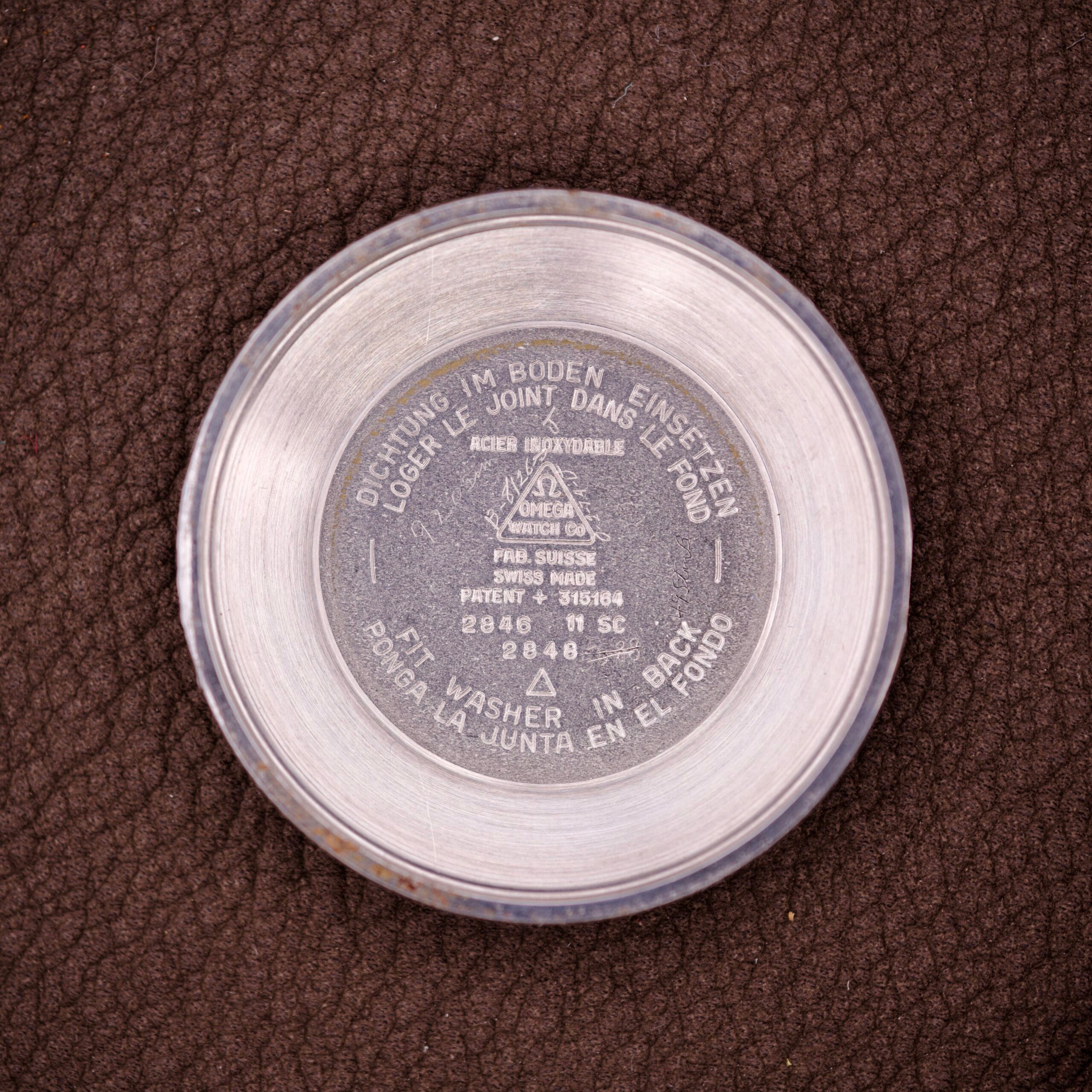
Omega launched the Seamaster line in 1948 to commemorate the brand’s centenary, drawing on the waterproof case know-how it had developed for British military commissions in the previous decade. By the mid-1950s the line had expanded into dozens of references, and the 2846 case became the workhorse civilian Seamaster of the period. The 2848 designation is the small-seconds sibling to the 2846 center-seconds variant, both sharing the same stainless steel snap-on case but cataloged separately by Omega to denote the dial layout. The inner caseback on this example carries both reference numbers stamped together, “2846 11 SC” above and “2848” below, exactly as Omega stamped the multi-reference cases of the period.
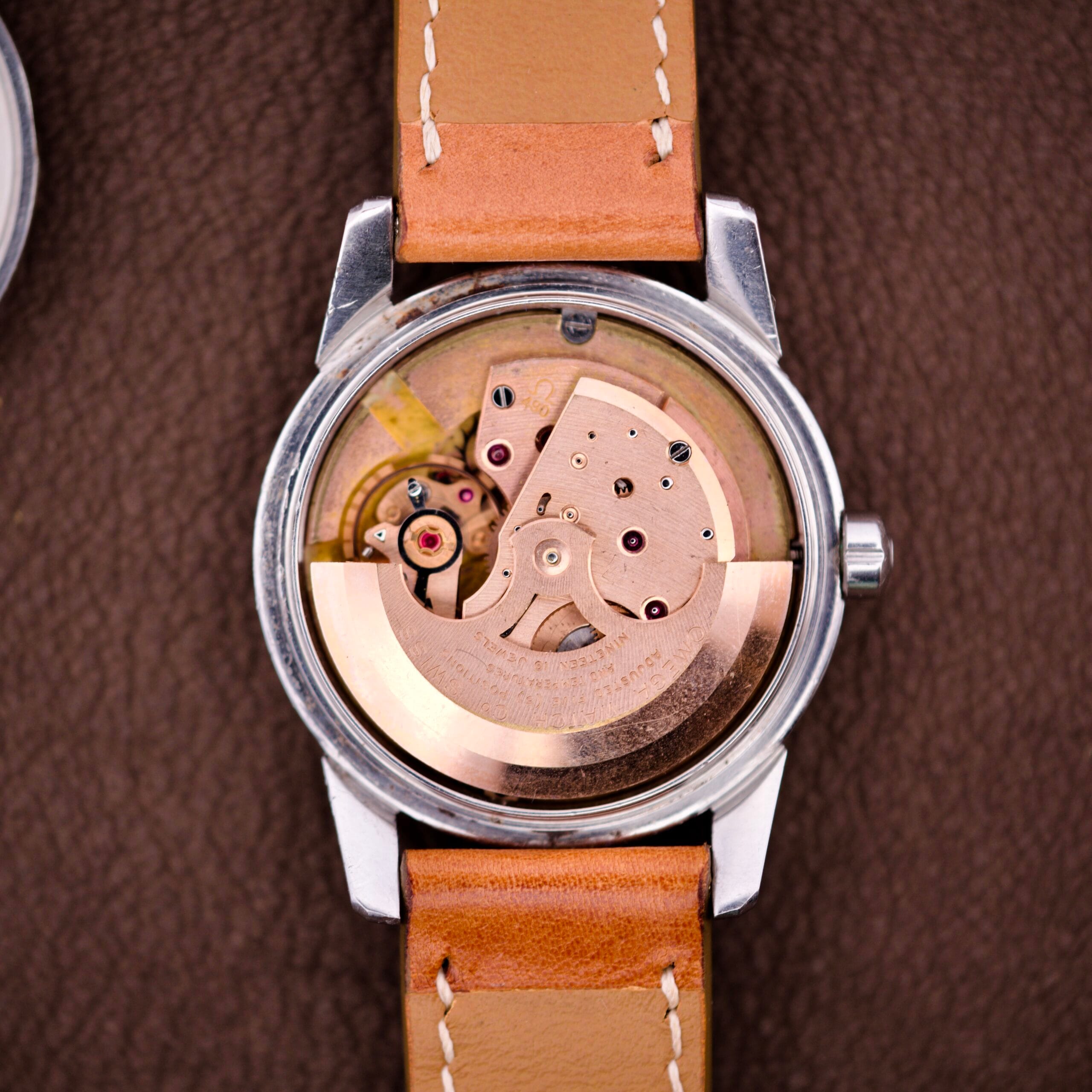
Under the dial is the Cal. 490, a 28mm bi-directional full-rotor automatic introduced by Omega in 1955 as part of the 470 / 490 / 500 caliber series. These were Omega’s first modern full-rotor automatics, designed by engineer Edward Black to replace the bumper-automatic generation that had carried the brand through the late 1940s and early 1950s. The 490 runs at 19,800 vibrations per hour on 17 jewels, with an Incabloc shock-absorbing balance and Omega’s standard Breguet overcoil hairspring of the era. Through the removed caseback we can see the copper-toned rotor turning over nickel bridges, a balance wheel under Incabloc protection at one side, and the small red regulator index that distinguished this generation. It is not haute horlogerie, but it is the foundational architecture that ran underneath the Constellation and the Seamaster for the rest of the 1950s, and these movements still keep impressive time when they have been treated properly.
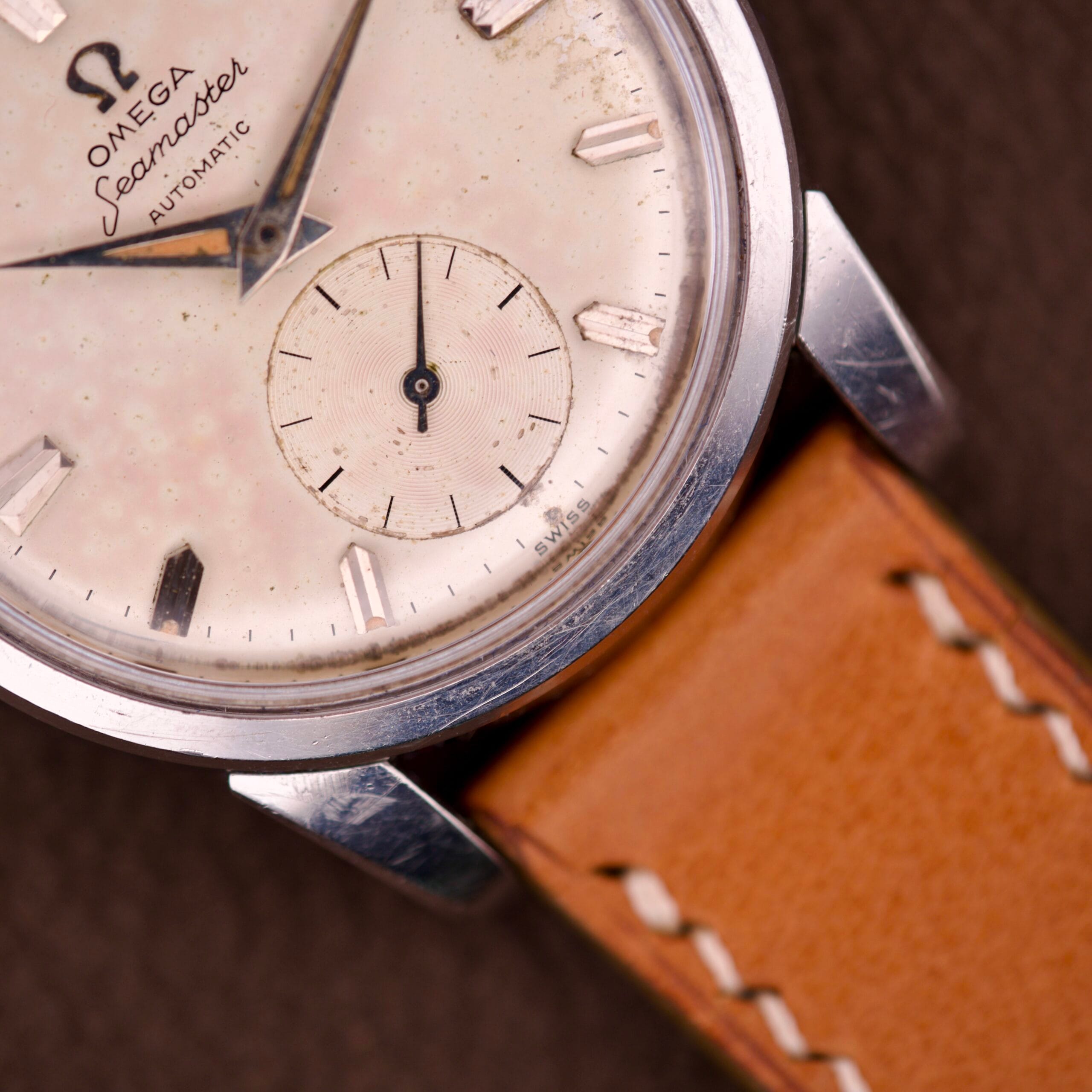
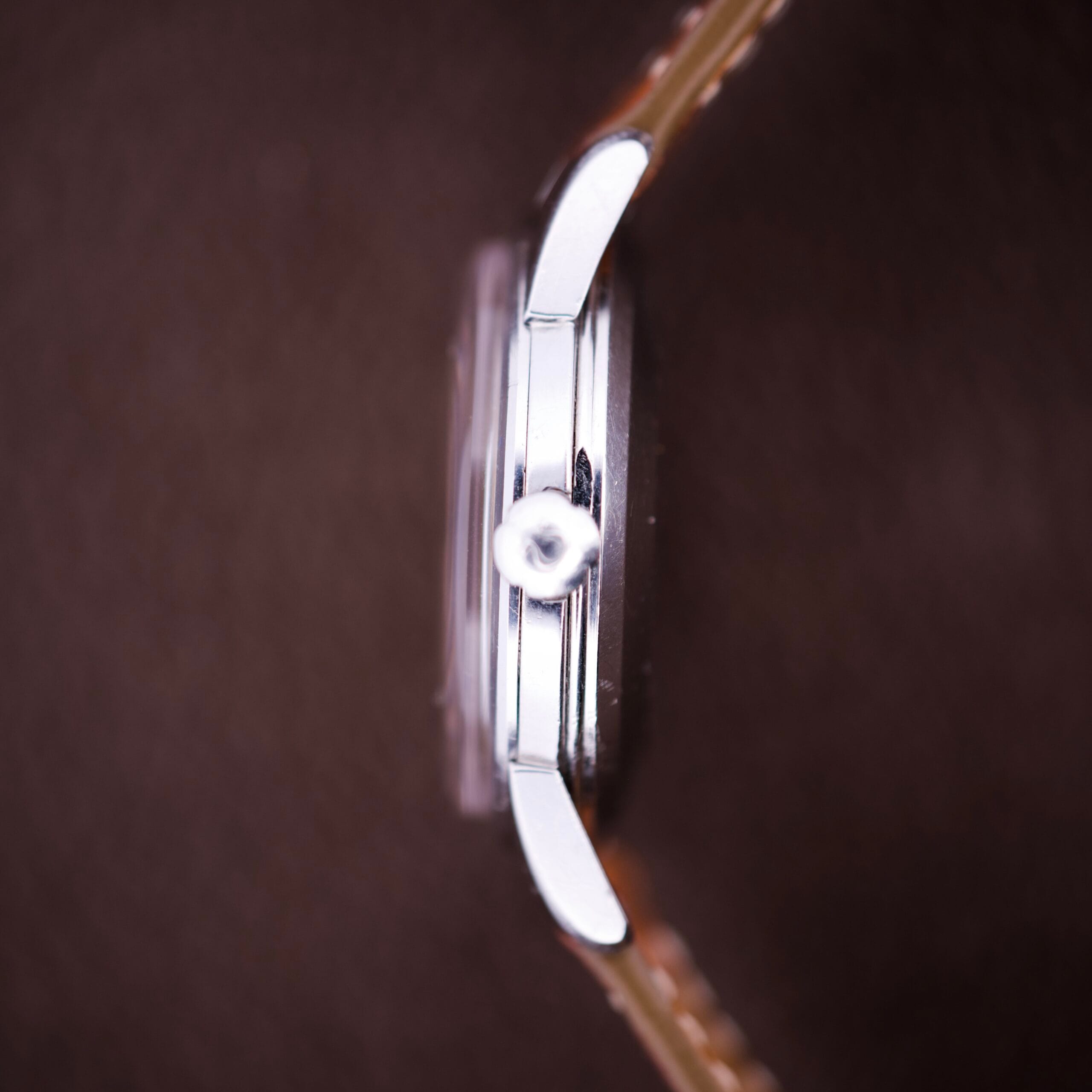
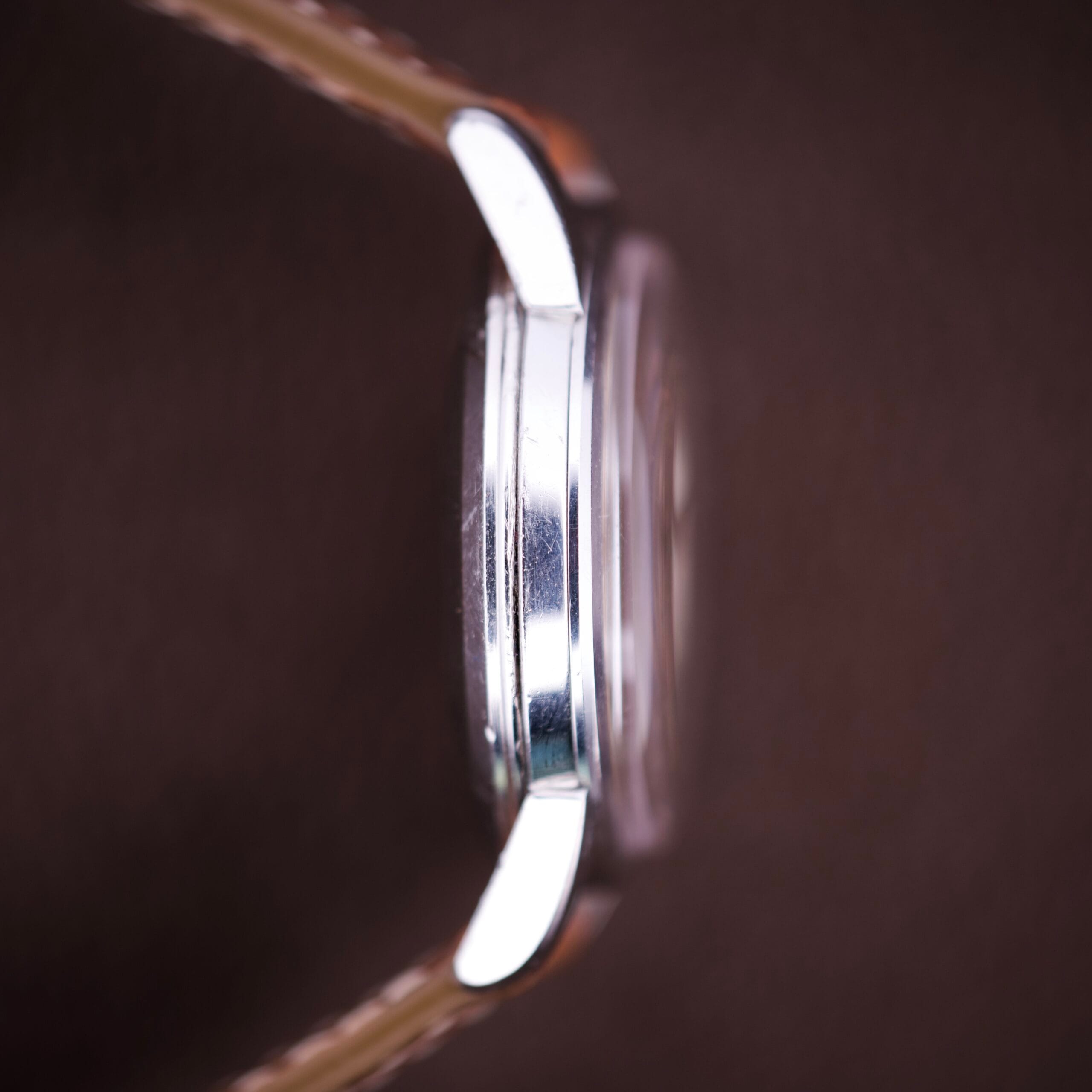
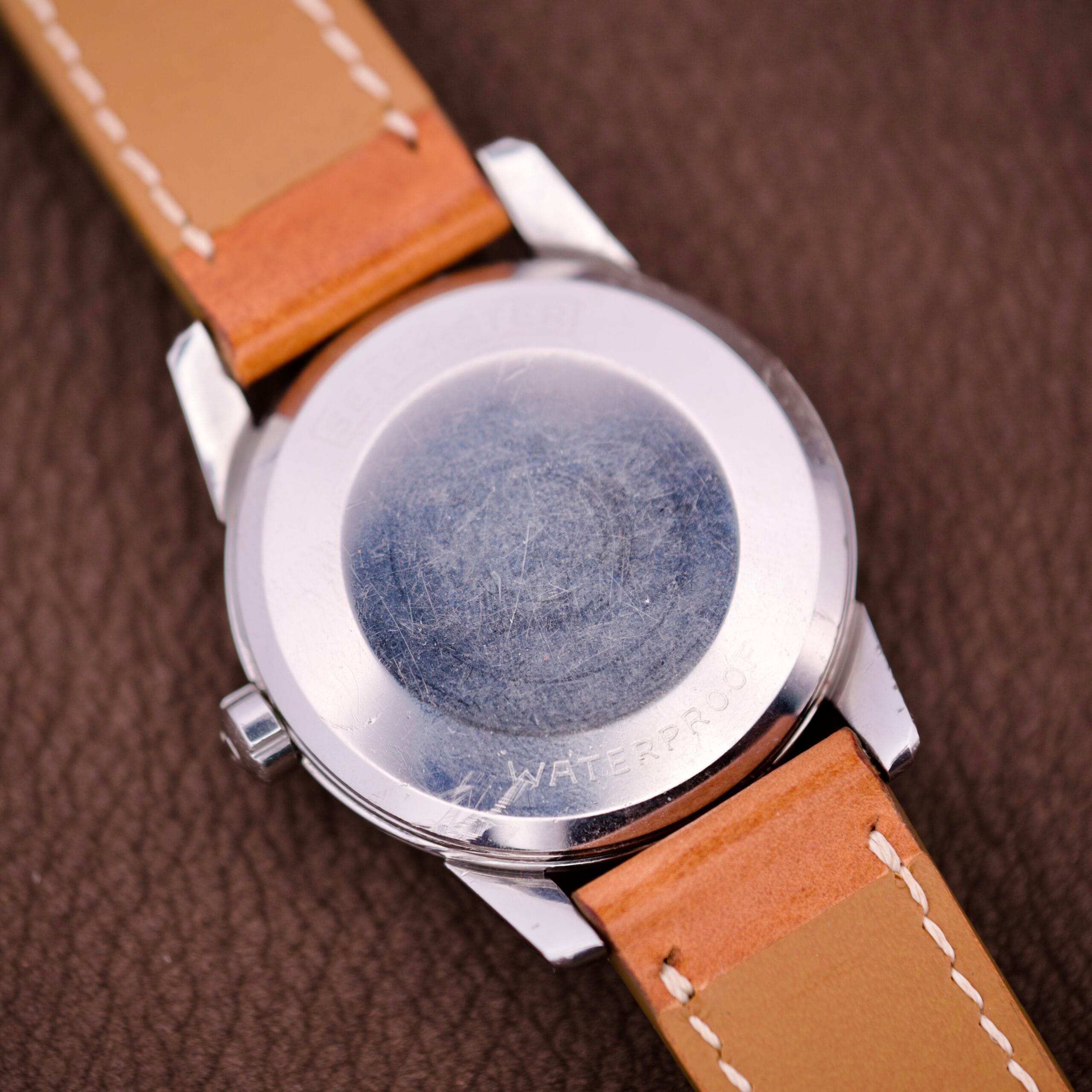
The case measures 34.2mm across with a 42mm lug-to-lug and 18mm between the lugs, a quietly proportioned mid-1950s footprint that wears far more presently than the case width suggests. The lugs are the softly faceted lyre style typical of early Seamasters, polished on the top surfaces and tapering cleanly into the case flank. Light hairlines and the kind of fine surface scuffing you would expect from a watch with seventy years of wear behind it are visible across the flanks, but nothing that compromises the original case geometry. The caseback is the plain stainless steel snap-on disc of the pre-1957 era, before Omega added the seahorse hippocampus engraving that became standard on later Seamasters. Lift the caseback off and the inner face is stamped in three languages, “DICHTUNG IM BODEN EINSETZEN” and “LOGER LE JOINT DANS LE FOND” and “PONGA LA JUNTA EN EL FONDO”, flanking the central “ACIER INOXYDABLE”, the Omega Watch Co. triangle logo, “FAB. SUISSE”, “SWISS MADE”, “PATENT + 315184”, and the case reference stamping itself.
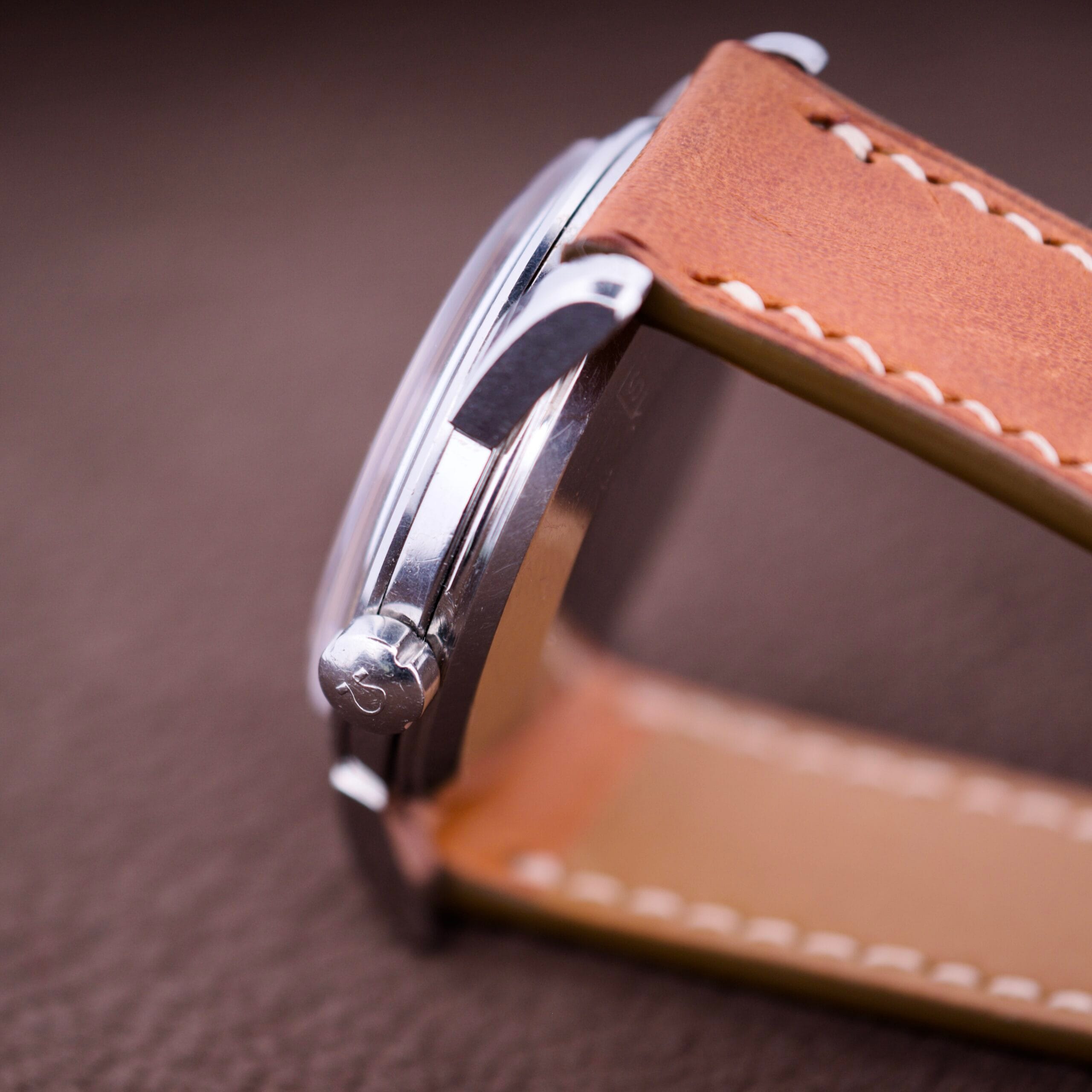
The dial is what carries this example. Originally a silvered finish, it has aged across its surface into a warm, uneven cream, with denser patina pooling in the upper right quadrant and lighter, almost untouched zones near the chapter ring. The applied facetted arrow indices are still bright at the edges, their luminous insets darkened down to a deep charcoal that traces back to original radium lume rather than later tritium, exactly what we would expect on a dial that left the factory in the mid-1950s. The dauphine hour and minute hands carry matching lume tracks running down their centers, oxidized in sympathy with the markers, and a slim steel sub-seconds hand sweeps the recessed register at six o’clock. The signature stack at twelve reads “OMEGA” with the Ω logo, “Seamaster” in script, and “AUTOMATIC” in small caps, with a single-word “SWISS” printed at the very edge above the six marker. The crown is signed with the Omega Ω logo and sits unobtrusively at three.
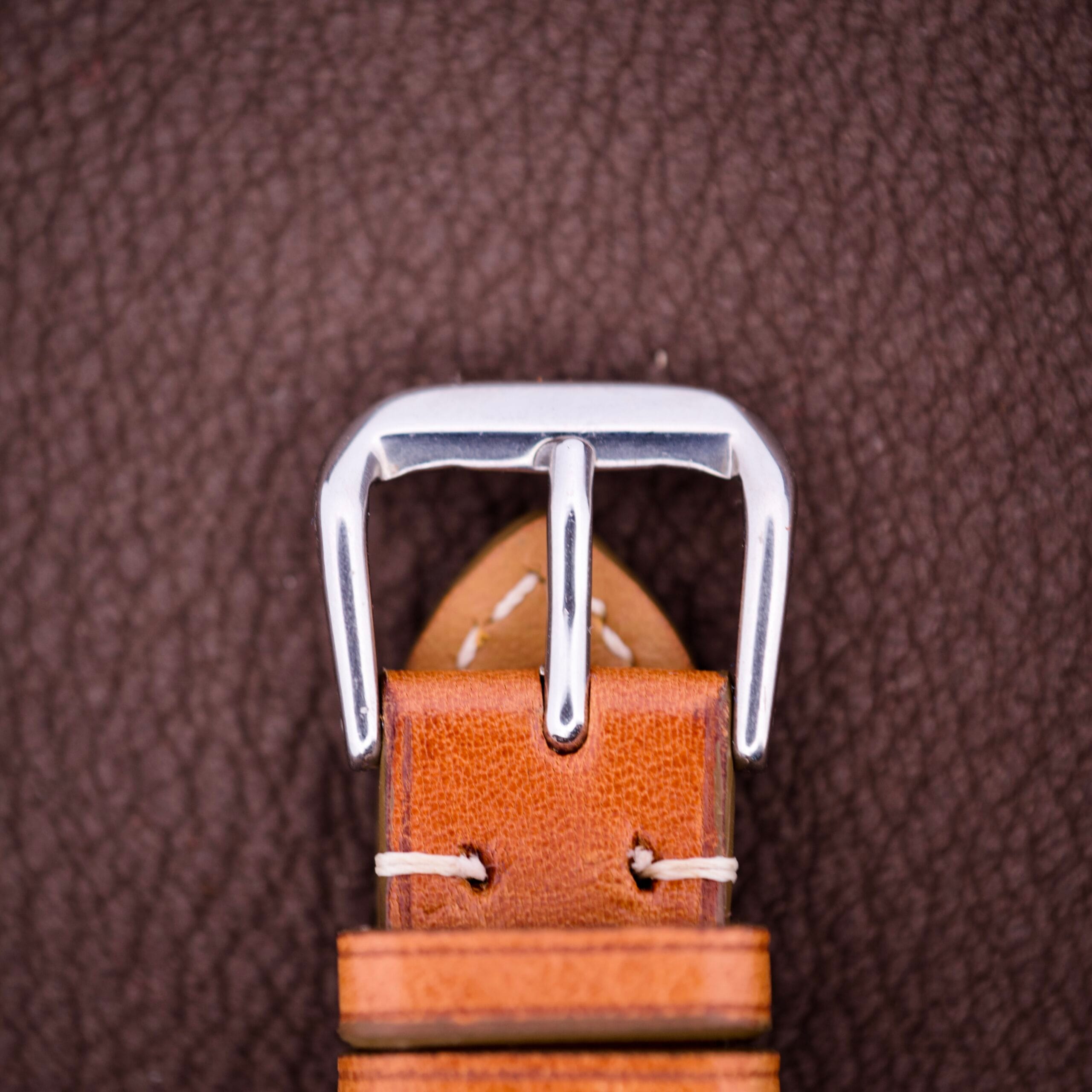
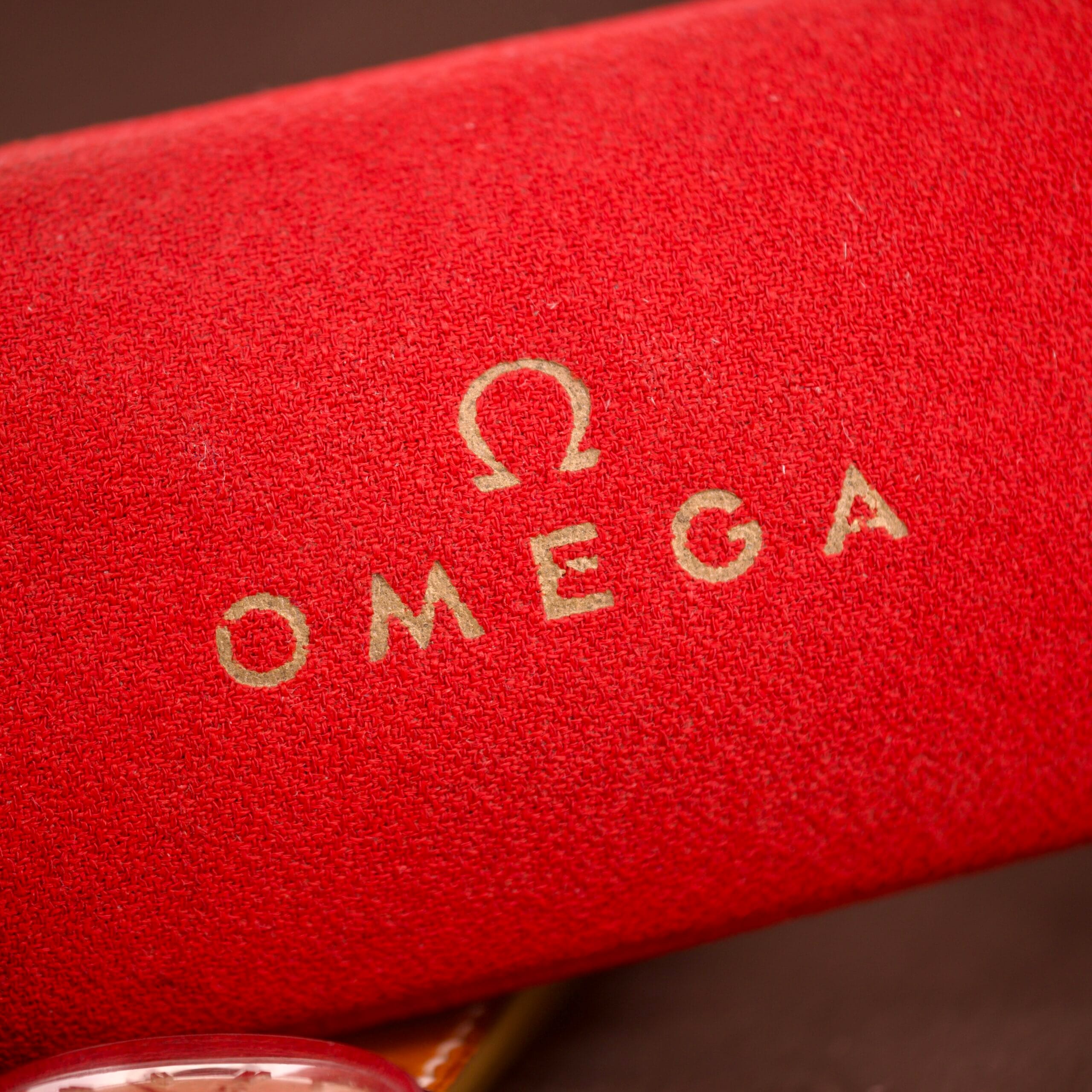
It is presented on a tan Buttero leather strap with white contrast stitching in 18mm, fitted to a polished steel buckle. The pairing leans into the warmth that the dial has developed and lets the polished steel case carry the contrast. A darker chocolate or oxblood strap would push the same watch toward a more formal register if that is your taste, and a tropical-tone calfskin or a vintage-style cordovan would work equally well. This particular example comes with its original red velvet-lined Omega presentation box, stamped with the gold Ω logo and “OMEGA” wordmark on the lid, a small but meaningful piece of provenance for a pre-seahorse Seamaster.
Serviced in-house at OTTUHR and backed by our 2-year mechanical warranty, this Omega Seamaster Automatic is for the collector who values the foundational years of the Seamaster line over the better-known dive-watch generations that came later. To us, it is one of the most quietly characterful ways into mid-1950s Omega, and a wonderfully honest example of what a Cal. 490 Seamaster was meant to look like when it left Bienne in the first place.