
There is a particular subset of vintage Bulova that most casual buyers walk right past and that the people who actually know the brand quietly hunt for, and the Bulova 30 Jewels Selfwinding is the cleanest entry point into that subset. To us, the 30-jewel automatics were Bulova writing a letter to itself about engineering ambition during a decade when American watch brands were under serious pressure to either move upmarket or surrender the category, and the watch in front of you is what happened when the company chose to push.
Bulova was, by 1961, the largest watchmaker in the United States by unit volume, but the high-jewel automatic program was where the brand argued for its horological credibility in the same conversation as the Swiss. The 23, 25, and 30-jewel selfwinding references were the top of the automatic range and were marketed accordingly, with the jewel count printed prominently on the dial as a kind of factory boast. The cal. 10BZAC inside this watch is the 30-jewel variant of Bulova’s 10BZA family, an 11.5 ligne automatic running at 18,000 vph with bidirectional winding via a centrally pivoted rotor. The extra jewels rode the higher-friction parts of the train and the automatic mechanism, and the family was built in Bulova’s Jerusalem (Israel) and Bienne (Switzerland) facilities depending on the period. It is a quietly serious movement, and one that holds time well when serviced honestly.
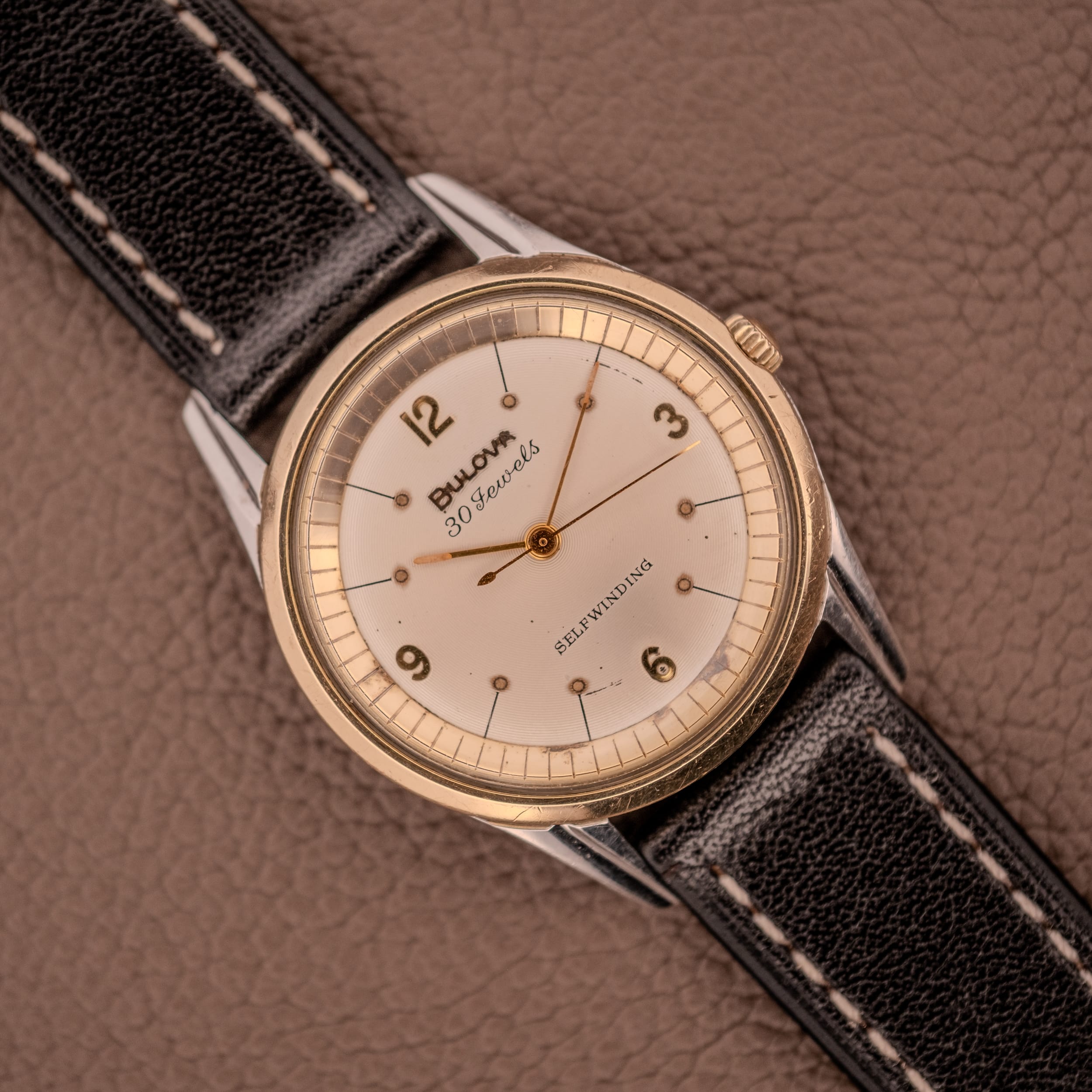
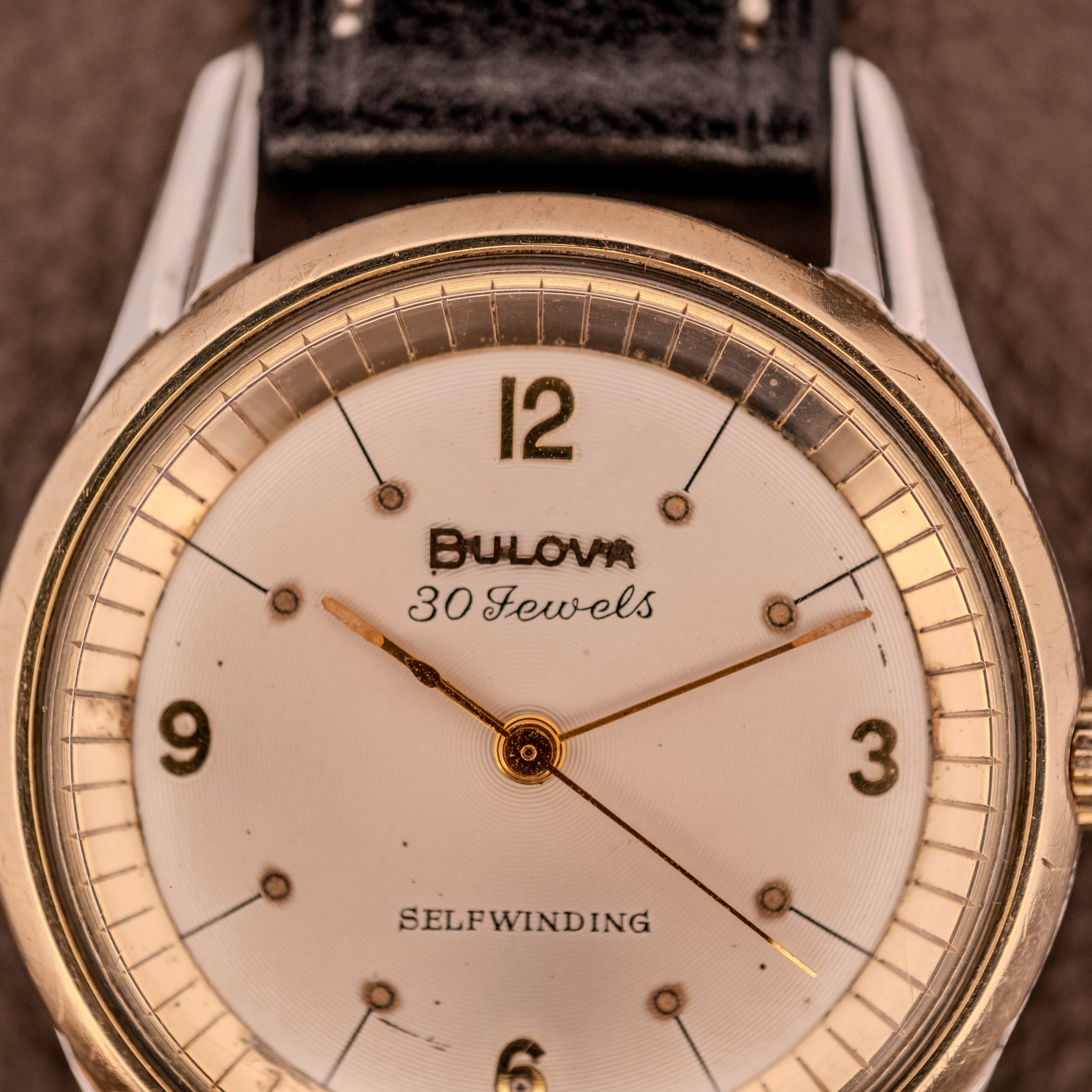
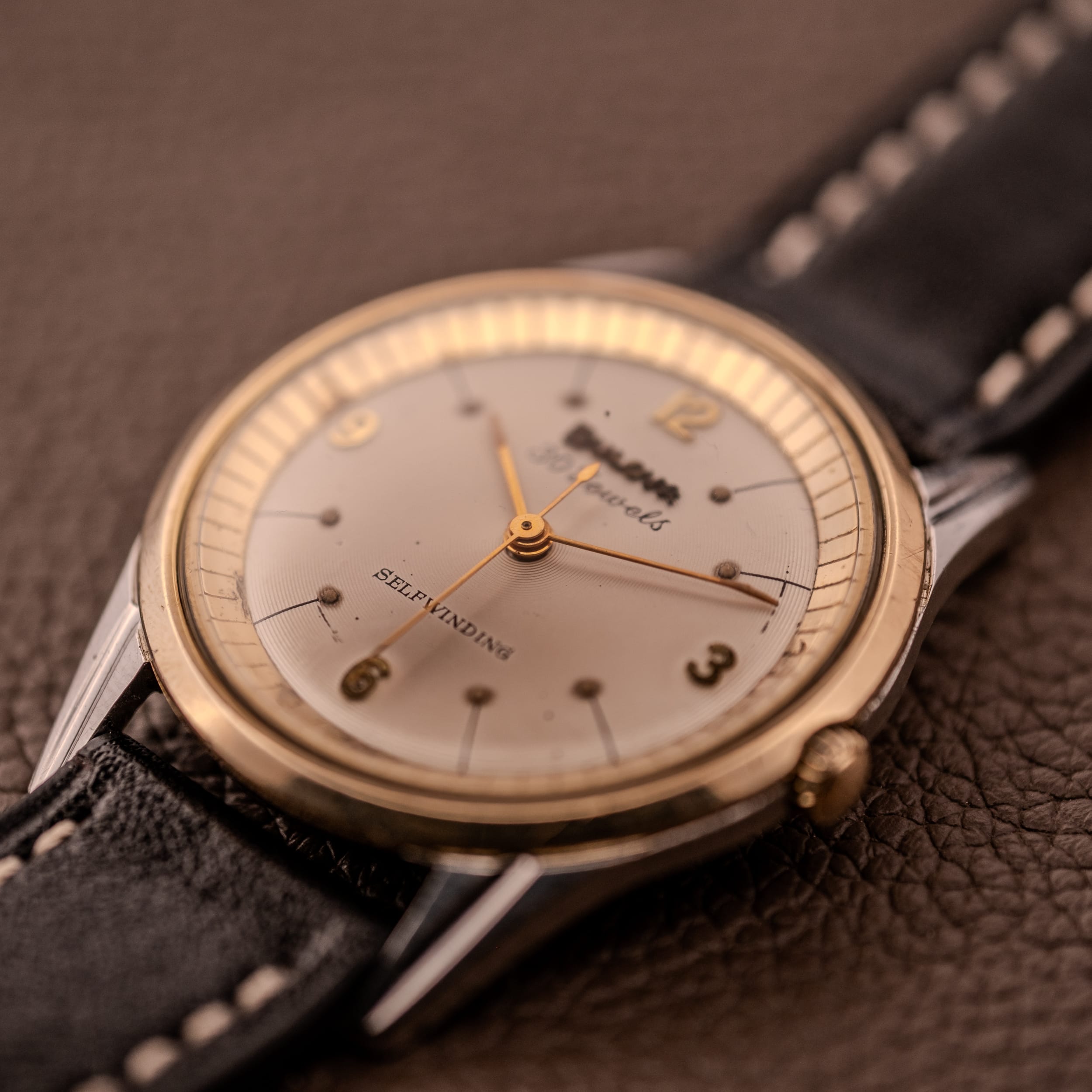
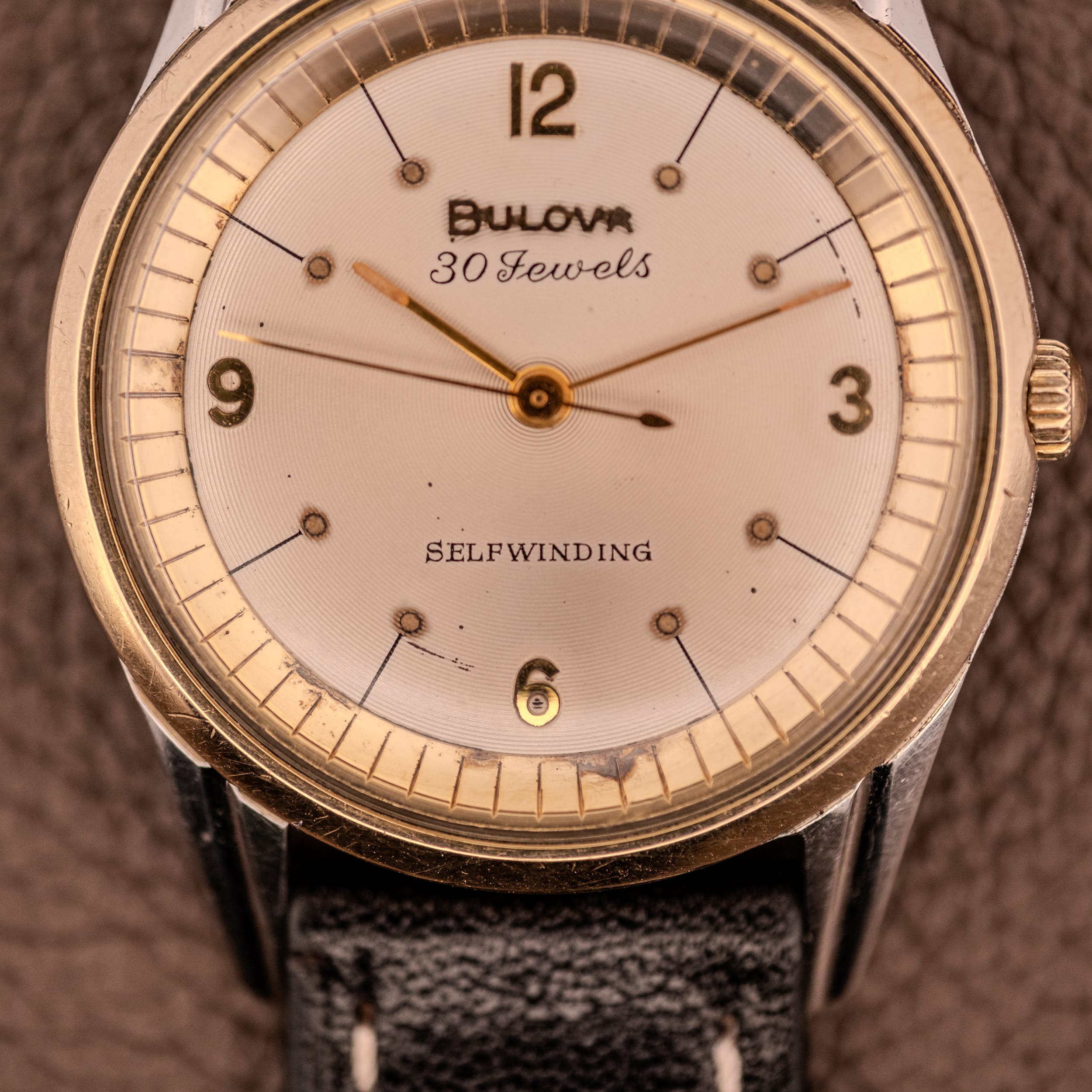
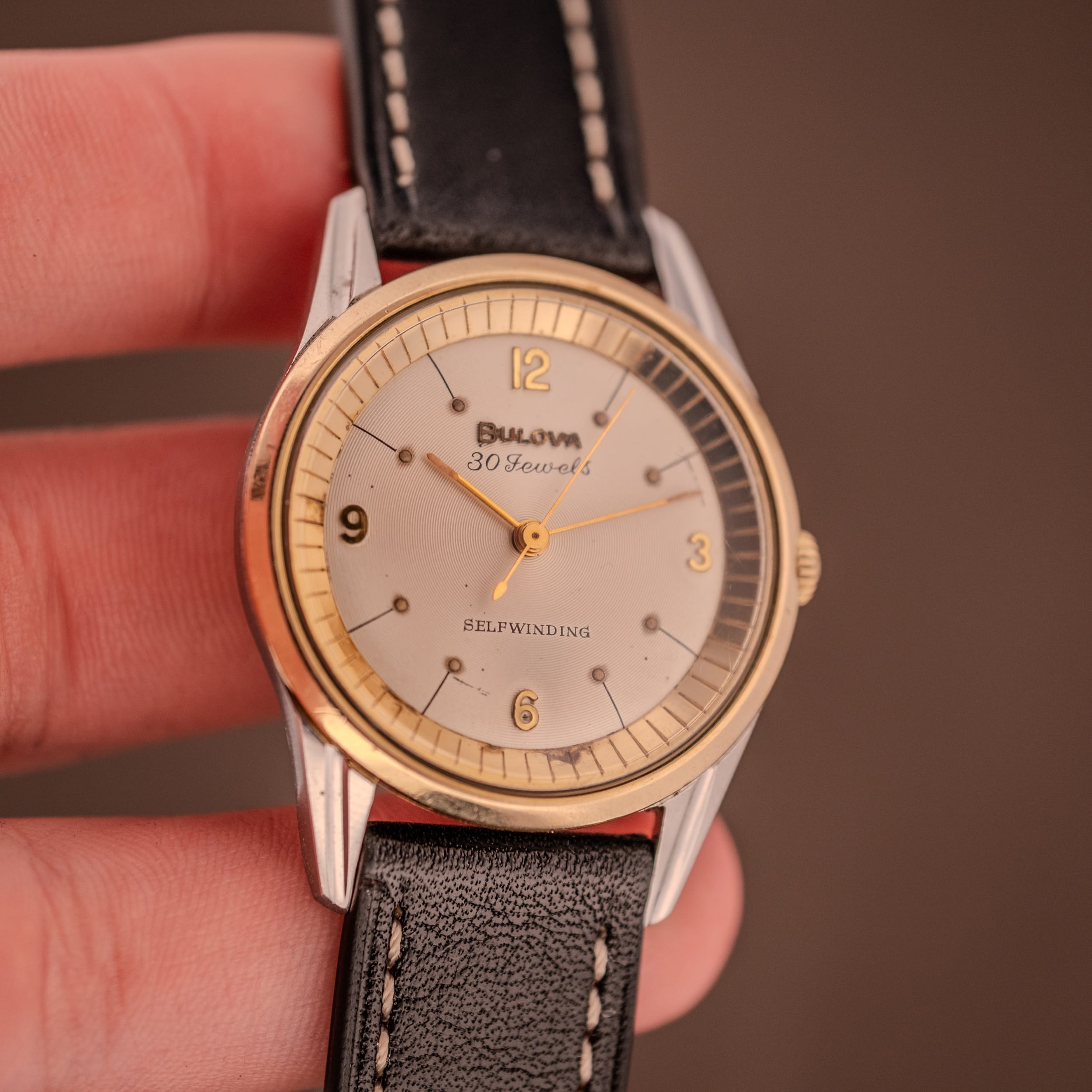
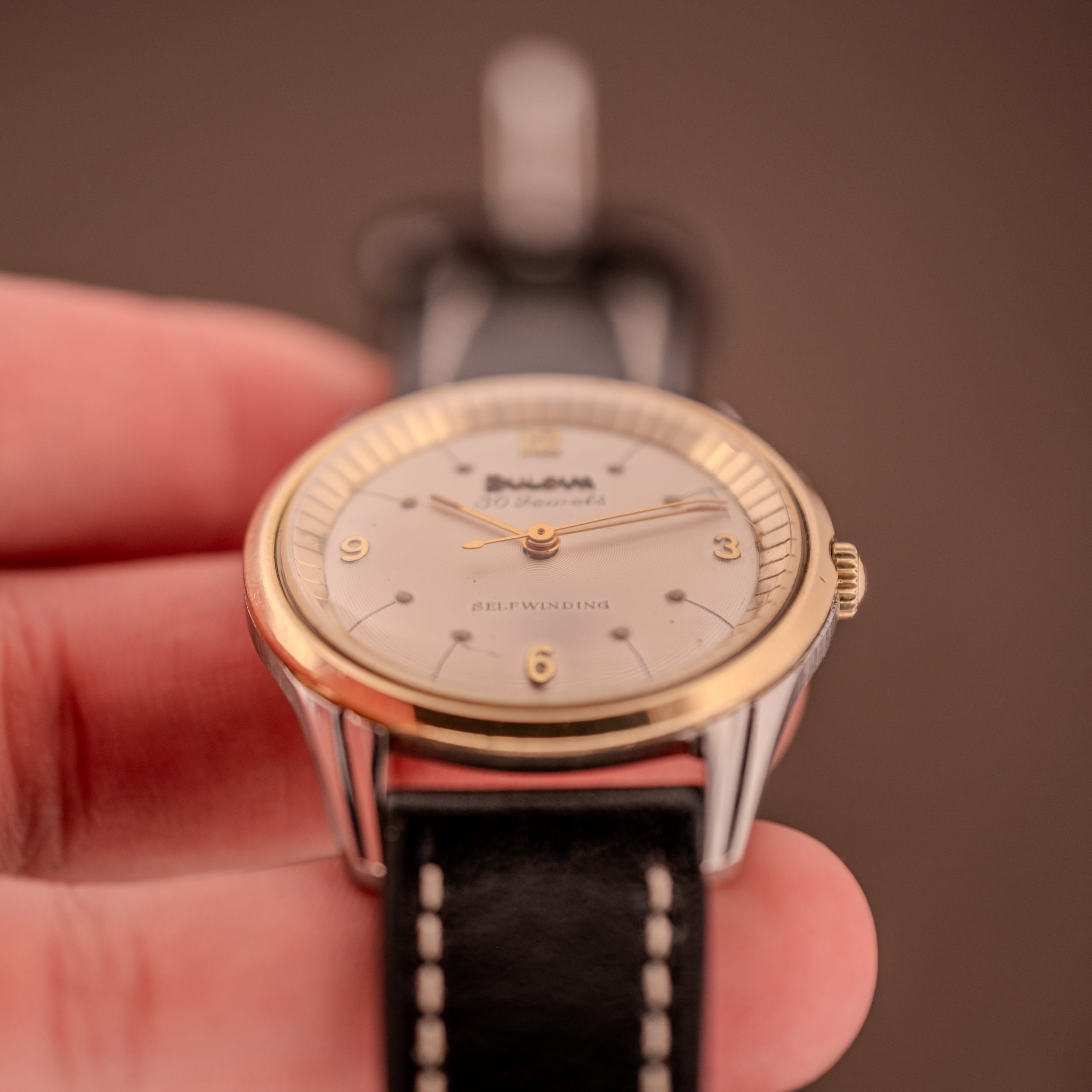
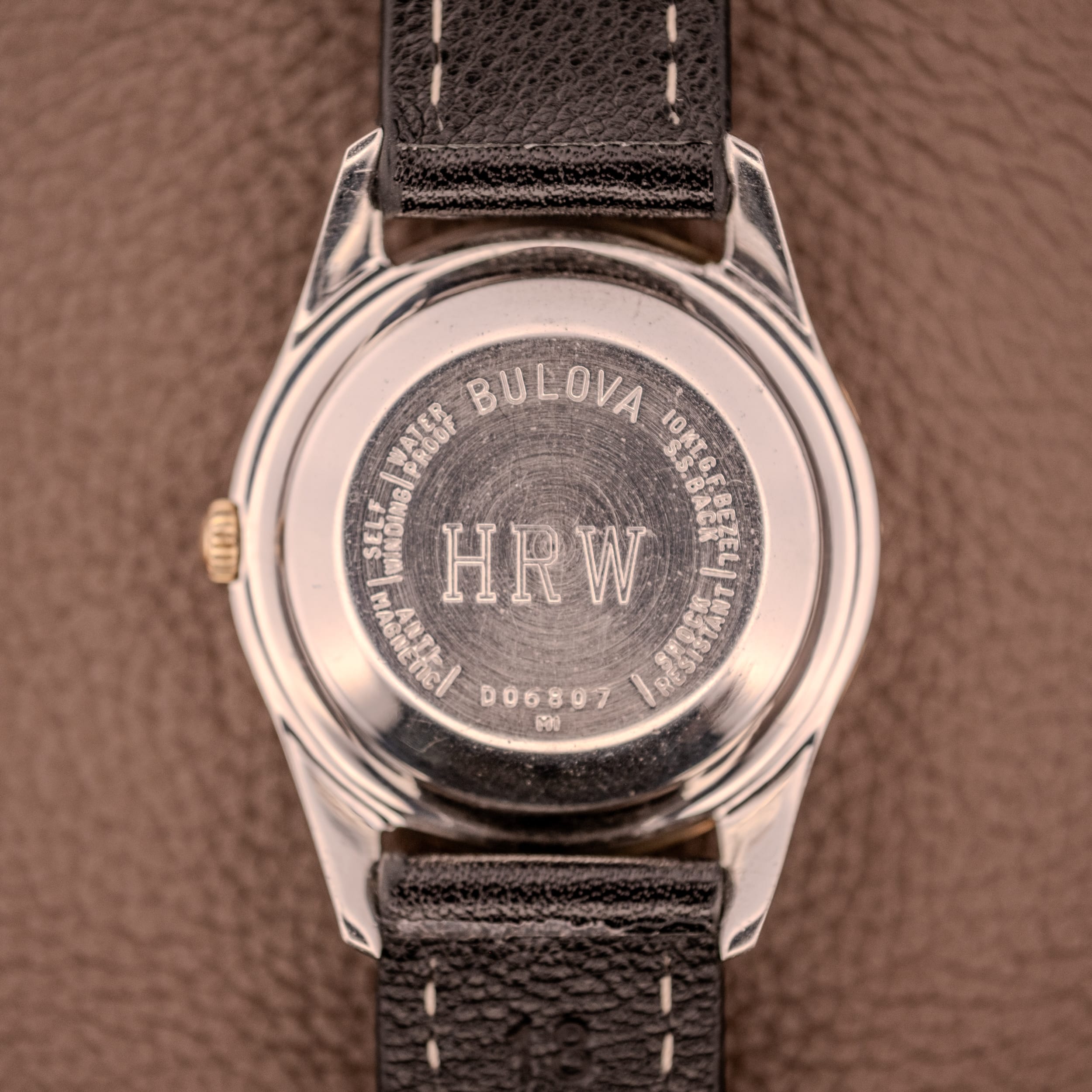
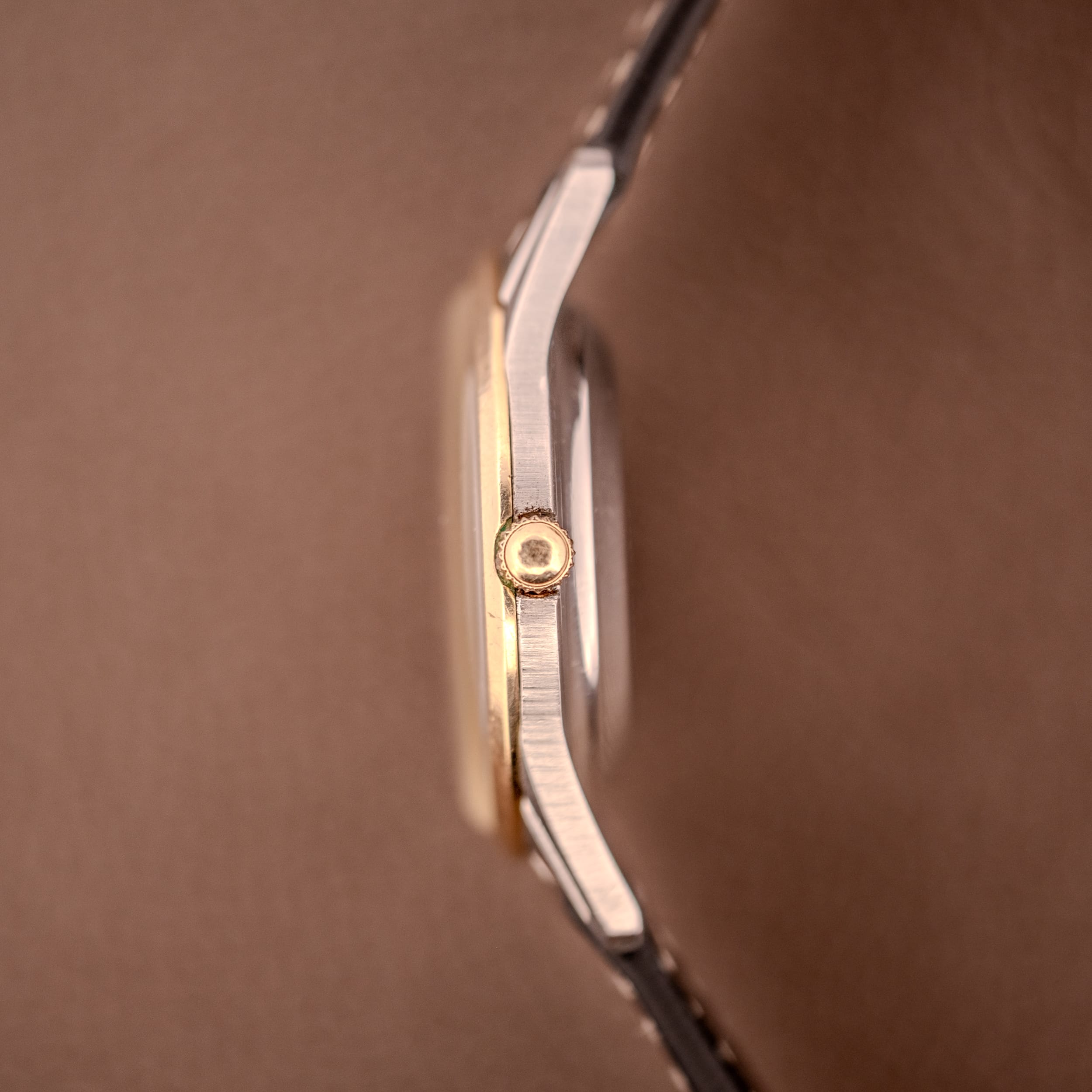
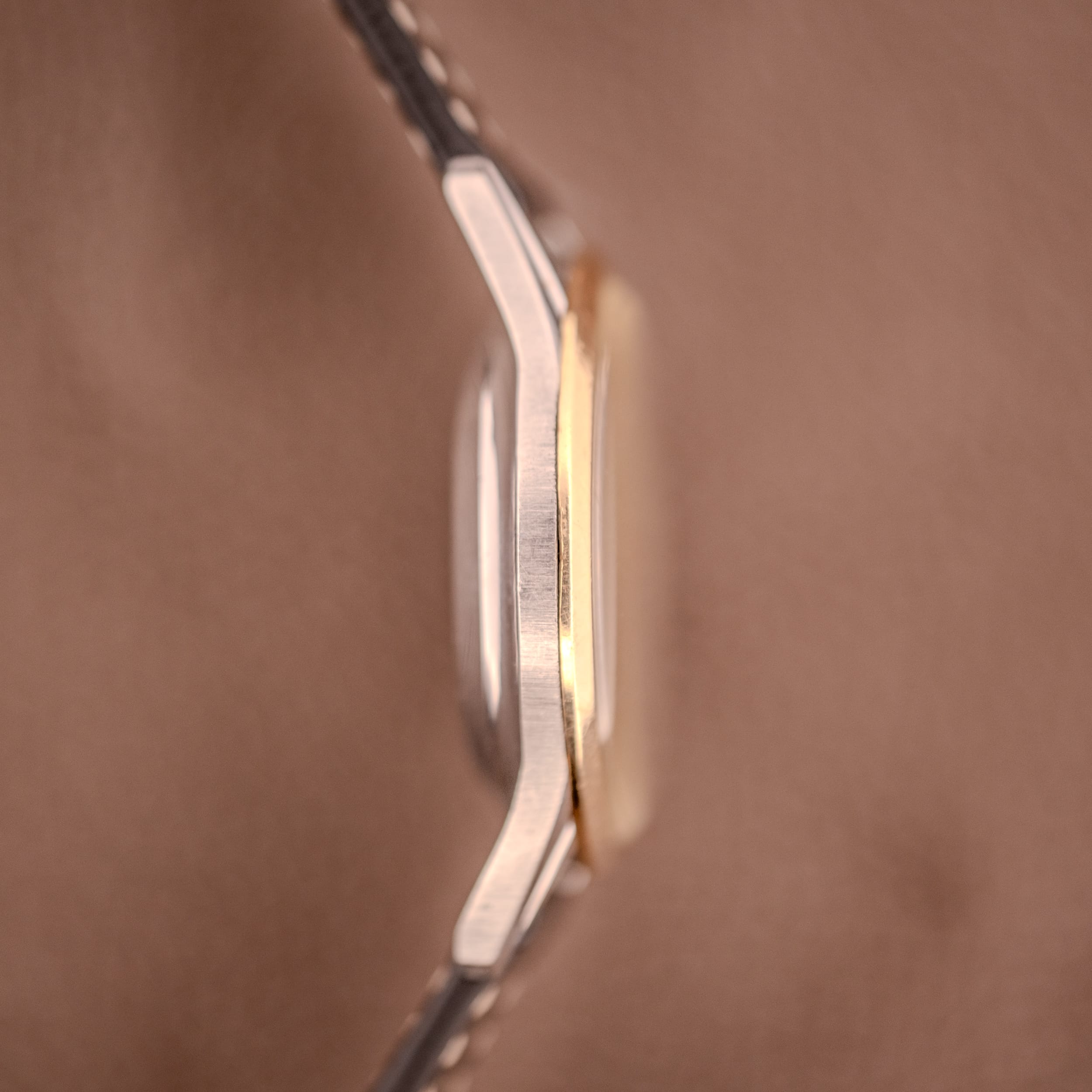
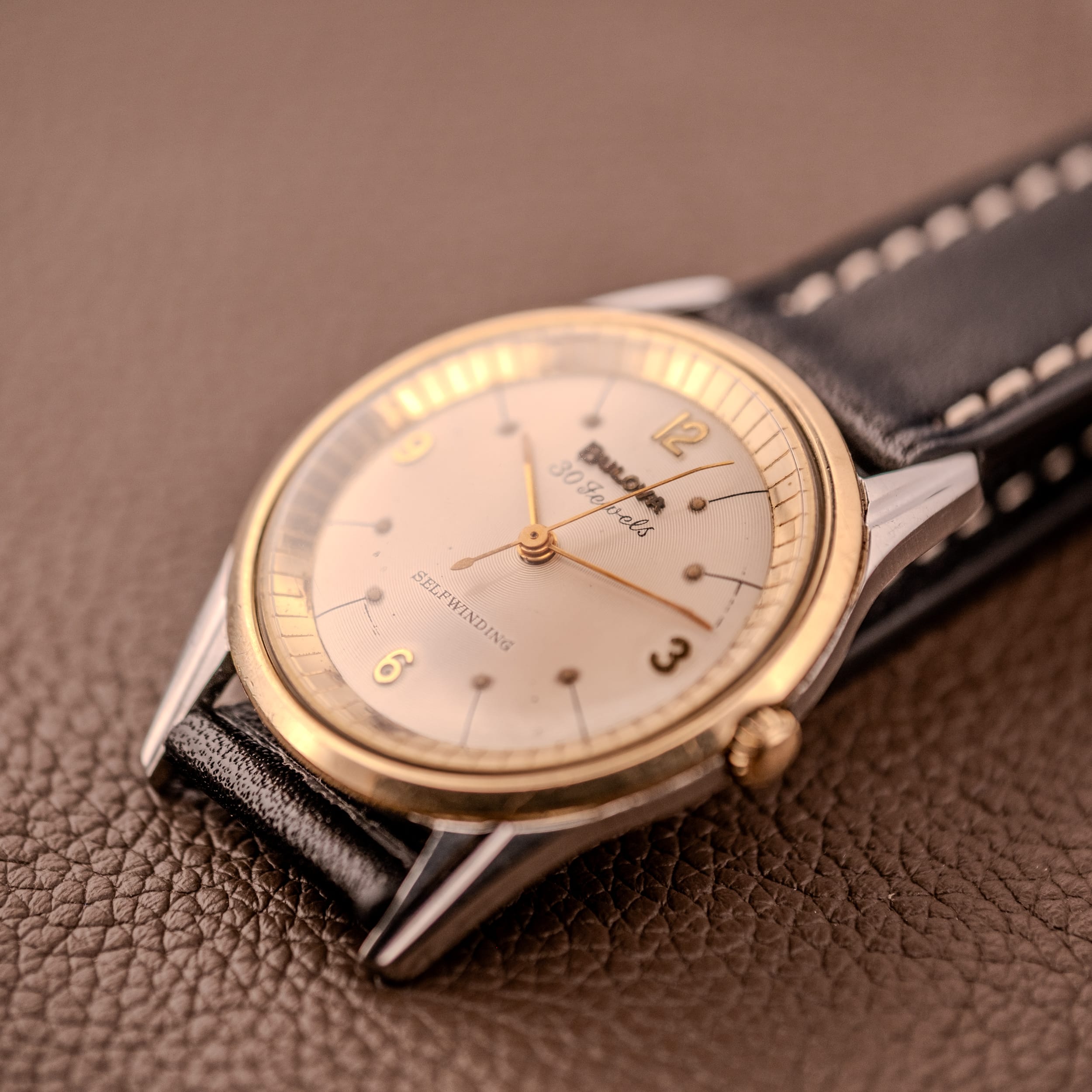
The case construction is exactly the kind of detail that rewards anyone who picks the watch up and looks at it in raking light. The 10K gold-filled bezel carries a fluted coin-edge pattern that runs the full perimeter and catches light from every angle, and it sits over a brushed stainless steel back stamped, verbatim around the outer ring, BULOVA / 10K G.F. BEZEL / S.S. BACK / SHOCK RESISTANT / ANTI-MAGNETIC / SELF WINDING / WATER PROOF, with the central engraved monogram HRW from the original owner cut deep enough to still read crisply six decades later. Below the monogram the serial D06807 and the date code M1 confirm 1961 production. The case measures 34mm across with an 18mm lug width, sized squarely in the period-correct dress range and wearing comfortably on a wrist up to 8.5 inches given the elegant downturned faceted lugs the design uses.
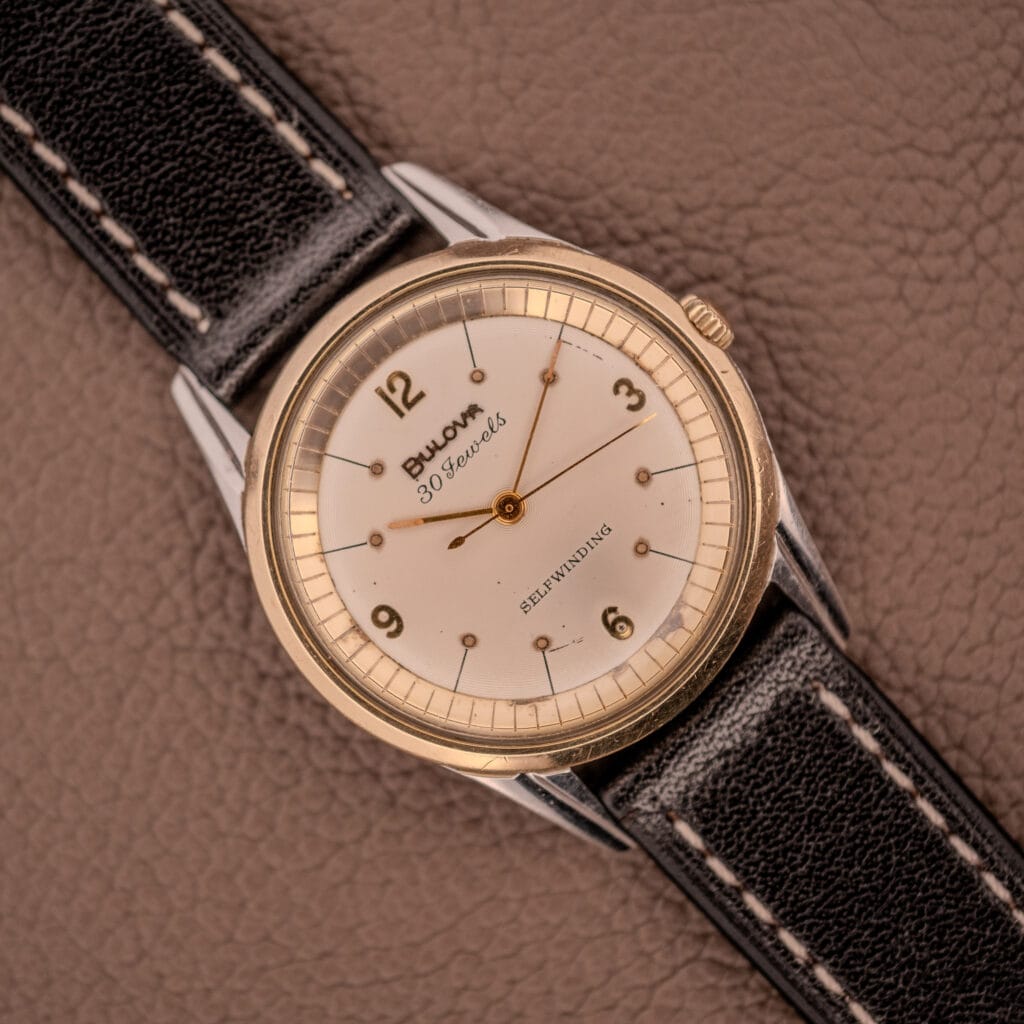
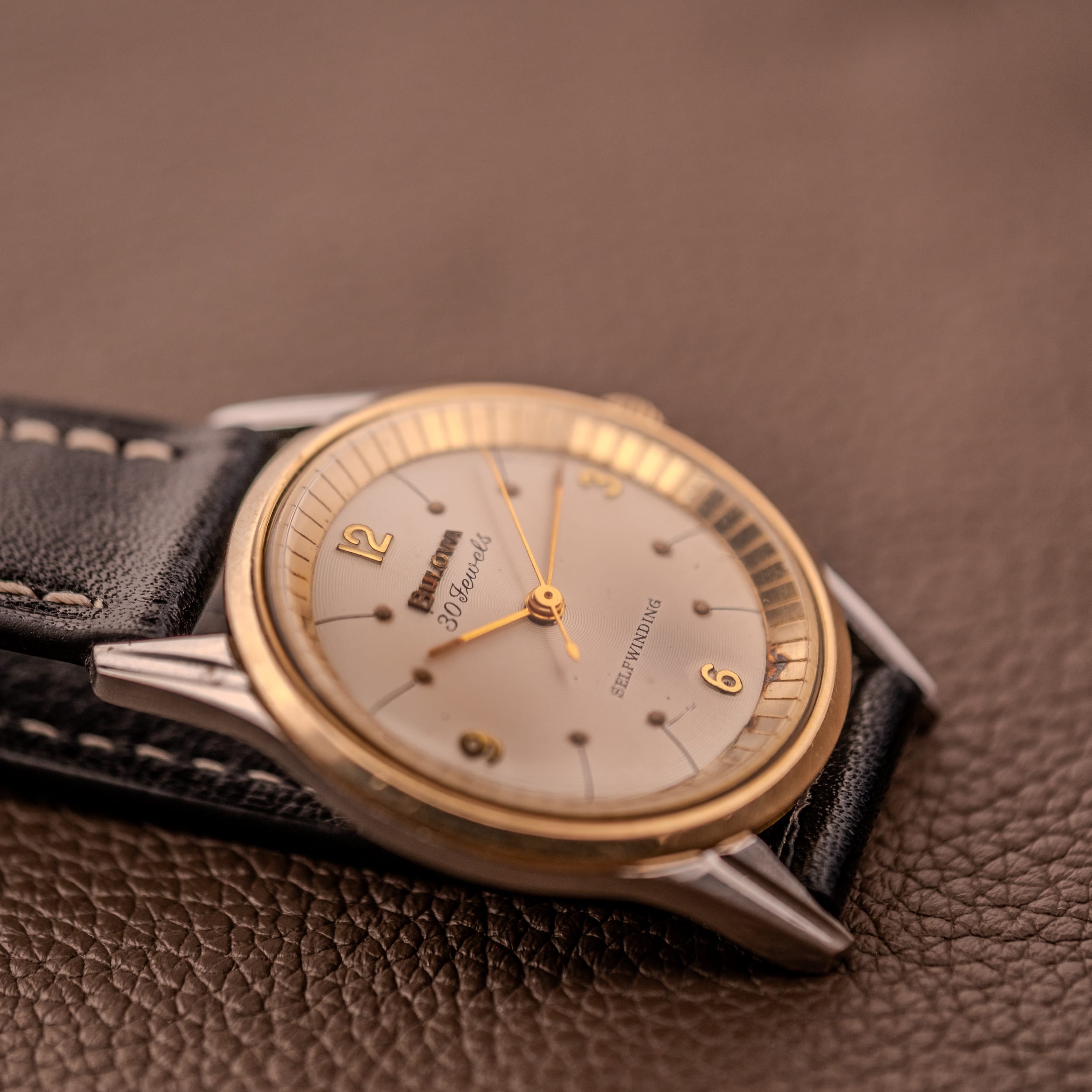
The dial is where the Bulova 30 Jewels Selfwinding really earns its keep on this example. The field is a soft silver with a fine concentric guilloché radiating outward from the center, the kind of pattern that reads almost matte at arm’s length and then opens into clear circular texture under the loupe. Applied gold Arabic numerals at 12, 3, 6, and 9 sit alongside small raised gold dot markers at the remaining hours, each dot connected back toward the center by a hairline radial line in dark print. The signature stack at twelve reads Bulova in cursive script with 30 Jewels in fine italic just below, and SELFWINDING is printed cleanly in upper-case at six. The gold lance hour and minute hands are original and have warmed honestly with age, and the slender gold sweep seconds hand is intact. There is no lume on the dial and there never was. This is a clean printed-and-applied composition, and it has aged factory-original.
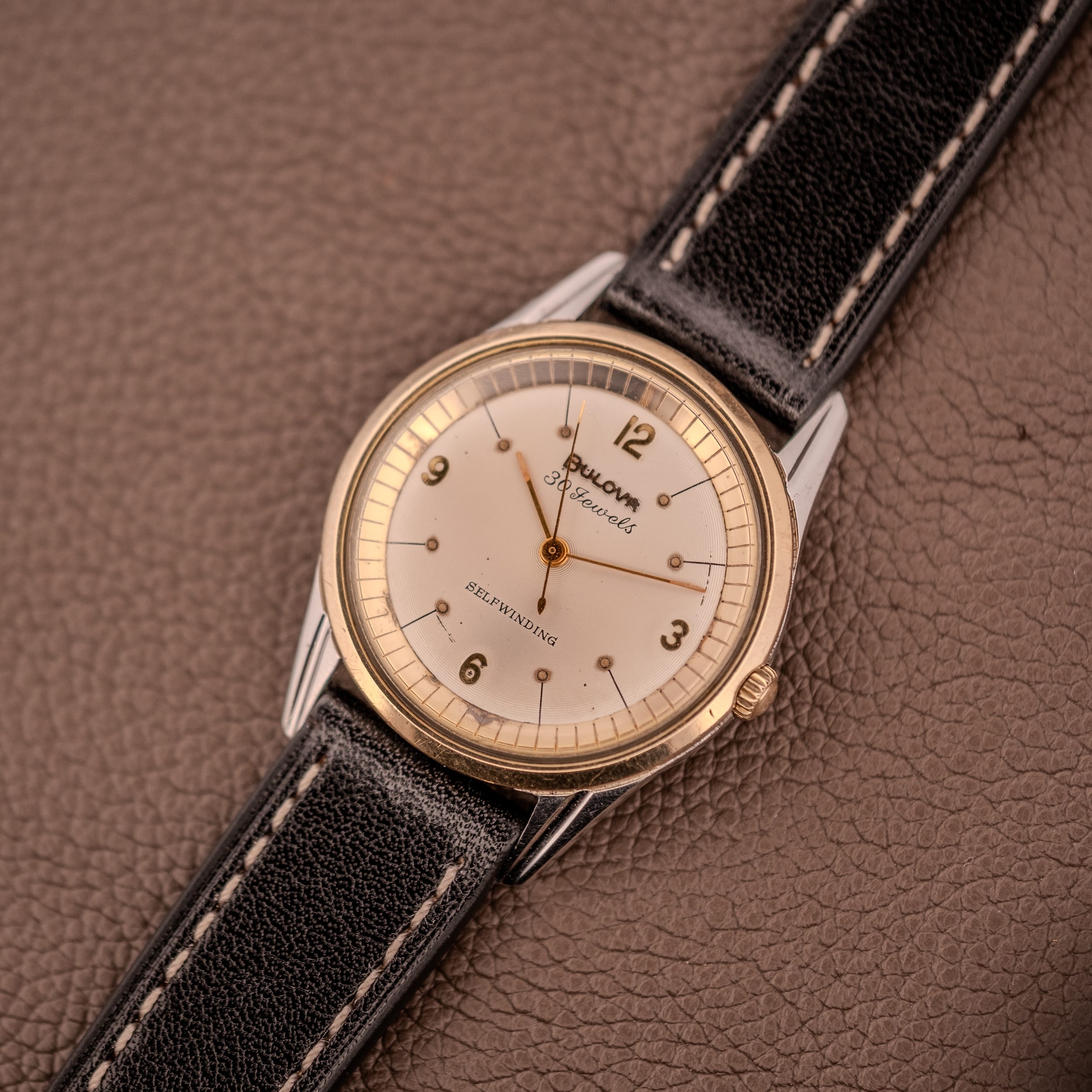
We have it on an OTTUHR black leather strap with cream contrast stitching, sized to fit comfortably up to an 8.5 inch wrist, on our signed buckle. The black-and-gold-and-silver palette of dial-bezel-strap works in a way that feels intentional rather than busy, which is more than you can say for a lot of two-tone vintage.
Serviced in-house at OTTUHR and backed by our 2-year mechanical warranty. For the collector who values understated American horology over chasing the Swiss canon, who reads a dial-printed jewel count as engineering pride rather than marketing noise, and who wants a daily-wearable vintage automatic with a documented date of birth, this Bulova 30 Jewels Selfwinding is exactly the kind of unassuming watch we love handling. In our opinion, it is also one of the best ways to own a piece of 1961 American watchmaking without paying a Swiss-brand premium for the privilege.