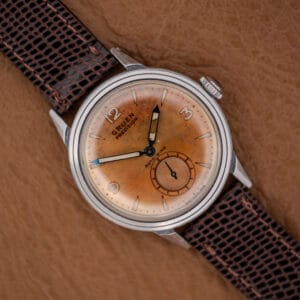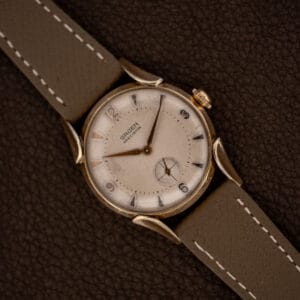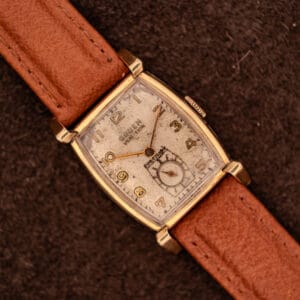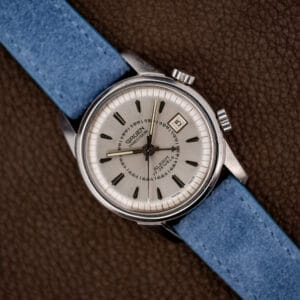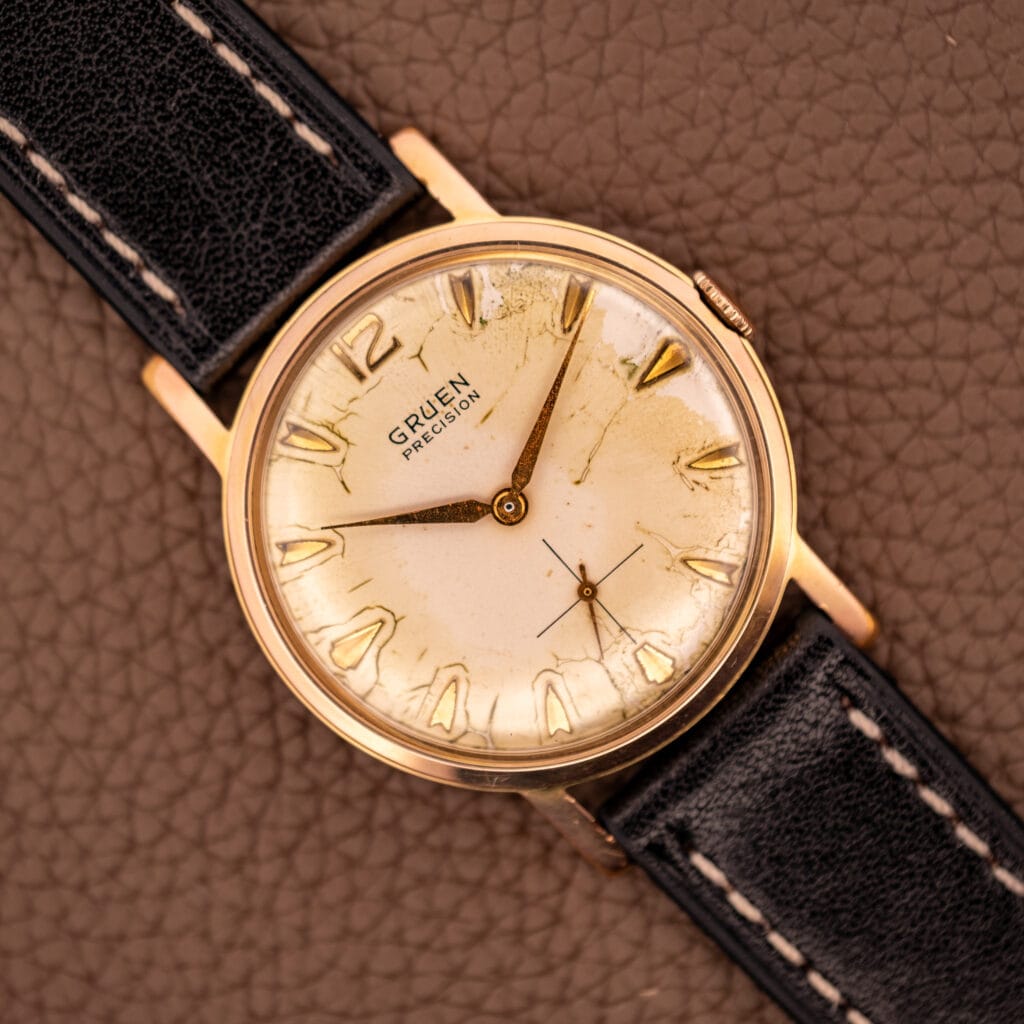
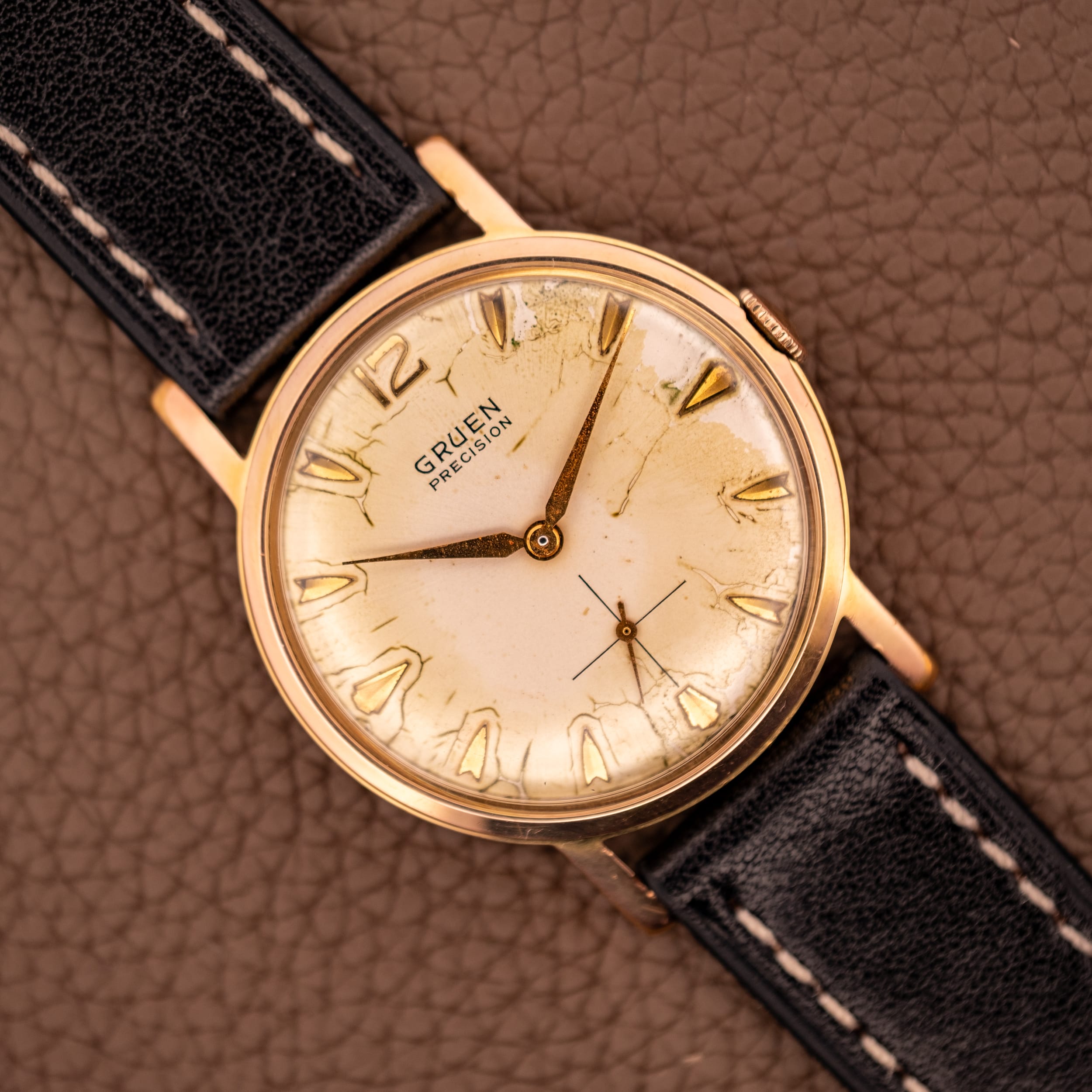
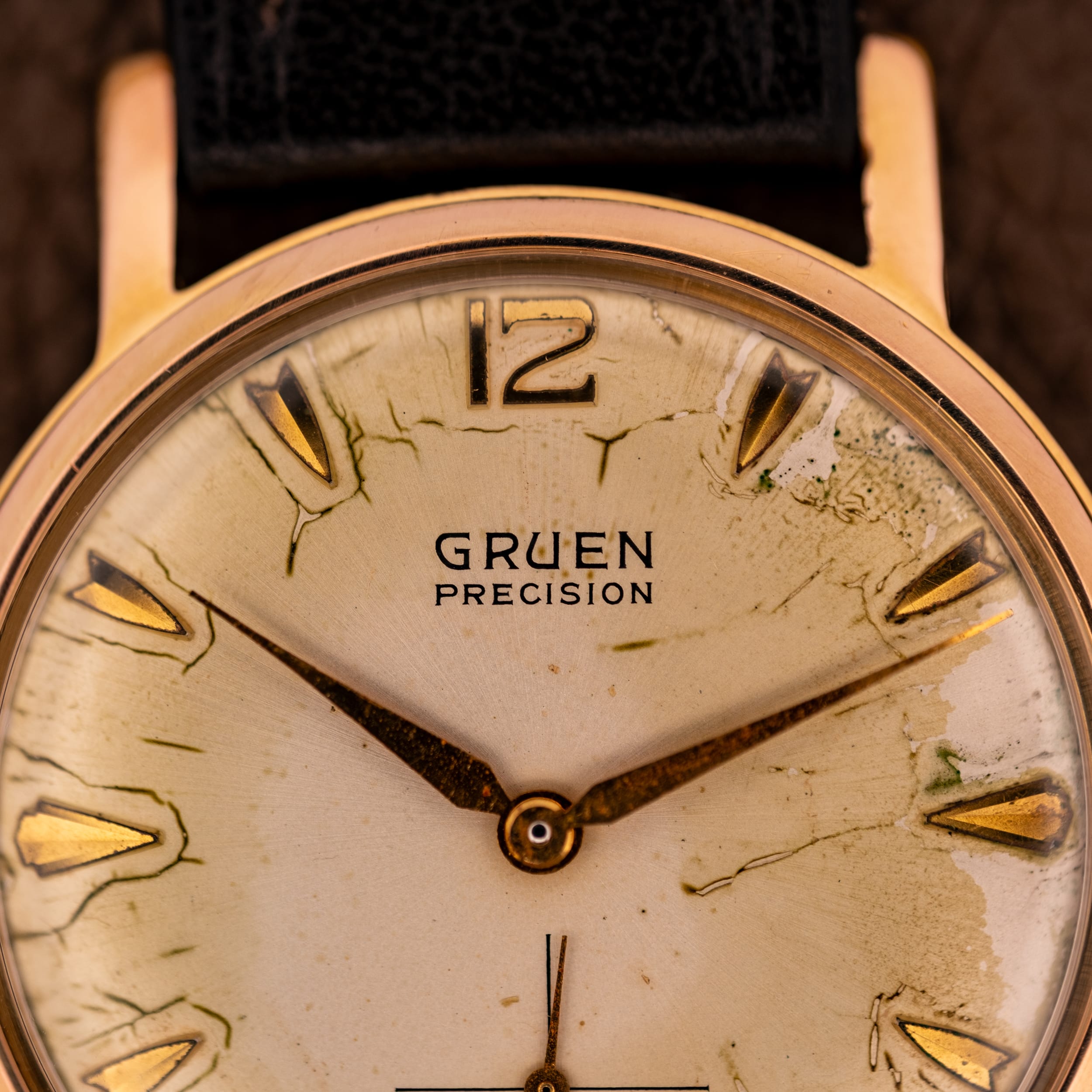
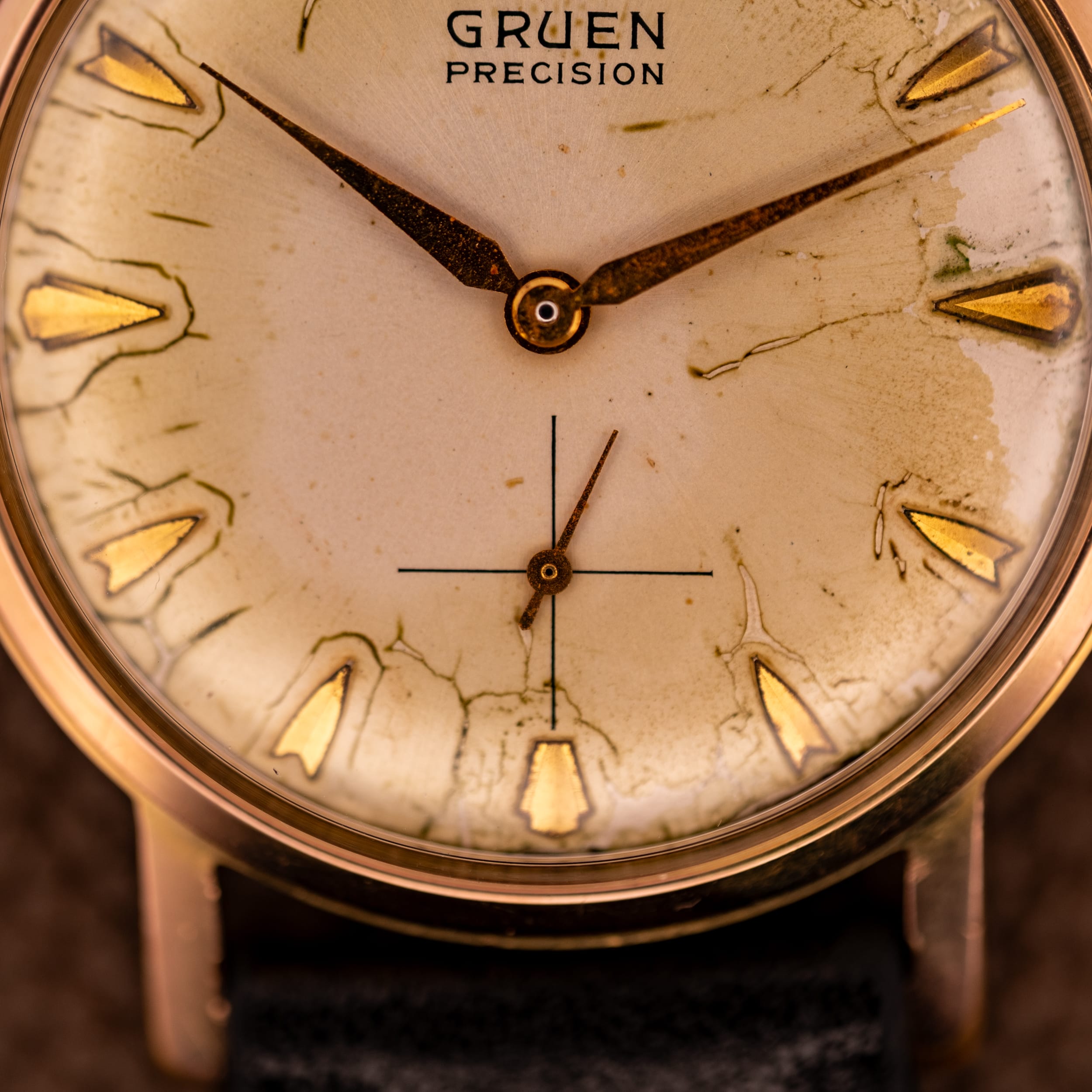
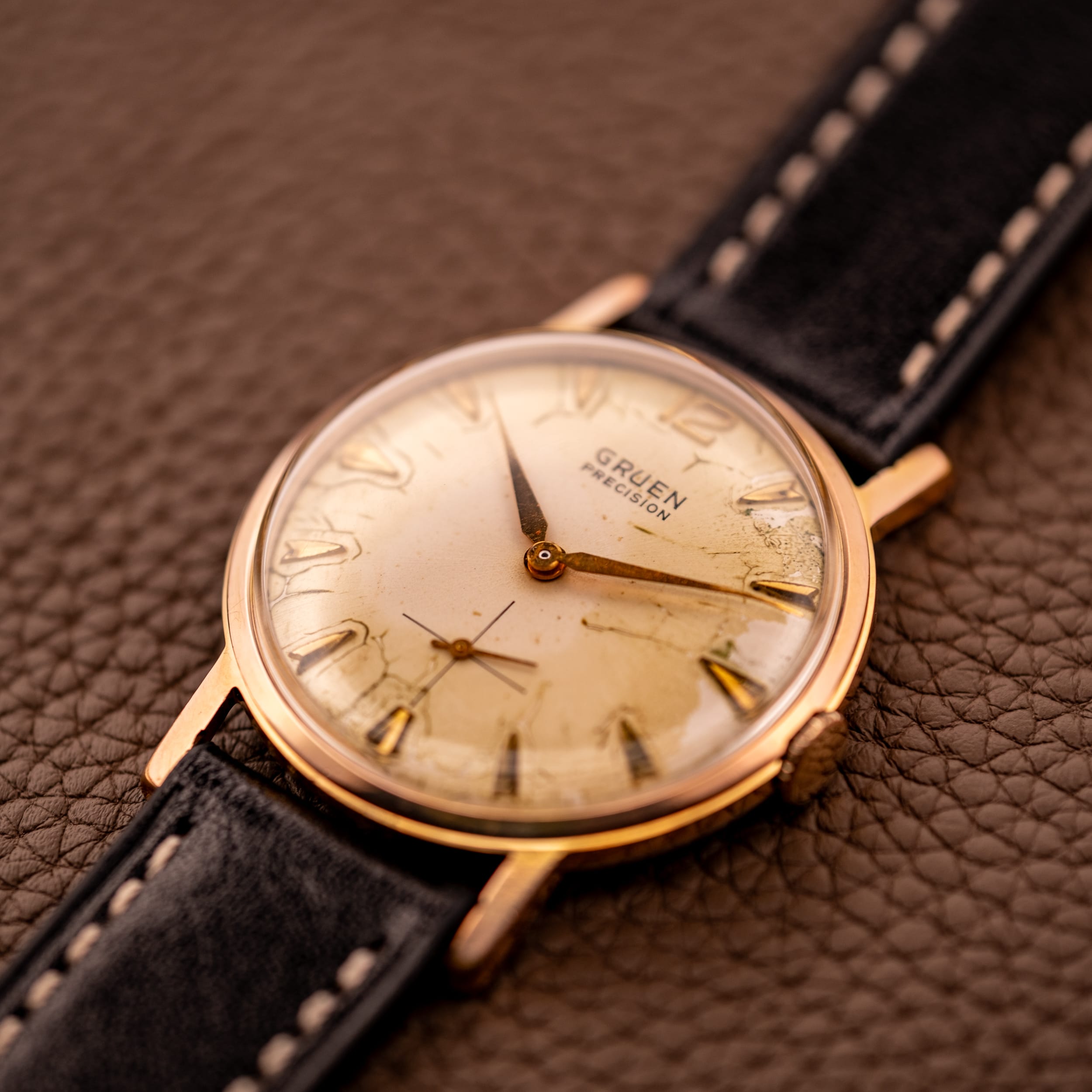
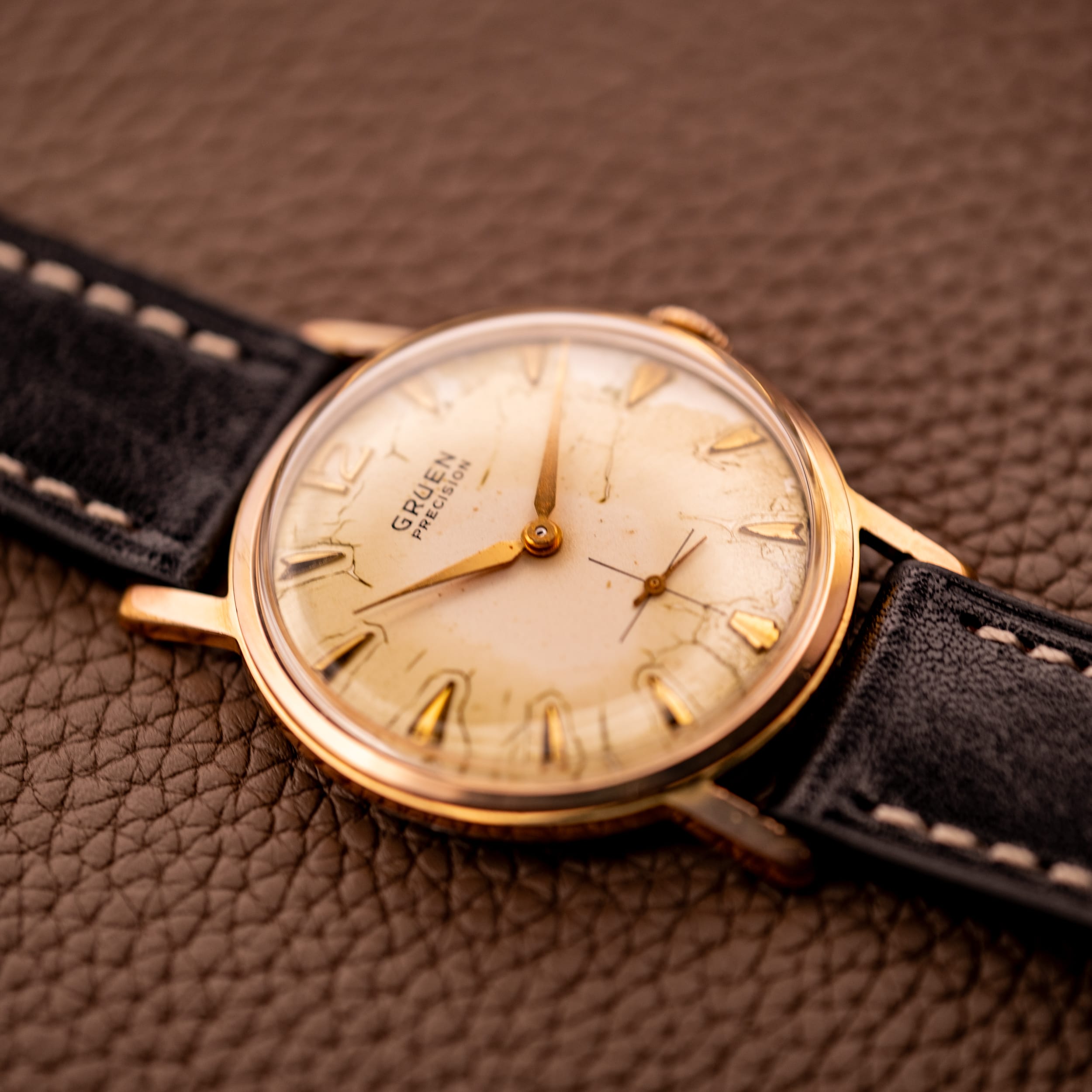
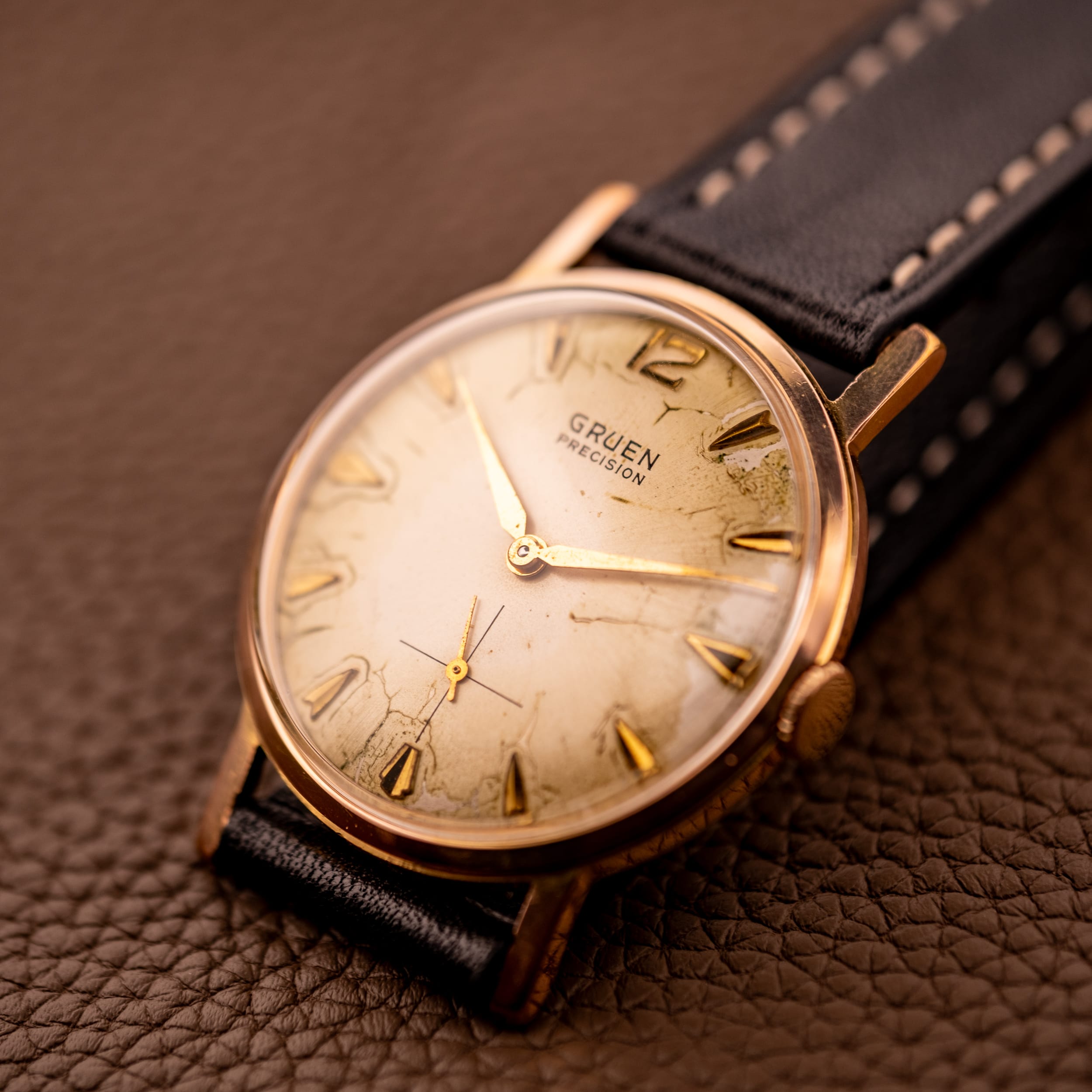
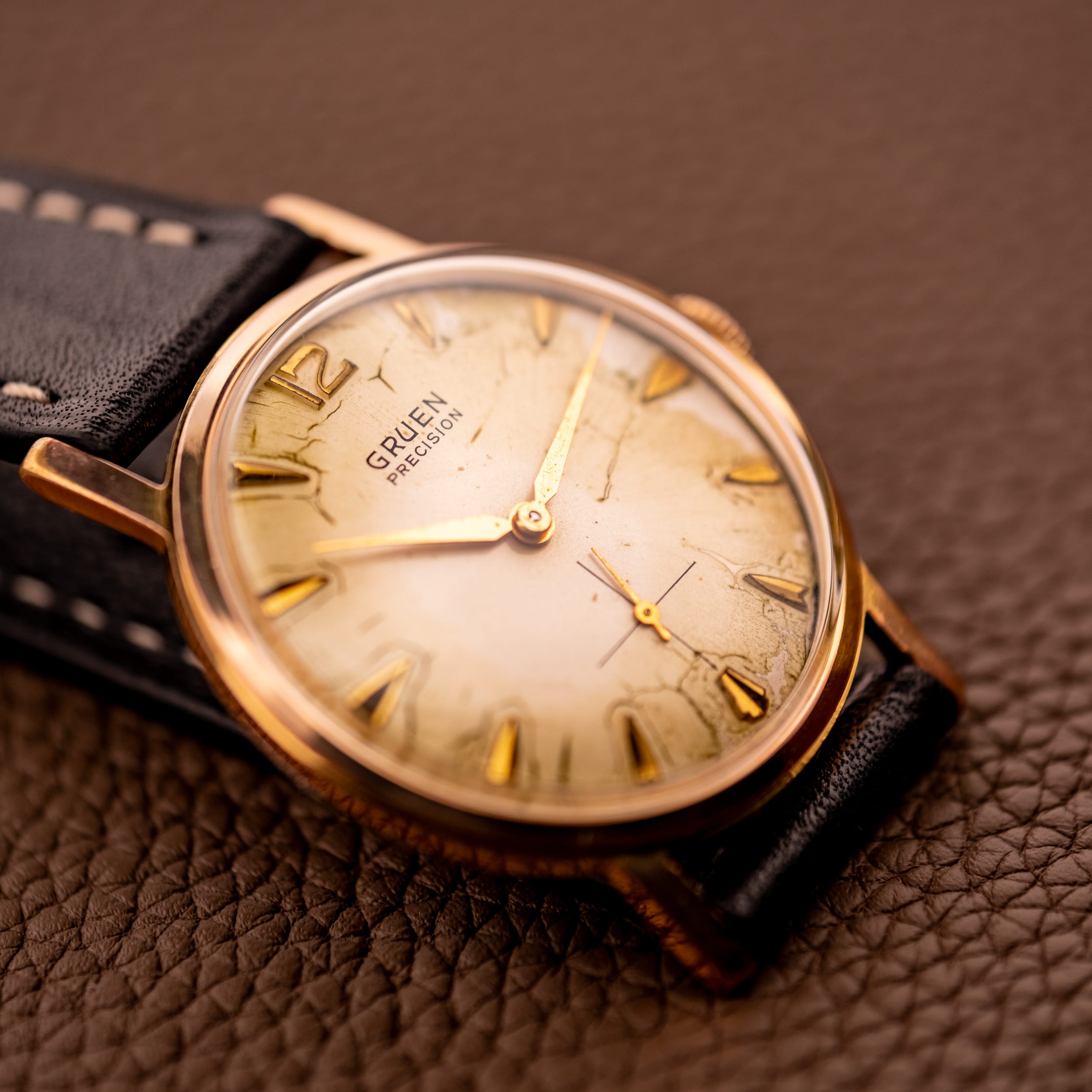
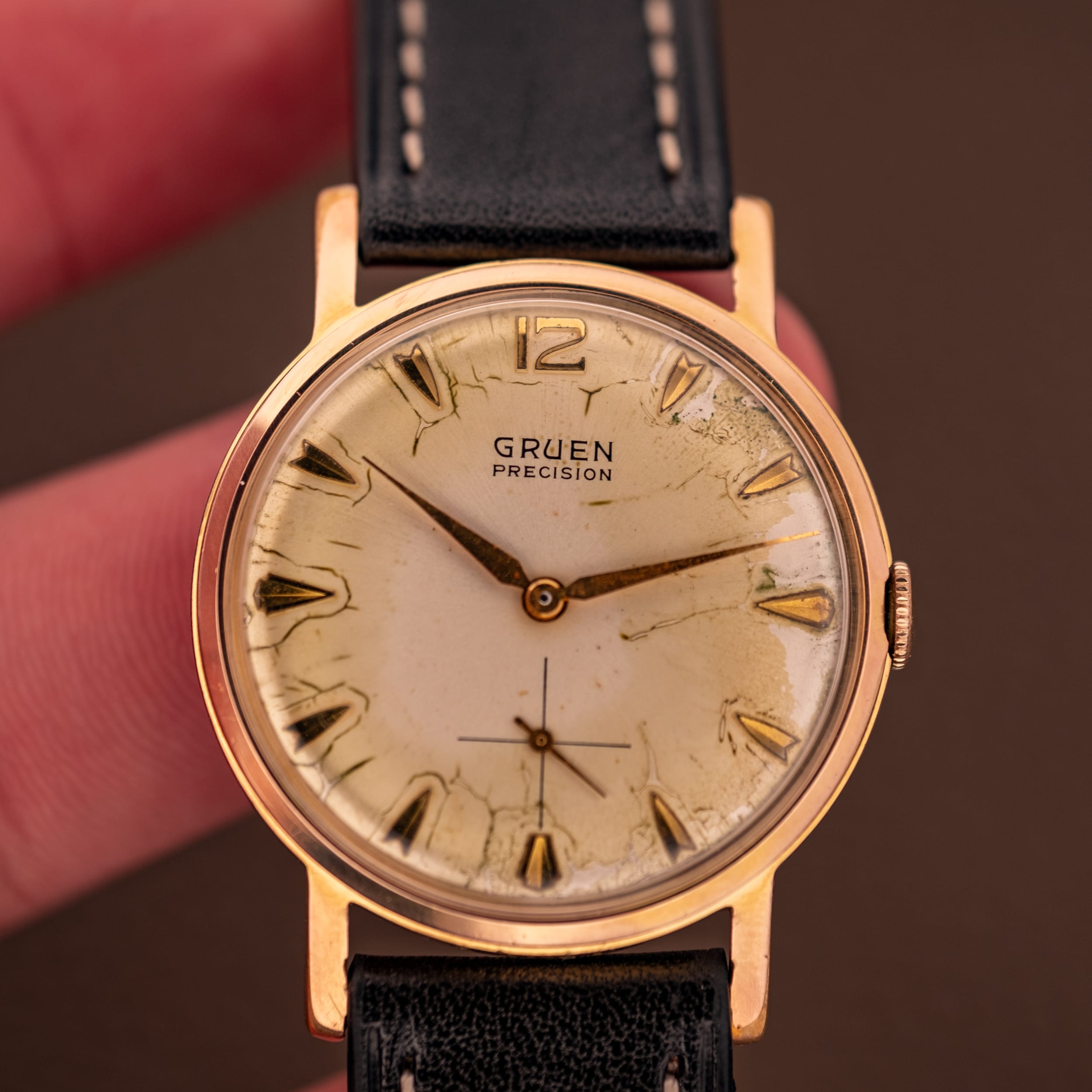
The dial is, in our opinion, the entire point of this Gruen Precision 510. We see plenty of clean mid-century American dress watches come across our bench, but the surface on this one has aged into something closer to a topographical map than a watch dial, with cracking, oxidation, and a wonderfully irregular cream-and-tobacco character that simply could not be replicated even if someone tried.
Gruen itself is one of the most historically important American watch names of the twentieth century, founded in 1894 by the German-born horologist Dietrich Gruen and his son Frederick, and headquartered for decades inside the brand’s “Time Hill” complex in Cincinnati. The Precision line was the company’s mid-century signature, a label that sat alongside the Curvex and the Veri-Thin as one of the defining shapes of what the American dress watch was supposed to be through the 1940s and 50s. There is a piece of cinematic trivia worth noting here as well, since a Gruen Precision is the watch Sean Connery wears in Dr. No in 1962, making this exact family the first wristwatch ever to appear on screen as James Bond.
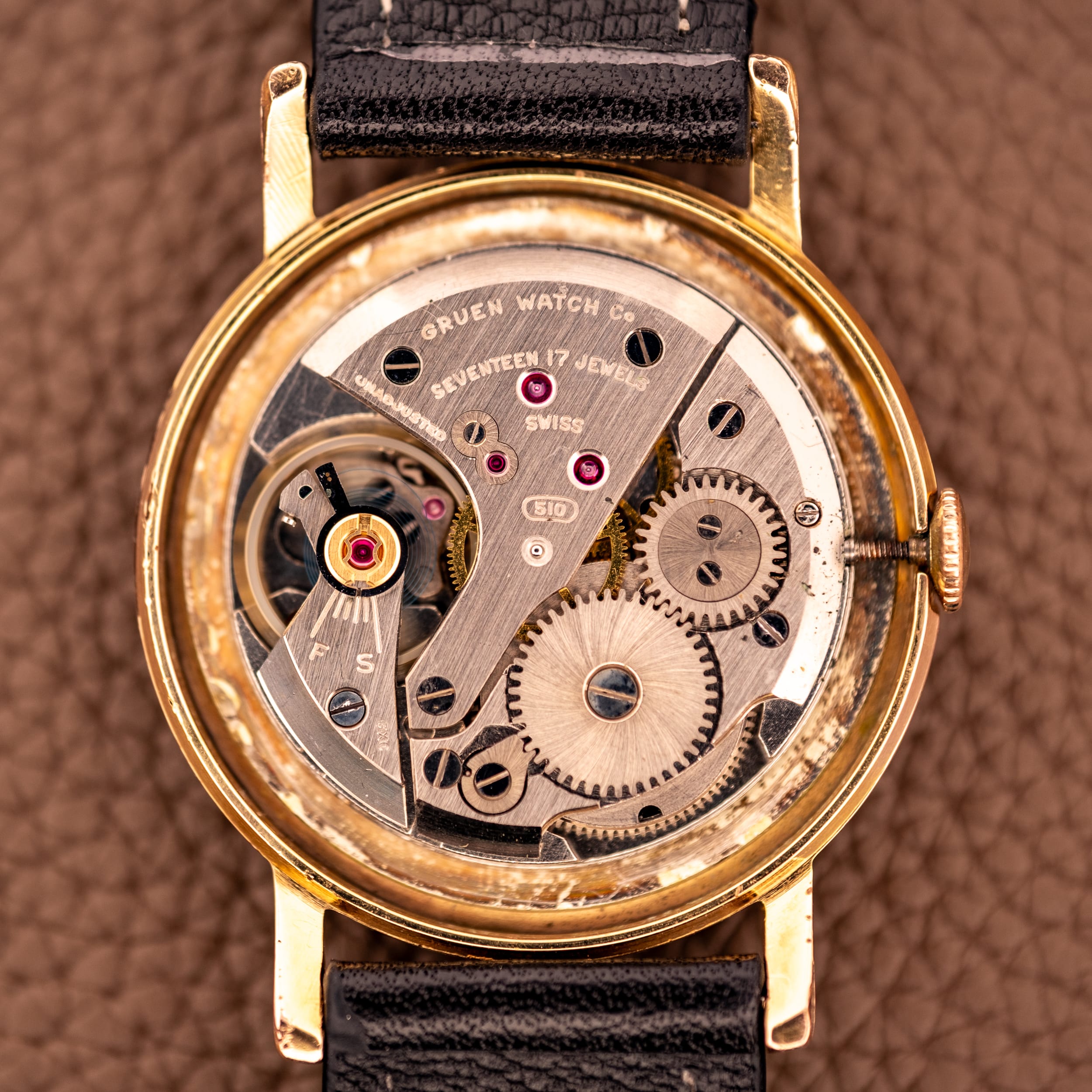
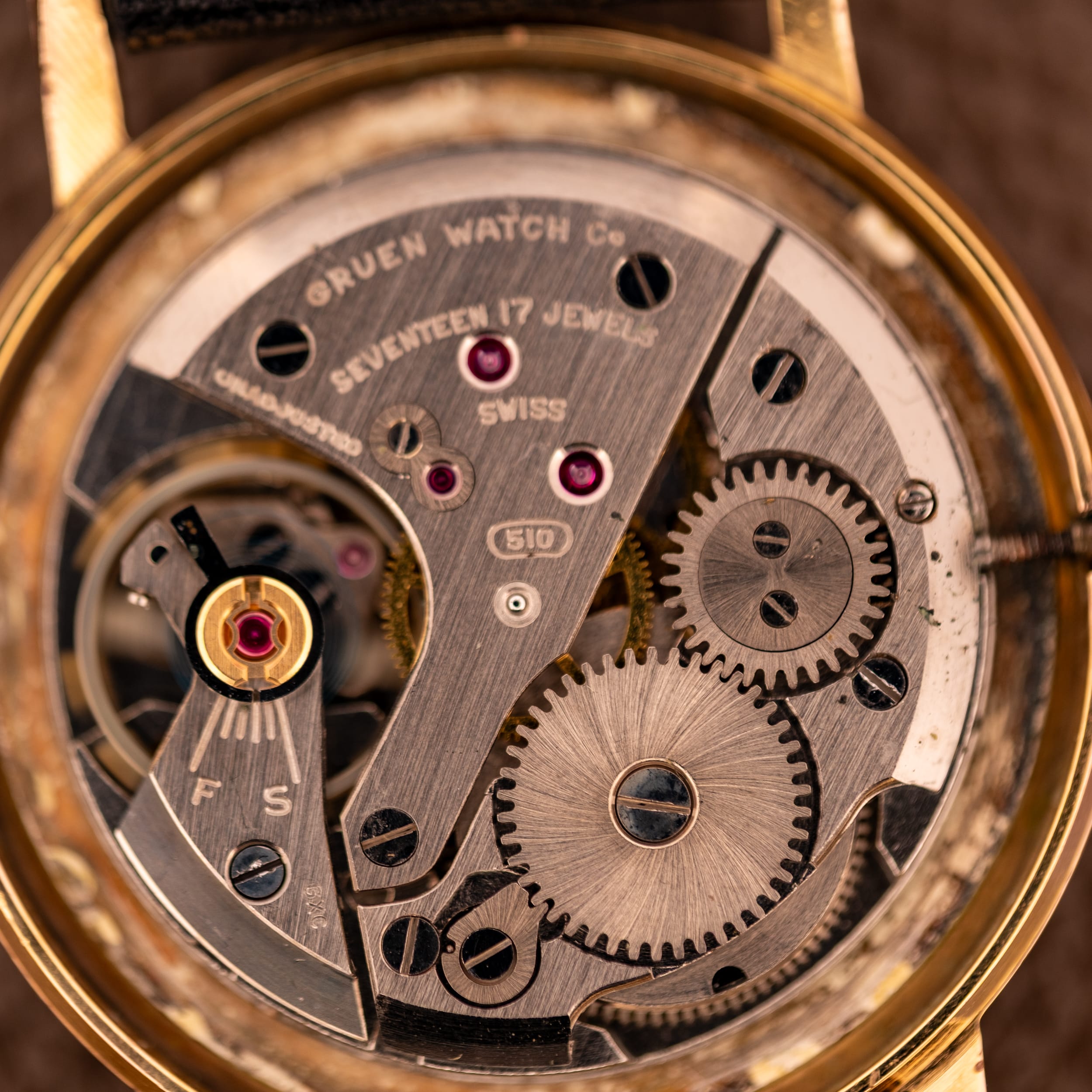
Powering this example is the Gruen caliber 510, a seventeen-jewel manual-wind movement with sub-seconds that the brand produced through the 1950s and into the 60s. The shot through the back is genuinely wonderful, with the bridge carrying its full set of crisp engravings reading “GRUEN WATCH Co.,” “SEVENTEEN 17 JEWELS,” “SWISS,” and “UNADJUSTED,” plus the 510 caliber stamp neatly enclosed in an oval cartouche just above the F/S regulator. That UNADJUSTED engraving deserves a quick aside, since it is one of our favorite small bits of mid-century horological trivia. Following a 1933 US import-duty change that taxed “adjusted” Swiss movements at a heavier rate, many manufacturers (Gruen included) stamped their movements UNADJUSTED to dodge the tariff, regardless of whether the movement was, in fact, adjusted. The bridge here has aged into a beautifully warm golden tone that we love to find on a movement of this vintage.
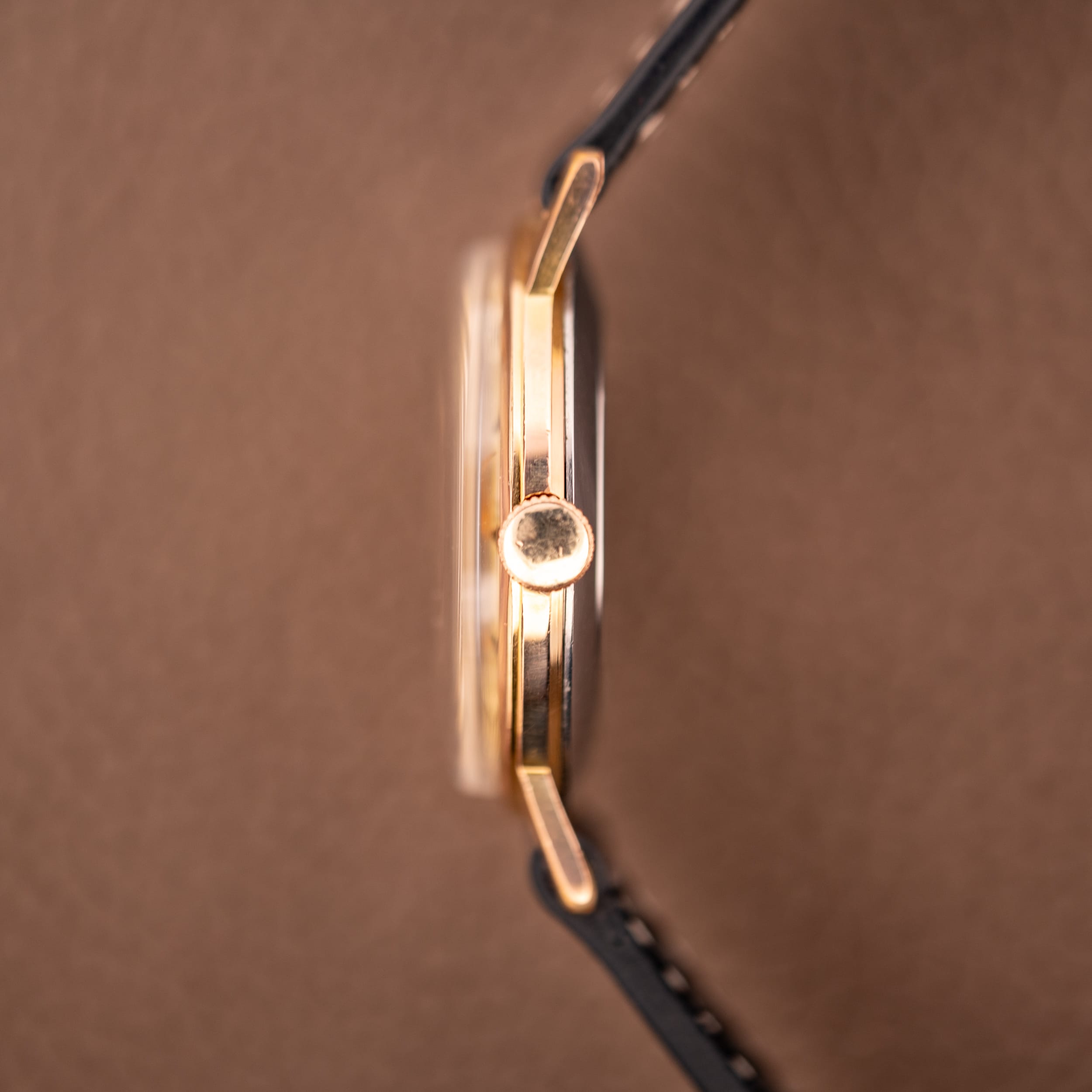
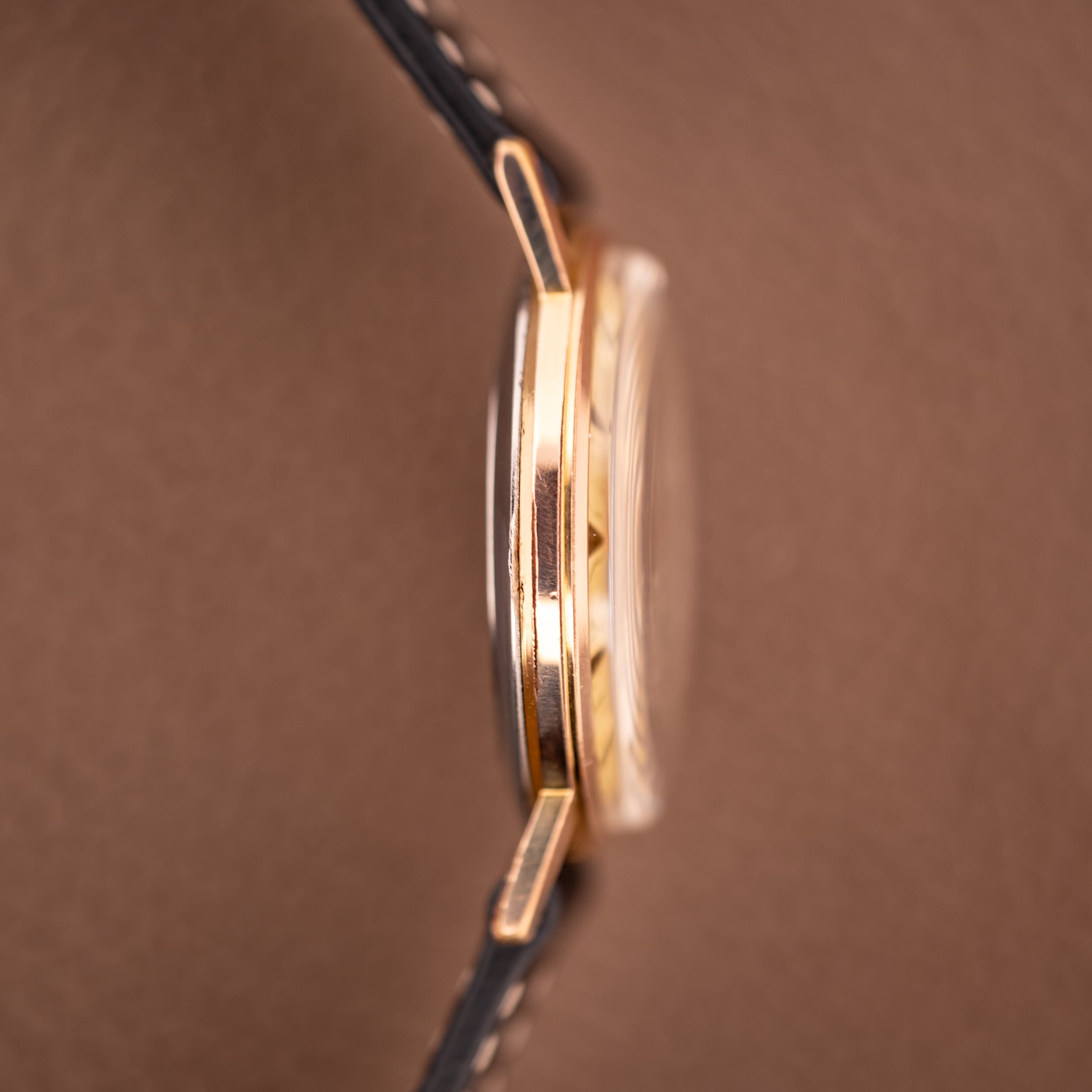
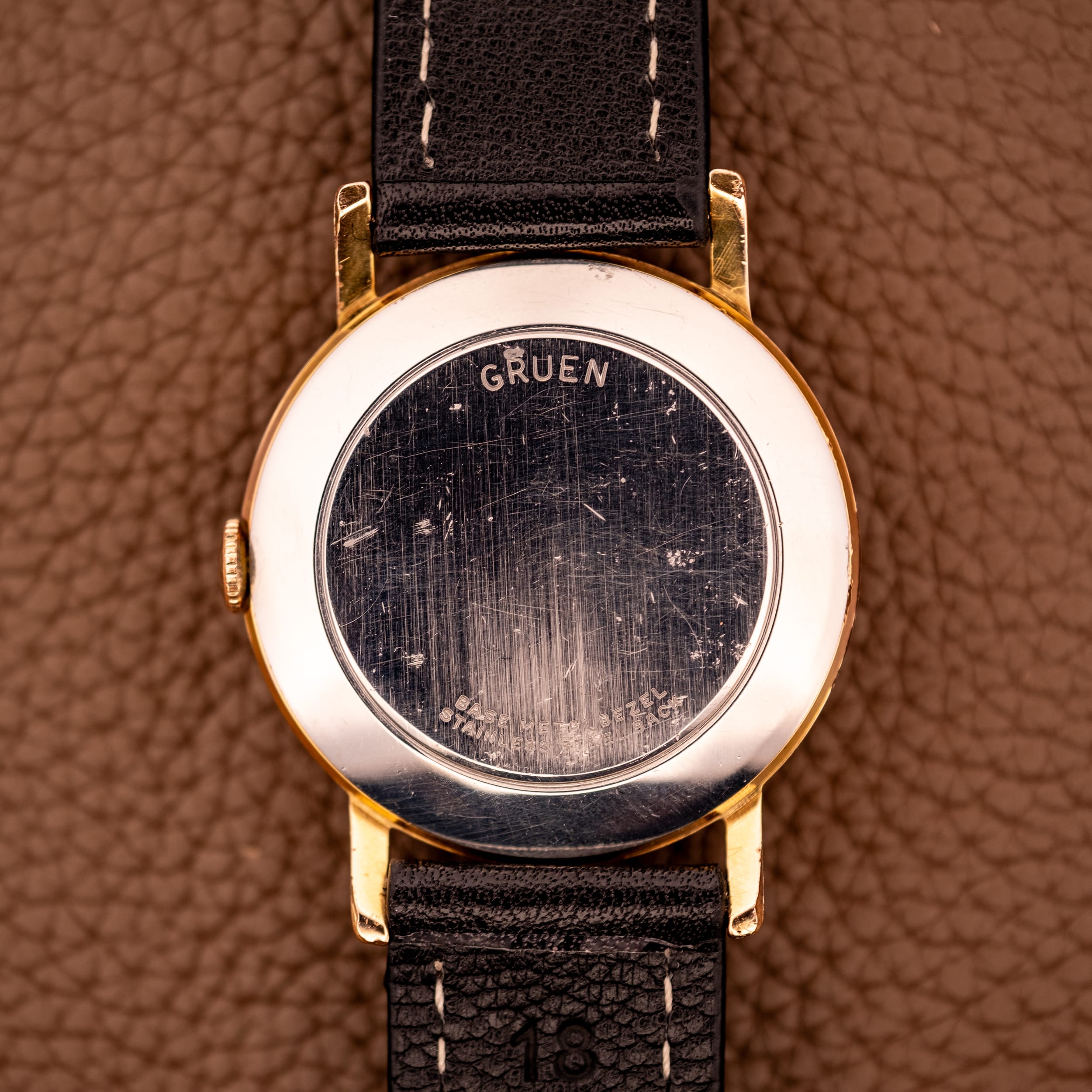
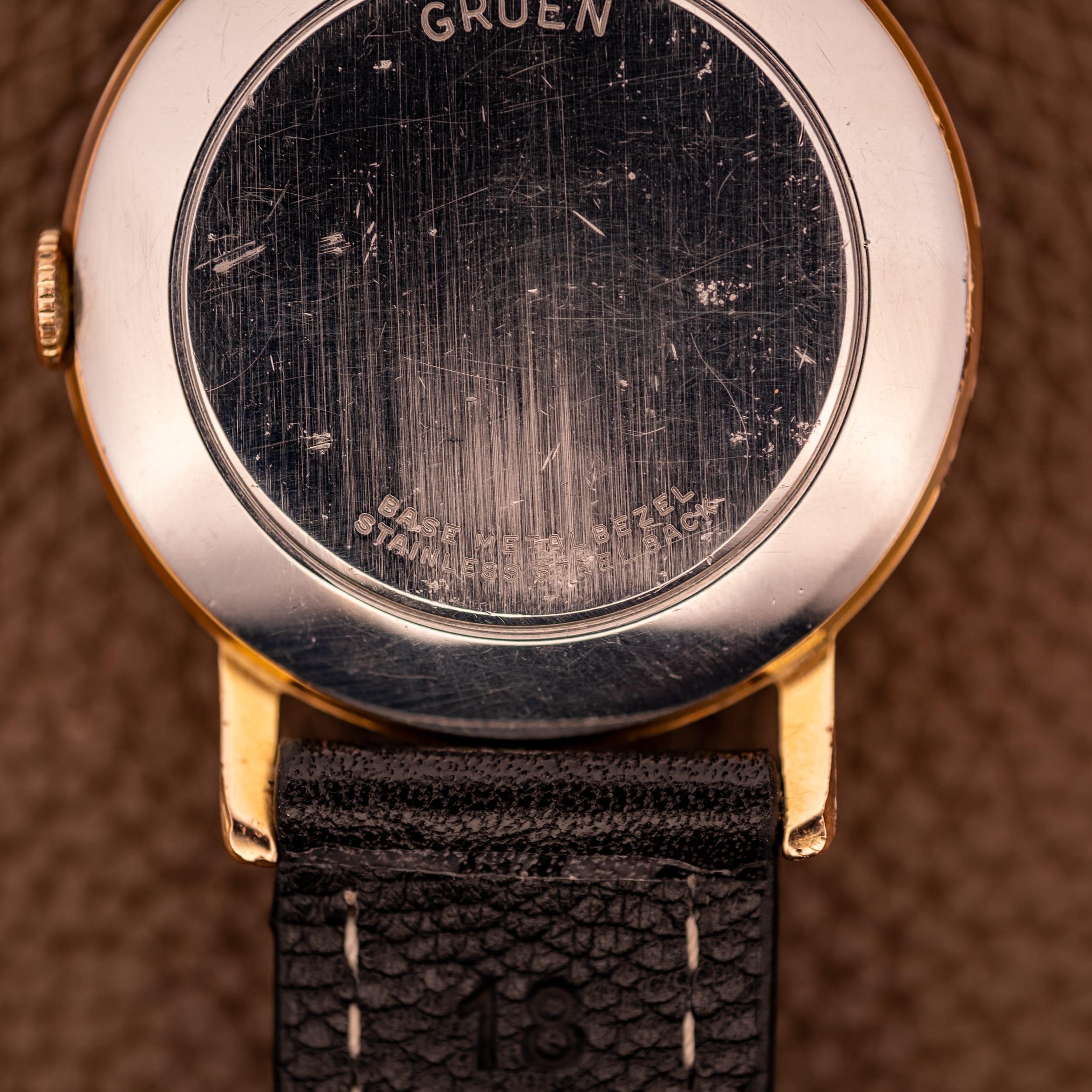
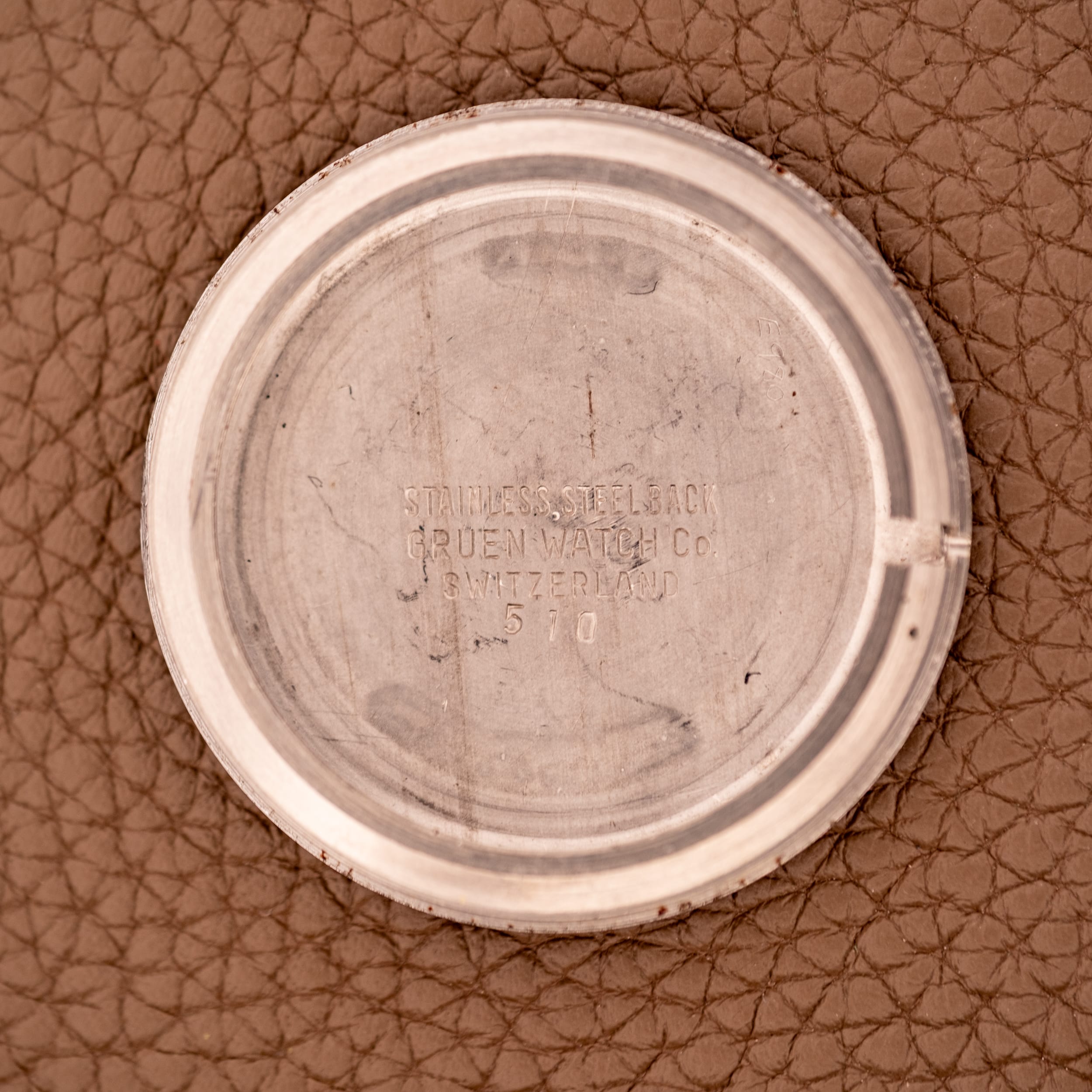
The case measures 34mm across and 41mm lug-to-lug with an 18mm lug width, sitting on the wrist as the small-statured mid-century dress piece it was built to be. The construction is the period-correct combination of a gold-plated bezel over a stainless steel back, confirmed by the outer caseback markings which read “BASE METAL BEZEL, STAINLESS STEEL BACK” along with the brand’s “GRUEN” signature stamped at the top. Pop the back and the inner stamping further confirms the pedigree, reading “STAINLESS STEEL BACK GRUEN WATCH Co. SWITZERLAND 510.” The lugs taper slim and elegantly, retaining their factory geometry, with most of the plating intact and only the gentlest brassing showing at the very tips where decades of wear naturally bring through the base. The original signed Gruen crown is still in place with its small fluted profile correct for the period, and the slim case proportions read exactly the way a 1950s American dress watch ought to.
Back to the dial, since to us it really is where the watch lives. Originally a silvered or off-white tone, the surface has developed one of the more characterful patinas we have come across in some time, with cracking and oxidation creating an almost cartographic pattern across the cream. The center stays comparatively clean, preserving the legibility of the “GRUEN PRECISION” signature in its crisp serif print and giving the dial its visual anchor. Around the perimeter, the aging takes over, with the surface shifting between cream, tobacco, and an occasional bloom of greenish oxidation near the three o’clock side. The applied dart-shaped gold indices remain firmly seated, catching the light richly against the aged backdrop, and the applied “12” Arabic numeral at the top still anchors the composition exactly the way Gruen designed it to. The slim gold leaf hands have taken on their own warm brown patina, harmonizing with the dial rather than contrasting against it, and the sub-seconds register at six retains its original crosshair detailing with the slim seconds hand ticking honestly through the small chapter ring. We read this dial as a true survivor, the kind of honest, lived-in character that simply cannot be replicated and that seasoned collectors actively hunt for.
We have paired this Gruen on one of our black OTTUHR leather straps finished with cream contrast stitching, which lets the warm tones of the gold case and aged dial sit cleanly against a contemporary anchor without competing for attention.
Serviced in-house at OTTUHR and backed by our 2-year mechanical warranty, this Gruen Precision 510 lands somewhere between a piece of mid-century American horological history and a genuinely characterful daily companion. For the collector who reads patina as poetry rather than imperfection, this is, in our opinion, one of the more honest dials we have ever put up for sale.