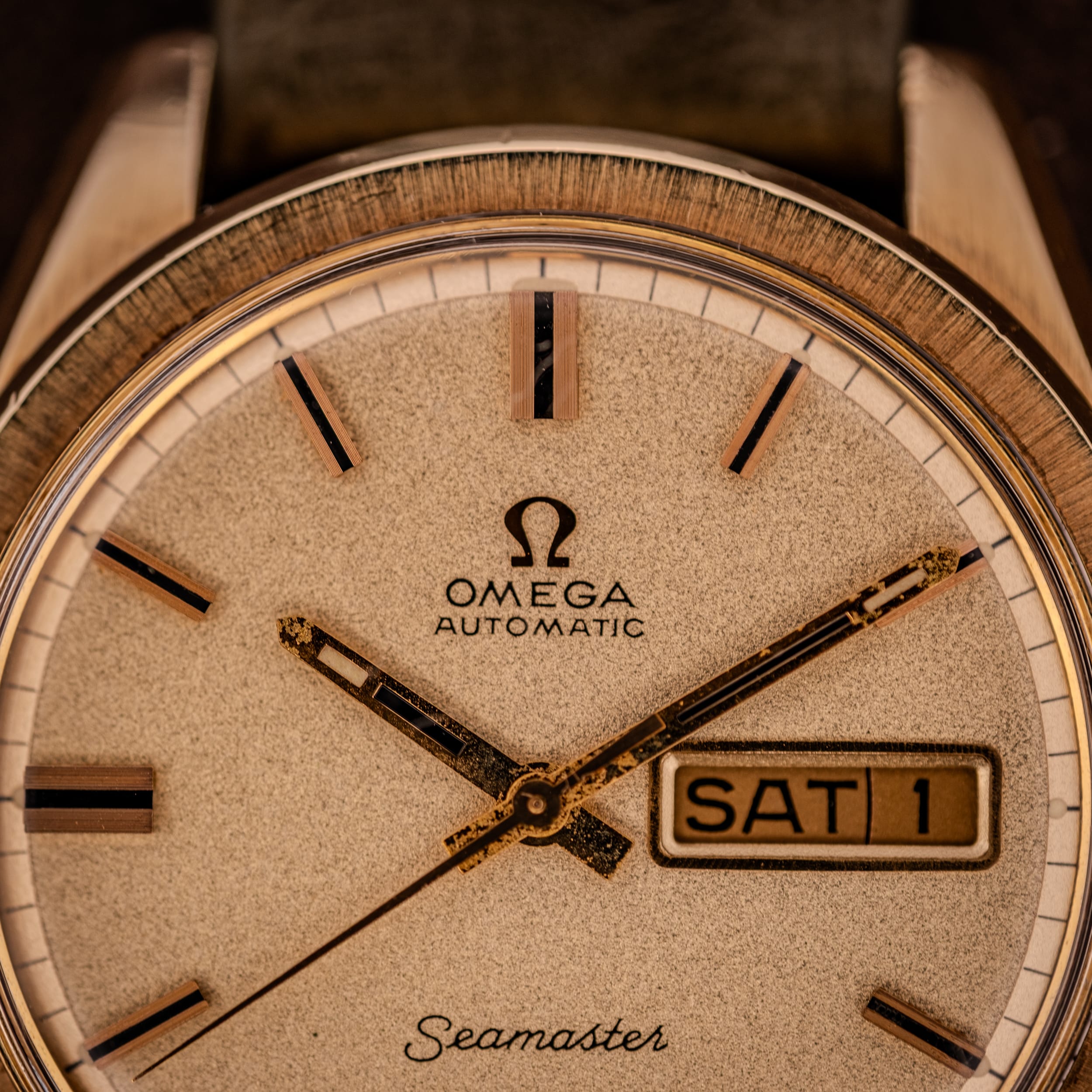
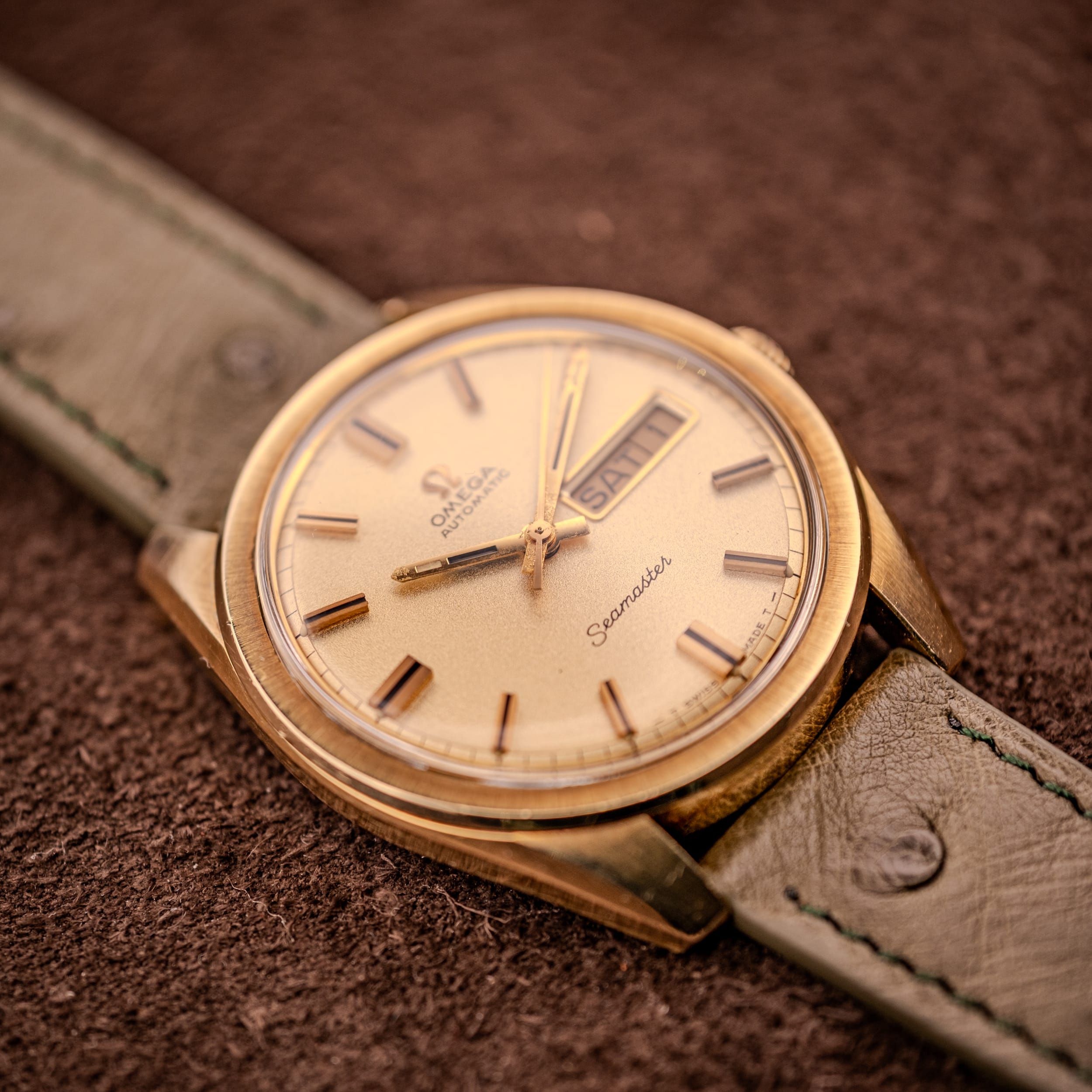
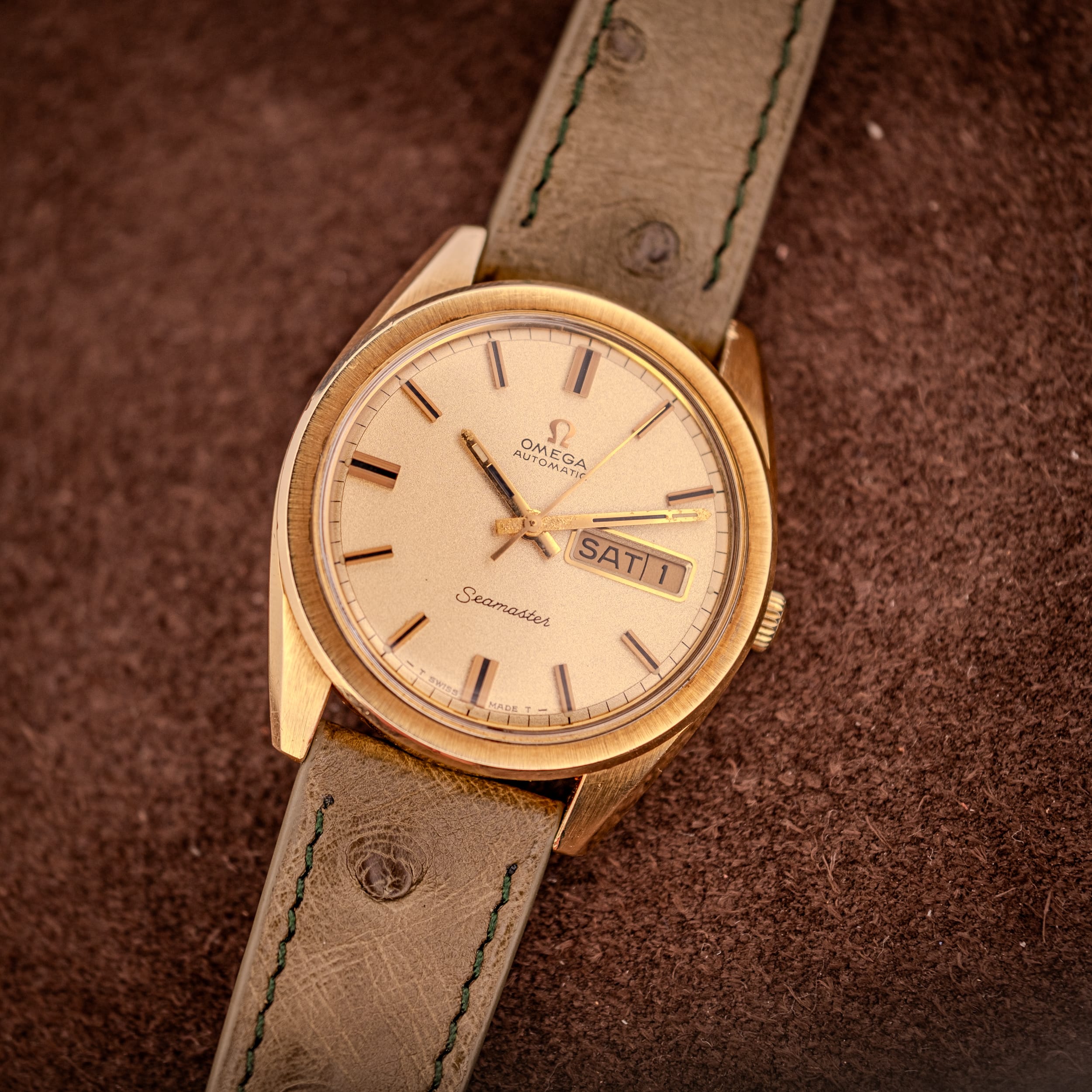
There is a particular subset of late-1960s Omega Seamasters that we believe sits among the most underrated chapters in the brand’s vintage catalogue, and the Reference 168.023 with the so-called “Sparkle Dial” is, in our opinion, the headline act. To us this watch represents Omega at one of its most quietly confident moments, a manufacture so deep in its prime that it could afford to make a 14k gold-filled day-date Seamaster and still treat the dial like a piece of jewelry. The result is a watch that punches above its station once you actually have it in hand, an Omega Automatic Seamaster Sandblasted Dial reference that has steadily climbed the wishlists of collectors who value design over hype.
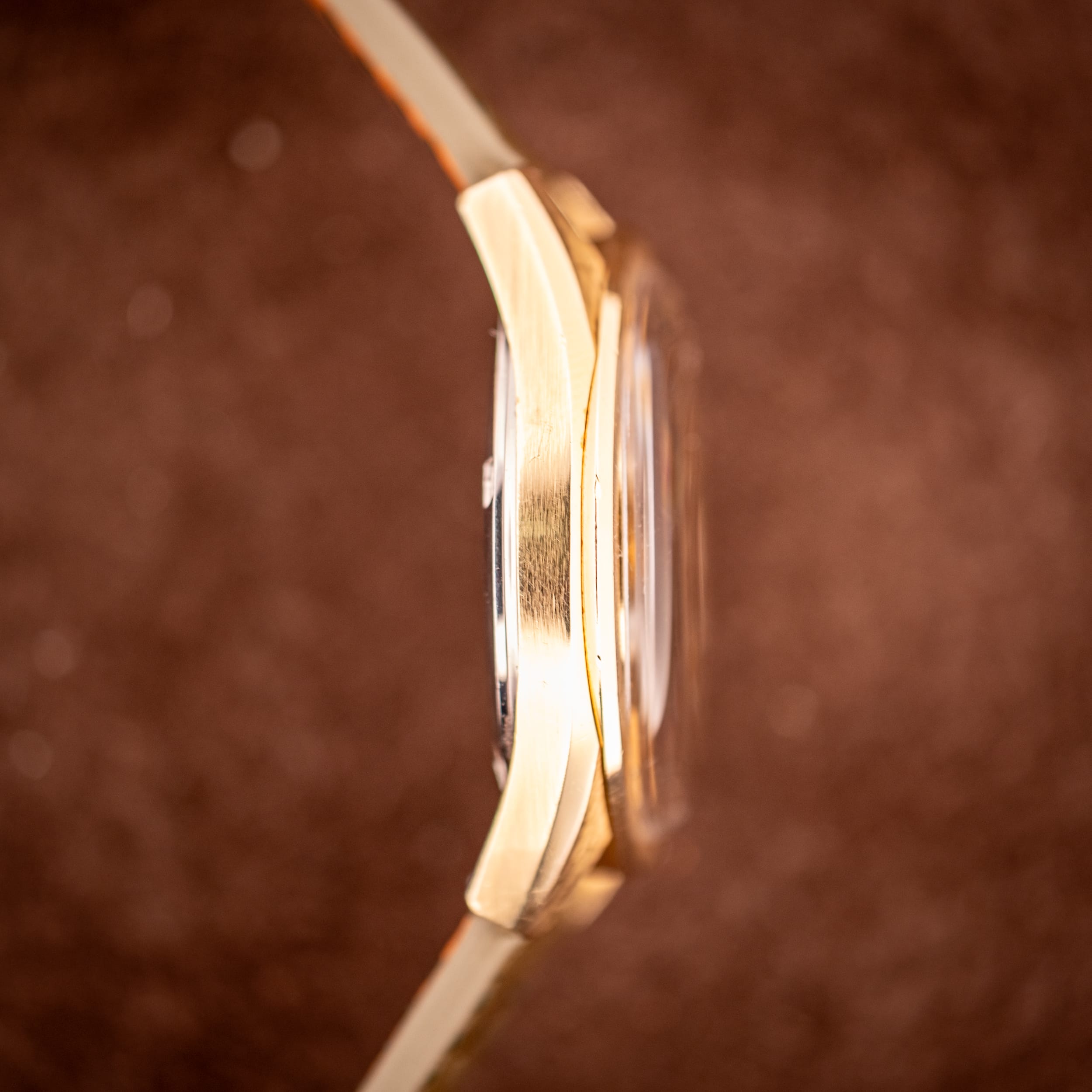
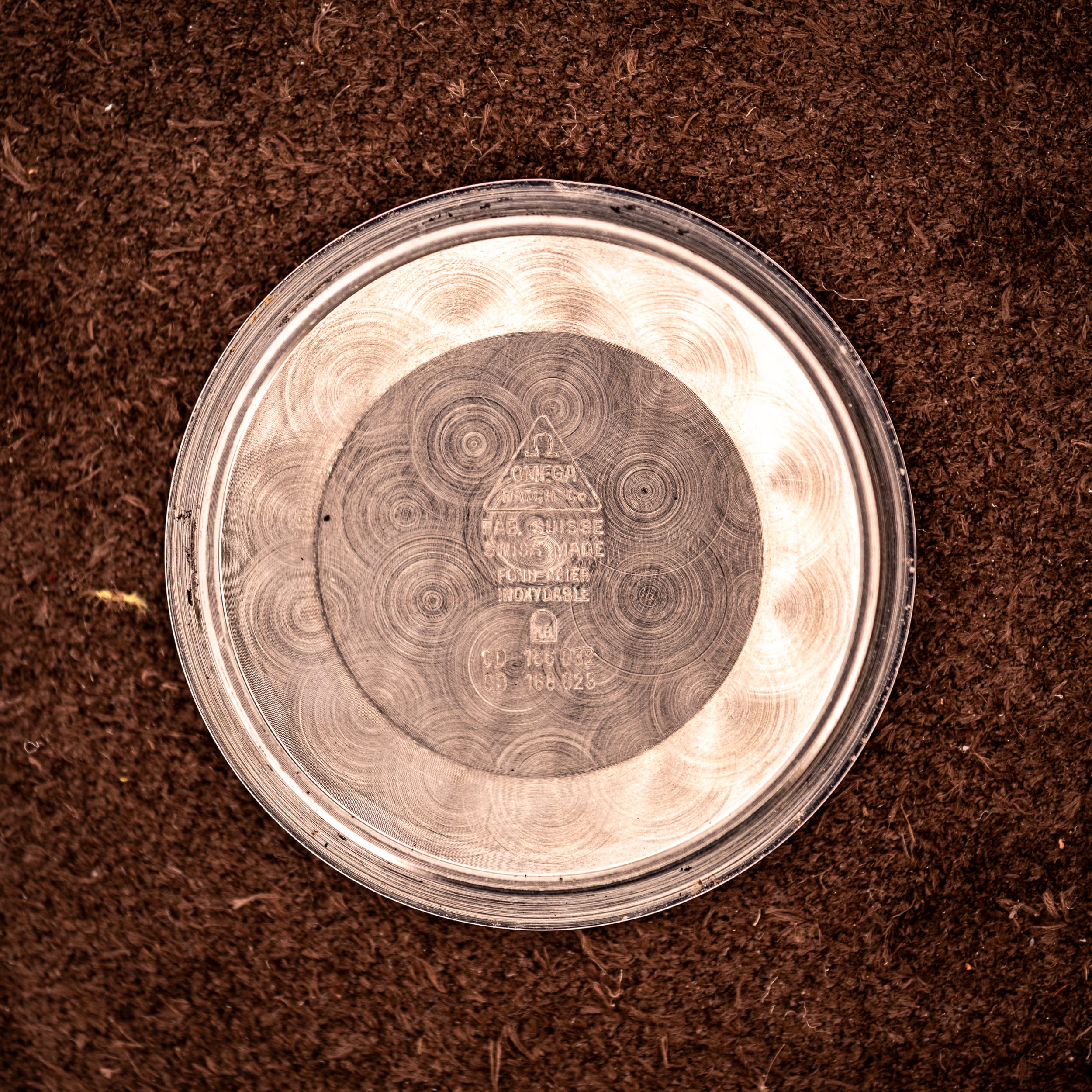
The Seamaster line by 1969 had been on the market for over twenty years, having been launched in 1948 to commemorate Omega’s centenary and originally derived from the chronometers Omega had supplied to the British Royal Navy during the Second World War. By the time this watch was produced the line had matured into Omega’s flagship sport-luxury collection, sitting just below the chronometer-grade Constellation in the hierarchy and offering the brand’s mainstream buyer a tougher, more wearable alternative to the dressier De Ville. The 166.032 (no date) and 168.023 (day-date) share the same case and dial architecture, with the 168.023 designation reserved for the day-date variant you see here. The case shape, with its broad chamfered lugs and the distinctive linen-brushed bezel, telegraphs the late-1960s Seamaster design language while still wearing with the proportions of a proper dress-sport watch.
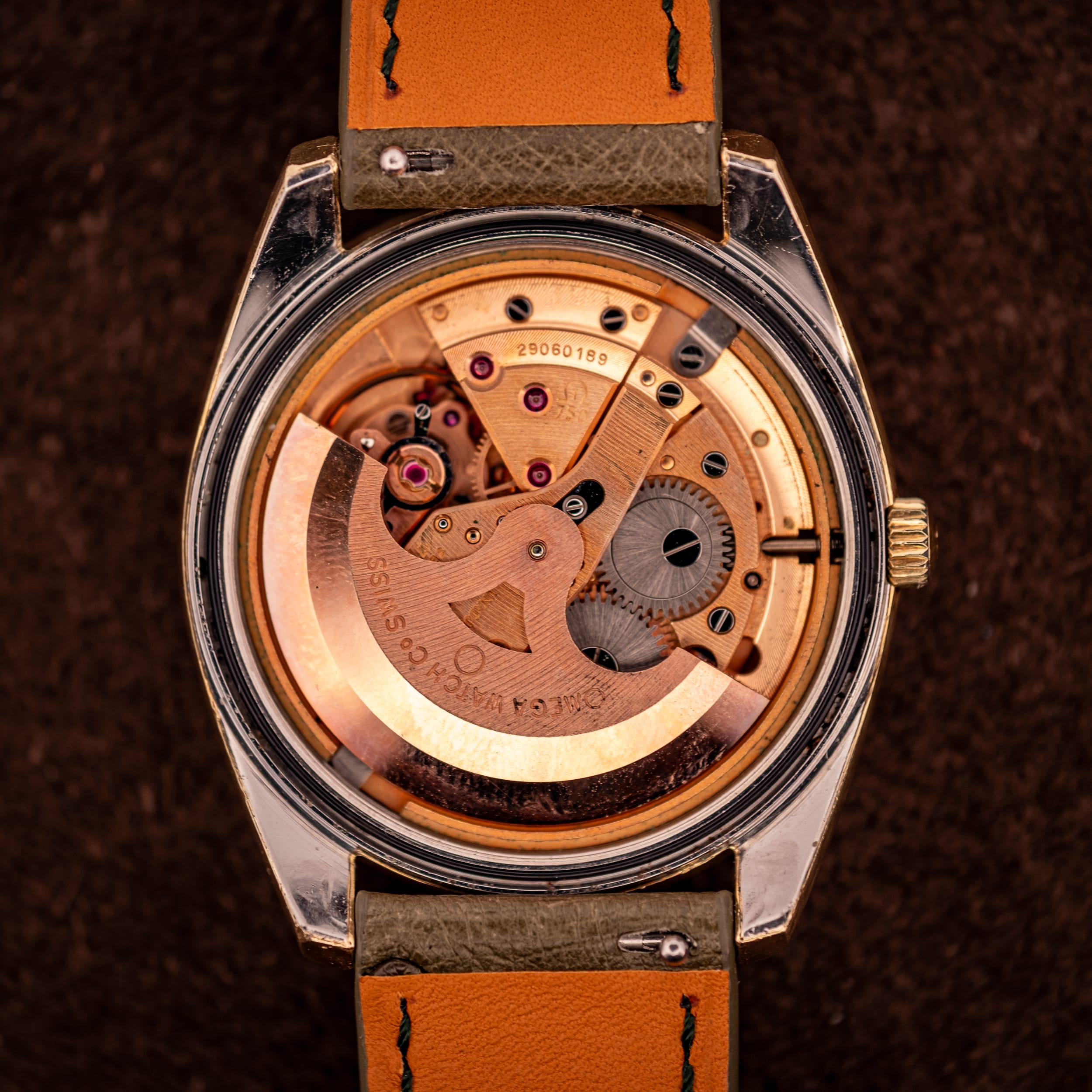
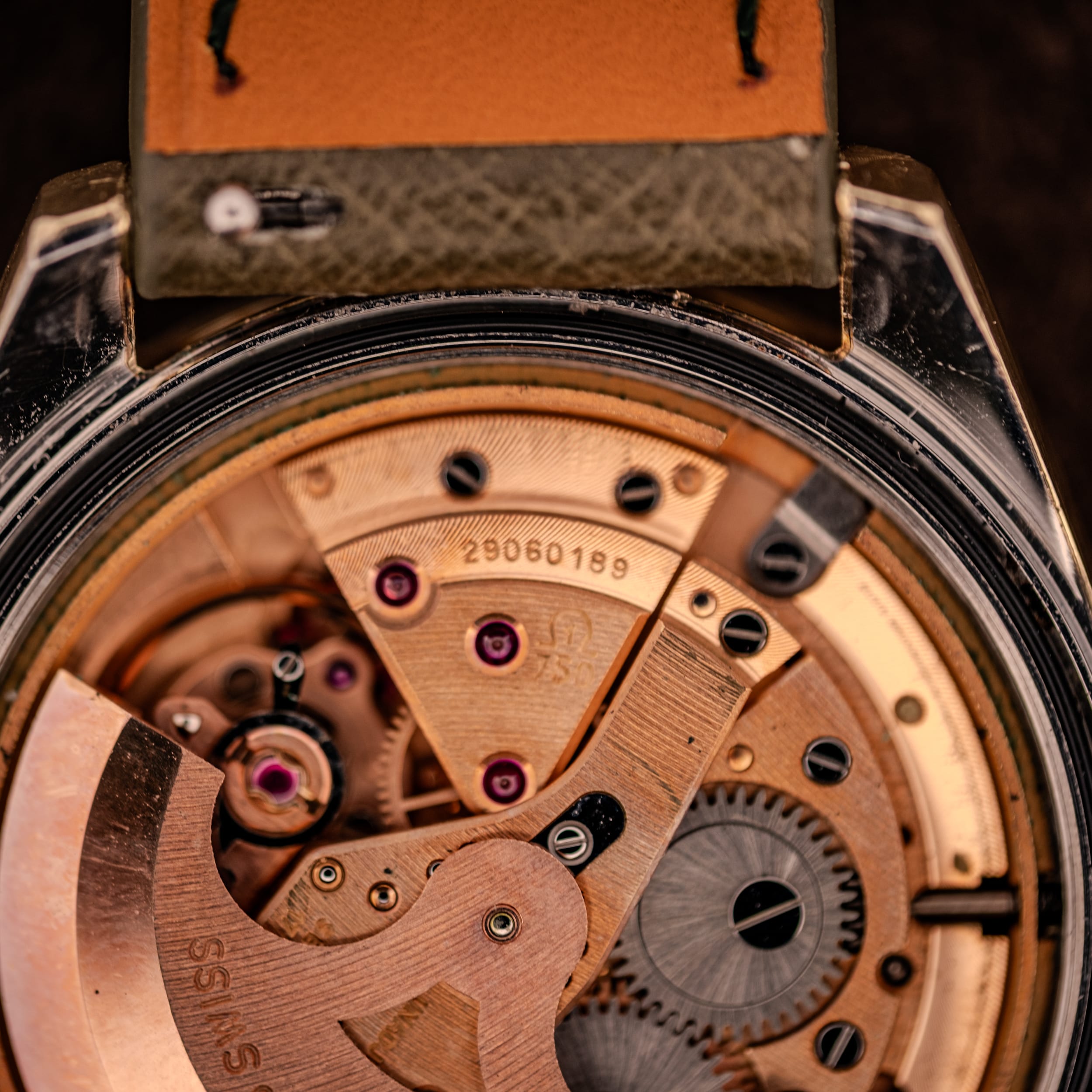
Inside lives the cal. 750, an Omega-specific quirk worth understanding. The 750 is a 17-jewel automatic day-date movement that Omega produced specifically for the United States market as a duty-saving derivative of the standard 24-jewel cal. 752. The story is that American import tariffs of the period were calculated in part on jewel count, and Omega found that a slightly de-jeweled version of the same fundamental architecture allowed them to land the watch in the US at a more competitive price without compromising the chronometric integrity of the movement. The result is, for all intents and purposes, the same beautifully finished automatic caliber that powered the equivalent European Seamasters, just with a different jewel count for customs purposes. Our service photographs read the OMEGA logo and the 750 caliber designation, the matching factory serial 29060189 laddering production firmly into 1969, the copper-toned finishing across the bridges, and the Omega-signed rotor pivoting cleanly on its central axle. To us the 750 is one of those movements where the story is half the appeal, and the other half is how genuinely well it runs sixty years on.
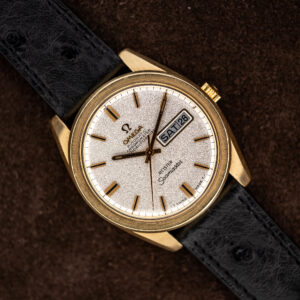
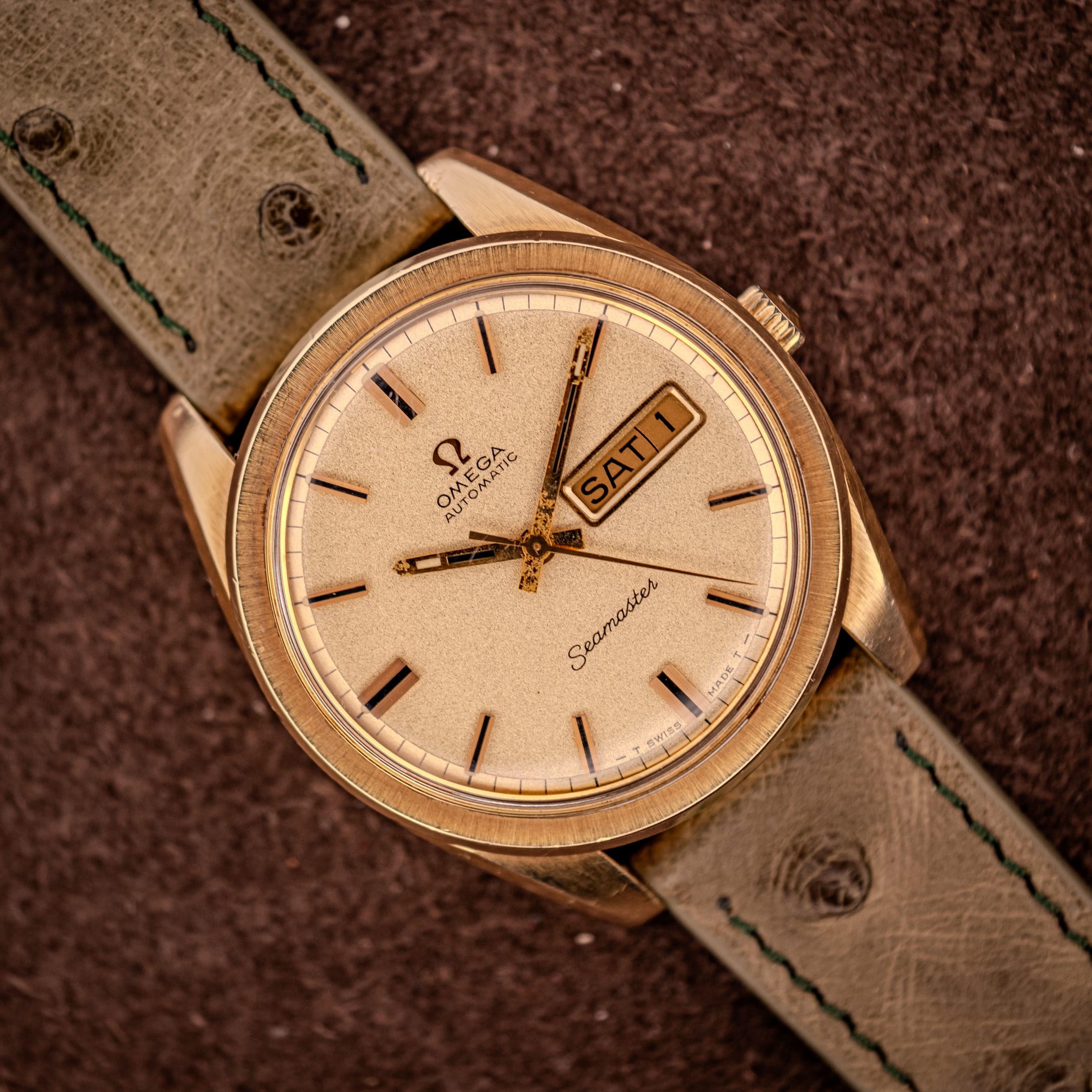
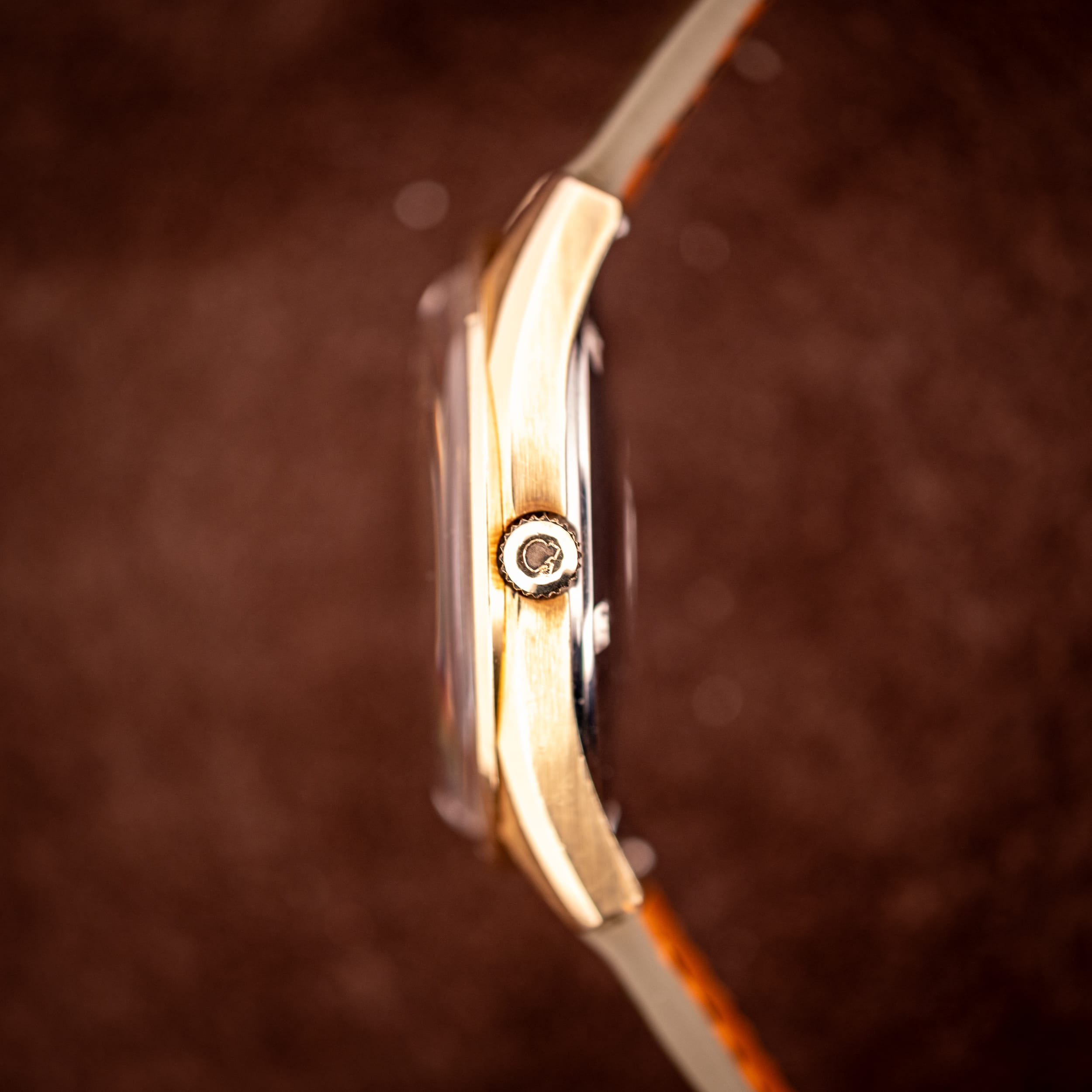
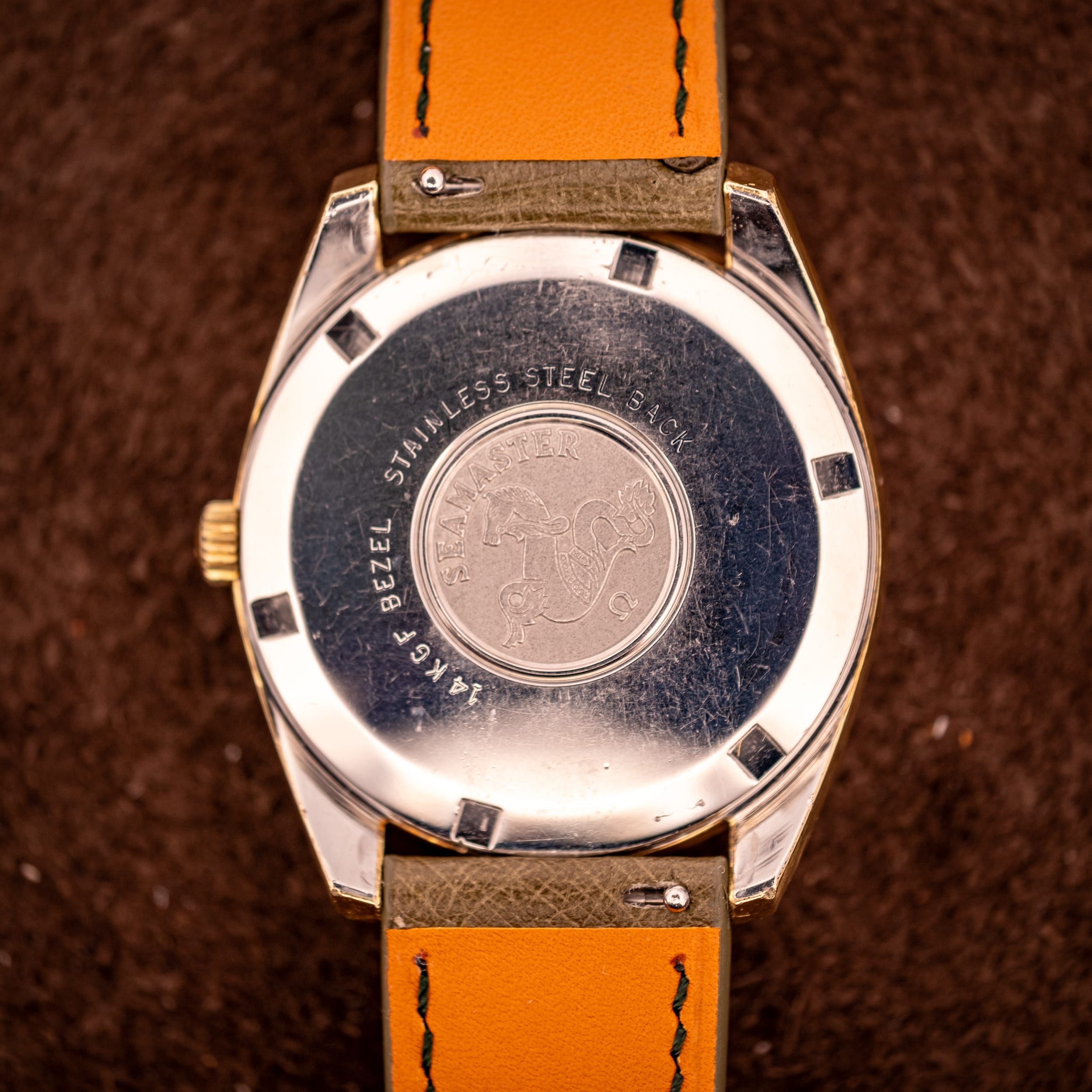
The case construction here is also worth a closer look. The body is 14k gold-filled across the bezel, lugs, and case middle with a stainless steel screw-back, with the outer caseback honestly engraved “14KGF BEZEL STAINLESS STEEL BACK” so the buyer always knew exactly what they were getting. Gold-filled construction (bonded gold, far thicker than electroplate) was Omega’s elegant solution for buyers who wanted the warmth and presence of a yellow gold watch without the price or the fragility. When properly cared for these cases age beautifully, with the gold developing the same warm patina as solid gold rather than wearing through the way thin plate does. This example carries strong gold tone retained across the entire bezel and lug tops, light surface marks consistent with sixty years of careful wear, and no breakthrough wear on any of the high-contact areas. The 36mm case measures 42mm lug-to-lug across 19mm lug width, with the screw-back stainless caseback carrying the Seamaster hippocampus medallion sitting proud in the center.
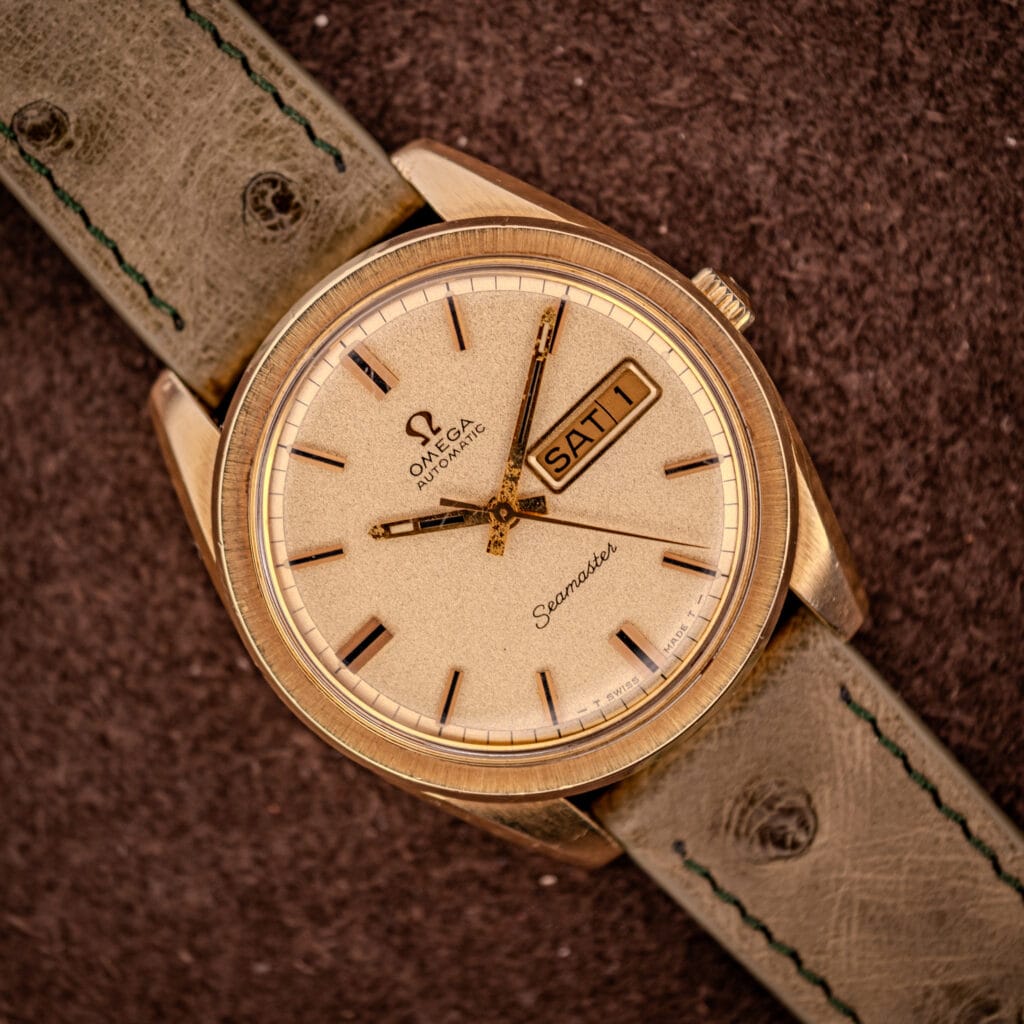
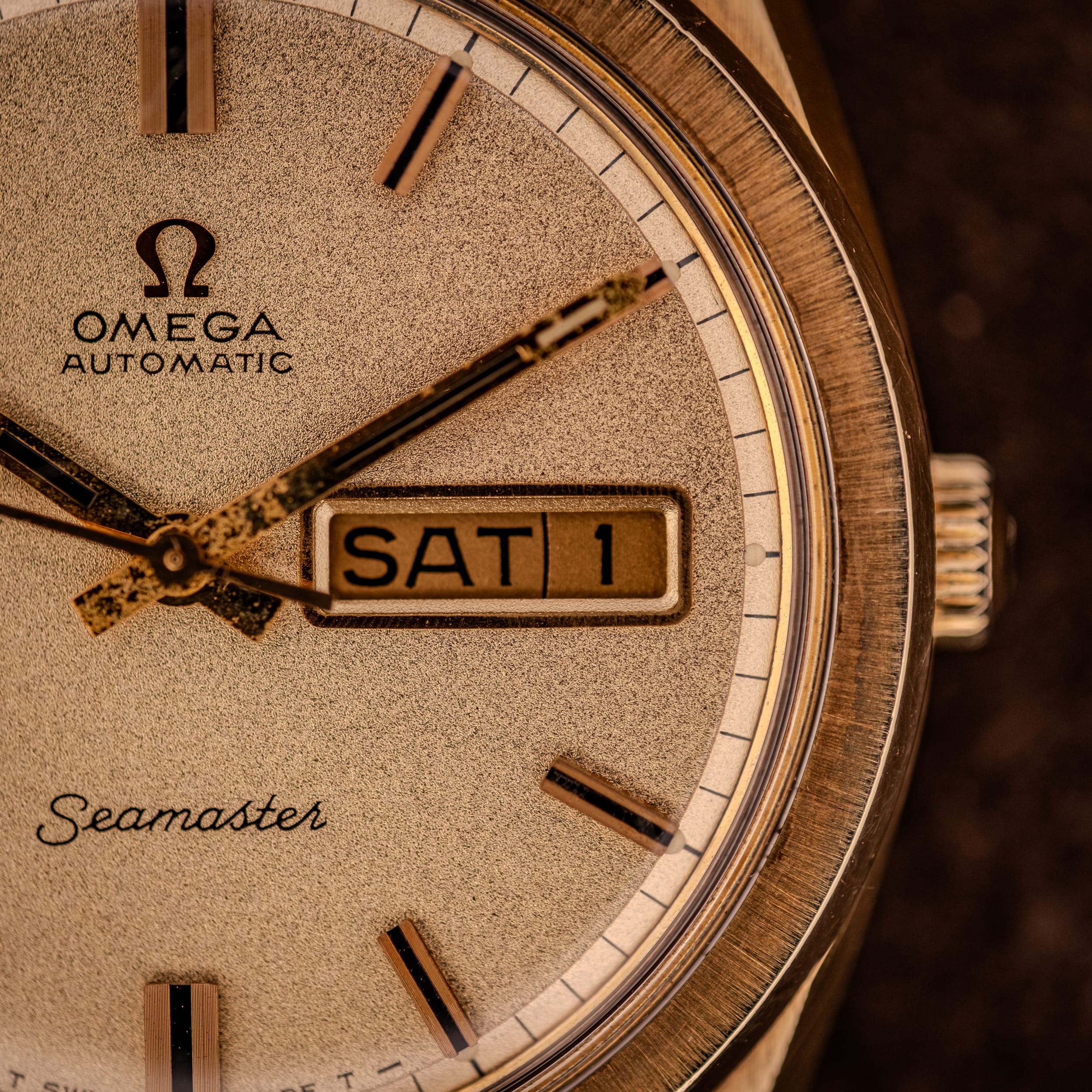
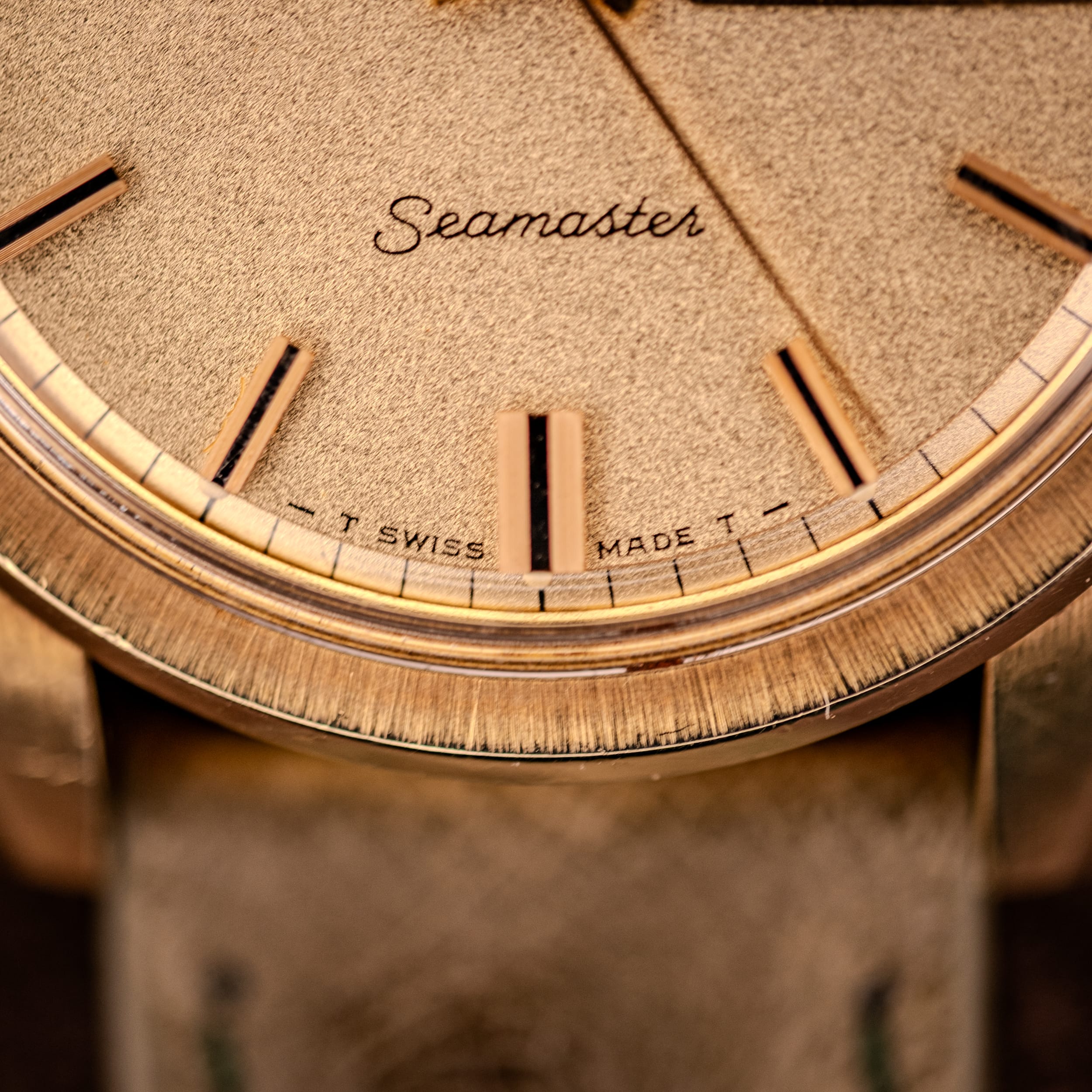
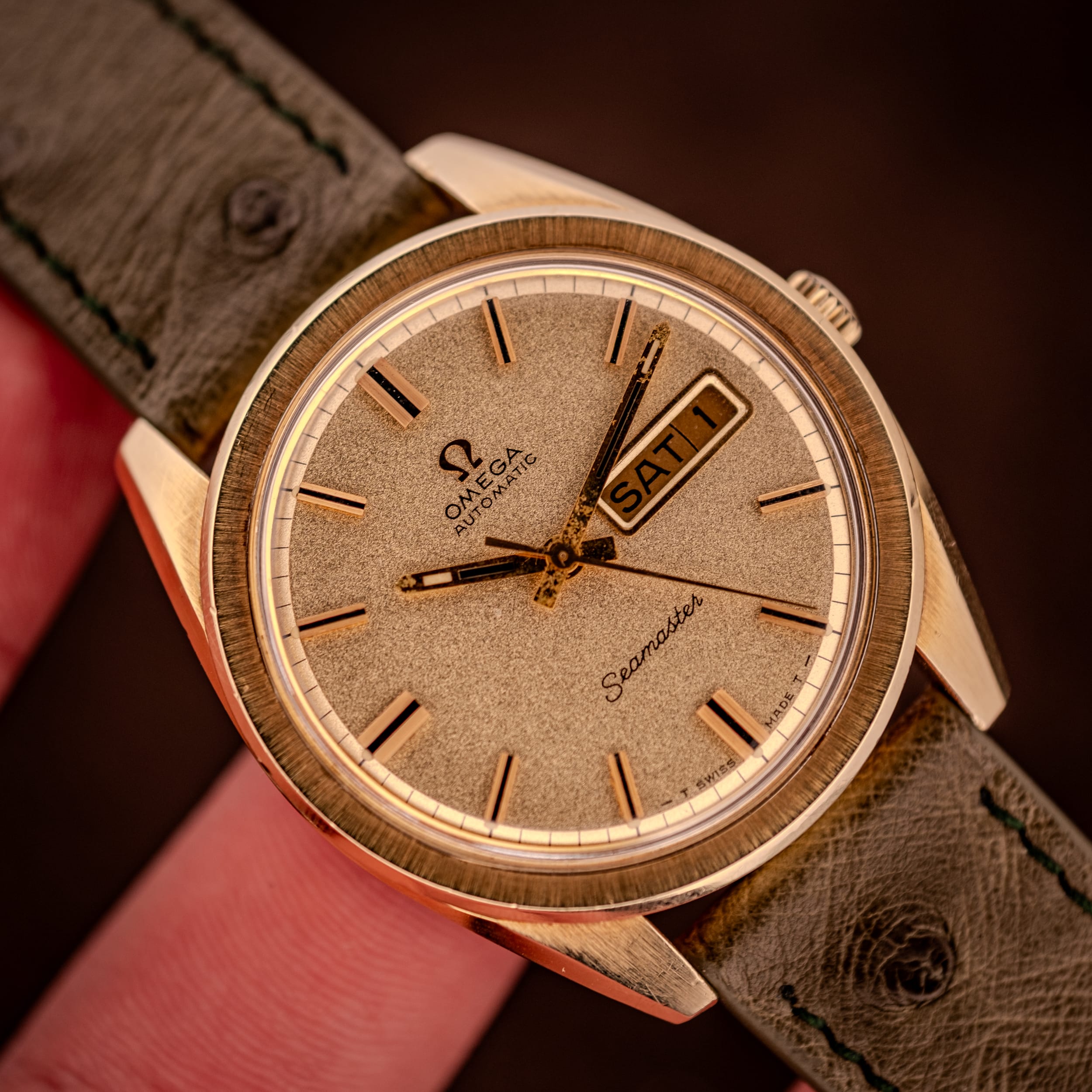
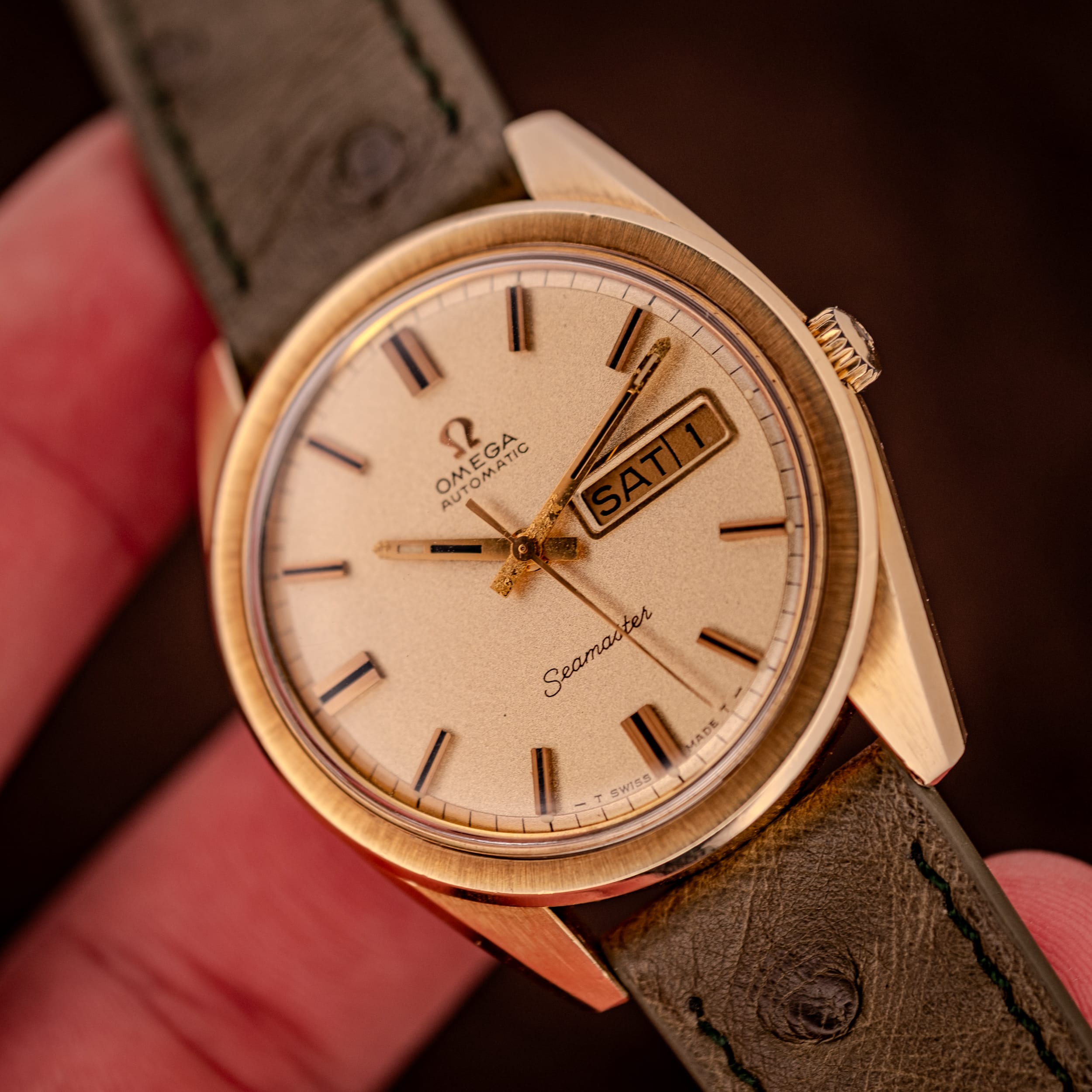
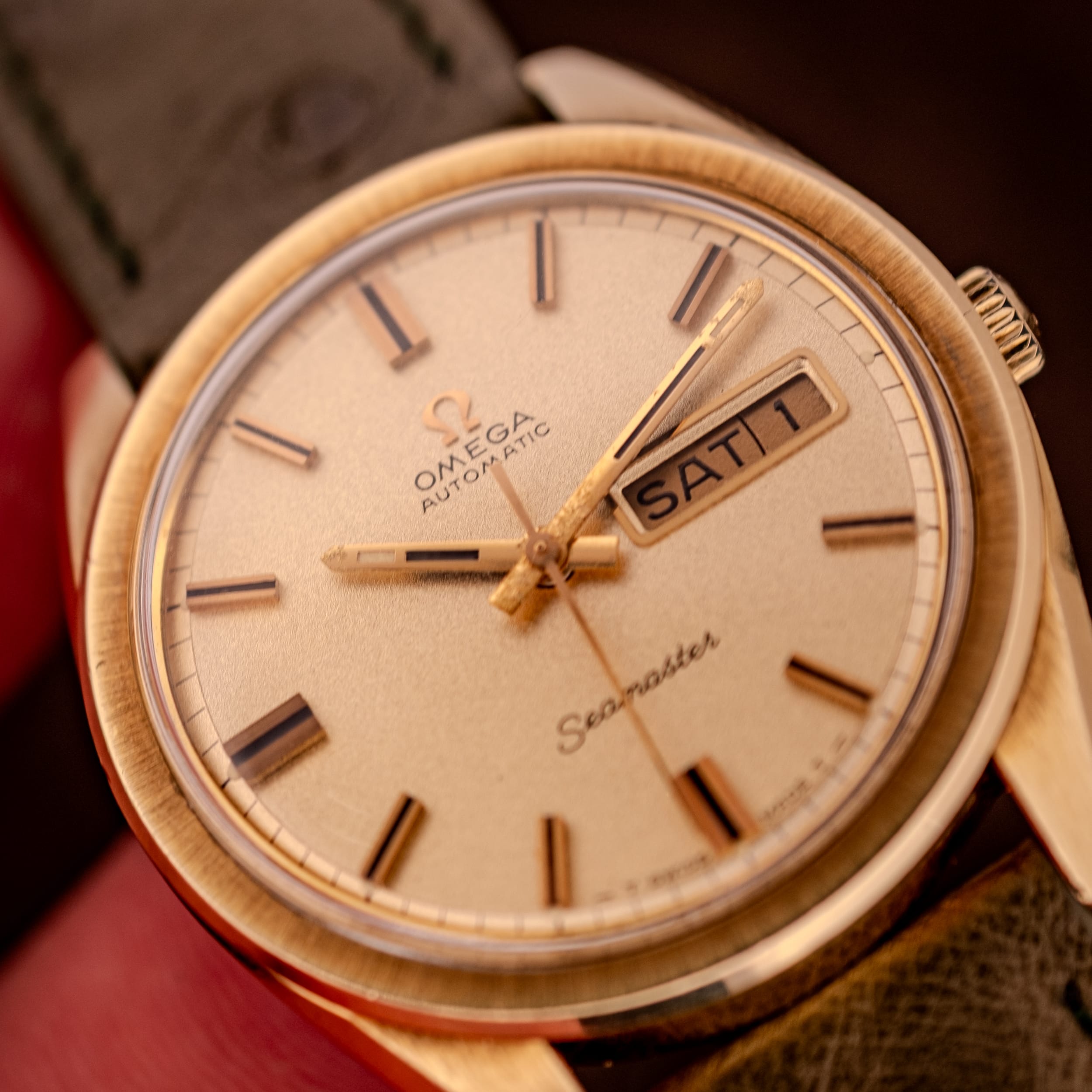
The dial is, of course, the headline. This is the textured sandblasted execution that collectors call the “Sparkle Dial,” a finish that catches light differently than any other Omega dial of the era. Up close it has the visual quality of frosted champagne sugar, with a fine grainy texture that sparkles under direct light and softens to a warm matte champagne under softer conditions. Applied gold baton markers with black enamel inserts ring the dial perfectly, with elongated batons at twelve to anchor the layout. The applied Omega logo and “OMEGA Automatic” sit above center, “Seamaster” floats in cursive script above six, and the “T SWISS MADE T” running along the bottom edge confirms tritium lume in both the marker inserts and the dauphine hands. That tritium has aged exactly the way we like it, into a dusky honey-pollen tone that mirrors the warm champagne of the dial itself rather than fighting against it. The framed day-date aperture at three sits in a tonneau cartouche that perfectly echoes the case shape, and on the day of photography it reads “SAT 1,” which has become something of an unofficial signature for vintage day-date photography. The dial reads wonderfully clean with no spotting, no fading, and no signs of refinishing, and the sandblasted texture remains fully intact across its entire surface.
The original Omega-signed crown is in place, signed with the engraved Omega symbol and showing the right knurl pattern for the period. The acrylic crystal sits clear and proud above the dial. We have paired the watch with one of our olive ostrich leather straps with green stitching, which we think strikes the right balance between dressy and earthy, picking up the aged tone of the dial and complementing the warm gold tones of the case without competing with them. The ostrich quill texture adds a quietly characterful note that suits the dial’s own texture without trying to match it. The 36mm case sits exactly where you want it to sit on a modern wrist, neither too small nor too large, and the gold-filled bezel catches the same light the sandblasted dial does.
Serviced in-house at OTTUHR and backed by our 2-year mechanical warranty, this is a wonderfully complete example of the most charming Seamaster from this transitional period at Omega. To us the Sparkle Dial 168.023 represents one of those genuinely undervalued vintage propositions where the watch in hand is dramatically better than its reputation on paper would suggest. It pairs the historical seriousness of the Seamaster name with the visual interest of one of the prettiest dials Omega ever produced, in a movement caliber with a fascinating piece of customs-driven history attached to it. For the collector who already understands that the best vintage Omegas are the ones that don’t make a big deal about themselves, this is exactly the kind of watch we love bringing in.