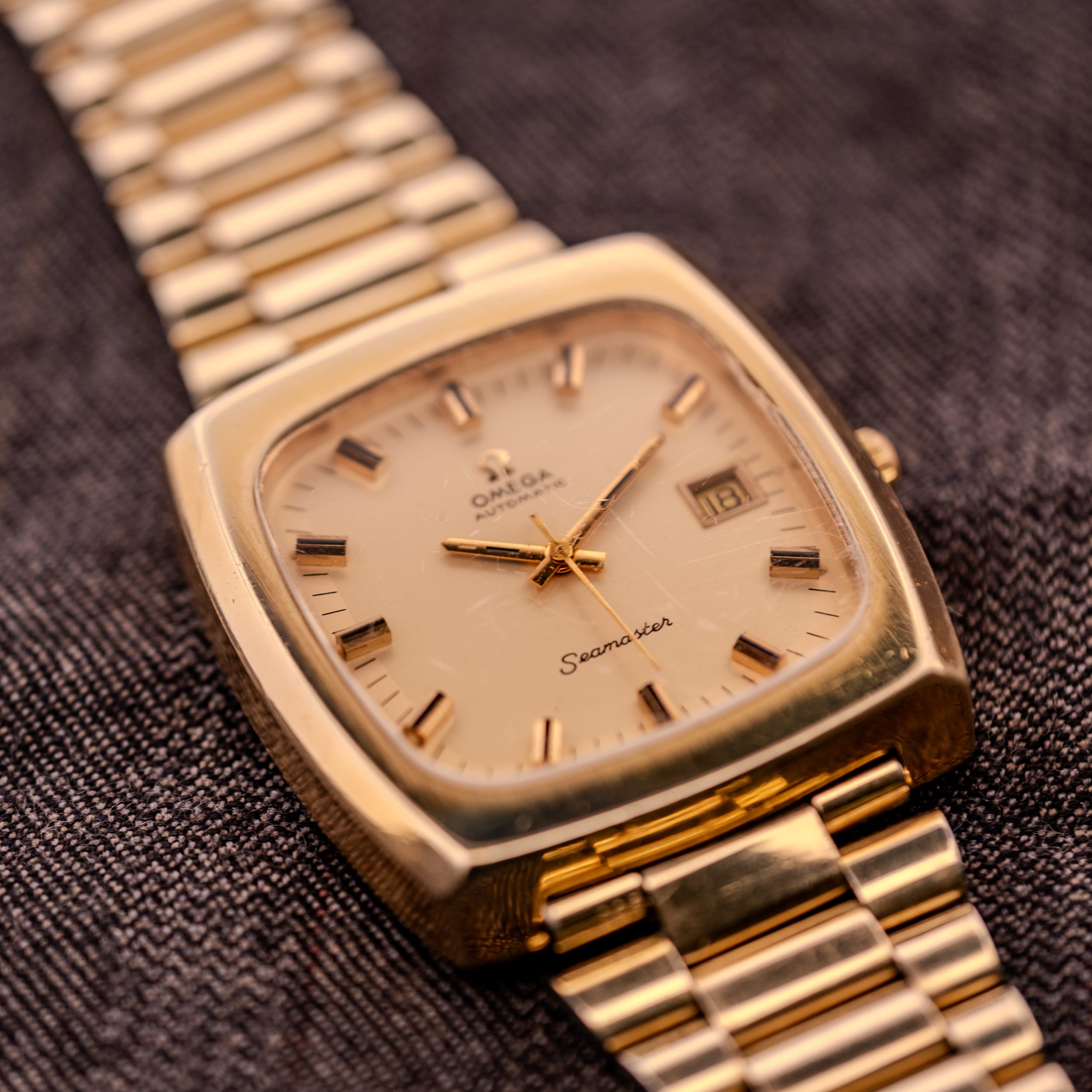
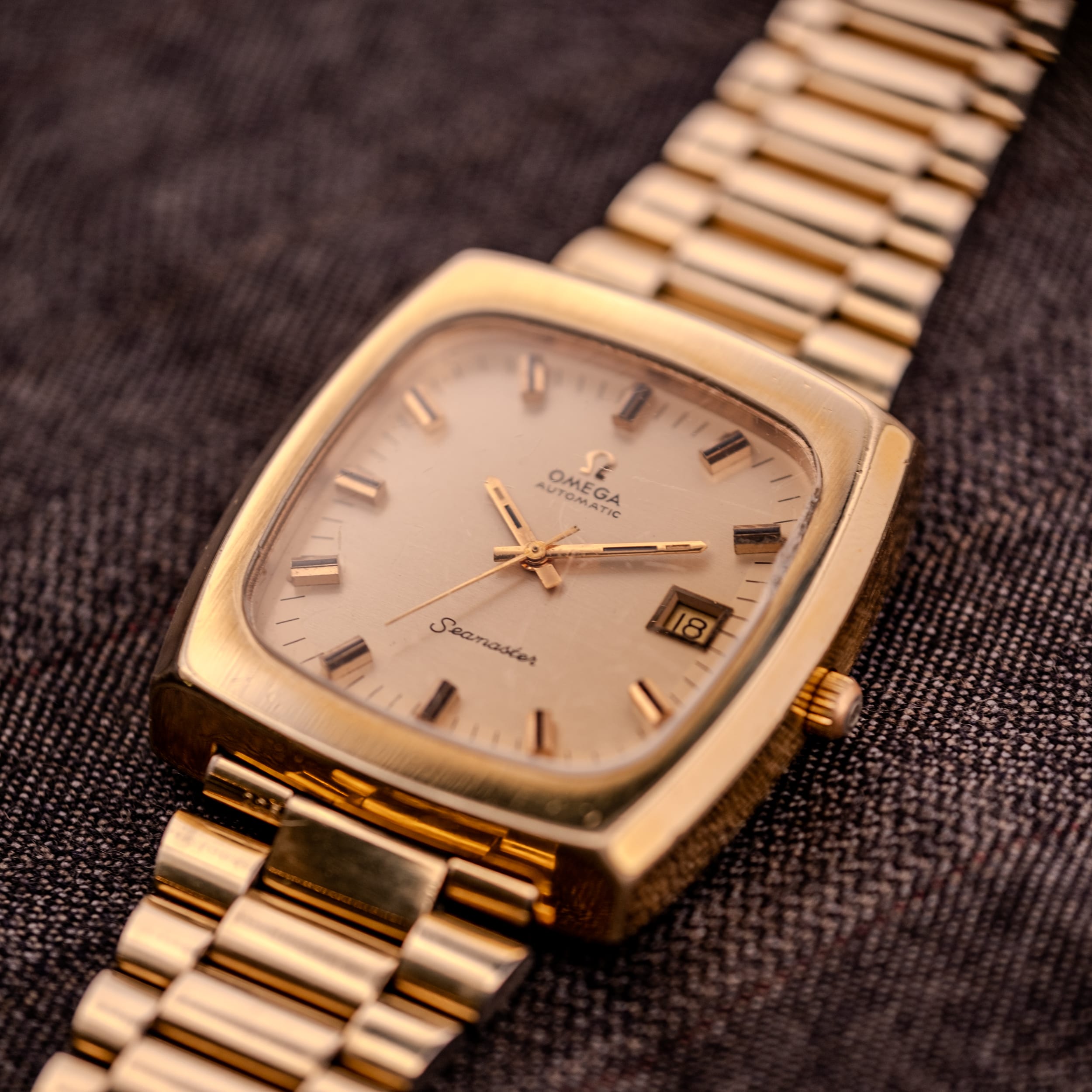
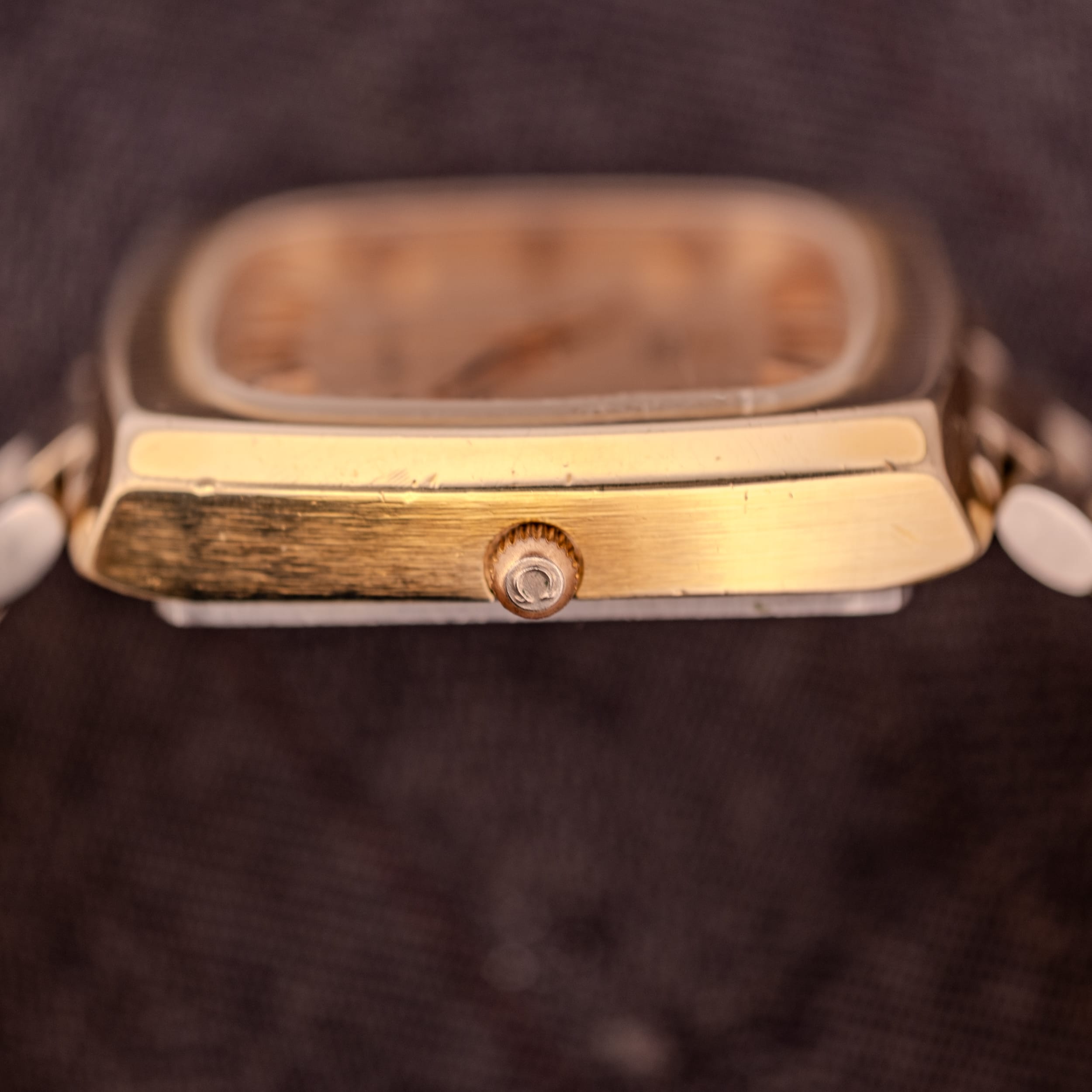
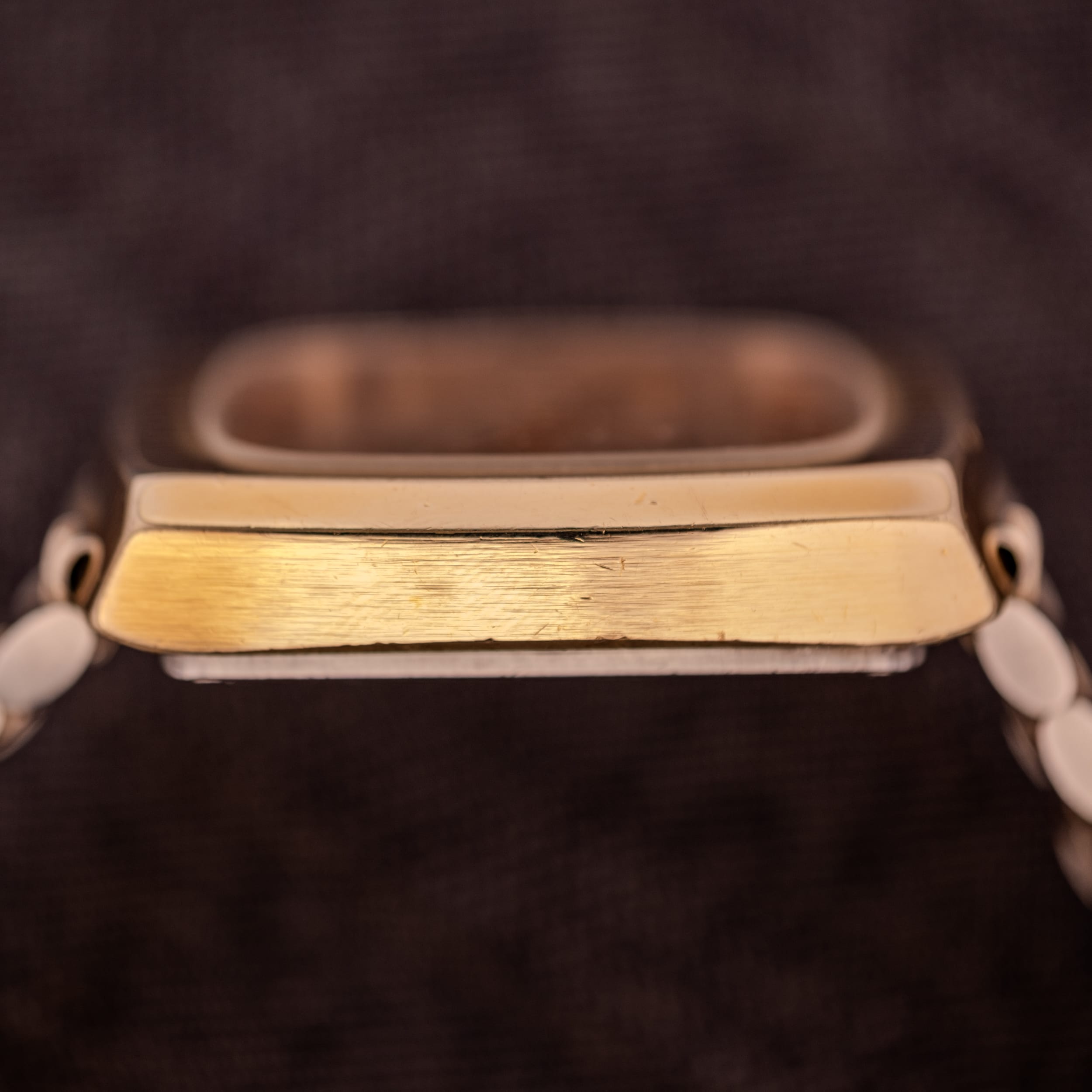
There is something undeniably fantastic about a 1970s Omega Seamaster in this exact configuration. The Jumbo, also affectionately known by collectors as the “Big Square” or “TV Case,” is, to us, one of the most stylistically confident watches Omega ever produced, a piece that captured the architectural daring of its decade and somehow still feels right at home today.
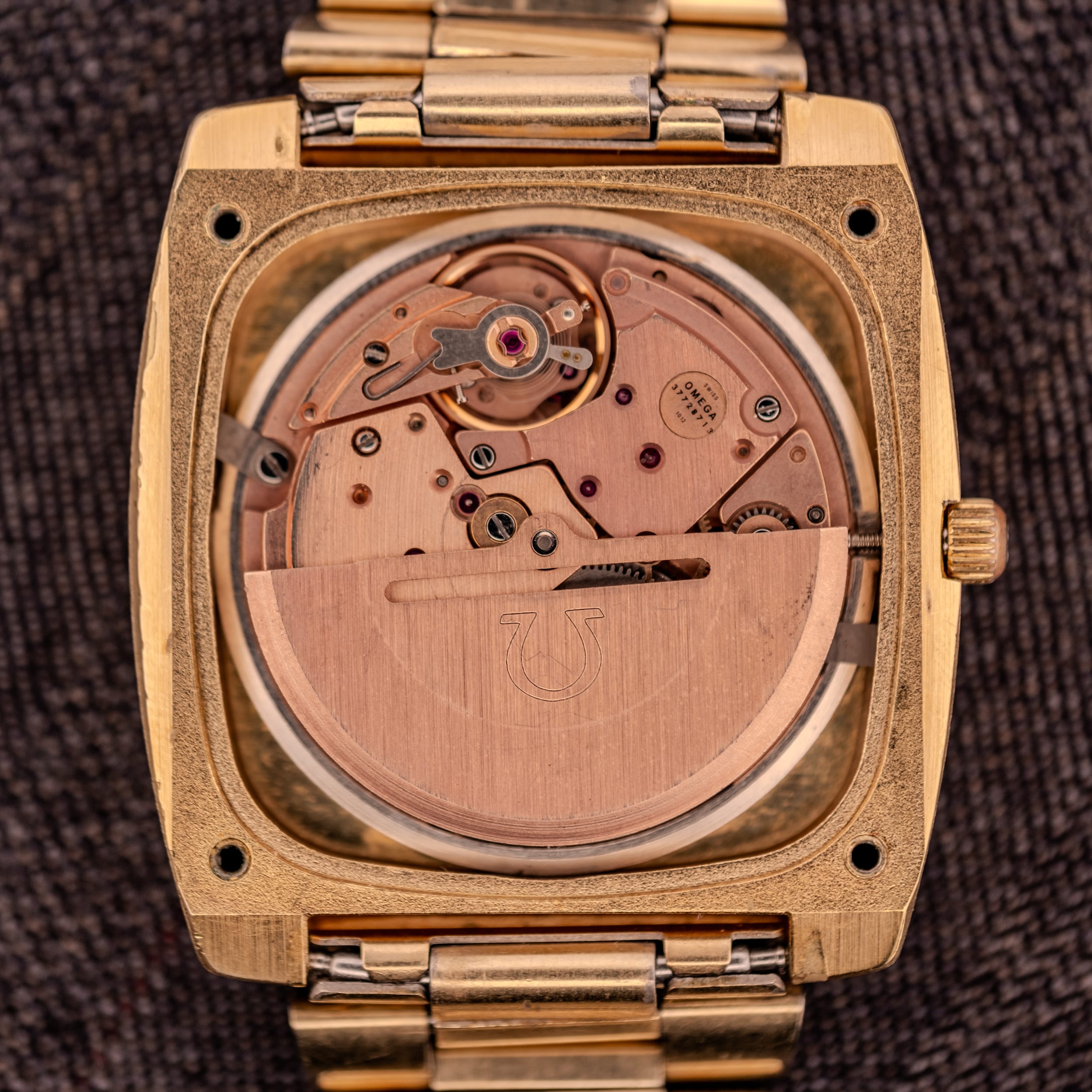
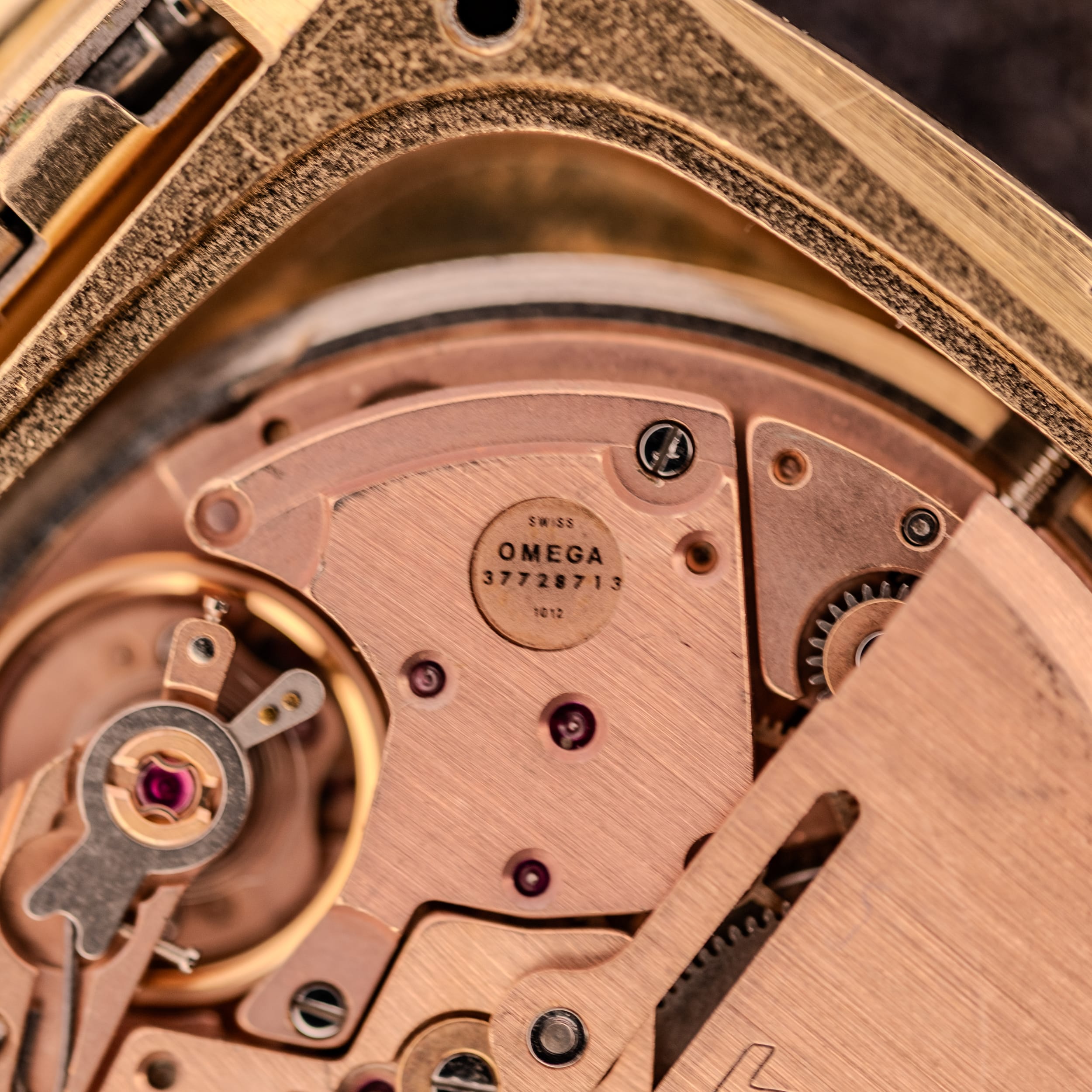
The reference 166.0138 was launched at the dawn of the 1970s and produced through the middle of the decade, sitting at the intersection of Omega’s traditional Seamaster heritage and the design revolution that was sweeping Swiss watchmaking at the time. While brands like Patek Philippe and Audemars Piguet were experimenting with their own integrated luxury sport pieces, Omega took the cushion case in a different direction entirely, scaling it up to a generous 38 x 40mm and giving it the dramatic, slightly futuristic geometry that earned it the TV nickname. Powering this reference is the Omega caliber 1012, a 23-jewel automatic running at the modern 28,800 vph beat rate with a quick-set date, an evolution of the legendary cal. 1010. The 1012 was widely regarded as one of the most accurate and reliable Omega calibers of the era, and viewing it through the case reveals the gorgeous copper-toned bridges and stamped Omega rotor that became signatures of this generation.
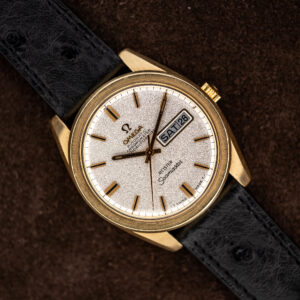
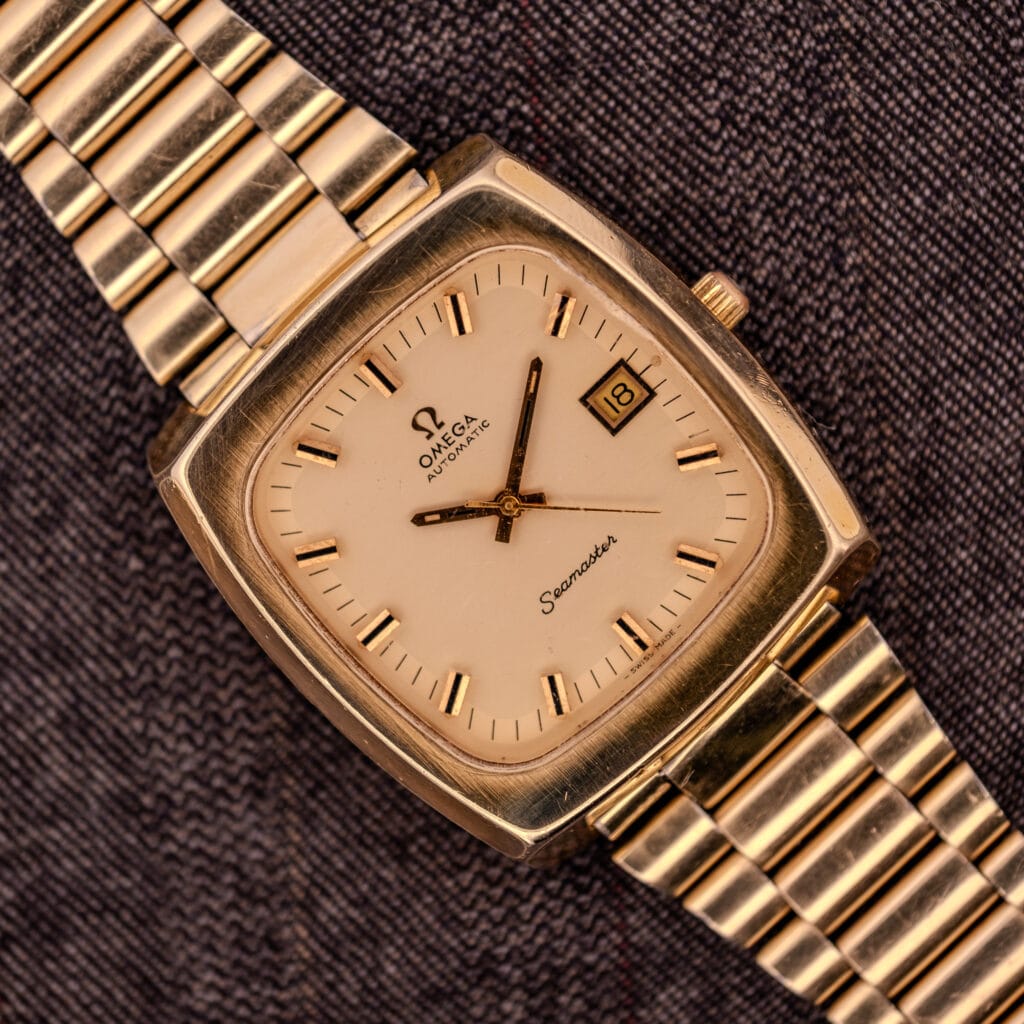
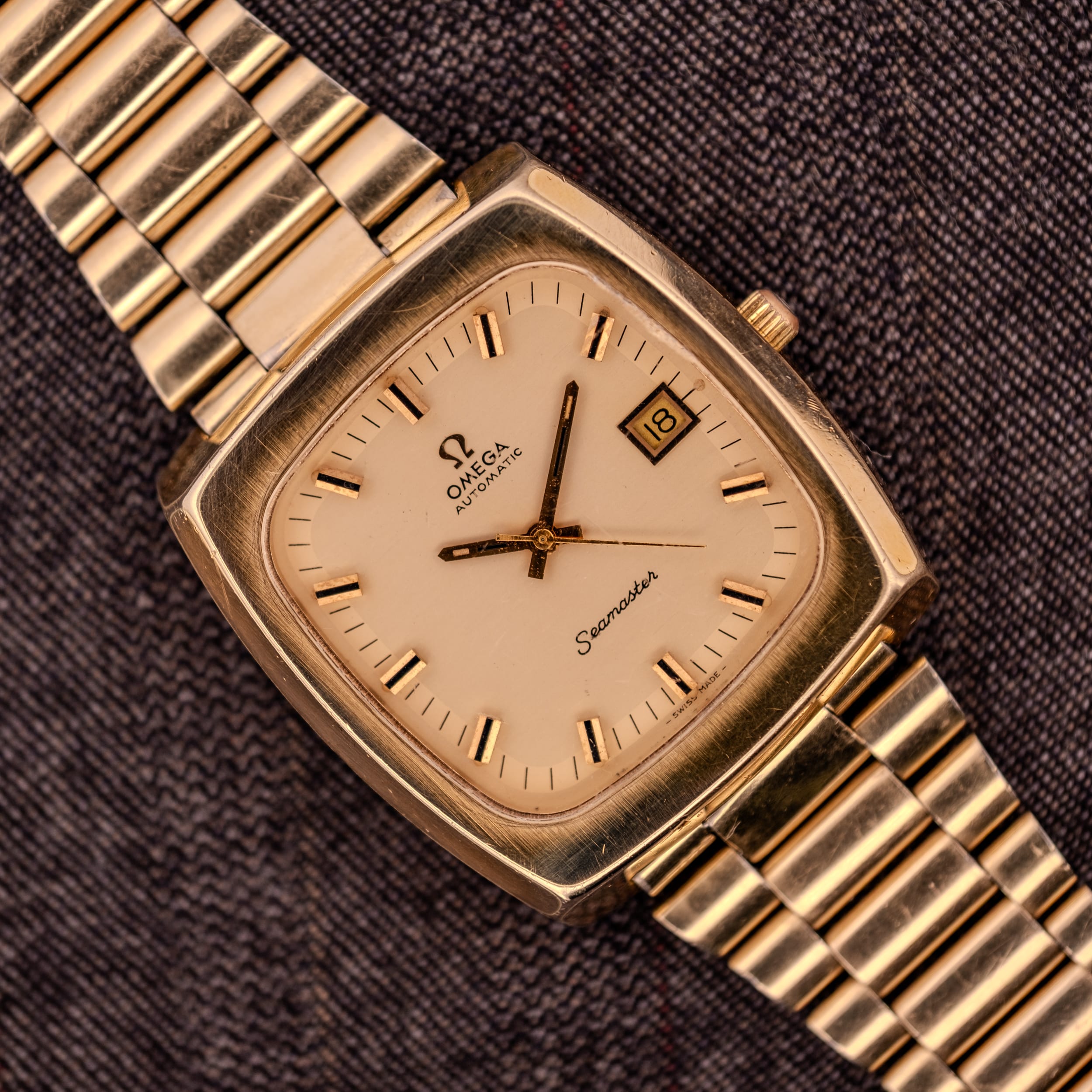
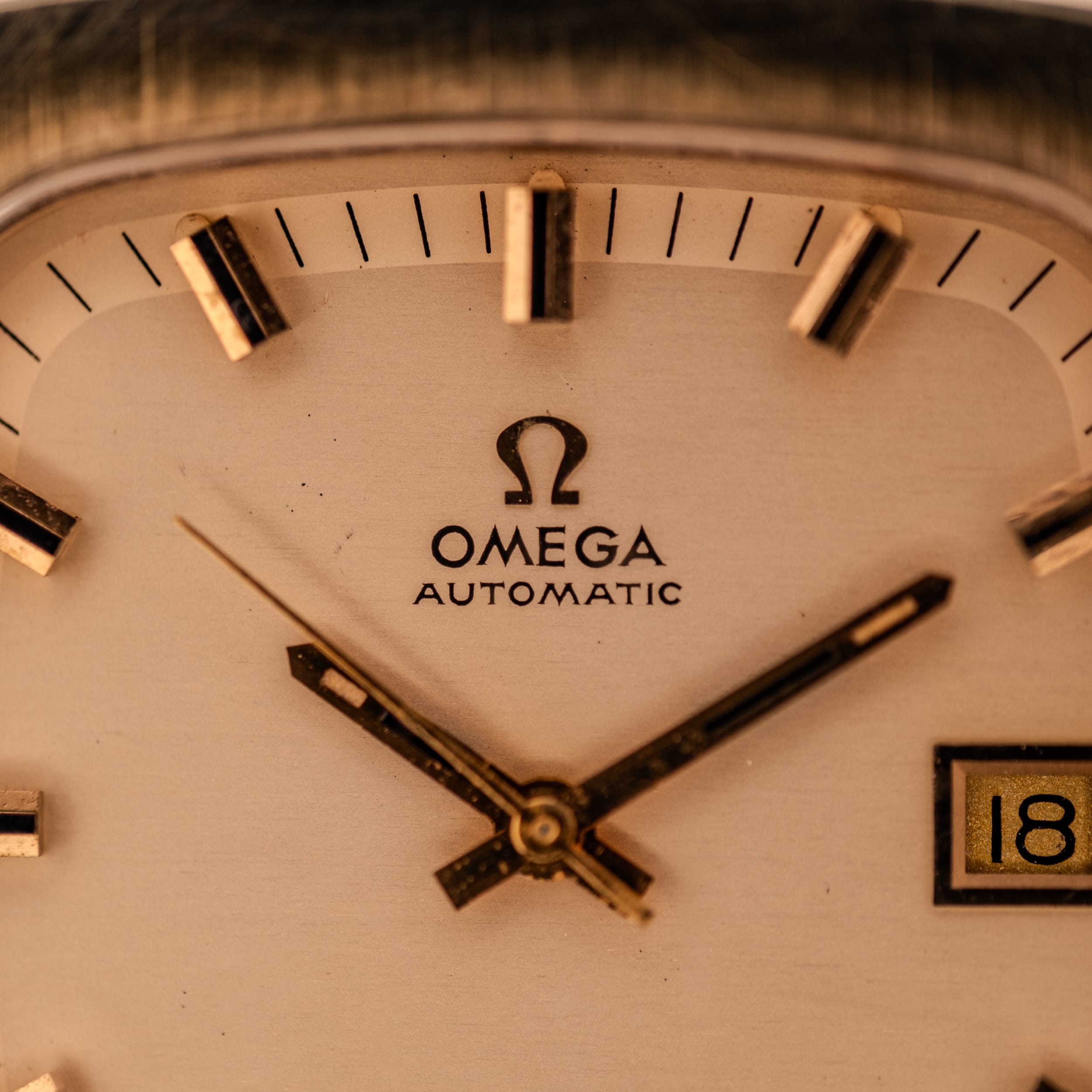
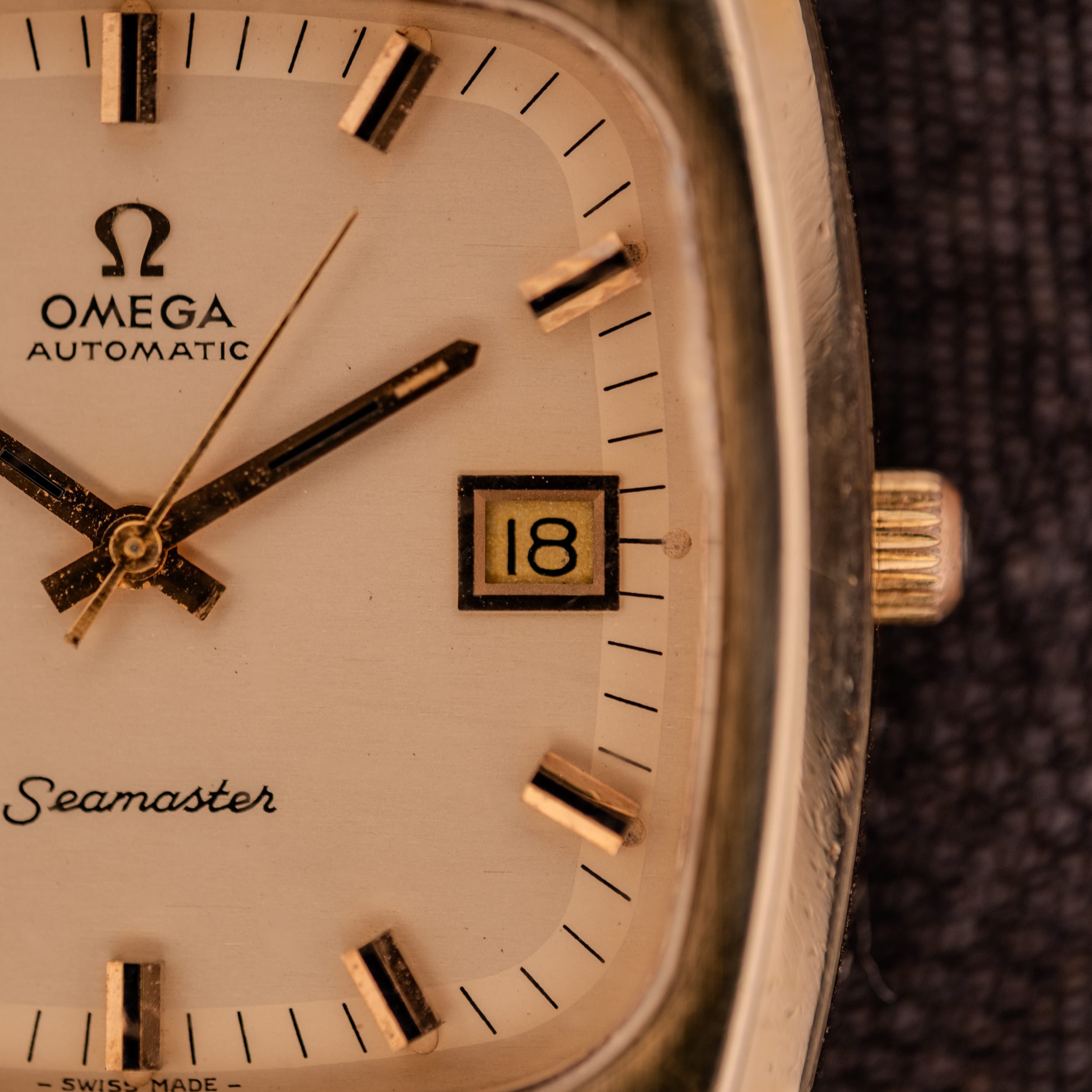
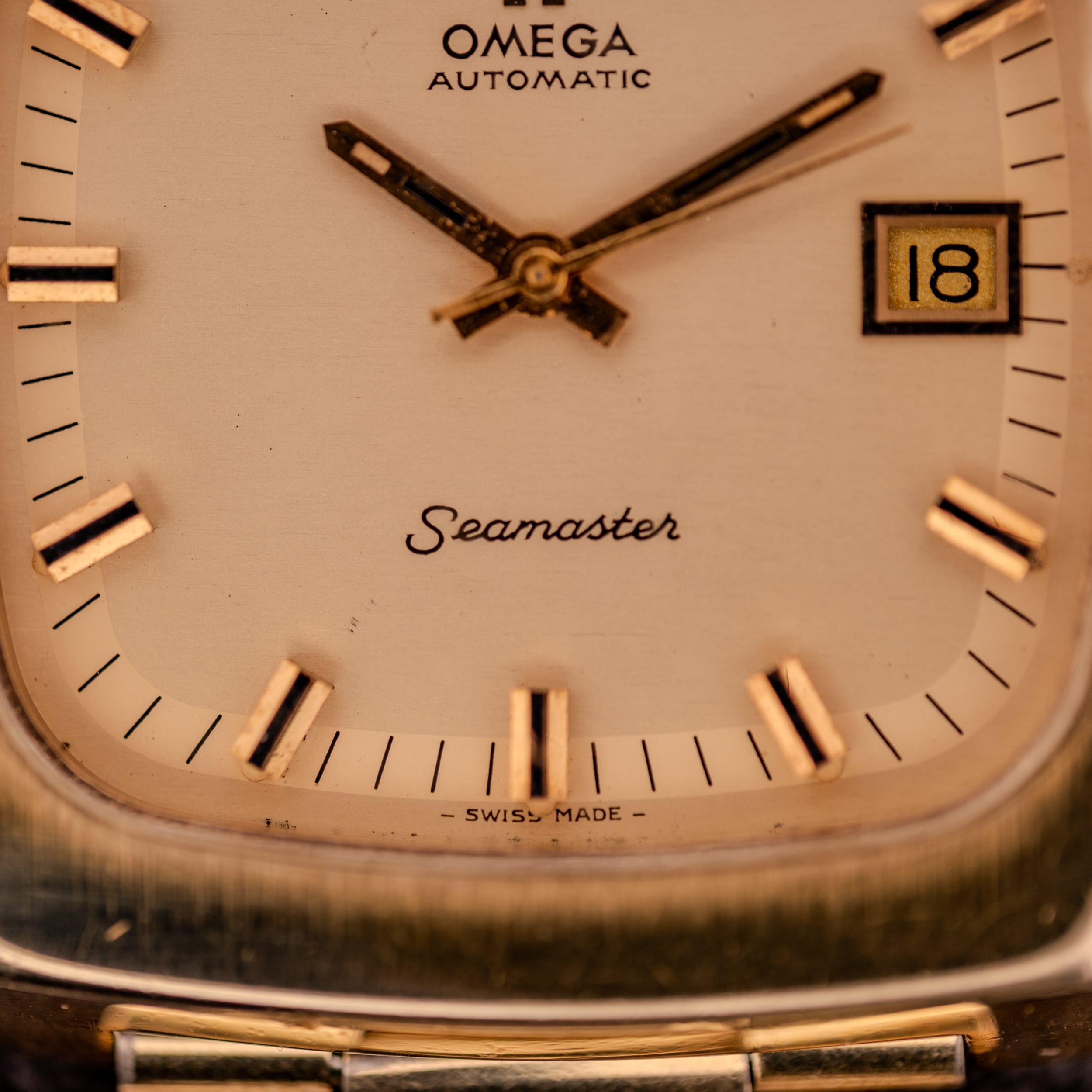
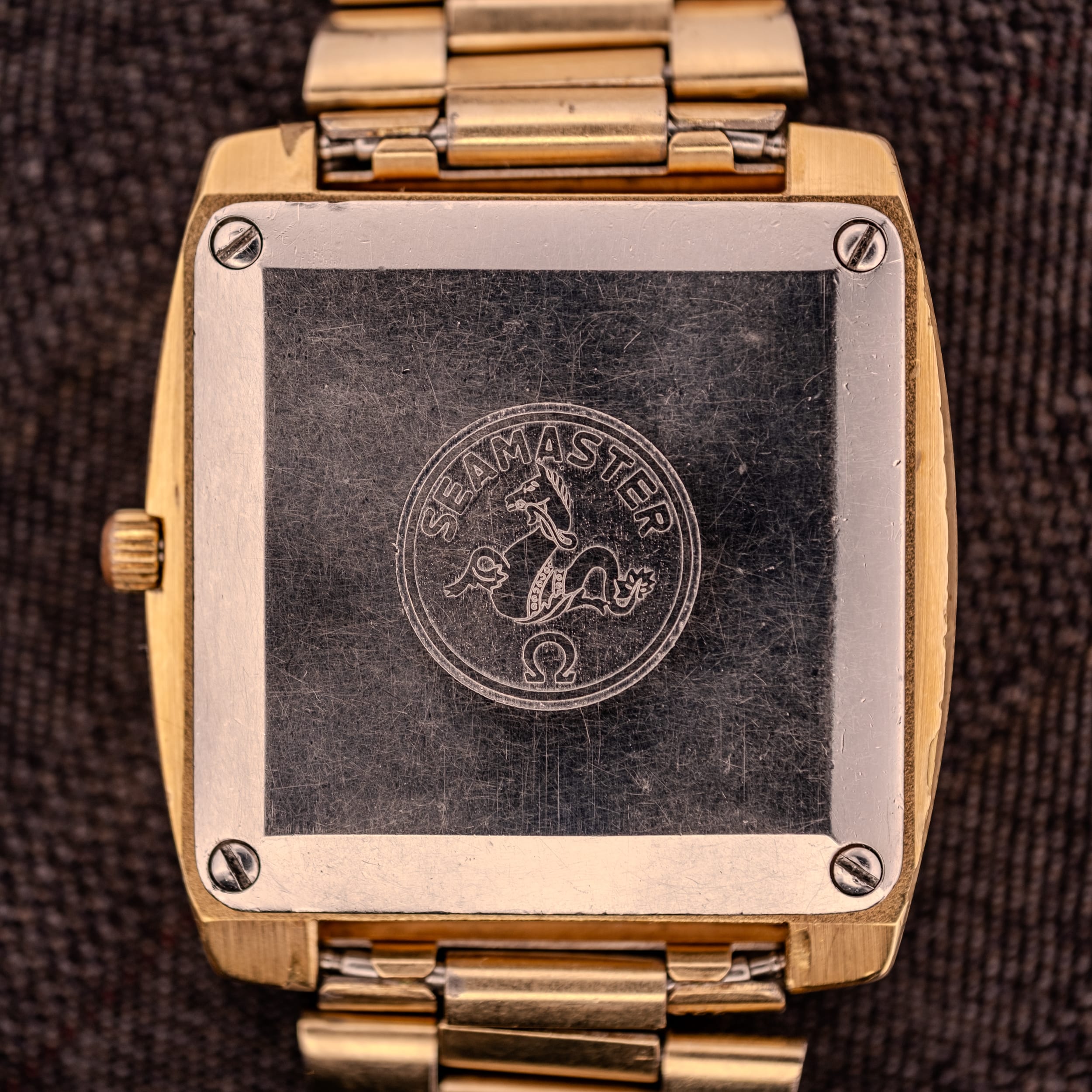
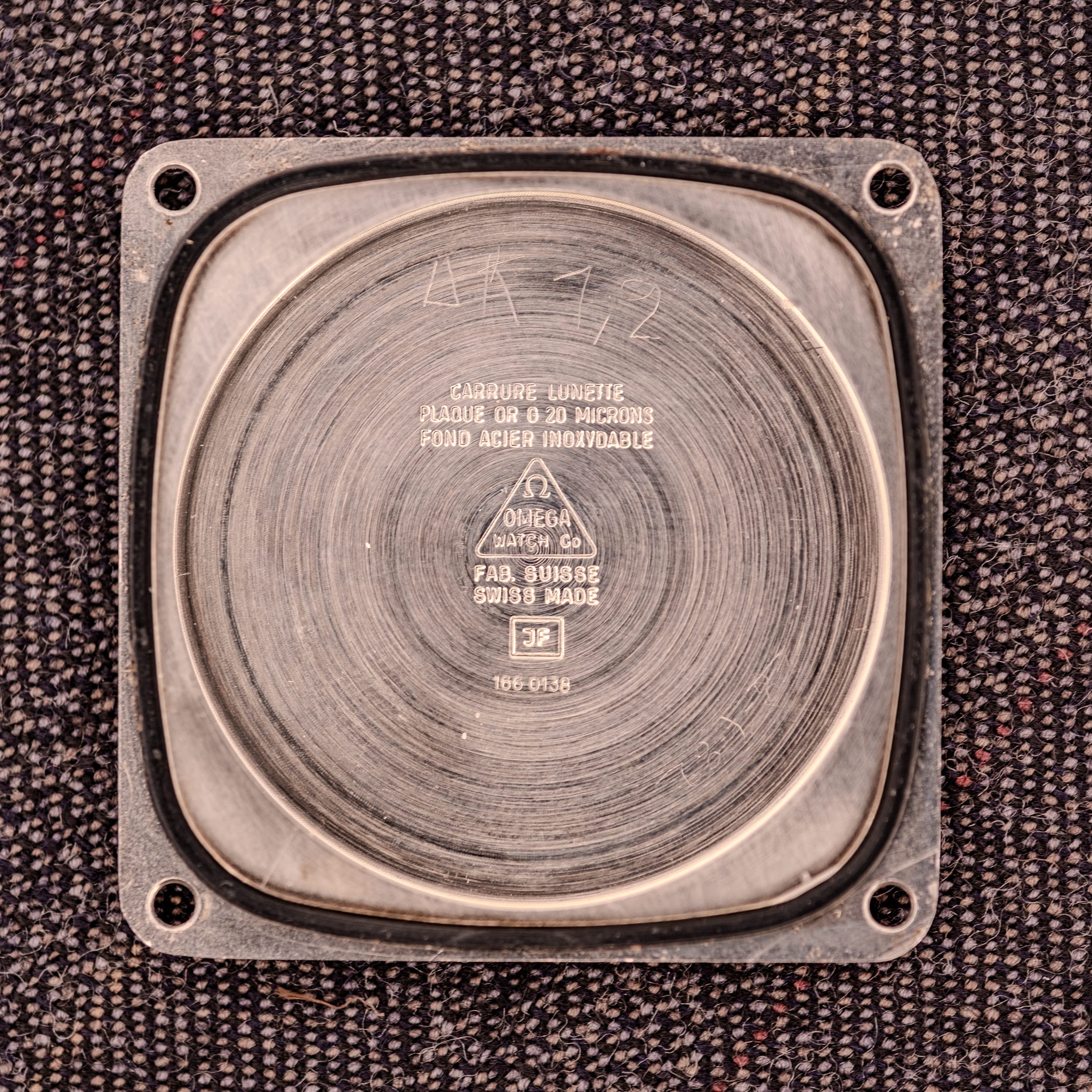
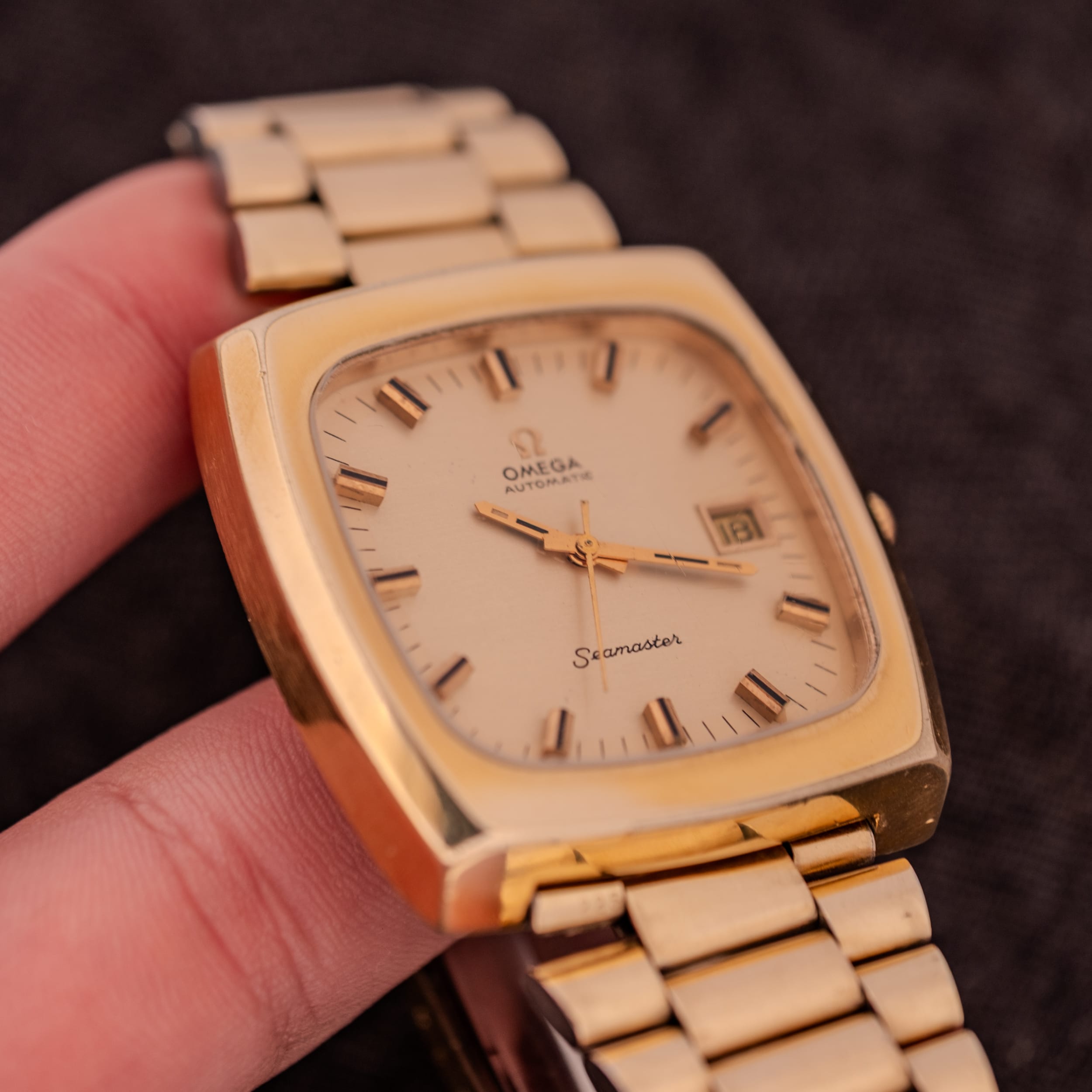
This particular example wears the gold-capped construction, with the case middle and bezel finished in 20 microns of solid gold plating (“Carrure Lunette Plaque Or G 20 Microns”) and the caseback in stainless steel (“Fond Acier Inoxydable”), as confirmed by the inner caseback stampings. The outer caseback retains a strong impression of the iconic Seamaster Hippocampus emblem, the seahorse galloping above the Omega symbol, framed by four exposed screws at the corners that emphasize the case’s industrial geometry. The dial is a brushed champagne field, gently warmed by age, carrying applied gold faceted baton hour markers with a black painted center stripe that gives them visual depth at every angle. The applied Omega logo and “Automatic” designation sit at 12, the classic script “Seamaster” at 6, with the date aperture at 3 displaying clean black numerals against a champagne wheel that matches the dial perfectly. The faceted gold baton hour and minute hands, plus a slim center seconds, complete the picture.
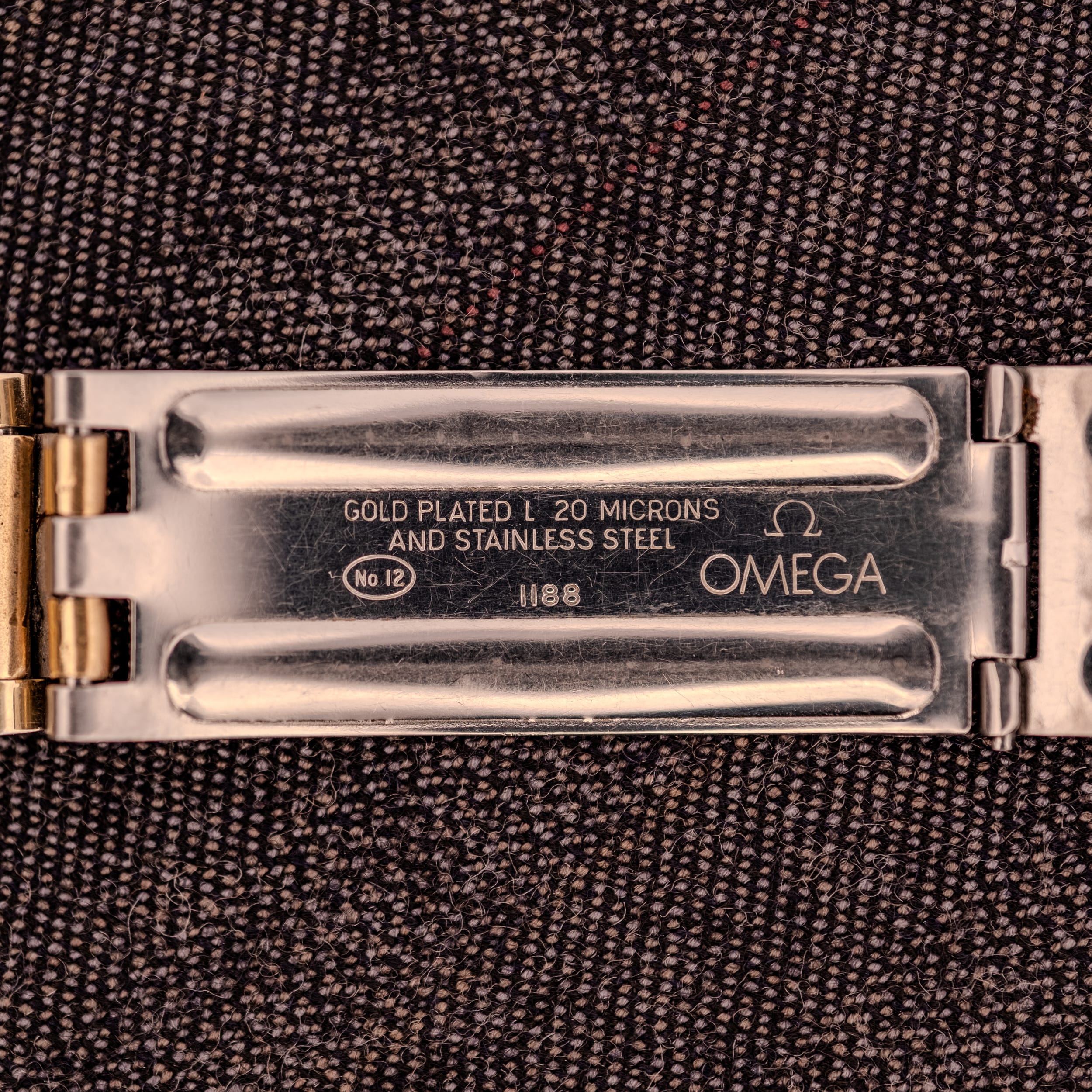
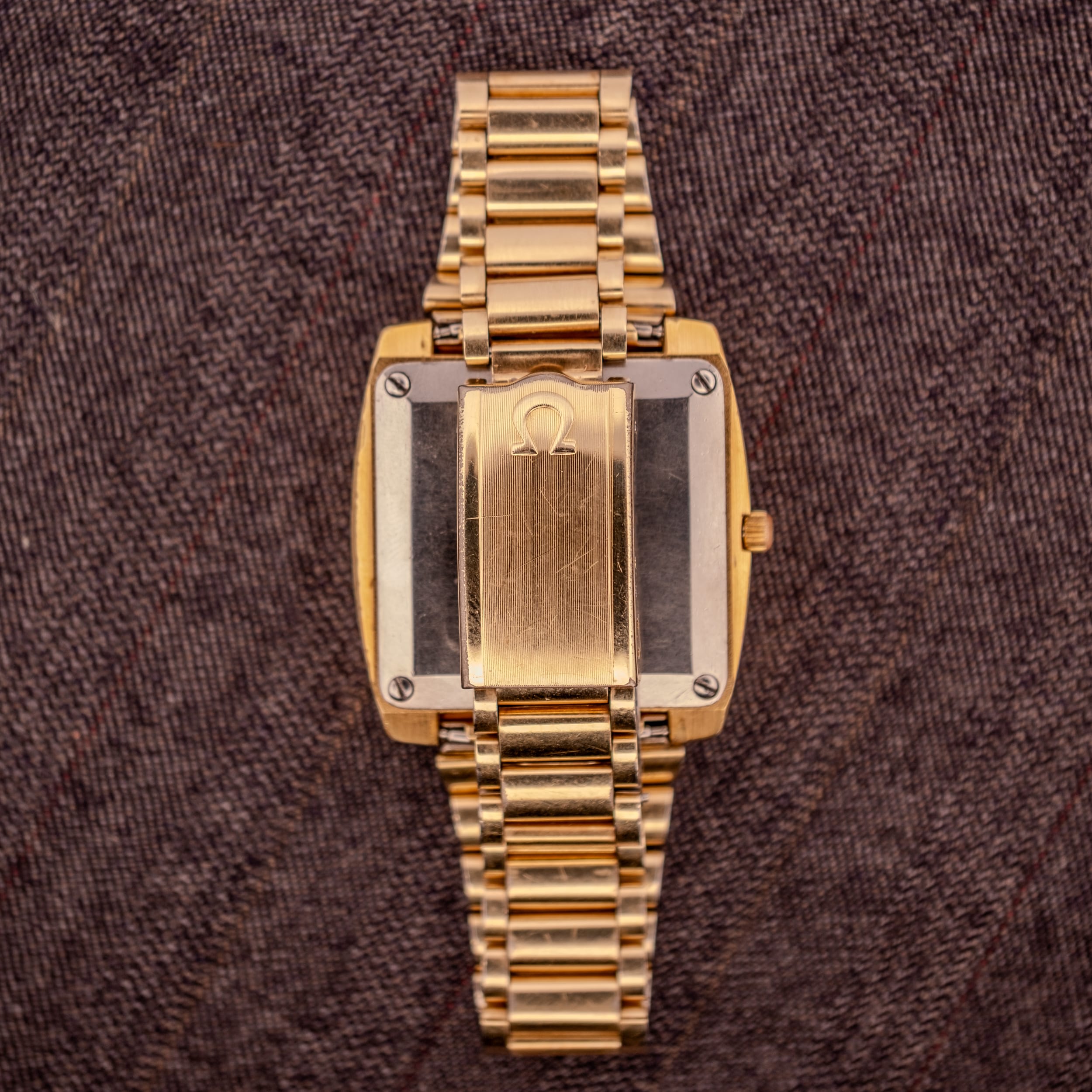
The case shows honest wear consistent with a watch that has lived a full life, with light scuffs and some softening across the brushed top surfaces and gold tone, particularly around the case flanks and the back. The geometry remains strong and the case retains its distinctive cushion presence on the wrist. The original Omega-signed gold-plated crown is in place. The watch arrives on its original Omega-signed bracelet, reference 1188 with No. 12 end links, a wonderfully period-correct gold-plated and stainless steel design with brushed top links and polished side accents, signed Omega on the deployant clasp. The bracelet is a centerpiece in its own right, and finding one of these references on its original signed bracelet is increasingly uncommon.
For the collector who loves the bold, slightly avant-garde voice of 1970s Omega, who appreciates the engineering and design ambition of the Jumbo case, this Seamaster is a fantastic example of an undervalued reference still hiding in plain sight. To us, it has all the visual impact of a much more expensive watch from the same era, and the kind of presence that makes you reach for it again and again.