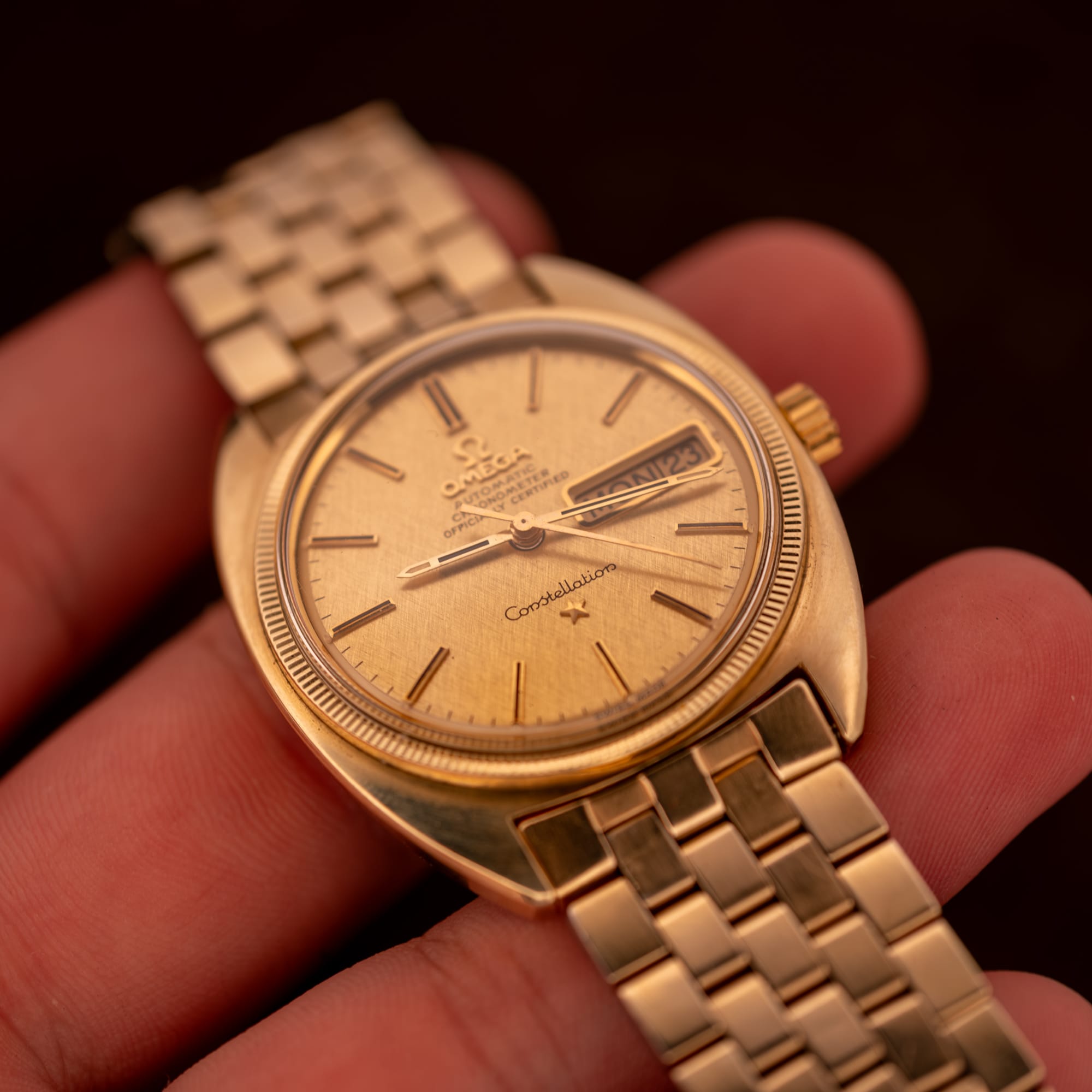
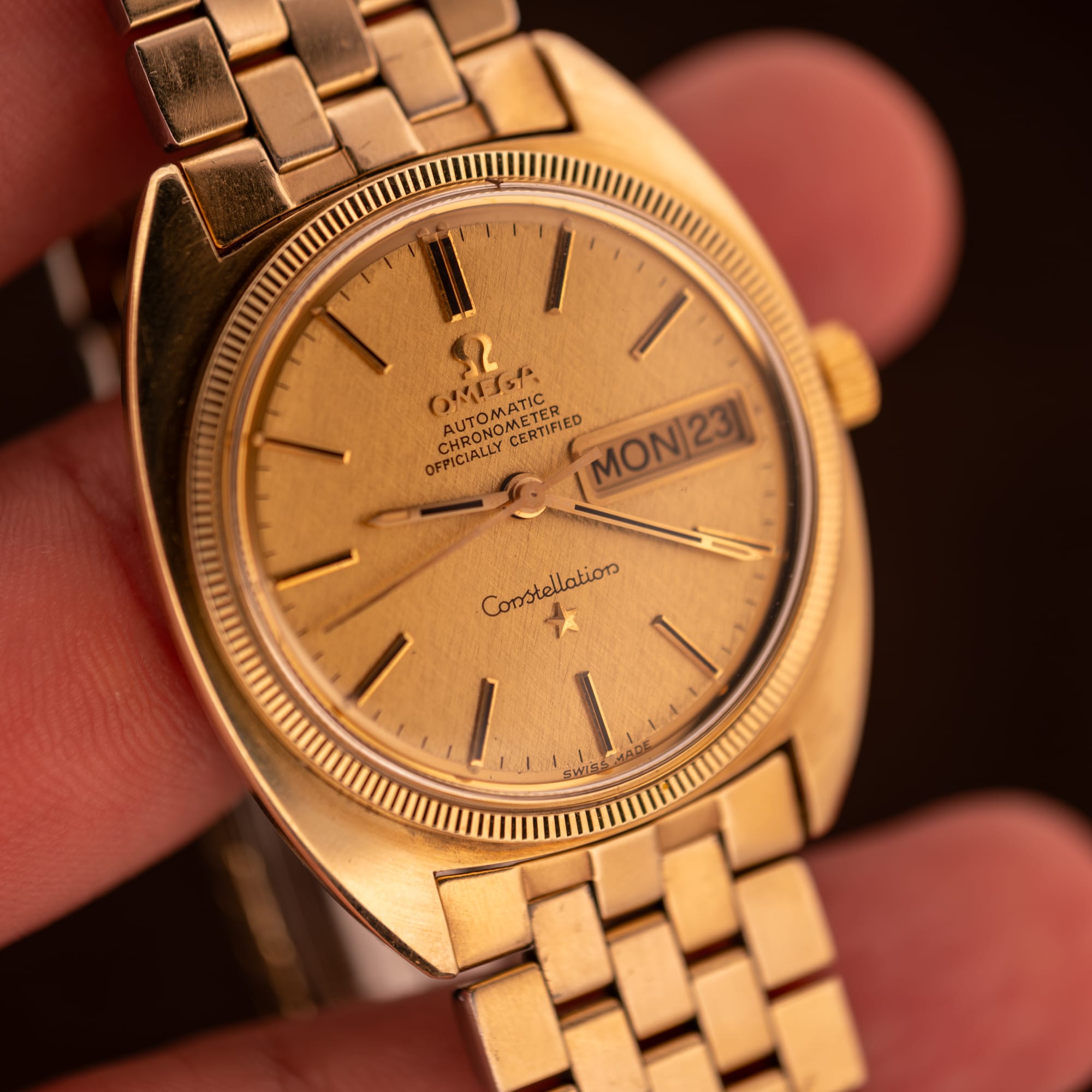
Twenty-four jewels. 19,800 vibrations per hour. A full rotor and an instantaneous day-date complication. Bureaux Officiels Chronometer certification adjusted across positions and temperatures. That is the caliber 751 spec sheet, the day-date sibling of Omega’s caliber 561 family, and the cushion-cased 168.029 is the configuration that wraps it most cleanly. In our opinion, the gold-on-gold linen-dial execution is the late-1960s Constellation expression we go out of our way to find.
The Omega Constellation line was launched in 1952 as Omega’s flagship chronometer family, and by 1966 it had moved away from the pie-pan dome dials of the early references into the second-generation “C-case” cushion silhouette designed by Gérald Genta. The 168.029 belongs squarely to that second wave. Produced from roughly 1966 through the early 1970s, it was offered with caliber 564 (date only) and caliber 751 (day-date), with case constructions ranging from steel and gold-capped through 14k gold top US-market cases to solid 18k. The example in hand is the 14k gold top configuration with a stainless steel back, the version that found its way to American buyers when the dollar still bought a serious Swiss watch.
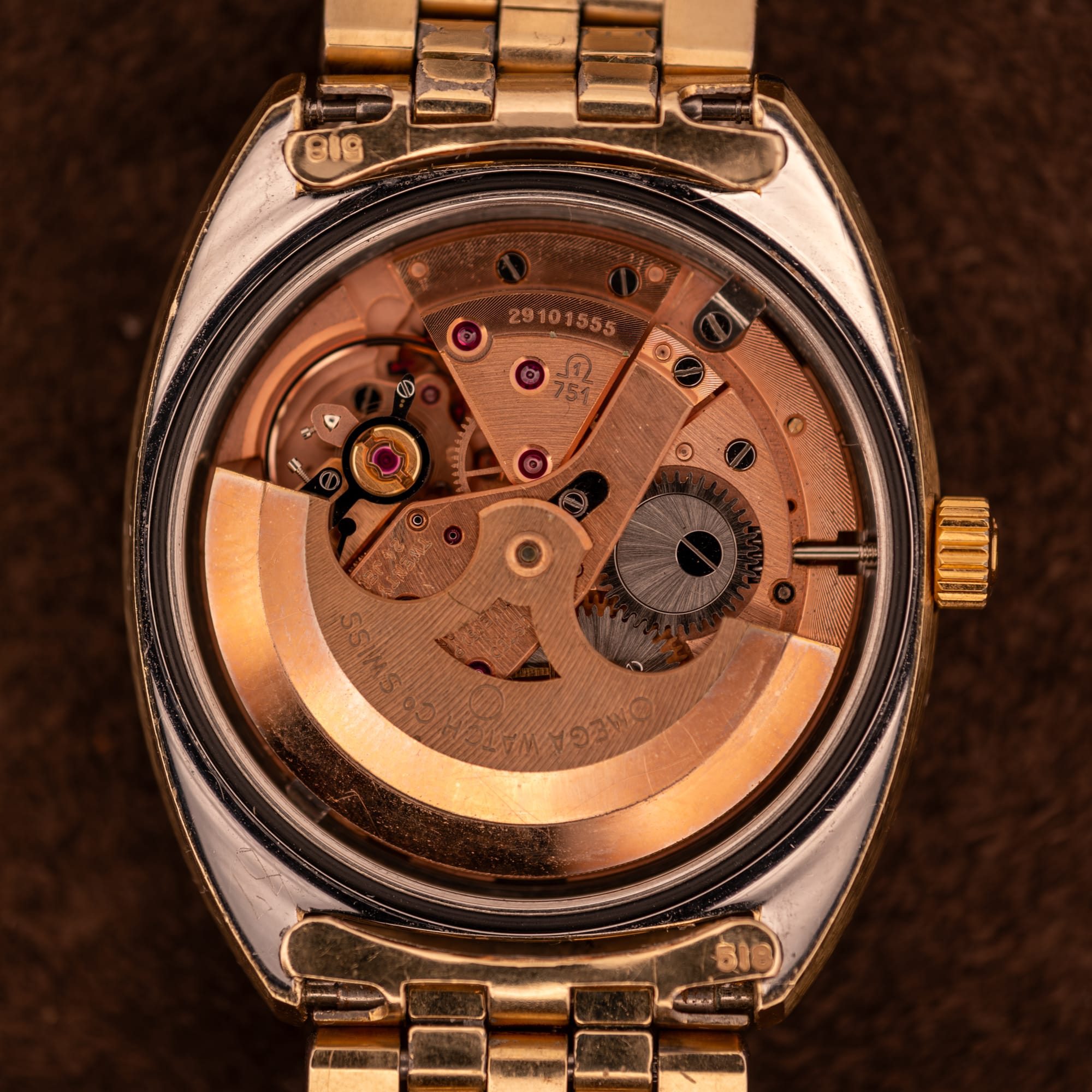
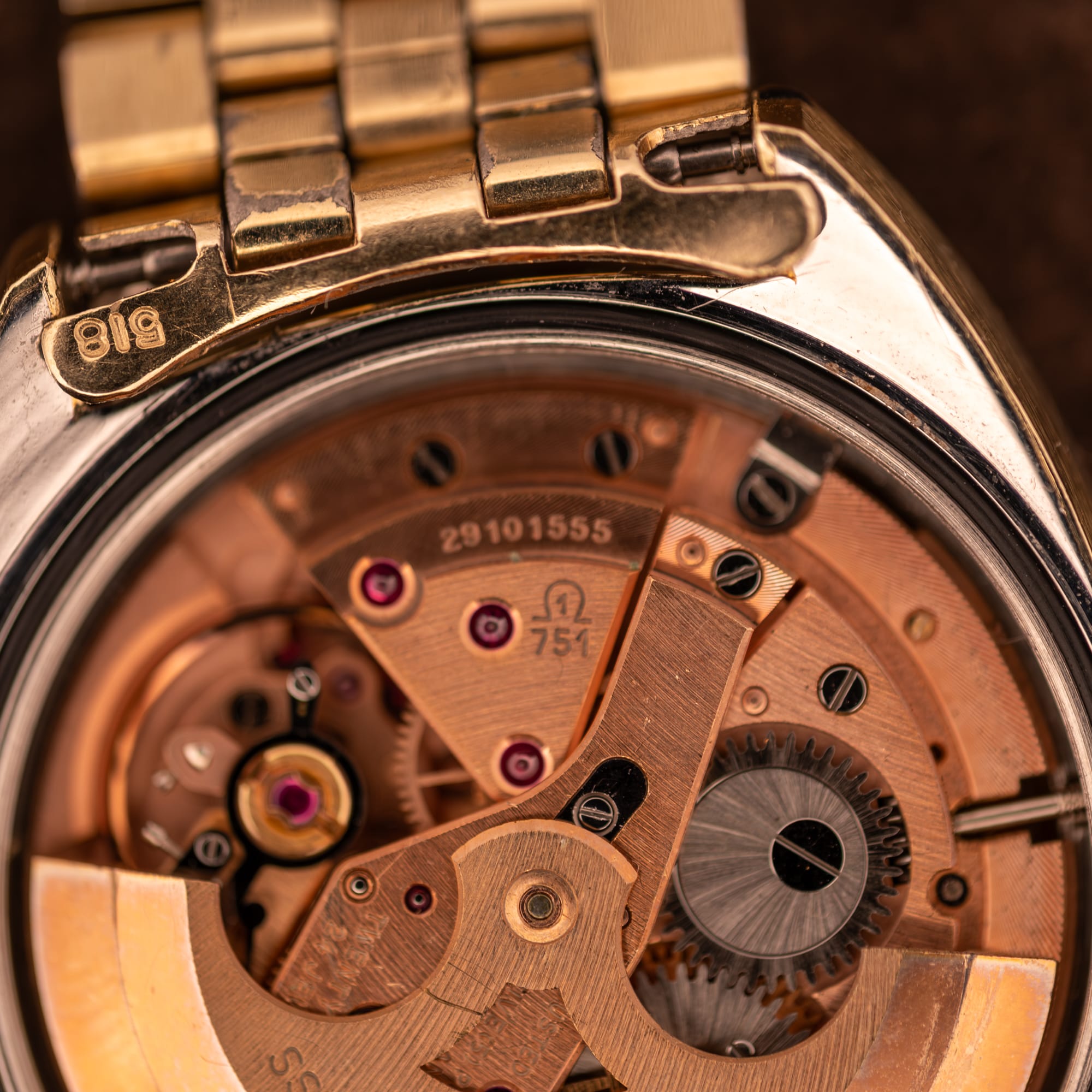
The caliber 751 itself is worth dwelling on. It is a 24-jewel automatic with a full rotor, beating at 19,800 vibrations per hour, and it carries the same chronometer-grade regulation architecture as the rest of the 56x/75x family. The day disc is instantaneous, jumping at midnight rather than dragging through the small hours, and the day and date are both quick-set via the crown in the relevant intermediate positions. As shown in our movement photograph, the copper-toned bridges carry the Omega Ω hallmark above the caliber number 751 and the serial 29101555, which places the movement in Omega’s production around 1969 and 1970. The finishing is the quietly proper côtes-de-Genève and perlage Omega used across its chronometer movements of the period, and the rotor sits flush against the inner caseback with the smooth-running balance that only a properly serviced 751 gives you.
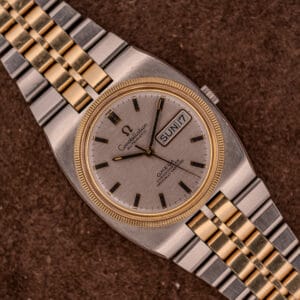
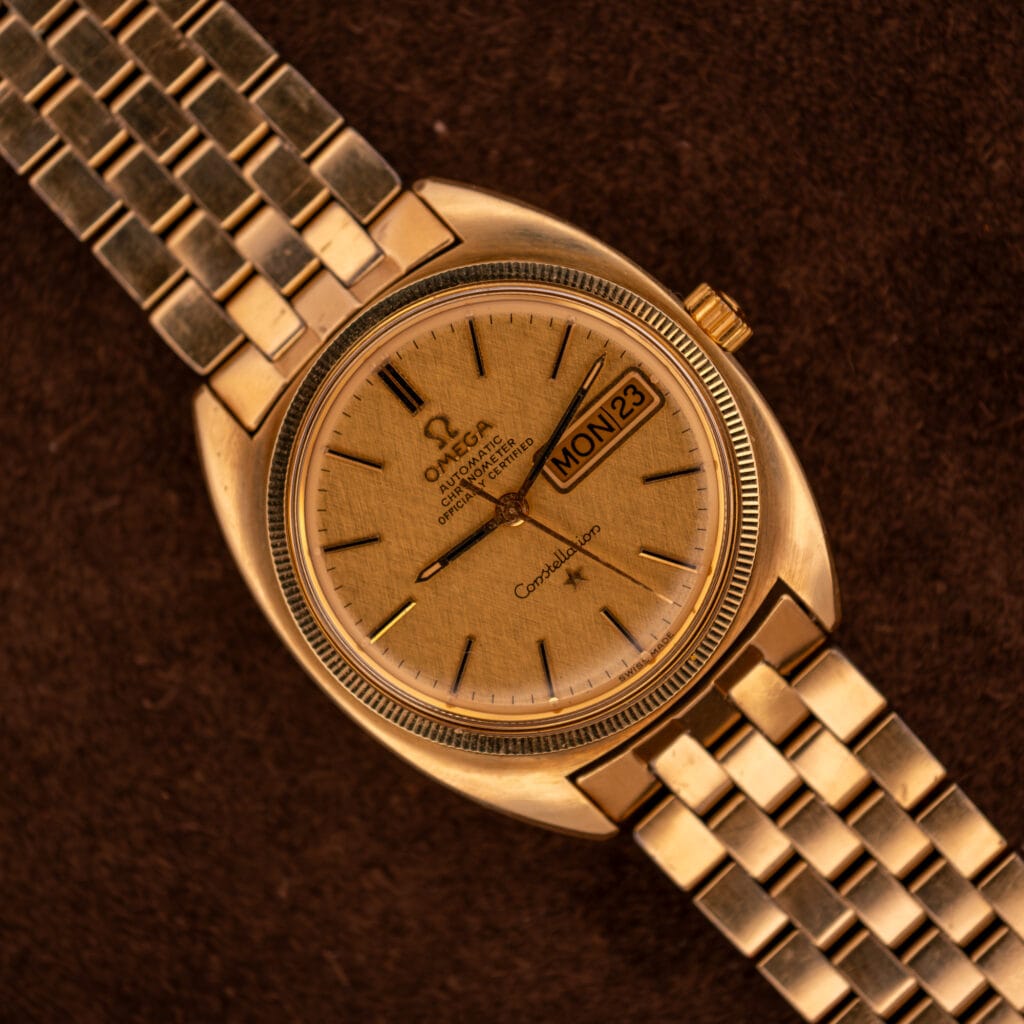
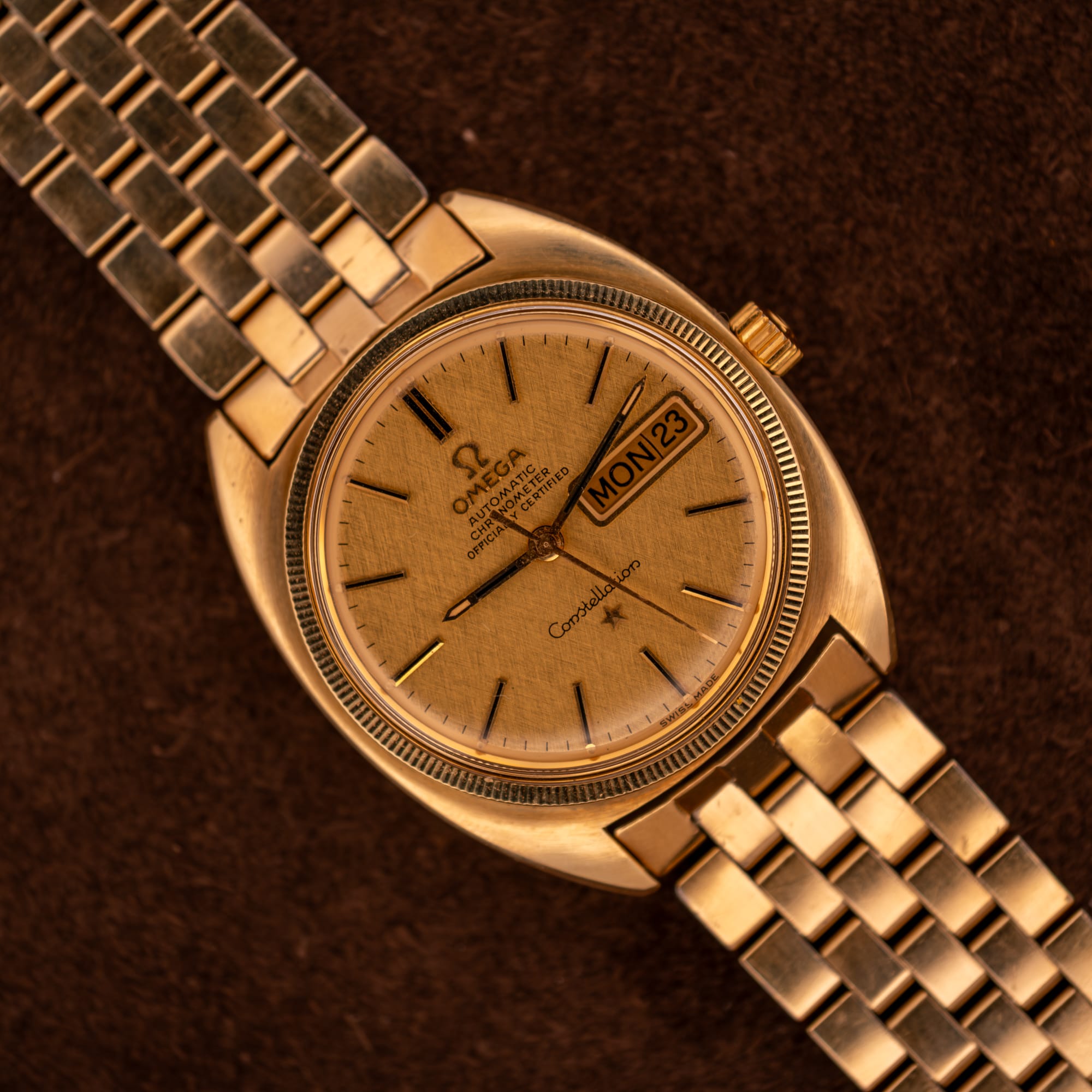
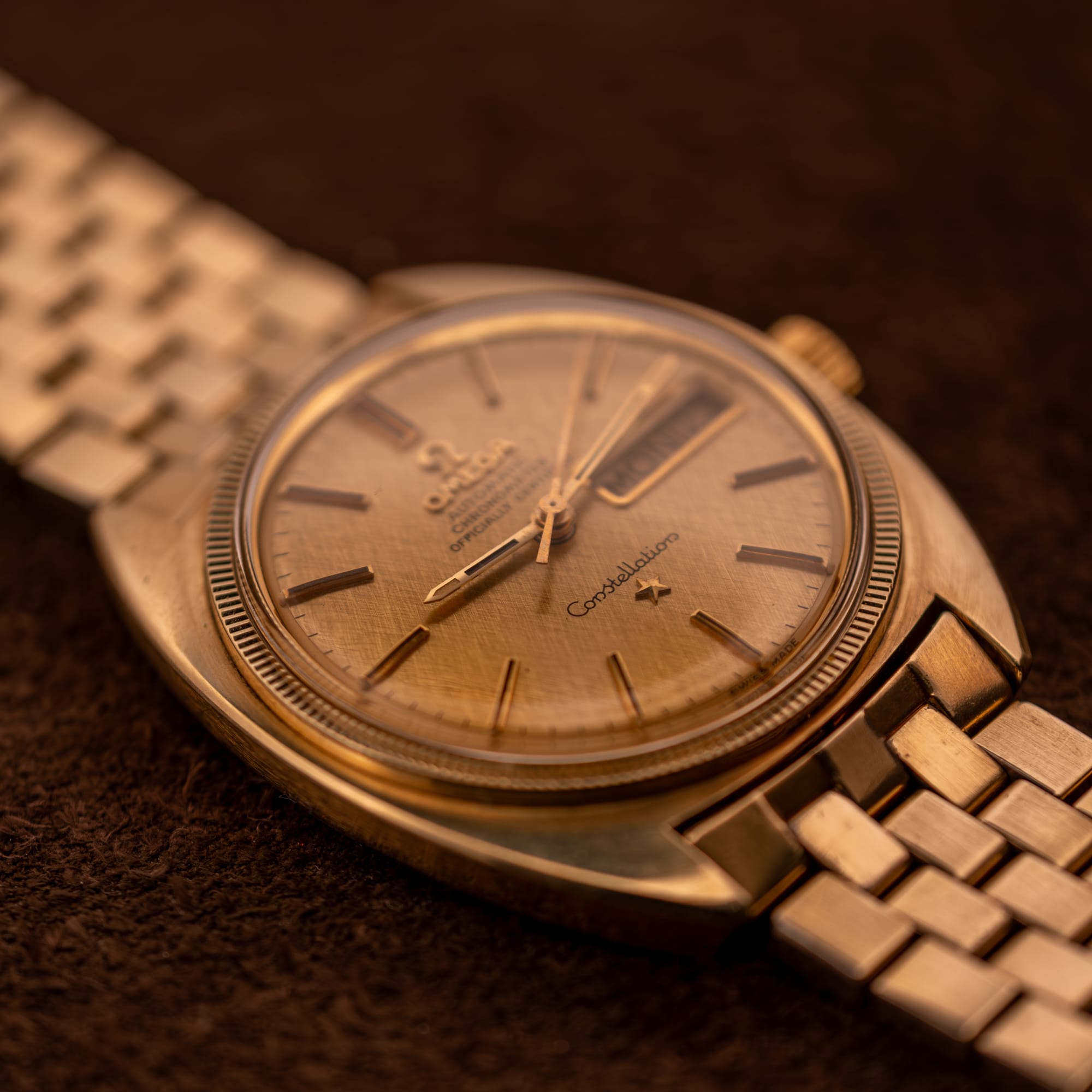
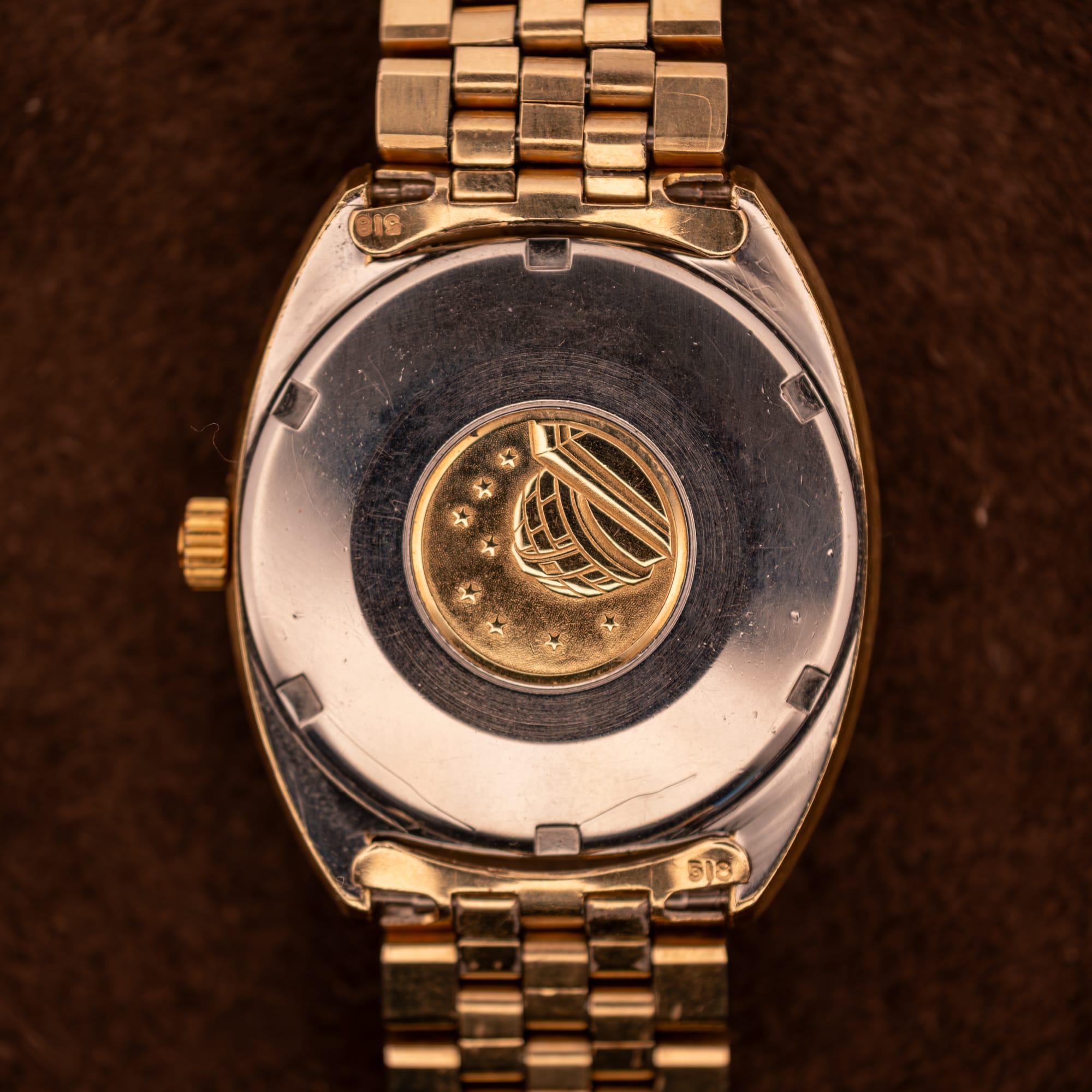
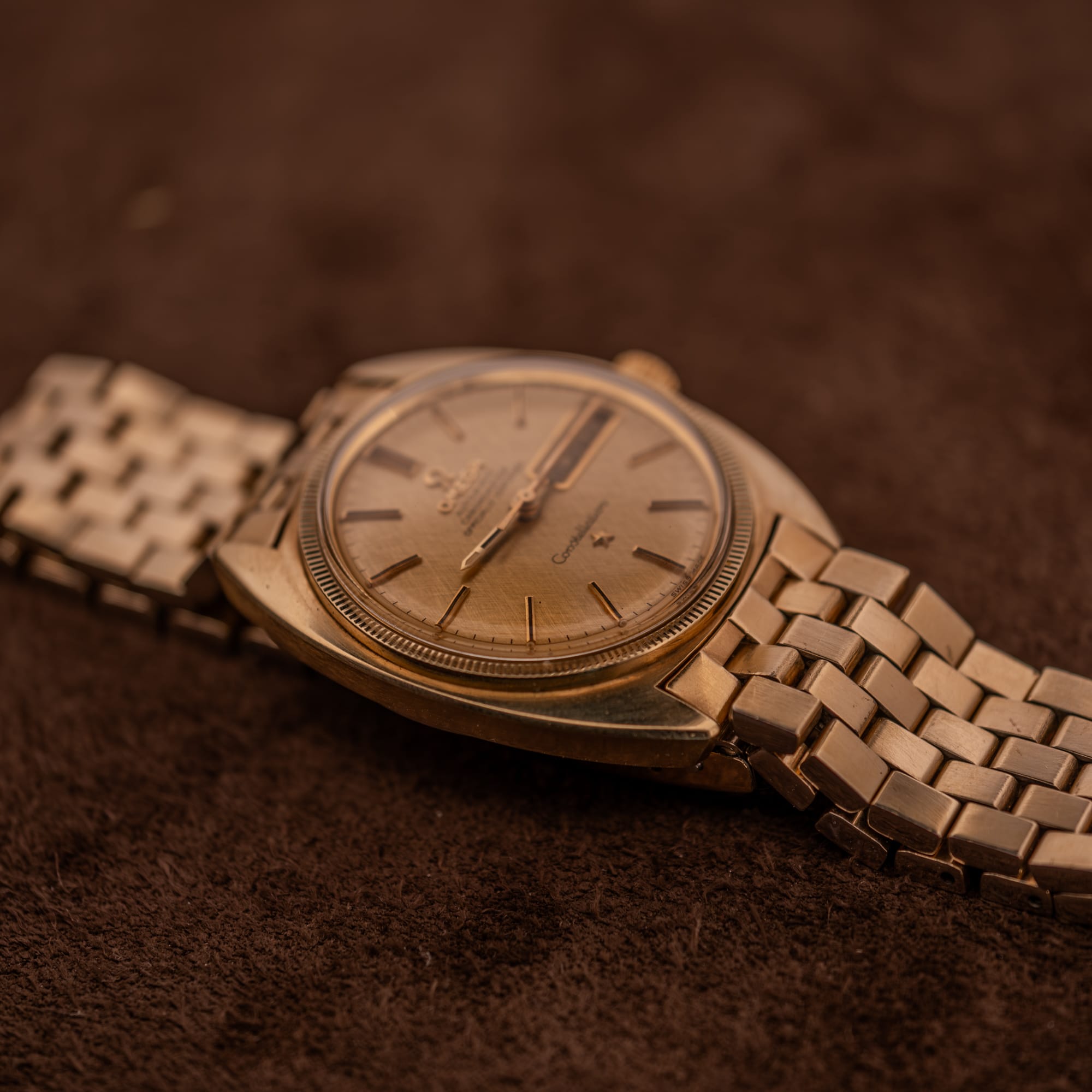
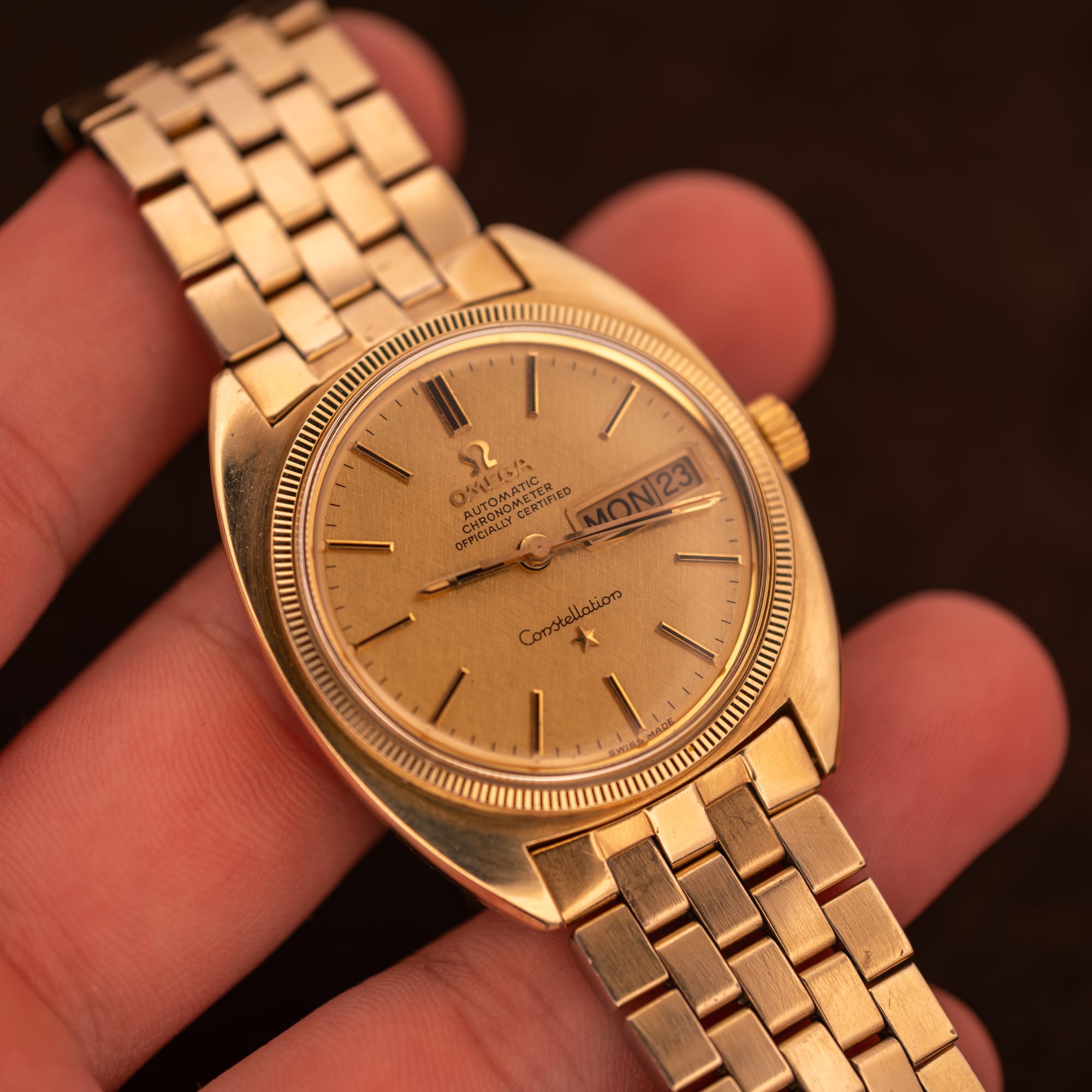
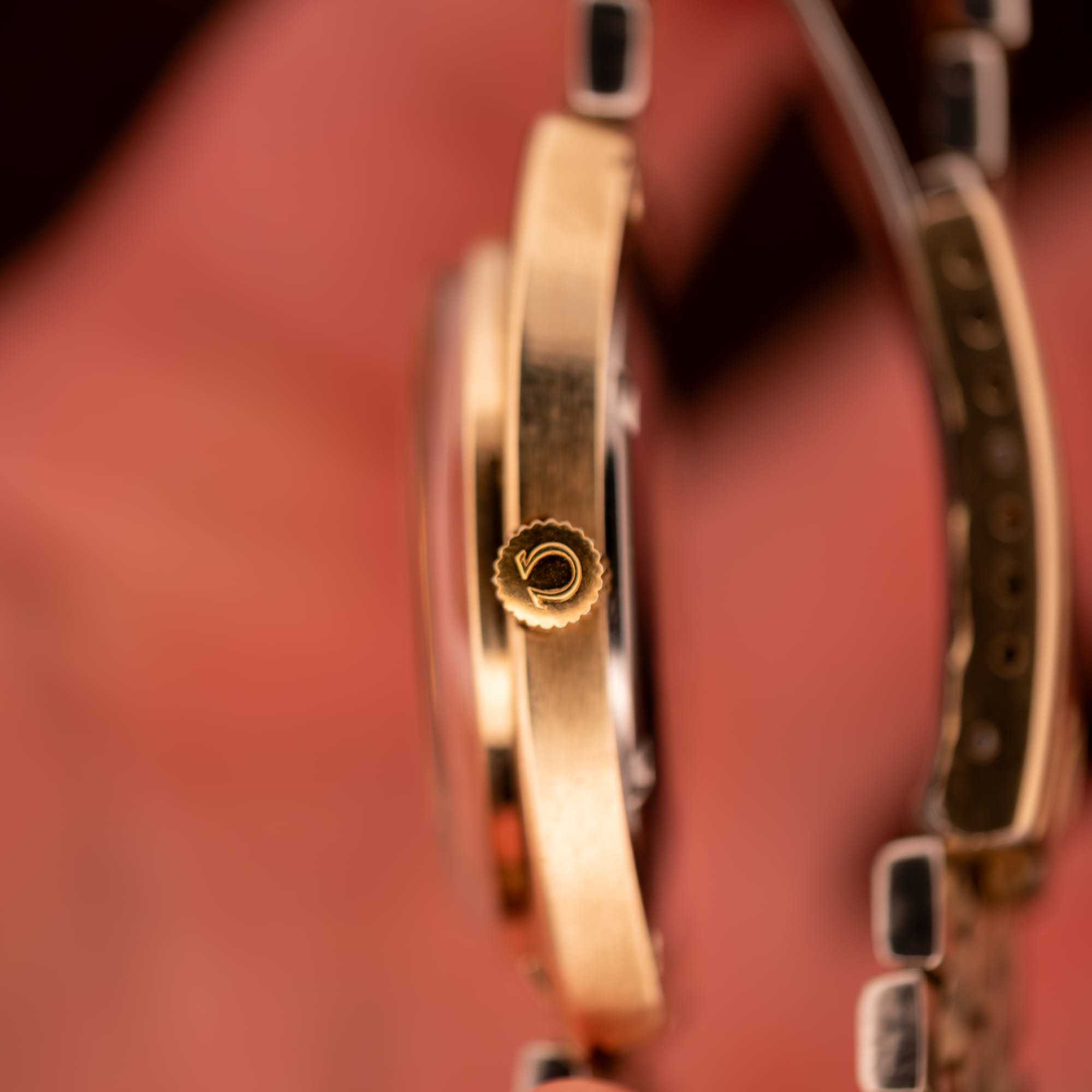
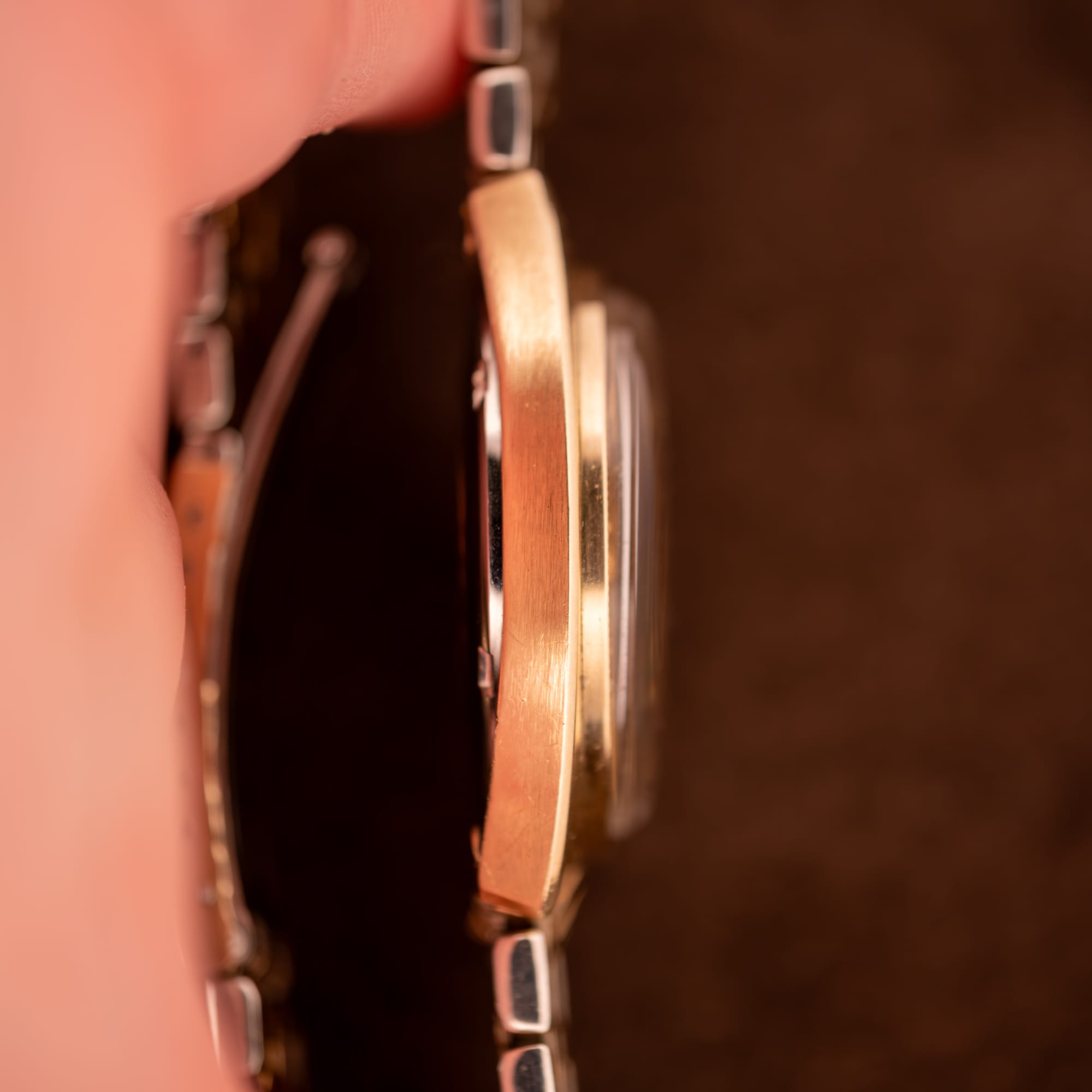
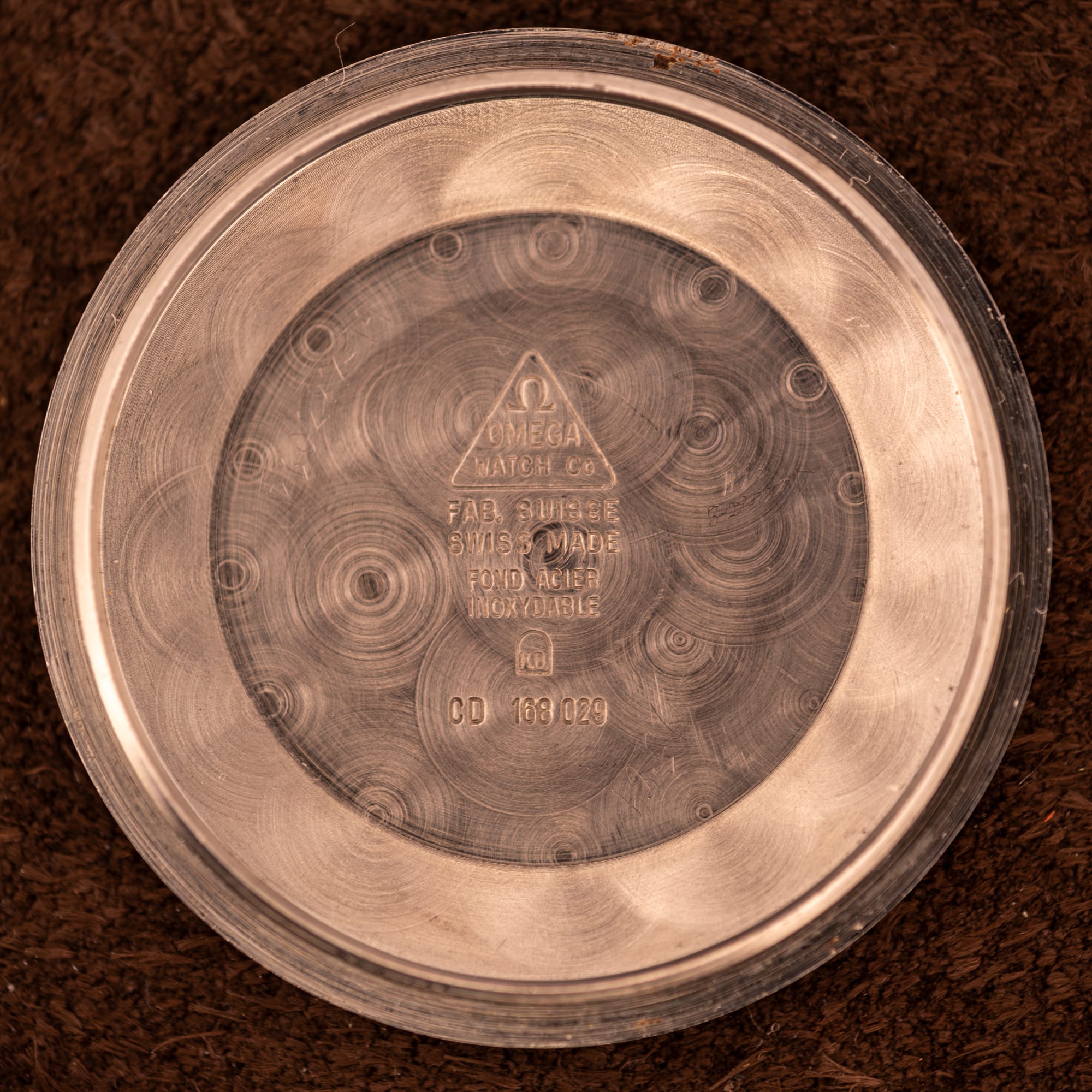
The case measures 35.2mm across and 40mm lug-to-lug, with a 19mm lug width and the soft cushion silhouette that distinguishes the second-generation Constellation from its pie-pan predecessors. Construction is a 14k gold cap over a stainless steel back, the standard US-market specification, with a fluted bezel that throws light beautifully under the slightest movement. The inner caseback is stamped OMEGA WATCH Co inside the triangle hallmark, with FAB. SUISSE / SWISS MADE / FOND ACIER INOXYDABLE / CD 168.029 in concentric type, and the case maker reference 818 appears on the rim. The exterior caseback carries the Constellation observatory medallion in gold tone, with the eight stars representing the chronometer accuracy records Omega had set at the Geneva and Neuchâtel observatories. The signed Ω crown remains crisp and threads in cleanly. Wear across the case top and bezel is honest and even, with no harsh polishing and no through-wear to the gold cap on any high point we have inspected.
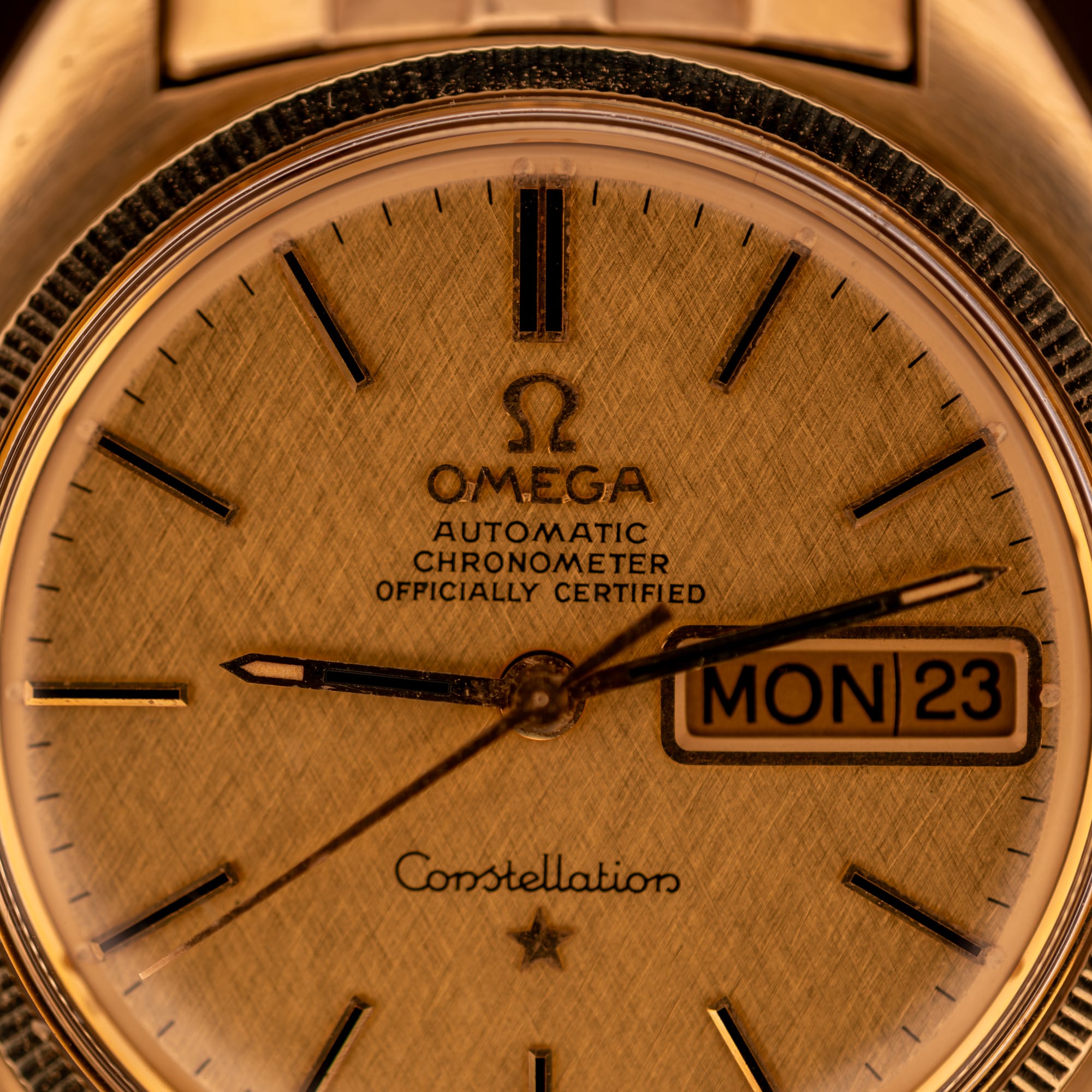
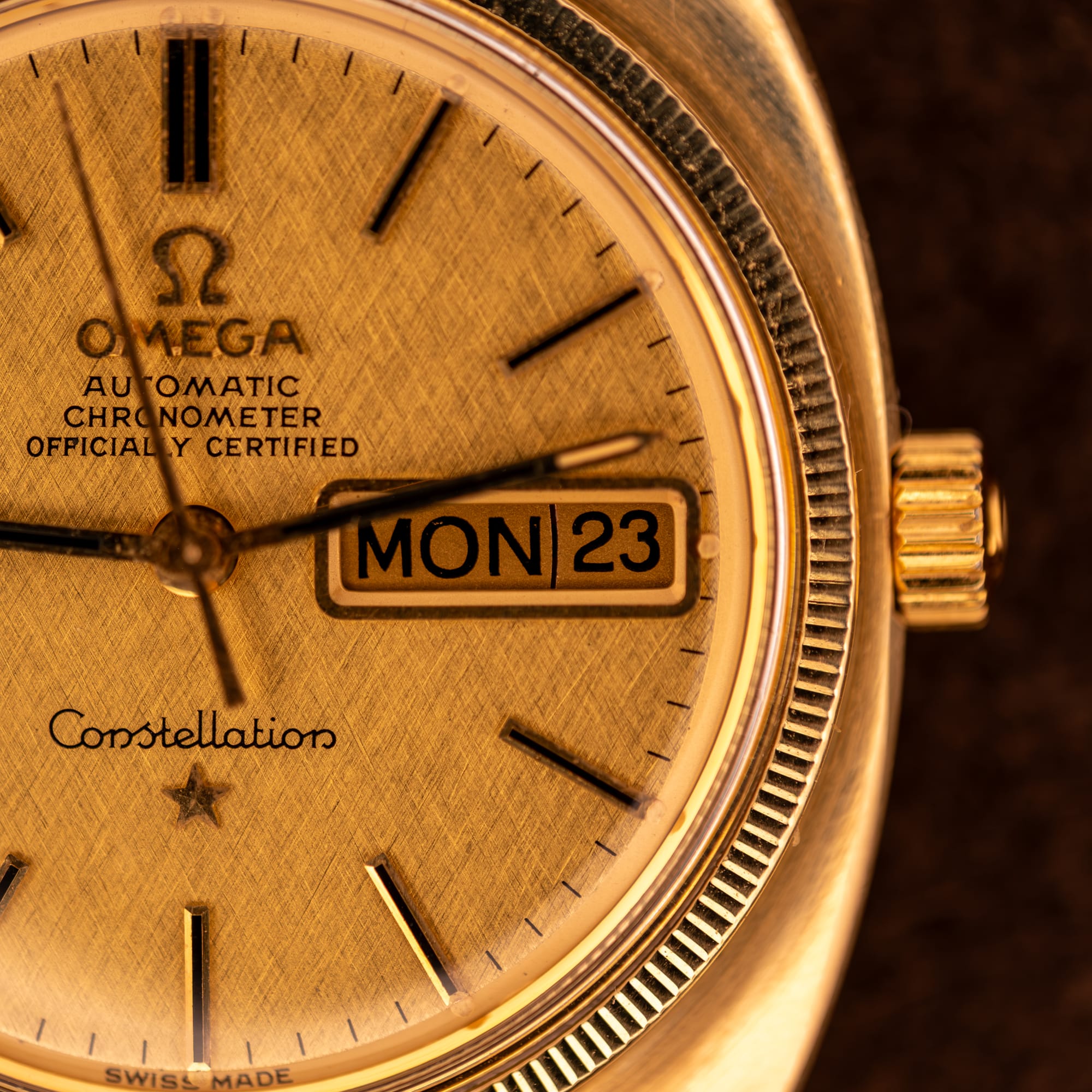
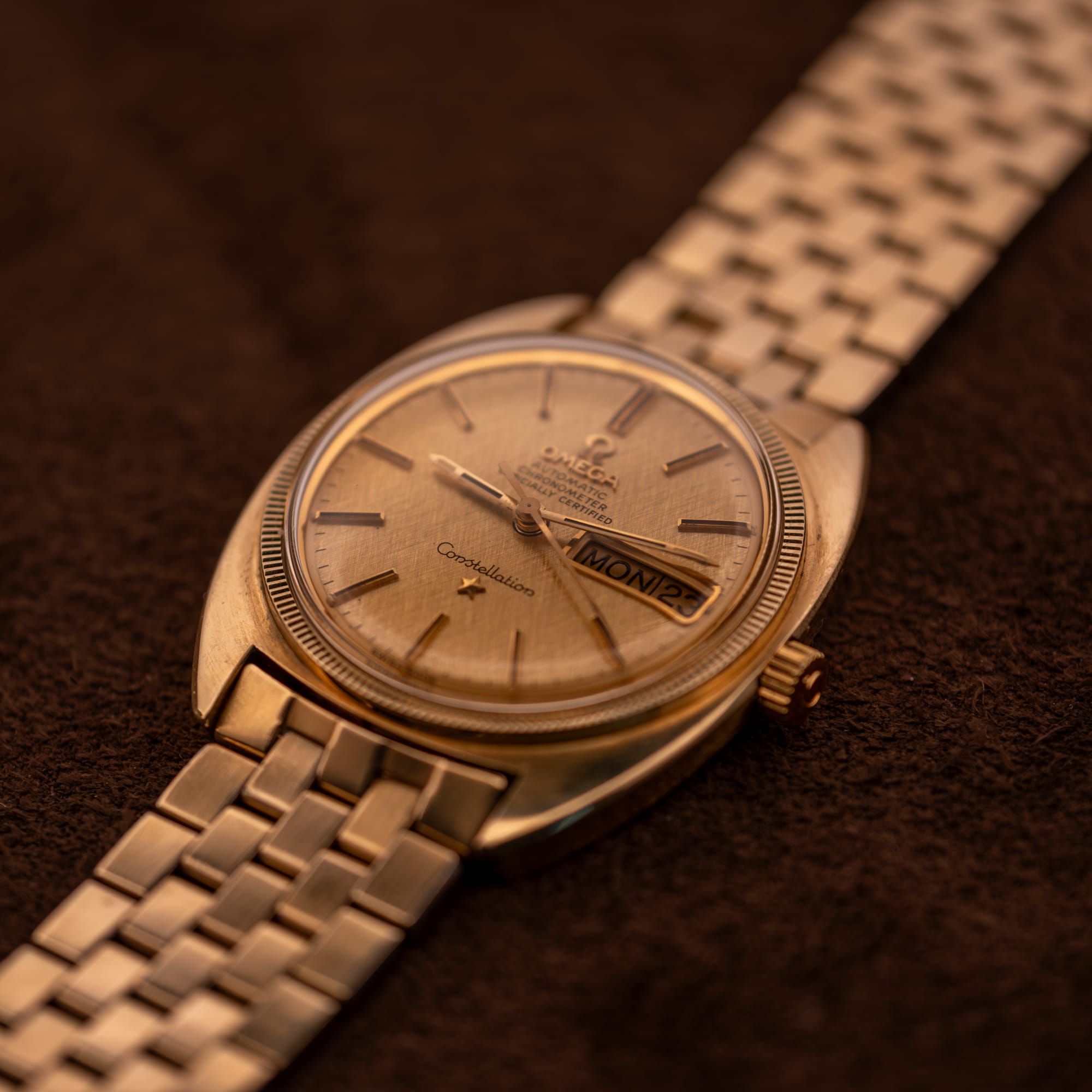
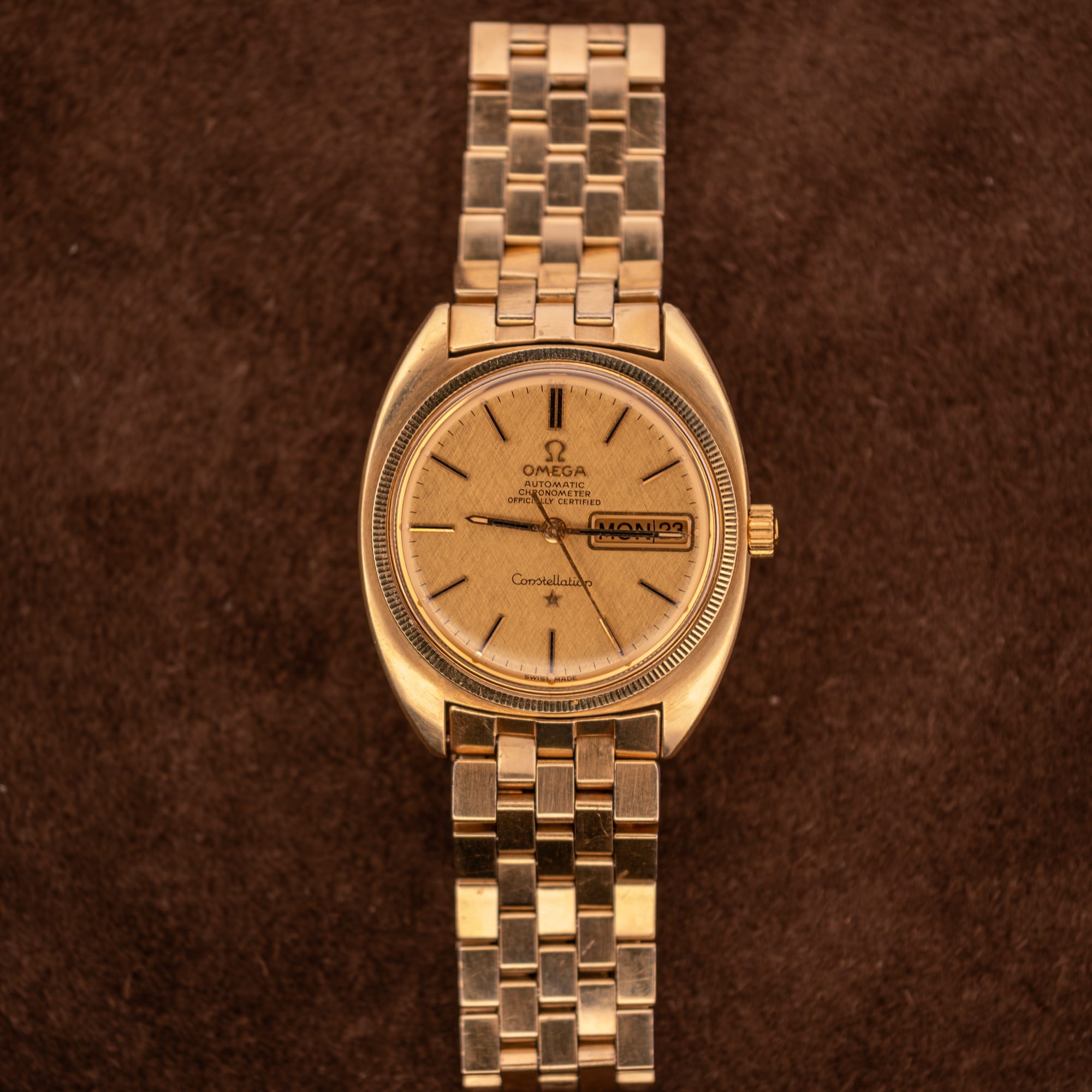
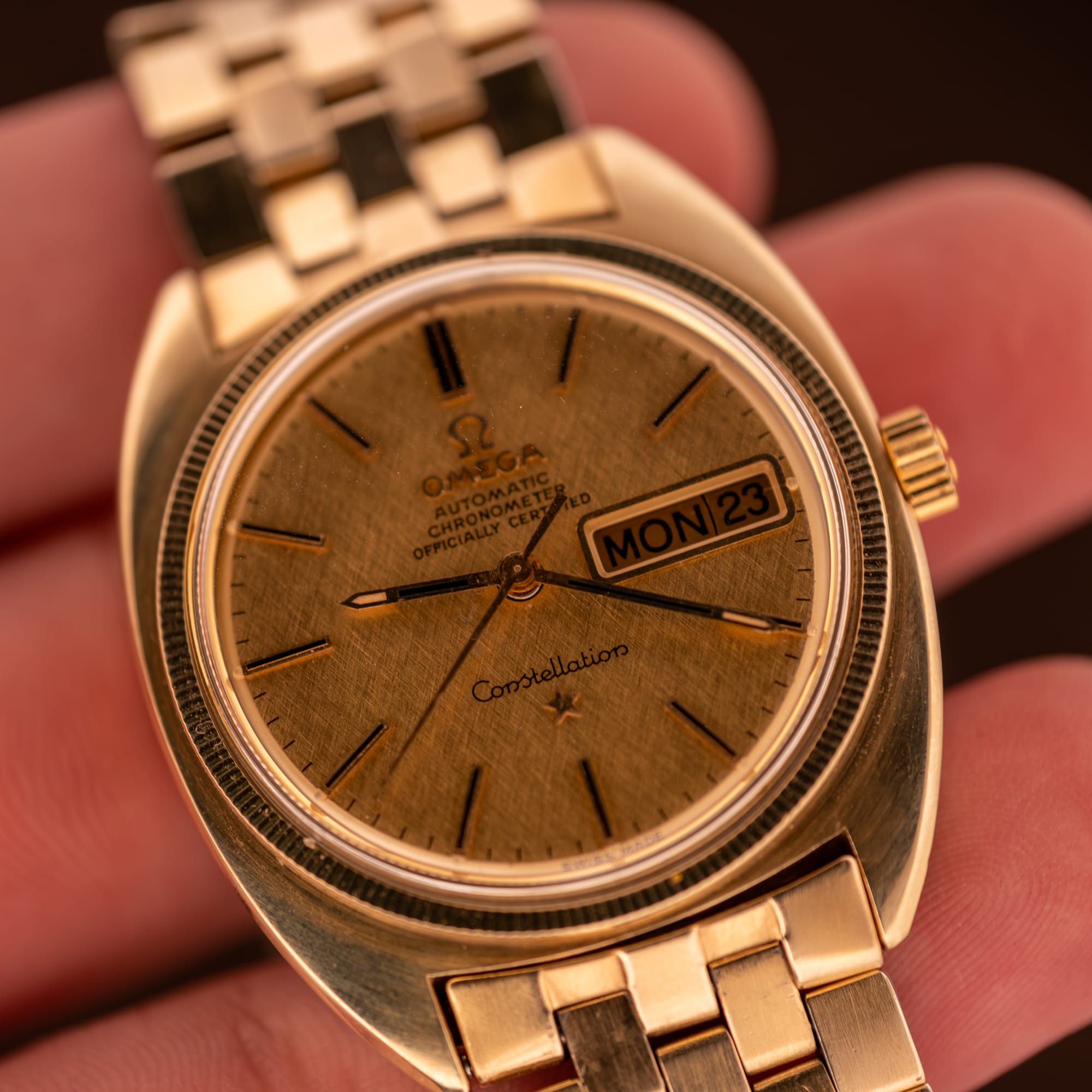
The dial is where this configuration really earns its keep. Omega supplied the 168.029 with several dial finishes, and the linen-textured gold version is the one collectors specifically hunt. The crosshatch weave catches light in two directions at once, giving the surface a quiet movement that a flat sunburst cannot replicate. Printing is original and crisp: the applied Ω logo at twelve, AUTOMATIC / CHRONOMETER / OFFICIALLY CERTIFIED stacked beneath, the Constellation script above the observatory star at six, and SWISS MADE along the bottom edge. Applied baton hour markers in matching gold tone carry sharp facets, the dauphine handset has held its plating, and the day and date discs at three read cleanly through the framed aperture, day in English and date in red on a gold disc. There is no lume on the dial or hands, which is correct for this dress-leaning Constellation configuration.
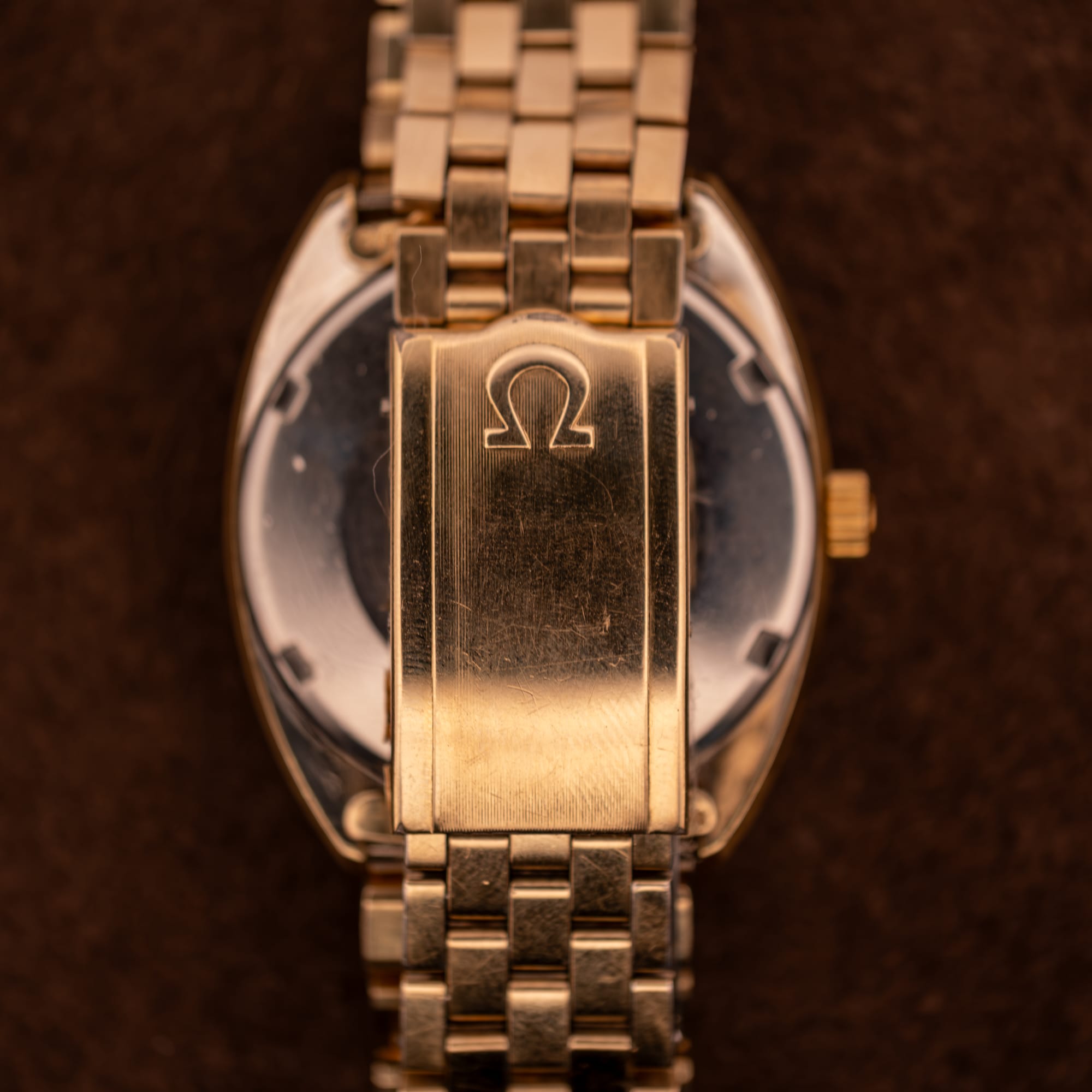
The watch comes on what we believe is its original gold-filled Omega rice-link bracelet, signed Ω on the folding clasp, with the soft brushed finish and tight articulation that this style was known for. The bracelet sits flush against the case with no gap and adjusts comfortably up to an 8 inch wrist. For collectors who prefer a strap, the 19mm lug width opens up a wide range of brown or burgundy alligator pairings that would dress this down for daily wear.
Serviced in-house at OTTUHR and backed by our 2-year mechanical warranty, this is the Constellation we recommend when a collector asks for the late-1960s reference that does everything right at once. Factory linen dial, original crown, matching handset, day-date complication, full chronometer rating, and the kind of cushion silhouette that wears smaller than its 35.2mm number suggests. For the collector who values the second-generation Genta-era Constellation over the earlier pie-pan, who wants the day-date complication without leaving the chronometer-grade caliber family, and who appreciates a gold-on-gold dress watch that does not announce itself across the room, this is, in our opinion, exactly the right 168.029.