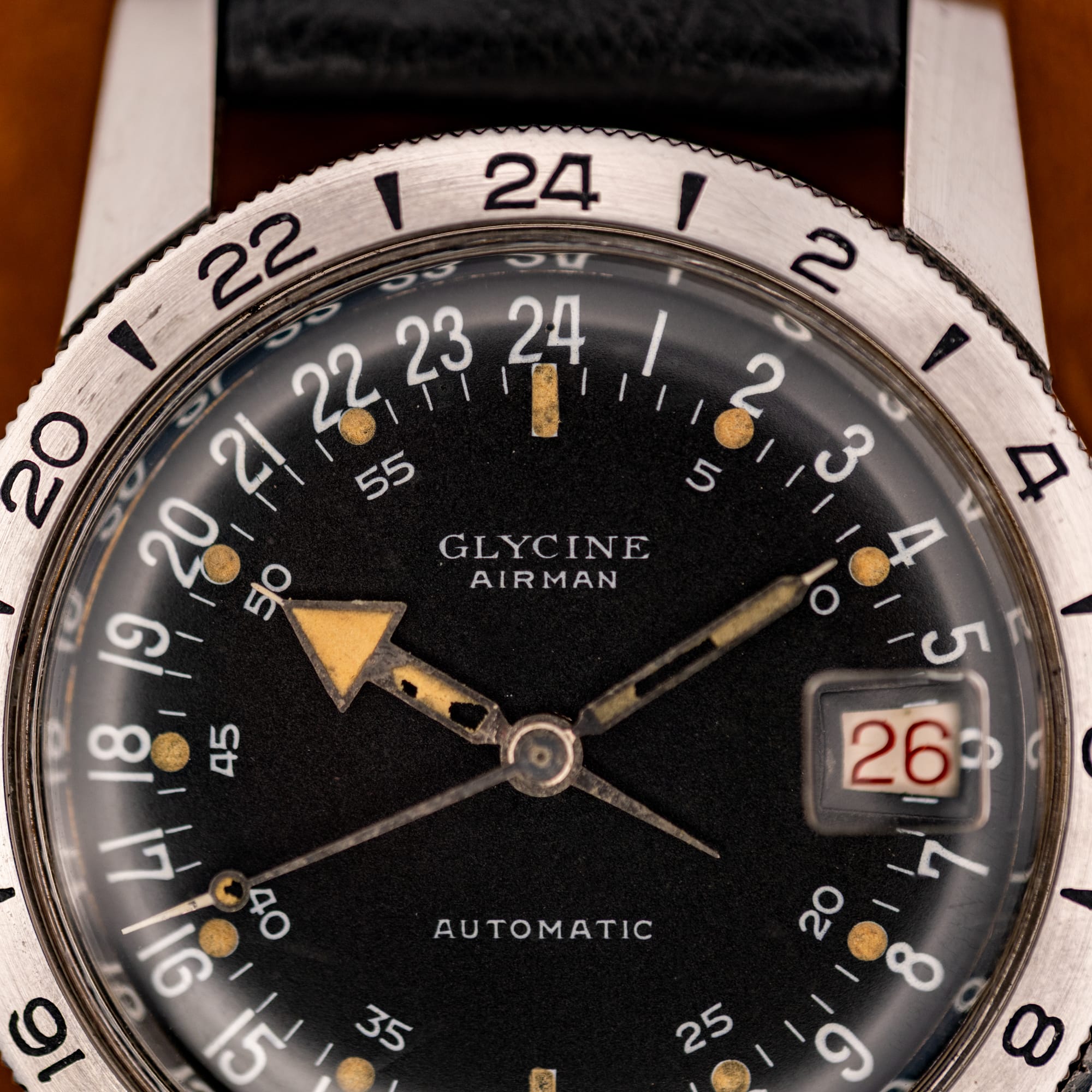
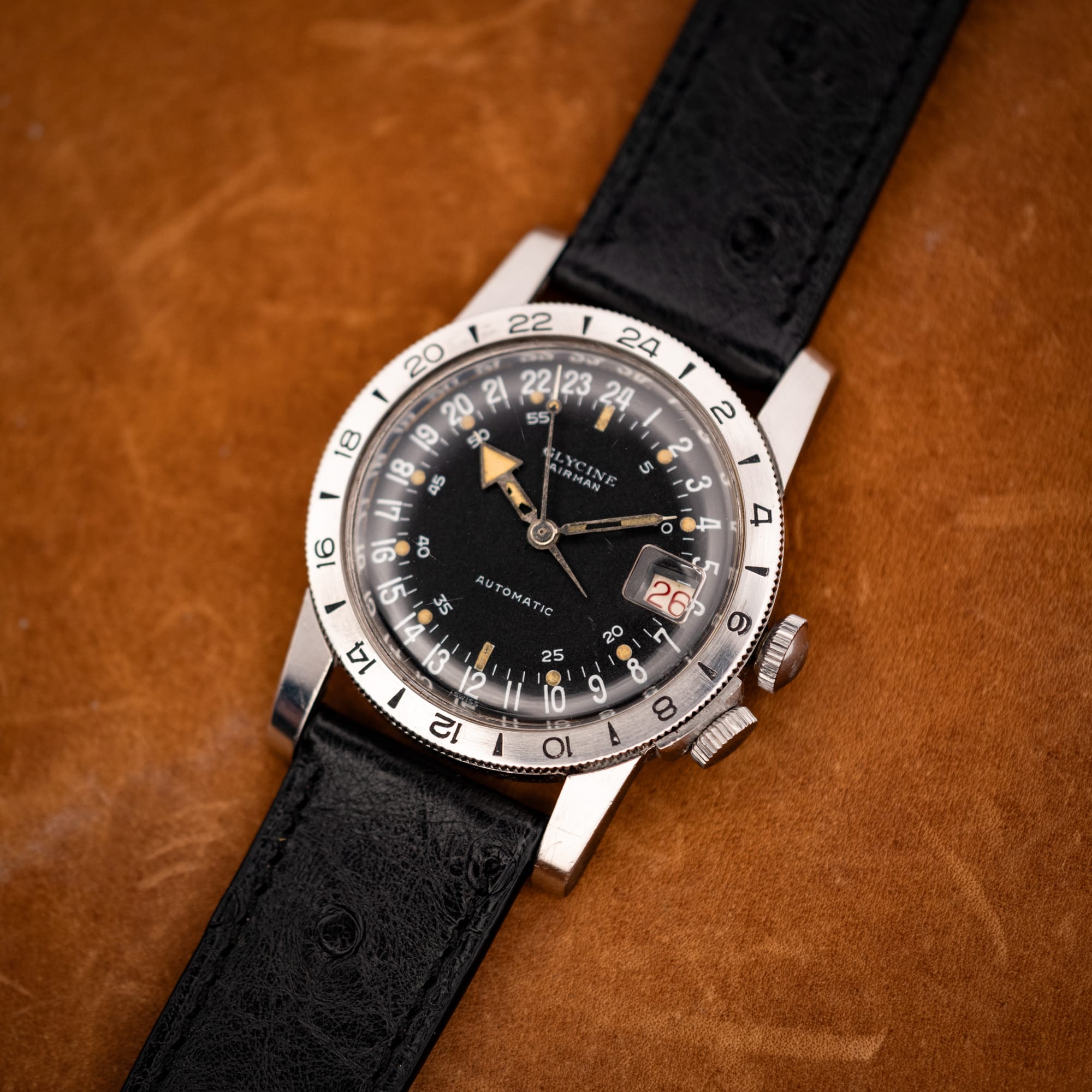
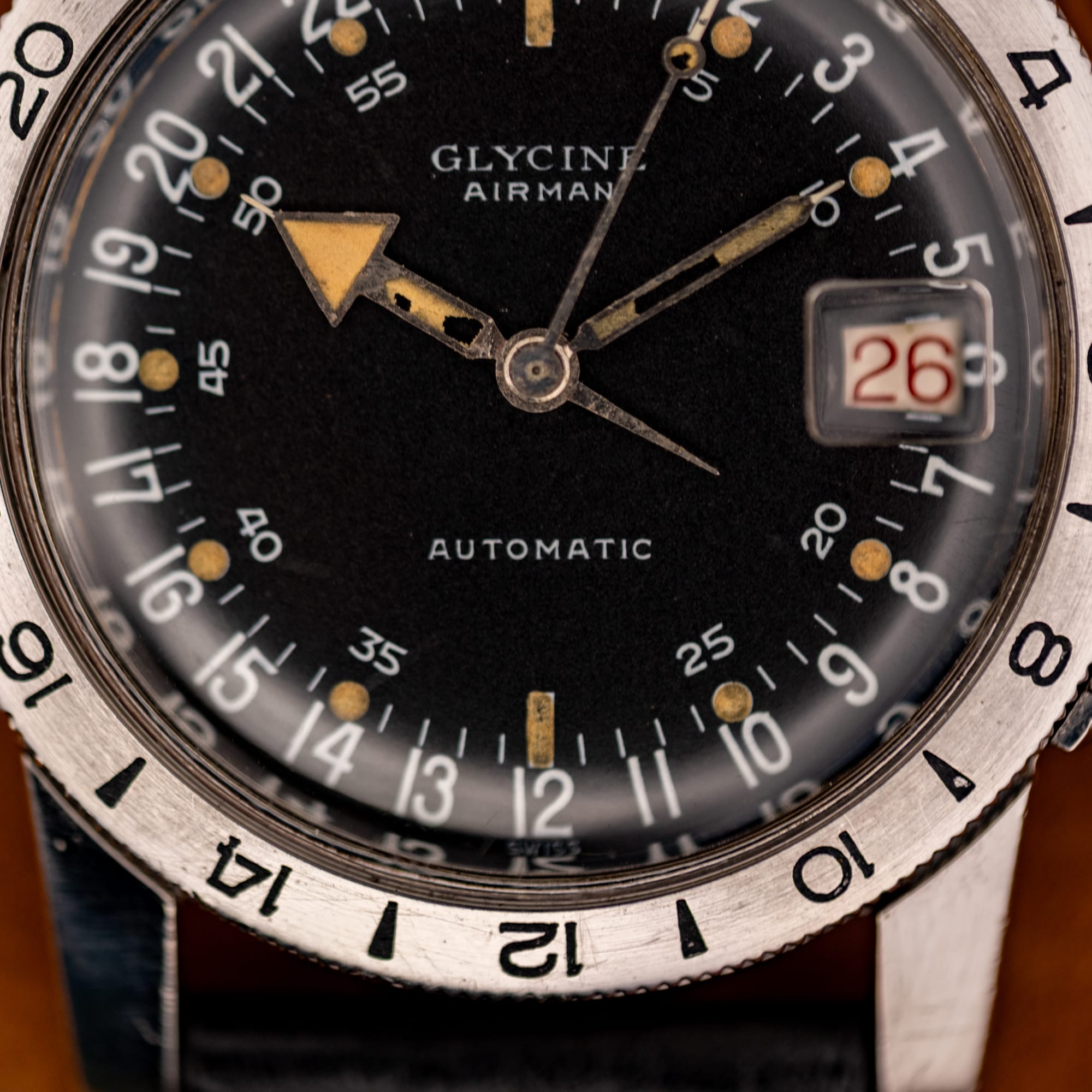
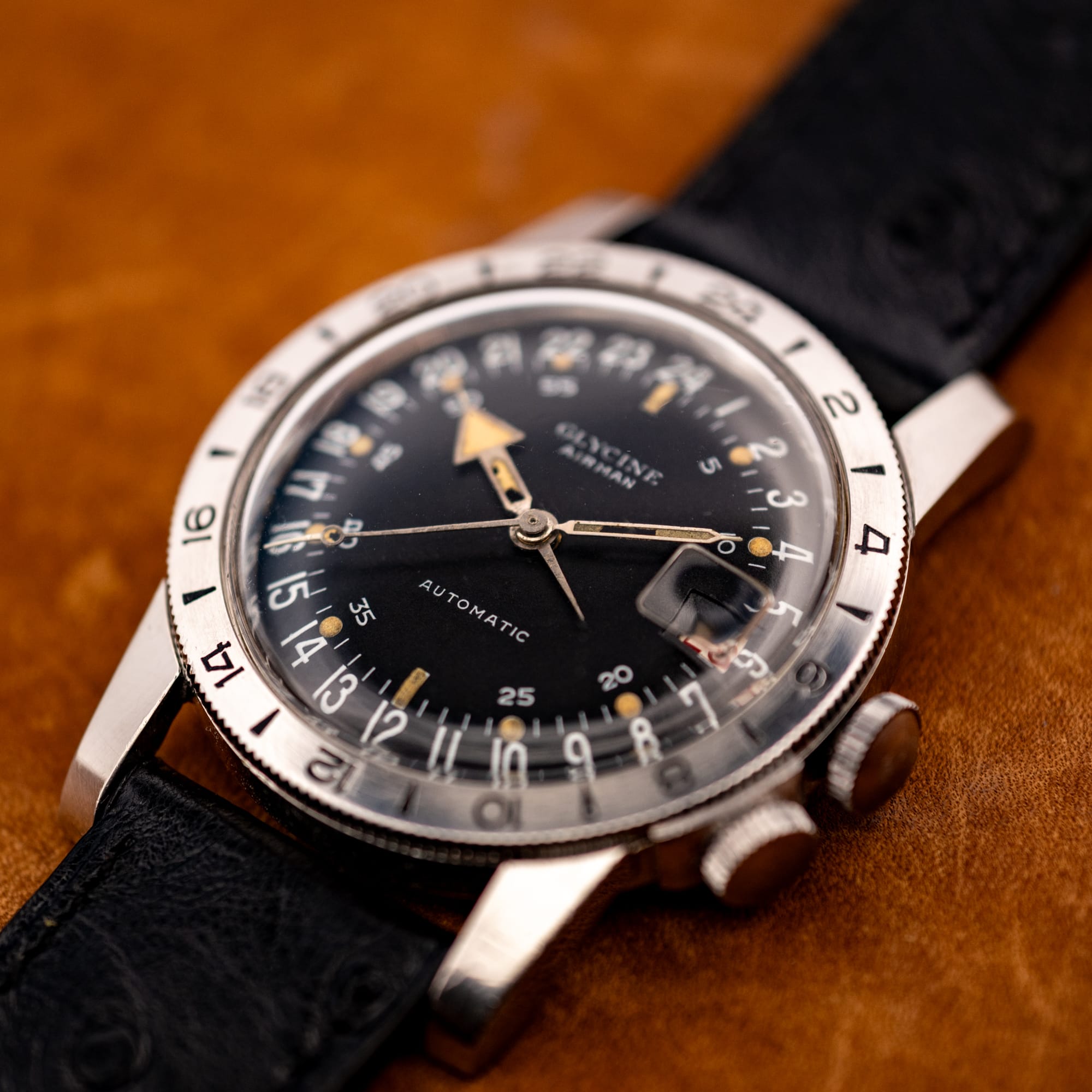
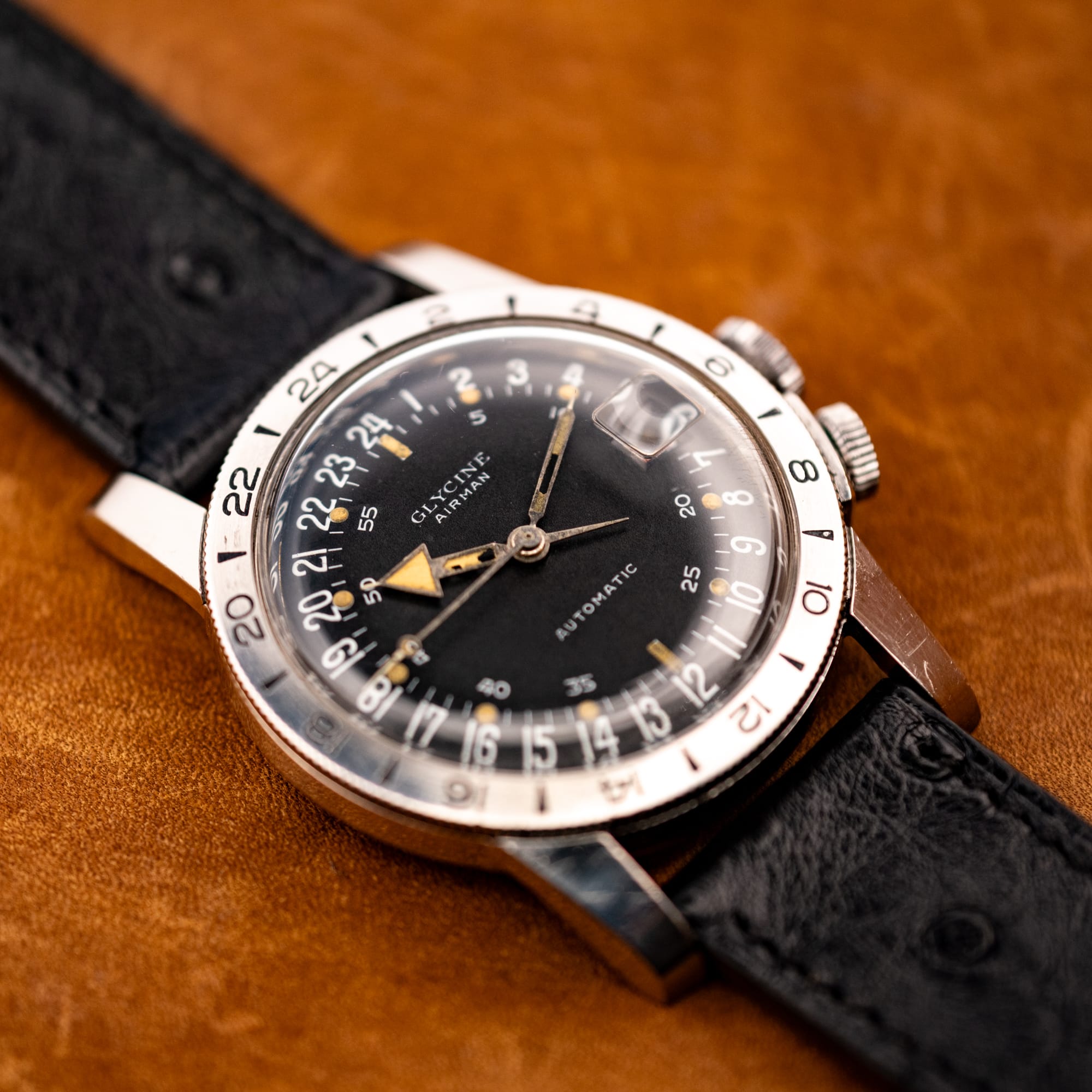

Where most pilot’s watches earn the name by adding, another hand, another scale, one more way to read the same minute, the Glycine Airman earned its by taking something away. There is a single hour hand on this dial, and it circles the face just once every twenty-four hours rather than twice, so one glance settles whether it is two in the afternoon or two in the morning without a second thought. In our opinion that one decision, first made in 1953, is why the Glycine Airman GMT still reads as a real instrument and not a costume.
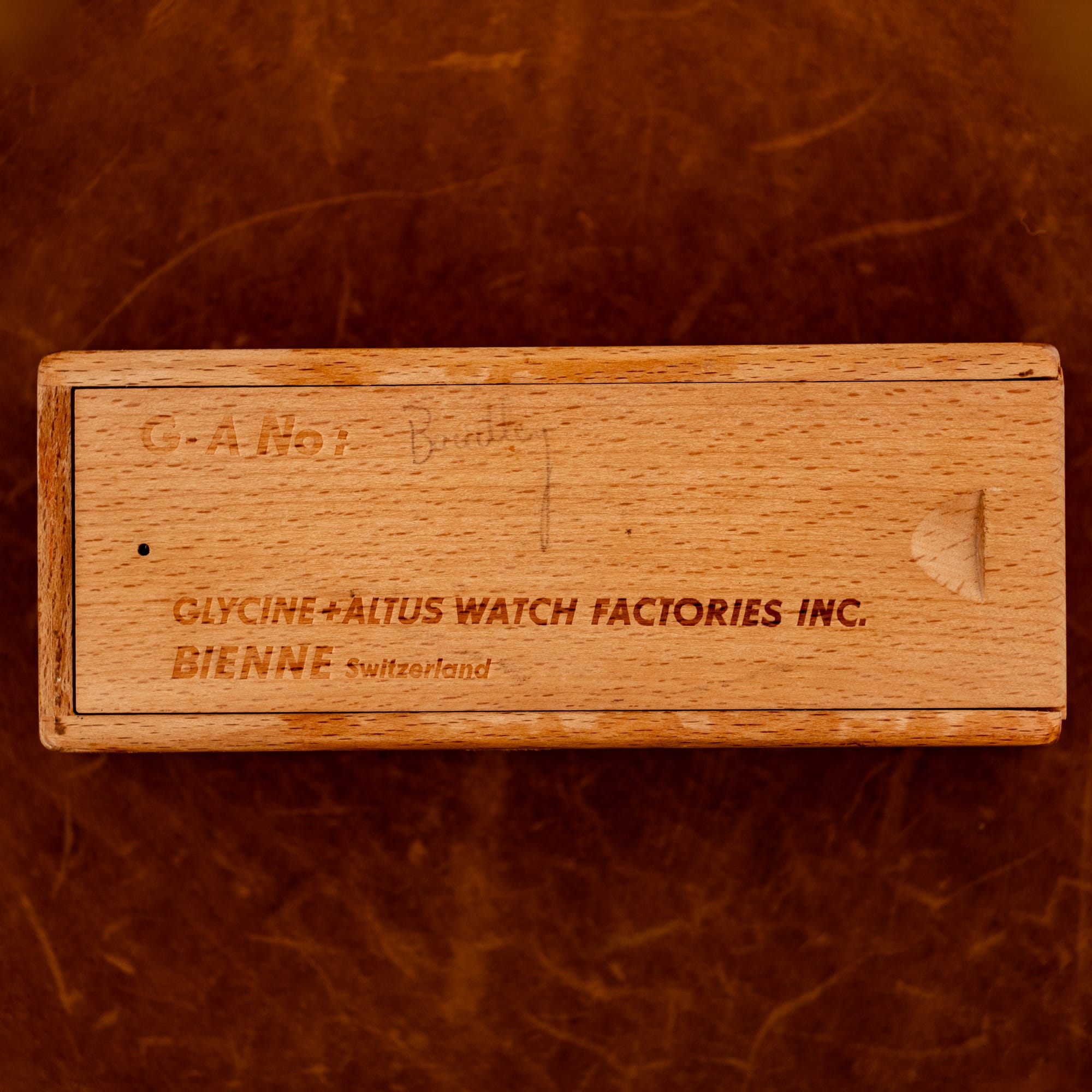
Glycine built the Airman in Bienne under the full corporate name still stamped inside the box this example carries, GLYCINE + ALTUS WATCH FACTORIES INC. It arrived as a purpose-built 24-hour watch for pilots crossing time zones, and it found its audience the honest way: American servicemen bought them through the PX across the 1960s, which is why so many surviving Airmans wear their decades the way this one does.
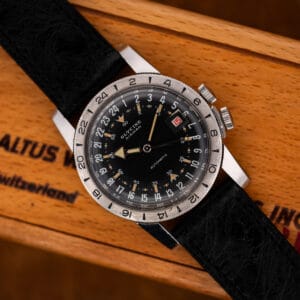
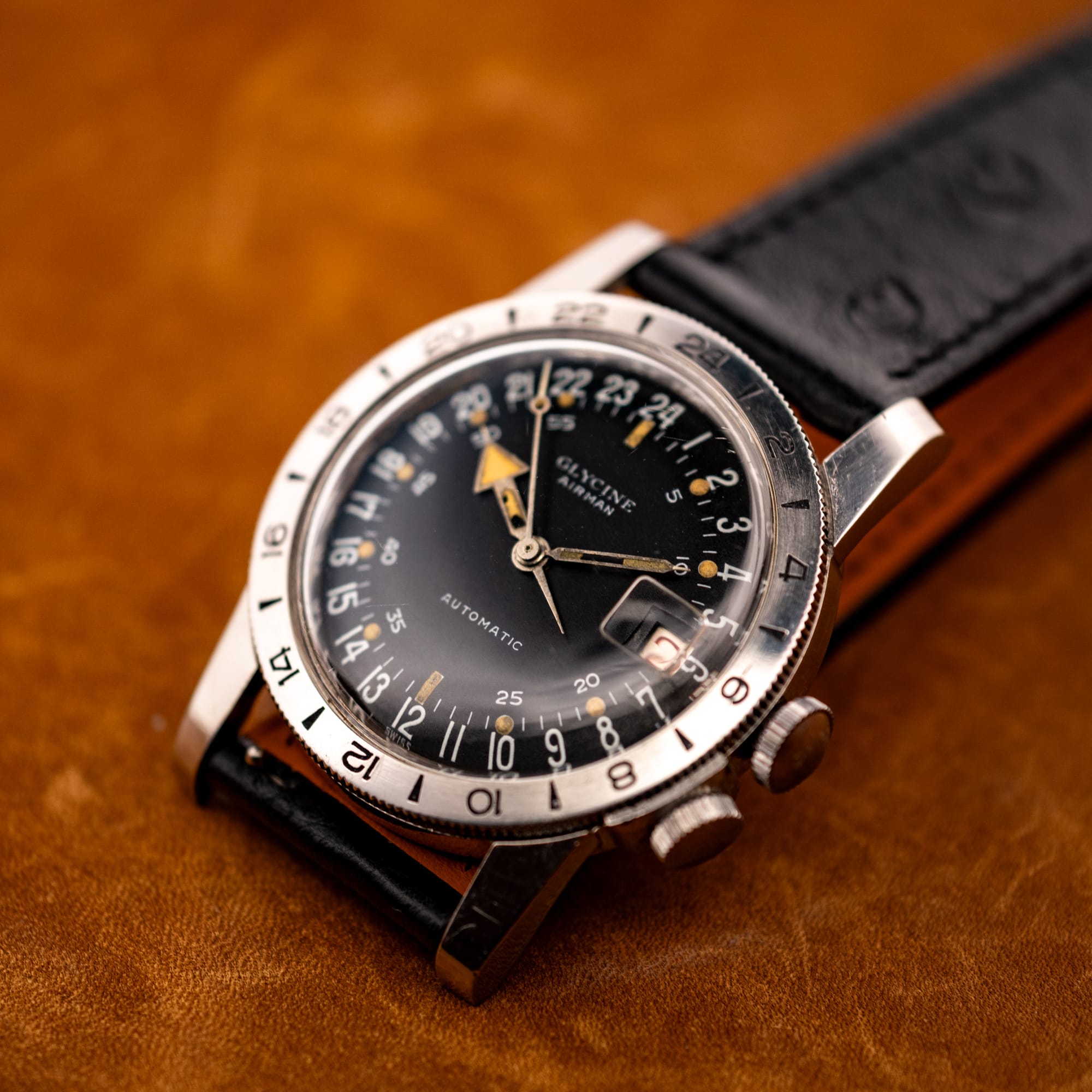
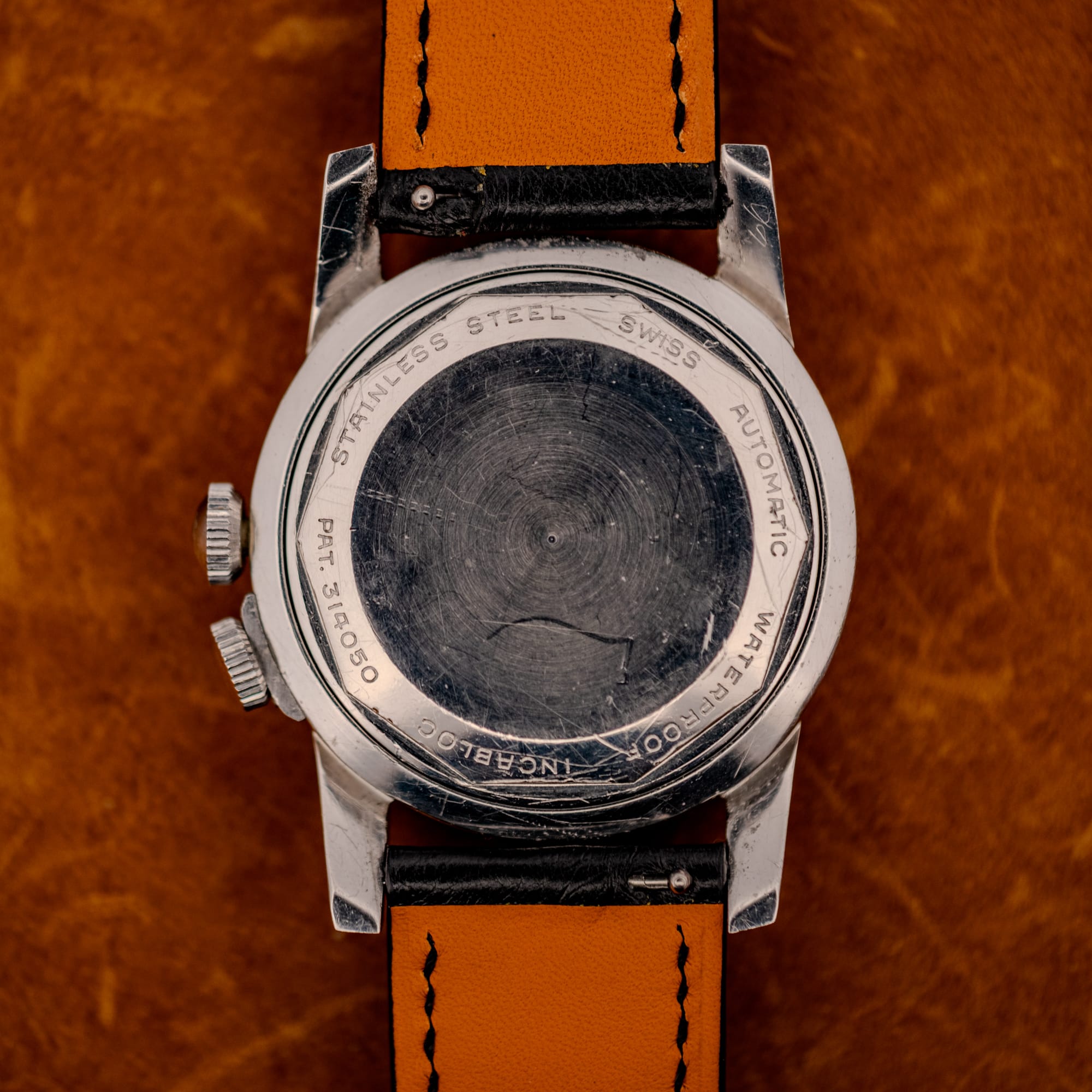
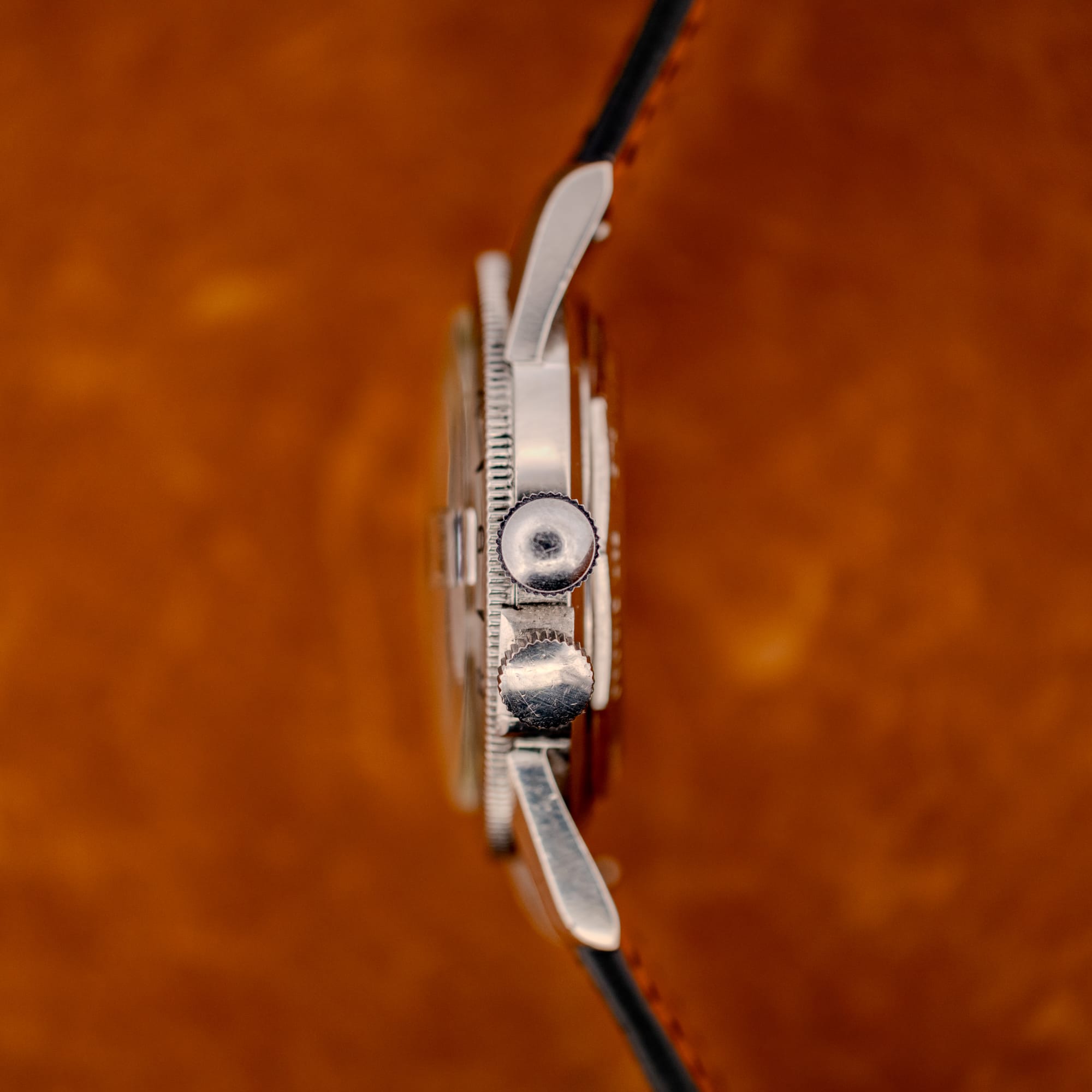
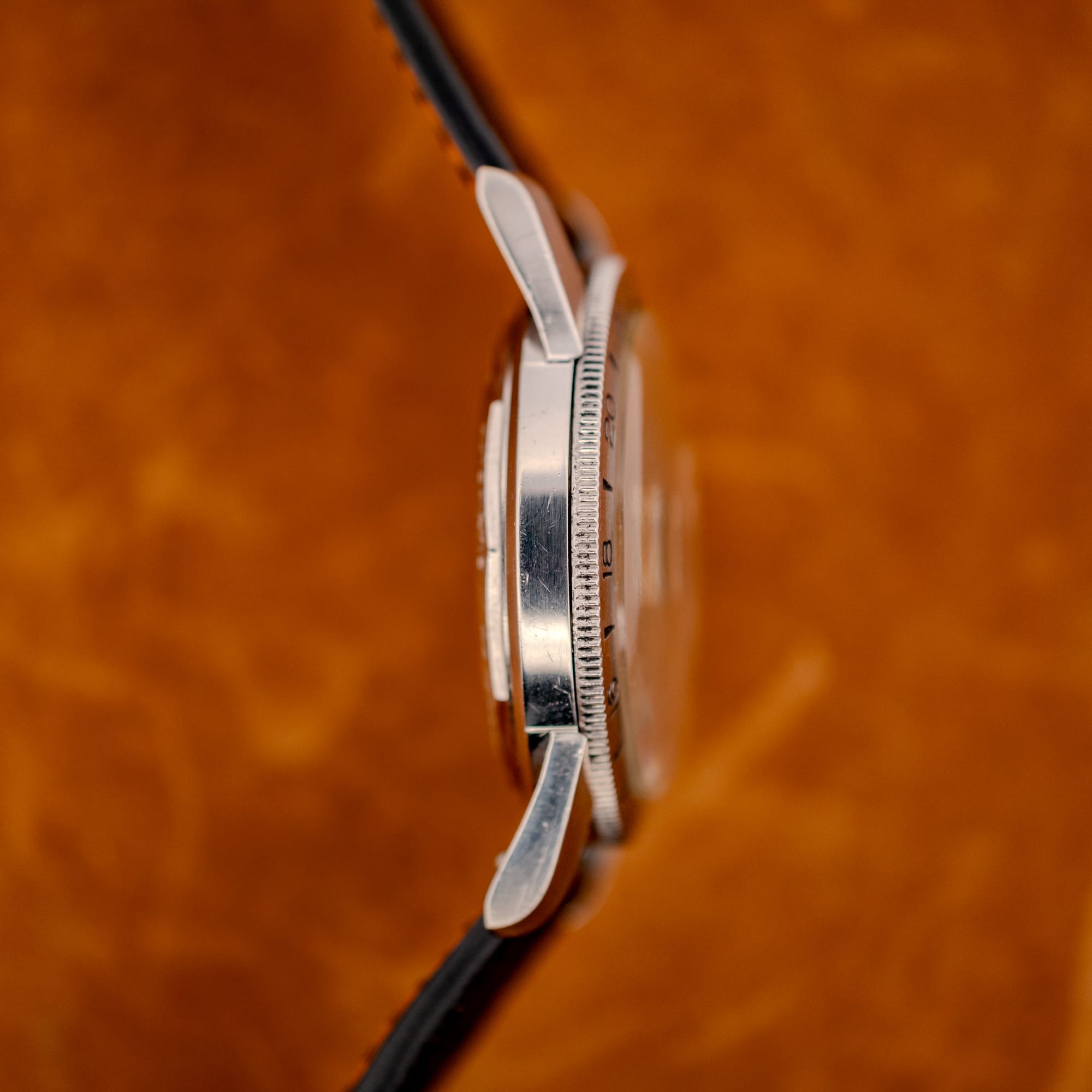
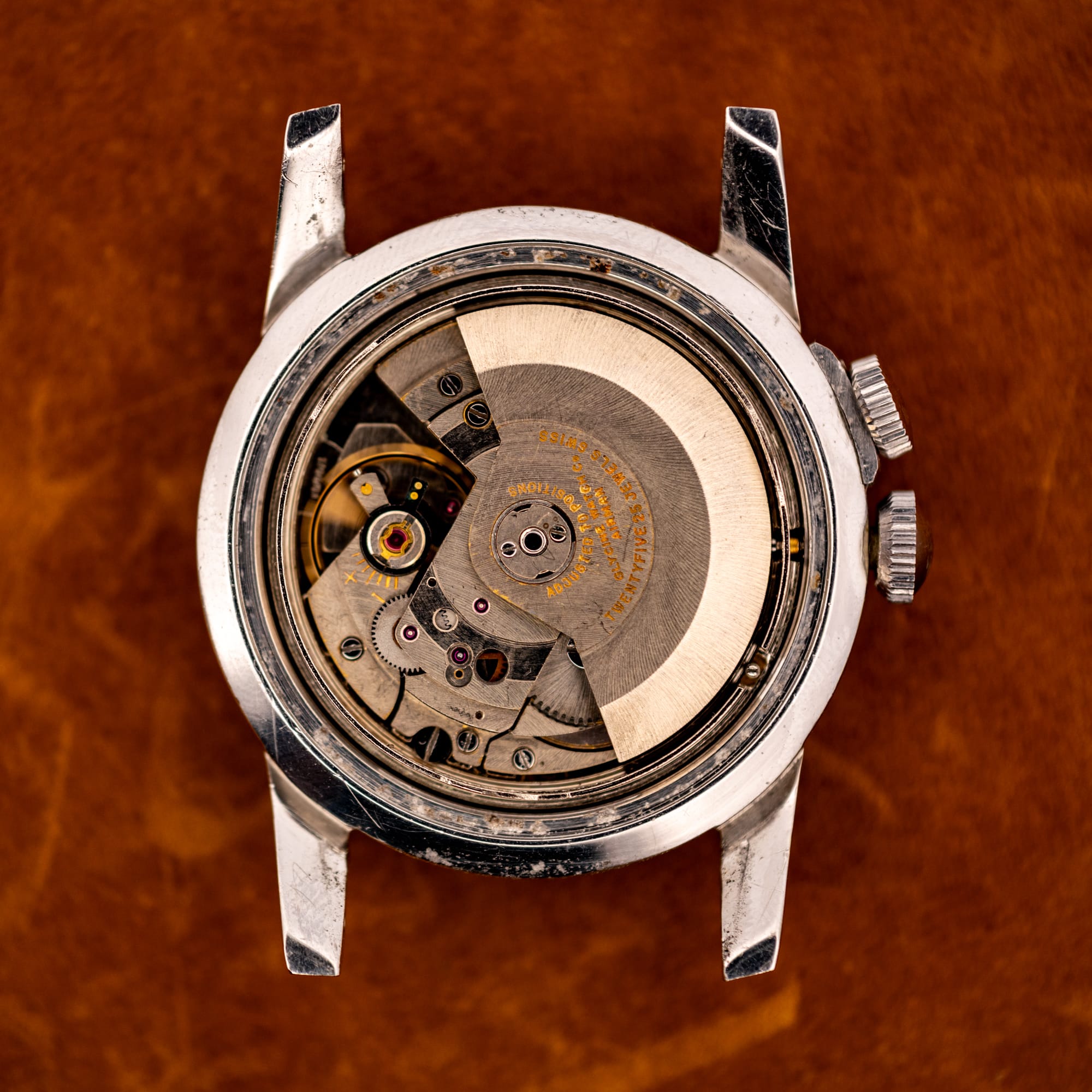
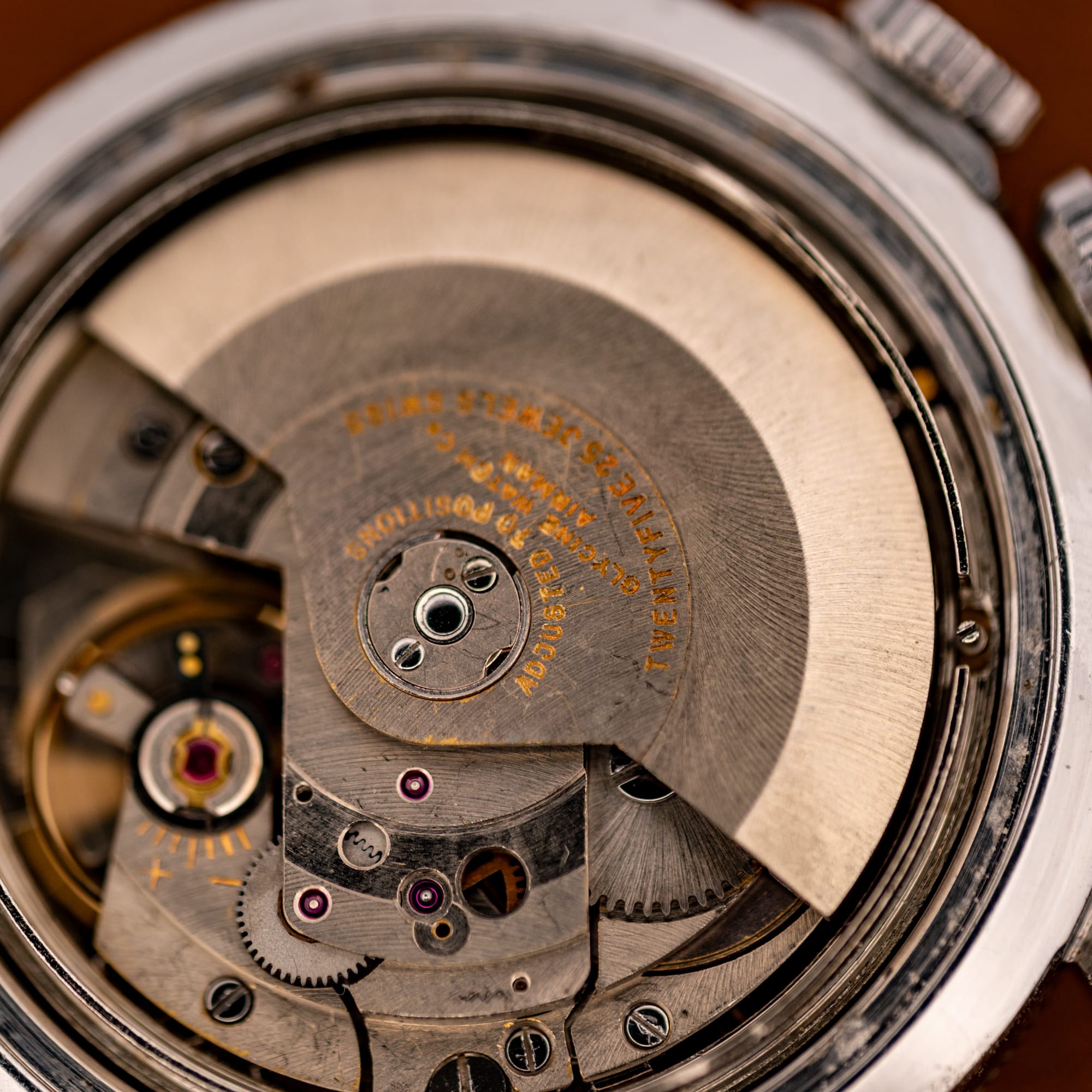
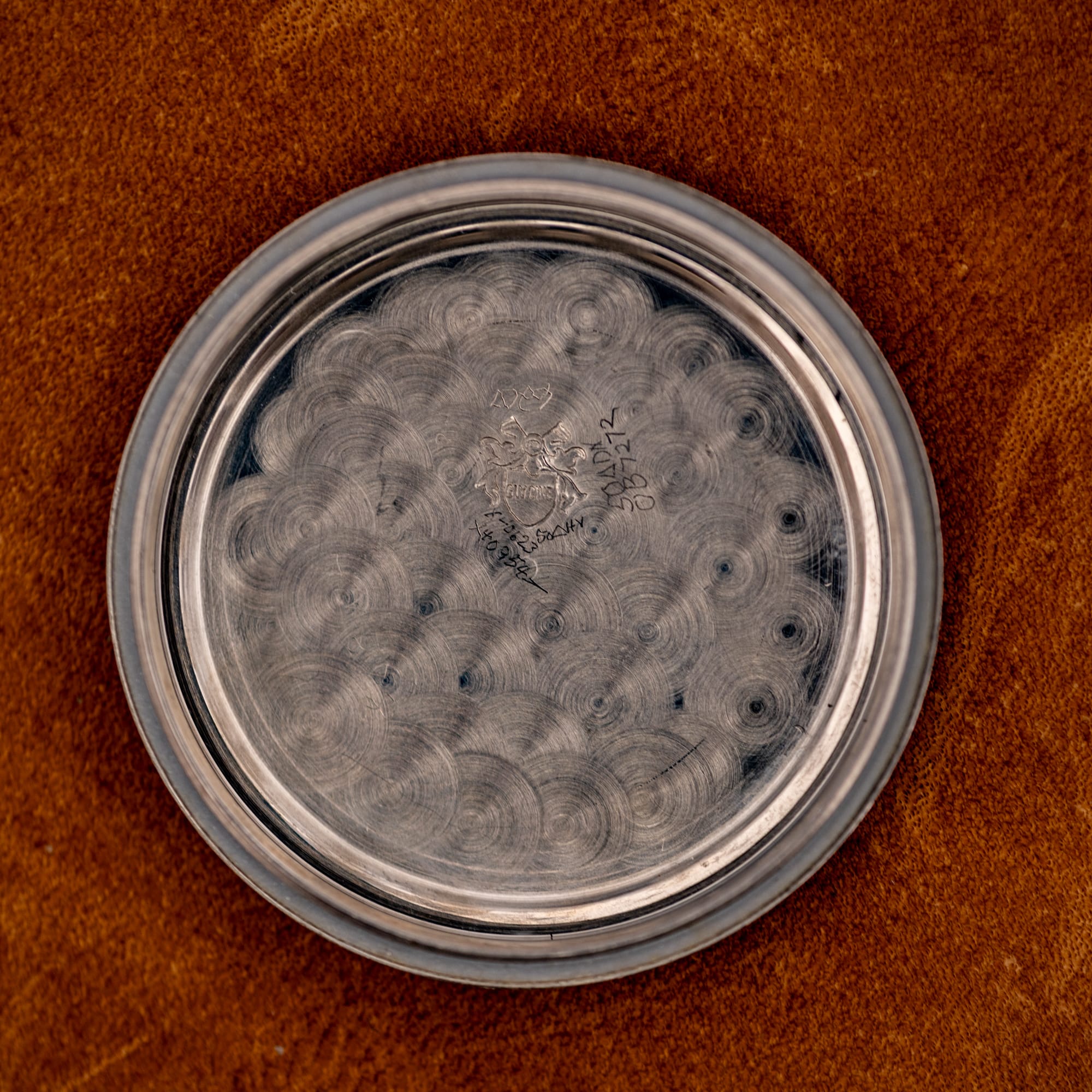
The engineering that mattered most is the part the wearer operates rather than the part on show. This is the twin-crown Airman, and the lower crown sets nothing: it locks the rotating 24-hour bezel in place, the mechanism Glycine protected under the patent stamped on the caseback as PAT. 314050. Lined up against the dial, that bezel tracks a second time zone, a working GMT, without a fourth hand crowding the face, and the lock means a knock against a cockpit coaming or a doorframe cannot quietly shift it. Underneath sits a self-winding movement that winds in both directions, carries a date, and rides on INCABLOC shock protection, its rotor engraved in gold and adjusted across several positions. It is the unfussy, serviceable kind of automatic that earned the Airman its working reputation.
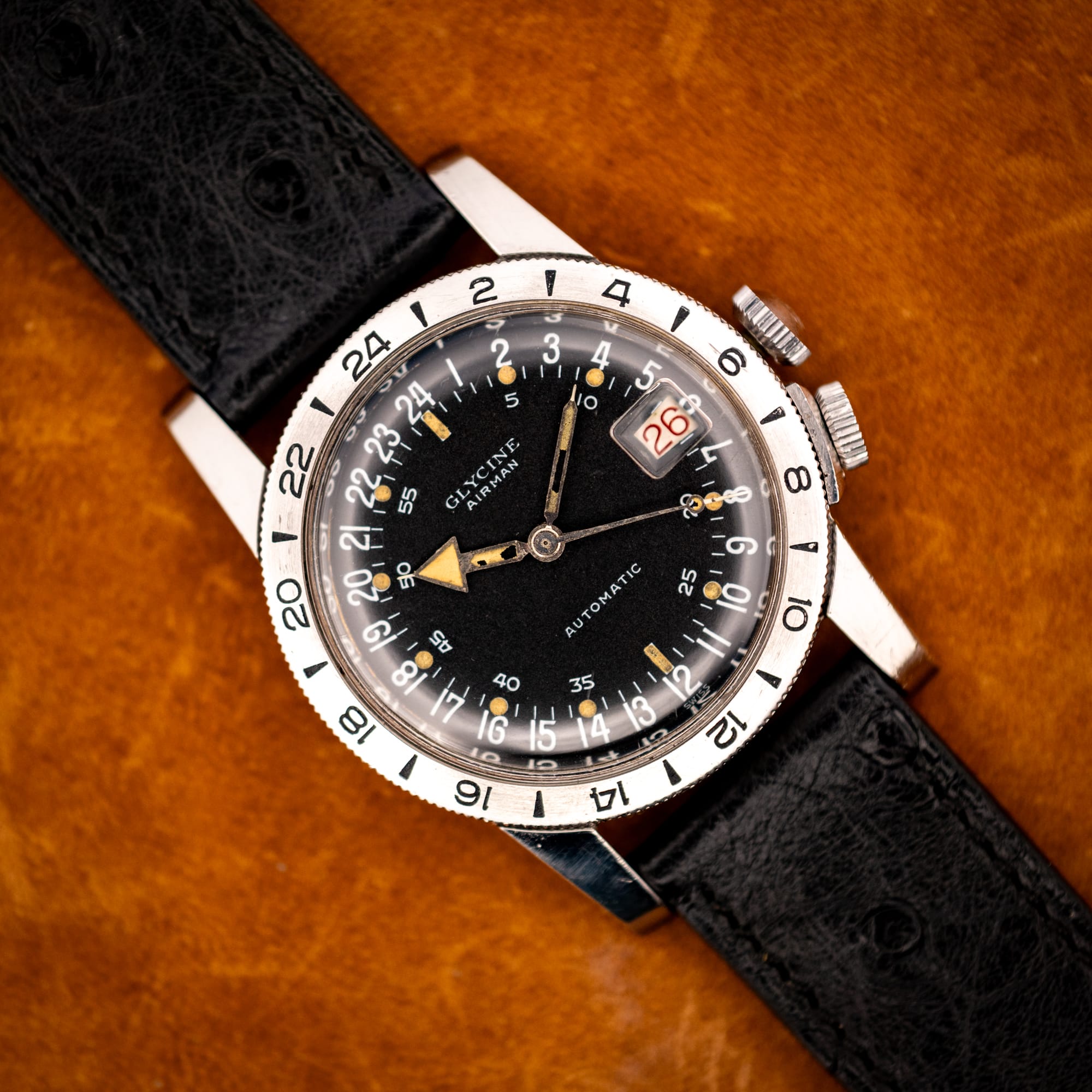
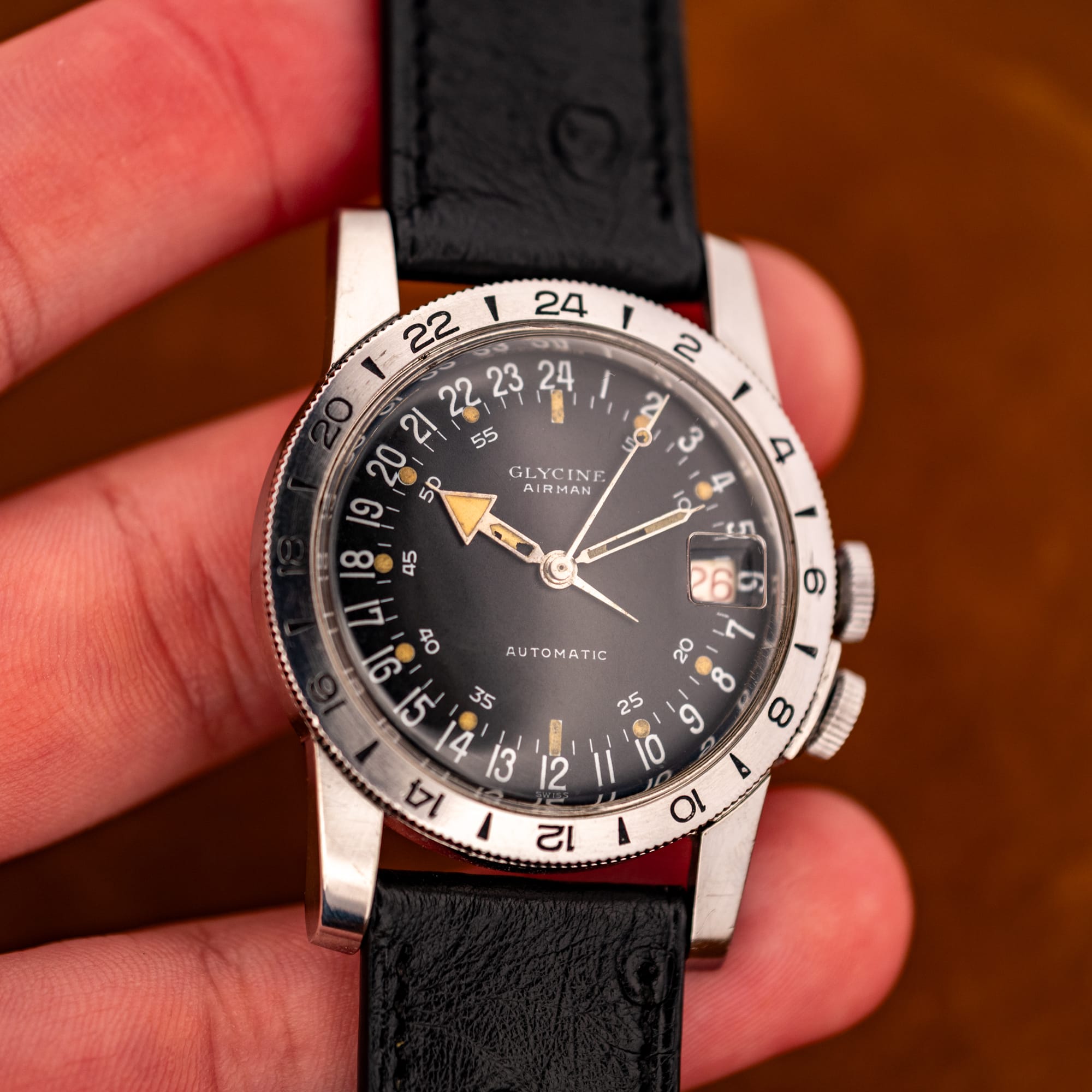
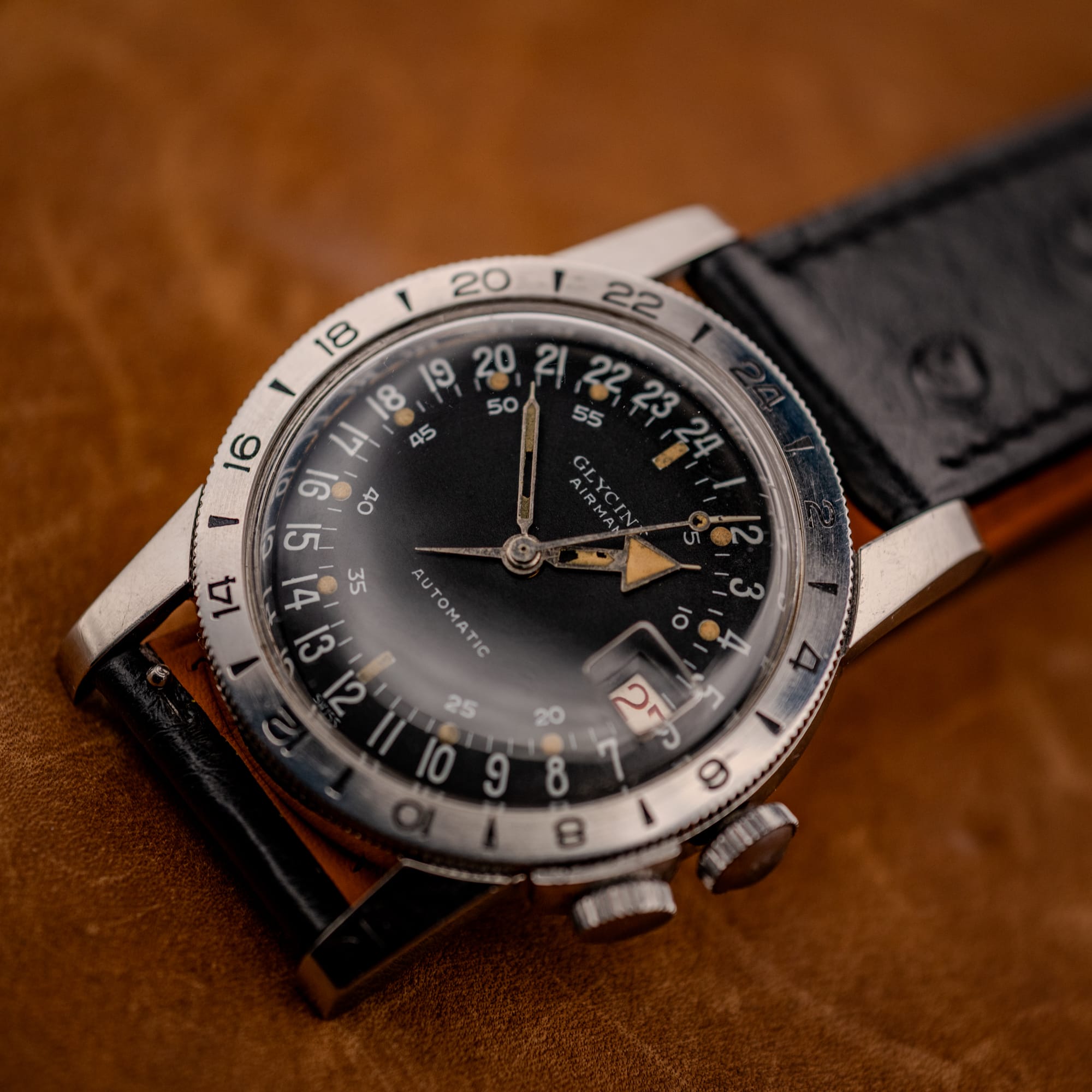
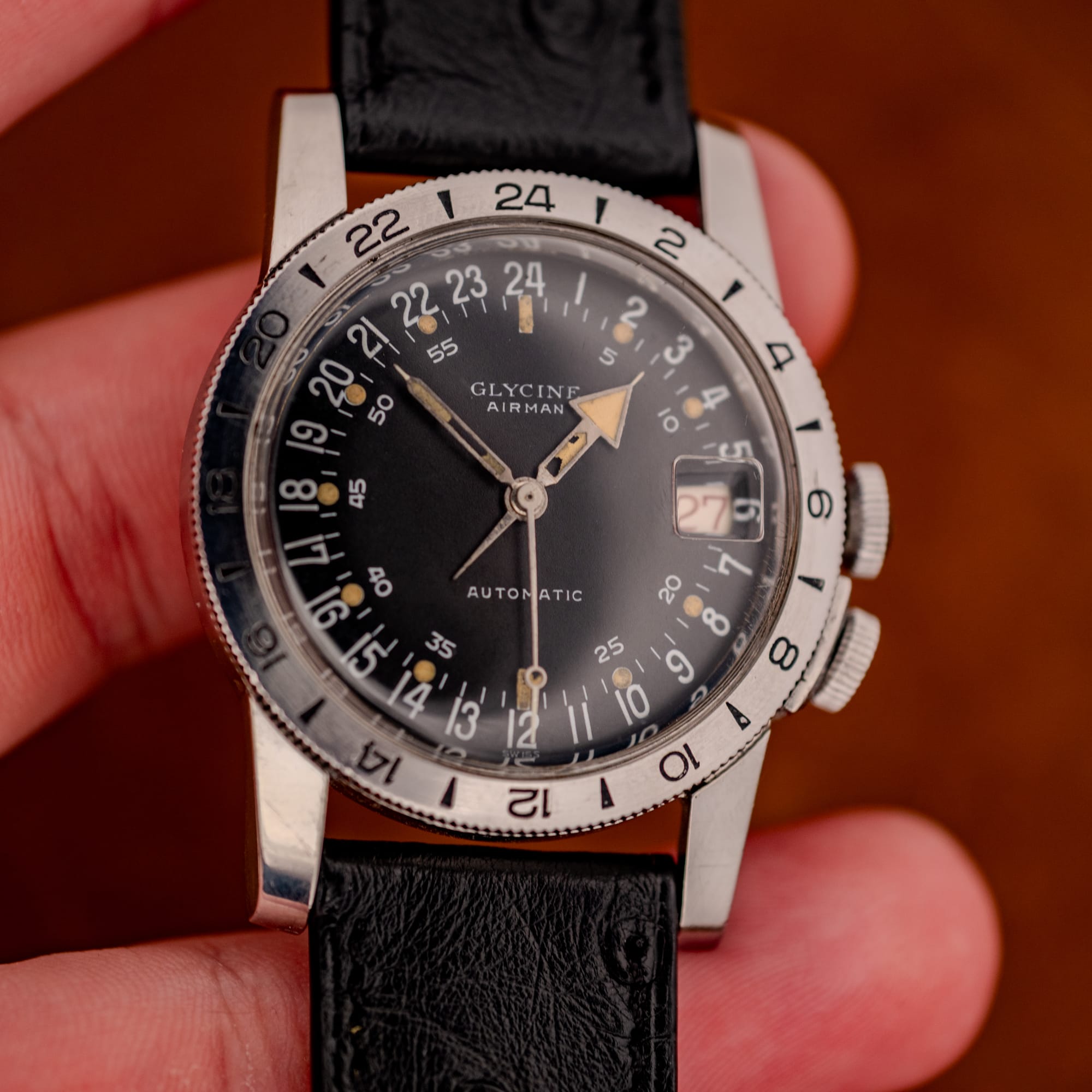
The stainless case measures 36mm across and 46.5mm from lug to lug, compact by modern habit but exactly right for a watch meant to vanish under a flight jacket cuff, with 18mm lugs and a coin-edge bezel that still turns with intent. It wears its years openly. There are hairlines through the polish and the bezel insert has gone translucent in places, and all of it has been left as found. Turn it over and the caseback reads STAINLESS STEEL, SWISS, AUTOMATIC, WATERPROOF, INCABLOC, and that same PAT. 314050, the period-correct shorthand that ties this case to the Airman it is meant to be.
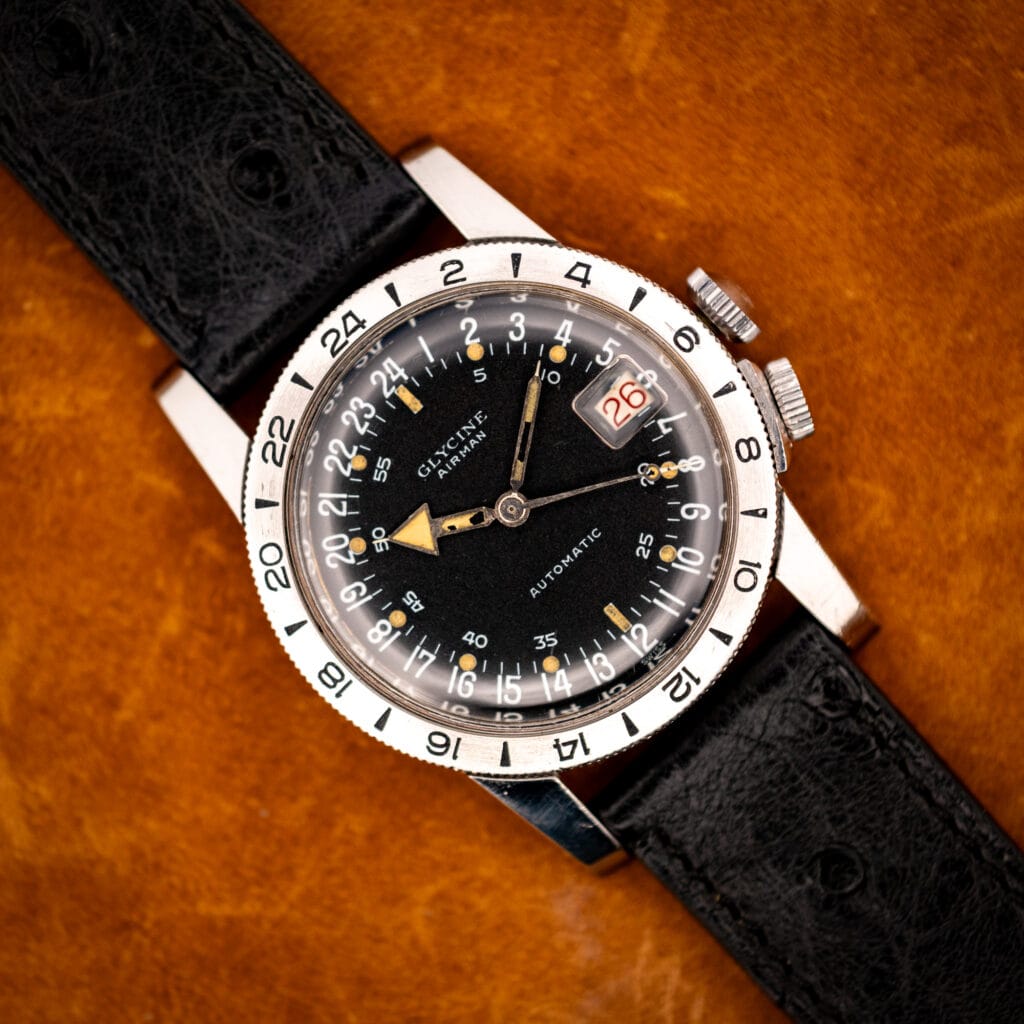
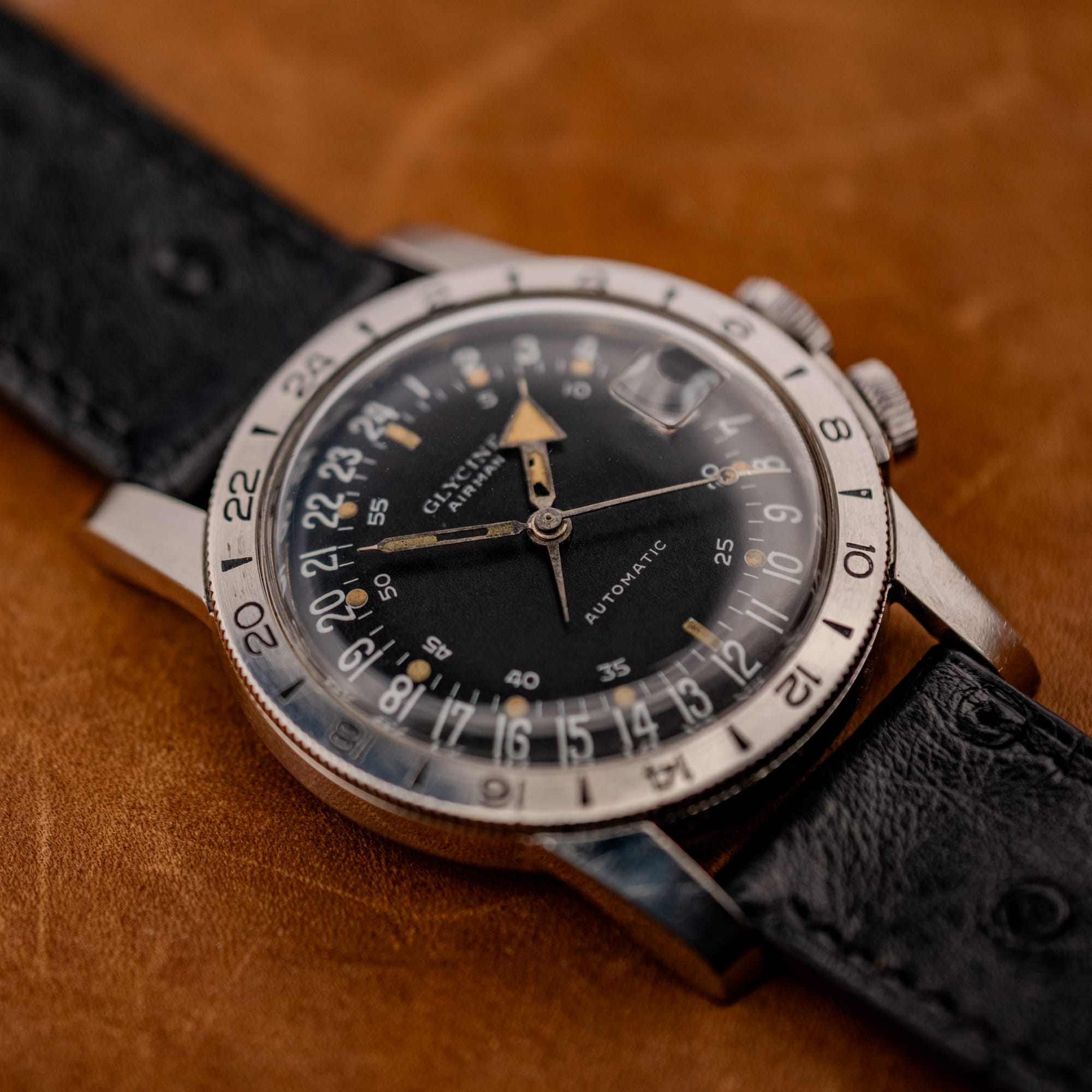
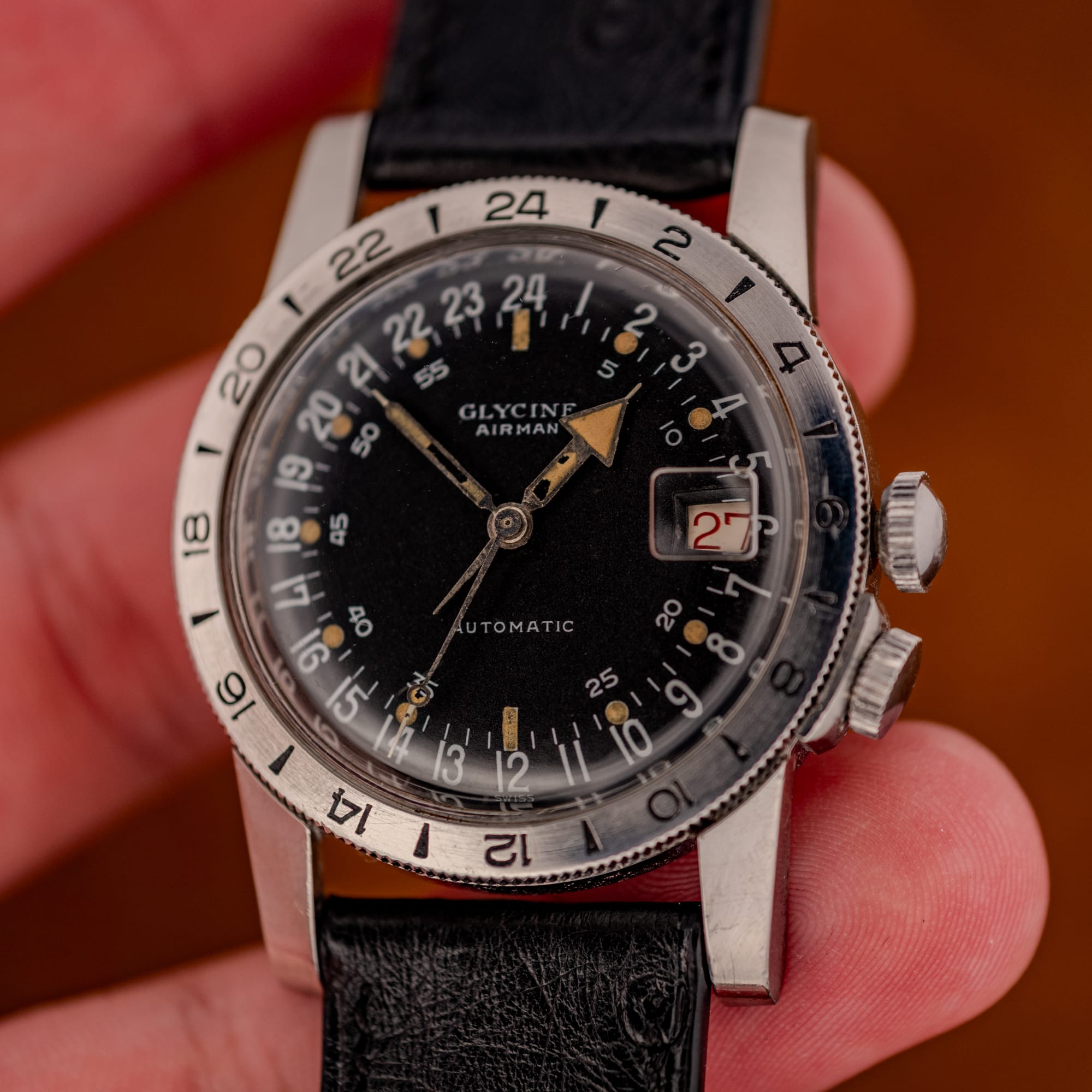
The dial is the heart of it: matte black, printed with a full 24-hour track inside an outer minute scale, signed GLYCINE over AIRMAN below twelve and AUTOMATIC above six, with SWISS at the foot. A red date sits at the lower right. The lume has aged the way collectors hope it will, the round hour plots and the broad arrow hour hand settled into a warm, even cream, with the lance minute hand and the lollipop-tipped sweep seconds carrying the same tone. The broad arrow hour hand carries a tail on its opposite end, a period detail that lets you read the time in conventional 12-hour fashion off the far side of the 24-hour dial. We read that as character earned, not as anything to apologize for.
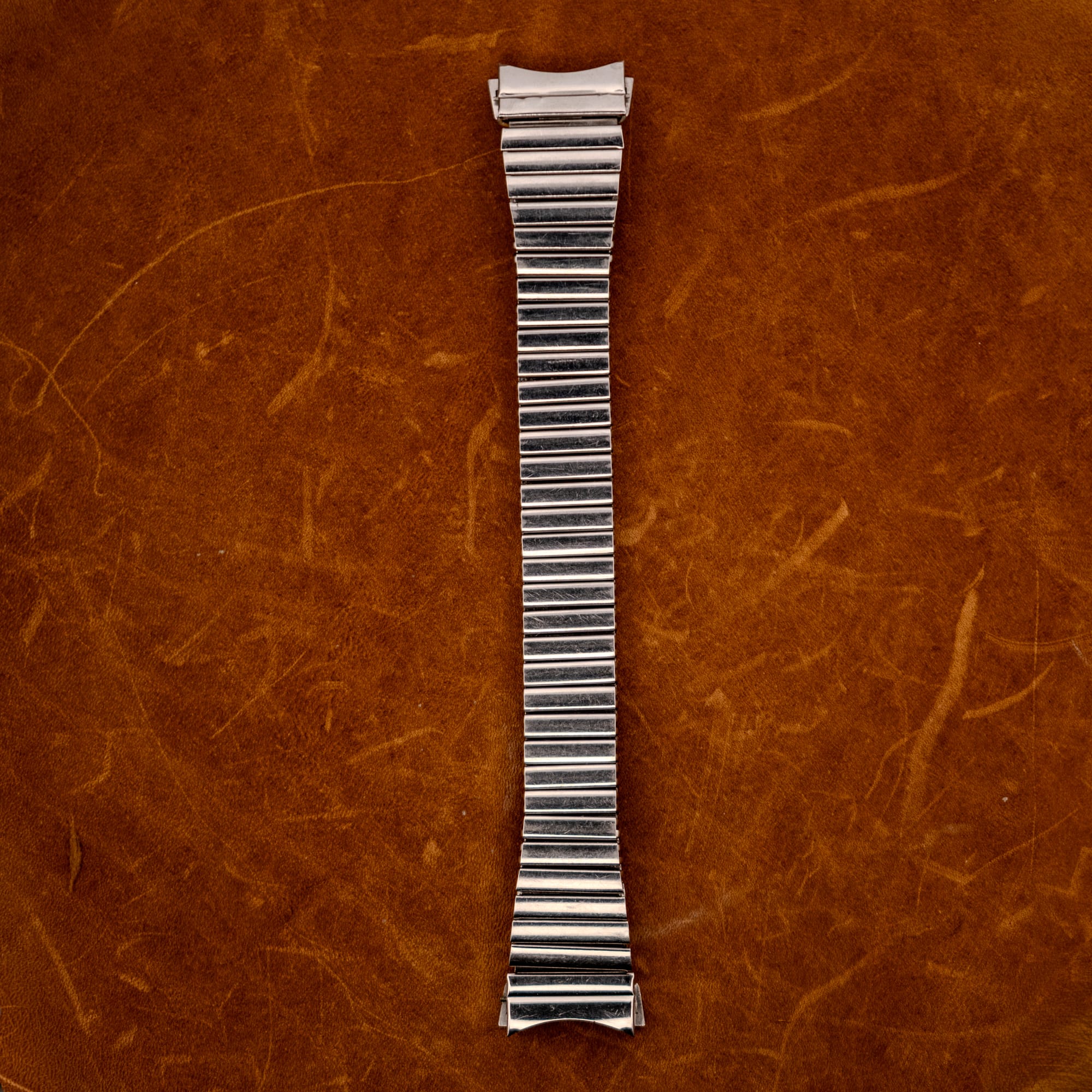
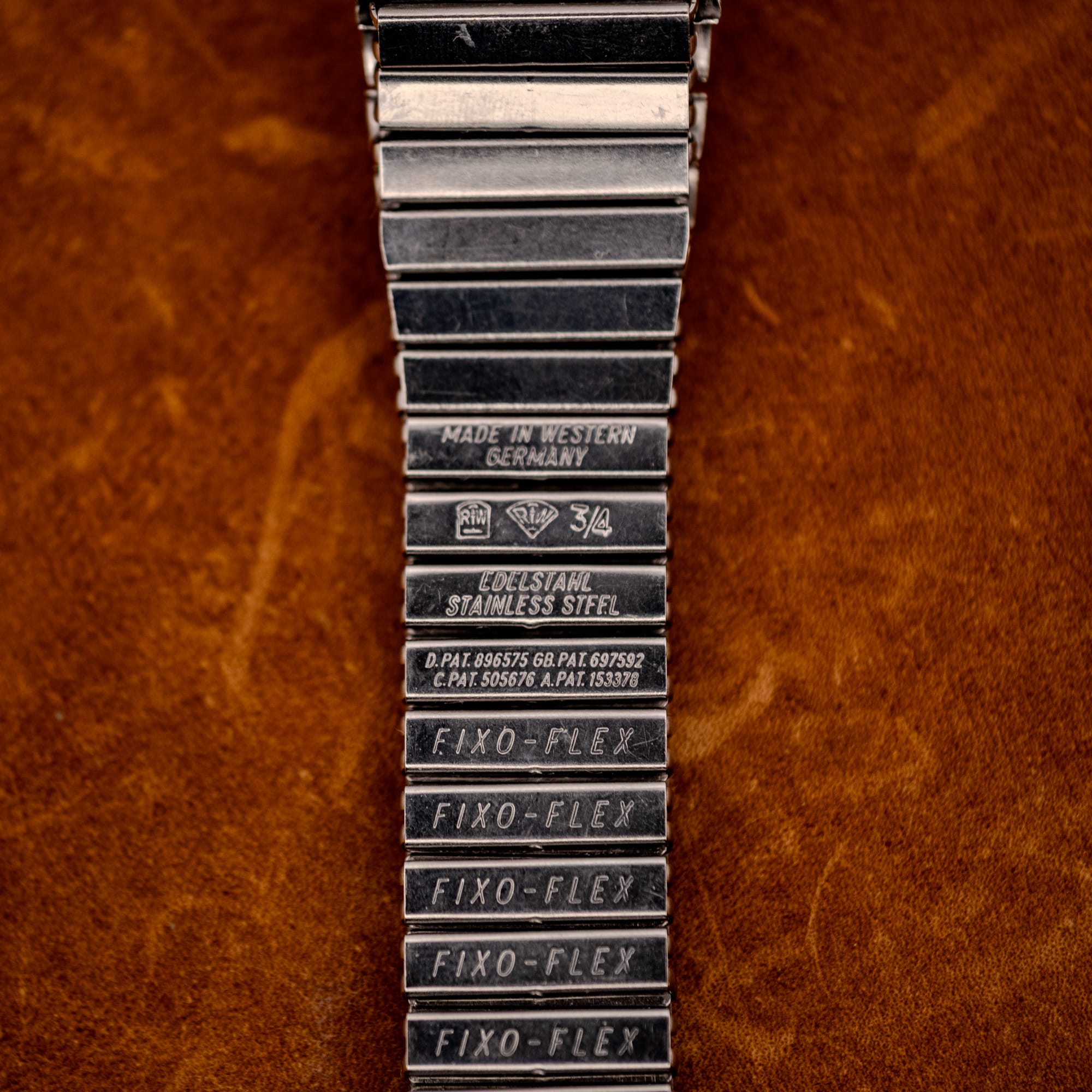
It comes on a black ostrich strap fitted to an OTTUHR signed buckle, the kind of quiet pairing that lets the case do the talking. Two things travel with it that make the provenance sing: a period FIXO-FLEX stainless expansion bracelet whose end links fit this case too precisely to be anything but original to it, and the original Glycine and Altus box it was photographed beside.
Serviced in-house at OTTUHR and backed by our 2-year mechanical warranty, this Glycine Airman GMT is the kind of vintage tool watch that asks nothing of its owner to be understood. Compact, legible, and quietly clever, it does its one job the instant a wrist turns over. For the collector who would rather own the watch that solved the problem than the one that decorated it, the Airman has always been the answer. To us, a 24-hour hand is not a gimmick. It is the whole point.