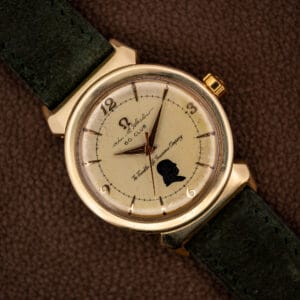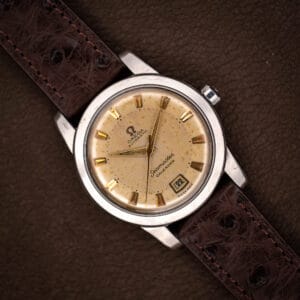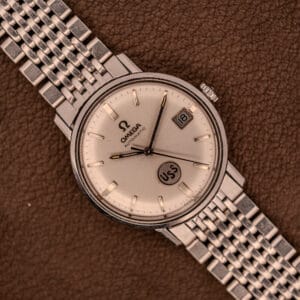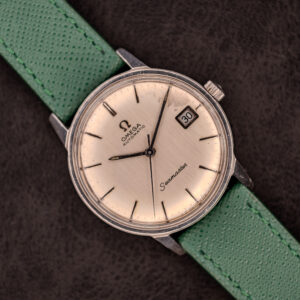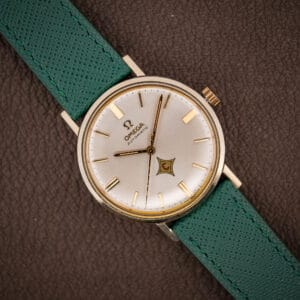
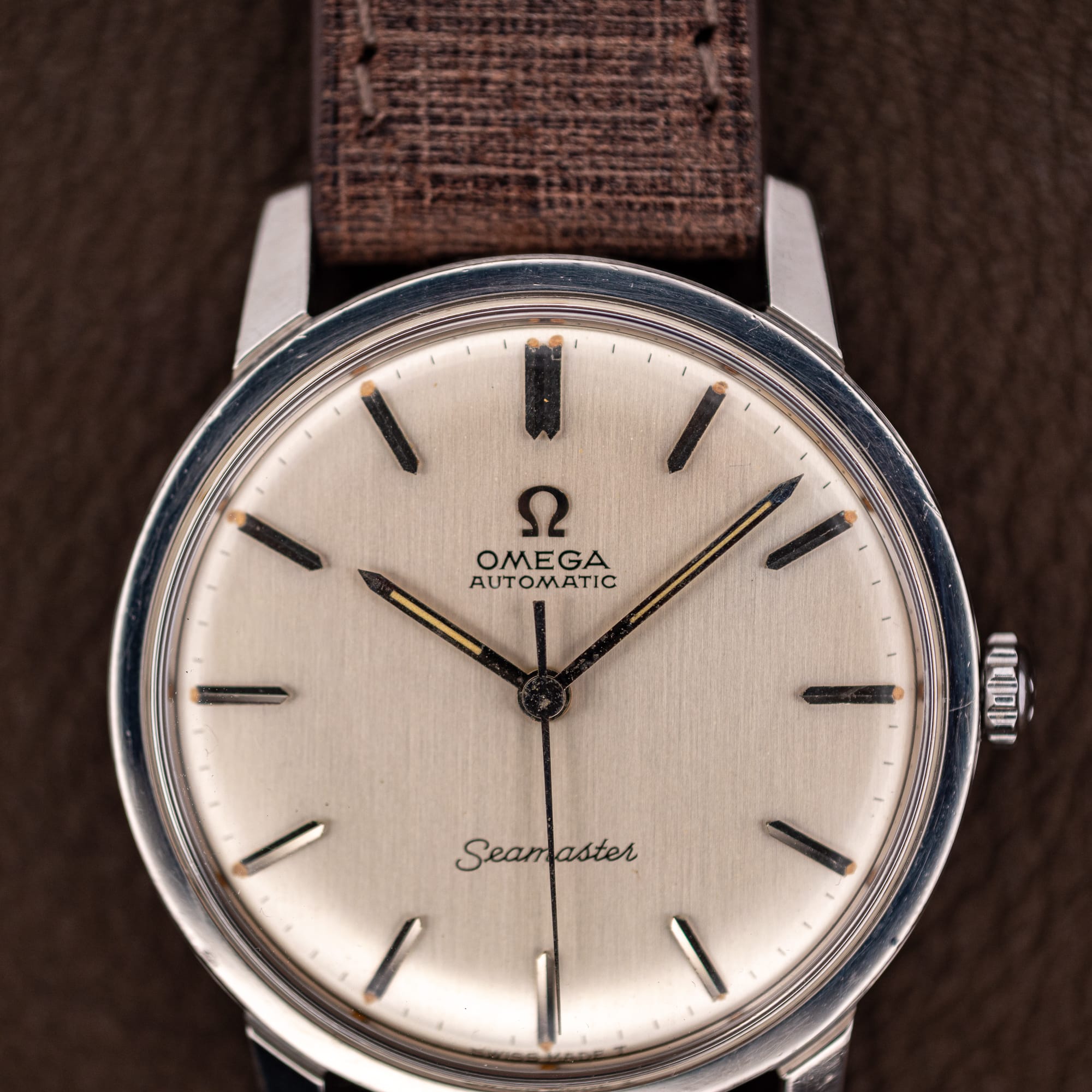
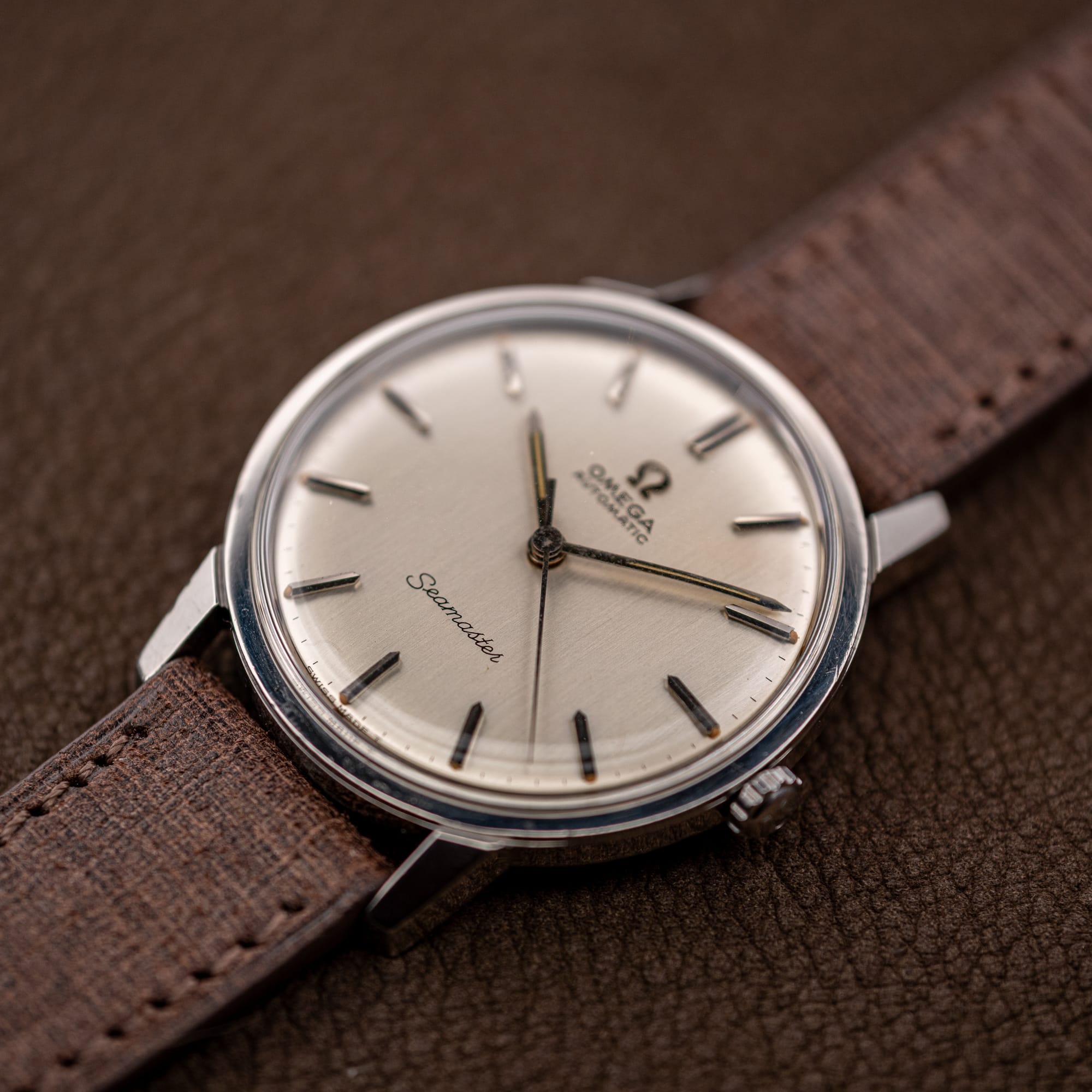
In 1962 Omega stopped naming its cases and started describing them. The new references were built to be read: the first digit for the kind of watch, the second for how it wound, and the third for everything else it could do. That third digit is the interesting one, because it carries water resistance, chronometer certification and the calendar all at once. A 6 is a water-resistant watch with a date. A 7 is a water-resistant chronometer. An 8 is both. This Omega Seamaster 165.002 is a 5, which reads: water-resistant, and nothing added.
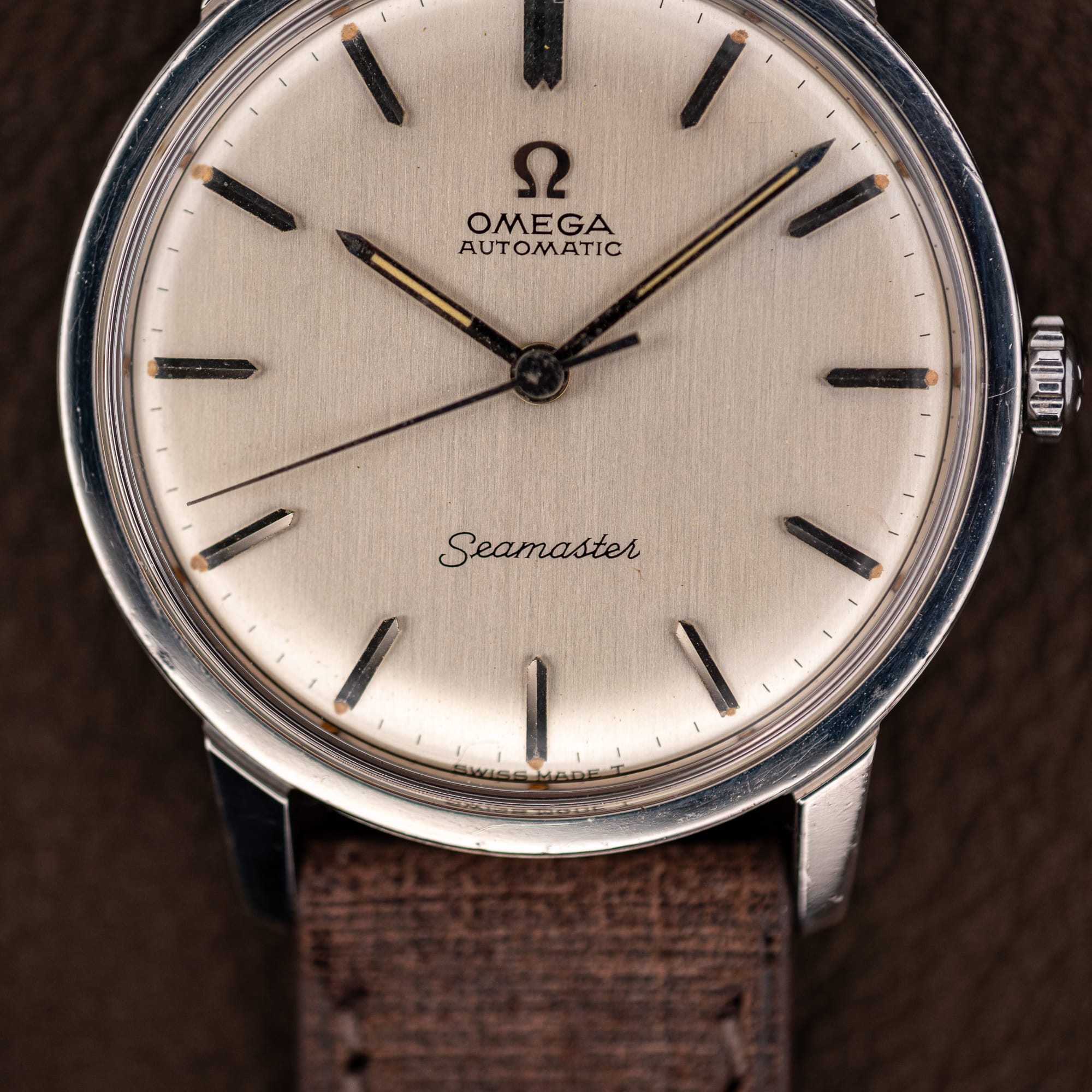
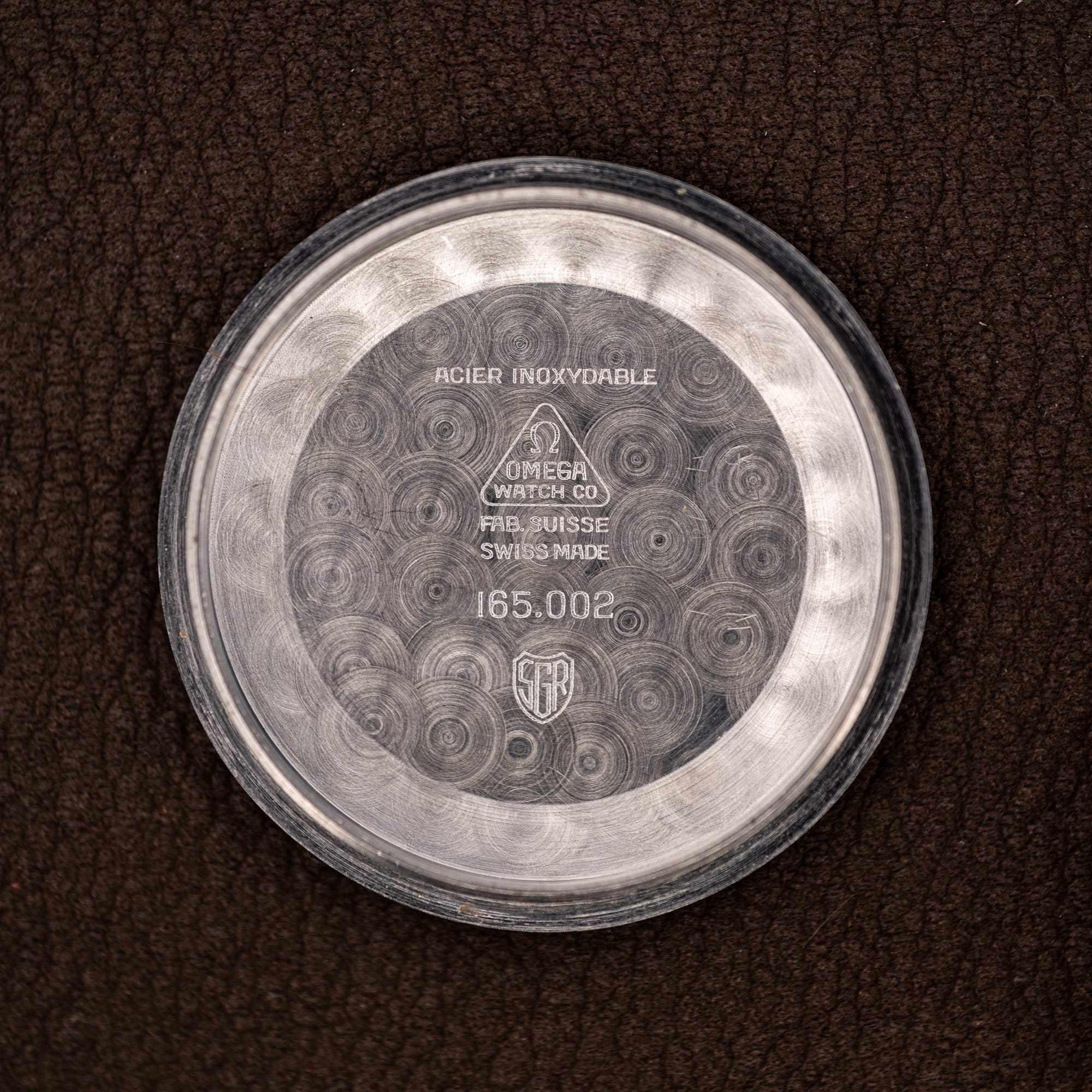
Which means 165.002 and 166.002 are not cousins and not successive versions of one another. They are the same watch ordered two ways, and a parts catalogue still tells us so, listing the two references against a single interchangeable caseback. One has a window cut in the dial. One does not. Whoever bought this one took the 5, and the movement inside it was made in 1965. That choice bought a dial with nothing interrupting it and a watch with nothing to correct: left in a drawer over a long weekend it needs winding and the hands set, and that is the end of the list. Its calendared twin would still have a question waiting.
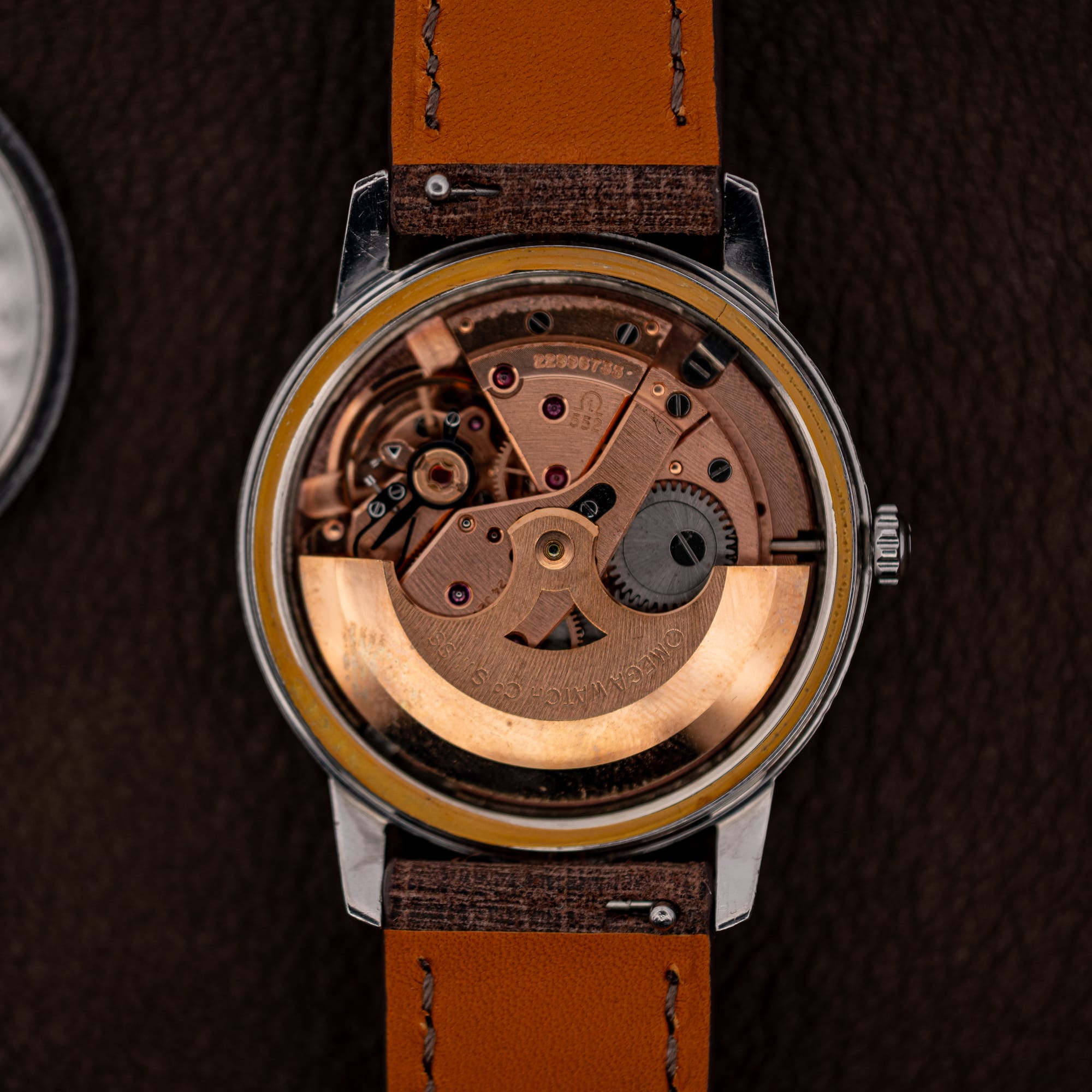
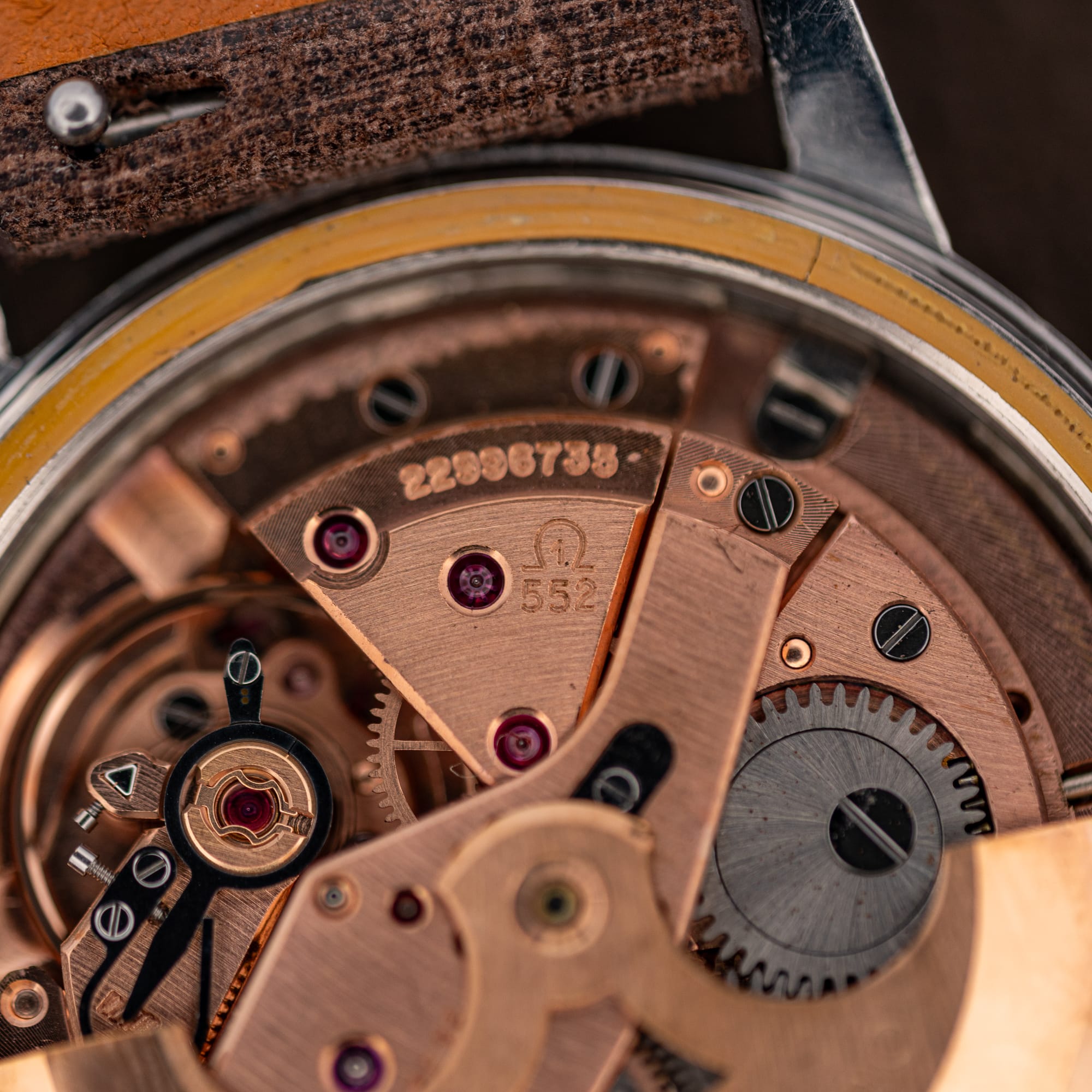
Behind the caseback is Omega’s caliber 552, introduced in 1958, twenty-four jewels, the no-date member of a family Omega made roughly 5.8 million of between 1958 and 1969. It is not a pioneer and does not need to be, since Omega’s automatics had been full-rotor since the 470 of the mid-1950s. What the 550 family was is the movement Omega ran the decade on.
Those twenty-four jewels are worth pausing on, because Omega built the same movement with seventeen. American import duty was assessed partly on jewel count, so for that market Omega substituted metal bushings for seven of them and shipped it as the caliber 550. The bushings wear. The jewels do not. This one is the 552, and its chronometer-grade sibling the 551 is the one that went to the testing bureau and came back with the five-positions-and-temperature line engraved across its bridge. This bridge carries no such line, and we are not going to pretend otherwise.
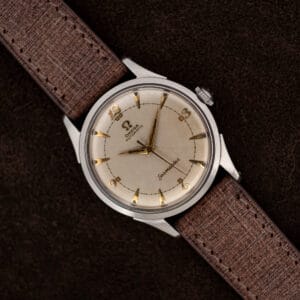
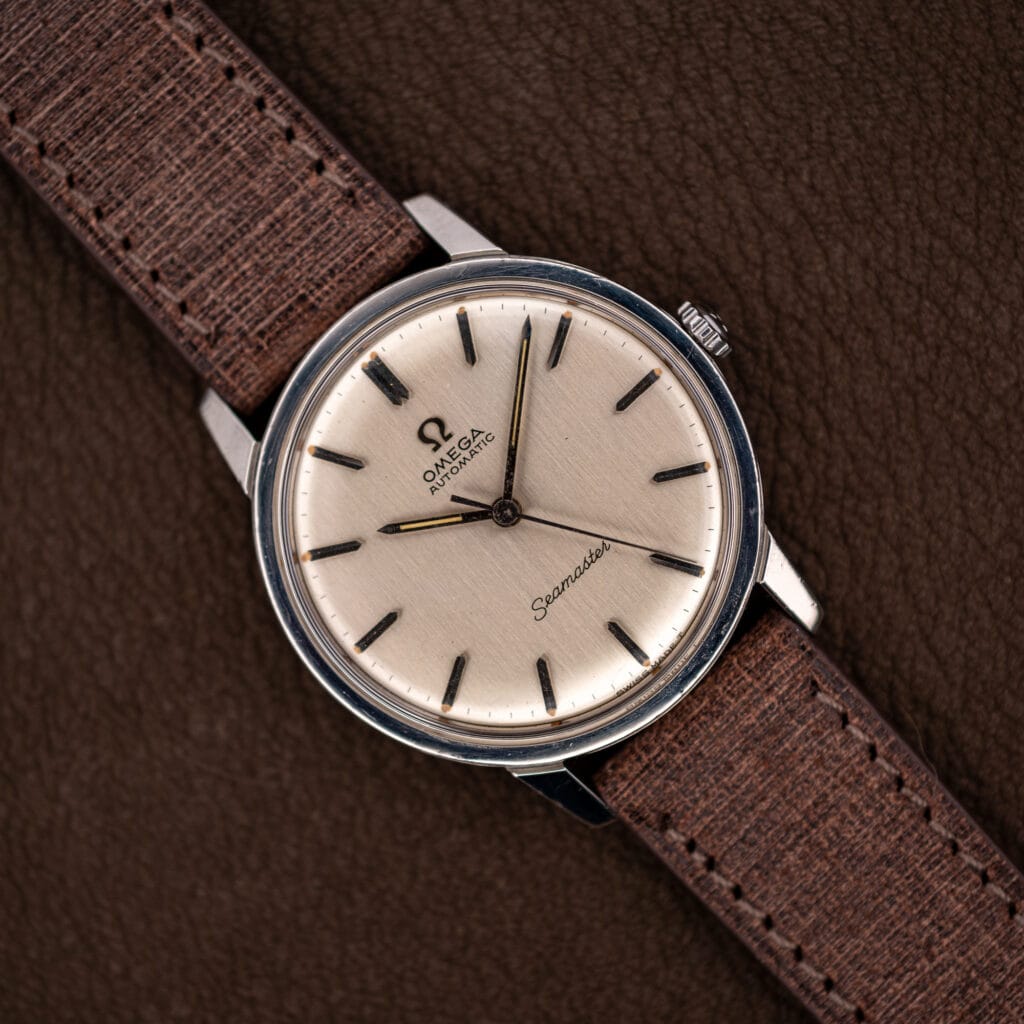
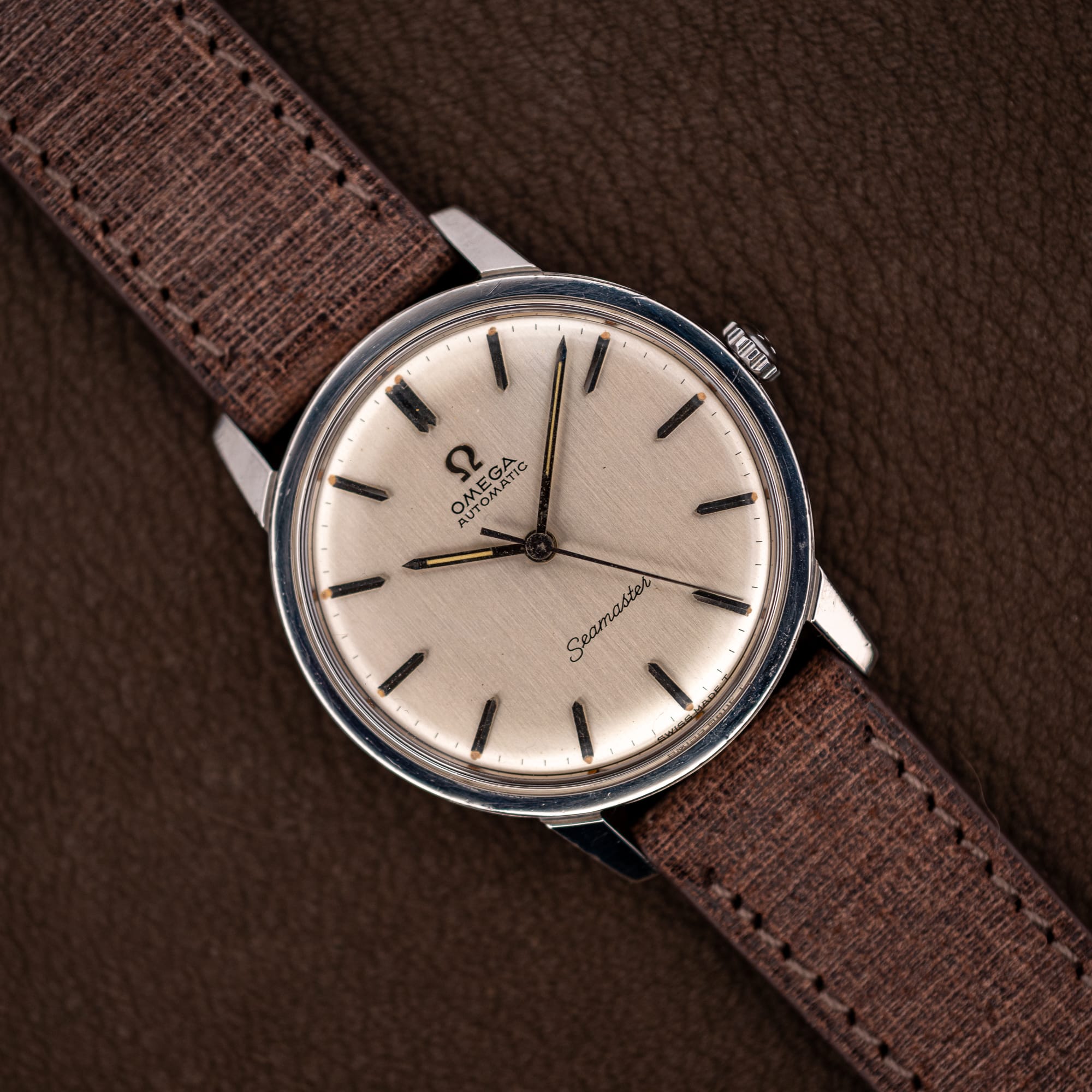
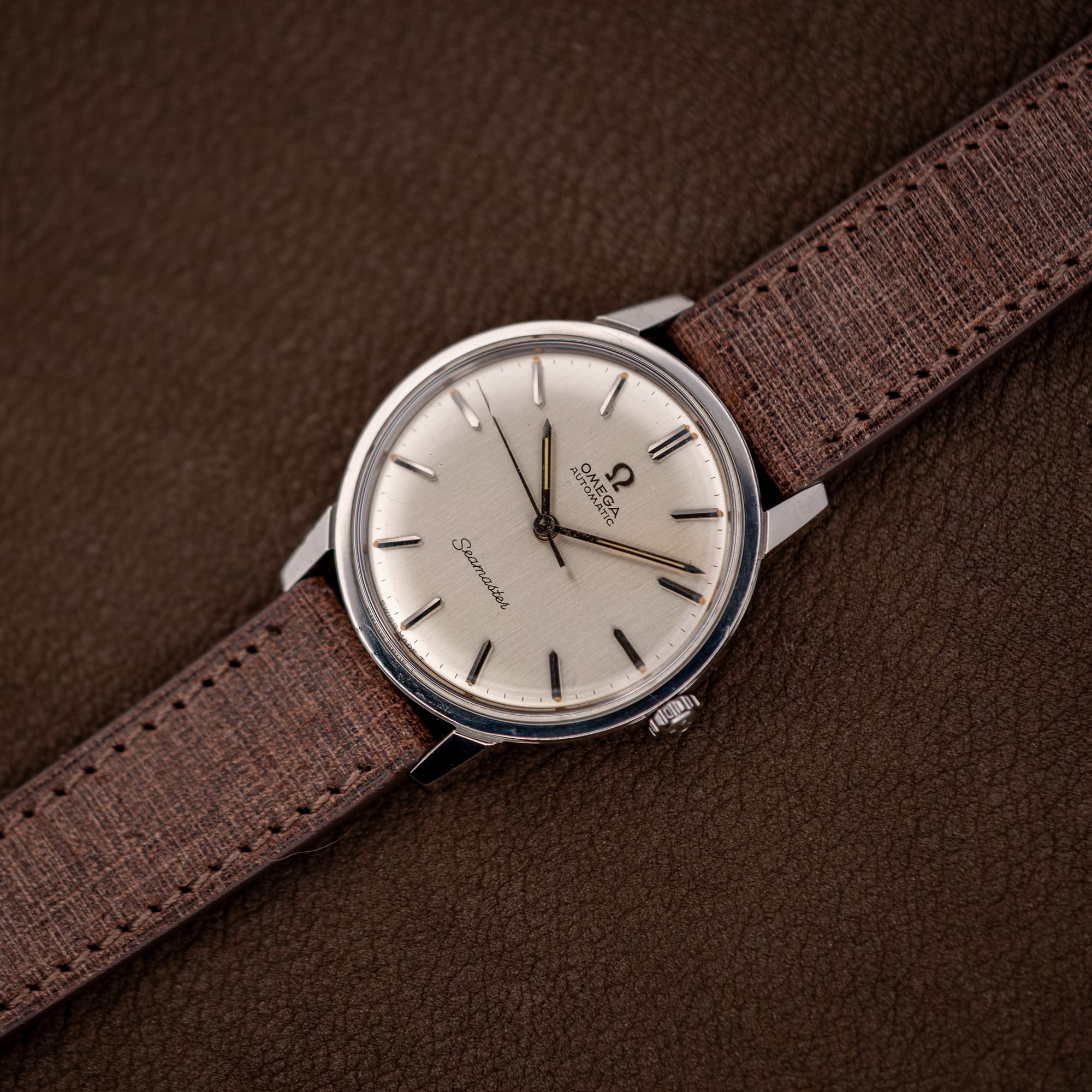
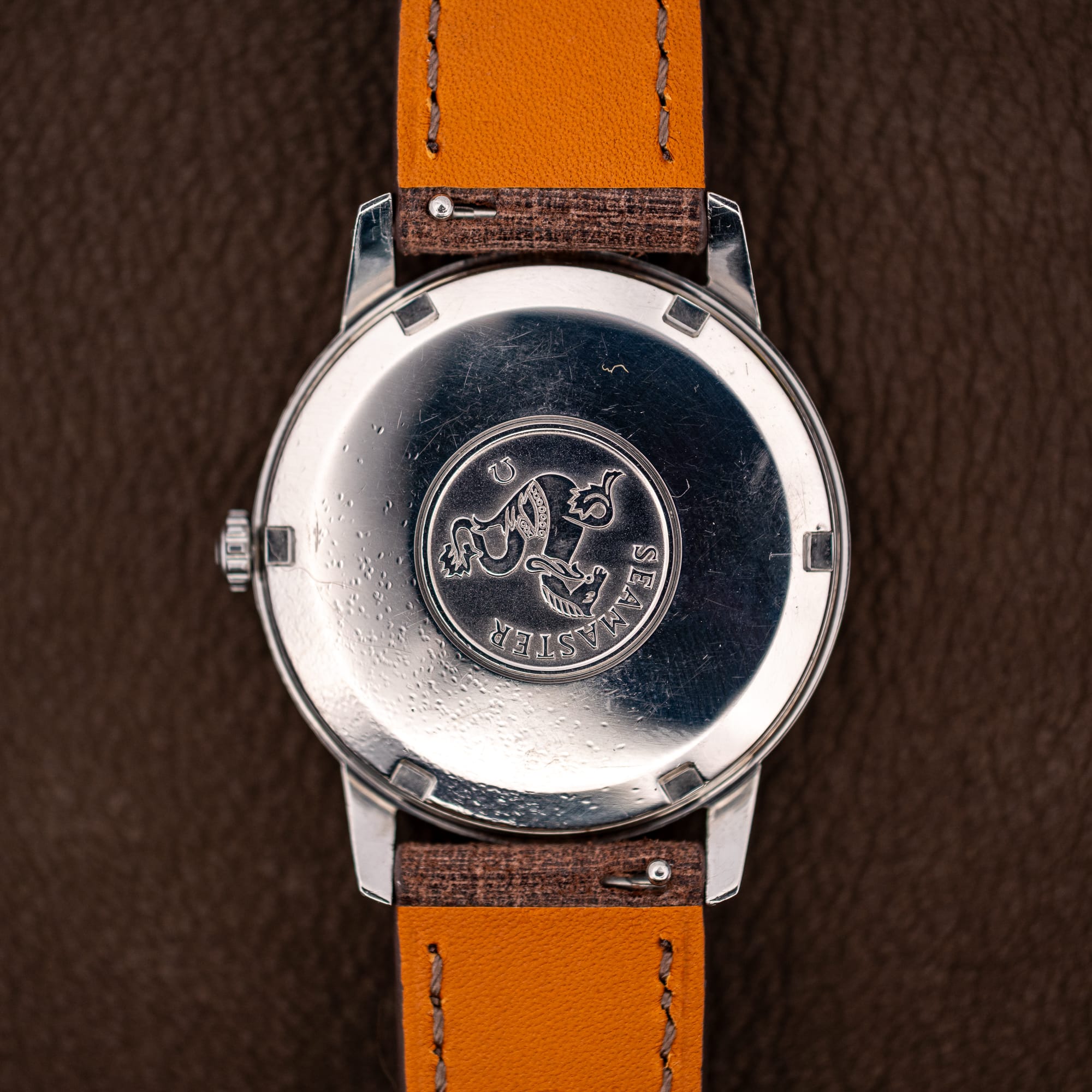
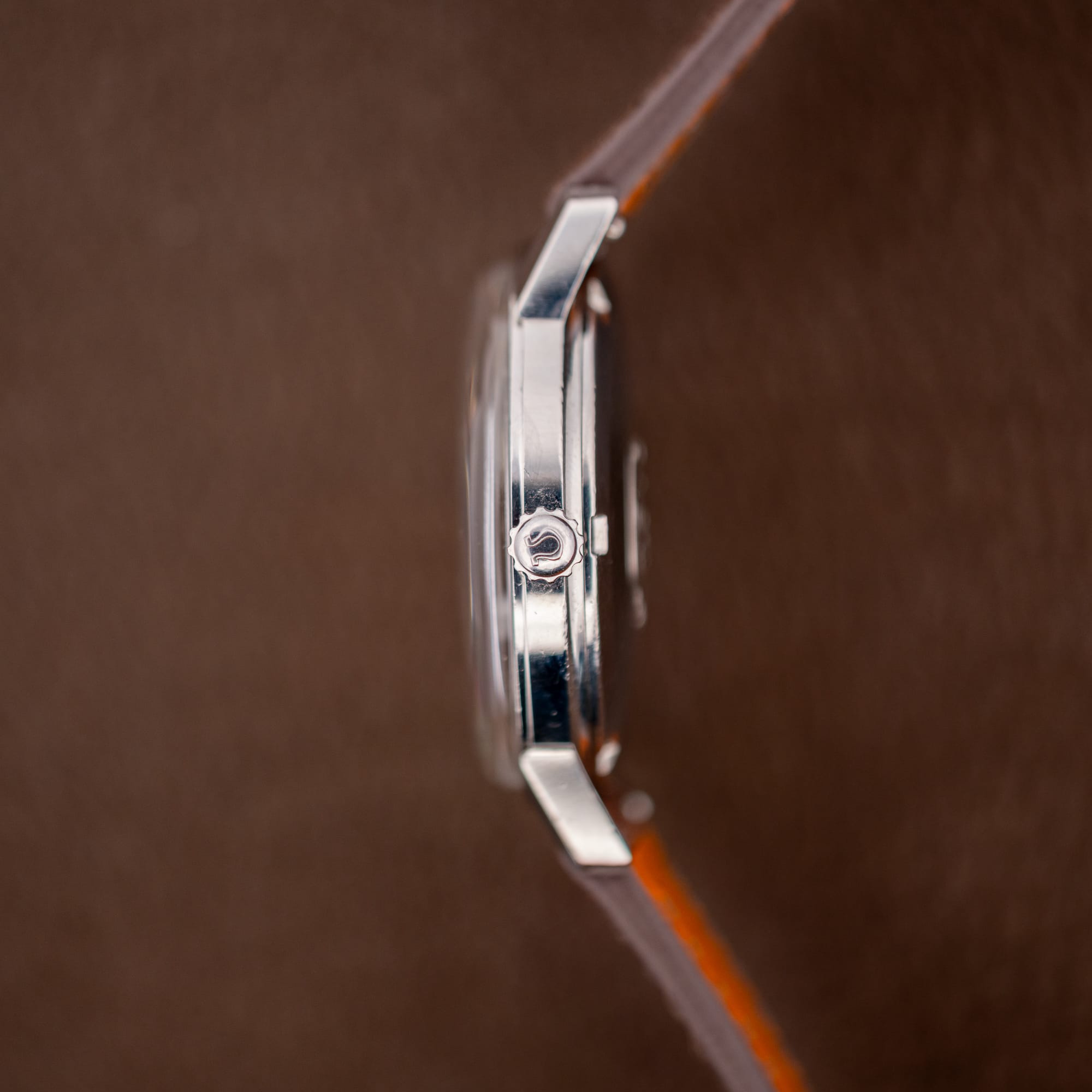
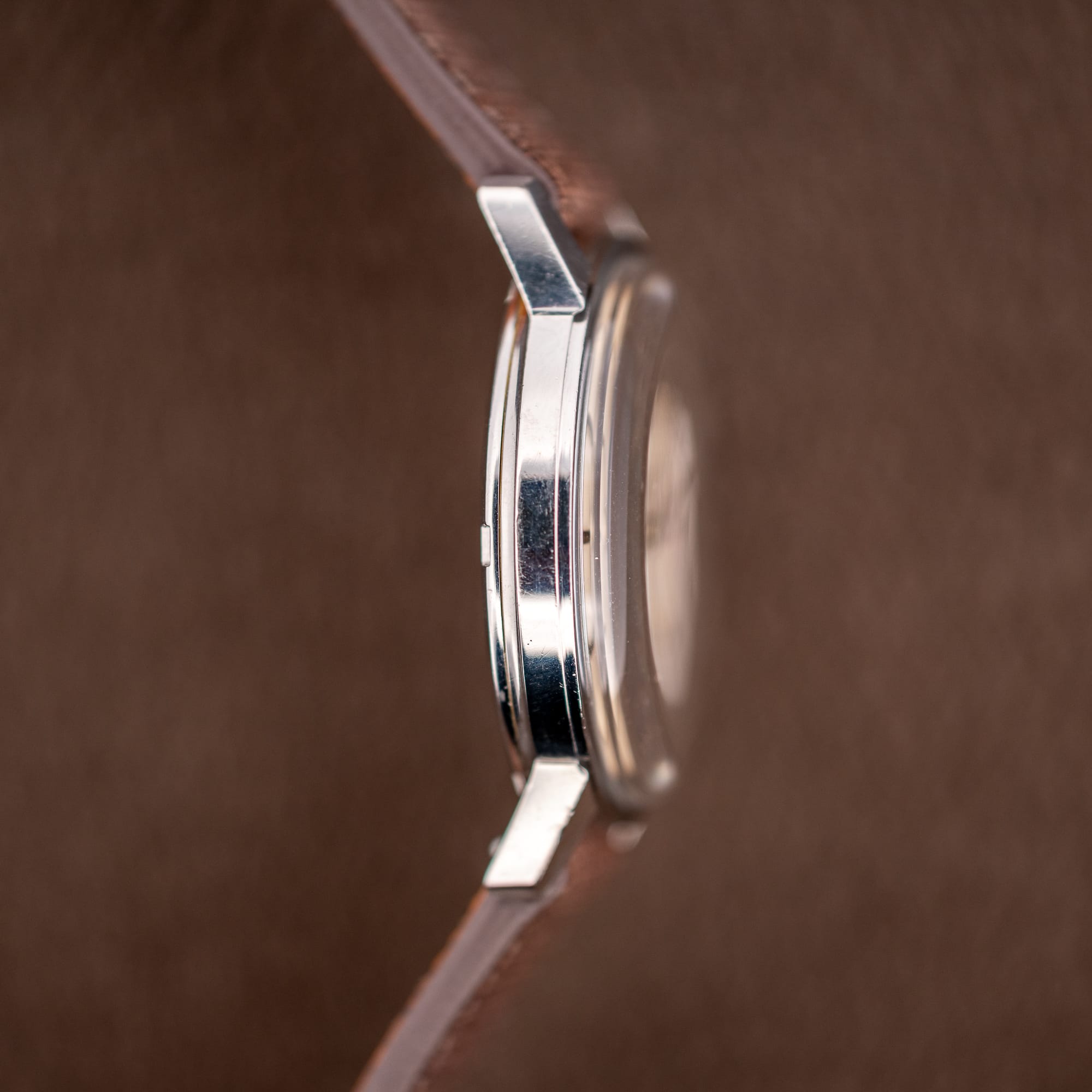
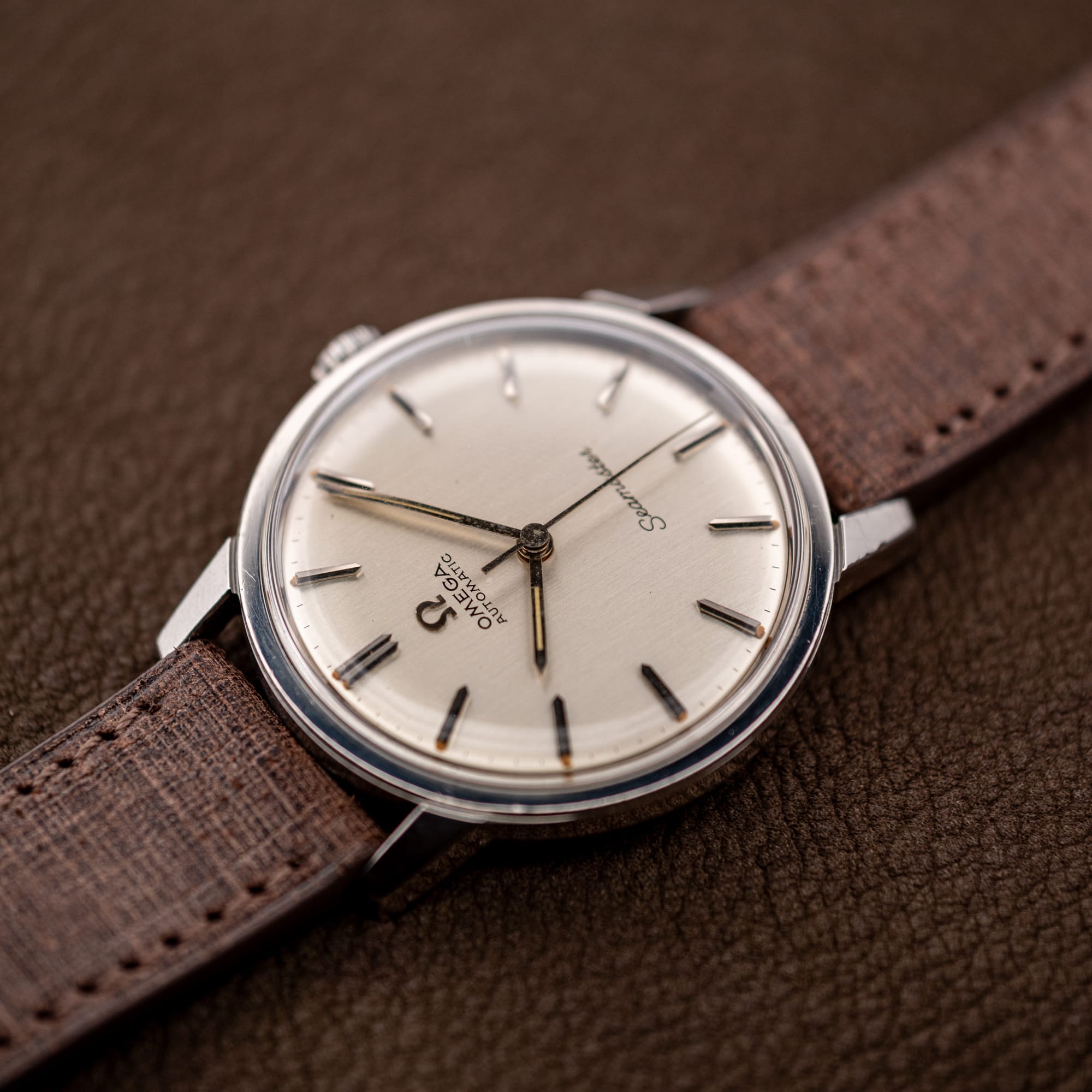
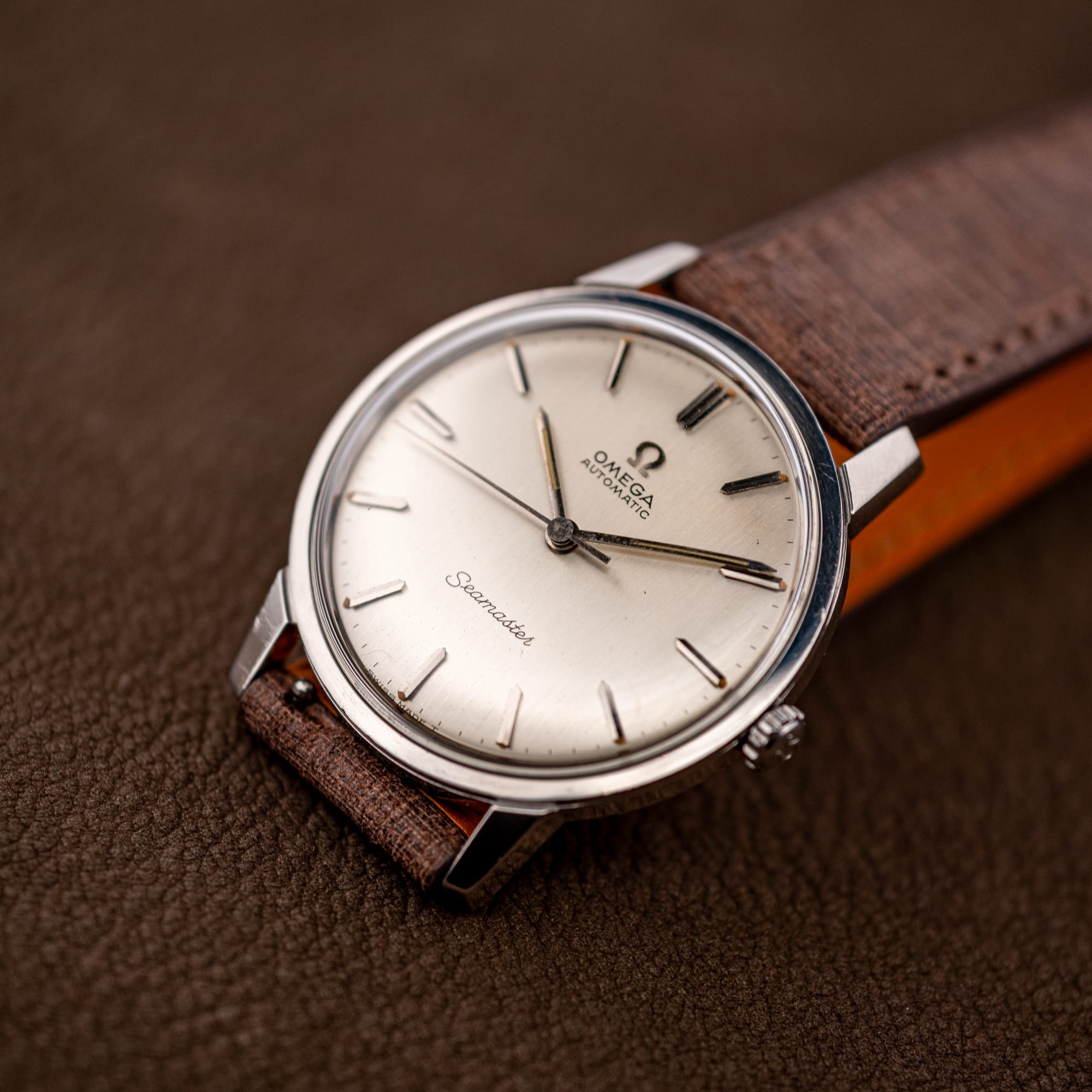
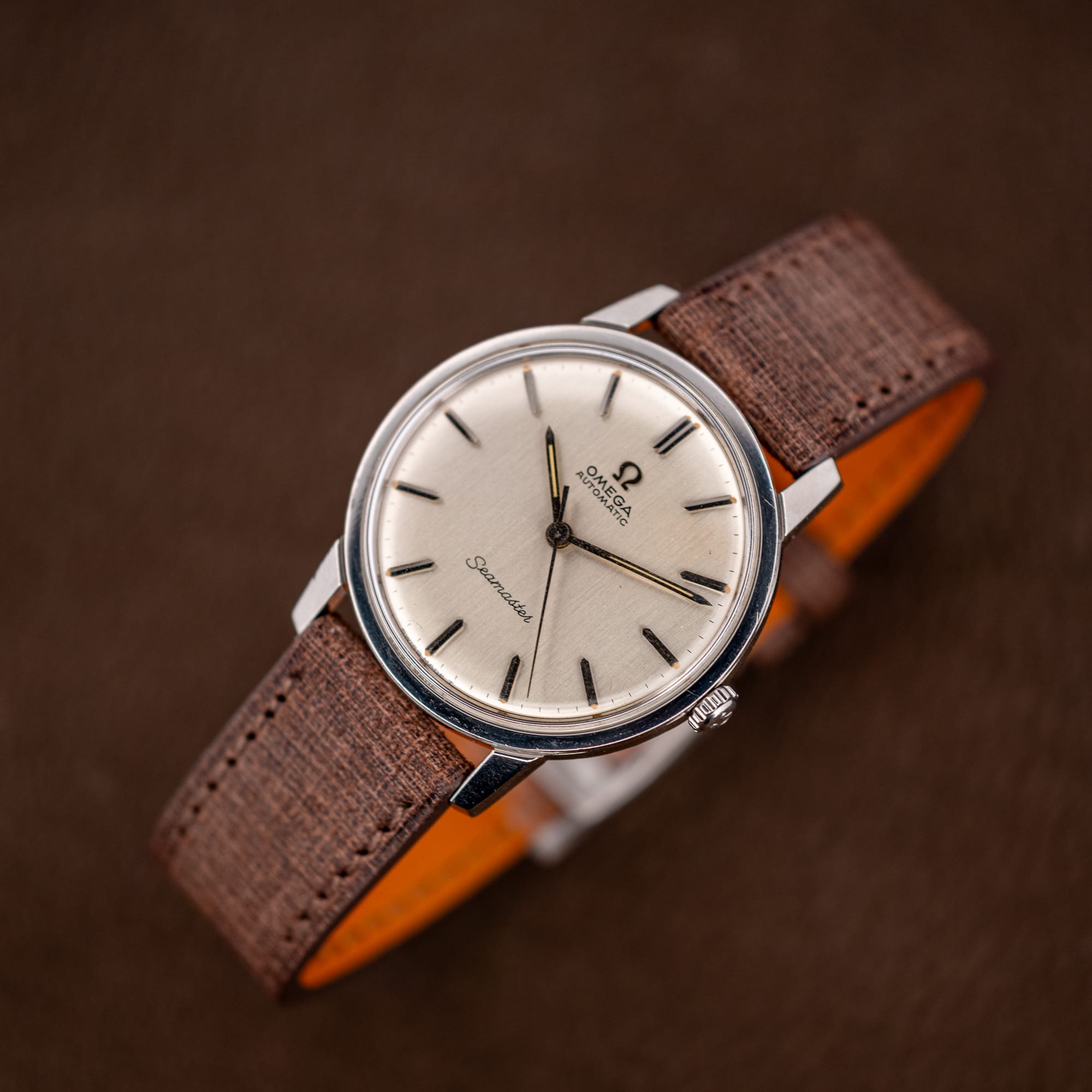
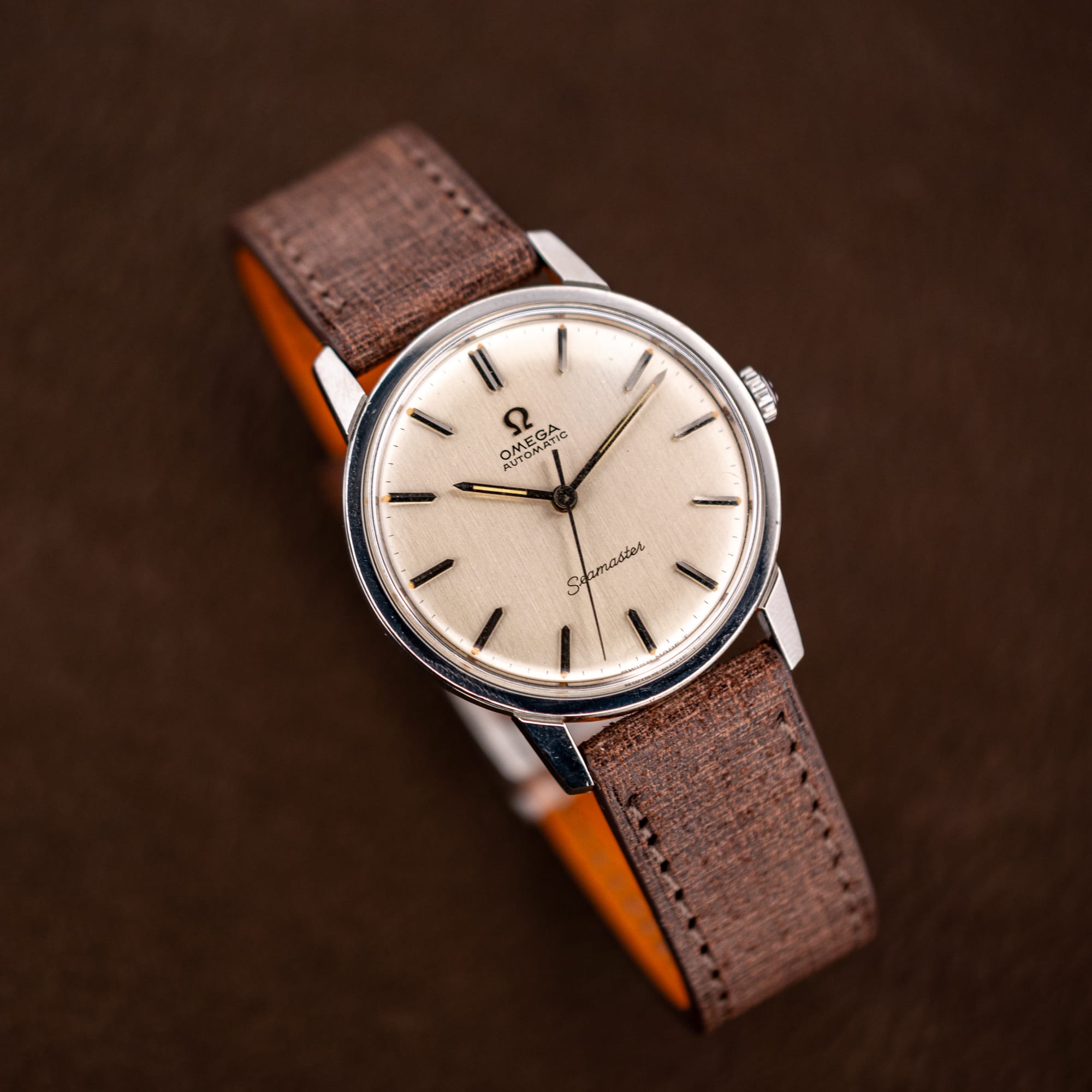
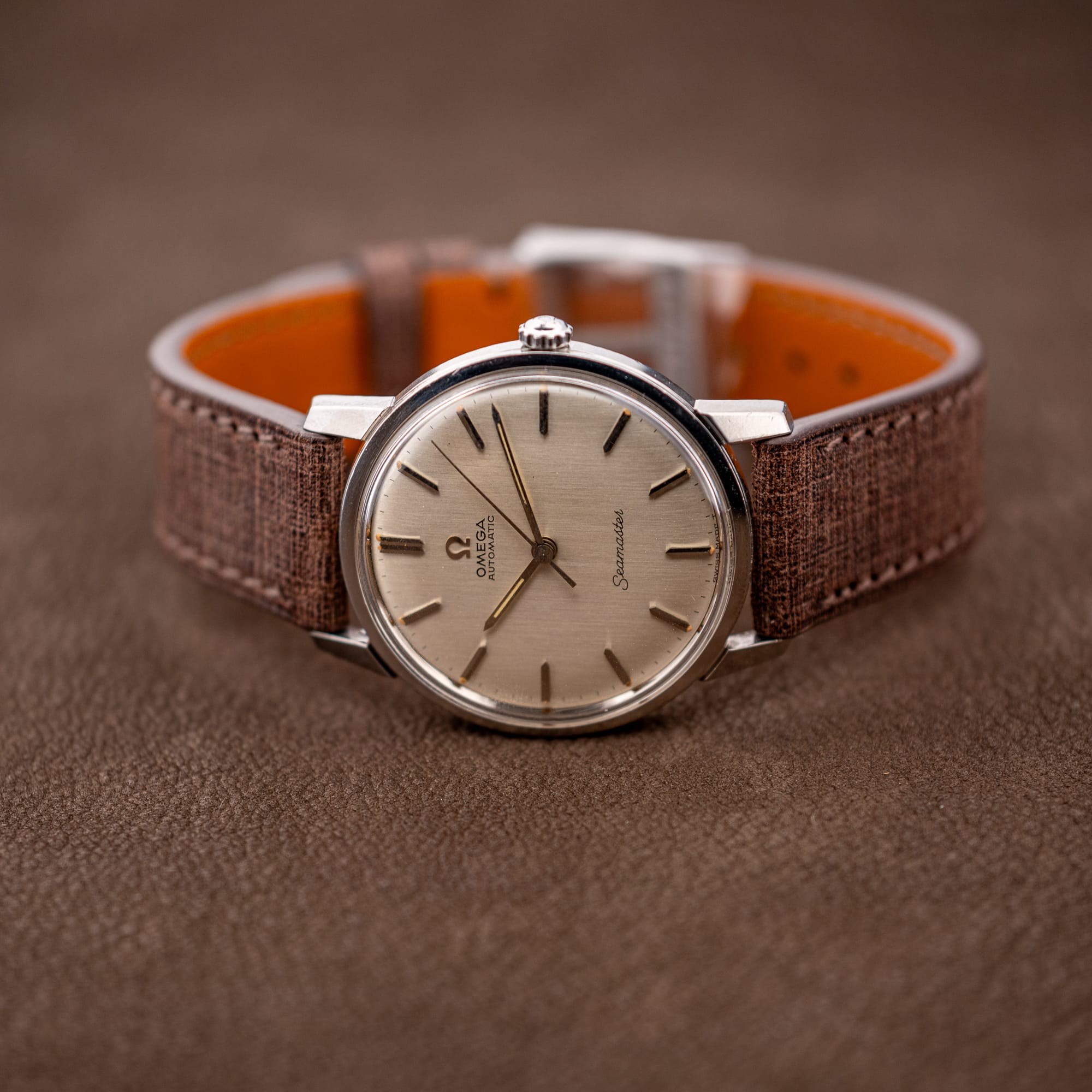
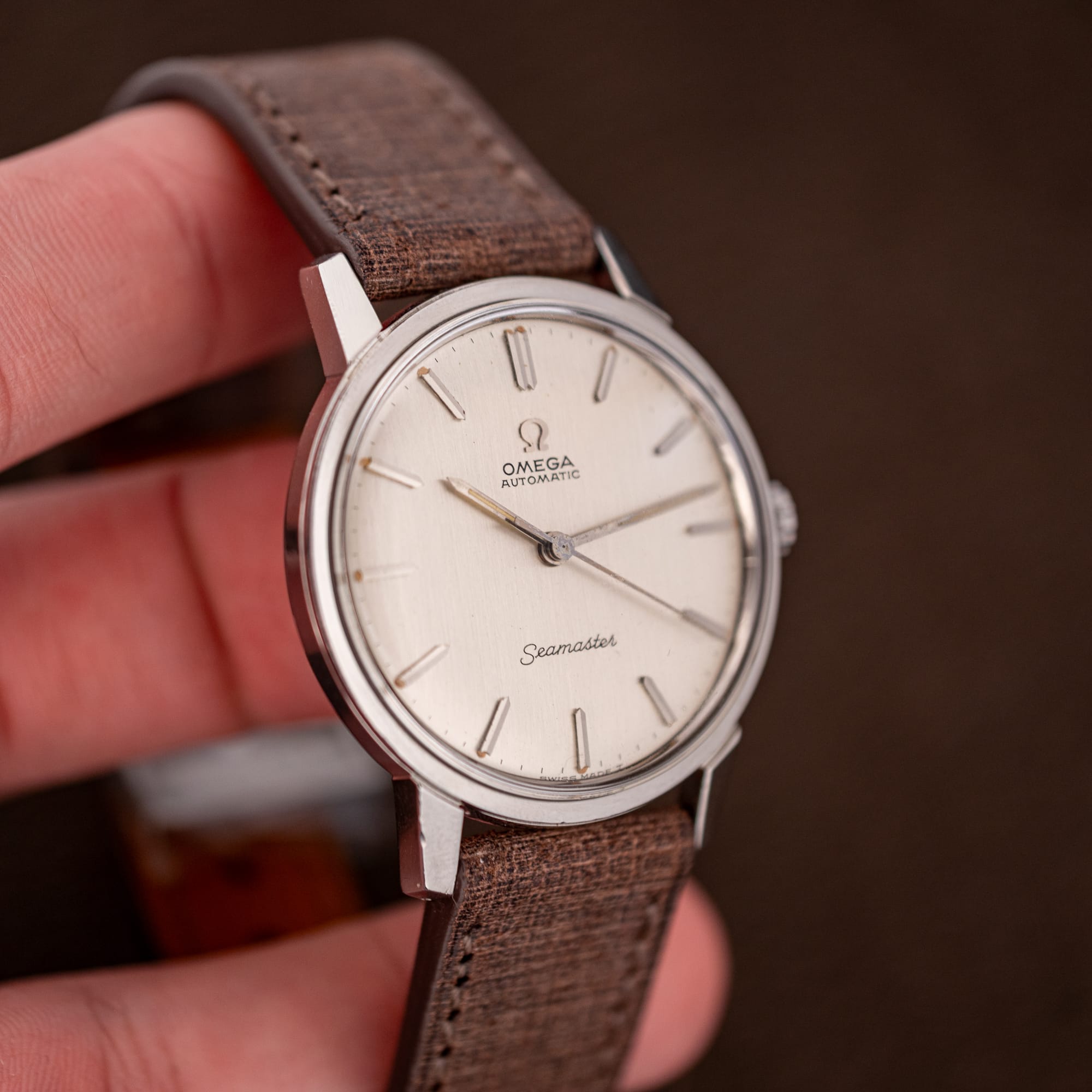
The Omega Seamaster 165.002 is 34.5mm of polished stainless steel, 41mm lug to lug, with straight faceted lugs, a slim bezel and a domed crystal that drags the light across the dial as it turns. The dial came to us original: a finely brushed silver surface, applied faceted batons doubled at twelve, each with a small tritium plot gone warm tan, and alpha hands whose fill has aged to a paler cream. The crown is signed. The seahorse medallion on the back is still crisp, though the steel around it carries the speckling and light pitting that six decades leave behind. The inner caseback reads ACIER INOXYDABLE, and further down, 165.002.
Serviced in-house at OTTUHR and backed by our 2-year mechanical warranty, on a brown Babele leather strap with our own buckle. Sixty years on, the dial still asks nothing of anyone, which was always the point.