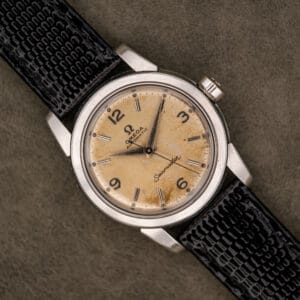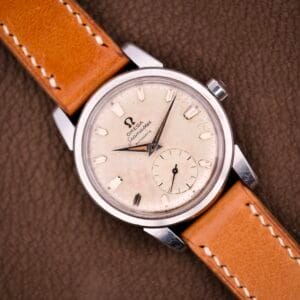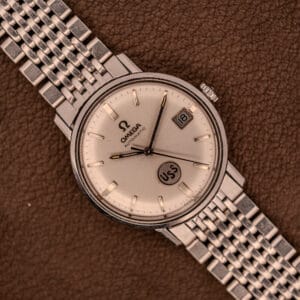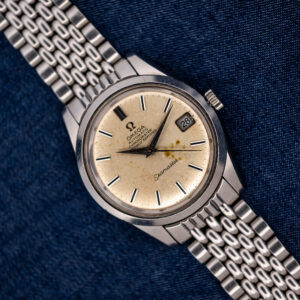
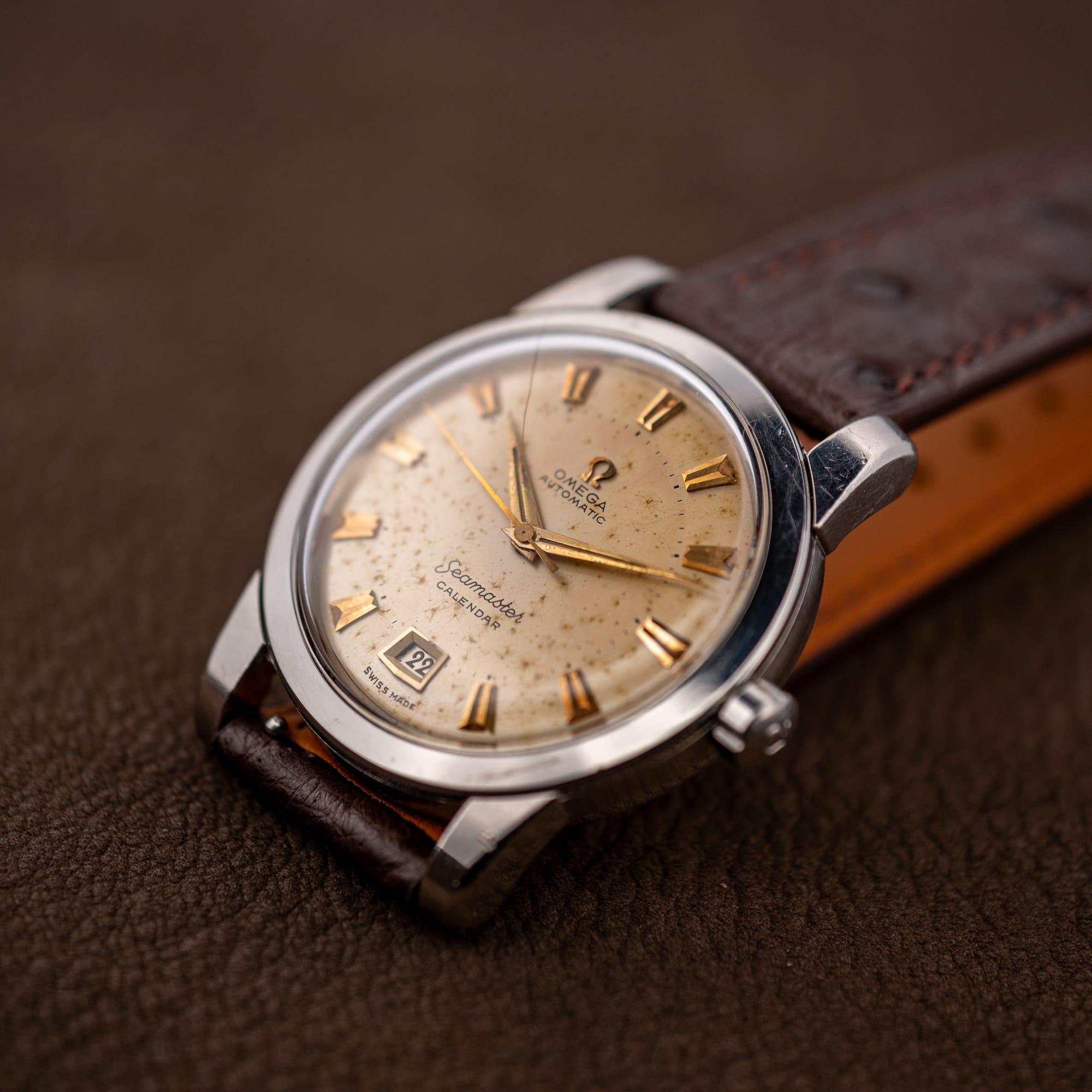
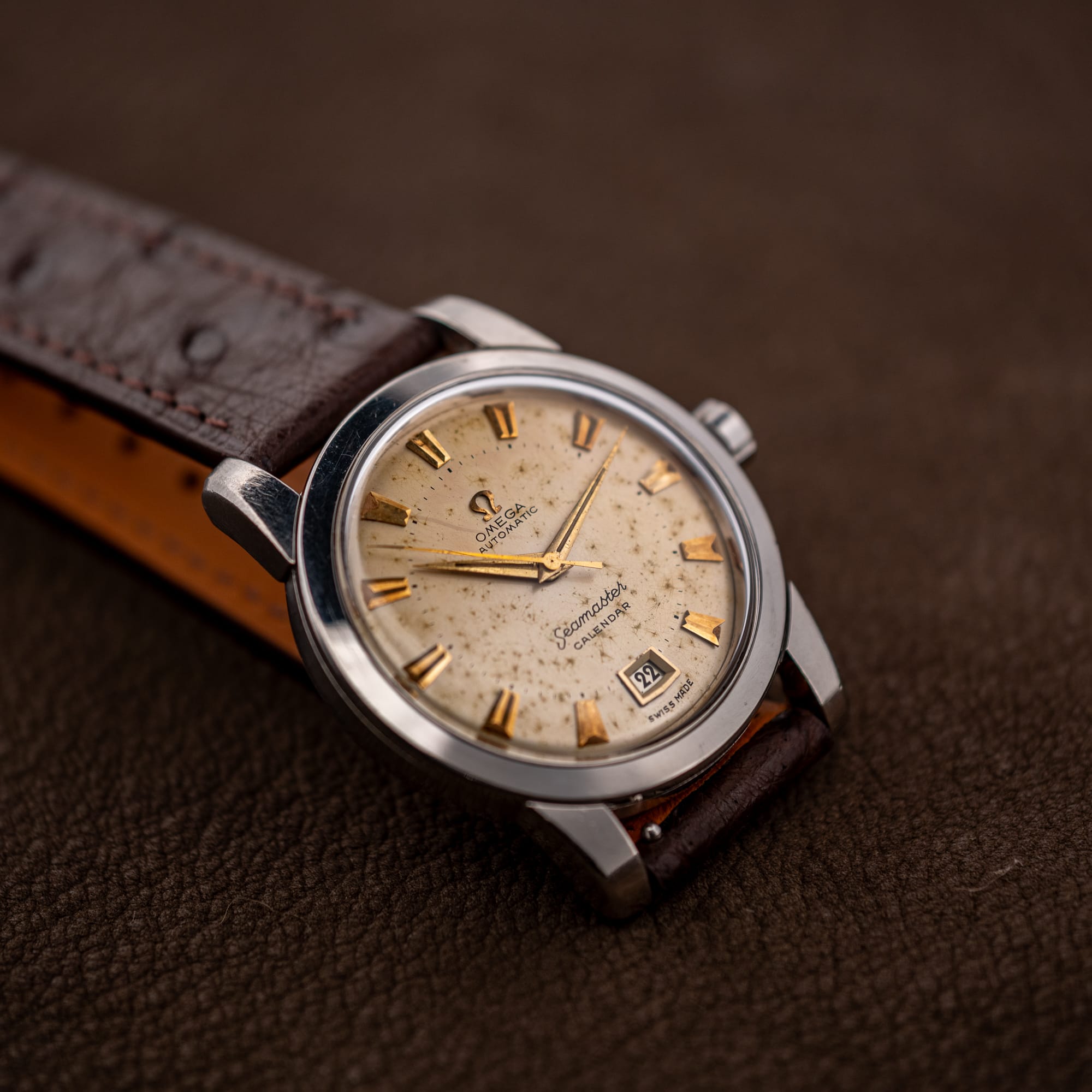

In 1955 an Omega advertisement ran in American magazines showing a navigator working high over the Pacific with a sextant. The pitch was that fixing a position takes three things, a star, a sextant, and a watch accurate enough to trust, and the watch under the illustration was an Omega Seamaster Calendar with its date window at six o’clock. The price box is the part worth reading. The Seamaster Calendar ran $125 to $300, federal tax included. The same watch without the date indicator started at $95.
That is a thirty percent premium for a window showing the day of the month, and in 1955 buyers paid it. Omega had come to the date late. Rolex put one on the Datejust in 1945, and by the time Omega managed it, on the Seamaster Calendar reference 2627 in 1952, a calendar was ordinary equipment. What made the catching up awkward was the movement Omega had to fit it to. Its automatics were still bumpers, self-winding calibers whose weight does not travel in circles but swings through a limited arc, strikes a small spring buffer at each end, and comes back. Omega had built them that way since 1943, more than 1.3 million across the family, and stopped in 1955. The calendar was there for the last three years of a twelve-year run.
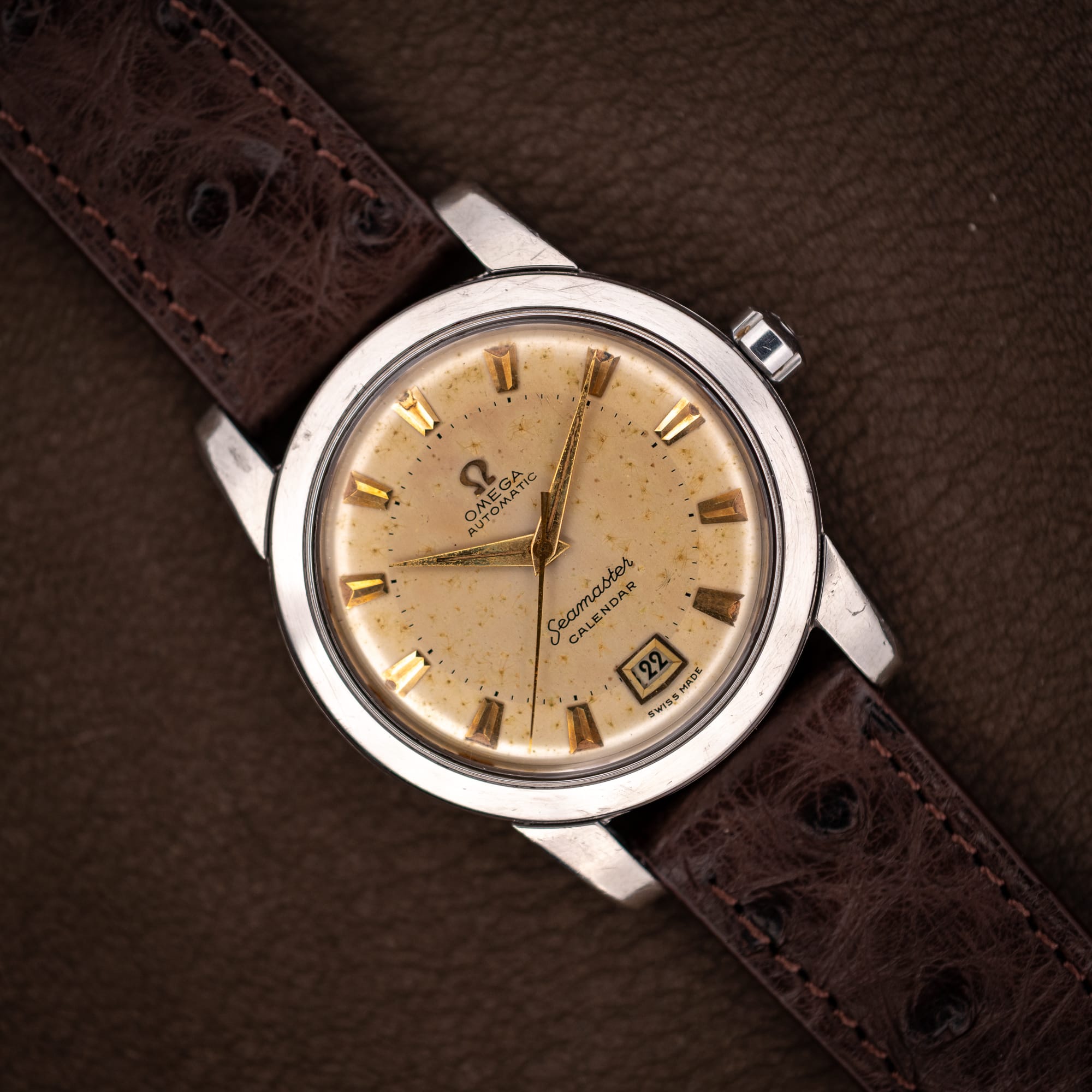
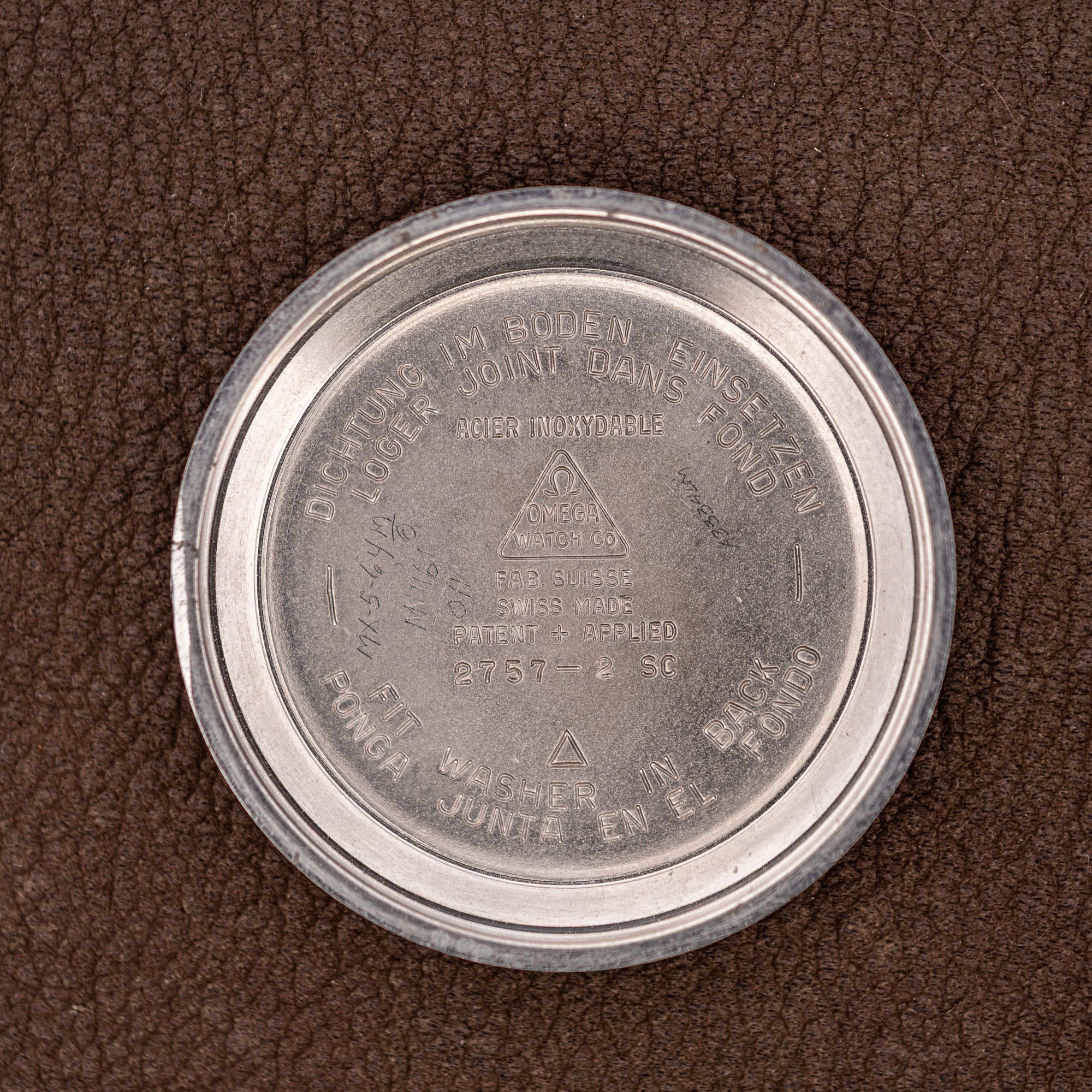
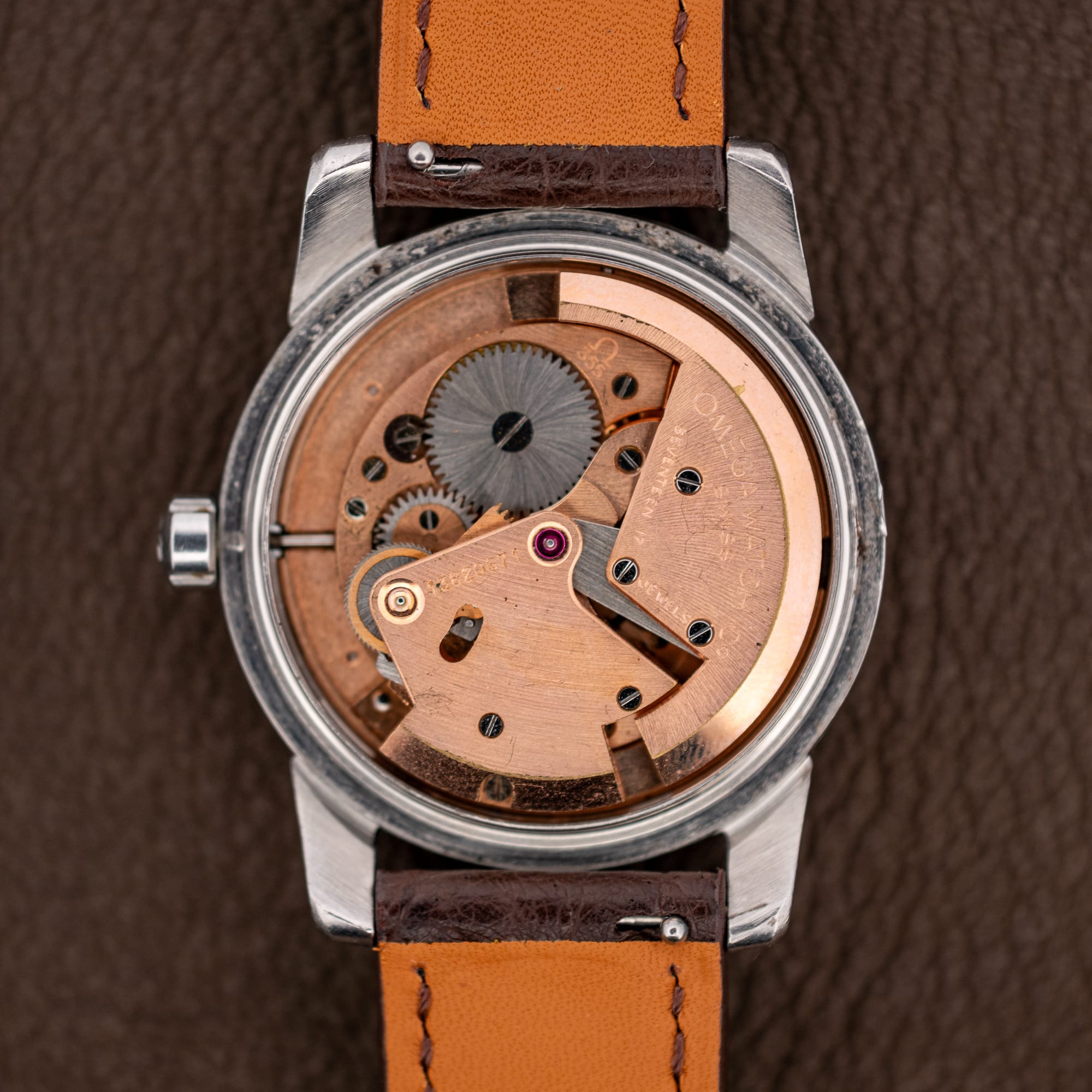
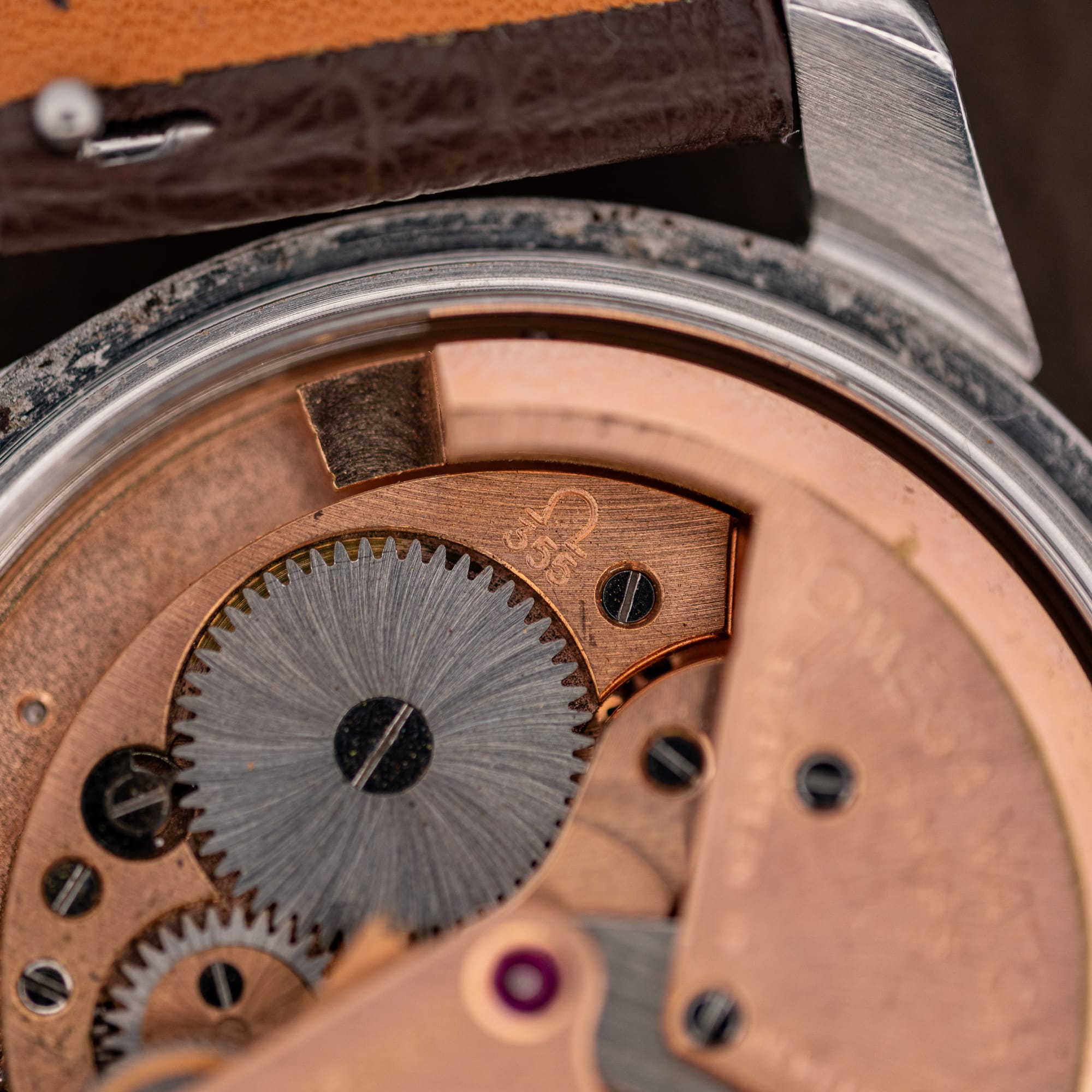
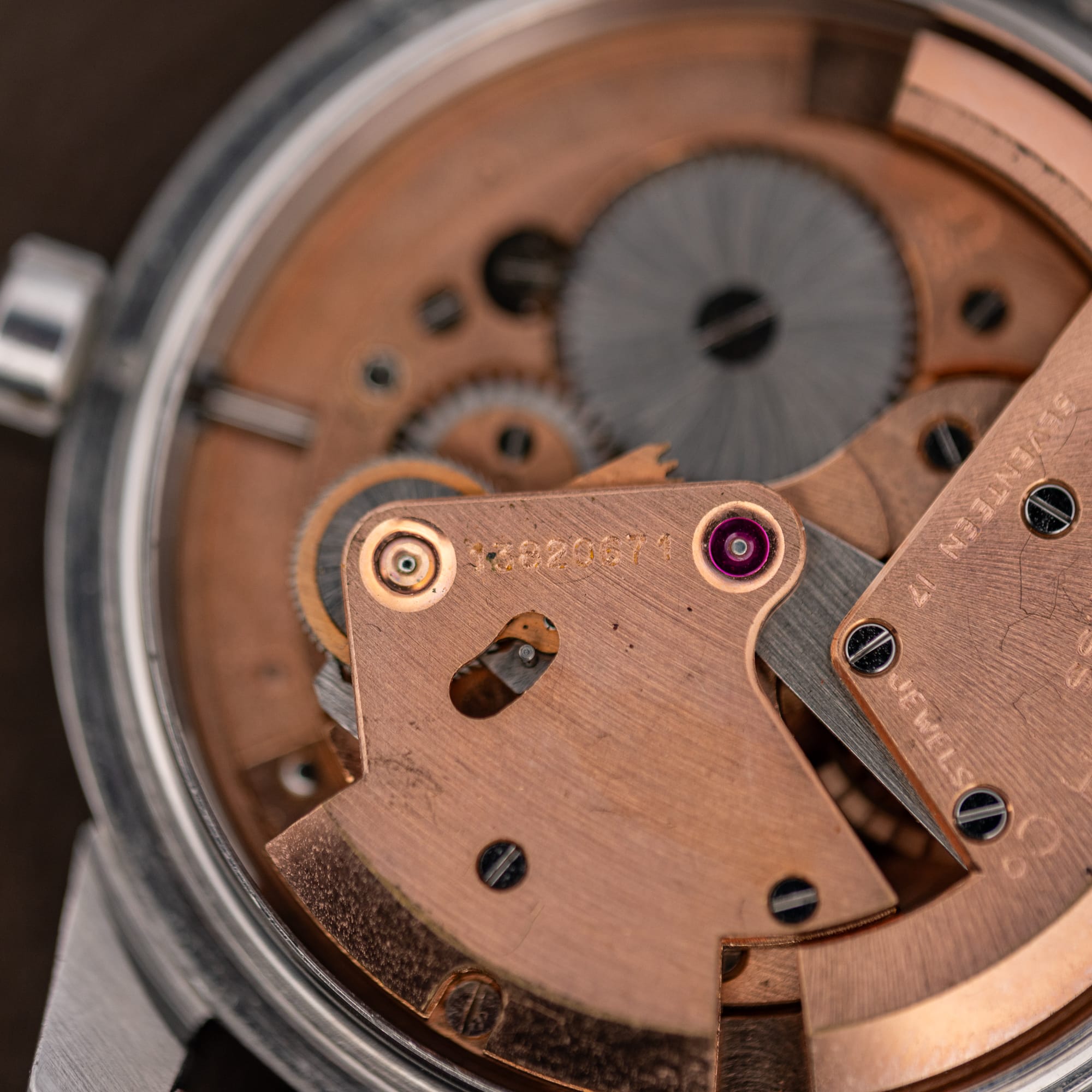
Reference 2757 is where the second-generation calendar bumper went, catalogued by Omega in 1954, cased in steel with a snap-on back and the date at six rather than three. The caliber 355 paid for that date in height: 5.45mm for the dateless 354, 6.10mm here, on the same 28.1mm base. Seventeen jewels, 19,800 beats an hour, forty-two hours in reserve. It is a standard-grade caliber rather than a chronometer, and this dial carries no Chronometre text. In this family the certified grades were the 352 and the 354.
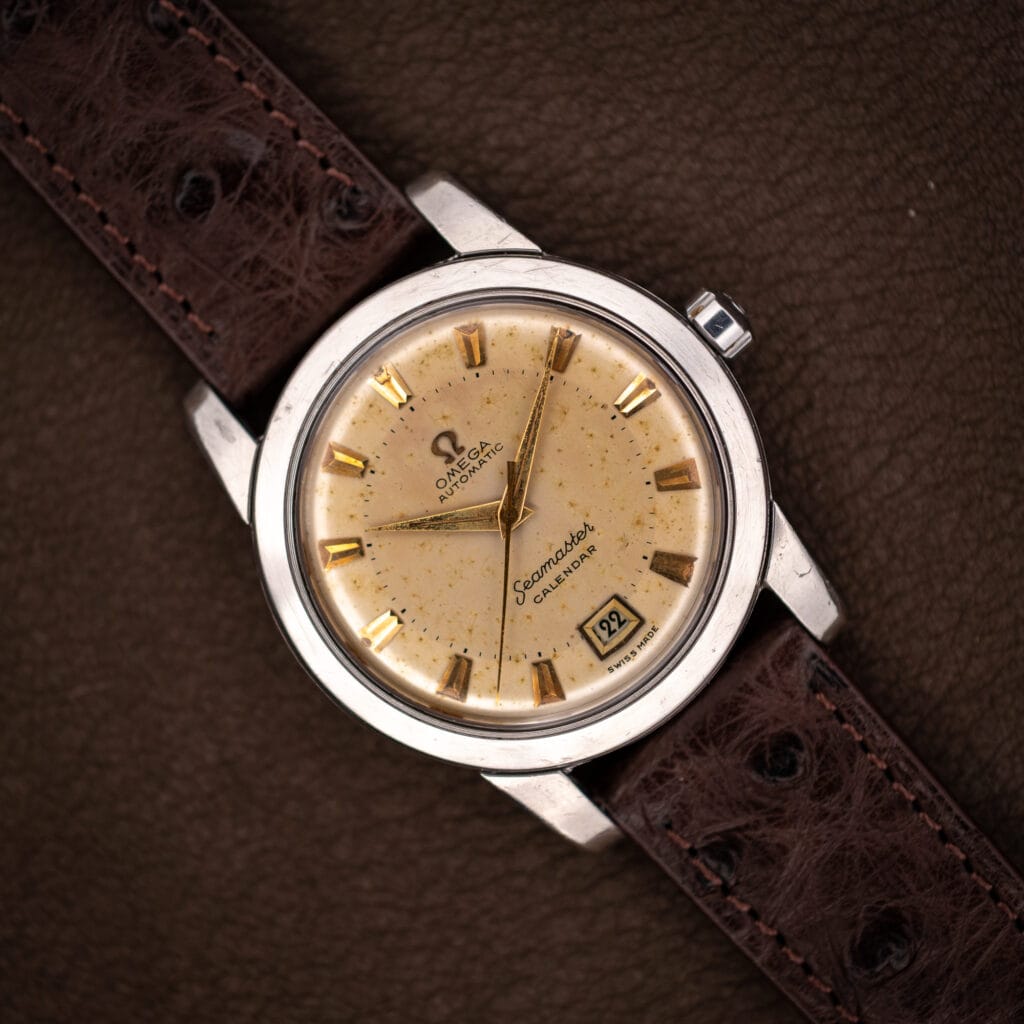
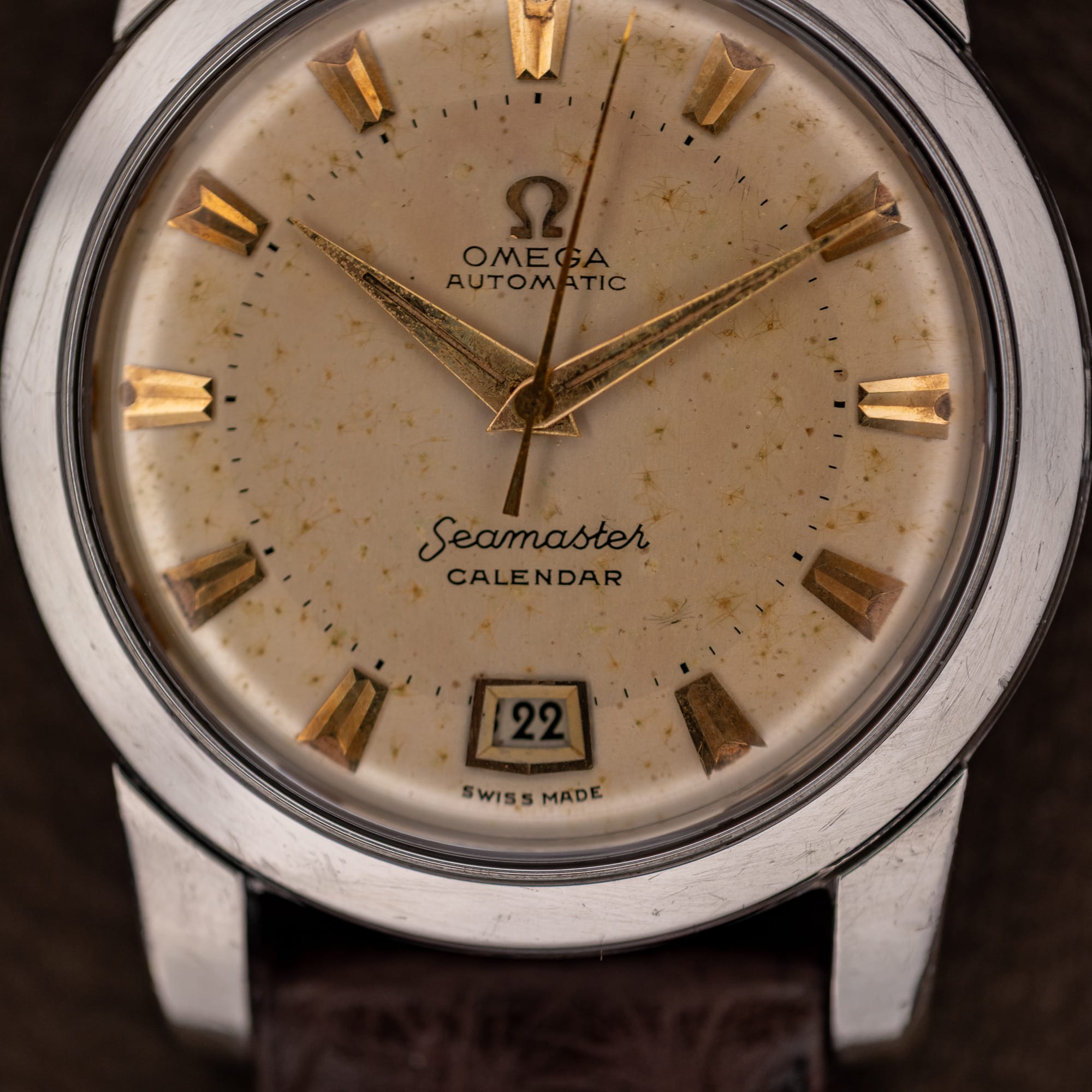
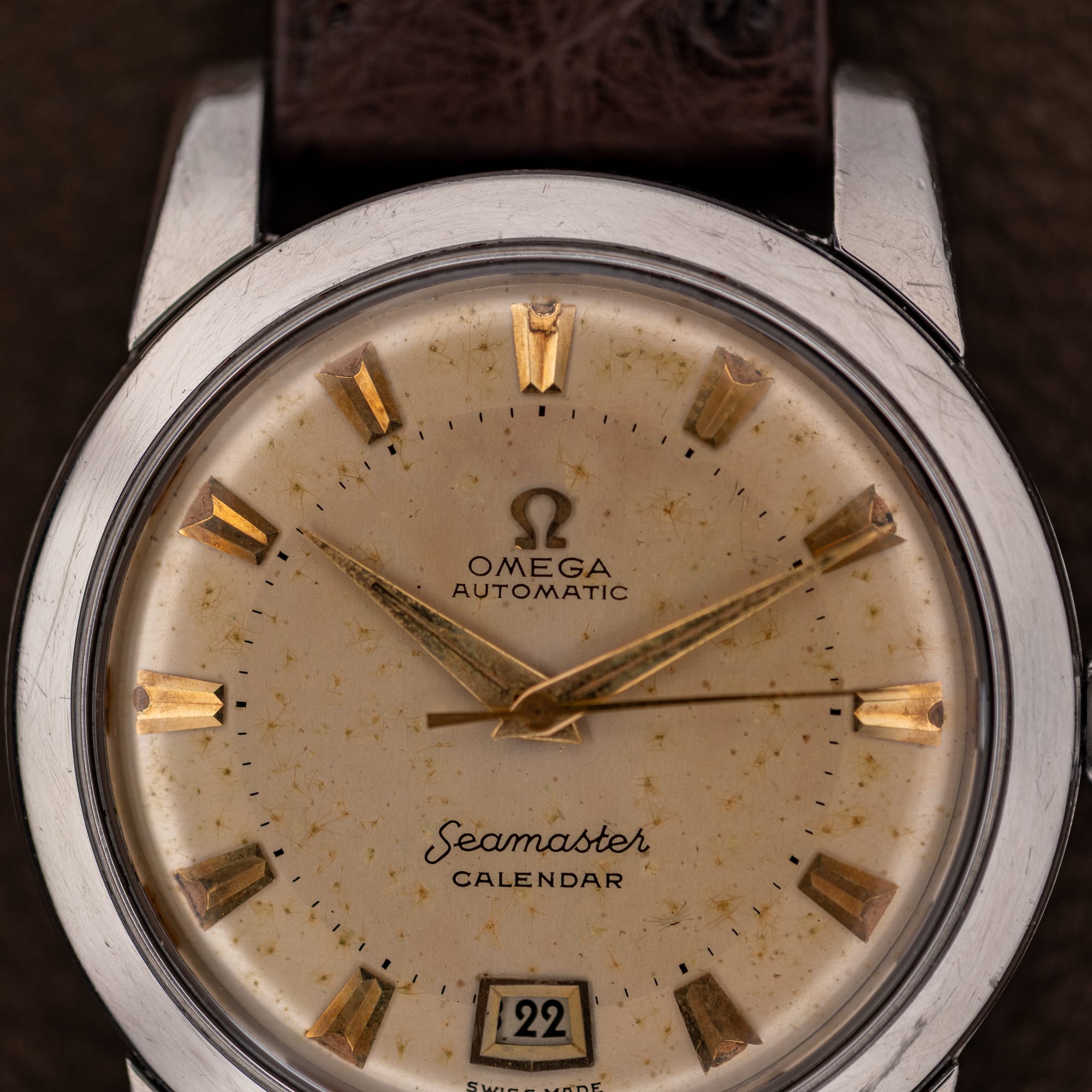
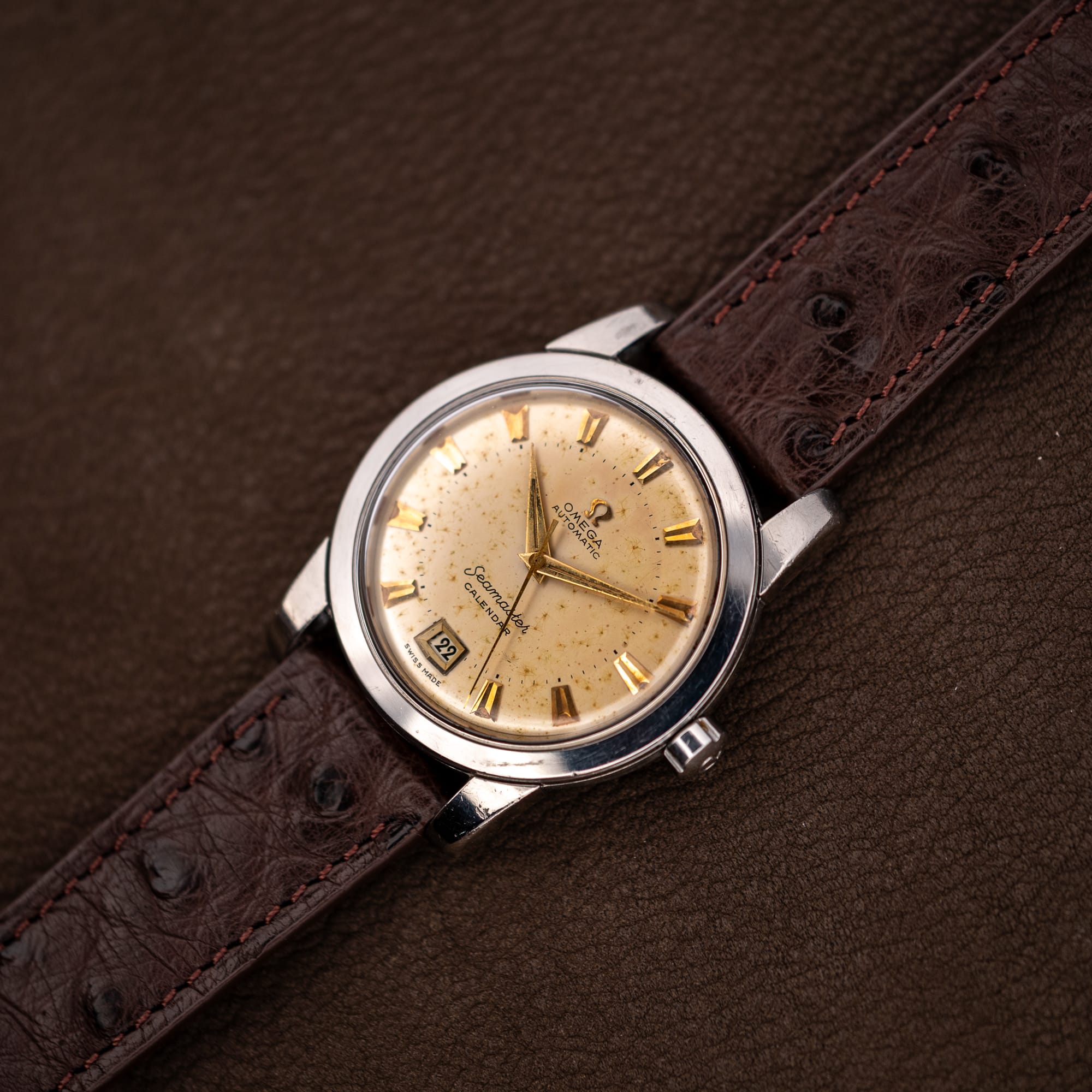
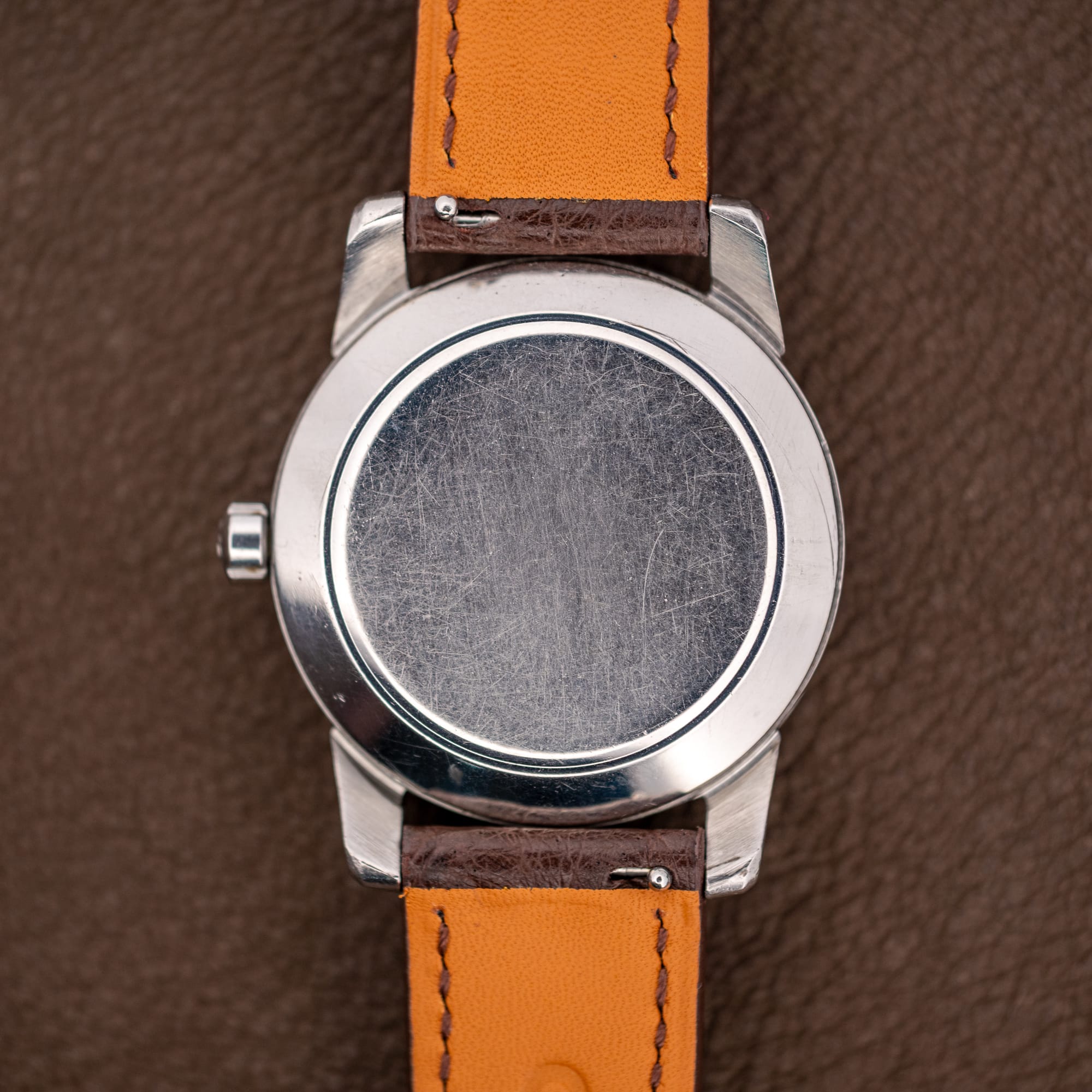
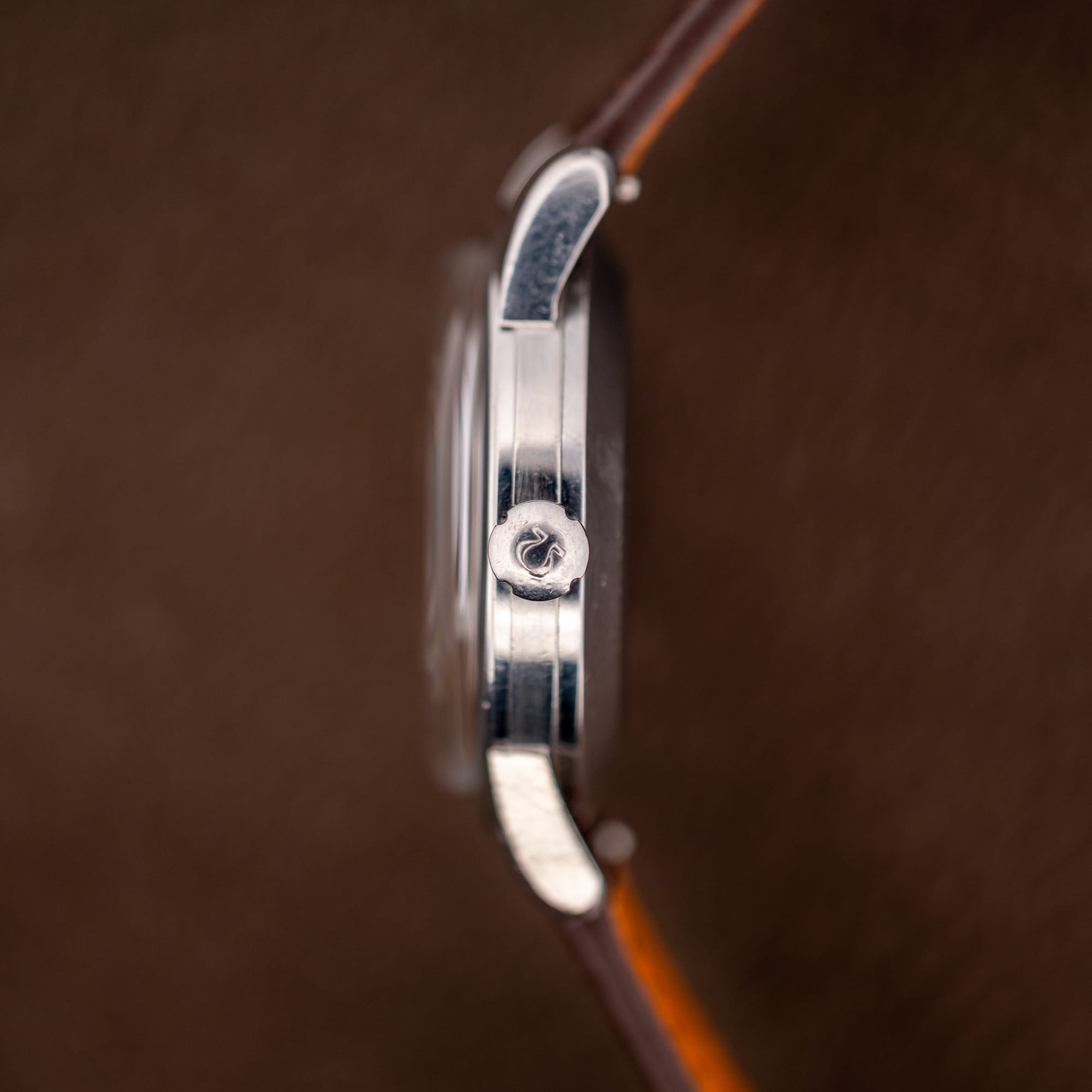
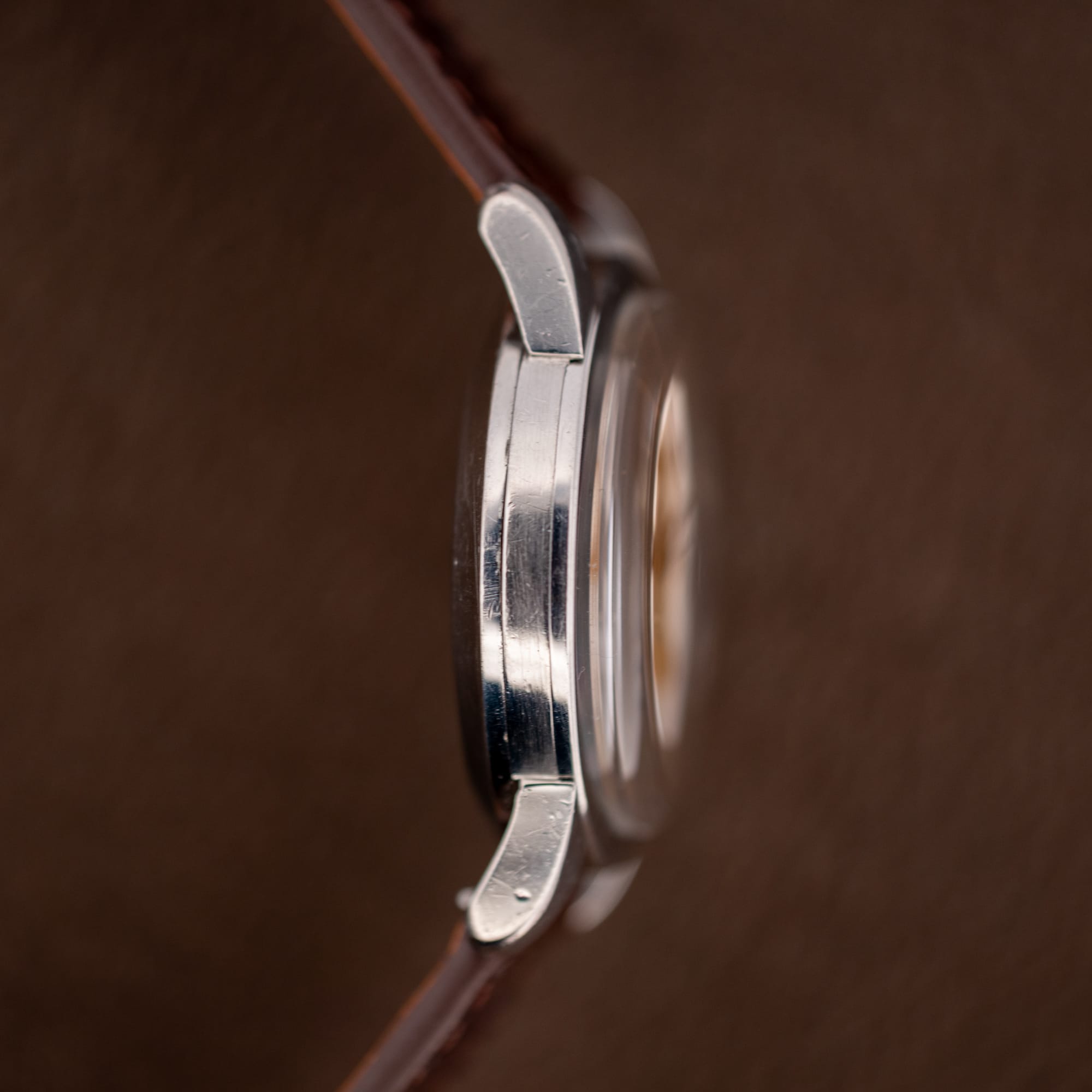
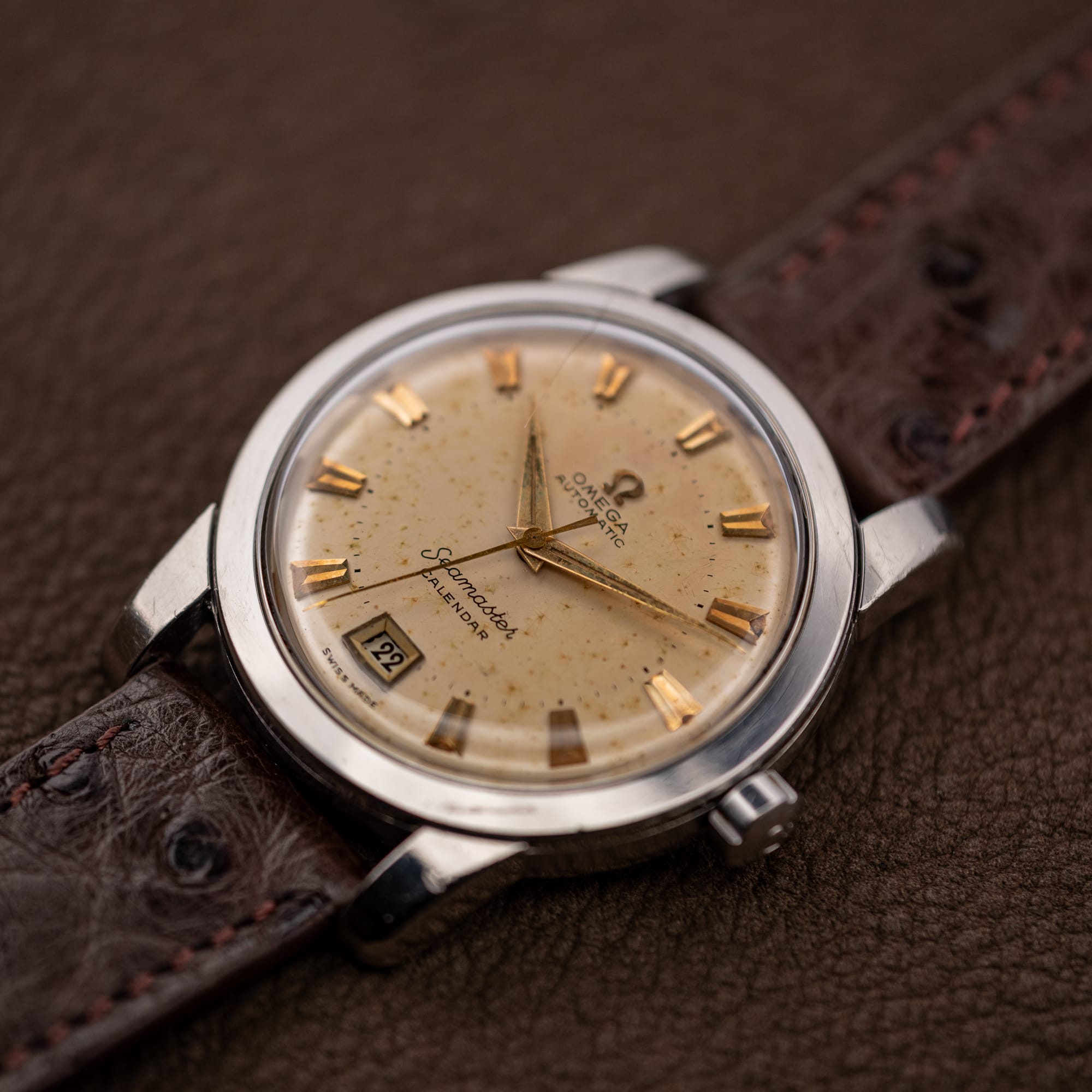
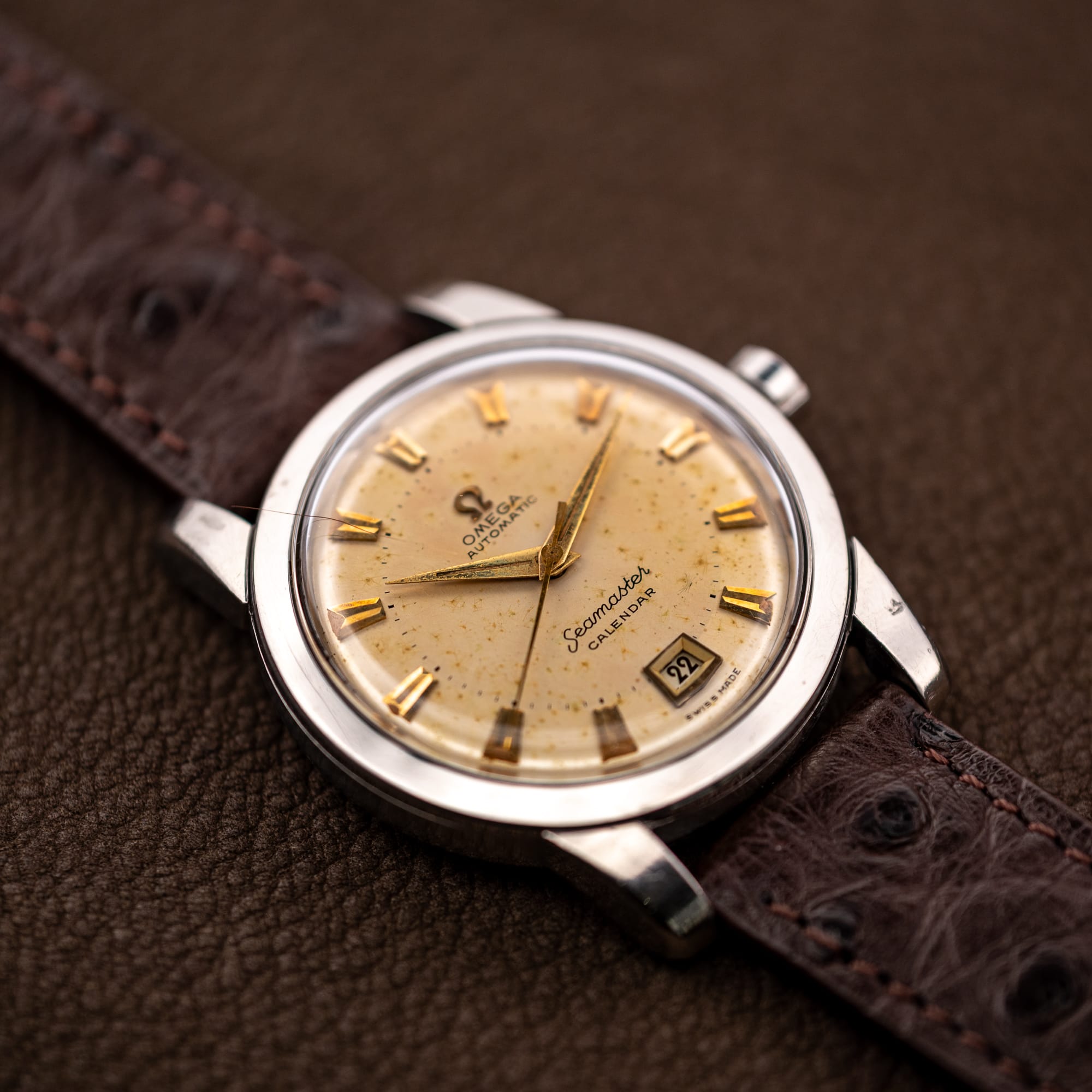
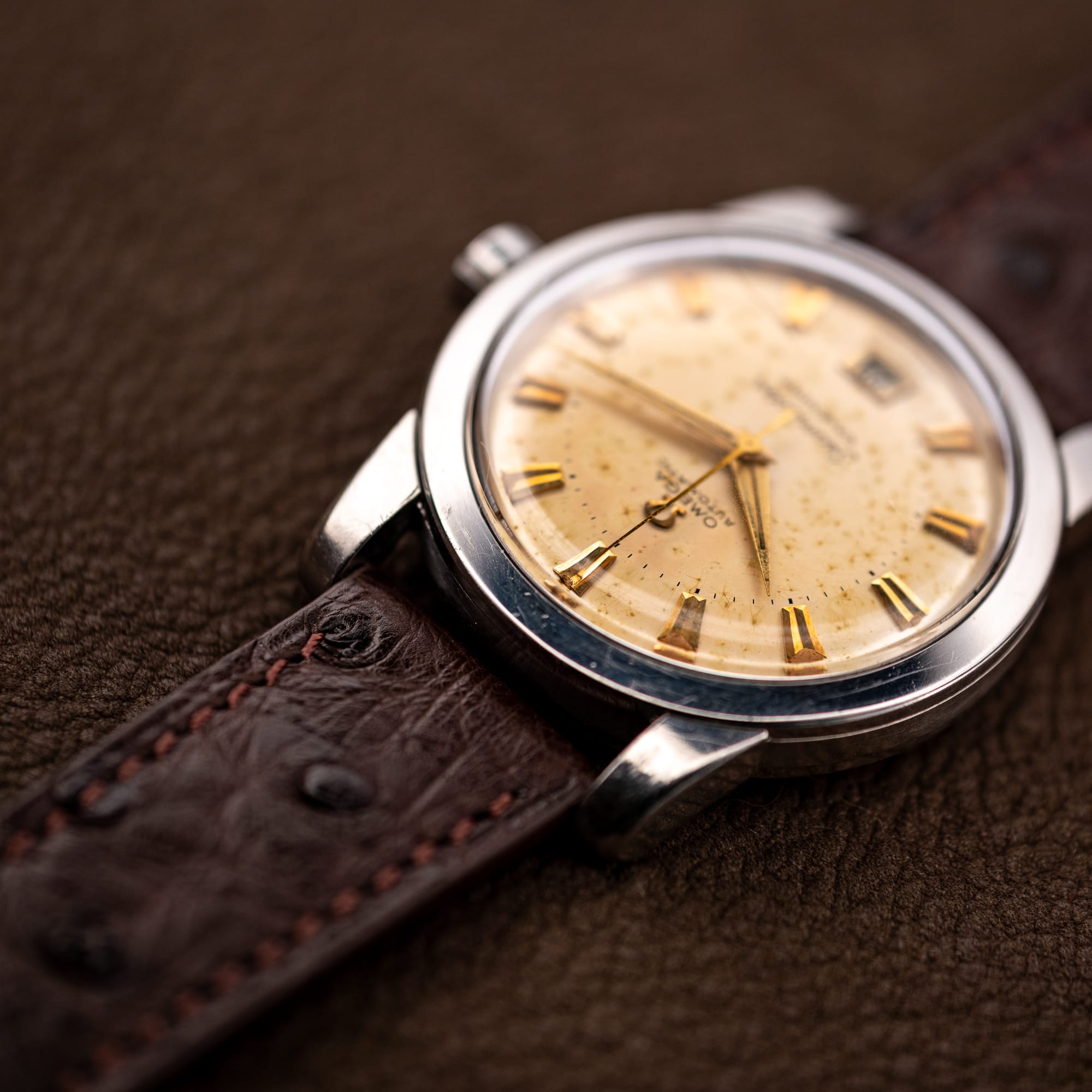
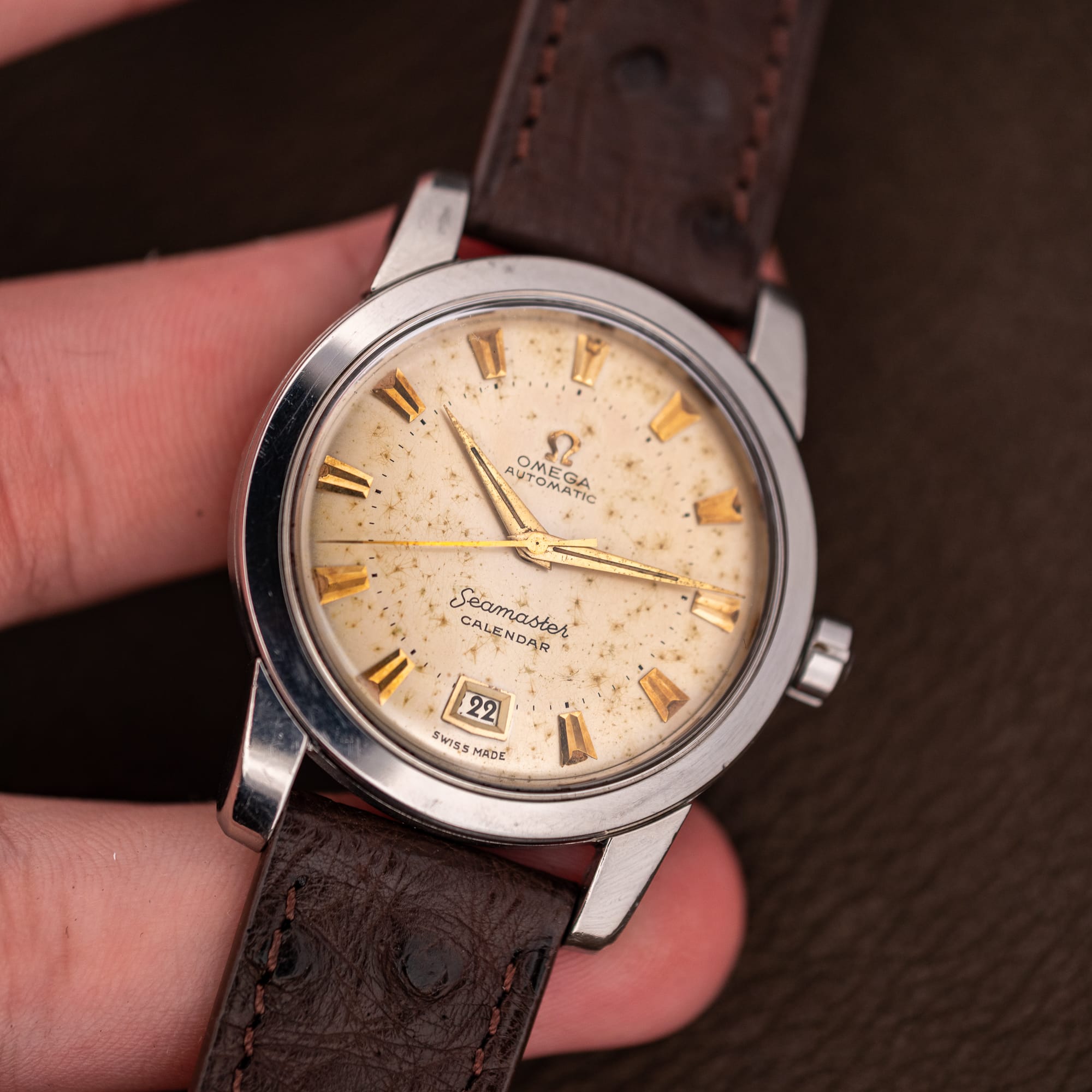
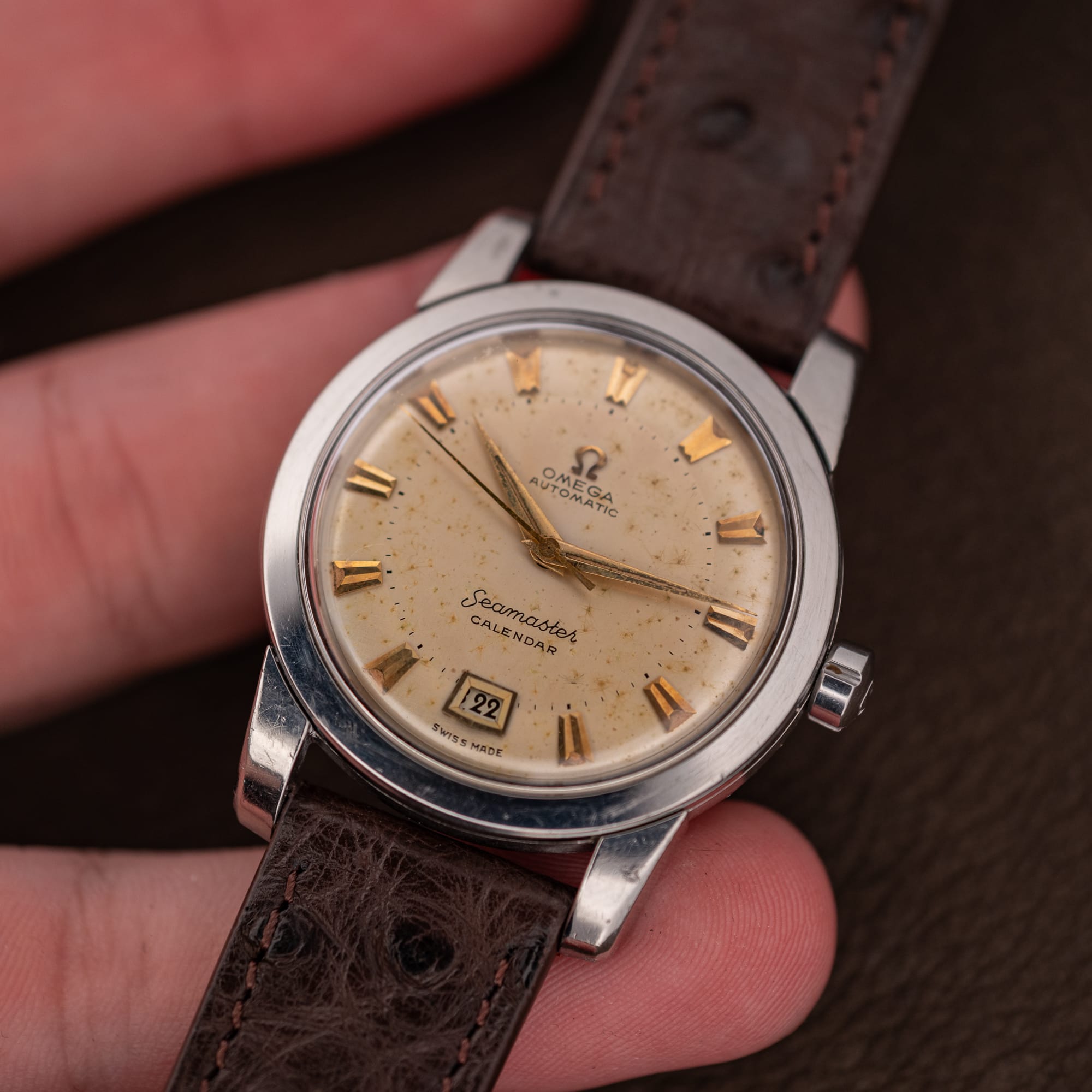
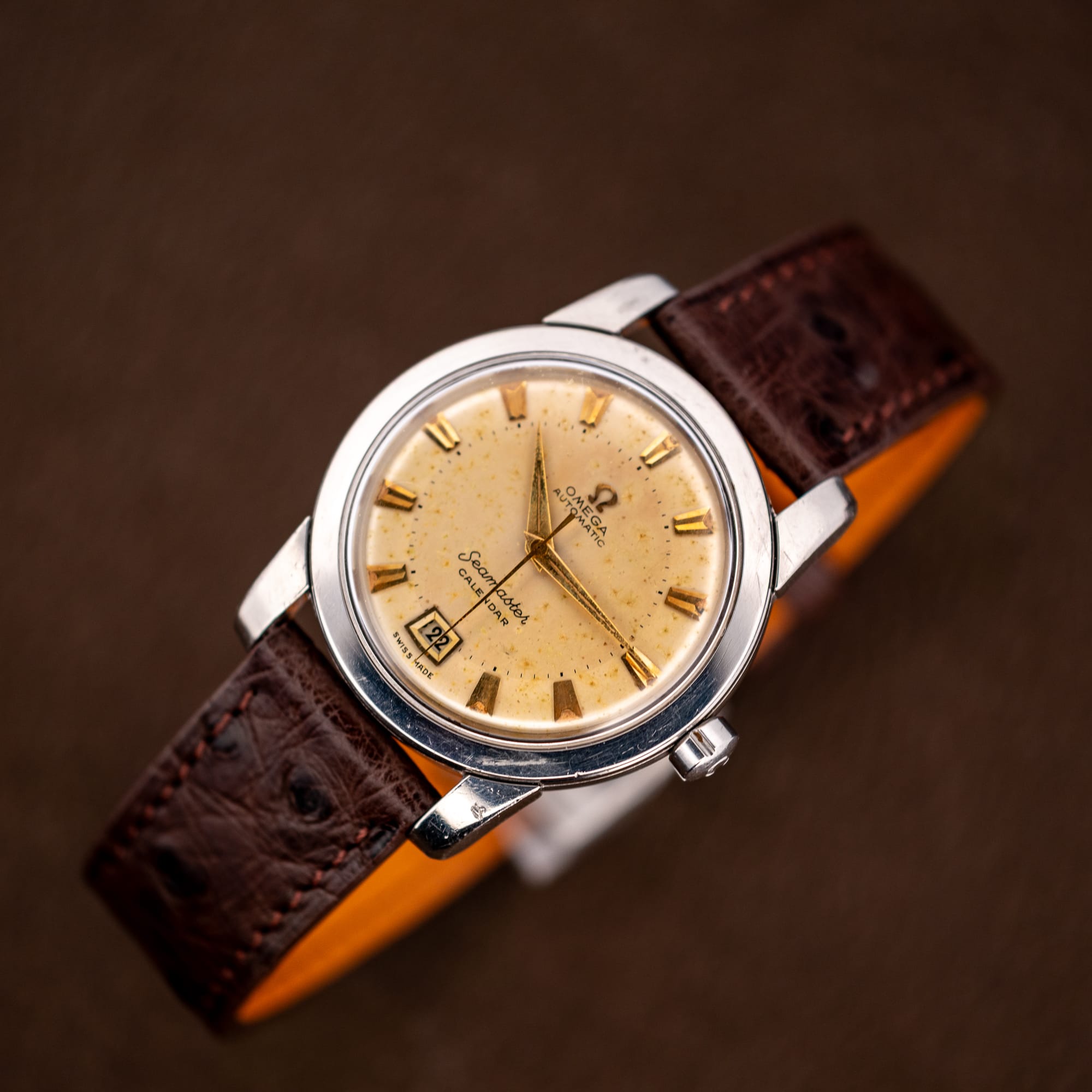
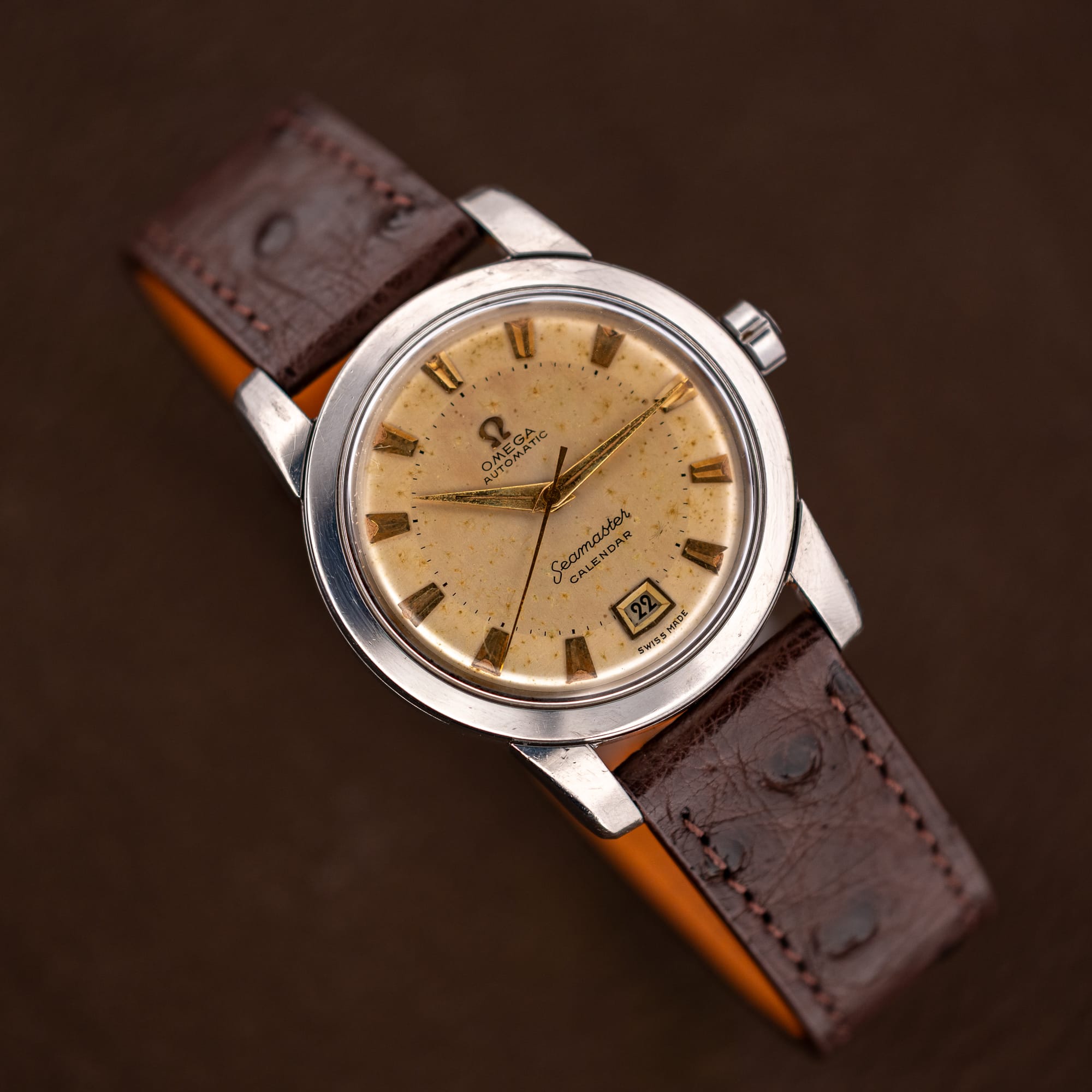
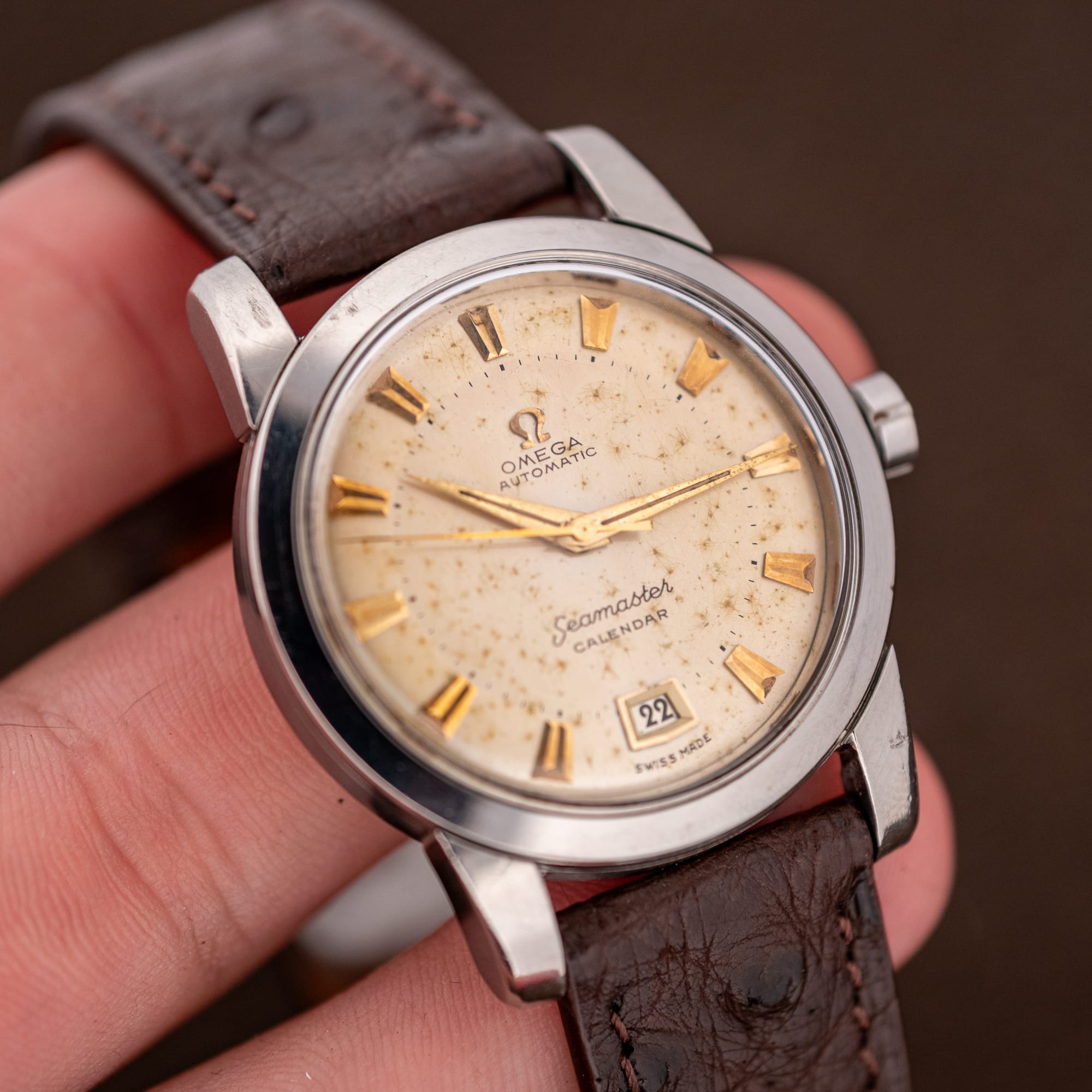
The case runs 34.5mm across, 42mm lug to lug and 18mm between them, with a smooth stepped bezel, faceted lugs that turn down hard, and a domed crystal. The crown carries the Omega symbol. That dial is why we took this Omega Seamaster Calendar: seventy years have scattered the eggshell surface with fine tan starbursts, thickest toward nine o’clock and thinning across the lower half, and we have left every one of them where it fell. The applied gold wedge markers and dauphine hands stay crisp above the freckling. The caseback is plain, polished and honestly hairlined, stamped 2757-2 SC on its inner face.
Omega’s archive dates the reference to 1954, and the movement serial, 13820671, sits at the top of the thirteen-million band that Omega ran through that same year. Serviced in-house at OTTUHR and backed by our 2-year mechanical warranty. It goes out on a chocolate brown ostrich strap and an OTTUHR-signed buckle, sized to wrists up to 8 inches. A bumper is one of the few watches that reports back, and this one has been knocking since Eisenhower’s first term.