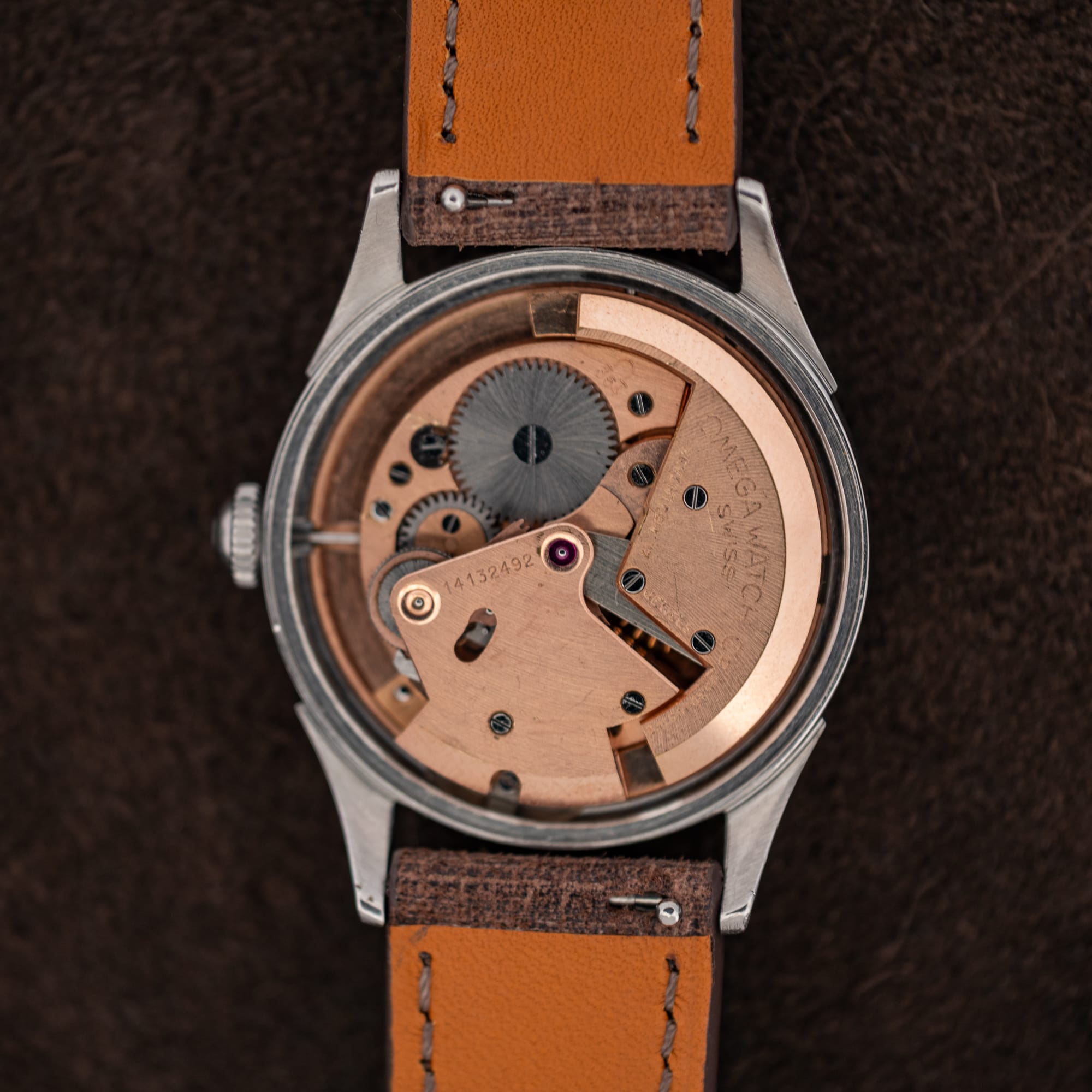
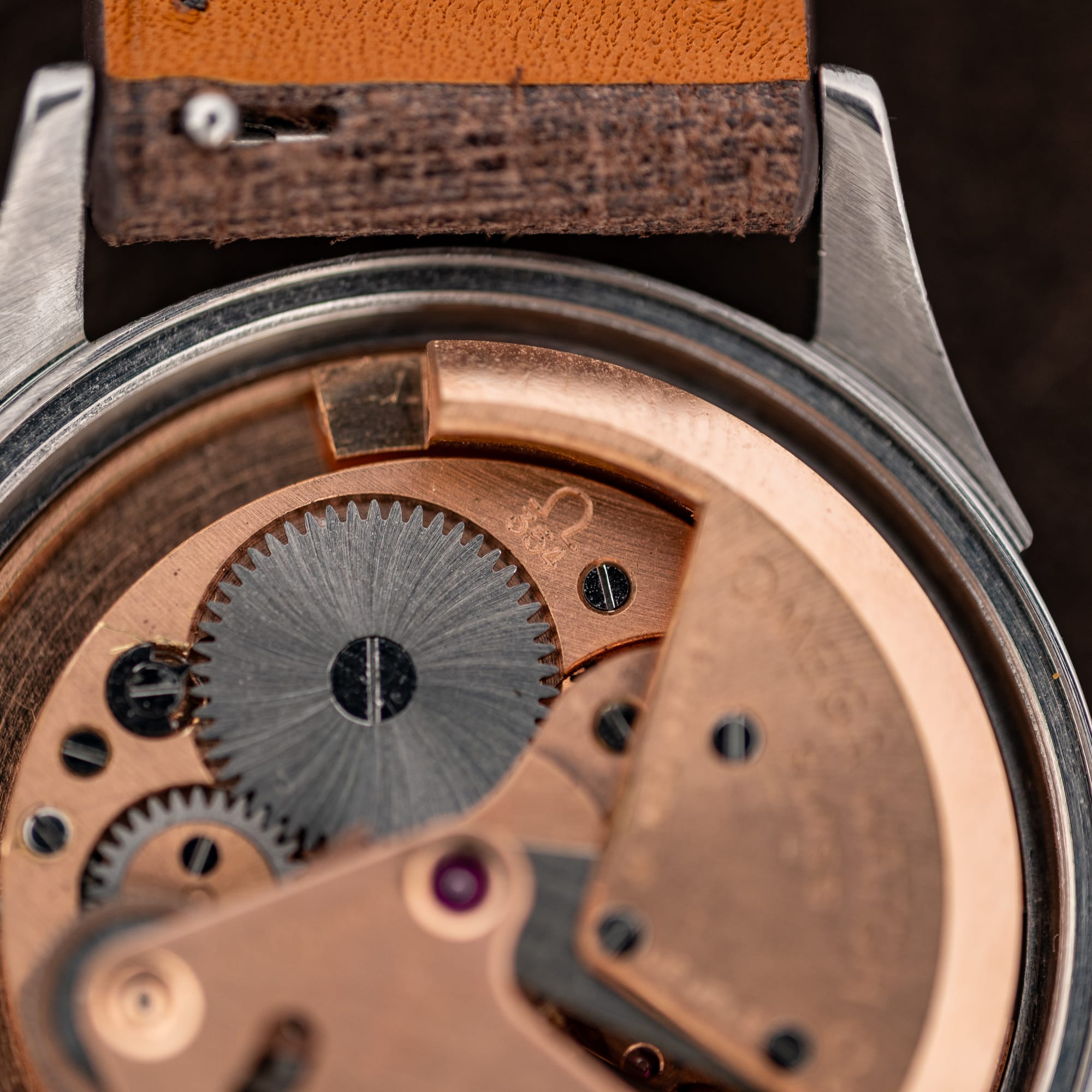
Modern self-winding watches wind in silence. This Omega Seamaster bumper from the early 1950s does not. Its caliber 354 lets the winding weight travel only part of the way around the movement, and at each end of that arc the weight meets a small spring buffer and bounces back. On the wrist the rebound can come through as a soft, muffled knock, and that bump is where these movements got their nickname. The weight itself is signed OMEGA WATCH Co, and the caliber number is struck beside a large toothed wheel.
The knock has a patent behind it. Rolex held the rights to a winding weight free to spin a full 360 degrees, so Omega, Jaeger-LeCoultre and other makers built their automatics around a limited swing instead. Omega kept refining its version. The 354 is a redesign of the earlier 351, produced from 1952 to 1955, the closing years of the Omega bumper before full rotors took over in the mid-1950s.
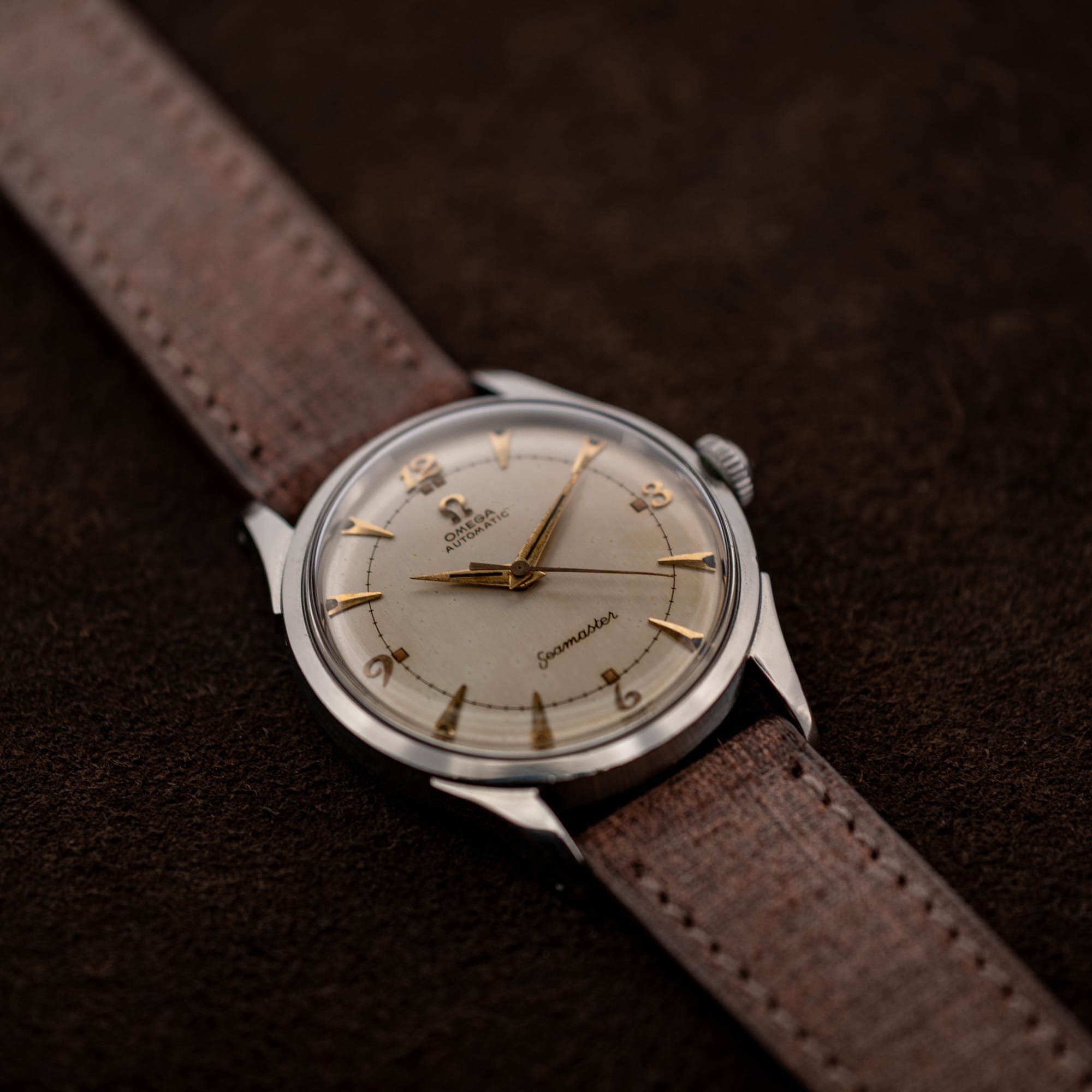
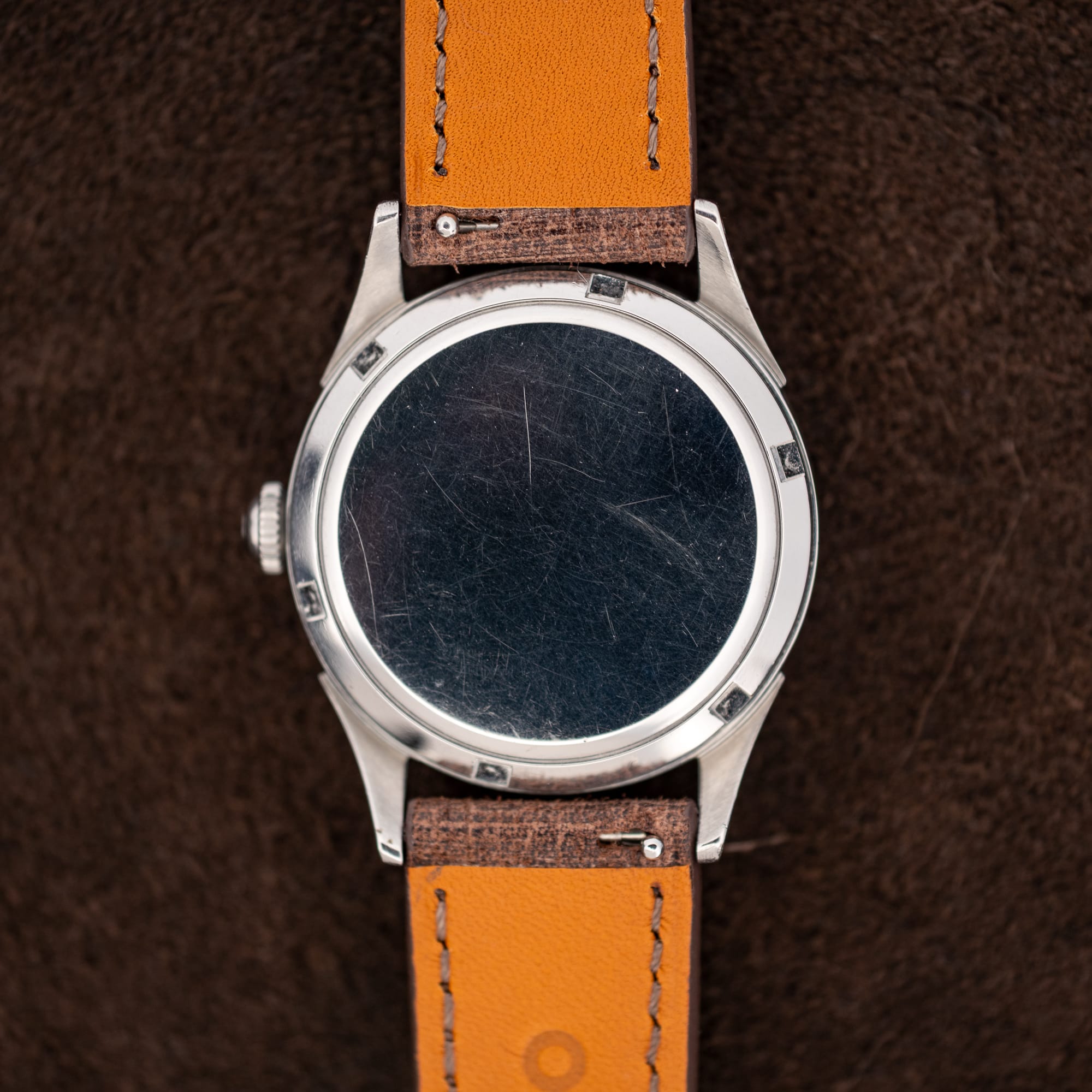
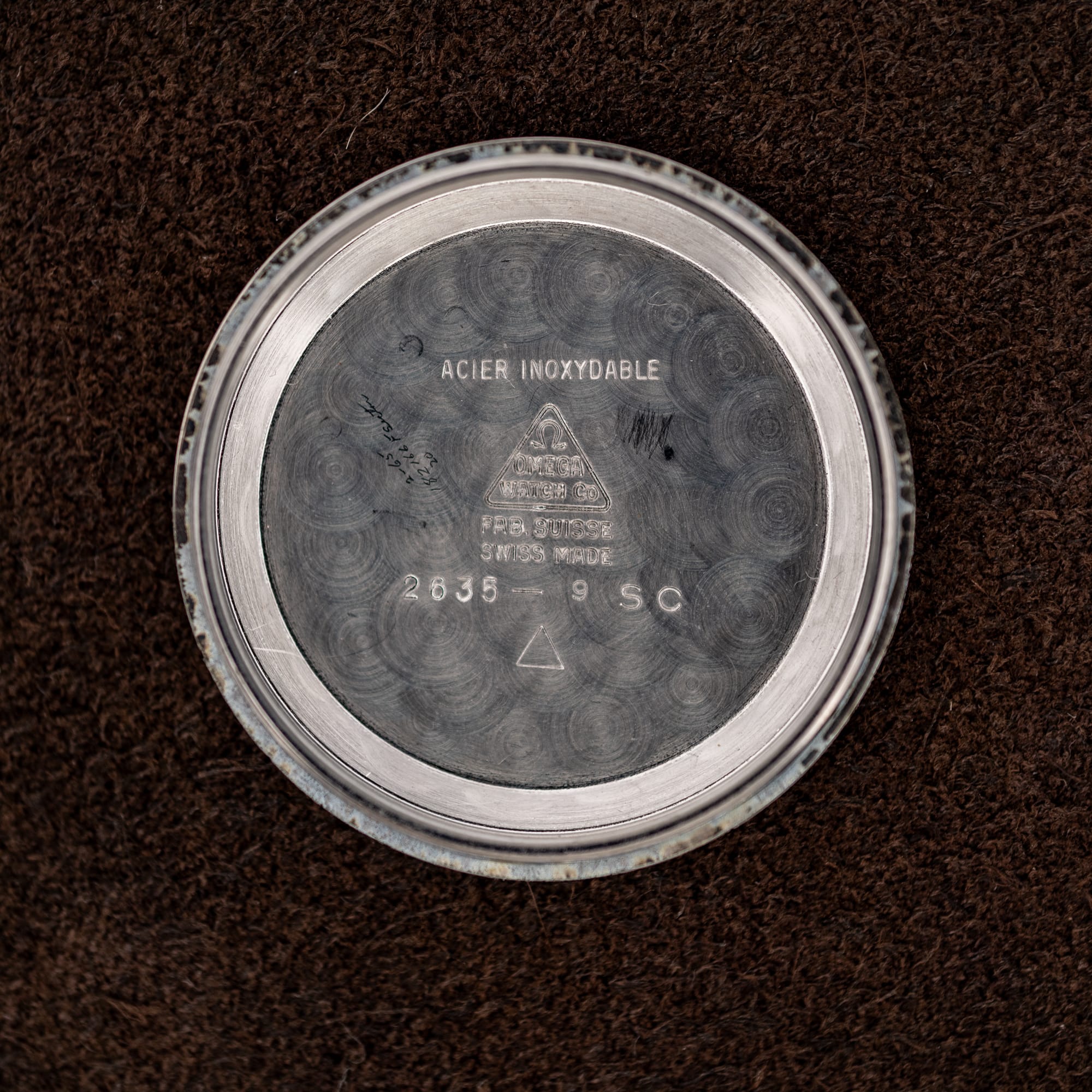
Inside the caseback, under Omega’s triangular logo, the reference is struck as 2635 – 9 SC. Those two letters are French shorthand for seconde centrale: the seconds hand is mounted at the center rather than in a small subdial near six. Here it is a thin sweep hand running over the whole face. Omega listed the CK 2635 family from 1949 to 1954 with a screw-in stainless steel case, and this back has six notches around its edge for the opening tool.
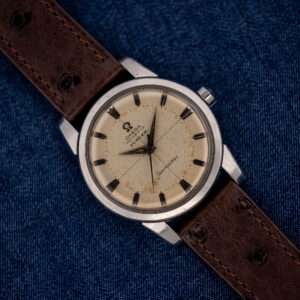
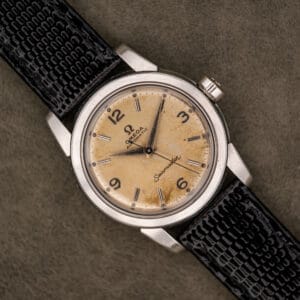
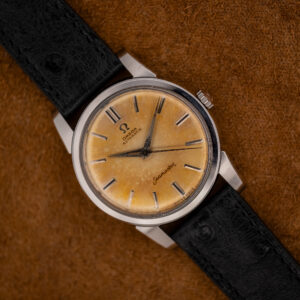
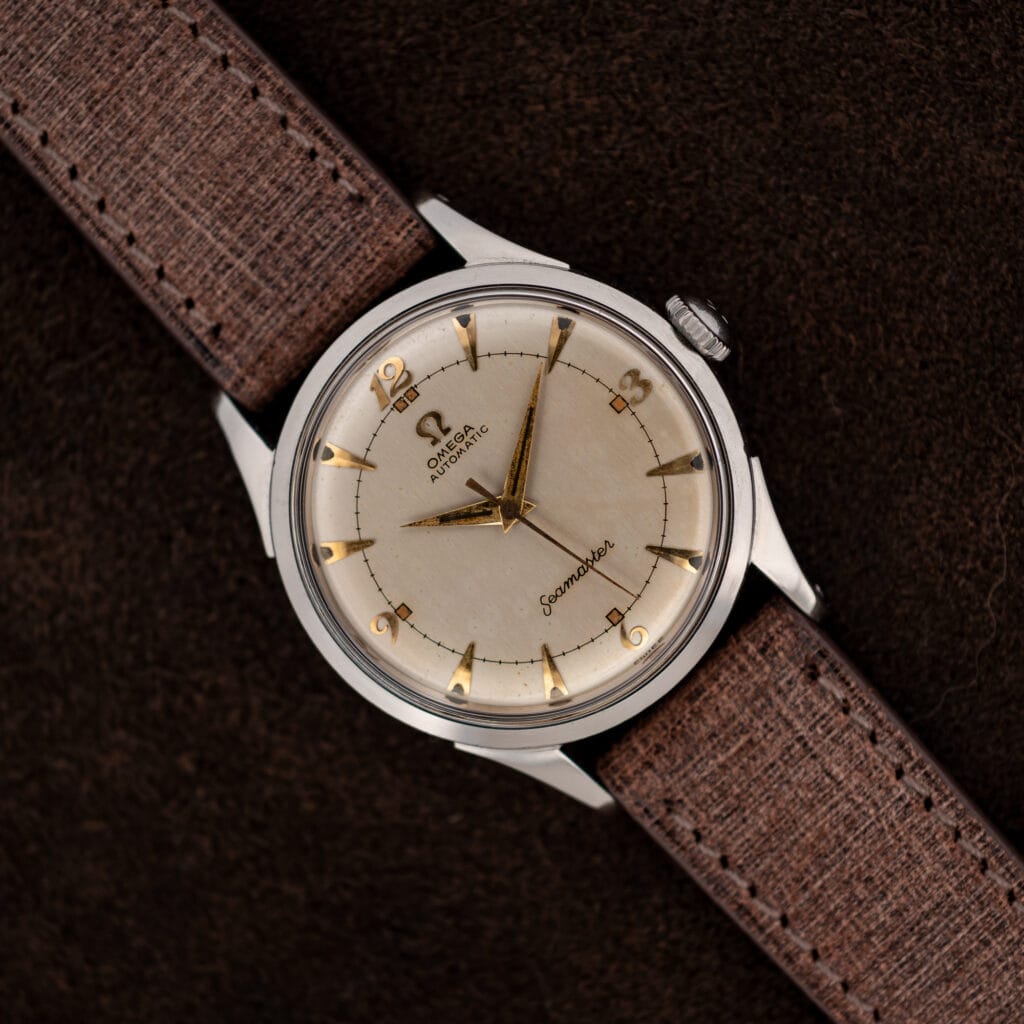
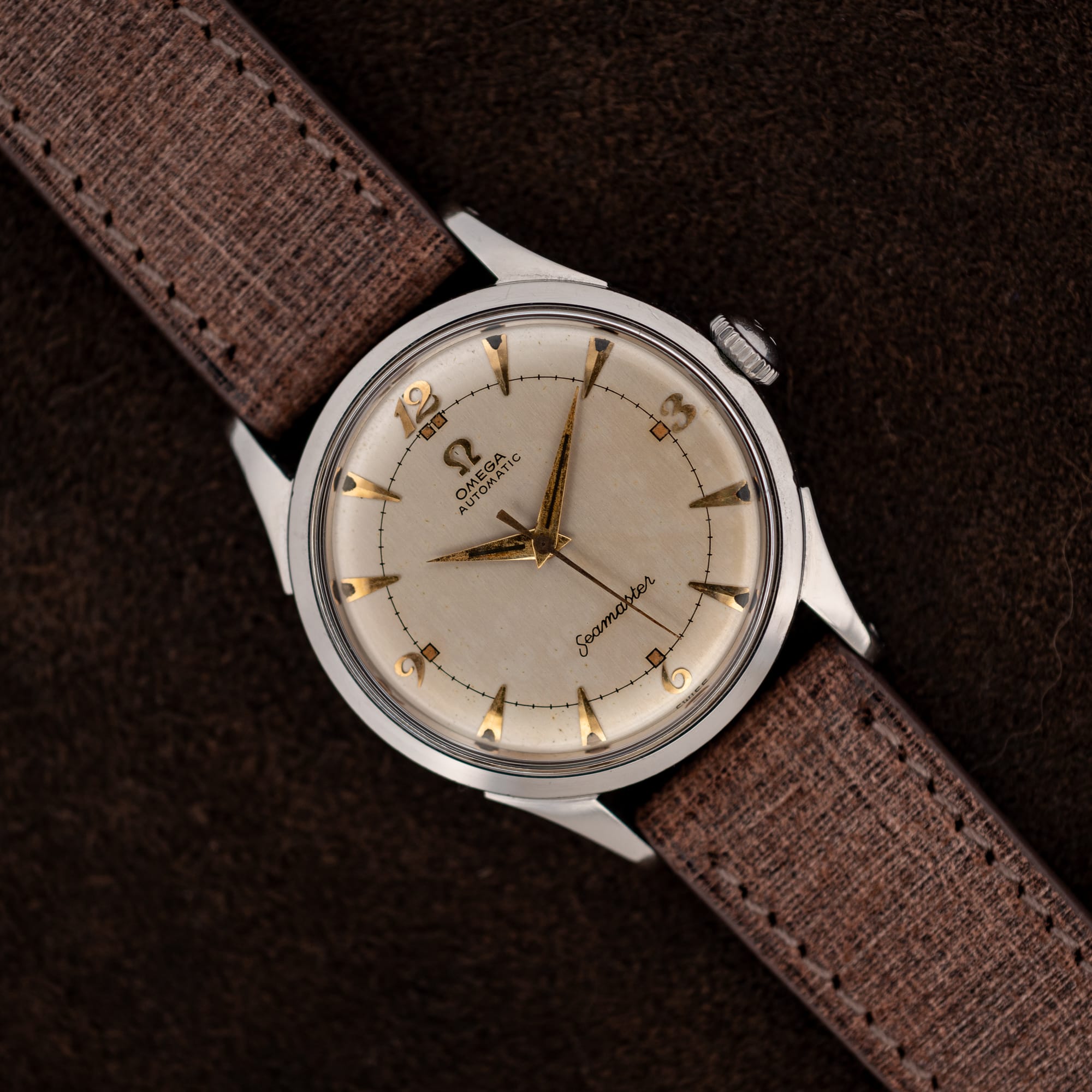
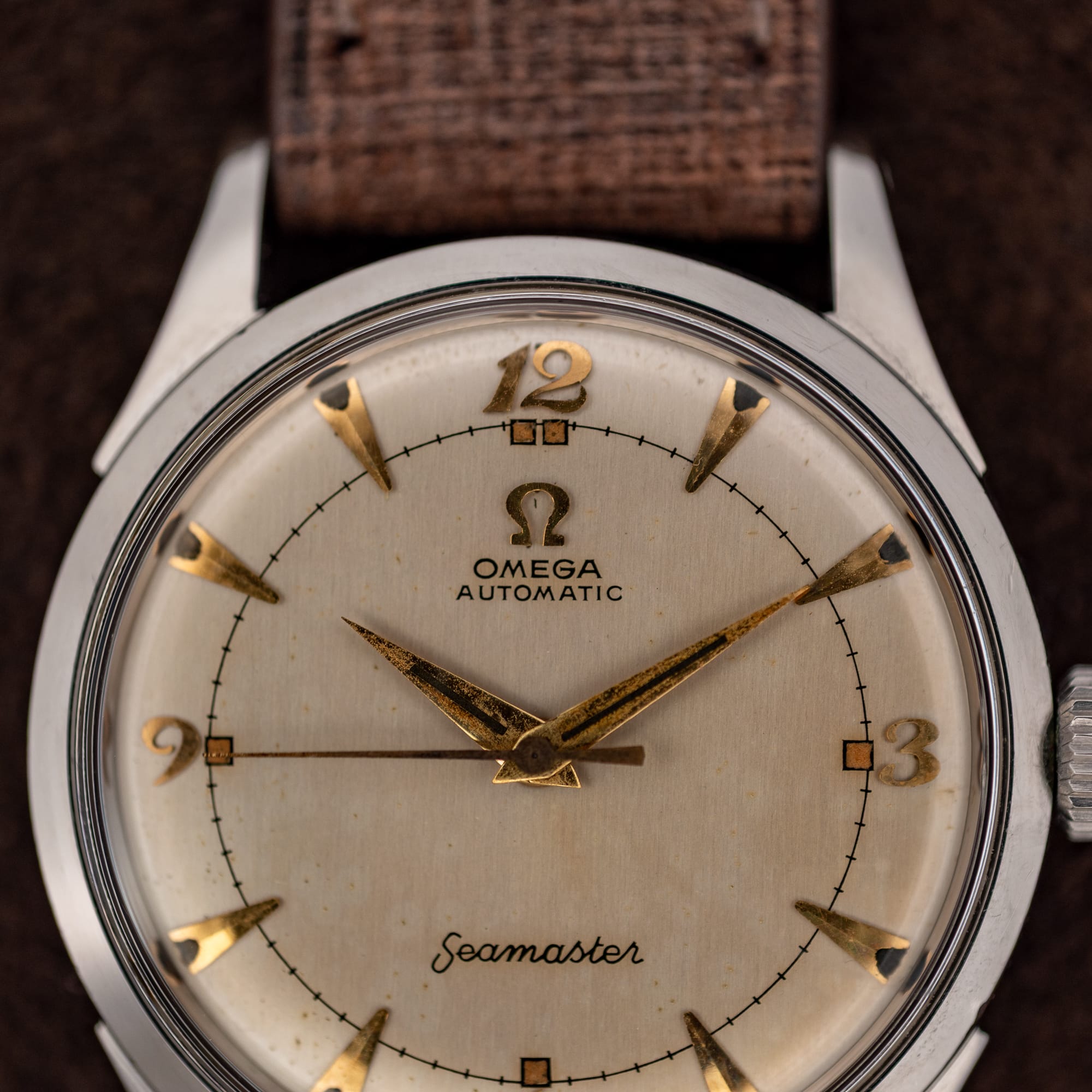
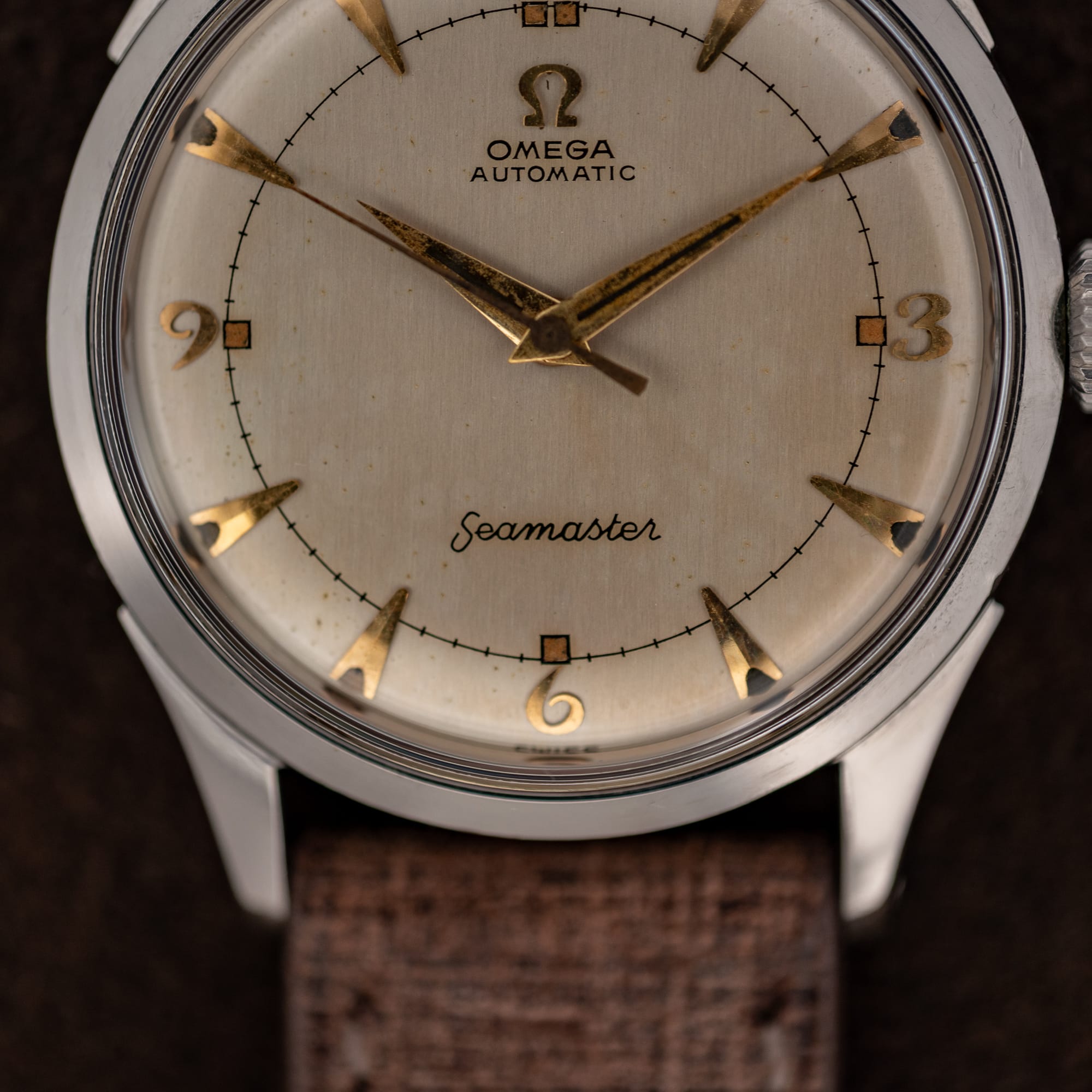
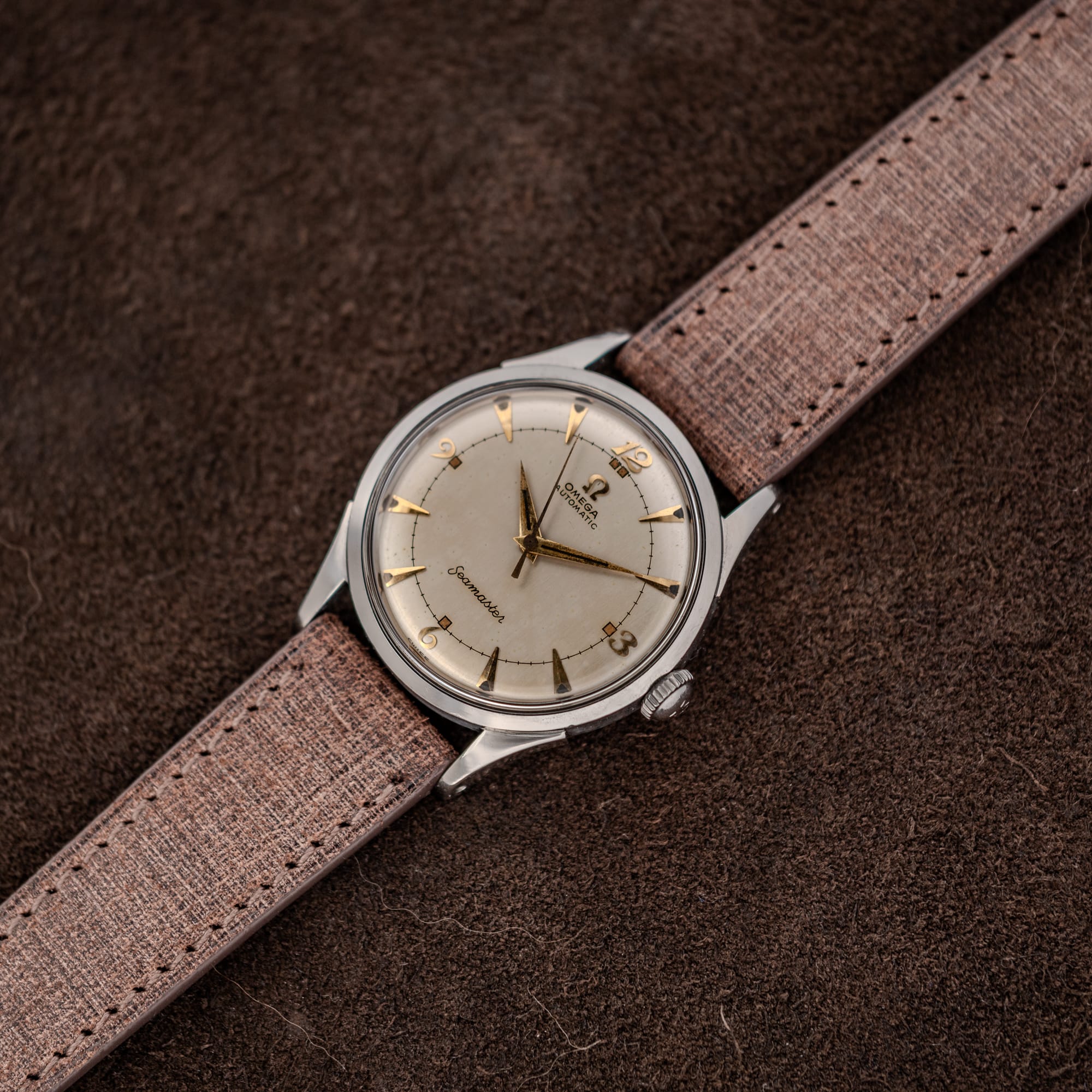
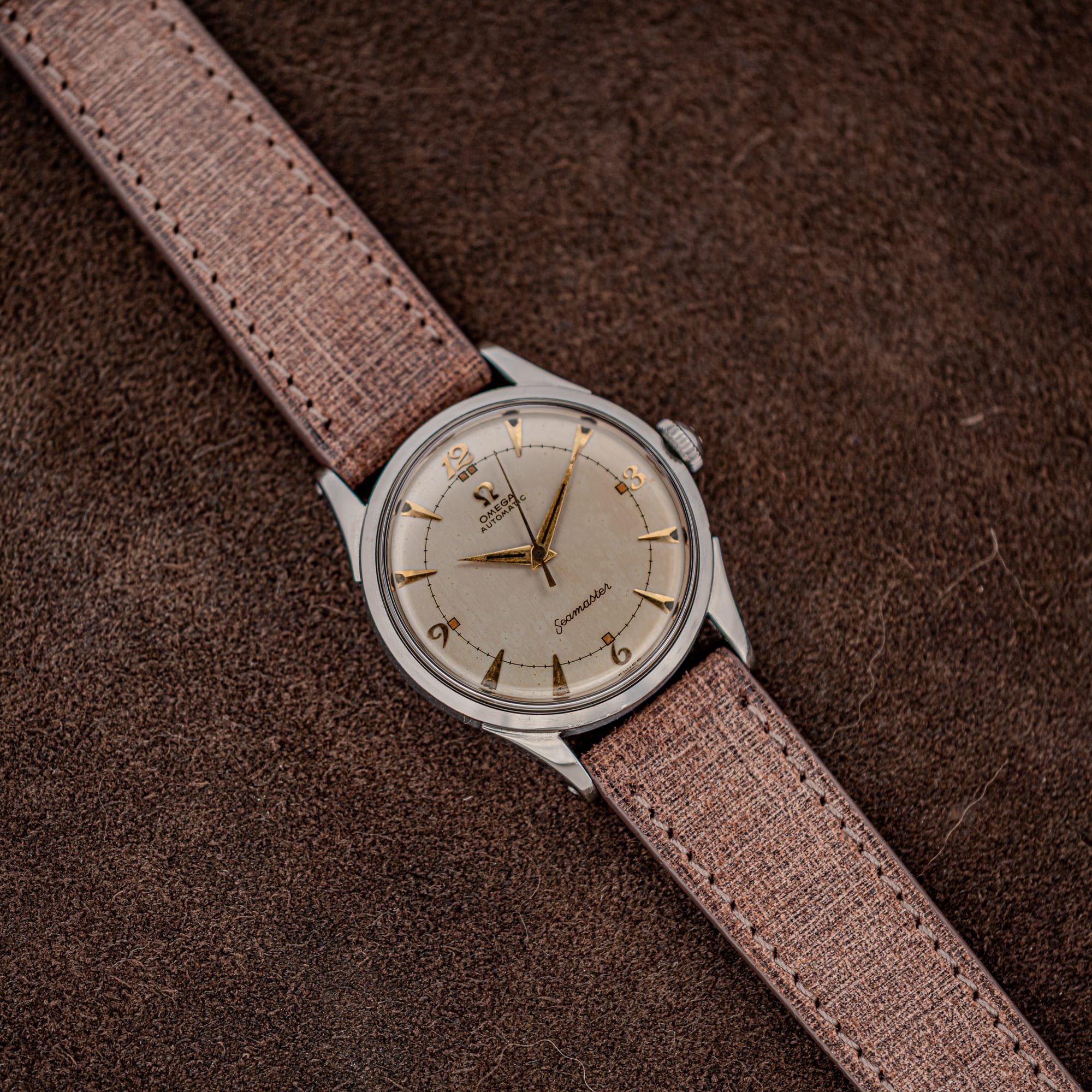
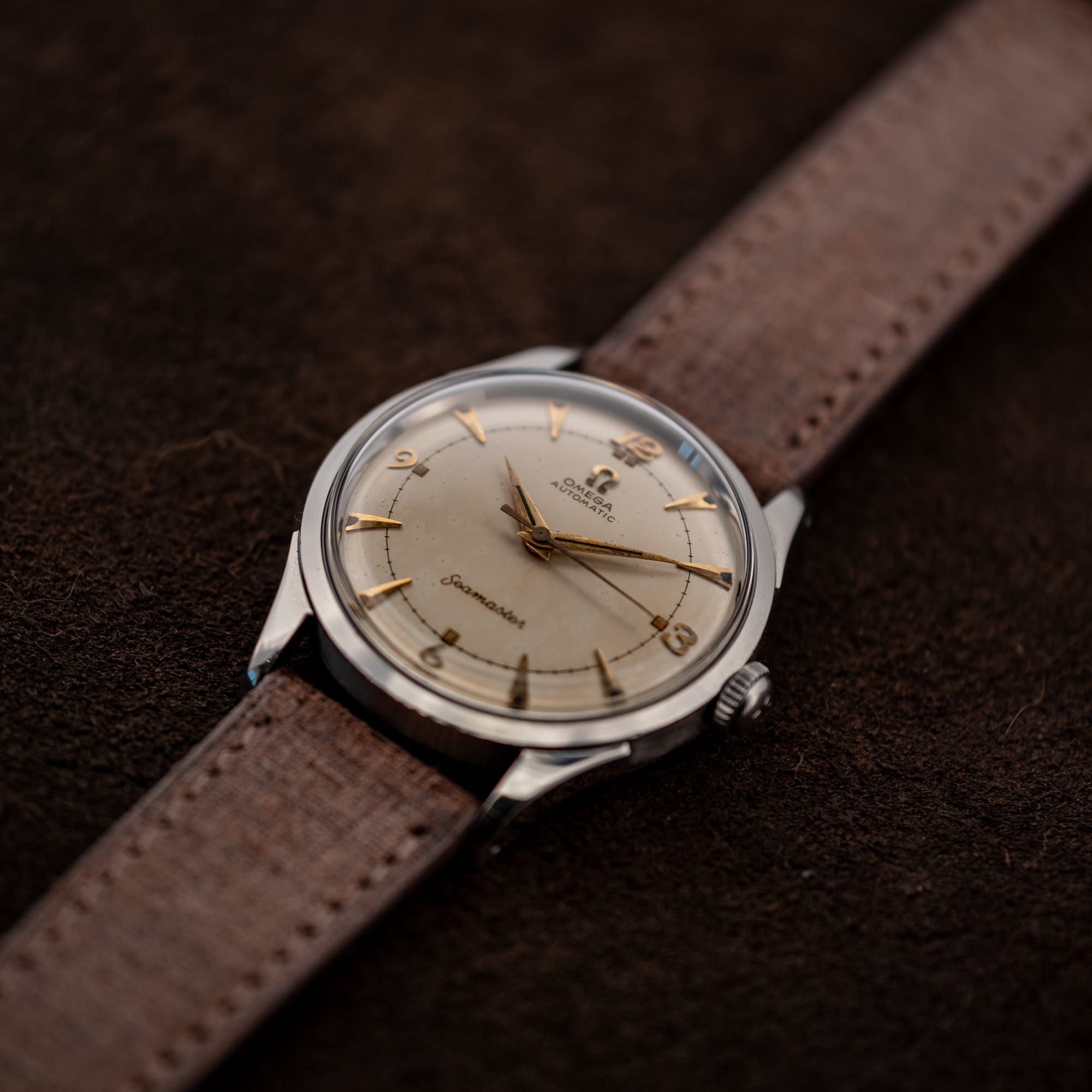
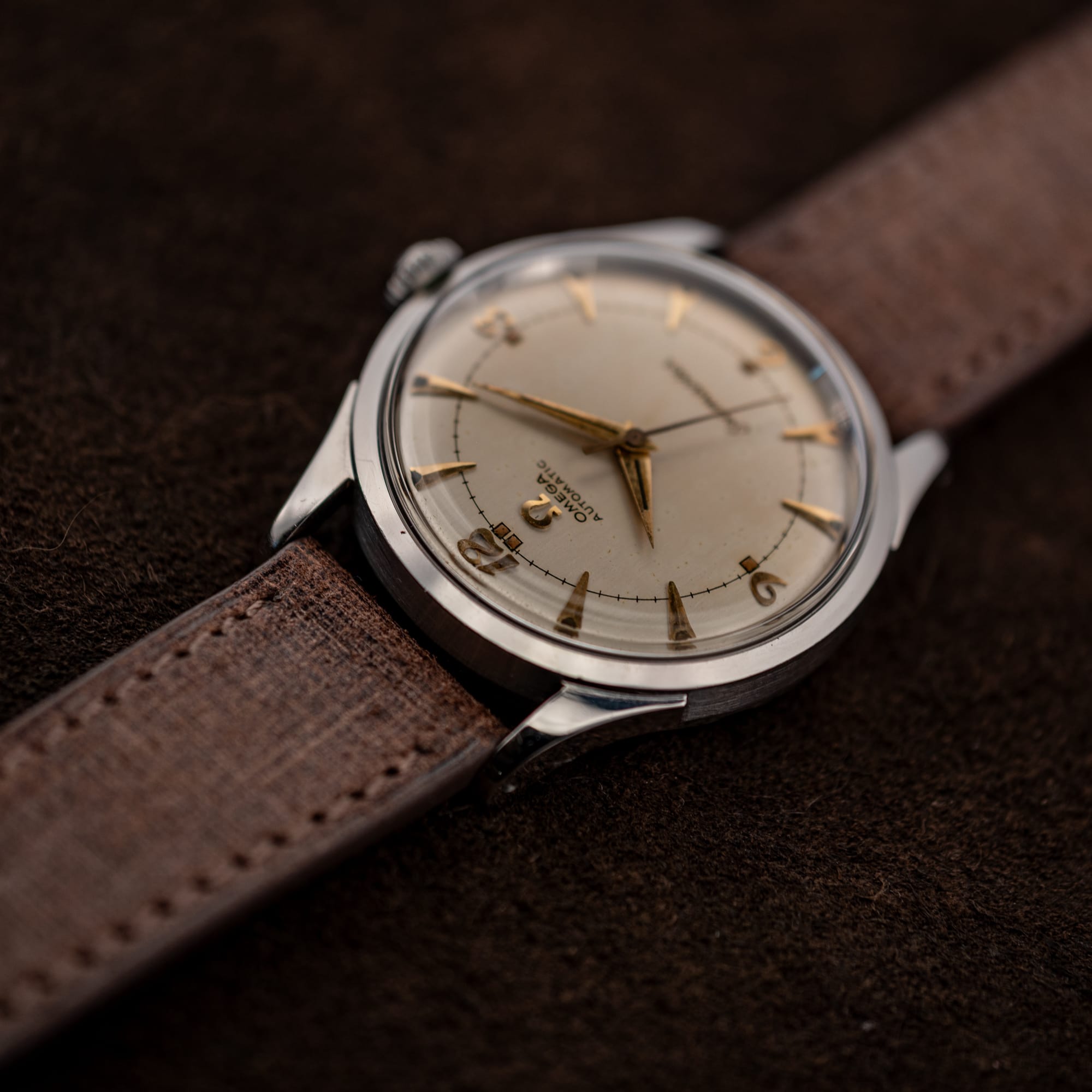
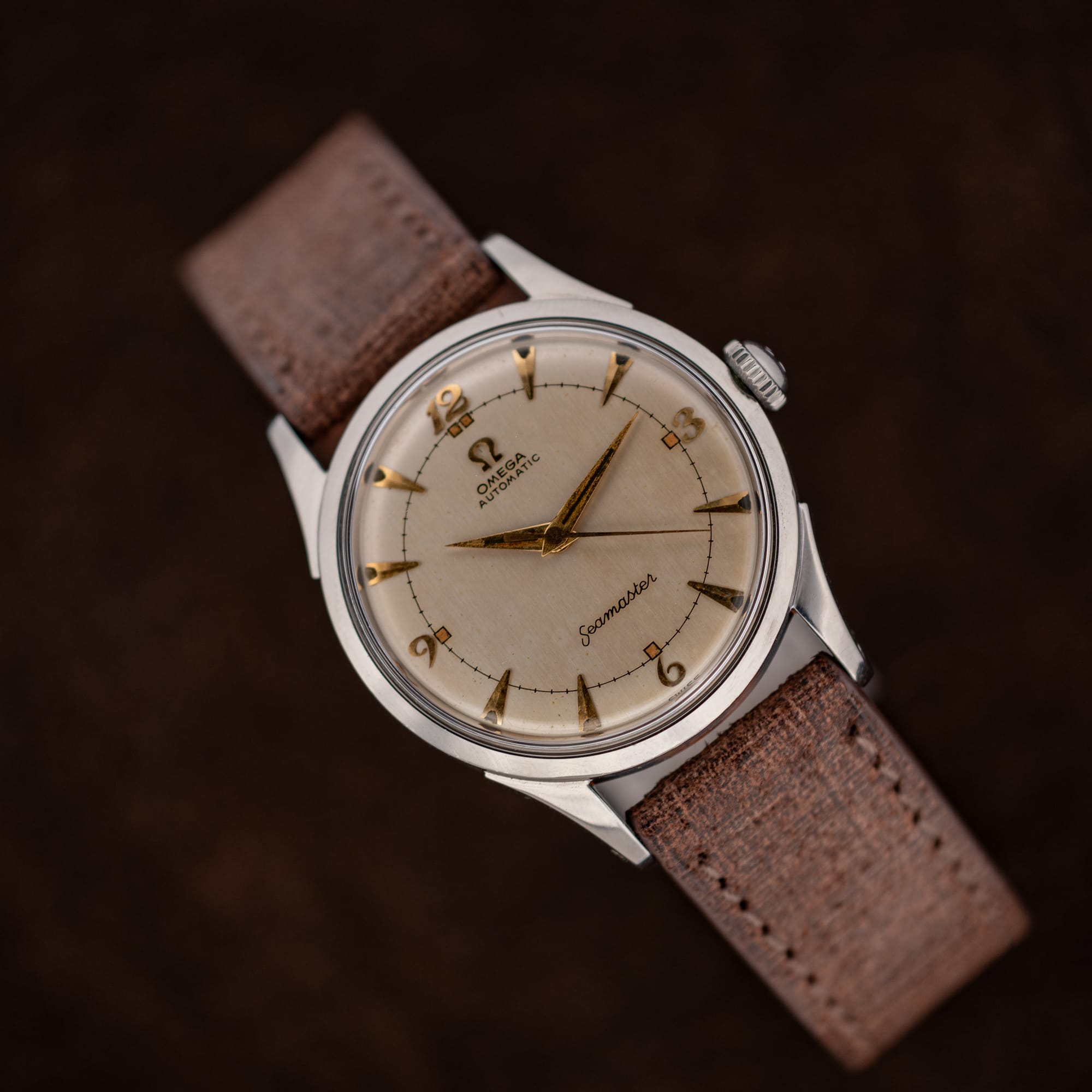
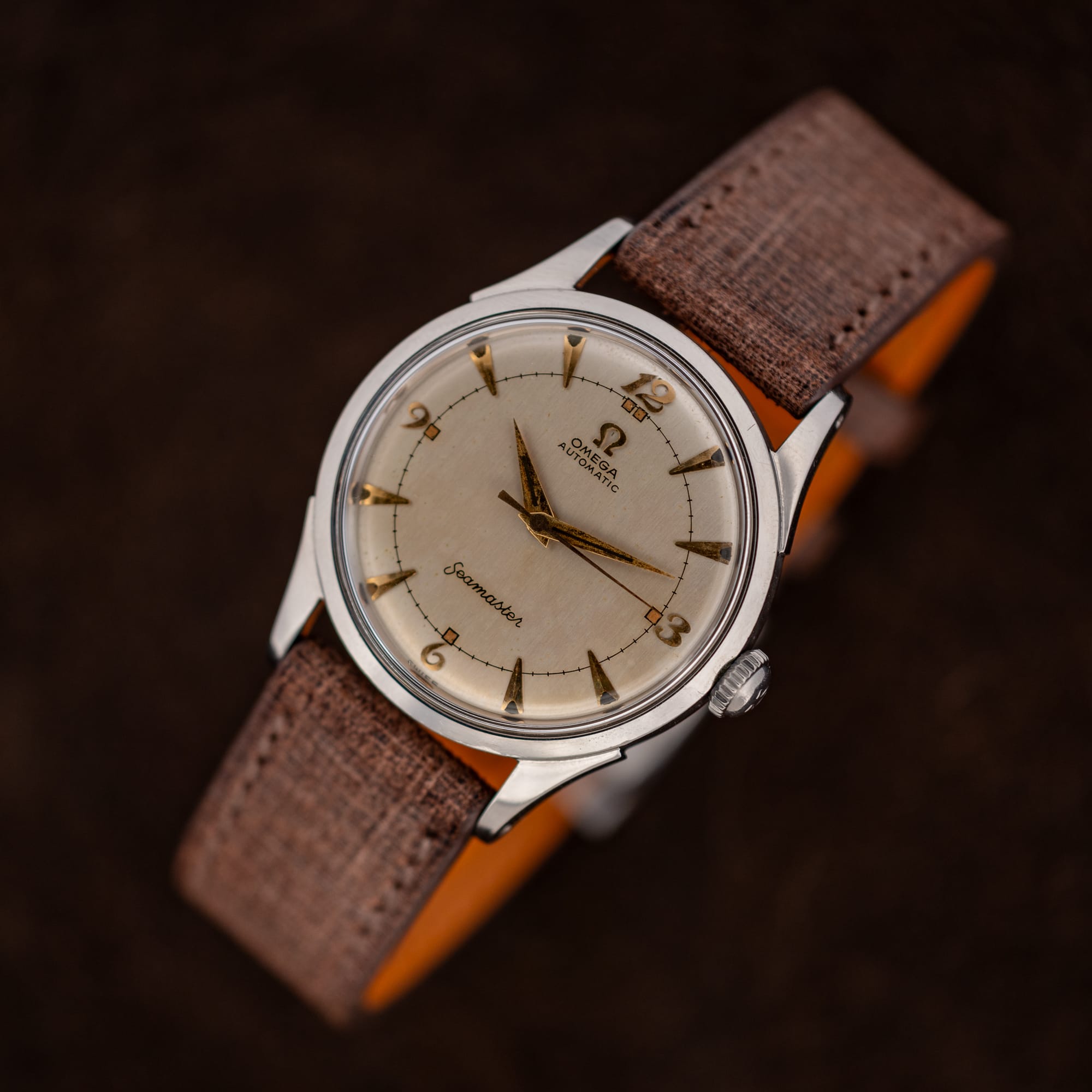
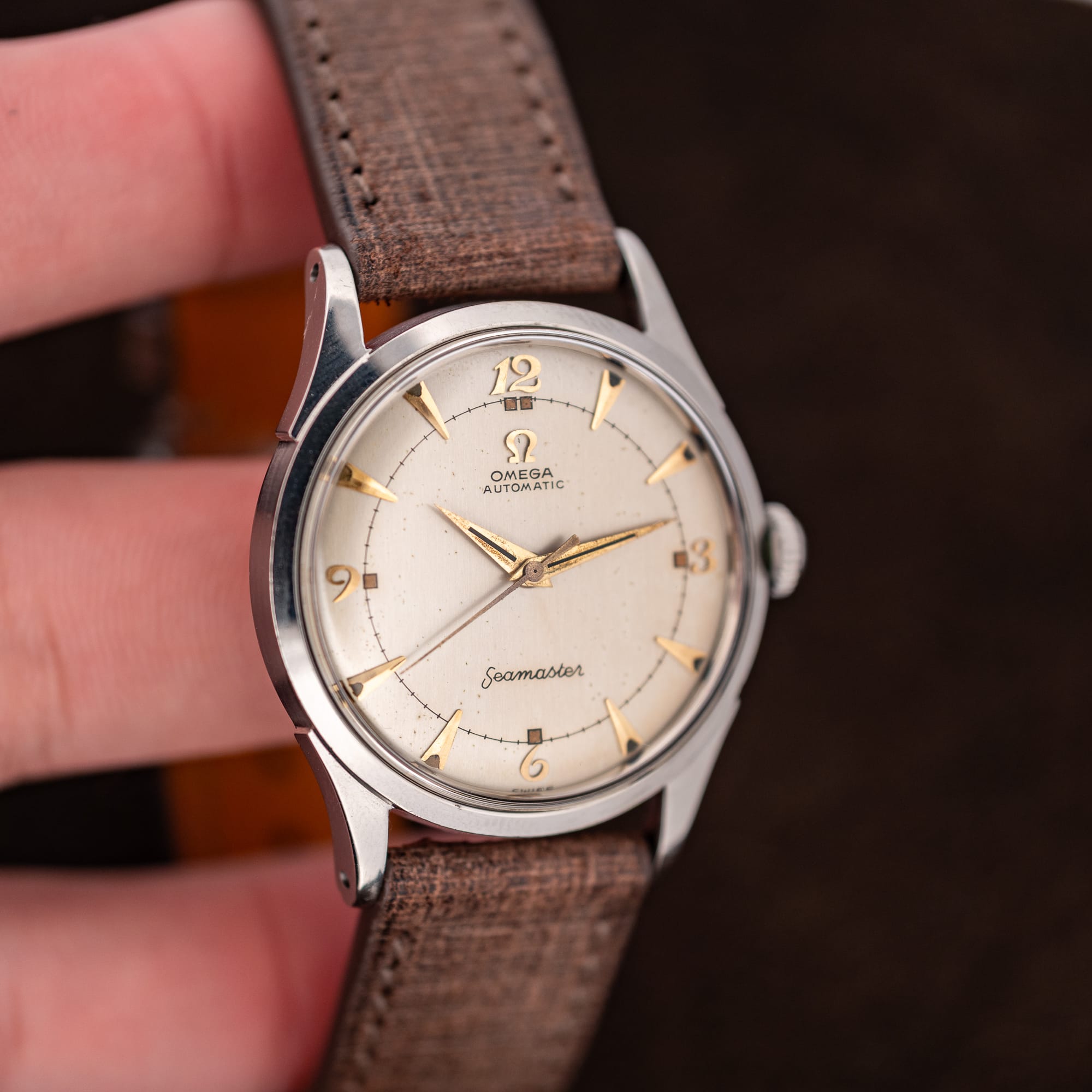
The dial is eggshell. Applied gold-tone numerals stand only at 12, 3, 6 and 9, with tapered triangular markers between them, dauphine hands, and an applied Omega emblem above OMEGA AUTOMATIC and the Seamaster script. A fine black inner minute track carries small square plots at each quarter and a doubled plot under the twelve. The dial needs very little: no date window, only four numerals and a sweep hand carrying the whole layout. Age shows as fine speckling on the dial and a darker tone on the hands.
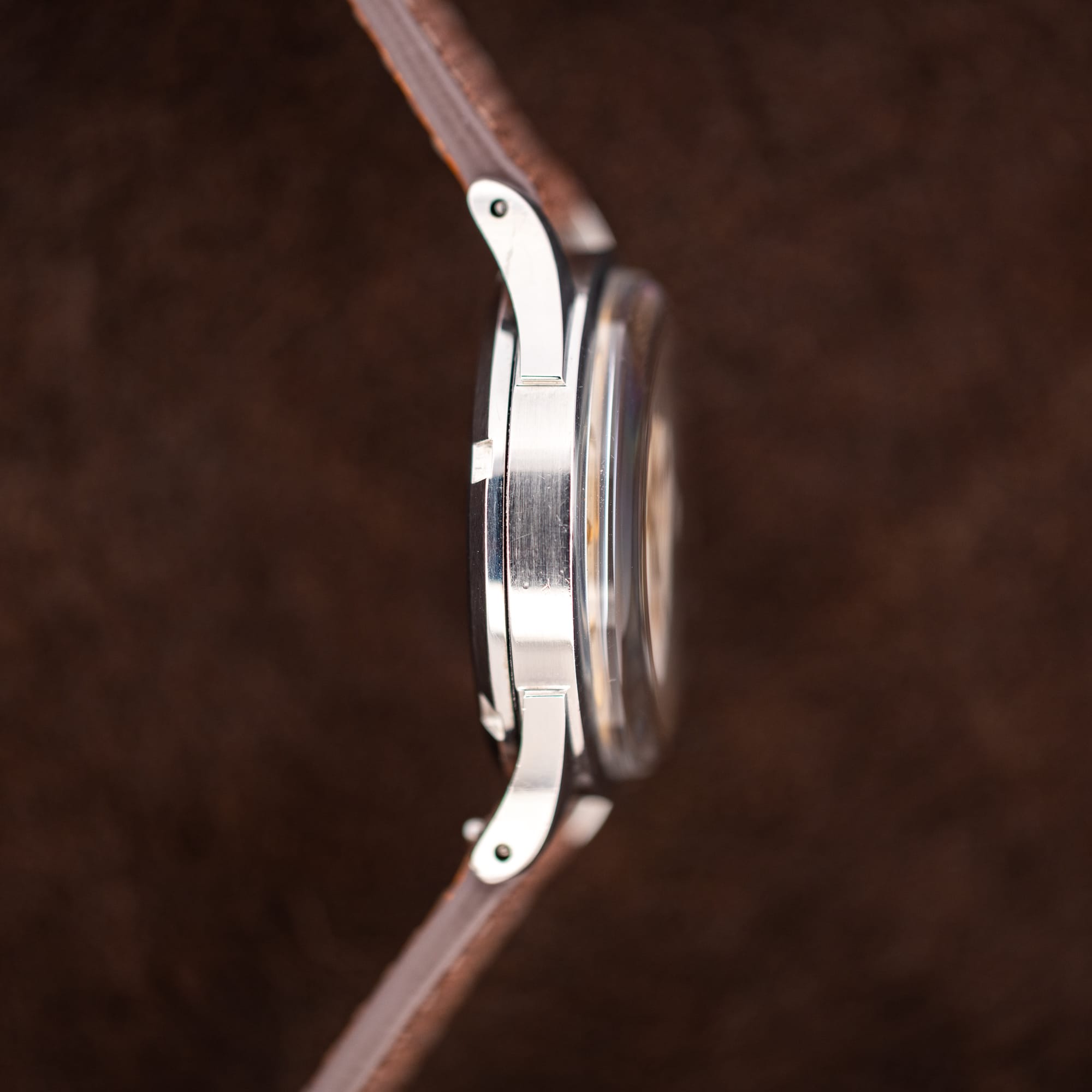
The Seamaster name was still new then. Omega launched the line in 1948 for civilian wrists, building on what the company had learned supplying rugged, water-resistant watches to British forces during the Second World War. The 2635 belongs to that early civilian run, in a compact case: 33mm across, roughly 41mm from lug to lug, with a domed crystal rising above a smooth bezel.
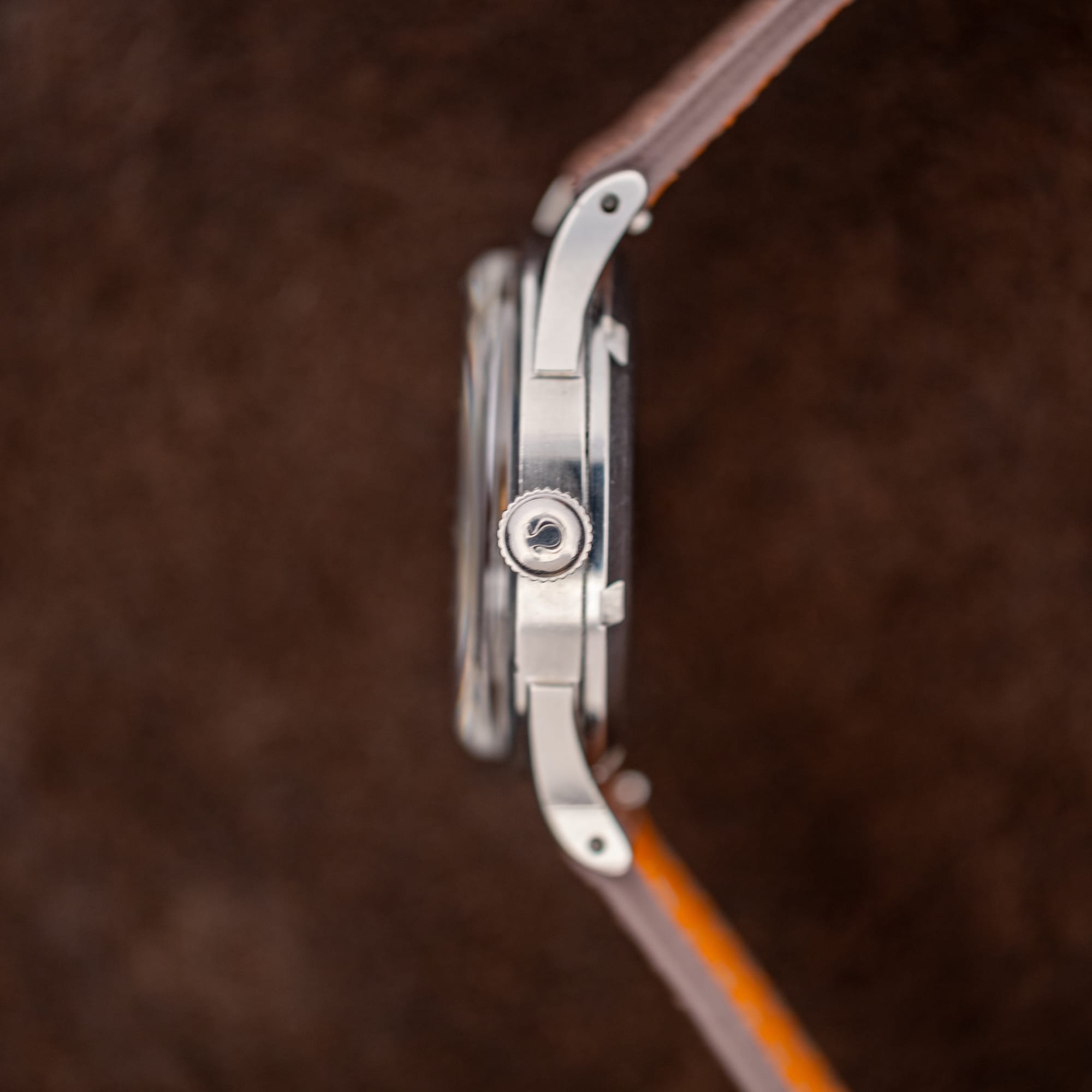
The lugs are slim, tapered and drilled straight through, so each spring bar can be pushed out from the side with a pin rather than pried loose from underneath. The strap is a stitched brown Babele. The ridged crown carries the Omega emblem.