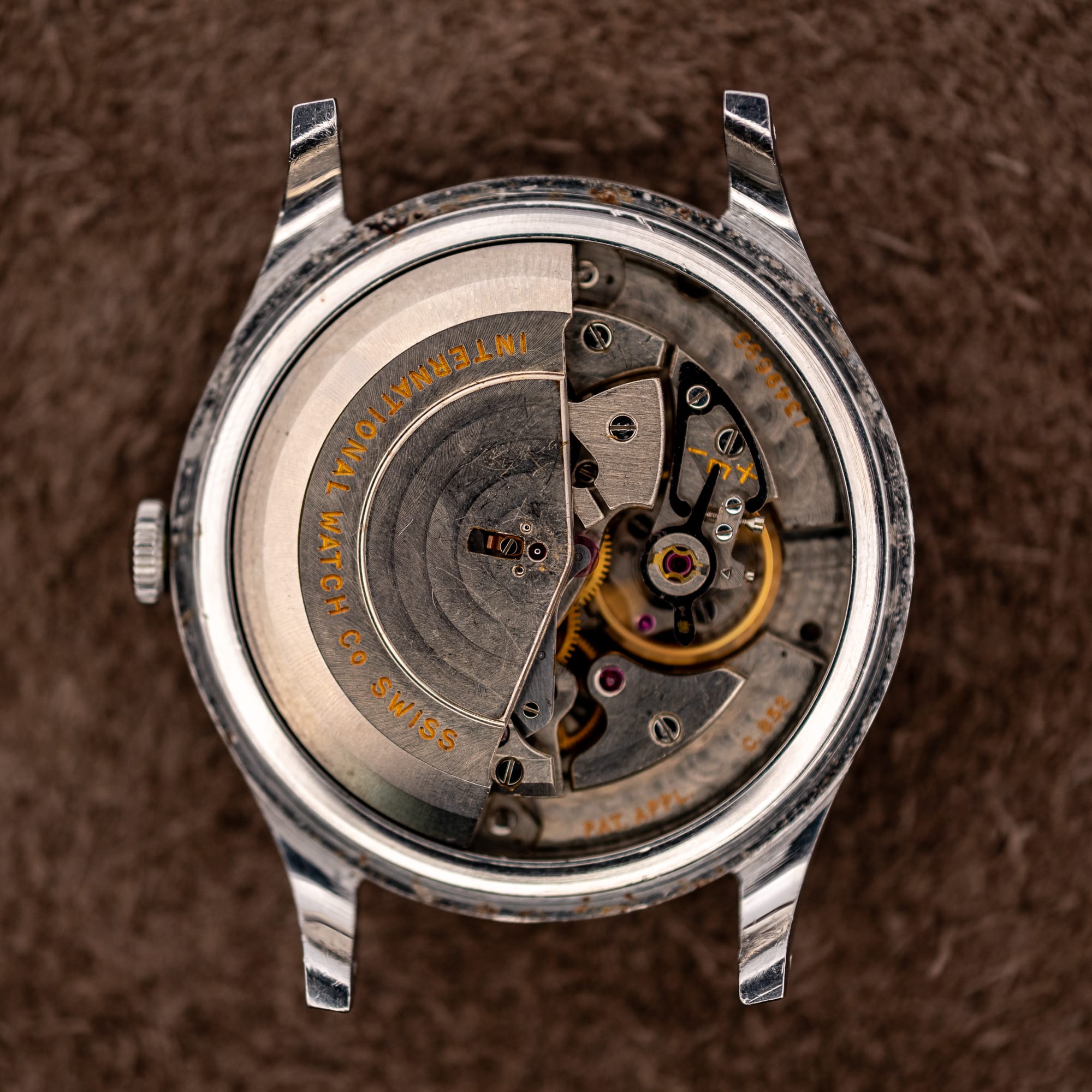
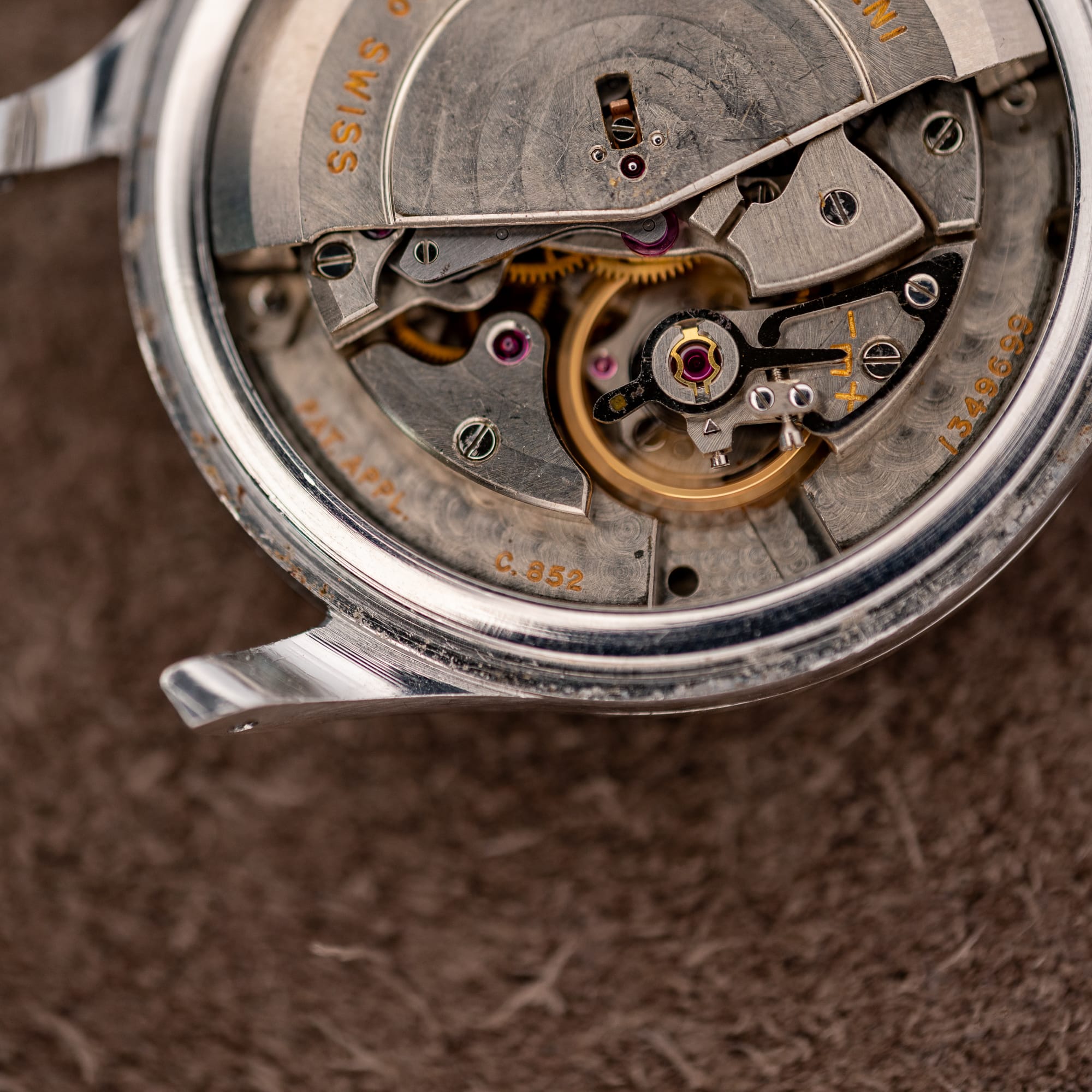
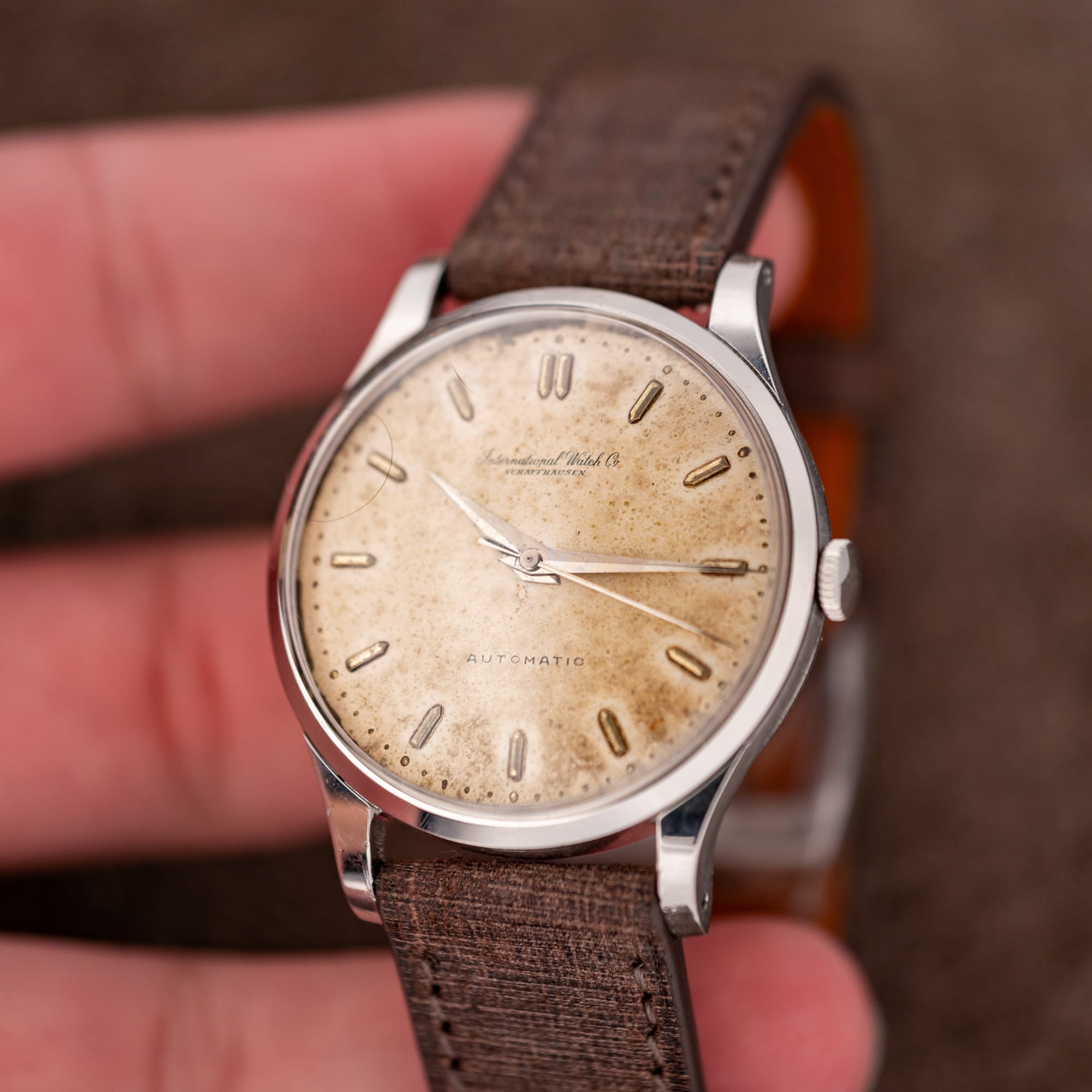
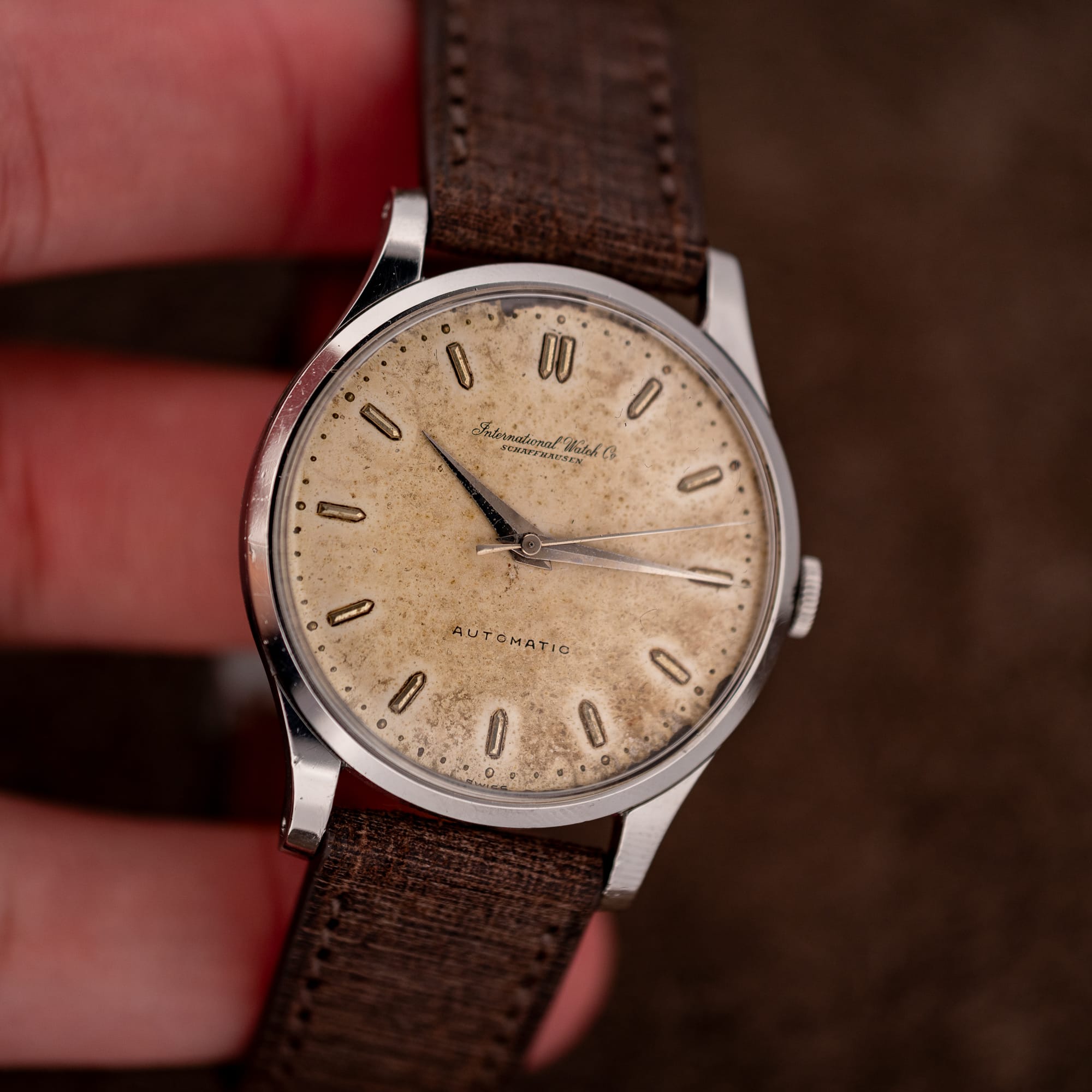

A heart-shaped cam is an unexpectedly expressive detail to find at the center of an engineering story. For Albert Pellaton, it was a practical answer to automatic winding. Appointed IWC’s technical director in 1944, he developed the system that would carry his name, using a cam and two pawls to turn movement in either direction into useful winding. That history gives this vintage IWC automatic an interest beyond its simple three-hand display. We are drawn to the contrast between the orderly mechanism and a dial whose mottled surface is anything but uniform.
Pellaton’s name is more than a collector’s shorthand attached to the mechanism. The German patent record names Albert Pellaton as its inventor and records a filing date of April 19, 1951. Its drawings and description set out the relationship between rotor, cam, rocker and pawls. We find something engaging in reading a watchmaking name on an actual patent rather than only in a catalog. The document brings Pellaton out of the shorthand and back to a particular design, with its workings set down on paper.
In the Pellaton system, the heart-shaped cam makes a linkage rock back and forth. Two pawls take turns pulling the winding wheel, so both directions of rotor movement can contribute to winding the mainspring. IWC continued developing that principle in later generations of movements. Its persistence gives the vintage family a connection to the company’s later engineering, without making the older watches merely stepping stones. There is pleasure in the historical solution itself, particularly when it sits behind a face this restrained.
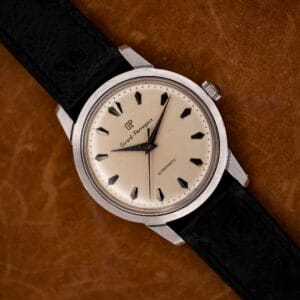
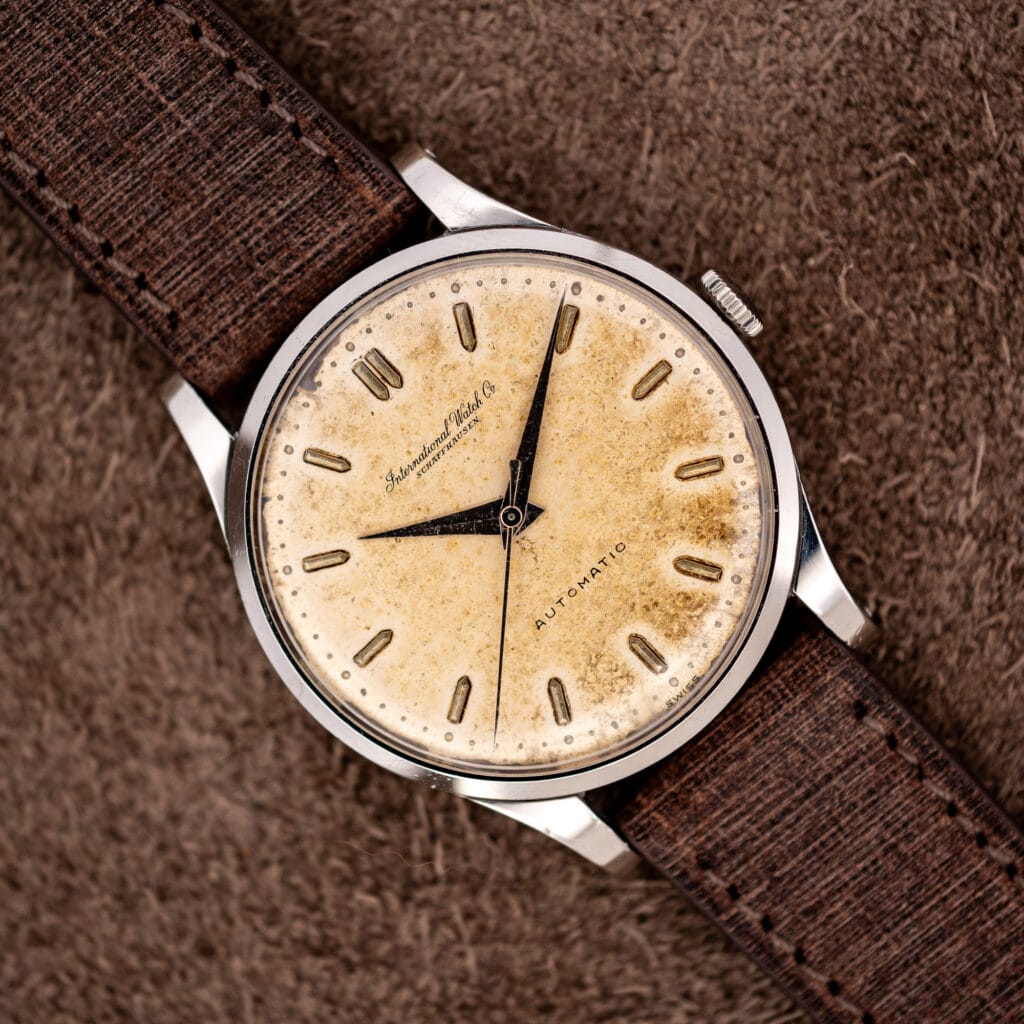
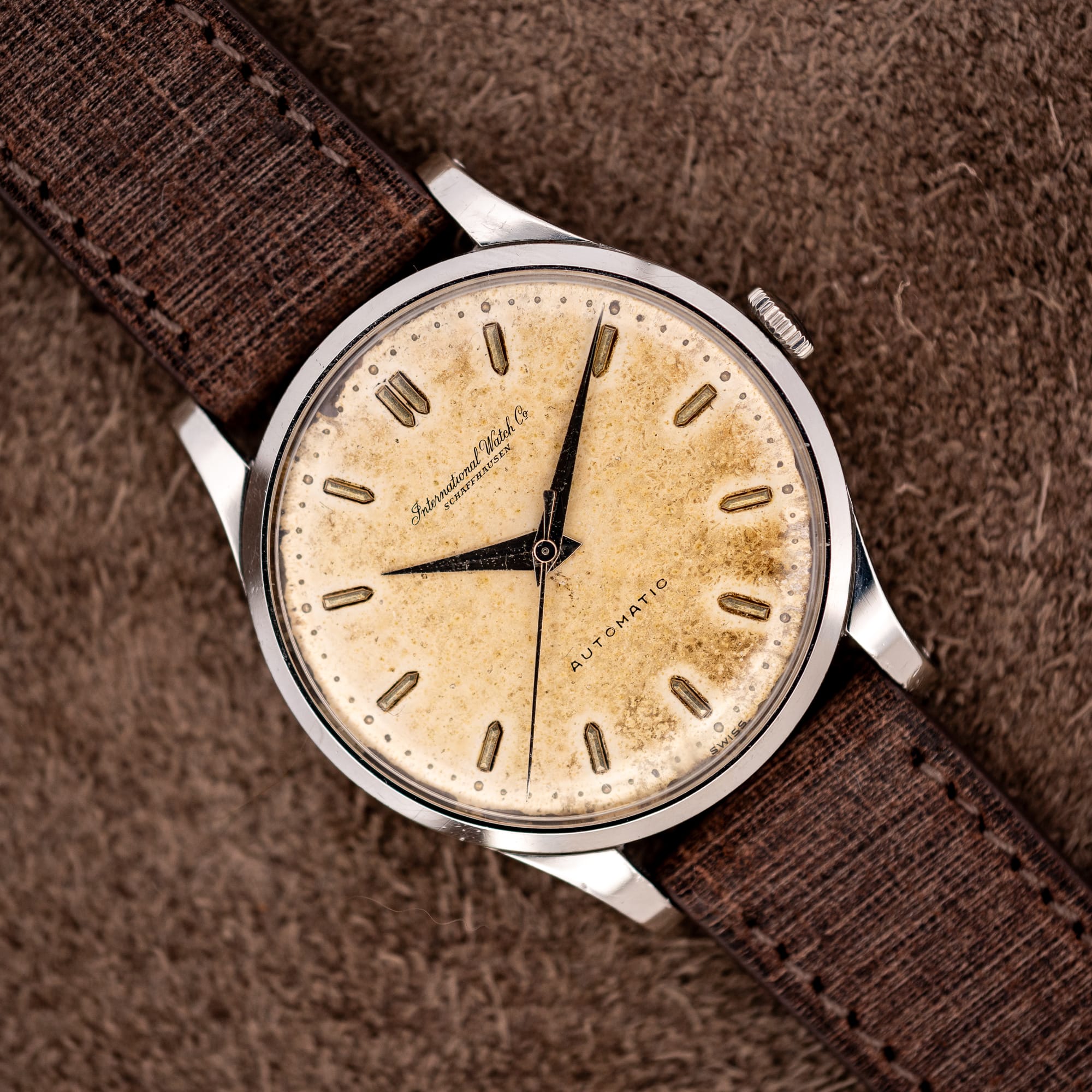
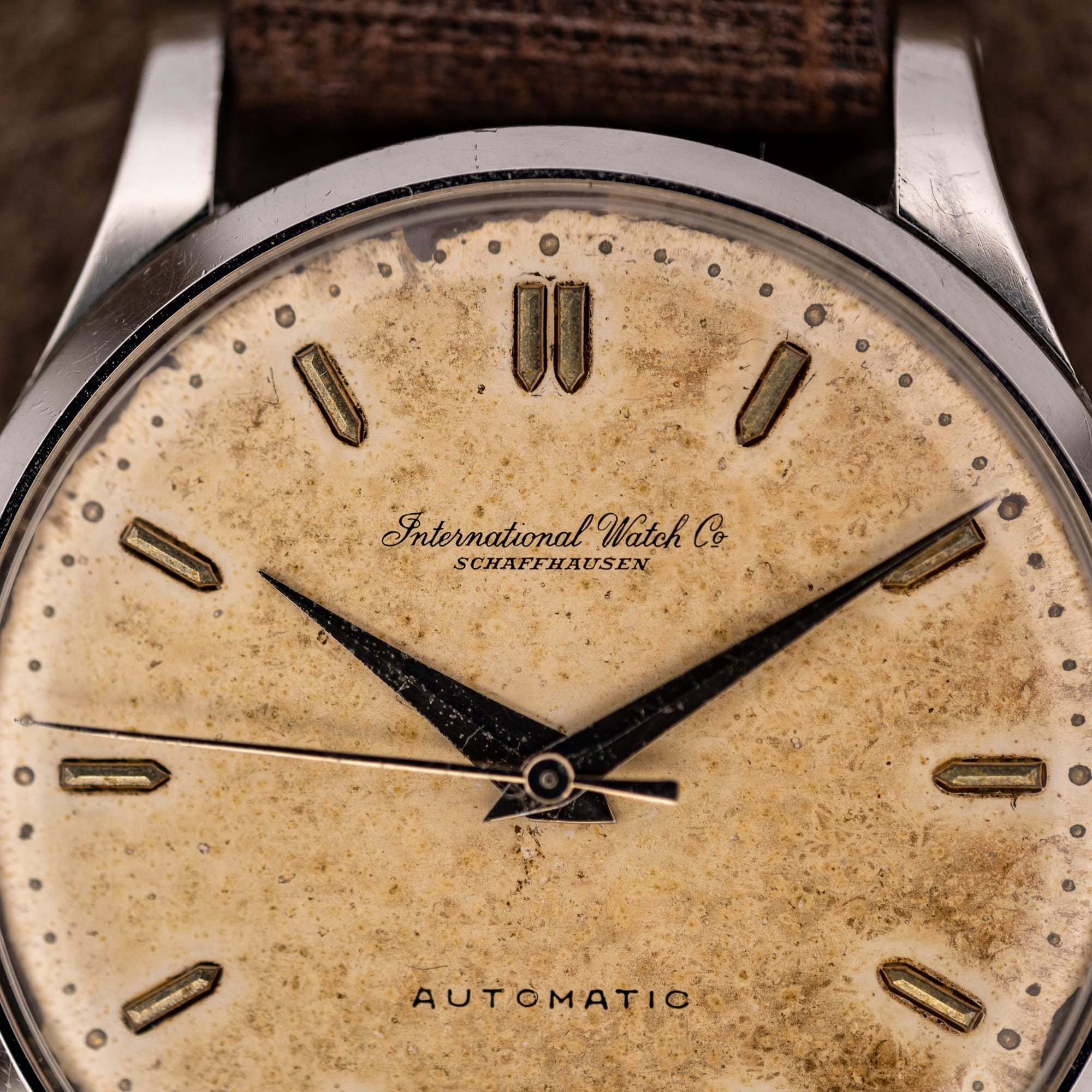
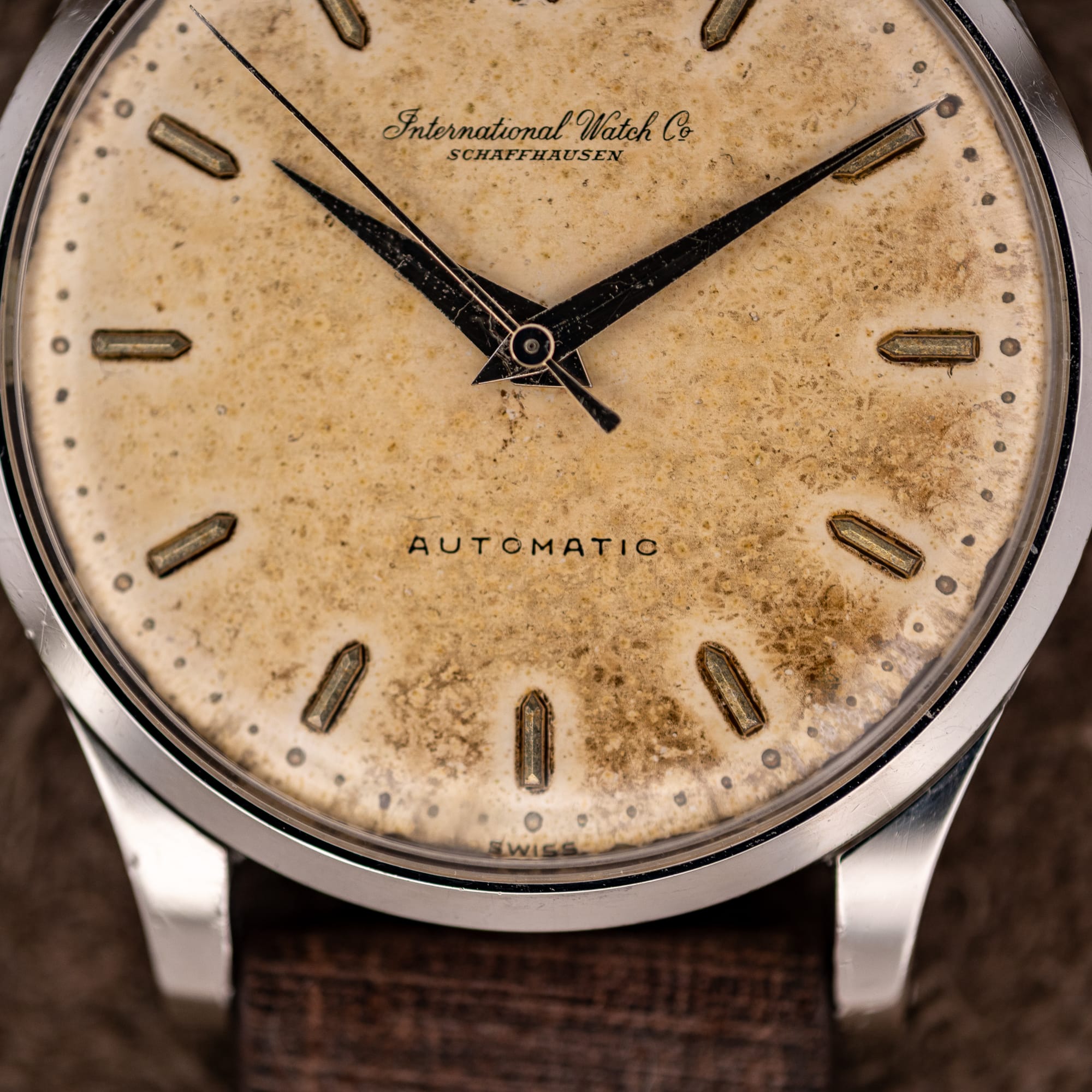
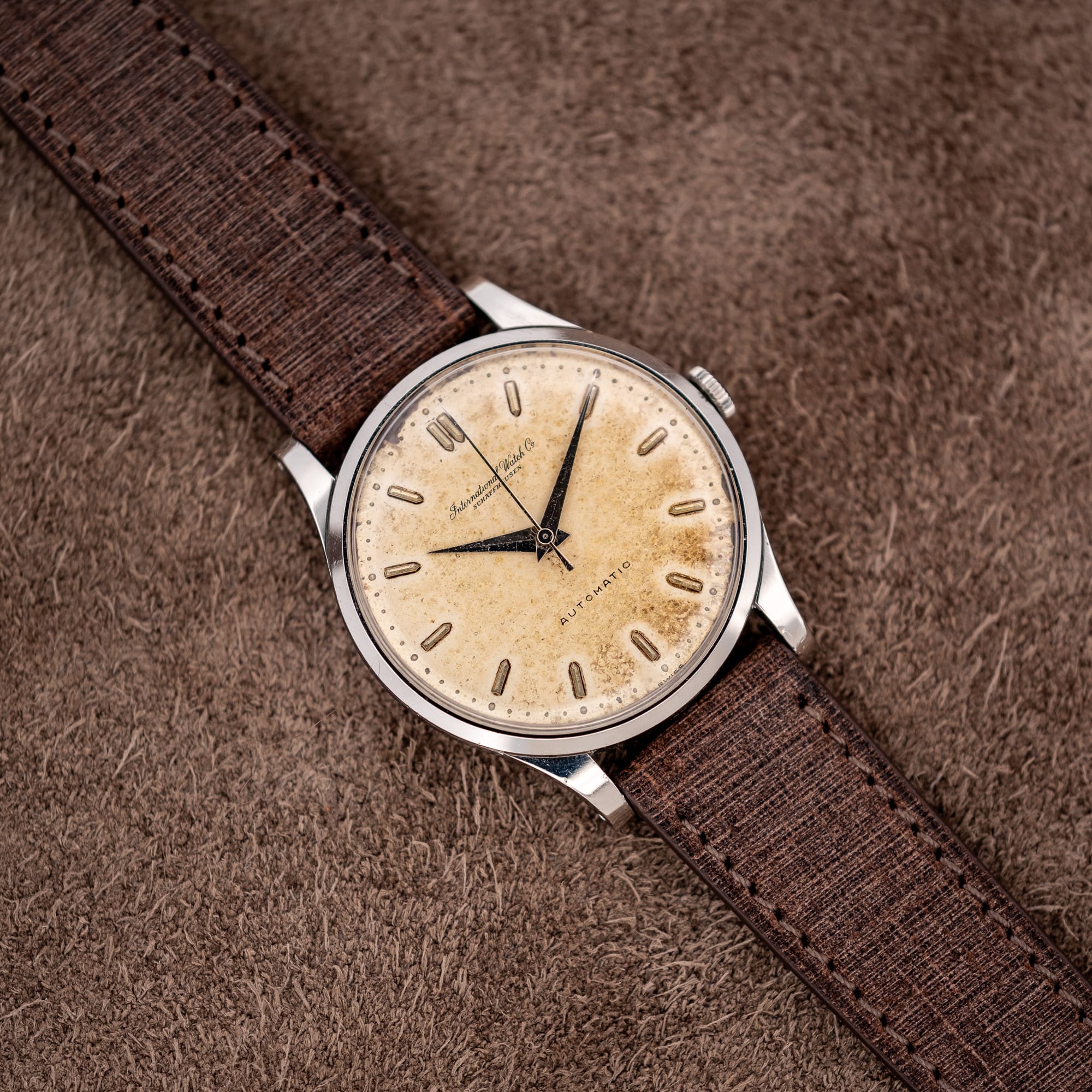
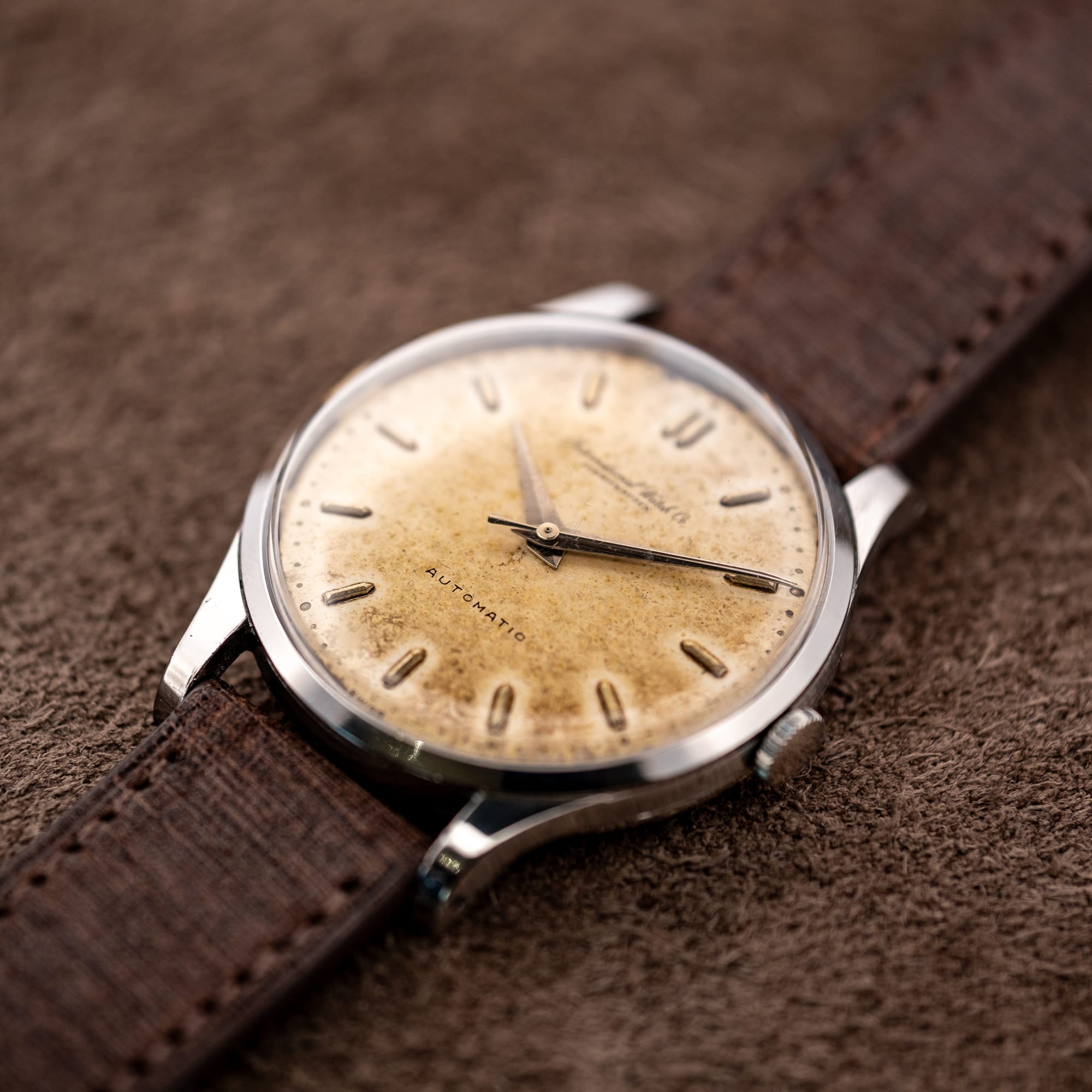
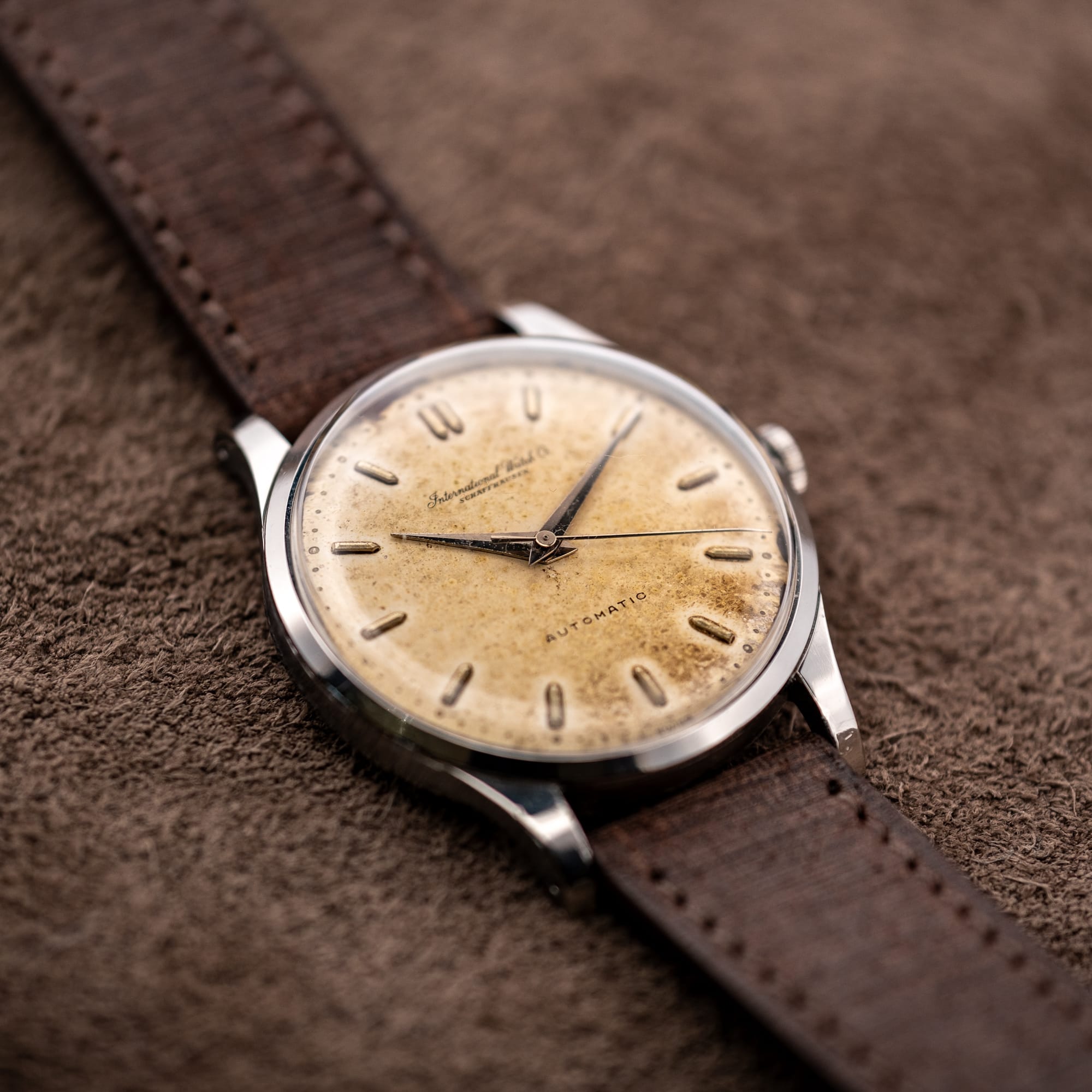
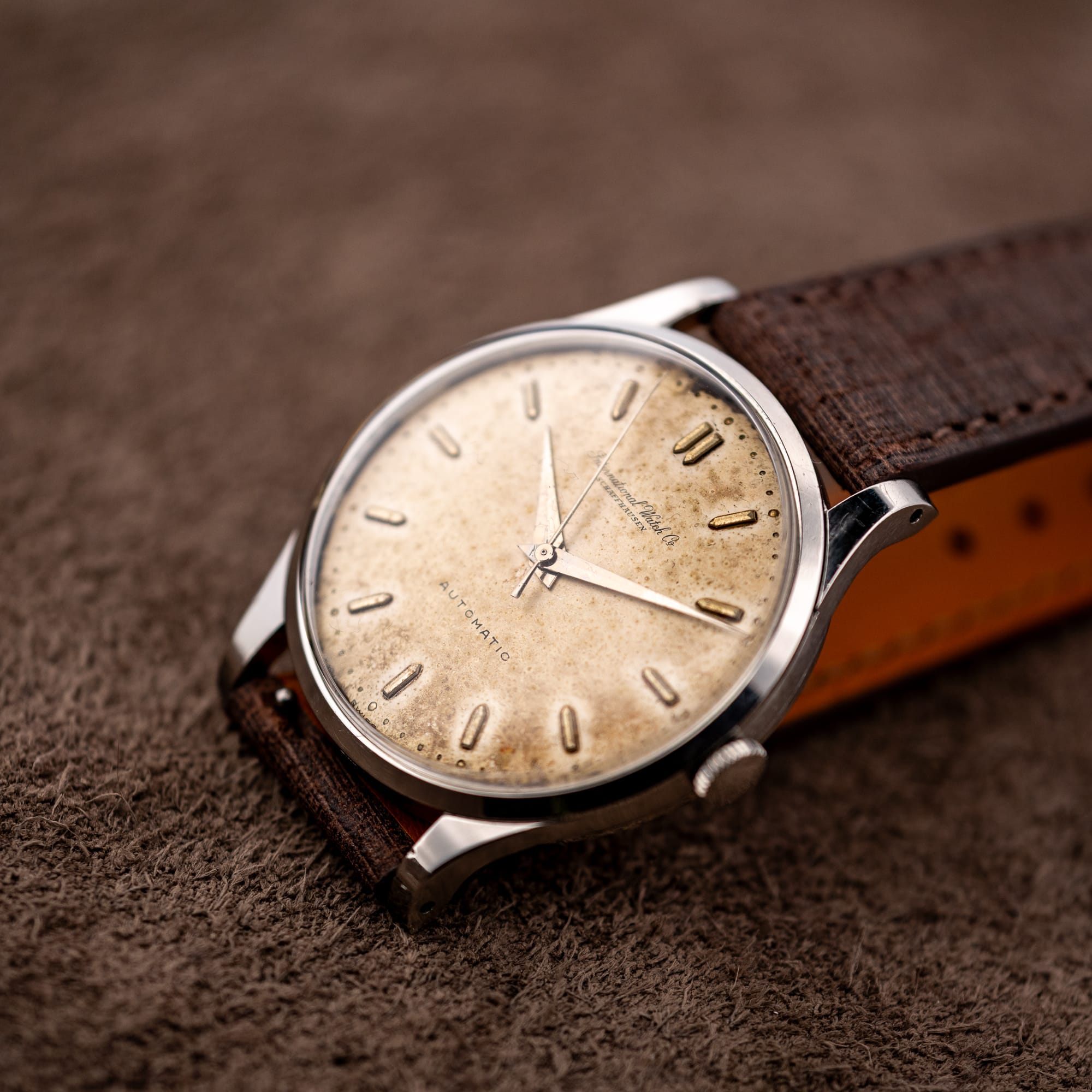
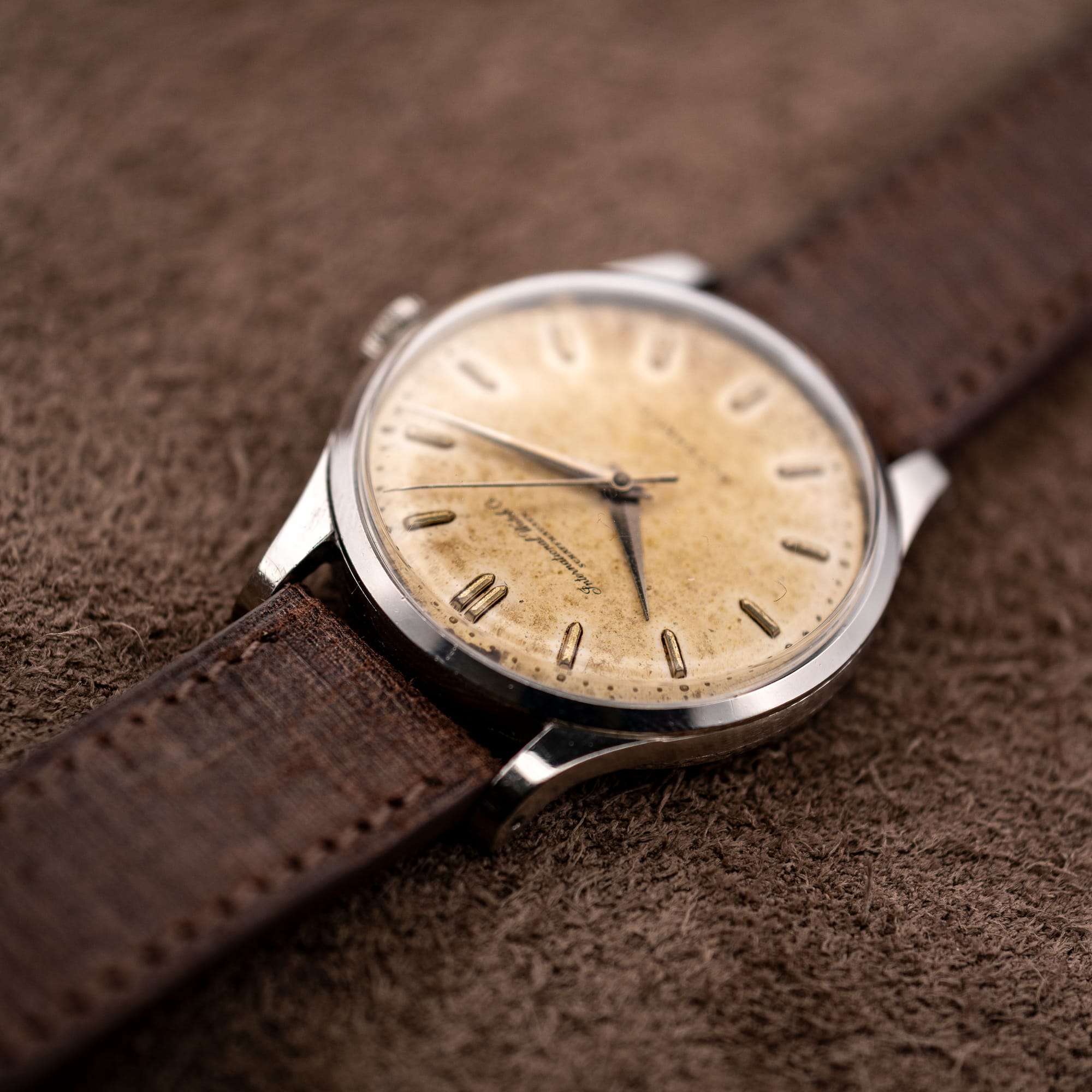
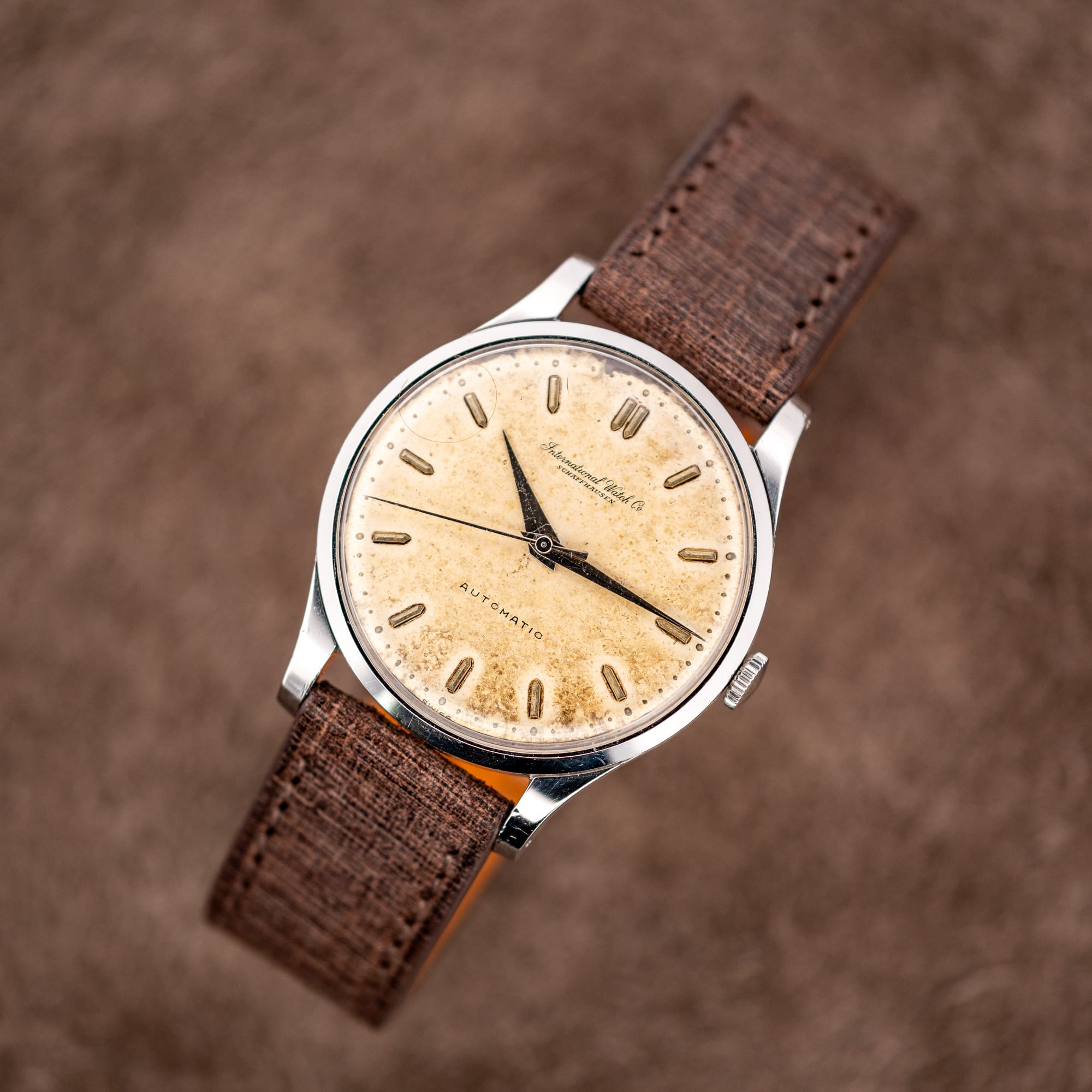
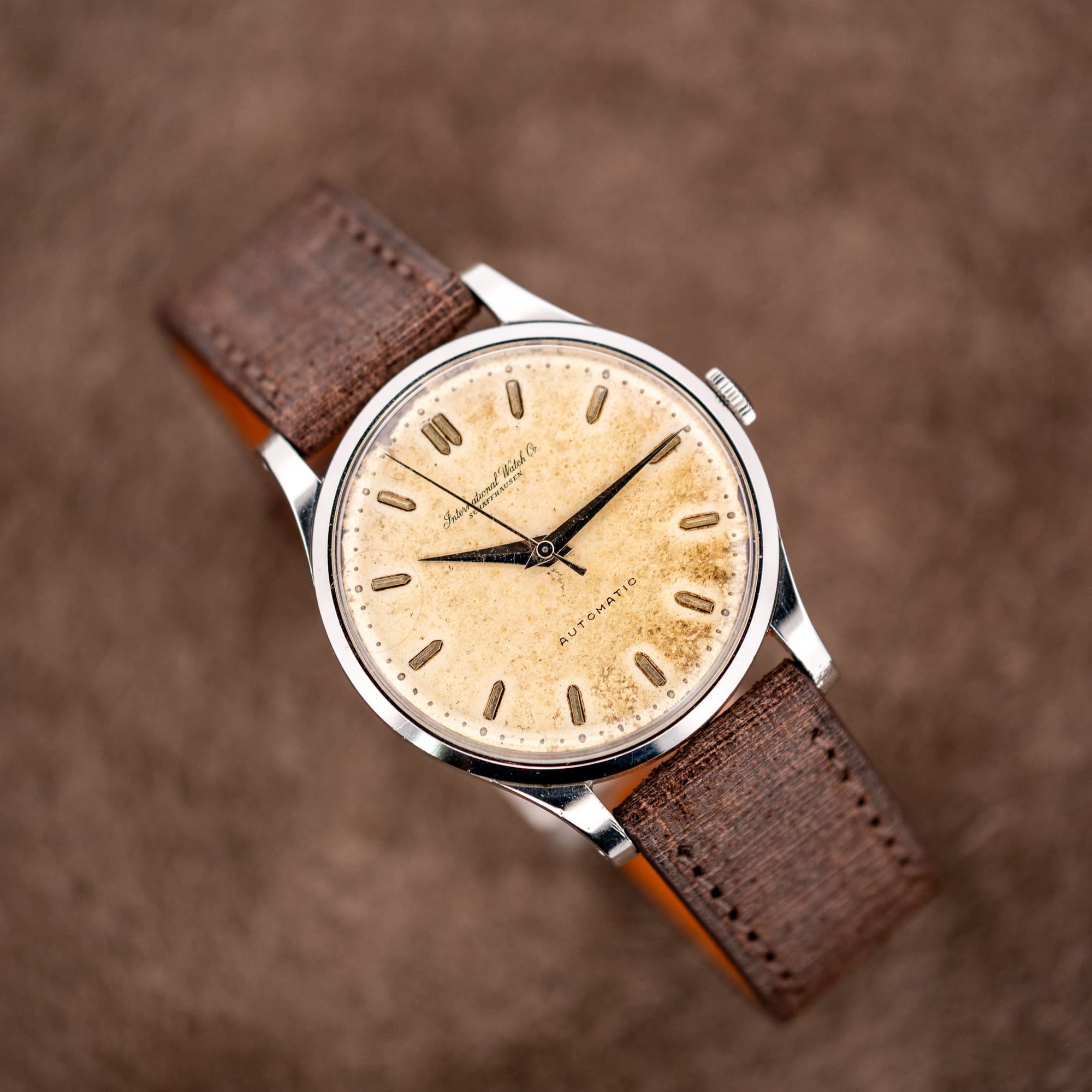
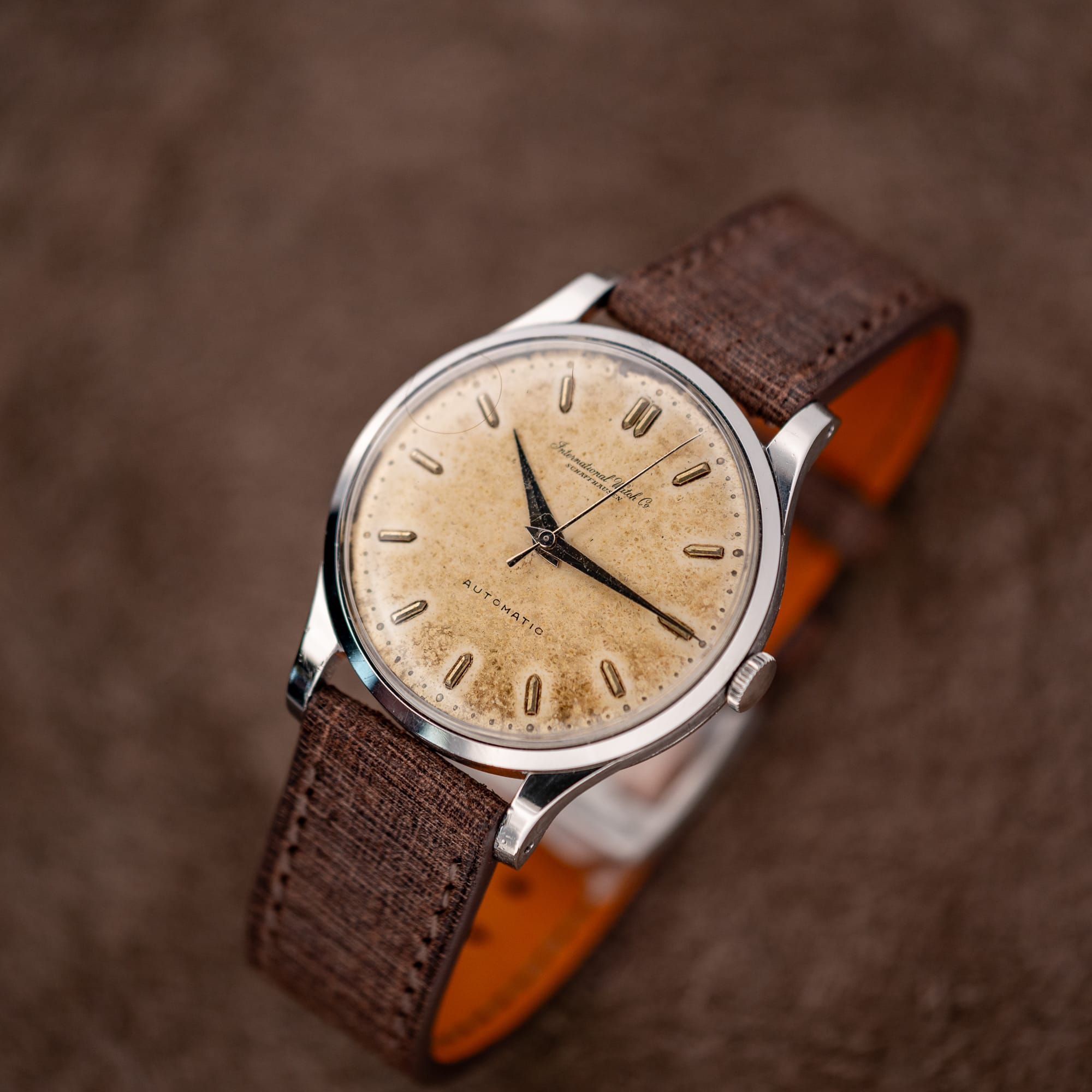
Here, the dial says automatic and leaves the rest to a conventional arrangement of hours, minutes and central seconds. There is no date aperture, so the applied markers retain their uninterrupted spacing. The eggshell surface has pronounced, irregular mottling, with denser variation toward the right and lower perimeter. It brings a different kind of detail to the watch: not another mechanism or inscription, but a pattern that draws the eye back across the dial. We find that the sharp hands and markers give this varied surface enough structure to remain composed.
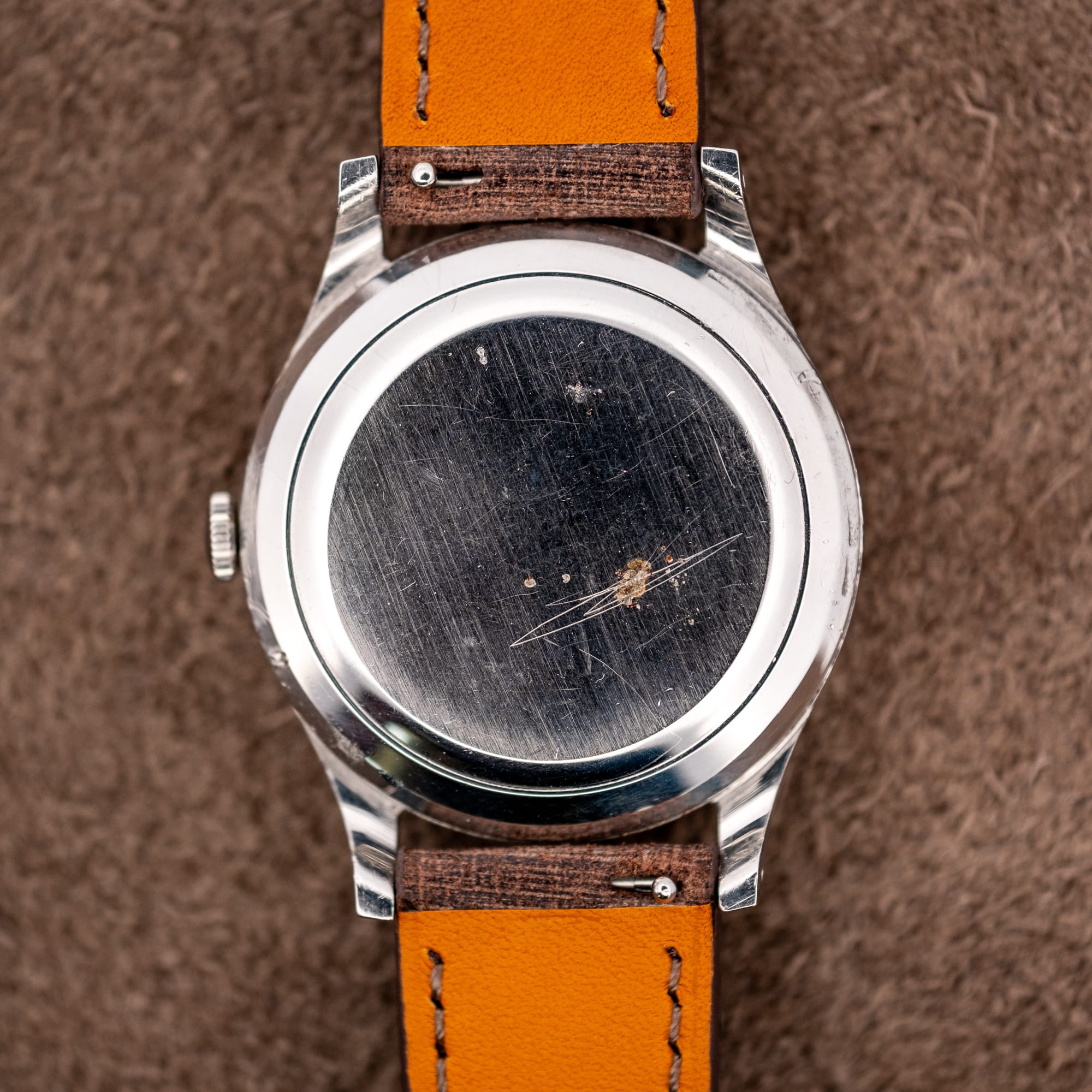
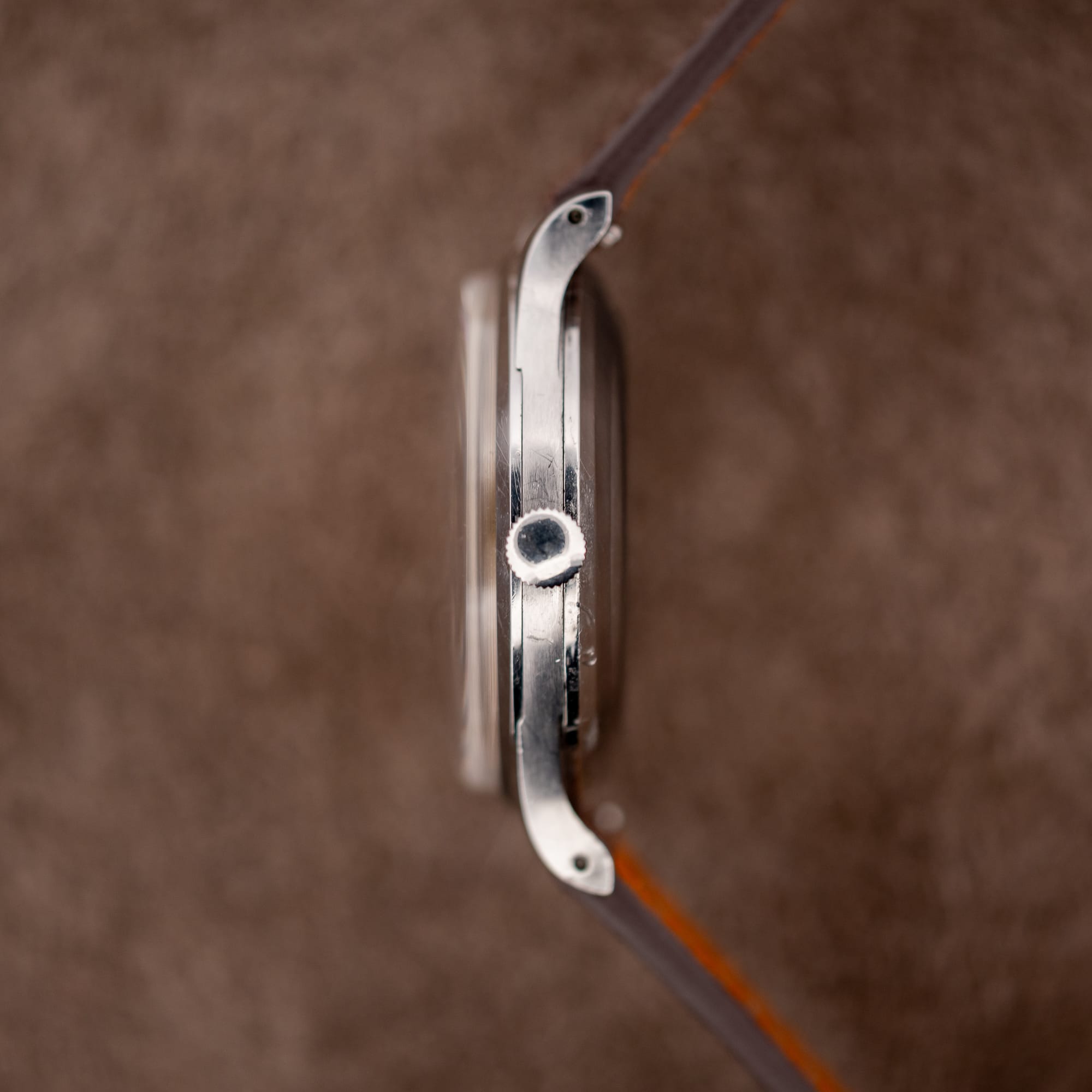
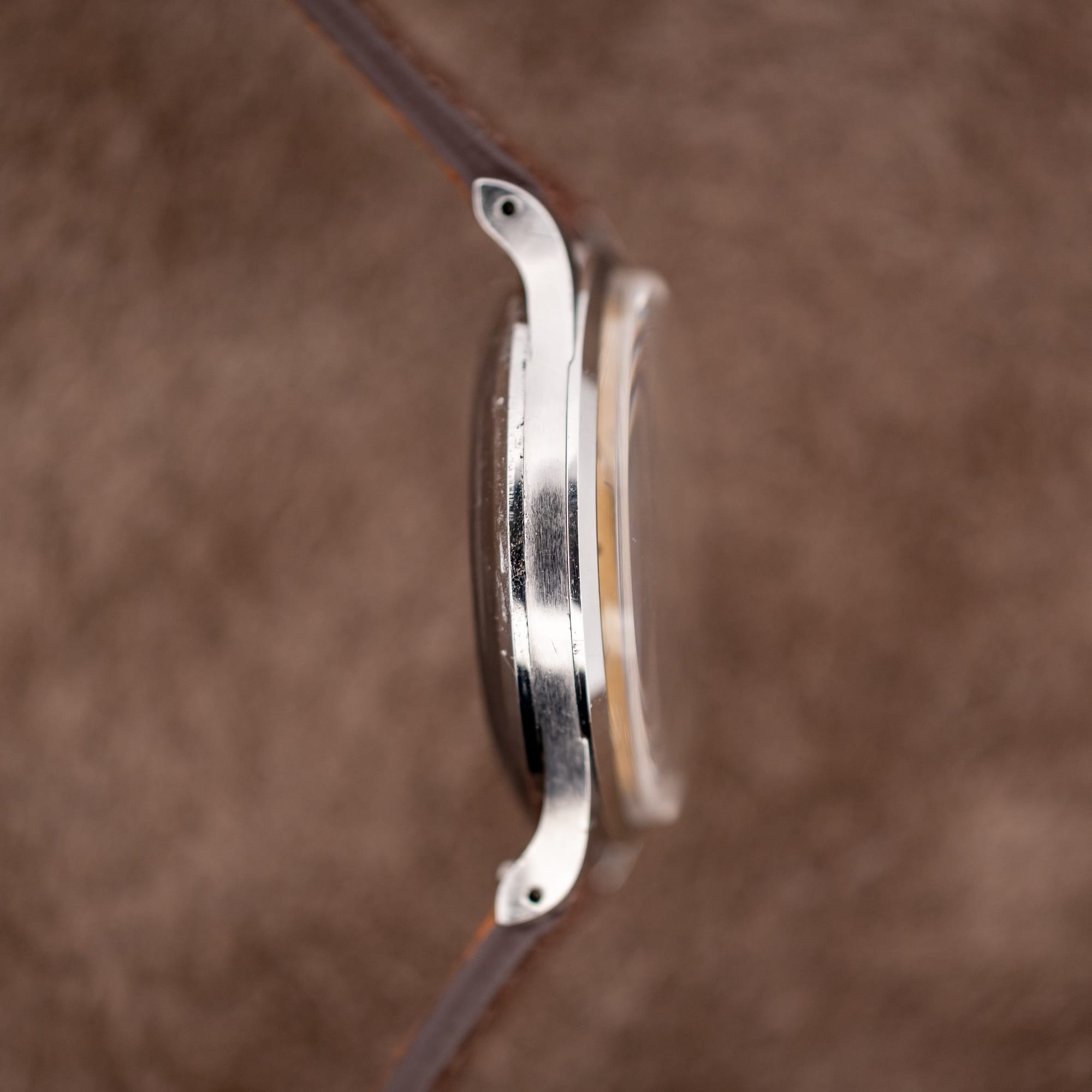
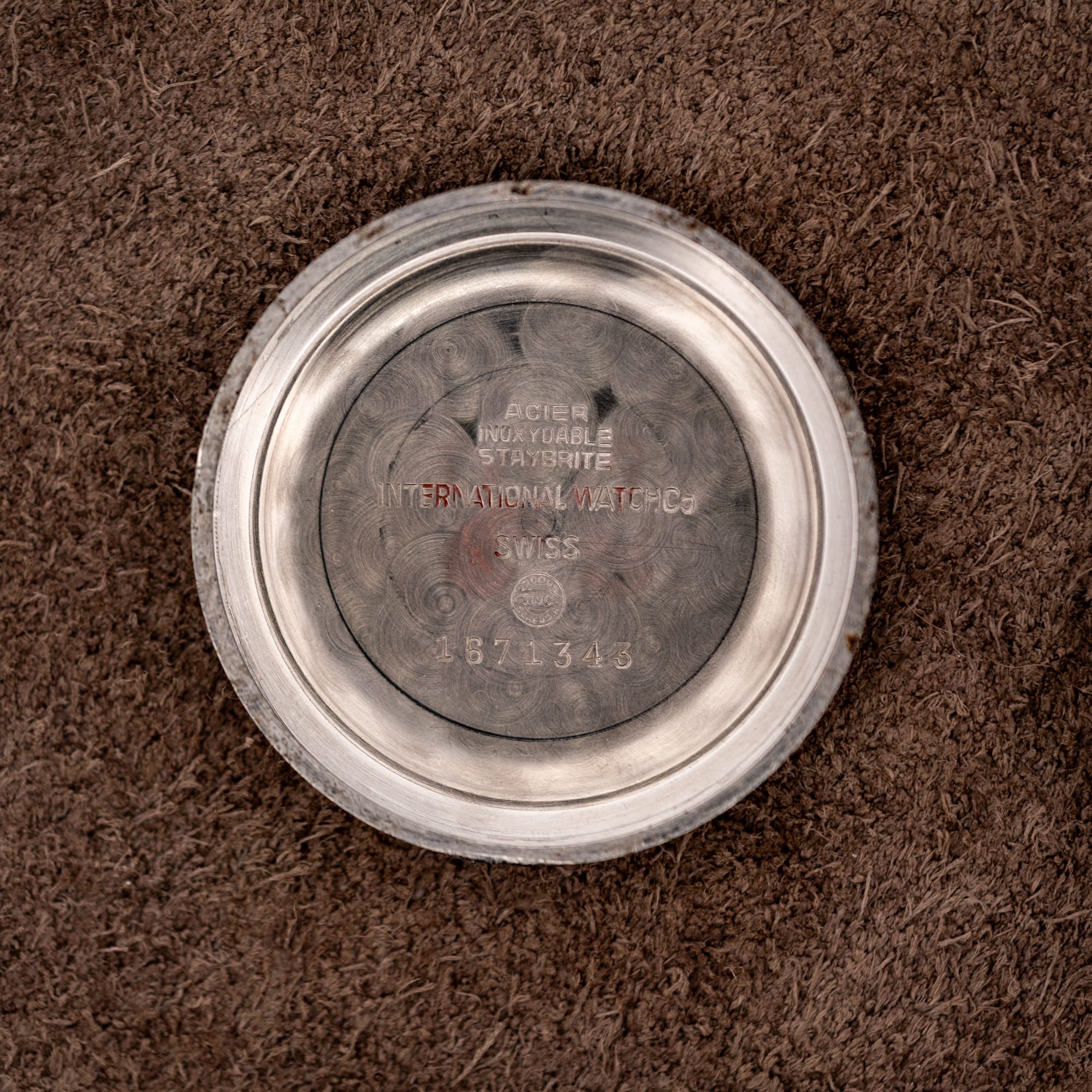
The stainless steel case measures 35mm across and 42.5mm lug to lug, with a smooth bezel, curved drilled lugs and a solid back. Faceted dauphine hands echo the pointed ends of the elongated hour markers, while a paired marker at twelve anchors the dotted minute perimeter. Above the hands, the flowing brand signature contrasts with the more formal Schaffhausen lettering below it. Light exterior scuffs accompany the dial’s patina, and a brown Babele strap fits the 18mm lugs, adding a textured frame without competing with the face.
This vintage IWC automatic holds our attention because the patina and the geometry are equally present. The dial has considerable visual texture, yet the narrow seconds hand and dotted minute ring keep a delicate line around it. We would not want the patina to be less noticeable; its unevenness is part of what makes this particular face compelling.