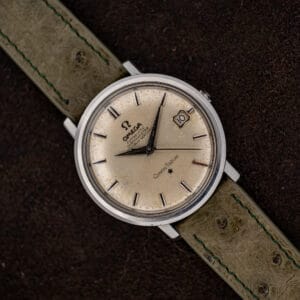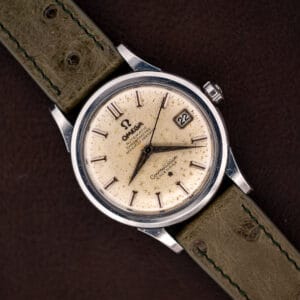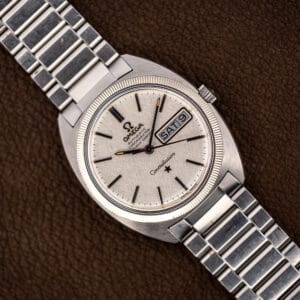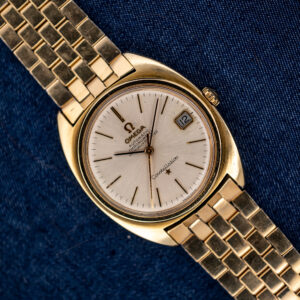
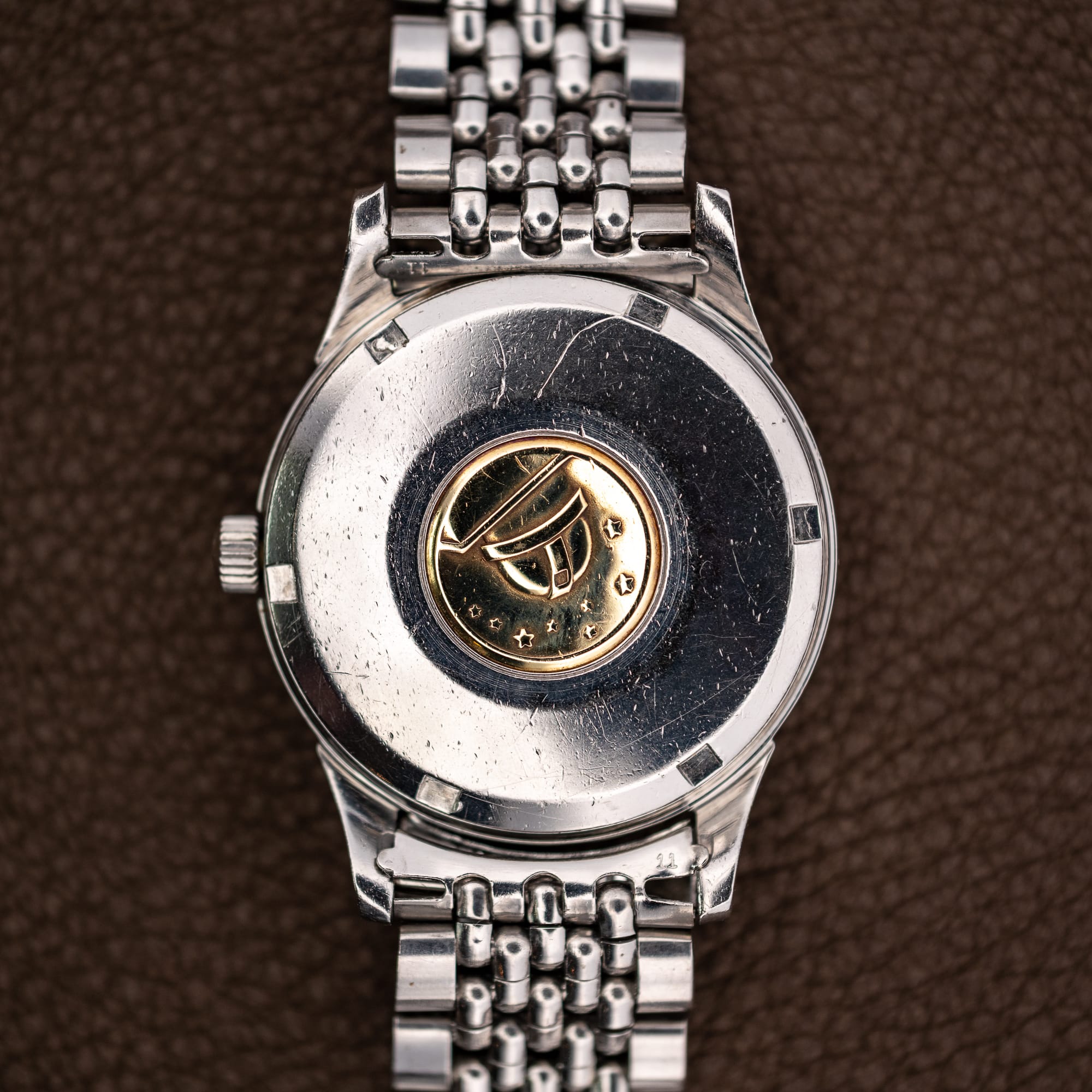
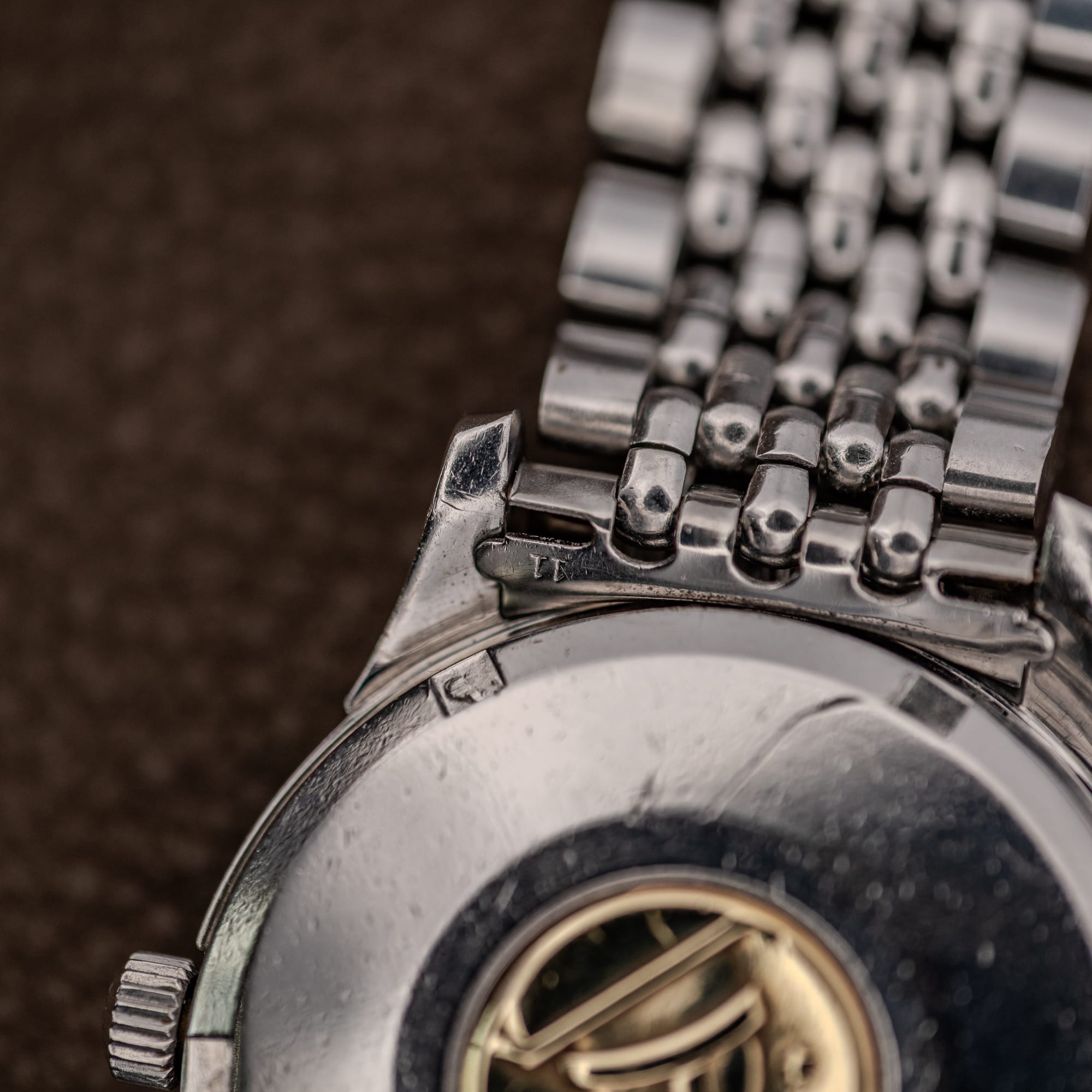
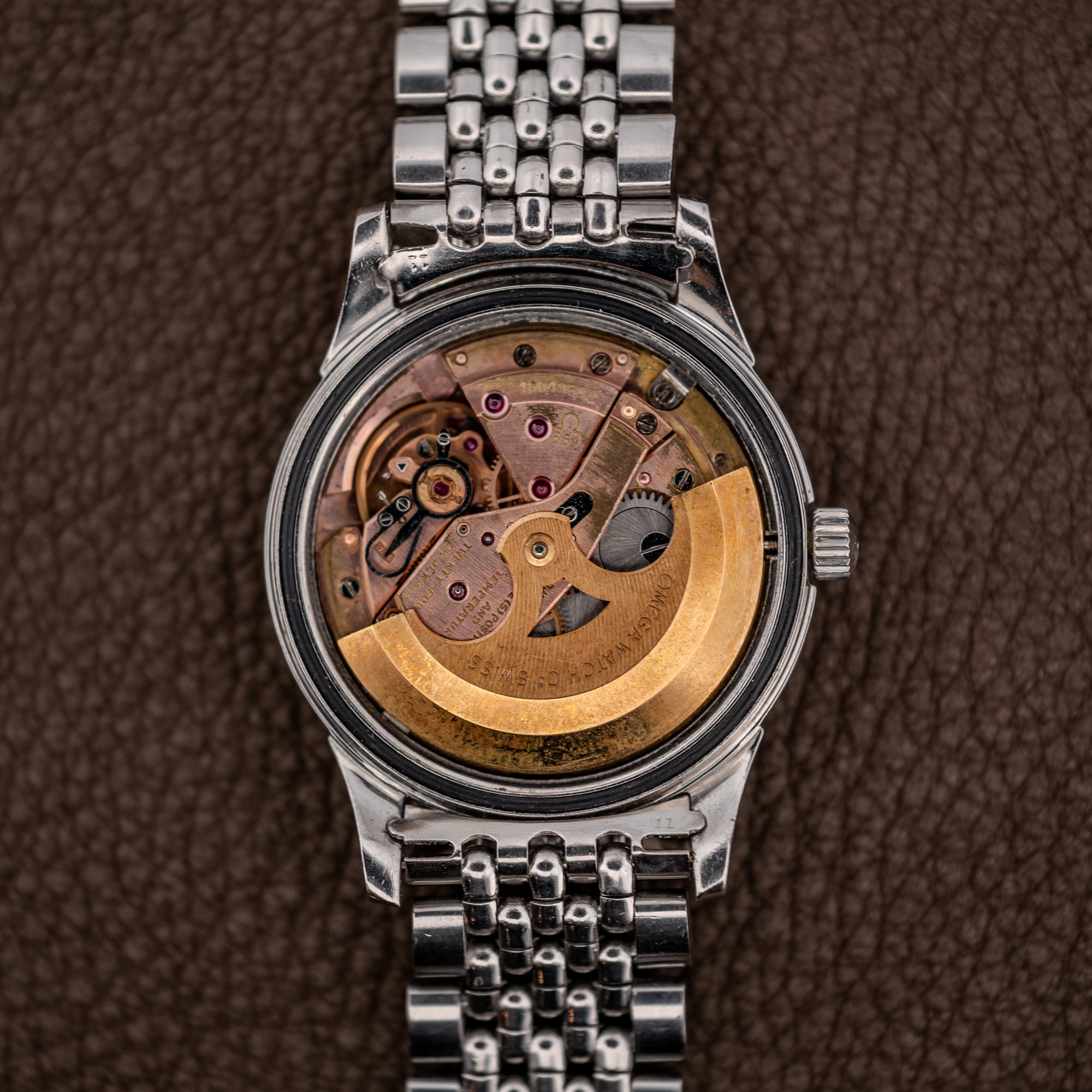
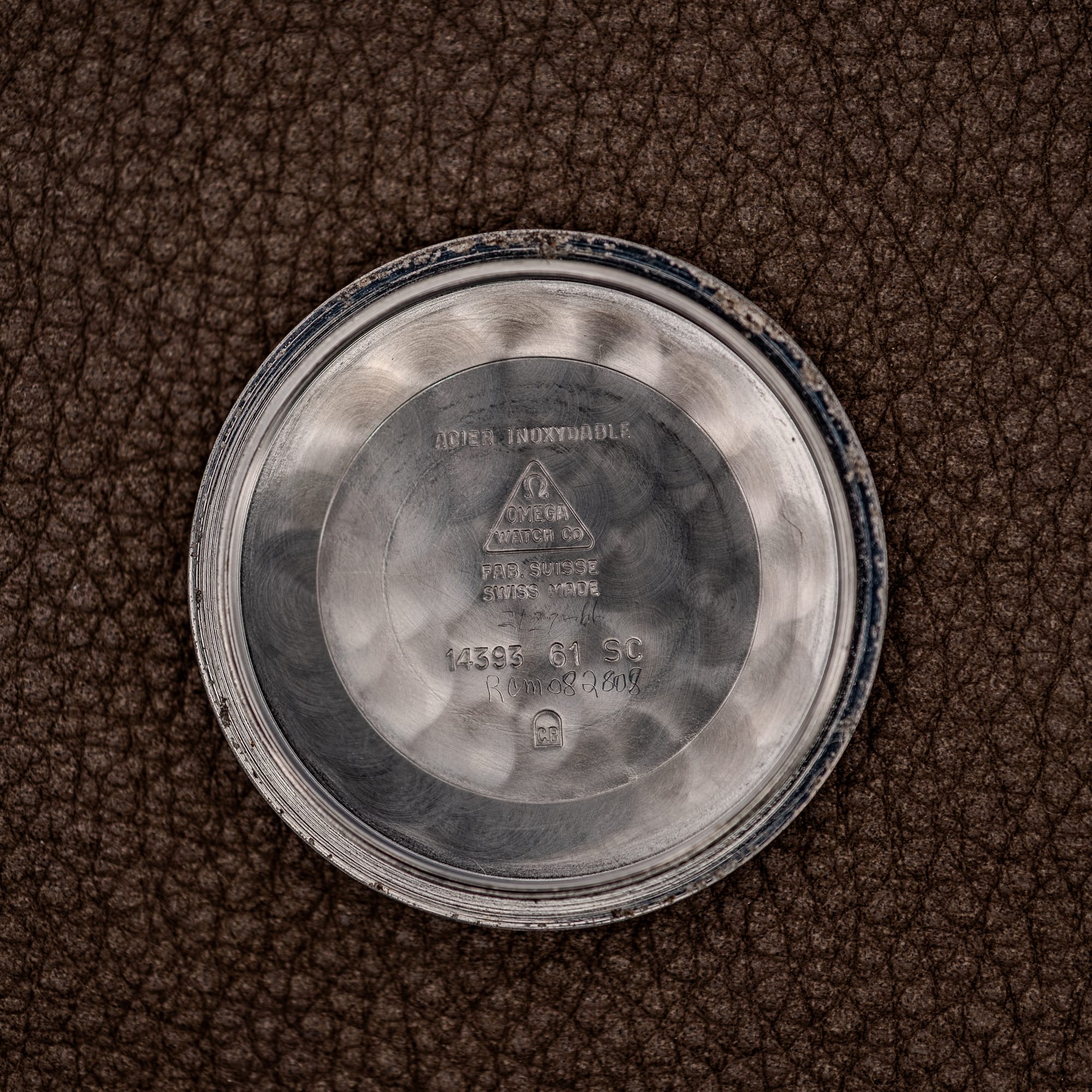
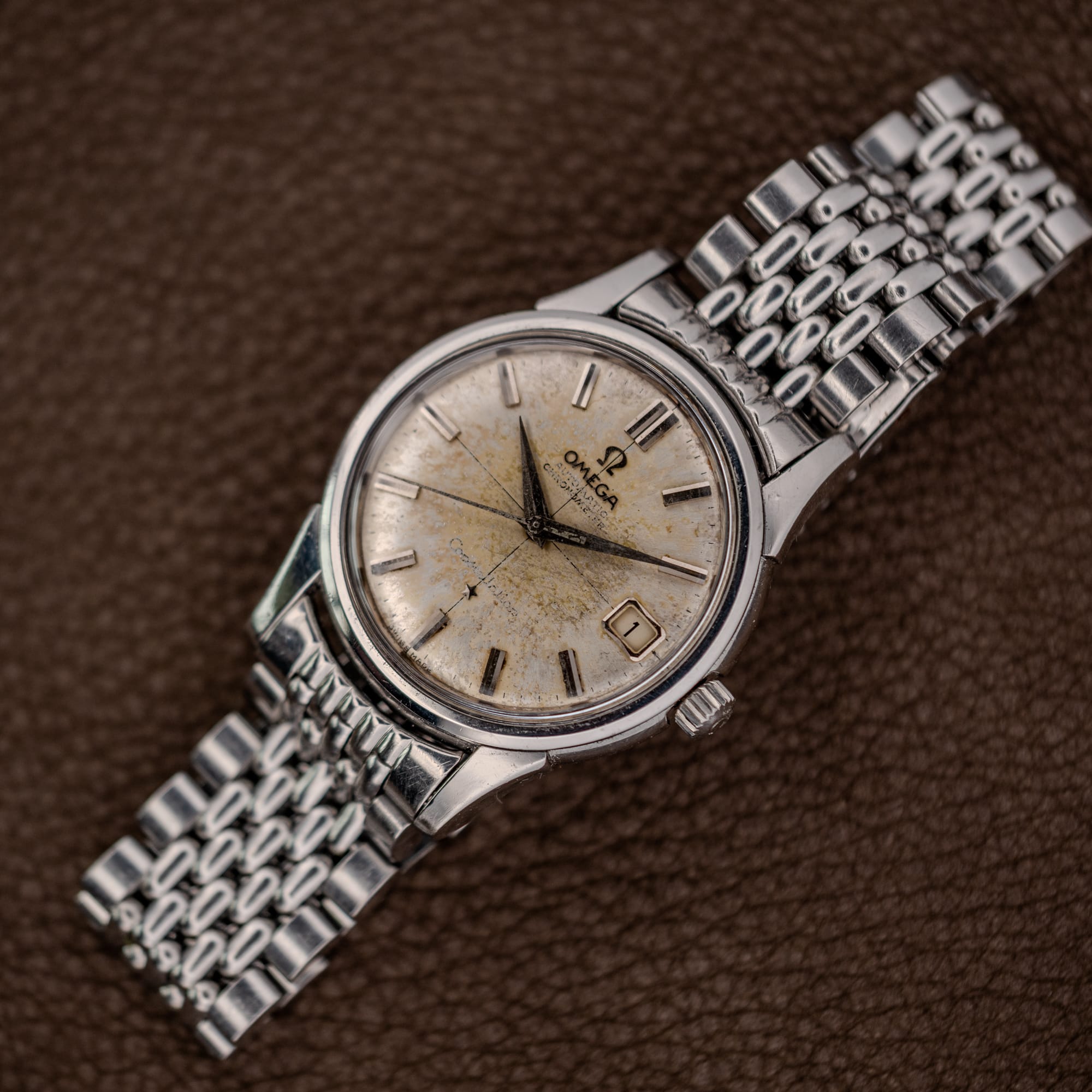

14393 61 SC. Three pieces of factory shorthand stamped inside one caseback, and only one of them is a reference number in the sense collectors use the word today. Omega did not standardize whole-watch reference numbers until 1962, when the MAPICS system finally gave each complete configuration a single code. Before that, what went into a caseback was a case reference, written in the case-maker’s language rather than the catalog’s, which is why an Omega Constellation 14393 names a case rather than a whole watch. That distinction earns its keep here. The 14393 belongs to the Constellation’s pie-pan era without being pinned to any one dial, and Omega listed a flat-dial variant, the 14902, right alongside it. The five-digit format itself belongs to a numbering scheme Omega ran for barely five years, from 1958 to 1962, and the SC is seconde au centre: central seconds, the factory noting that the seconds hand sweeps from the middle rather than a subregister.
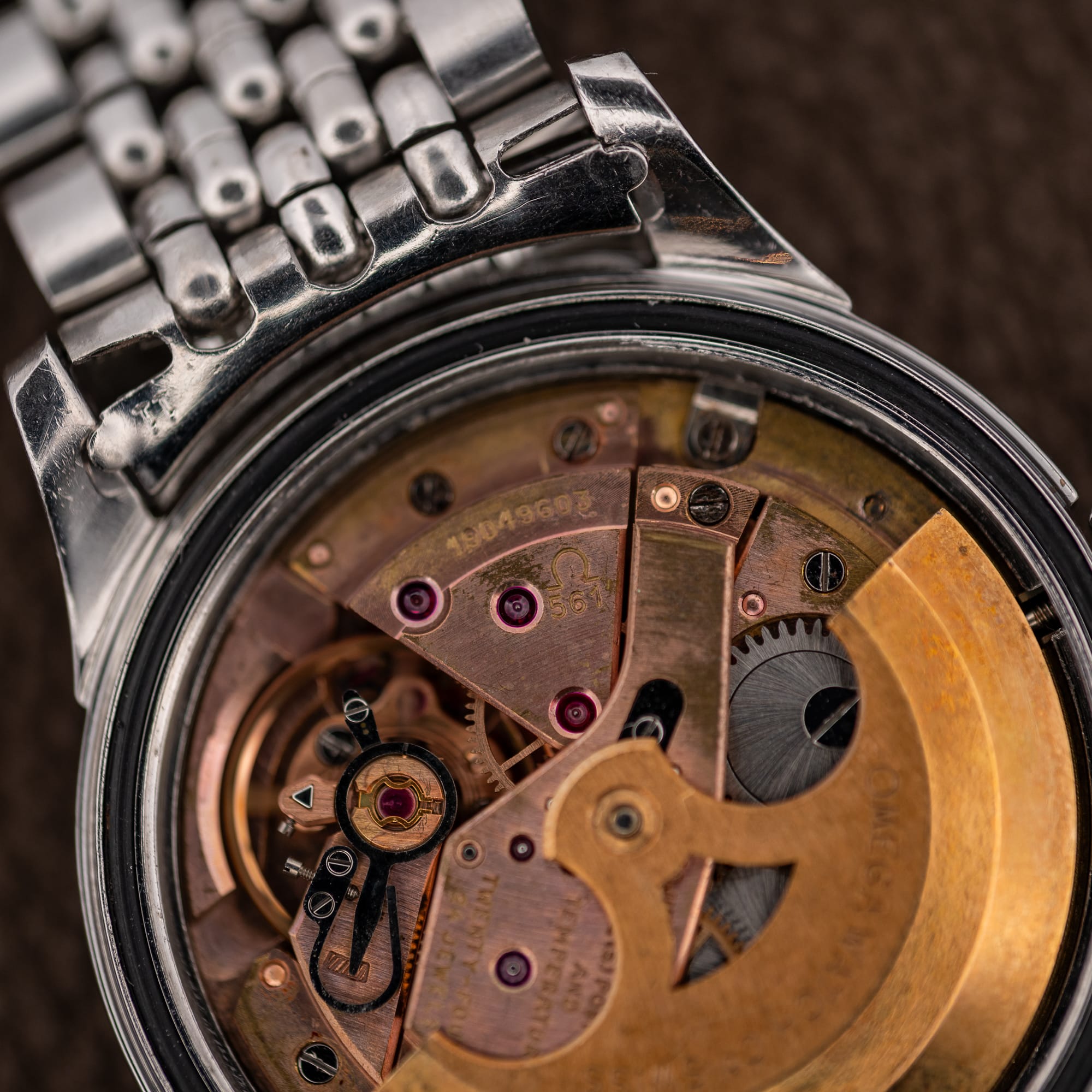
That leaves 61, which is the part people argue about. Read as a year it is tidy, and it agrees with everything else here. Read as what it more likely is, a case variant marker, it says only that this case design belongs to the early 1960s. The movement is the better instrument. Its serial, 19049603, sits against the tables collectors have leaned on for decades, which put the 18 million range in 1961 and the 19 million range in 1962. This one lands barely fifty thousand movements into the 1962 band, close enough to the boundary that the two readings stop competing: a case from about 1961, a movement finished at the turn of the year. We would rather show the arithmetic than round it off.
The date window is the other thing worth slowing down for. Omega had been fitting the Constellation with a calendar since 1958, and by the time this case was cut the line had settled into a tidy pairing, reference 14381 without a date and the Omega Constellation 14393 with one, the same dog-leg case family under both. The movements mirror that split exactly. Caliber 550 is the base of the family, 551 the chronometer without a calendar, and 561 the chronometer that carries one, twenty-four jewels, adjusted to five positions and temperature and marked as such on the movement. There is no quickset. Omega’s 564 would not arrive until 1966, so setting the date means running the hands past midnight and around again until the disc catches up.
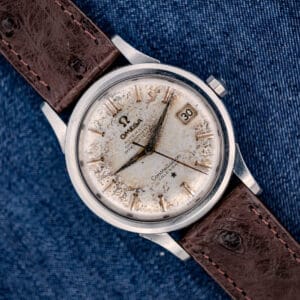
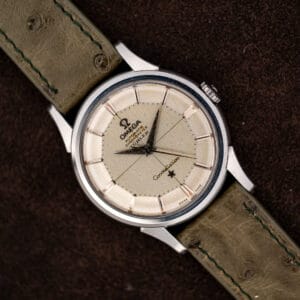
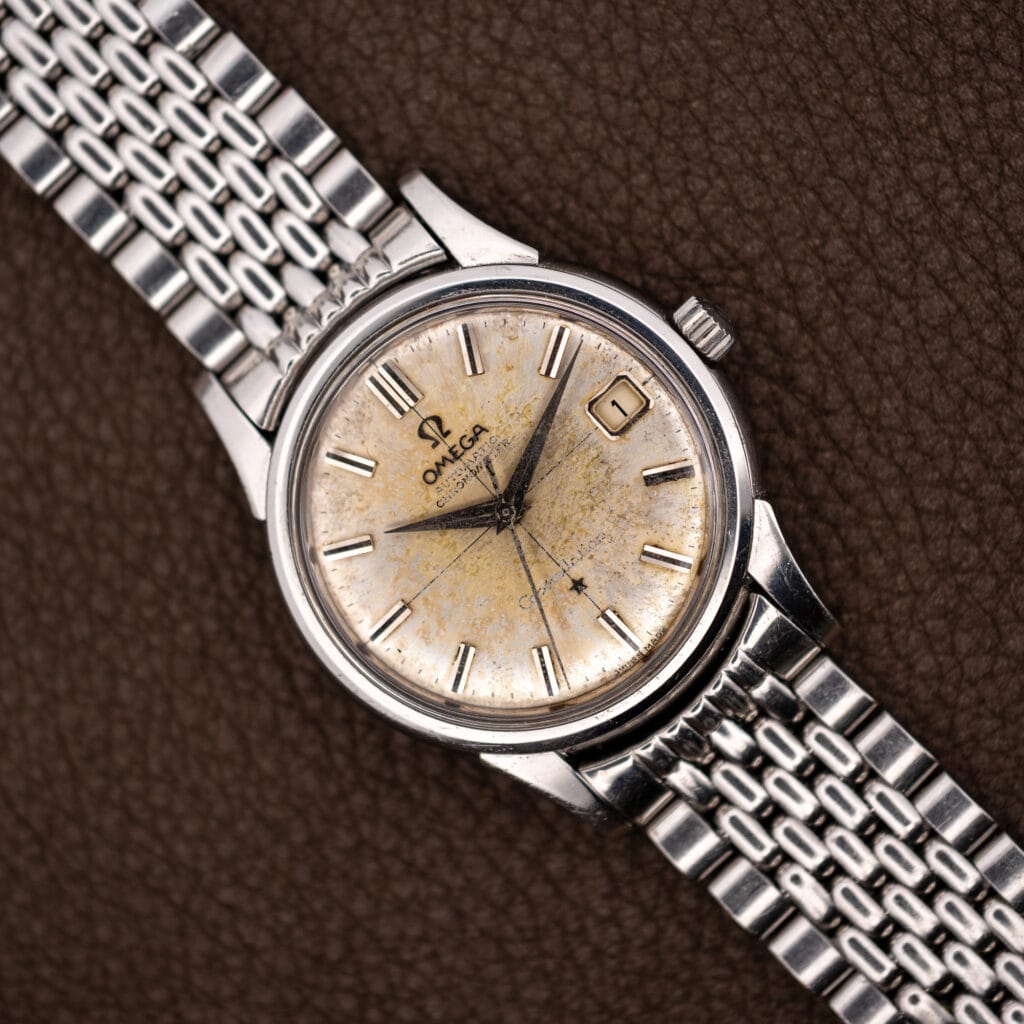
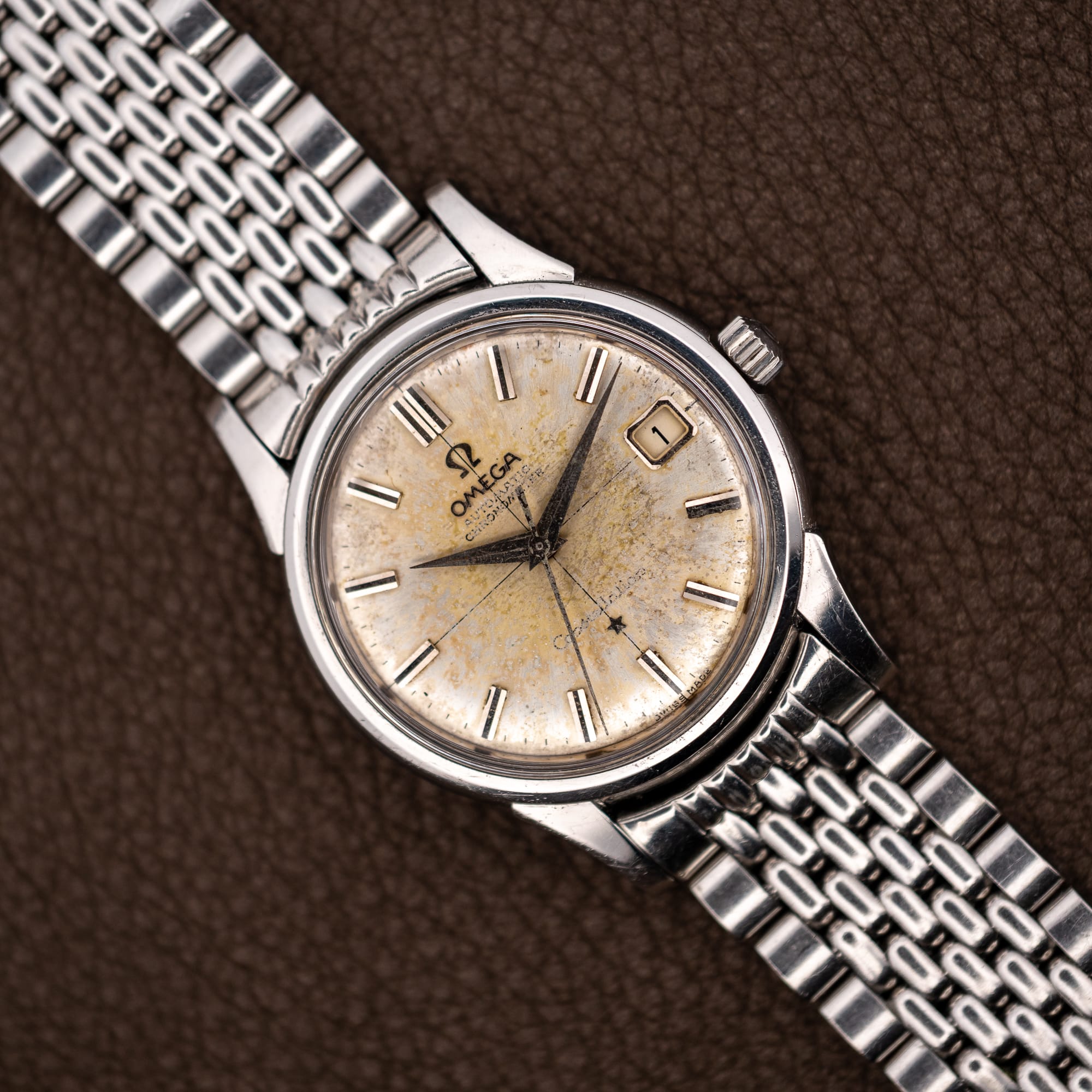
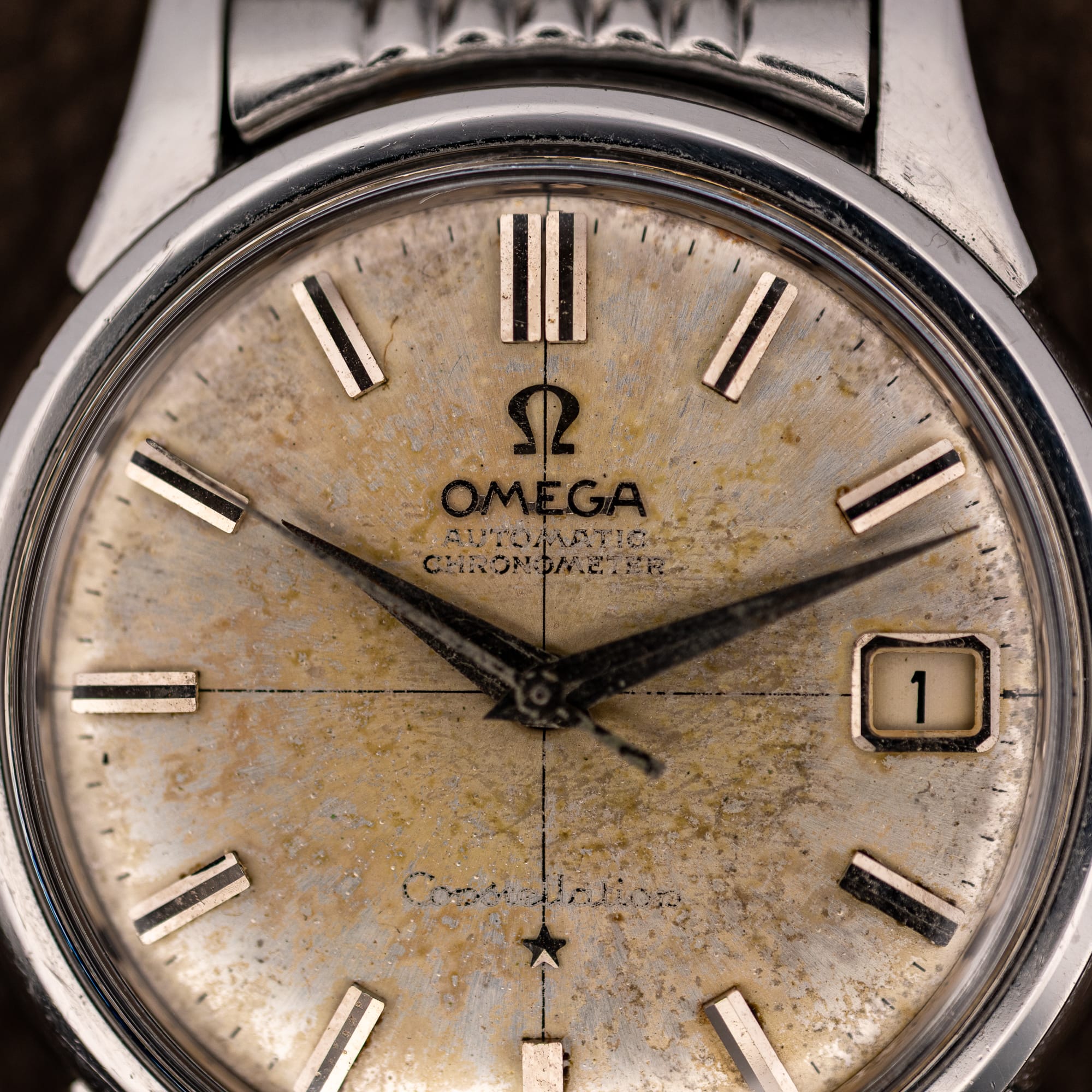
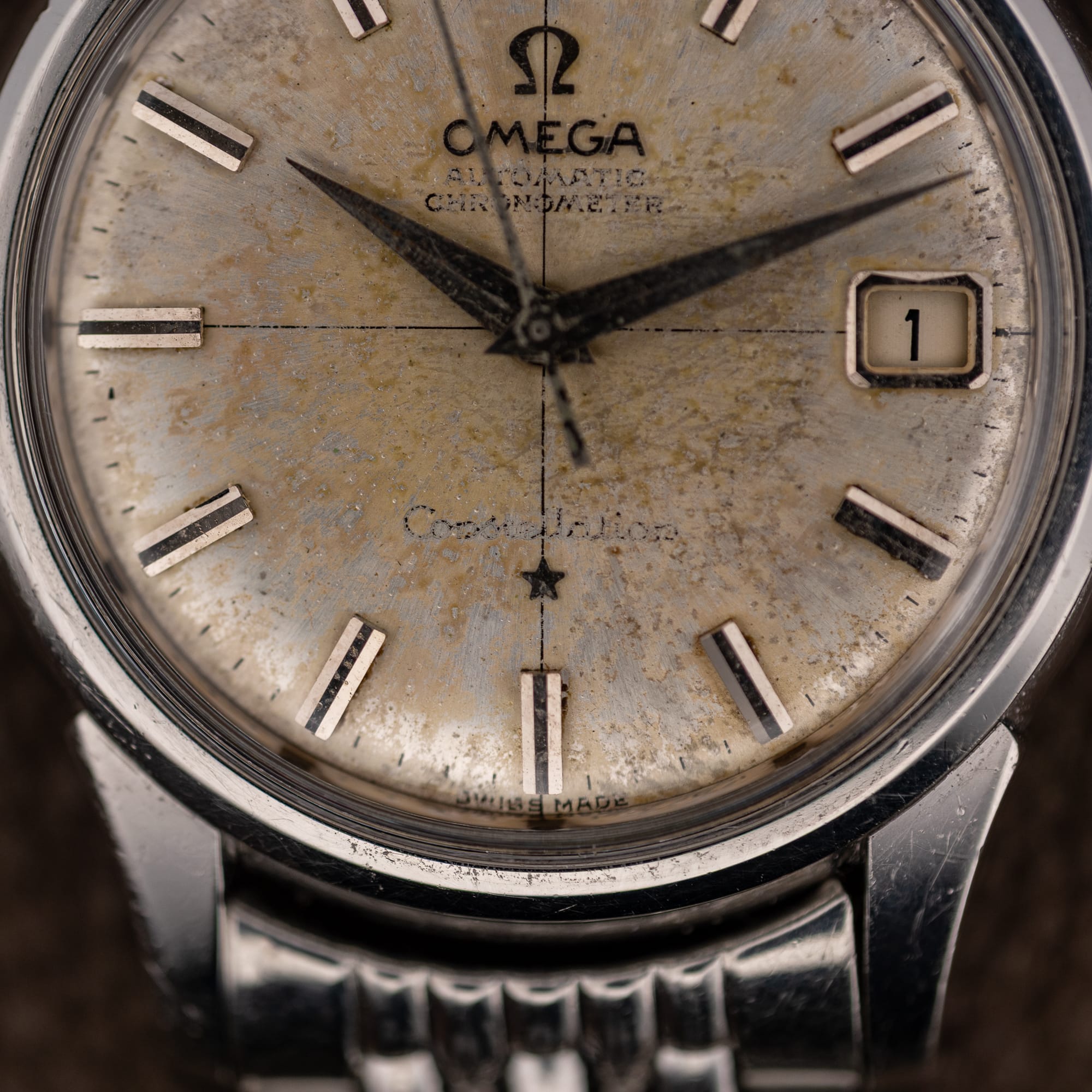
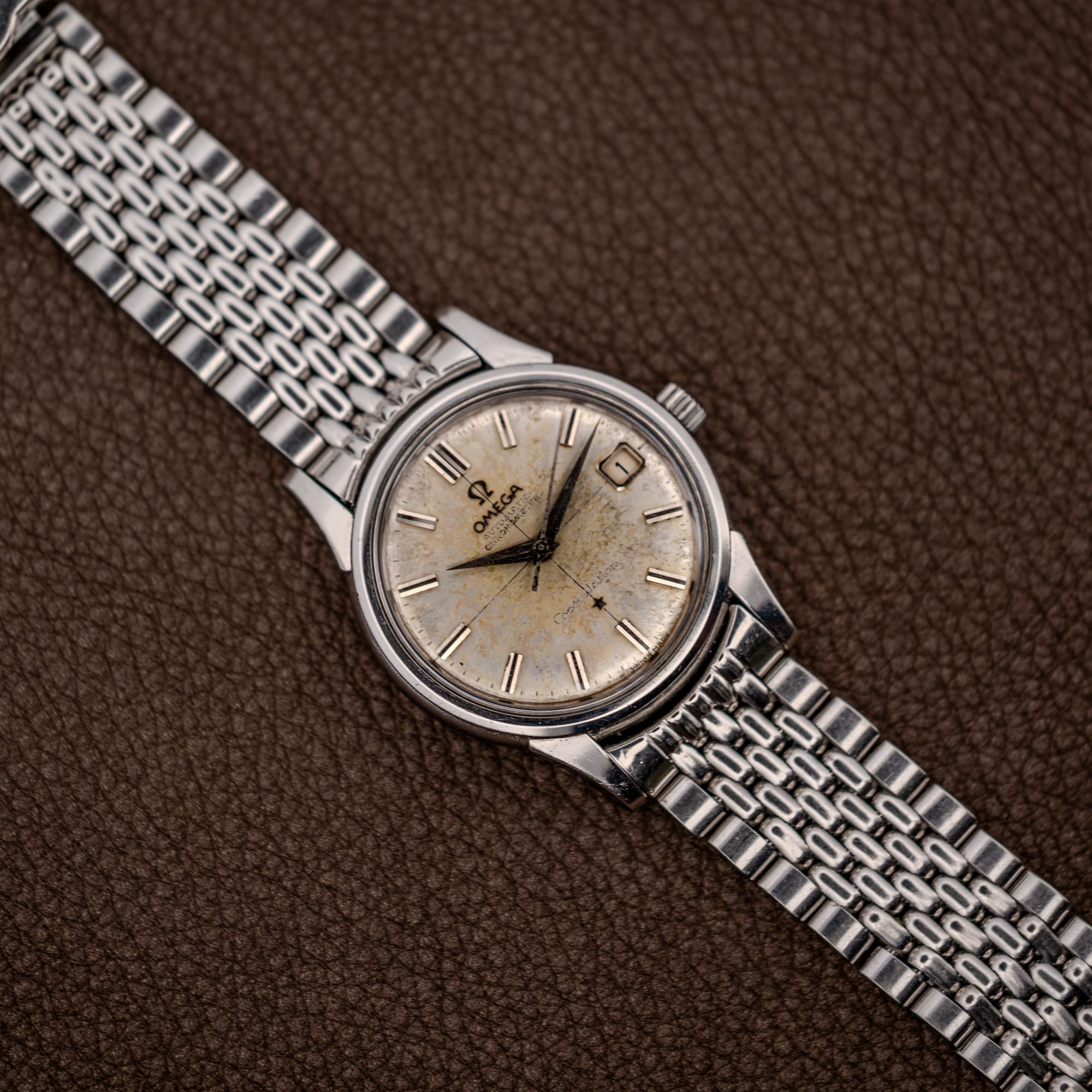
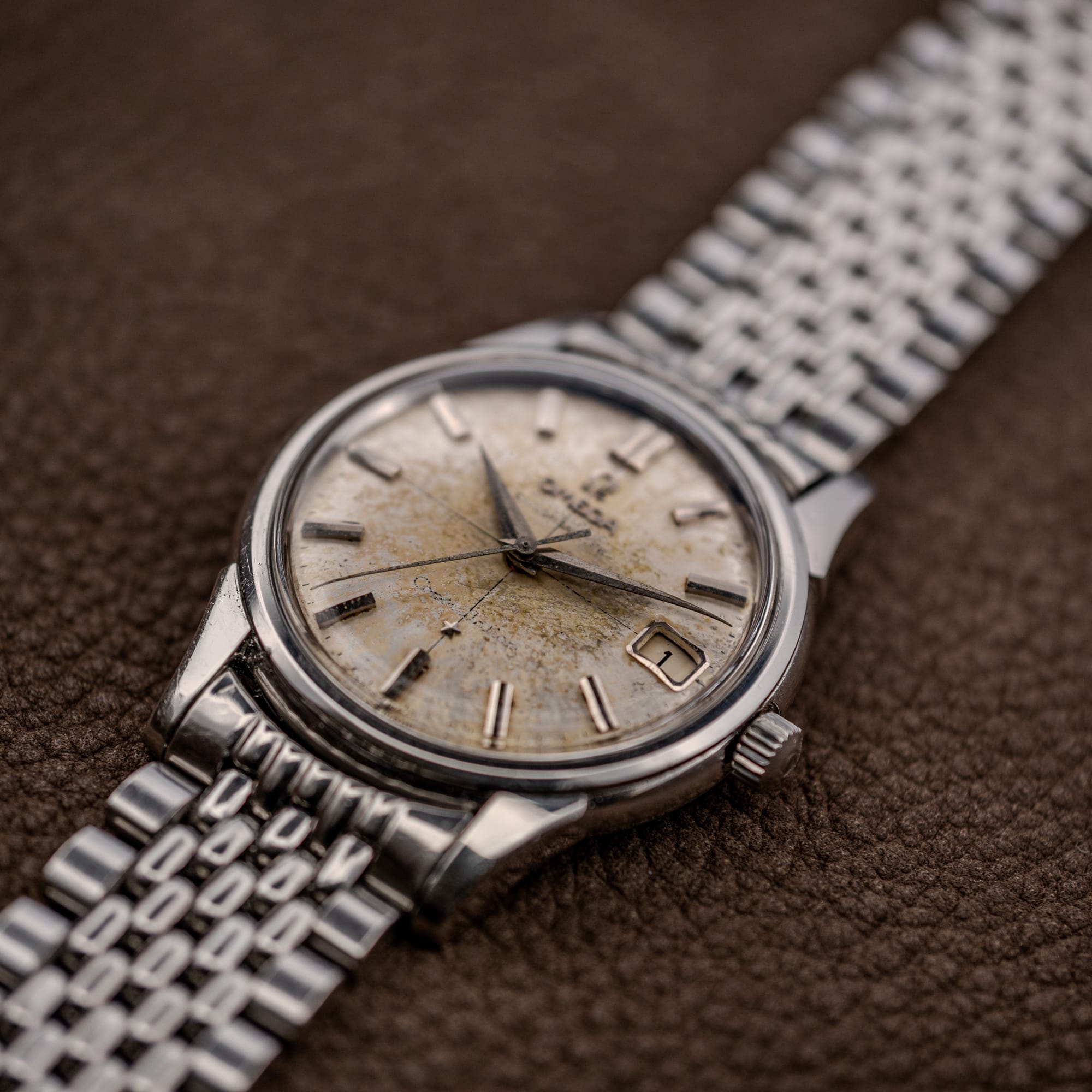
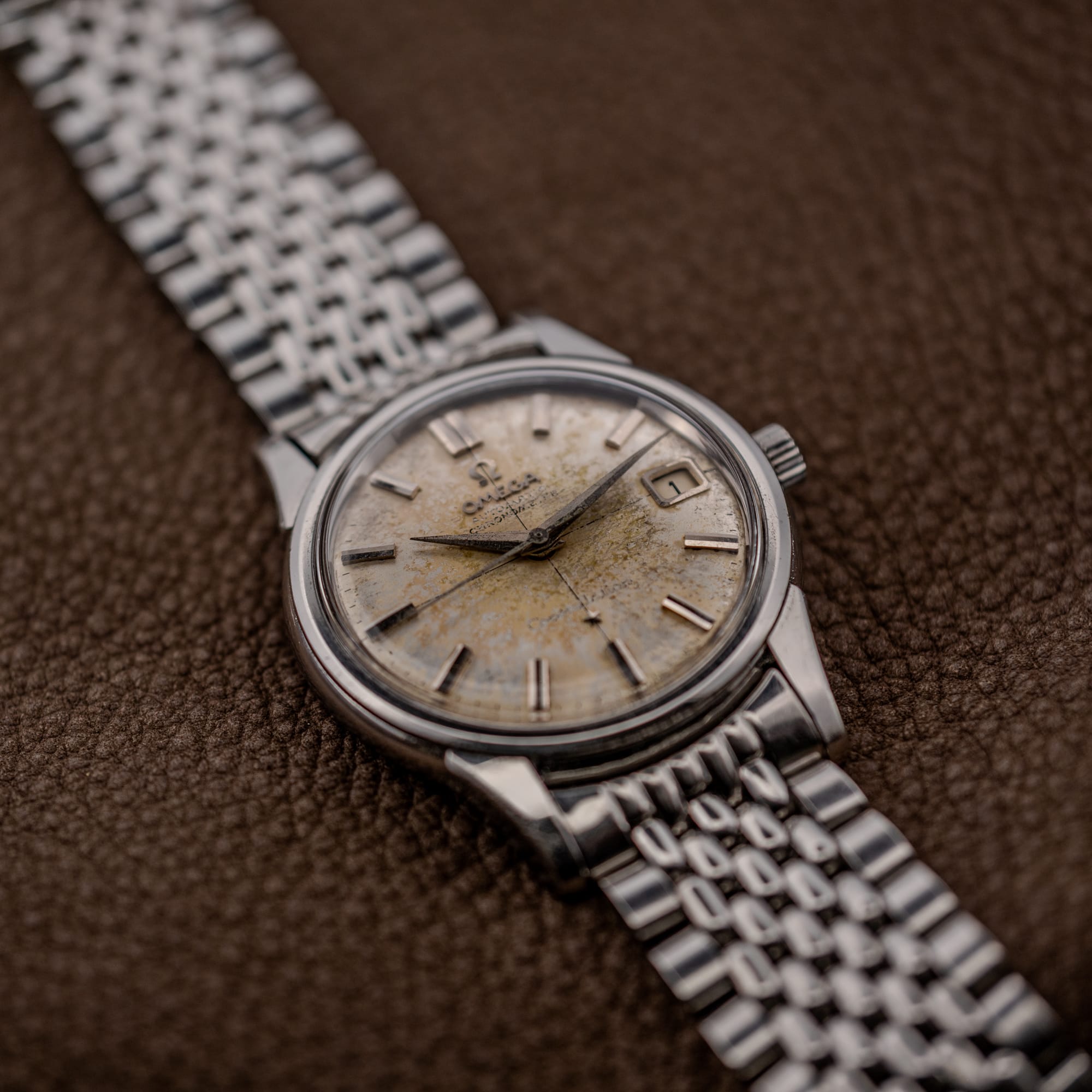
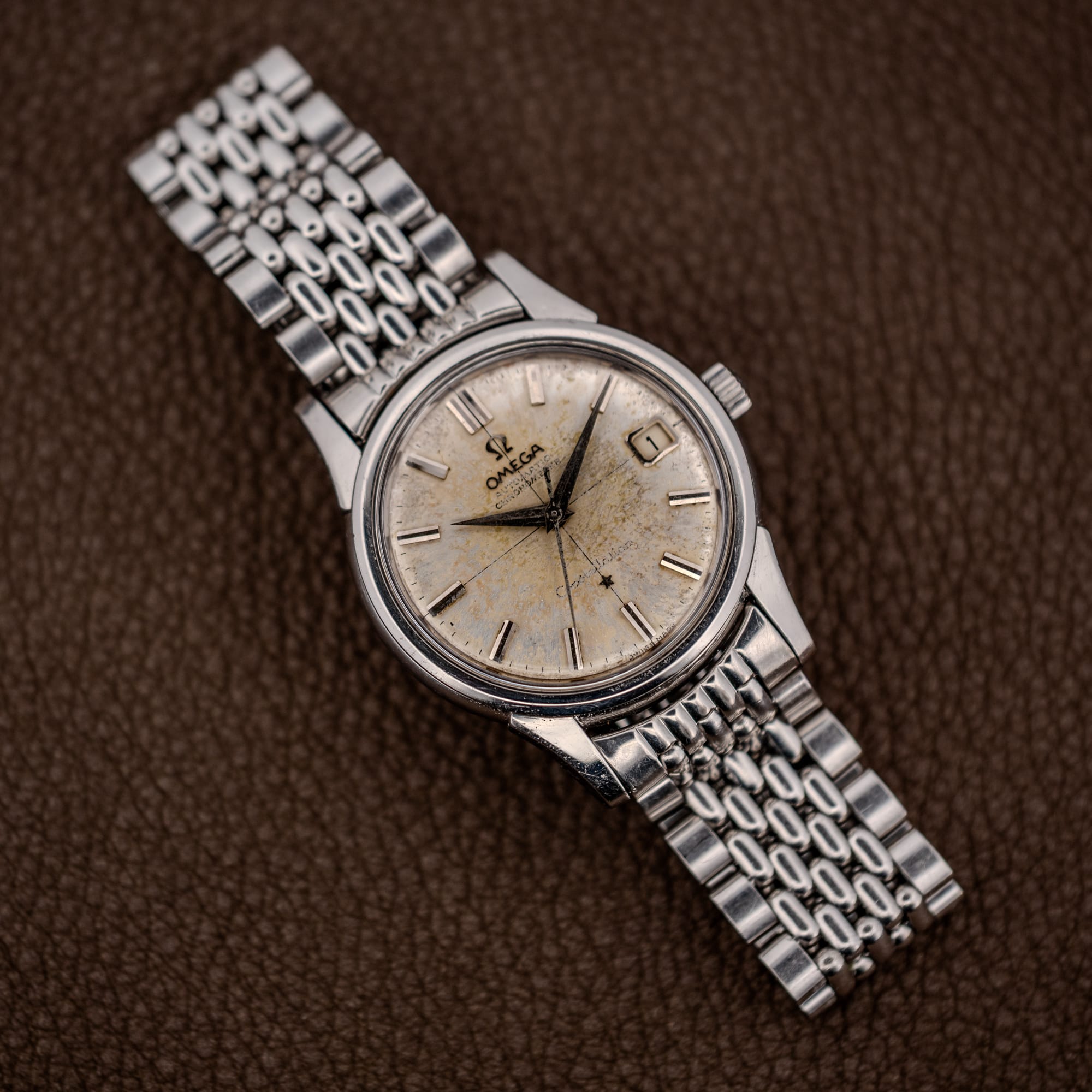
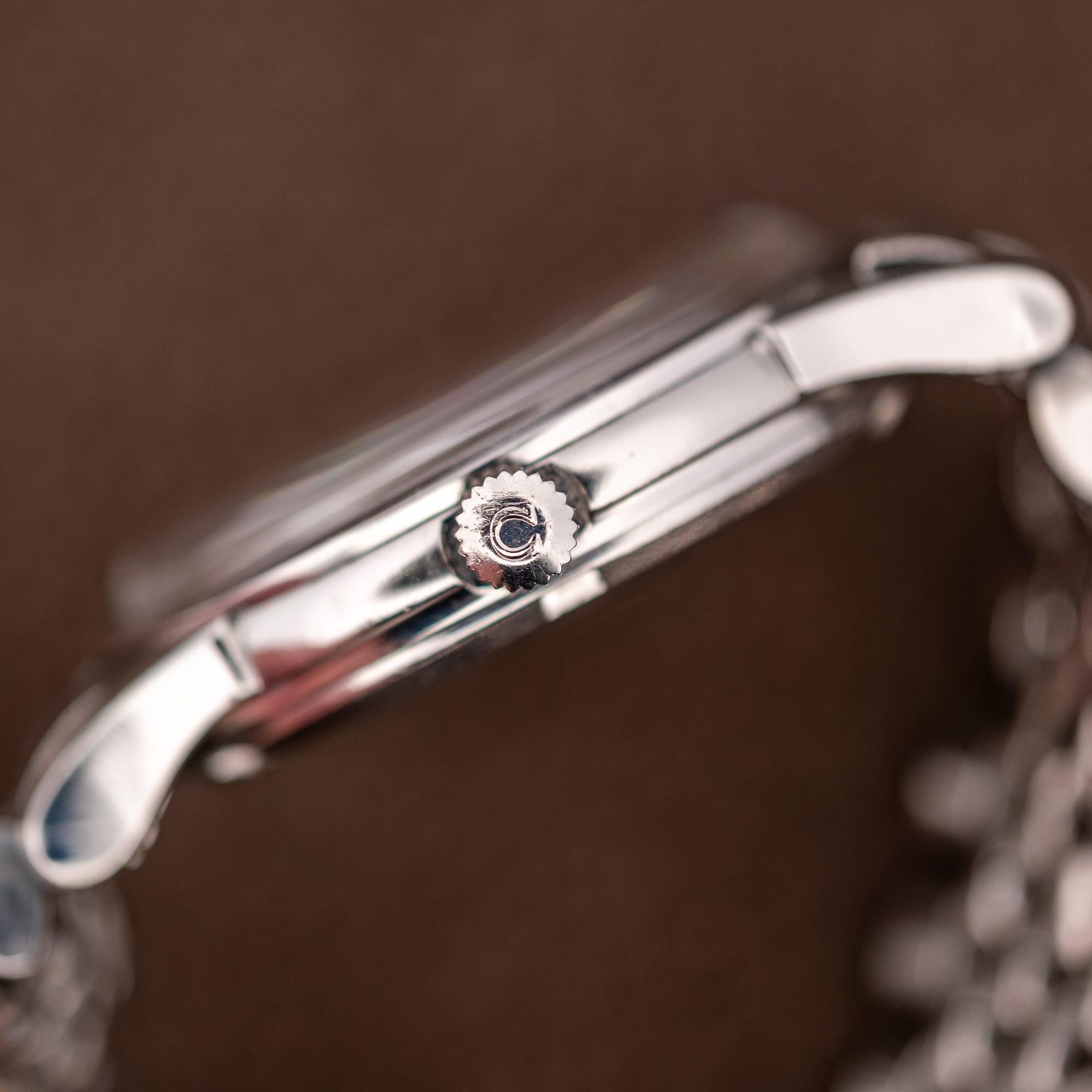
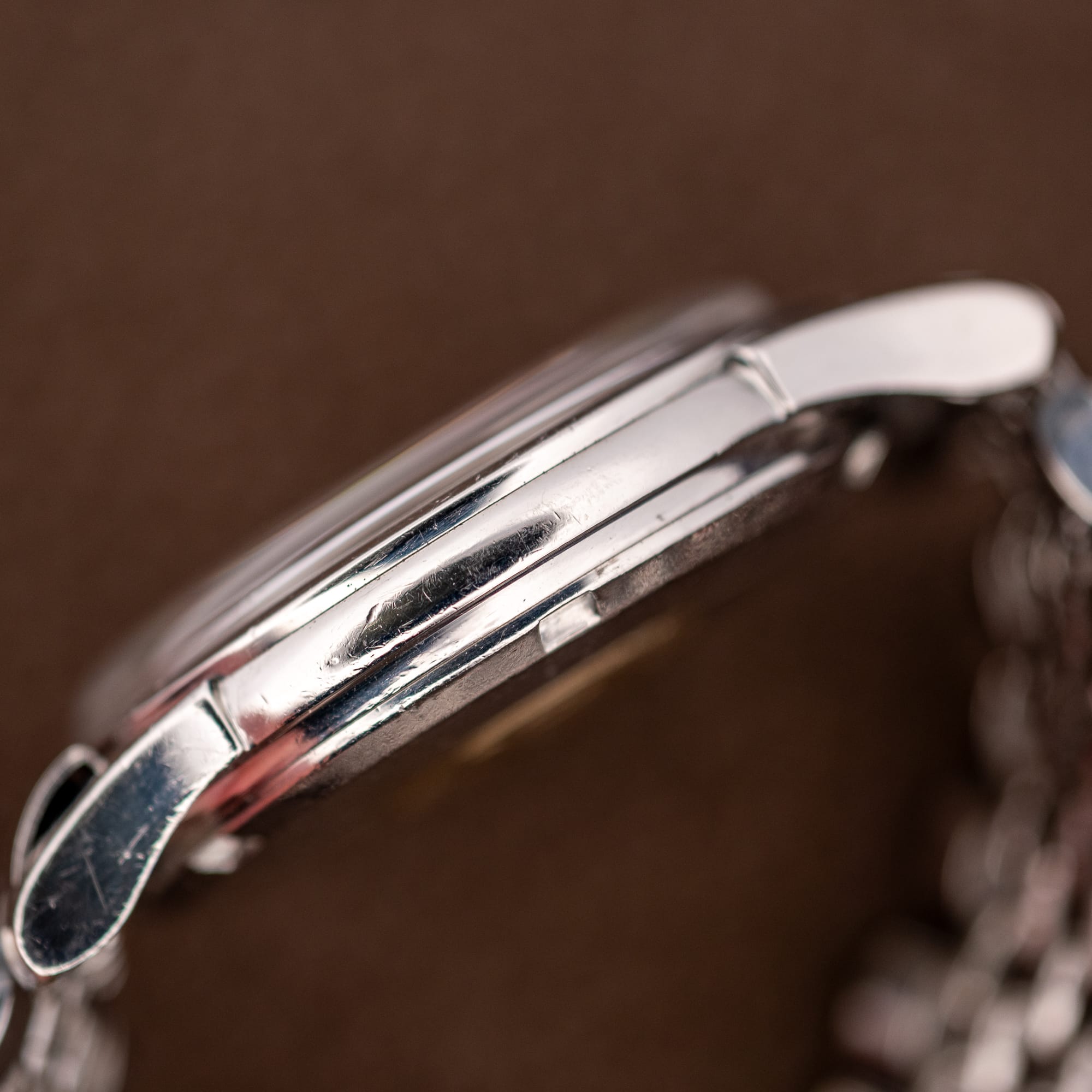
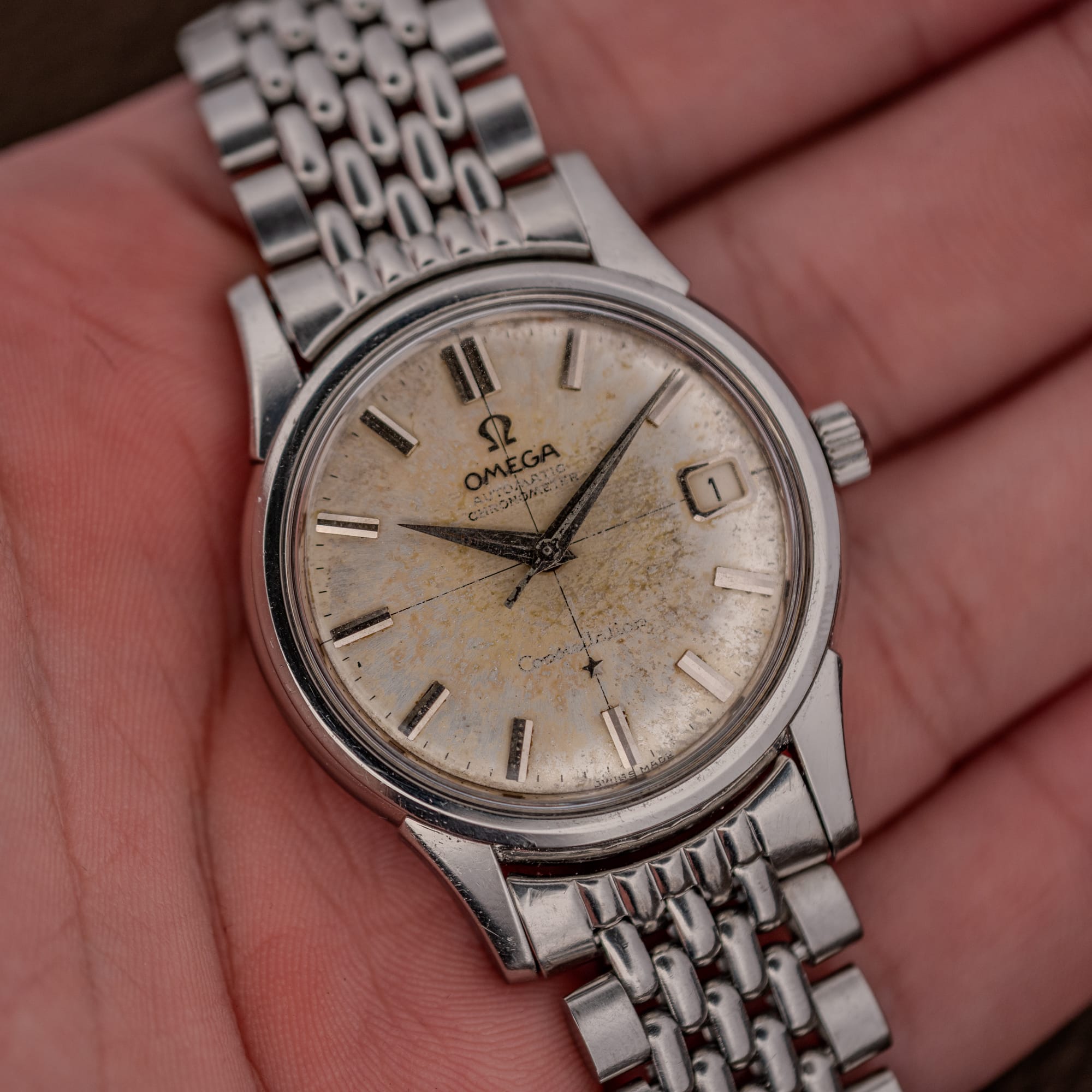
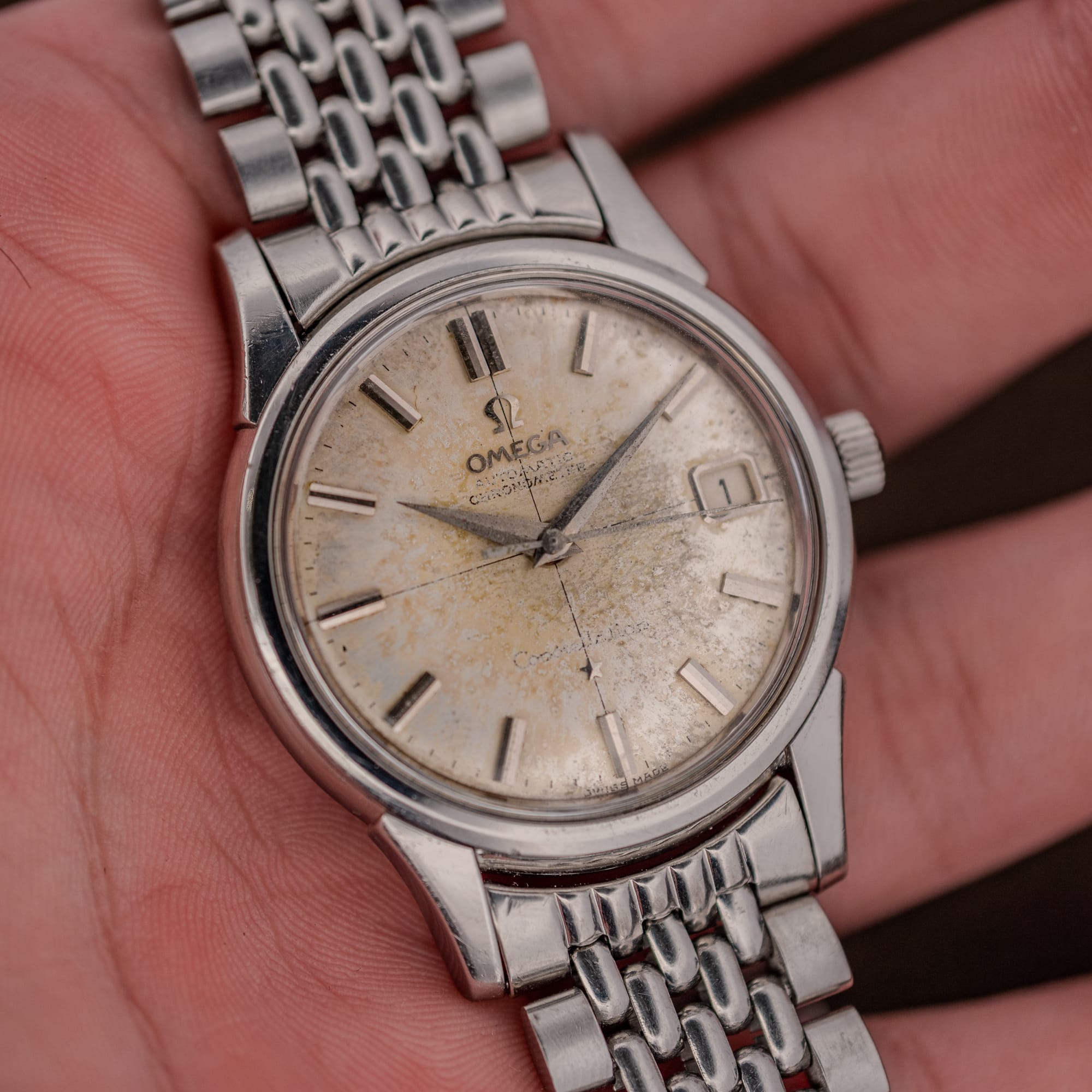
What all that shorthand describes is 35mm of stainless steel, 43.5mm lug to lug on 18mm lugs, polished across the decades until the case edges have gone soft and scratched on every surface that catches light. The off-white dial has done the most living. Heavy mottling and spotting run the width of the field, the Constellation script along the bottom has worn down to a whisper, the crosshair still holds its lines, the applied baton markers keep their dark inlays, and the dauphine hands have gone dark with tarnish. The crystal is scratched and hazed. The caseback carries its scars in the open, including the notches left by every watchmaker who ever went into it, though the gold-tone observatory medallion has outlasted all of them. The dial has been left exactly as it aged, which is the point: a refinished dial would have cost this watch the one thing it could never get back.
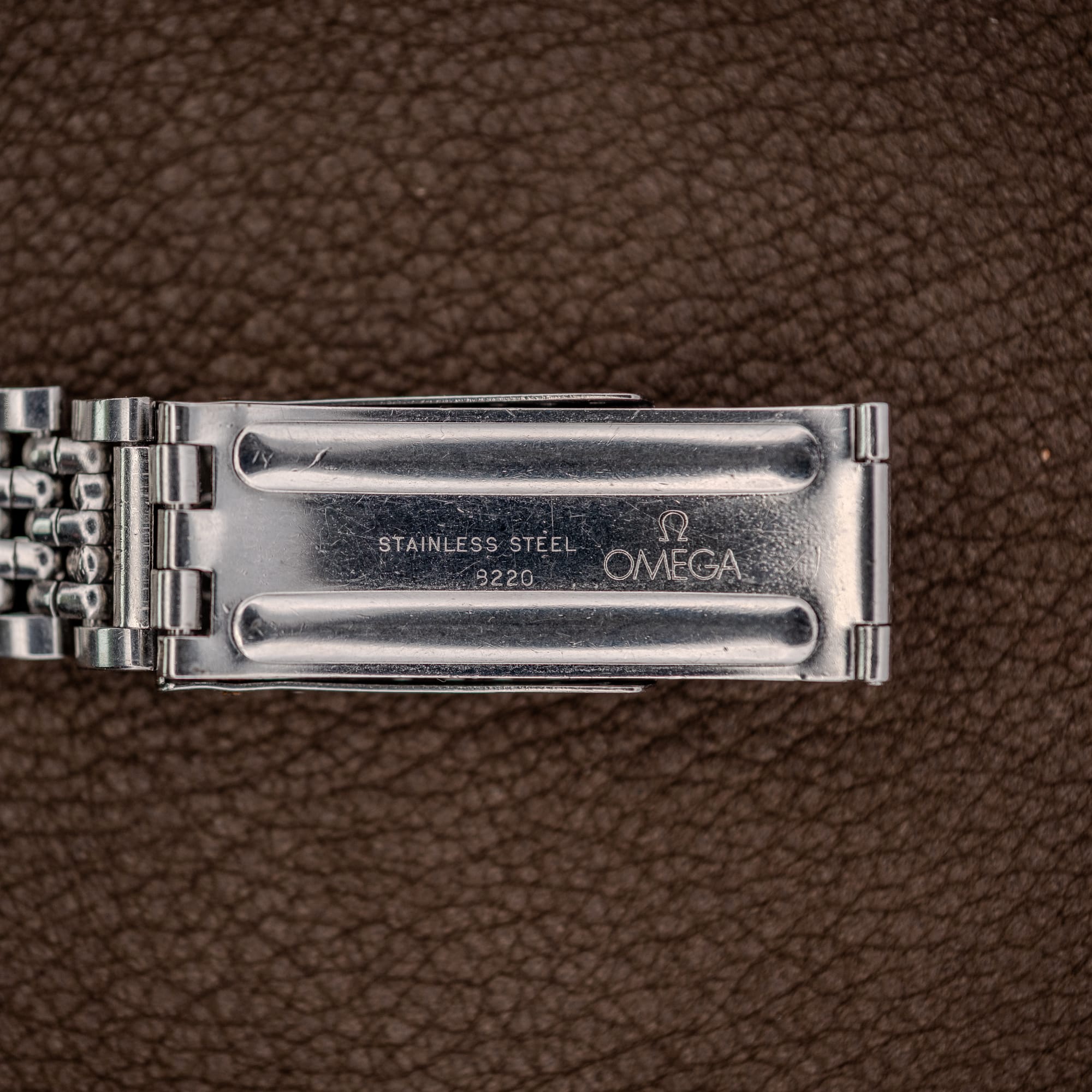
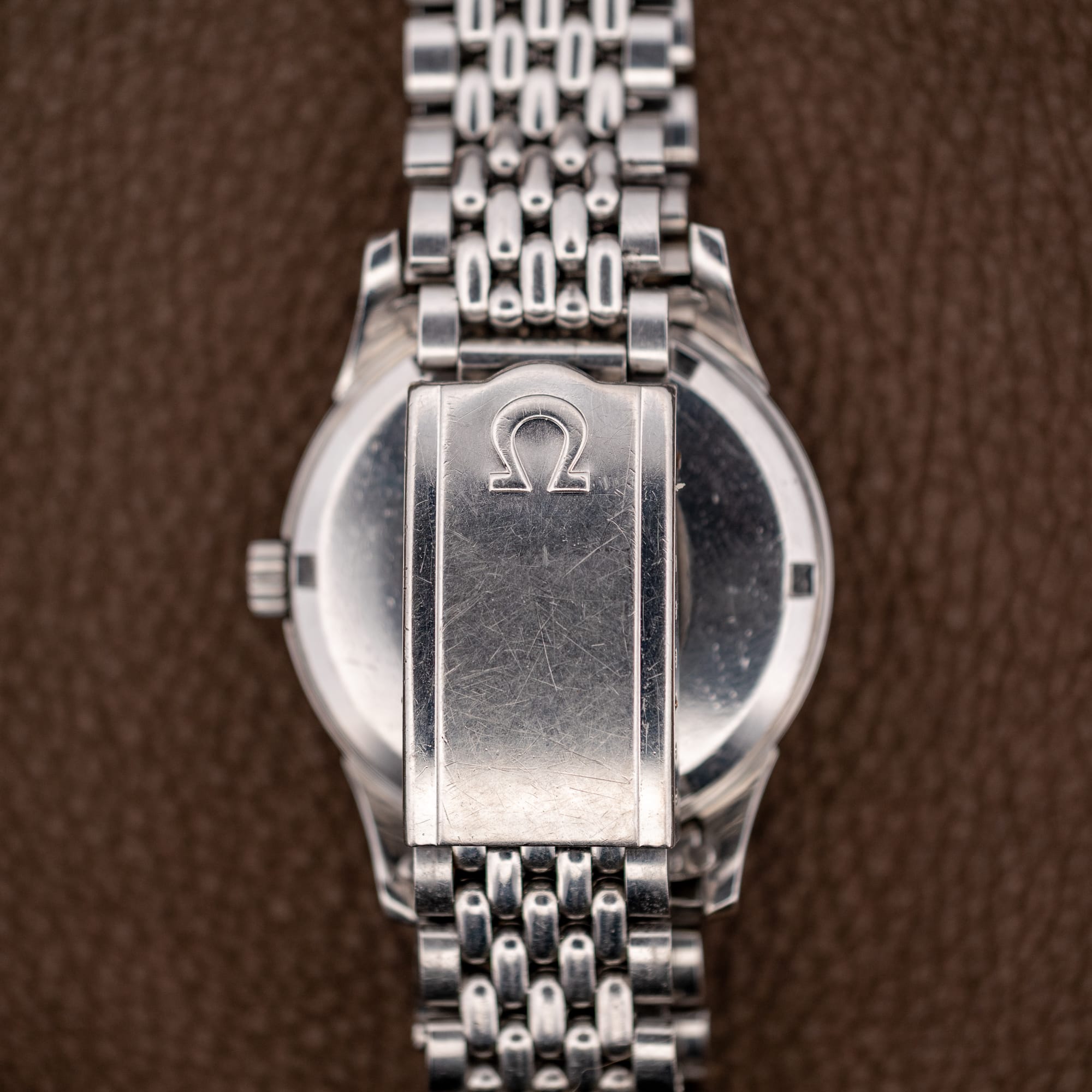
Serviced in-house at OTTUHR and backed by our 2-year mechanical warranty, on a later stainless steel bracelet with an Omega-signed folding clasp. The stamp inside this caseback was never meant for us to read. Sixty-odd years on, it is still the most honest thing on the watch.