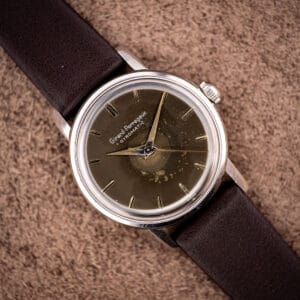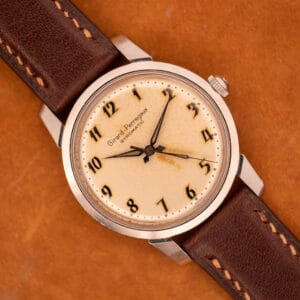
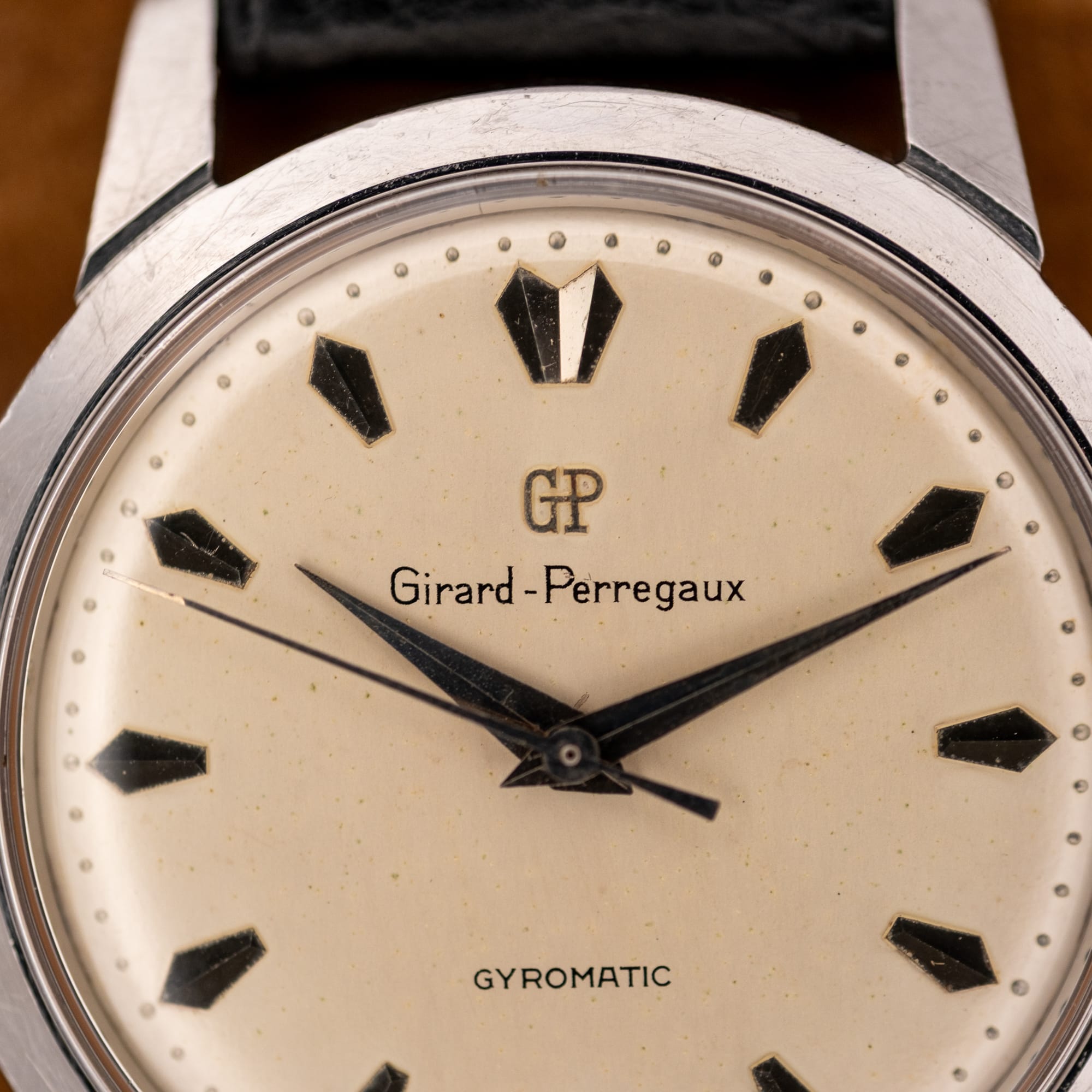
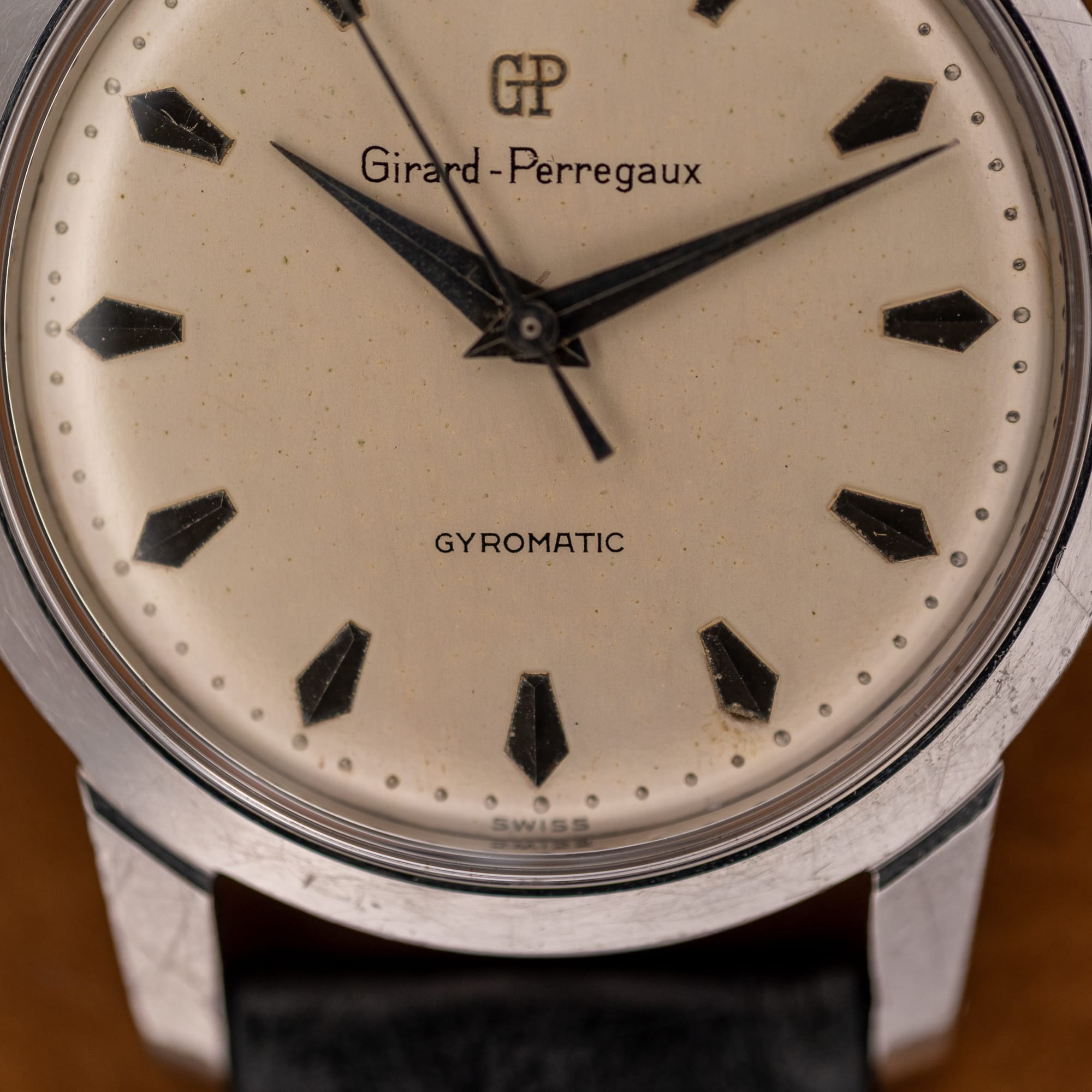
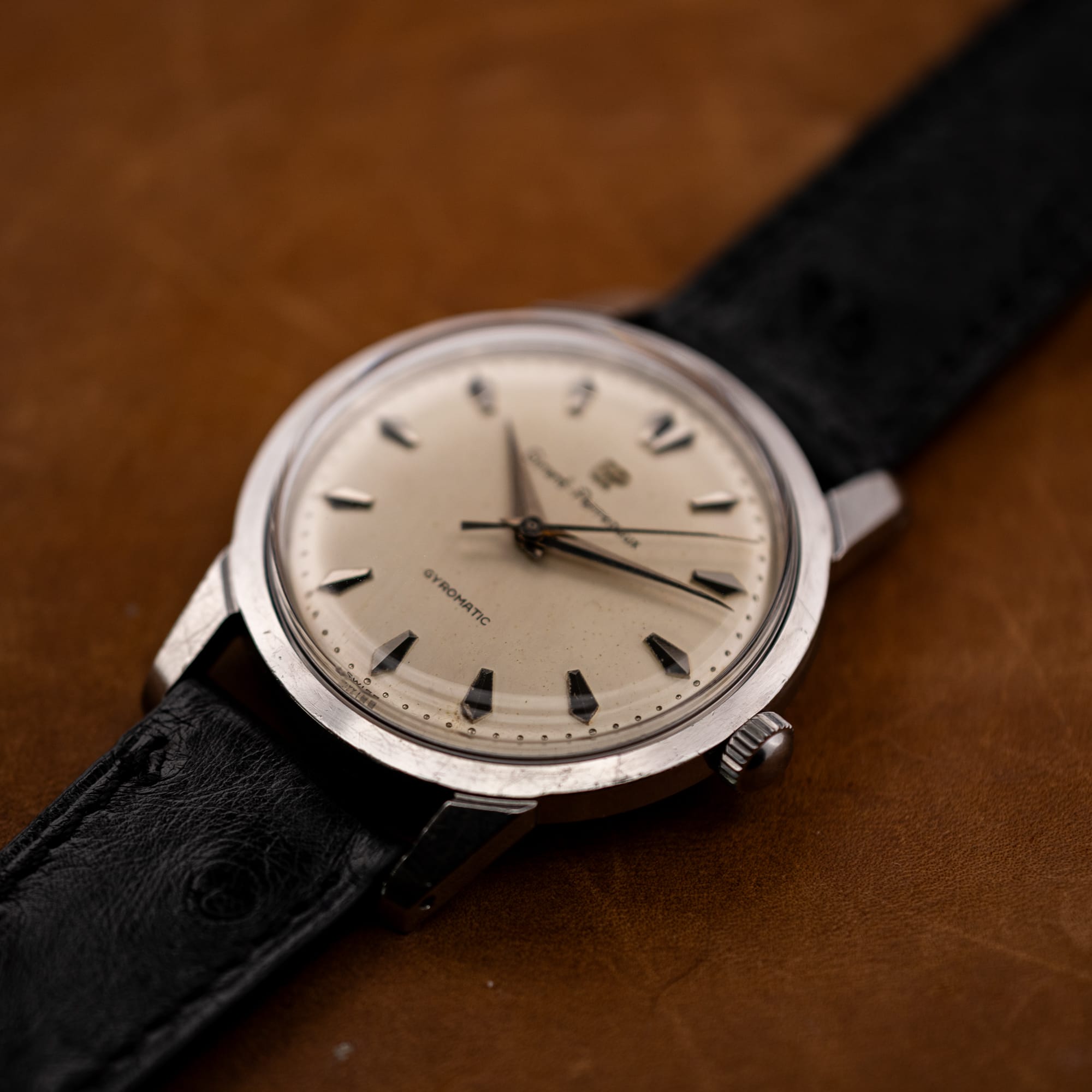
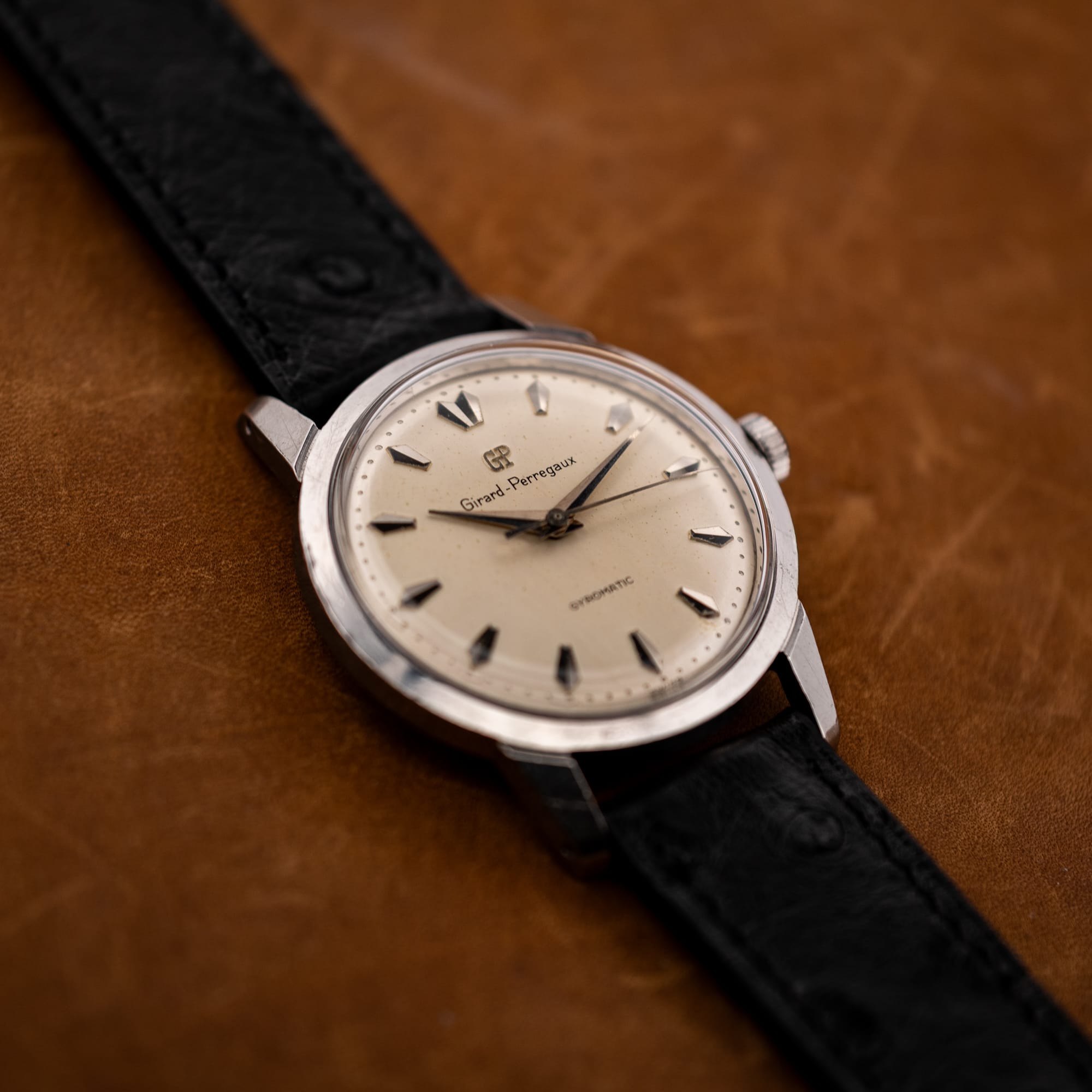
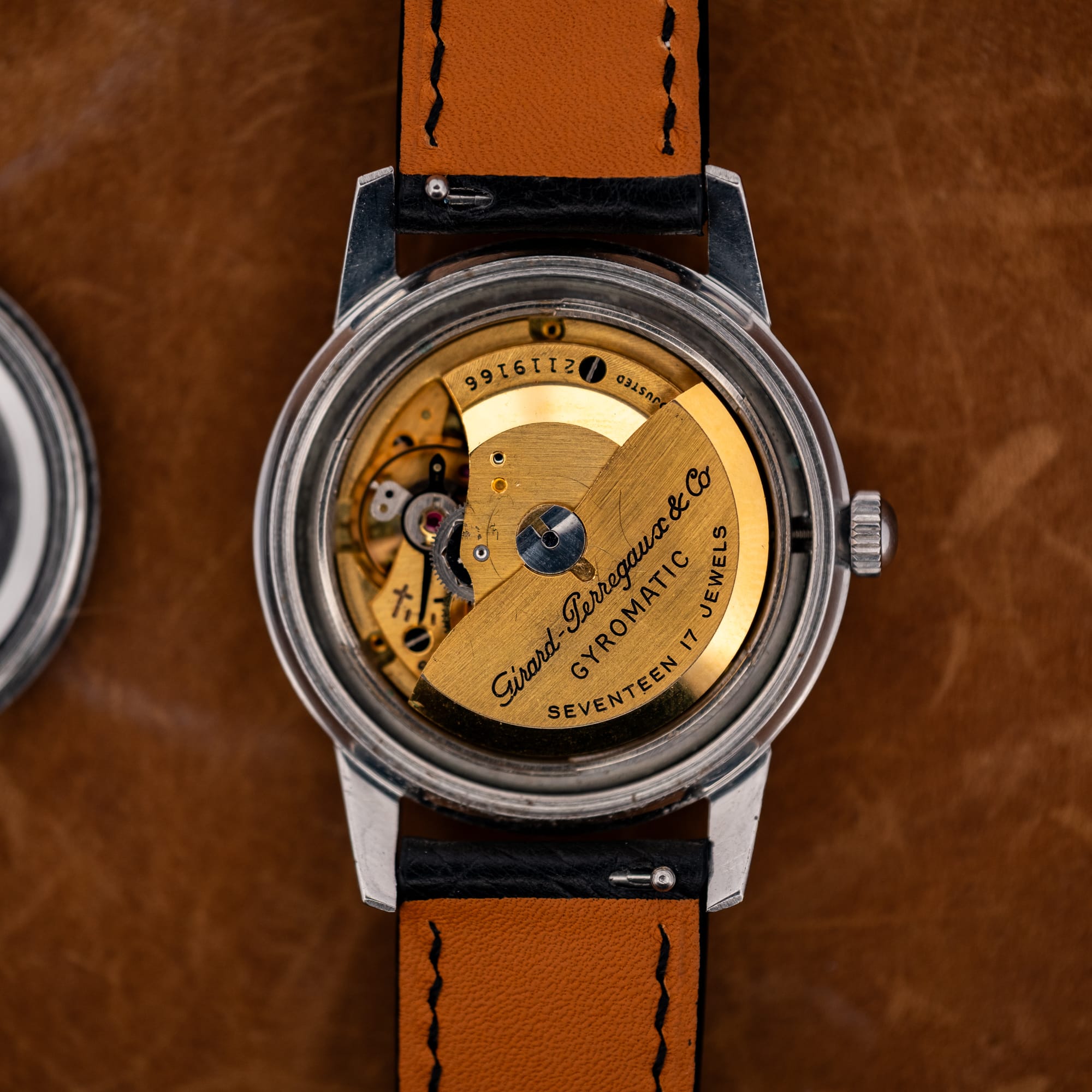
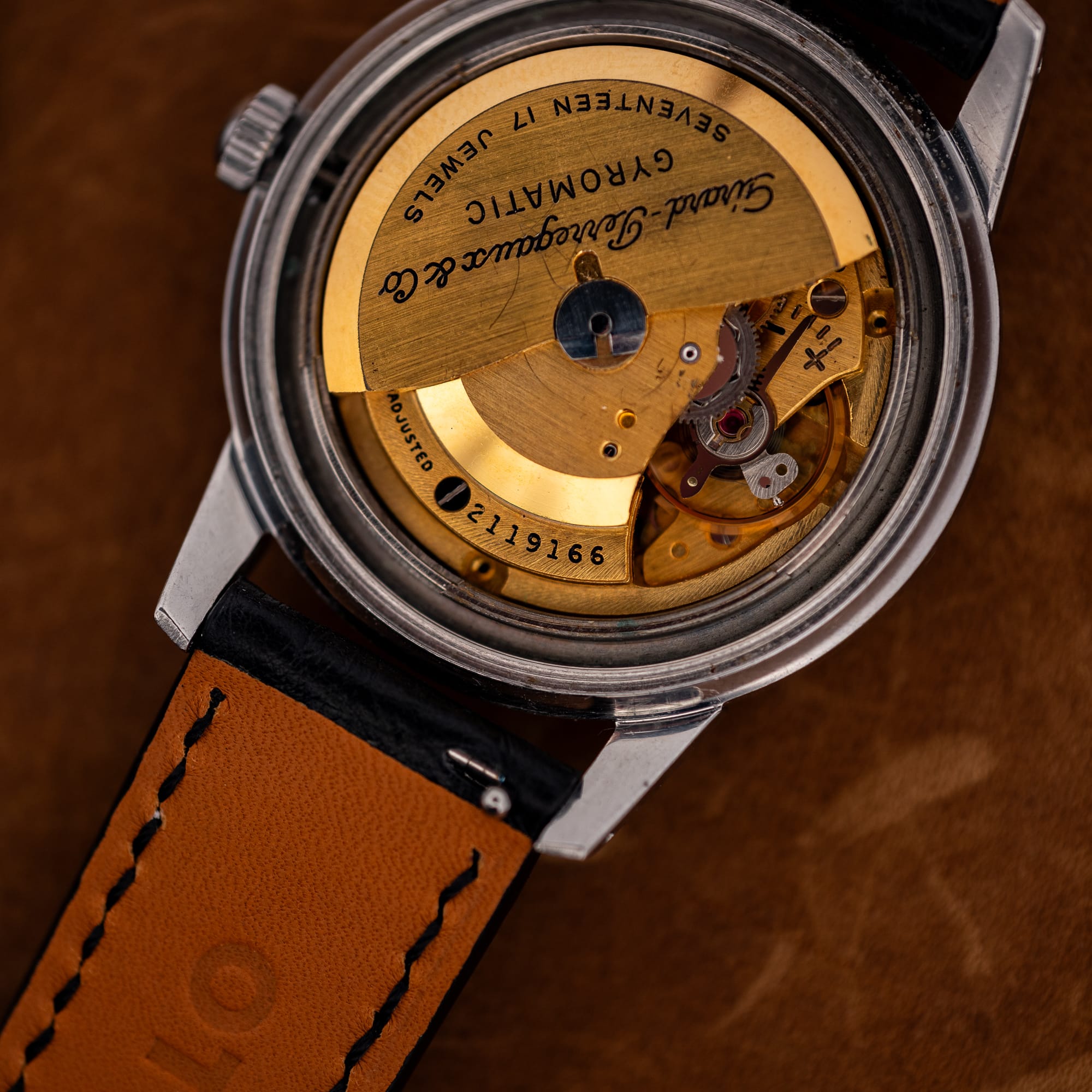
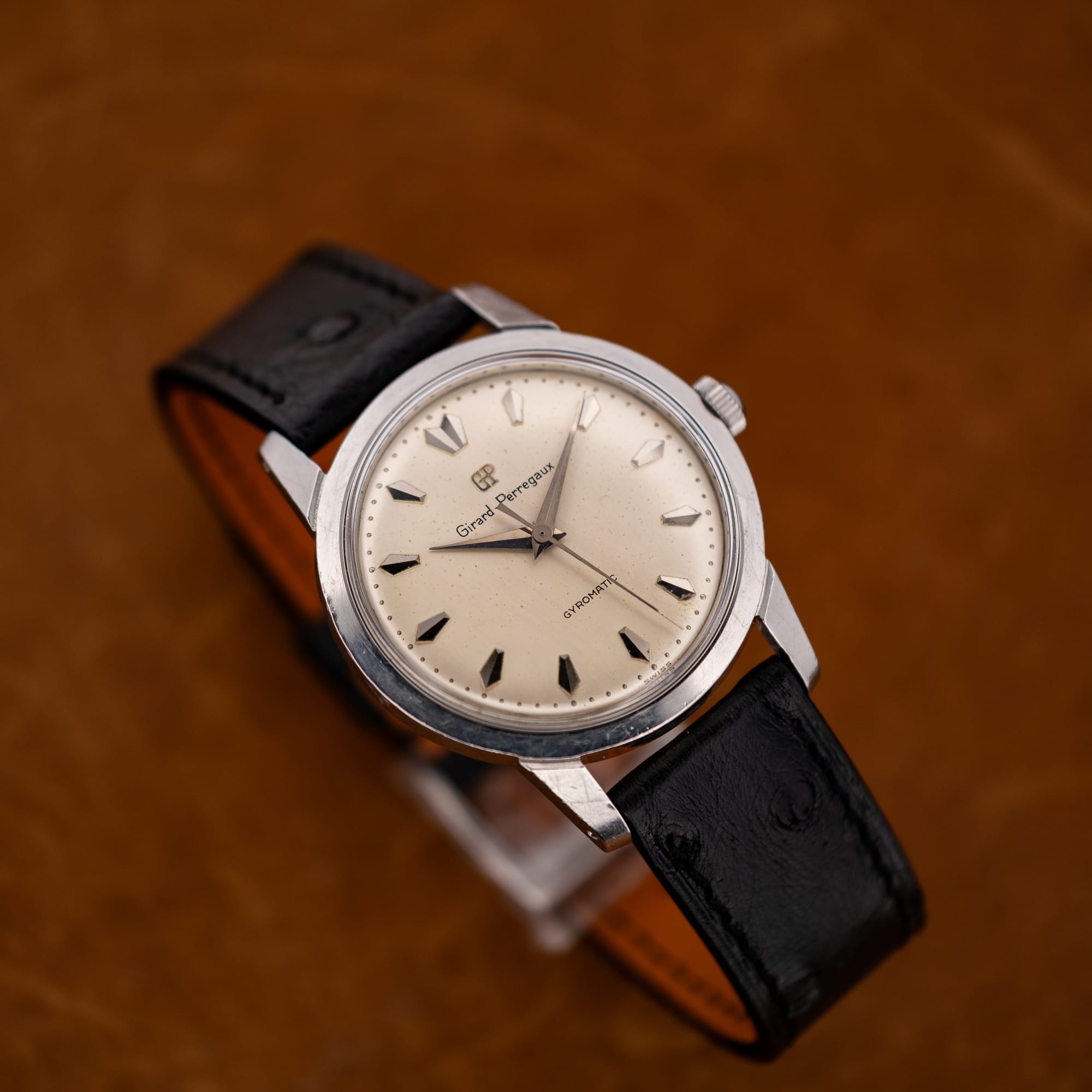
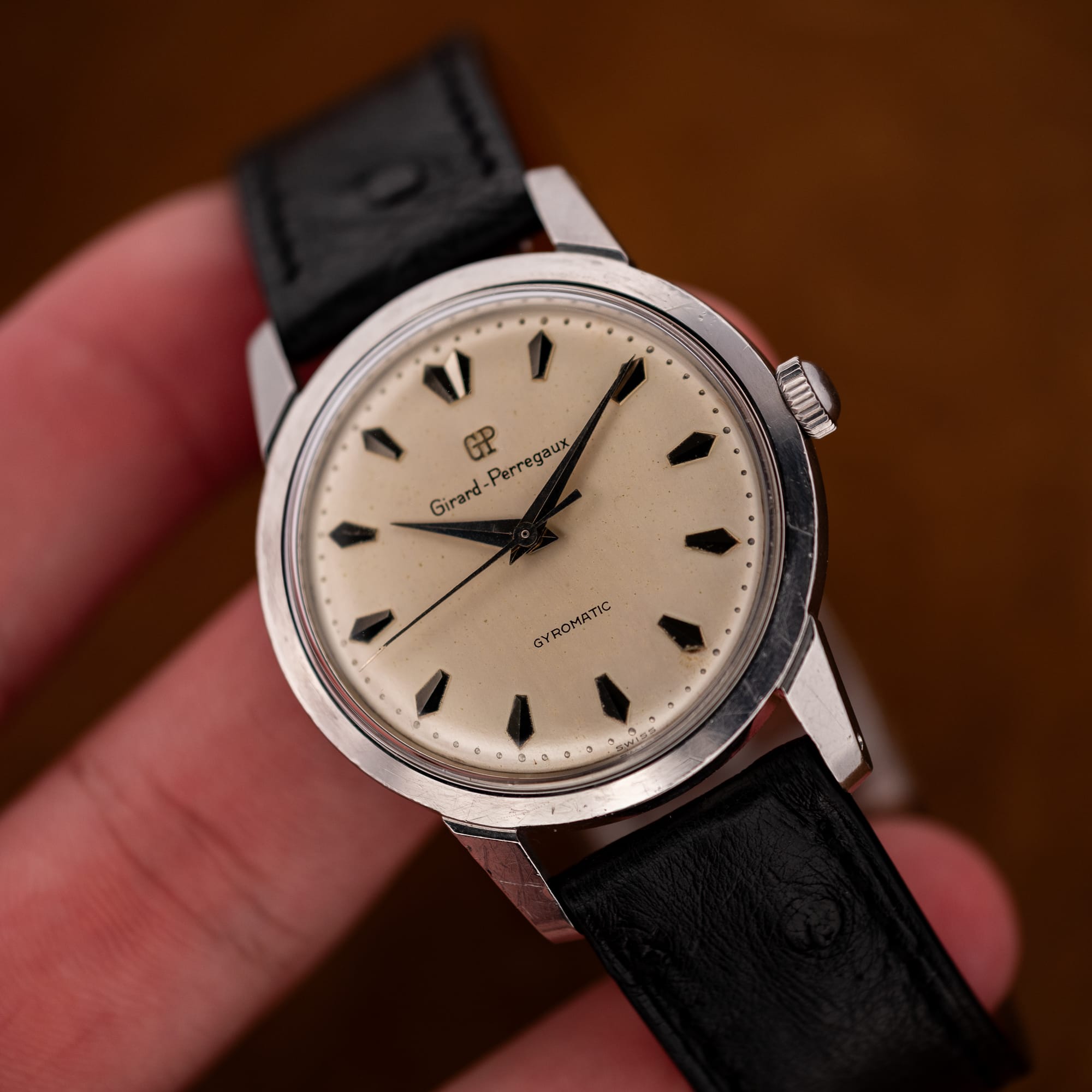

In 1957, Girard-Perregaux gave an automatic-winding mechanism a name worth putting on the dial: Gyromatic. The Girard Perregaux Gyromatic takes its identity from that engineering project, rather than a destination or a sporting pursuit. We like the directness of it. Beneath the pointed hands and sharply cut markers of this example sits a name with an actual mechanical explanation, one that makes its restrained appearance rather more interesting than it first lets on.
The early Gyromatic system addressed a particular problem in automatic watchmaking: converting the rotor’s back-and-forth motion into winding in one direction. Girard-Perregaux’s solution used roller-equipped clutches in place of conventional ratchet wheels. Its compact construction also left room for refined case proportions. That is the useful connection here, between an engineering solution inside and the possibility of a less bulky watch outside. The appeal was not a complication to display on the dial, but a winding mechanism that could go about its work beneath an otherwise straightforward watch.
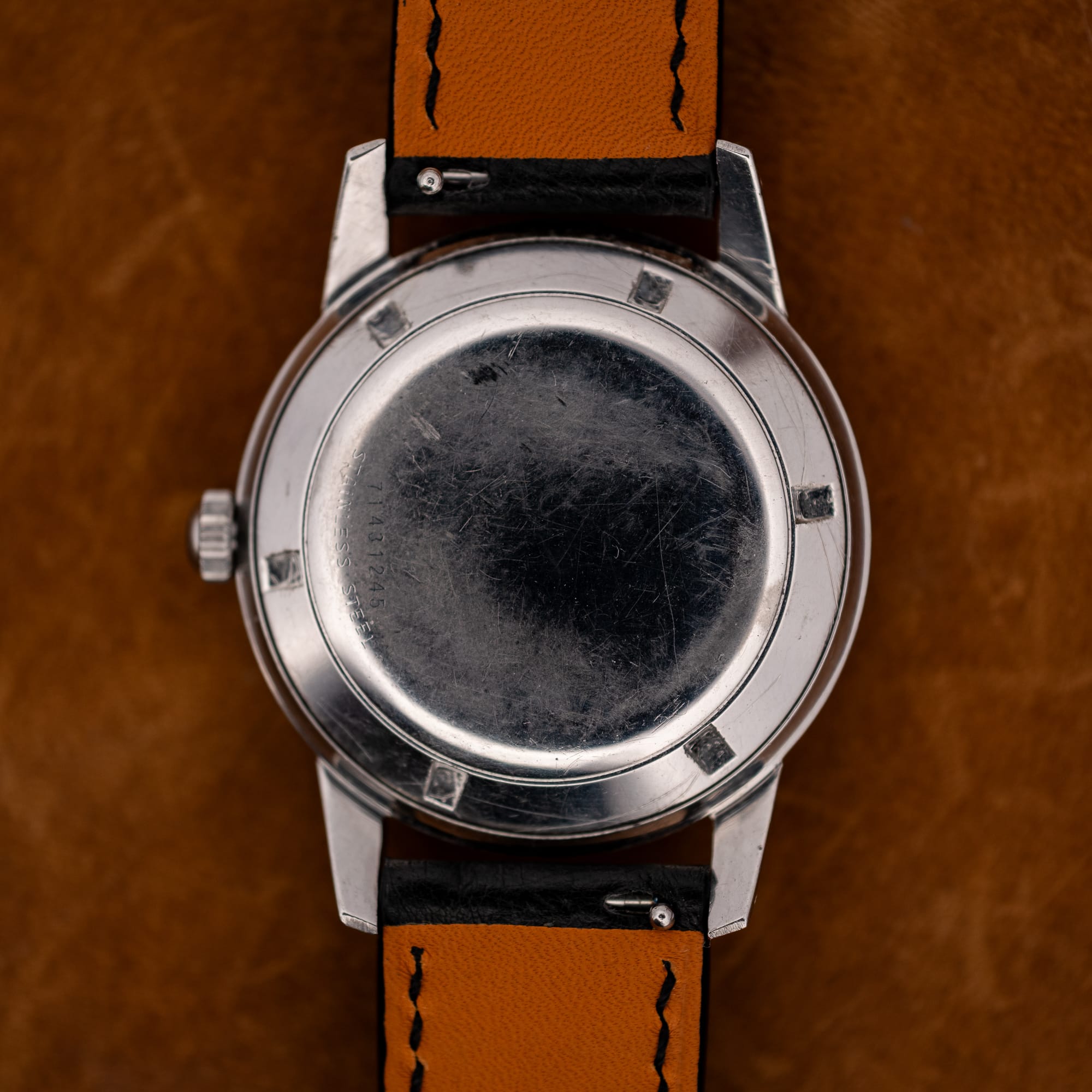
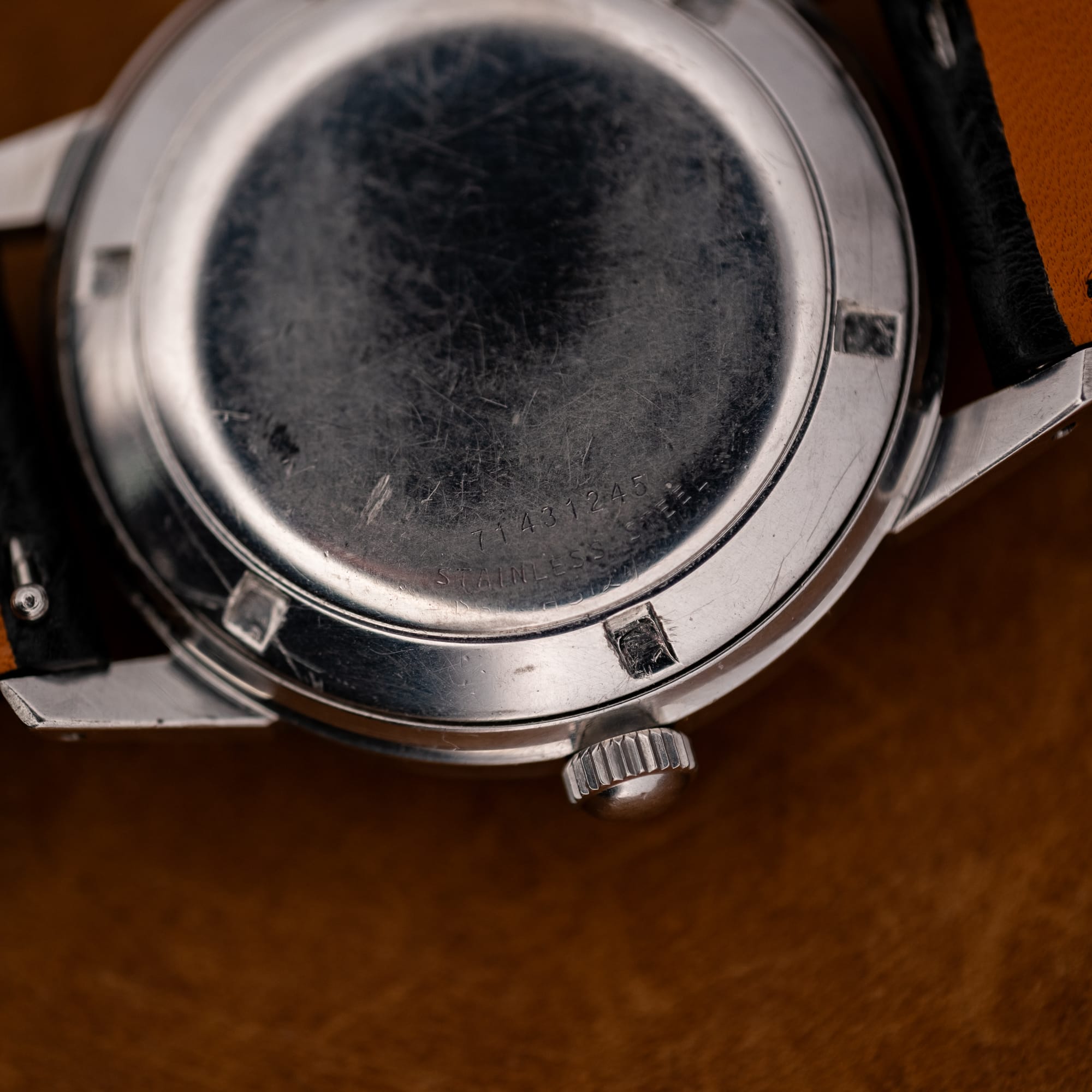
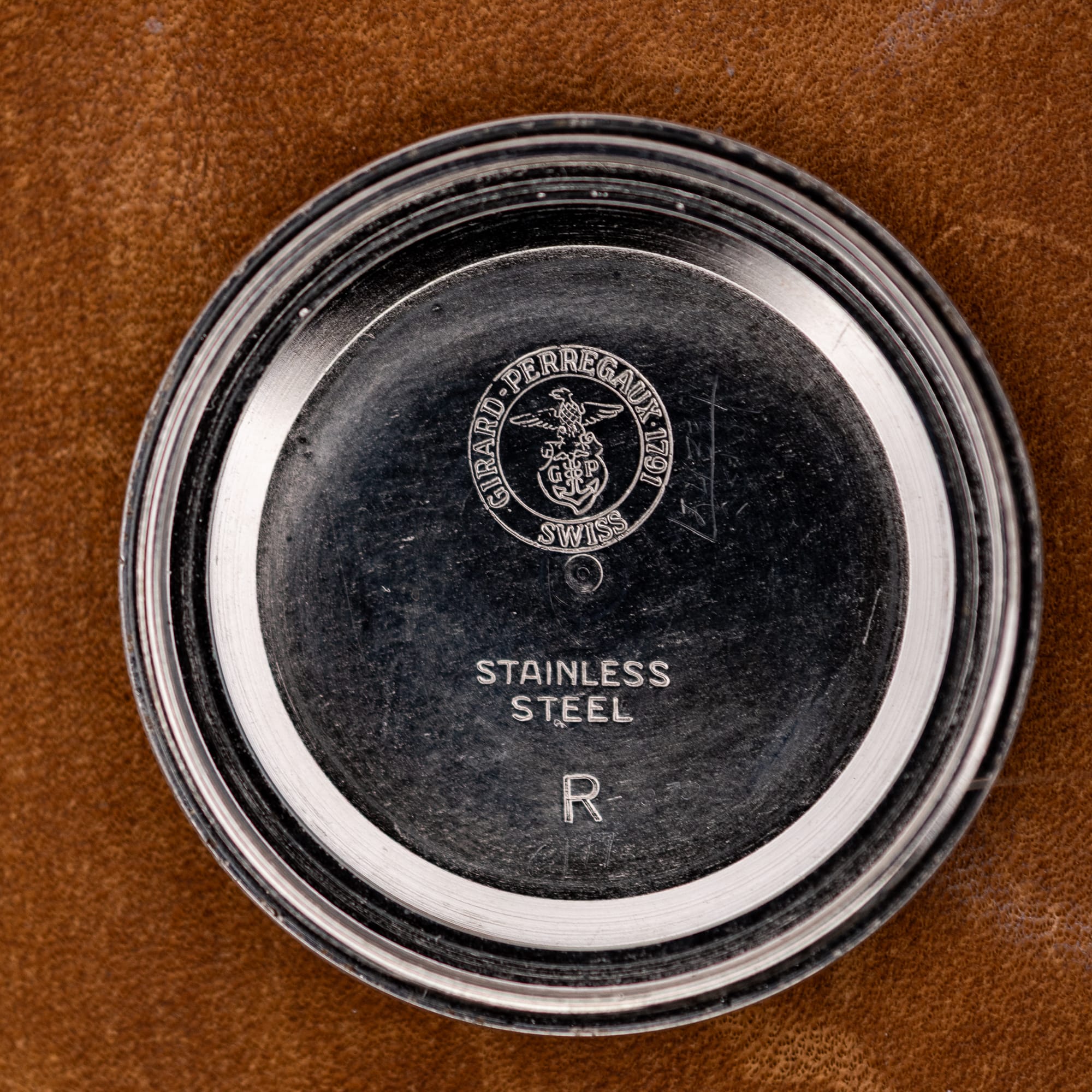
The name endured well beyond its introduction. In 2016, Girard-Perregaux returned to that chapter with a watch called the 1957, borrowing the visual language of its vintage automatics. The tribute used a different, contemporary winding system, an interesting distinction between reviving an appearance and revisiting a mechanism. It also helps explain our interest in the vintage family itself. Here, Gyromatic is signed on both dial and rotor. It puts the family connection in two places, one visible at a glance and the other hidden beneath the solid back.
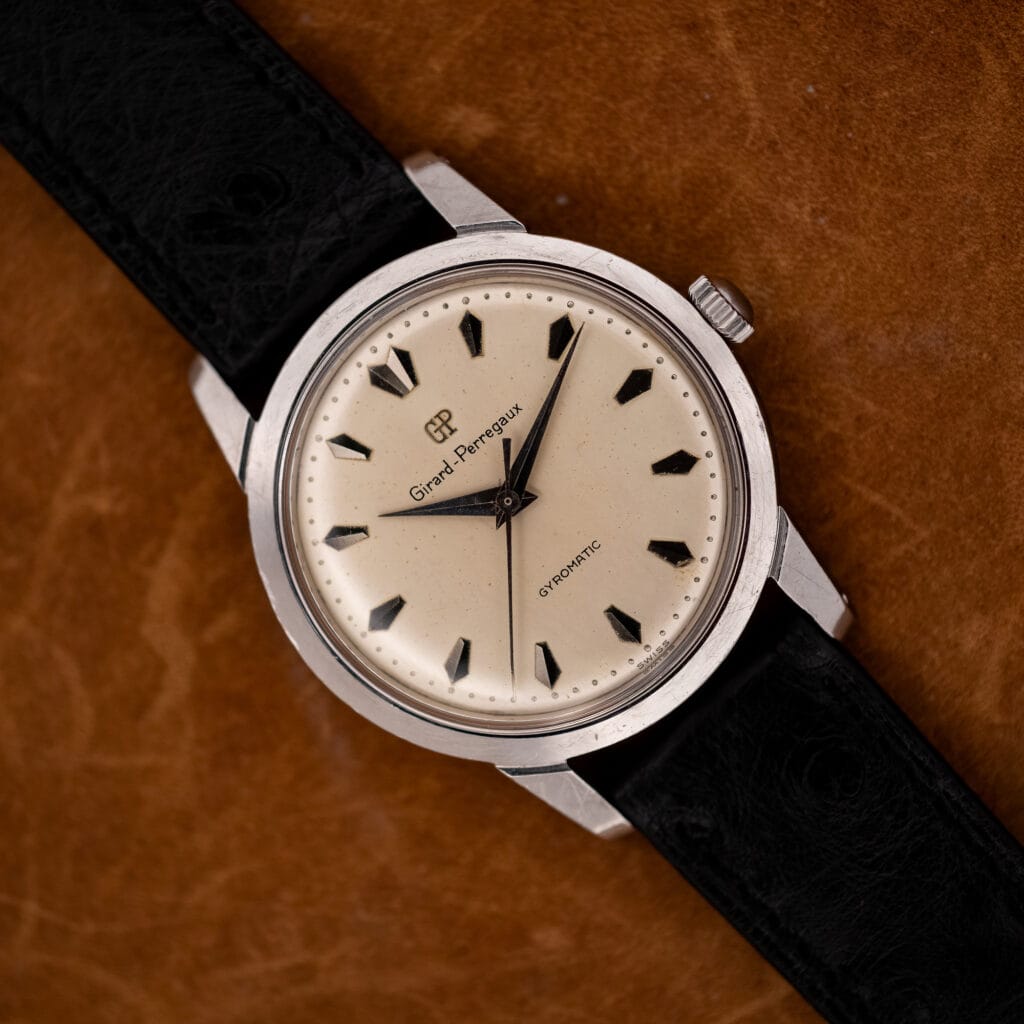
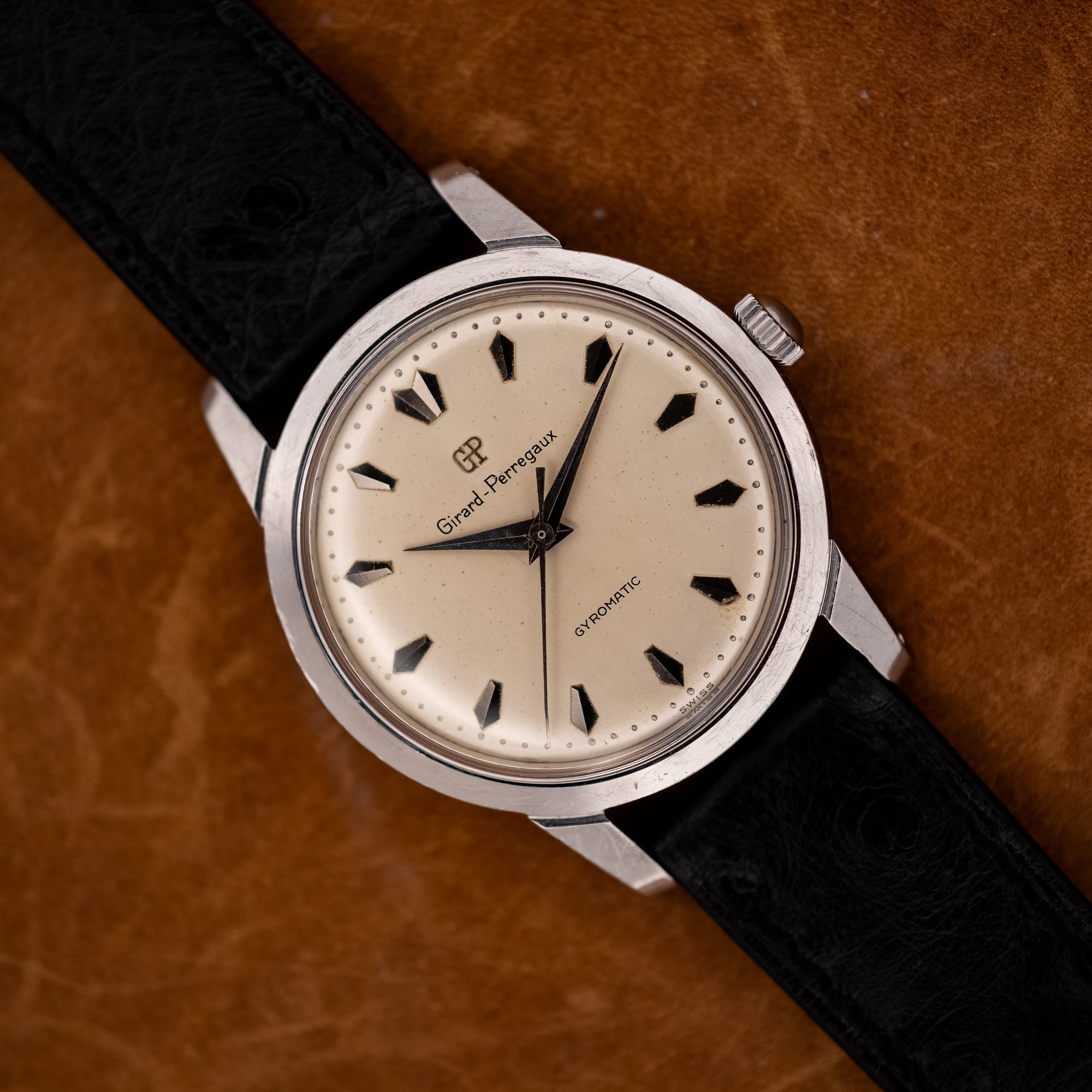
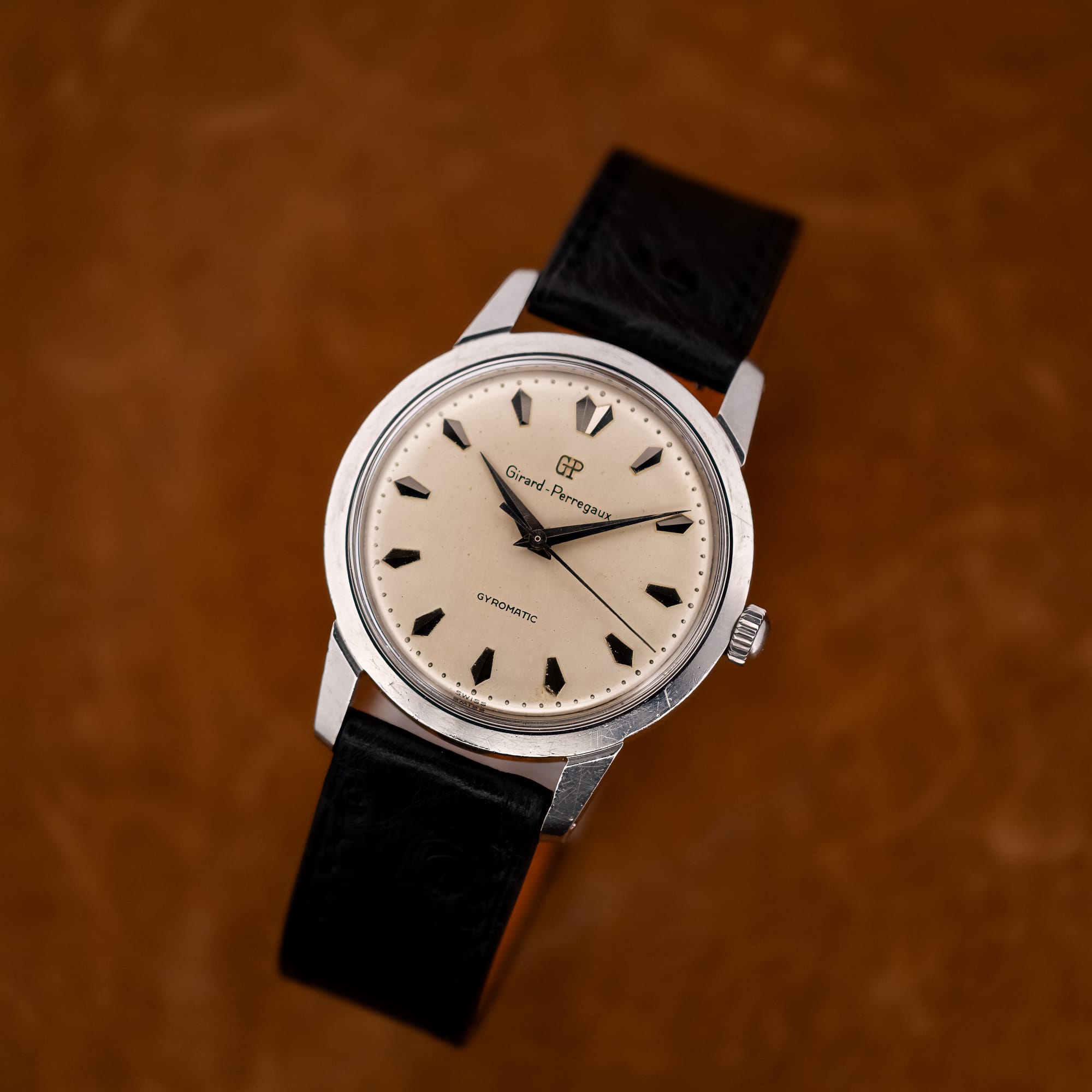
This Girard Perregaux Gyromatic makes a particularly clear expression of the idea. There is no date window to interrupt the hour markers, and no extra scale competing with the hands. The automatic movement carries a 17-jewel inscription; on the dial, the mechanical identity is reduced to one word beneath the center. We find the contrast appealing: the name invites a closer look inside, while the face remains content with hours, minutes and central seconds.
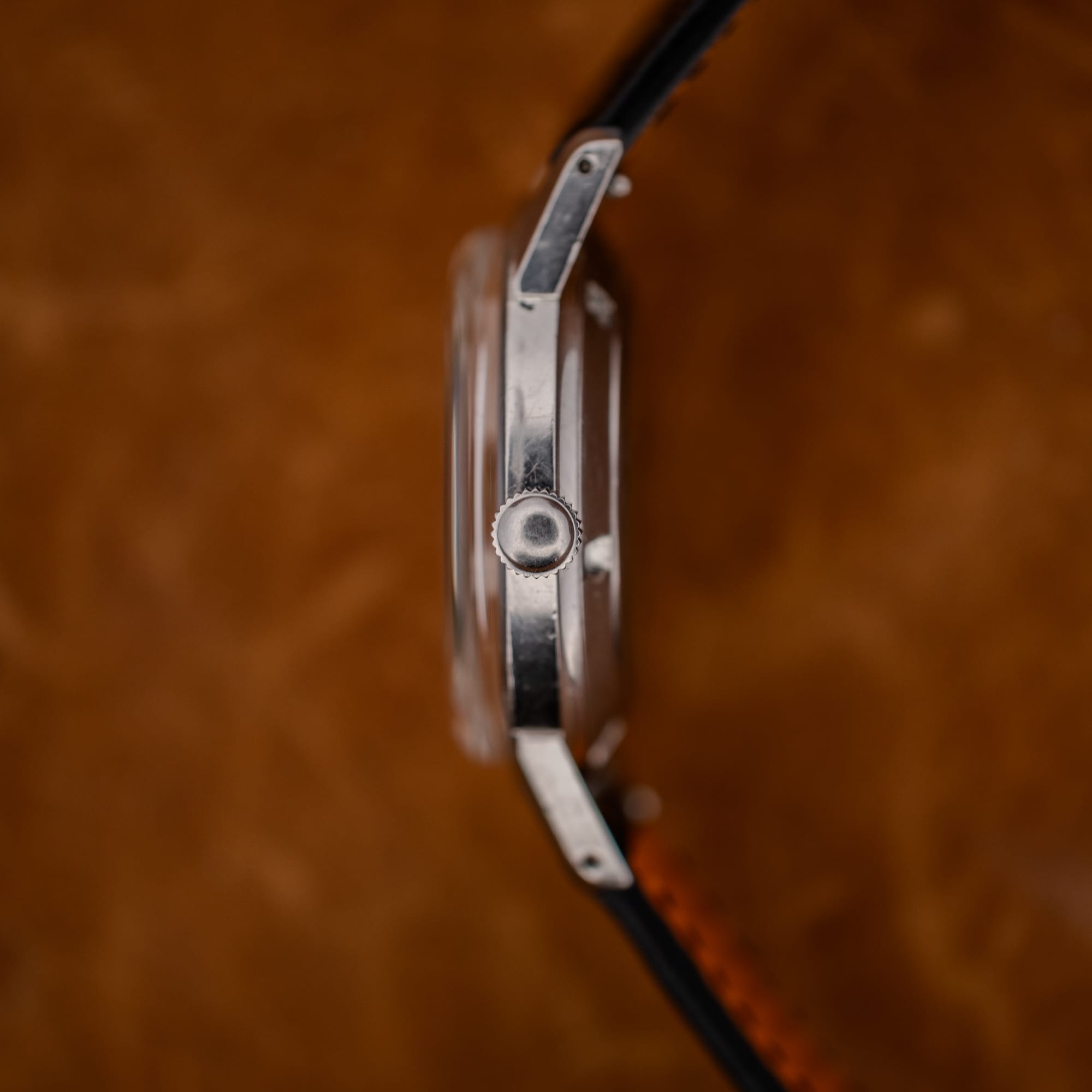
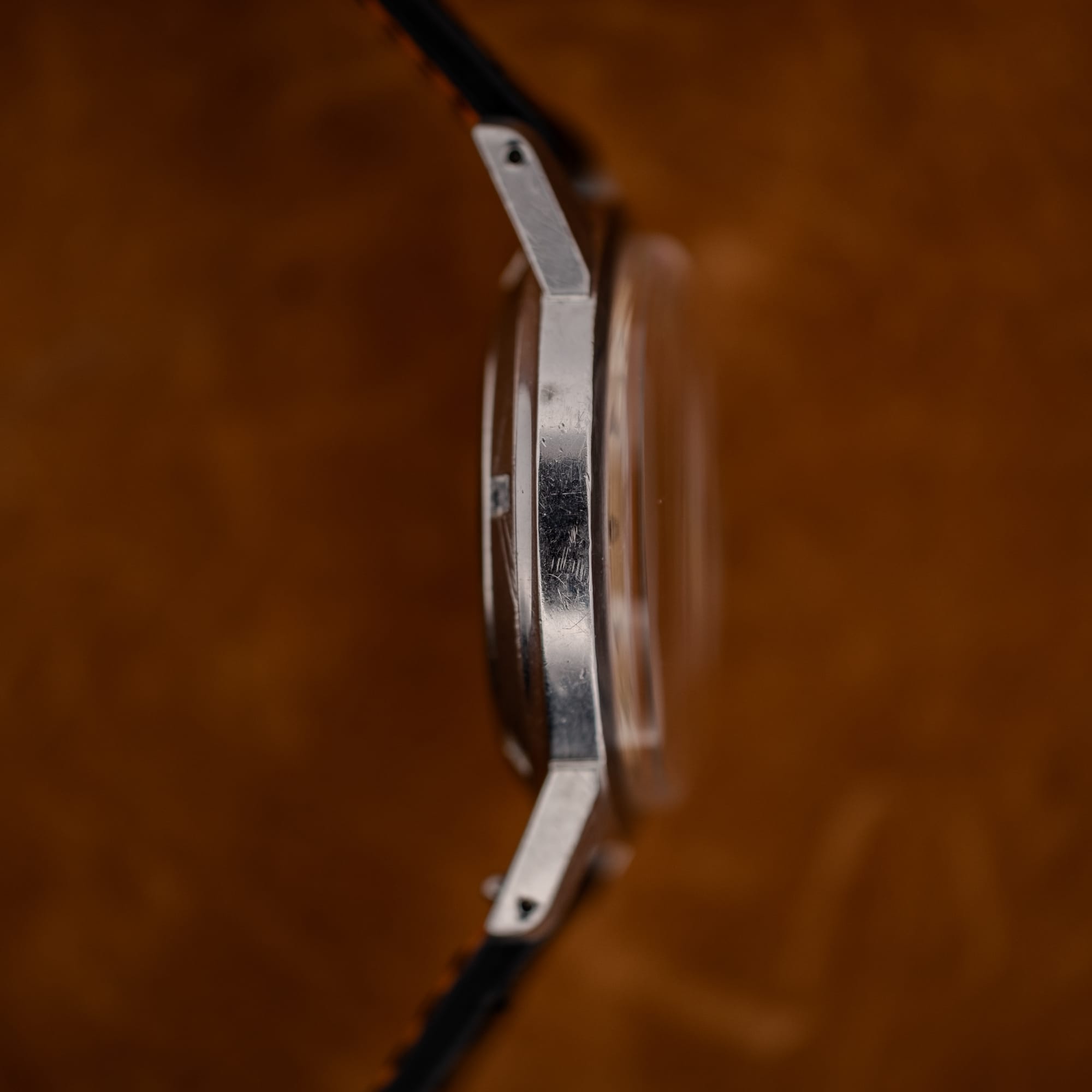
The stainless steel case measures 35mm across and 43mm lug to lug, with a smooth bezel and angled lugs. Its white dial combines a dotted minute track with faceted wedge markers, a broader double form at twelve and dauphine hands. Fine scattered speckling gives the pale surface a little texture, while light exterior scuffs keep the presentation consistent with its vintage character. A black ostrich strap sits between the 18mm lugs. Against that dark frame, the markers and hands take turns catching the light, bringing a surprising amount of movement to a dial without any additional display.
We would linger over the double marker at twelve. Its broader shape gives the eye a fixed starting point among all those changing reflections, a small but effective piece of hierarchy in an otherwise spare dial. That detail is as persuasive as the history.