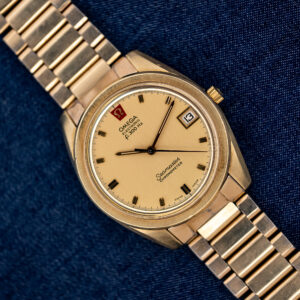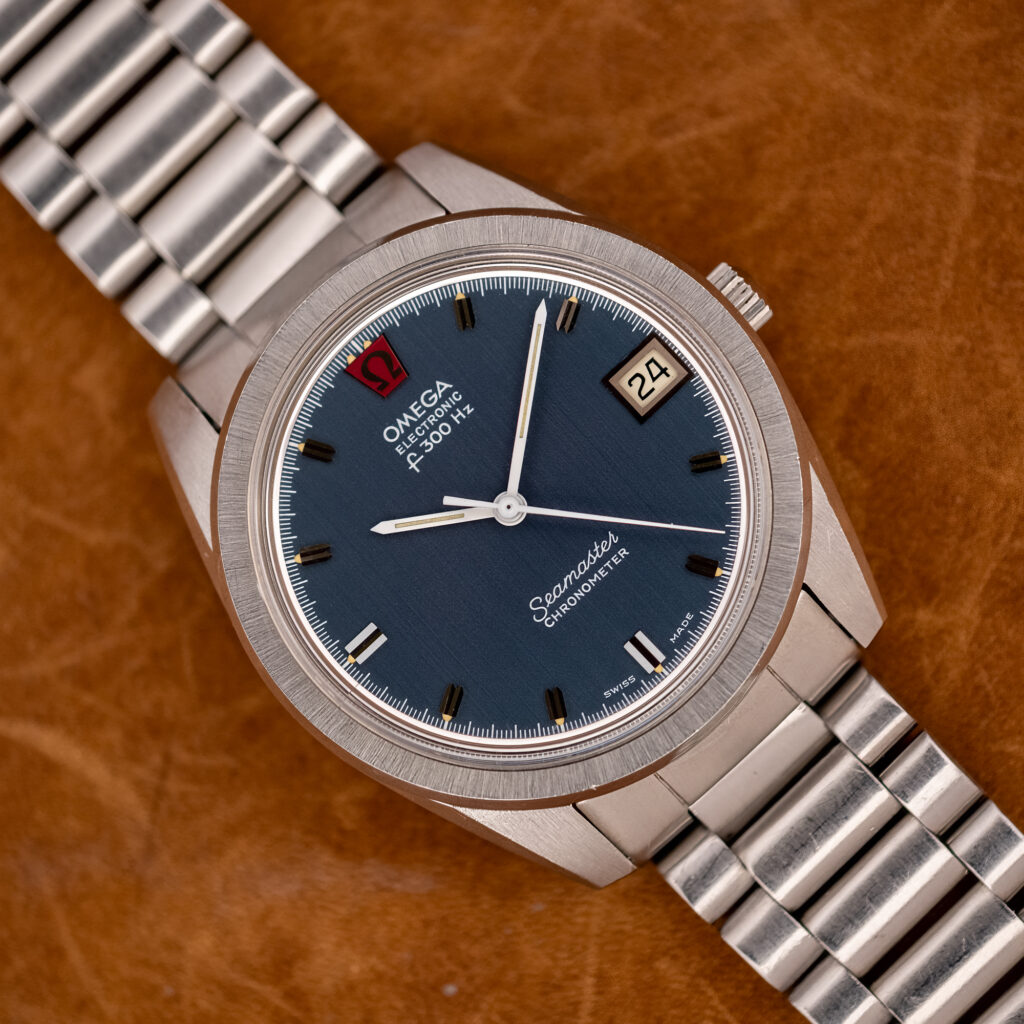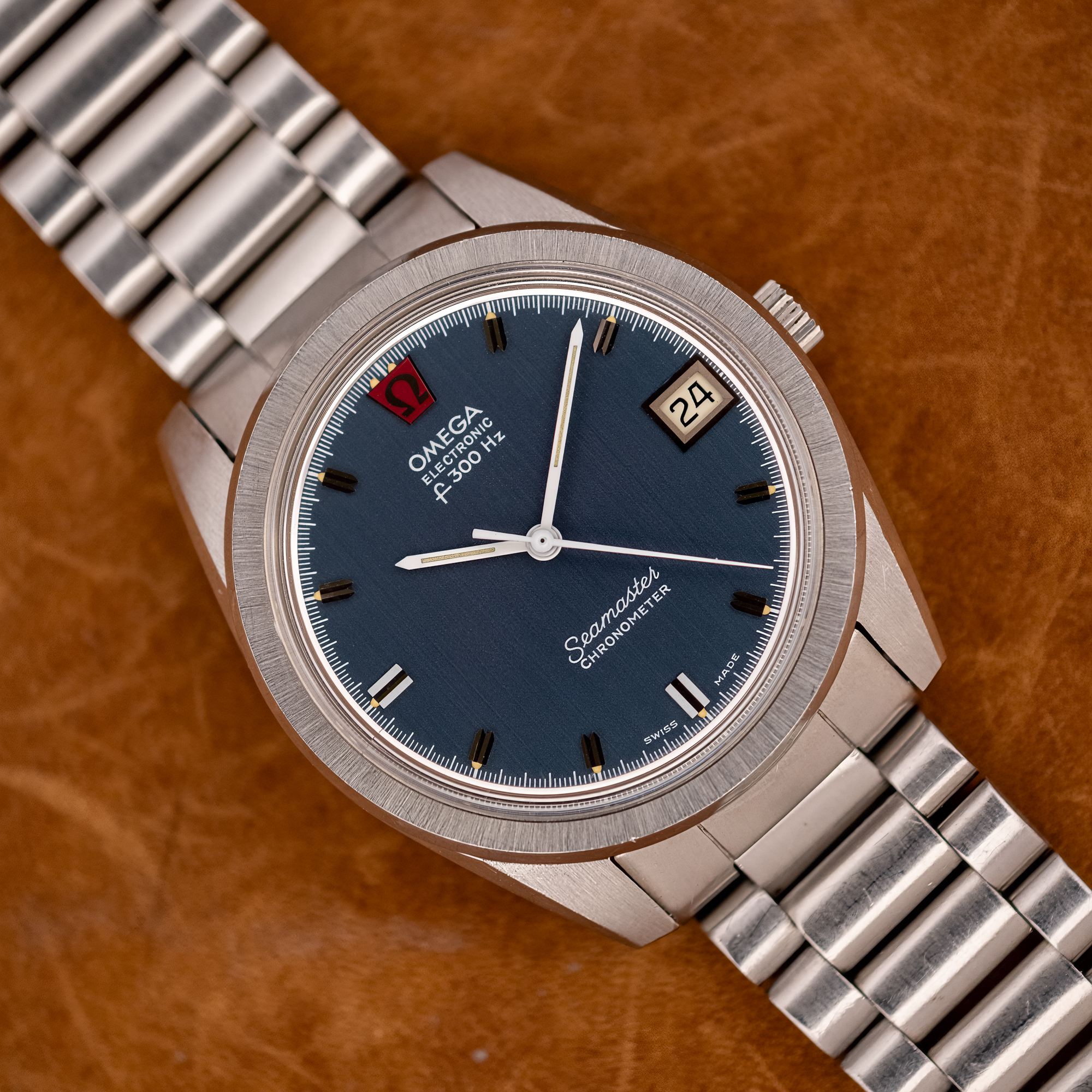
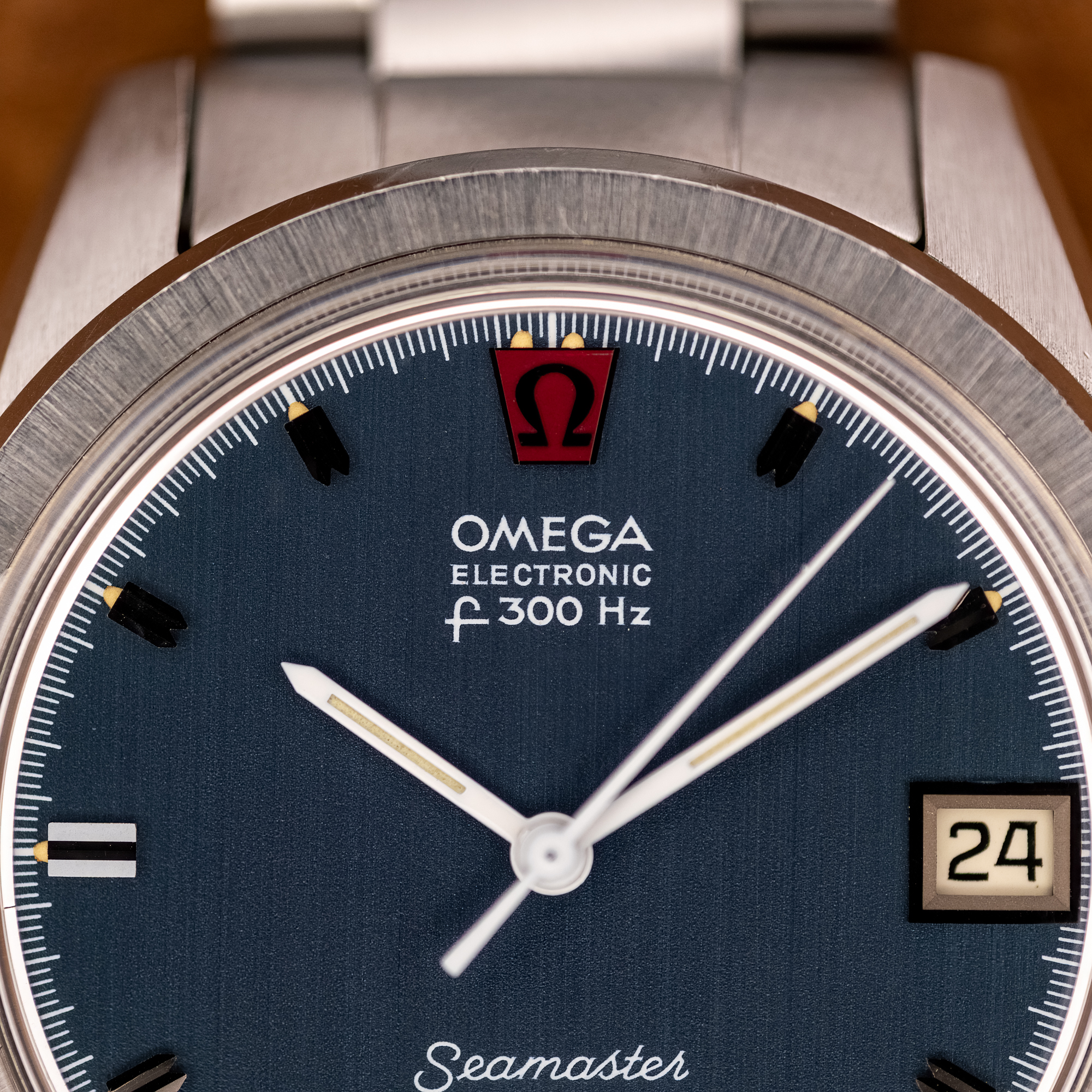
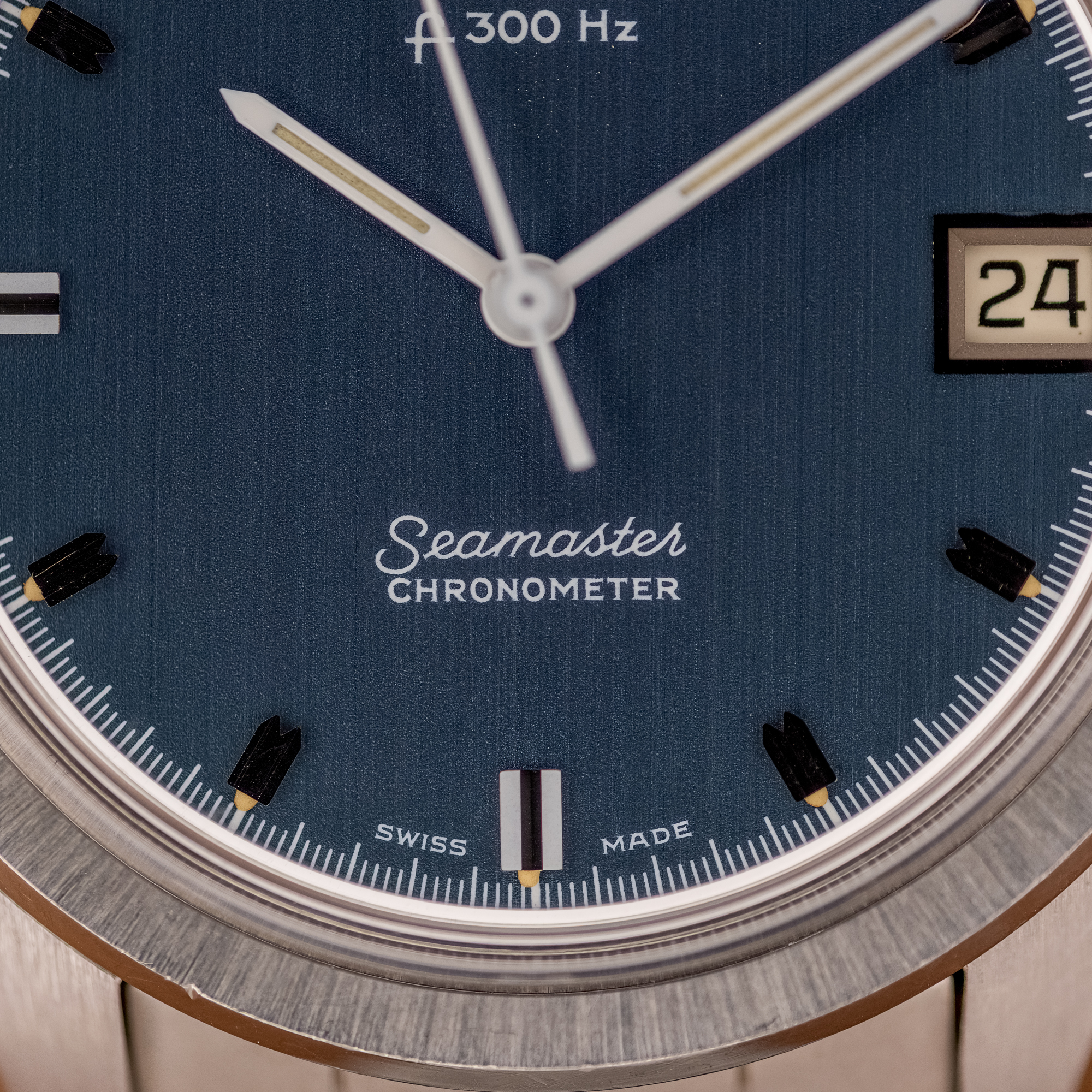
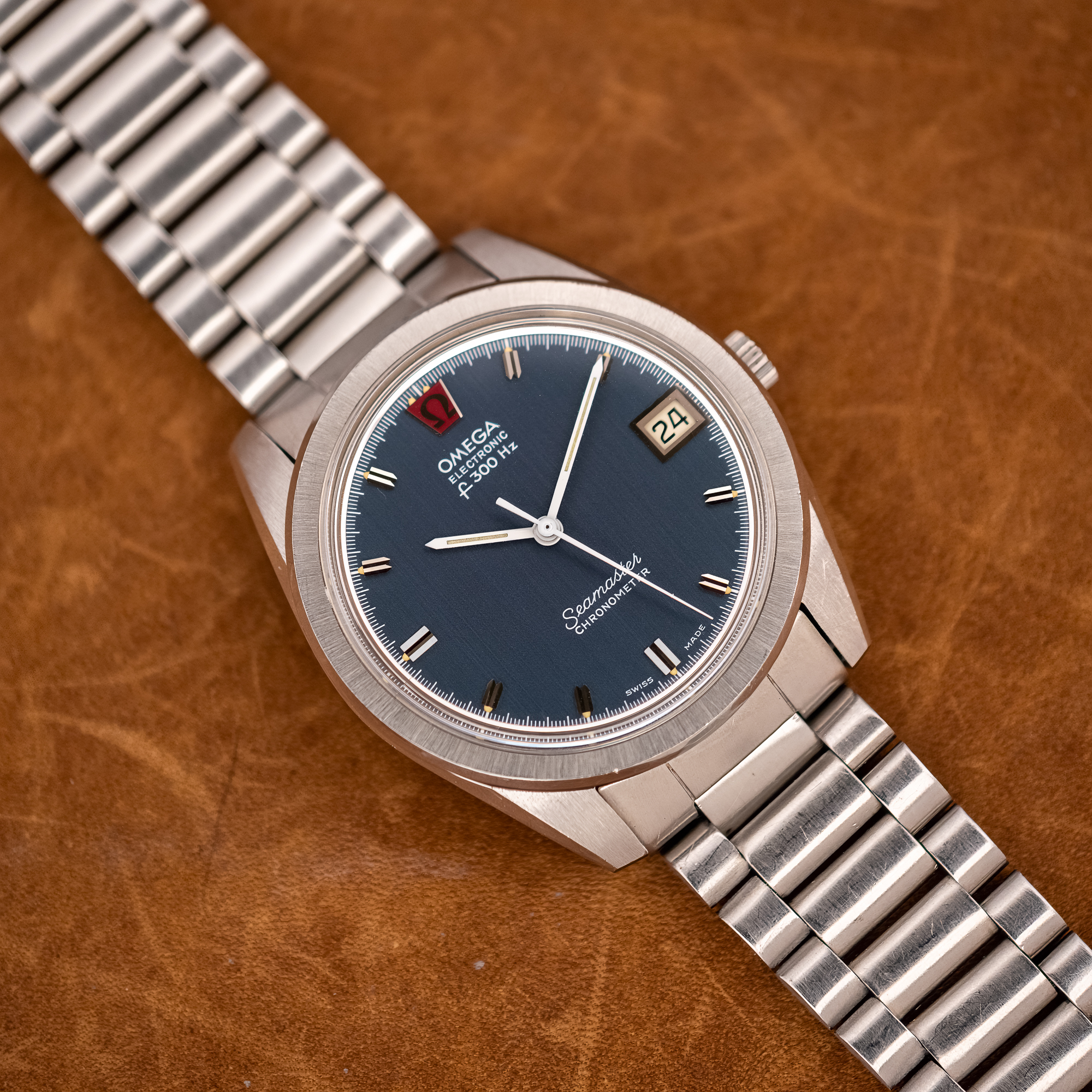
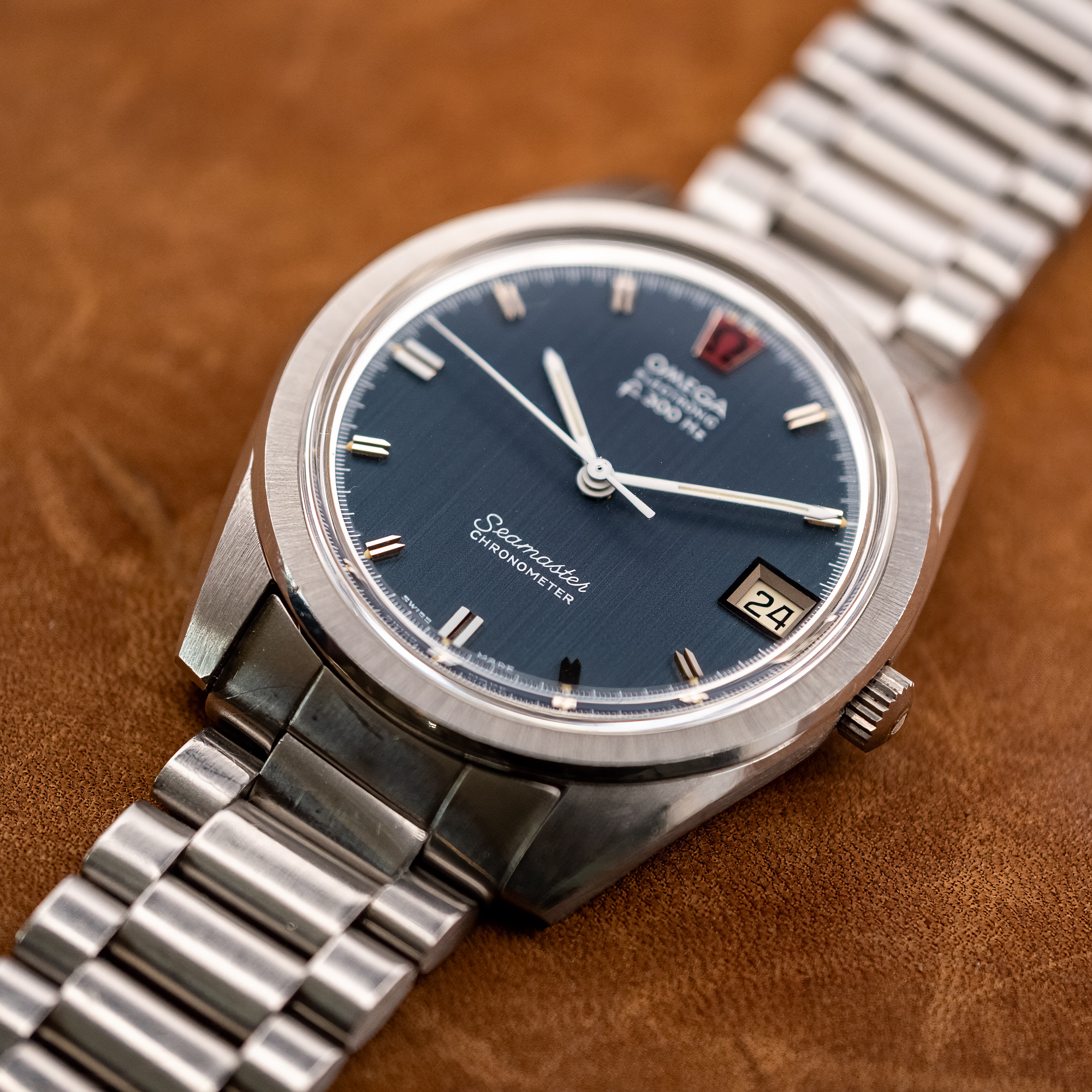
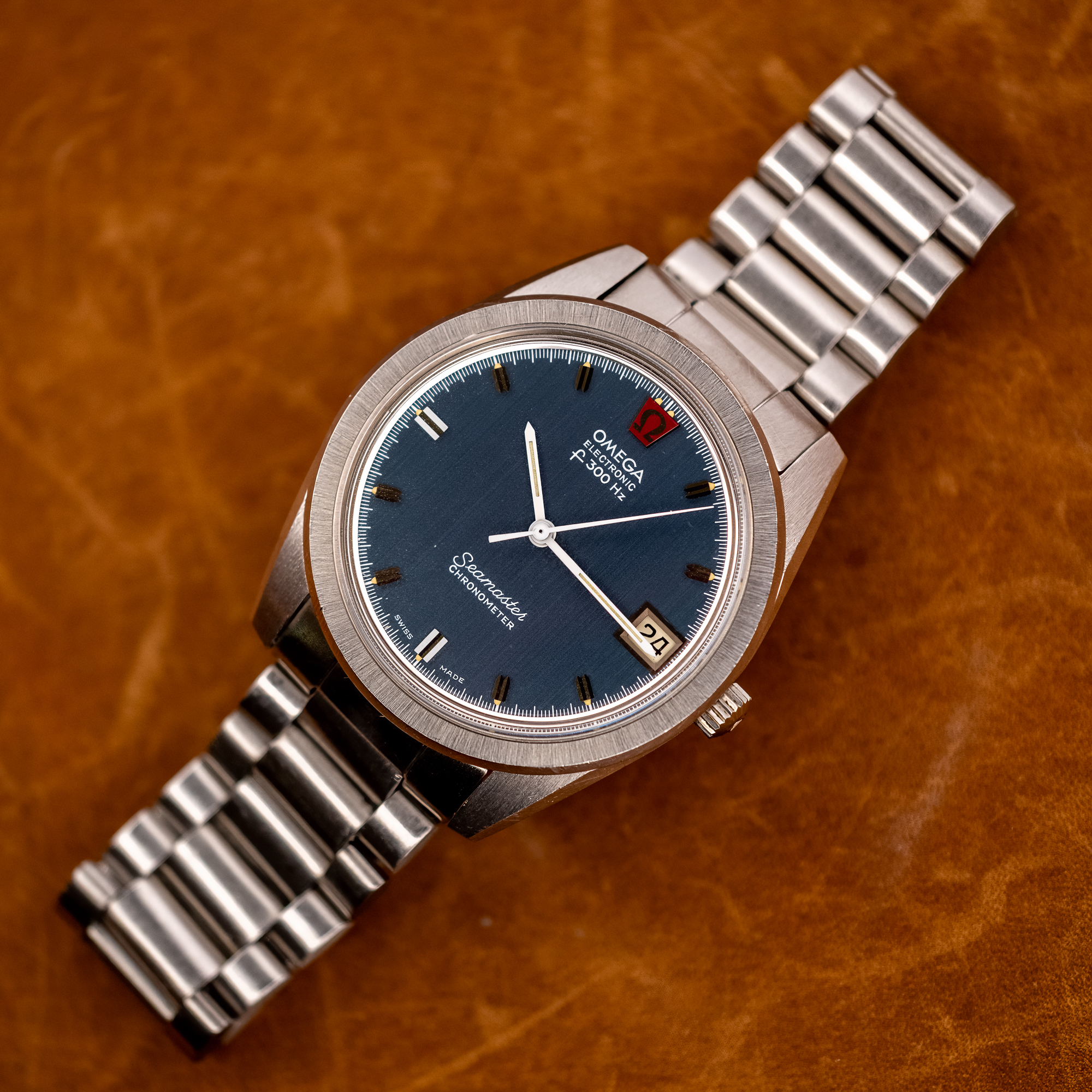
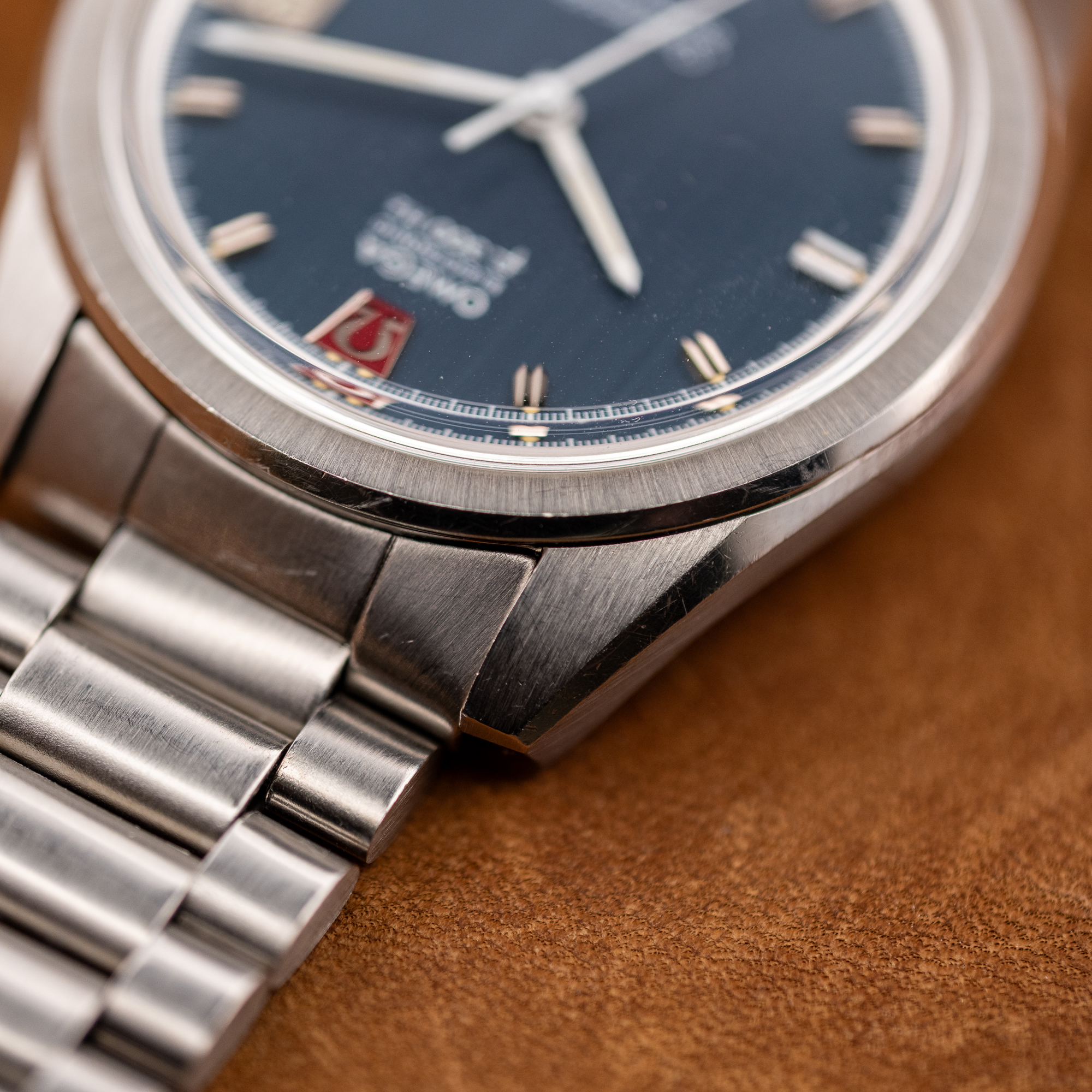
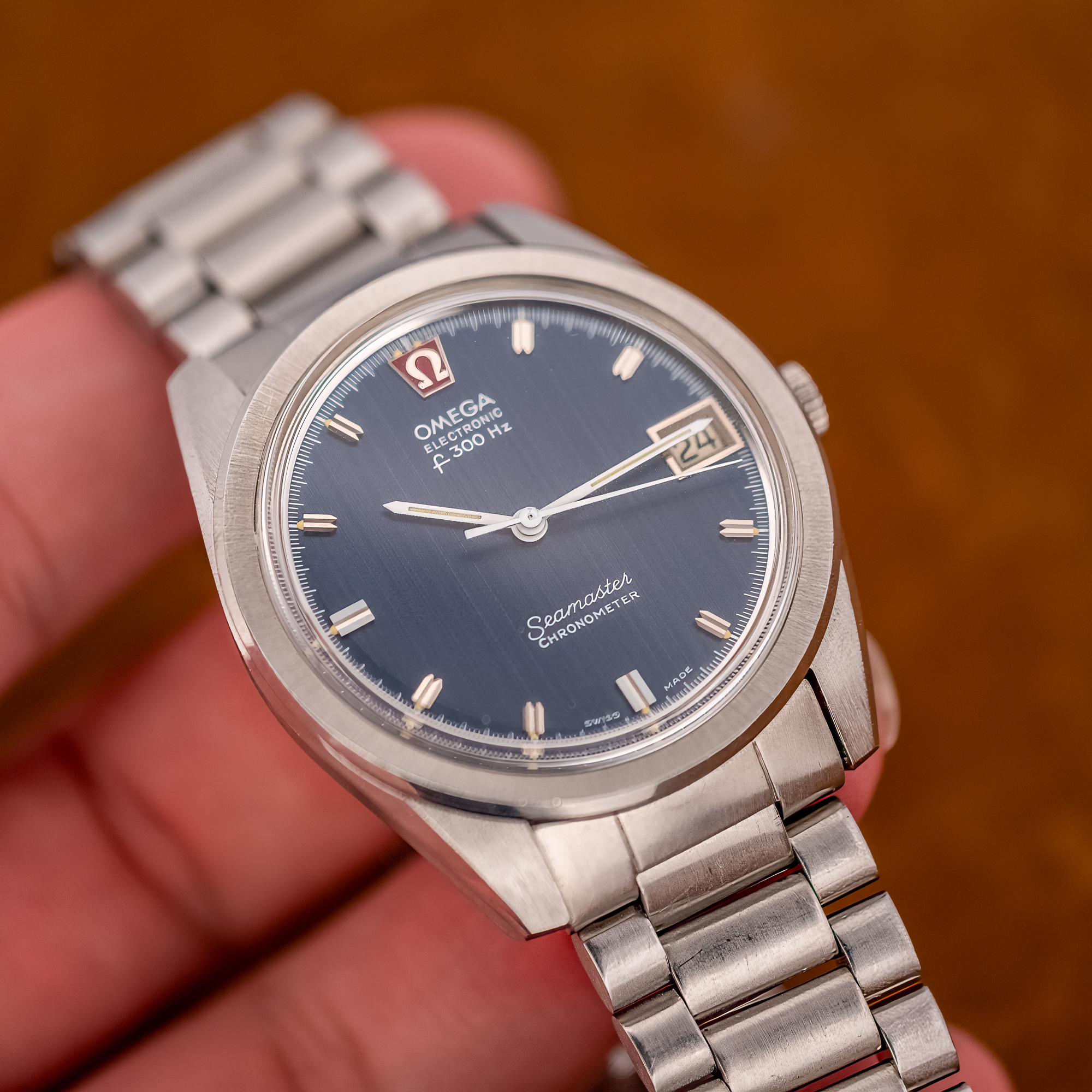

Omega printed a physics formula on this dial. Below “OMEGA” and “ELECTRONIC” sits “f 300 Hz”, notation in which f stands for frequency and 300 Hz for three hundred vibrations a second. That is the rate of the tuning fork keeping time inside, in the place a mechanical watch gives to its balance wheel.
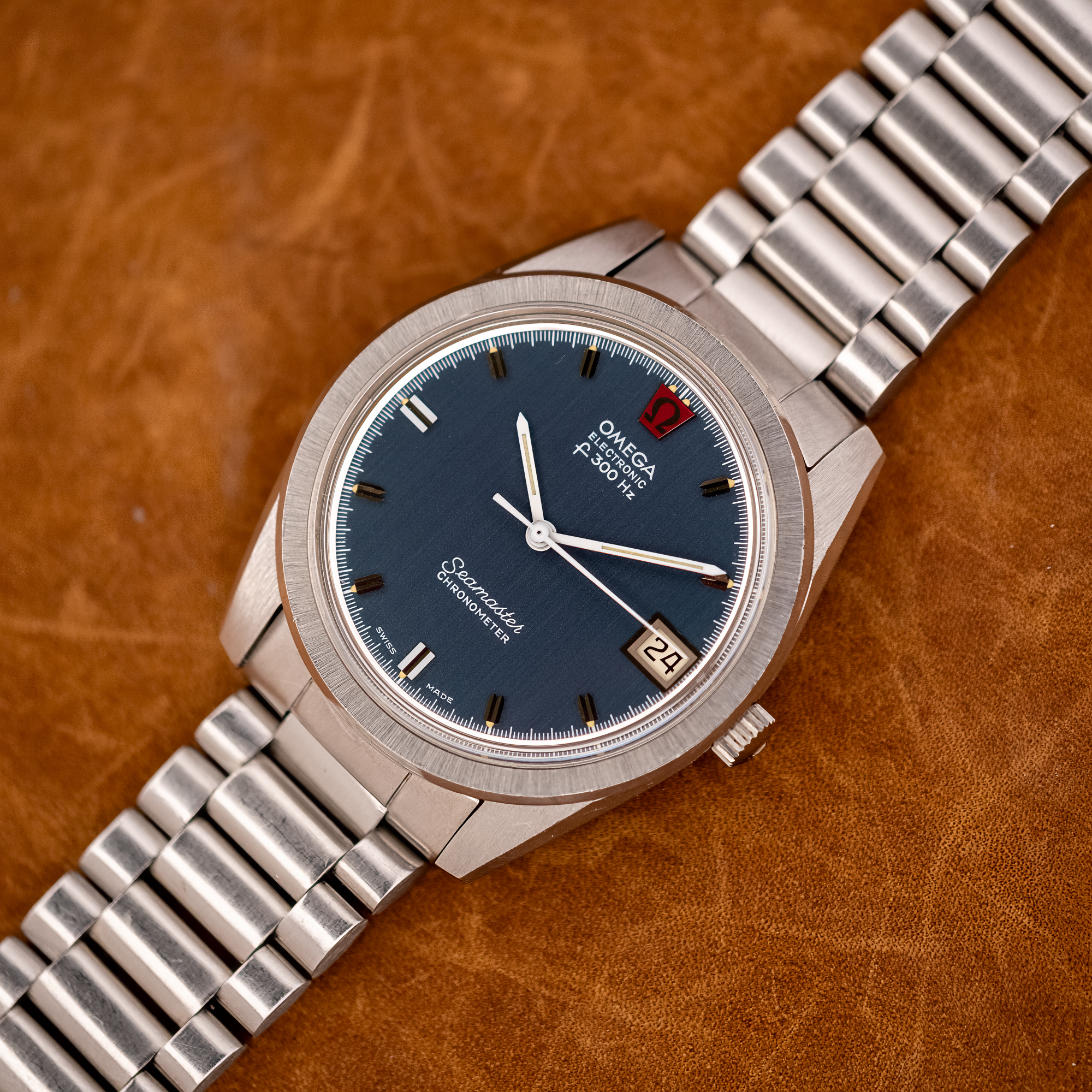
The Omega f300 line took its name from that number and ran through Seamaster, Constellation, De Ville and Speedsonic models. This one is a Seamaster Chronometer, reference 198.001, with the formula printed in white on a blue dial.
At that speed the seconds hand cannot show individual steps, so it travels around the dial in one unbroken sweep. The fork also makes itself heard. Close to the ear the watch hums rather than ticks, and collectors call tuning-fork watches hummers for exactly that reason.
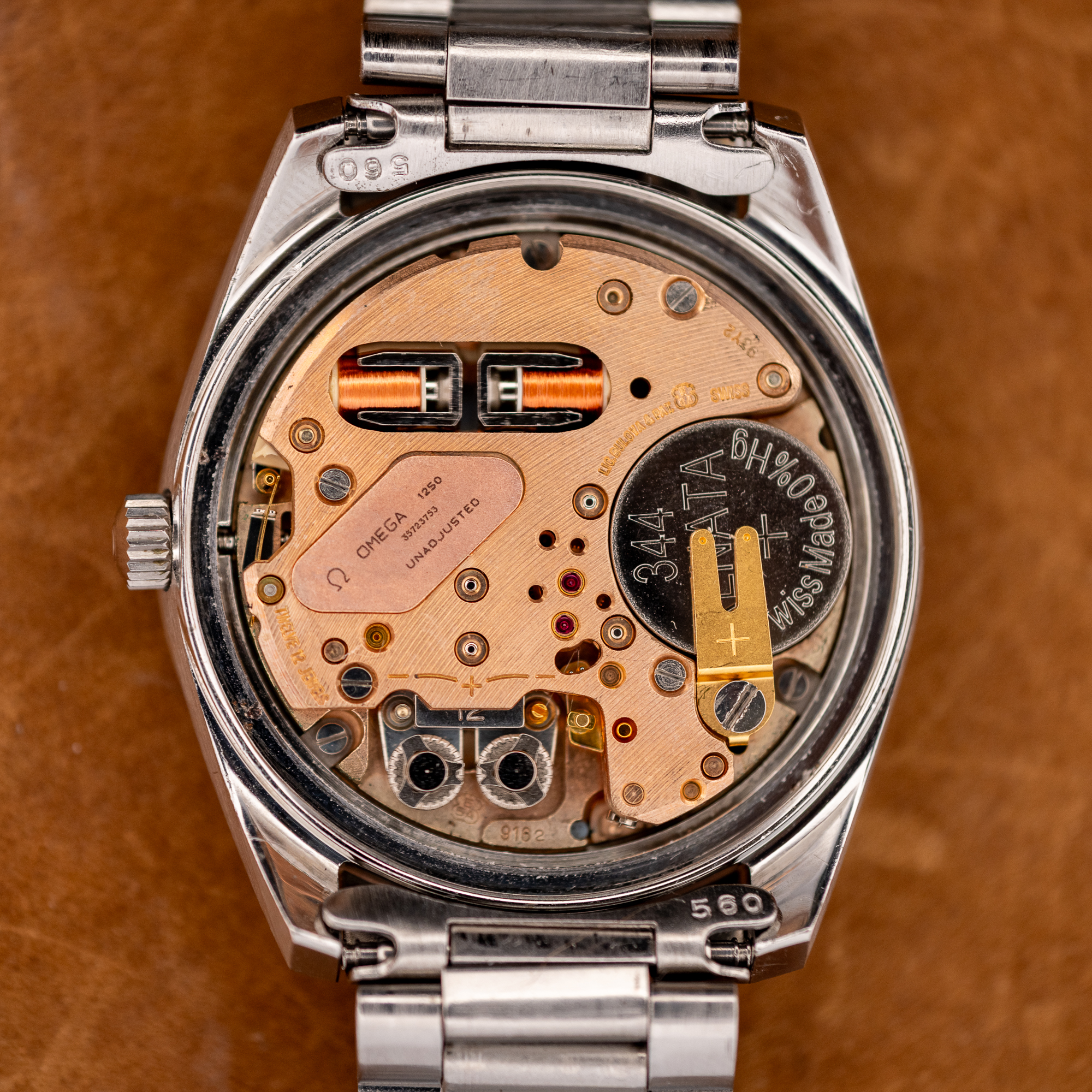
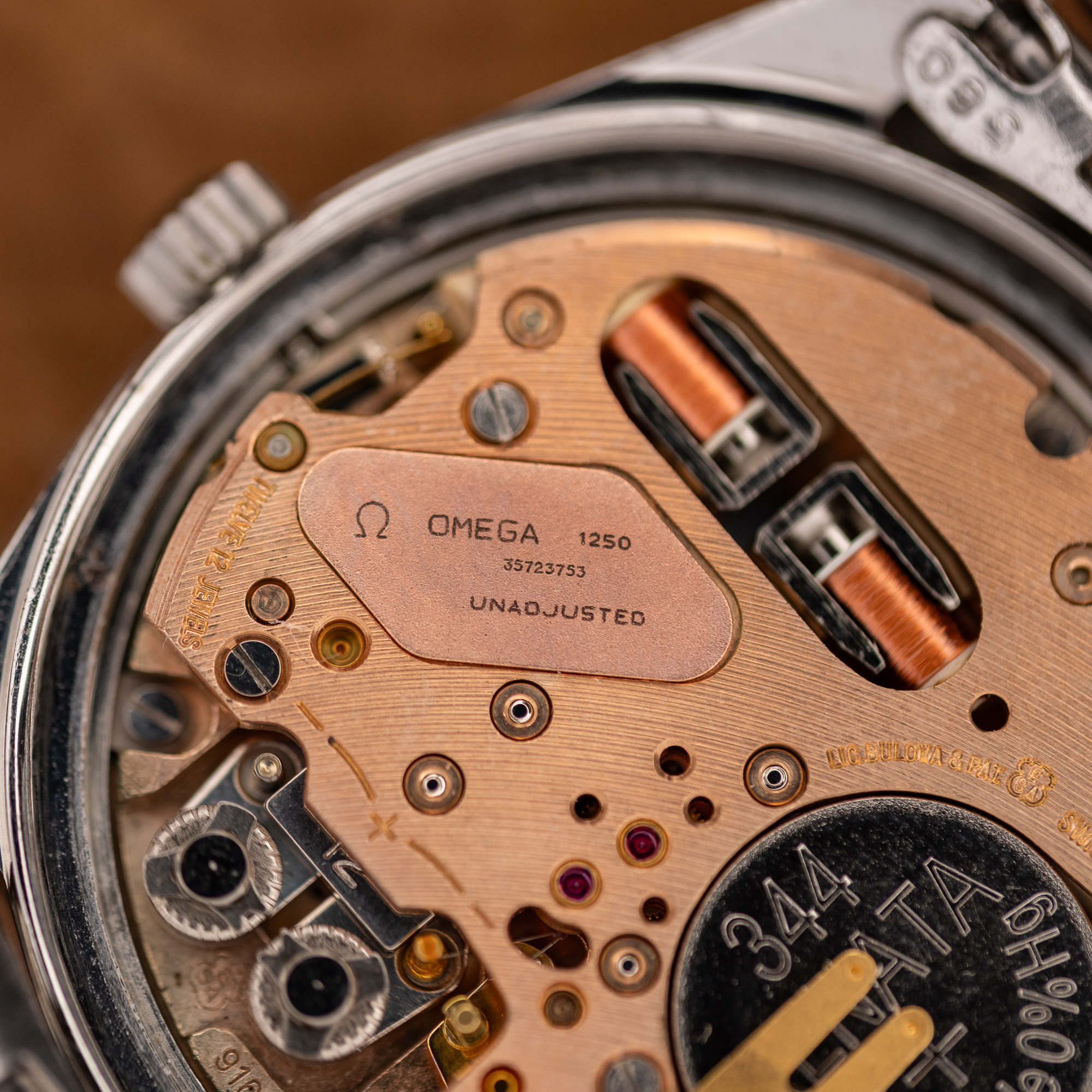
The movement started at Ebauches SA, the Swiss movement maker, which called its tuning-fork system Mosaba, from “montre sans balancier”: a watch without a balance wheel. ESA’s 9162, the version with a date, became Omega’s caliber 1250. Omega gave its version copper-colored plates, which tell it apart from the standard ESA movement.
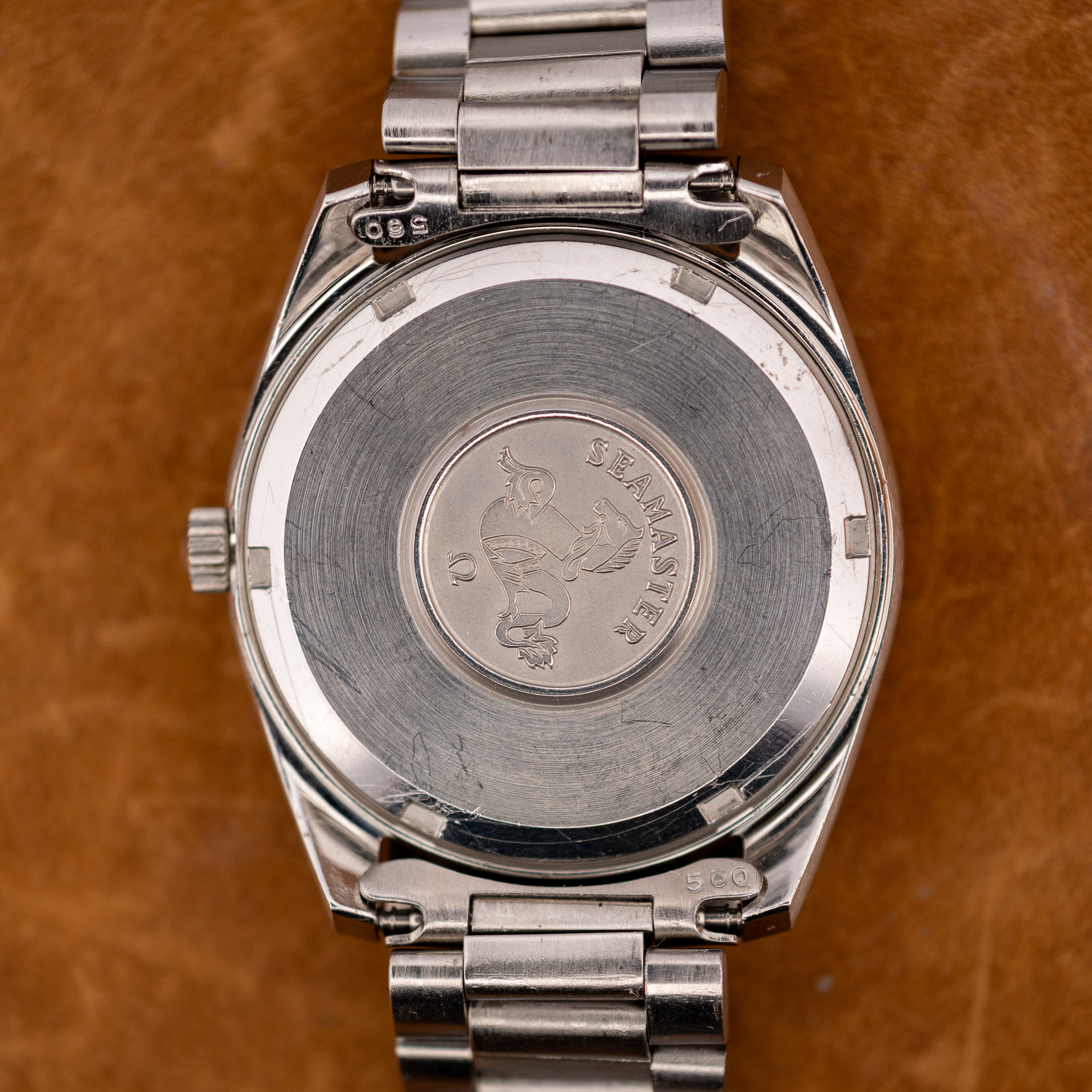
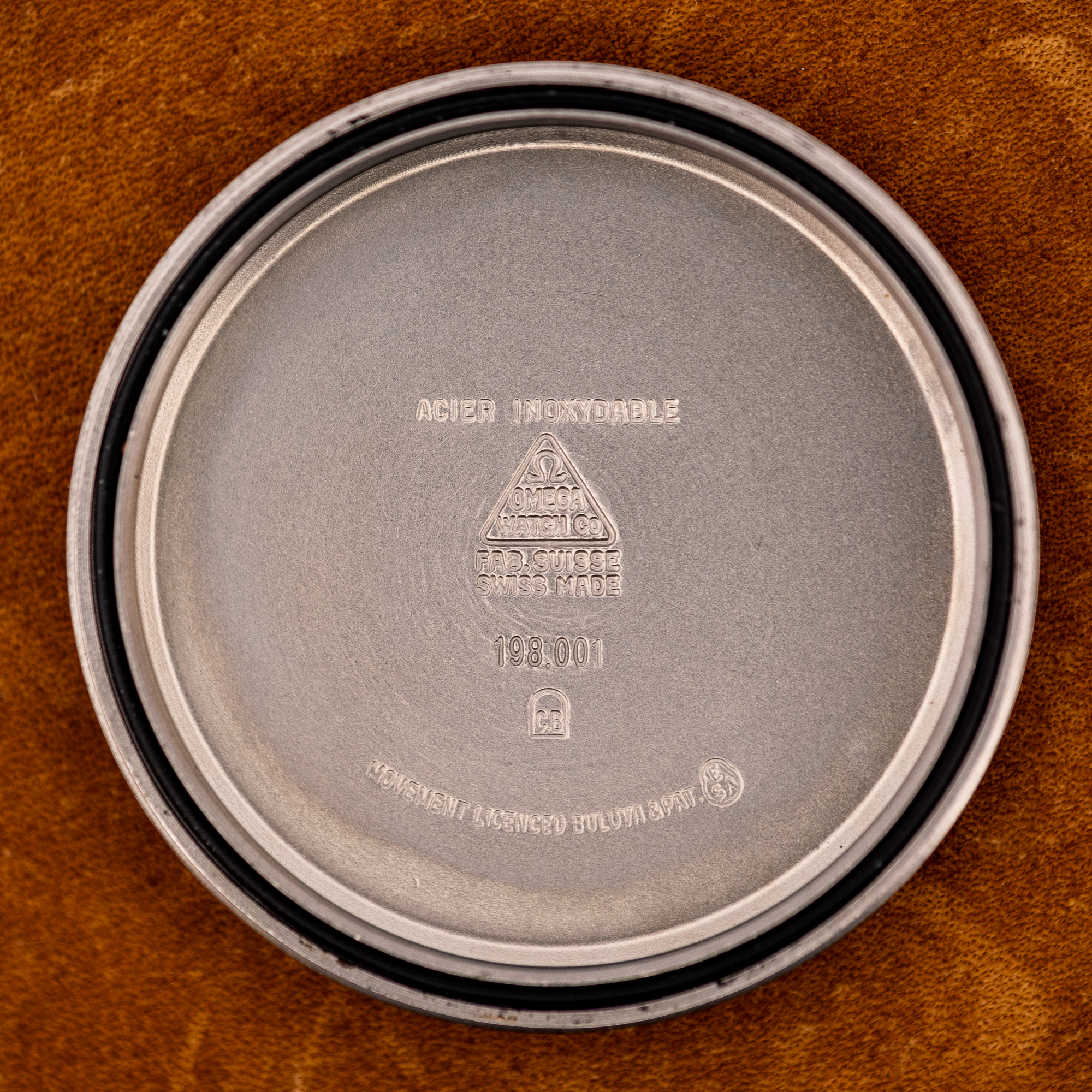
A competitor’s name is inside as well. The caseback carries “MOVEMENT LICENCED BULOVA & PAT.” on its inner face, because ESA built the Mosaba under license from Bulova. Bulova held the patents behind its Accutron, the tuning-fork watch invented by the Swiss engineer Max Hetzel and tuned to 360 Hz.
ESA did more than copy. The Accutron fork ran faster or slower depending on whether the watch lay flat or stood on edge, and ESA answered with a symmetrical, weighted fork that held its rate more evenly across positions. Omega then had its 1250 certified as a chronometer, and the word CHRONOMETER sits under Seamaster on this dial as the result.
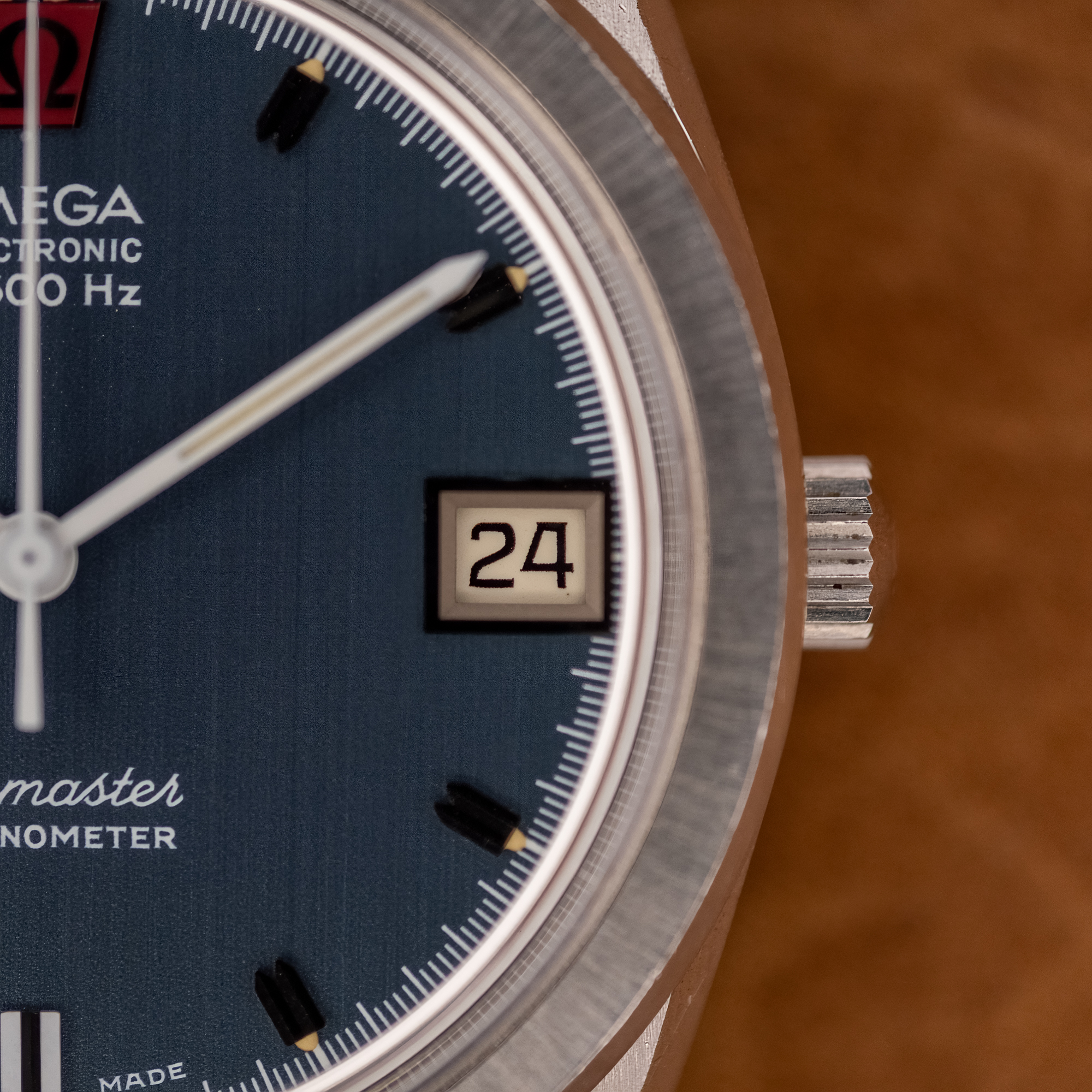
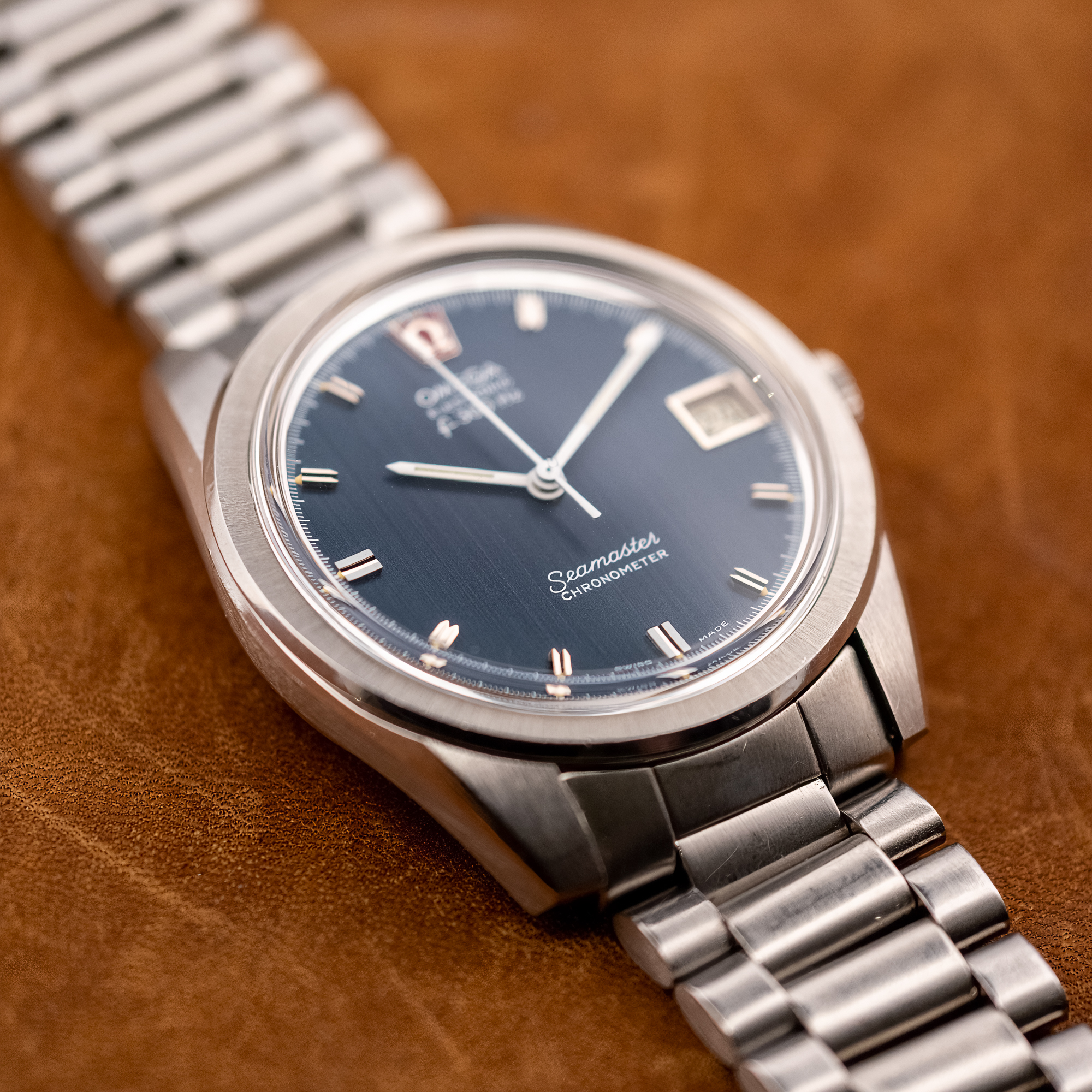
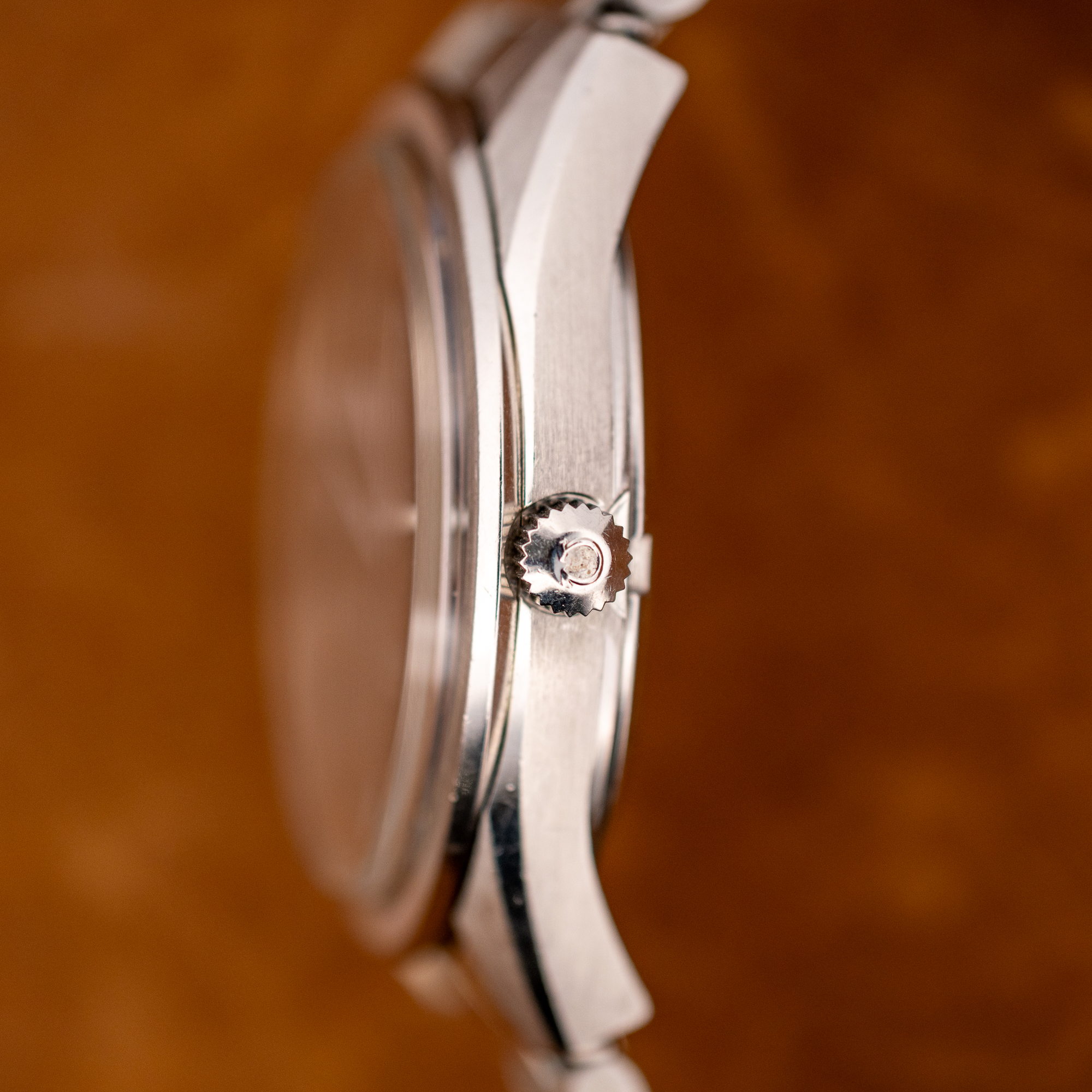
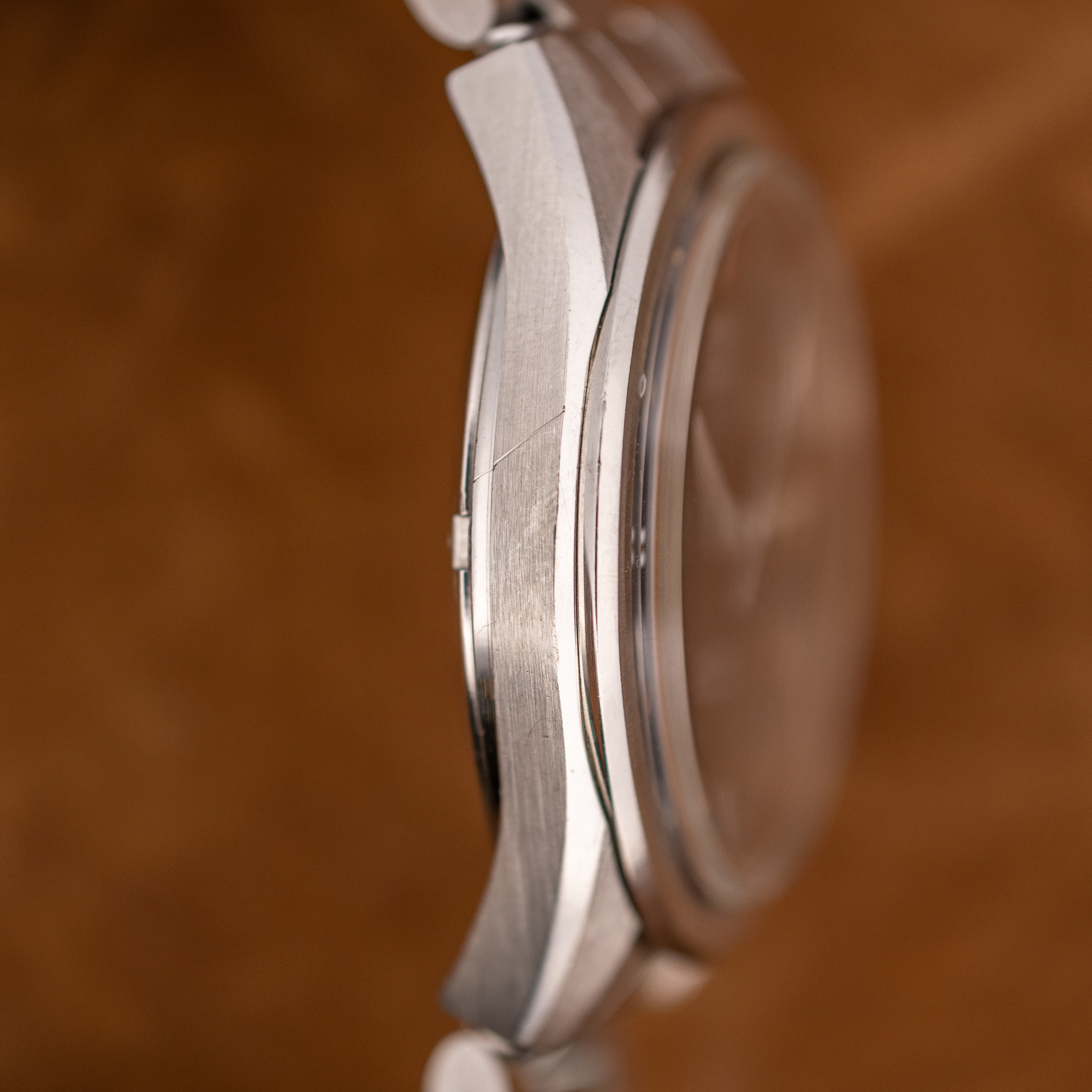
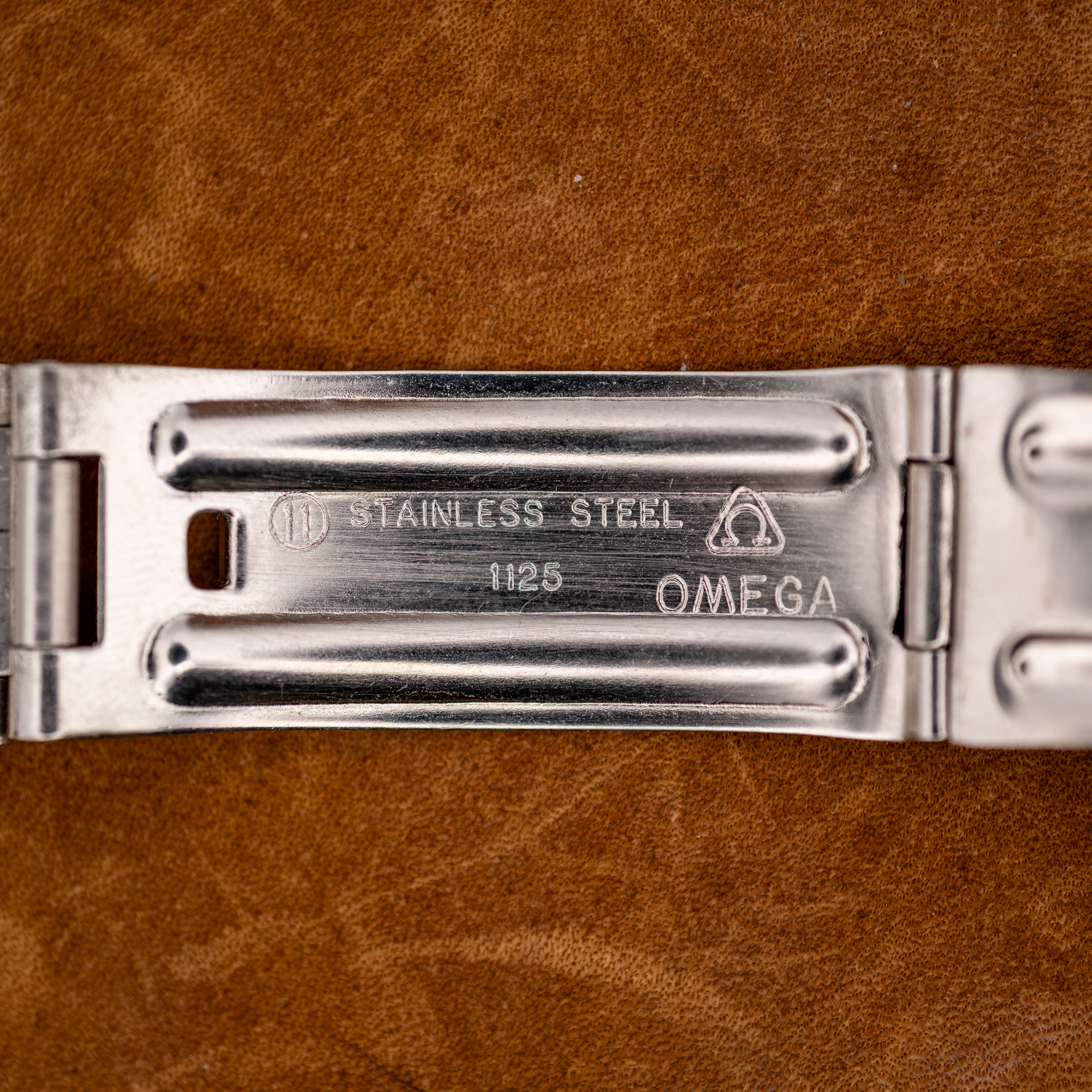
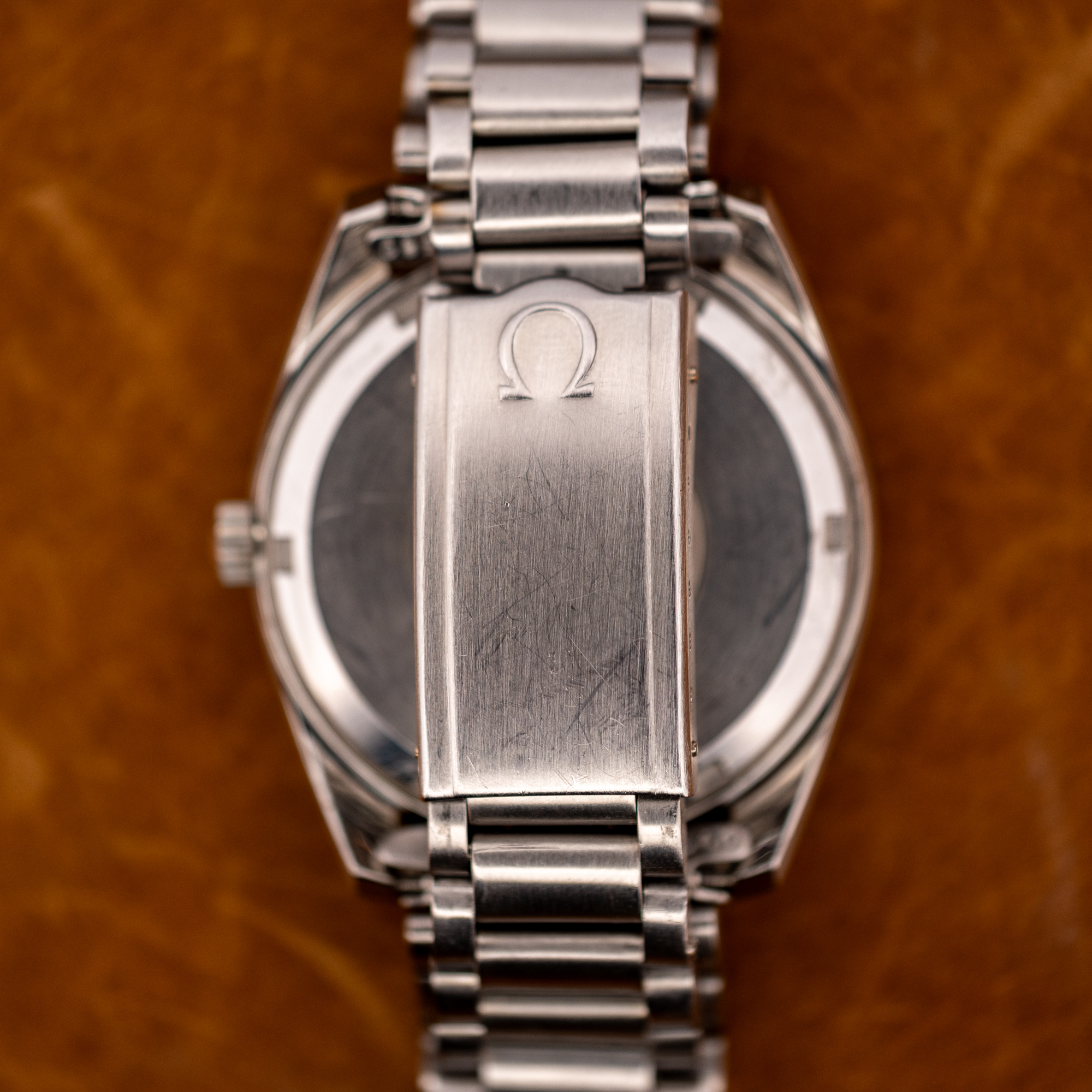
This 1970s example pairs the movement with a blue dial printed in white, white hands, applied markers with small yellow-toned dots, a framed date at three and the red Omega badge at twelve. The stainless steel 198.001 case has a fixed bezel, a raised crystal, an Omega-signed crown and a seahorse medallion on the back, and it rides on a steel Omega bracelet whose clasp is numbered 1125 and whose end links are stamped 560.
Omega signed the dial, Bulova is credited inside the back, and the white number on blue tells how fast the fork between them moves.