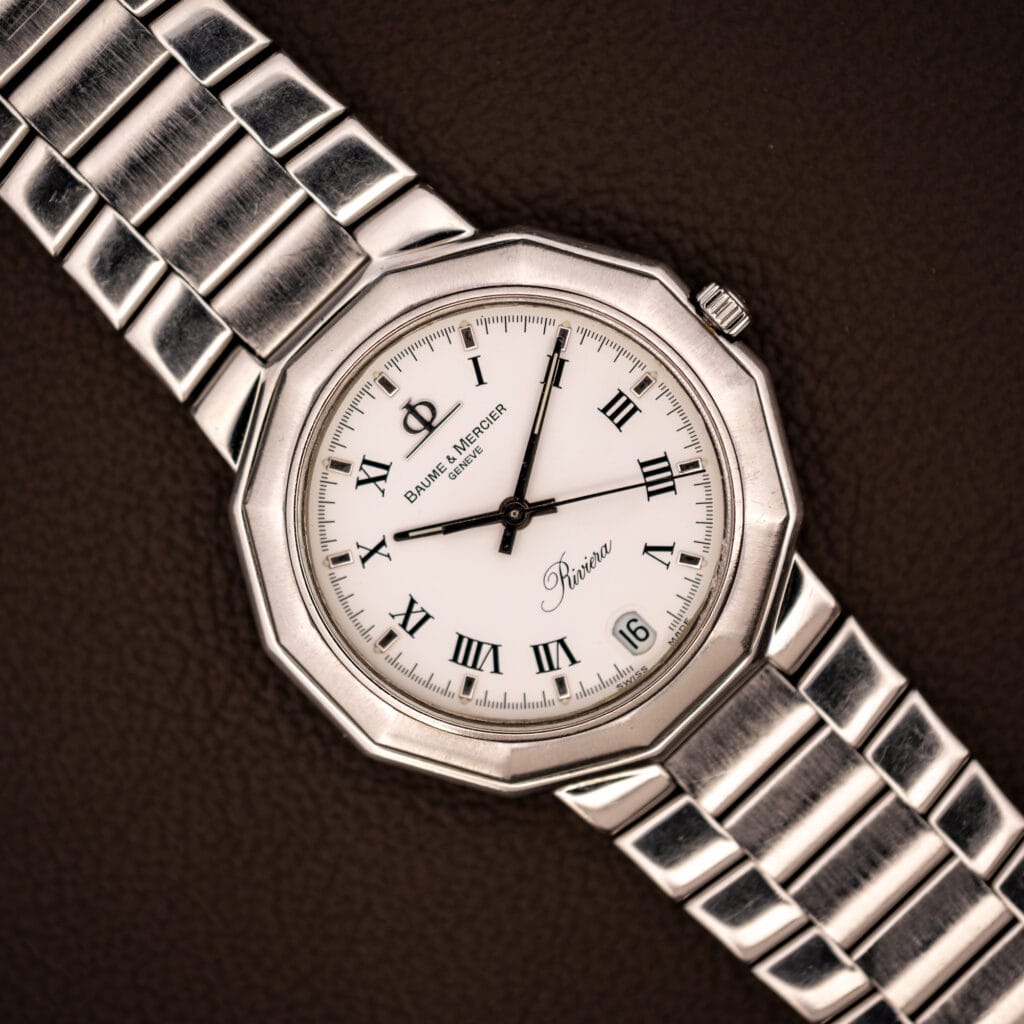
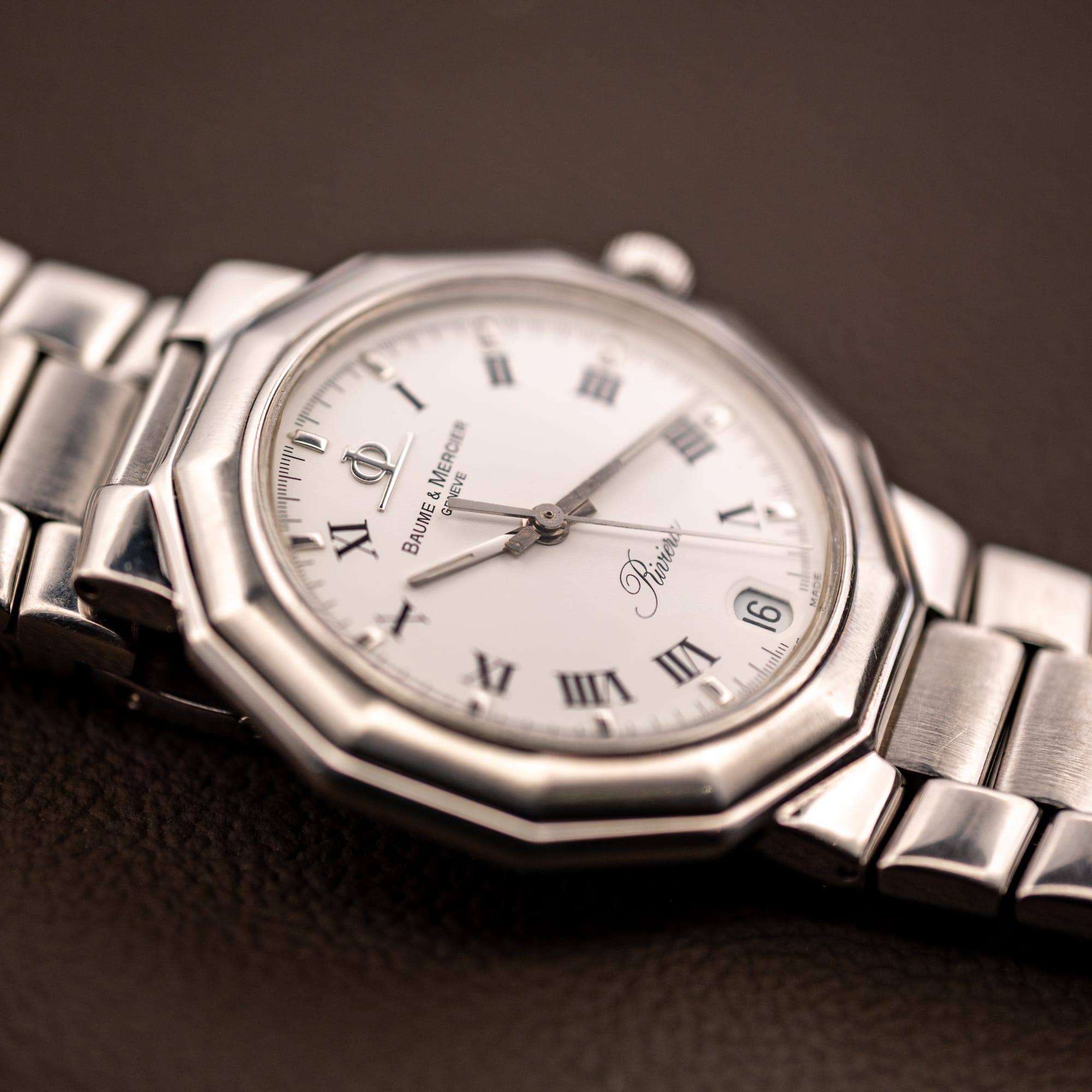
Baume & Mercier spent the last few decades earning a reputation as the sensible, value-first corner of Swiss luxury, and that reputation quietly buries the fact that in 1973 the house built one of the most aggressive case designs of the entire decade. The Baume & Mercier Riviera was not a safe watch. In our opinion it is the most under-discussed of the 1970s integrated-bracelet sports-luxury designs, and this white-dial Ref. 5131.2 is a clean, wearable way into the line.
The house itself traces back to 1830, when the Baume brothers opened their comptoir in the Swiss Jura, which makes it one of the oldest continuously operating names in the trade. The Riviera arrived much later and changed the conversation overnight. Designed by Jean-Claude Gueit and launched in 1973, it broke with everything classical watchmaking expected of a dress brand: a flat, faceted twelve-sided bezel bolted to an integrated steel bracelet, with one side of the bezel for each of the twelve hours on the dial. It landed in the same narrow window that produced the decade’s other steel landmarks, and on design alone it belongs in that conversation.
The original 1973 Riviera launched on a transistor movement, with quartz and automatic versions following within a couple of years, and this Ref. 5131.2 is a later quartz execution of the design. We will not dress that up: it runs a Swiss quartz movement, it keeps time to within a few seconds across a month, and for a watch built around a bold case and a clean dial that is exactly the right engine. There is no winding ritual to romanticize here. It is a watch to set and wear without ceremony, which is precisely what the quartz Riviera was built to be.
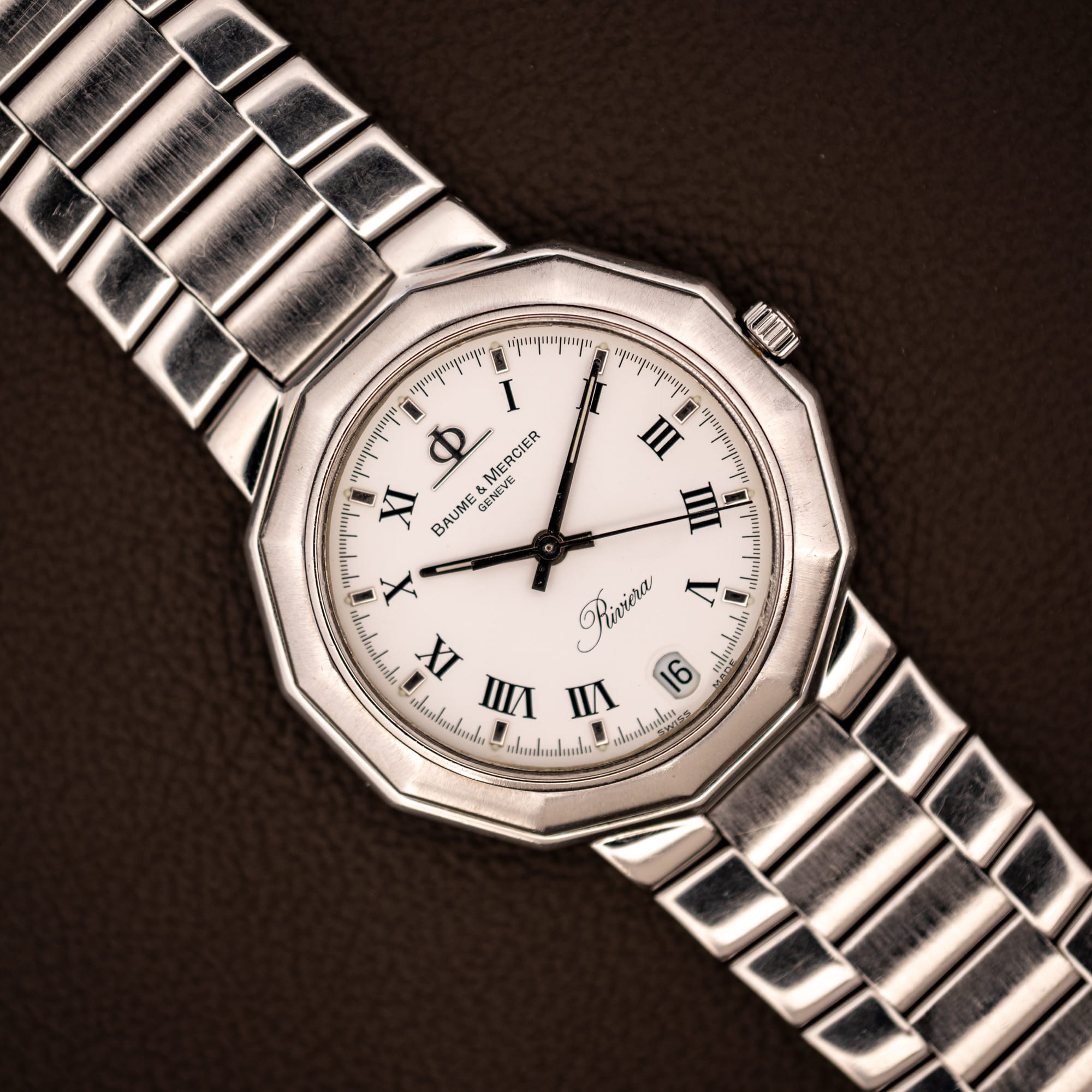
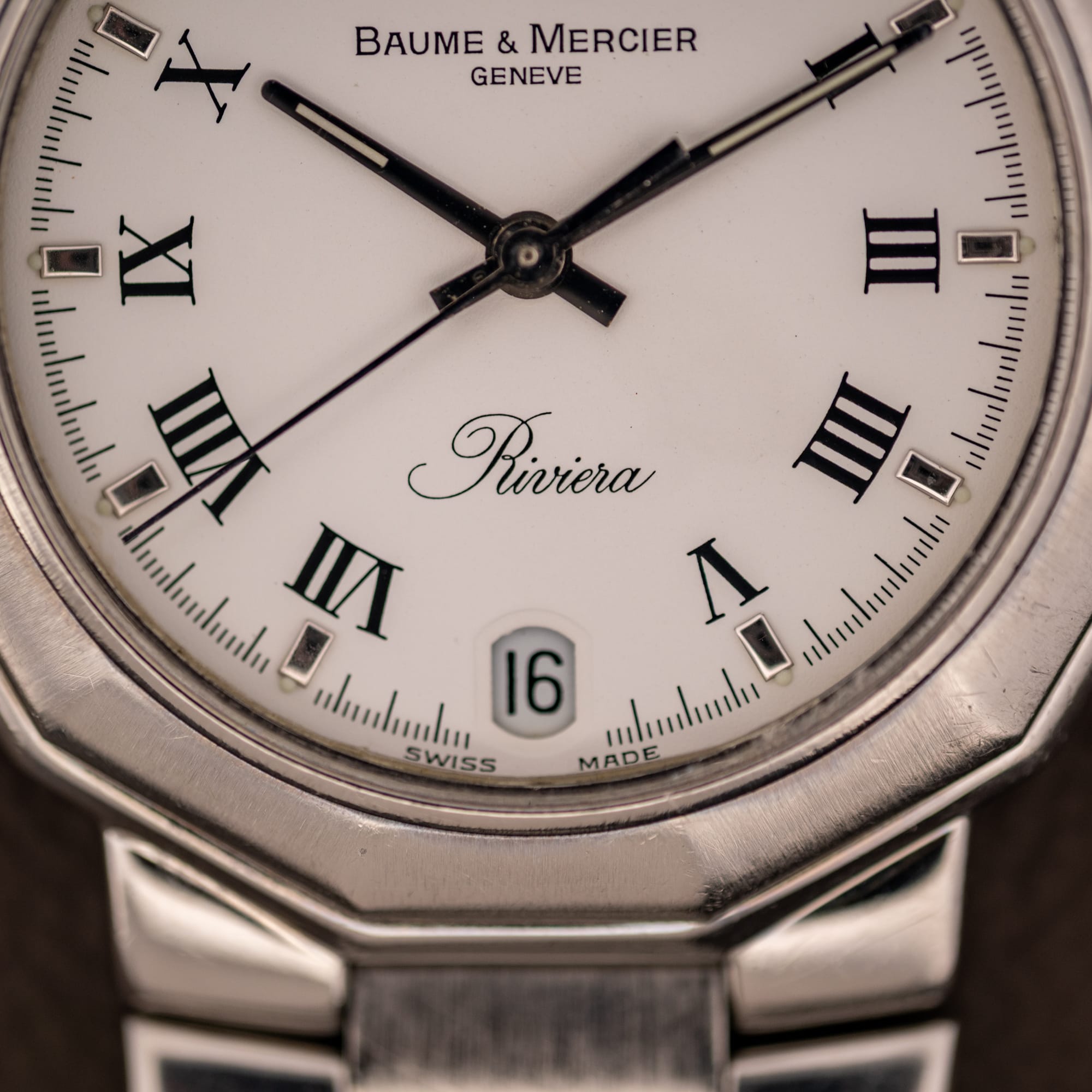
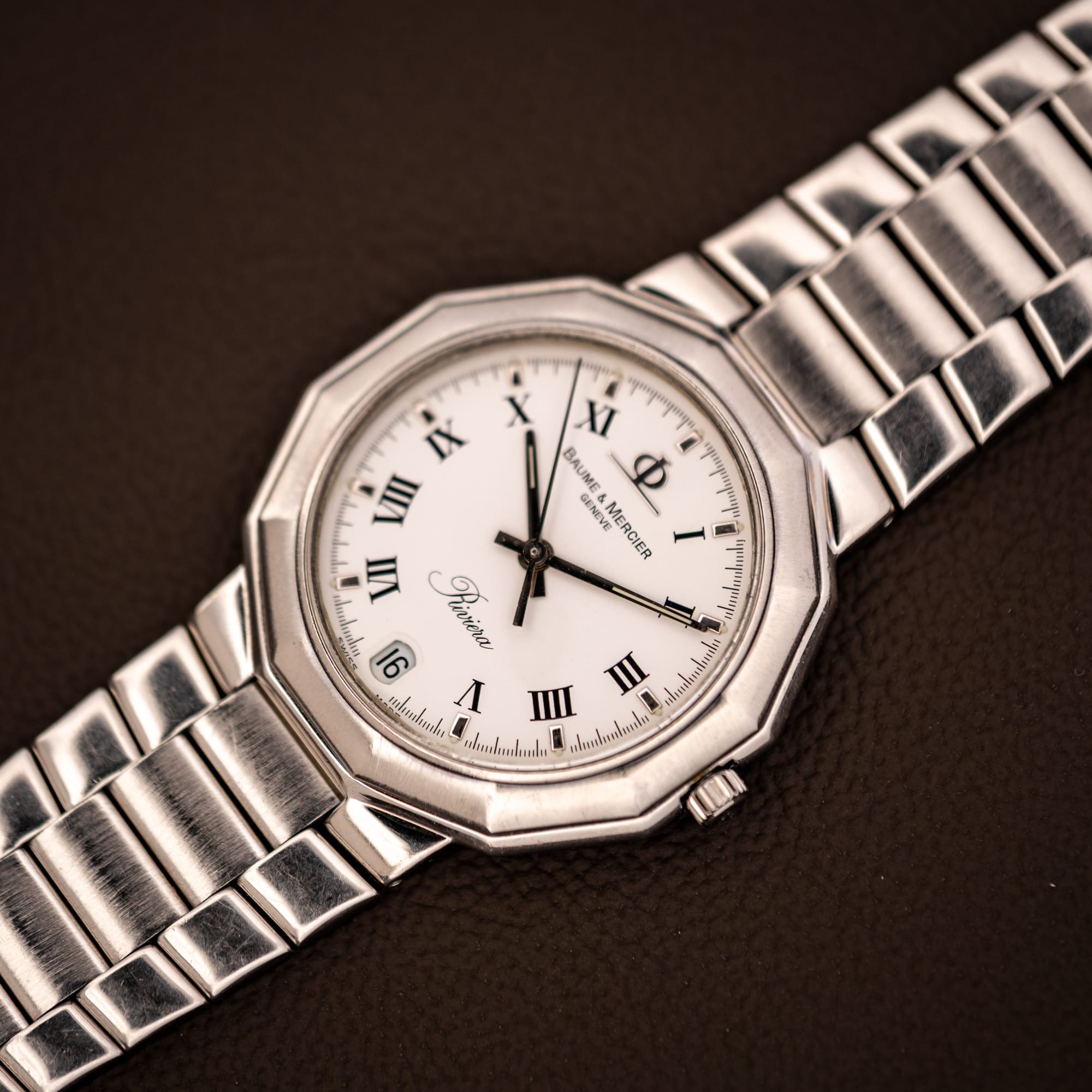
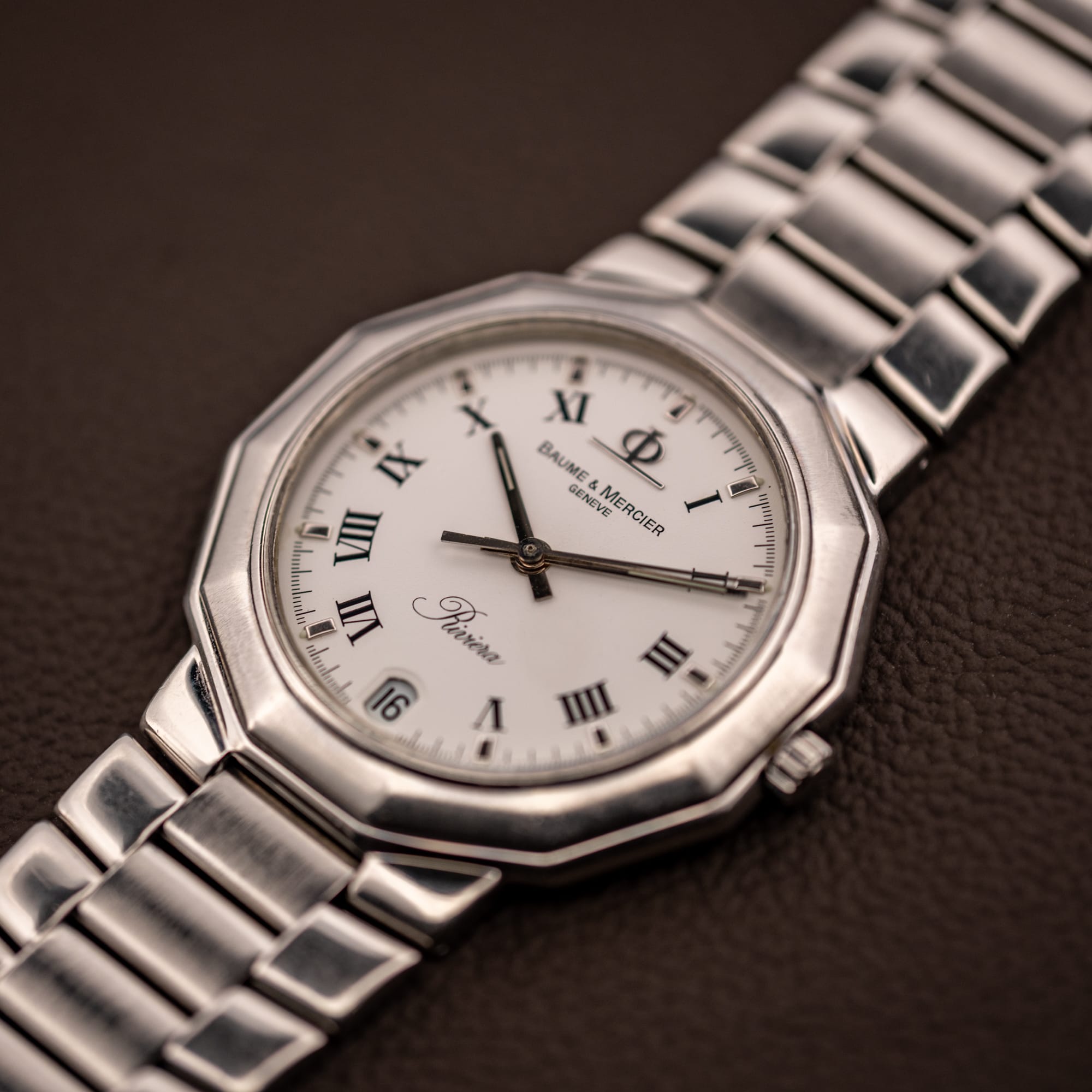
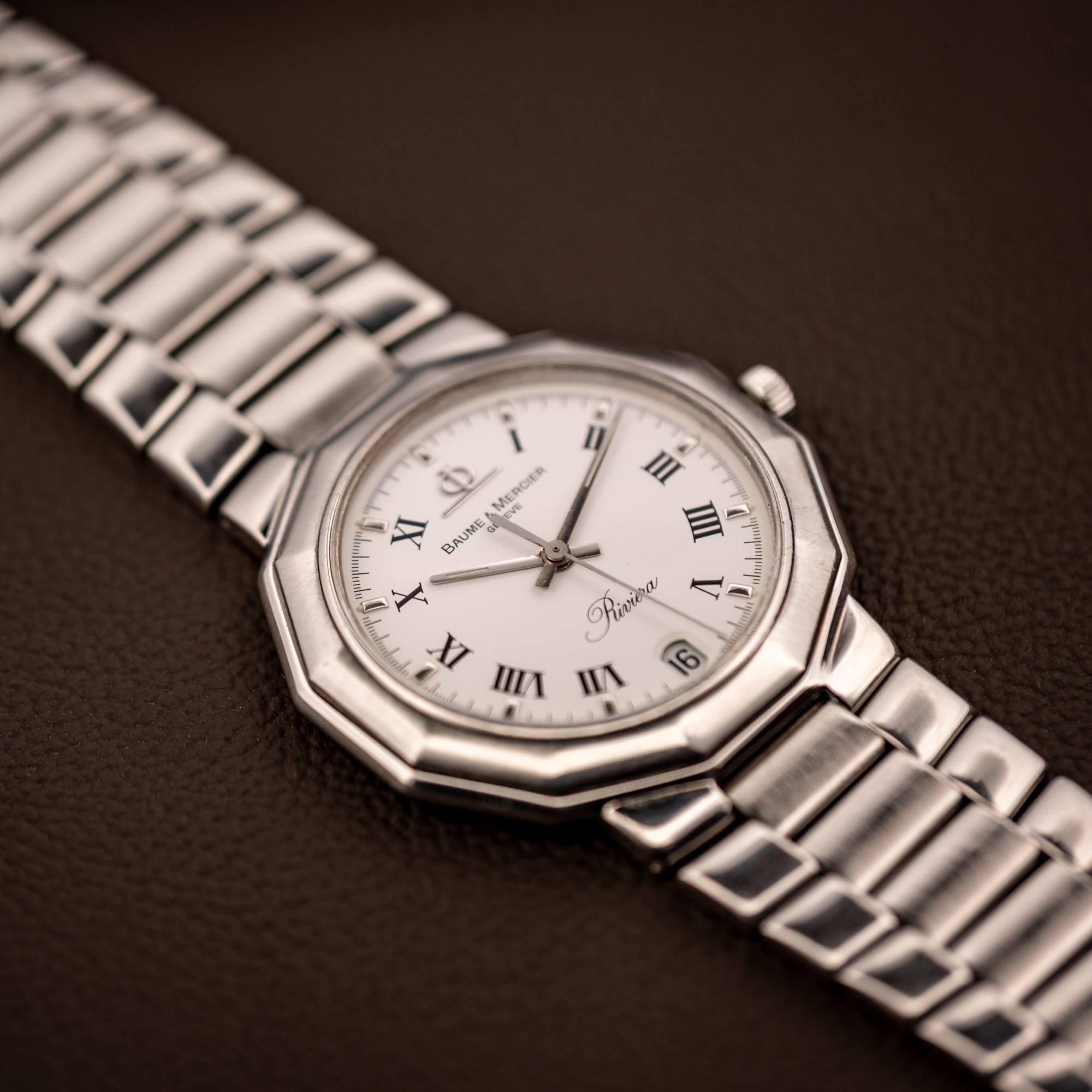
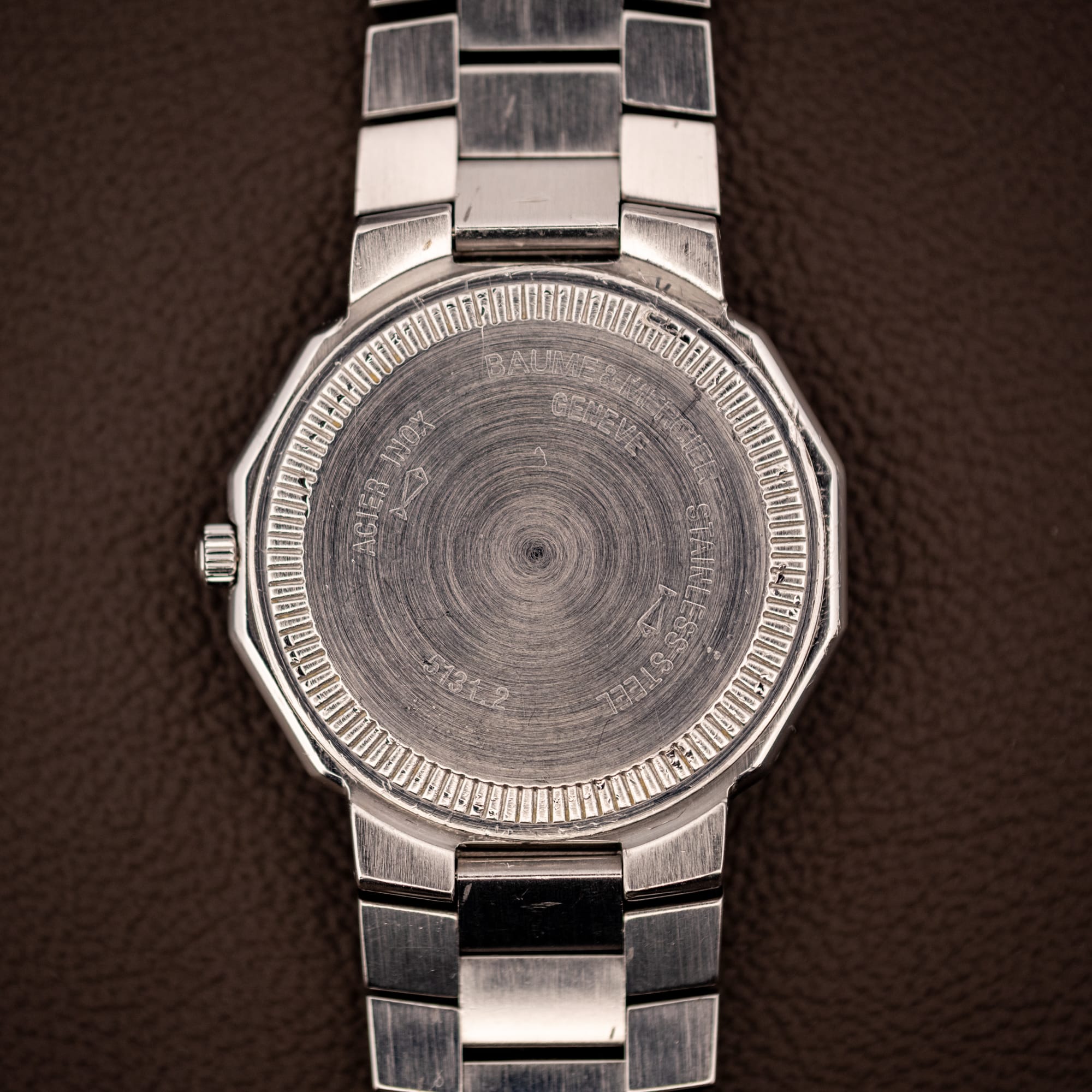
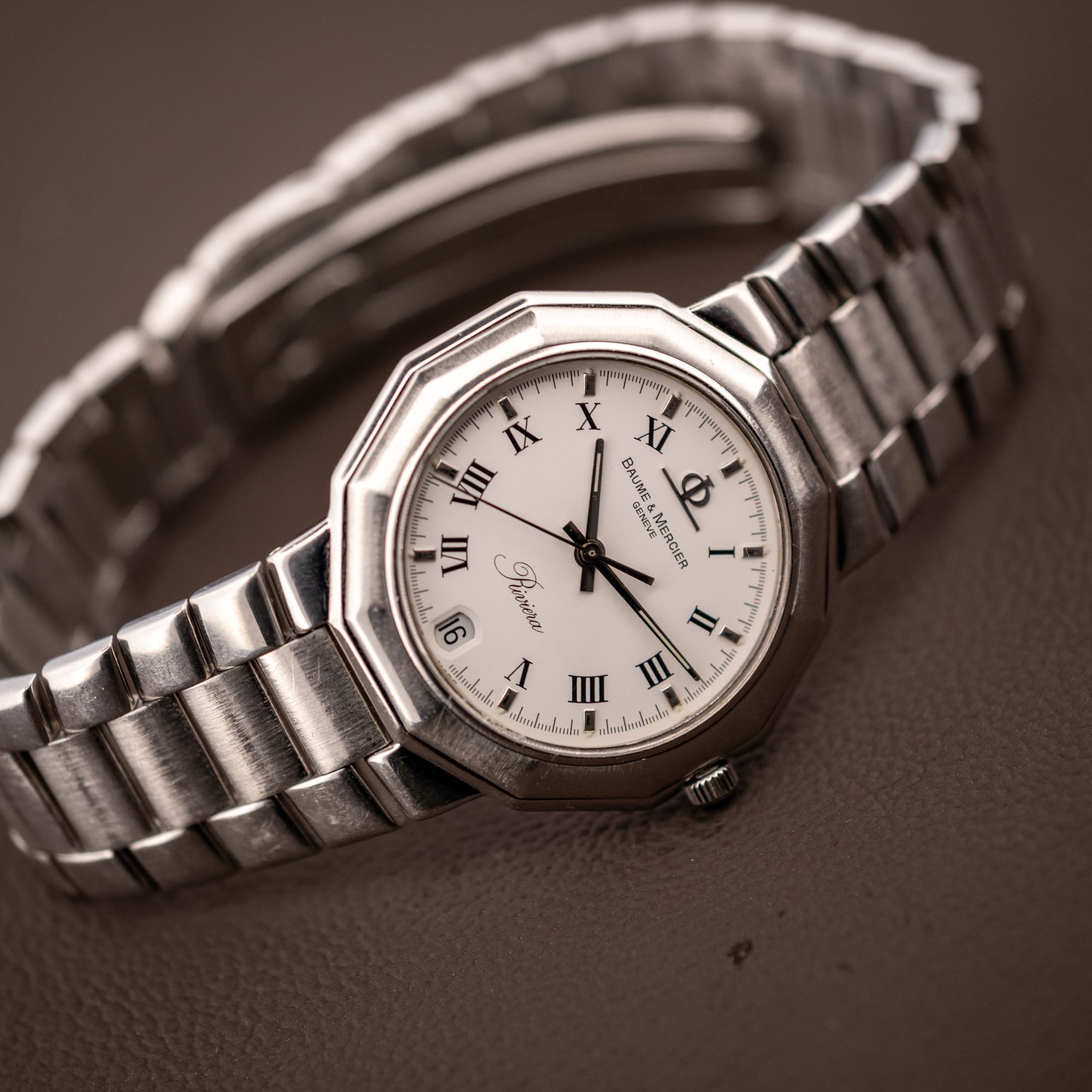
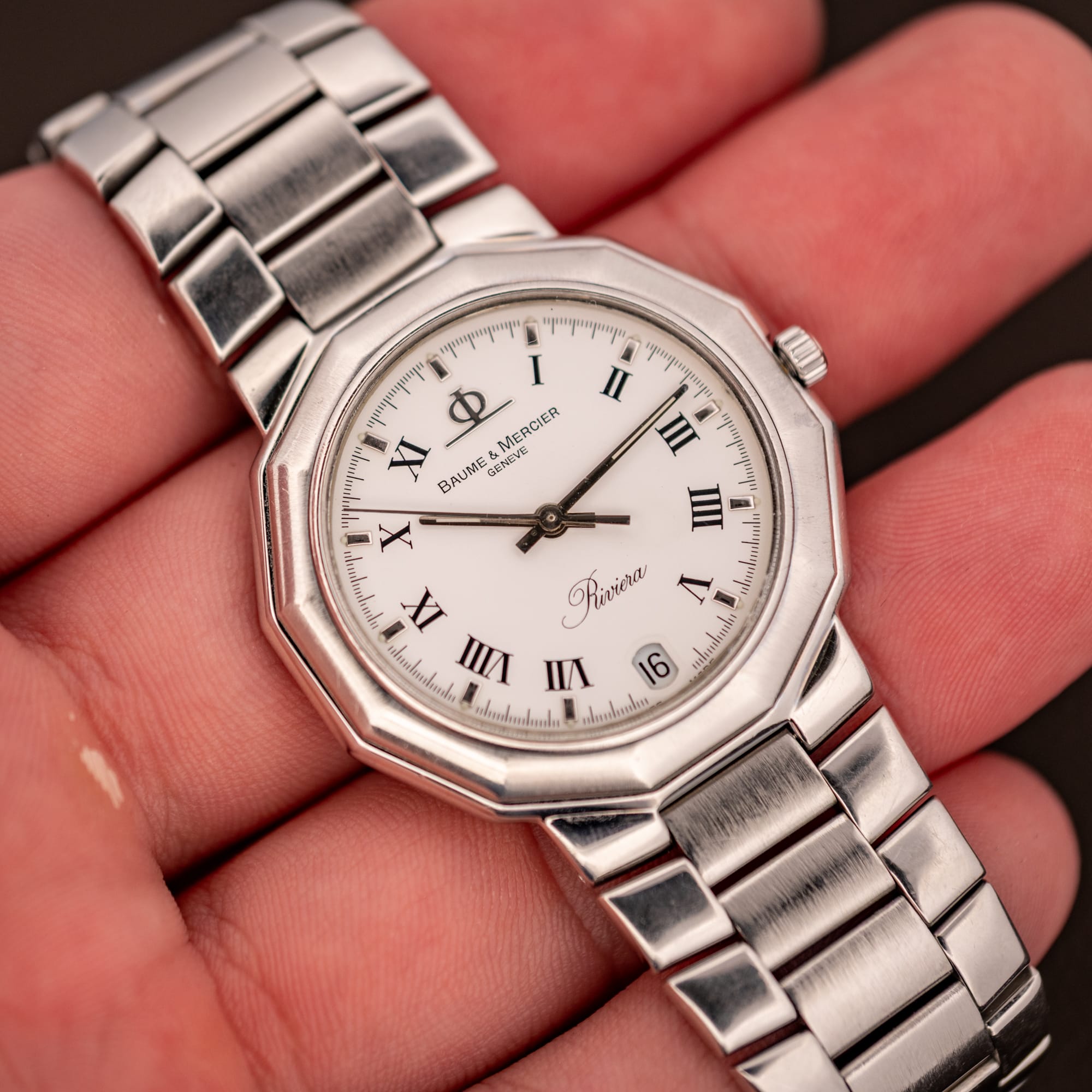
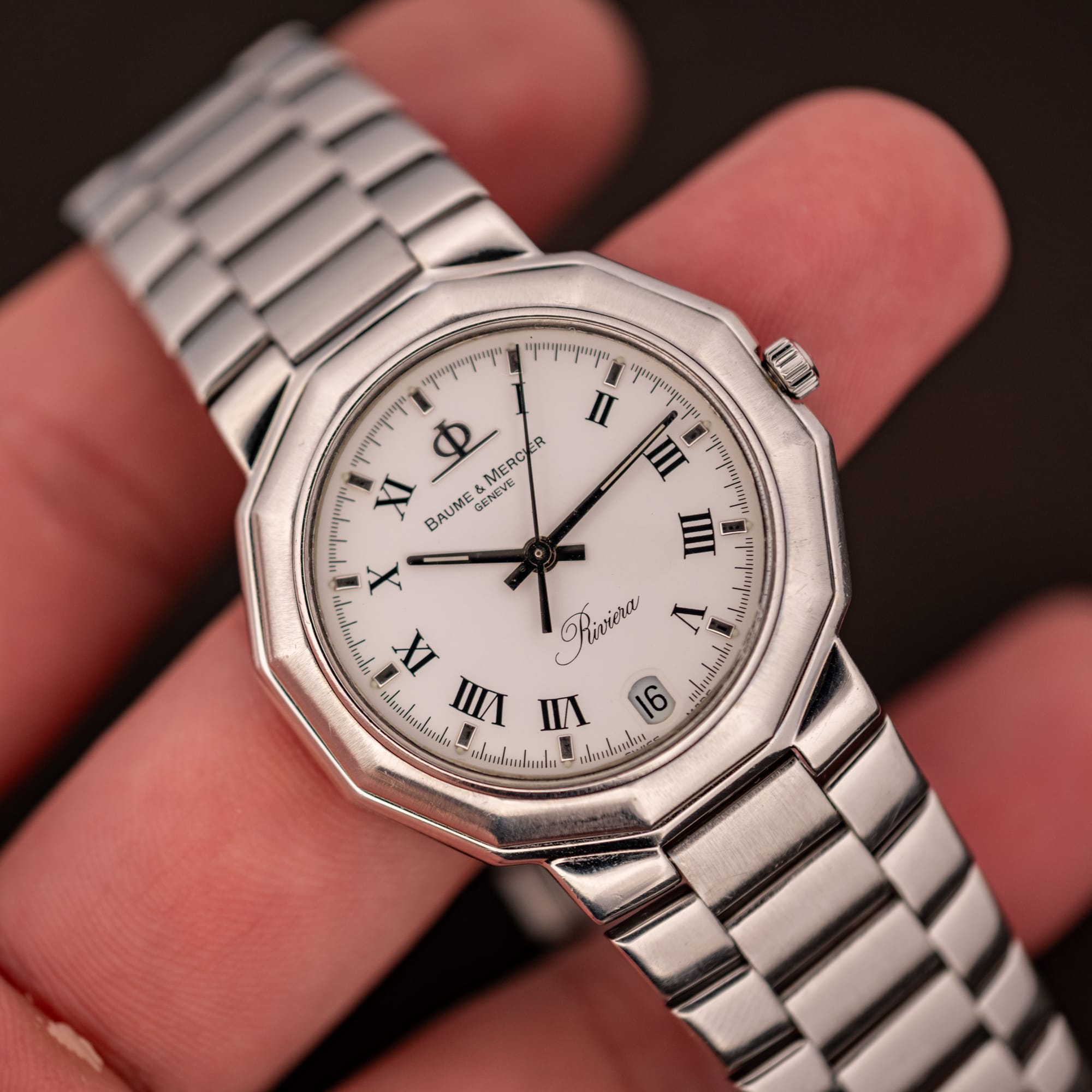
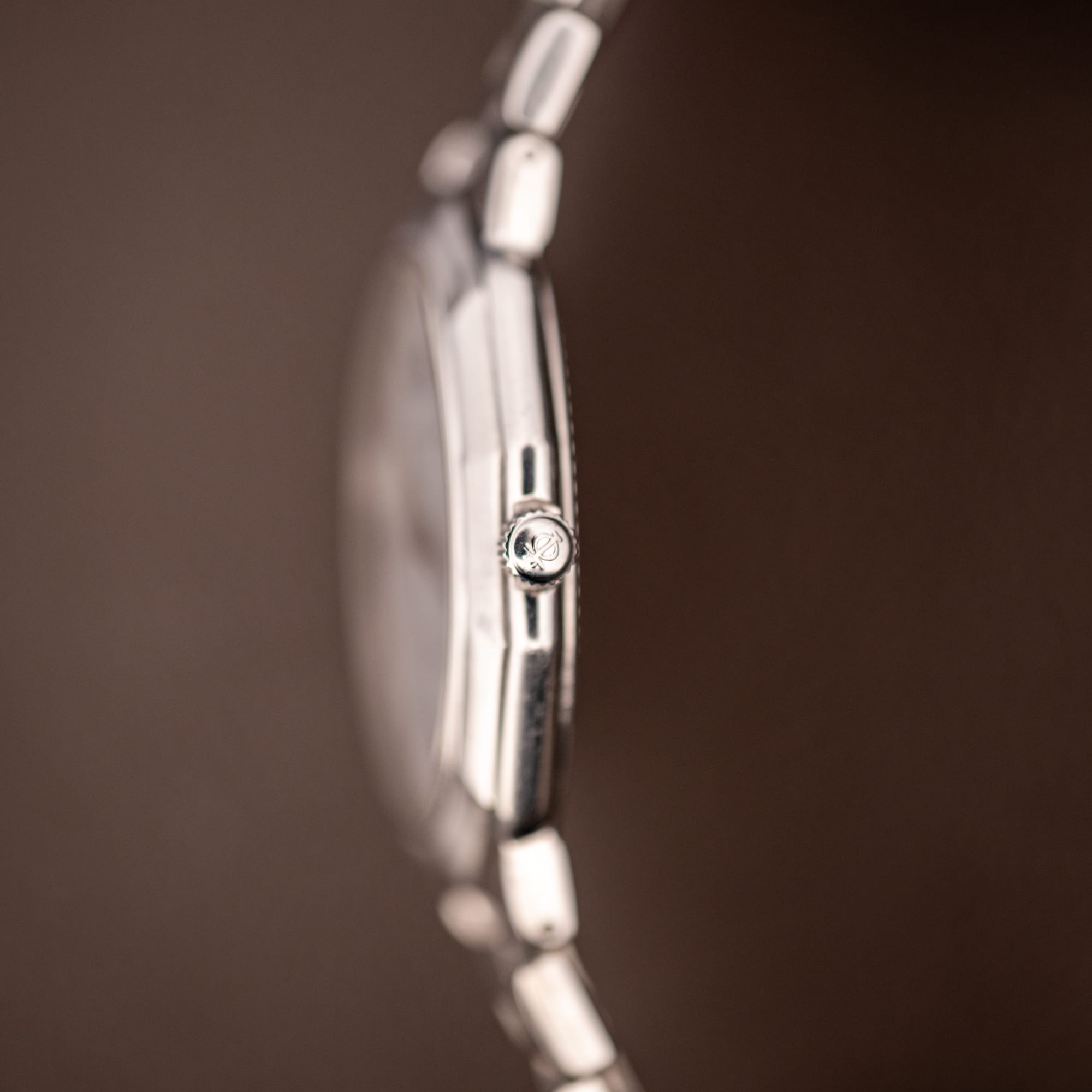
The case measures 34mm across the bezel with a 38mm lug-to-lug span, slim and flat in profile the way these quartz Rivieras always were, and the twelve-sided geometry reads even better in the metal than in photographs. It is executed entirely in stainless steel, with brushed tops and facets playing against polished transitions. The caseback is stamped verbatim BAUME & MERCIER GENEVE around the upper rim, ACIER INOX to one side, STAINLESS STEEL to the other, and the reference 5131.2 along the lower edge. The crown is signed with the Baume & Mercier Phi logo, correct for the line. Honest wear is present and we frame it as exactly that: light surface marks and fine scratches across the bezel facets, the caseback, and the bracelet, the proportional record of a watch that was worn rather than shelved.
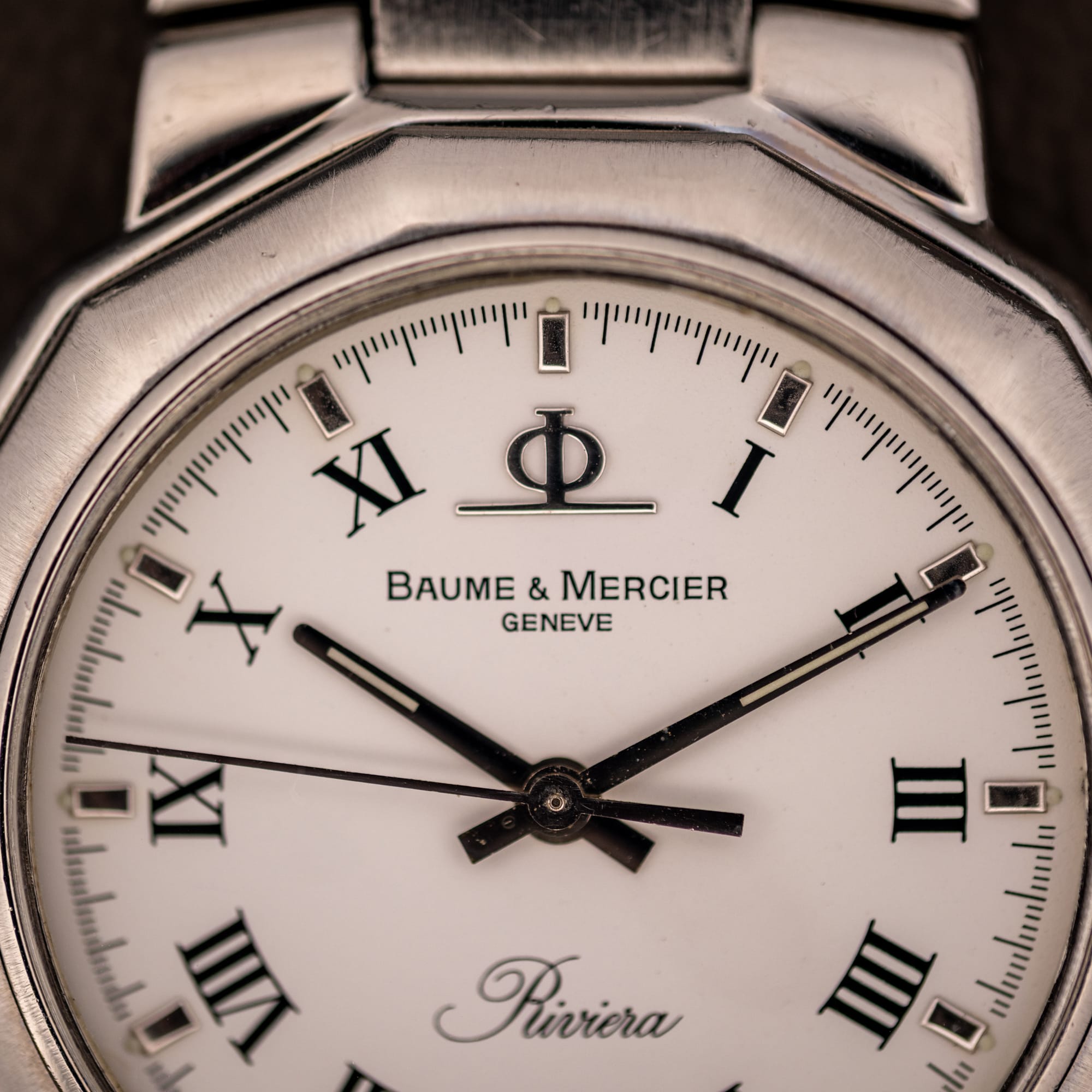
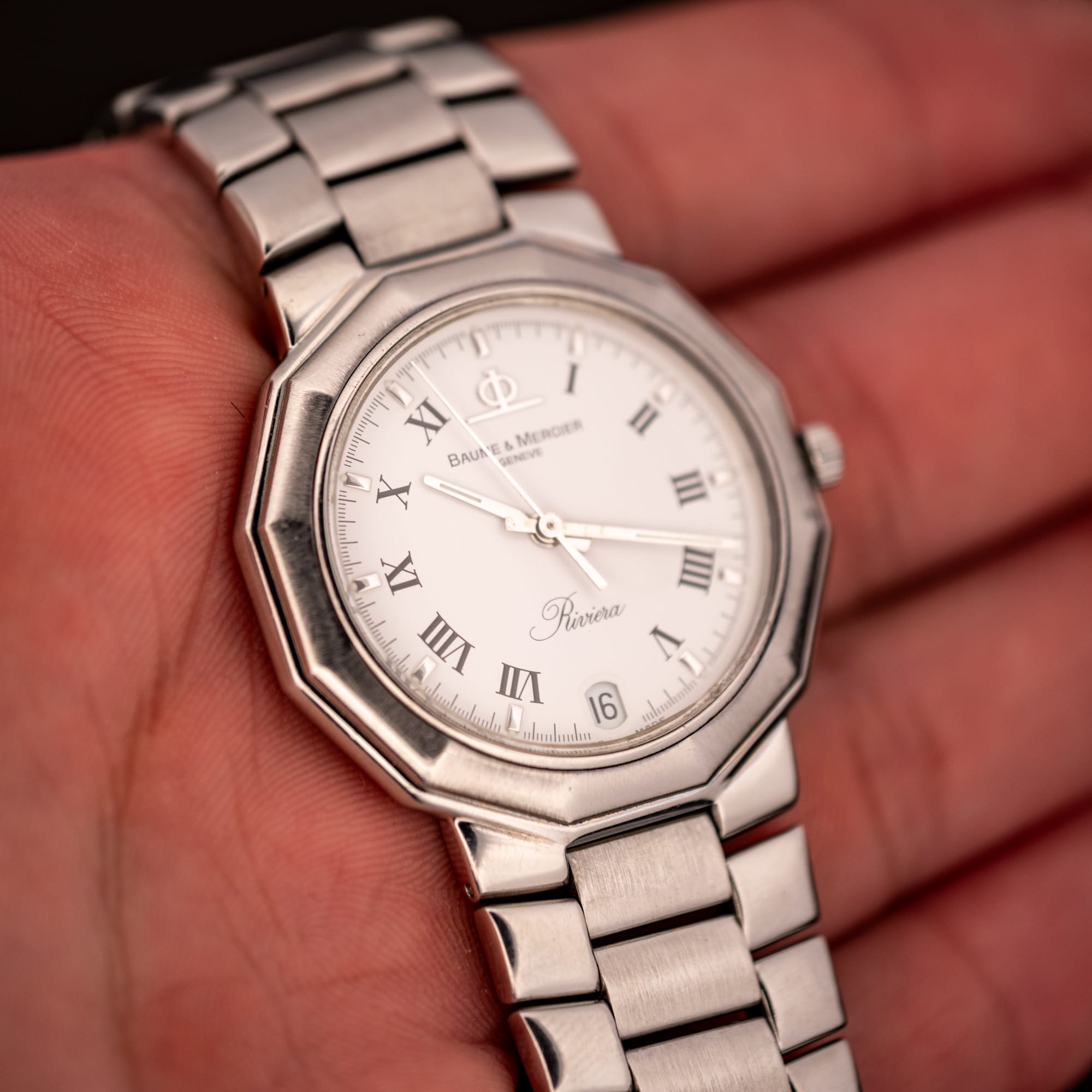
The dial is the Riviera’s other argument. A bright white surface carries applied polished baton markers at every hour, doubled with printed black Roman numerals set just inside them, so the layout reads as sporty and formal at once. The Phi logo sits at twelve above the BAUME & MERCIER GENEVE signature, the cursive Riviera script sits above six, and SWISS MADE runs along the very bottom edge. A framed date window sits at six o’clock, currently showing 16. The hands are dark faceted batons with a central sweep seconds hand, crisp against the white, and a railroad-style minute track rings the dial. The printing is clean and the dial presents as honest and factory-original throughout.
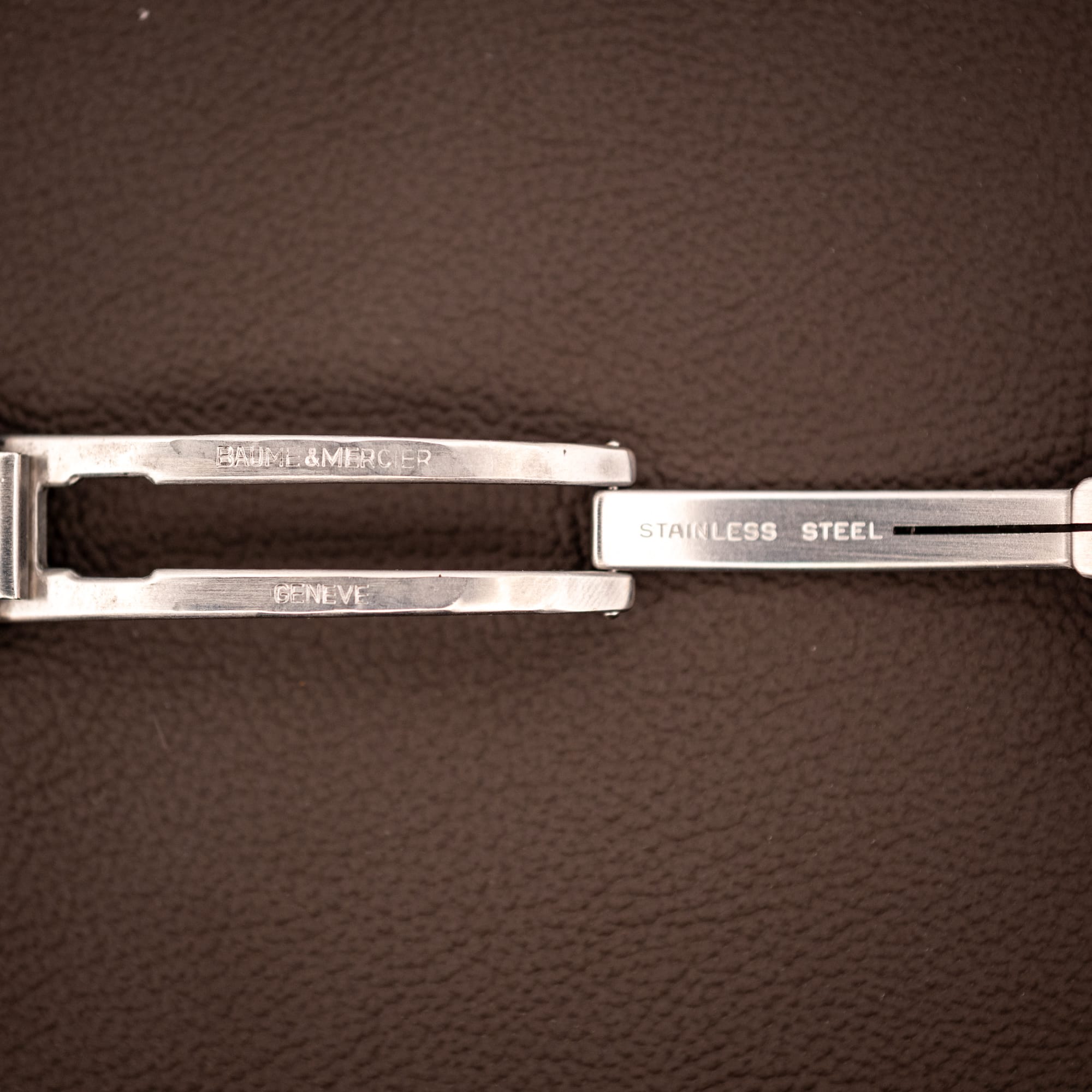
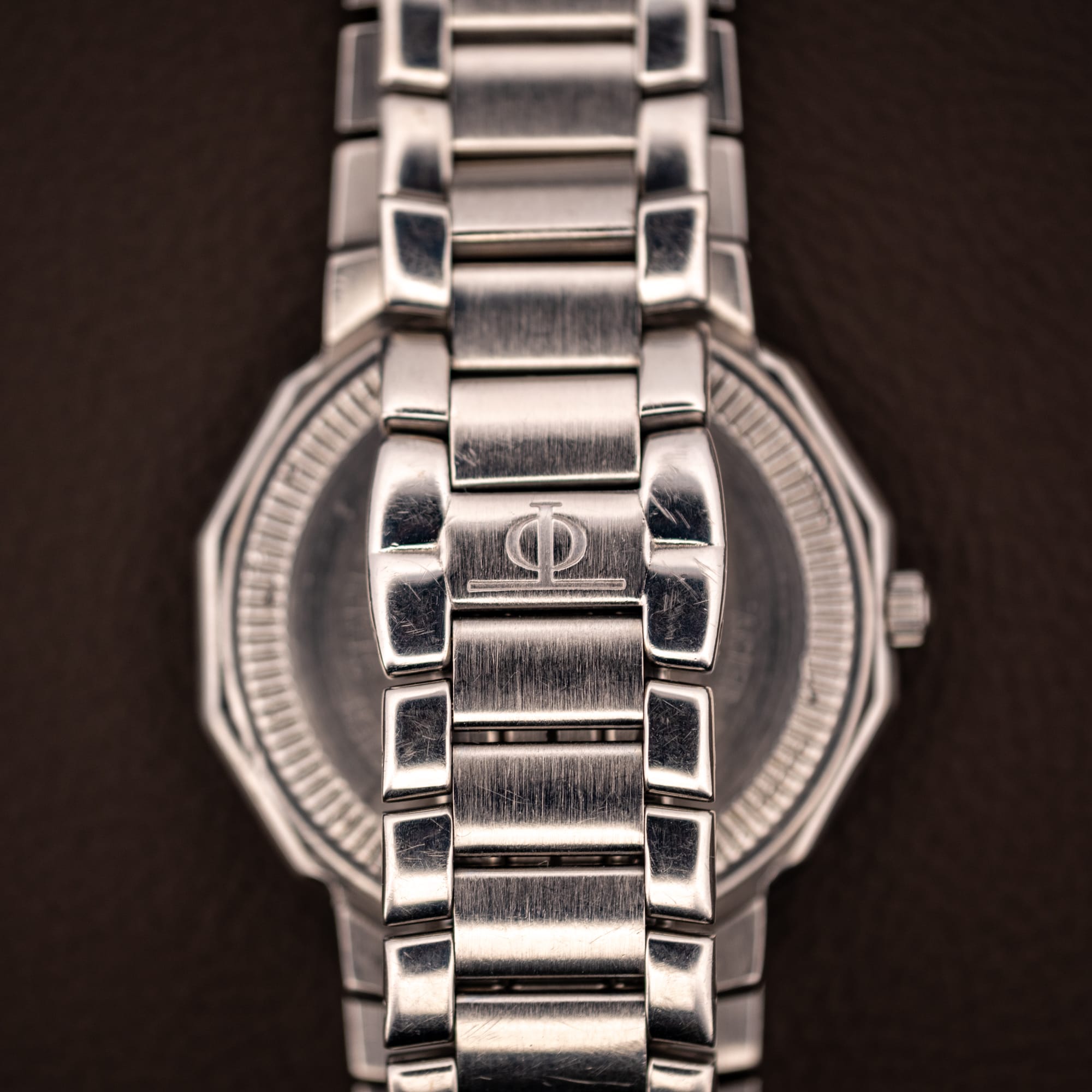
This is where the integrated design pays off. The Riviera was conceived as a single object, case and bracelet flowing together, and this example wears its original brushed-and-polished stainless steel bracelet closing on the signed Baume & Mercier folding clasp, the blades stamped BAUME & MERCIER and GENEVE, STAINLESS STEEL on the bracelet, and the Phi logo engraved on the deployant cover. It is the bracelet the watch was designed around, and swapping it for leather would undo the entire point of the piece.
Serviced in-house at OTTUHR and backed by our 2-year warranty, this Baume & Mercier Riviera Ref. 5131.2 is for the collector who values a genuine 1970s design idea over a familiar logo, and who would rather wear the watch that opened a brand’s boldest chapter than the one everyone already expects. Compact, characterful, and quietly confident, it asks for nothing and earns a second look anyway. Some watches shout to be noticed. The Riviera was drawn by someone who trusted twelve flat sides to do the talking.