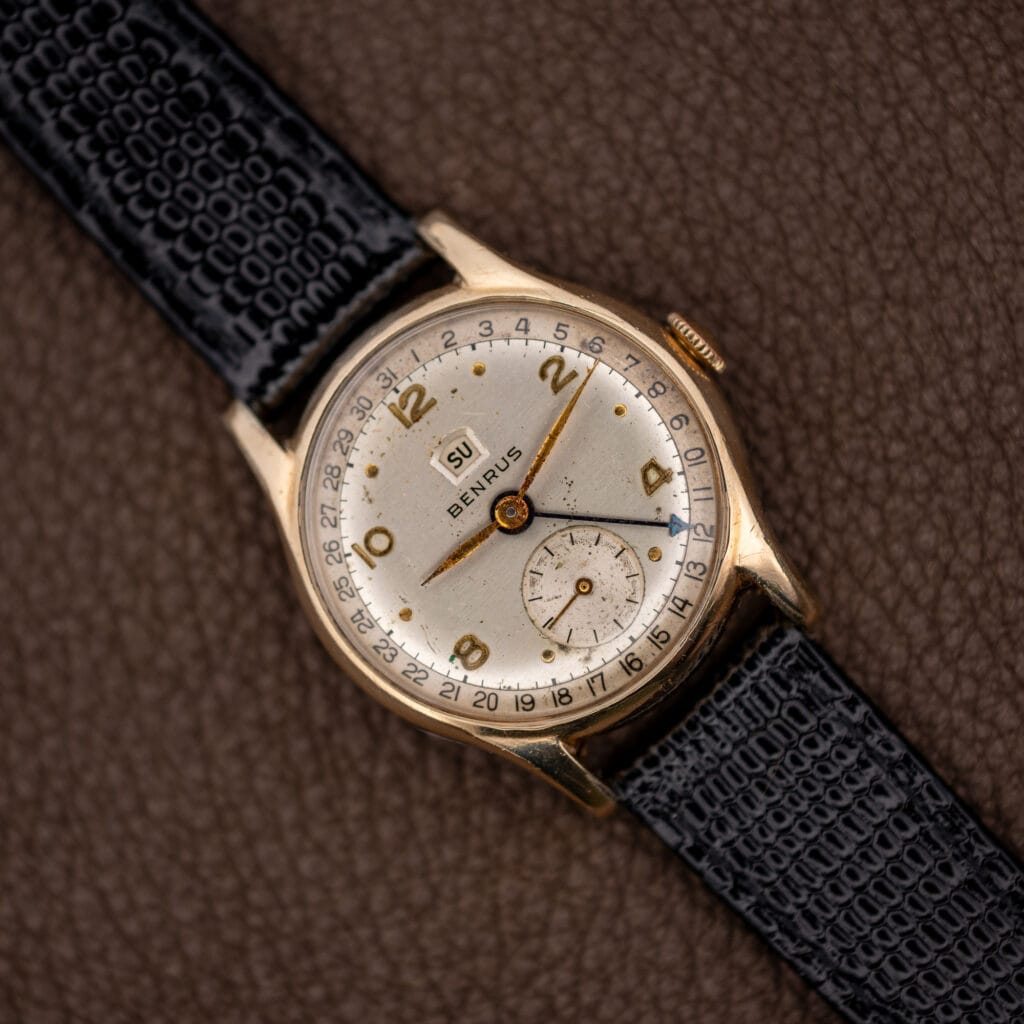
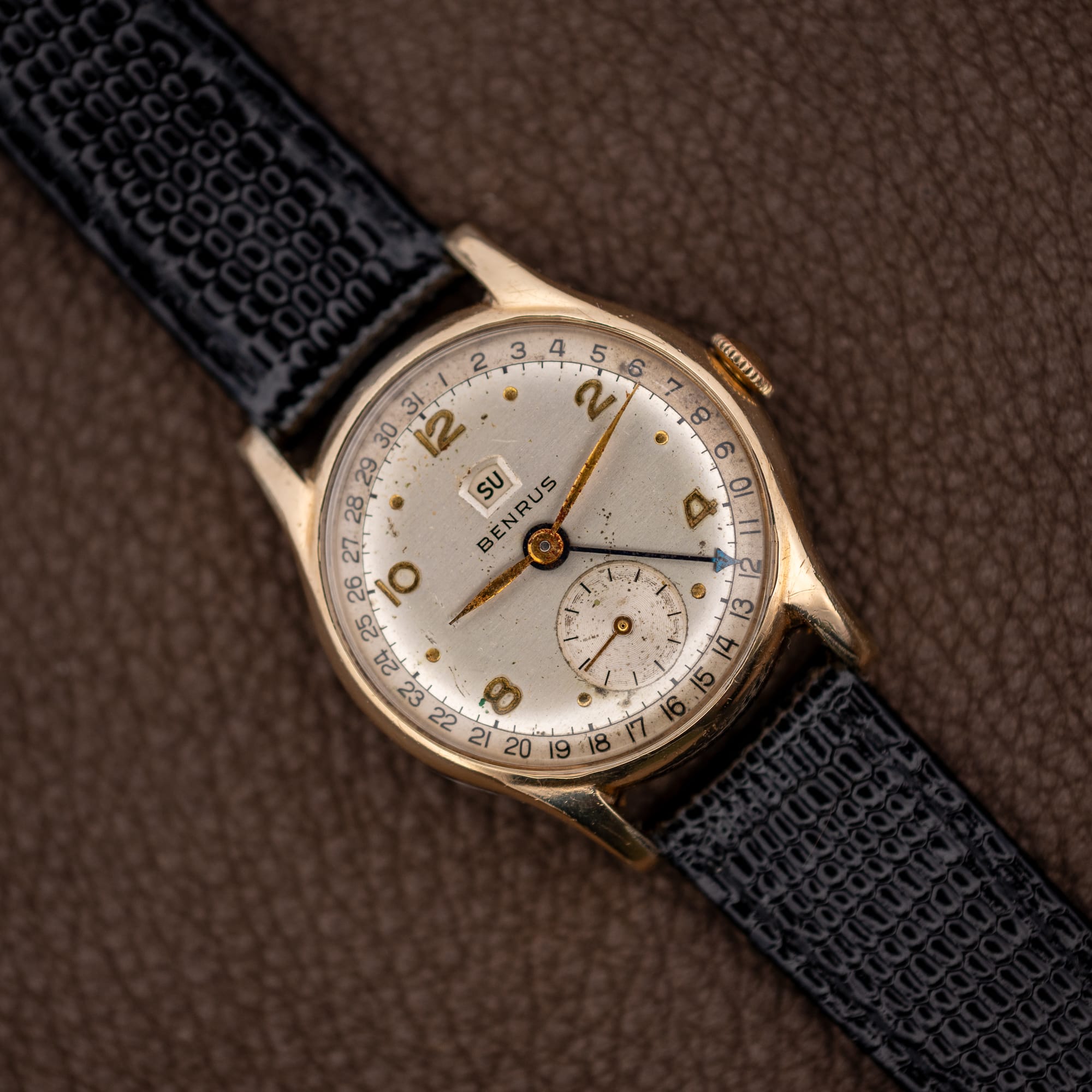
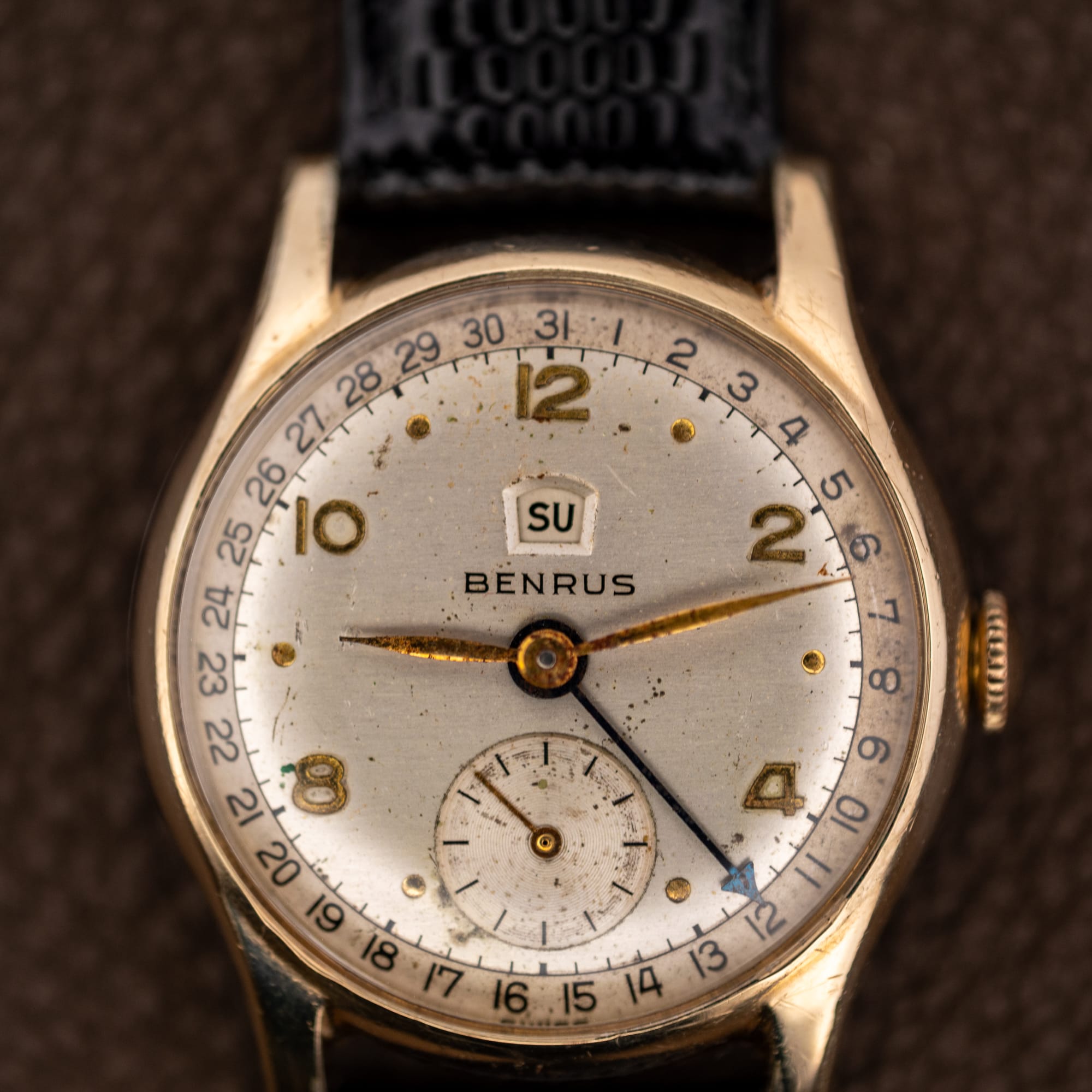
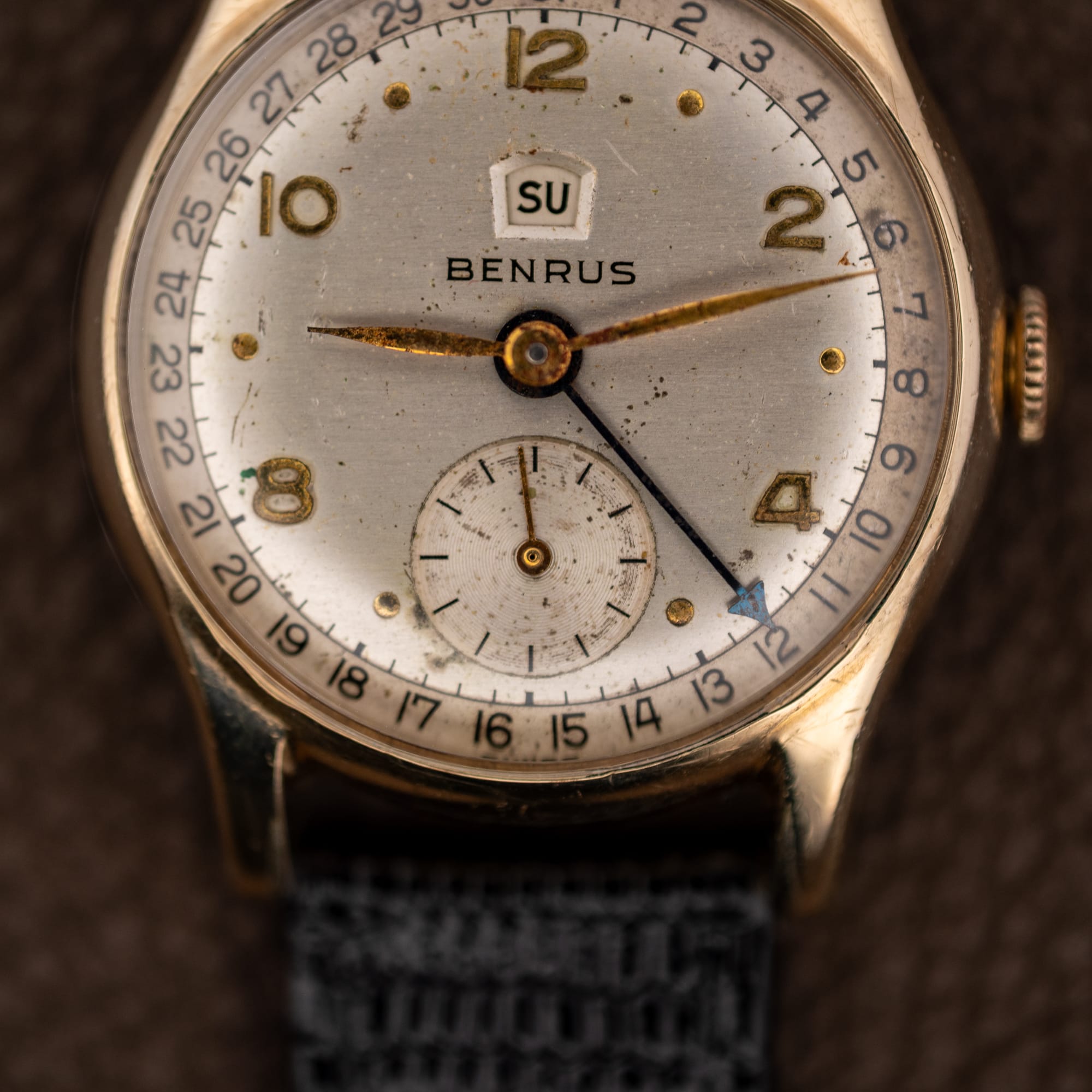
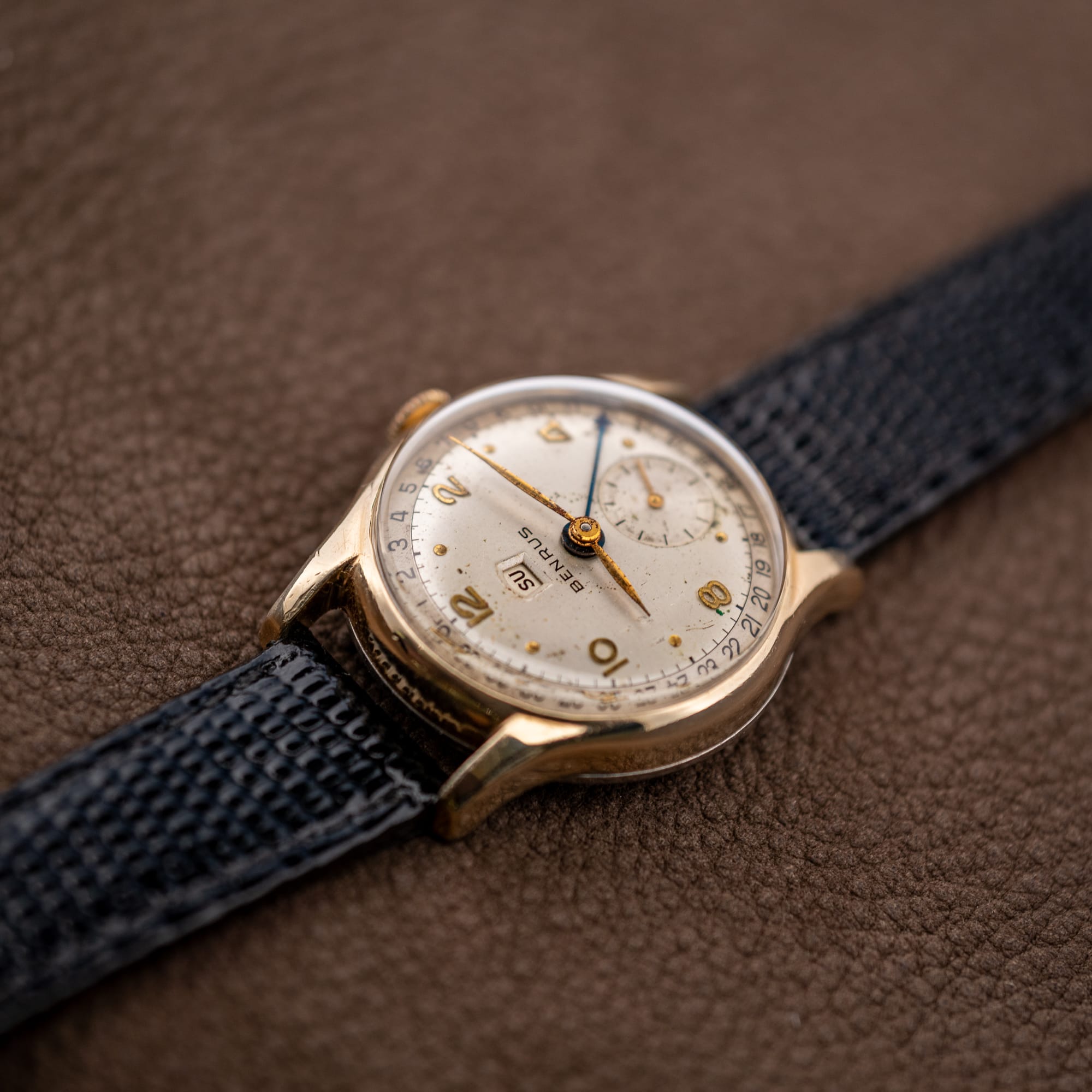
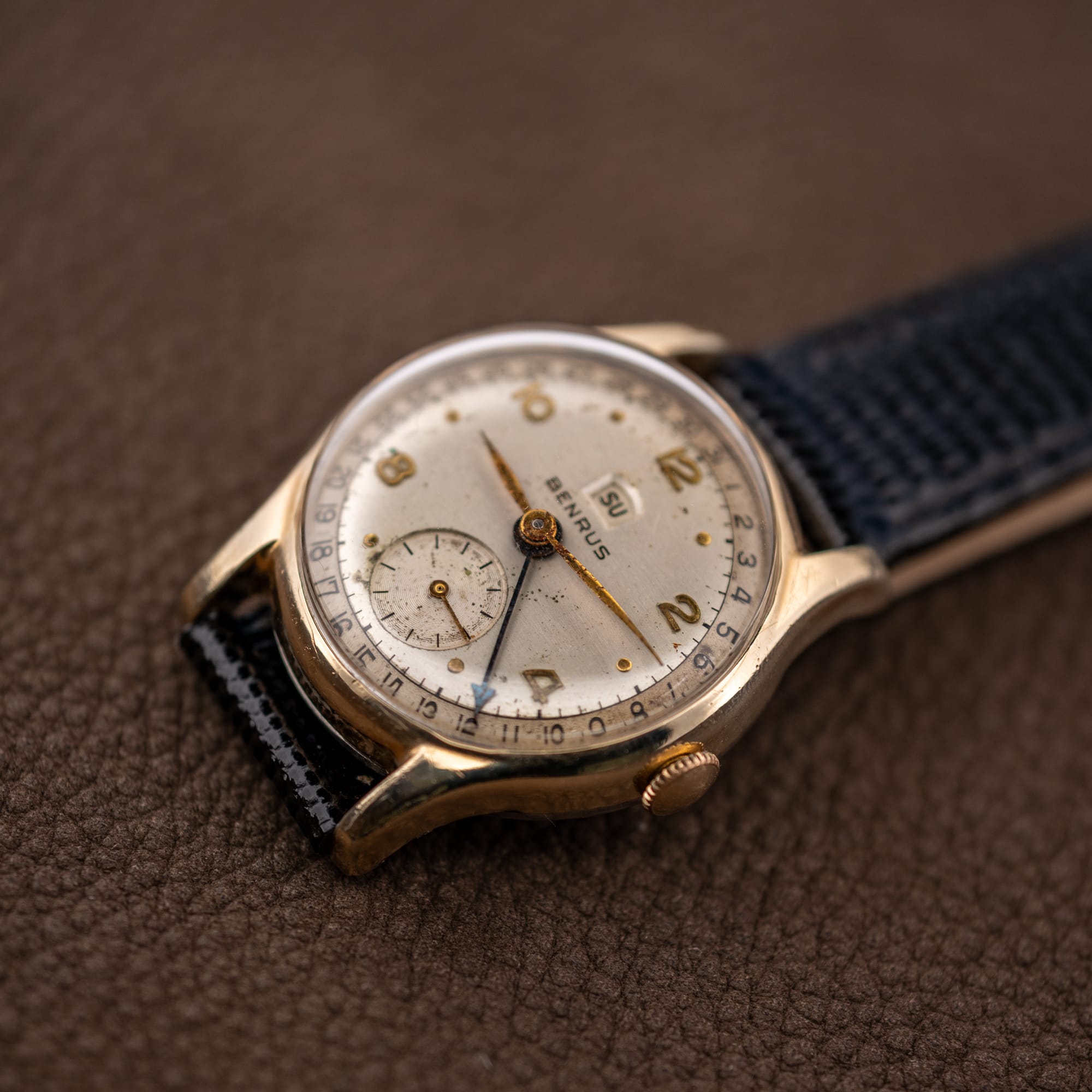
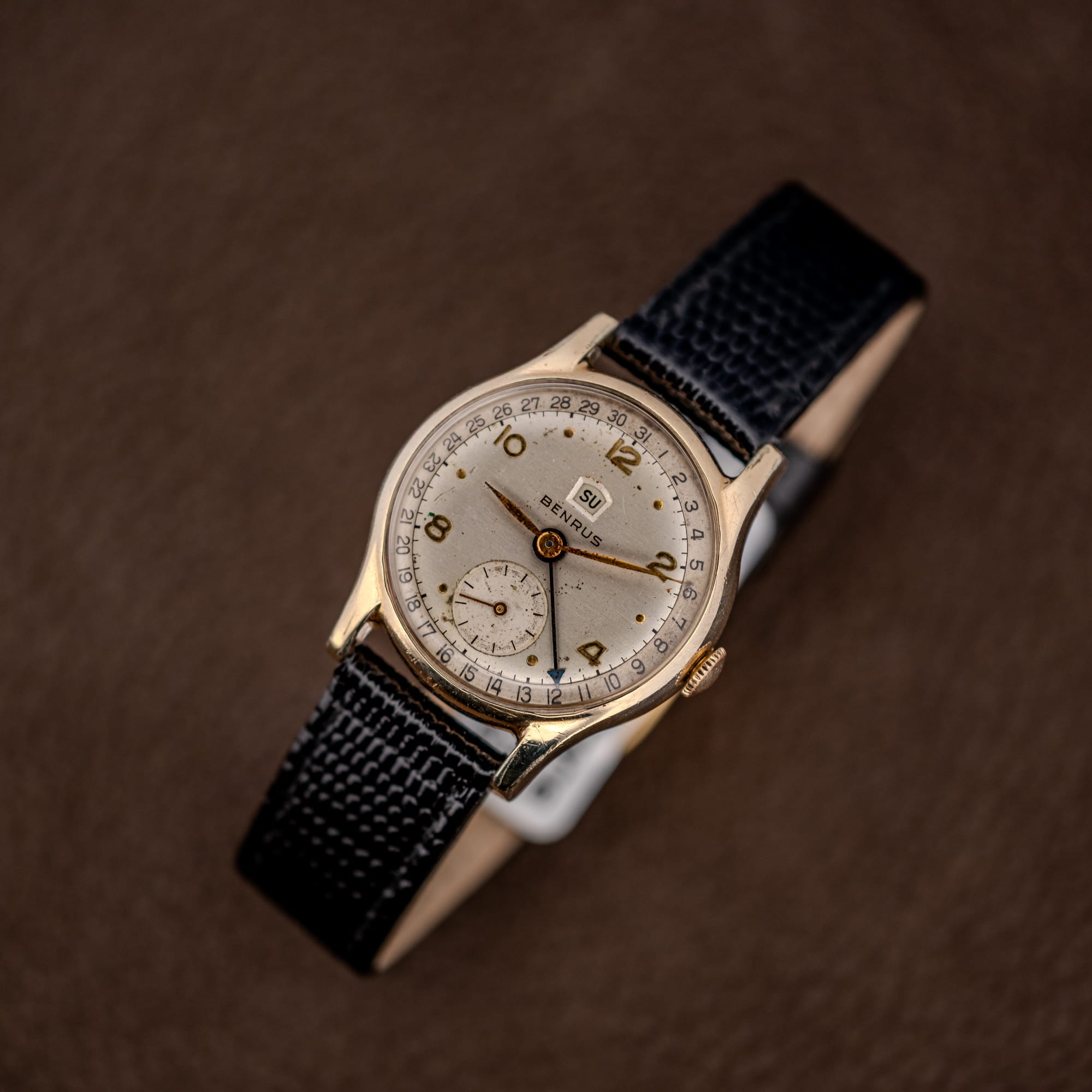

Riding the outer edge of this dial is a slim blued hand that does not tell the time. It points at the date, one number at a time, around a printed track that runs 1 to 31 at the very edge, and once a day it steps forward a place. Just inside that track, a small aperture shows the day of the week. Together they make a Benrus pointer date and day calendar, a complication the company was selling in the years either side of 1950.
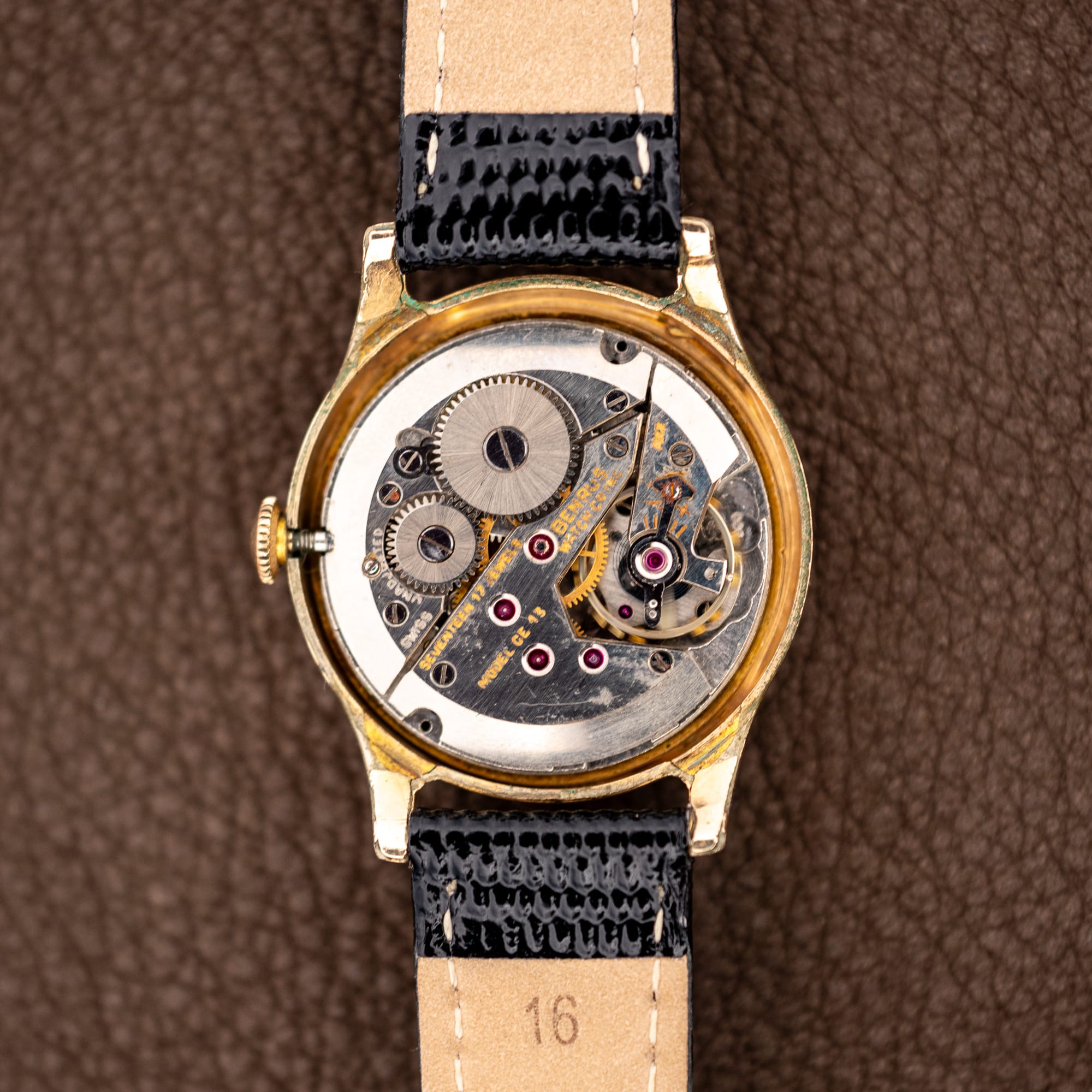
What drives all of it is one wheel and one pin. The calendar driving wheel turns once every 24 hours, and set into it is a single pin. As the wheel comes around, that pin pushes the date wheel forward one step, and in the same motion it catches a gear on the underside of the day wheel, so the day and the date move together rather than one after the other. A pair of jumper springs holds tension on both, which is why they snap into position instead of drifting. A quickset lever lets the date be run forward by pressing the crown, so a short month never meant winding the hands through a full day. To us the appeal is the economy of it. This was not a calendar movement engineered from scratch. It was a calendar added to an existing one, and the whole addition sits in a layer between the dial and the movement.
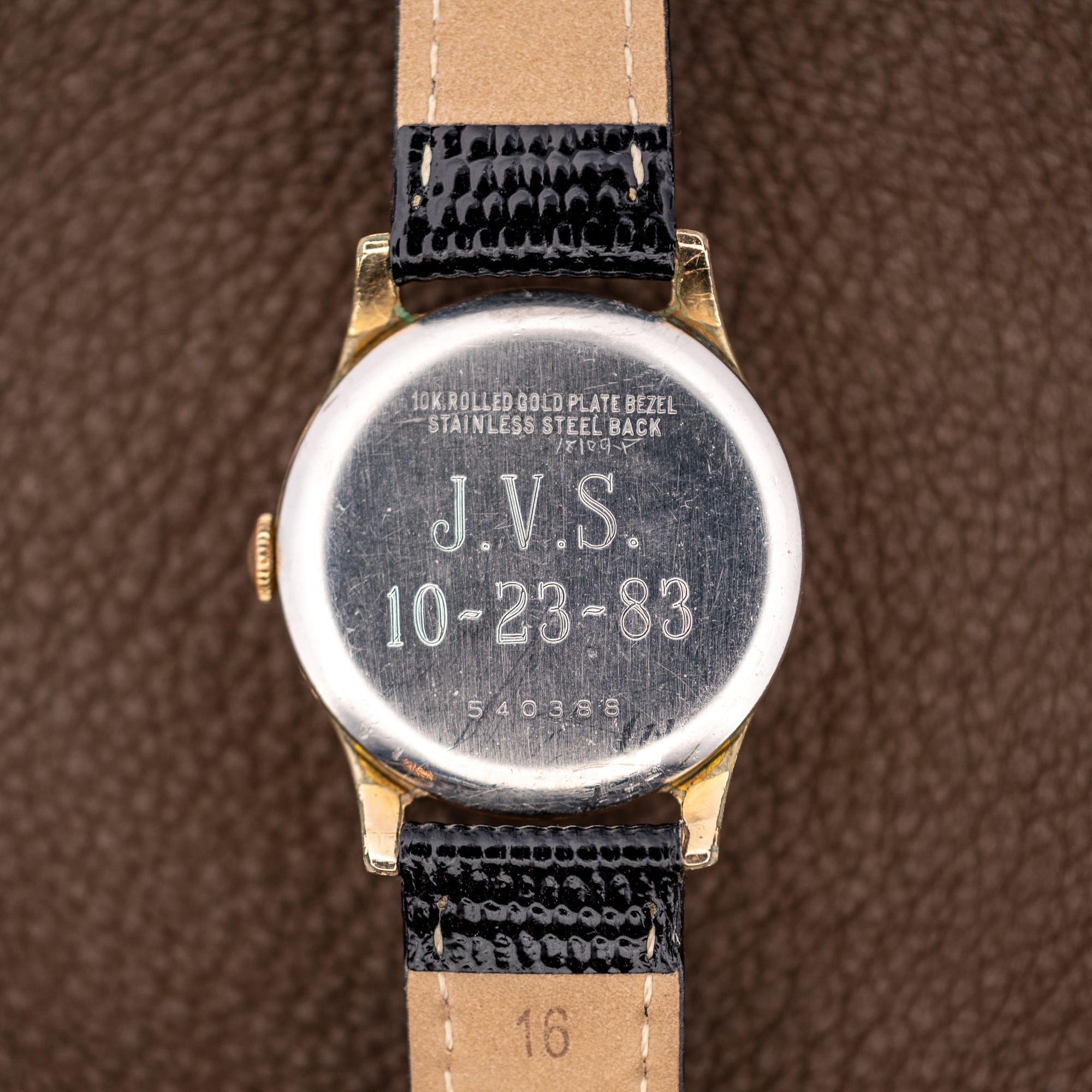
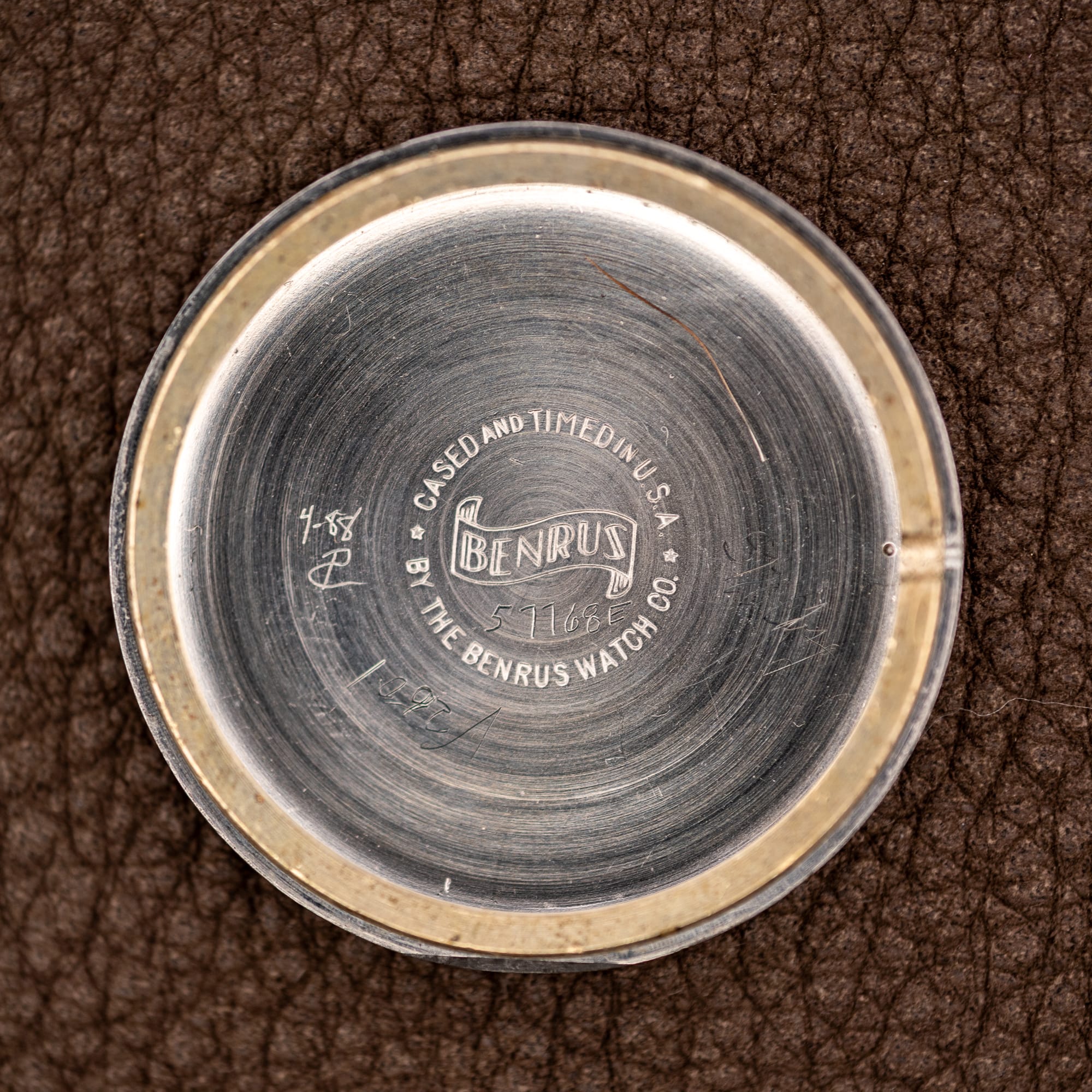
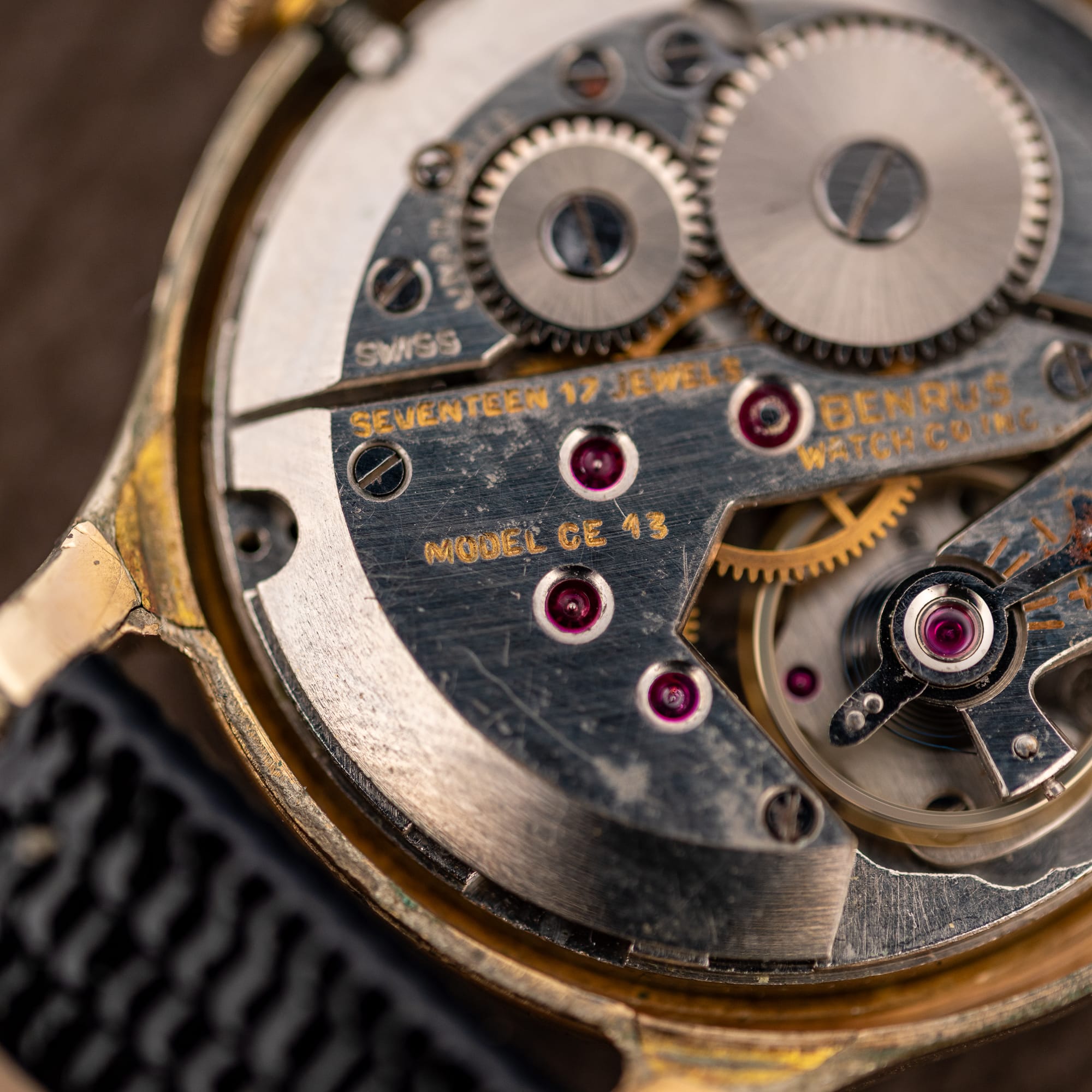
The movement in this Benrus pointer date is marked MODEL CE-13, one of the calibers that arrangement was built on: an ETA 930 in 11.5 lignes, manual wind, seventeen jewels, sub-seconds, with the calendar module riding above. Reference material puts its introduction around 1950 and records the same Benrus designation carried on this movement. The inside of the caseback is stamped by the Benrus Watch Co. in the United States, which is how these were finished, Swiss movements out of La Chaux-de-Fonds, cased on this side of the Atlantic. A later hand added a line to the back, three initials and the date 10-23-83, and we have left it exactly as we found it.
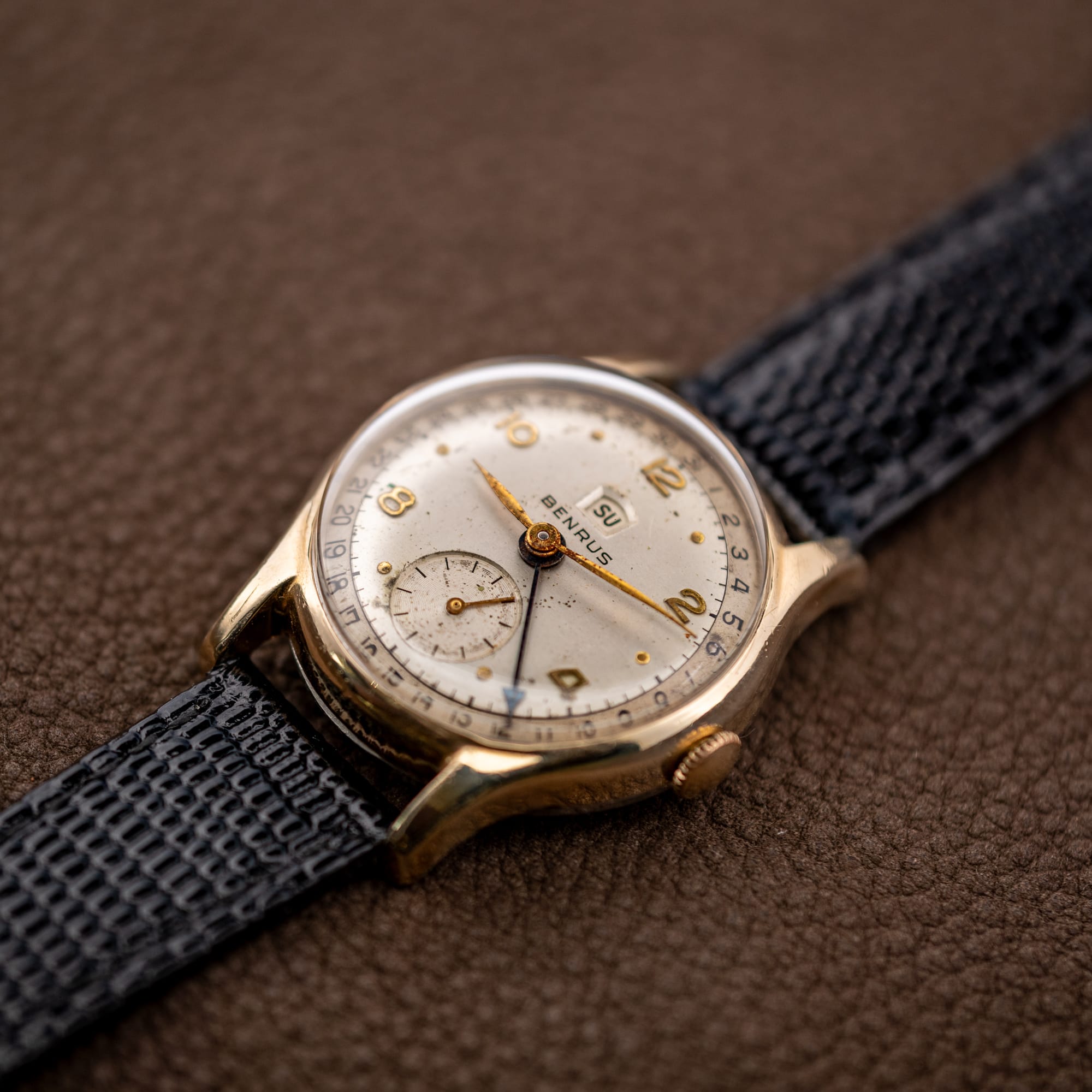
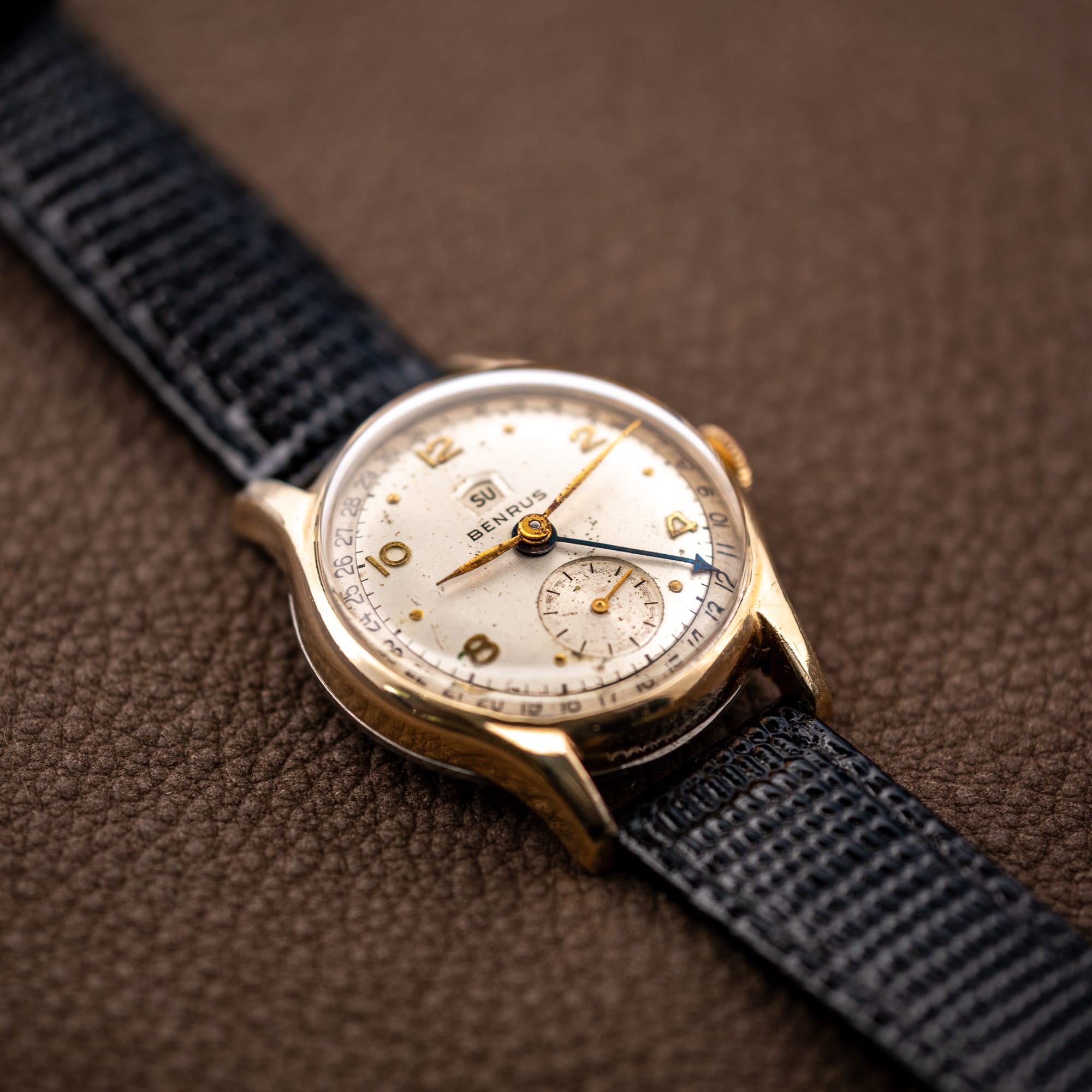
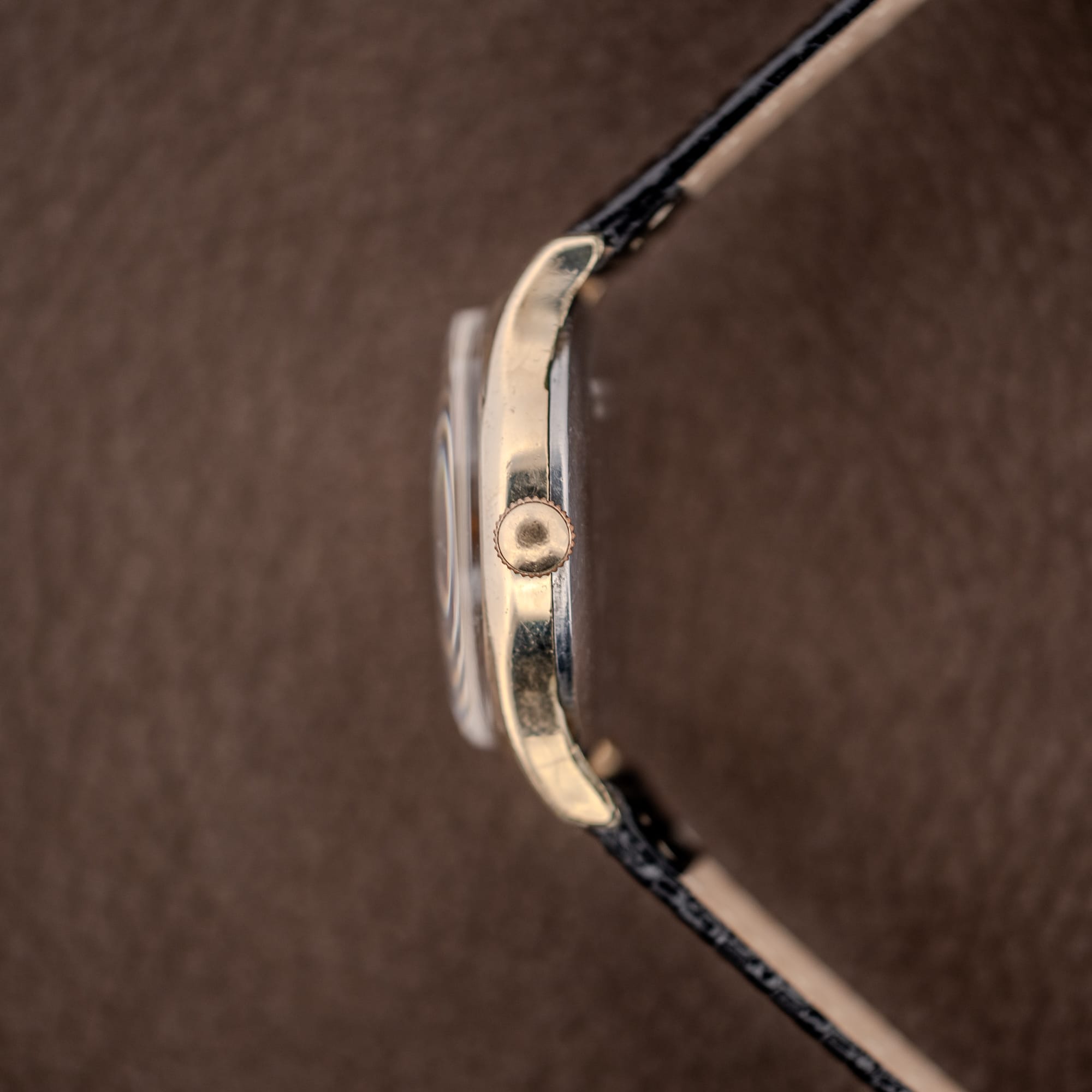
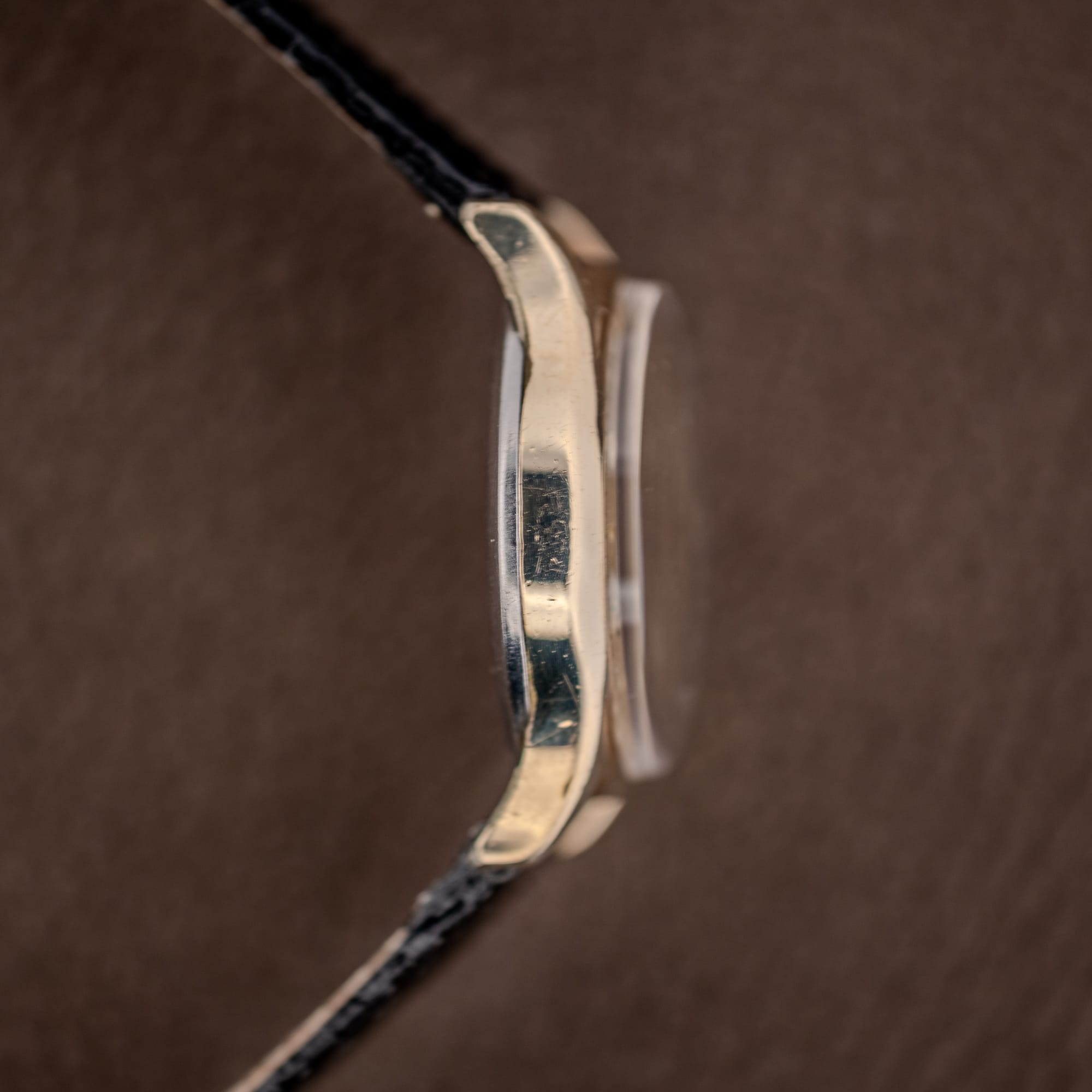
The case on this Benrus pointer date measures 30mm across and 36mm lug to lug on 16mm lugs, a 10k rolled gold plate bezel over a stainless steel back, and it has been worn hard. Plating has gone thin and then gone altogether at the bezel edge, the lug tips and both case flanks, green verdigris has worked into the lug corners, and the back is densely scuffed from decades against a cuff. The white dial has spotted widely, the applied Arabic numerals and the gold-tone hands have both oxidised dark, and the acrylic crystal is scratched and hazed toward the rim. No lume sits on the dial or hands. The dial printing is intact, every applied numeral is present, and nothing here has been refinished.
Serviced in-house at OTTUHR and backed by our 2-year mechanical warranty, on a black leather strap. The whole two-part calendar comes down to one pin and two springs. Seventy-five years on, that is still the cleverest thing under this dial.