
The Bulova Accutron is, arguably, the single most important American contribution to twentieth-century timekeeping. When it debuted in 1960, it didn’t just improve upon the mechanical wristwatch; it fundamentally reimagined how a watch could work. Instead of a balance wheel oscillating back and forth, the Accutron used an electronically driven tuning fork vibrating at 360 Hz, a frequency that delivered accuracy to within about two seconds per day. To put that in perspective, a good mechanical watch of the era might gain or lose fifteen seconds daily. The Accutron was in another league entirely, and the world knew it. It was chosen by NASA, adopted by the railroads, presented to world leaders (Lyndon Johnson famously gave them as gifts), and its tuning fork movement literally went to the moon aboard early Apollo mission timing instruments.
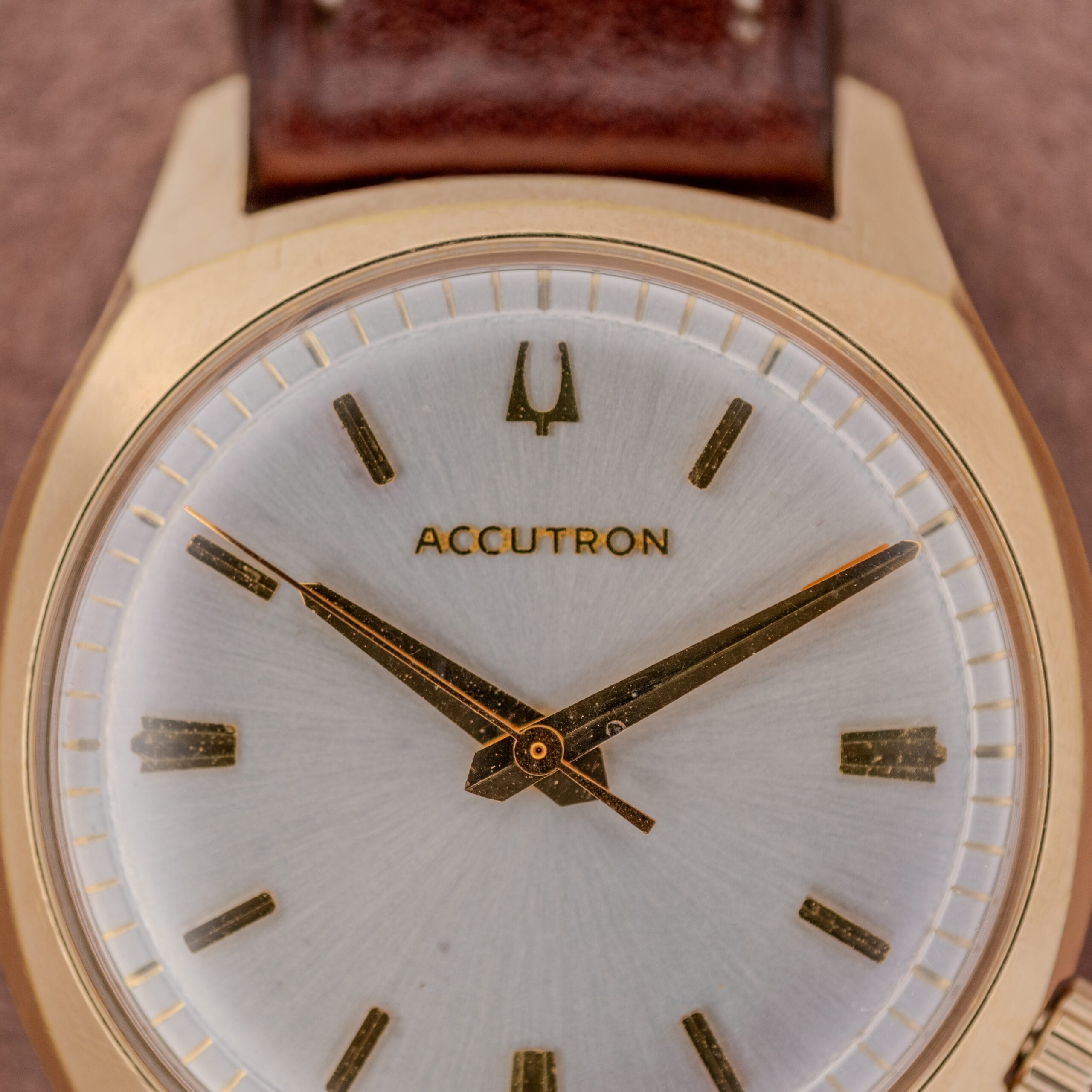
What made the Accutron so revolutionary wasn’t just the accuracy; it was the philosophy. Swiss watchmaker Max Hetzel, working at Bulova’s research labs, spent over a decade developing the concept. The movement replaced hundreds of years of mechanical tradition with something genuinely new: a tiny tuning fork, barely visible to the naked eye, humming rather than ticking. That distinctive, near-silent hum became the Accutron’s signature, and the tuning fork itself became one of the most recognizable logos in watchmaking, the elegant “U” shape that sits proudly at 12 o’clock on every Accutron dial. It’s wild to think that a small American company in Queens, New York, beat the entire Swiss establishment to the punch on electronic timekeeping by years.
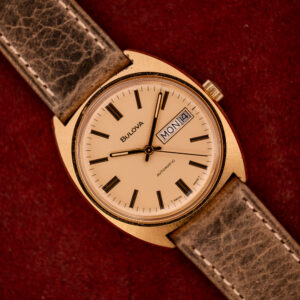
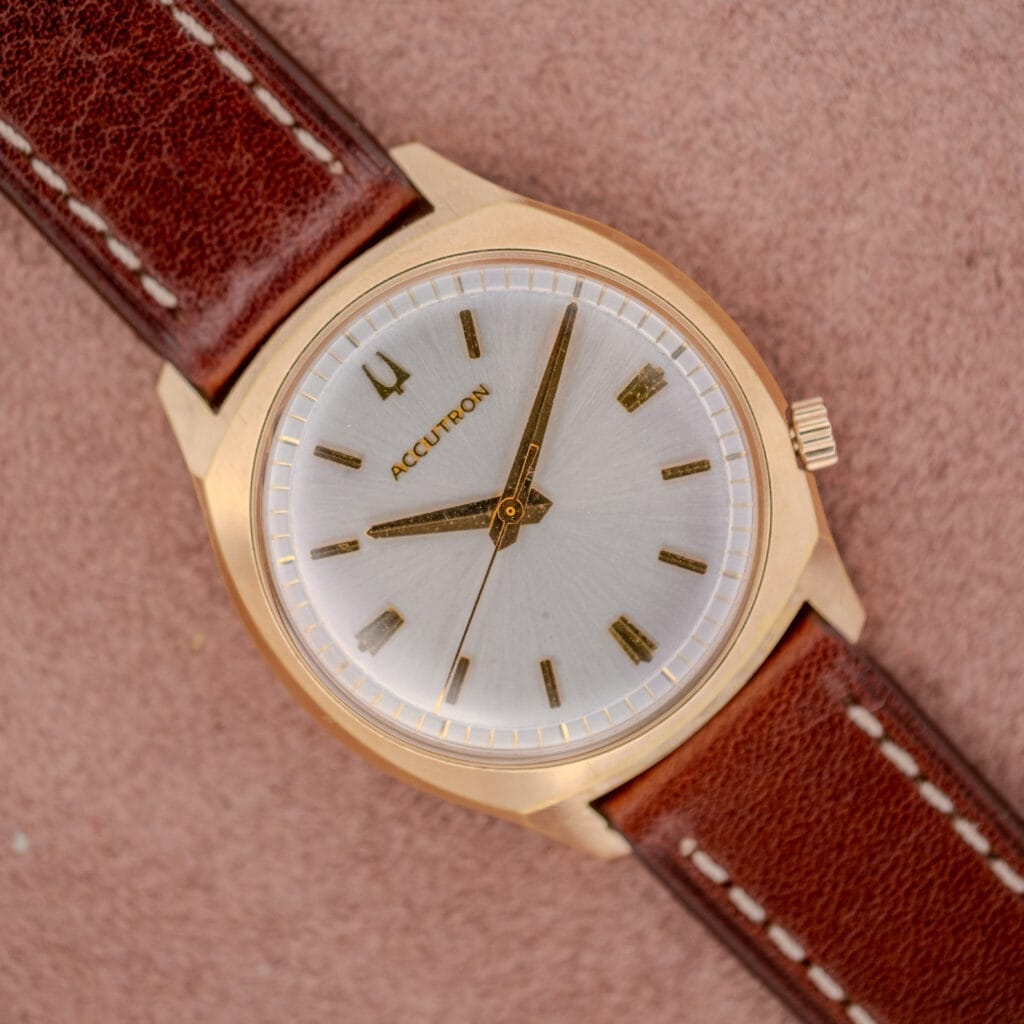
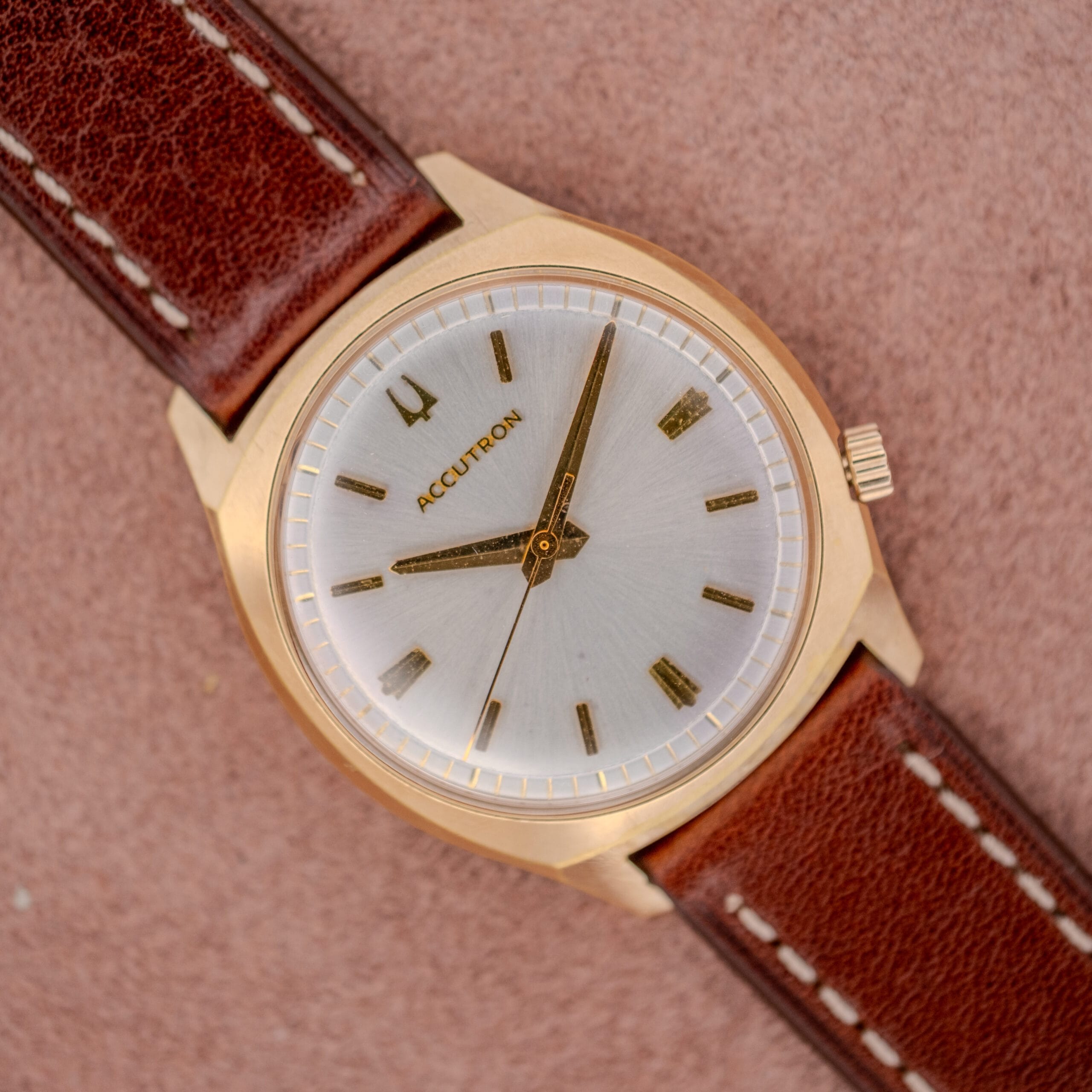
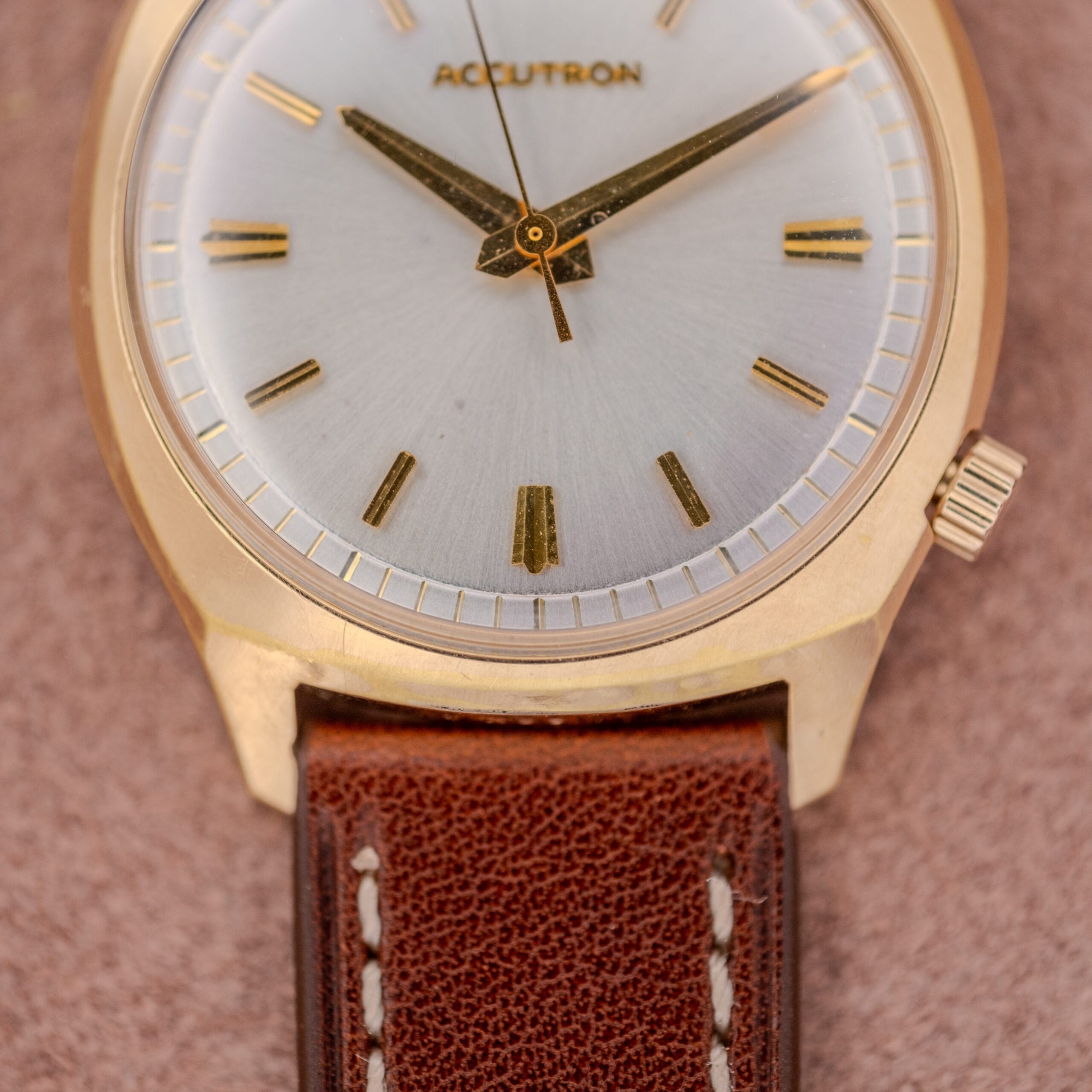
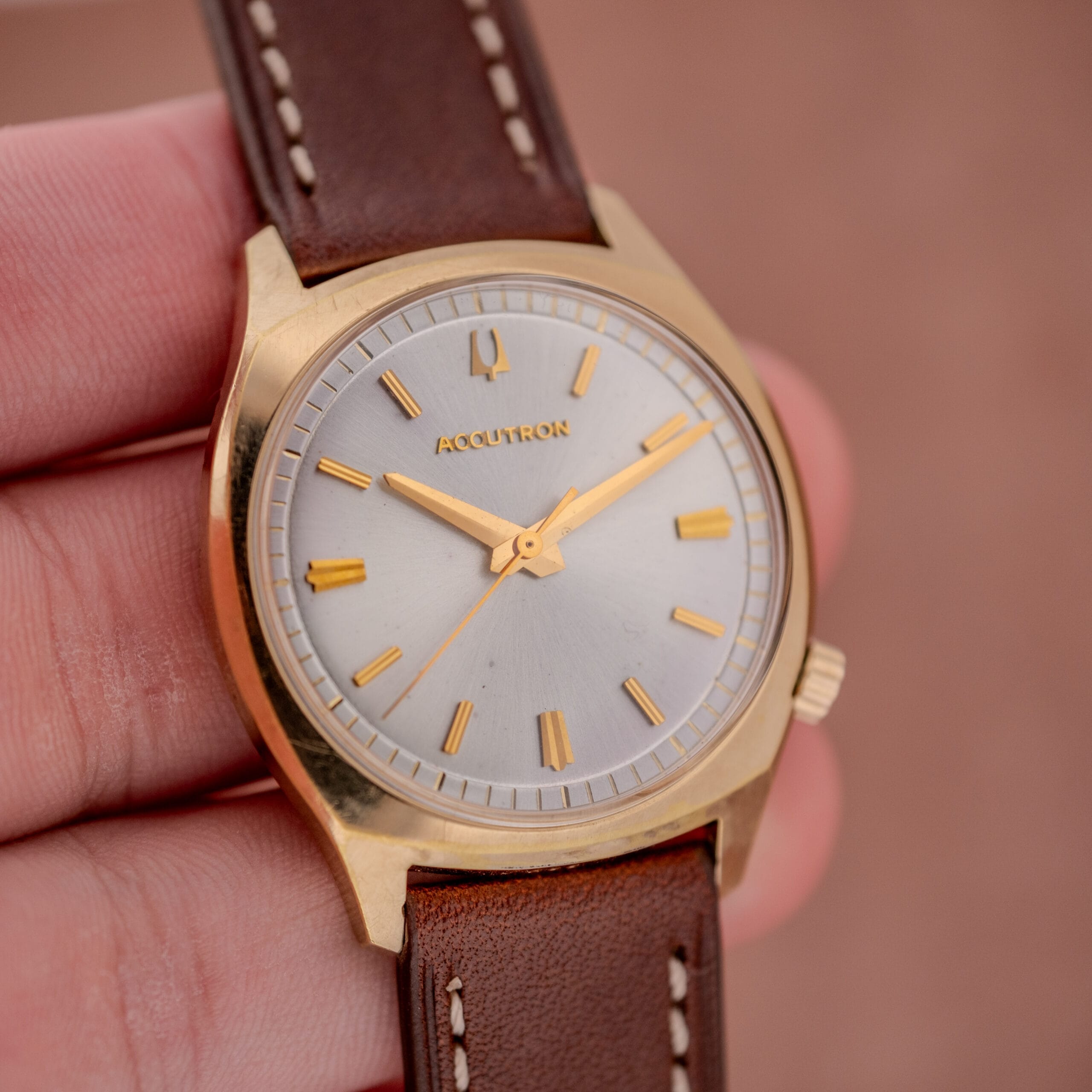
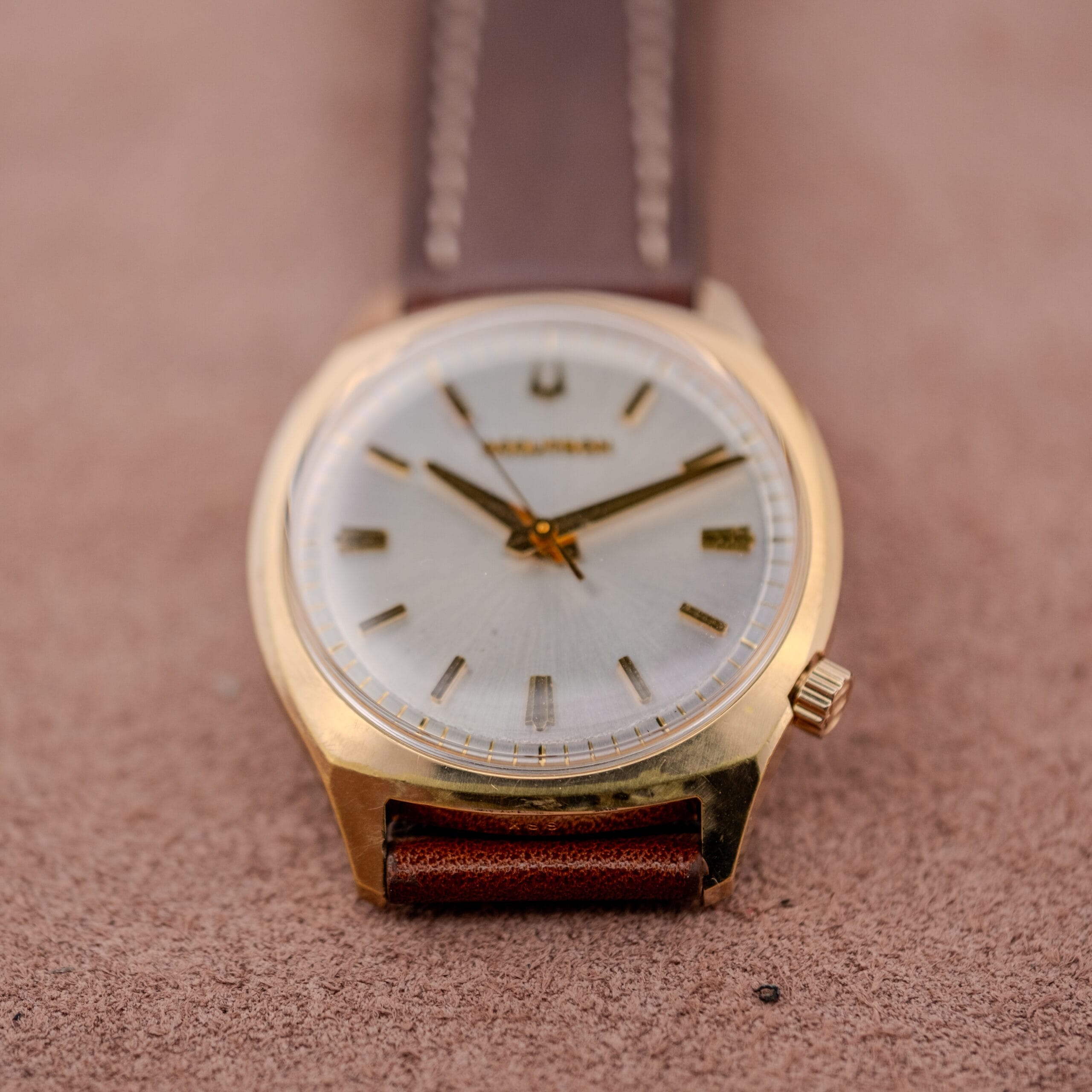
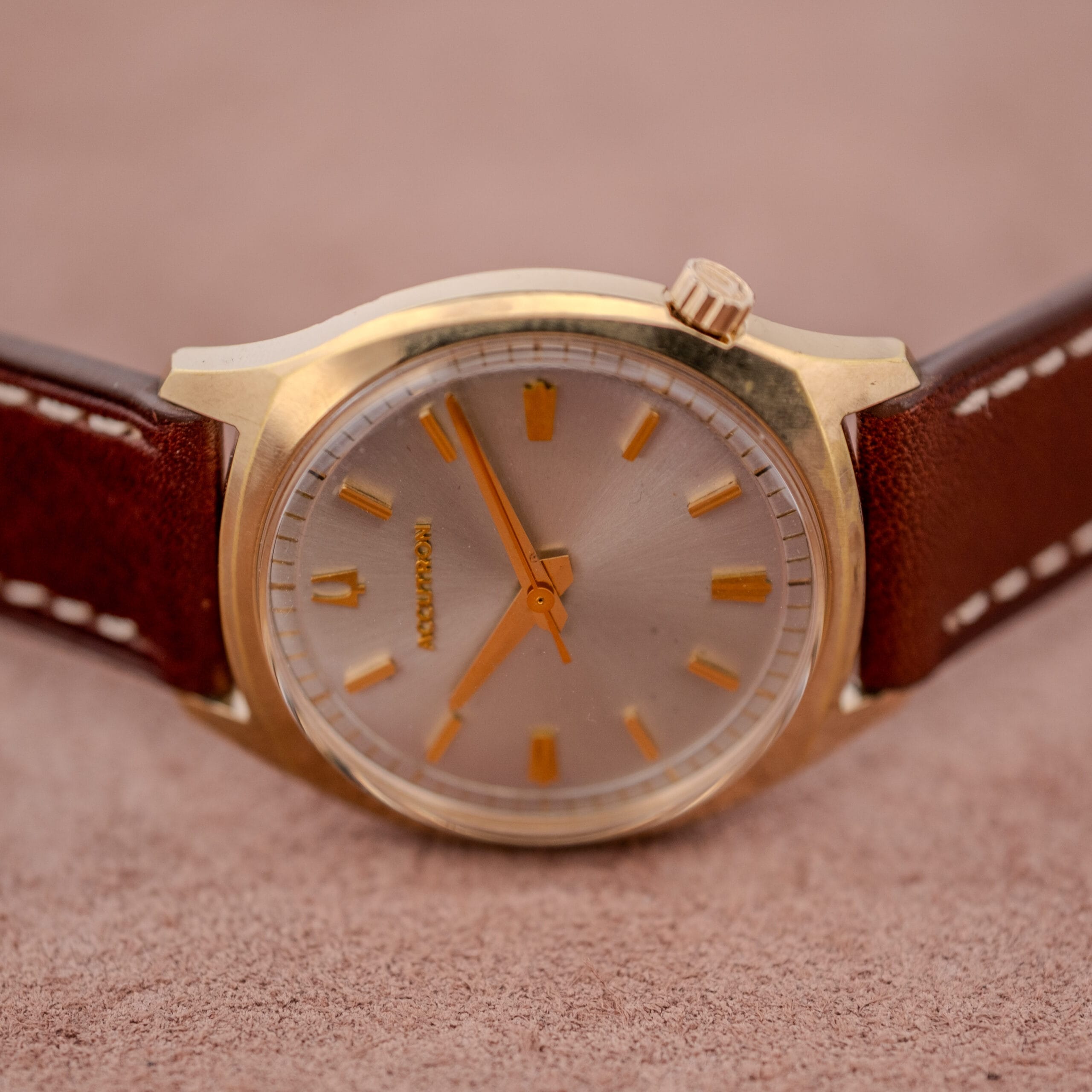
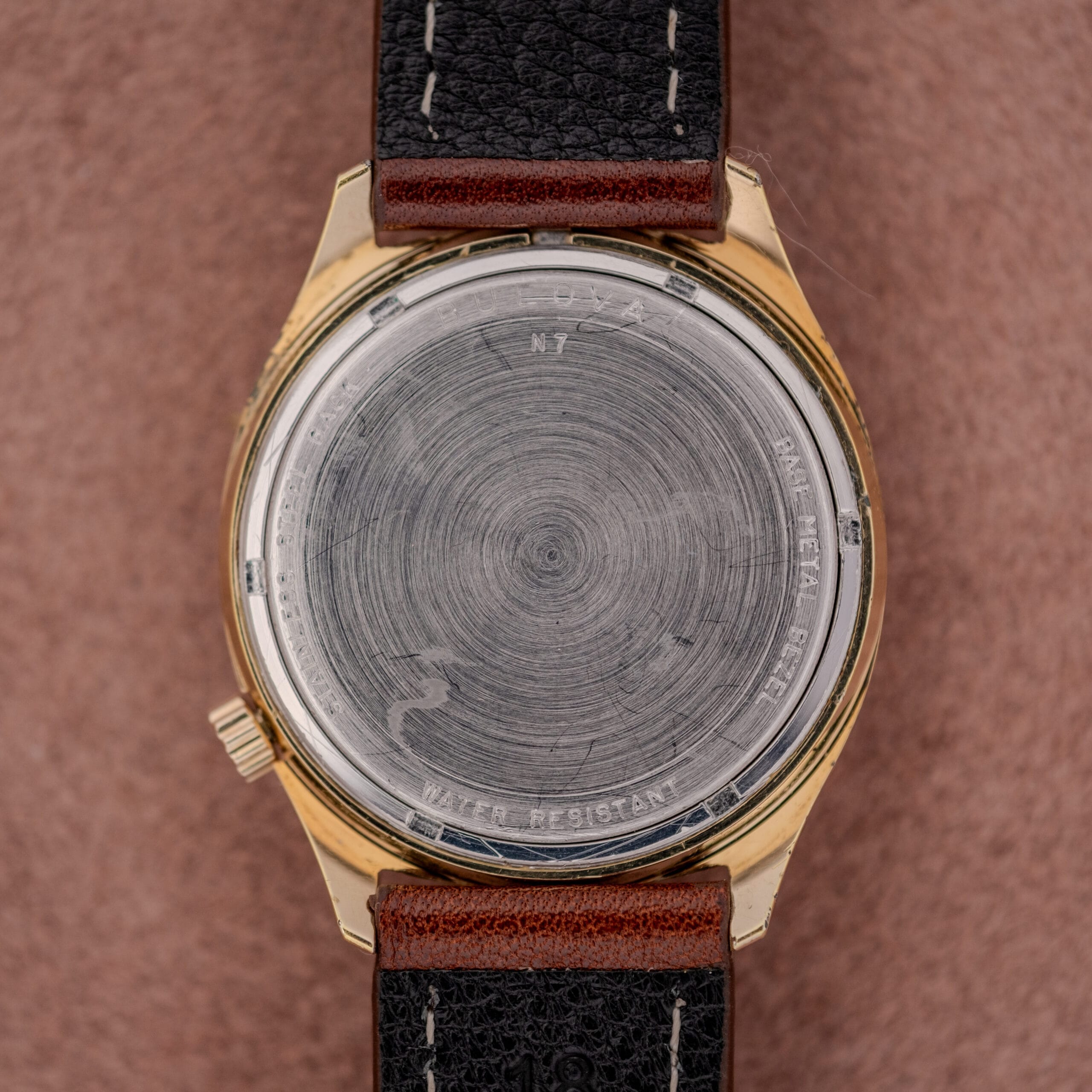
This particular example, dating to 1967 based on the “N7” caseback code, is a classic dressy Accutron in a gold-toned cushion case. The design is quintessentially mid-century: clean, confident, and understated. The silver sunburst dial has a gorgeous radial finish that catches light beautifully, and the applied gold double-bar indices give it just enough visual weight to feel substantial without being fussy. The dauphine handset is original and retains a warm gold tone that harmonizes perfectly with the case and indices, while the thin sweep seconds hand glides around the dial with that trademark Accutron smoothness, no tick-tick-tick here, just a continuous, almost hypnotic sweep.
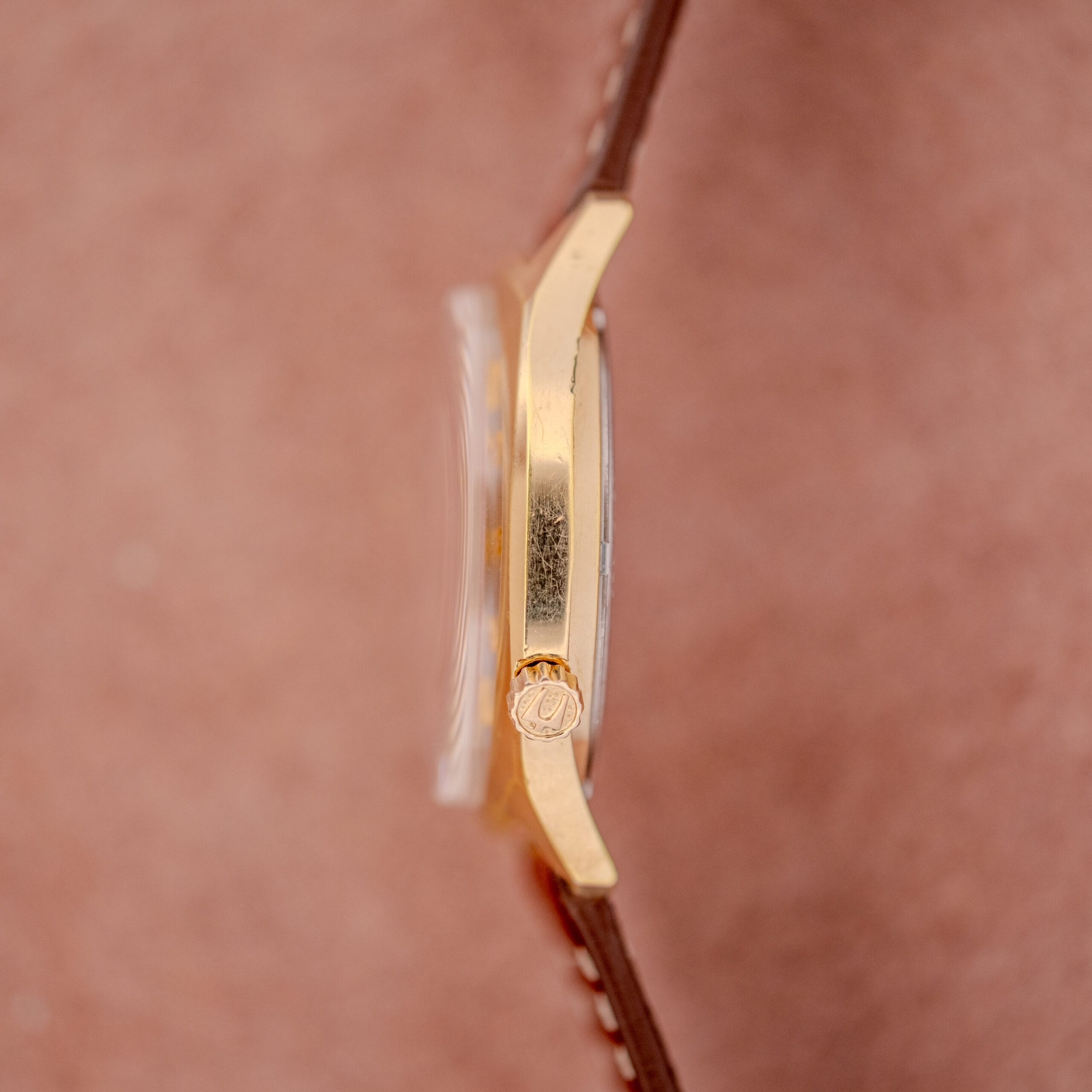
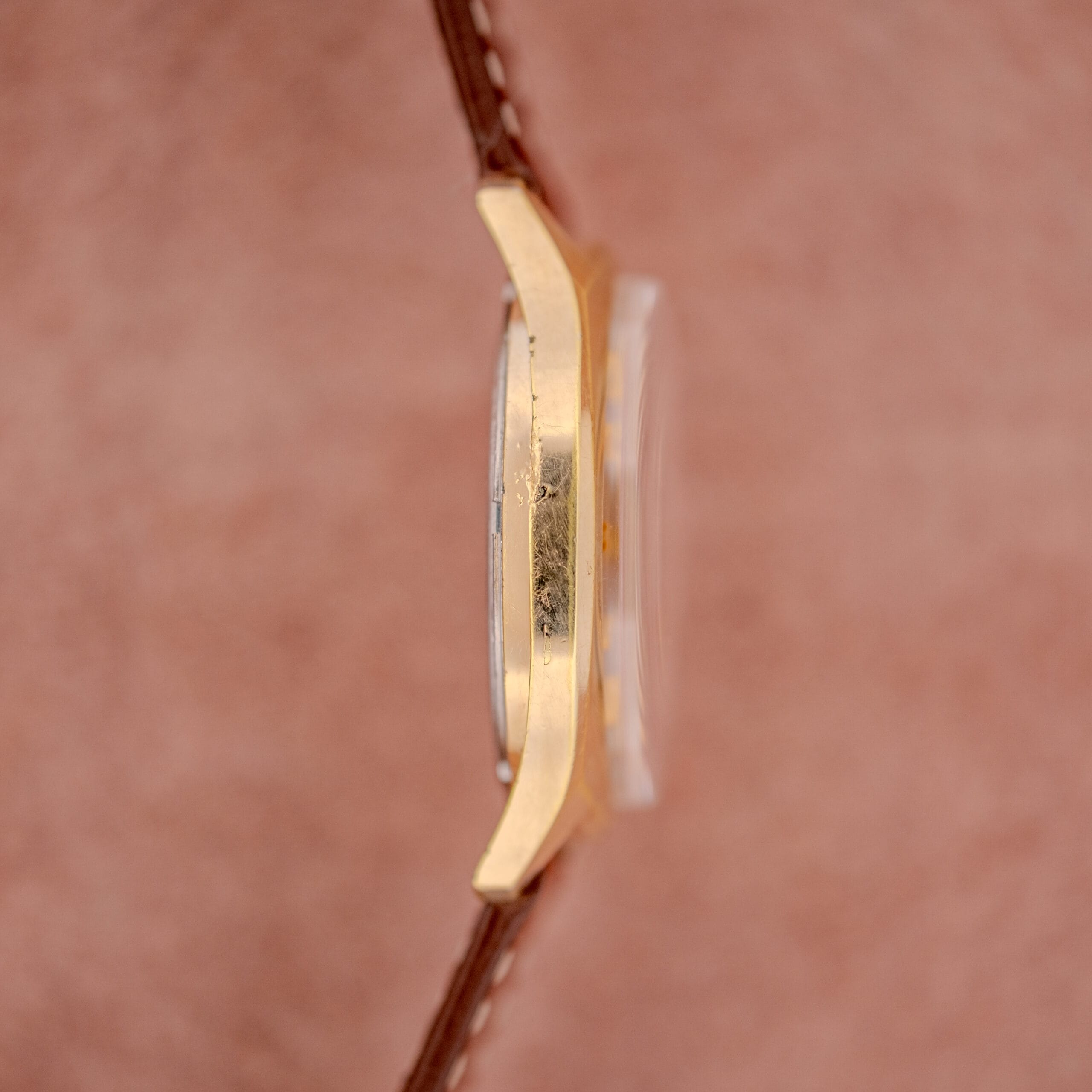
The gold-toned case presents with honest wear consistent with a watch that has been enjoyed for nearly sixty years. The top surfaces of the case retain good definition and a warm luster, while the sides show some surface scratching and gentle wear to the plating, particularly around the lower lugs. This is the kind of honest patina you’d expect from a watch that was clearly someone’s daily companion. The stainless steel caseback is clean and legible, and the signed tuning fork crown is original.
In our opinion, the Accutron remains one of the most underappreciated icons in the watch world. It represents a genuine technological leap, an American story of innovation, and a design language that feels every bit as fresh today as it did in the Space Age. This example, with its elegant cushion case and crisp sunburst dial, is the kind of watch that slips effortlessly under a shirt cuff, pairs beautifully with a suit or a weekend blazer, and never fails to spark a conversation when someone leans in close enough to notice that the seconds hand isn’t ticking. It’s a piece of horological history that you can actually wear every day, and at the prices Accutrons still command, it’s one of the best value propositions in vintage watches, full stop.