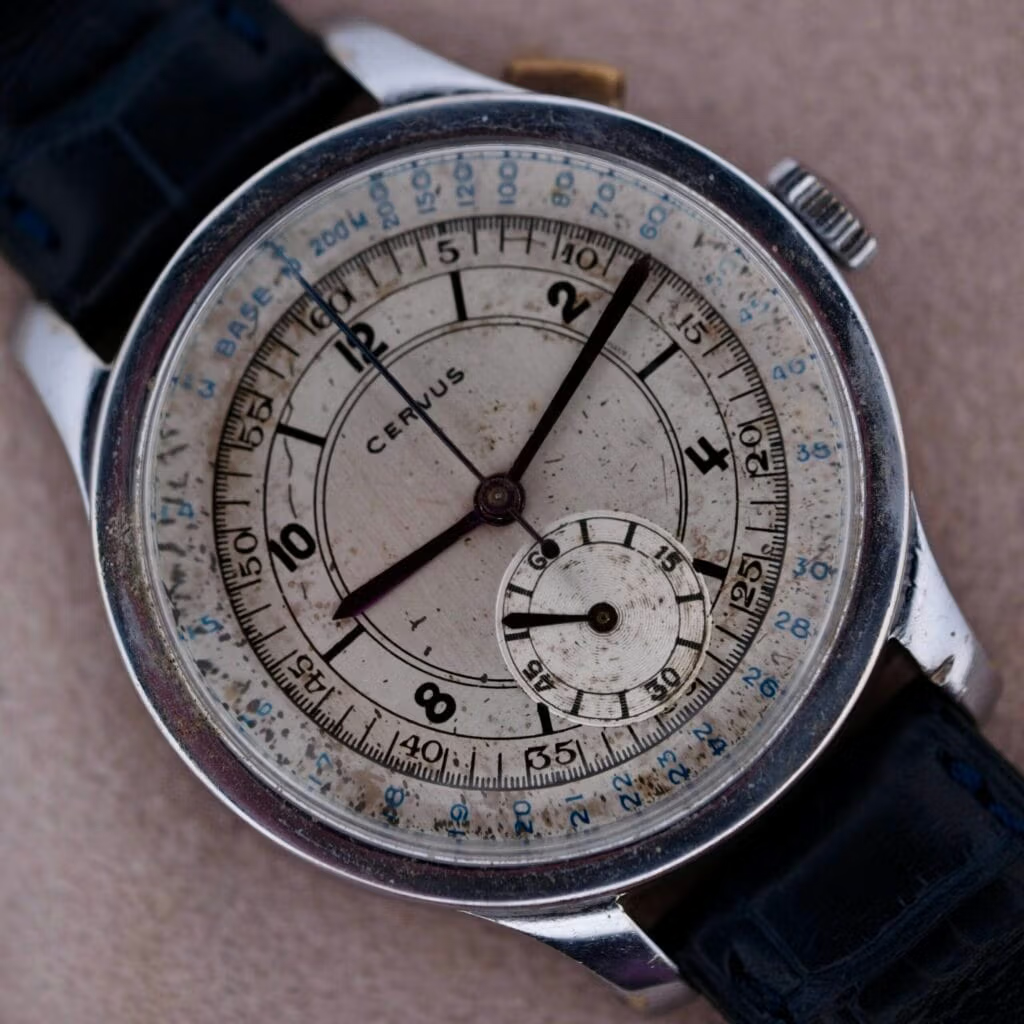

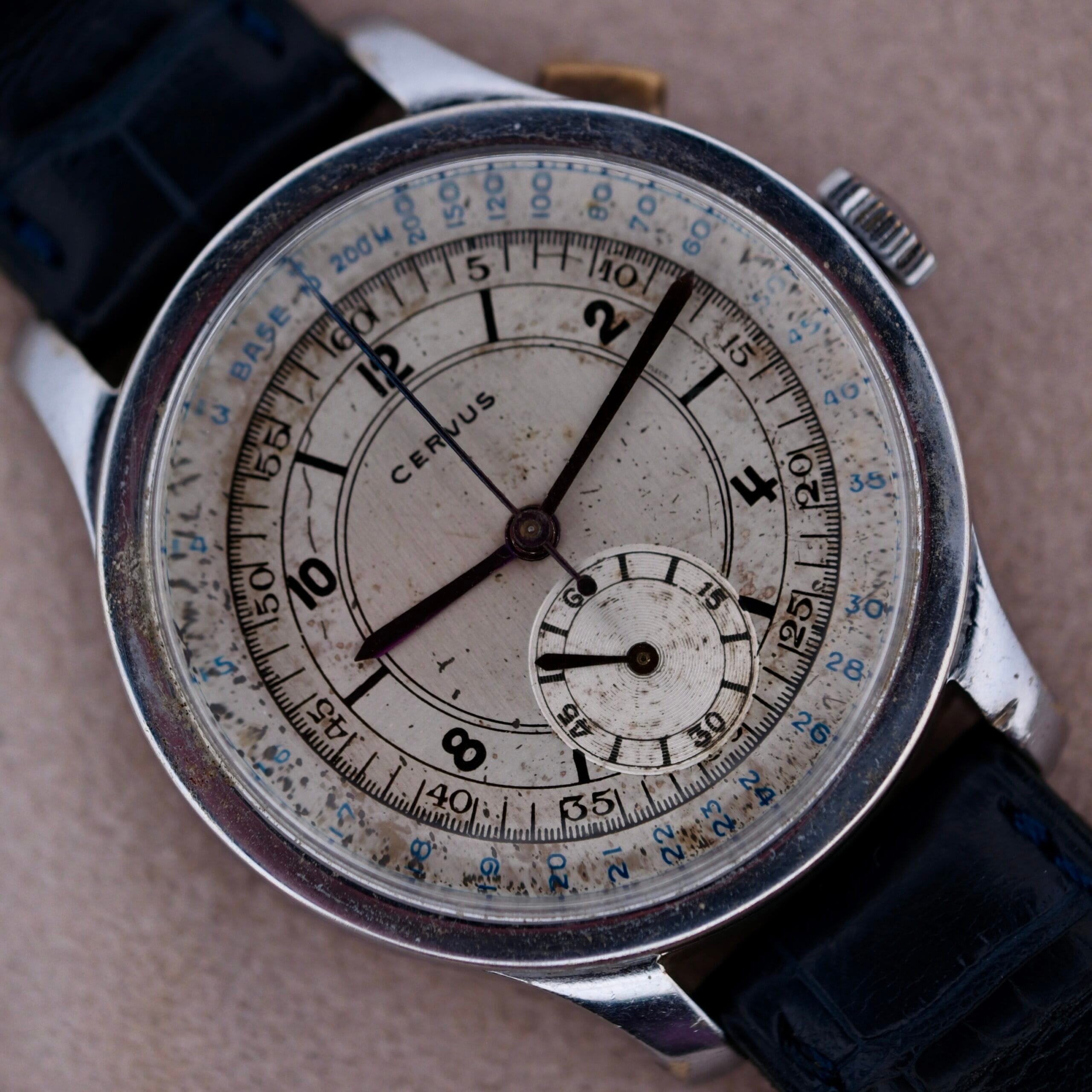
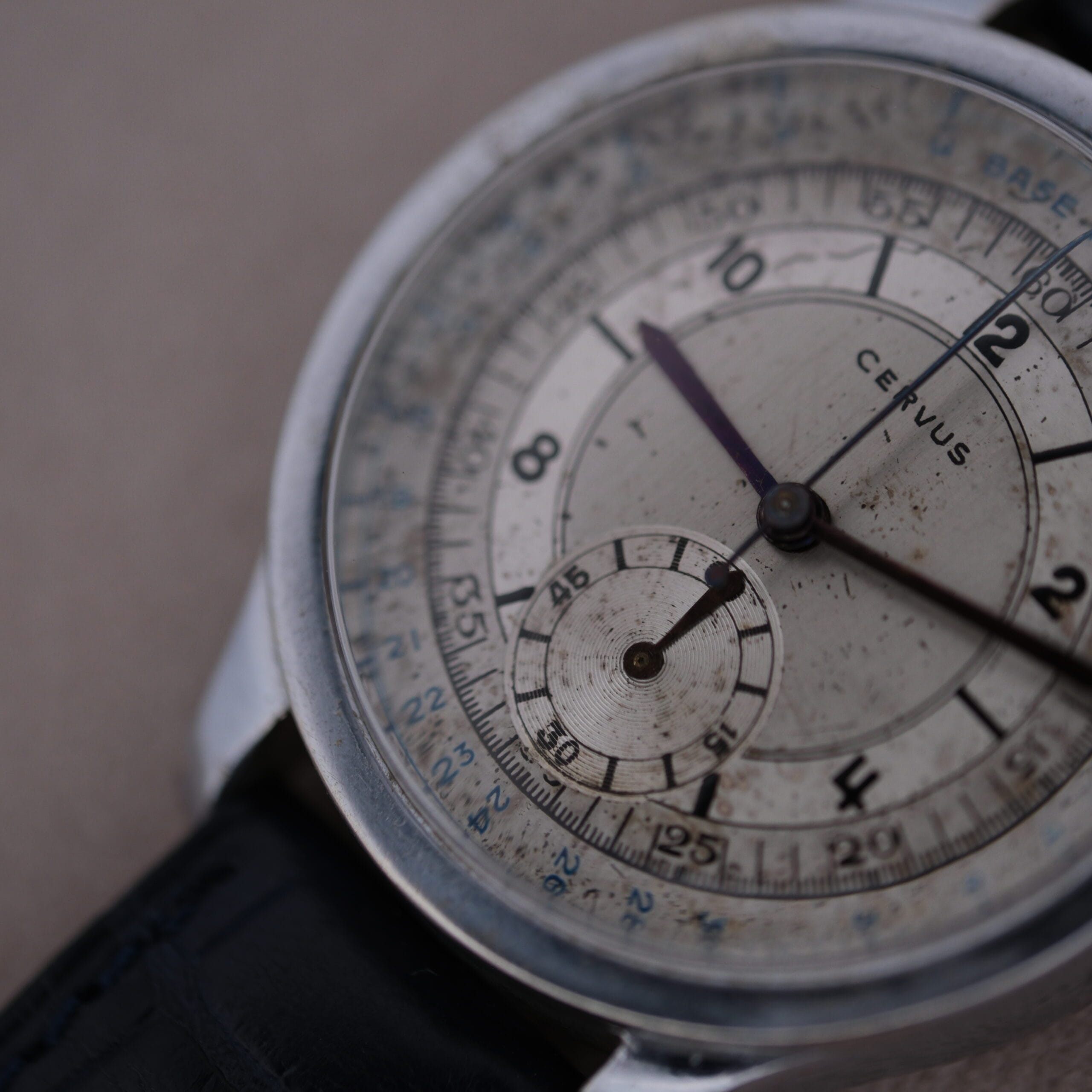
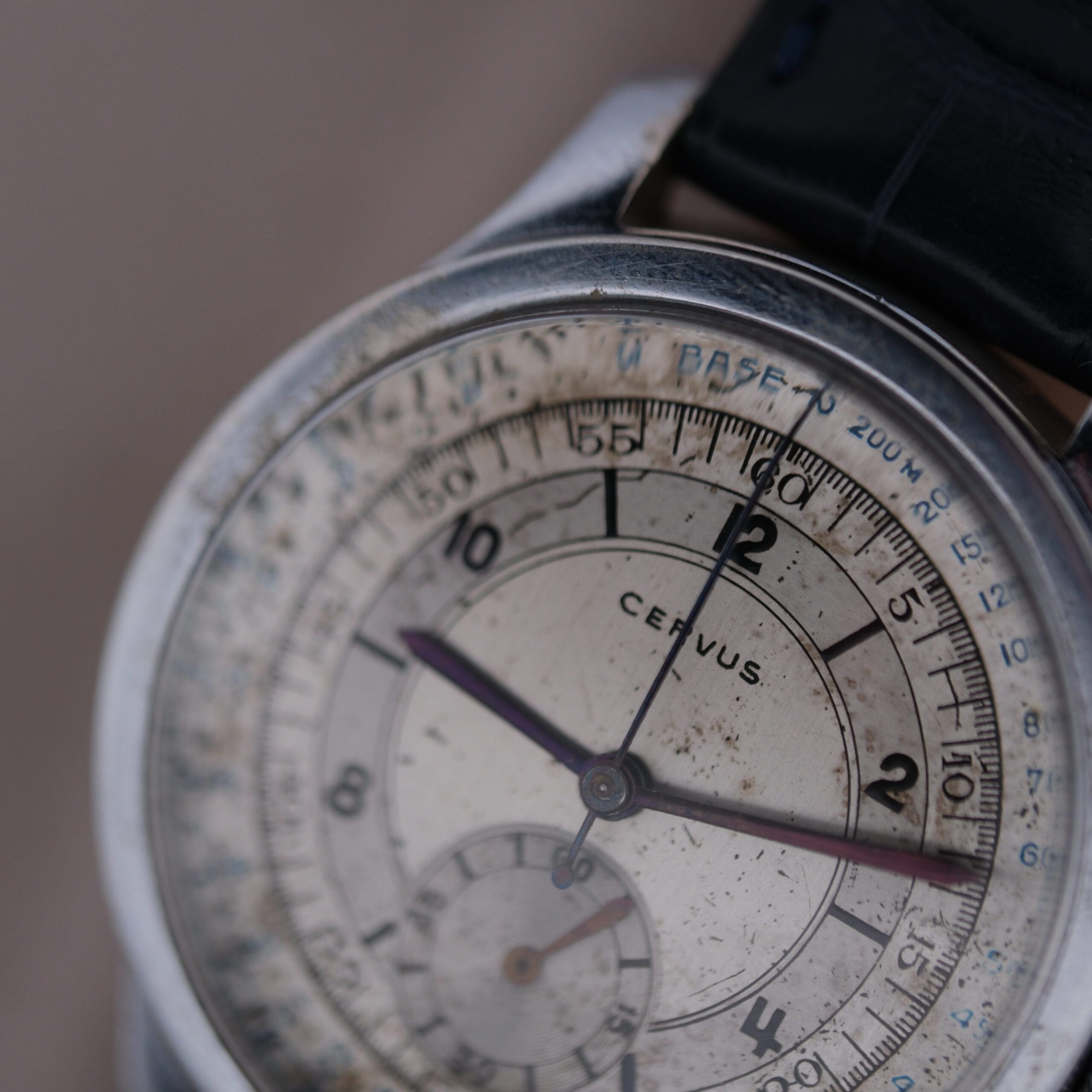
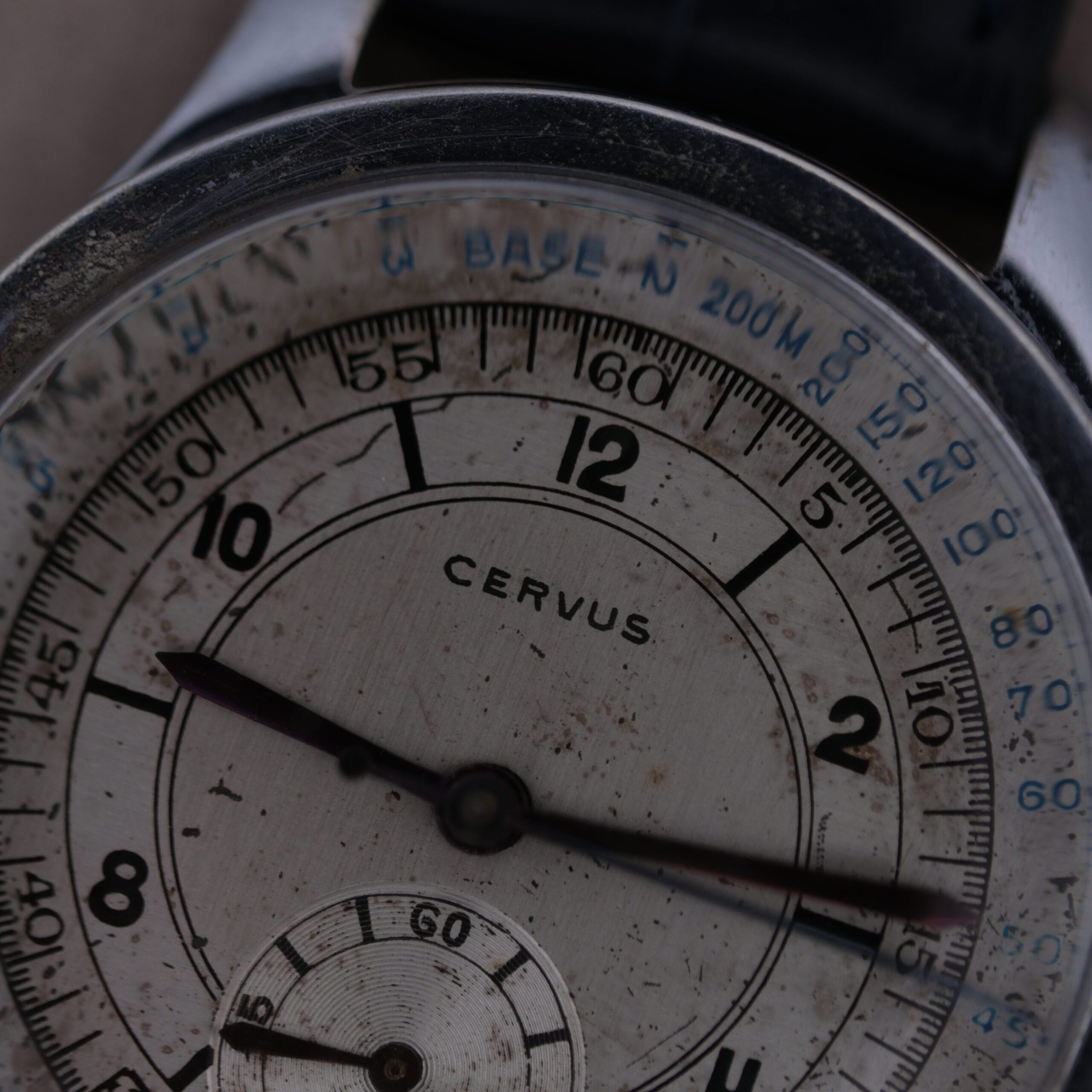

Three things tell us a watch is a 1940s monopusher chronograph before we even check the caseback. A sector dial. Cathedral blued hands. A single pusher tucked next to the crown. This Cervus has all three, and in our opinion the combination is one of the most quietly handsome things mid-century Swiss watchmaking ever produced.
Cervus was one of dozens of dial names registered by Achille Hirsch, the La Chaux-de-Fonds watchmaker behind a sprawling portfolio of Swiss brand identities that included Cervine, Election, and Elyon, among many others. The smaller marques were a feature, not a flaw, of the 1940s ebauche ecosystem. Hirsch could draw on the finest movement blanks from the great cam-and-column-wheel specialists, marry them to dials commissioned from independent dial houses, and sell the finished pieces under whichever brand fit the distributor and the era. Cervus is the result of that approach when it was running at full creative tilt.
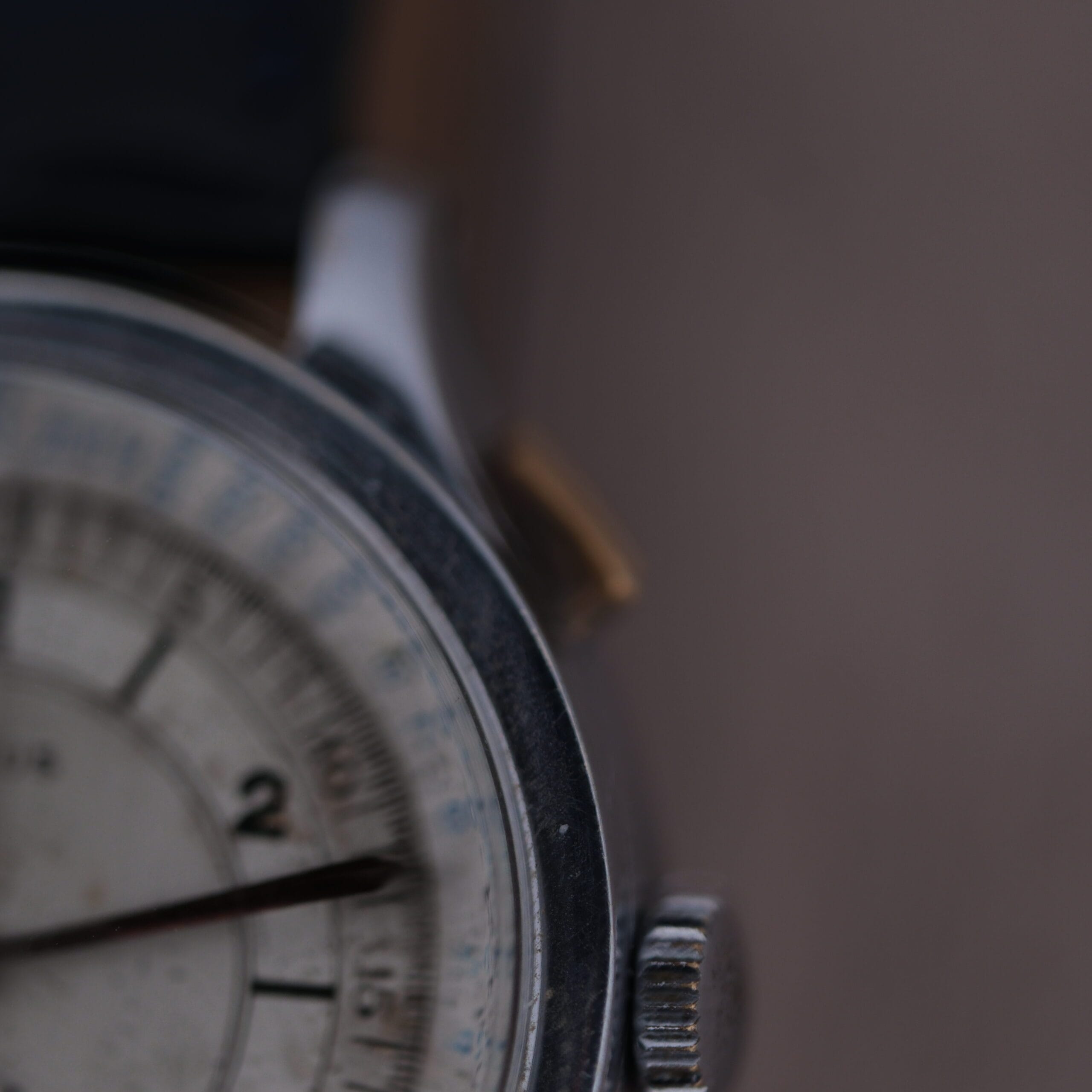
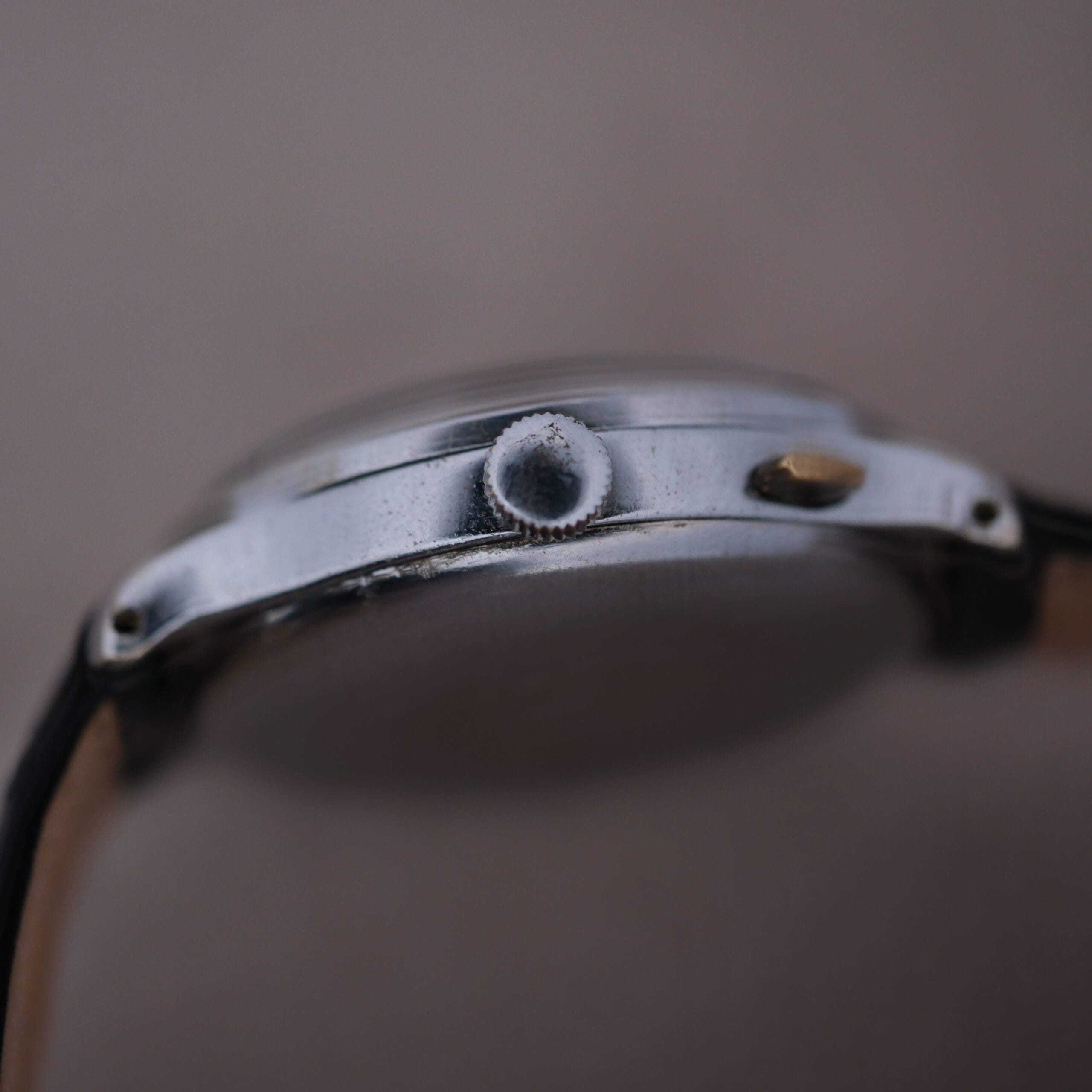
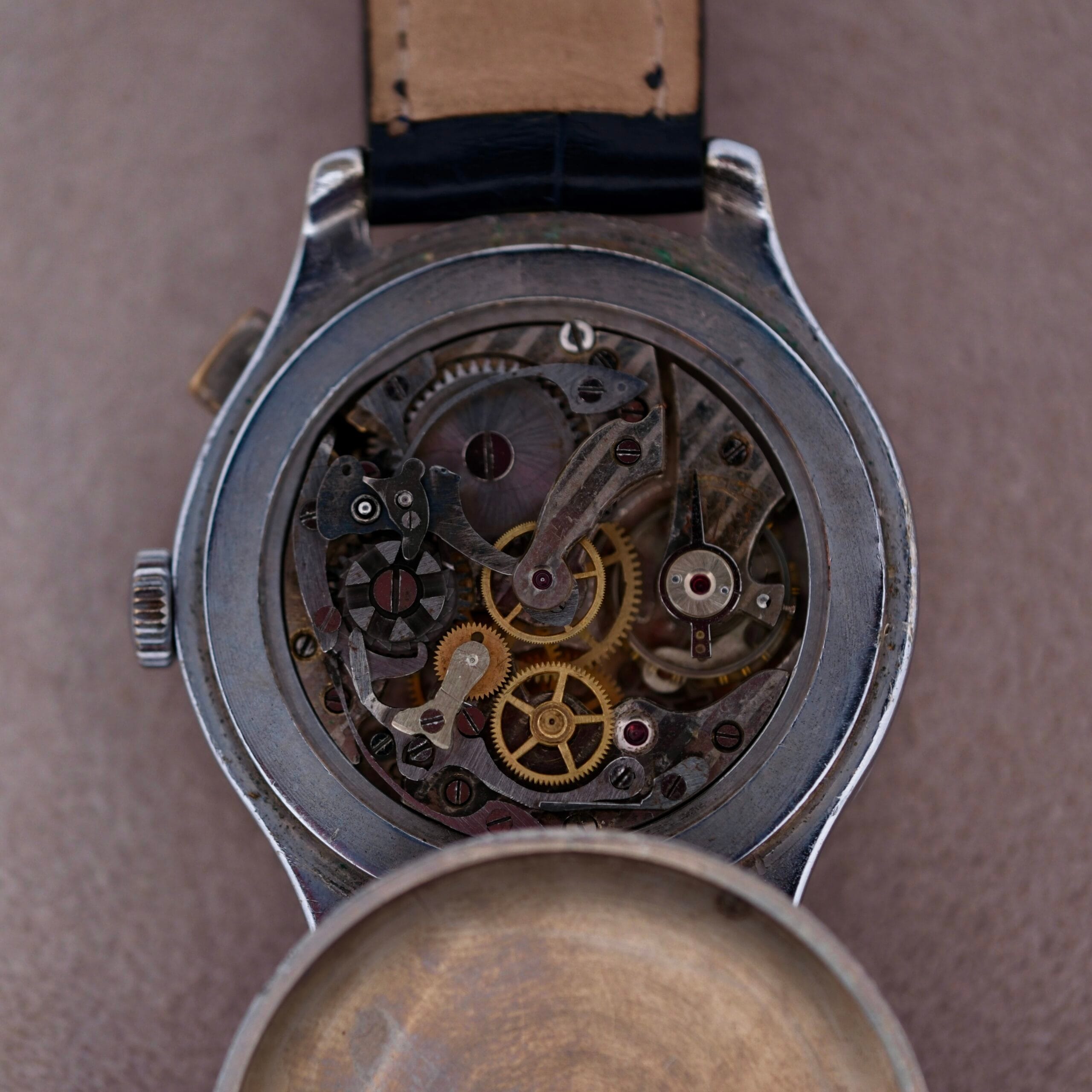
The monopusher chronograph is a specific architectural choice, not a cost-cutting one. Where a modern chronograph uses two pushers (start and stop on one, reset on the other), the monopusher routes all three actions through a single button. Most commonly that pusher sits co-axially with the crown or as a discrete element just above it, which is exactly what you find on this case. The mechanism inside is more intricate than it sounds. A single column wheel, or in some Swiss designs a cam, has to walk through three sequential states, and the user has to remember which press does what. The monopusher was the original chronograph architecture, predating the now-common two-pusher layout that won the convenience war in the mid-1930s. By the time this Cervus was assembled in the 1940s, choosing a monopusher was already a deliberate aesthetic decision. Quieter case lines. More symmetry. Less hardware competing with the lugs. Watchmakers who kept building them did so because they cared about the form, and we count ourselves on their side.
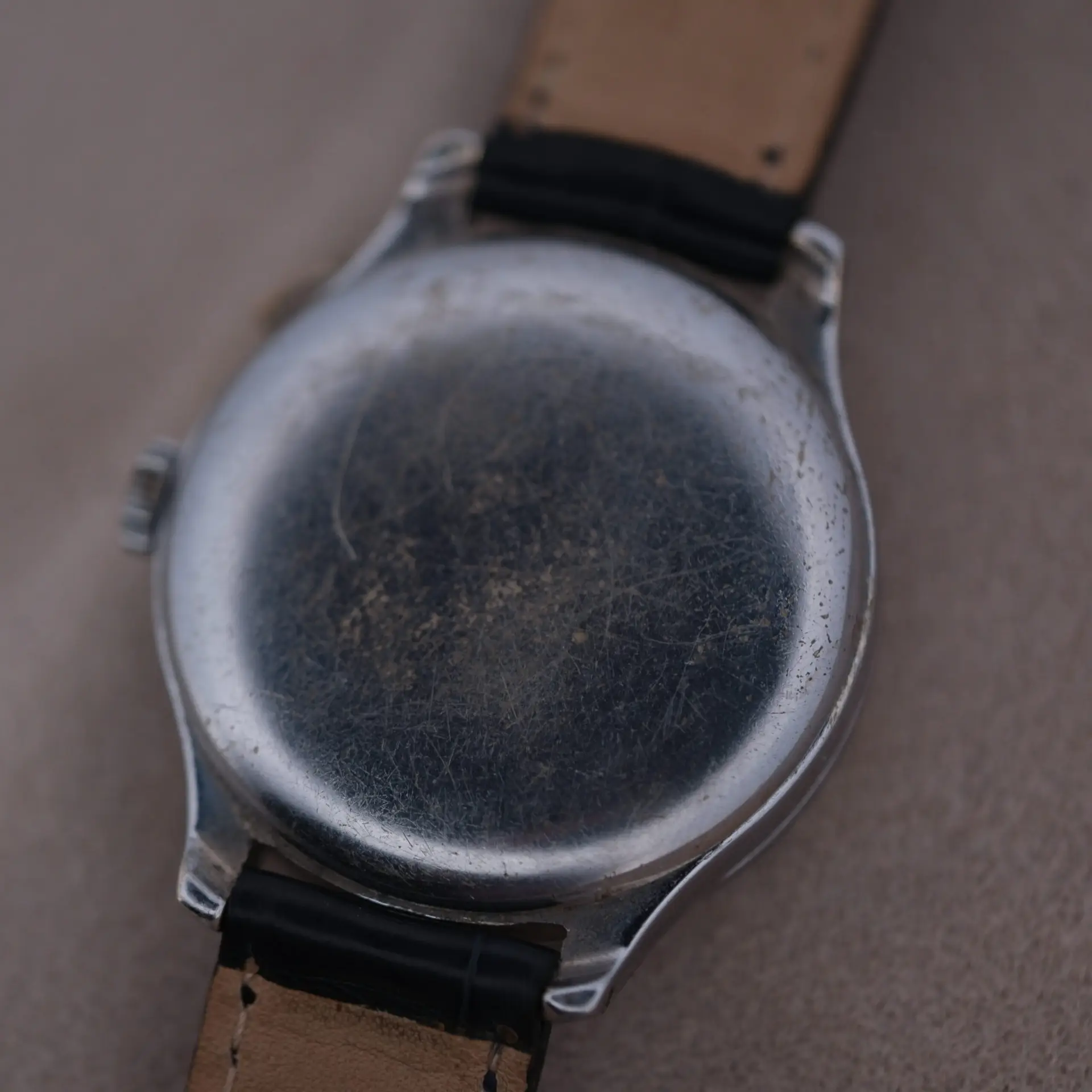
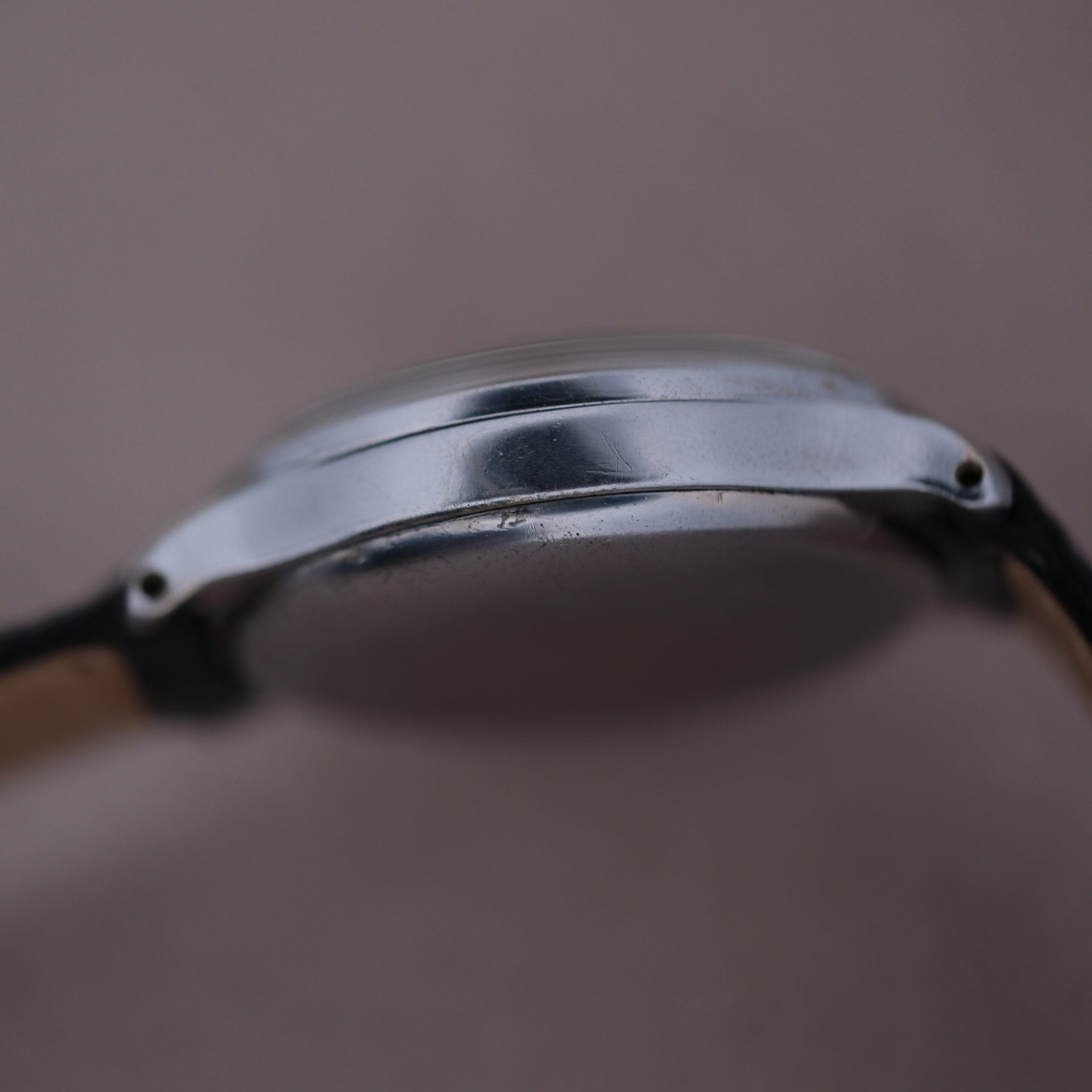
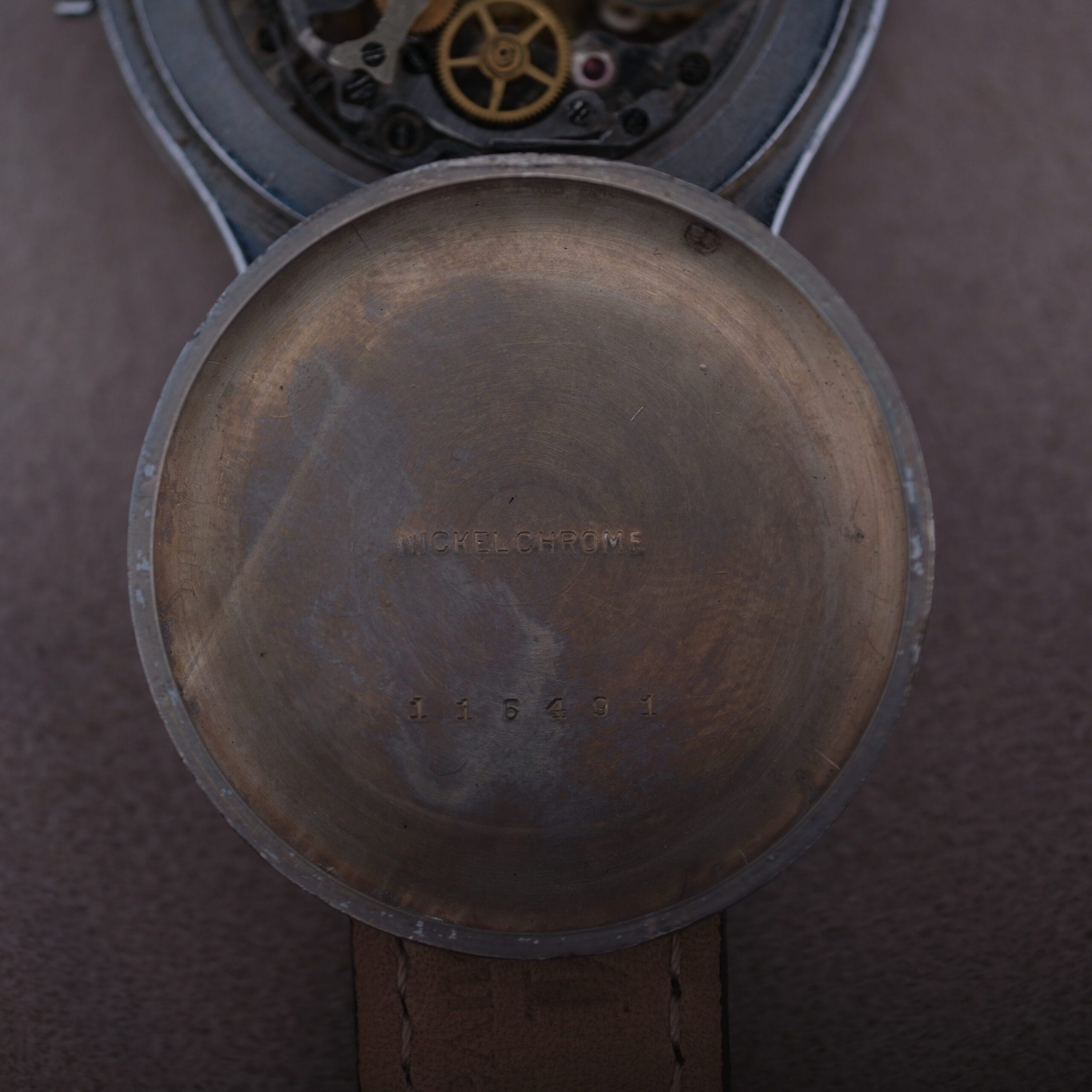
The case measures 33mm across, which sits squarely in the middle of period-correct wrist sizing for the decade. The construction is what was simply called NICKEL CHROME in the 1940s. The inner caseback carries that exact stamping alongside a six-digit serial number, and the case shows the soft, plated-silver luster that distinguishes nickel-chrome construction from later stainless steel. There are small honest dings around the case middle, fine scratching across the snap-back, and the kind of gentle silvering on the edges that you only get from decades of wear. None of it has been polished out. Single pusher, single coin-edge crown, downturned lugs at 16mm. The bezel is smooth and fixed, and the whole case sits low against the wrist in the way 1940s round cases tend to do.
The dial is the entire reason this watch is in our case to begin with. It is a multi-zone sector design rendered in silvered metal, with concentric rings dividing the functions in the classical Art Deco vocabulary. The outermost ring carries a tachymeter scale calibrated to a 200-meter base, printed in a now-faded blue that has aged into a soft, dusty sky color. Inside that ring is the chronograph seconds chapter ring in black. Inside that again is the hour register with painted black Arabic numerals at 12, 2, 4, 8, and 10, broken at the bottom by a snailed sub-dial for the running seconds. The CERVUS signature is printed cleanly just above center. The hands carry the rest of the story. Cathedral-shaped hour and minute hands and a thin central chronograph sweep, all thermally blued in the deep ink-blue oxidation tone you only get from heat-treated steel. The patina across the dial is exactly what we want to see at 80-plus years. Light age spotting, gentle silvering, all the printing intact, and no signs of redial or refinishing. The character is genuinely in the wear.
We fitted it on a black leather strap with an alligator-pattern grain and a single-prong buckle. The contrast against the silvered dial is what a chronograph of this era wants. Formal enough for a suit. Casual enough for a sweater. The strap stays out of the way of what is happening above the lugs, which is where the watch wants your attention anyway.
Serviced in-house at OTTUHR and backed by our 2-year mechanical warranty. For the collector who values a complete and original sector dial over a polished caseback, and who reads the monopusher as the prettier chronograph architecture rather than the dated one. To us, this is what 1940s Swiss watchmaking looked like when it was being honest with itself.