Gedalio Grinberg left Cuba after the revolution and started over in 1961 with a suitcase and the American rights to Piaget. He was good at it. Through the decade that followed he turned Piaget into something the New York elite wanted to be seen in, and his company, North American Watch, picked up Corum and got its brands onto the counters at Tiffany and Van Cleef & Arpels. Selling other people’s watches has a ceiling, though, and Grinberg went looking for a brand he could own outright. The road from that suitcase to the Concord Mariner on this page runs through what happened next.
He wanted Movado. He could not get it. The Concord Mariner exists because of what happened next. Concord was available instead, a Biel firm founded in 1908 that a 1968 US survey of luxury watch awareness had placed sixth, and in 1970 it came under his control. Sixth is a respectable place to start and a bad place to stay.
Then the pressure came from Japan. Seiko and Citizen were pushing quartz thinner than any mechanical movement, which meant the category Grinberg had spent a decade building in America was being taken out from under him. Concord’s answer in 1980 was not a dress watch. It was the Mariner, a sports watch that ran in steel, gold and two-tone, most of it wearing a twelve-sided bezel on a bracelet built into the case instead of hung off it. Audemars Piguet had opened that genre with the Royal Oak. Concord followed. To us the Mariner is the more useful kind of answer, because it is not chasing a record, it is just a steel watch made to be worn.
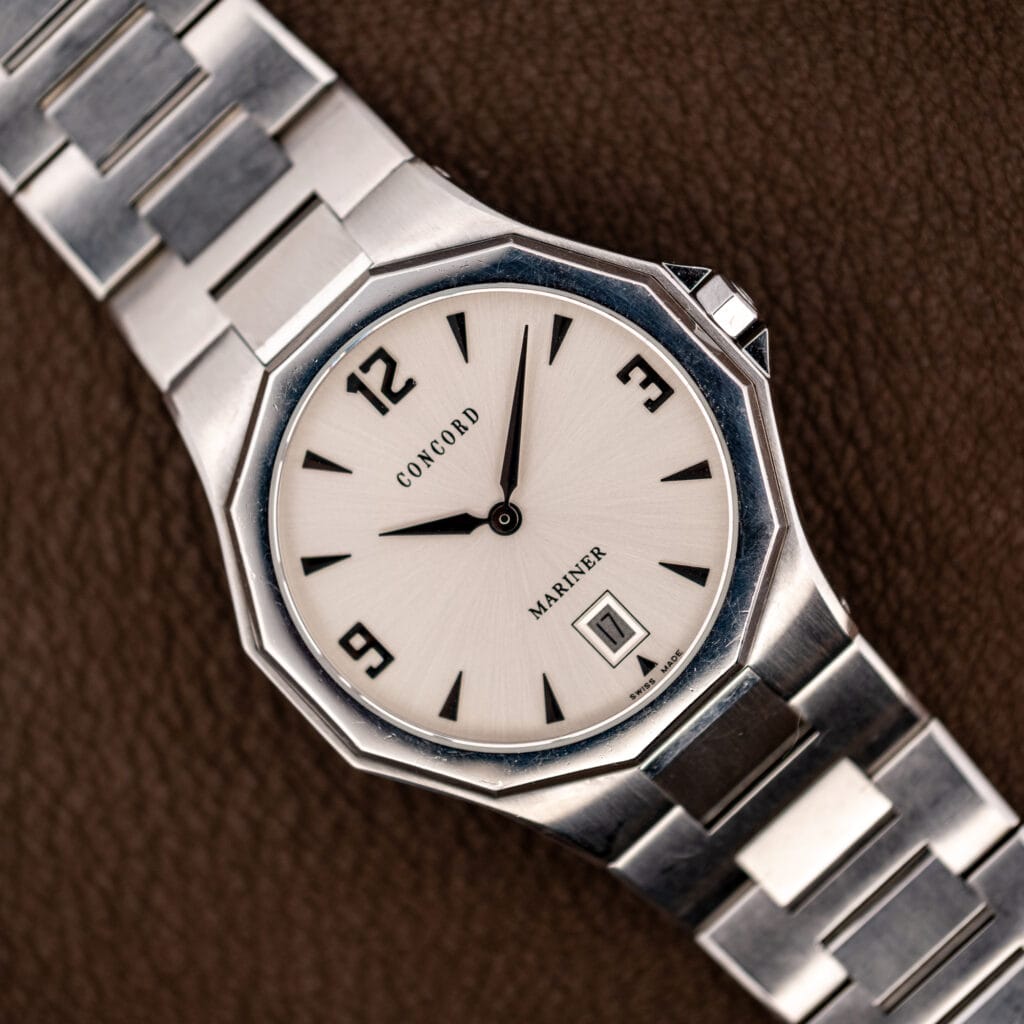
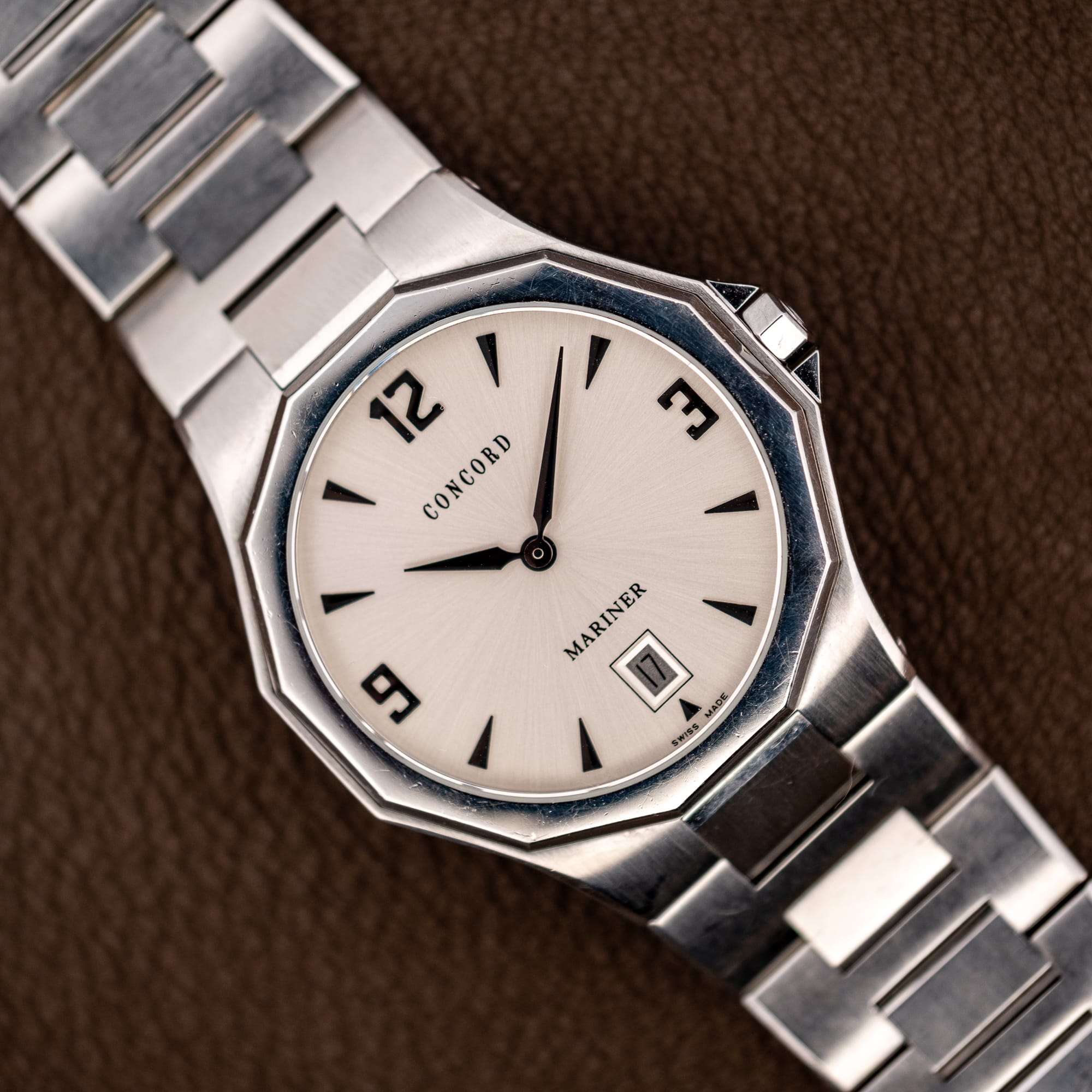
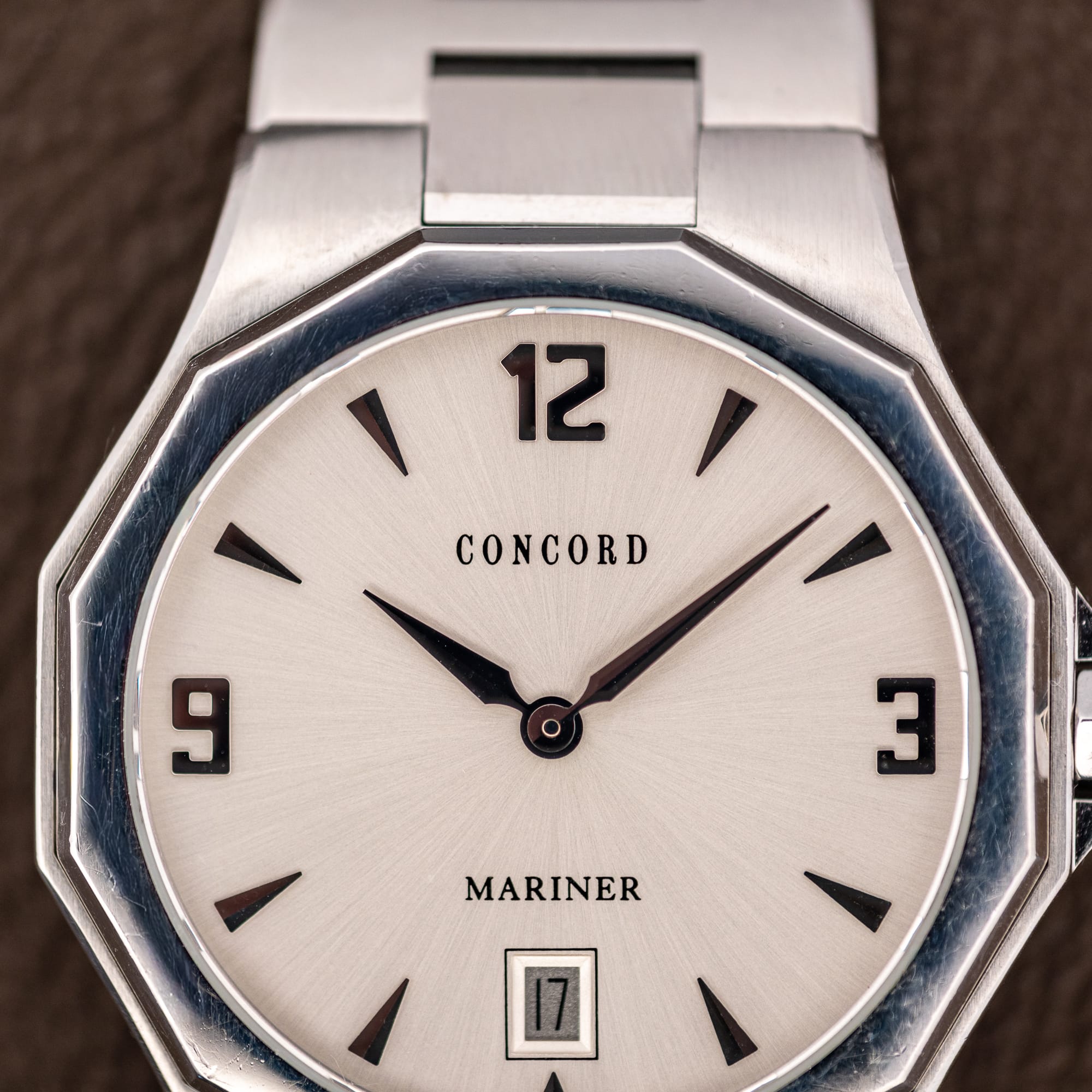
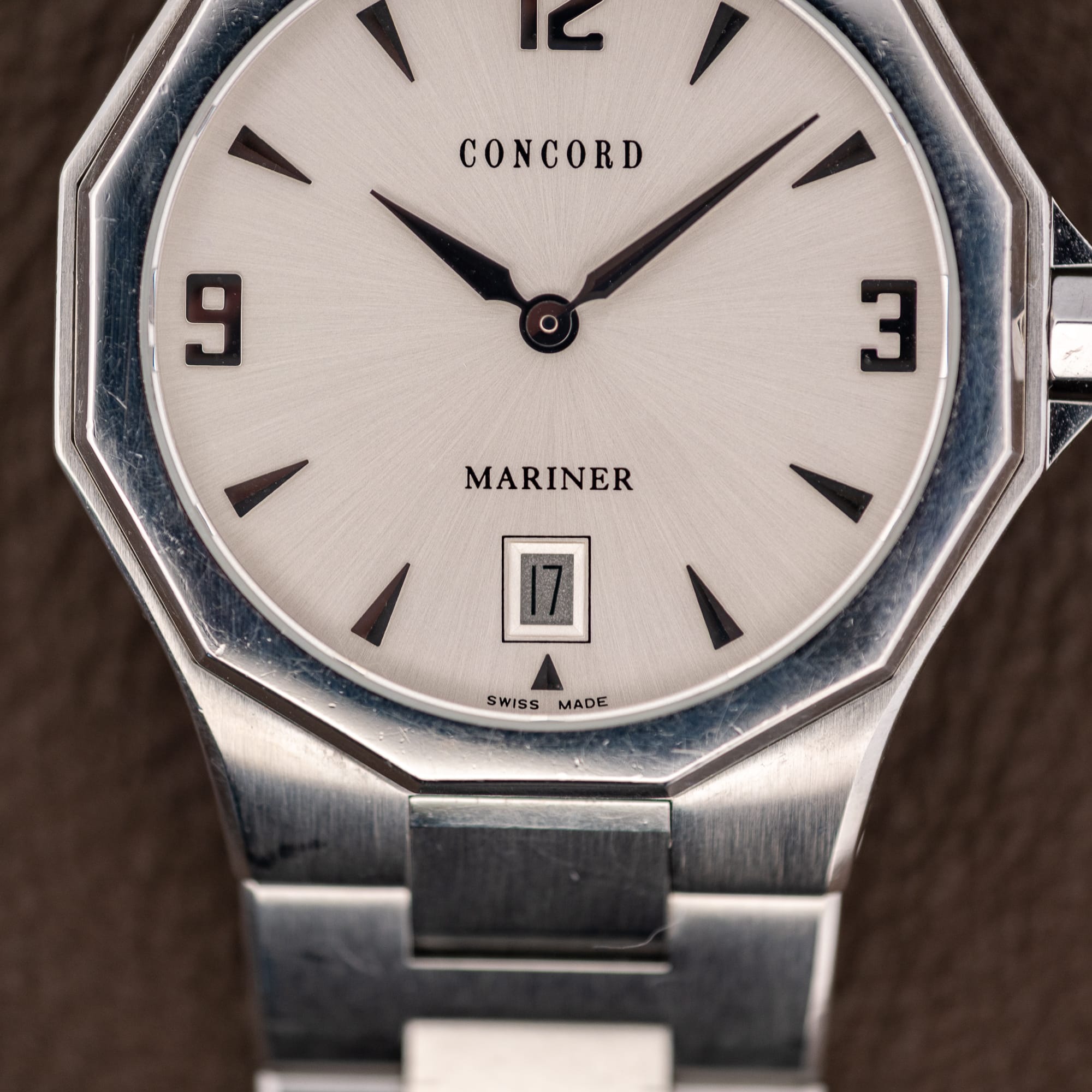
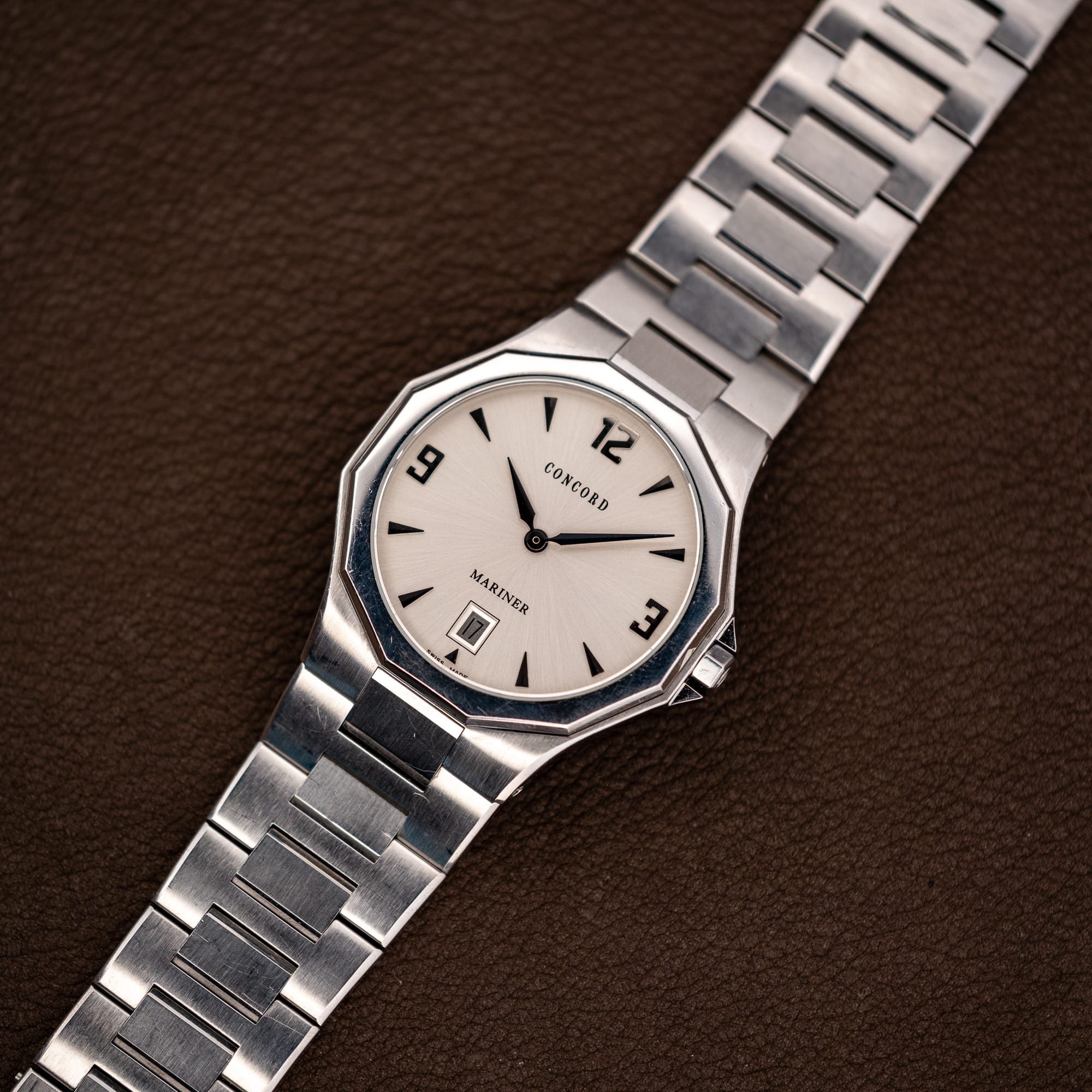
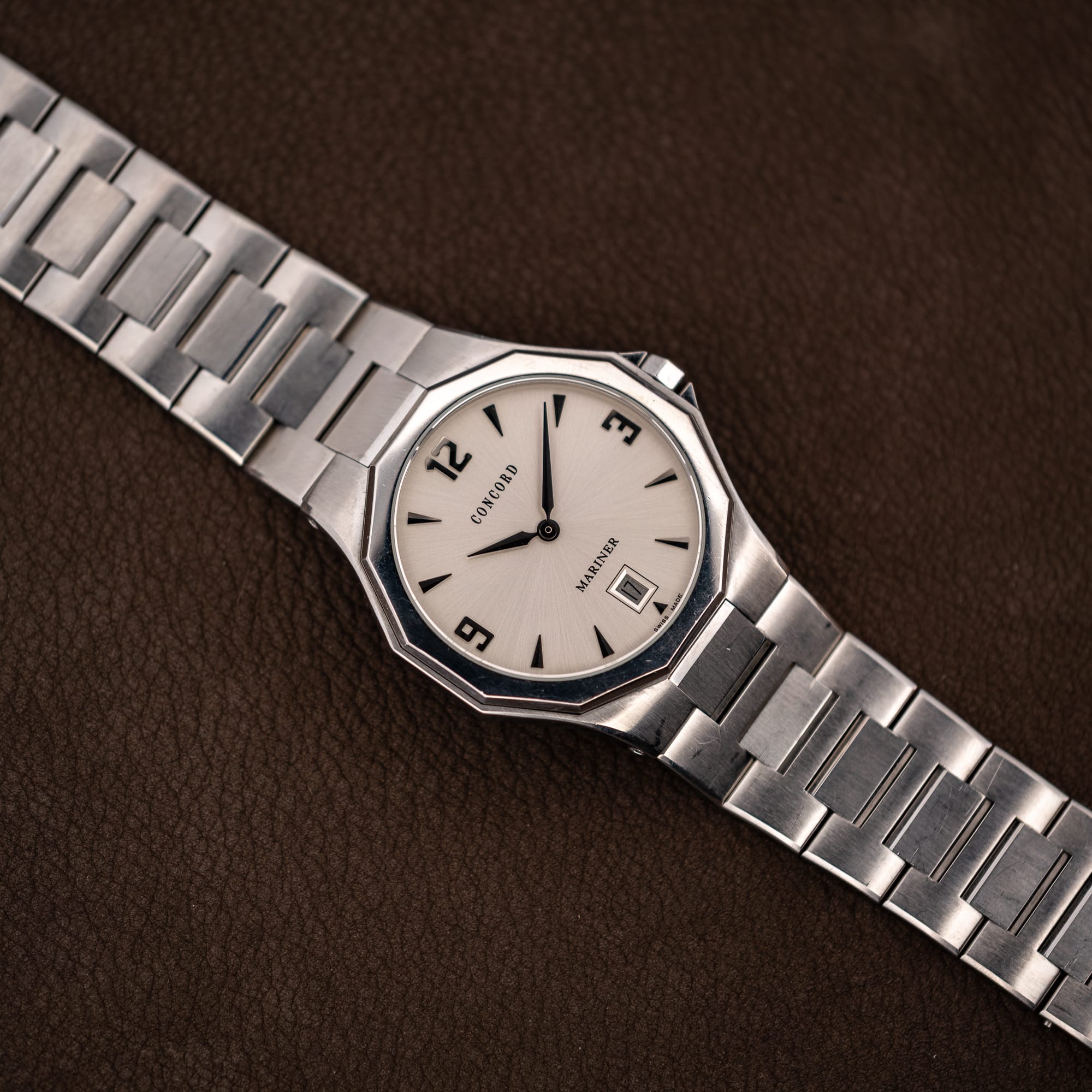
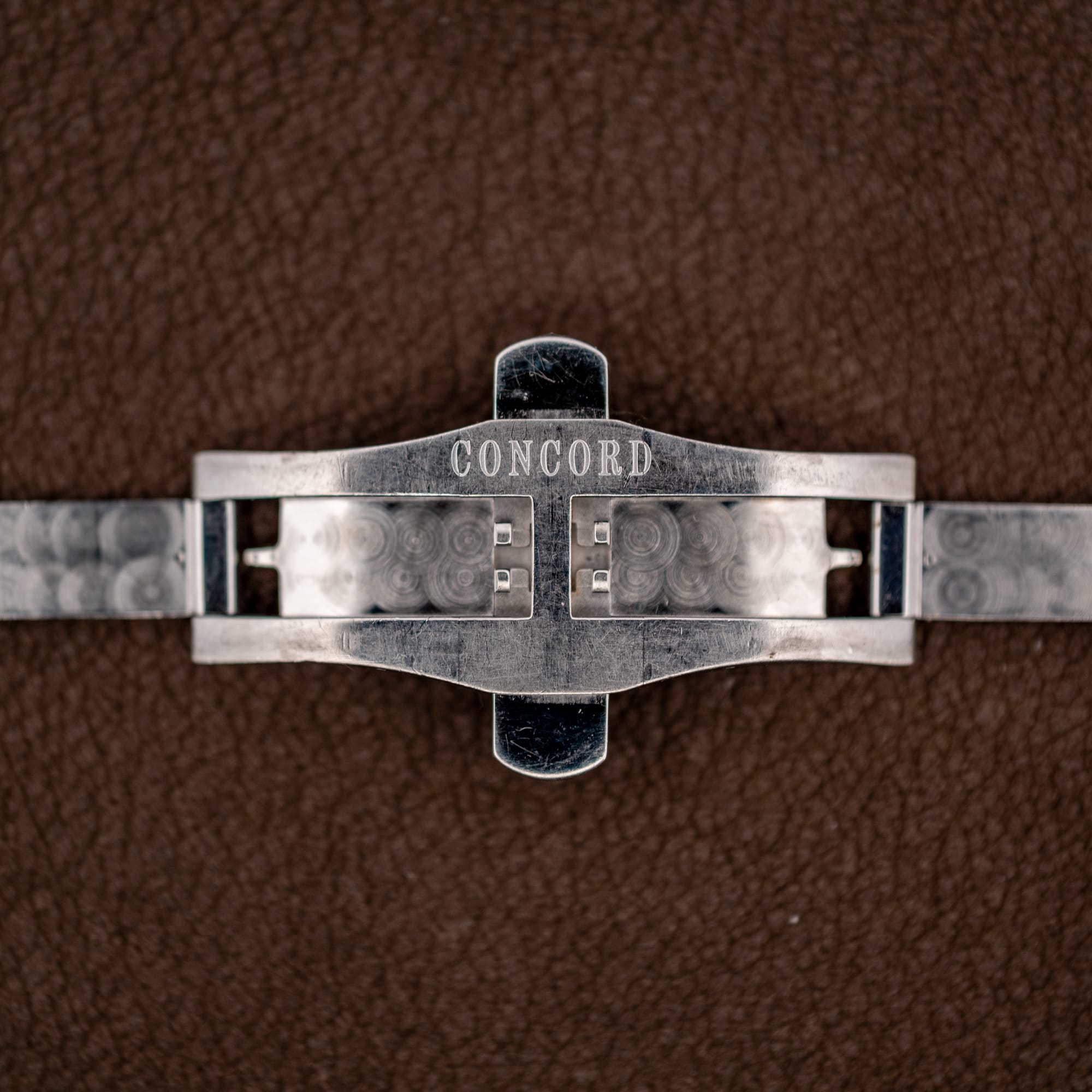
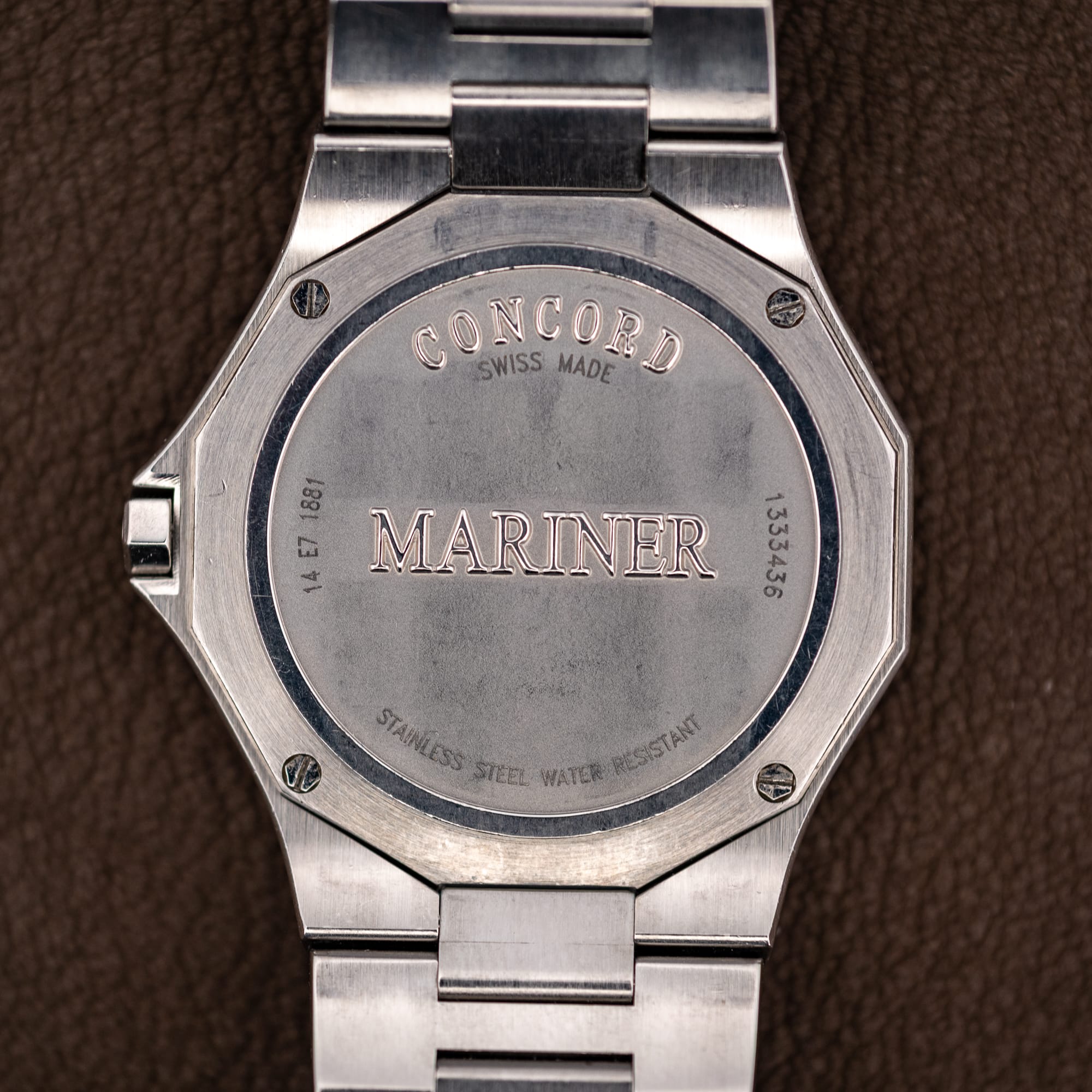
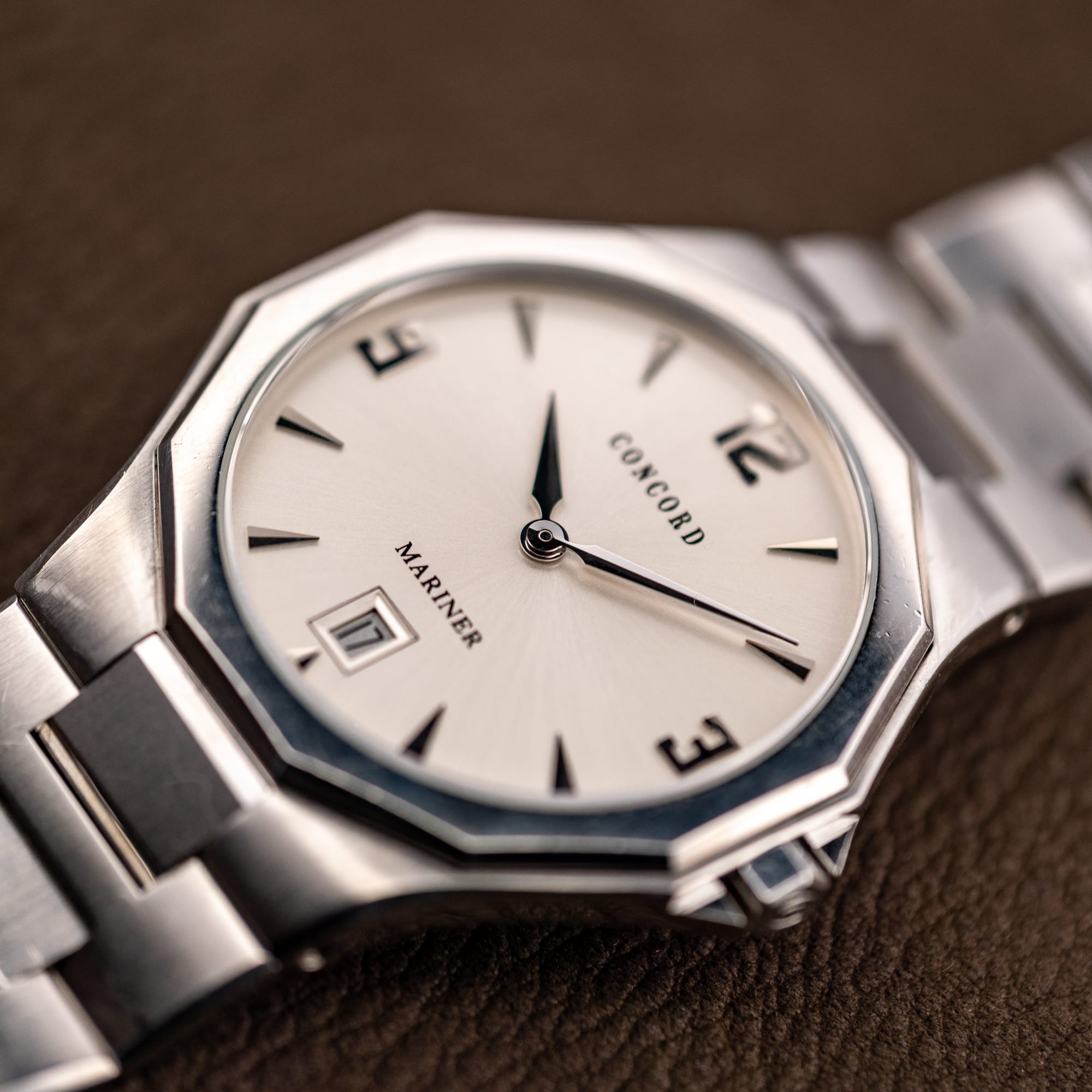
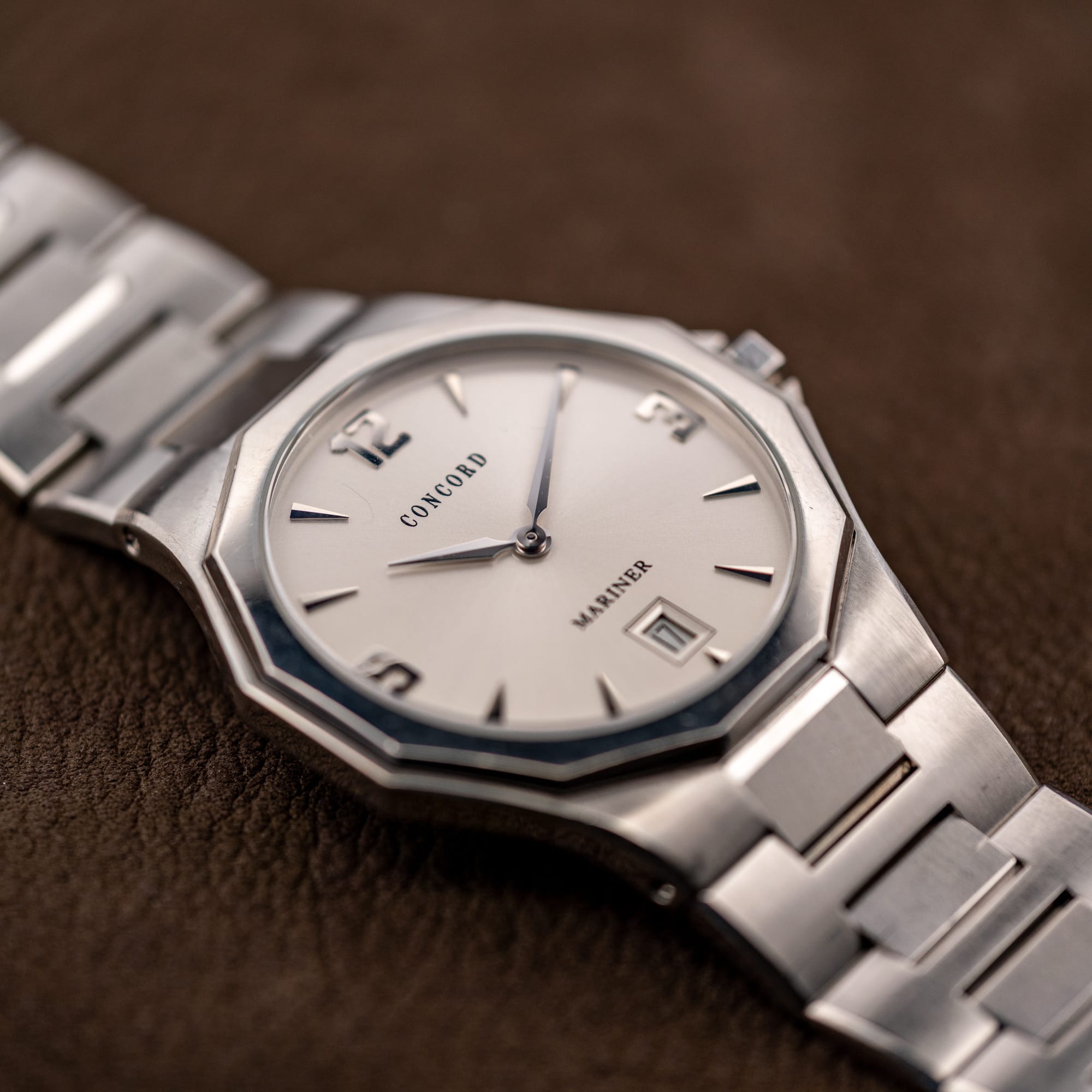
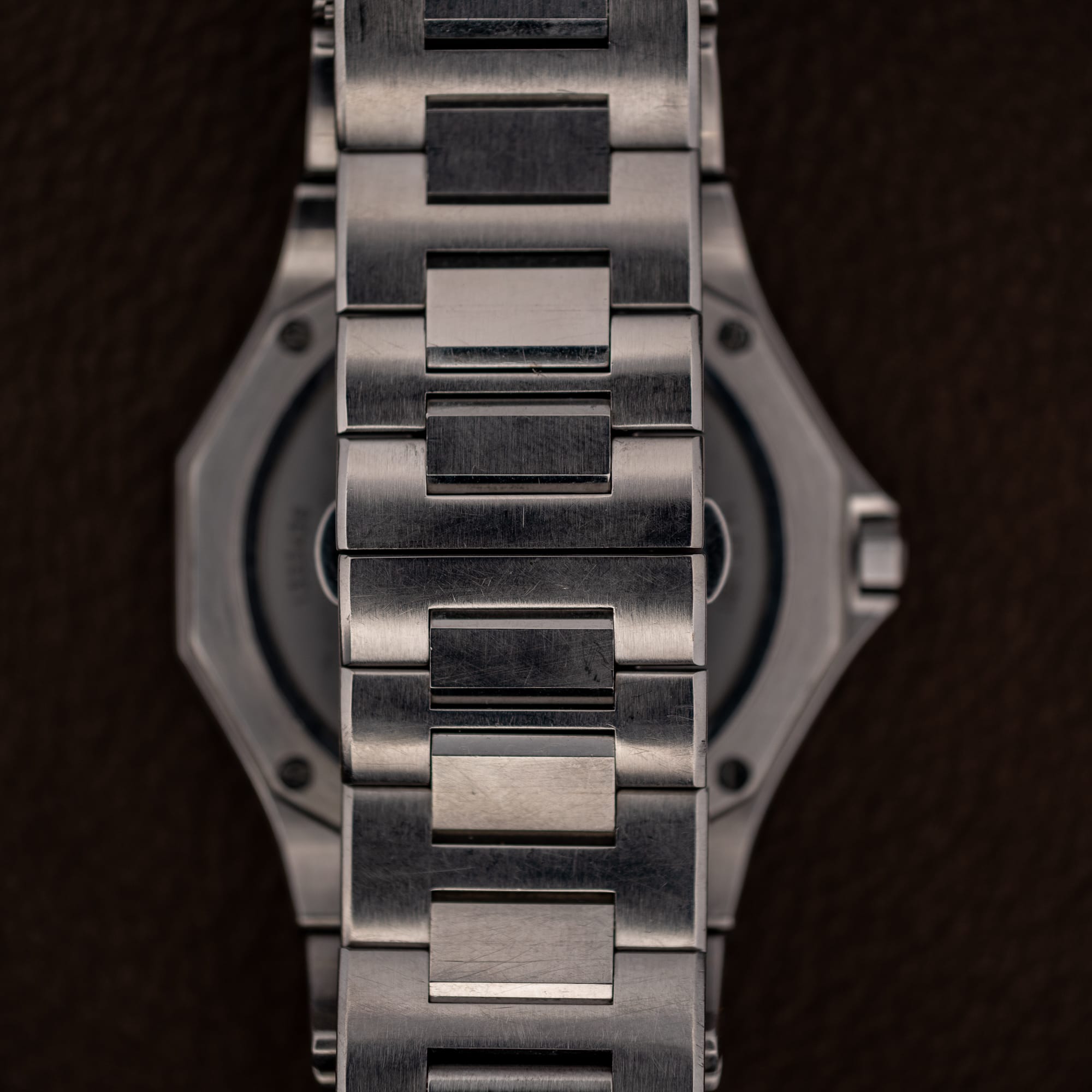
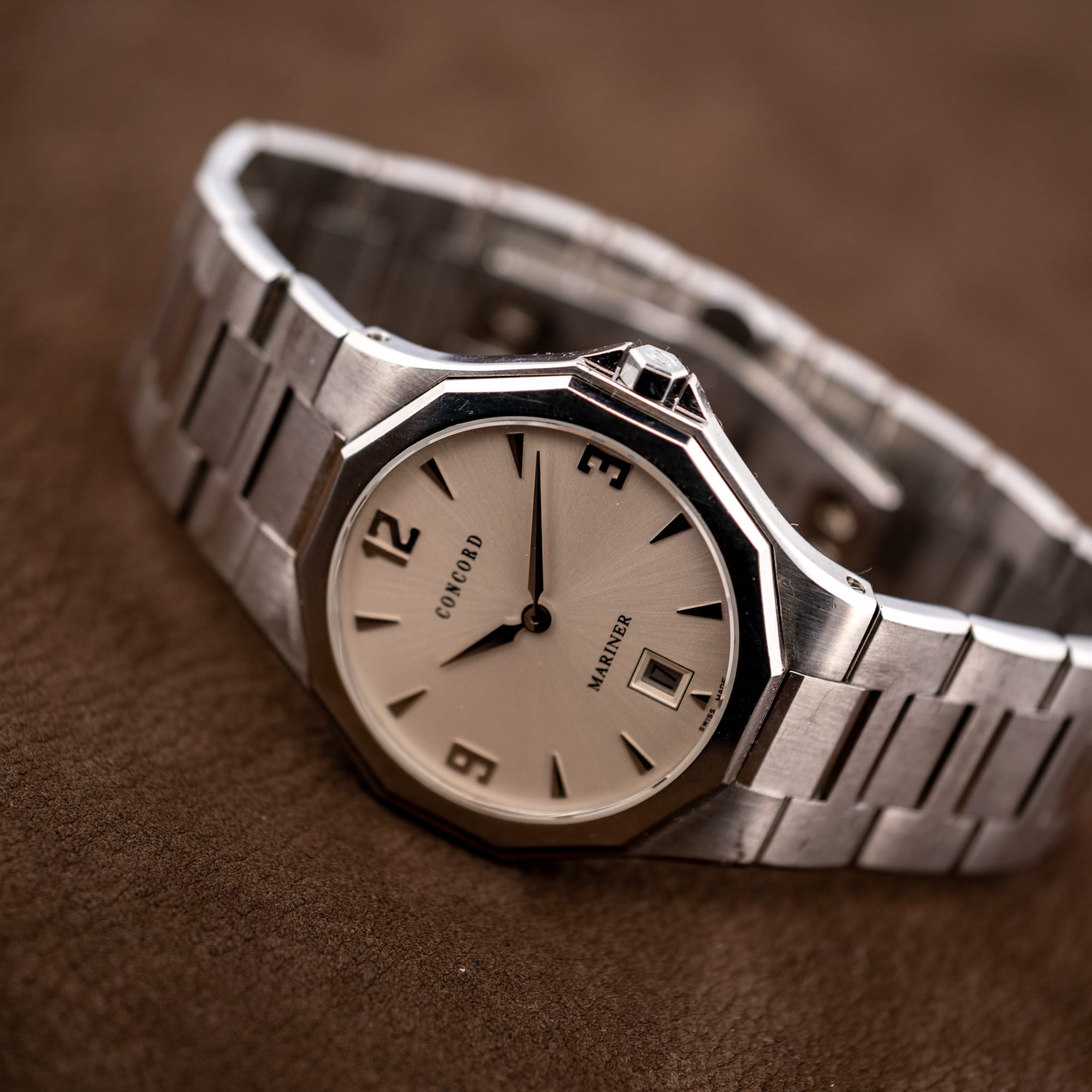
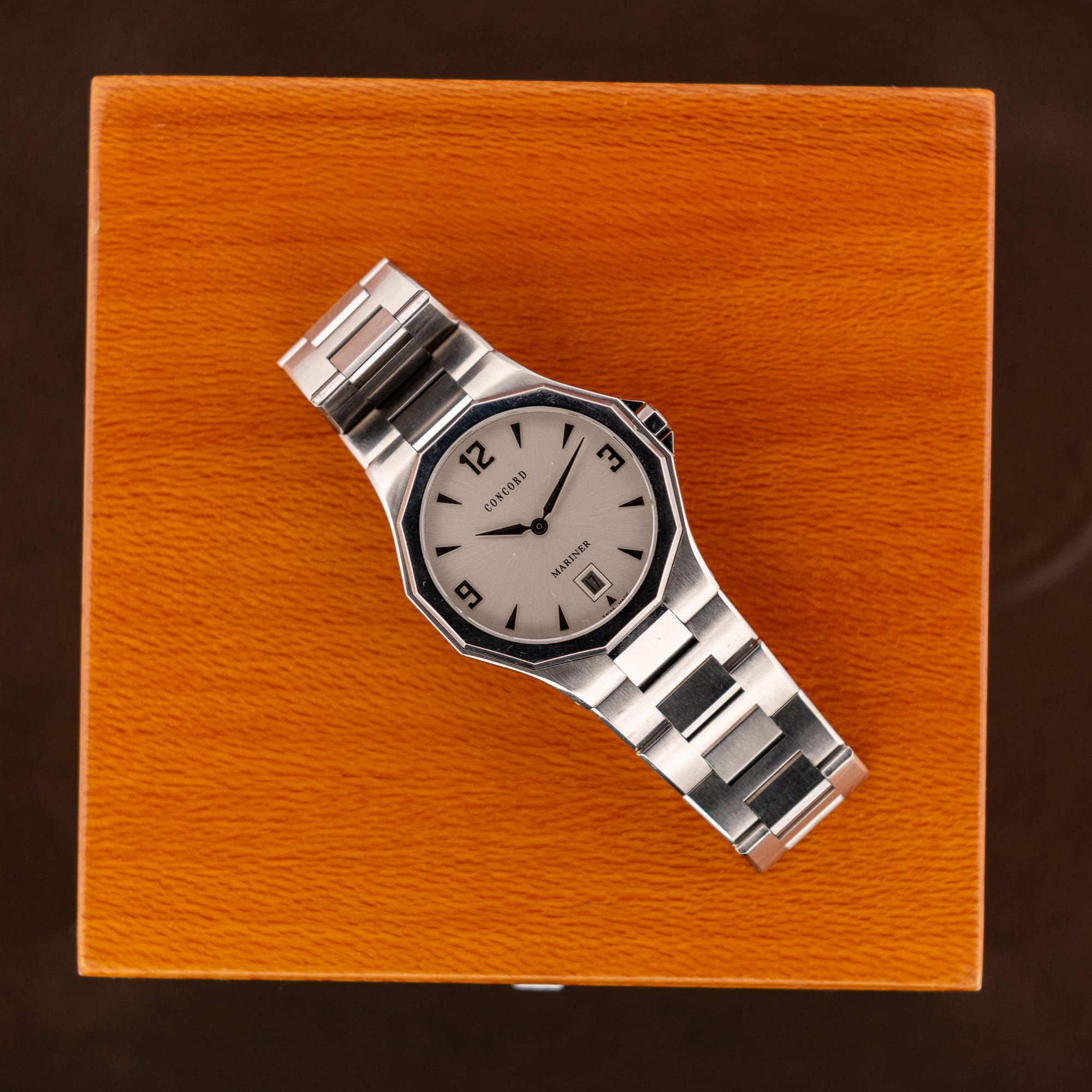
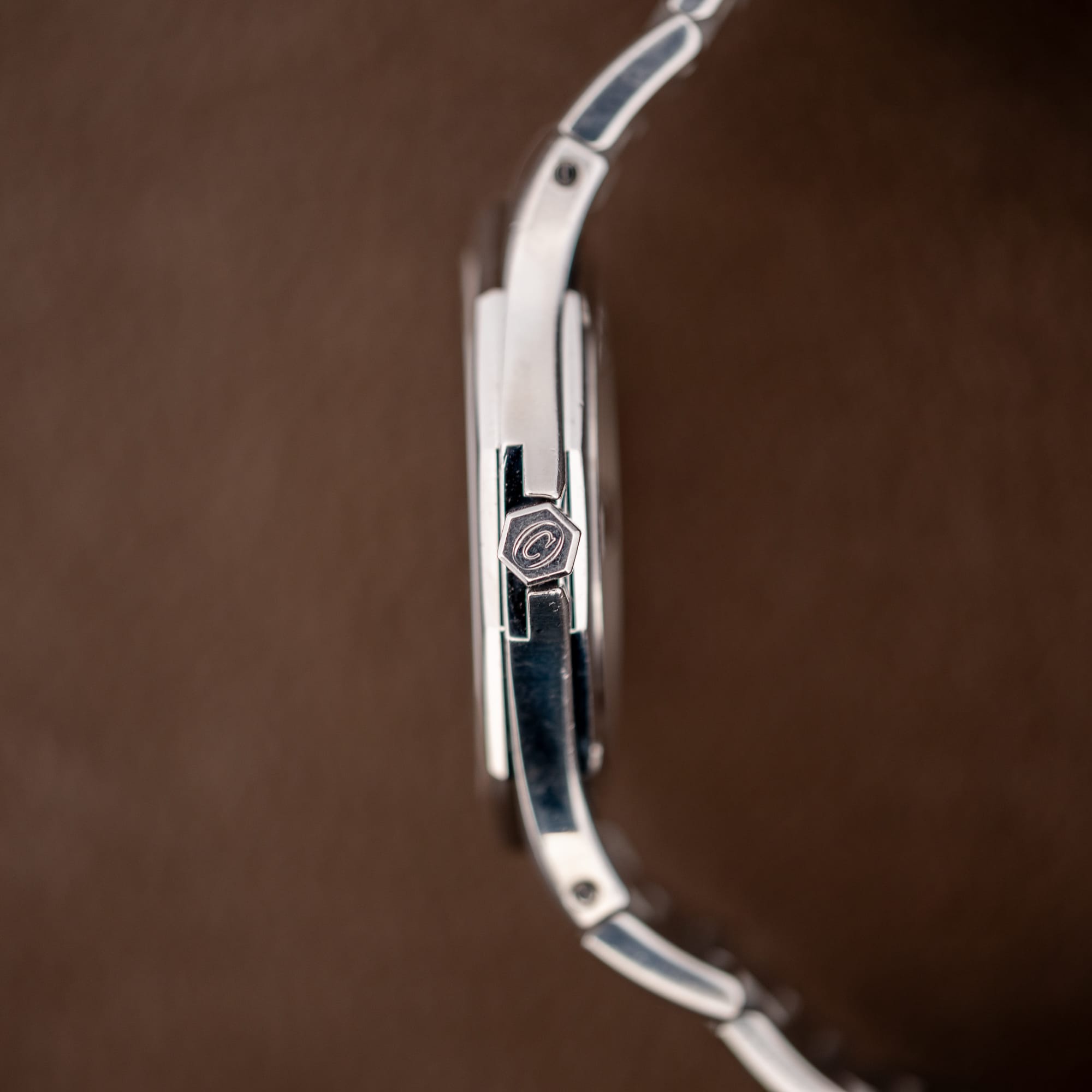
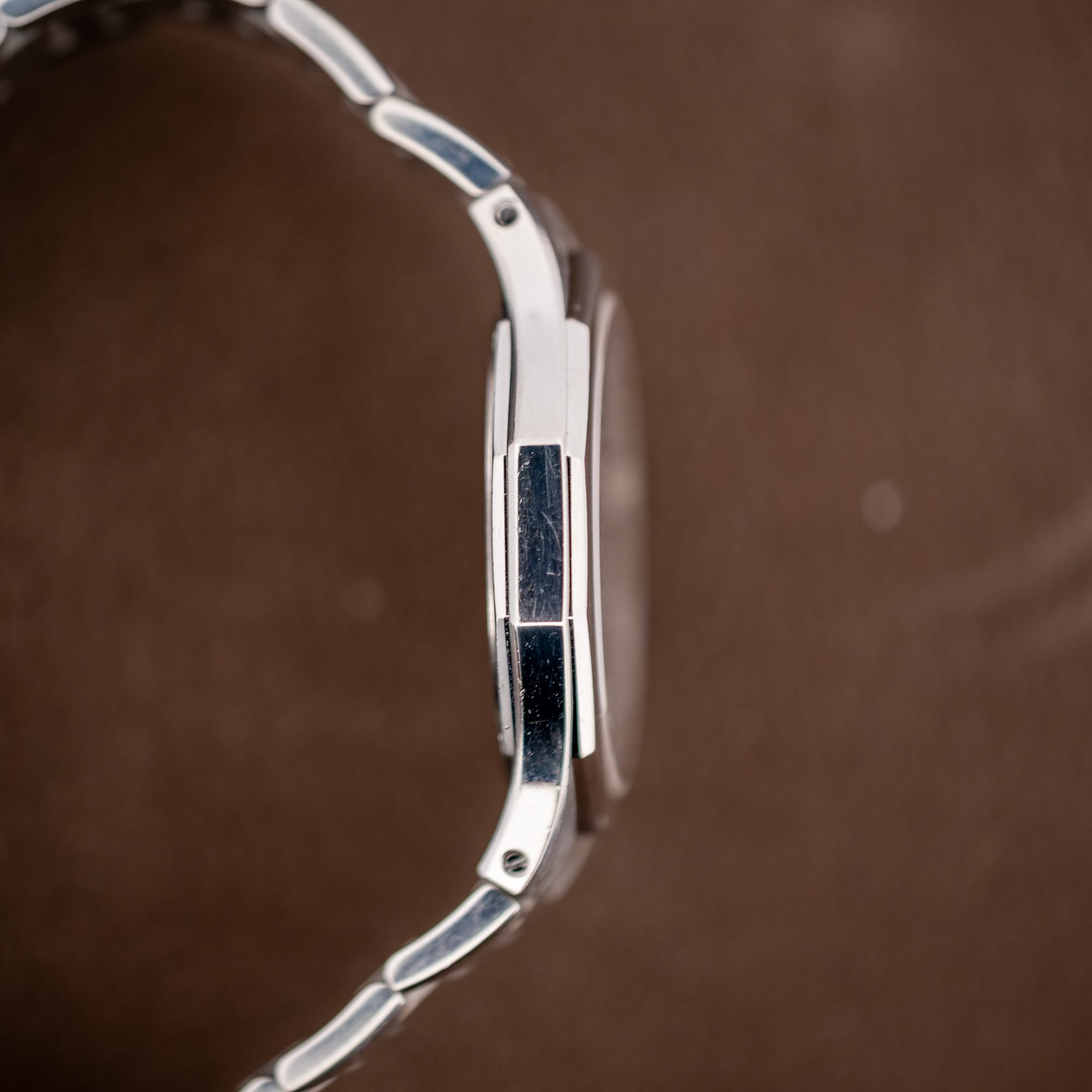
The one we have is the steel version with quartz inside, 38mm across and 43mm tall, bezel polished and case flanks brushed, so the twelve facets pick up light in alternating bands as the watch turns. The dial is silver with a radial sunburst, black wedge markers, squared numerals at twelve, three and nine, and a date at six set below a raised frame chamfered on all four sides. Two hands, no running seconds. The crown is a small hexagon engraved with the Concord C. The bracelet is the original steel, tapering, brushed with polished center links, on a signed folding clasp. The caseback holds four screws and the reference, stamped 14 E7 1881.
We serviced it in-house at OTTUHR, it is backed by our 2-year warranty, and it comes with its original box. There is honest wear on the bezel and the bracelet, the kind a steel watch collects over decades of being worn.
Fourteen years after settling for Concord, Grinberg’s company bought Movado. In 1996 it renamed itself the Movado Group, after the brand he could not have in 1970. Concord is the one that had to earn its place, and the Mariner is what earning it looked like.