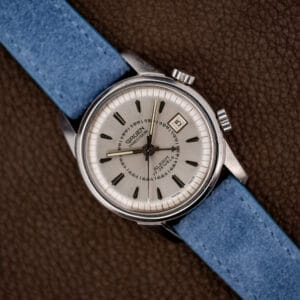
There is a particular kind of small-case mechanical alarm watch from the late 1950s and early 1960s that quietly compresses real horological complexity into a dress profile, and to us, the Favre-Leuba Seabird Alarm is one of the most undersung examples of the genre. This stainless steel reference runs the dual-crown A. Schild AS 1475 alarm architecture inside a 35mm round case, with a separate alarm pointer riding the center stack alongside dauphine hour and minute hands. In our opinion, the Favre Leuba Seabird Alarm earns its place in the same conversation as the Jaeger-LeCoultre Memovox and the Vulcain Cricket, just at a quieter price point and in a smaller case than either competitor.
Favre-Leuba is the second-oldest registered Swiss watch brand, with a continuous trade name going back to 1737, and by the late 1950s the Geneva firm was producing alarm watches as part of a broader Sea Bird and Sea King line that targeted technically curious collectors rather than the dress crowd. The Seabird Alarm sits in this family as the smaller-case alarm variant, presented in a 35mm round case with the chronometer-grade movement signing that distinguished Favre-Leuba’s better pieces from the bulk-distributed Swiss alarm watches of the same period.
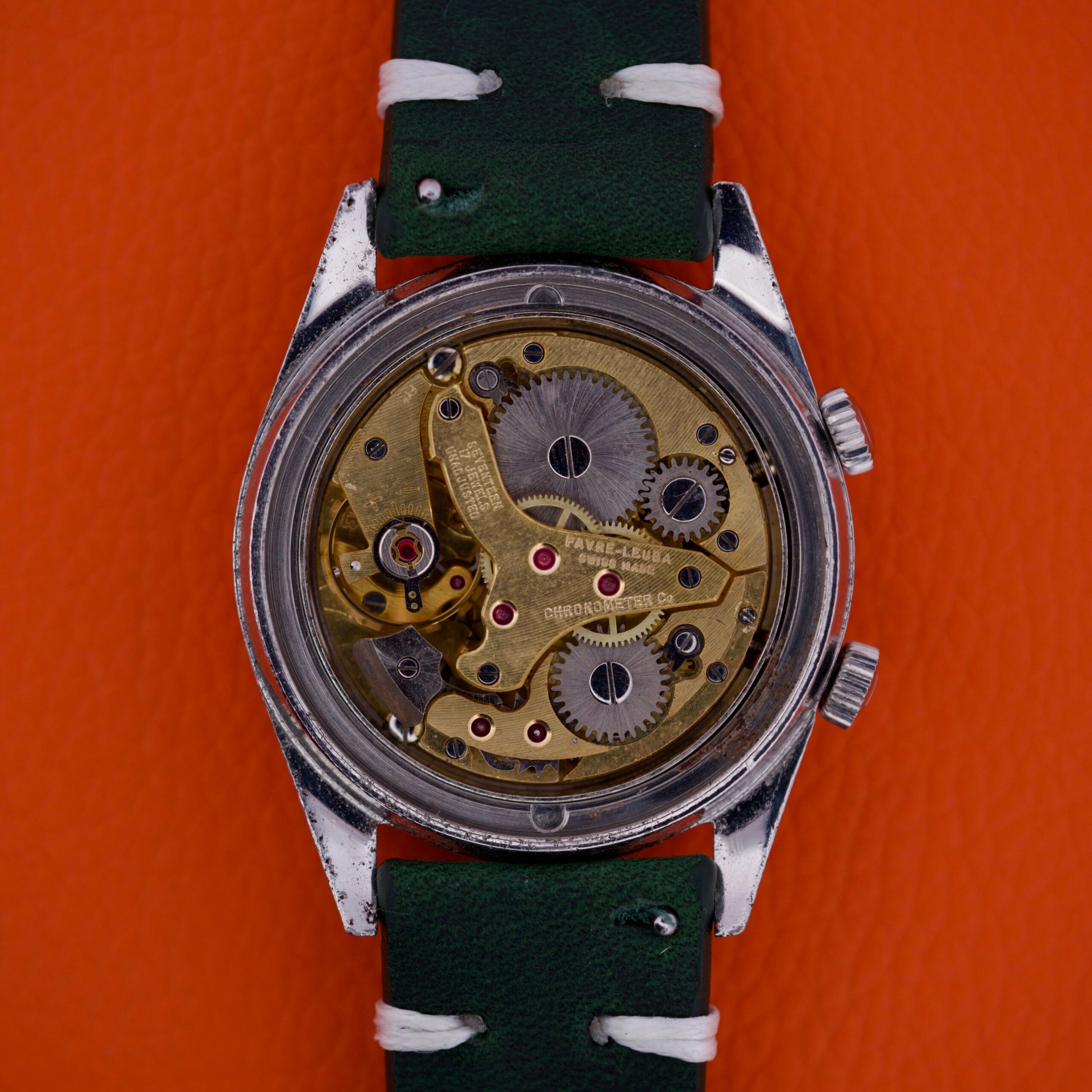
Inside is the A. Schild AS 1475, the manual wind alarm caliber that powered nearly every example of the Sea Bird Alarm in this period, running 17 jewels at 18,000 BPH with a 46-hour power reserve and signed across the bridges with the Favre-Leuba name and the Chronometre Co inscription that indicated the firm’s higher-tier movement procurement. The AS 1475 was the foundational alarm ébauche of the era, supplying nearly every Swiss alarm watch that was not a Jaeger-LeCoultre Memovox or a Vulcain Cricket, and it earned its position through a separate alarm spring barrel architecture that keeps the alarm power source mechanically independent from the timekeeping train. The alarm itself fires through a small hammer that oscillates against the inside of the caseback to produce the soft buzzing hum characteristic of A. Schild alarm calibers, carrying through the steel back as a discrete but unmistakable presence on the wrist.
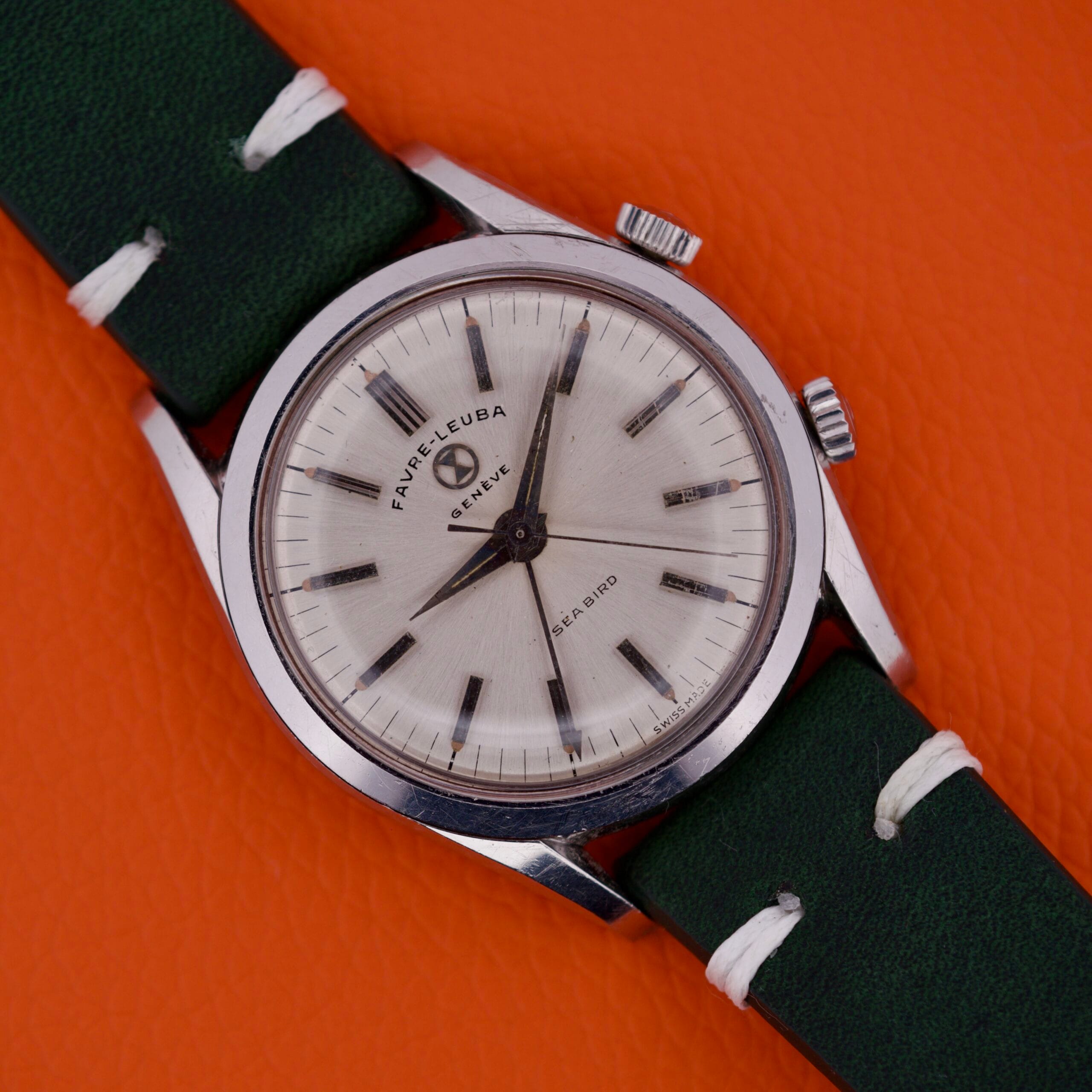
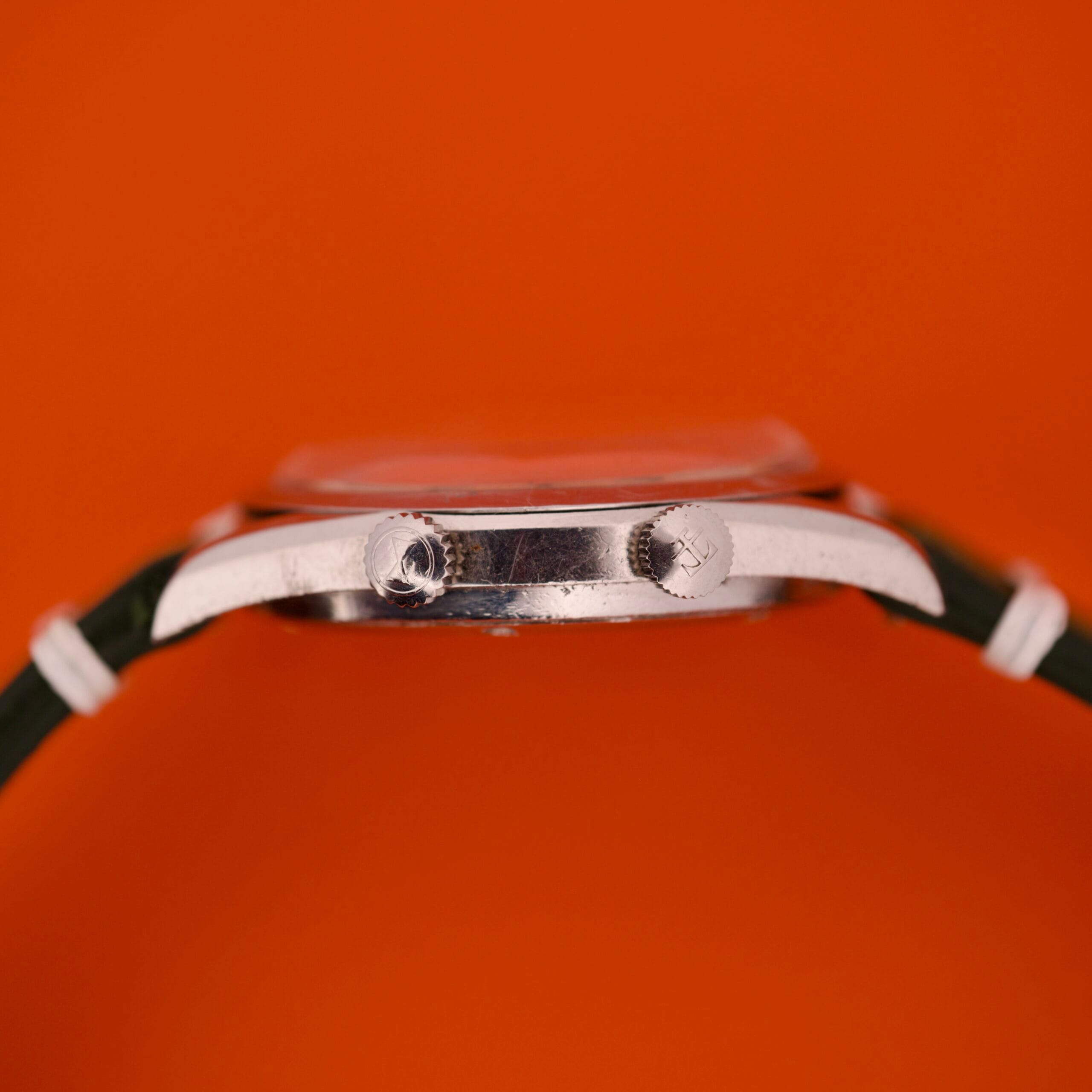
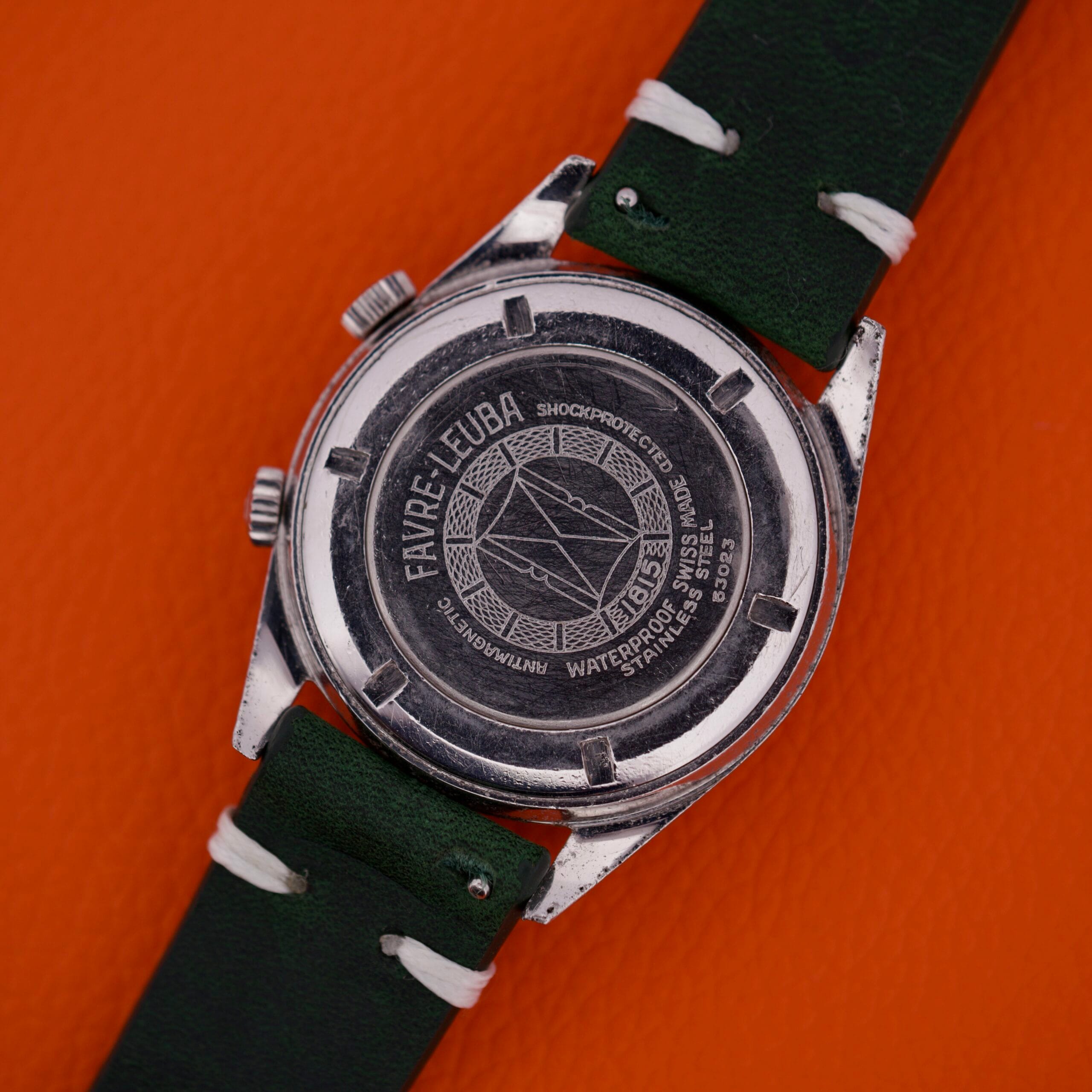
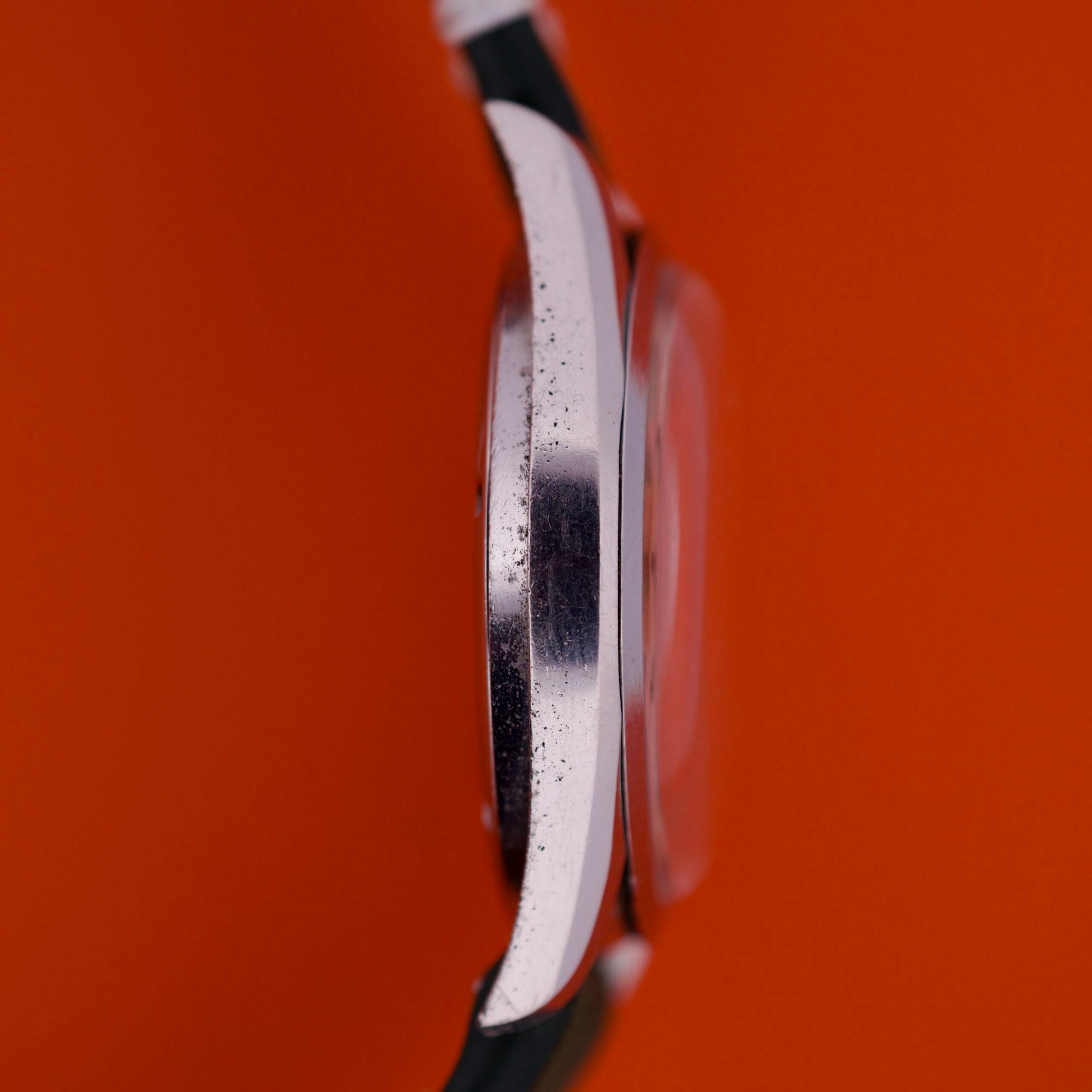
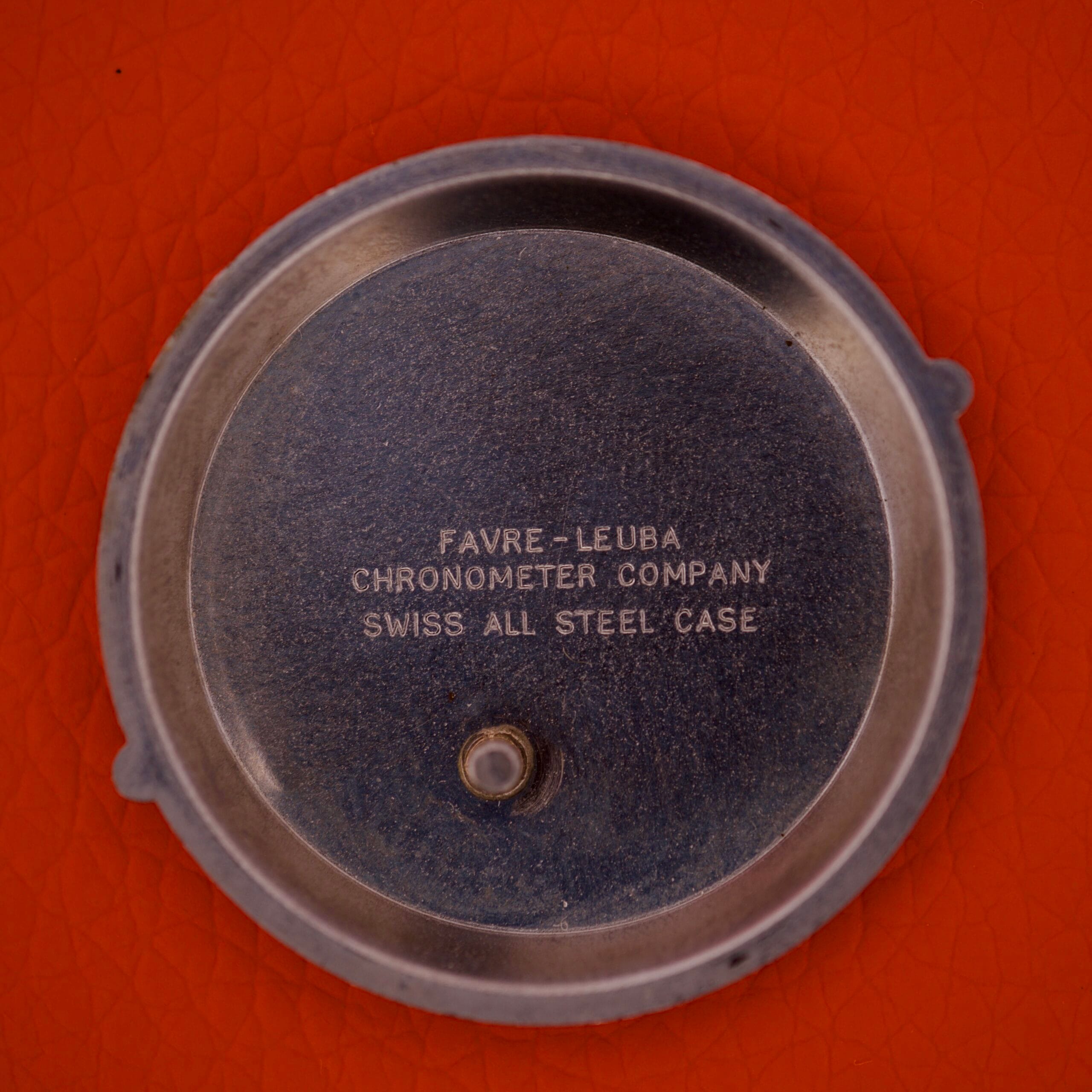
The case is the classic 35mm Seabird Alarm form, with polished downturned lugs, a thin polished bezel, and twin crowns on the right side at the 2 and 4 o’clock positions. The screw-back caseback is engraved with FAVRE-LEUBA arched at the top, SHOCK PROTECTED at the upper right, a central diamond-shaped lozenge carrying the Favre-Leuba bowtie cipher with 1815 inside it, and the encircling text ANTIMAGNETIC WATERPROOF SWISS MADE STAINLESS STEEL. The inner caseback is separately stamped FAVRE-LEUBA / CHRONOMETER COMPANY / SWISS ALL STEEL CASE, and carries a serial number stamped along its lower rim. The case shows the honest scratch field of more than sixty years of normal wear, with a soft circular polishing pattern on the caseback consistent with the standard service openings any alarm watch needs over its life, and an unrestored bezel that has not been pressed back to a mirror finish.
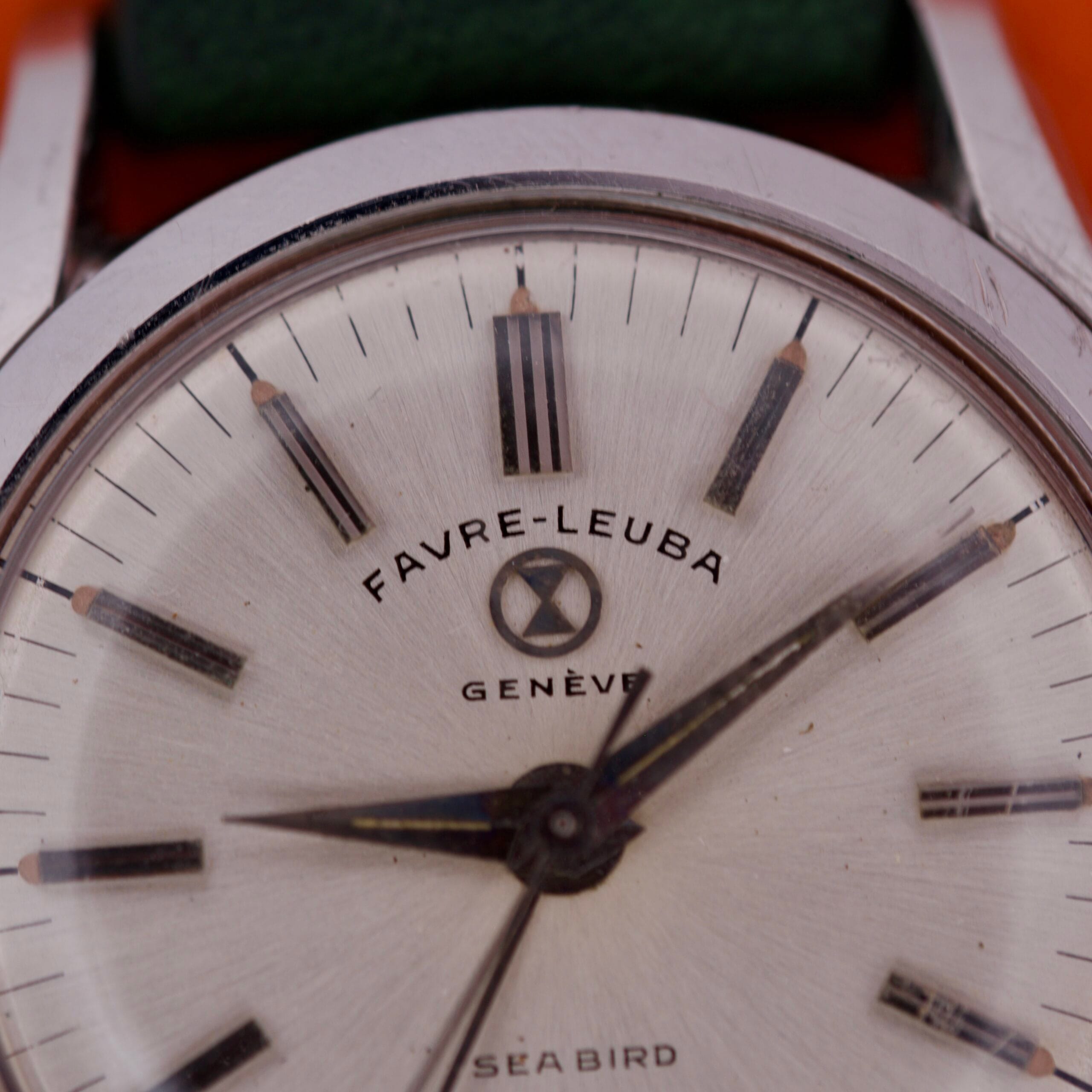
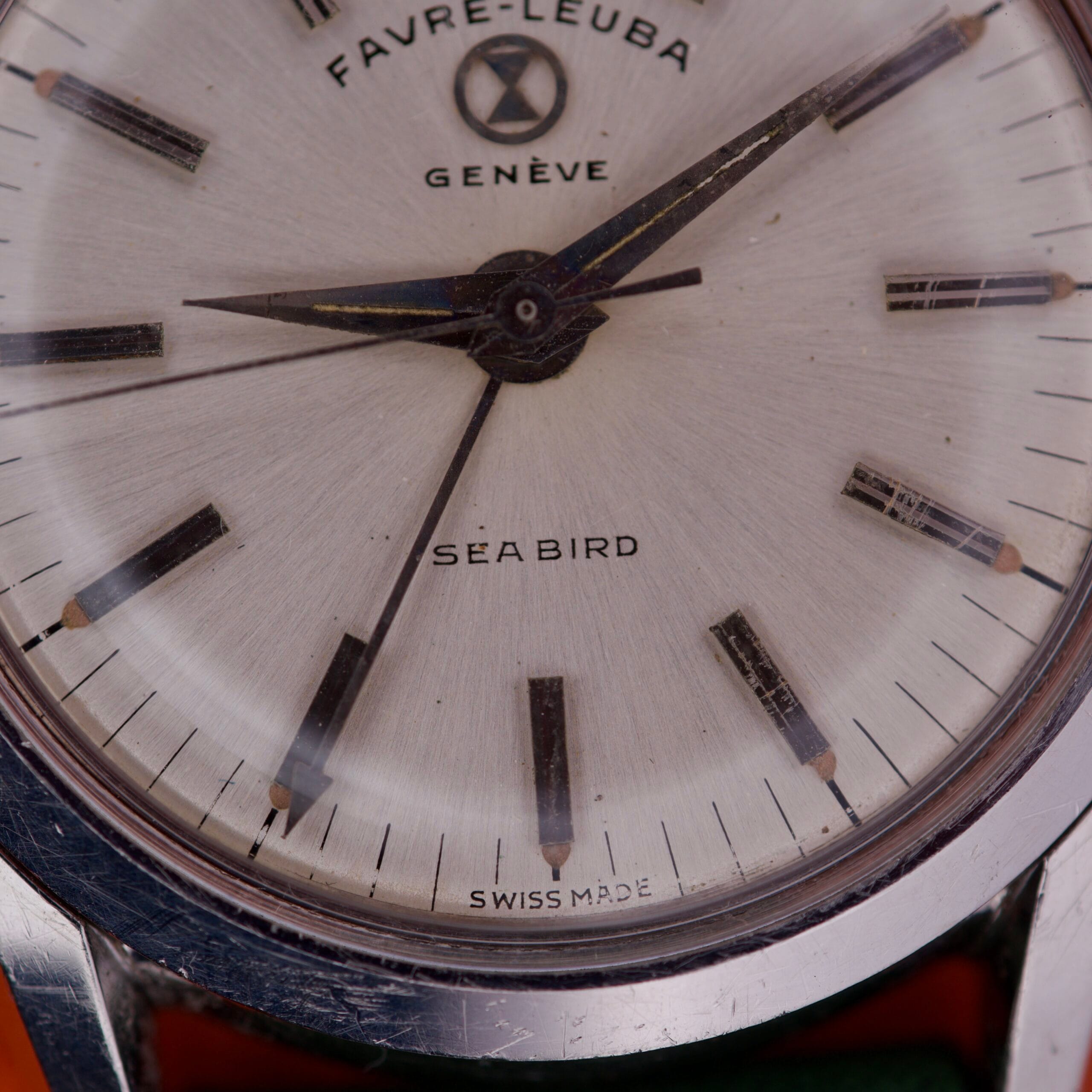
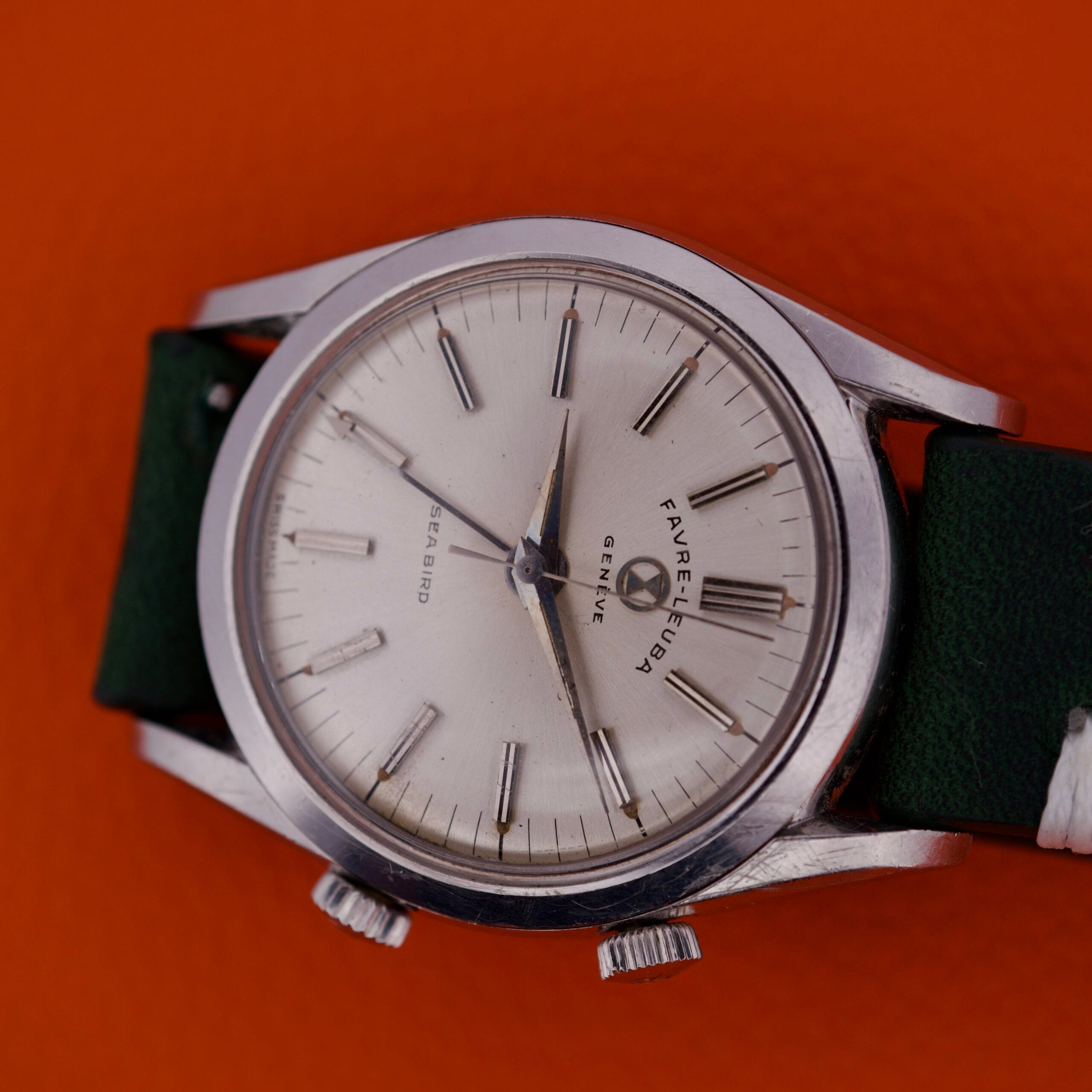
The dial is silver with a quiet radial sunburst pattern radiating outward from the center, and is appointed with applied polished steel baton markers, each with a central black painted stripe running their length. The FAVRE-LEUBA wordmark sits above the FL bowtie cipher with GENÈVE just below it in the upper half of the dial, while SEABIRD applies in serif at the lower half and SWISS MADE prints below it at the bottom edge. The dauphine hour and minute hands have aged into a deep heat-blue and charcoal patina across their length, while the slim central alarm pointer with its small arrow tip remains clean and untouched. There is no lume on the dial or hands, which is correct for this Seabird Alarm configuration rather than a sign of relume work.
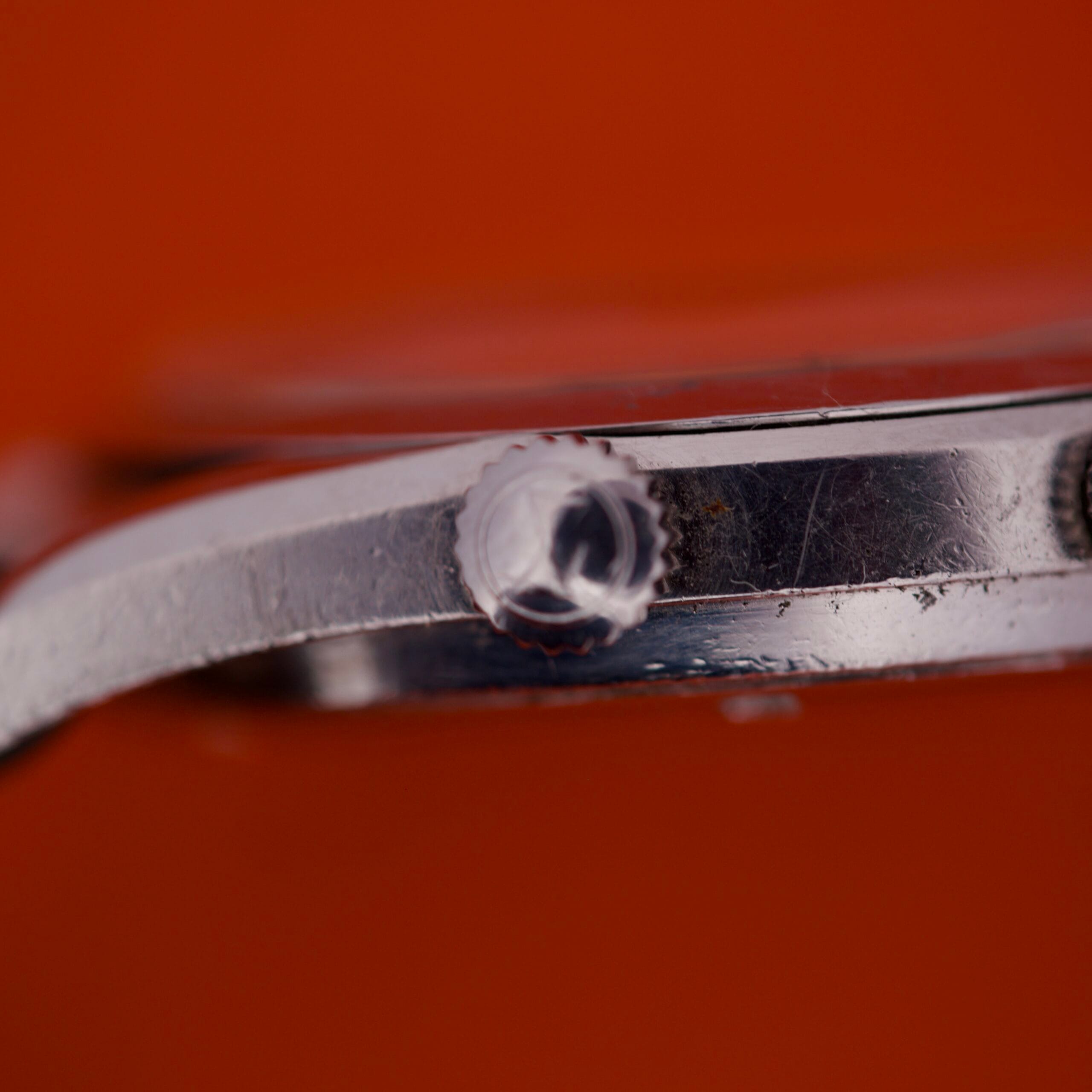
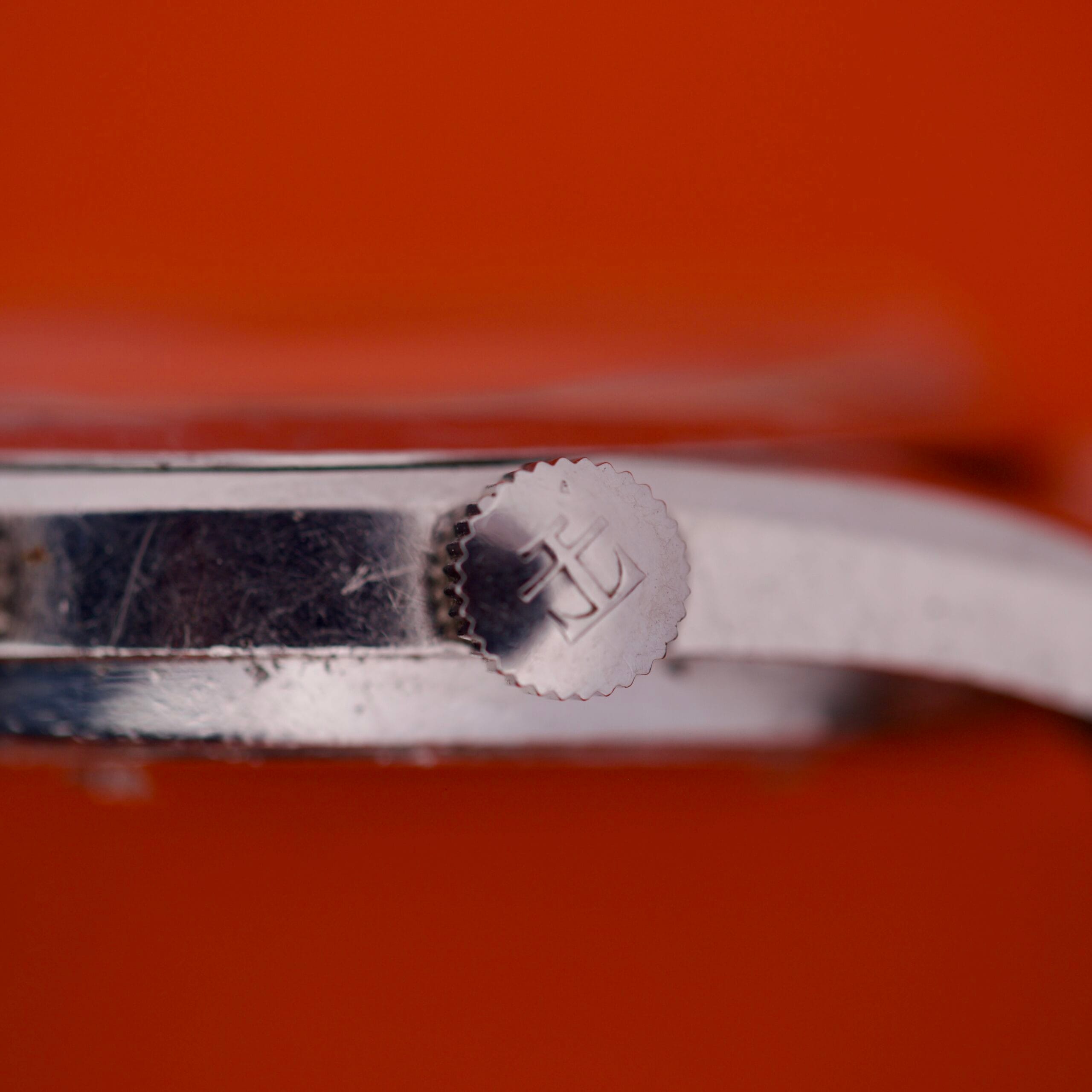
One note on originality the experienced collector will want up front. The 2 o’clock alarm crown is a period service replacement signed with a non-Favre-Leuba cipher rather than the original FL bowtie, made at some point in the watch’s life when the original alarm crown was lost or damaged in service. The 4 o’clock time-setting crown remains correct, signed with the Favre-Leuba interlocking F and L cipher and matching the caseback signing exactly. The alarm caliber and the dial-side alarm pointer remain intact and present; the substitution is a cosmetic one on the upper crown only.
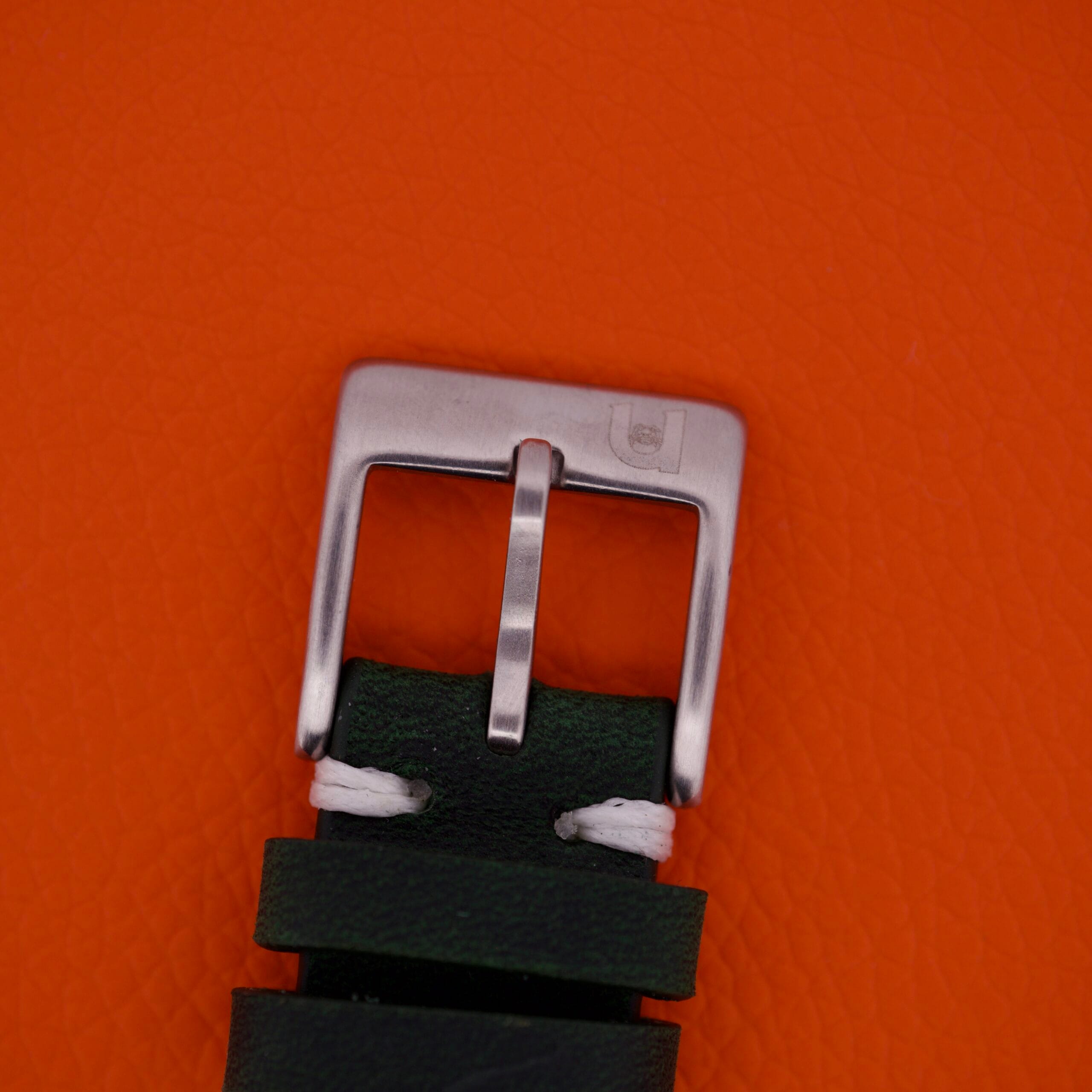
We pair this Favre Leuba Seabird Alarm on an 18mm dark green leather strap with white side-stitching and an OTTUHR-signed brushed steel buckle. The forest green against the silver dial and polished case reads quietly contemporary without pushing the watch into a costume, and the slim leather keeps the dress-case proportions reading correctly through a 7-to-8.5-inch wrist range.
Serviced in-house at OTTUHR and backed by our 2-year mechanical warranty, this Favre-Leuba Seabird Alarm is for the collector who values the working complication over the badge weight, and who would rather wear an honest mid-century alarm watch that buzzes the wrist at the set time than another sterile sport piece on the rotation. To us, the dual-crown Seabird Alarm at this case size is one of the most genuinely usable vintage mechanical alarms still circulating at this price level, and this stainless example is a wonderfully characterful representative of the line.