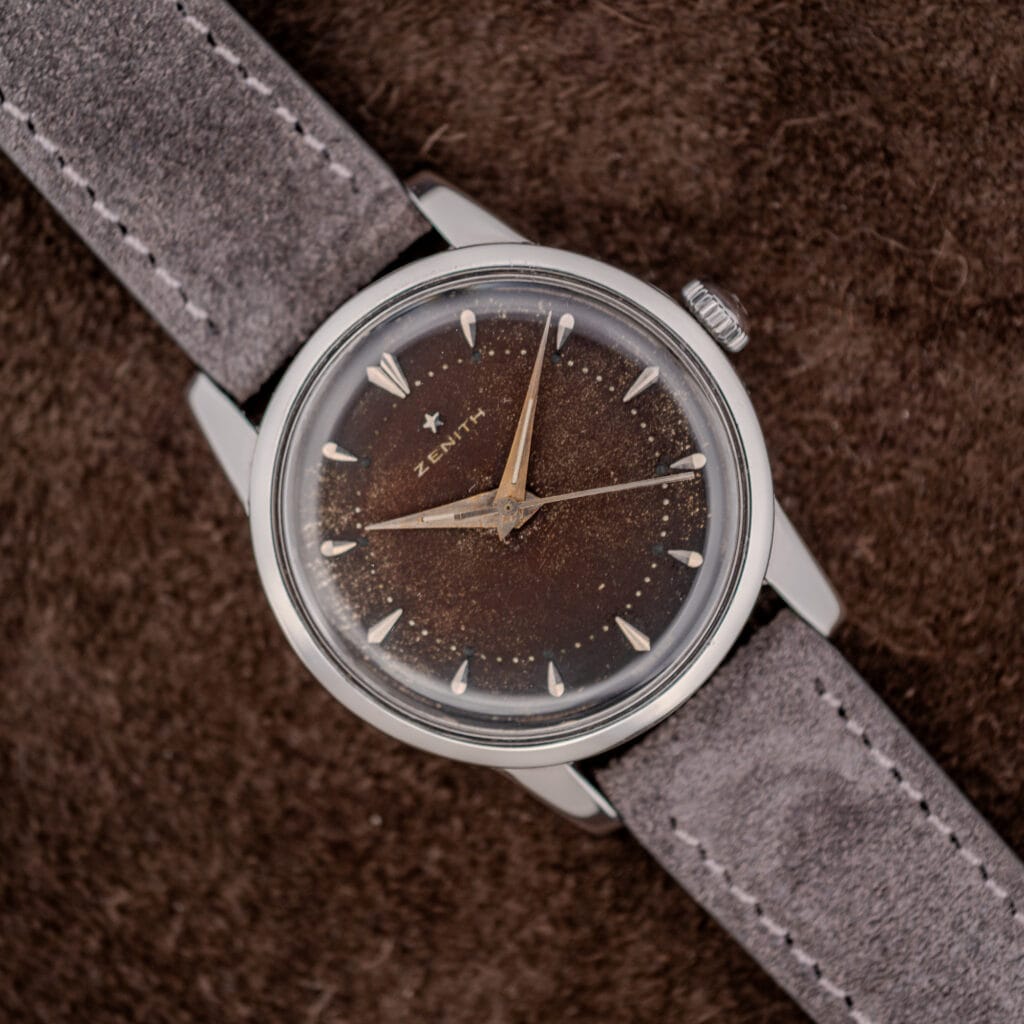
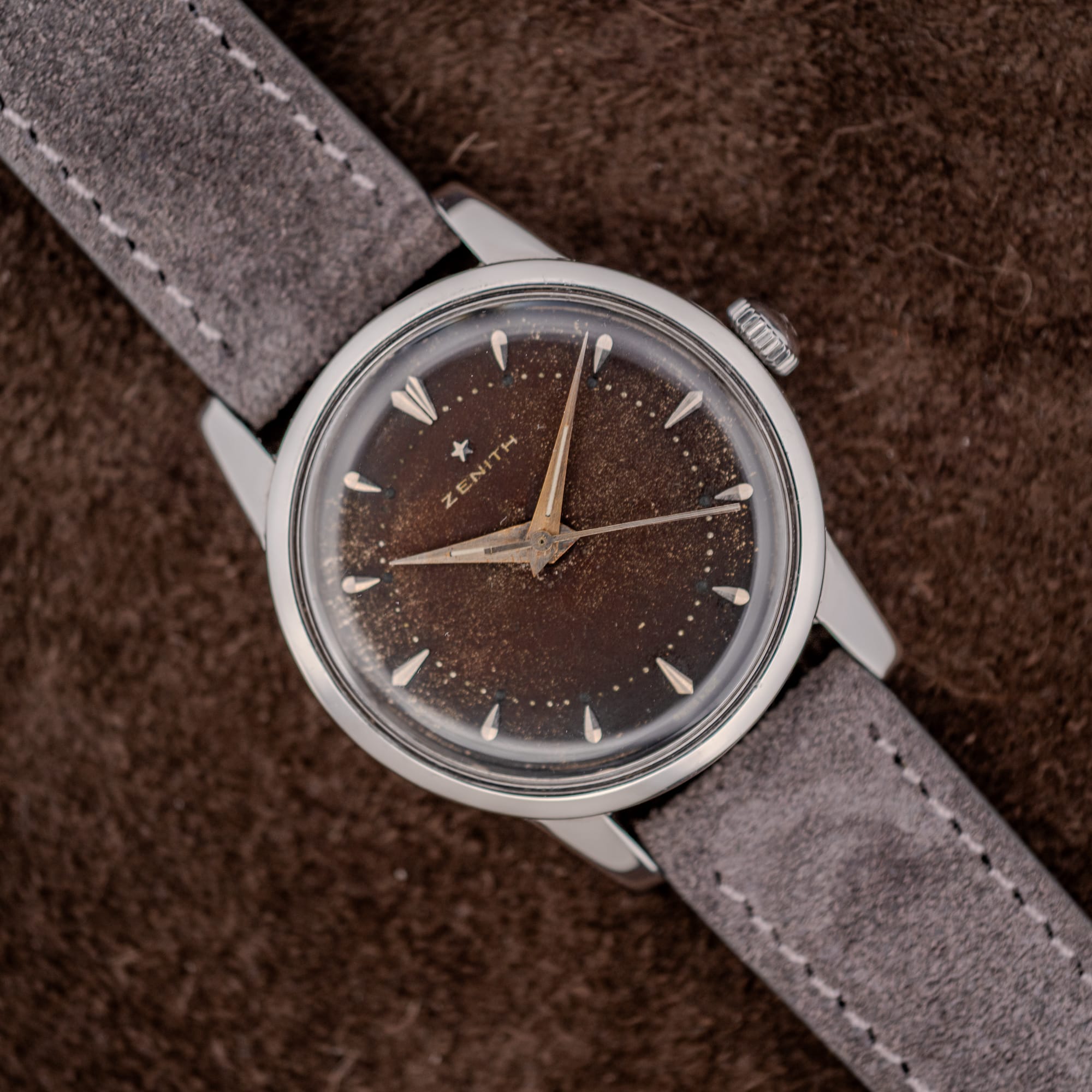
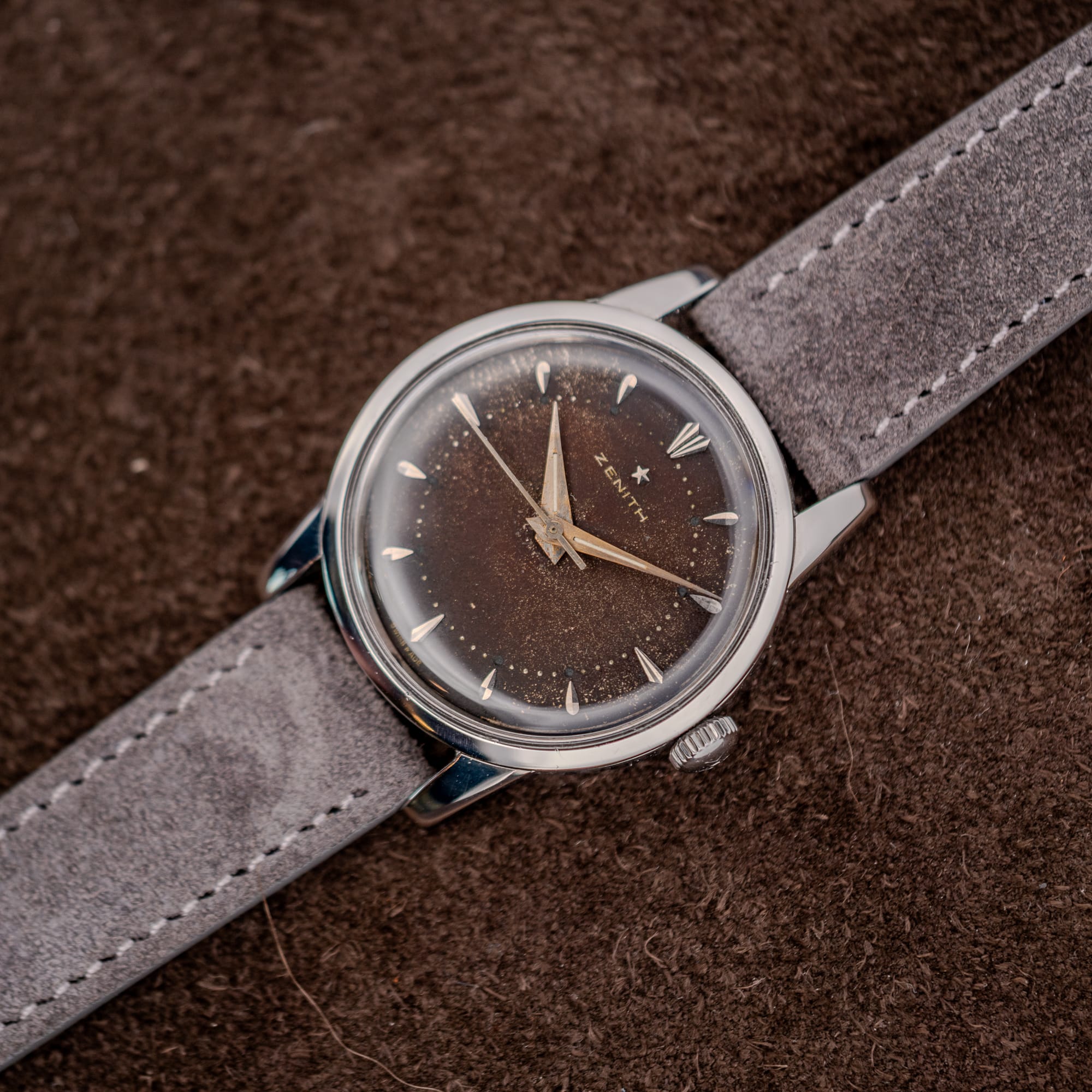
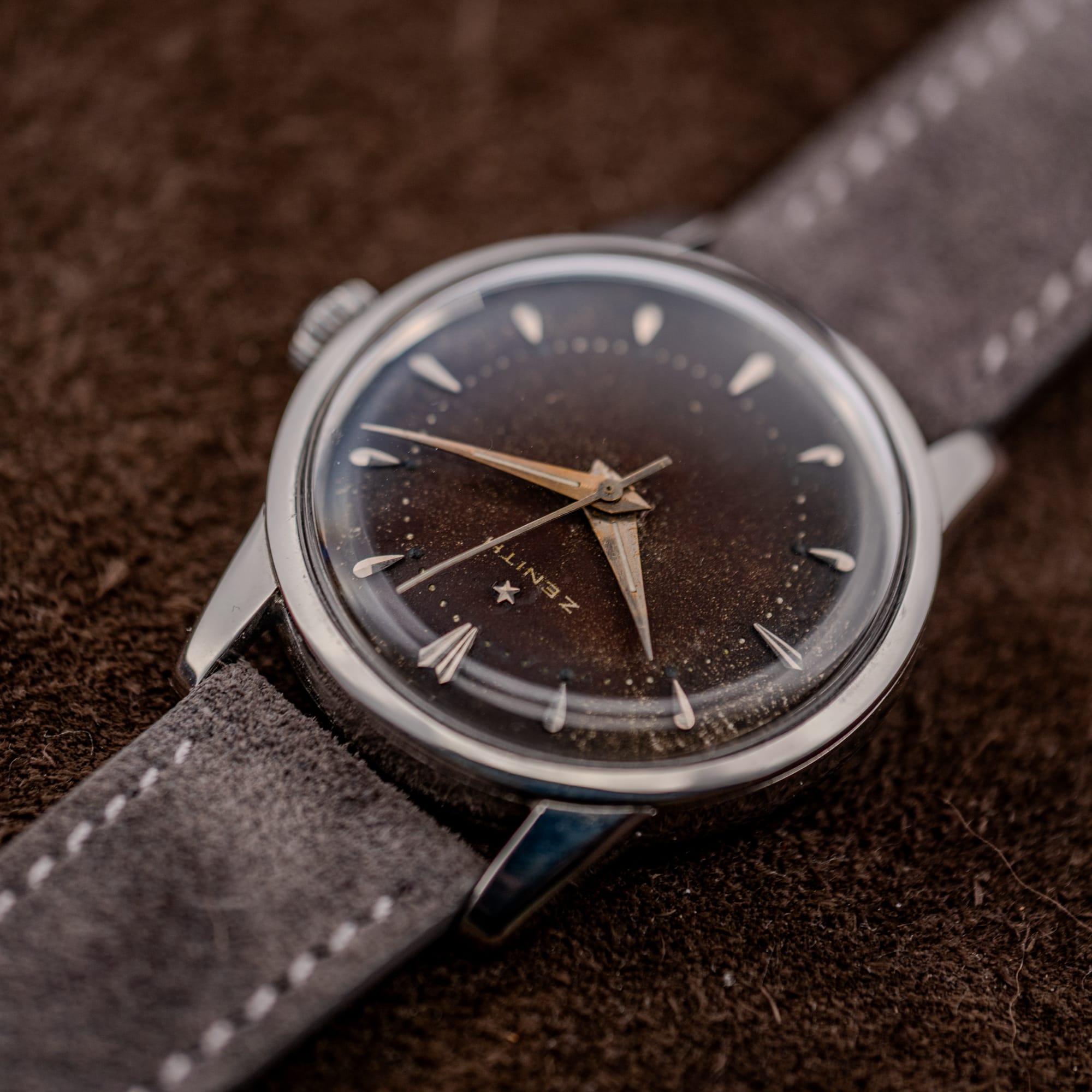
Brown now, and unevenly so. This dial left the factory black. Swiss dial suppliers in the 1950s finished their work with lacquers nobody had yet stress-tested against decades of sunlight, and the most documented culprit was a coating called Zapon. Carbon black on its own is close to bulletproof under ultraviolet light. The additives mixed around it were not. The flaw took years to surface, because a dial does not brown in a season. It browns across decades, and this Zenith Cal. 120 has been at it since the late 1950s.
What happened next is the part collectors still find hard to believe. For most of the twentieth century a browned dial was simply a broken one. Service departments fitted fresh replacements as a matter of routine, and a well-kept watch might see five to eight services in its life, each one another chance for someone to do the responsible thing and throw the original away. Through the 1990s the term tropical dial barely existed. Then the market inverted. At its START-STOP-RESET sale in 2016, Phillips sold a stainless Rolex Daytona reference 6263, the tropical Oyster Sotto, for 1,985,000 Swiss francs, and the catalogue praised precisely what a watchmaker of 1975 would have corrected: a dial aged to a uniform shade of chocolate brown.
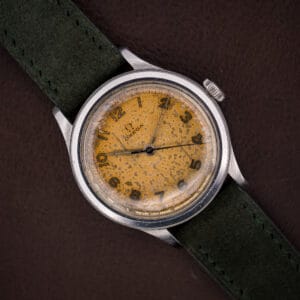
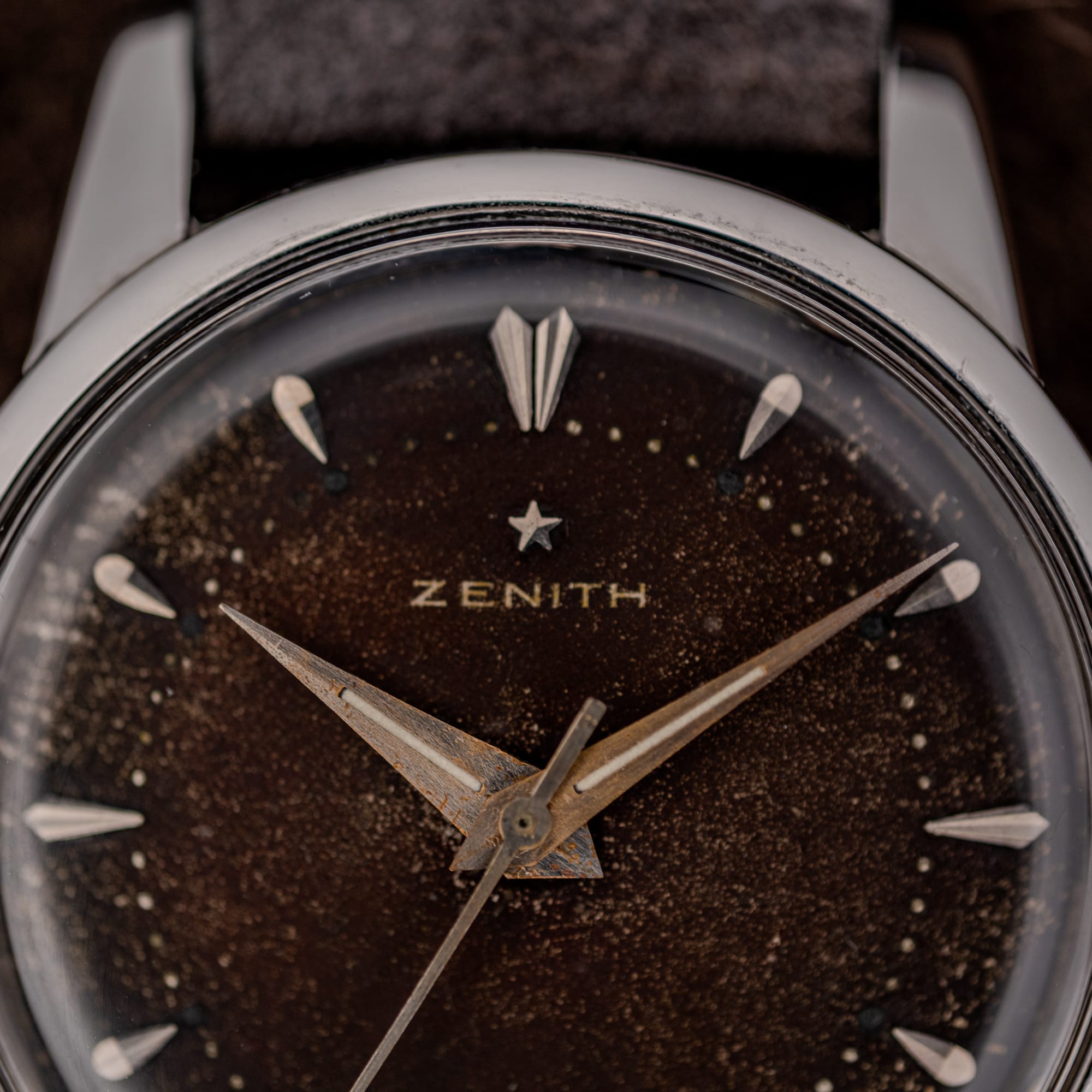
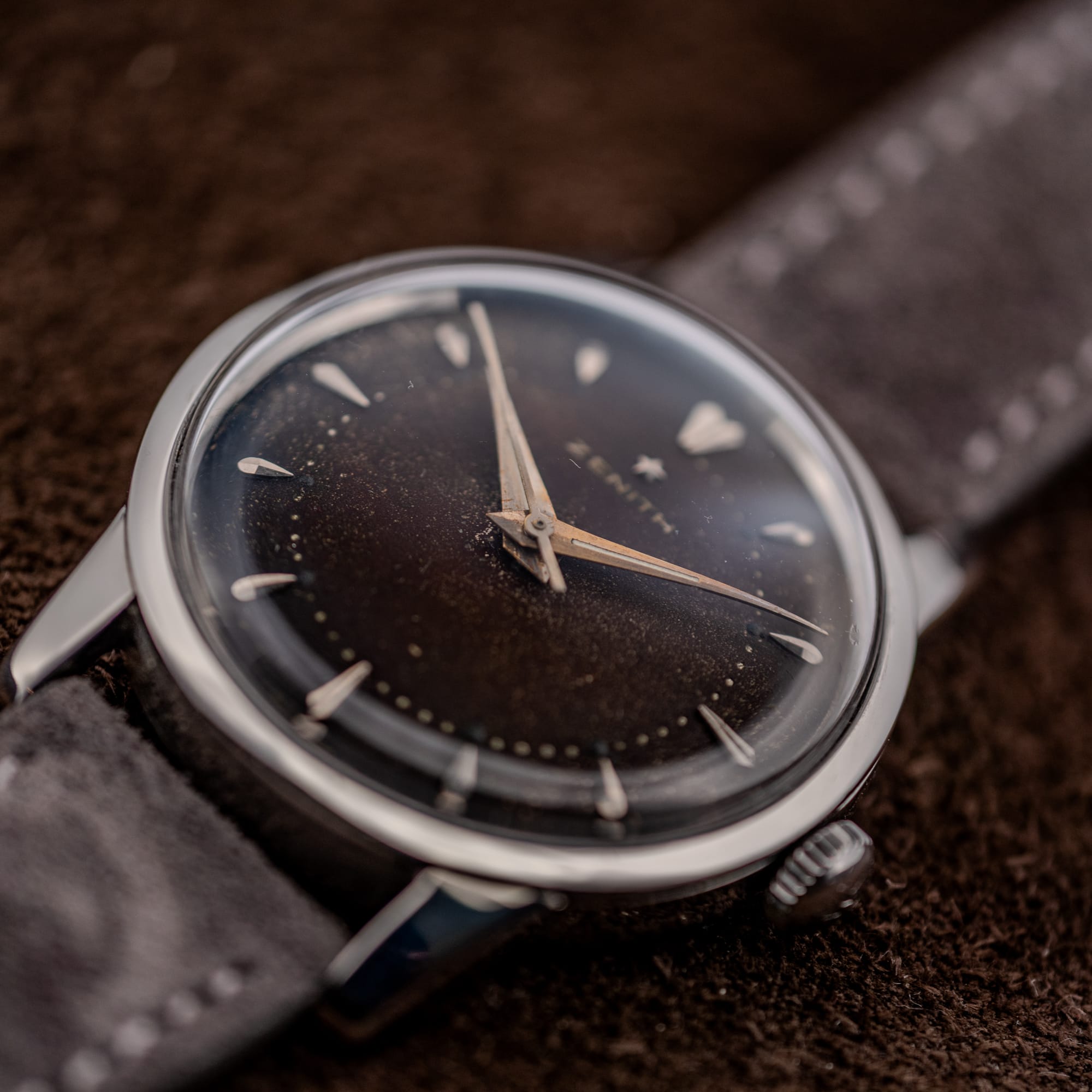
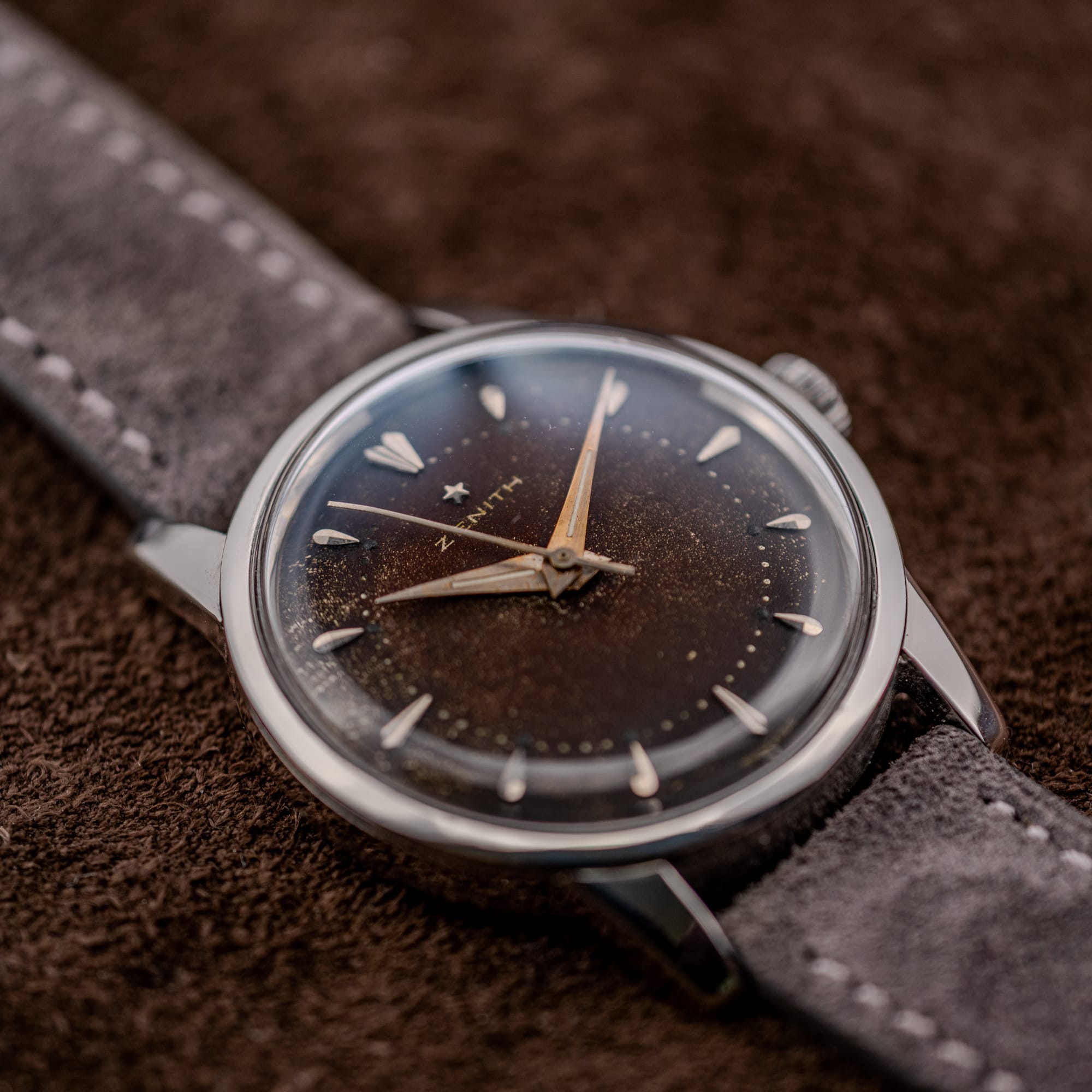
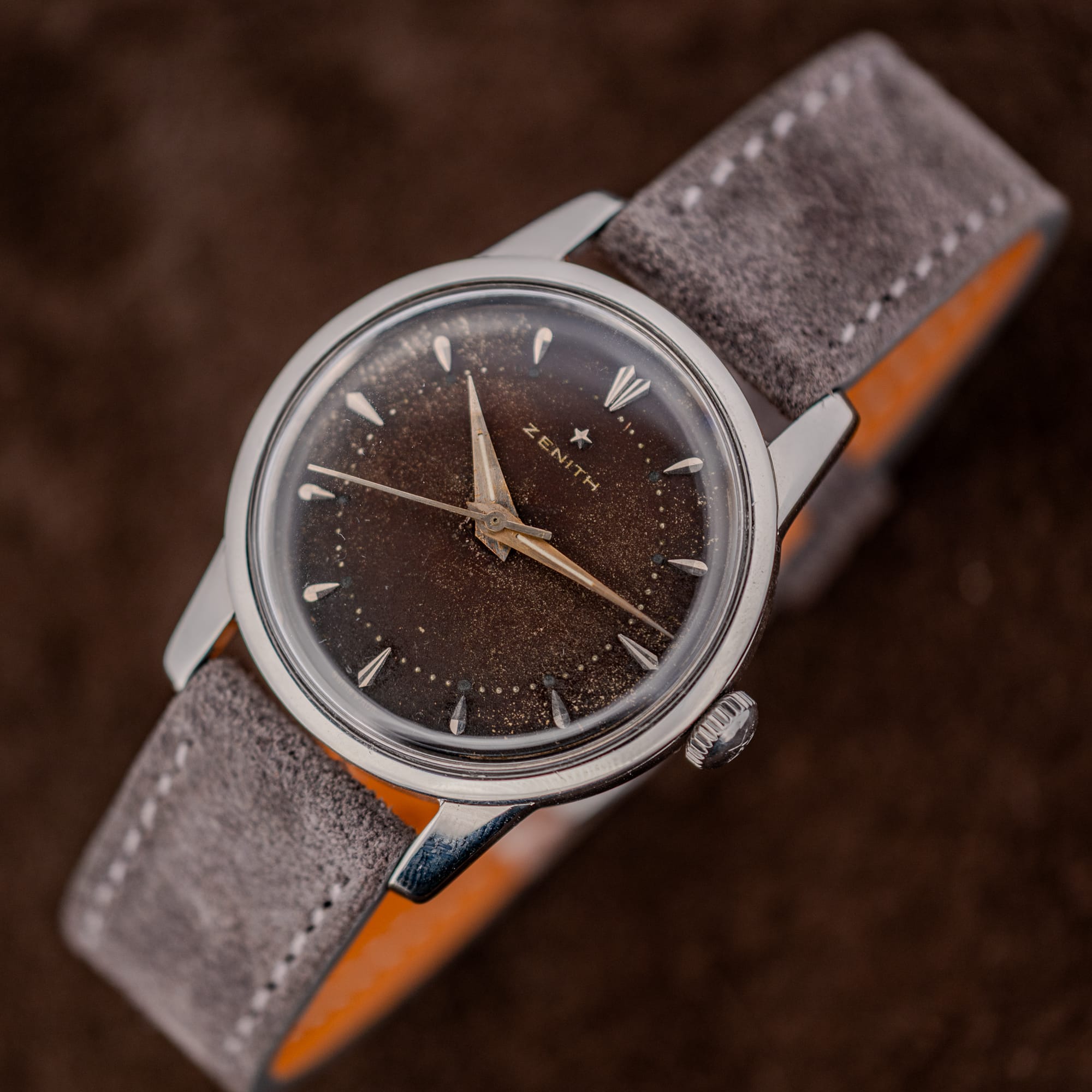
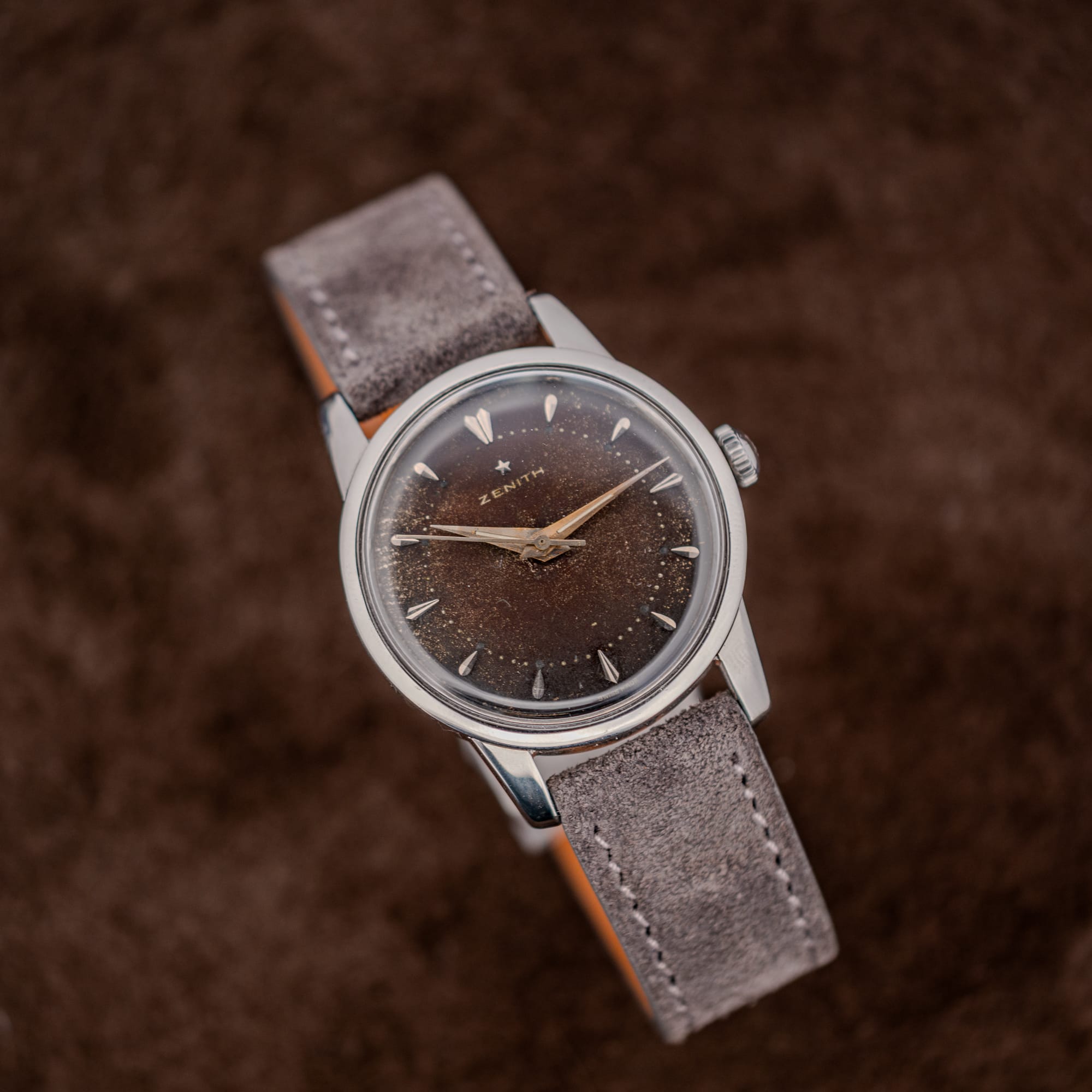
Ours survived that culling, and we want to be exact about what it is and is not. It is not the auction-catalogue tropical, the even gradient the top of the market pays multiples for. This one went further and rougher. It reads near black around the outer chapter, warms through milk chocolate across the center, and carries dense fine speckling over the whole surface, with a scatter of darker points and small areas of surface loss, heaviest between eight and nine o’clock. The printed dot minute track has faded and broken up along the left side. What that adds up to is a heavily worked surface with an actual biography, and no second copy anywhere.
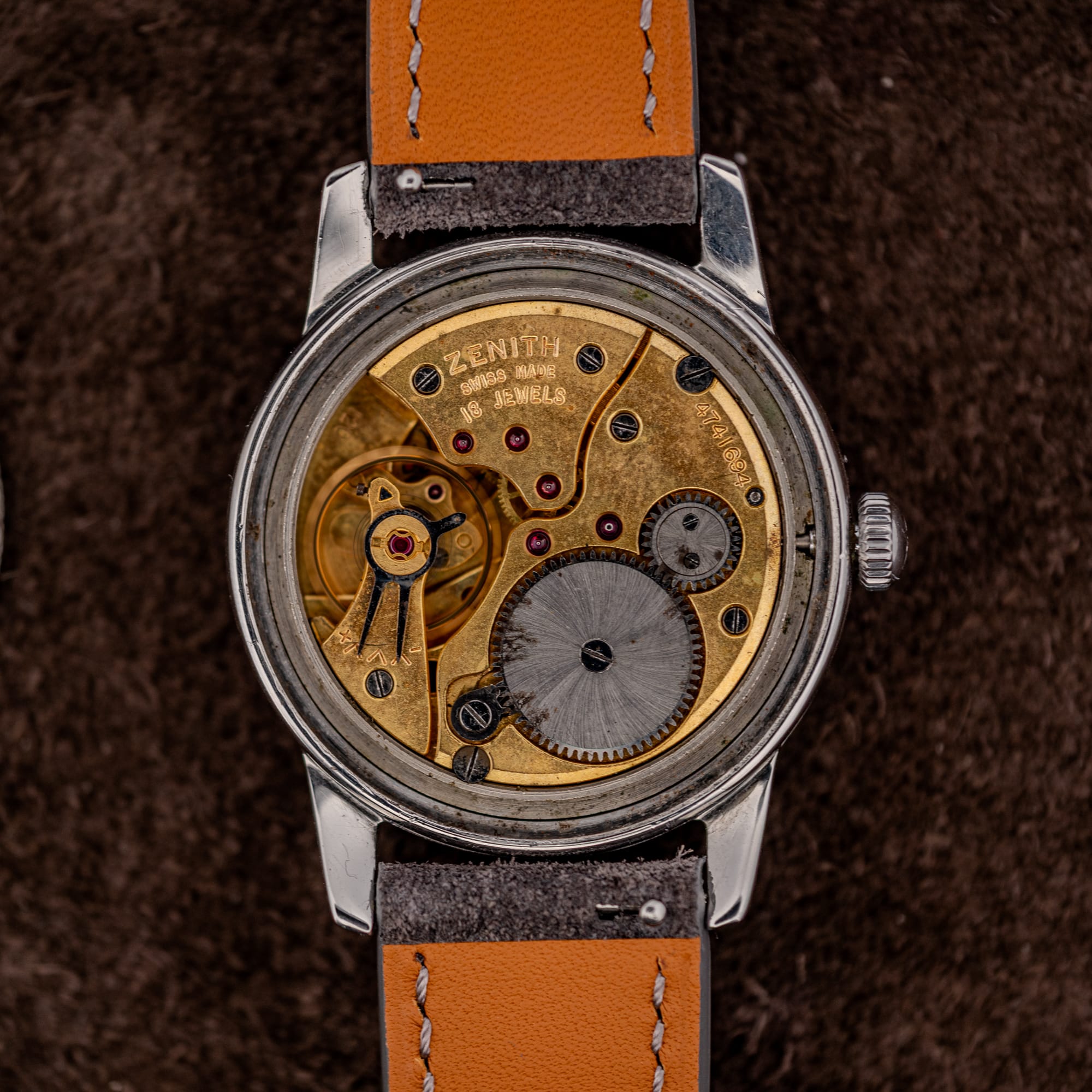
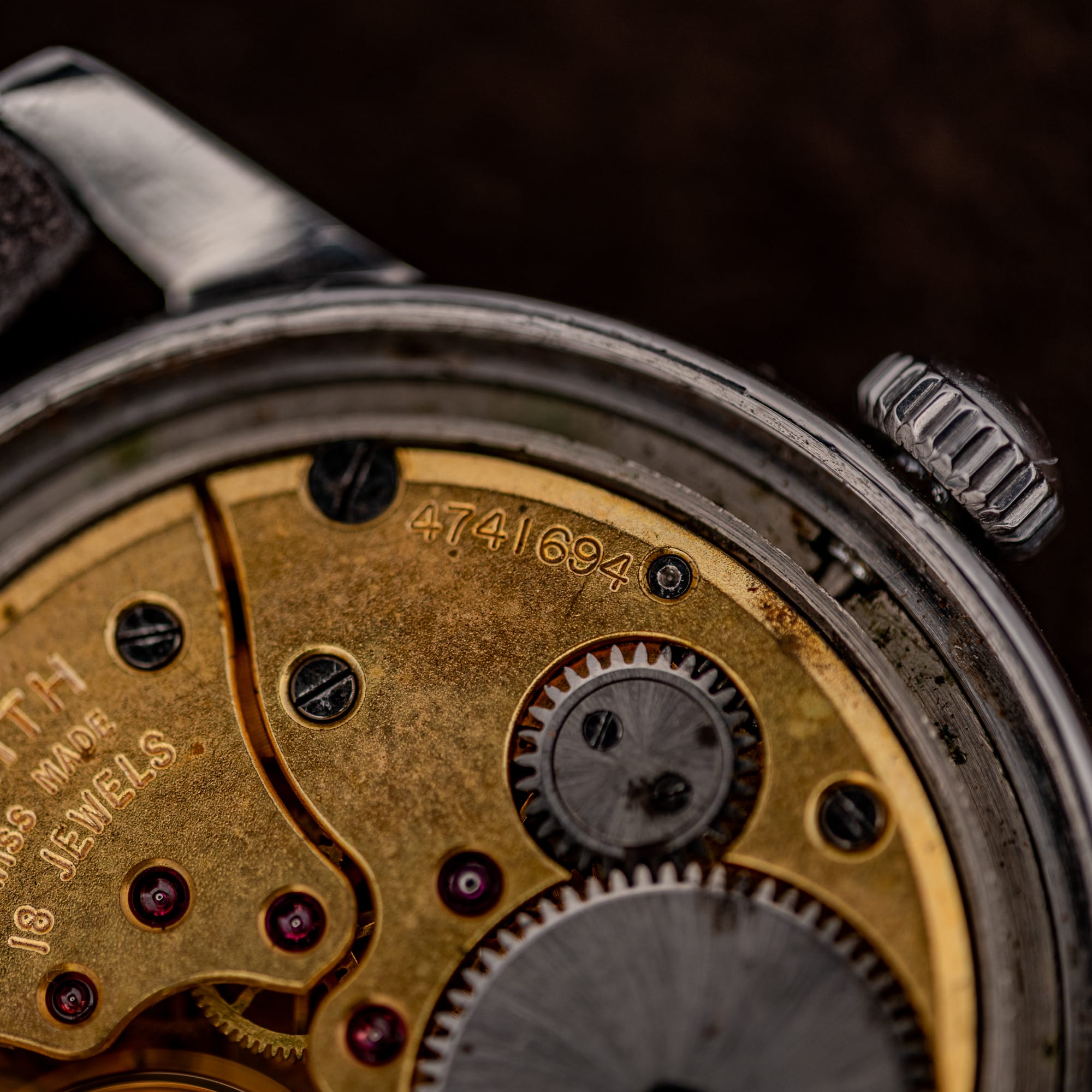
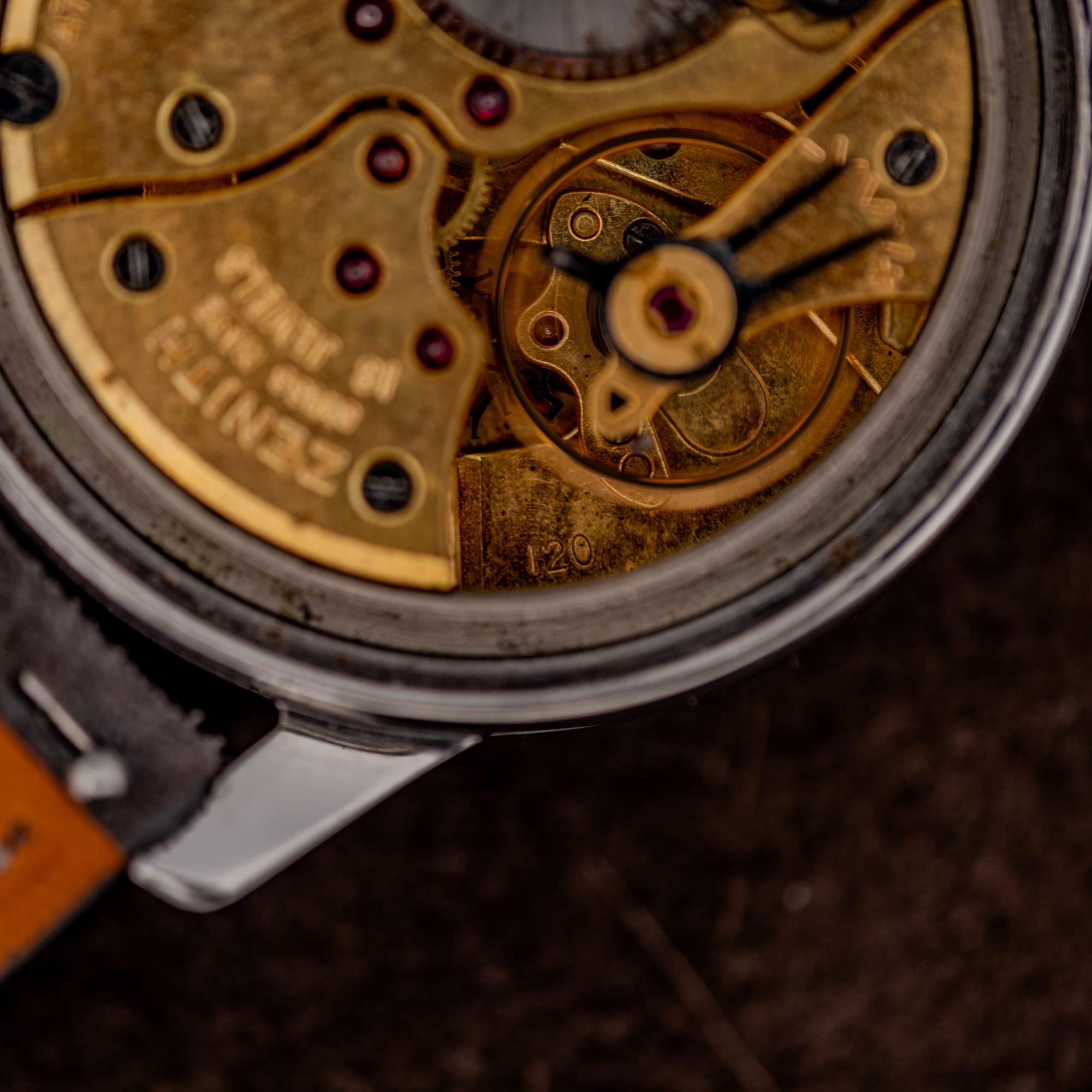
Underneath it, Zenith’s Cal. 120 is a serious movement. Introduced in 1953 and made by Zenith itself, it drives a sweep seconds hand and it hacks: with the crown pulled, the seconds hand stops dead, so the watch can be set to the second against a reference signal. Ranfft dates a documented example at serial 4750553 to 1958; this one is stamped 4741694, just under nine thousand earlier in the same run, 18 jewels, with the caliber number struck into the gilt plate below the balance.
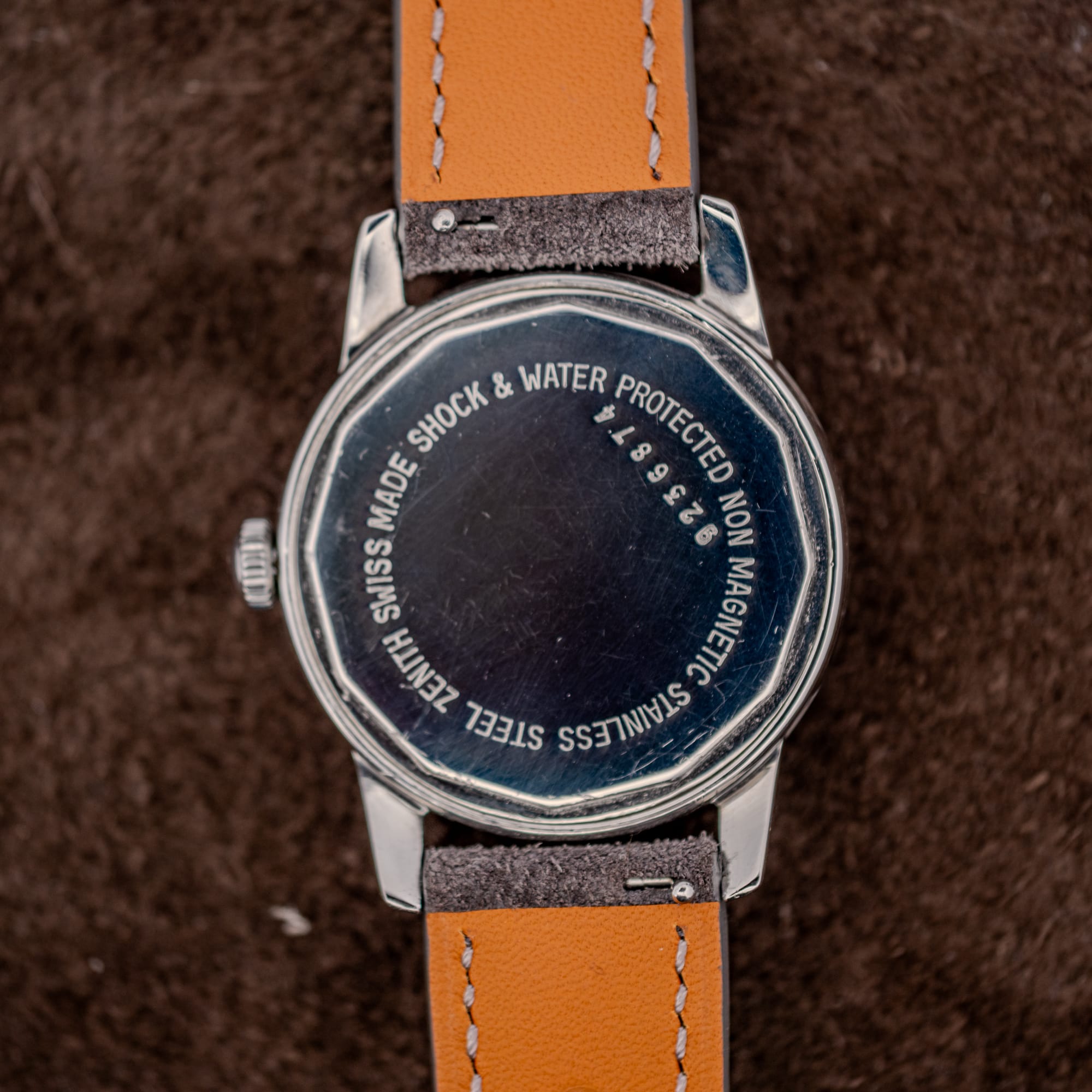
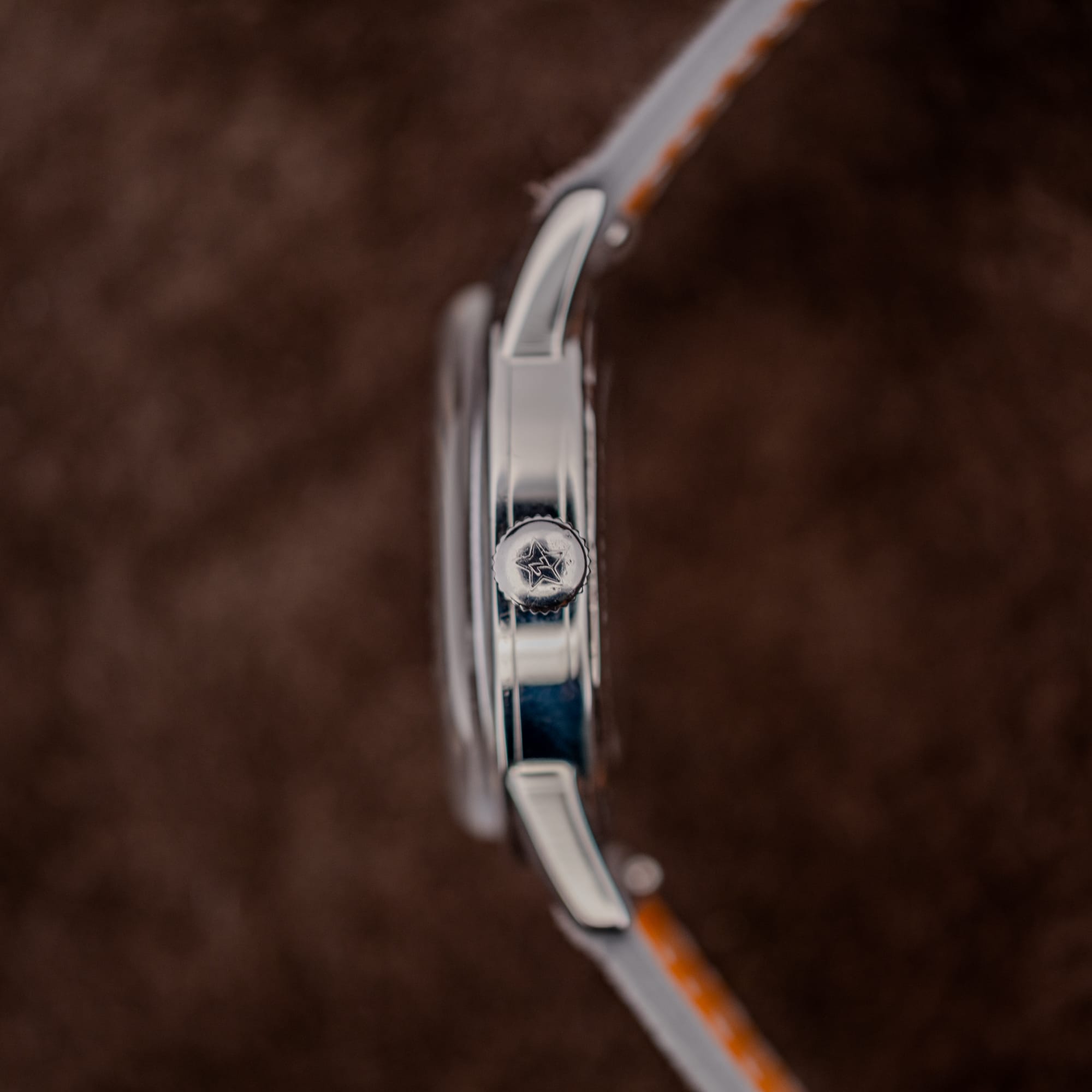
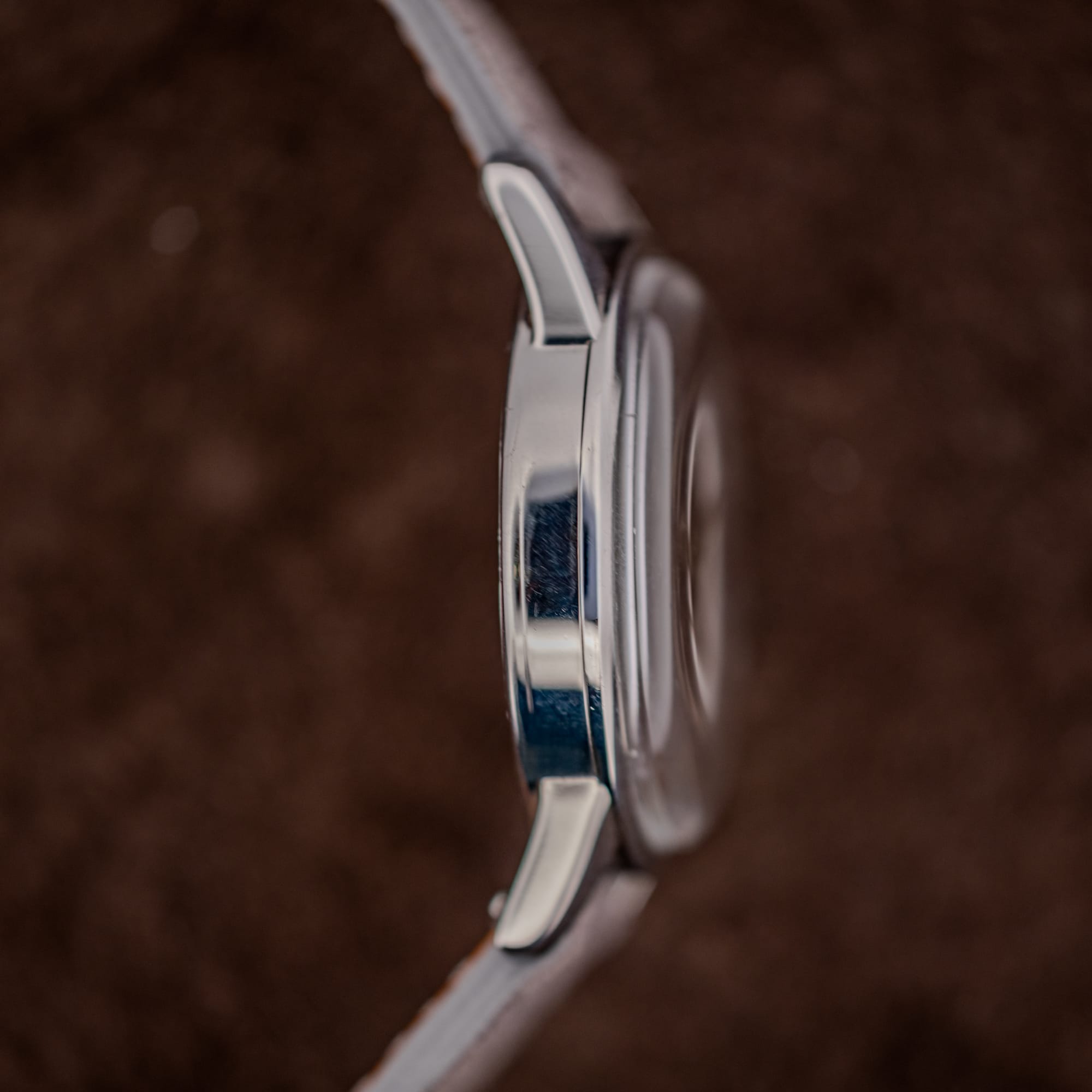
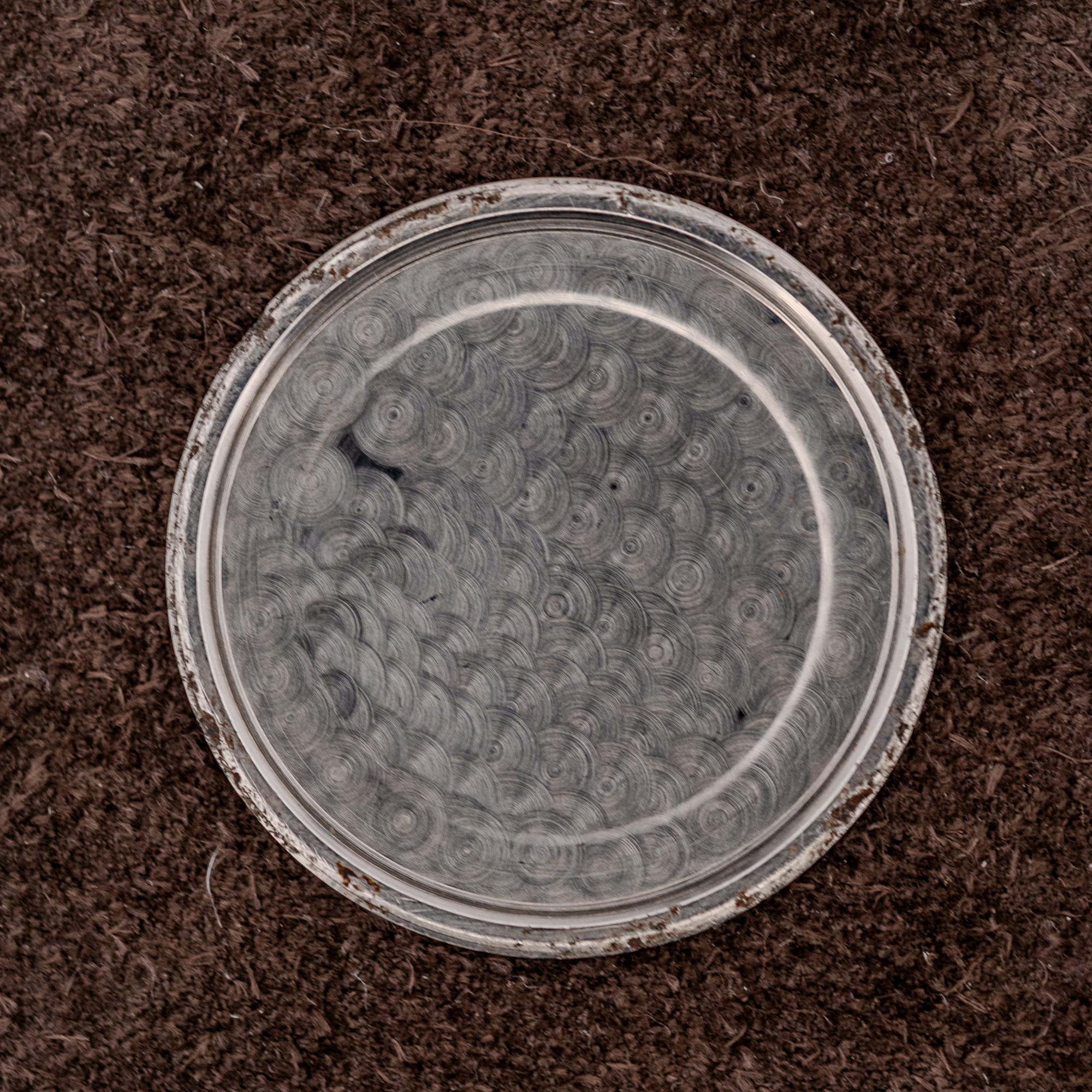
The case is stainless steel, 34.5 millimeters across and 42.5 lug to lug on 18 millimeter lugs, slim and mirror-polished, with lugs that turn down hard and bezel and lug edges still crisply defined. All twelve applied faceted batons are present and bright, the one at twelve split into three facets, though the lume plots between them have gone flat dark grey and several have shrunk or dropped away. The dauphine hands have oxidized to a mottled brown that lands, by accident, in the same family as the dial, and the domed crystal is lightly hazed and scuffed but uncracked. The crown still wears its Zenith star, worn soft. The twelve-sided snap caseback carries ZENITH SWISS MADE SHOCK & WATER PROTECTED NON MAGNETIC STAINLESS STEEL beneath a panel of honest hairline swirl, and inside were the orange-brown and grey-green deposits moisture leaves behind, along with the tarnish and light rust freckling that go with them. That is what our service addressed.
Serviced in-house at OTTUHR and backed by our 2-year mechanical warranty, on an anthracite Italian suede strap with our signed buckle. Nobody chose this color. Seventy years of light chose it, and it does not get to happen twice.