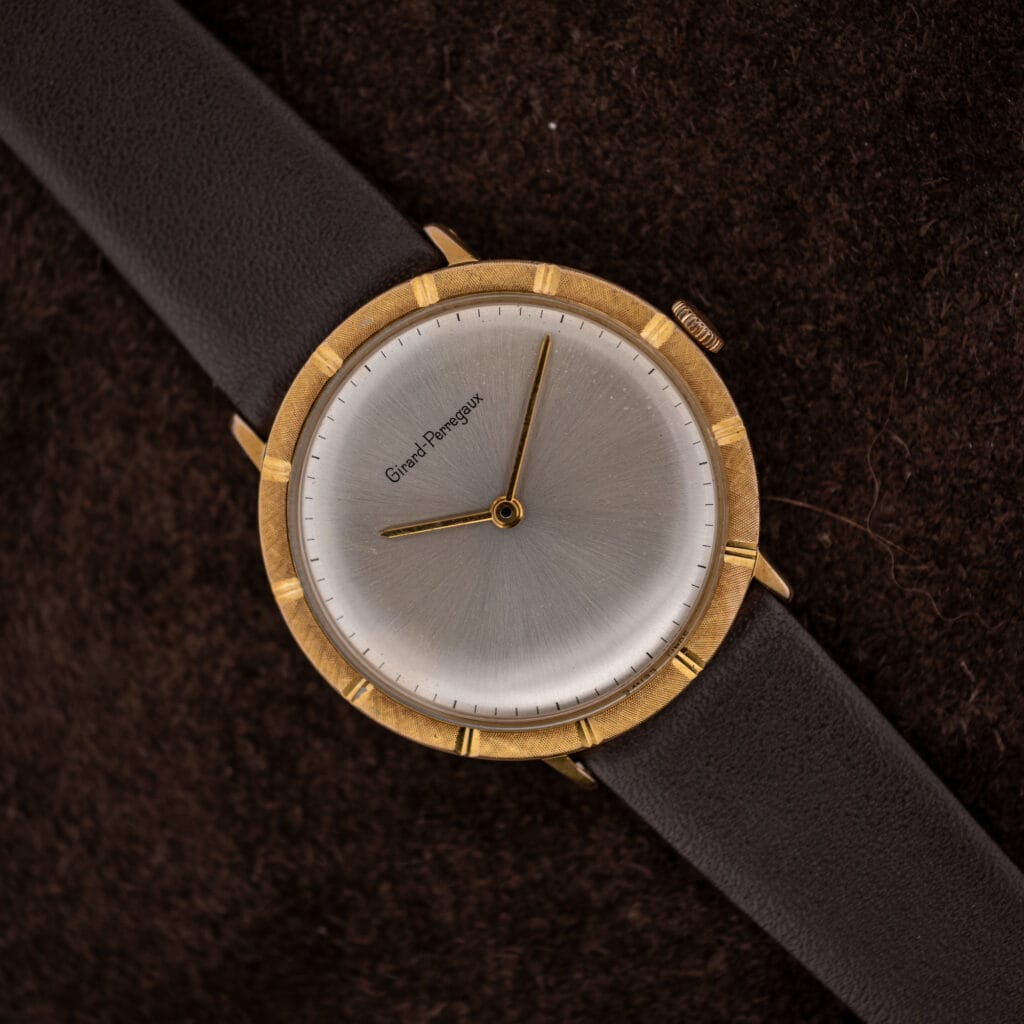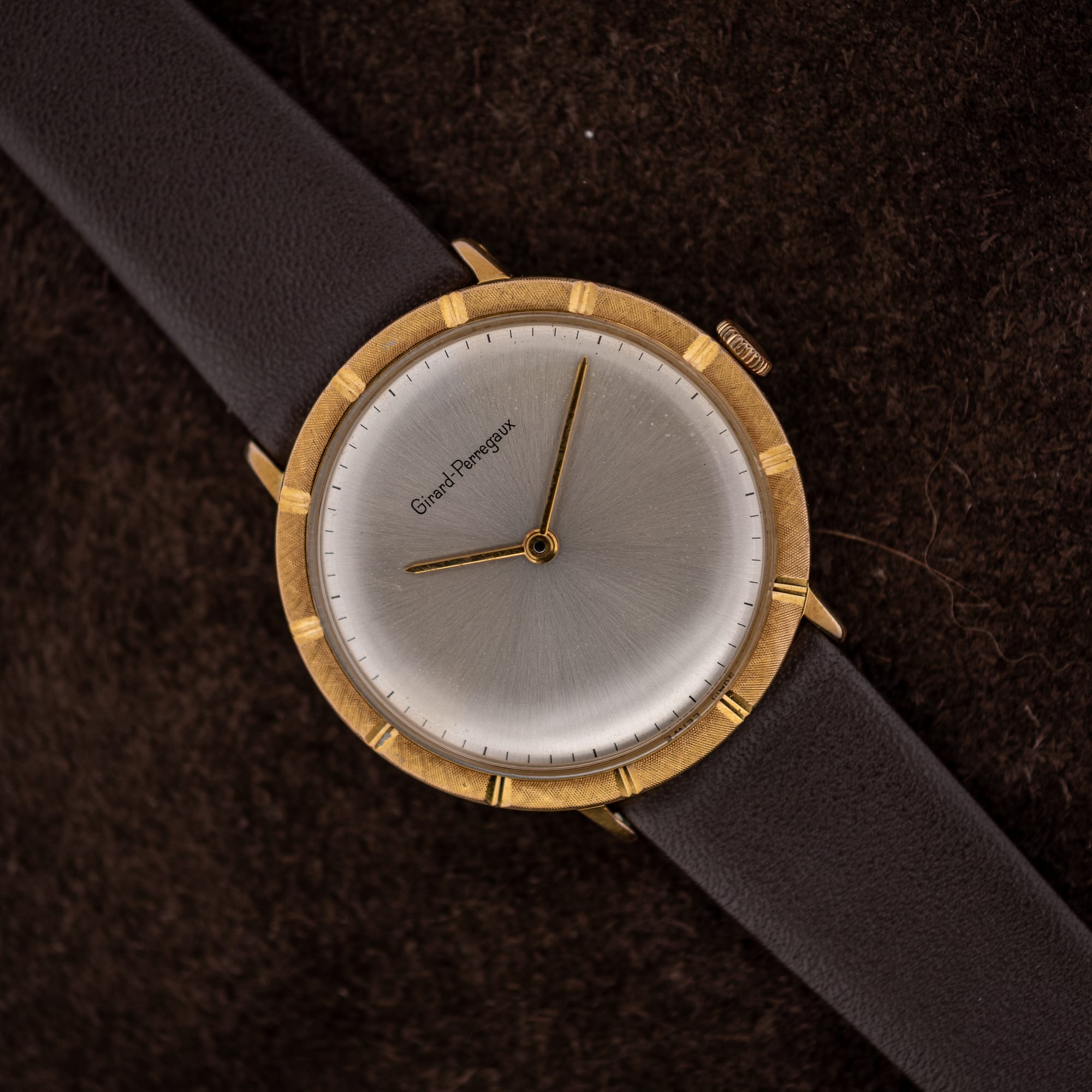
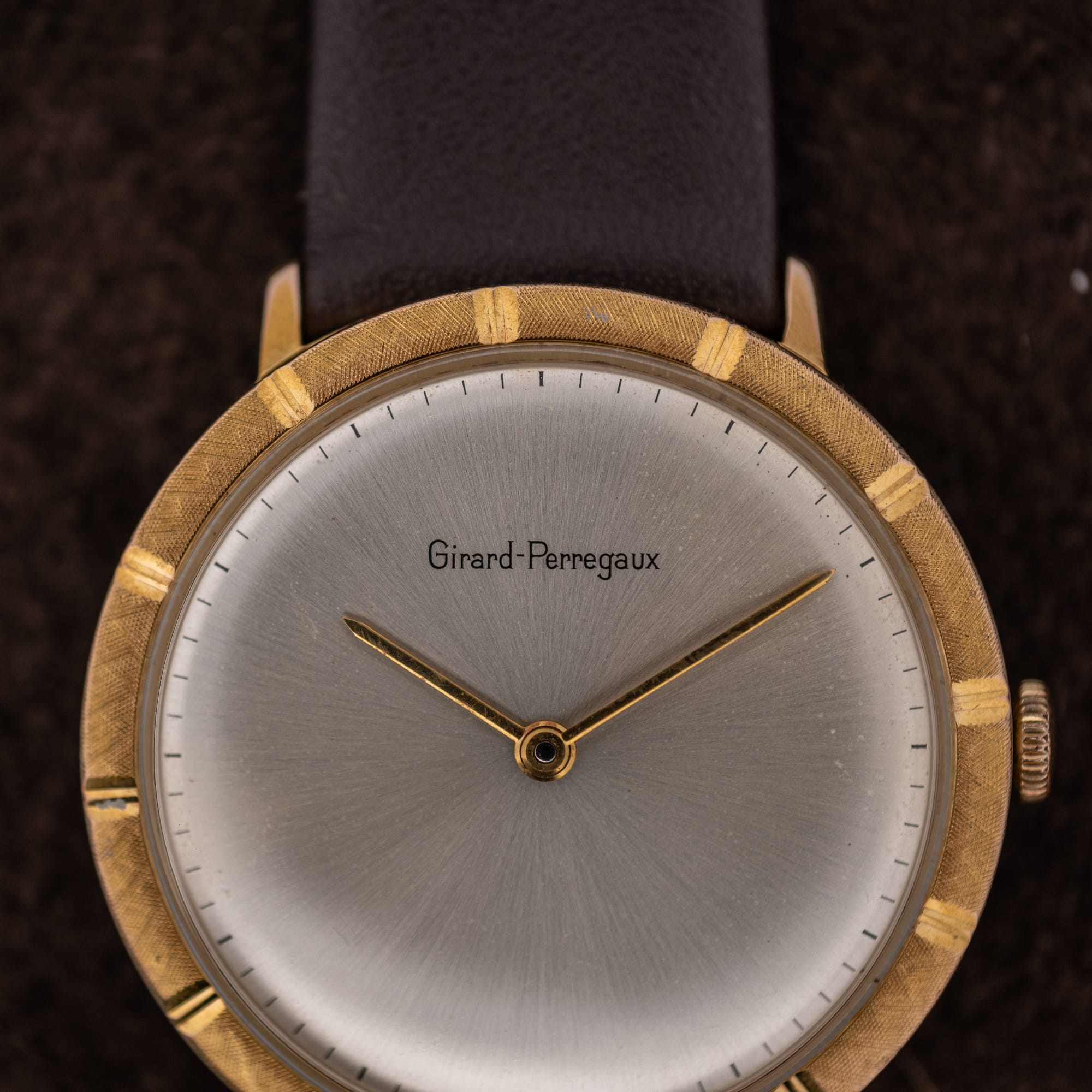
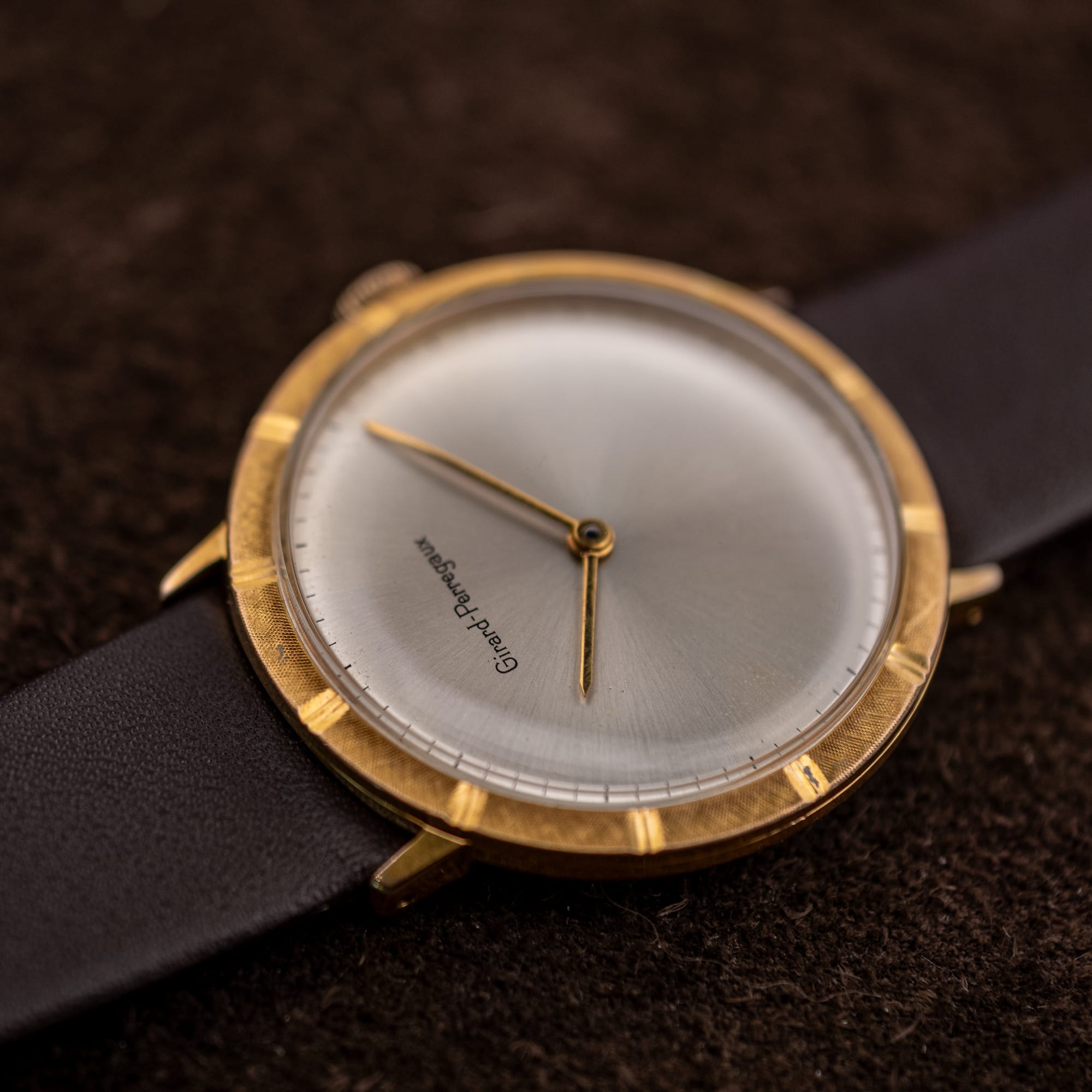
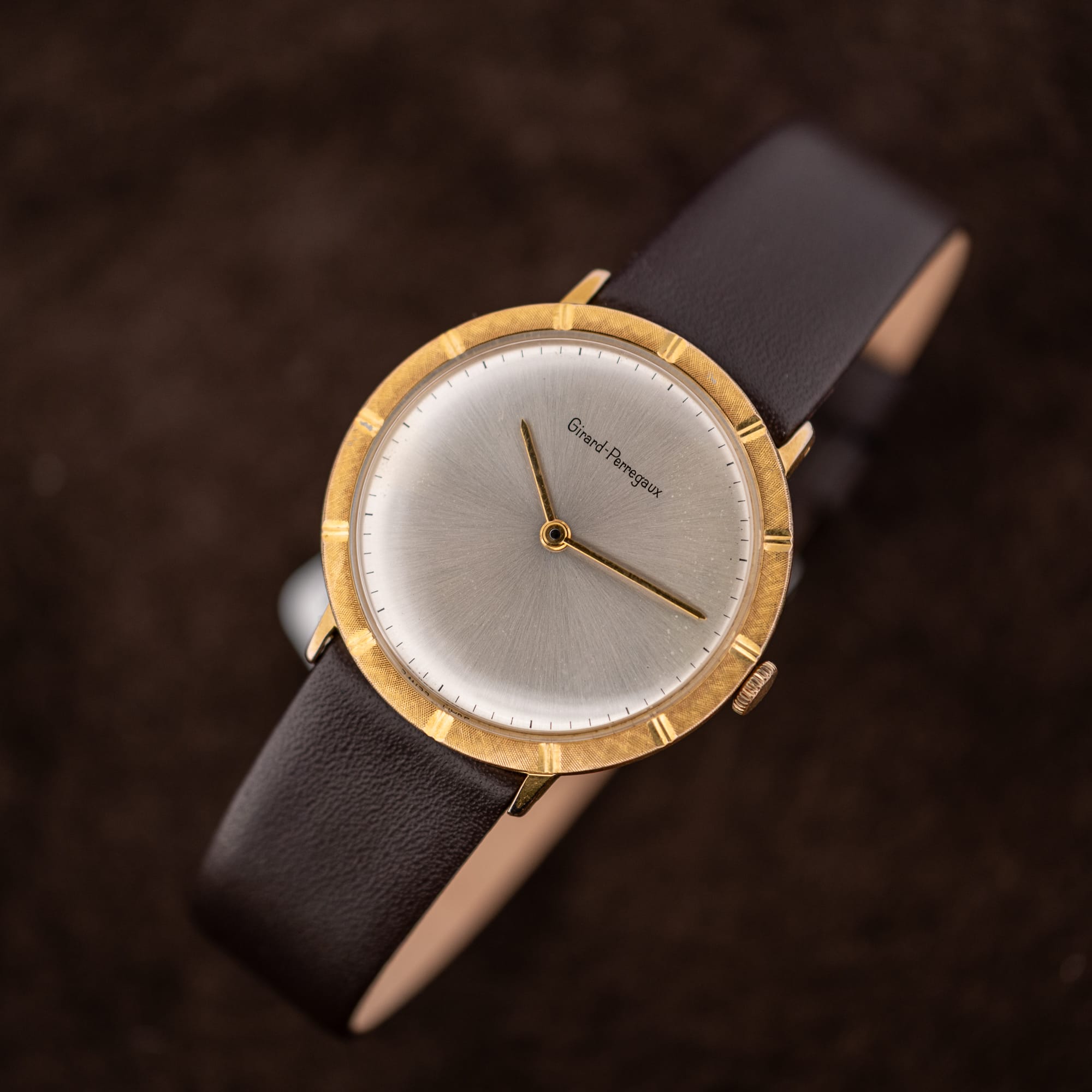
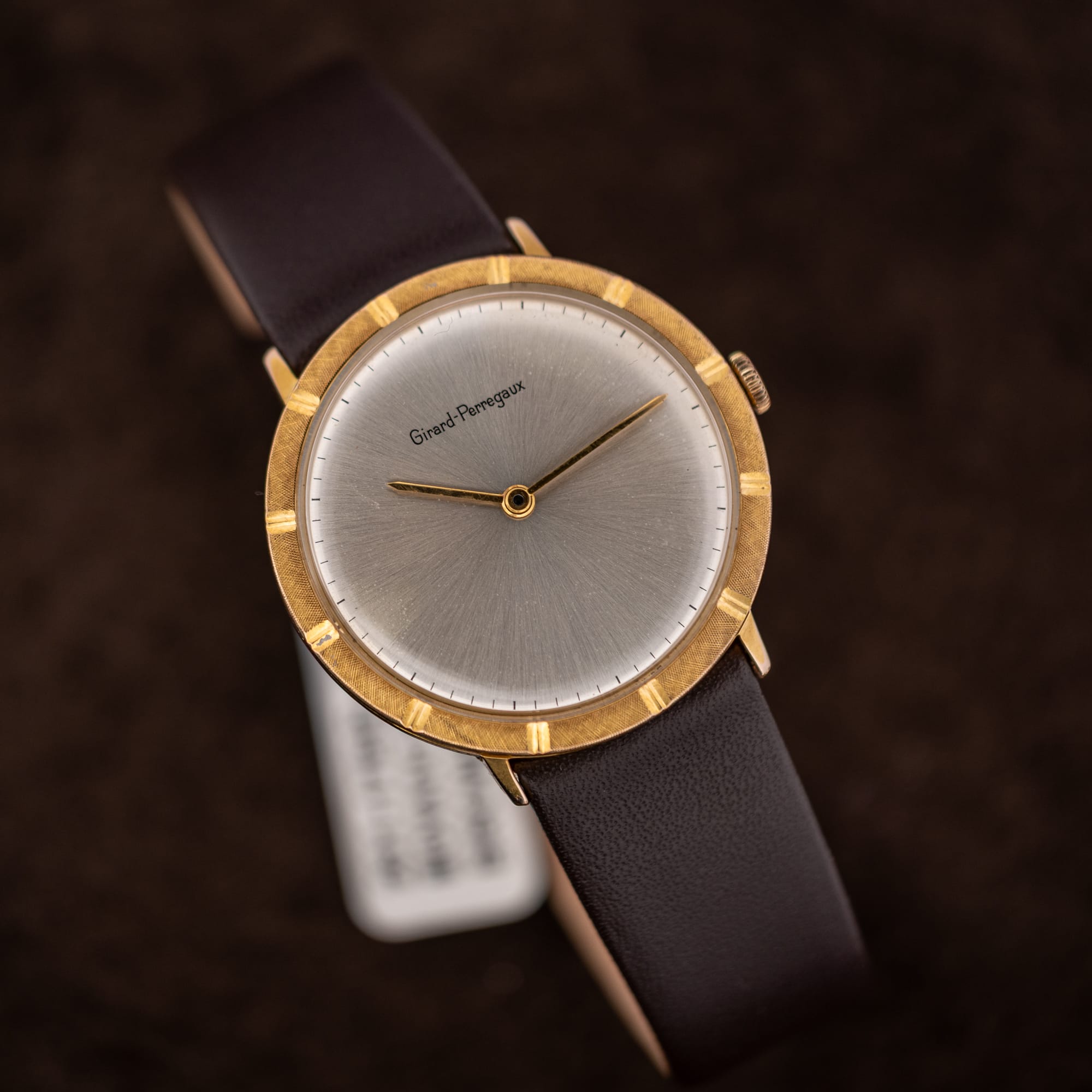
Constant Girard was a watchmaker in La Chaux-de-Fonds. Marie Perregaux came from a watchmaking family in Le Locle, over the ridge in the next valley. They married in 1854, and by 1856 both surnames stood over a single workshop as one name. Not many watch houses are named after a wedding, and that joined name is the only thing printed on this Girard Perregaux sunburst dial. No numerals, no applied markers, no model name. One word, two families, and a great deal of empty silver.
What the dial leaves out took a decision. A center seconds hand was the modern feature in the middle of the century, the one that spread from the 1940s onward as professionals wanted the seconds swept where they could read them, and it was never free: driving a seconds hand from the center means an extra wheel, an extra pinion, an extra bridge and a tension spring stacked into the movement. Leaving it off buys back thinness and quiet. Girard-Perregaux could obviously build the complication. The same house had taken the gold medal at the 1889 Paris Universal Exhibition with a tourbillon pocket chronometer under three gold bridges, so the restraint on this dial comes out of the house’s chronometry culture rather than a fashion one. To us, a dial like this is a house declining to say more than the hour and the minute.
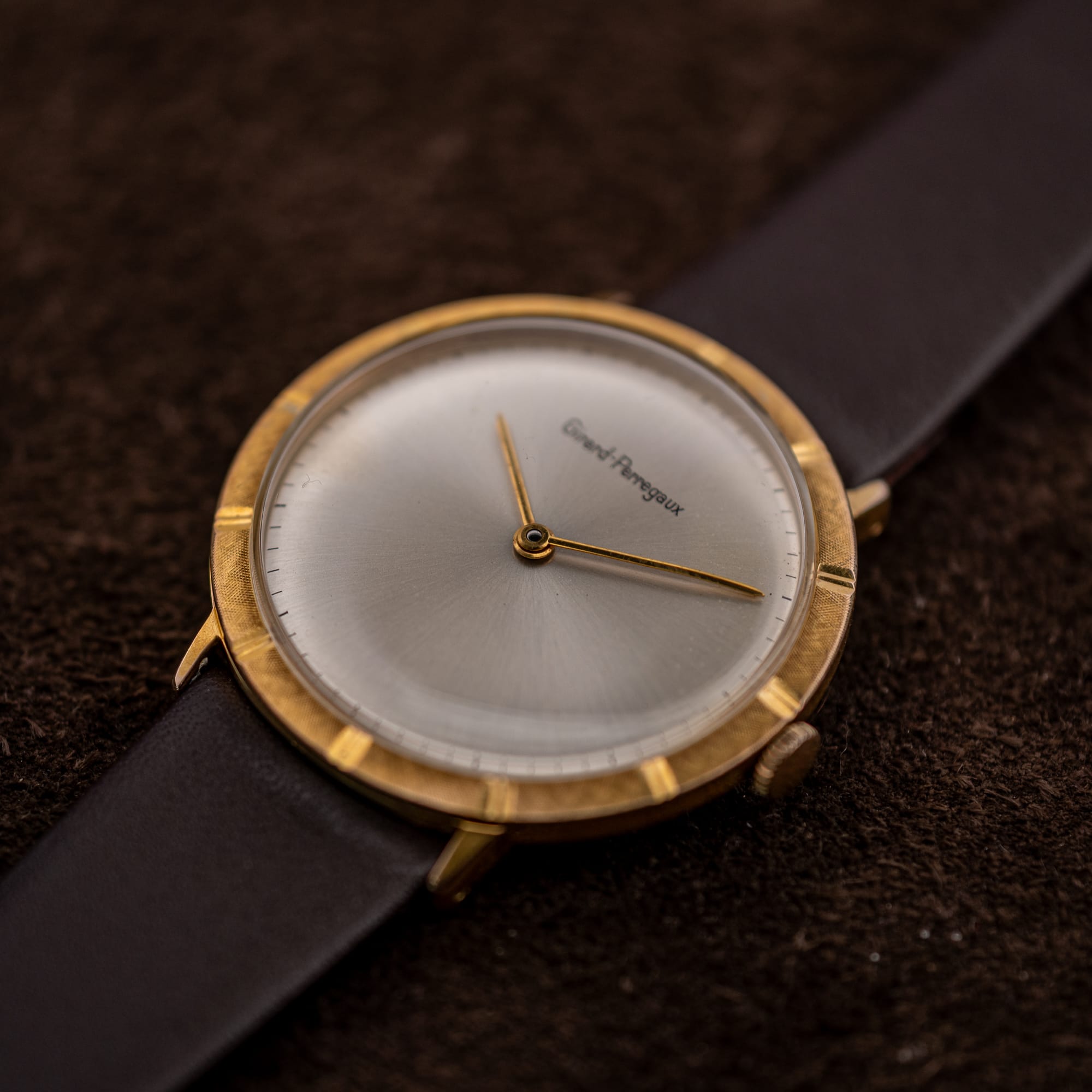
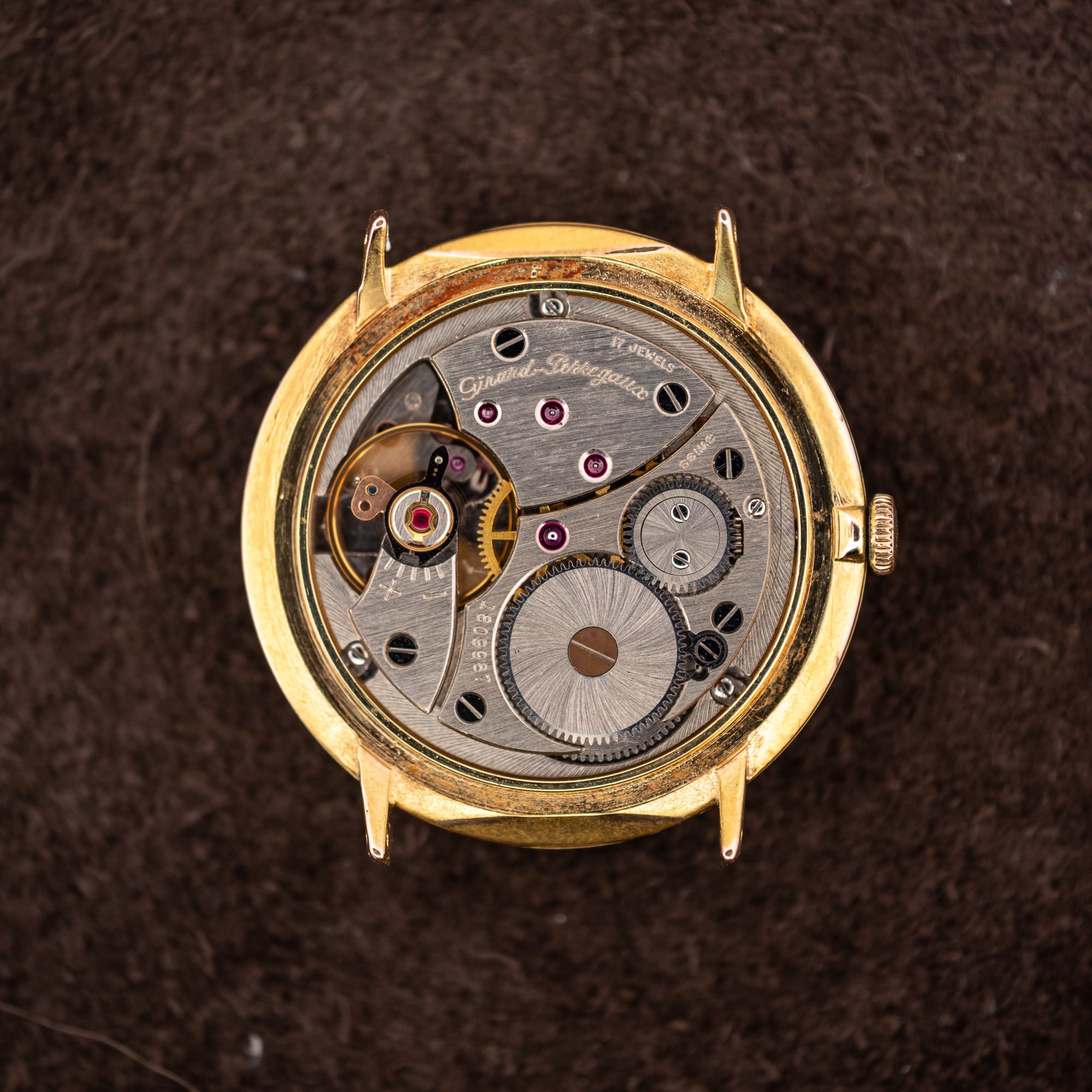
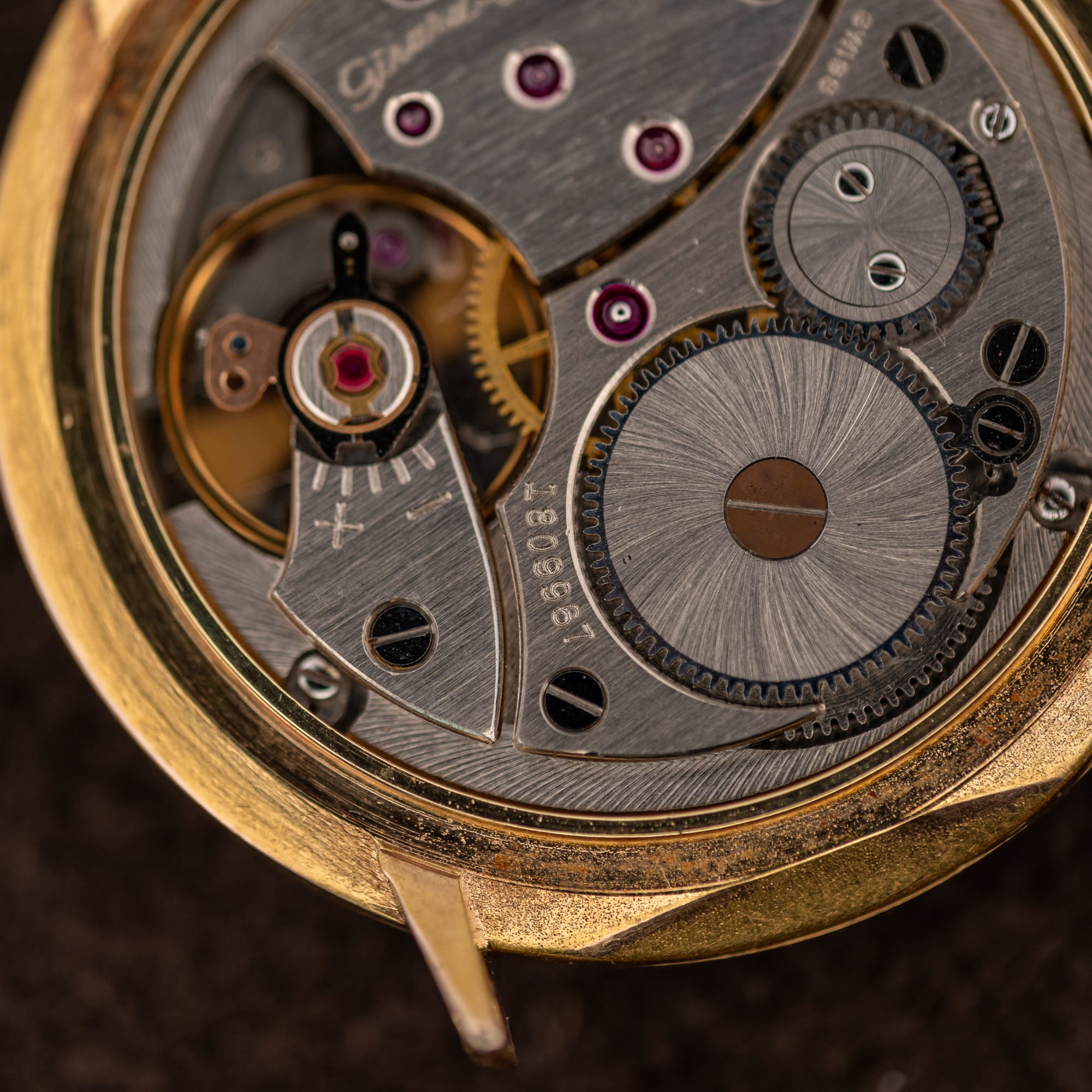
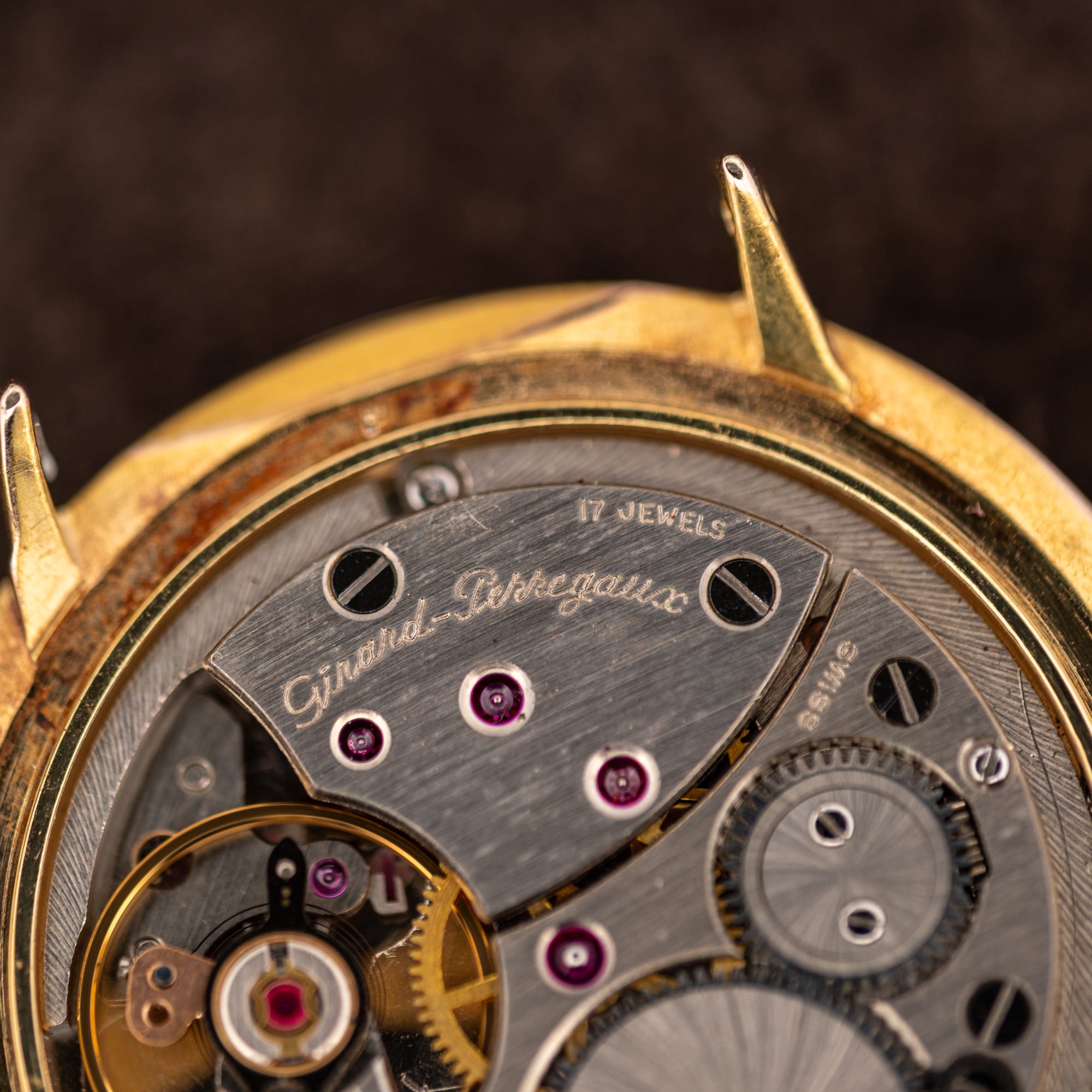
Photographed flat, it reads as plain silver, and we have not found an angle that shows what it actually does. Tilt the watch a few degrees and the sunburst opens, fine rays fanning from the center, brightening and dimming as it moves, doing the work the missing hand would have done. The architecture is spare and deliberate: a raised flat chapter ring carrying printed baton minute marks, longer at the five-minute positions, then a step down into the sunburst field. The movement agrees with the dial. It is hand-wound, seventeen jewels, signed Girard-Perregaux in script across the bridge with the Swiss origin marking along its edge, and there is no center seconds pinion and no seconds bridge, because the dial never asked for one.
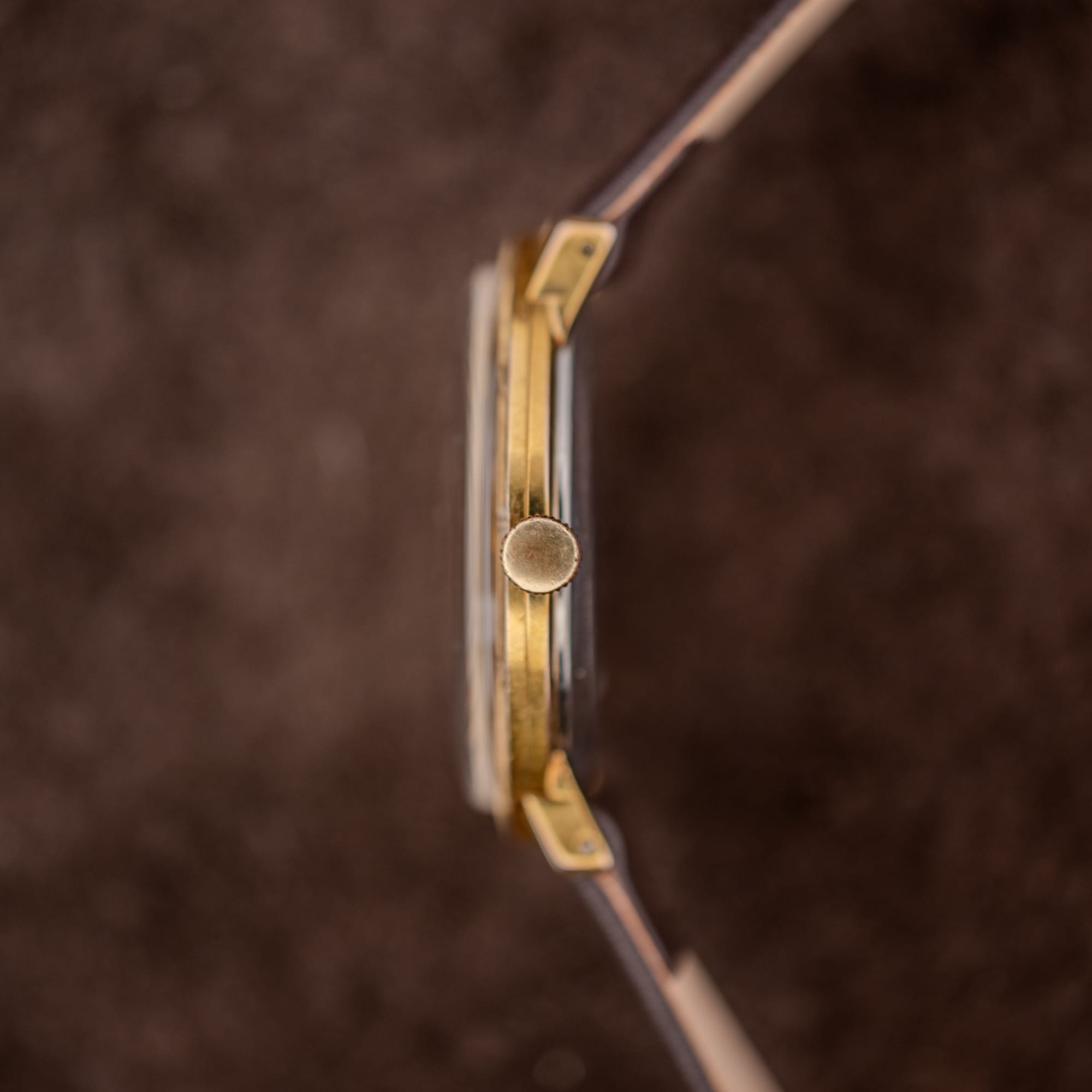
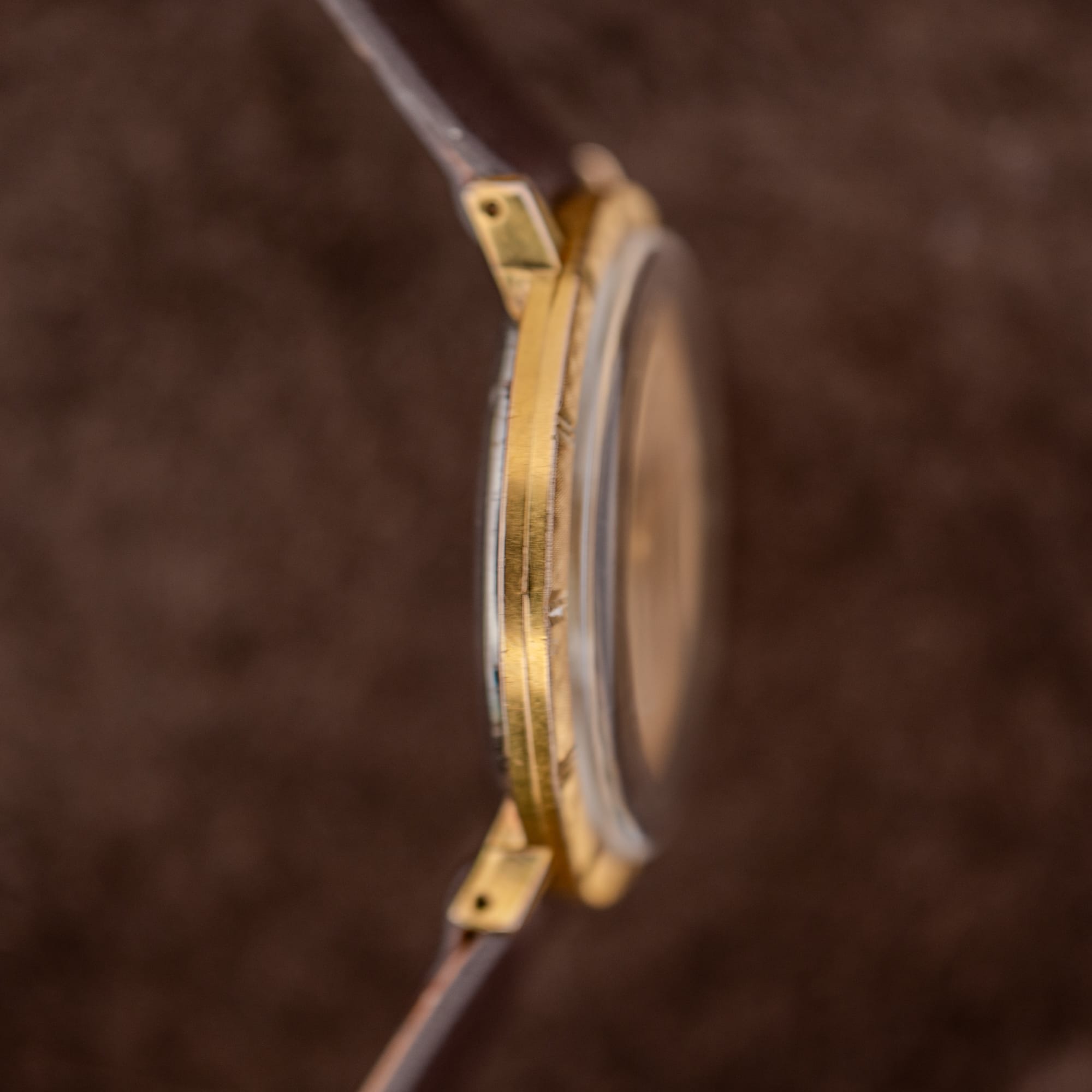
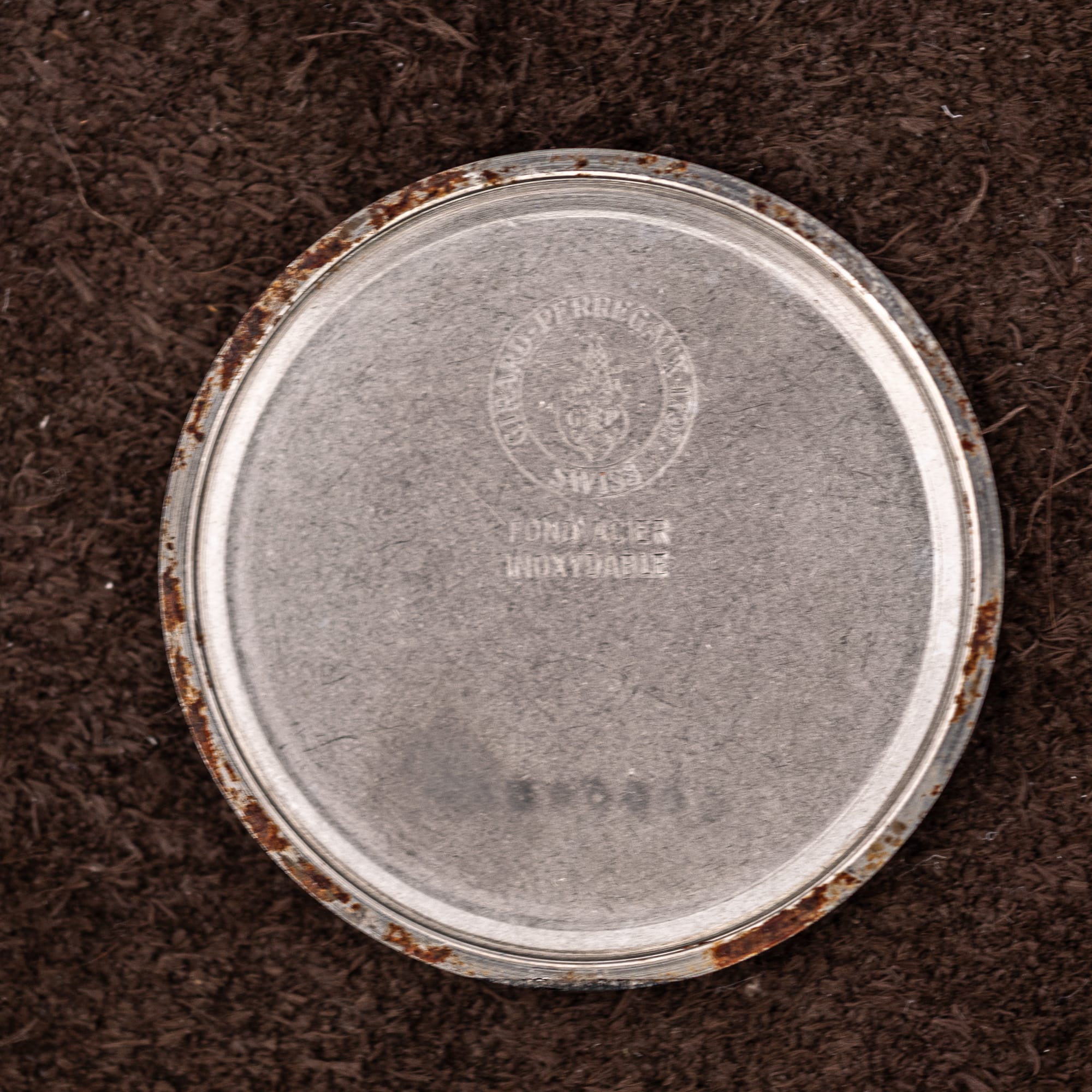
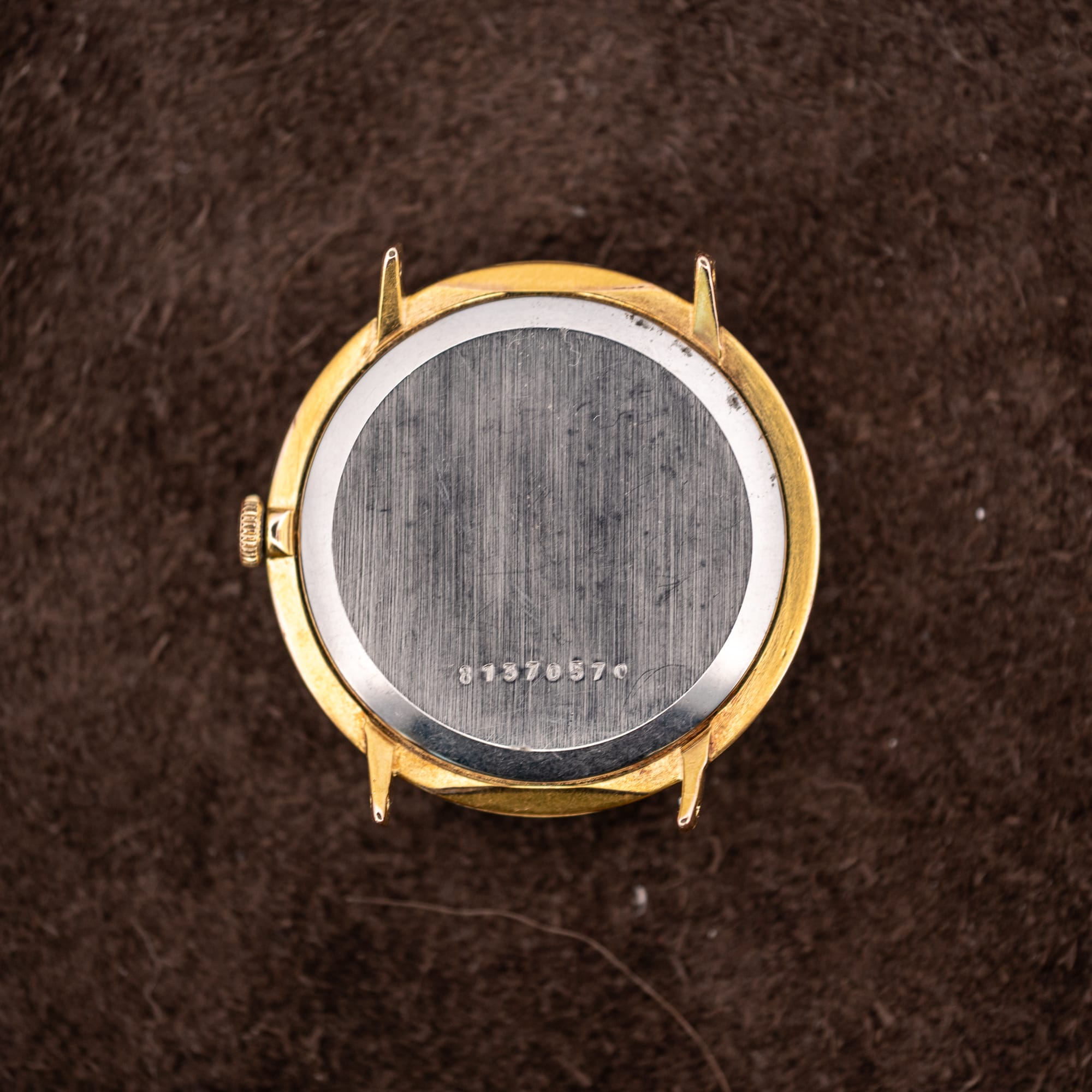
The case runs 33 millimeters across, gold plate with a stainless steel back, round, with slim faceted lugs that turn down hard and a small fluted crown at three. The bezel is finely textured and cut with twelve polished notches at the hours, and it is worn, which we would rather name than photograph around. High points on the bezel are brightened and flattened where decades of cuffs went over them. The crystal carries a haze band and fine scratching that angled light finds immediately. Plating has thinned to brighter metal at the lug tips and taken a coppery cast around the crown tube, and the inside of the steel back, stamped FOND ACIER INOXYDABLE, has significant rust around its rim and lip. That corrosion carries onto the case rim and the metal around the lugs, and the outer face of the back is densely scratched. The dial came through all of it clean and even, with no staining and no lifting.
Serviced in-house at OTTUHR and backed by our 2-year mechanical warranty, on a new brown leather strap with a plain tang buckle. It gives the hour and the minute, and treats everything past that as somebody else’s business.