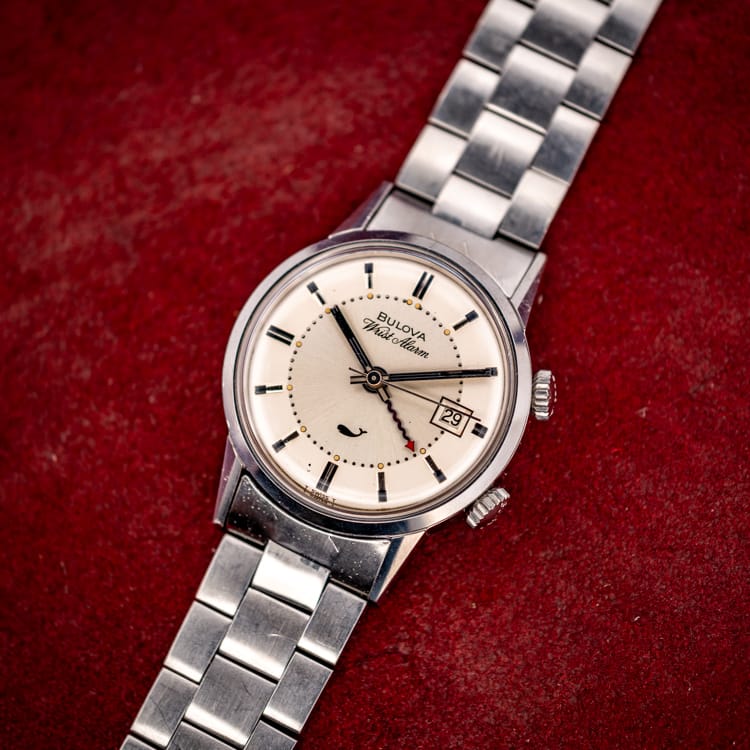

For many collectors, the name Bulova conjures the Accutron and its tuning-fork hum, the electronic trick that made the brand a byword for the future. This is the other Bulova, and in our opinion the more charming one. This Bulova Sea King Wrist Alarm is purely mechanical, and it does not hum. The upper crown winds a second mainspring, the red-tipped hand marks the hour, and at the appointed minute that spring lets go and buzzes against the caseback, a small mechanical event felt as much as heard. We have handled our share of vintage alarm watches, and this one is still among the more honest ways to live with the complication.
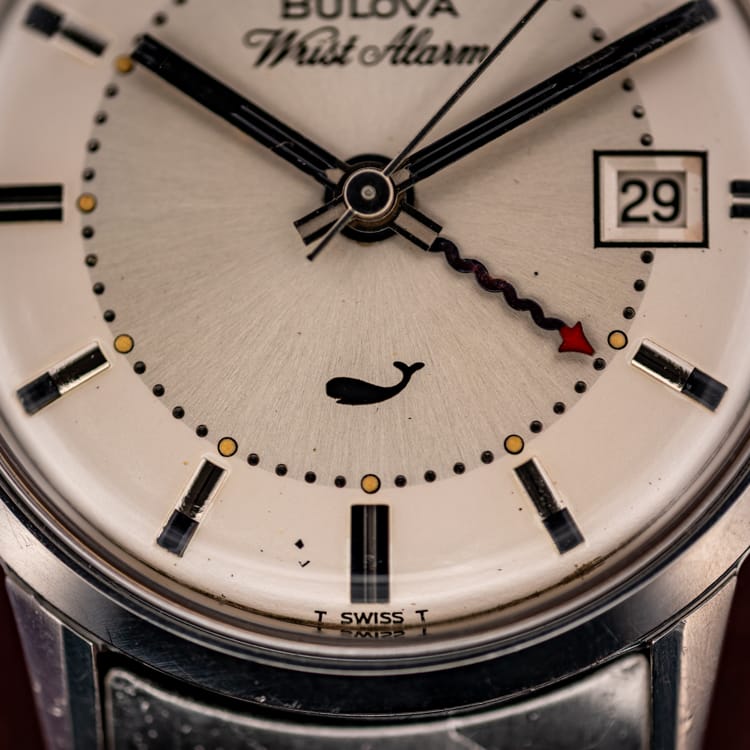
The Sea King name arrived in 1959 as Bulova’s waterproof line, and it wore an emblem almost no other maker would have used as a signature: a whale, printed low on the dial. For most of its run the Sea King was a time-only or date dress watch. The Wrist Alarm was something else, a real complication, and for a short stretch at the end of the 1960s Bulova married the two, dropping the alarm into a Sea King case and leaving the whale where it had always swum. Those crossover pieces were built in modest numbers and did not linger in the catalog, which is most of why they surface so rarely now.
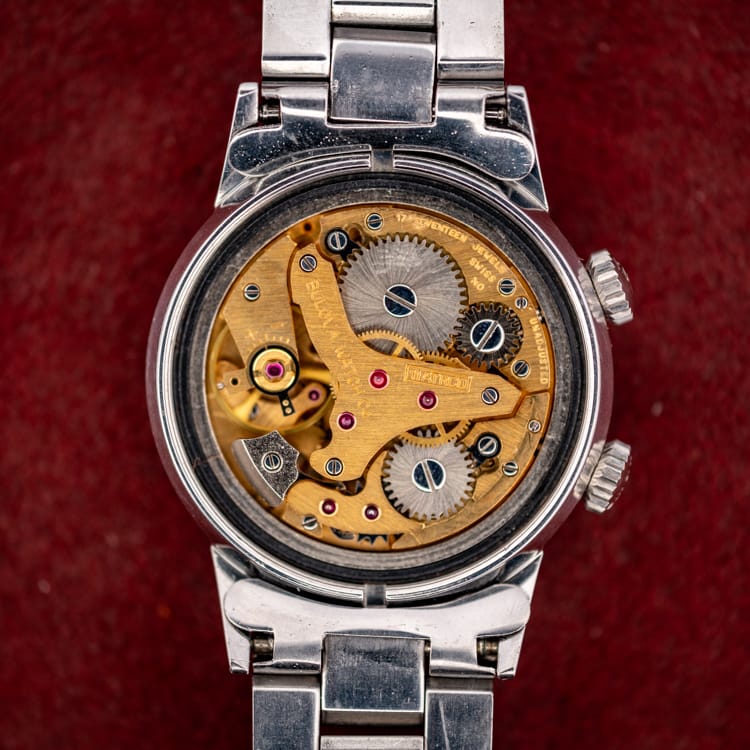
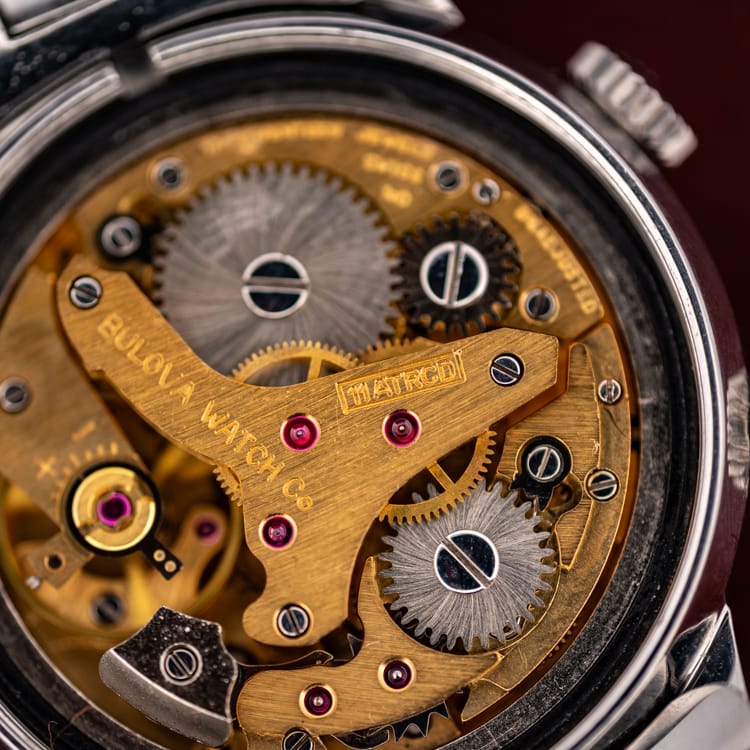
Under the dial sits caliber 11ATRCD, signed BULOVA WATCH Co across a gilt bridge with the caliber number boxed beside it, seventeen jewels, marked SWISS and UNADJUSTED. Vulcain opened the wrist-alarm field in 1947 and the Jaeger-LeCoultre Memovox soon made it famous, but Bulova brought the trick to a far wider American audience. What sets an alarm movement apart is a second going barrel: two mainsprings live inside, one driving the time and one storing the energy for the buzz, both wound by hand through their own crowns. Bulova built this Swiss family from the mid-1950s into 1970, and the T in the caliber code marks the version that carries a date. There is no quickset. The date is advanced the old way, by walking the hands through the late evening until it turns.
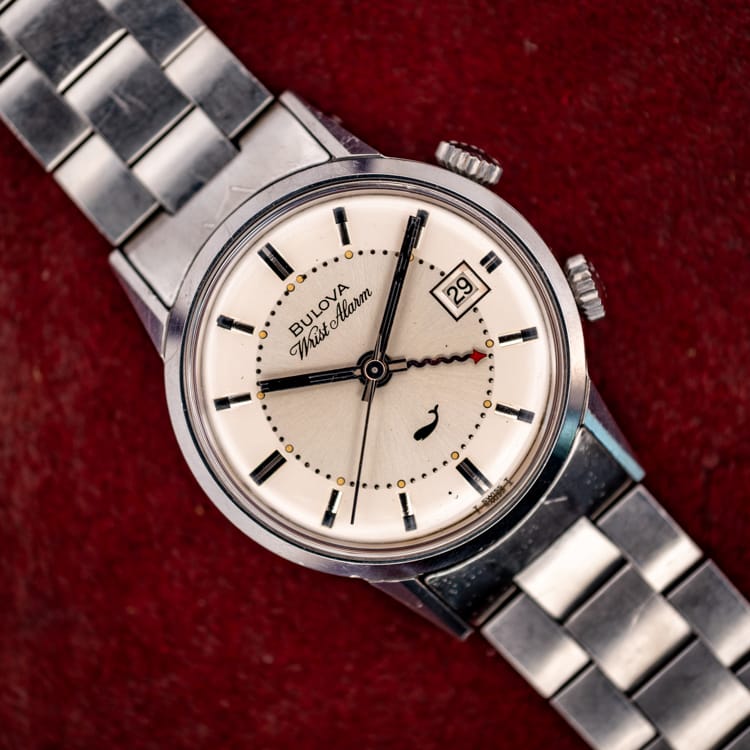
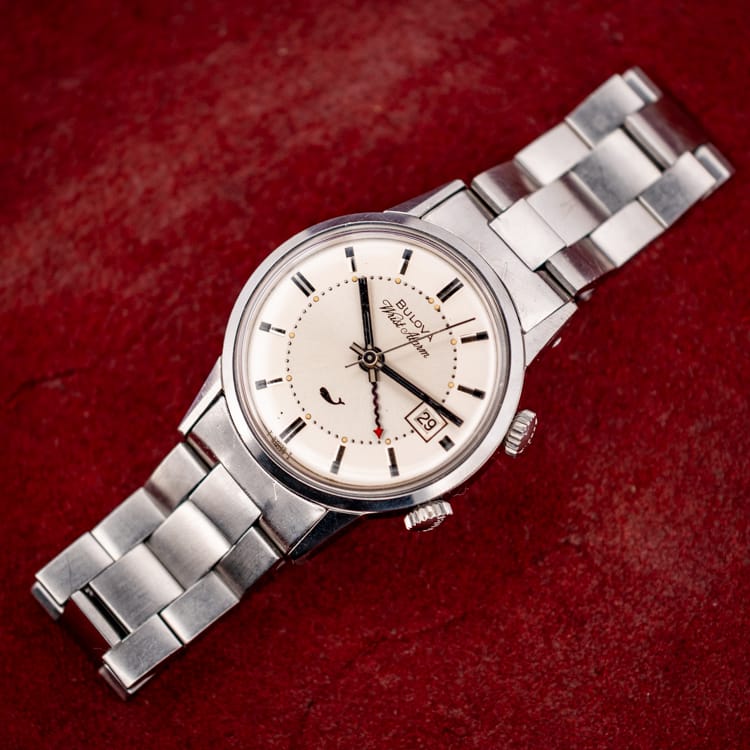
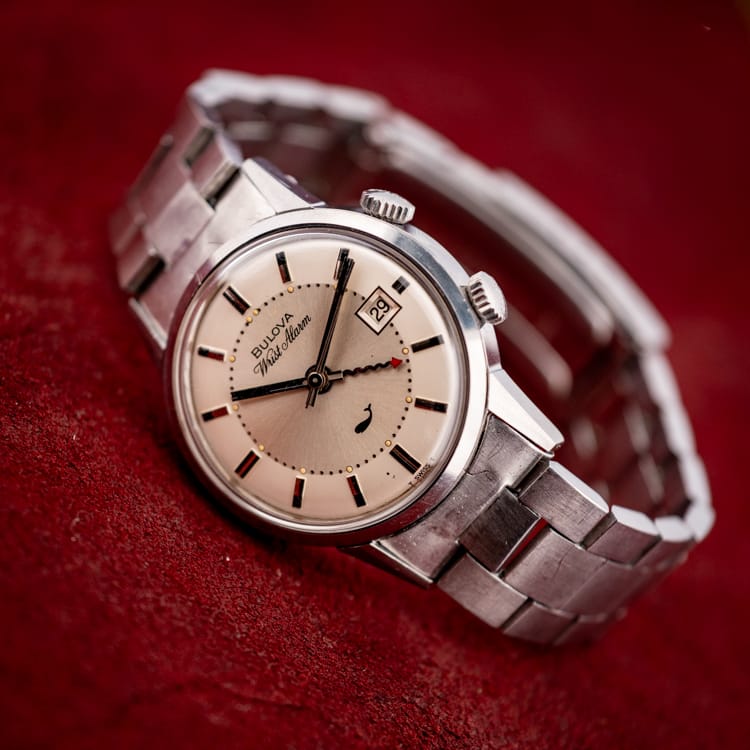
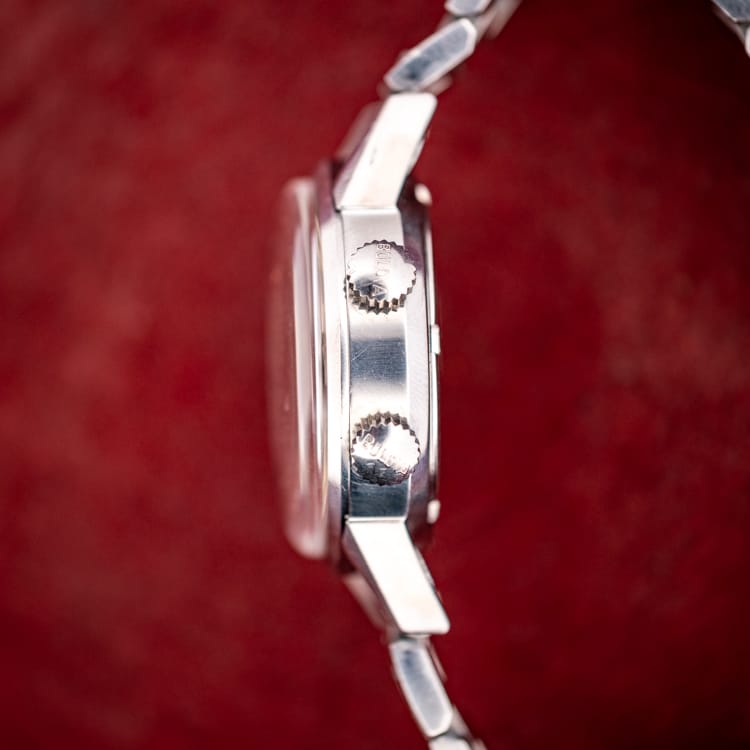
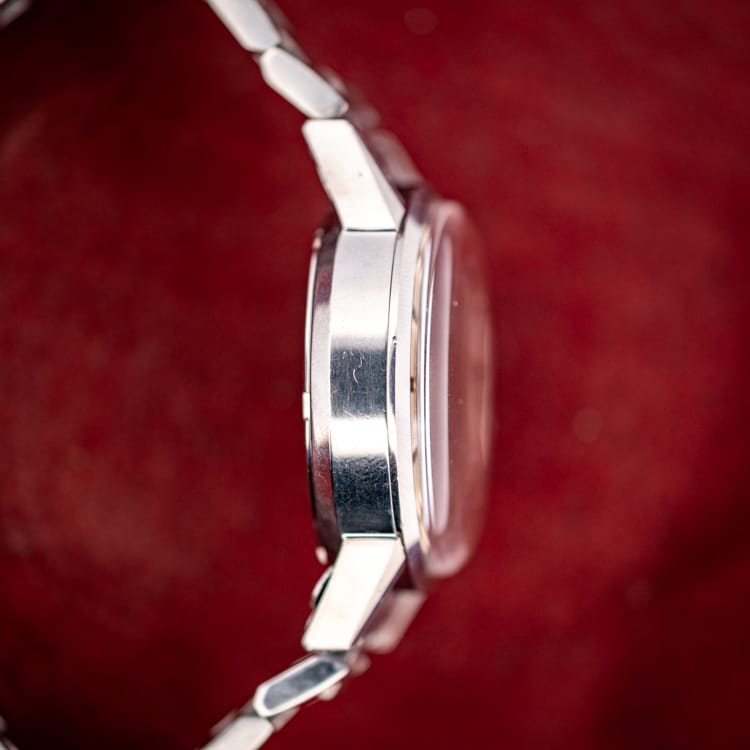
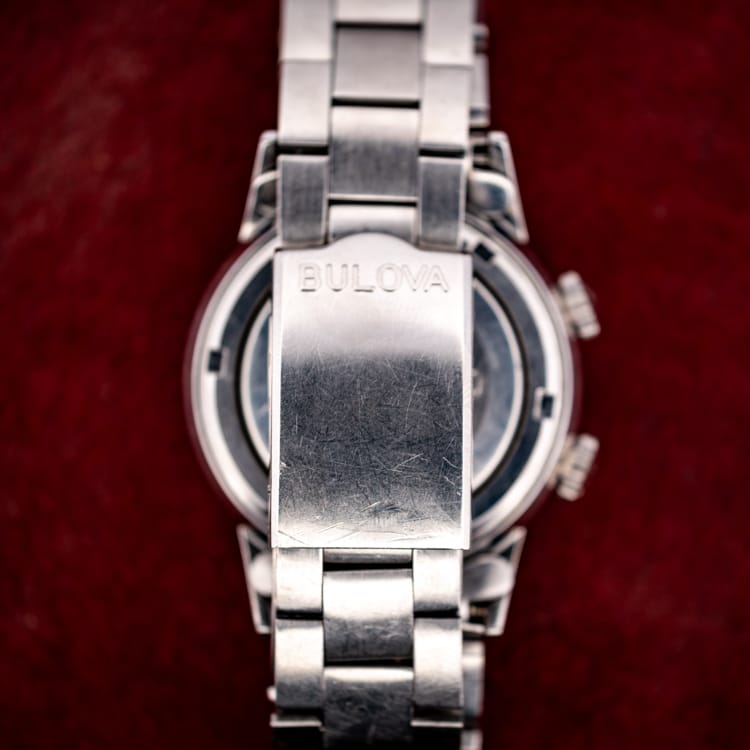
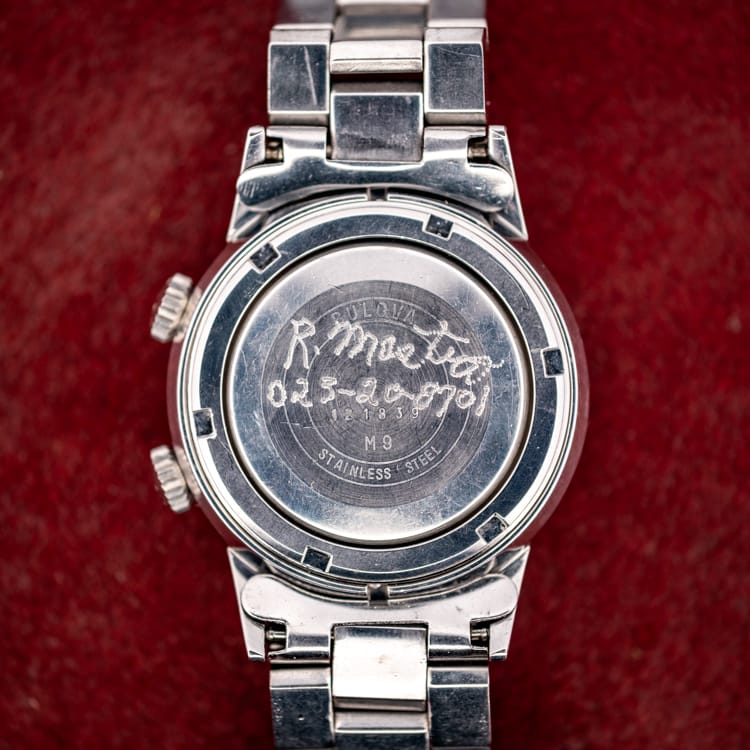
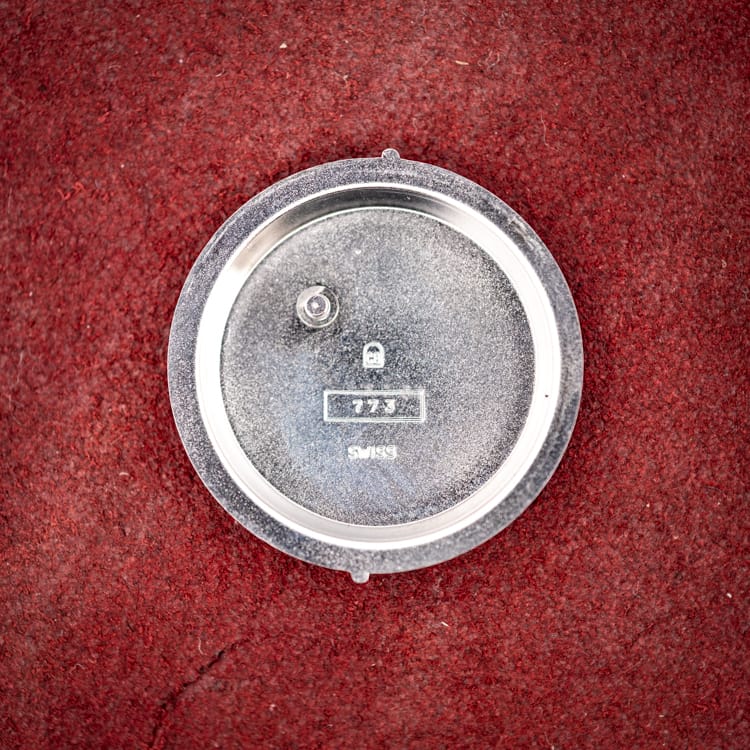
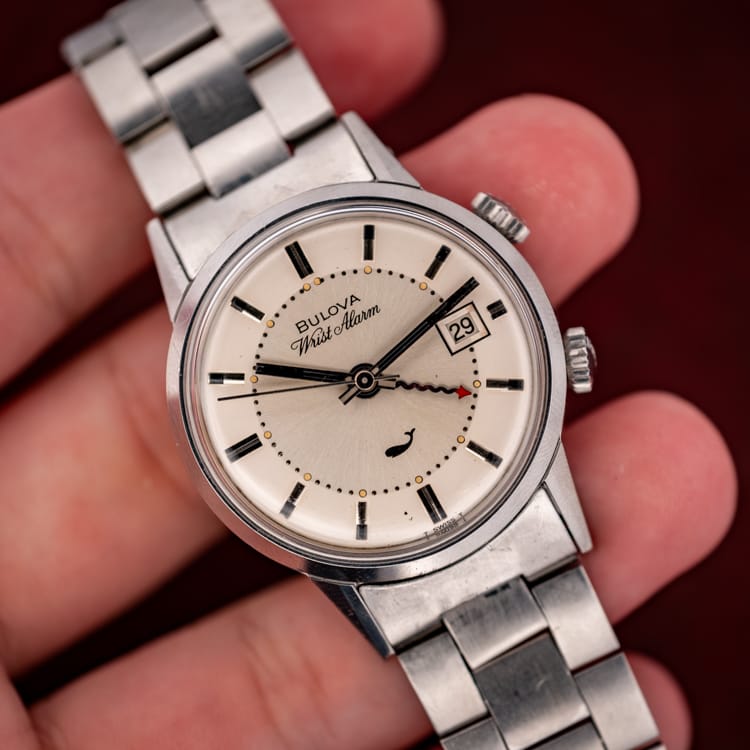
The case tells the rest. Stainless steel, 34.5mm across and 43mm from lug to lug on 18mm lugs, a proper mid-century footprint that sits close to the wrist. Two knurled crowns share the right flank, the upper commanding the alarm, the lower winding the time and setting the date. The inner caseback carries a boxed reference 773 over SWISS; the outer back is stamped BULOVA and STAINLESS STEEL and wears the date code M9, which in Bulova’s shorthand reads 1969. A previous watchmaker scratched his name and a service number into the steel, the sort of quiet provenance we would never polish away. The back shows fine hairlines from real decades of wear, and we have left all of it as found.
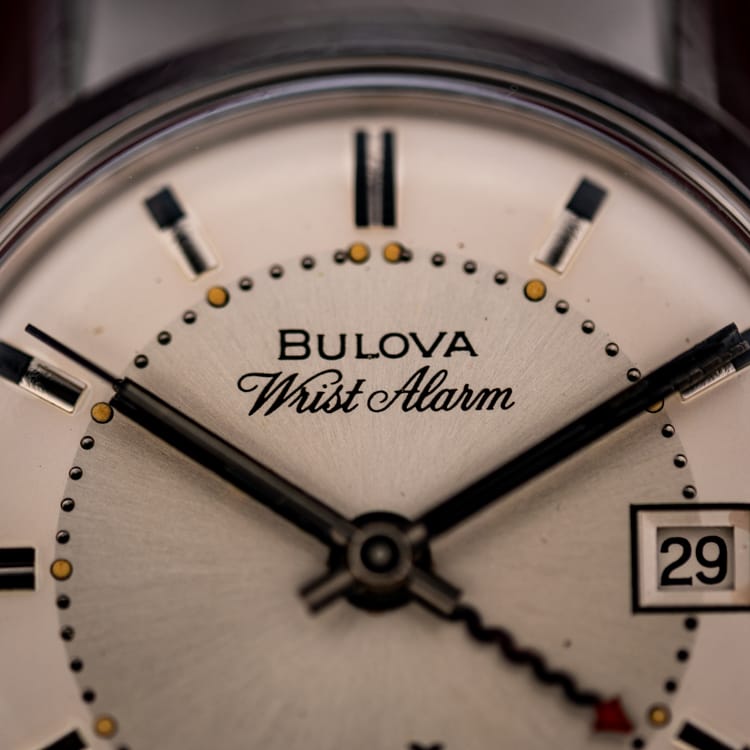
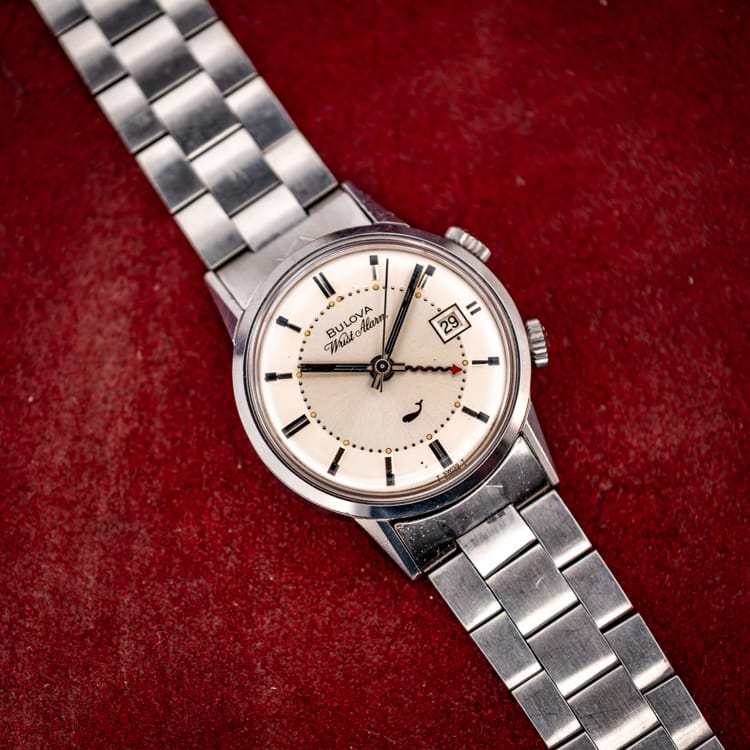
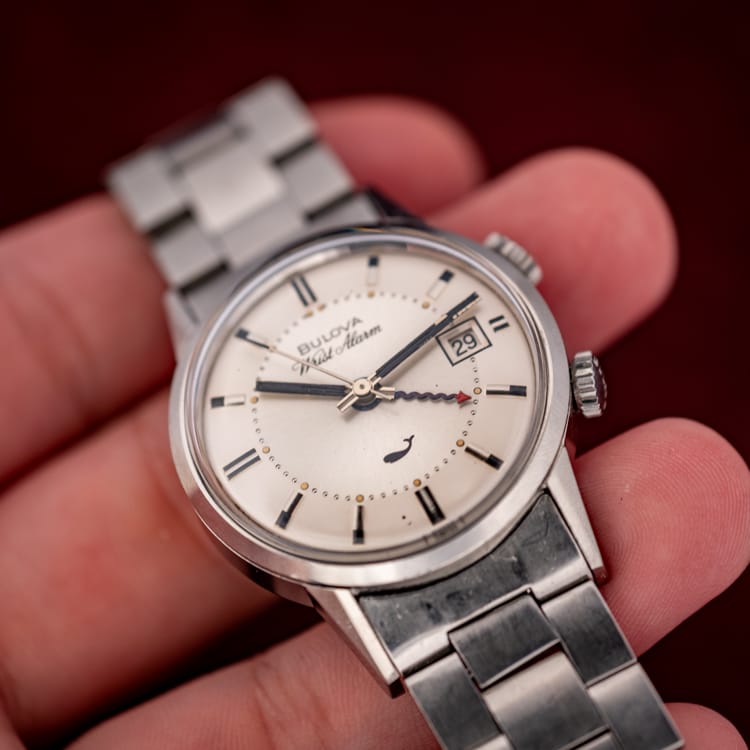
The dial is a warm silver-white with a faint sunburst at its center, signed BULOVA over Wrist Alarm in the flowing script the line used, the tritium designation flanked by its two small T’s at six. Applied baton markers stand with blackened tops, and a ring of tiny luminous dots has aged to soft cream around the inner chapter. The date sits at three. Below the hands swims the Sea King whale, and above it rides the star of the watch: a serpentine center hand tipped in red, parked against the inner track to set the hour the alarm will sound. It is an oddly beautiful thing to watch cross the dial, and it is the detail we would point to first.
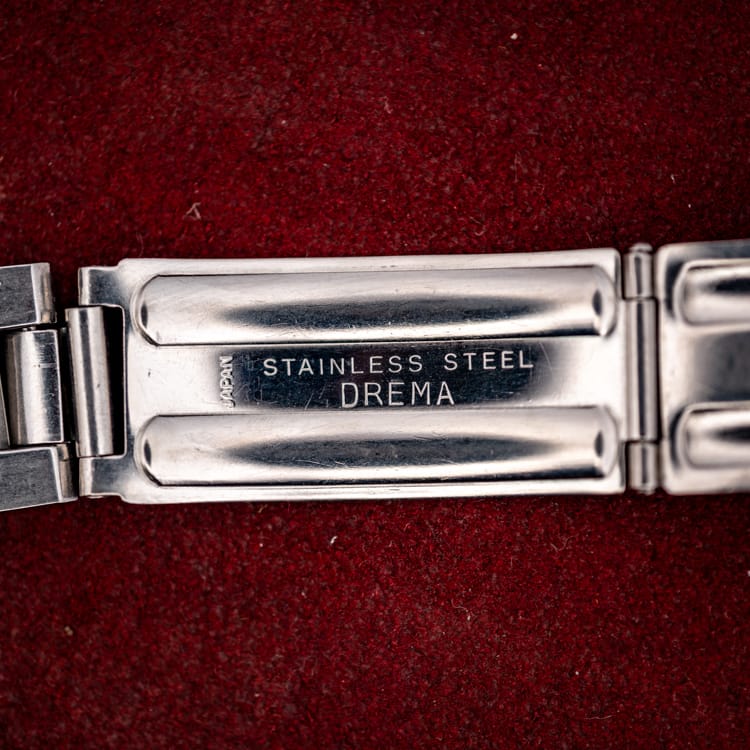
It comes on a stainless steel bracelet closed by a Bulova-signed folding clasp, a comfortable companion that suits the case without shouting over it.
Serviced in-house at OTTUHR and backed by our 2-year mechanical warranty, this Bulova Sea King Wrist Alarm is for the collector who would rather be woken by a spring than beeped by a battery, and who reads a whale on a dial as a reason to smile rather than a reason to ask questions. Compact, complicated, and quietly strange, it does something almost no modern watch still will. To us, that buzz is not a gimmick. It is the sound of a watch insisting, once a day, on being noticed.