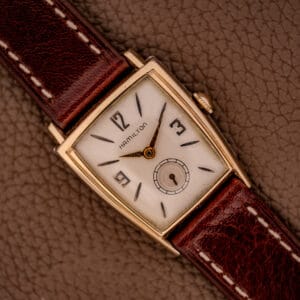

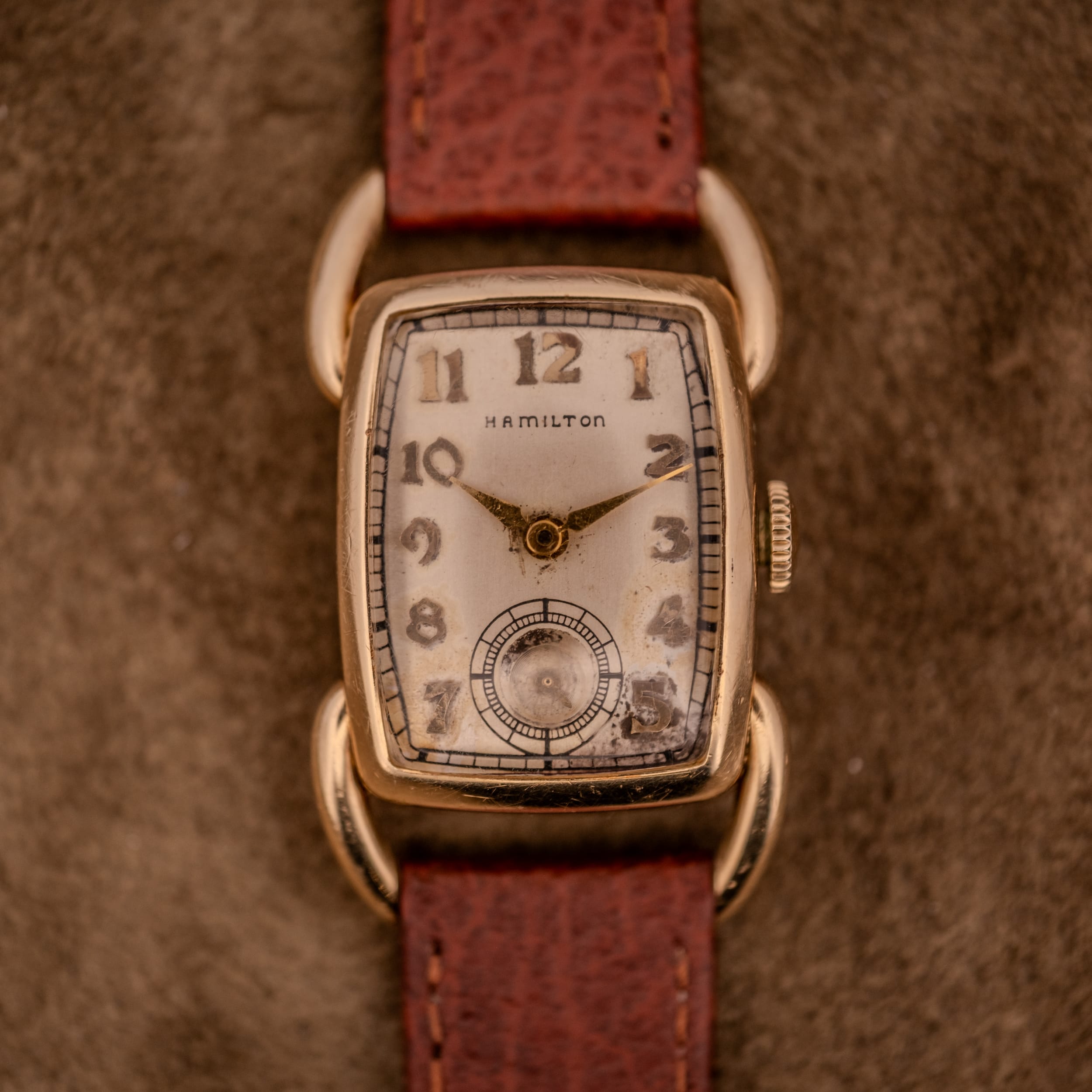

There was a time when Hamilton was, without question, the finest watchmaker in America. From their headquarters in Lancaster, Pennsylvania, Hamilton built a reputation on railroad-grade precision and uncompromising quality that made them the standard by which all domestic watchmaking was measured. But what often gets overlooked in the Hamilton story is their extraordinary design ambition during the Art Deco era. While the Swiss were refining round cases, Hamilton was sculpting some of the most architecturally daring wristwatch designs the world had ever seen, and the Bowman is a quintessential example of that creative golden age.
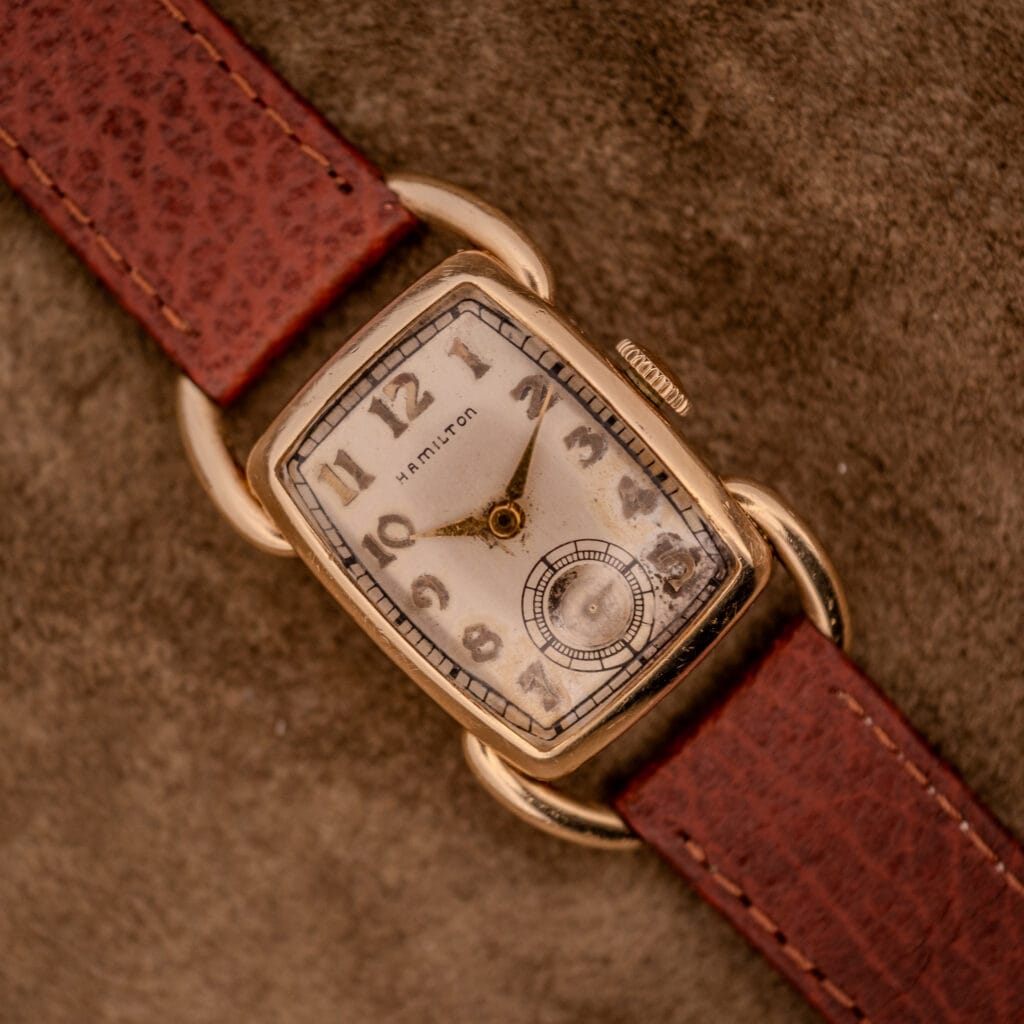
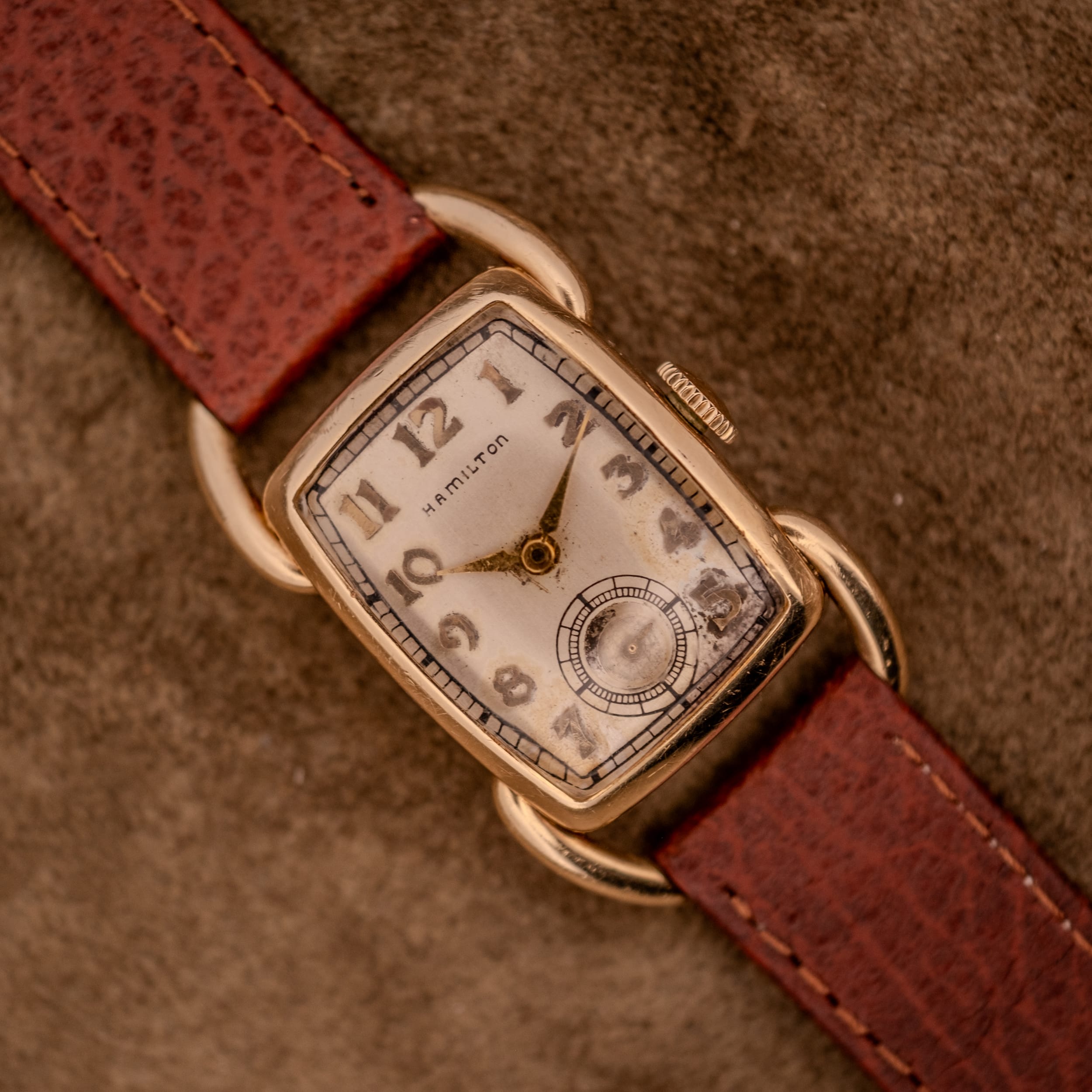
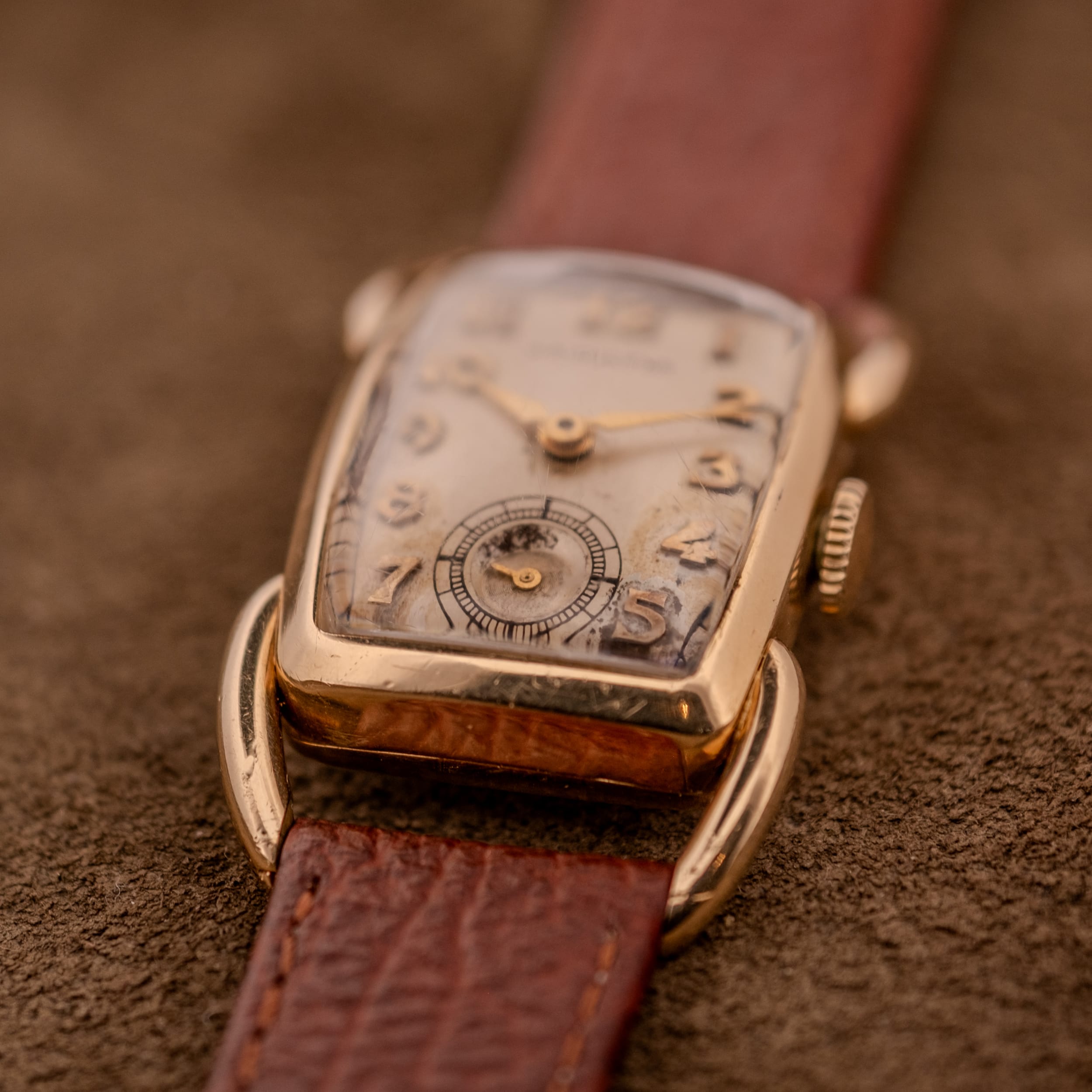
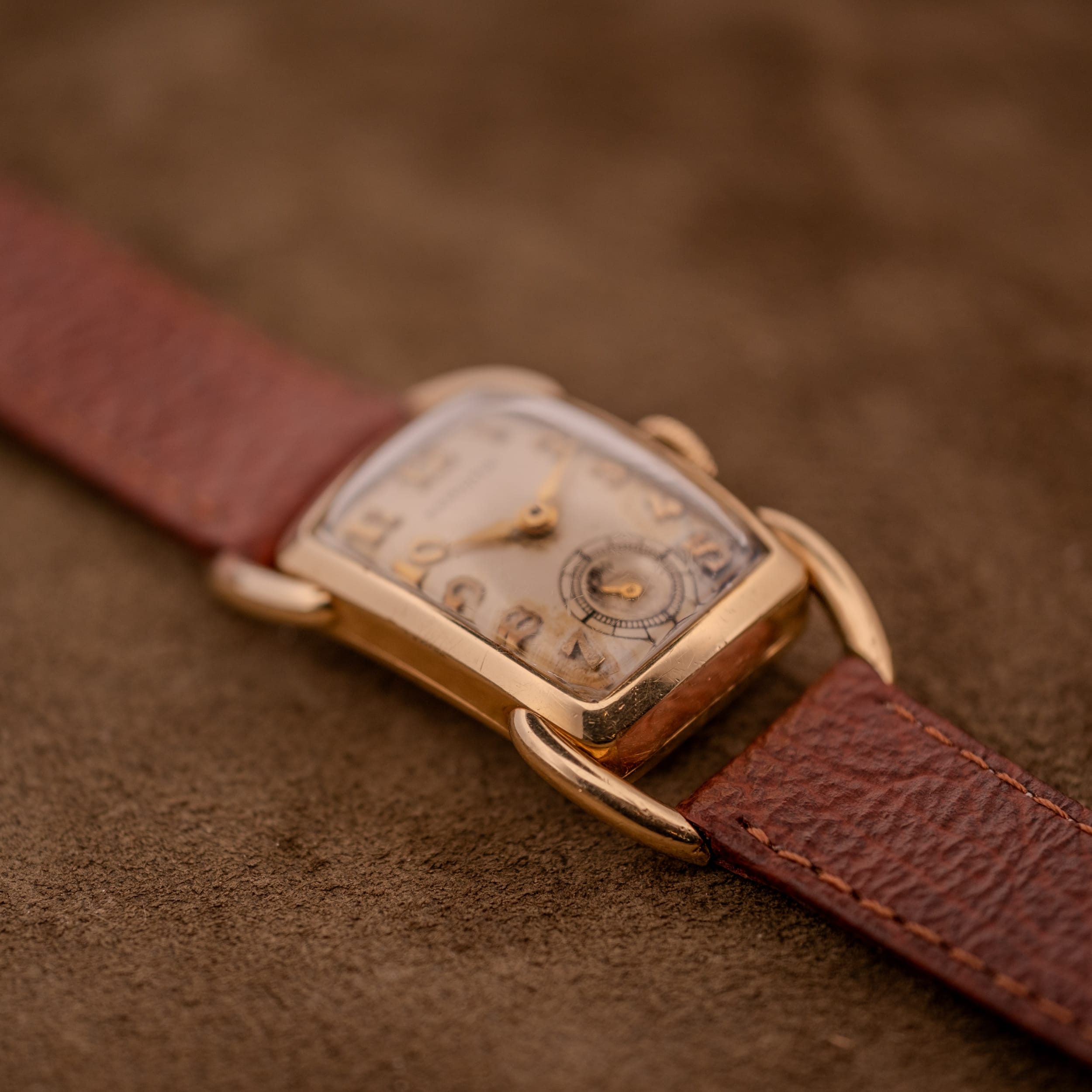
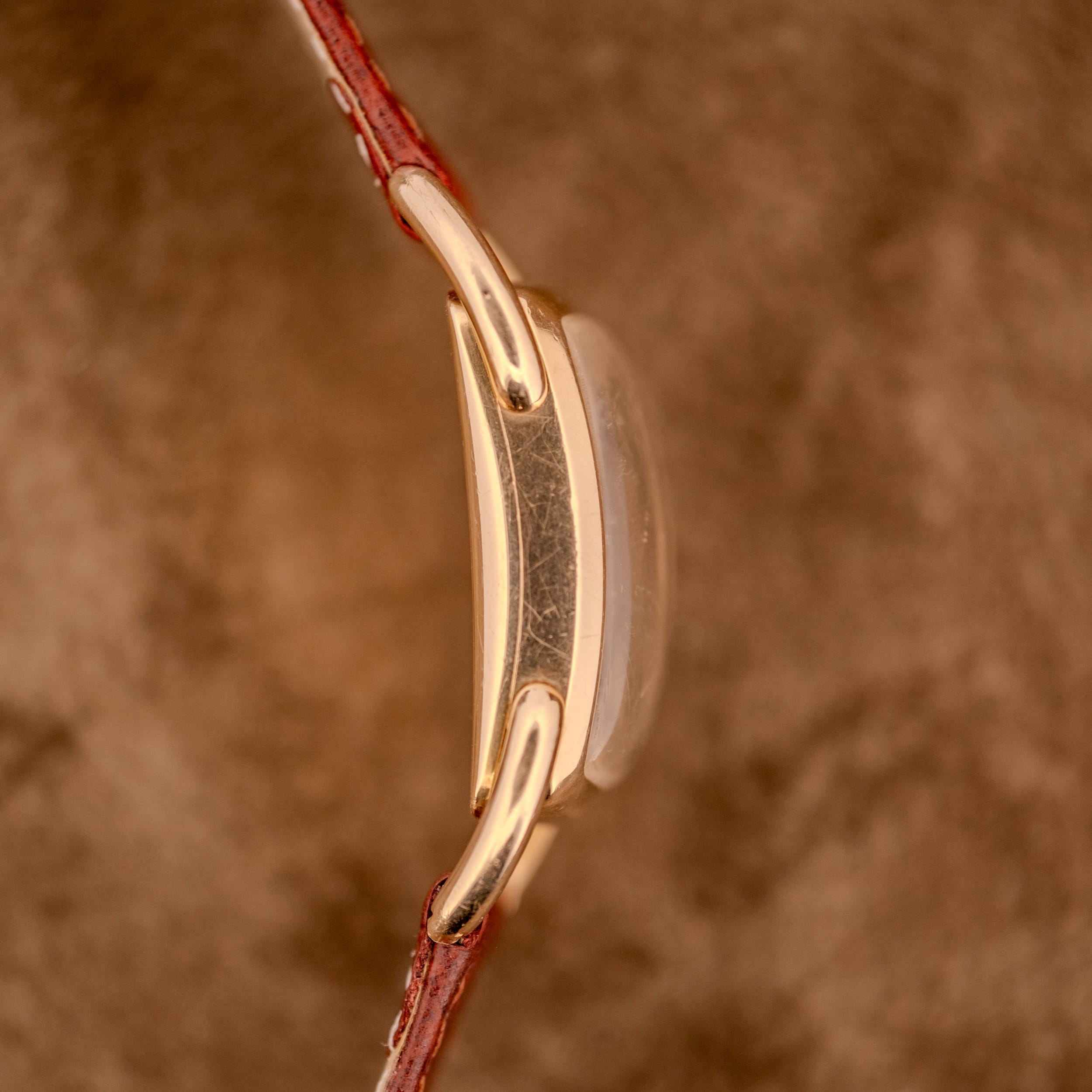
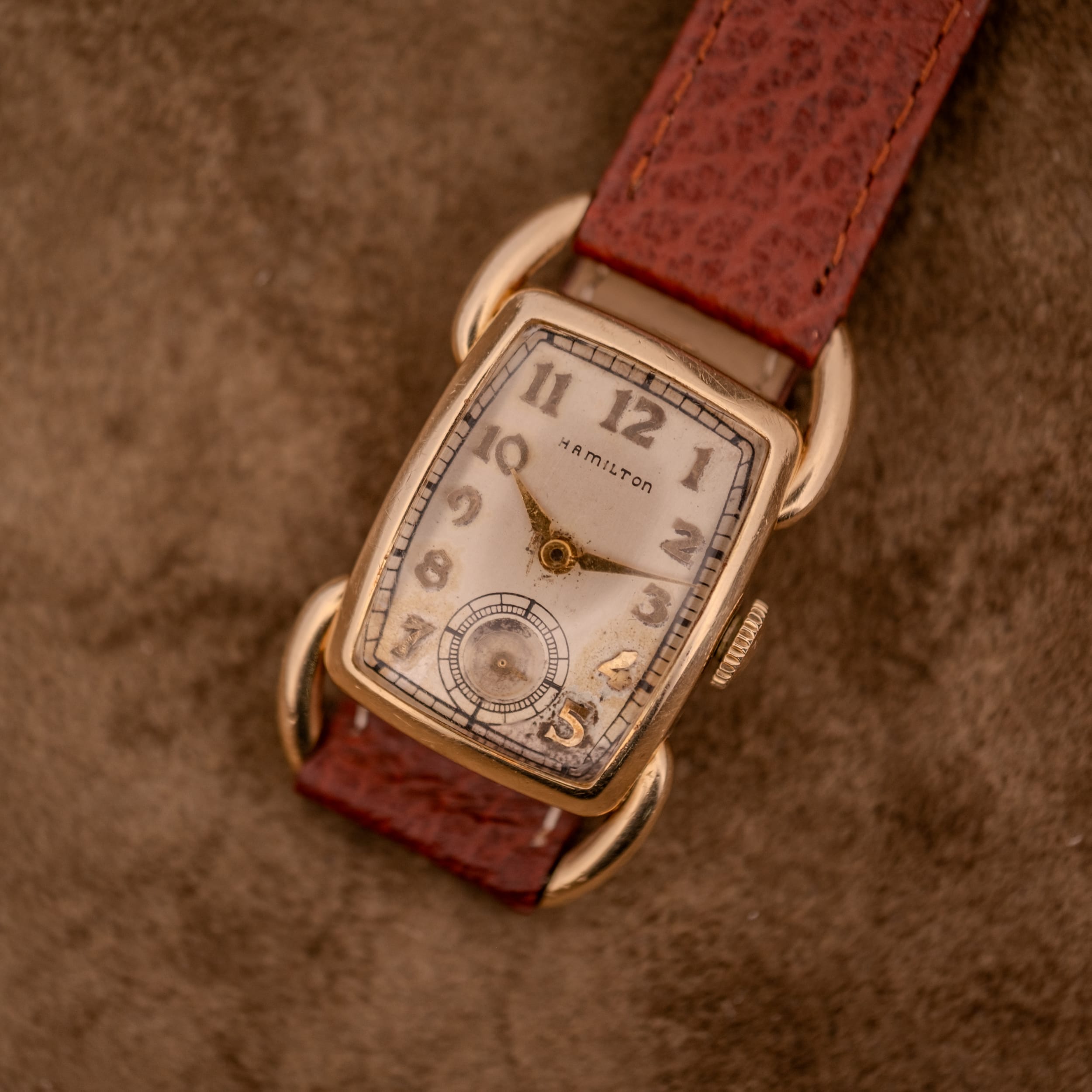
The Bowman belongs to Hamilton’s celebrated catalog of named references from the late 1920s and 1930s, a period when the company was producing dozens of distinctive case designs, each with its own personality and character. What makes the Bowman immediately recognizable are those gorgeous scrolled lugs that flow organically from the rectangular case, creating an almost fluid transition between case and strap. It’s a design that feels simultaneously structured and sculptural, a tension that defines the best of Art Deco aesthetics. The case itself, in 10k gold filled with a patent date of 1927, has a svelte profile that sits remarkably close to the wrist, a testament to Hamilton’s case engineering and the slim proportions of the caliber within.
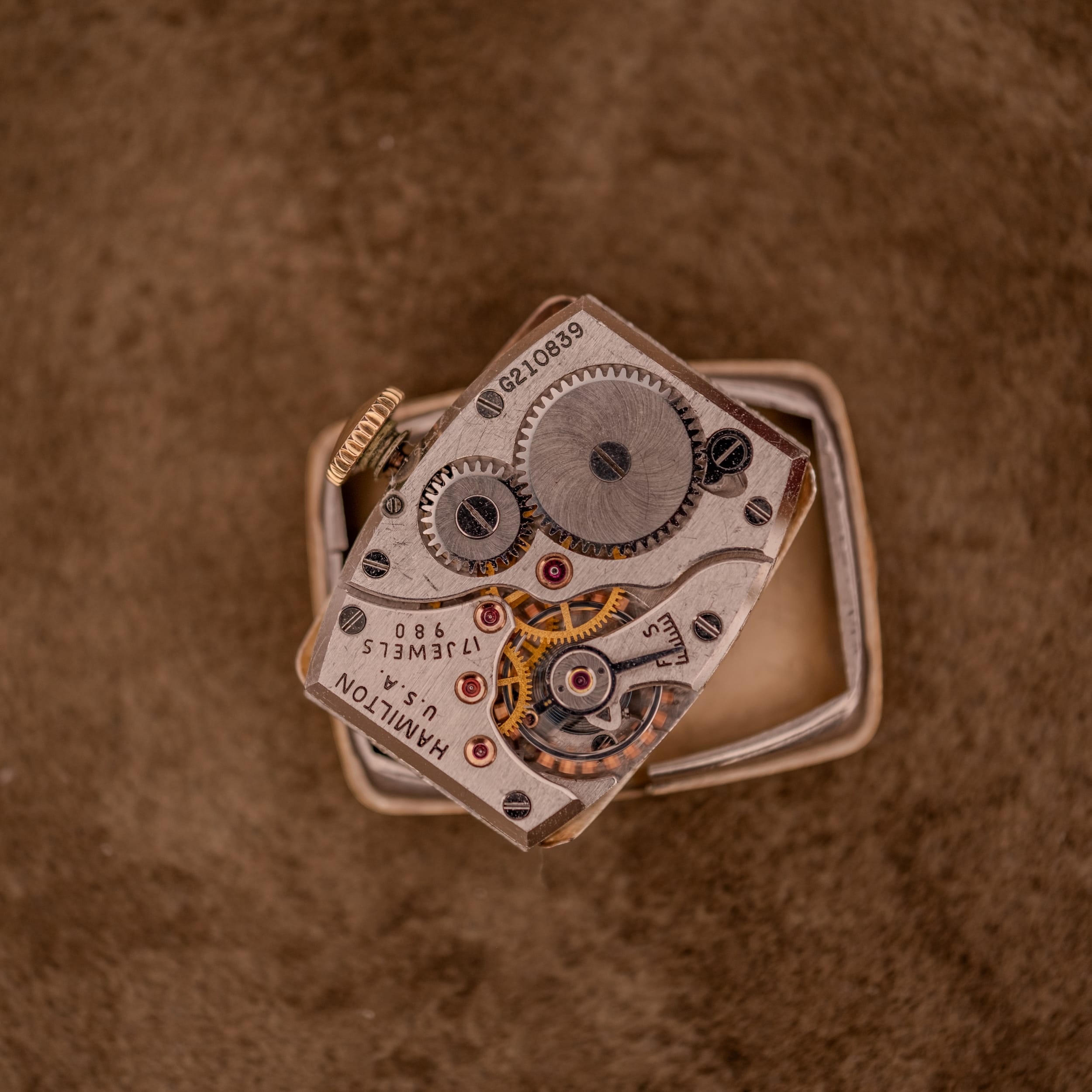
Speaking of which, the heart of this Bowman is the Hamilton Caliber 980, a 17-jewel manual-wind movement manufactured entirely in the USA. This is a proper Hamilton movement, not an outsourced ebauche, and it represents the kind of in-house craftsmanship that defined the brand’s golden era. The 980 was a workhorse of Hamilton’s dress watch lineup, known for reliable timekeeping and a level of finishing that was genuinely impressive for its price point. The movement shot here reveals the characteristic Hamilton bridge layout, circular graining on the plates, and those lovely ruby jewel settings, all hallmarks of Lancaster’s finest.
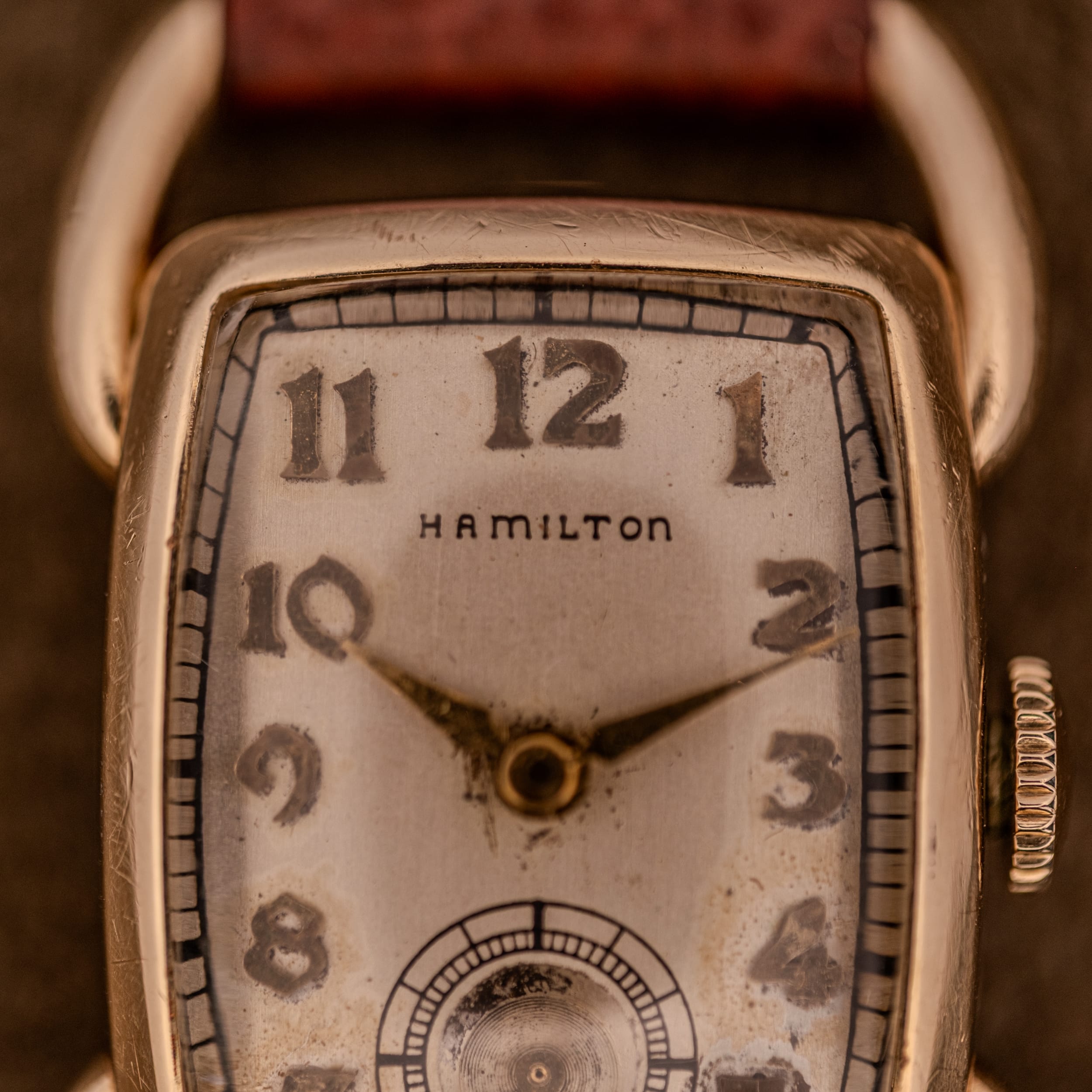
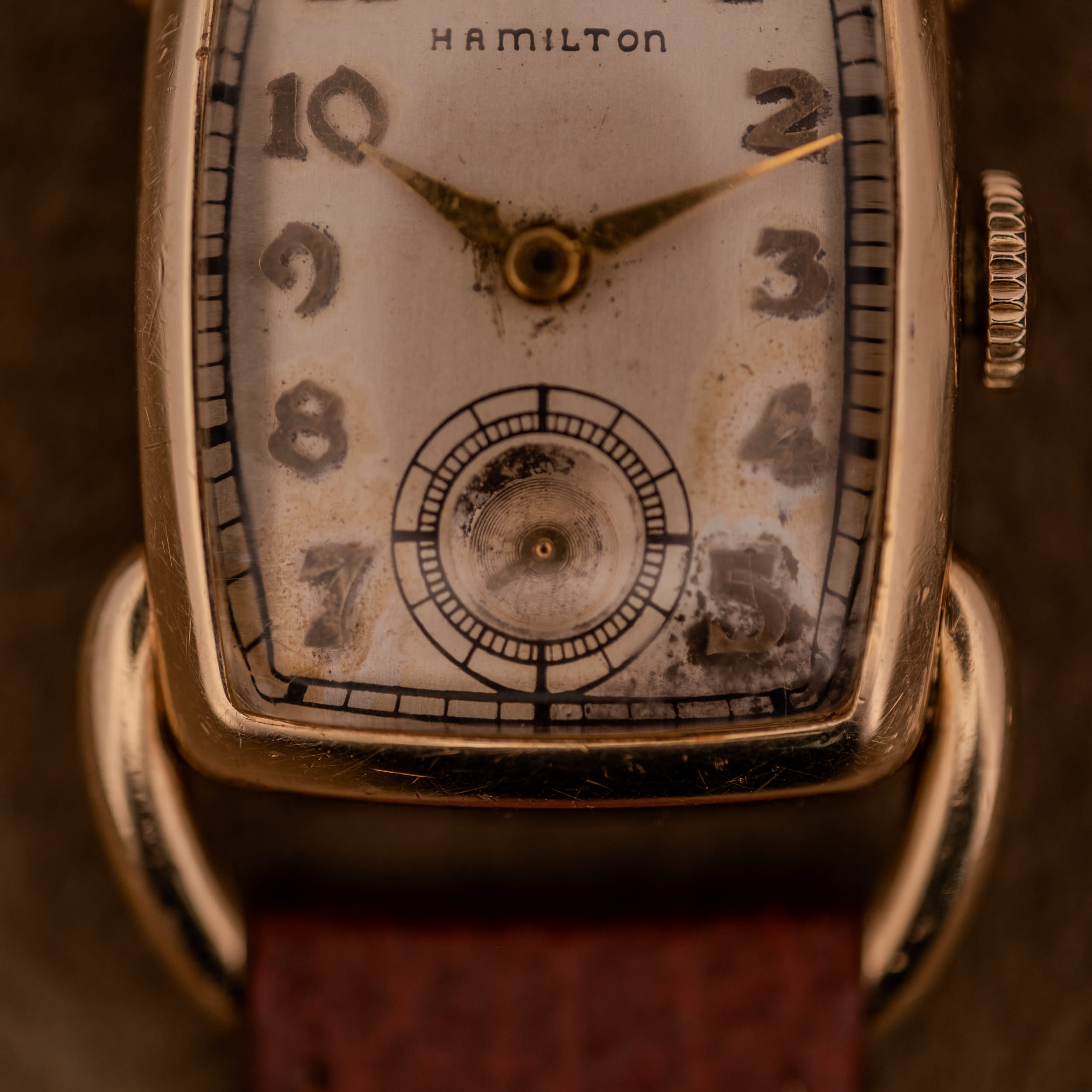
This particular example is a wonderful survivor. The silvered dial retains its original printing with the classic Hamilton typeface sitting proudly below 12 o’clock, and those bold applied Arabic numerals still command attention with their distinctive Art Deco geometry. The subsidiary seconds register at 6 o’clock features a fine concentric guilloche pattern that catches the light beautifully. The original leaf hands have developed a warm, golden tone that complements the gold filled case perfectly. There is honest patina present on the dial, particularly some gentle spotting and toning around the lower half and near the subsidiary seconds, which to us only adds to the charm and authenticity of a watch that has lived a full life over the better part of a century.
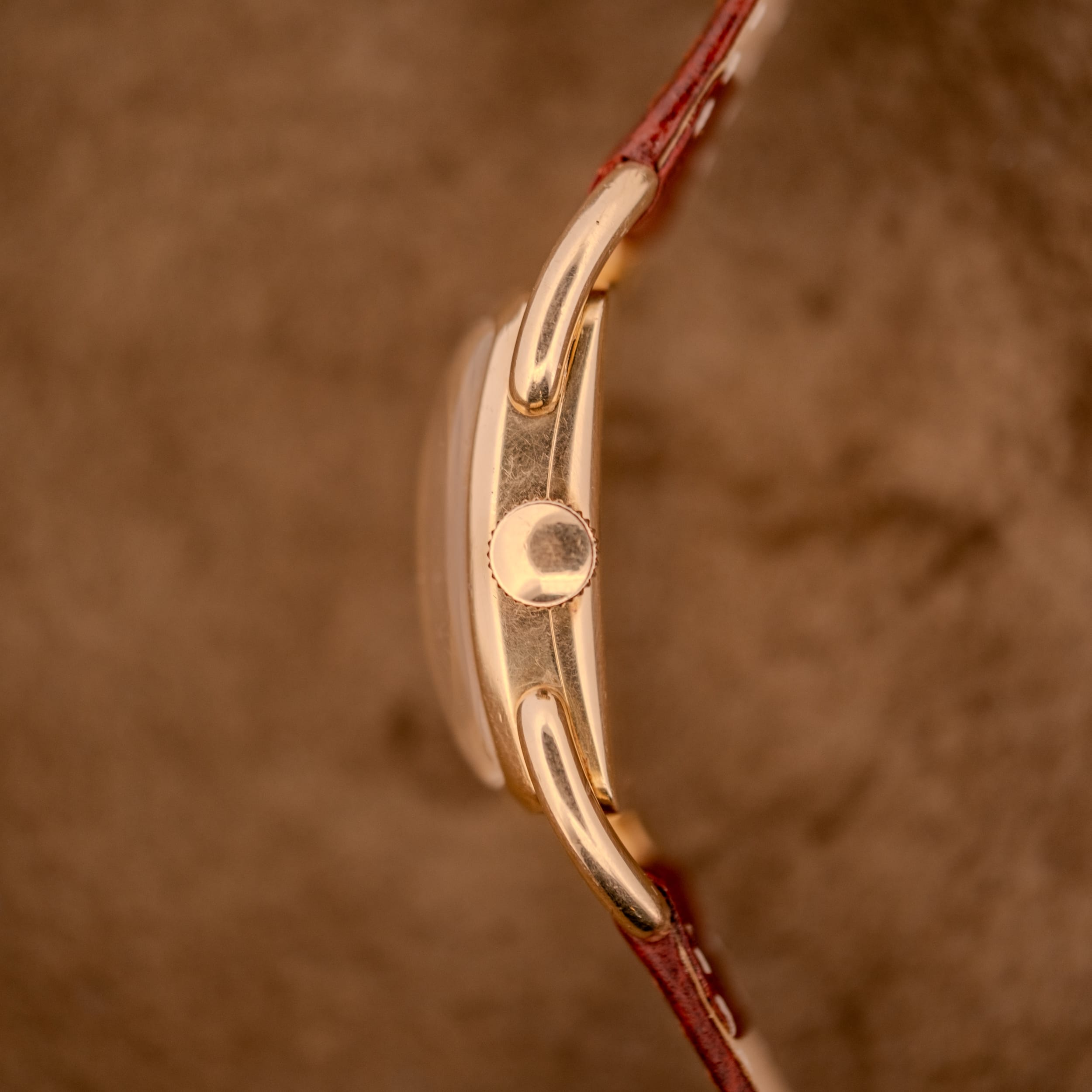
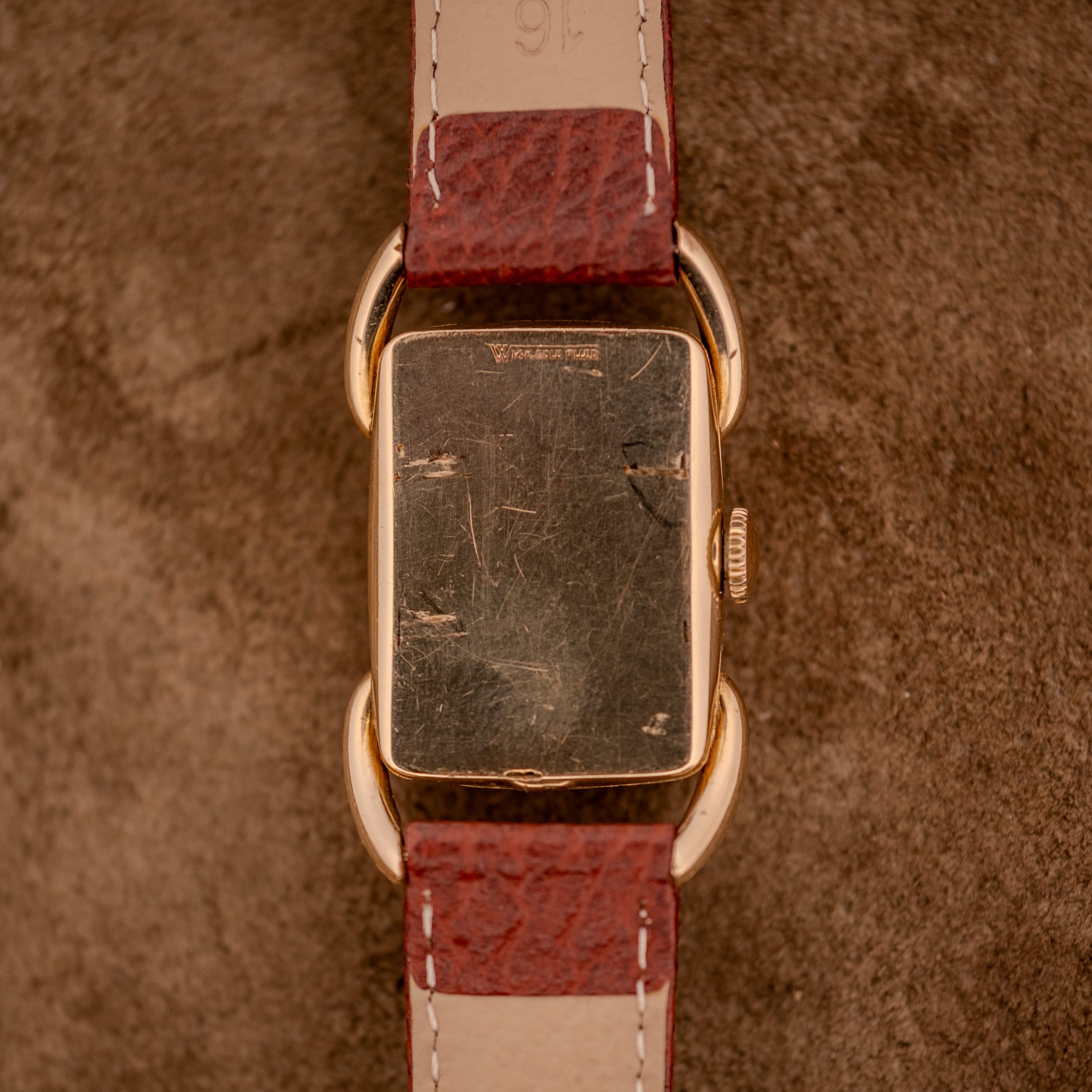
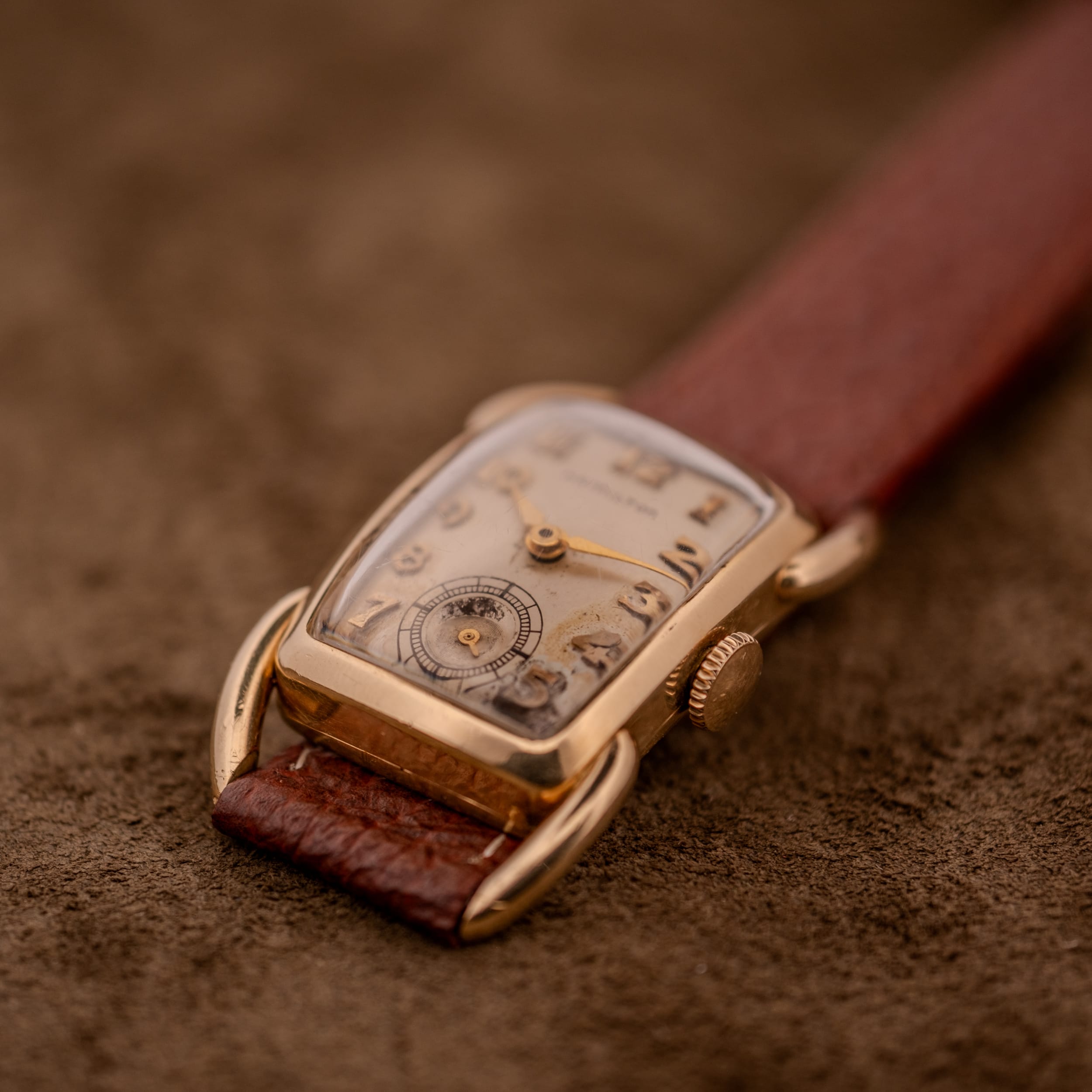
The case itself shows the kind of honest wear you’d expect from a piece of this vintage. The gold fill retains good integrity with a warm, buttery glow, though there are surface scratches consistent with decades of wrist time, particularly visible on the caseback. The scrolled lugs remain crisp and well-defined, which is critical on a design where the lug architecture is so central to the watch’s identity. The crown is original, and the profile shot reveals just how elegantly thin this case is, a quality that makes vintage Hamilton dress watches such a pleasure to wear.
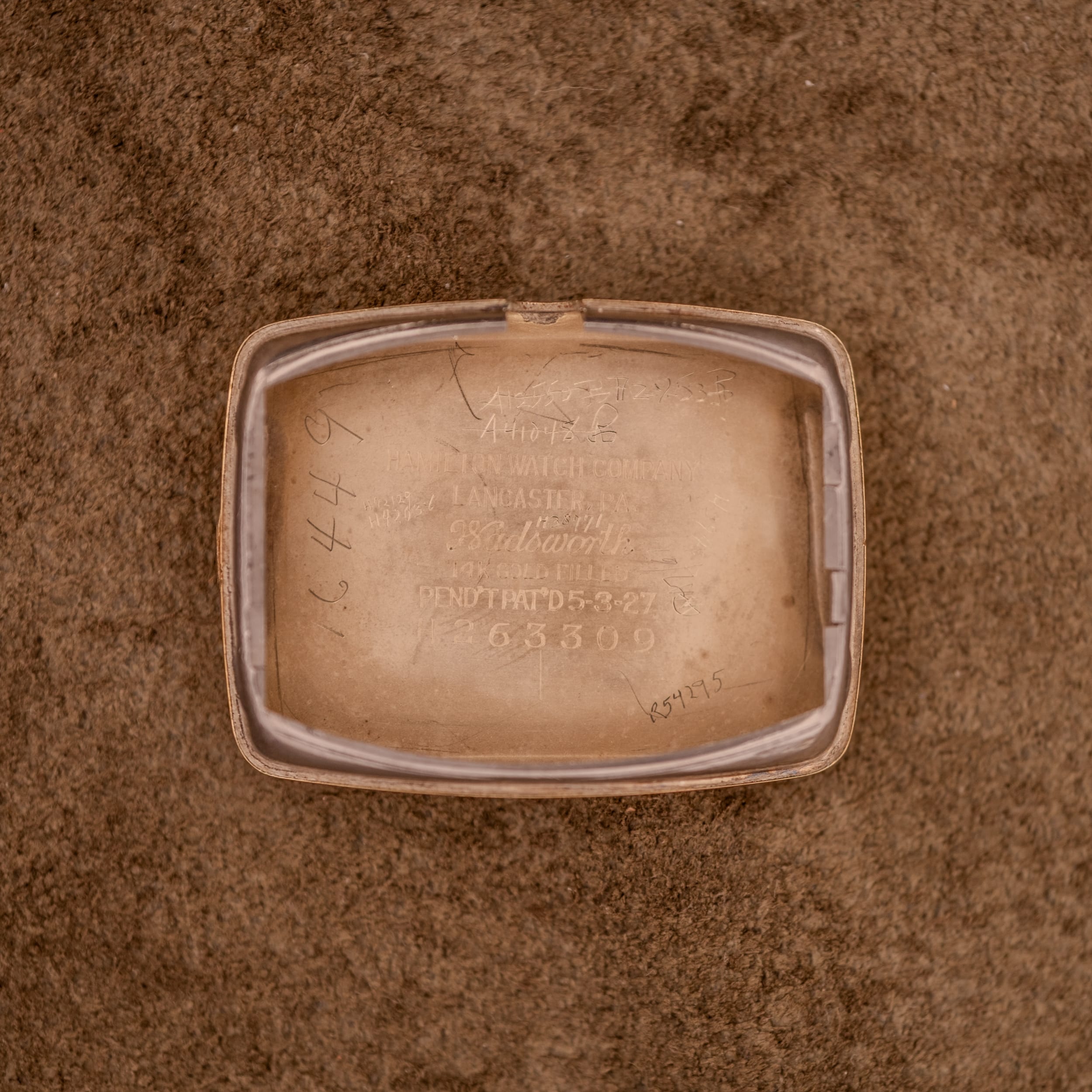
The caseback interior tells its own story, bearing Hamilton Watch Company markings from Lancaster, PA, along with various service notations scratched over the years, the quiet record of a watch that was valued enough to be maintained and kept running.
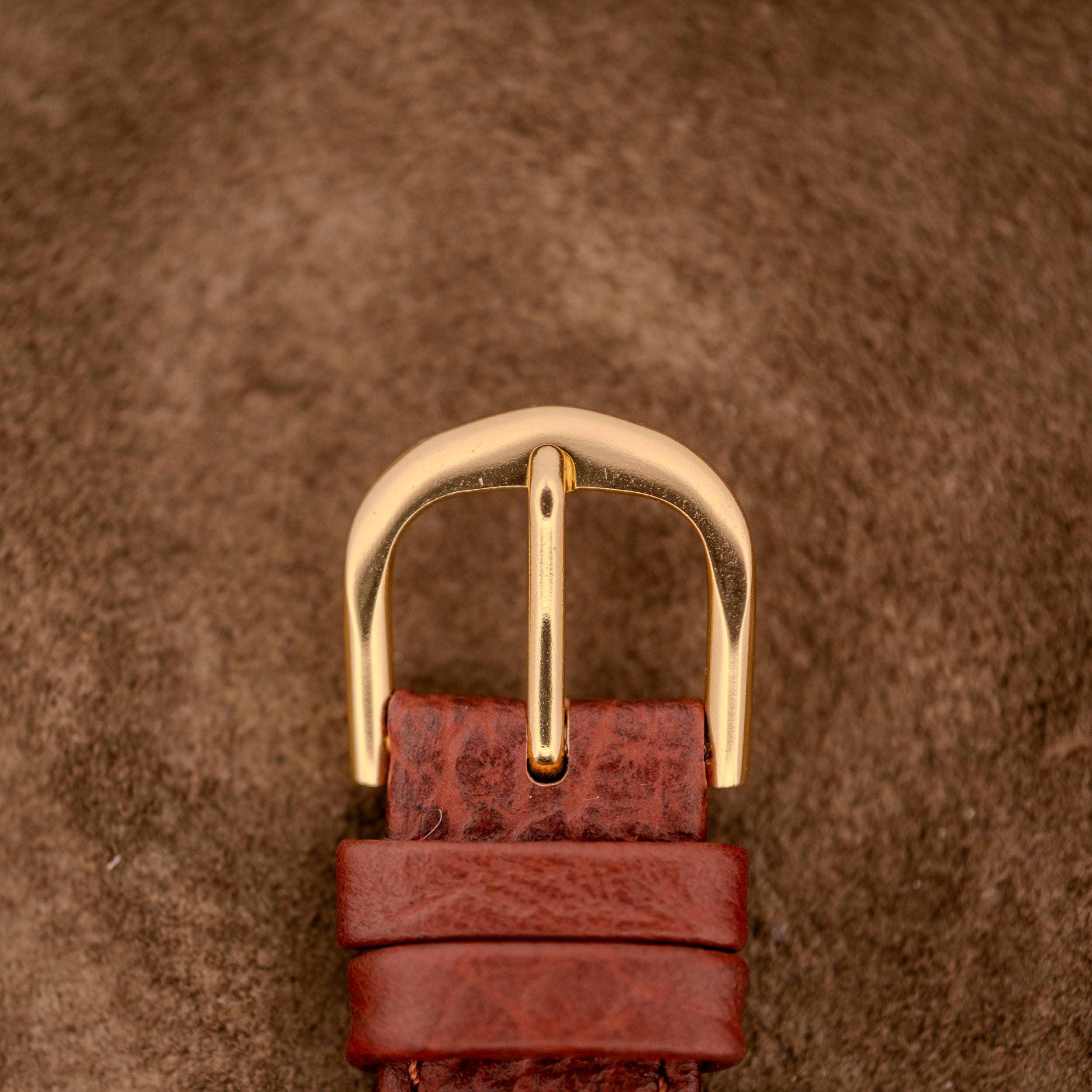
For collectors who appreciate the golden age of American watchmaking, the Hamilton Bowman is an incredibly compelling piece. It offers genuine Art Deco design with architectural lugs that rival anything the Swiss were producing at the time, a proper American-made movement with beautiful finishing, and the kind of warm, lived-in character that only decades on a wrist can produce. Paired here with a rich brown leather strap and a gold-tone buckle, this is a watch that looks absolutely divine with tailored clothing. It’s a piece of Americana at its finest, and a reminder that some of the most exciting watch design of the 20th century came not from Geneva or Le Locle, but from a small town in Pennsylvania.