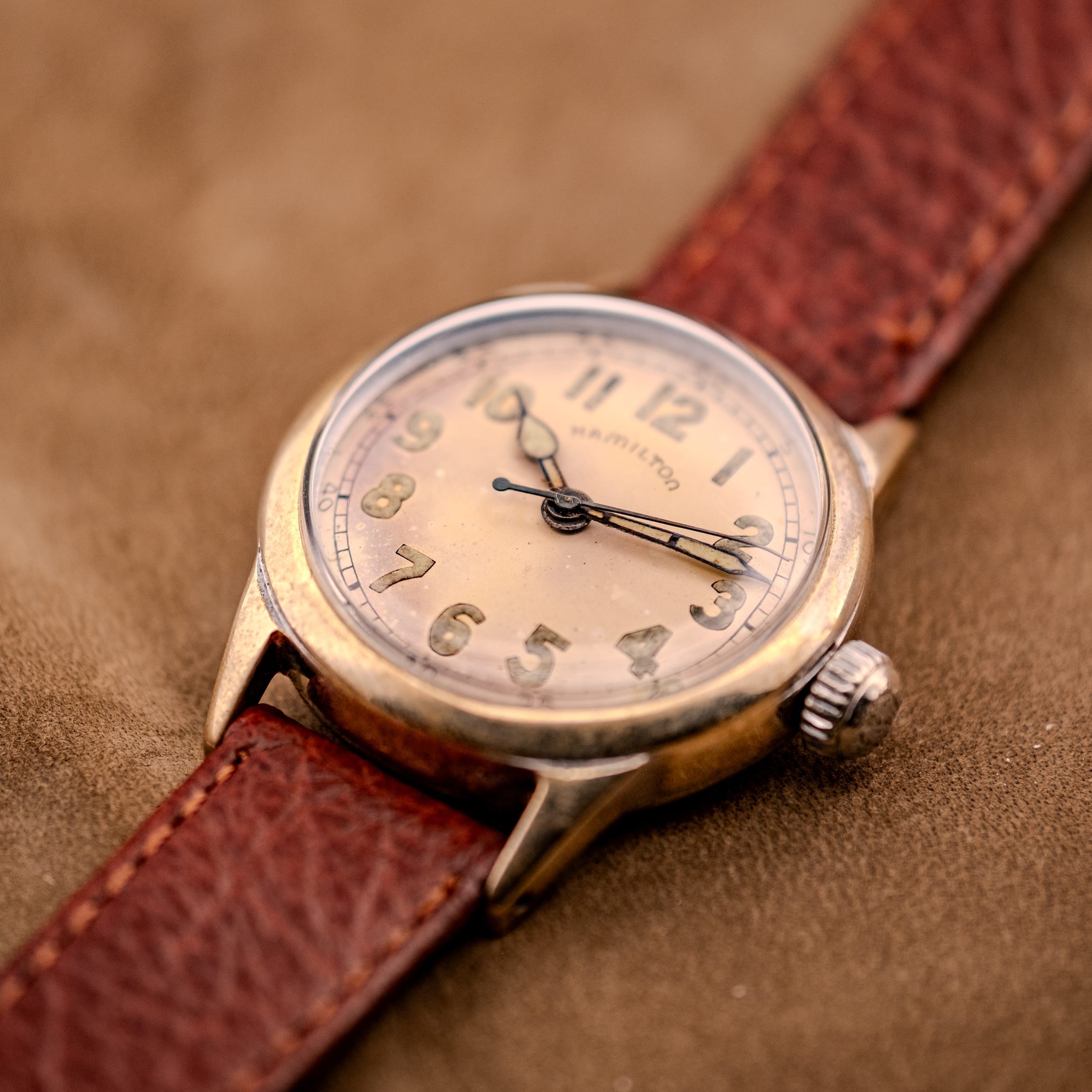
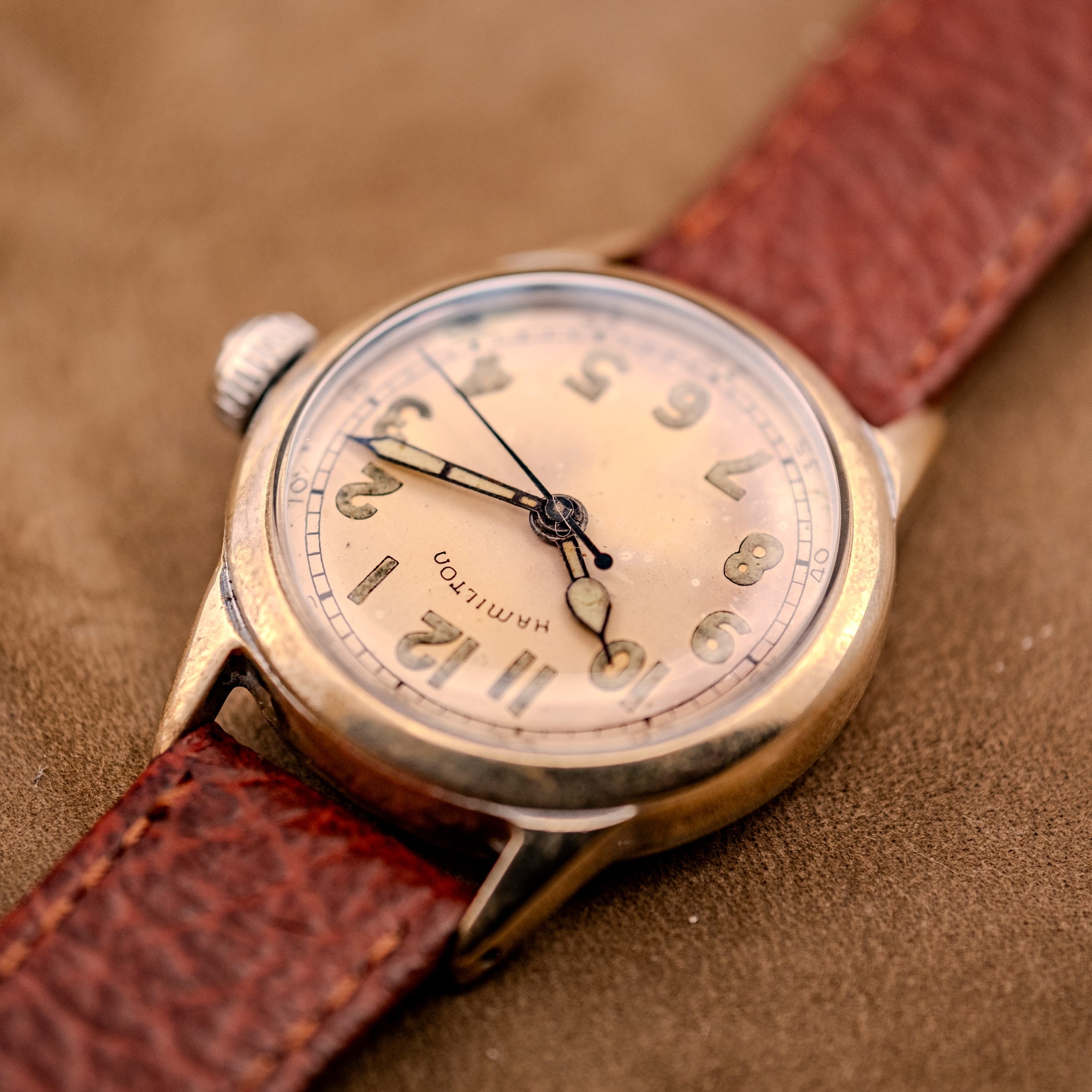
The Hamilton 987S is, in our opinion, one of the most quietly important calibers in the history of American watchmaking. It was the company’s first hacking wristwatch caliber, the mechanism that let a soldier pull the crown out to the time-setting position and freeze the seconds hand long enough to match a reference clock or radio signal, then release the train in sync with the rest of his unit. To us, the 987S is the structural reason there is a Hamilton story to tell about the Second World War at all, the caliber that ran underneath an entire era of military timekeeping.
Hamilton produced the 987S in Lancaster, Pennsylvania between 1941 and 1948, the years during which the company suspended civilian production almost entirely and turned its facilities over to military timekeeping work. The 987S powered watches Hamilton supplied to Army Ordnance, to the Navy and Marine Corps aviator programs, and to the Royal Canadian Air Force, and it sits at the structural center of nearly every wartime Hamilton field watch you can name. After 1948 it gave way to the 748 family and eventually to the Khaki Field movements that would carry the brand forward, but the 987S is where the American hacking field watch genuinely begins.
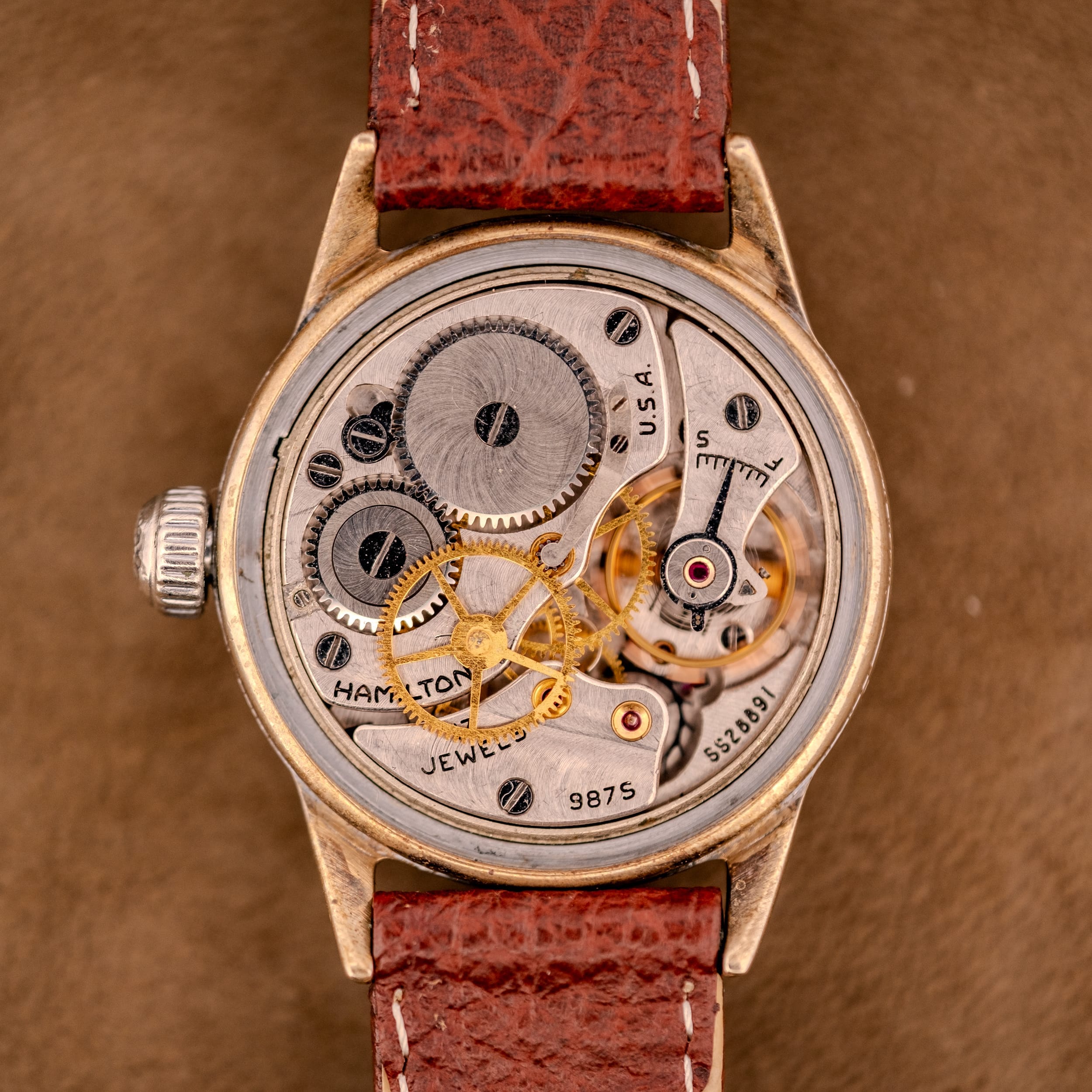
The caliber itself is what makes a watch like this interesting on a workbench, and that is genuinely the OTTUHR-separator on a piece like this. The 987S evolved out of the earlier 987A small-seconds caliber, with the two critical differences being a center sweep seconds wheel and the addition of the hack mechanism, a small steel lever that bears gently against the rim of the balance wheel when the crown is pulled. It sounds modest now, but in 1941 that lever was a meaningful piece of mechanical engineering. The 987S beats at 18,000 vibrations per hour, carries 17 jewels, and is a manual-wind movement built to ordnance specifications for shock resistance and timekeeping under field conditions. Our movement photograph shows the caliber in original American-made glory, with the bottom plate signed HAMILTON, JEWELS, and 987S, the serial SS28891 stamped along the plate edge, and U.S.A. stamped on the upper bridge. The gilt gear train, capped balance jewel, and click spring are all original and all working as intended.
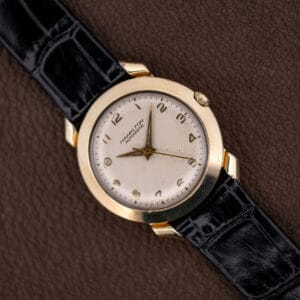
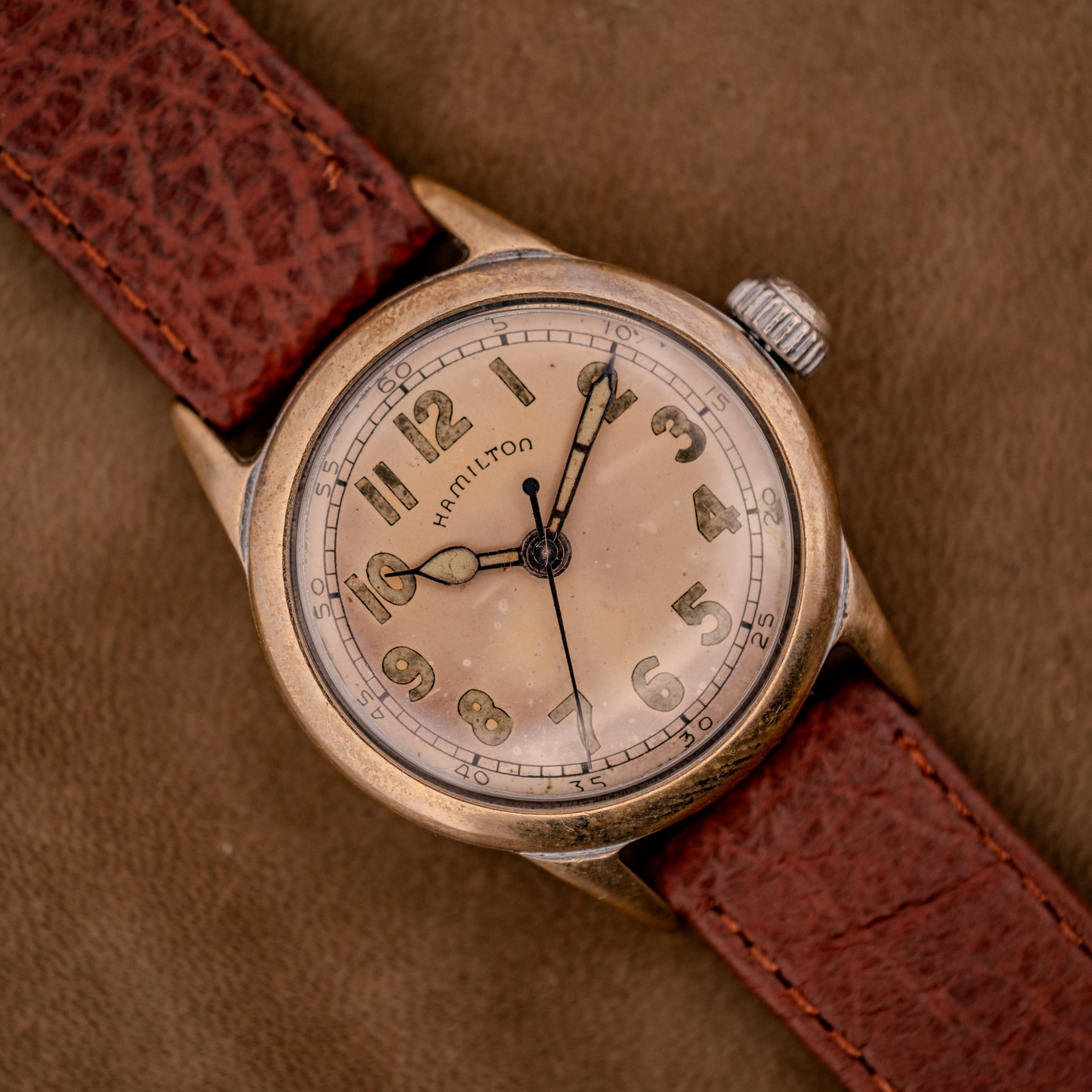
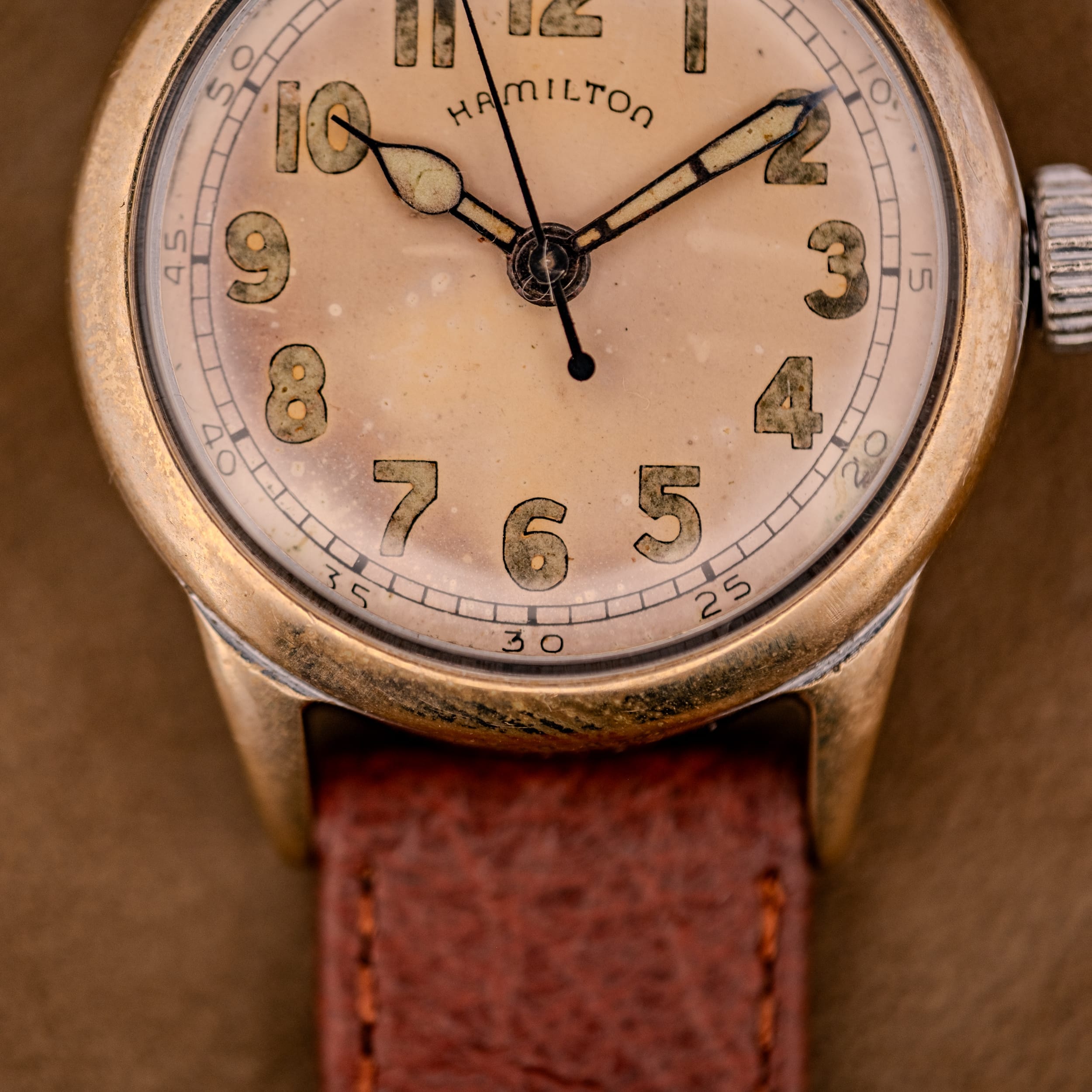
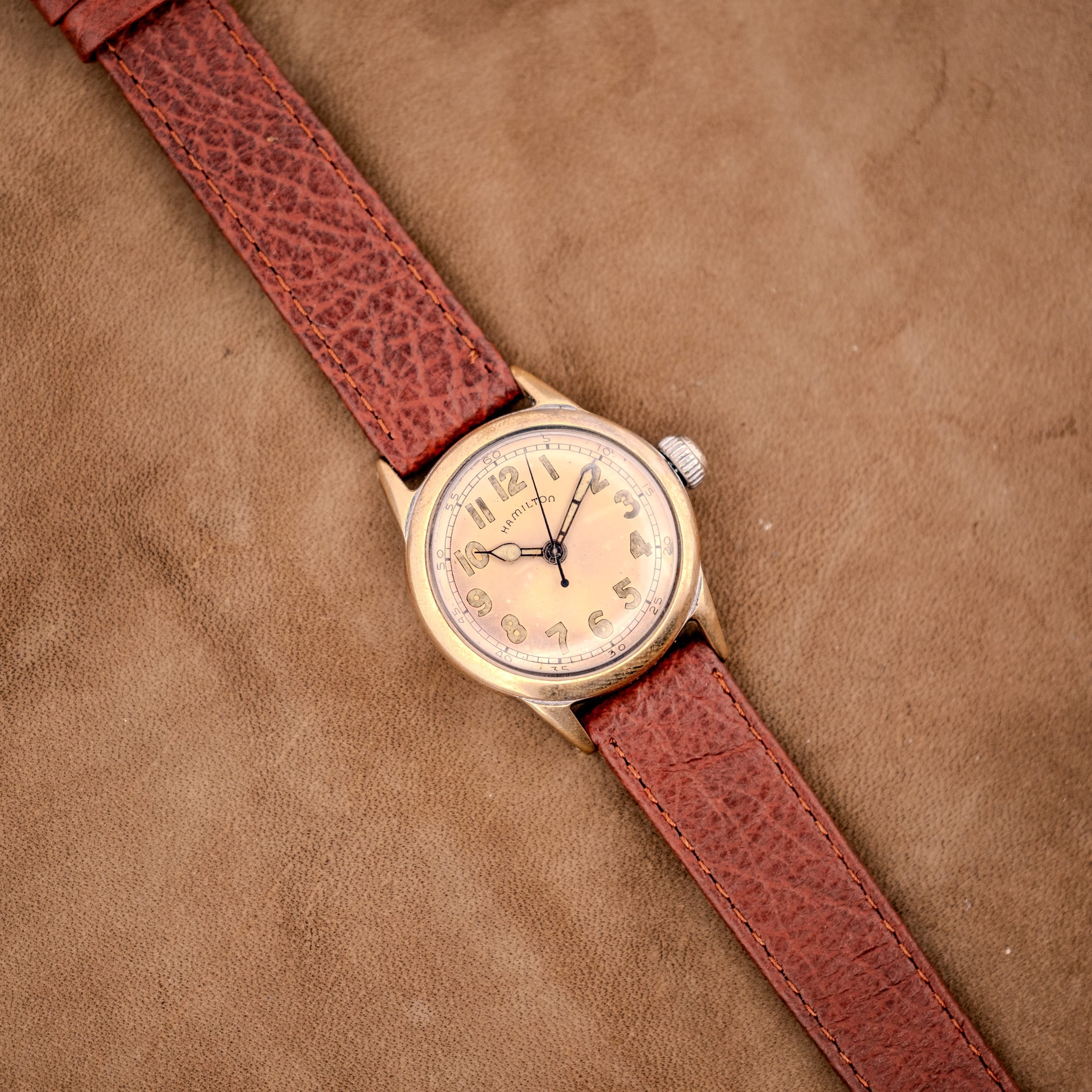
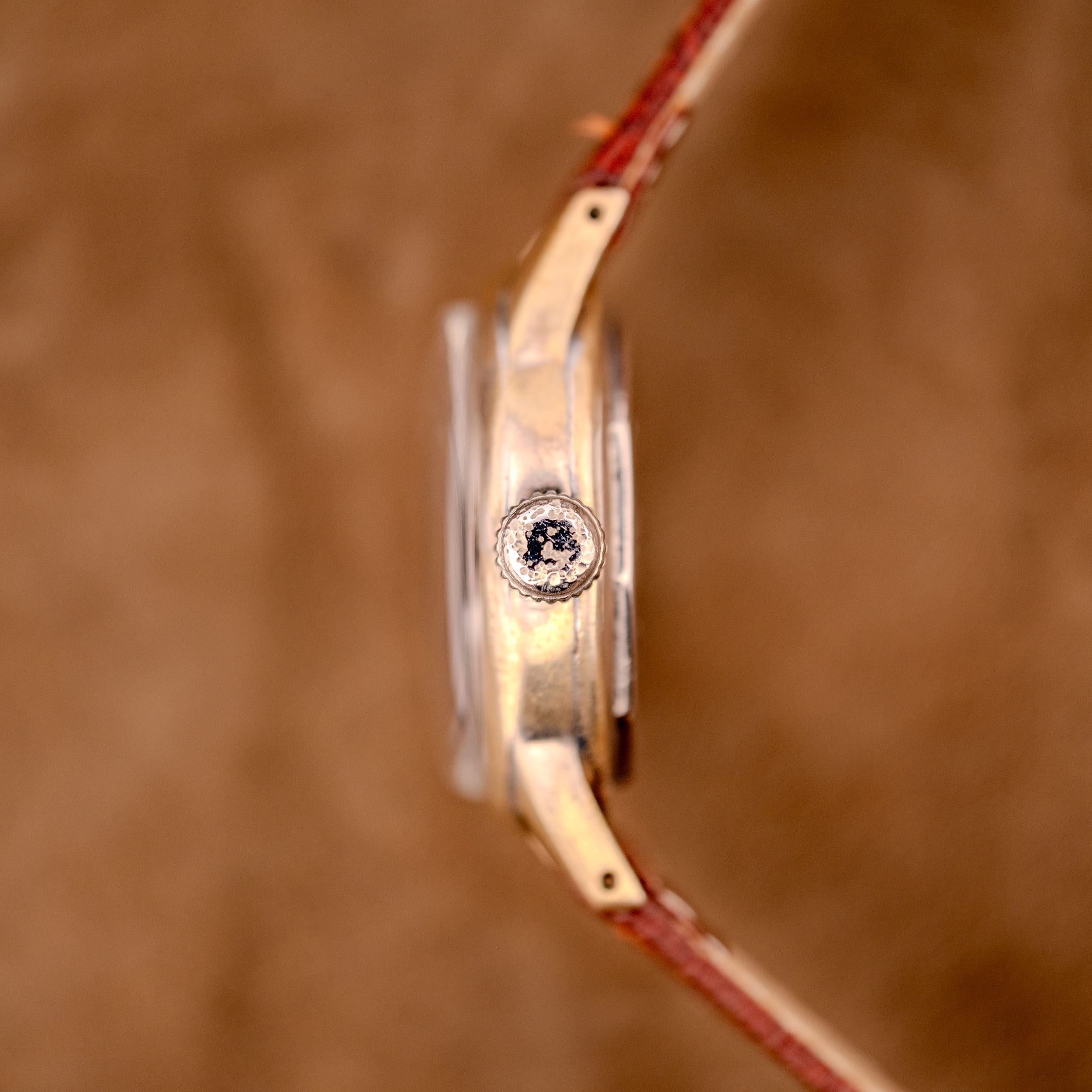
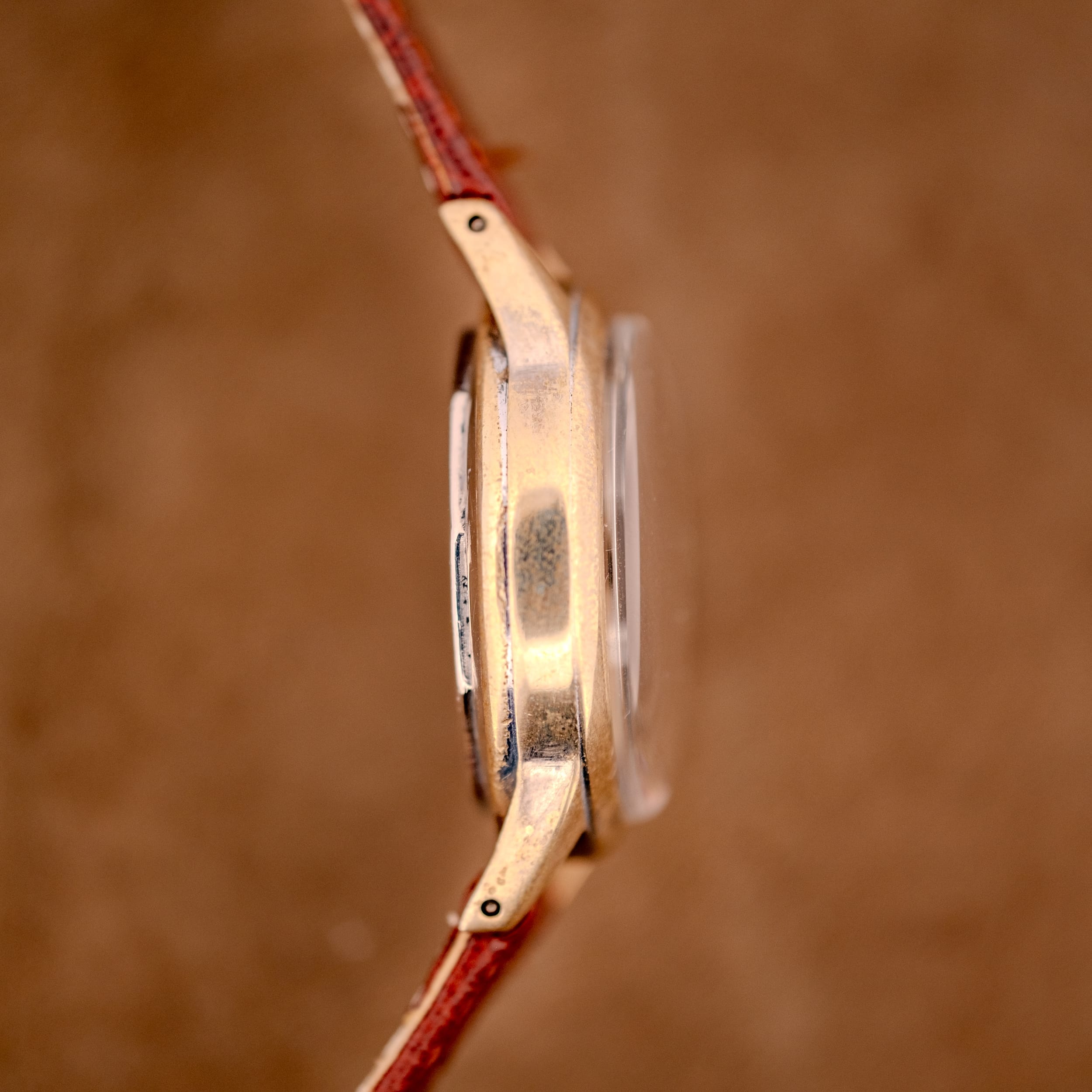
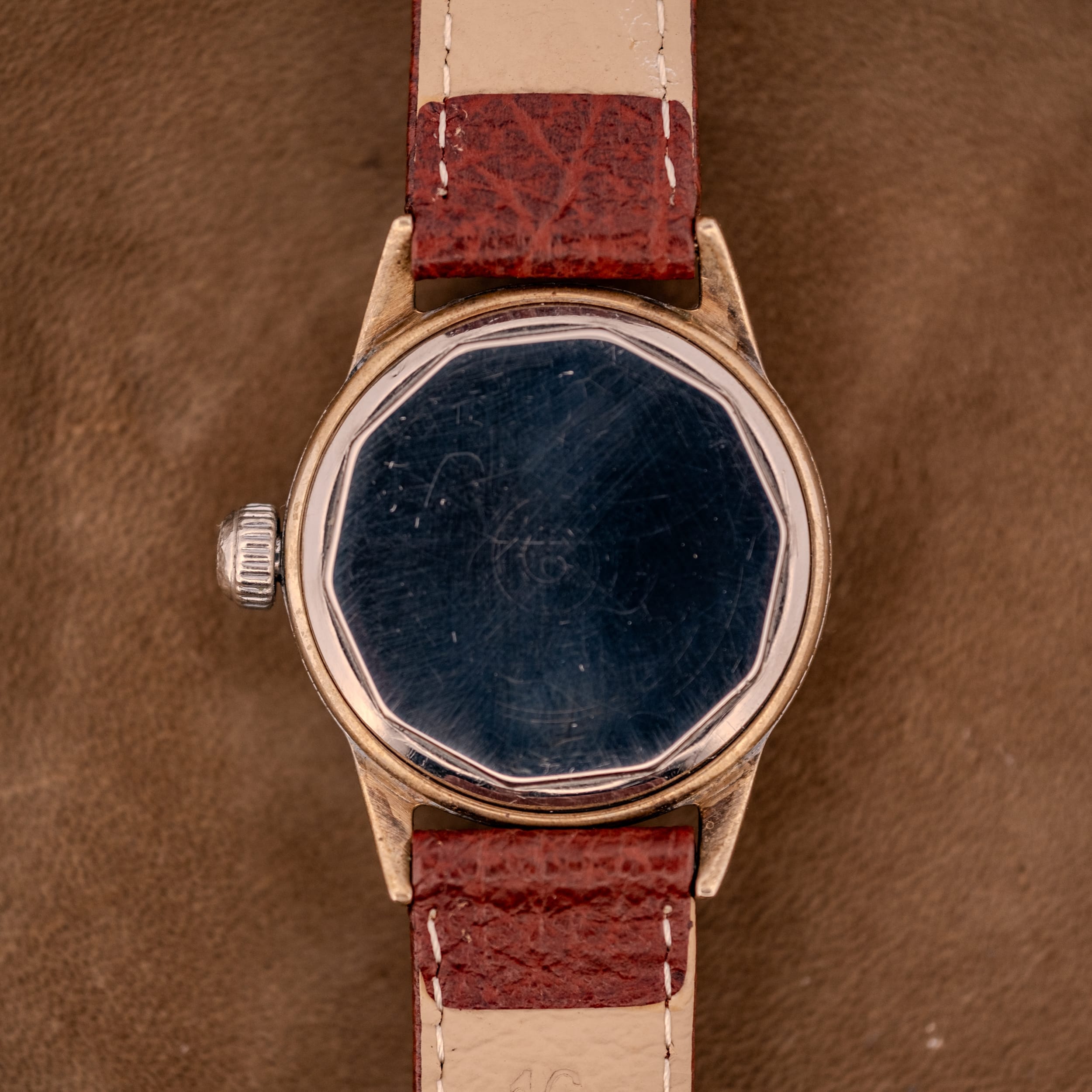
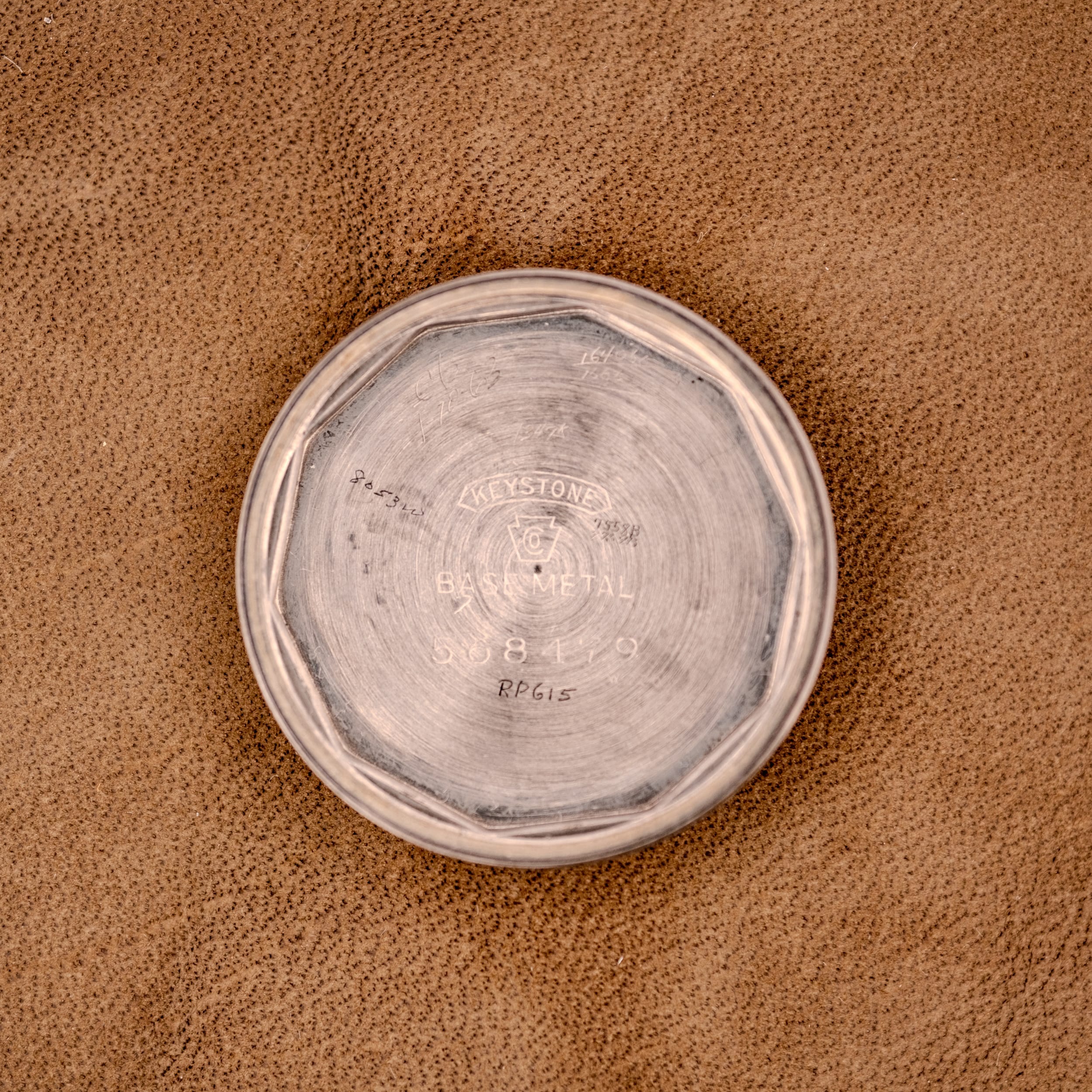
The 31mm round case is base metal, manufactured by Keystone, with the original gold-tone plating now worn down across the bezel and case flanks to reveal the warm brassy substrate underneath. To us, that wear is not damage. It is exactly the surface you want on a wartime Hamilton, the kind of patina that confirms the watch was carried hard for the eighty-plus years since it left Lancaster. The interior of the snap-back caseback is stamped KEYSTONE inside a hex cartouche with BASE METAL below it, a case serial number, and RP615 stamped at the bottom. Lug-to-lug measures 38.5mm and lug width is 16mm. The knurled crown at three has been worn smooth at its edges from generations of winding, and the drilled lugs sit close to the case in a way that wears comfortably above the wrist bone.
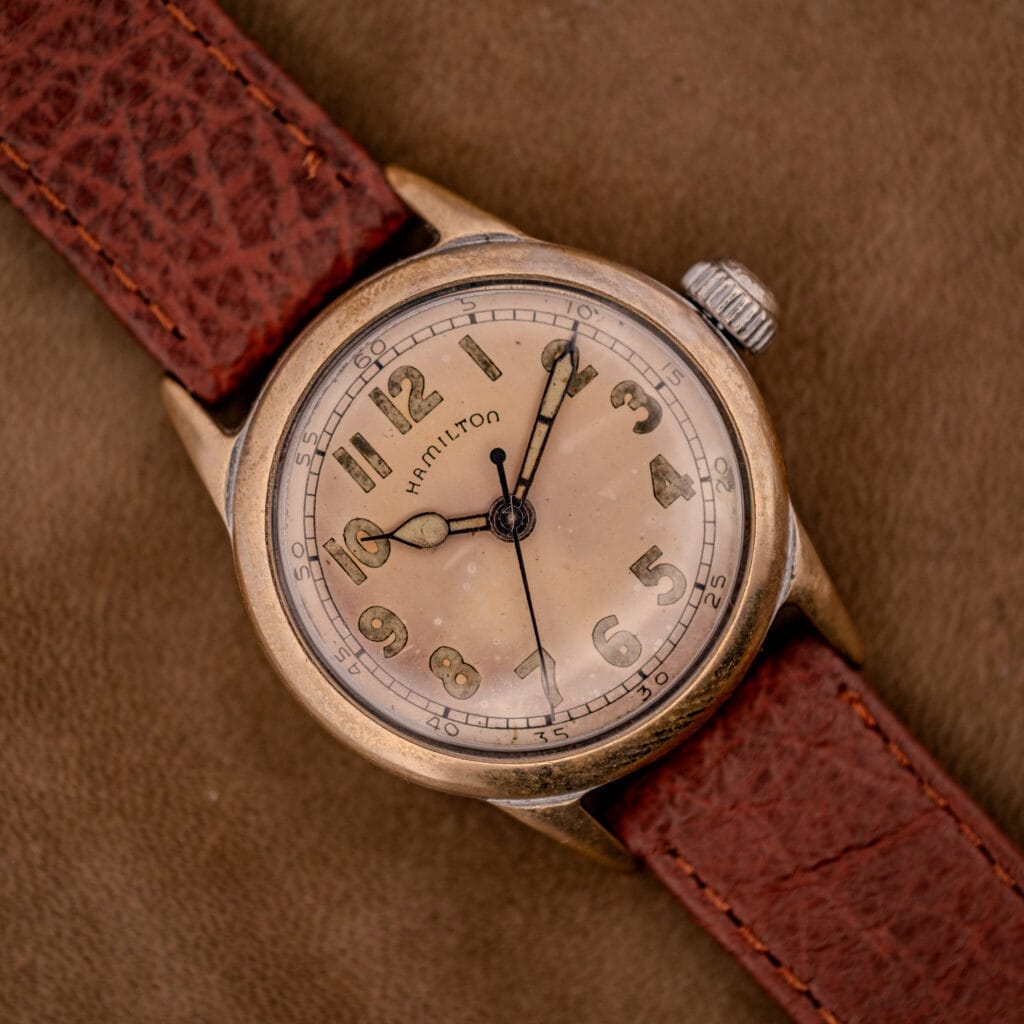
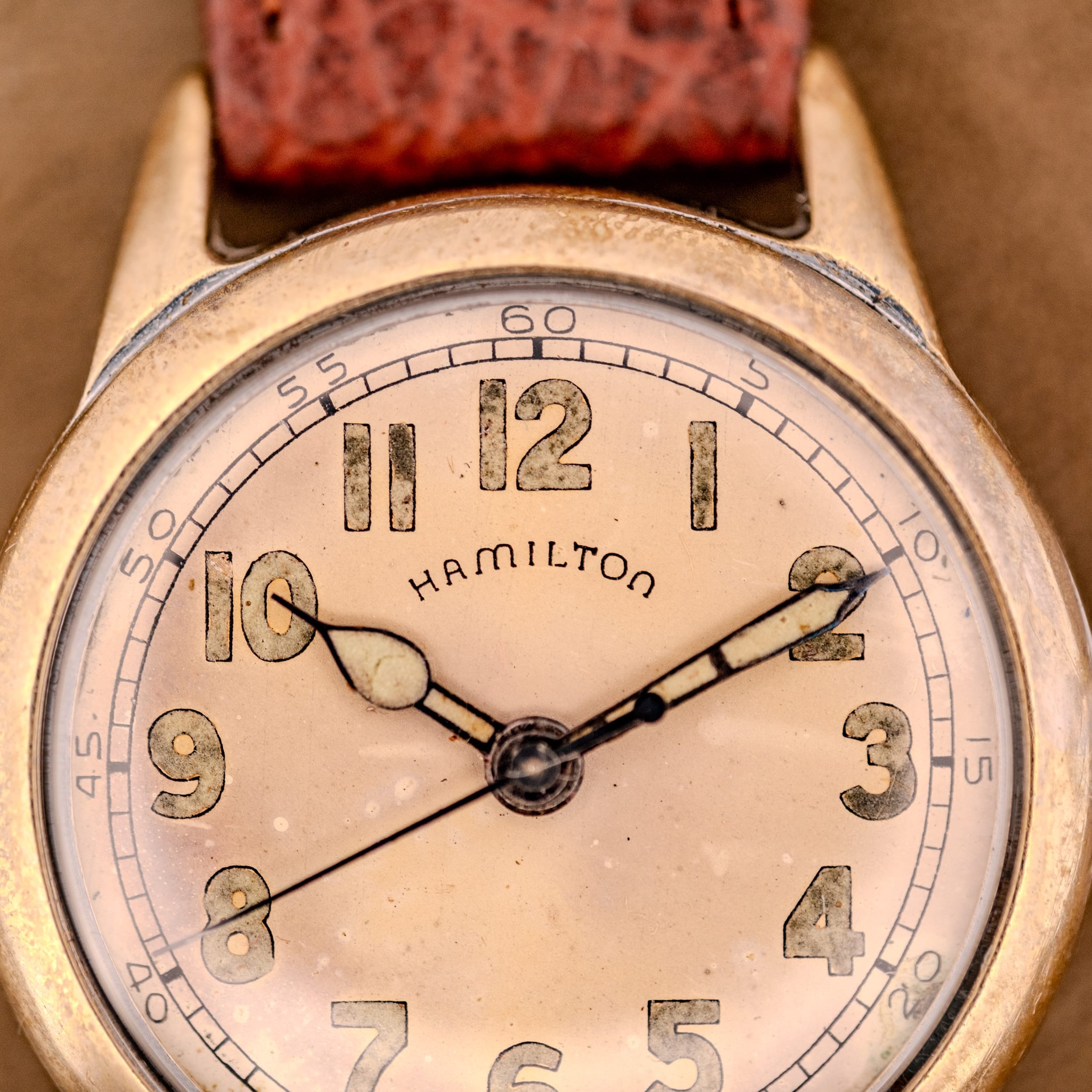
The dial is the kind of survivor that the wartime production years tended to produce. The original cream surface has warmed unevenly into a soft rosy salmon tone across the center and lower zones, lending the watch an organic warmth that no refinish job can replicate. The full Arabic numeral set is rendered in the bold block military typeface Hamilton specified for legibility, with each numeral carrying an aged lume infill that has settled to a deeper tan. The classic Hamilton wordmark is printed in serif just below twelve. The spade-style hour and minute hands carry matching aged lume in their broad tips, and the slender blued steel center sweep seconds hand draws a fine line all the way out to a small counter-balance tail at center. The outer minute track runs the full circumference with printed five-minute numerals from 5 to 60. No refinishing, no relume, no retouching anywhere on the dial, and every aged element ages together in the same direction.
We have paired it with a rich brown pebbled leather strap with cream contrast stitching, fitted on a steel buckle. The reddish-brown tone of the leather picks up the warm patina of the base metal case in a way we keep returning to with these warm-toned 1940s Hamiltons, and it reads as period-appropriate without trying to costume the watch.
Serviced in-house at OTTUHR and backed by our 2-year mechanical warranty, this Hamilton 987S is a wartime piece with the surface honesty and movement integrity that collectors of American watchmaking quietly prize. For the collector who values the actual mechanical history of the early hacking era over headline brand prestige, or who simply wants a properly cared-for Hamilton from the years when Lancaster was running flat out for the war effort, this is, to us, exactly the kind of watch we want to put on a wrist.