


The Omega 2637 represents a pivotal moment in post-war watchmaking, arriving at the dawn of the modern automatic wristwatch era. Introduced in 1948 as part of Omega’s response to the expiring Rolex perpetual rotor patent, this reference showcased the Swiss manufacturer’s innovative bumper automatic technology in a robust, elegantly proportioned case. The 2637 stands as a transitional piece in Omega’s history, bridging the gap between the earliest automatic movements and the full-rotor calibers that would define the 1950s.
What makes the 2637 particularly compelling for collectors is its technical sophistication paired with understated elegance. At 35mm across, the watch wears larger than its dimensions suggest, thanks to downturned lugs that wrap gracefully around the wrist and an upgraded crystal retention system with a metal tension ring that distinguished it from its contemporary, the reference 2584. This reference epitomizes the golden age of Swiss watchmaking, when manufacturers prioritized mechanical refinement and durability over marketing flash.

Watch Omega Automatic, OMEGA Bumper, Reference 2637-1, Case Steel, 36mm, Circa 1950, Gift Birthday, Watch Unisex, Dad Gift, Watch VaN
History & Production Period
The Omega 2637 emerged in 1948 as an evolution of the reference 2374, which Omega had been producing with manual-wind movements. The key innovation separating the 2637 from its predecessor was the adoption of a screw-down caseback, replacing the friction-fit snap-back design that required a separate metal retention ring (a component that frequently went missing on the 2374). This improvement aligned the 2637 with the first-generation Seamaster, which debuted the same year with similar waterproof construction.
The reference was positioned as an upgrade to the 2584, its sibling model introduced concurrently. While both references appear nearly identical at first glance, the 2637 incorporated a more sophisticated crystal mounting system with a metal tension ring providing enhanced water resistance. This seemingly minor detail reveals Omega’s engineering philosophy: incremental improvements that enhanced long-term reliability without compromising aesthetics.
Production spanned approximately 1948 through the mid-1950s, with the caliber 351 powering early examples until around 1952, when Omega transitioned to the caliber 354. The reference was manufactured in multiple case material configurations, each assigned a suffix designation. Production quantities remain unknown, but the 2637 appears less frequently than the Seamaster-branded references from the same period, suggesting more limited production runs.

27632) Omega Seamaster Bumper Automatic TURLER SIGNED
Technical Specifications
The Omega 2637 presents an ideal size for vintage watch enthusiasts seeking period-correct proportions that remain wearable by contemporary standards:
| Specification | Measurement |
|---|---|
| Case Diameter | 35mm (excluding crown) |
| Lug-to-Lug | 43mm |
| Case Thickness | 10.3-11mm |
| Lug Width | 18mm |
| Crystal Type | Acrylic with metal tension ring |
| Water Resistance | Waterproof when new (screw-down caseback) |
The 35mm case diameter might seem modest by today’s standards, but the watch wears considerably larger due to its generous 43mm lug-to-lug measurement and substantial downturned lugs that extend the visual presence on the wrist. The relatively thick profile (10-11mm) accommodates the bumper automatic movement, which requires more vertical space than later full-rotor designs.
The screw-down caseback provided a significant water resistance improvement over earlier snap-back designs, though exact depth ratings were not standardized in the late 1940s. The acrylic crystal with its metal tension ring creates a tight seal when properly installed, contributing to the watch’s dust and moisture resistance.

OMEGA Ref.2637-6 Cal.354 Bumper 50’s vintage watch mens
Movements/Calibers
The Omega 2637 housed two bumper automatic calibers during its production run, both representing the pinnacle of this transitional automatic winding technology.
Caliber 351 (1948-1952)
The caliber 351 powered early 2637 examples and represents part of Omega’s final series of bumper automatic movements. Key specifications include:
- Jewel Count: 17 jewels
- Frequency: 19,800 vph (2.75 Hz)
- Power Reserve: 42 hours
- Diameter: 28.5mm (12.75 lignes)
- Notable Features: Non-hacking seconds, oscillating rotor with approximately 270-degree arc
The caliber 351 features concealed buffer springs and operates through a ratchet mechanism that winds in one direction. When the wearer moves their wrist, the oscillating weight (often called a “hammer”) swings back and forth, creating the characteristic gentle thumping sensation that gives bumper movements their nickname. This movement lacks the chronometer certification of the higher-grade caliber 352 but delivers reliable timekeeping when properly maintained.
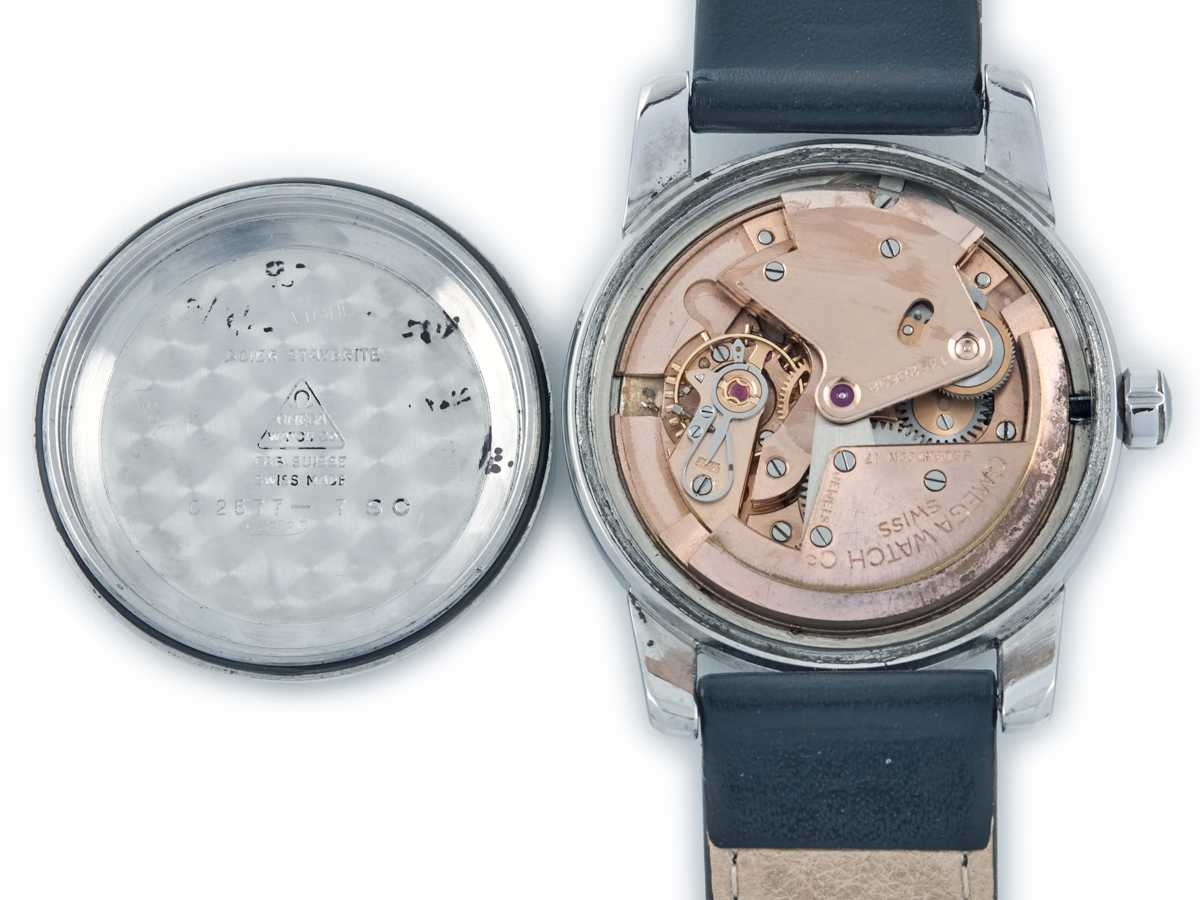
Bumper Movement Omega Seamaster Bumper Automatic Cal 354
Caliber 354 (1952-1955+)
Omega transitioned to the caliber 354 around 1952, continuing through the end of 2637 production. This movement shared many characteristics with the 351 but incorporated cost-reduction measures:
- Jewel Count: 17 jewels
- Frequency: 19,800 vph (2.75 Hz)
- Power Reserve: 42 hours
- Diameter: 28.5mm (12.75 lignes)
- Regulation: Swan neck regulator (replacing the “Omega System” regulation)
- Finish: Standard execution (versus deluxe finish of cal. 352)
The caliber 354 is essentially identical to the caliber 342 (sub-seconds configuration) but with center sweep seconds. Designed by Charles Perregaux, this movement was engineered for chronometer-level accuracy while remaining robust enough to handle the vibrations generated by the hammer action. Over 1.3 million bumper movements were produced between 1943 and 1955, making them relatively common in the vintage market, though finding one in excellent condition requires patience.
Both movements feature Incabloc shock protection and demonstrate Omega’s mastery of bumper automatic technology. When properly serviced, these calibers can achieve impressive accuracy, with many examples running within +7 to +10 seconds per day. The movements require servicing every 4-5 years to maintain optimal performance, as the constant hammer action can accelerate wear on the ratchet wheel and buffer springs.

Bumper Movement Omega Seamaster Bumper Automatic Cal 354
Dial Variations
The Omega 2637 appeared with a diverse array of dial configurations, offering collectors substantial variety within a single reference number. Understanding these variations is critical for authentication and valuation.
Dial Colors and Finishes
Silver/Cream Dials: The most common configuration features a silver or cream dial that has often aged to a warm patina. These dials typically display applied hour markers in either rose gold or white metal, with matching dauphine hands. Vertical grain texture appears on some examples, adding visual interest through subtle linear brushing.
Black Dials: Less common than silver variants, black dials command premium pricing. These typically feature either painted luminous dots at hour positions or applied metal indexes. Some black dial examples exhibit “tropical” aging, where the lacquer has faded to brown or chocolate tones due to UV exposure and age.
Honeycomb/Textured Dials: Among the most desirable variants are dials with honeycomb or geometric textured patterns. These guilloche-style finishes create a three-dimensional effect that catches light beautifully. The honeycomb pattern appeared in both light (silver/champagne) and dark (black/grey) colorways. These textured dials are particularly sought after and typically sell for 20-30% premiums over plain dials.
Two-Tone Dials: Some 2637 examples feature two-tone dial designs with contrasting outer rings or subsidiary elements. These are less common and present authentication challenges, as improper refinishing was sometimes disguised as “two-tone” designs.

OMEGA, REF. 2637,BLACK HONEYCOMB DIAL, STEEL | Important
Dial Text and Markings
The 2637 appeared both with and without model designation text on the dial. Unlike the Seamaster-branded variants, many 2637 examples carry only the Omega signature and “Automatic” designation. However, some transitional cases bearing both 2637 and 2520 or 2577 reference numbers may display “Seamaster” text.
Double-Signed Dials: A particularly collectible variant features double-signed dials bearing both the Omega signature and a retailer’s name. The most documented example carries “Turler” signing, indicating sale through this prestigious Swiss retailer. These double-signed pieces represent a snapshot of mid-century retail practices and command premiums of 15-25% among collectors.
Luminous Material
Understanding lume chronology is essential for authentication:
- Radium (pre-1962): Early 2637 examples used radium-based luminous material, which ages to a yellowish-brown or orange patina. The radium itself has a half-life of 1,600 years, so the loss of luminosity results from degradation of the zinc sulfide phosphor, not the radium. Radium dials often show characteristic “sand-like” texture and heavy discoloration.
- Tritium (post-1962): Production of the 2637 largely concluded before Omega’s transition to tritium around 1962-1963, making tritium-lumed examples extremely rare or indicative of service replacement dials.
- No Lume: Many 2637 variants featured no luminous material whatsoever, particularly those with applied metal hour markers and no painted elements.
Hand Styles
Original 2637 watches came equipped with dauphine hands in either matching metal finish (steel, rose gold, or yellow gold depending on case material) or contrasting combinations. The hands should show age-appropriate patina matching the dial. Replaced hands are extremely common and easily spotted by examining lume color consistency, shape precision, and finish quality.

Omega Bumper Automatics Show Yours | Page 3 | Omega Watch Forums
Case & Bezel Variations
The Omega 2637 appeared in multiple case material configurations, each designated by a suffix following the base reference number.
Case Materials and Reference Suffixes
2637-1 SC: Stainless steel case, standard configuration. The “SC” designation stands for “Steel Case.” This all-steel variant represents the most common configuration.
2637-4 SC: Stainless steel variant, distinguishable from the 2637-1 through subtle case detail differences. The exact differentiation between 2637-1 and 2637-4 remains unclear in available documentation, though both are all-steel configurations.
2637-5 SC: Stainless steel case, confirmed through documented examples. Like other SC variants, this features all-steel construction with screw-down caseback.
2637-6 SC: Stainless steel with occasional gold cap variants. This reference appears in auction records with both all-steel and gold-capped examples, suggesting possible factory variation or mixed documentation.
2637-7 SC: Gold cap configuration (gold-plated bezel and lugs on stainless steel case). This two-tone approach provided the aesthetic appeal of gold at a more accessible price point. The gold capping typically measures 80 microns in thickness.
2637-8 SC: Rare “Jumbo” variant, though this reference number requires further verification. Some sources list this as a standard 35mm configuration rather than oversized.
Solid Gold Variants: The 2637 also appeared in 18-karat yellow gold, though these examples typically carry different suffix designations and are considerably scarcer.

Omega Seamaster Automatic Gold Cap Mens Vntage Watch 2637
Case Construction Details
The 2637 case follows a three-piece construction with an integrated bezel, main case body, and screw-down caseback. This design was engineered for water resistance and dust protection, representing significant advancement over earlier snap-back designs. The case features:
- Downturned Lugs: Substantial, gracefully curved lugs that sweep downward to follow the wrist’s contour. These lugs give the 35mm case a larger presence and create the watch’s characteristic profile.
- Integrated Bezel: Unlike later Seamaster models with separate bezels, the 2637 features a shallow, chamfered bezel integrated into the upper case body.
- Crown: Omega-signed crown with grip pattern appropriate to the period. Original crowns should match the case material (steel for SC references, gold for solid gold examples).
- Case Finish: Original cases exhibit a combination of brushed and polished surfaces. The lugs typically show brushing, while case sides display high polish. Over-polishing is extremely common on vintage examples and can reduce collector value by 20-40%.
Caseback Markings
Proper caseback markings include:
- “Omega Watch Co” or “Omega Watch Co Swiss Made”
- Reference numbers (often showing both 2637 and transitional references like 2520 or 2577 on some examples)
- Case material markings and hallmarks
- Serial number (typically 8 digits)
The screw-down caseback features notches for a specialized wrench, typically showing six engagement points. Period-correct casebacks should show appropriate wear and patina rather than fresh engraving.

27632) Omega Seamaster Bumper Automatic TURLER SIGNED
Bracelet & Strap Options
The Omega 2637 was originally sold on leather straps rather than metal bracelets, reflecting both the watch’s dress watch positioning and period-typical wearing preferences.
Period-Correct Strap Configurations
Leather Straps: Original 2637 examples came on leather straps in black or brown, typically 18mm width to match the lug spacing. Omega-branded buckles in matching case material (steel or gold-plated) complete the original presentation. Vintage Omega straps from this period often show:
- Omega signature on the buckle
- Simple tang-style clasp (deployants were less common in this era)
- Calf or cordovan leather construction
- Width tapering from 18mm at the lugs to 16mm at the buckle
Vintage Omega Bracelets: While not original to the 2637, collectors sometimes fit period-appropriate Omega bracelets from the 1950s. The most suitable options include:
- Gay Frères mesh bracelets (requires 18mm end links)
- Omega “Beads of Rice” style bracelets (ref. 1037, 3010 series)
- Flat-link designs from the 1950s
It’s important to note that fitting vintage bracelets to a 2637 requires proper 18mm end links and should only be undertaken if maintaining absolute originality is not the priority. Most serious collectors prefer keeping these watches on period-style leather straps.
Modern Strap Options
Contemporary owners often choose high-quality leather straps from makers like Delugs, Hirsch, or Jean Rousseau in vintage-appropriate styles. Brown leather in tan barenia or natural shell cordovan complements the warm tones of aged dials particularly well. Black calf leather suits more formal wearing contexts.

Omega seamaster De Ville gold mens wrist watch vintage
Identifying Original vs. Replaced Parts
Authentication of the Omega 2637 requires careful examination of multiple components, as these vintage pieces frequently contain replaced or restored elements.
Dial Authentication
Red Flags for Refinished or Replacement Dials:
- Printing Quality: Original Omega dial printing exhibits razor-sharp edges under magnification. Refinished dials often show slightly fuzzy printing or inconsistent ink density.
- Font Accuracy: The Omega logo and text must match period-correct fonts exactly. Reproductions frequently use incorrect letter spacing, particularly in the Omega signature.
- Lume Consistency: If the dial features luminous material, the patina should be consistent across all hour markers and hands. Mismatched aging suggests parts replacement.
- Applied Marker Quality: Original applied hour markers sit flush and show precise finishing. Replacements may sit slightly proud or exhibit tool marks around the mounting pins.
- Texture and Patina: Original dials display organic aging patterns. Refinished dials often show overly uniform appearance or artificial aging attempts.
Authenticating Honeycomb Dials:
Honeycomb or textured dials require special scrutiny, as these command premiums. Original guilloche finishing shows consistent depth and pattern across the entire dial surface. The texture should feel slightly raised to the touch (when crystal is removed) and display no interruption in pattern around text or markers.
Movement Verification
Correct Movement for Reference:
- Caliber 351 (serial numbers approximately 12,000,000-13,999,999, dating to 1950-1952)
- Caliber 354 (serial numbers approximately 13,000,000-14,999,999+, dating to 1952-1954)
The movement serial number should fall within the appropriate range for a 1948-1955 watch. Numbers outside this range indicate either an impossible early date or a replacement movement. The movement should be signed “Omega Watch Co Swiss” along with the caliber number and jewel count.
Movement Condition Indicators:
- Bridges should show appropriate patina and wear
- Bumper mechanism should operate with characteristic gentle thumping when moved
- No excessive rust, pitting, or corrosion (though light tarnishing is acceptable)
- Jewels should be intact and properly seated
Crown and Crystal Authentication
Crowns: Original Omega-signed crowns feature the Omega symbol with crisp definition and appropriate size for the case. Generic replacement crowns are extremely common and easy to spot. The crown should thread smoothly into the case and match the metal finish of the case itself.
Crystals: Original acrylic crystals should fit precisely with the metal tension ring. Replacement crystals are acceptable from a functional standpoint but indicate the watch has been opened for service. Some collectors prefer original crystals with minor scratches over modern replacements.
Case Condition Assessment
Polishing Detection:
Over-polishing represents one of the most value-destroying conditions for vintage watches. Signs of excessive polishing include:
- Loss of crisp case lines, particularly where lugs meet the case body
- Thinning of lugs or case flanks
- Removal of hallmarks or reference numbers on caseback
- Uneven surfaces or “wavy” profiles
A properly unpolished 2637 commands a 30-50% premium over heavily polished examples. Light cleaning or “preservation” polishing that maintains original case geometry is generally acceptable to collectors.

A Test of the cal 354 Autowind | Omega Watch Forums
Collector Notes & Market Context
The Omega 2637 occupies an interesting position in the vintage market: respected for its quality and wearability but not subject to the speculation that inflates prices of sport references.
Current Market Positioning
As of late 2025, market values for the Omega 2637 span a wide range based on condition, configuration, and originality:
Stainless Steel Variants (2637-1, 2637-4, 2637-5, 2637-6 SC):
- Fair to Good Condition: $800-1,200 USD
- Very Good Condition (all original, light wear): $1,200-1,800 USD
- Excellent Condition (unpolished, pristine dial): $1,800-2,500 USD
- Exceptional Examples (NOS-level, honeycomb dial): $2,500-3,500 USD
Gold Cap Variants (2637-7 SC):
Solid Gold Examples:
- 18k Yellow Gold: $2,500-4,000 USD depending on condition
- Chronometer-certified examples (extremely rare in 2637): $4,000-6,000 USD
Premium Factors:
- Honeycomb or textured dial: +20-30%
- Double-signed dial (retailer name): +15-25%
- Full set (box and papers): +40-60%
- Unpolished case with sharp edges: +30-50%
- Documented service history: +10-15%

Omega Seamaster Automatic Gold Cap Mens Vntage Watch 2637
What Collectors Seek
Most Desirable Configurations:
- Honeycomb Dial Examples: The textured honeycomb dials represent the pinnacle of 2637 desirability, particularly in black or grey colorways.
- Unpolished Cases: Examples retaining factory case geometry with sharp lug edges command significant premiums.
- Double-Signed Dials: Retailer-signed examples like the Turler variants offer historical provenance beyond the watch itself.
- All-Original Configuration: Watches with matching-patina dial and hands, original crown, and period-correct strap represent the gold standard.
- Solid Gold Models: Scarcity and precious metal content drive values, particularly for rose gold examples.
Common Pitfalls
What to Avoid:
- Refinished Dials: Perhaps the most common issue, dial refinishing dramatically reduces value and authenticity. Many 2637 examples on the market have been “restored” with overly perfect dials that lack appropriate aging.
- Incorrect Movements: Some examples contain wrong-era or non-Omega movements installed during repairs. Always verify caliber 351 or 354 with appropriate serial numbers.
- Over-Polished Cases: Heavy polishing removes metal and destroys original case geometry. This is essentially permanent damage that cannot be reversed.
- Mixed Parts: “Frankenwatches” assembled from multiple donor pieces appear frequently. Mismatched patina between dial and hands often indicates parts swapping.
- Incorrect Crowns: Many 2637 watches feature generic replacement crowns. While functional, these detract from originality.
Service and Maintenance Considerations
Bumper automatic movements require specialized knowledge for proper service. Not all watchmakers are familiar with the unique bumper mechanism, and improper service can cause damage. Seek watchmakers experienced with vintage Omega bumper movements, as improper handling of the oscillating rotor assembly or buffer springs can lead to expensive repairs.
Service costs for caliber 351/354 typically range from $300-600 USD for a complete overhaul including cleaning, lubrication, and timing adjustment. Budget for service every 4-5 years to maintain optimal performance.
Common Service Issues:
- Worn bumper springs requiring replacement
- Ratchet wheel wear from decades of use
- Mainspring fatigue (replacement recommended during service)
- Crystal replacement (original acrylic crystals scratch easily)
- Gasket replacement to maintain water resistance

Vintage OMEGA Seamaster Chronometre 354 is a True Treasure
Investment Perspective
The Omega 2637 represents a solid entry point into vintage Omega collecting without the inflated pricing of Speedmasters or early Seamaster 300 divers. The reference offers:
Strengths:
- Genuine Omega quality and heritage
- Historically significant bumper automatic technology
- Wearable 35mm sizing appropriate for modern tastes
- Interesting technical story with the oscillating rotor
- Relative affordability compared to sport references
Considerations:
- Not a household-name model like Speedmaster or Seamaster 300
- Requires regular service to maintain bumper mechanism
- Dress watch styling limits versatility compared to sport watches
- Less liquid market than modern Omega references
For collectors seeking an authentic slice of 1950s Omega engineering without stratospheric prices, the 2637 represents excellent value. The key is patience: finding an all-original example with honest wear and no restoration takes time, but rewards that patience with a genuine connection to mid-century Swiss watchmaking at its finest.
Conclusion
The Omega 2637 stands as a testament to Omega’s post-war innovation and craftsmanship. This reference captures a specific moment in horological history when manufacturers were perfecting automatic winding technology, creating watches that balanced technical achievement with elegant design. While it may not command the headlines of Omega’s sport watches, the 2637 offers discerning collectors an opportunity to own a genuinely significant piece of Swiss watchmaking history at accessible prices.
For those willing to invest time in finding the right example (unpolished case, original dial, properly serviced movement), the 2637 delivers exceptional value. It represents what vintage watch collecting should be about: appreciating fine watchmaking, understanding historical context, and wearing a genuine artifact from watchmaking’s golden age. Whether you’re drawn to the honeycomb dial variants, fascinated by bumper automatic technology, or simply seeking an elegant 35mm dress watch from a respected maker, the Omega 2637 merits serious consideration.