

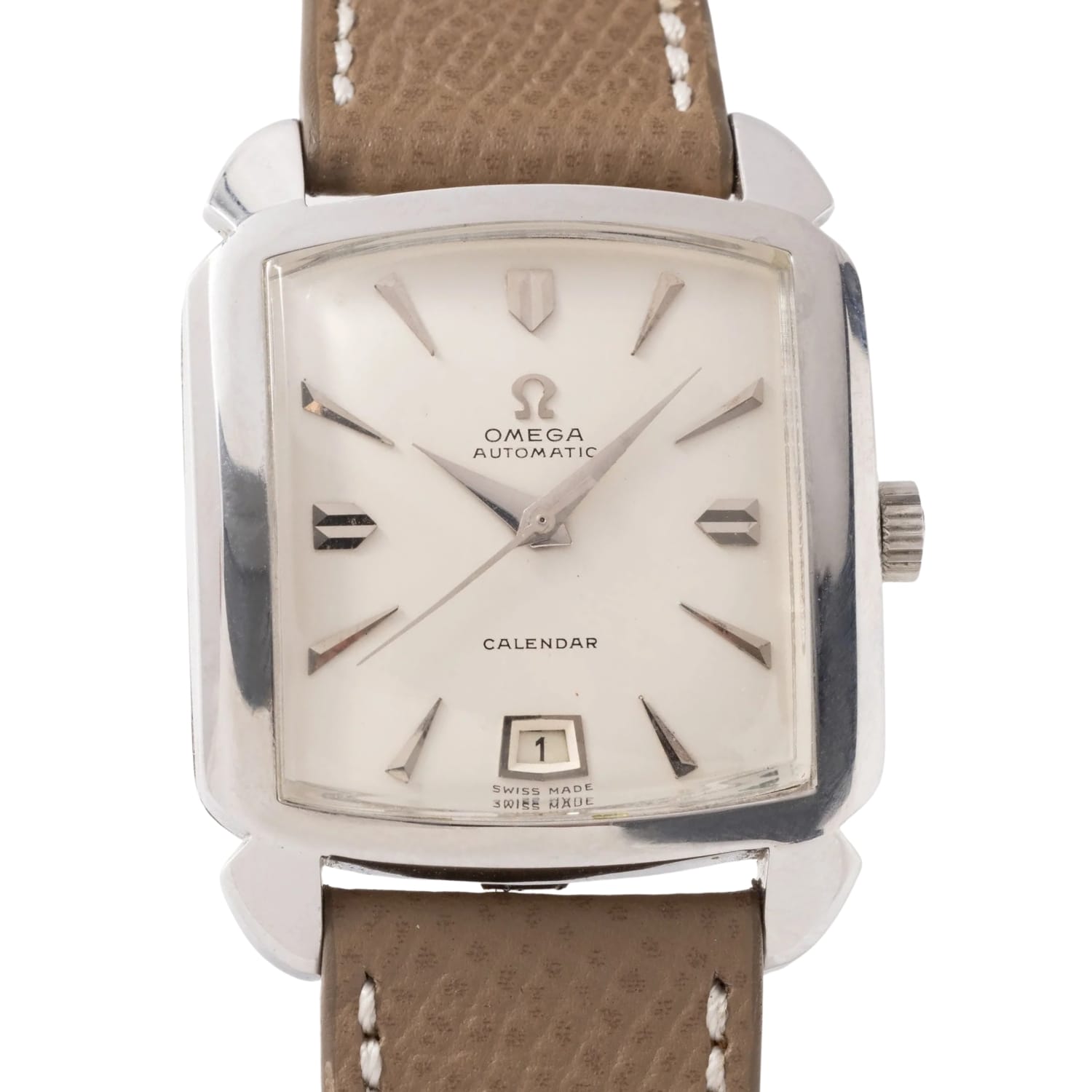
The Omega reference 3953 represents a fascinating intersection of mid-century horological innovation and elegant design refinement. Officially marketed as the “Grand Luxe” Calendar in Omega’s lineup, this reference stands as one of the brand’s most distinctive automatic calendar watches from the early 1950s—a period when Omega was pioneering bumper automatic movements and pushing the boundaries of dress watch aesthetics. The 3953’s appeal lies in its distinctive “carré galbé” (curved square) case architecture, sophisticated curved lugs, and the fascinating bumper automatic movement that represents a pivotal chapter in the evolution of self-winding watches.
What makes the 3953 particularly compelling for collectors is its rarity, precious metal construction, and position within Omega’s luxury hierarchy during the brand’s golden age. While overshadowed today by more famous references like the Speedmaster or the Constellation, the 3953 embodies the kind of bespoke craftsmanship and design experimentation that defined haute horlogerie in the 1950s. This was a watch built without compromise—exclusively in solid 18-karat gold, housing Omega’s finest bumper movements, and finished to standards that befitted its “Grand Luxe” designation.
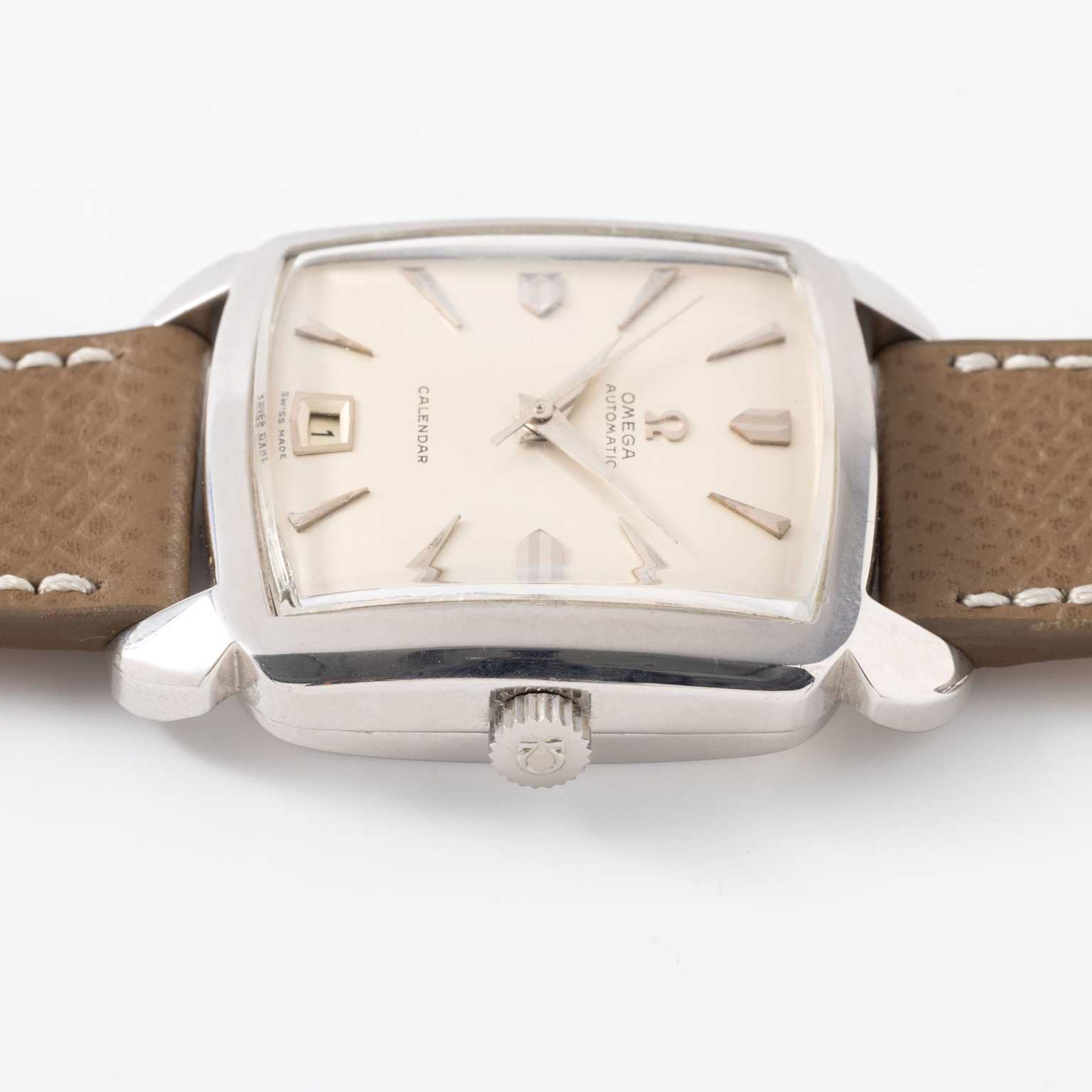
Omega Rare Calendar “Grand Luxe” White Gold Ref 3953
HISTORY & PRODUCTION PERIOD
The Omega 3953 SC (where “SC” denotes “Seconde Centrale” or center seconds) was introduced circa 1950 and remained in production through approximately 1955. This production timeline places the 3953 squarely within Omega’s most creative period for case design, when the brand was exploring numerous exotic case shapes beyond traditional round formats.
The watch emerged during a transformative era for Omega. Having introduced their first mass-produced bumper automatic movement—the caliber 28.10 RA PC—in 1943, Omega had spent the late 1940s refining and expanding their automatic movement family. By 1950-1951, when the 3953 appeared, Omega had evolved these movements into the more sophisticated 350-series calibers that would power the brand’s most prestigious models.
The 3953 was part of Omega’s strategy to offer distinctly shaped watches in precious metals for discerning collectors who desired something beyond standard round cases. It shared design DNA with several contemporary references, including the larger reference 3903 (the “cioccolatone” measuring 33mm across) and the reference 3950, which featured similar aesthetic language but in smaller proportions. The 3953, however, occupied a unique middle ground with its moderately sized rectangular profile.
Production quantities remain undocumented, but the scarcity of examples appearing at auction suggests limited manufacture. Most examples that surface today are from the 1952-1954 production window, based on movement serial numbers falling within the 11,000,000 to 14,999,999 range. The watch was never marketed as a Seamaster in the traditional sense, despite some dealers retroactively applying that designation; it was formally designated as an “Automatic Calendar” or “Grand Luxe Calendar” model.
TECHNICAL SPECIFICATIONS
The Omega 3953 presents a distinctive set of dimensions that set it apart from conventional round dress watches of the era:
| Specification | Measurement |
|---|---|
| Case Width | 31-32mm (measured horizontally, excluding crown) |
| Case Length | 39-40mm (lug-to-lug) |
| Case Thickness | Approximately 10-11mm (including crystal) |
| Lug Width | 18mm |
| Case Shape | Carré galbé (curved rectangular) |
| Water Resistance | Not specified; modest moisture protection via gaskets |
| Crystal Type | Acrylic (period-correct plexiglass) |
The case construction follows Omega’s “carré galbé” design philosophy, featuring a curved rectangular profile with gracefully sculpted lugs that extend organically from the case body. These lugs—sometimes described as “horn lugs” or “curved fancy lugs”—are one of the reference’s defining aesthetic features. The case design allows the watch to wear larger than its 31-32mm width might suggest, with the 39-40mm lug-to-lug measurement providing substantial wrist presence.
The proportions strike a harmonious balance: masculine enough for formal occasions, yet refined enough to slip under a dress shirt cuff. The curved case sides and polished finishes throughout create a sophisticated play of light across the watch’s surfaces.
MOVEMENTS/CALIBERS
The Omega 3953 houses either the caliber 353 or caliber 355 bumper automatic movement—two closely related mechanisms that represent the pinnacle of Omega’s first-generation automatic watchmaking.
Caliber 353
- Introduced: 1951
- Jewel Count: 17 jewels
- Frequency: 19,800 beats per hour (2.75 Hz)
- Configuration: Bumper automatic with center seconds
- Features: Straight-line lever escapement, copper-colored movement plates, date complication positioned at 6 o’clock
- Design: Concealed buffer springs, indirect center seconds
Caliber 355
- Introduced: 1953
- Relationship: Evolution of caliber 354 with added date function
- Jewel Count: 17 jewels
- Frequency: 19,800 beats per hour
- Features: Swan neck regulator, date display, improved regulation capabilities
- Construction: Copper-colored alloy components for enhanced corrosion resistance

Omega Seamaster Calibre 355 Date Circa 1954 Automatic Bumper
Both movements share the fundamental bumper automatic architecture pioneered by Omega. Unlike modern full-rotor movements that wind in both directions through 360 degrees, bumper movements feature an oscillating weight that swings through an arc of approximately 200-270 degrees before “bumping” against spring buffers. This semi-circular motion, while less efficient than full-rotor designs, produces a distinctive tactile feedback that collectors find charming.
The technical execution of these movements was extraordinary for the period. Omega engineered the caliber 353 and 355 to achieve chronometer-level accuracy despite the inherent vibrations caused by the bumper mechanism. The movements featured shock protection, anti-magnetic shielding, and precision finishing throughout. The copper-colored movement plates—achieved through a special brass alloy—were selected specifically for their superior resistance to oxidation and corrosion, explaining why many 70-year-old examples remain in remarkable cosmetic condition.
The date mechanism operates without quickset functionality, requiring the wearer to advance the time hands forward to change the date—a standard limitation of the era’s technology. The date aperture at 6 o’clock maintains dial symmetry and integrates seamlessly into the overall design aesthetic.

Watch Movement Evolution – The Bumper Automatic – GOLDAMMER
Power reserve for both calibers approximates 40-42 hours when fully wound. The bumper mechanism winds the mainspring through wrist motion in one direction, with the opposite swing simply returning the weight to its starting position for another winding cycle. While less efficient than bi-directional winding, regular wearing keeps the movement fully charged.
DIAL VARIATIONS
The Omega 3953 appeared with several dial configurations during its production run, though the variations are more subtle than those seen on longer-lived references:
Primary Dial Types:
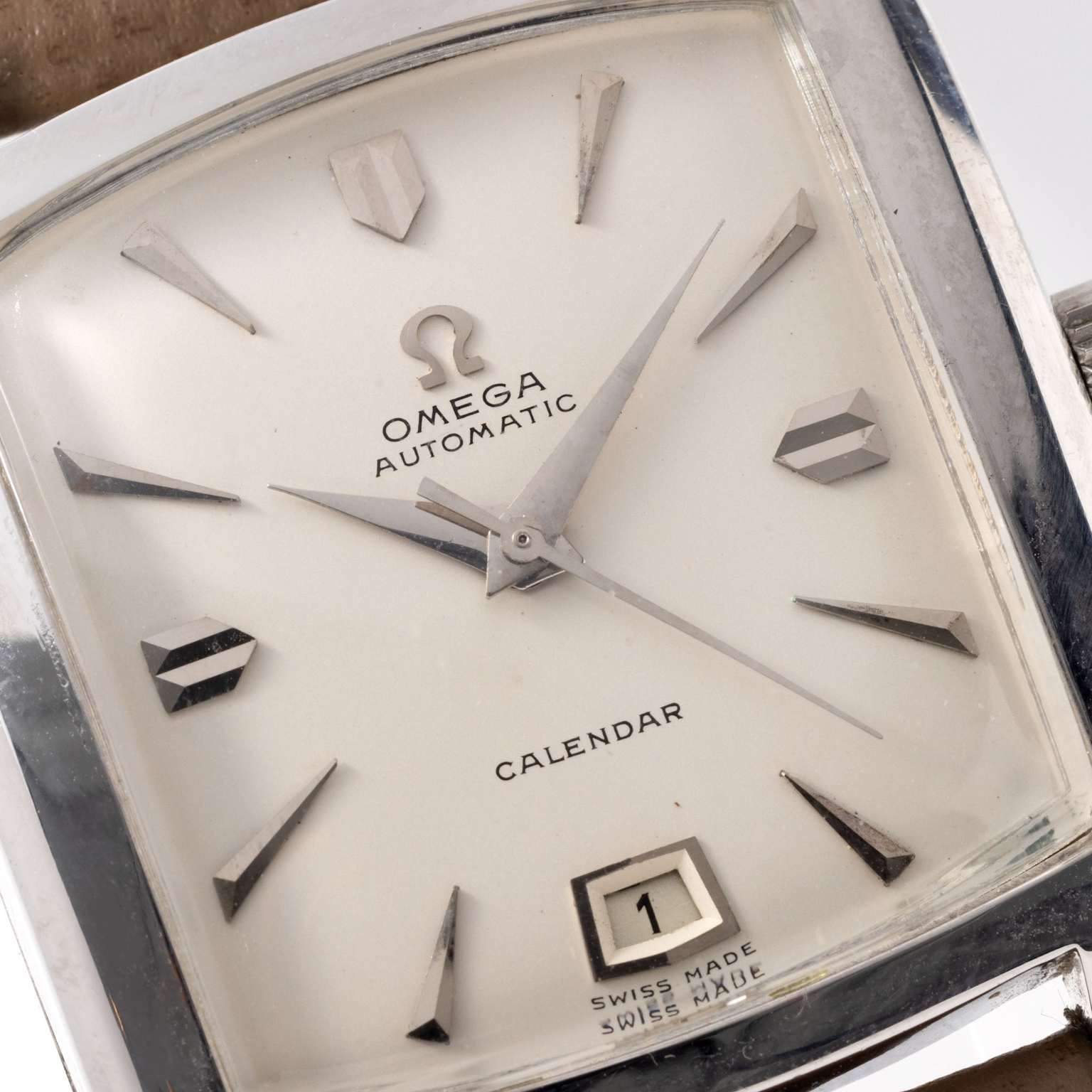
Silver/White Dials: The most commonly encountered configuration features a silver or white dial with applied gold hour markers in a dart or baton style. These dials typically show applied gold Omega symbols and gold dauphine hands. The date aperture at 6 o’clock integrates into the dial architecture with either a square or trapezoidal window shape.
Black Dials: Significantly rarer examples exist with black dials, which create dramatic contrast against the gold cases. These black-dial variants command premium pricing when they surface.
Gold Dials: Some examples feature monochromatic gold dials with matching gold indices and hands, creating a cohesive precious-metal aesthetic. These are found primarily on yellow gold cases.
Pearl Grey Dials: Occasional examples appear with pearl grey or silver-grey dials described in auction catalogs.
Dial Components and Markings:
The dials feature several characteristic elements that collectors should verify for originality:
- Applied Indices: Dart-shaped or baton-style hour markers in gold, applied to the dial surface
- Omega Symbol: Applied gold Omega logo at 12 o’clock
- Text: “OMEGA WATCH Co” above the center, “AUTOMATIC” below center, and “SWISS MADE” at the bottom edge
- Date Window: Positioned at 6 o’clock with either square (caliber 353) or trapezoidal (caliber 355) aperture shapes
- Hands: Dauphine-style hour and minute hands in gold, with a straight seconds hand
Identifying Refinished Dials:
Given the age of these watches, dial refinishing is a significant concern. Original dials will display:
- Correct font styles and spacing consistent with period Omega production
- “SWISS MADE” text at 6 o’clock (its absence on 1950s models strongly suggests refinishing)
- Even aging patterns across the dial surface
- Properly attached applied indices without glue residue or misalignment
- Appropriate patina on luminous material (if present) matching the watch’s age
Refinished dials often exhibit high-gloss finishes inconsistent with original matte or textured surfaces, irregular lettering applied by hand rather than factory printing, and indices that appear freshly installed. Under magnification, original dials show uniform construction and aging, while refinished examples reveal touch-up work, inconsistent lacquer application, or modern materials.
CASE & BEZEL VARIATIONS
The Omega 3953 was produced exclusively in precious metal cases—a hallmark of its “Grand Luxe” designation. No stainless steel or gold-capped versions are documented in authoritative auction records or dealer inventories.
Case Materials:
18K Yellow Gold: The most common configuration, accounting for the majority of surviving examples. These cases feature warm, rich gold tones and typically show hallmarks indicating 18-karat purity (750/1000 gold content).
18K Rose Gold / Pink Gold: A desirable variation featuring the warmer, copper-toned alloy that was popular in the 1950s. Rose gold examples command premiums due to their rarity and the appealing color contrast against silver dials.
18K White Gold: The rarest and most valuable configuration. White gold examples are exceptionally scarce, with only a handful appearing at auction over the past decade. The white gold case provides a platinum-like appearance while maintaining the durability of gold.

Omega Rare Calendar “Grand Luxe” White Gold Ref 3953
Case Architecture:
The case design follows the “carré galbé” philosophy—a curved rectangular form that flows organically around the wrist. The case sides are gently curved rather than flat, creating dimensional complexity and visual interest from multiple viewing angles.
The lugs represent one of the case’s most distinctive features. They extend gracefully from the case body with smooth, horn-like curves that echo design motifs seen on other 1950s Omega references with “fancy lugs”. The lugs are polished to match the case finishing, though some examples show brushed case sides contrasting with polished top surfaces.
Case Back Details:
The snap-on case backs feature several important markings for authentication:
- Omega Triangle Logo: The distinctive Omega symbol within a triangular frame
- Case Reference: “3953 SC” stamped into the inner case back
- Material Marking: “0,750” (indicating 18K gold) in a rectangular cartouche
- Swiss Made: “FAB. SUISSE” or “SWISS MADE” text
- Case Serial Number: Seven or eight-digit serial number unique to the watch
The case back typically remains smooth on the exterior without engravings or emblems, maintaining the dressy character appropriate for a formal timepiece.
Bezel and Crown:
The bezel integrates seamlessly into the case design, forming the rectangular opening for the crystal. It is polished to match the case finishing. The crown is a signed Omega design, typically with Omega logo engraving, and measures approximately 5-6mm in diameter—proportionate to the case size. The crown is not screw-down, relying instead on gaskets for modest moisture protection.
BRACELET & STRAP OPTIONS
The Omega 3953 was originally delivered on leather straps rather than metal bracelets, consistent with its dress watch positioning. Period-appropriate straps would have been high-quality leather in black or brown, paired with gold pin buckles matching the case material.
Lug Width: 18mm
The 18mm lug width was standard for vintage Omega dress watches of this size. This measurement makes finding replacement straps relatively straightforward compared to more unusual vintage sizes like 17mm or 19mm.
Strap Recommendations:
For collectors seeking period-correct aesthetics, the following options maintain authenticity:
- Black Calf Leather: Traditional choice for yellow or white gold cases, providing elegant contrast
- Brown Leather: Complements rose gold cases particularly well; dark brown or cordovan colors are most appropriate
- Crocodile/Alligator: Higher-end option consistent with the watch’s luxury positioning
Modern collectors have more flexibility, and many opt for vintage-styled straps that evoke 1950s aesthetics while using contemporary materials for improved durability and comfort. The 18mm width accepts standard straps readily available from quality suppliers.
Buckle Considerations:
Original gold pin buckles matching the case material (yellow gold, rose gold, or white gold) add authenticity and value. These period buckles were typically simple designs with polished finishes and Omega branding. Replacement buckles should match the case material to maintain aesthetic harmony—mixing metals is considered poor form on a dress watch of this caliber.
IDENTIFYING ORIGINAL vs. REPLACED PARTS
Authentication of the Omega 3953 requires careful examination of multiple components, as vintage watches of this era have often been serviced or modified over seven decades.
Movement Authenticity:
Genuine caliber 353 or 355 movements will display:
- Omega Signature: “OMEGA WATCH Co” engraved on the movement
- Jewel Count: “SEVENTEEN 17 JEWELS” or “SWISS SEVENTEEN JEWELS”
- Caliber Number: “Ω 353” or “Ω 355” marked on the movement bridge
- Movement Serial Number: Seven or eight-digit number in the 11,000,000-14,999,999 range for 1950-1954 production
- Copper Color: Distinctive copper-colored movement plates rather than rhodium or gilt
Movement parts should all be Omega-signed. Service replacement parts from generic sources or other manufacturers indicate compromised originality.
Dial Originality:
Original dials represent perhaps the most critical authentication point, as refinished dials dramatically impact value:
Correct for 1950s Production:
- Applied gold indices with clean, uniform attachment
- “SWISS MADE” text at 6 o’clock (critical marker)
- Appropriate aging/patina consistent with the watch’s age
- Period-correct font styles and spacing
- Omega symbol properly applied, not painted
Warning Signs of Refinishing:
- High-gloss finish inconsistent with original texture
- Missing “SWISS MADE” text
- Hand-painted lettering with inconsistent spacing
- Modern luminous material on indices or hands
- Glue residue around applied indices
- Dial appears too pristine relative to case wear
Examine dials under magnification (10x loupe minimum) to assess originality. Compare the example against documented original dials from reputable sources like auction houses or museum collections.
Case Integrity:
Original cases should show:
- Correct Hallmarks: Case back markings matching described format
- Proper Proportions: Unpolished cases retain sharp edges and defined lines
- Matching Numbers: Case and movement serial numbers from consistent production periods
- Appropriate Patina: Gold cases naturally develop subtle patina over decades
Polishing Concerns:
Over-polishing is one of the most common issues with vintage watches. The 3953’s horn lugs are particularly vulnerable—excessive polishing rounds off the crisp lines and softens the distinctive curves that define the case architecture. Original, unpolished cases command significant premiums because they retain the factory-intended proportions and finishing.
Signs of over-polishing include:
- Rounded lug tips that should be more defined
- Loss of detail at case edges
- Thinning of case walls
- Hallmarks that appear faint or distorted from metal removal
- Inconsistent case finishing (mixed brushed/polished where original was uniform)
Collectors should strongly prefer lightly polished or unpolished examples. Even professional polishing removes metal that cannot be replaced, diminishing originality and value over time.
Crown Authenticity:
Original crowns should be signed with the Omega logo and proportionate to the case (approximately 5-6mm diameter). Replacement crowns from generic sources or later Omega production are common; period-correct crowns maintain authenticity.
COLLECTOR NOTES & MARKET CONTEXT
The Omega 3953 occupies a specialized niche within the vintage Omega market—less universally recognized than Speedmasters or Constellations, yet highly prized by collectors who appreciate rare case shapes and Omega’s golden era of the 1950s.
Market Positioning & Values
Auction results from the past decade provide insight into the 3953’s market standing:
- 18K Yellow Gold Examples: €2,000-€4,000 ($2,200-$4,500) depending on condition and dial configuration
- 18K Rose/Pink Gold Examples: €3,000-€5,000 ($3,300-$5,500), commanding premiums over yellow gold
- 18K White Gold Examples: €8,000-€18,000+ ($9,000-$20,000+), with the upper end representing exceptional examples
A particularly notable sale occurred at Monaco Legend Auctions in December 2019, where an 18K white gold reference 3953 with a silver dial realized €18,200 (premium included) against an estimate of €8,000-16,000—demonstrating strong collector demand for the rarest configurations.
These prices reflect several factors:
- Precious metal content: Substantial gold weight provides inherent value floor
- Rarity: Limited production and survival rates
- Condition: Premium pricing for unpolished cases and original dials
- Completeness: Box and papers add 20-40% to values
What Collectors Seek:
The most desirable 3953 examples exhibit:
- Unpolished or Lightly Polished Cases: Retaining sharp lug definition and original proportions
- Original, Unrestored Dials: With all correct markings and appropriate patina
- Rare Configurations: White gold cases or unusual dial colors
- Complete Documentation: Original box, papers, or service records from the period
- Matching Numbers: Case and movement serials from the same production year
Common Pitfalls to Avoid:
Refinished Dials: The single most common issue. Many 3953 watches encountered on the market have been re-dialed at some point, significantly impacting value and collectability. Always demand high-resolution macro photography of the dial, particularly the area around the applied indices and the 6 o’clock region.
Over-Polished Cases: Aggressive case refinishing destroys the elegant proportions of the horn lugs. Compare the watch against unpolished reference examples to assess whether case lines remain crisp and original.
Incorrect Case/Movement Combinations: Franken watches combining 3953 cases with incorrect movements or vice versa do exist. Verify that movement serial numbers align with 1950-1955 production and that all components bear correct Omega signatures.
Generic Replacement Parts: Service work using non-original crowns, crystals, or movement parts compromises authenticity. Omega replacement parts were available for many years, but generic alternatives were often substituted by cost-conscious watchmakers.
Implausible Provenance Claims: Be skeptical of sellers claiming “never serviced” or “all original” without providing detailed photographs. After 70 years, most watches have required some intervention; honest disclosure about service history and replacement parts demonstrates seller integrity.
Investment Considerations:
The 3953 represents a value proposition within the vintage Omega market. Compared to more famous references, it offers:
- Lower entry cost for solid 18K gold Omega watches from the 1950s
- Distinctive aesthetics that stand apart from ubiquitous round-cased models
- Historically significant movement technology representing Omega’s bumper automatic era
- Limited availability creating scarcity without excessive hype
However, liquidity is lower than mainstream models. The 3953 appeals to dedicated Omega collectors and those drawn to unusual case shapes, rather than the broader market. Expect longer selling times if divesting, though well-preserved examples have shown consistent appreciation.
The market favors condition over provenance. An unrestored 3953 in yellow gold will outperform a refinished example in rose gold, despite the latter’s theoretical rarity premium. Collectors prioritize originality and case integrity above all else.
Service and Maintenance Considerations:
Bumper movements require specialized knowledge for proper service. Not all modern watchmakers are familiar with these mechanisms, and improper service can cause damage. Expected service costs for caliber 353/355 movements run approximately $500-$850 at competent independent watchmakers experienced with vintage Omega.
Omega’s authorized service centers can service these movements but will likely recommend dial refinishing if any aging is present—a practice that destroys collectible value. Collectors should explicitly refuse case polishing and dial refinishing when arranging service. Independent watchmakers specializing in vintage timepieces often provide more sensitive service that preserves originality.
Budget for service every 5-7 years with regular wearing, or every 8-10 years if the watch sees only occasional use. The bumper mechanism’s “thumping” sensation is normal and should not be considered a defect requiring repair unless the movement fails to wind.
CONCLUSION
The Omega Seamaster reference 3953 “Grand Luxe” represents a compelling chapter in mid-century Swiss watchmaking—a period when established manufacturers like Omega invested heavily in design innovation and movement development. The carré galbé case shape, distinctive horn lugs, and sophisticated bumper automatic movement converge in a watch that embodies 1950s elegance and technical ambition.
For collectors, the 3953 offers an opportunity to acquire a rare, solid gold Omega from the brand’s golden era at prices considerably below more famous references. The watch rewards careful selection—prioritize originality, unpolished cases, and authentic dials over superficial restoration. Examples meeting these criteria represent not just horological artifacts but wearable connections to an extraordinary period in watchmaking history.
The reference deserves recognition beyond specialist circles. While it may never achieve the universal acclaim of a Speedmaster Professional, the 3953’s combination of precious metal construction, innovative movement technology, and distinctive design ensure its place as a significant model within Omega’s rich twentieth-century legacy. For those willing to look beyond the obvious choices, the 3953 offers both aesthetic distinction and the satisfaction of possessing something genuinely rare.
Omega Rare Calendar “Grand Luxe” White Gold Ref 3953
Key Resources for Further Research:
- Omega Forums (omegaforums.net) – Active community with extensive 1950s model knowledge
- Omega Museum (Biel, Switzerland) – Historical archives and reference documentation
- Moonwatch Only and related publications – Though Speedmaster-focused, contain valuable context on Omega’s 1950s production
- Auction house archives (Antiquorum, Christie’s, Sotheby’s) – Documented 3953 examples with provenance
About OTTUHR: This report has been prepared by OTTUHR, a specialized vintage and pre-owned watch business serving collectors and enthusiasts. For inquiries about acquiring an Omega 3953 or for authentication services, please contact us directly.