


Last updated ~ February 2, 2026
Brand
Production Period
1962–1968
Model Line
Case Shape
Round
Diameter
35mm
Lug to Lug
42mm
Lug Width
18mm
Case Thickness
11mm
Case Back
Screw-Down
Crystal
Bezel
Smooth
The Omega Seamaster 30 reference 135.003 houses one of the most consequential movement families in twentieth-century watchmaking. The “30” designation refers not to water resistance depth nor case diameter, but to the 30mm movement within: the final evolution of a caliber architecture that dominated Swiss observatory chronometer trials for three decades, setting precision records at Neuchâtel, Geneva, and Kew-Teddington that established Omega’s reputation as the preeminent manufacturer of accurate timepieces. Between 1939 and the late 1960s, movements derived from this 30mm platform captured more observatory prizes and COSC chronometer certifications than any competing design, making the Seamaster 30 line a direct beneficiary of Omega’s most celebrated technical achievement. For collectors seeking accessible entry to this legacy, the 135.003 represents perhaps the finest value proposition in vintage Omega ownership.
The reference 135.003 functions as a manually-wound time-only dress watch, positioned within Omega’s 1960s catalog as an entry point to the Seamaster family for customers who prioritized precision timekeeping over the automatic winding convenience offered by costlier Constellation and automatic Seamaster models. The 35mm case diameter, considered standard for men’s watches during the early 1960s, accommodated the full 30mm movement without the dimensional compromises required by smaller calibers, preserving the architectural proportions that engineers credited for the movement’s exceptional accuracy. The watch suited professional and formal contexts, worn beneath shirt cuffs in office environments where reliability and understated elegance mattered more than sport-watch robustness. Among collectors and independent watchmakers today, the Seamaster 30 maintains an excellent reputation for mechanical durability, serviceability, and timekeeping precision that frequently surprises owners accustomed to the performance of modern movements costing many times more.
Omega has not released official production figures for the 135.003 reference, and no manufacturer-confirmed volume data exists in publicly available documentation. Collector research based on serial number analysis, market observation, and period catalog study suggests moderate production volume distributed across the reference’s approximately four-year manufacturing window. French dealer sources describe certain 135.003-62 variants as “petite production,” indicating limited manufacturing runs for specific configurations. Within the broader context of 1960s Omega production, the Seamaster 30 line represented a significant commercial segment, though individual references within the line varied considerably in their production allocation. The 135.003 appears with sufficient regularity in the secondary market to classify as uncommon rather than rare for standard dial configurations, while specific variants including linen-textured dials, authenticated black dials, and crosshair configurations qualify as genuinely scarce and command meaningful premiums when properly documented.
The collector market for the 135.003 demonstrates stable demand with particular strength for unusual dial variants. Standard silvered sunburst dial examples trade within accessible price ranges that position the reference as an entry-level vintage Omega, while authenticated black dial specimens command approximately double the prices of silver equivalents. Linen-textured dials attract the strongest collector interest and highest premiums, combining visual distinction with relative authentication reliability compared to black dials where refinishing fraud remains endemic. The reference has not experienced the dramatic price appreciation affecting certain hyped vintage references, instead maintaining steady value growth aligned with broader vintage watch market trends. Collector discourse frequently references the Seamaster 30 as undervalued relative to its movement heritage, though this assessment has persisted for years without triggering the price corrections such commentary might suggest. The reference carries no widely recognized nicknames specific to the 135.003 designation, though collectors commonly reference the broader “Seamaster 30” model line name and occasionally invoke “the poor man’s Constellation” as informal shorthand acknowledging the shared movement heritage between these model families.
Historical Context & Manufacturing Details
The Omega Seamaster 30 reference 135.003 emerged during the early 1960s, a period when Omega occupied an industry position substantially different from its current market standing. Throughout the 1950s and into the 1960s, Omega produced more watches annually than Rolex, commanded equivalent or superior prestige in many markets, and dominated precision timekeeping competitions through technical excellence rather than marketing expenditure. The company’s 30mm caliber family, developed in the late 1930s, had established benchmark standards for accuracy that competitors struggled to match, and Omega leveraged this technical advantage across multiple product lines including the prestigious Constellation and the more accessible Seamaster 30.
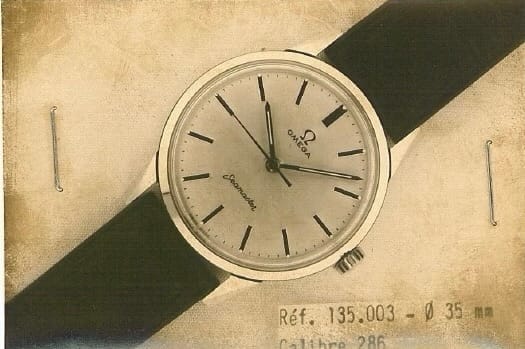
The Seamaster line itself traced origins to 1948, Omega’s centennial year, when the company adapted military watch waterproofing technology for civilian dress watch applications. The original Seamaster offered modest water resistance through O-ring gasket sealing, a practical feature that distinguished it from competitors’ offerings while maintaining the refined aesthetics expected of dress timepieces. By the early 1960s, the Seamaster family had expanded to encompass numerous references spanning automatic and manual-wind movements, various case sizes, and diverse complication offerings. The Seamaster 30 sub-family specifically showcased Omega’s legendary 30mm hand-wound calibers in cases designed to maximize the movement’s dimensional advantages.
The reference 135.003 arrived during the final years of the manual-wind era’s commercial dominance. Consumer preferences were shifting decisively toward automatic movements, and Omega’s marketing increasingly emphasized self-winding calibers in the Constellation and automatic Seamaster lines. The Seamaster 30 served customers who either preferred manual winding’s traditional engagement with timekeeping ritual or who sought Omega quality at price points below the automatic offerings. This positioning would prove commercially temporary; by the late 1960s, automatic movements had captured sufficient market share that dedicated manual-wind dress watch lines lost commercial viability, contributing to the Seamaster 30’s discontinuation.
Development History
Omega developed the Seamaster 30 family to extend the commercial reach of its championship-winning 30mm caliber platform beyond the premium-priced Constellation line. The Constellation, introduced in 1952, had established itself as Omega’s flagship precision timepiece, commanding prices that reflected both its chronometer certification and its prestigious positioning. Market analysis indicated demand for movements offering similar precision at more accessible price points, creating the commercial rationale for the Seamaster 30 concept.
The specific reference 135.003 entered production in 1962, as indicated by the “-62” suffix appearing on full reference designations and confirmed by serial number correlation with Omega’s production records. The reference represented one variant within the broader Seamaster 30 lineup, which encompassed multiple case configurations, movement specifications, and dial options across various reference numbers. The 135.003 specifically housed the Caliber 286, a center-seconds derivative of the 30mm movement family optimized for the time-only application without complications.
Production continued through approximately 1966, with the reference discontinued as Omega consolidated its manual-wind offerings and redirected resources toward automatic movement development. The transition reflected broader industry trends rather than any deficiency in the 135.003 itself; the Caliber 286 remained a technically excellent movement whose obsolescence derived from changing consumer preferences rather than competitive inadequacy. Omega’s subsequent manual-wind production would focus on specialized applications including the Speedmaster chronograph rather than time-only dress watches, effectively ending the Seamaster 30 concept.
Manufacturing Context
Within Omega’s early 1960s product catalog, the Seamaster 30 occupied a specific market position below the Constellation flagship and alongside the automatic Seamaster variants that offered self-winding convenience at comparable or moderately higher prices. The 135.003 represented neither a major product launch commanding significant marketing investment nor an afterthought relegated to catalog obscurity; rather, it served as a steady catalog participant addressing proven market demand for accessible precision timekeeping.
The reference introduced no technical firsts for Omega. The Caliber 286 movement derived directly from established 30mm caliber architecture dating to the late 1930s, and the case construction followed standard Seamaster practices refined over the preceding decade. The Hippocampus seahorse caseback emblem, the screw-down caseback construction, and the overall case proportions all drew from established Seamaster design language rather than introducing novel elements. This evolutionary character contributed to the reference’s reliability and serviceability while limiting its claim to historical milestone status.
Production volume, while undocumented precisely, appears to have been meaningful within the Seamaster 30 family context. The reference appears in period catalogs and dealer materials, indicating standard commercial availability rather than special-order or limited-production status. Multiple case material options, dial variants, and accessory configurations suggest Omega’s expectation of sufficient demand to justify production complexity. The reference’s current market availability, with examples appearing regularly through dealers and auctions, confirms that original production reached levels ensuring reasonable collector access today.
Factory & Production Location
All Seamaster 30 reference 135.003 production occurred at Omega’s manufacturing facilities in Bienne (Biel), Switzerland, the company’s headquarters since its nineteenth-century founding. The Caliber 286 movements were manufactured entirely in-house at Bienne, drawing on Omega’s comprehensive vertical integration encompassing raw material processing, component fabrication, assembly, timing adjustment, and quality control.
Case manufacturing for the 135.003 was outsourced to Ervin Piquerez SA (EPSA), a specialized Swiss case manufacturer headquartered in Bassecourt. EPSA supplied waterproof cases to multiple prestigious Swiss brands during the mid-twentieth century, including Omega, Jaeger-LeCoultre, Longines, and Tissot. The company’s cases can be identified by distinctive hallmarks stamped on caseback interiors, most notably a “diving helmet” symbol consisting of a circle positioned above a triangle. EPSA’s reputation for quality waterproof case construction aligned with the Seamaster’s water resistance marketing, though the 135.003’s 30-meter rating represented modest protection rather than serious dive capability. EPSA eventually declared bankruptcy in 1991, making original cases irreplaceable with manufacturer-sourced components.
Dial production involved external specialist suppliers working to Omega specifications, consistent with standard Swiss industry practice of the era. Multiple dial contractors served Omega simultaneously, creating legitimate minor variations in typography, finishing, and detail execution across authenticated production examples. These variations reflect different supplier production methods rather than authenticity concerns, provided overall characteristics remain within documented parameters. Specific dial supplier identification for individual 135.003 examples is generally not possible without access to internal Omega production records.
Horological Significance
The Omega Seamaster 30 reference 135.003 derives its horological significance primarily from the Caliber 286 movement it houses rather than from any case or design innovation. The 30mm caliber family represents one of the most successful precision movement designs in Swiss watchmaking history, a technical achievement whose influence extended far beyond Omega’s own product lines to establish industry-wide standards for accuracy and reliability in mechanical timekeeping.
The caliber family originated in 1938-1939 under the direction of Omega engineer Henry Kneuss, who designed the movement architecture around what he termed “ideal proportions”: the smallest practical escapement combined with the largest barrel and balance wheel the 30mm diameter permitted. This configuration maximized energy storage and rotational inertia while minimizing escapement friction losses, creating theoretical advantages that translated directly to precision timekeeping performance. The design’s excellence received immediate confirmation through observatory competition results.
In 1940, the 30mm caliber set precision records at Kew-Teddington Observatory in England. Following World War II, the movement family dominated Swiss observatory trials, sweeping first-place finishes at Neuchâtel, Geneva, and returning to Kew with continued success in 1946. Between 1958 and 1969, Omega captured between 30 and 50 percent of all annual COSC chronometer certificates issued, primarily through 30mm-based calibers powering Constellation and related models. This sustained competitive dominance established Omega’s technical reputation during the era and created the heritage that continues supporting the brand’s market positioning today.
The 135.003 provided access to this movement heritage at price points below the Constellation flagship, functioning as what collectors sometimes describe as “the poor man’s Constellation.” While the Seamaster 30 movements were not individually chronometer-certified like their Constellation siblings, they derived from identical architectural principles and manufacturing processes, delivering comparable accuracy potential at reduced cost. This positioning makes the reference historically significant as the most accessible expression of Omega’s championship movement technology, democratizing precision timekeeping for customers unable or unwilling to afford Constellation pricing.
Construction & Architecture
The Omega Seamaster 30 reference 135.003 presents refined mid-century dress watch aesthetics executed with the construction quality expected from a leading Swiss manufacturer at the height of the industry’s mechanical watchmaking era. The design language balances conservative elegance appropriate for professional contexts with sufficient visual interest to reward close examination, avoiding both the starkness of purely utilitarian timepieces and the ostentation of jewelry-focused designs. The overall impression conveys competent professionalism, a watch suited for boardrooms and formal occasions without demanding attention or announcing its presence.
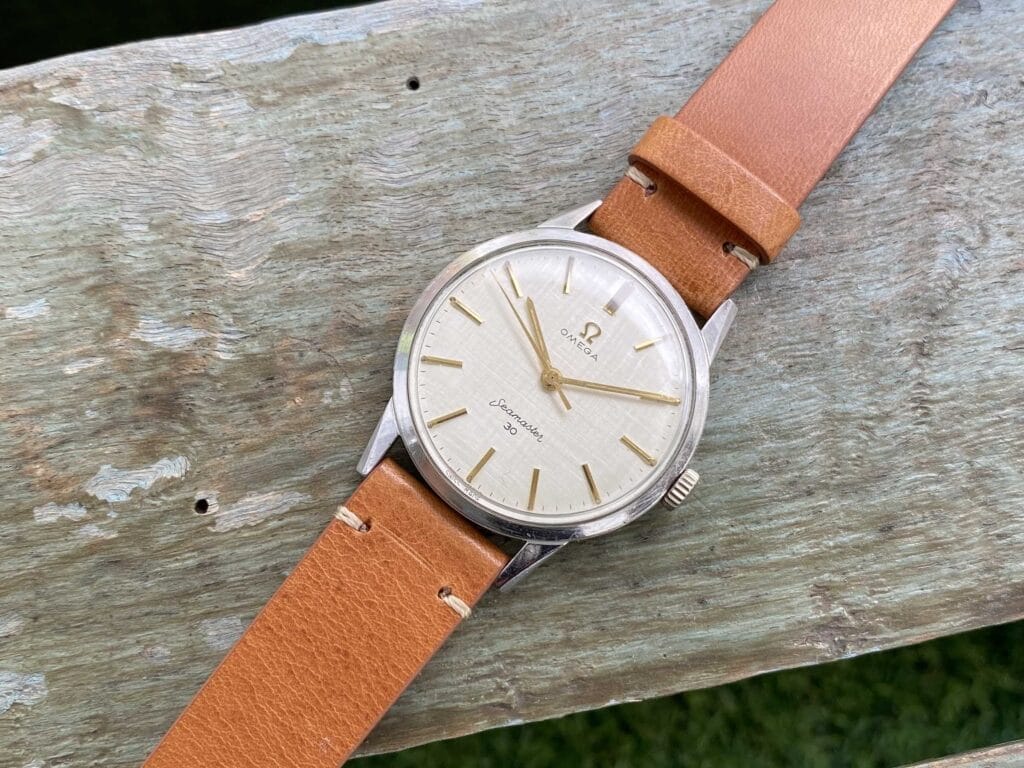
The 35mm case diameter, positioned at the larger end of early 1960s dress watch sizing, provides genuine wrist presence without the imposing dimensions of contemporary tool watches. The round case shape follows classical proportions, with lugs flowing from the case middle in curves that conform to wrist contours for comfortable wear. Surface finishing combines polished and brushed elements in patterns that catch light attractively while resisting the fingerprint accumulation and minor scratching that plague exclusively polished cases. The screw-down caseback bearing Omega’s embossed Hippocampus seahorse medallion provides both practical water resistance and brand identification, while the hesalite crystal’s gentle dome adds visual warmth that flat sapphire crystals cannot replicate.
Case Design
The 135.003 case follows three-piece construction standard for quality Swiss dress watches of the period, with separate bezel, case middle, and caseback components assembled to create the complete case assembly. The case style positions firmly within dress watch territory, sized and finished for formal and professional wear rather than sport or tool watch applications. The round case shape follows classical proportions with no design elements that would appear dated or period-specific to modern eyes.
Case dimensions establish the 135.003 as a mid-sized vintage watch that translates comfortably to contemporary wrist wear:
| Dimension | Measurement |
|---|---|
| Case diameter | 35mm (excluding crown) |
| Lug-to-lug | 42-42.5mm |
| Thickness | 10.8-11.5mm |
| Lug width | 18mm |
The lug-to-lug measurement proves more relevant to wrist fit than diameter alone. At 42-42.5mm, the 135.003 sits comfortably on wrists from approximately 6.25 inches upward without lug overhang, accommodating the majority of male wrist sizes. The thickness around 11mm allows the watch to slide beneath shirt cuffs without difficulty, maintaining dress watch practicality.
Case materials documented for the 135.003 include:
| Material | Designation | Characteristics |
|---|---|---|
| Stainless steel | ST, ACIER INOXYDABLE | Most common; excellent durability |
| Gold-plated | JD, gold-capped | Less common; wear-through possible on examples with heavy use |
Stainless steel cases predominate in the current market, reflecting both higher original production volume and superior durability over six decades. Gold-plated cases, while attractive when well-preserved, frequently show wear-through at high-contact points including case edges and lug tips, reducing their desirability except in exceptional condition examples.
Case finishing combines polished bezel and case sides with subtle transitions that catch light without the mirror-like reflectivity that would appear excessive for dress watch contexts. The lugs curve downward to follow wrist contours, with sufficient length to provide secure strap attachment while avoiding the excessive lug extension that would compromise wearing comfort. Lug drilling follows period practice for strap bar retention.
Case manufacturing was outsourced to Ervin Piquerez SA (EPSA) of Bassecourt, Switzerland, identifiable by the distinctive hallmarks stamped on caseback interiors. EPSA’s “diving helmet” symbol (circle over triangle) appears on authenticated cases alongside Omega’s own markings. This supplier relationship was standard practice for Swiss watch brands of the era and indicates no quality concern.
Dial Variations
Dial variation within the 135.003 reference creates the primary differentiation affecting collector desirability and market value. While all authentic dials share fundamental layout characteristics, the specific colors, textures, and finishing techniques applied create distinct variants commanding significantly different premiums.
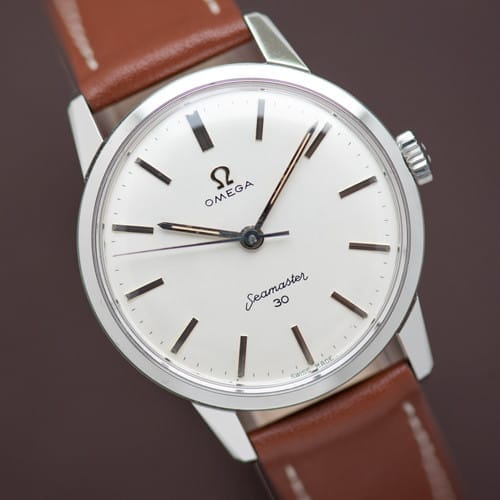
Standard silvered sunburst dials represent the most common configuration, featuring brushed silver-toned finishing that radiates from dial center toward the periphery. These dials present attractively in person, with the sunburst effect creating dynamic light reflection as viewing angle changes. Applied indices in silver-toned metal (matching steel cases) or gold-toned metal (matching gold-plated cases) provide dimensional contrast against the dial surface. Standard silvered dials, while lacking the rarity premiums of specialty variants, offer excellent value for collectors prioritizing movement heritage over dial distinction.
Linen-textured dials rank as the most desirable documented variant for the 135.003, featuring a distinctive cross-hatched surface pattern that creates subtle visual texture visible under close examination. The linen effect results from manufacturing processes that cannot be precisely replicated through refinishing, providing relative authentication reliability compared to smooth dial surfaces where refinishing detection proves more challenging. Colors documented include grey, silver-white, and cream-toned variants. Collector discourse consistently identifies linen dials as “showstoppers” commanding 20-40% premiums over standard silvered equivalents when properly authenticated.
Black dials command approximately double the market value of silver variants but demand extremely careful authentication. Expert consensus holds that authentic black dials on pre-1970s Omega watches are exceptionally rare, with one experienced forum contributor advising: “If you ever see a watch made before the 70s with a black dial, simply state that it is a redial, and you are with 99% reliability right.” The mid-century popularity surge for black dial vintage Omegas, attributed partly to the “Don Draper effect” from the television series Mad Men, created commercial incentive for dial refinishing that flooded the market with repainted examples. Authentic black dials show appropriate age characteristics including subtle color shifts toward green or brown, surface cracking or crazing visible under magnification, and consistent aging relative to case and movement condition.
Crosshair dials feature intersecting perpendicular lines meeting at dial center, creating a distinctive sonar-like or gunsight appearance. Authentic crosshairs meet precisely at center; misaligned intersections where the lines fail to converge exactly indicate refinished dials where the pattern was added during repainting. Crosshair dials appear on multiple Omega references of the era and command moderate premiums combining visual distinction with less challenging authentication compared to black dials.
Honeycomb dials featuring hexagonal textured patterns represent the rarest documented variant, apparently produced primarily for specific markets including France. Authentication requires expertise given the pattern’s reproducibility through refinishing.
Dial text layout follows standard configuration across variants:
| Element | Position | Notes |
|---|---|---|
| Applied Omega logo (Ω) | 12 o’clock | Three-dimensional, attached via feet |
| “OMEGA” text | Below logo | Printed |
| “Seamaster 30” | Above 6 o’clock | Printed, identifies model line |
| “SWISS MADE” or “T SWISS MADE T” | Below 6 o’clock | Indicates luminous material type |
The transition from radium to tritium luminous material during 1963 created two distinct dial marking variants: pre-1963 dials reading “SWISS MADE” with radium lume, and 1963-onward dials reading “T SWISS MADE T” indicating tritium application. Both variants are period-correct depending on production date.
Applied indices consist of raised faceted baton markers attached to the dial via feet extending through the dial surface. Index design includes notches or cutouts accommodating luminous material plots. Index metal color matches case material: silver-toned for steel cases, gold-toned for gold-plated cases. The applied construction creates dimensional presence that printed indices cannot replicate, contributing to the dial’s quality impression.
Hands
Hand configuration on the 135.003 standardizes around baton or stick-style hour and minute hands with tapered profiles. The hands feature a distinctive design incorporating a black lacquer center stripe running the hand’s length, with luminous material filling the channels flanking this stripe. This construction creates visual contrast against both light and dark dial backgrounds while providing practical low-light legibility through the luminous elements.
Hand materials correspond to case metals, with silver-toned hands on steel cases and gold-toned hands on gold-plated cases. Surface finishing is polished to maximize light reflection and visual presence against the dial.
The center-mounted sweep seconds hand follows a simple tapered needle design without luminous material application, extending from the dial center to reach the seconds track at the dial periphery. Seconds hand color matches the hour and minute hands, maintaining visual consistency.
Luminous material on hands transitioned from radium to tritium concurrent with dial lume changes, creating authentication considerations. Original radium lume has patinated over six decades to cream, beige, or tan tones; original tritium shows greenish or yellowish aging. Lume patina on hands should match dial index lume in both color and aging characteristics. Mismatched patina between hands and dial indicates component replacement at some point in the watch’s history.
Gold-plated case variants received hands with distinctive styling, described in some sources as “pencil hands” with matched seconds hands in gold-toned finish.
Crown
Crown configuration on the 135.003 follows push-pull (non-screw-down) design standard for dress watches of the period. The crown provides two positions: pushed in for normal timekeeping operation and pulled out for time setting, with the manual-wind movement requiring periodic crown winding to maintain power reserve.
The crown bears the Omega logo in a scalloped or ridged design, with the Ω symbol appearing on the crown face. Crown material is stainless steel or gold-plated corresponding to case material. Crown diameter and height are proportioned appropriately to the case size, neither oversized for prominent visual presence nor undersized to complicate operation.
Period-correct crown dimensions and styling evolved during the 135.003’s production period, and multiple authentic crown variants exist. Omega crown reference ST45004 fits both the 135.003 and the related 135.007 reference, indicating shared component specifications within the Seamaster 30 family.
Service replacement crowns represent common findings on vintage examples, as crowns experience wear through regular handling and are frequently replaced during routine service. Genuine Omega service crowns are period-appropriate even if not original to the specific watch, while generic unsigned crowns indicate cost-focused service history that may correlate with other originality concerns.
Crystal
The 135.003 specification calls for hesalite (acrylic) crystal in a gently domed profile consistent with period Omega practice. Hesalite remained the standard crystal material for quality Swiss watches through the 1960s, with sapphire crystal adoption occurring in subsequent decades.
Hesalite characteristics relevant to collectors:
| Property | Hesalite Behavior |
|---|---|
| Scratch resistance | Low; scratches readily with normal wear |
| Scratch removal | Excellent; polishes easily with appropriate compounds |
| Shatter resistance | High; superior impact resistance versus mineral or sapphire |
| Visual character | Warm, subtle distortion at edges; lacks sapphire’s clinical clarity |
| Authenticity indication | Period-correct for 1960s production |
Original hesalite crystals may bear a small Omega logo at the dial center, visible only under close magnification. This logo presence provides one authentication checkpoint for original crystal survival, though logo absence does not definitively indicate replacement given inconsistent application during production.
Crystal replacement with correct-specification hesalite represents accepted restoration practice, as the material’s scratch susceptibility makes survival of original crystals over six decades uncommon. Replacement with mineral glass or sapphire would be considered inappropriate modification for a watch presented as original-specification, altering both the visual character and the period authenticity.
Bracelet & Strap Options
The Omega Seamaster 30 reference 135.003 was sold with both leather strap and metal bracelet configurations, with original equipment options documented in period catalogs and surviving examples.
Leather straps utilized 18mm width at the lugs with appropriate taper toward the buckle. Omega-signed tang buckles in materials matching the case (steel or gold-plated) completed original strap configurations. Period-correct buckles feature rectangular profiles with “OMEGA” text; the square-logo buckle design familiar from later decades represents 1970s production and is not period-correct for 1962-1966 manufacture. Strap colors included black, brown, and grey options appropriate for dress watch contexts.
Metal bracelet options included several references:
| Bracelet Reference | Style | Period | Notes |
|---|---|---|---|
| 1037 | Beads of Rice | 1962+ | Seven-row construction, most desirable |
| 7912 | Flat link, semi-expanding | 1961-1966 | Internal springs in links |
| 1035 | Flat link | 1967-1972 | Later period |
| 1039 | Flat link | 1966-1972 | Legendary status among collectors |
The Beads of Rice bracelet (reference 1037) represents the most desirable original bracelet configuration. The distinctive seven-row construction (nine counting edge rows) creates a supple, comfortable wearing experience that collectors prize. Clasps bear markings including “No. 12, STAINLESS STEEL, Ω OMEGA” on authentic examples. End links vary by case reference, with end link reference 570 fitting various 135.xxx cases.
Period flat link bracelets feature characteristically thin link construction (approximately 3mm thickness) creating a “light, jangly feel” distinct from the more substantial bracelets of later decades. Semi-expanding variants (reference 7912) incorporate internal springs within links that provide subtle size adjustment.
Bracelet survival on vintage examples is inconsistent, and many 135.003 watches now wear non-original straps or aftermarket bracelets. Original bracelet presence, particularly Beads of Rice reference 1037, adds meaningful value to complete examples.
Sub-Reference Summary Table
| Sub-Reference | Year Code | Case Material | Typical Dial | Caseback | Caliber | Notes |
|---|---|---|---|---|---|---|
| 135.003-62-SC | 1962 | Stainless steel | Silver sunburst | Screw-down w/ Hippocampus | 286 | Primary production variant |
| 135.003-62 (gold) | 1962 | Gold-plated | Silver or champagne | Screw-down w/ Hippocampus | 286 | Gold-toned indices and hands |
| 135.003-63 | 1963 | Stainless steel | Various | Screw-down w/ Hippocampus | 286 | Tritium transition year |
Note: Sub-reference documentation for the 135.003 is less comprehensive than for some Omega references. Variations in dial configuration occurred within sub-references, making dial variant identification independent from sub-reference determination in most cases.
Reference Key, Variations & Sub-References
Understanding Omega’s reference taxonomy and the variations occurring across the 135.003’s production run provides essential knowledge for collectors evaluating potential acquisitions. The ability to decode reference numbers, recognize legitimate production variations, and identify correct component pairings distinguishes informed collectors from those vulnerable to misrepresented or incorrectly assembled examples. The Seamaster 30’s relatively accessible pricing has unfortunately made it a target for parts mixing and dial refinishing, making authentication knowledge particularly valuable for this reference.
The 135.003 reference encompasses variations in case material, dial configuration, and production year that create distinct variants not always captured in the basic reference designation. Additionally, the broader Seamaster 30 model line included multiple reference numbers (135.003, 135.007, and others) using similar or identical components in different configurations, creating cross-reference confusion that collectors must navigate. Clear understanding of what distinguishes the 135.003 from related references, and what variations exist within the 135.003 designation itself, supports accurate identification and fair valuation.
Taxonomy & Nomenclature Decoding
Omega’s reference numbering system during the 1960s encoded specific information within the alphanumeric designation. The full reference format for the 135.003 follows the pattern: 135.003-62-SC
Breaking down each component:
| Component | Position | Meaning |
|---|---|---|
| 135 | Base reference | Case series identifier |
| 003 | Variant | Specific variant within the 135 series |
| 62 | Year suffix | Collection year (1962) |
| SC | Material/configuration | Stainless steel with screw-down caseback |
The base reference “135” identifies the case series used across multiple Seamaster models during this period. The variant number “003” distinguishes this specific configuration from other 135.xxx references including the closely related 135.007. The year suffix (62, 63, etc.) indicates the catalog year for that production variant, useful for dating examples and identifying which dial marking conventions (radium vs. tritium) should be present. The final suffix encodes case material and caseback configuration.
Material and configuration codes documented for the 135.003:
| Code | Meaning |
|---|---|
| SC | Stainless steel (Acier) with screw-back |
| -62 | 1962 collection year |
| -63 | 1963 collection year |
Omega’s modern vintage database uses an extended format ST 135.0003 for stainless steel 135.003 references, adding leading zeros and the “ST” prefix for material clarification. Collectors may encounter either format depending on documentation source.
The Mark (MK) System
The collector-developed Mark classification system, widely applied to vintage Omega references, sees limited formal application to the 135.003 specifically. Unlike references such as the Speedmaster Professional where production spanning decades created clearly defined dial generations, the 135.003’s relatively brief production window (approximately 1962-1966) and time-only configuration produced less dramatic evolution warranting formal Mark distinctions.
Production variations occurring within the 135.003 run that collectors should recognize include:
Luminous material transition (1963):
| Period | Material | Dial Marking |
|---|---|---|
| 1962-early 1963 | Radium | “SWISS MADE” |
| 1963-1966 | Tritium | “T SWISS MADE T” |
This transition created the most clearly distinguishable production variation within the 135.003 run, with dial foot text providing visible dating evidence.
Dial text typography: Minor variations in dial typography occurred across production, reflecting different dial suppliers and potentially different printing runs. Authentic variations include subtle differences in “Seamaster” font weight, spacing variations in “SWISS MADE” text, and minor size variations in the applied Omega logo. These variations fall within normal production tolerances and do not constitute separate Mark designations.
Index and hand materials: Gold-plated case variants received gold-toned indices and hands, while steel cases received silver-toned components. This material matching was consistent throughout production rather than representing a Mark transition.
Collectors researching 135.003 examples should focus on component consistency (matching case, dial, hands, and movement to the same production period) rather than seeking specific Mark variants as with longer-production references.
Sub-References & Transitional Models
The 135.003 sits within the broader Seamaster 30 model family alongside related references that share components and specifications. Understanding these relationships aids authentication and prevents confusion.
135.003 vs. 135.007: These references are closely related, both housing the Caliber 286 movement in similar 35mm cases. Both references use identical crown specifications (Omega reference ST45004 fits both). Differences involve minor dial and case configuration details rather than fundamental specification changes. Collectors sometimes encounter parts mixing between these references, which may or may not indicate problematic assembly depending on component compatibility.
135.003 vs. 135.011: The reference 135.011 is NOT a Seamaster 30 despite the similar reference format. The 135.011 is a Seamaster 600, using the entirely different Caliber 601 (a 600-series movement of 28mm diameter) in a slightly smaller 34.5mm case. This distinction matters because:
| Specification | Seamaster 30 (135.003) | Seamaster 600 (135.011) |
|---|---|---|
| Movement | Caliber 286 (30mm) | Caliber 601 (28mm) |
| Case diameter | 35mm | 34.5mm |
| Case profile | Slightly thicker | Notably slimmer |
| Model name | Seamaster 30 | Seamaster 600 |
| Dial text | “Seamaster 30” | “Seamaster 600” or just “Seamaster” |
Misidentification between these references occurs regularly in market listings, and collectors should verify movement caliber to confirm model identity.
Transitional considerations: The 135.003’s relatively brief production period limits transitional complexity compared to longer-running references. Component substitution from related references (particularly the 135.007) may appear on examples that have received service or restoration, requiring evaluation of whether such substitution represents acceptable period-correct interchange or problematic parts mixing.
Frankenwatch identification: The term “frankenwatch” describes timepieces assembled from components of different watches, creating examples that were never manufactured in their current configuration. For the 135.003, frankenwatch concerns include:
- Caliber 286 movements from other references installed in 135.003 cases
- Dials from different Seamaster 30 references installed in 135.003 cases
- Cases, movements, and dials from different production years combined without disclosure
- Refinished dials presented as original
Component dating through serial numbers and production codes helps identify such assemblies. Movement serial numbers should correlate with case production dates within approximately two to three years.
Case & Component Codes
Internal markings on case components provide authentication evidence beyond visible exterior characteristics.
Caseback interior markings on authentic 135.003 examples include:
| Marking Type | Content | Location |
|---|---|---|
| Reference number | Full reference (e.g., “135.003-62-SC”) | Interior surface |
| Case manufacturer | EPSA hallmark (circle over triangle) | Interior surface |
| Material designation | “ACIER INOXYDABLE” (stainless steel) | Interior surface |
| Omega stamps | “OMEGA WATCH CO” or Ω symbol | Various positions |
The EPSA “diving helmet” hallmark provides case manufacturer identification and period-correct authentication. EPSA cases are correct for 135.003 production; cases lacking EPSA markings may indicate replacement or incorrect attribution.
Caseback exterior markings feature the embossed Hippocampus seahorse medallion. The Hippocampus appeared on Seamaster casebacks beginning in 1957-1958, with early versions using chemical etching that transitioned to embossed designs by approximately 1960. Authentic 135.003 casebacks from 1962-1966 production should show the embossed (raised relief) Hippocampus design rather than the earlier etched style.
Between-the-lugs markings may include reference numbers stamped on the case middle between the lugs, providing additional reference confirmation. These stampings often require cleaning to read clearly.
Bracelet and end-link pairings:
| Bracelet Reference | Correct End-Link | Period |
|---|---|---|
| 1037 (Beads of Rice) | 570 | 1962+ |
| 7912 (Flat link) | Various | 1961-1966 |
Collectors should verify bracelet/end-link compatibility when evaluating examples claiming original bracelet presence.
Material & Production Batches
Material specifications for the 135.003 remained consistent throughout production, with no documented alloy changes or material transitions affecting collector evaluation.
Stainless steel specifications: Cases utilized standard austenitic stainless steel appropriate to 1960s Swiss production. This predates the 904L stainless steel that Rolex would later adopt; Omega used 316L-type surgical stainless steel during this period.
Gold plating specifications: Gold-plated cases feature plating over steel bases, with thickness sufficient for reasonable durability but subject to wear-through under heavy use. Gold-plated cases in excellent condition retain their appeal, while examples showing significant wear-through (particularly at case edges and lug tips) lose value relative to steel equivalents.
Dial patina characteristics: Specific production batches have not developed documented reputations for particular aging characteristics comparable to “tropical dial” phenomena affecting some Rolex references. Dial aging on 135.003 examples reflects individual storage and use conditions rather than predictable batch variations.
Luminous material aging: Radium-lumed dials and hands (pre-1963) have patinated to cream, beige, or tan tones over six decades. Tritium-lumed components (1963 onward) show greenish or yellowish aging. These aging characteristics provide dating evidence and originality indicators.
Movements & Calibers
The Omega Seamaster 30 reference 135.003 derives its horological significance from the Caliber 286 movement within. This caliber represents the final evolution of Omega’s legendary 30mm movement family, a technical platform that dominated precision timekeeping competitions for three decades and established standards for accuracy that defined Swiss watchmaking excellence. Understanding the Caliber 286’s specifications, heritage, and identification markers provides essential knowledge for collectors evaluating 135.003 examples and appreciating their mechanical substance.
The movement history of the 135.003 is straightforward: the reference used the Caliber 286 exclusively throughout production. Unlike references that transitioned between multiple calibers, the 135.003 maintained consistent movement specification from its 1962 introduction through discontinuation, simplifying authentication compared to references requiring caliber version verification.
Caliber Overview & Production Periods
The Caliber 286 powered the 135.003 throughout its production period from 1962 to approximately 1966. No caliber transitions occurred during this window.
| Caliber | Period in 135.003 | Origin | Configuration |
|---|---|---|---|
| Caliber 286 | 1962-1966 | Omega in-house, Bienne | Center seconds, time-only |
The Caliber 286 was manufactured entirely in-house at Omega’s Bienne facilities, representing the company’s comprehensive vertical integration of movement production. The caliber derived from the 30mm movement family developed under Henry Kneuss’s direction in 1938-1939, sharing fundamental architecture with calibers that set precision records at major observatories throughout the 1940s, 1950s, and 1960s.
Related calibers within the 30mm family:
| Caliber | Configuration | Notes |
|---|---|---|
| 268 | Small seconds | Time-only, sub-seconds dial |
| 269 | Small seconds | Used in other Seamaster 30 references |
| 284 | Center seconds | Predecessor to 286 |
| 285 | Center seconds | Related variant |
| 286 | Center seconds | Used in 135.003 |
The “286” designation indicates center-sweep seconds configuration within the 30mm caliber family. Related calibers 268 and 269 provided small seconds display (subsidiary dial at 6 o’clock) and appeared in other Seamaster 30 references but not the 135.003.
Technical Specifications
| Specification | Caliber 286 |
|---|---|
| Movement type | Manual wind |
| Diameter | 30.0mm (13 lignes) |
| Height | 5.1mm |
| Jewel count | 17 |
| Frequency | 18,000 beats per hour (2.5 Hz) |
| Power reserve | 42-45 hours |
| Balance type | Monometallic Glucydur |
| Balance spring | Flat, self-compensating |
| Shock protection | Novochoc |
| Winding | Manual, clockwise |
| Setting | Pull crown to set |
The 30mm diameter gave the caliber family its name and its technical advantages. Henry Kneuss’s “ideal proportions” concept maximized the barrel size (energy storage) and balance wheel diameter (rotational inertia) possible within this diameter while minimizing escapement dimensions (friction losses). This architecture created optimal conditions for accurate timekeeping.
The 18,000 beat-per-hour frequency represents the period standard, providing adequate precision while maintaining practical power reserve. Higher frequencies (21,600 and 28,800 bph) appeared in later decades but were not common during the Caliber 286’s production period.
The 42-45 hour power reserve provided practical all-day reliability with overnight reserve, ensuring continued operation if the watch was removed before bed and not wound until morning. This specification compared favorably with contemporary competitors.
The Glucydur balance resists magnetic interference and temperature variation better than earlier balance wheel materials, contributing to timekeeping stability. The flat, self-compensating balance spring maintains consistent oscillation across temperature ranges encountered in normal wear.
Novochoc shock protection system safeguards the balance staff pivots from damage due to impacts, a practical feature for everyday wear. The system uses spring-loaded jewel mounts that allow controlled pivot movement during shocks, preventing the catastrophic staff breakage that plagued earlier watches.
Key Features & Complications
The Caliber 286 is a time-only movement without complications beyond basic time display with center sweep seconds. This simplicity reflects the Seamaster 30’s positioning as a precision timekeeping instrument rather than a complication showcase.
| Feature | Status |
|---|---|
| Hours, minutes, seconds display | Present (center sweep seconds) |
| Hacking (stop-seconds) | Not present |
| Date display | Not present |
| Power reserve indicator | Not present |
| Chronometer certification | Not standard (available on related Constellation calibers) |
The absence of hacking function means the seconds hand continues running when the crown is pulled for time setting, preventing precise second-synchronization. This limitation was standard for the era and should not be considered a deficiency.
While the Caliber 286 was not chronometer-certified as standard production, the movement architecture derived directly from calibers that achieved chronometer certification in Constellation models. The Seamaster 30’s lower price point reflected reduced finishing and individual timing adjustment rather than inferior fundamental design.
Collector discussions consistently praise the Caliber 286’s timekeeping accuracy. Forum contributors describe the movement as “damn right accurate” and report performance rivaling or exceeding modern movements despite six decades of age. This reputation supports the Seamaster 30’s value proposition as accessible precision timekeeping.
Caliber Evolution & Variants
The Caliber 286 represents the mature expression of the 30mm movement family within the center-seconds, time-only configuration. The movement incorporated lessons from over two decades of continuous development within this architectural framework.
Historical development:
| Period | Development |
|---|---|
| 1938-1939 | Original 30mm caliber design (Henry Kneuss) |
| 1940 | Precision records at Kew-Teddington Observatory |
| 1946 | Sweep of major observatory competitions |
| 1950s | Continuous refinement; Constellation application |
| 1958-1969 | 30-50% annual COSC certificate capture |
| 1960s | Caliber 286 production for Seamaster 30 |
The Caliber 286 incorporated refinements developed across this timeline while maintaining the fundamental architecture responsible for the family’s precision reputation. Specific improvements included enhanced shock protection, refined escapement geometry, and improved finishing techniques.
Sub-variants: The Caliber 286 itself did not undergo significant sub-variant evolution during its production period in the 135.003. Minor manufacturing variations occurred within normal production tolerances, but no distinct caliber versions requiring collector differentiation have been documented.
Finish variations: Movement finishing met commercial production standards rather than the enhanced decoration applied to Constellation-grade calibers. Collectors should expect functional finishing appropriate to the Seamaster 30’s market positioning rather than the elaborate decoration of flagship references.
Movement Markings & Identification
Proper movement identification requires examination of markings visible on movement components when the caseback is removed.
Standard markings on authentic Caliber 286:
| Location | Marking | Notes |
|---|---|---|
| Main plate | “OMEGA” | Brand identification |
| Main plate | “SWISS” or “SWISS MADE” | Origin indication |
| Bridge | Caliber number (286) | Movement identification |
| Bridge | Serial number | Dating and authentication |
| Various | “17 JEWELS” or jewel count | Specification confirmation |
The movement serial number appears stamped on the bridge visible when the caseback is removed. This serial number enables dating through Omega serial number databases and should correlate appropriately with case production dates. Significant discrepancies (more than two to three years) between movement and case serial dates indicate potential component mixing.
Movement finishing characteristics:
| Element | Description |
|---|---|
| Main plate | Copper-toned or rhodium finish |
| Bridges | Geneva stripes (Côtes de Genève) |
| Screw heads | Polished and blued |
| Jewel settings | Polished steel chatons |
Movement finishing should appear consistent with commercial production standards of the era, showing quality execution without the elaborate hand-finishing of higher-grade calibers.
Service markings: Previous service interventions may have left marks including watchmaker initials, service dates, or adjustment notes. Such markings indicate the movement has been opened and worked on but do not inherently reduce value, as vintage movements require periodic service. Extensive or amateur-appearing service marks may warrant caution.
Authentication Guide
Evaluating Omega Seamaster 30 reference 135.003 examples requires systematic examination across multiple components to establish originality and correct specification. The vintage watch market, particularly for relatively accessible references like the Seamaster 30, includes refinished parts, service replacements, aftermarket modifications, and deliberate misrepresentation. Authentication knowledge protects collectors from overpaying for compromised examples and enables accurate valuation of genuine pieces.
Authentication demands holistic evaluation considering multiple touchpoints simultaneously. A watch with one replaced component may be substantially original; a watch with multiple incorrect elements likely represents a problematic example regardless of individual component quality. The 135.003’s accessible pricing has unfortunately incentivized dial refinishing and parts mixing, making careful authentication particularly important for this reference.
Dial Authentication
Dial evaluation represents the most critical authentication task for the 135.003, as the dial most significantly impacts visual presentation and value while being the component most frequently refinished or replaced.
Correct dial characteristics:
Period-correct dials display appropriate finishing for the variant type: sunburst brushing for silver dials, distinctive cross-hatching for linen textures, appropriate depth for black dials. Original dials show the dimensional, hand-applied character of 1960s manufacturing rather than modern production uniformity.
The applied Omega logo (Ω symbol) at 12 o’clock should be three-dimensional with proper attachment feet, not a printed representation. Logo proportions should match documented examples for the production period.
“Seamaster 30” text should appear in correct font with appropriate spacing, positioned above 6 o’clock. This model designation distinguishes the reference from other Seamaster variants.
“SWISS MADE” (pre-1963) or “T SWISS MADE T” (1963 onward) should appear below 6 o’clock in correct font. This text indicates luminous material type and provides dating evidence.
Applied indices should show proper faceted baton construction with notches for luminous material, attached via feet through the dial surface. Index metal tone (silver or gold) should match case material.
Luminous material should show age-appropriate patina: cream to tan for radium, greenish for tritium. Patina should match between dial plots and hand lume.
Signs of refinished dials:
| Indicator | Description | Concern Level |
|---|---|---|
| “Piano mirror” black surface | Overly smooth, reflective black | High |
| Font inconsistencies | Wrong weight, spacing, or style | High |
| Misaligned crosshairs | Lines not meeting precisely at center | High |
| Bright white or blue text | Incorrect color for era | High |
| Fresh luminous material | No patina; bright white or green | High |
| Missing dial codes | No markings on dial reverse | Moderate |
| Text too crisp | Printing quality exceeds period capability | Moderate |
Expert guidance on black dials: Forum consensus holds that authentic pre-1970s black Omega dials are exceptionally rare. One experienced collector advises treating any claimed pre-1970s black dial as a refinish unless compelling evidence proves otherwise. Authentic black dials show age through color shifts (greenish or brownish tones), surface cracking visible under magnification, and consistent aging with case and movement.
Font & Logo Authentication
Typography and branding elements provide authentication evidence requiring careful examination.
Applied Omega logo:
- Three-dimensional construction with visible height
- Proper attachment via feet (visible from dial reverse if dial removed)
- Proportions consistent with production period
- Age-appropriate wear and patina
“Omega” text:
- Correct font matching documented examples
- Appropriate letter spacing
- Consistent ink density across letters
- Position below applied logo
“Seamaster 30” text:
- Correct font style and weight
- “Seamaster” and “30” properly spaced
- Position above 6 o’clock
- Consistent printing quality
“SWISS MADE” / “T SWISS MADE T”:
- Correct text for dial’s production date
- Proper font and spacing
- Position below 6 o’clock
- “T” markers indicating tritium if post-1963
Typography comparison requires familiarity with authenticated examples. Minor variations occurred across production from different dial suppliers, but fundamental characteristics remain consistent. Obvious font mismatches, incorrect letter spacing, or inappropriate text styles indicate refinishing.
Hands Authentication
Hand authentication evaluates style correctness, material appropriateness, and luminous material condition.
Correct hand characteristics:
Baton or stick-style hour and minute hands with tapered profiles represent standard specification. Distinctive black lacquer center stripe runs the length of each hand on silver and light-dial variants. Luminous material fills channels flanking the center stripe.
Seconds hand follows simple tapered needle design without luminous material, extending from center to seconds track.
Hand material matches case: silver-toned on steel cases, gold-toned on gold-plated cases. Surface finishing is polished.
Luminous material patina matches dial index lume in color and aging character. Pre-1963 radium shows cream to tan patina; 1963+ tritium shows greenish aging.
Signs of replacement hands:
| Indicator | Description |
|---|---|
| Mismatched lume patina | Hands and dial show different aging |
| Wrong style | Non-baton, non-tapered designs |
| Incorrect material | Silver hands on gold case or vice versa |
| Missing center stripe | Solid-colored hands lacking detail |
| Proportional mismatch | Length inappropriate for dial size |
| Modern lume | Bright, non-patinated luminous material |
Crown Authentication
Crown evaluation addresses style correctness, logo authenticity, and material matching.
Period-correct crown characteristics:
Push-pull operation (non-screw-down) with two positions for running and setting. Omega logo (Ω) appears on crown face in scalloped or ridged surround. Material matches case (steel or gold-plated). Dimensions are proportionate to case size.
Omega crown reference ST45004 fits both the 135.003 and 135.007 references, indicating shared specifications within the Seamaster 30 family.
Crown replacement considerations:
Crowns experience wear through daily handling and are commonly replaced during service. Genuine Omega service replacement crowns are period-appropriate even if not original to the specific watch. Generic unsigned crowns indicate cost-focused service that may correlate with other originality concerns.
| Crown Type | Acceptability |
|---|---|
| Original signed Omega | Ideal |
| Omega service replacement | Acceptable |
| Period-correct unsigned | Evaluate context |
| Generic aftermarket | Concerning |
Case Authentication
Case evaluation addresses external styling, dimensional correctness, internal markings, and finish condition.
Correct case characteristics:
Round case shape with three-piece construction (bezel, middle, caseback). 35mm diameter excluding crown. 42-42.5mm lug-to-lug. 18mm lug width. Approximately 11mm thickness.
Curved lugs following wrist contours. Combined polished and brushed finishing. Proper proportions matching documented examples.
Screw-down caseback with embossed Hippocampus seahorse medallion. The Hippocampus should be raised (embossed), not etched, on 1962-1966 production.
Caseback interior verification:
| Required Marking | Description |
|---|---|
| Reference number | “135.003-62-SC” or similar |
| EPSA hallmark | Circle over triangle (“diving helmet”) |
| Material marking | “ACIER INOXYDABLE” for steel |
| Omega identification | Brand stamps |
The EPSA hallmark confirms correct period case manufacture. Cases lacking EPSA marking warrant investigation.
Signs of case issues:
| Indicator | Concern |
|---|---|
| Missing EPSA hallmark | Possible replacement or misattribution |
| Etched (not embossed) Hippocampus | Pre-1960 caseback on 1962+ watch |
| Soft edges | Aggressive polishing removing material |
| Thin lugs | Material loss from over-polishing |
| Wrong dimensions | Incorrect case or significant modification |
Bezel Authentication
The 135.003 features a fixed, smooth bezel without rotating function or removable insert, simplifying bezel authentication compared to sport watch references.
Correct bezel characteristics:
Fixed position (no rotation). Smooth polished surface. Integral with case construction. Proportions matching documented examples.
Potential bezel concerns:
| Issue | Indication |
|---|---|
| Rotating function | Wrong reference (135.003 has fixed bezel) |
| Visible insert seam | Modified or incorrect bezel |
| Surface damage | Impact damage; evaluate severity |
| Proportion mismatch | Possible replacement |
Authentication Red Flags Summary
The following indicators, particularly in combination, suggest authenticity concerns warranting careful evaluation:
| Red Flag | Severity | Notes |
|---|---|---|
| Black dial claiming pre-1970s | Very High | Assume refinish unless proven otherwise |
| “Piano mirror” dial finish | Very High | Refinished dial indicator |
| Mismatched lume patina | High | Components from different watches |
| Font/text inconsistencies | High | Refinished dial indicator |
| Misaligned crosshairs | High | Refinished dial indicator |
| Movement serial mismatch | High | Case/movement from different watches |
| Missing EPSA caseback marks | Moderate-High | Possible replacement case |
| Generic unsigned crown | Moderate | Budget service history |
| Etched Hippocampus | Moderate | Wrong-era caseback |
| Bright modern lume | Moderate | Relumed or refinished |
Multiple red flags appearing together substantially increase the likelihood of a compromised example. Single concerns may be acceptable depending on context, overall condition, and pricing. Authentication conclusions should weigh the totality of evidence.
Wearability & Collector Standing
The Omega Seamaster 30 reference 135.003 presents a wearing experience shaped by its 1960s proportions, manual-wind operation, and dress watch design language. Understanding how this reference translates to modern wrist wear, alongside its standing within the collector community, helps prospective owners determine whether the 135.003 suits their intended use and collecting objectives.
The 35mm case diameter positions the 135.003 at the smaller end of what many contemporary collectors consider comfortable for daily wear, though this represents authentic mid-century sizing that substantial collector segments actively prefer. The manual-wind operation requires daily engagement with the watch through winding ritual, creating either appreciated connection to traditional timekeeping or unwelcome inconvenience depending on personal preference. The dress watch aesthetic suits formal and professional contexts excellently while appearing potentially understated for casual wear in an era of oversized sport watches.
The 135.003 occupies a specific niche within the vintage Omega market, appealing to collectors who value movement heritage and precision timekeeping history at accessible price points rather than seeking the brand recognition of Speedmasters or the tool-watch credentials of Seamaster 300 variants. This positioning creates both advantages (reasonable pricing, available inventory) and limitations (moderate resale liquidity, limited mainstream recognition) that collectors should understand before acquisition.
Case Size & Modern Wearability
The 135.003’s dimensional profile translates comfortably to modern wear for collectors comfortable with vintage sizing conventions.
| Dimension | 135.003 Specification | Modern Context |
|---|---|---|
| Diameter | 35mm | Smaller than current trends (40mm+) |
| Lug-to-lug | 42-42.5mm | Comfortable on 6.25″+ wrists |
| Thickness | ~11mm | Moderate; slides under cuffs |
| Lug width | 18mm | Standard vintage strap size |
The 35mm diameter appears smaller than contemporary mainstream preferences but falls within the range that significant collector segments actively seek. The current “neo-vintage” trend has rehabilitated sub-36mm watches after decades of size inflation, making 35mm more acceptable today than during the peak of oversized watch fashion.
The 42-42.5mm lug-to-lug measurement determines actual wrist fit more than diameter alone. This length sits comfortably on wrists from approximately 6.25 inches upward without lug overhang, accommodating the majority of male wrist sizes. Smaller-wristed collectors find the proportions ideal; larger-wristed collectors may perceive the watch as undersized depending on aesthetic preferences.
The approximate 11mm thickness allows the watch to slide beneath shirt cuffs without difficulty, maintaining dress watch practicality for formal and professional wear. This thickness exceeds ultra-thin dress watches but remains modest by tool watch standards.
Collectors primarily attracted to vintage proportions find the 135.003 ideally sized. Those preferring modern dimensions may find adjustment necessary or may ultimately prefer larger references.
Durability & Practical Considerations
The 135.003’s construction provides durability appropriate to dress watch use rather than tool watch robustness.
Water resistance: The 30-meter rating provides splash resistance adequate for hand washing and unexpected rain exposure. The watch should not be worn for swimming, showering, or water sports. The screw-down caseback provides superior sealing compared to snap-back designs, but the push-pull crown creates the sealing system’s weak point. Gaskets require periodic replacement during service to maintain water resistance.
Case construction: Three-piece construction with screw-down caseback provides reasonable durability for desk-based professional and formal contexts. The solid case materials (steel or gold-plated) resist normal wear appropriately. Polished surfaces show scratches more readily than brushed finishes.
Crystal durability: Hesalite scratches more easily than sapphire but accepts polishing to remove surface marks. Collectors should expect to polish the crystal periodically or accept accumulated wear as vintage character. Hesalite’s superior shatter resistance reduces damage risk from impacts.
Movement reliability: The Caliber 286 has demonstrated excellent reliability over six decades. Parts availability remains reasonable given the high production volume of the 30mm caliber family. The movement requires service every five to seven years for optimal performance. Finding qualified watchmakers comfortable with vintage Omega movements presents no difficulty.
Comfort & Ergonomics
The 135.003 provides wearing comfort consistent with dress watch design principles.
The curved lugs conform to wrist contours, distributing case weight without pressure points. The moderate weight (varying by case material; lighter in steel, heavier with gold plating) remains comfortable for extended wear without the wrist fatigue associated with larger or denser modern watches.
Leather strap configurations provide optimal comfort, with the 18mm width accommodating appropriately proportioned straps. Metal bracelets, when original, feature the thin, supple construction characteristic of 1960s production, creating comfortable wearing experiences distinct from the more substantial bracelets of later decades.
The push-pull crown operates smoothly and requires no unusual hand positions for winding or setting. Daily winding takes approximately thirty seconds, creating minimal practical inconvenience for collectors who appreciate manual-wind engagement.
No significant ergonomic complaints appear in collector discussions of the 135.003.
Collector Sentiment & Reputation
The Omega Seamaster 30 reference 135.003 maintains a positive reputation within collector communities as a high-value proposition offering genuine mechanical excellence at accessible prices.
Common praise includes:
The Caliber 286 receives consistent appreciation for its precision heritage, reliability, and accuracy that frequently surprises owners expecting vintage movements to underperform modern equivalents. Forum contributors describe the movement as “damn right accurate” with one calling it “basically forever” lasting with proper service.
The elegant dress watch proportions appeal to collectors seeking understated vintage aesthetics appropriate for professional contexts. The 35mm size suits contemporary preferences for more modest case dimensions.
Value positioning attracts collectors who recognize the movement quality relative to pricing. Commentary frequently describes the Seamaster 30 as undervalued relative to its movement heritage, offering “poor man’s Constellation” access to championship caliber architecture.
Serviceability and parts availability receive positive mention, as the 30mm caliber family’s high production volume ensures continued maintenance feasibility.
Common criticisms include:
Manual winding requires daily engagement that some collectors find inconvenient compared to automatic alternatives. The absence of quickset date eliminates complications some collectors prefer.
The 35mm case size may feel small to collectors conditioned by modern proportions, limiting appeal among those preferring larger watches.
Market liquidity trails more recognized references; selling a 135.003 may require more time and effort than disposing of a Speedmaster or Seamaster 300.
The reference lacks specific historical associations (space missions, military contracts, celebrity provenance) that drive premium values for certain Omega references.
Rarity & Availability
Market availability for the 135.003 varies by configuration:
| Variant | Availability | Notes |
|---|---|---|
| Silver sunburst dial (steel) | Common | Regular market presence |
| Silver sunburst dial (gold-plated) | Moderate | Less frequent than steel |
| Linen-textured dial | Uncommon | Commands premium when authenticated |
| Crosshair dial | Uncommon | Moderate collector interest |
| Authenticated black dial | Scarce | Extremely rare if genuine |
Standard stainless steel examples with silver sunburst dials appear regularly through dealers, auction houses, and online marketplaces. Patient searching typically yields acceptable examples within reasonable timeframes.
Linen-textured dials attract the strongest collector interest, combining visual distinction with authentication advantages. These examples appear less frequently and command 20-40% premiums over silver sunburst equivalents.
Authenticated black dials are genuinely scarce given the high proportion of refinished examples in the market. Collectors seeking black dials should apply rigorous authentication standards.
Geographic distribution shows examples appearing through European, Asian, and North American markets without strong regional concentration. Japanese sellers have developed reputations for condition-focused inventory that may appeal to quality-focused collectors.
Popularity & Collector Following
The 135.003 serves specific collector demographics rather than commanding broad mainstream interest:
Movement enthusiasts: Collectors who prioritize mechanical excellence and horological heritage value the Caliber 286’s precision competition pedigree. The 30mm movement family’s championship history creates appeal transcending the specific watch housing it.
Value-oriented collectors: Those seeking quality vintage Swiss watches at accessible prices find the 135.003 offers substantial value relative to costlier Omega references and comparable Rolex alternatives.
Vintage dress watch collectors: Enthusiasts building collections of elegant mid-century timepieces appreciate the 135.003’s refined aesthetics and appropriate proportions for formal contexts.
Entry-level Omega collectors: The accessible pricing makes the 135.003 an appropriate starting point for collectors beginning vintage Omega acquisition.
The reference does not attract the broad recognition of Speedmasters or the tool-watch collector segment pursuing Seamaster 300 variants. This narrower appeal creates both the reasonable pricing that value-focused collectors appreciate and the moderate market liquidity that may complicate future resale.
Trend analysis suggests stable interest without dramatic appreciation. The 135.003 has not experienced the price inflation affecting certain hyped vintage references, maintaining steady value aligned with broader market trends. This stability may appeal to collectors prioritizing ownership enjoyment over investment speculation.
Current Market Pricing (2025):
| Condition | Price Range |
|---|---|
| Fair/project condition | $400-$700 |
| Good/wearable | $700-$1,200 |
| Excellent/collector grade | $1,200-$2,000 |
| Exceptional/dealer restored | $2,000-$3,800+ |
| Authenticated linen dial | +20-40% premium |
| Authenticated black dial | +100% premium |
Market data indicates average listing prices around $1,200 on major platforms, with significant variance reflecting condition, originality, and configuration differences.