

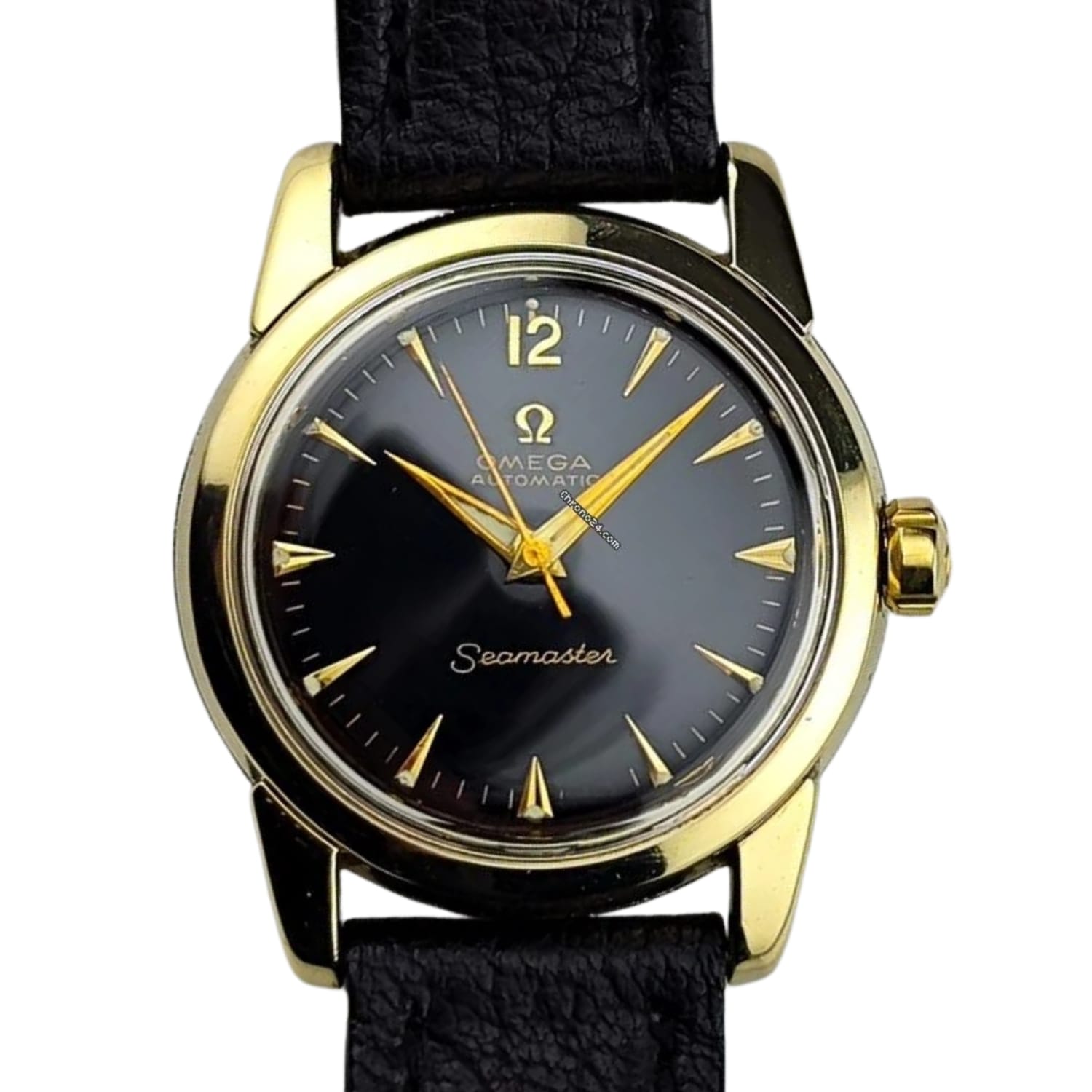
The Omega Seamaster 2826 represents a fascinating chapter in the mid-1950s evolution of Omega’s most enduring collection. While overshadowed in modern collecting circles by its slightly larger sibling, the reference 2846, the 2826 offers a compelling proposition for enthusiasts seeking a more compact expression of vintage Seamaster design. At 31mm in diameter, this reference occupied an interesting position in Omega’s lineup, straddling the line between what would later be categorized as ladies’ and unisex sizing, though during its production era such rigid distinctions were less pronounced.
What makes the 2826 particularly noteworthy is its embodiment of Omega’s transition from bumper automatic movements to the superior full-rotor winding systems. Housing the reliable caliber 470, this reference captured the optimism and technical advancement of 1950s Swiss watchmaking in a perfectly proportioned package. The watch’s compact dimensions, combined with the characteristic “beefy lugs” design cues of the era, create a timepiece that wears with surprising presence despite its modest diameter.
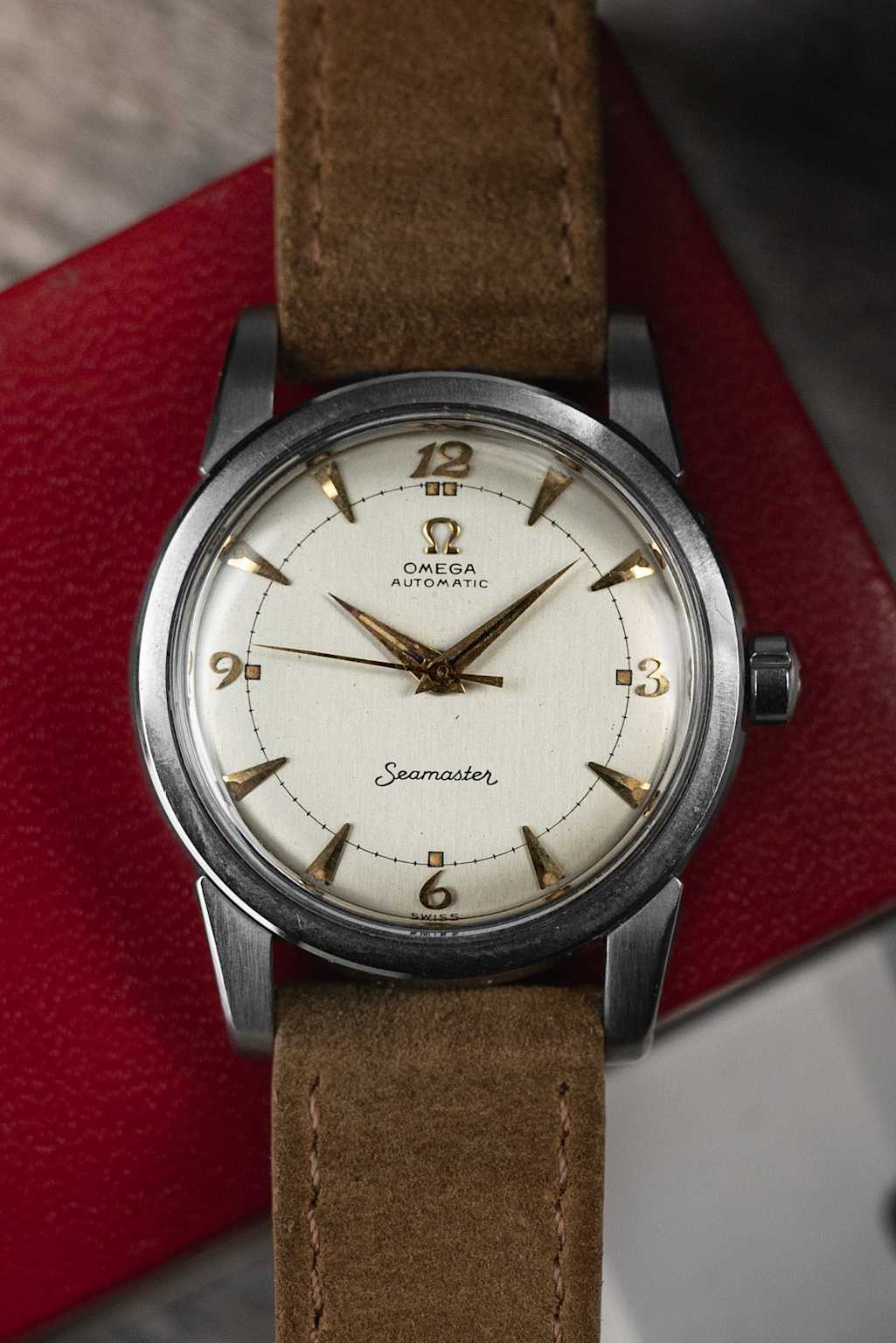
Vintage Omega Seamaster “Beefy Lugs” (c. 1950’s) – Watchable
For collectors, the 2826 offers an accessible entry point into vintage Seamaster ownership, though finding truly original examples requires careful scrutiny and knowledge of the reference’s various configurations.
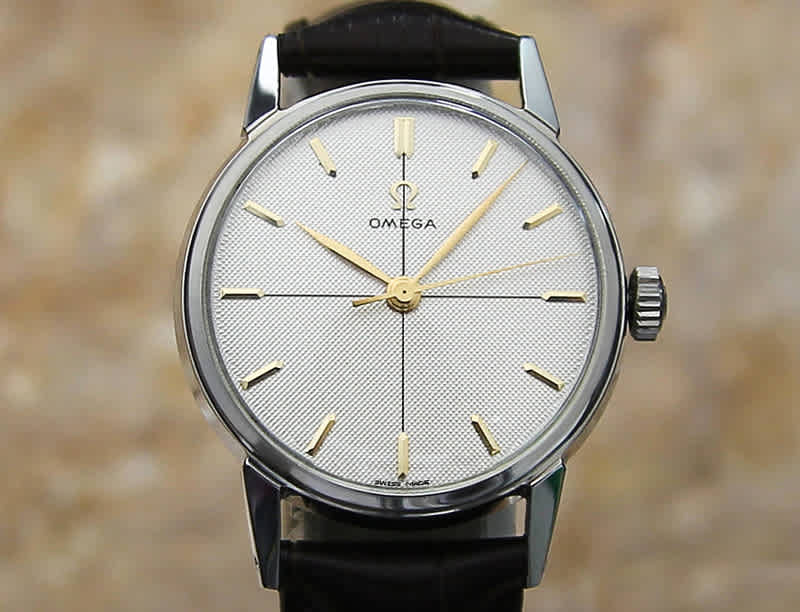
Omega 28261 34mm Vintage Men’s Watch
History & Production Period
The Omega Seamaster reference 2826 was produced during the mid to late 1950s, with documented examples appearing from approximately 1954 through the early 1960s. This timeframe places the 2826 squarely within Omega’s ambitious post-war expansion period, when the brand was establishing the Seamaster line as its flagship collection for everyday luxury sports watches.
The 2826 emerged during a pivotal transition in Omega’s movement architecture. Following the introduction of the caliber 470 series around 1955-1956, Omega began equipping its Seamaster references with these technically superior full-rotor automatic movements, replacing the earlier bumper automatics that had powered the first Seamaster models. The 2826, typically fitted with the caliber 470, represents one of the earliest Seamaster references to benefit from this significant mechanical upgrade.
The reference number 2826 itself denotes the base case and configuration, while additional suffix codes (such as 1SC, 8SC, and others) indicate specific variations in case material, dial specification, or movement details. These suffixes were part of Omega’s internal tracking system and help collectors identify the precise factory configuration of individual examples.
Production numbers for the 2826 remain undocumented in publicly available archives, though surviving examples suggest it was produced in modest quantities compared to the more popular 34mm references like the 2846. The watch’s 31mm diameter likely limited its appeal in certain markets, particularly as wrist sizes and style preferences evolved through the late 1950s and 1960s.
Historically, the 2826 sits at an interesting crossroads. It predates the 1957 introduction of the professional Seamaster 300 dive watch (reference CK2913) that would redefine the collection’s identity. Instead, the 2826 represents the Seamaster’s original mission: an elegant, water-resistant automatic watch suitable for active lifestyles but refined enough for dress occasions. This versatility was central to the Seamaster’s phenomenal commercial success during the 1950s.
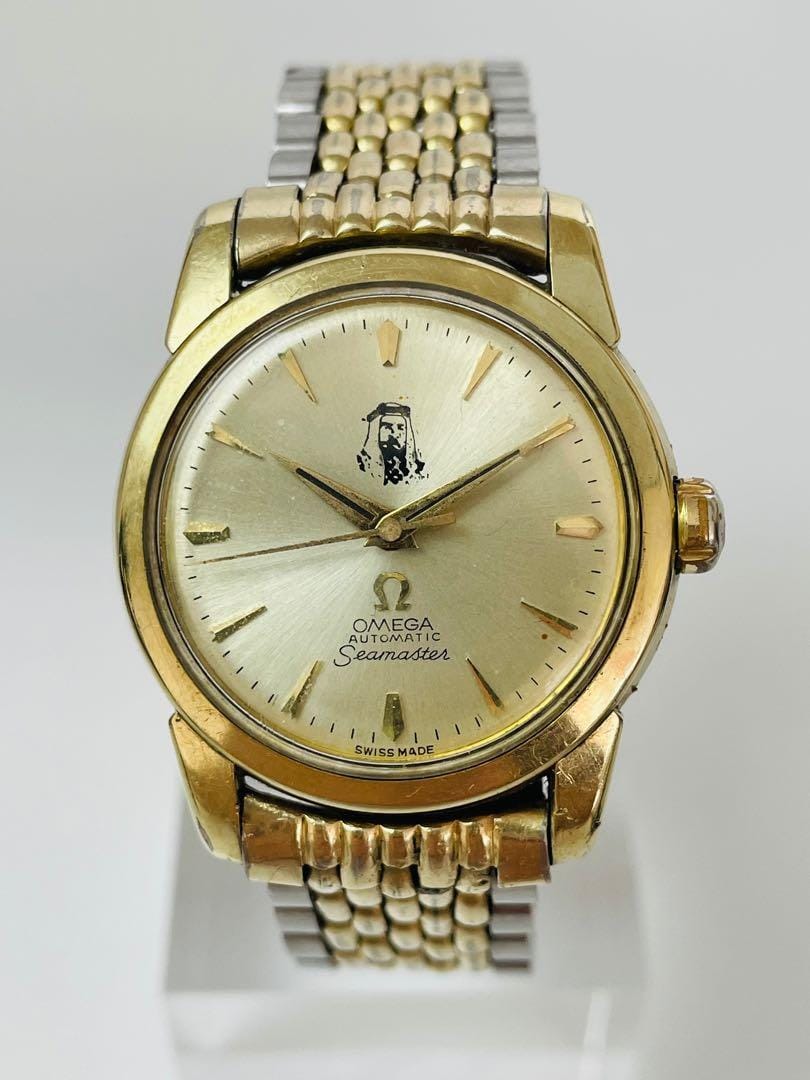
1136) Omega Seamaster Ref 2826-8SC Cal 470 Circa 1956
Technical Specifications
The Omega Seamaster 2826 presents a compact and elegantly proportioned package that exemplifies 1950s watchmaking sensibilities:
The 31mm diameter places the 2826 in what contemporary standards would consider a ladies’ or small vintage size. However, context matters: during the 1950s, men’s dress watches commonly measured between 32-36mm, making the 2826 a perfectly acceptable choice across gender lines. The watch wears larger than its measurements suggest, thanks to the pronounced lug design and typically short lug-to-lug measurement relative to diameter.
Vintage Omega Seamaster “Beefy Lugs” (c. 1950’s) – Watchable
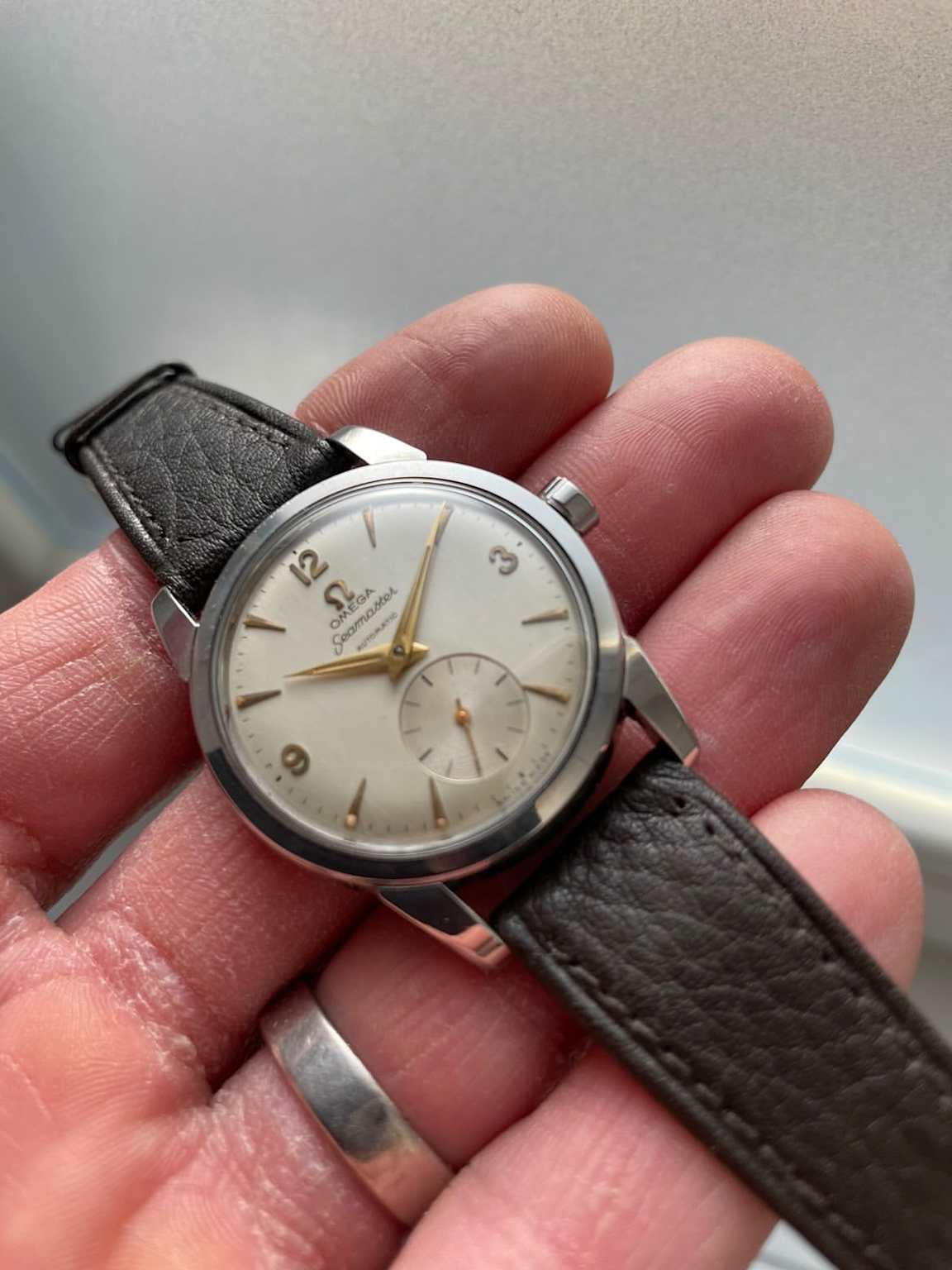
1954 Omega Seamaster “beefy lugs” in pristine condition
Movement: Omega Caliber 470
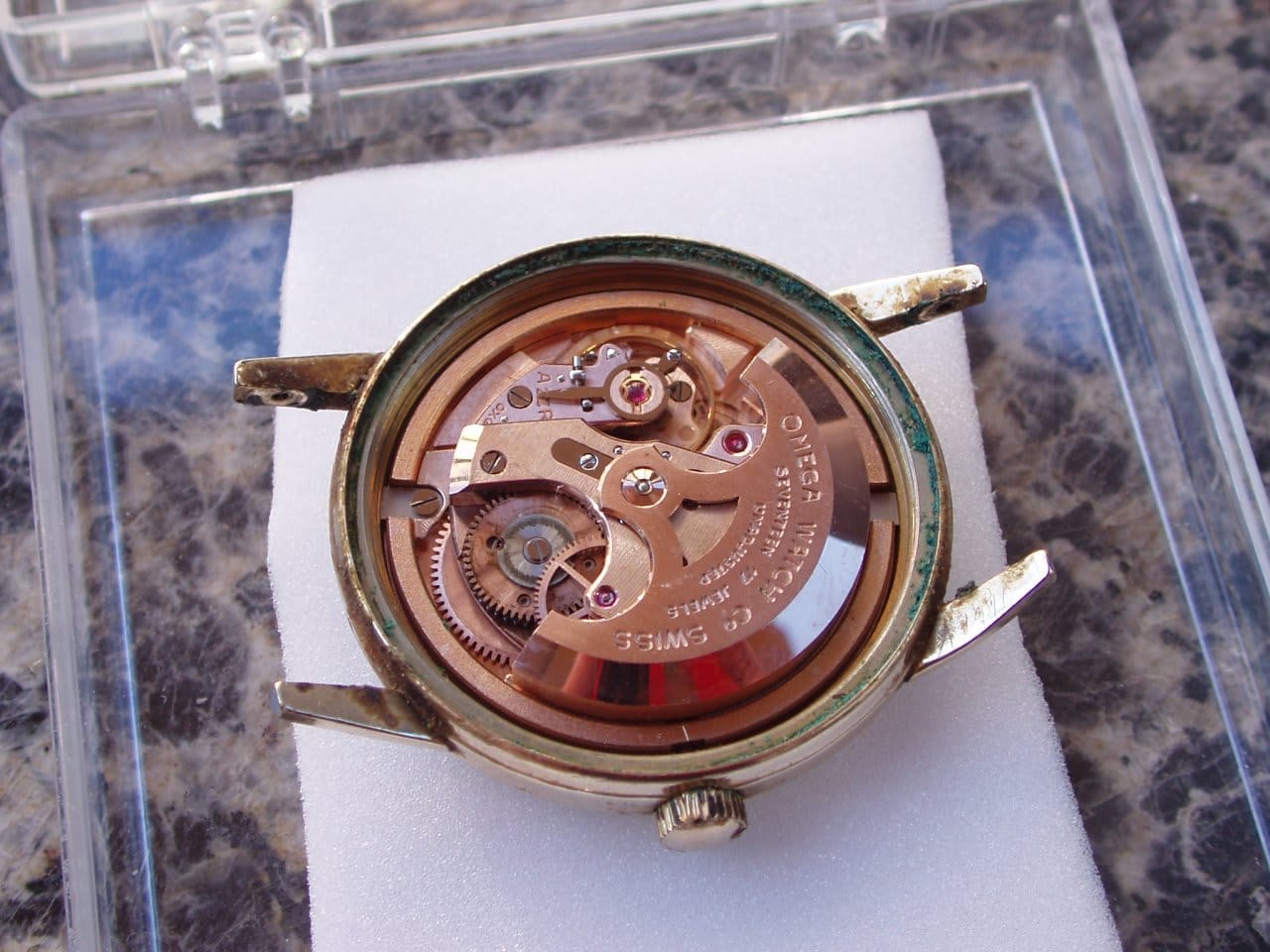
The heart of most Seamaster 2826 examples is the Omega caliber 470, a groundbreaking movement that marked Omega’s commitment to advancing automatic winding technology.
Movement Specifications:
Technical Innovation:
The caliber 470, designed by Marc Favre and introduced around 1955, represented a major leap forward from Omega’s earlier bumper automatic movements. Unlike bumper calibers where the rotor oscillated through a limited arc, the 470 featured a full 360-degree rotor that wound the mainspring bi-directionally, resulting in superior winding efficiency and greater reliability.
The movement’s construction reveals thoughtful engineering: a beryllium bronze winding gear, copper-plated finish characteristic of the era, and a micro-regulator for precise timing adjustments. The ratchet wheel includes a protective guard plate to prevent surface wear on the bridge, contributing to the movement’s legendary durability.
Caliber 470 vs. 471:
Collectors should note that some 2826 examples may contain the caliber 471, which differs from the 470 primarily in jewel count (19-20 jewels vs. 17) and the addition of a swan neck regulator on certain variants. Functionally, both movements deliver similar performance, with the additional jewels in the 471 primarily serving to reduce friction at additional pivot points.
Service and Parts Availability:
One significant advantage of the caliber 470 is continued parts availability. Multiple specialized suppliers maintain inventory of genuine Omega 470 components, and competent independent watchmakers remain familiar with servicing these movements. Omega itself can still service caliber 470 watches, though collectors should expect potential challenges with sourcing certain parts and higher costs compared to independent service.
Dial Variations
The Omega Seamaster 2826 appeared with several dial configurations, each contributing to the reference’s character and collectibility. Understanding these variations is essential for authenticating original examples and appreciating the diversity within the reference.
Dial Colors:
The most commonly encountered dial colors include:
- Black: Often featuring a matte or slightly textured finish, black dials provide maximum contrast and legibility
Omega Seamaster Automatic Black Dial All Original [REF
- Silver/Champagne: Ranging from bright silver to warm champagne tones, these dials often show subtle sunburst or radial brushing
- White: Less common, typically with a clean, minimalist aesthetic
Less frequently documented but potentially original are gilt (gold-toned) dials, particularly on gold-capped or solid gold variants.
Dial Markers and Numerals:
The 2826 typically features applied markers rather than printed indices, reflecting Omega’s quality standards during this era:
- Applied Baton Markers: Simple rectangular or faceted stick markers, often gold-plated on silver dials or rhodium-plated on black dials
- Applied Arabic Numerals: Quarter markings (at 12, 3, 6, and 9 o’clock) or just at 12 o’clock were common configurations
- Luminous Dots: Small luminous plots typically flanked each applied marker for low-light legibility
The combination of applied gold Breguet-style numerals with baton markers at other hours represents a particularly elegant variation, though this configuration appears more commonly on related references like the 2846.
Dial Text and Markings:
Standard dial printing includes:
- “OMEGA” at 12 o’clock (applied logo or printed)
- “Seamaster” at the dial center or below the Omega logo
- “AUTOMATIC” indicating the movement type
- “Swiss” or “Swiss Made” at 6 o’clock
Luminous Material Evolution:
Original 2826 dials from the mid-1950s would have used radium-based luminous material, which has typically aged to a cream or tan color. By the late 1950s and early 1960s, Omega began transitioning to tritium-based lume. However, given the 2826’s production period, most examples predate the mandatory “T Swiss T” or similar tritium markings that became standard from 1964 onward.
Special Dial Variations:
While comprehensive documentation of special dials specifically on the 2826 remains limited, related Seamaster references from this era occasionally featured:
Collectors should approach rare dial variations with caution, as the 1950s Seamaster market contains numerous redials attempting to capitalize on special dial premiums.
Case and Bezel Variations
The Omega Seamaster 2826 case construction reflects mid-1950s design philosophy, with several notable characteristics that distinguish it from both earlier and later Seamaster references.
Case Construction:
The 2826 typically features a three-piece case construction consisting of:
- Case body with integrated lugs
- Caseback (press-fit or snap-on design in most variants)
- Acrylic crystal retained by a bezel ring
Unlike some later Seamaster references with screw-down casebacks, the majority of documented 2826 examples utilize press-fit or snap-on casebacks. This construction method was standard for non-professional Seamaster models of the era, providing adequate water resistance for daily wear while simplifying service access.
Lug Design:
One of the most distinctive features of the 2826 and related references from this period is the prominent “beefy lugs” design. These lugs are:
- Thick and substantial relative to the case diameter
- Sharply defined with pronounced beveled edges when unpolished
- Relatively short in projection, contributing to a compact lug-to-lug measurement
- Polished on top surfaces with brushed case sides (typical finishing)
The substantial lug design contributes significantly to the watch’s wrist presence despite the modest 31mm diameter. Unpolished examples with sharp lug edges and crisp case lines command premiums, as vintage Seamasters frequently suffered from over-polishing that softened these defining characteristics.
Case Materials and Reference Codes:
The 2826 appeared in multiple case materials, designated by prefix codes stamped inside the caseback:
Understanding Gold Cap vs. Gold Plated:
The distinction between gold-capped (KO/KP) and gold-plated (MD) cases is significant for collectors:
- Gold Cap: Approximately 200 microns thick, bonded under heat and pressure to steel from the case front. Can withstand moderate polishing. May show slightly softer lug edges than steel due to manufacturing process. Typically does not cover the caseback.
- Gold Plated: Only 20 microns thick (0.02mm), electroplated rather than mechanically bonded. Cannot tolerate polishing. More susceptible to wear-through at high points like bezel edges and lug tips. Often marked “20M” or “20M Gold Plated”.
Both gold cap and gold plated examples from this era commonly show wear to base metal at high-wear points after 60+ years, which is expected and acceptable condition for period pieces.
Caseback Details:
The caseback typically features:
- Stamped reference number: “2826” followed by suffix codes (e.g., “-1SC”, “-8SC”)
- Serial number (different from movement serial number)
- Hippocampus (seahorse) medallion on many examples
The Hippocampus Symbol:
The distinctive seahorse emblem, properly called a hippocampus, became the symbol of the Seamaster line starting around 1957-1958. Earlier 2826 examples from 1954-1957 may have plain casebacks or different engravings. The presence or absence of the hippocampus can help narrow production dating, though collectors should note that casebacks could be replaced during service, creating exceptions to this guideline.
Bezel:
The 2826 features a simple polished bezel that retains the acrylic crystal. No rotating bezel functionality was offered on this reference, maintaining the watch’s elegant, understated aesthetic.
Crown:
Original crowns are typically:
- Omega-signed (logo engraved on crown face)
- Push-pull operation (no screw-down crown)
- Appropriate size for the 31mm case (smaller than 34mm reference crowns)
Bracelet and Strap Options
The Omega Seamaster 2826, like most dress-oriented Seamasters of the 1950s, was predominantly sold on leather straps rather than metal bracelets. Understanding period-correct strap and bracelet options helps collectors maintain authenticity.
Original Strap Configurations:
The 2826 most commonly left the factory fitted with:
- Leather Straps: Calf skin, crocodile skin, or lizard skin in black, brown, or occasionally gray colors
- Strap Width: 16-18mm at the lugs, tapering to approximately 14-16mm at the buckle
- Buckles: Simple pin buckles or tang buckles in matching case material (steel on steel cases, gold-tone on gold variants)
Original Omega-signed buckles from this era were typically simple, elegant pin buckles without deployant clasps. Period deployment clasps were available but less common on dress-oriented Seamaster references.
Period Metal Bracelets:
While leather was the standard fitment, Omega offered several metal bracelet options that could be fitted to 2826 examples:
Beads of Rice (BOR) Bracelets:
- Folded-link construction with distinctive three-link design
- Appropriate references for smaller lug widths would be compatible
- Known for developing stretch over time due to folded link construction
Flat-Link Bracelets:
- The iconic Omega flat-link design, though more commonly associated with sportier references
- Earlier examples (1950s production) featured solid outer links
- These bracelets are highly collectible today and command significant premiums
Finding Period-Correct Bracelets Today:
Original 1950s Omega bracelets in sizes appropriate for the 2826 are exceptionally rare and expensive when found. Most surviving 2826 examples will be on replacement straps or later-period bracelets. For collectors seeking authenticity:
- Period Omega bracelets should have date stamps (quarter/year) on the clasp (on later 1960s examples)
- Reference numbers were sometimes stamped on end links or clasps
- Beware of stretched, damaged, or incomplete bracelets
- Modern reproduction bracelets exist but rarely capture the exact proportions and feel of originals
Modern Strap Recommendations:
For wearers of vintage 2826 examples, high-quality leather straps remain the most appropriate choice:
- 16-18mm lug width straps tapering to 14-16mm
- Shell cordovan, calf, or alligator leather in traditional colors
- Vintage-style Omega buckles or period-appropriate alternatives
The 31mm case pairs particularly well with slimmer, more refined strap profiles that complement the watch’s elegant proportions.
Identifying Original vs. Replaced Parts
The vintage Omega market, particularly for accessible references like the 2826, contains a significant number of watches with replaced, refinished, or incorrect components. Developing the ability to identify original parts versus replacements is essential for informed collecting.
Dial Authentication:
Original 2826 dials should exhibit:
Correct Text and Logos:
- Omega logo consistent with 1950s typography and placement
- “Seamaster” and “AUTOMATIC” in period-correct fonts
- Proper dial text alignment and spacing
Applied Markers:
- Genuine applied markers show proper attachment and aging
- Markers should be properly aligned and securely affixed
- Luminous material (if present) should show consistent aging across all plots and hands
- Original lume has aged to cream, tan, or brown tones; bright white lume indicates relume or modern replacement
Dial Surface Quality:
- Period-appropriate finish (matte, sunburst, etc.)
- Natural patina and aging patterns consistent with the watch’s age
- Avoid dials that appear “too perfect” for a 60-70 year old watch
Red Flags for Redials:
- Overly vibrant colors (especially on “tropical” or faded examples being sold at premiums)
- Mismatched printing quality between different dial elements
- Incorrect font styles or sizes
- “Swiss Made” text positioning inconsistent with period examples
- Paint bleeding at marker edges or text boundaries
- Dial surface showing refinishing patterns under magnification
Viewing the Dial Reverse:
When possible, examining the dial reverse provides valuable authentication evidence:
- Original Omega dials have specific part numbers and markings on the reverse
- The dial base metal and finish should be consistent with period production
- Service replacement dials may show different markings or construction
Hand Authentication:
Original hands should:
- Match the dial in style and period
- Show consistent luminous material aging with dial plots
- Exhibit appropriate proportions for the dial diameter
- Fit properly on their respective posts without wobbling
Replaced hands are extremely common on vintage Omega watches, as hands are frequently damaged during service or replaced when lume is refreshed. Service hands may be period-correct Omega parts but from different references, creating subtle mismatches in style.
Case Integrity:
Identifying an unmolested original case requires attention to:
Sharpness and Proportions:
Vintage Omega Seamaster “Beefy Lugs” (c. 1950’s) – Watchable
- Proper case thickness and lug proportions
- Visible beveling and chamfering consistent with factory finishing
Polishing Assessment:
Over-polishing is endemic to vintage Omega watches. Signs of excessive polishing include:
- Rounded lug edges and softened case lines
- Loss of definition between polished and brushed surfaces
- Thinned case profiles, especially near the bezel
- Uneven lug heights or asymmetric case proportions
On gold-capped or gold-plated examples, wear-through to base metal is expected and acceptable at high points (bezel edges, lug tips, caseback edges), but extensive wear-through suggests either heavy polishing or gold plating rather than gold capping.
Reference Number Verification:
The caseback should display:
- Clear, correctly formatted reference number matching “2826” base with appropriate suffix
- Matching case serial number
- Stamps and markings consistent with the case material (gold purity marks on solid gold cases)
Movement Authentication:
When examining the movement:
- Serial number should be consistent with the stated production period
- Caliber 470 (or occasionally 471) should be properly fitted to a 2826 case
- Movement condition should show signs of age appropriate wear
- Service marks and watchmaker signatures can provide provenance but also indicate intervention
The Importance of Provenance:
In vintage watch collecting, “buy the seller” remains sage advice. Reputable dealers who guarantee authenticity and stand behind their descriptions provide valuable peace of mind. Purchasing from unknown sources, especially online marketplaces without buyer protection, increases risk substantially.
Collector Notes and Market Context
The Omega Seamaster 2826 occupies a distinctive position in the vintage watch market, offering collectors an accessible entry point into 1950s Omega ownership with both opportunities and considerations unique to the reference.
Current Market Positioning:
Based on observed listings and auction results, the Omega Seamaster 2826 typically trades in the following ranges:
- Stainless Steel Examples: $800-1,500 USD depending on condition, originality, and dial variant
- Gold-Capped Examples: $1,000-1,800 USD, with premium for exceptional condition
- Gold-Plated Examples: $900-1,400 USD, condition heavily impacts value
- Solid Gold Examples: Rare; expect $2,000+ for 14K, higher for 18K
These price points position the 2826 below the more sought-after 34mm references like the 2846, which typically command 20-40% premiums for comparable condition and specification.
Size Considerations:
The 31mm diameter significantly impacts collectibility and market demand. In contemporary collecting:
- Some collectors specifically seek smaller vintage watches for their elegant proportions and wearability
- Others view 31mm as too diminutive, even for vintage standards
- The watch finds particular favor among collectors with smaller wrists (under 6.5 inches) and those appreciating mid-century dress watch proportions
- Women’s vintage watch collecting has grown substantially, creating renewed interest in quality 31mm pieces
Most Sought-After Configurations:
Within the 2826 reference, certain configurations command premiums:
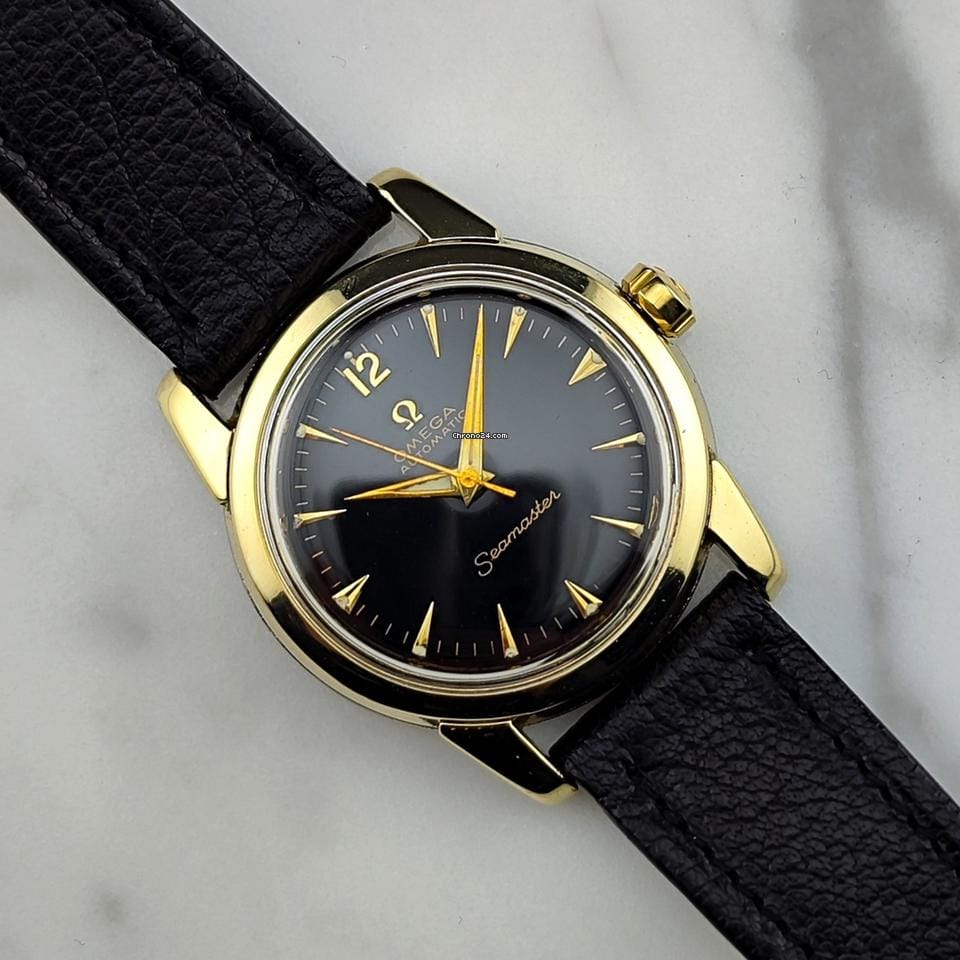
Omega Seamaster Automatic Black Dial All Original [REF
Vintage Omega Seamaster “Beefy Lugs” (c. 1950’s) – Watchable
- Original Dial and Hands: Complete originality, even with appropriate patina, outvalues pristine but replaced components
- Complete Package: Box, papers, and service history add 20-30% to value, though these accessories are exceptionally rare for 2826 examples
Common Pitfalls to Avoid:
Collectors pursuing 2826 examples should be vigilant regarding:
Redials and Refinished Dials:
The single most common issue in vintage Omega collecting. Many seemingly pristine 2826 examples feature refinished dials attempting to appear original. Always request high-resolution dial photographs and examine closely for the warning signs outlined in the authentication section.
Frankenwatches:
Watches assembled from parts across different references, periods, or even brands. The 2826’s modest value makes it an unlikely target for sophisticated faking, but incorrect hands, dials from other references, or replacement movements do appear.
Over-Polished Cases:
Especially prevalent on gold-capped and gold-plated examples where polishing to remove wear often results in diminished gold layer thickness and softened case lines. A lightly worn but sharp case is preferable to a heavily polished smooth example.
Service Replacements:
Omega service could replace dials, hands, or other components during routine maintenance. While service parts are genuine Omega, they may not be period-correct for the watch, affecting both authenticity and value.
What Drives Value:
Beyond rarity and originality, several factors command premiums on 2826 examples:
- Unpolished condition: Perhaps the single most valuable attribute
- Unusual dial variants: Special textures, uncommon colors, or rare markers
- Original bracelet: Period-correct Omega bracelets can be worth as much as the watch itself
- Documented service history: Provenance and maintenance records from Omega
- Completeness: Original box, papers, and accessories
Investment Perspective:
The 2826 should be approached primarily as a collecting proposition rather than investment vehicle. The reference offers:
Advantages:
- Accessible pricing for quality 1950s Omega craftsmanship
- Wearing a genuine vintage Seamaster with iconic caliber 470 movement
- Relatively straightforward servicing with available parts
- Elegant proportions appealing to vintage watch enthusiasts
Limitations:
- Limited appreciation potential compared to larger, sportier references
- Size constraints limit broader collector appeal
- Abundant supply relative to demand keeps prices moderate
The Ideal 2826 Buyer:
This reference particularly suits collectors who:
- Appreciate mid-century design and proportions over contemporary sizing
- Seek an affordable entry into vintage Omega Seamaster collecting
- Have smaller wrists or prefer vintage dress watch dimensions
- Value mechanical quality and Omega heritage over investment returns
- Want a wearable vintage watch for regular use
Service Considerations:
Prospective buyers should budget for service costs:
- Independent watchmaker service: $300-600 USD typically
- Omega official service: $700-1,000+ USD
- Parts availability through specialized suppliers supports long-term maintenance
The caliber 470’s robust construction and continued parts support make the 2826 a practical vintage watch for regular wear when properly maintained.
Conclusion
The Omega Seamaster reference 2826 embodies an important moment in horological history when Omega was perfecting the automatic sports watch formula that would define the brand for decades. Though modest in diameter by contemporary standards, the 2826 offers sophisticated collectors a perfectly proportioned example of 1950s craftsmanship, housing the reliable and historically significant caliber 470 movement in a case design that exemplifies the era’s aesthetic values.
For collectors willing to look beyond the dominance of larger vintage references, the 2826 presents an opportunity to own a genuine vintage Seamaster at accessible prices while enjoying daily wearability, straightforward servicing, and the satisfaction of preserving an underappreciated piece of Omega’s rich heritage. Success in acquiring a quality example requires patient research, careful authentication, and ideally guidance from knowledgeable dealers or experienced collectors who can help navigate the complexities of the vintage Omega market.
Whether pursued for its elegant proportions, technical interest, or simply as an affordable gateway to vintage Seamaster ownership, the reference 2826 rewards those who take the time to understand its nuances and appreciate its position in the broader Seamaster story.