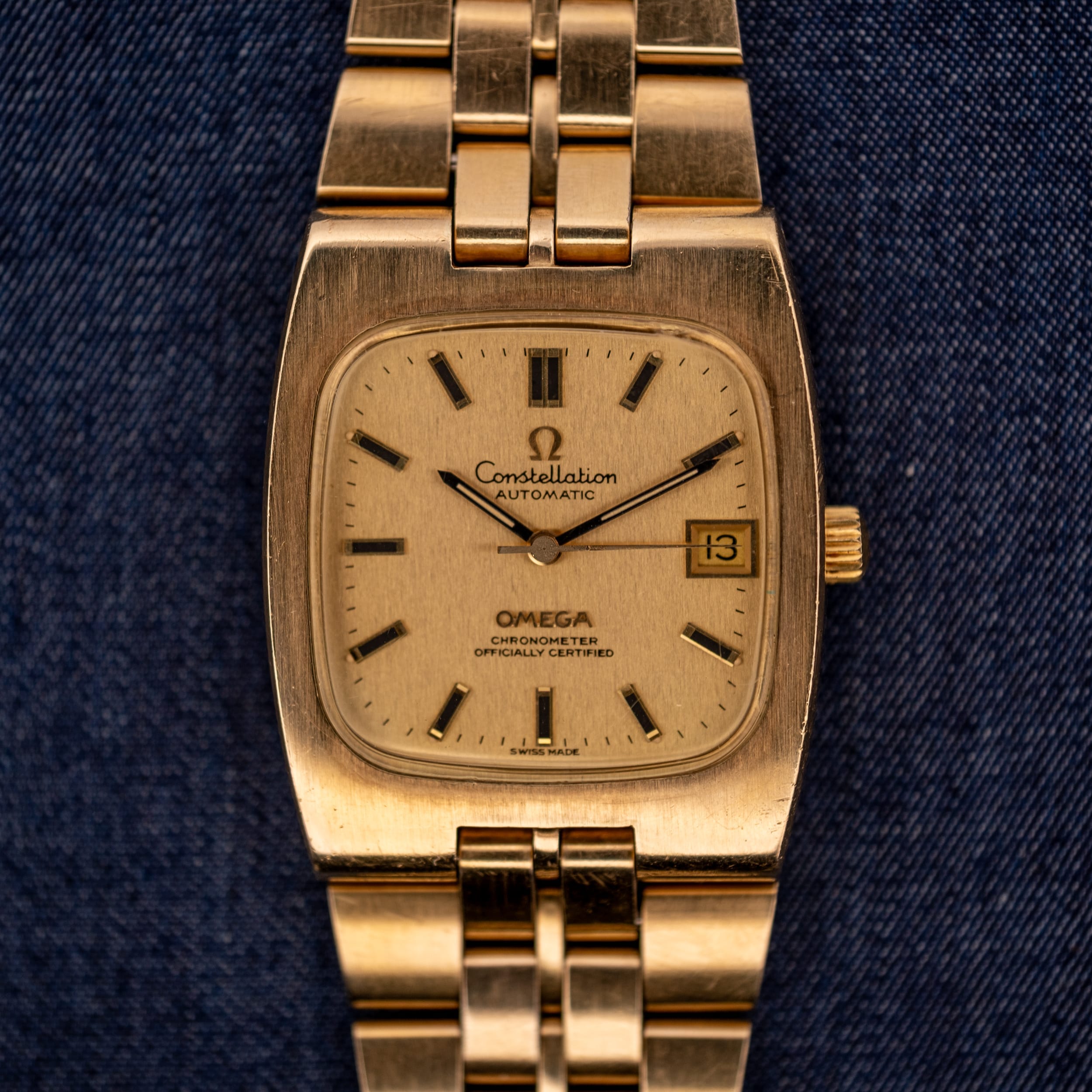
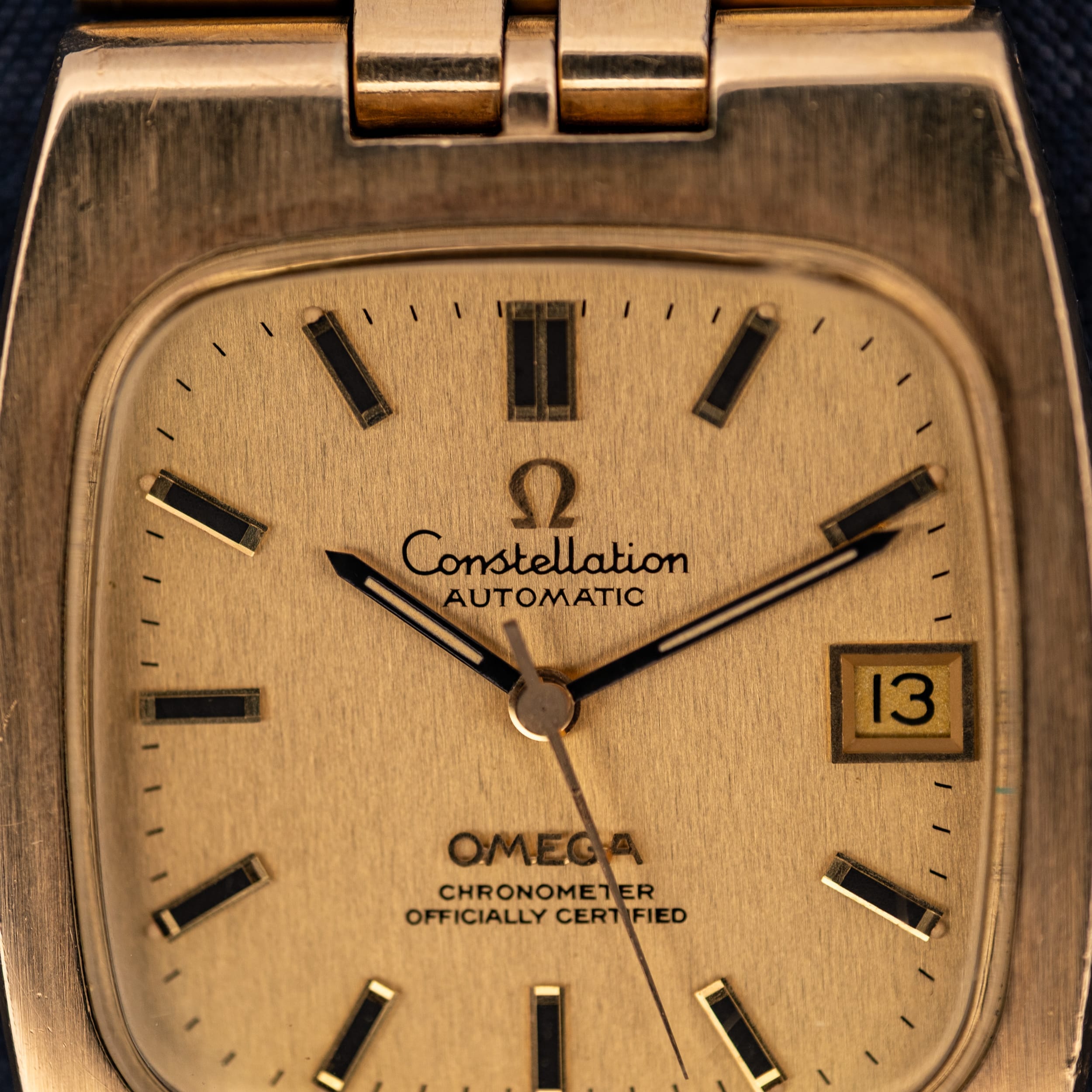
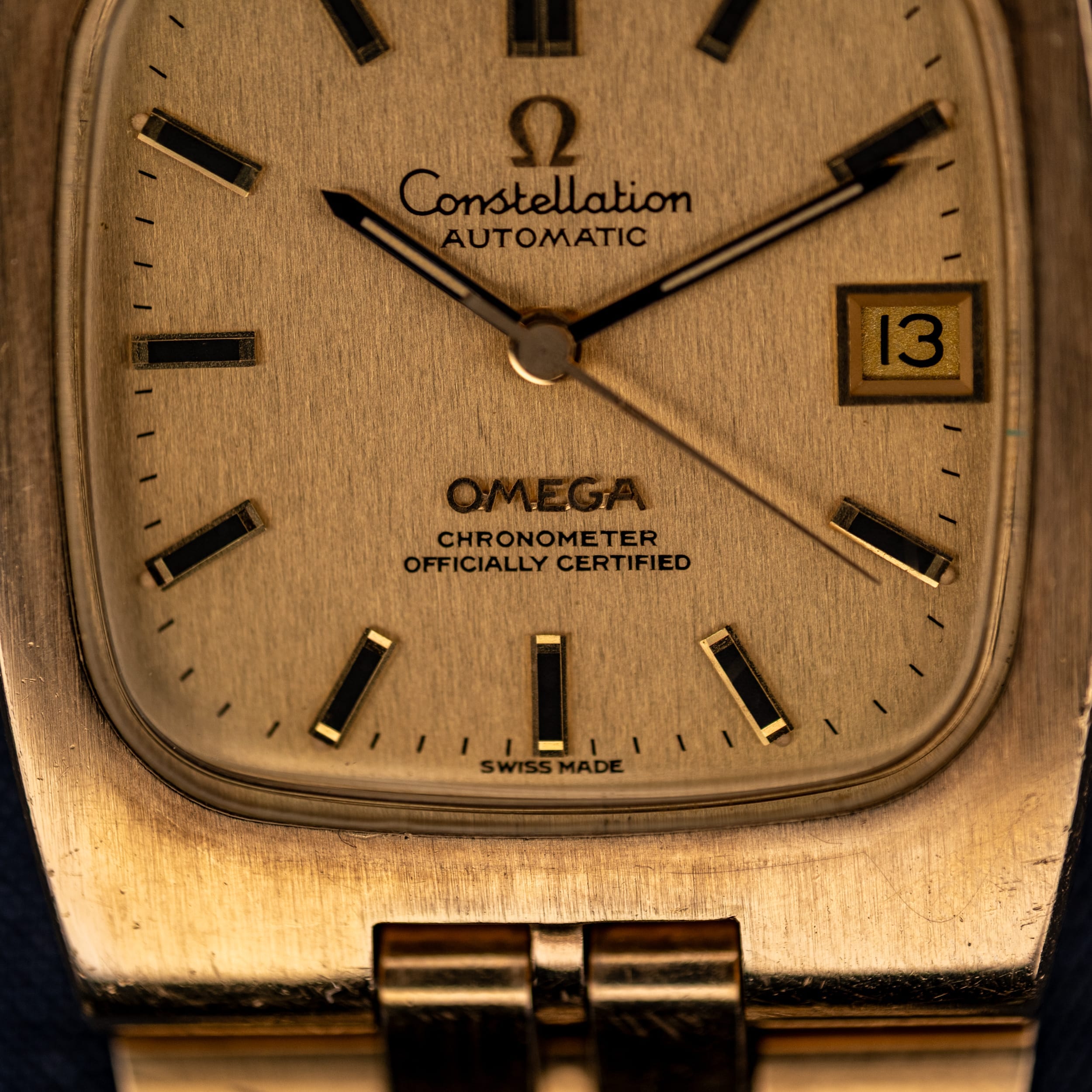
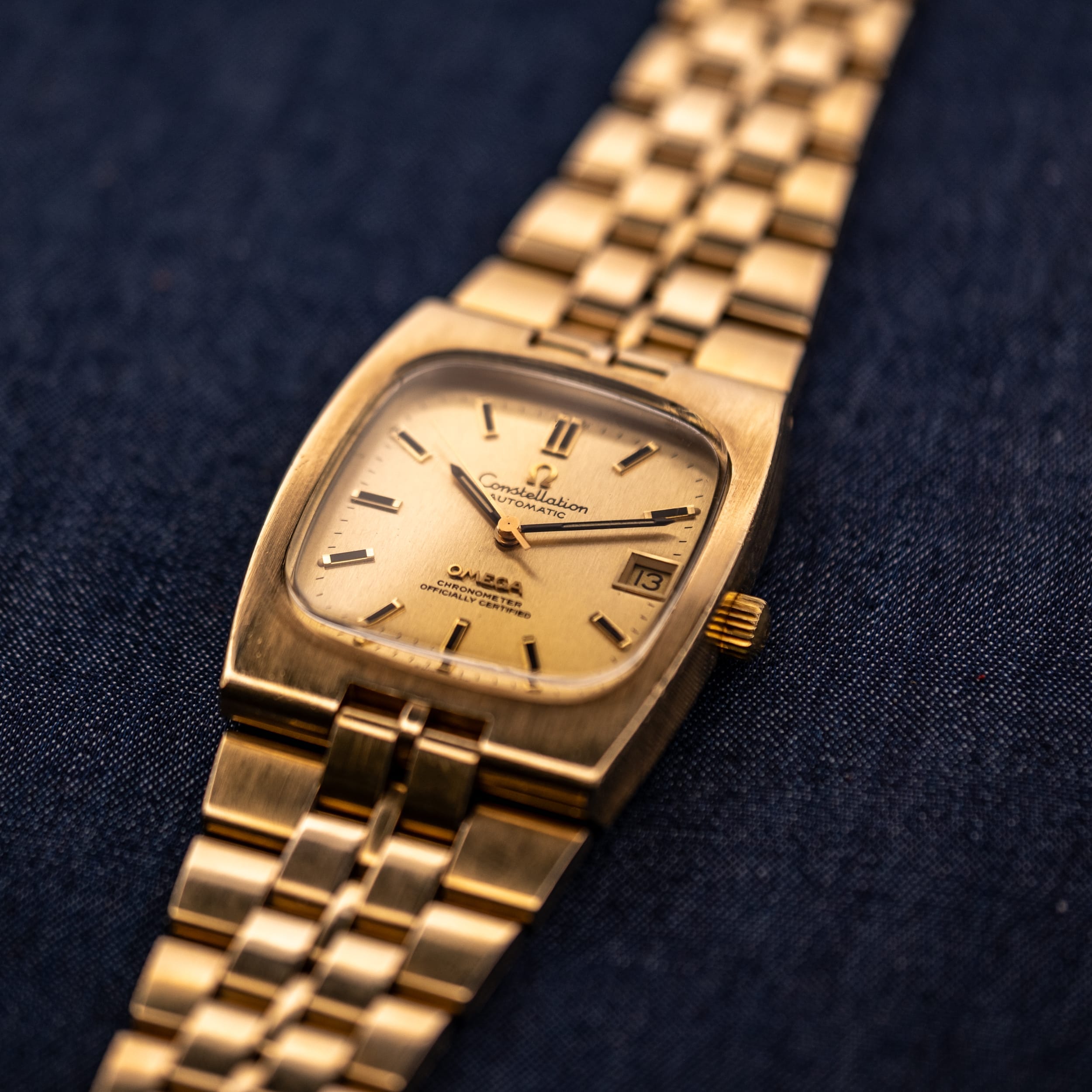
The Omega Constellation occupies a genuinely strange place in 1970s horology. By the time this watch left Bienne the Swiss industry was in full quartz-crisis tumult, but Omega was still doubling down on what had made the Constellation famous in the first place, namely chronometer-grade automatics certified by an independent observatory. The Reference 168.0059 sits at the intersection of that engineering pedigree and the era’s wildest case design language, and to us it captures the moment perfectly. It is, without question, one of the most distinctive chronometer-grade automatics Omega ever produced, and a watch that gets cooler the longer you look at it.
The story begins in 1969, when Omega launched what it called the Constellation “Integral” line. These were the brand’s first wristwatches with bracelets fully integrated into the case design, predating the genre-defining Royal Oak by several years and Patek’s Nautilus by even more. The cushion or “TV” case shape, so named because its rounded-square outline resembles the cathode-ray television sets in mid-century living rooms, became the signature look of the Integral collection. The 168.0059 represents the second generation of that idea, fitted with the cal. 1011 movement that Omega introduced in 1972 to replace the troubled cal. 1001 and to serve as the chronometer flagship of the new high-beat 1000-series family. By the time Omega retired the model in 1976 it had become one of the more polarizing Constellations in the catalogue, and that polarity is exactly what makes it so compelling today.
The cal. 1011 itself deserves its own paragraph. It runs at 28,800 vibrations per hour, hacks, has a 50-hour power reserve, features quickset date, and measures only 4.25mm thick. Crucially, it is chronometer-rated and adjusted to five positions and temperature, which is what allows the dial to wear that “OFFICIALLY CERTIFIED” inscription with no apologies. The cal. 1011 took years to escape the shadow of its disgraced predecessor the 1001, but the modern collector consensus is that it is a fundamentally different and far better-engineered movement, with the longevity and accuracy to back it up. Properly serviced, these calibers run beautifully and represent, in our opinion, one of the smartest entry points into chronometer-grade vintage Omega ownership.
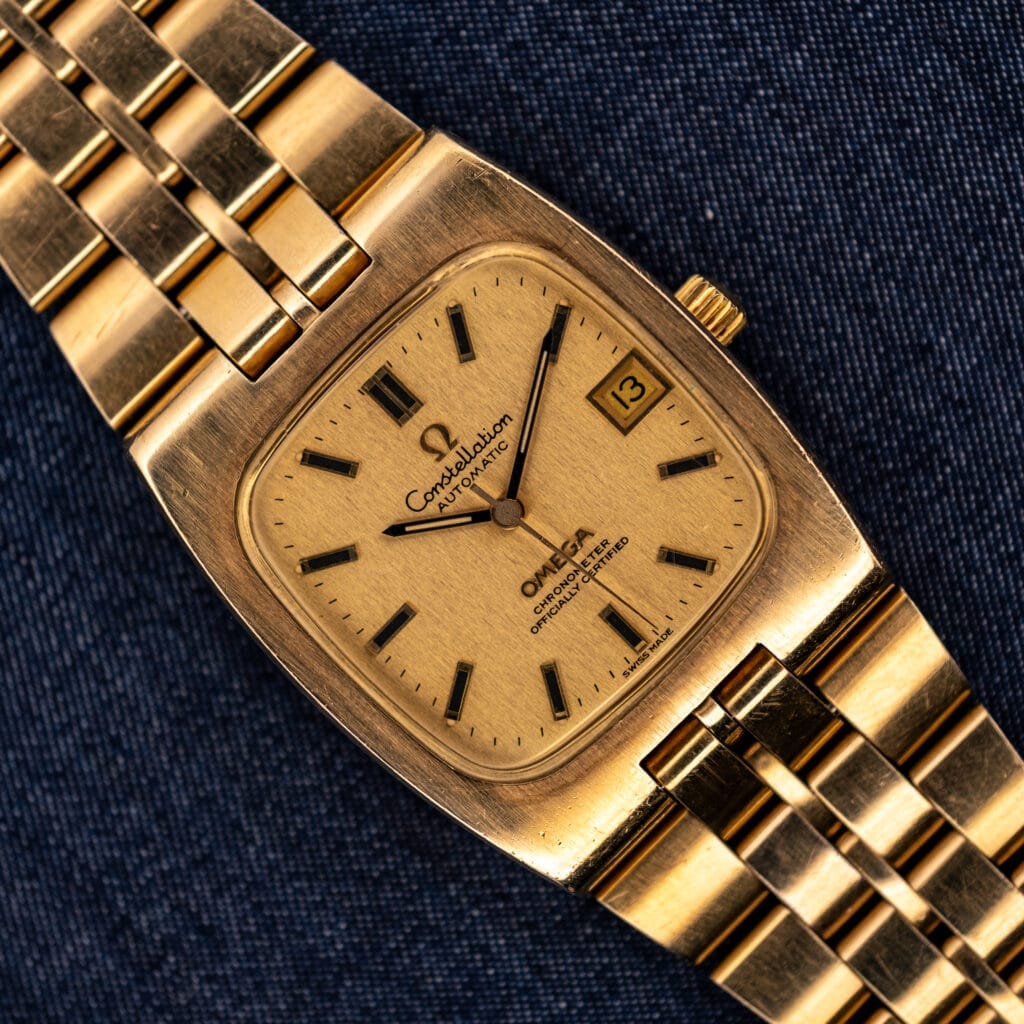
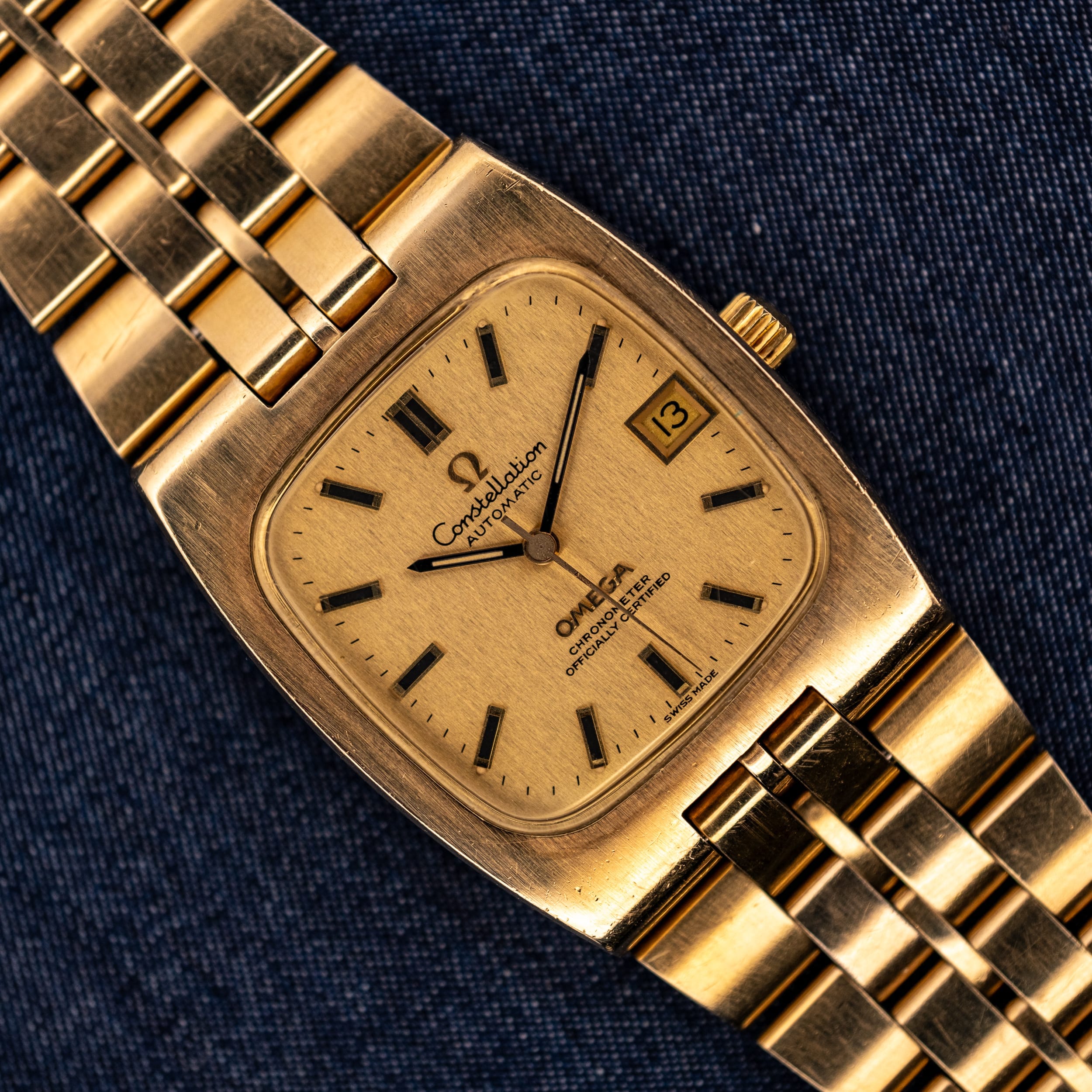
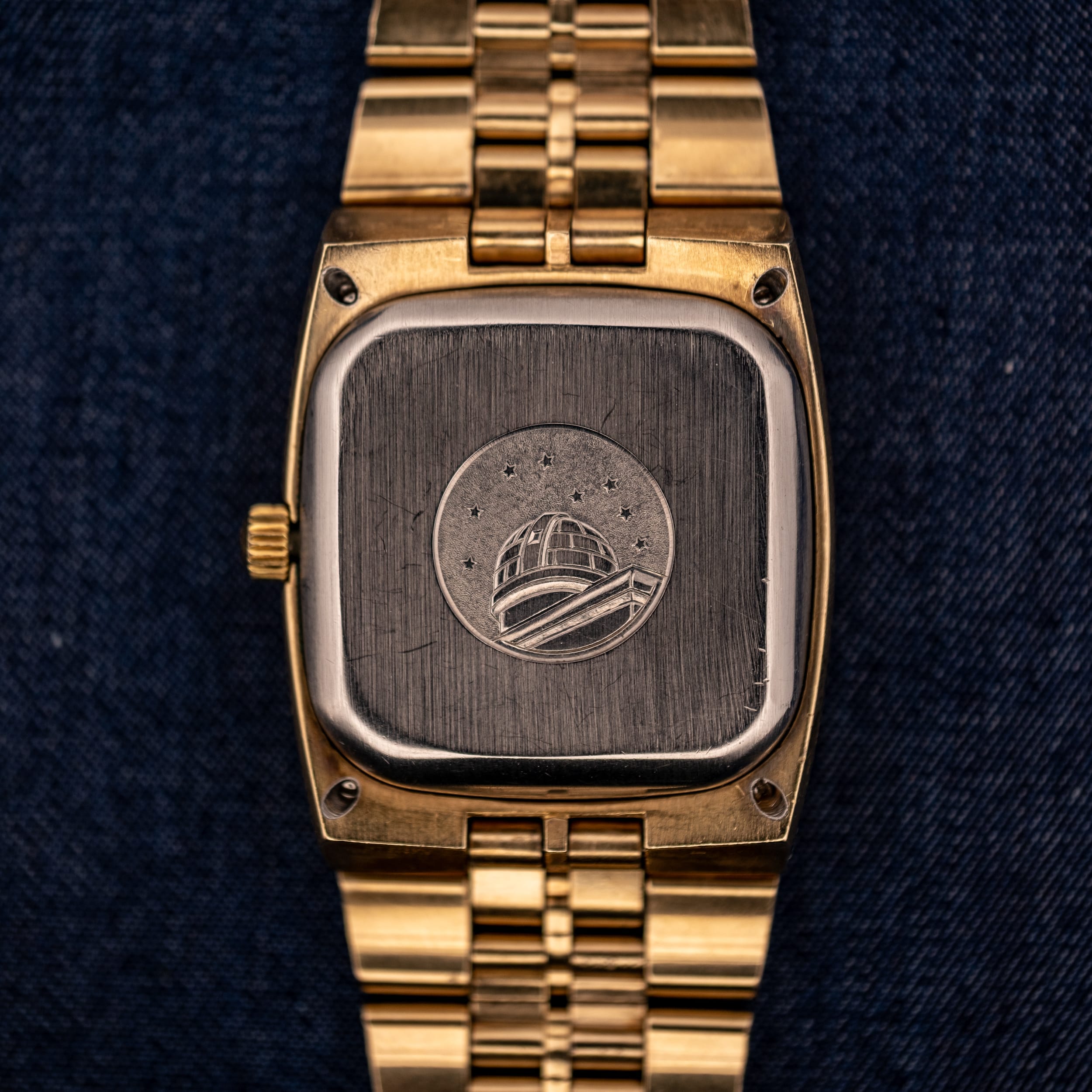
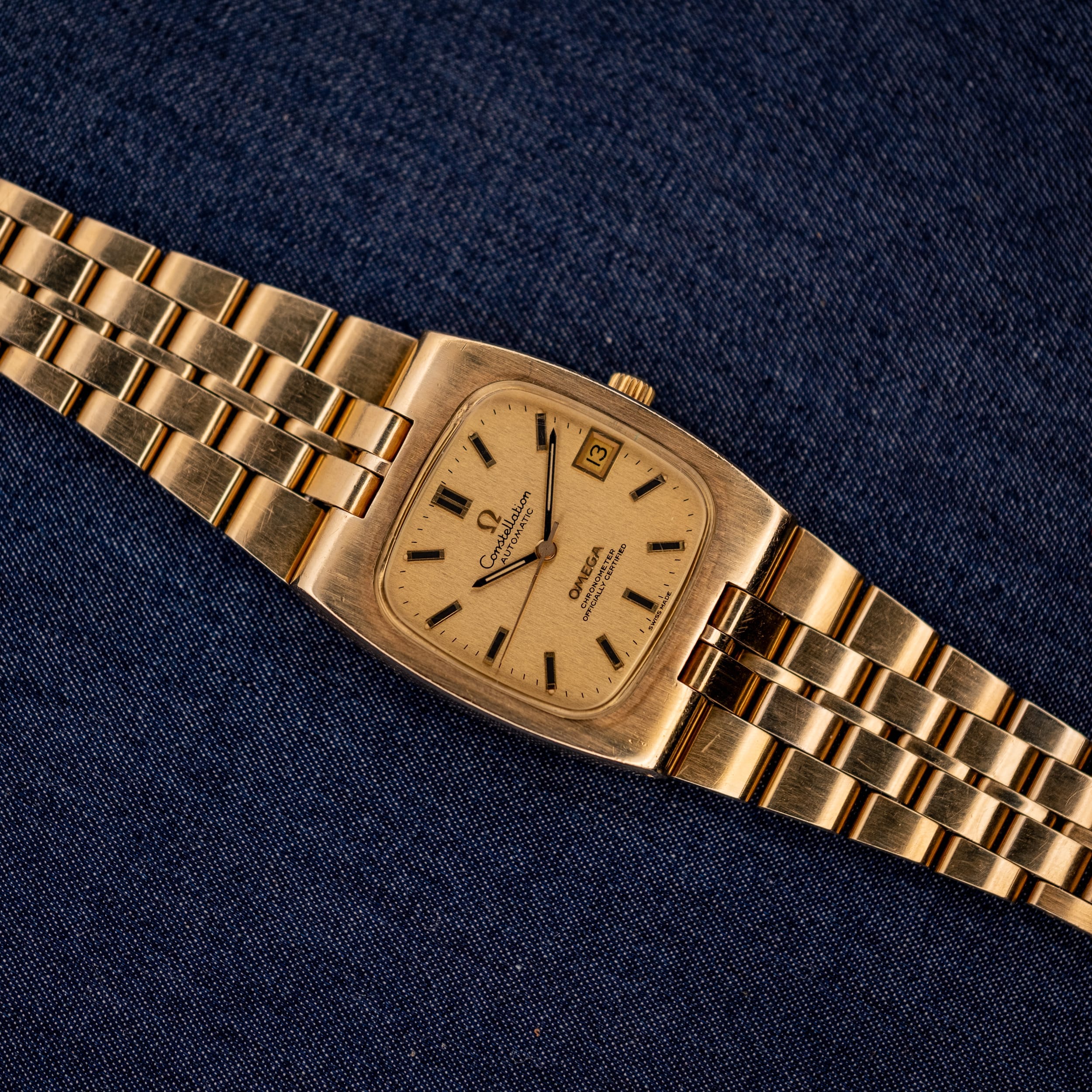
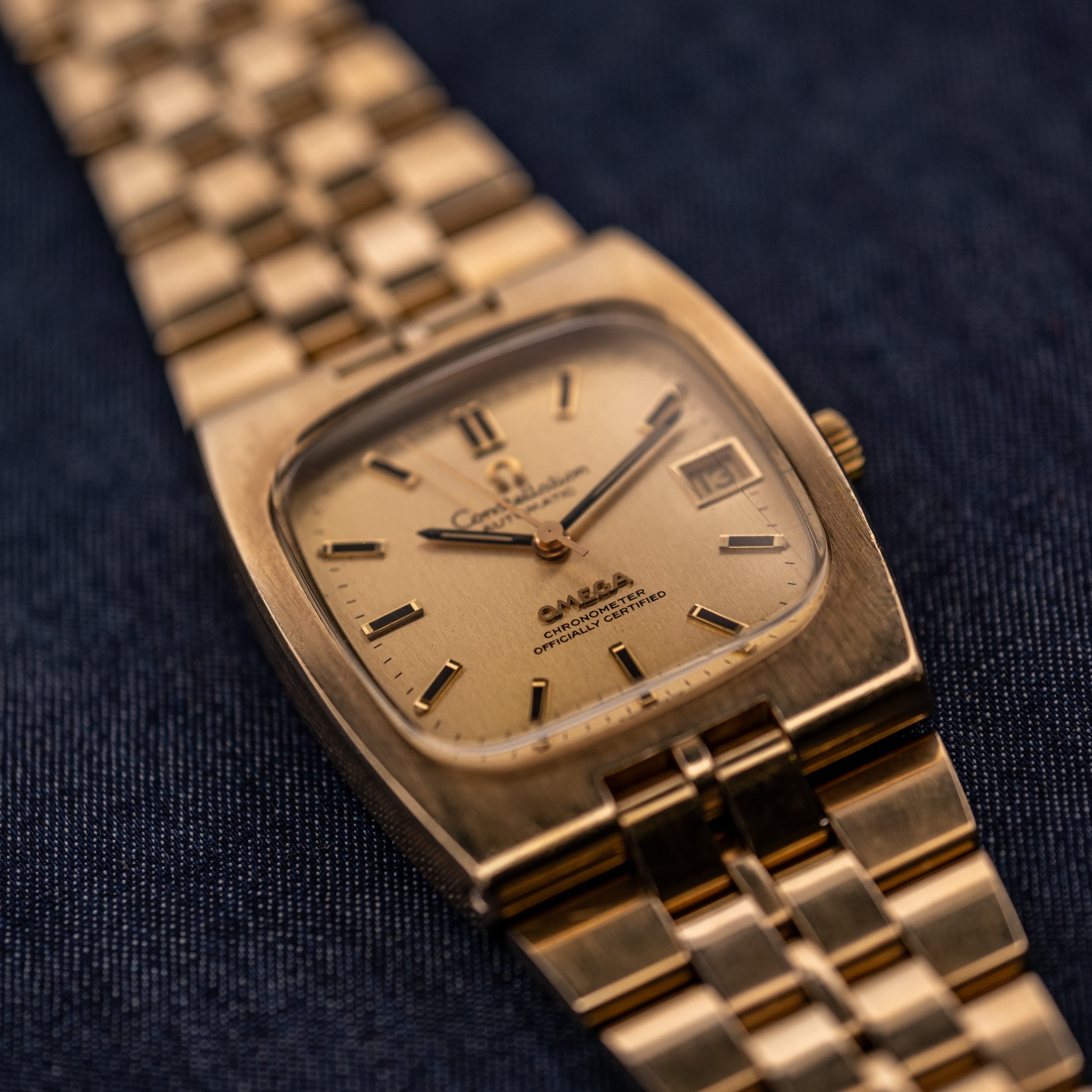
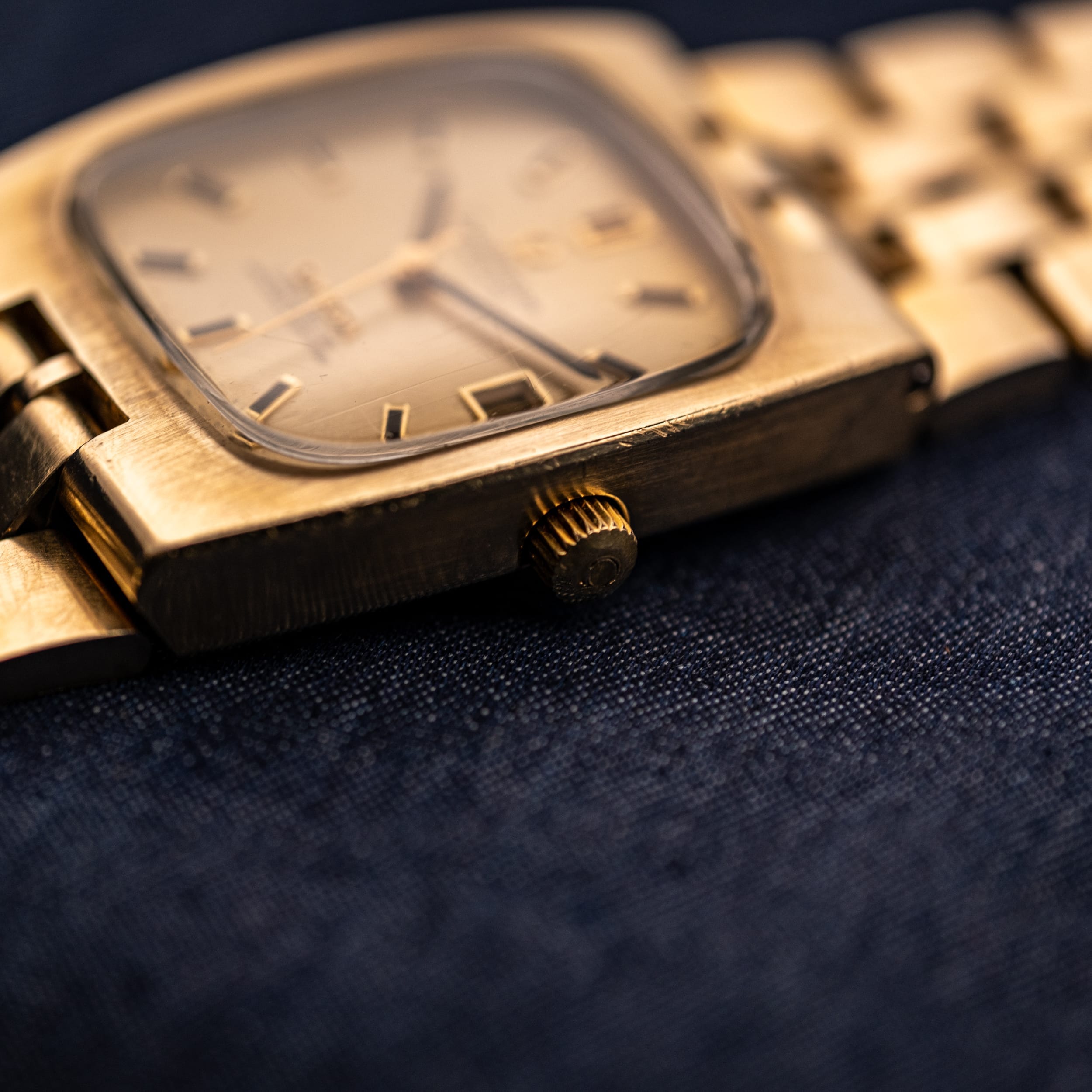
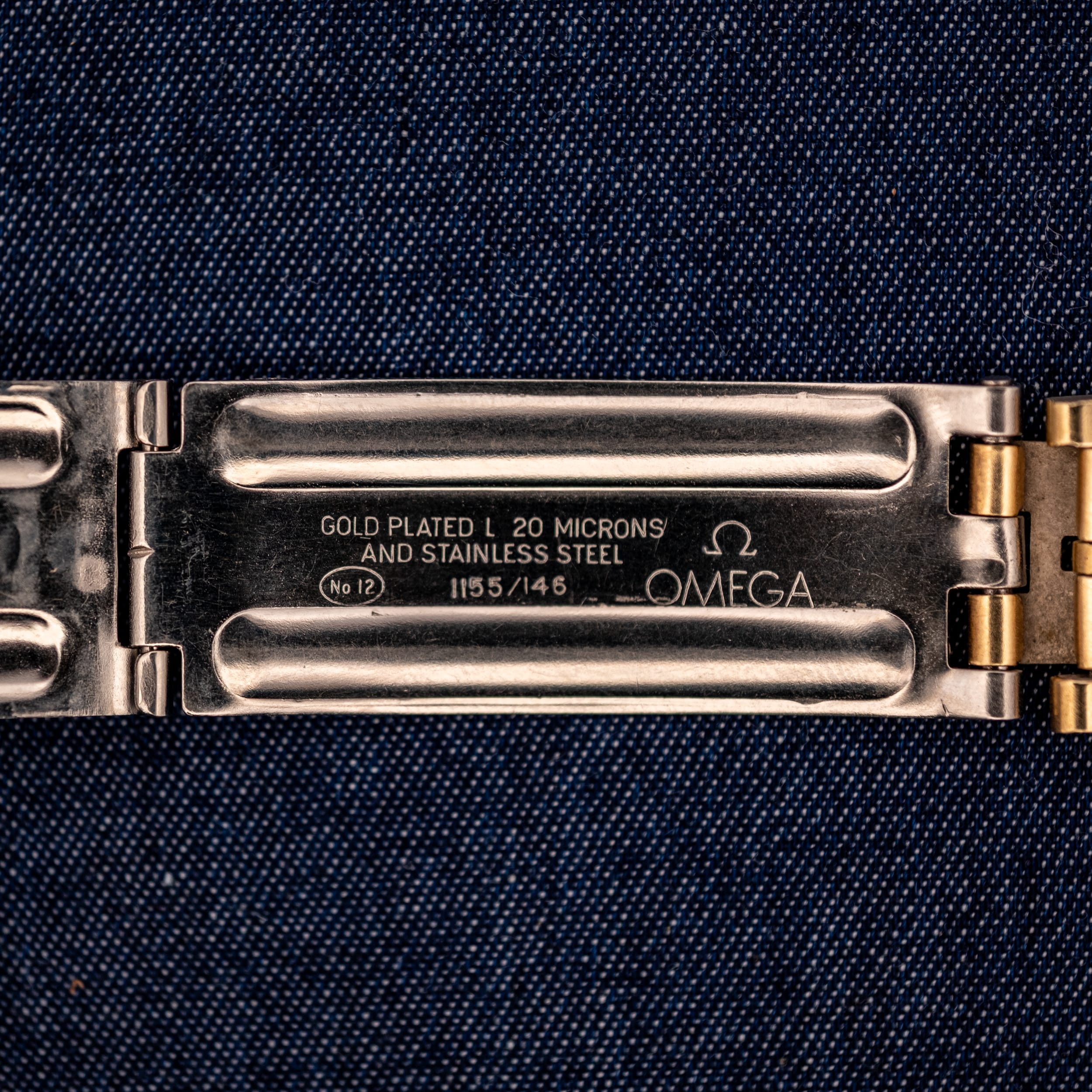
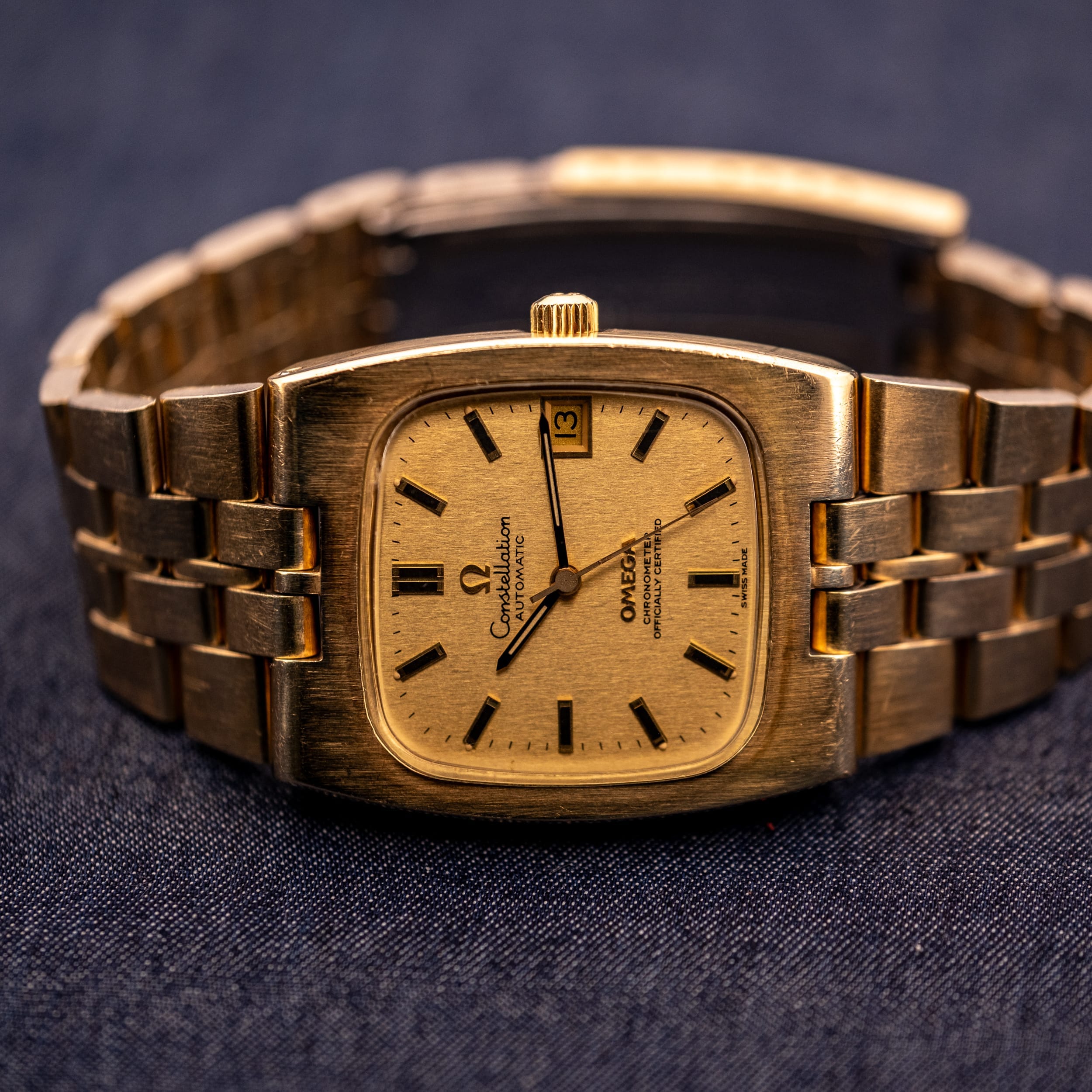
The watch in front of us is a lovely representative of the gold-plated steel reference, with the case construction documented by the bracelet stamping (GOLD PLATED L 20 MICRONS AND STAINLESS STEEL, signed Omega and stamped 1155/146 No. 12). The 33 by 39mm cushion case shows a brushed top finish on the bezel and lugs, with light surface wear on the case sides and crown guard area consistent with a piece that has been worn and enjoyed but never aggressively polished. Flip it over and the screw-back caseback carries the iconic Constellation observatory medallion, secured by four screws as it should be. The bezel on this example retains its full plating thickness with that warm honeyed yellow that 20-micron gold develops as it ages. The Omega-signed crown is intact and crisp.
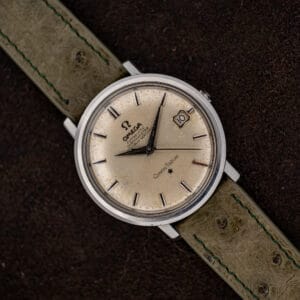
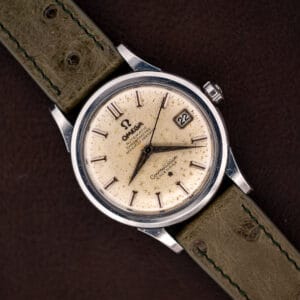
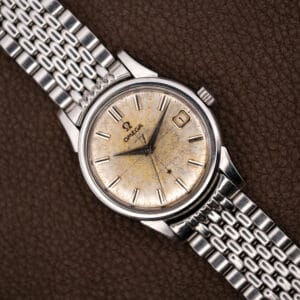
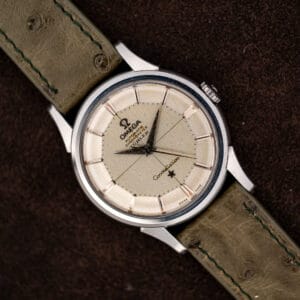
The dial is the cleaner of the two configurations Omega offered, eschewing the printed minute chapter ring for a more open architecture. A linen-textured champagne base provides the canvas, with applied gold baton markers carrying black enamel inserts at every hour, double batons at 12 to ground the design, and a bright “Constellation Automatic” script directly beneath the applied Omega logo. Lower on the dial sits the boxed two-line “OMEGA / CHRONOMETER OFFICIALLY CERTIFIED” inscription in black, with “Swiss Made” running along the bottom edge. The framed date aperture at 3 o’clock is set off in a tonneau cartouche that mirrors the case shape, and the dauphine-style hands with black inserts pick up the markers exactly. The dial is essentially flawless in person, with no spotting, no fading, and no signs of refinishing, which is increasingly difficult to find on these references as time goes on.
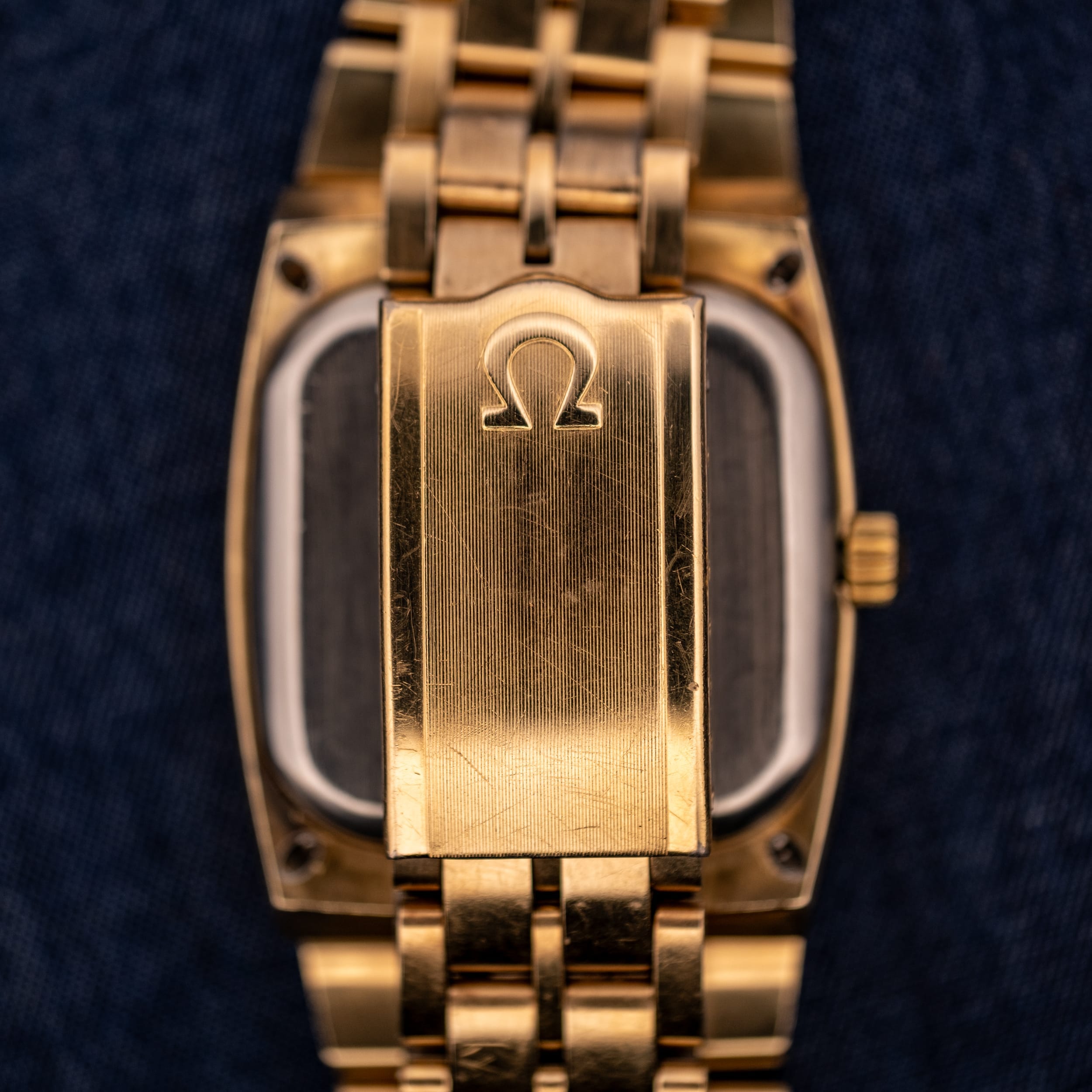
What completes the package is the bracelet. The 1155/146 is the integrated bracelet purpose-designed for this case, and finding one still attached to its watch and still wearing well is half the battle on these references. This example is supple, shows minimal stretch, and carries the engine-turned signed clasp with the bold Omega logo embossed across its face, the kind of detail that makes you understand why these watches were considered serious luxury objects when they were new. It rides the wrist in that unmistakable mid-century-modern way, hugging the contours like a piece of jewelry rather than sitting on top of it like a tool watch.
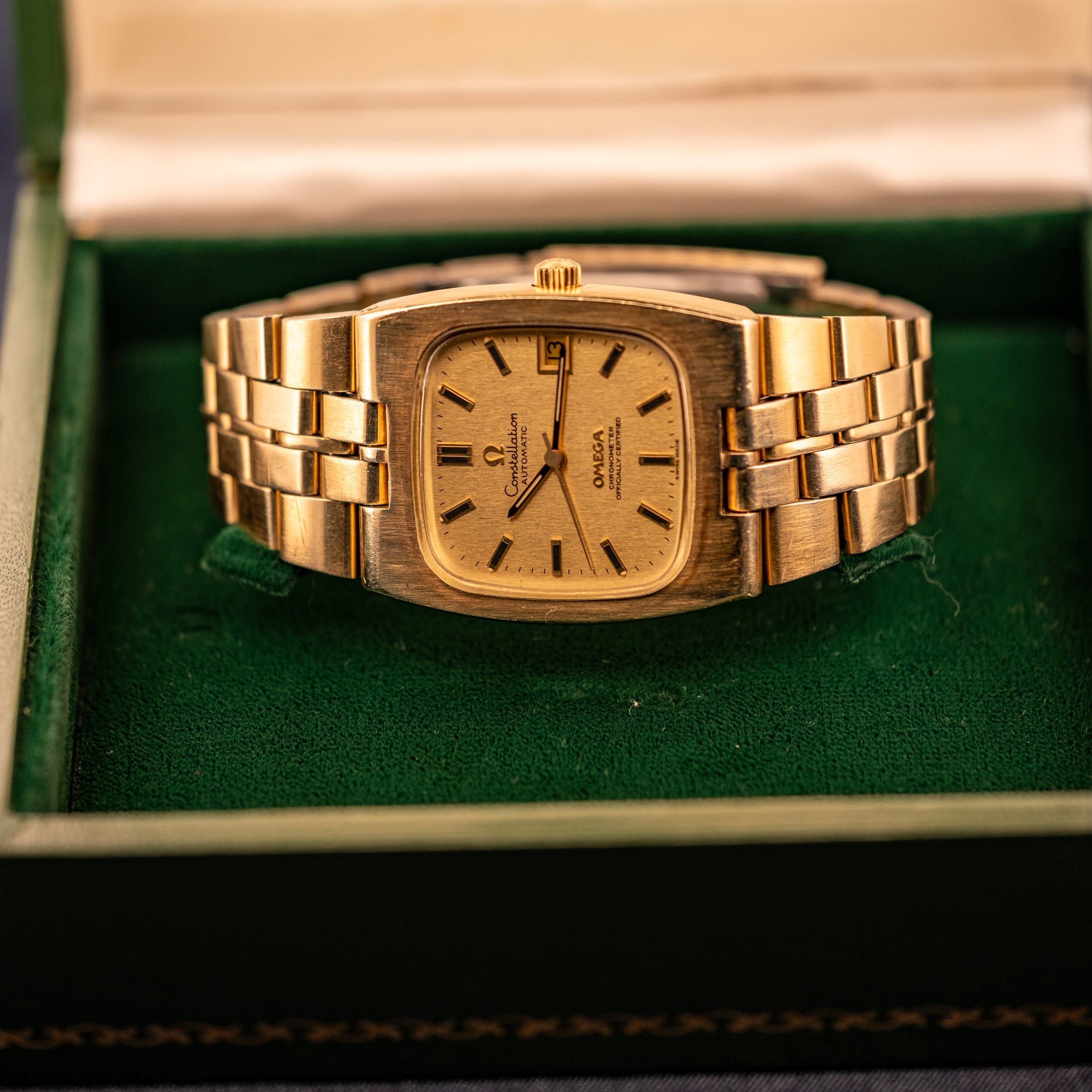
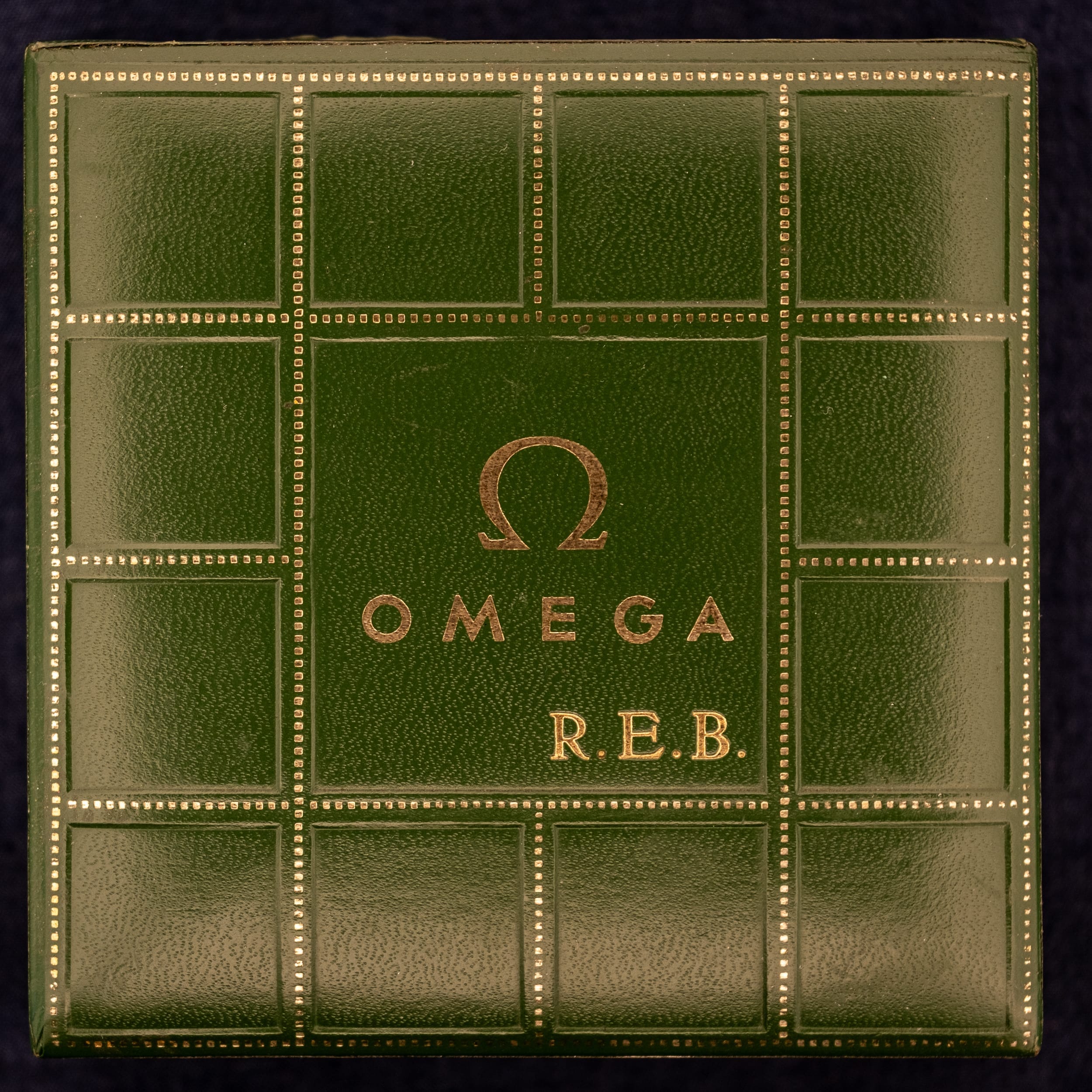
This particular watch arrives with its original green and gold gridded Omega presentation box, embossed at the center with “OMEGA / R.E.B.” in gilt block letters, almost certainly the initials of the original owner who took delivery sometime in the early 1970s. We love this kind of provenance detail. It tells the story of a watch that was special enough to be presented in its own box with its owner’s name, and special enough to be cared for across more than half a century to still be in this kind of condition today.
Serviced by OTTUHR and backed by our 2-year mechanical warranty, this is a wonderfully unapologetic 1970s Omega in the best sense. To us it represents one of the most compelling value propositions in vintage chronometer-grade Swiss watchmaking, a piece of Constellation history that wears like a million bucks and walks the wrist with a confidence that only late-period vintage Omega can summon. For the collector who already owns the obvious choices and is ready for something with a bit more design conviction, this is exactly the right kind of watch to add next.