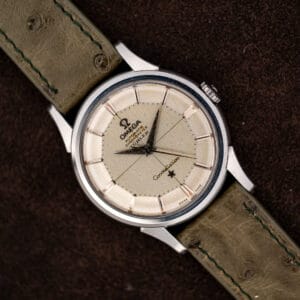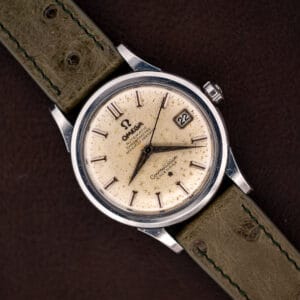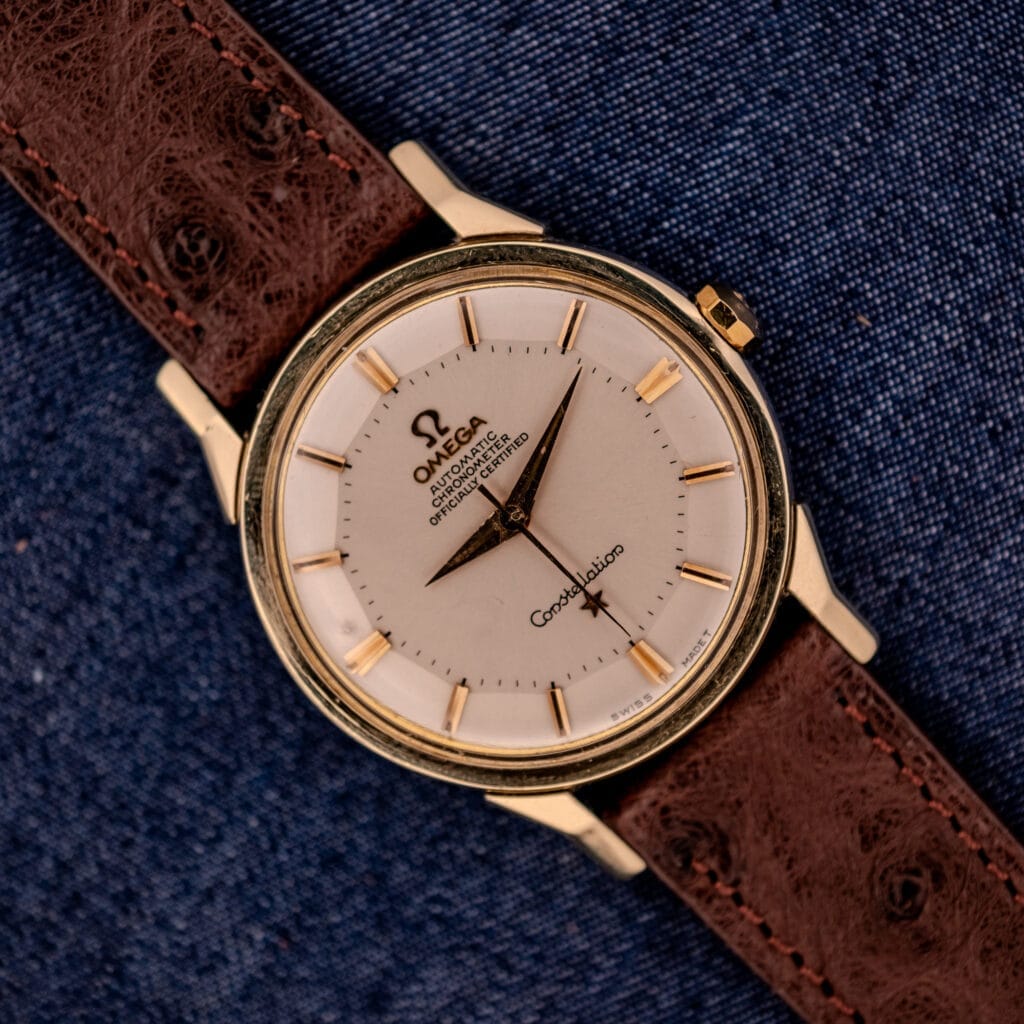
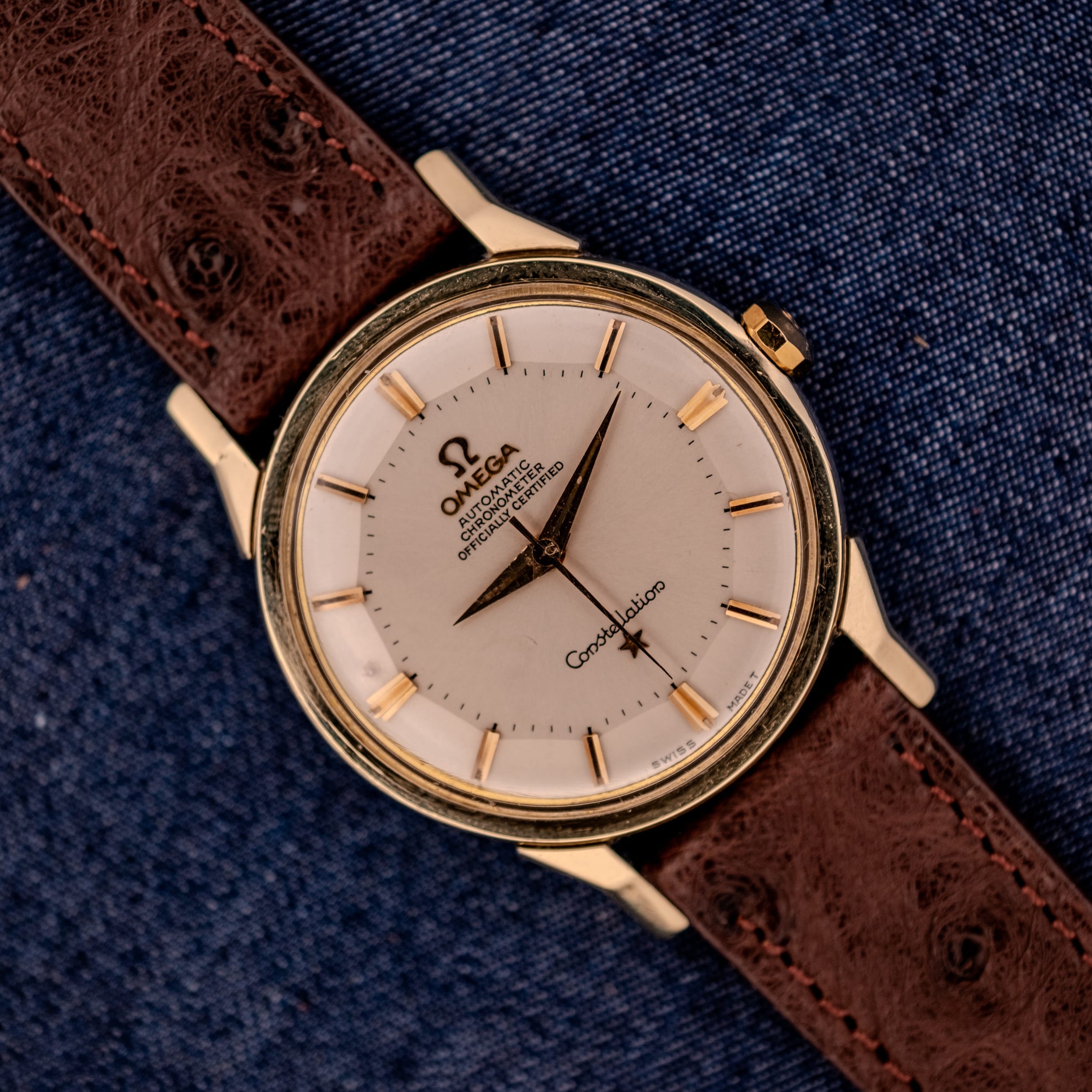
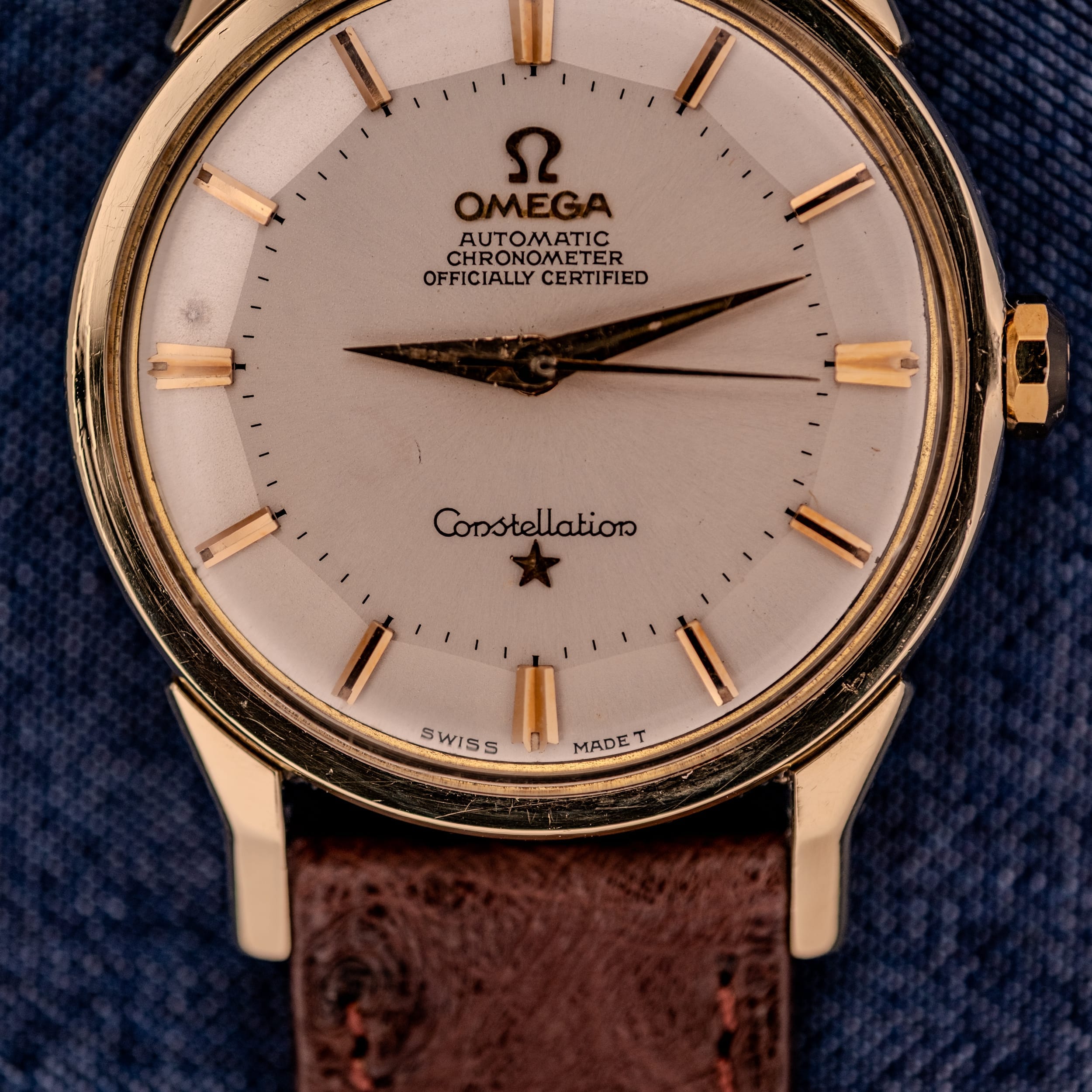
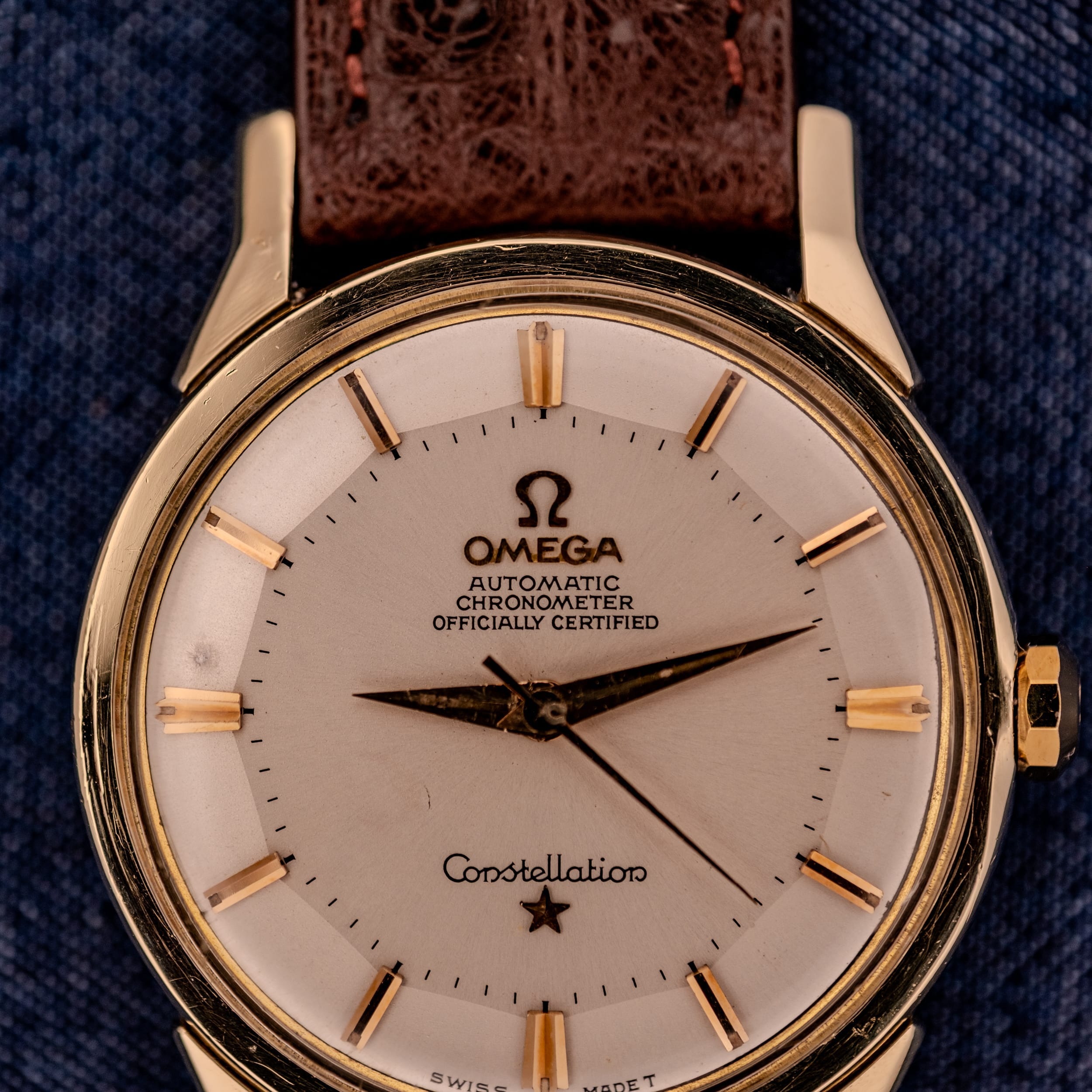
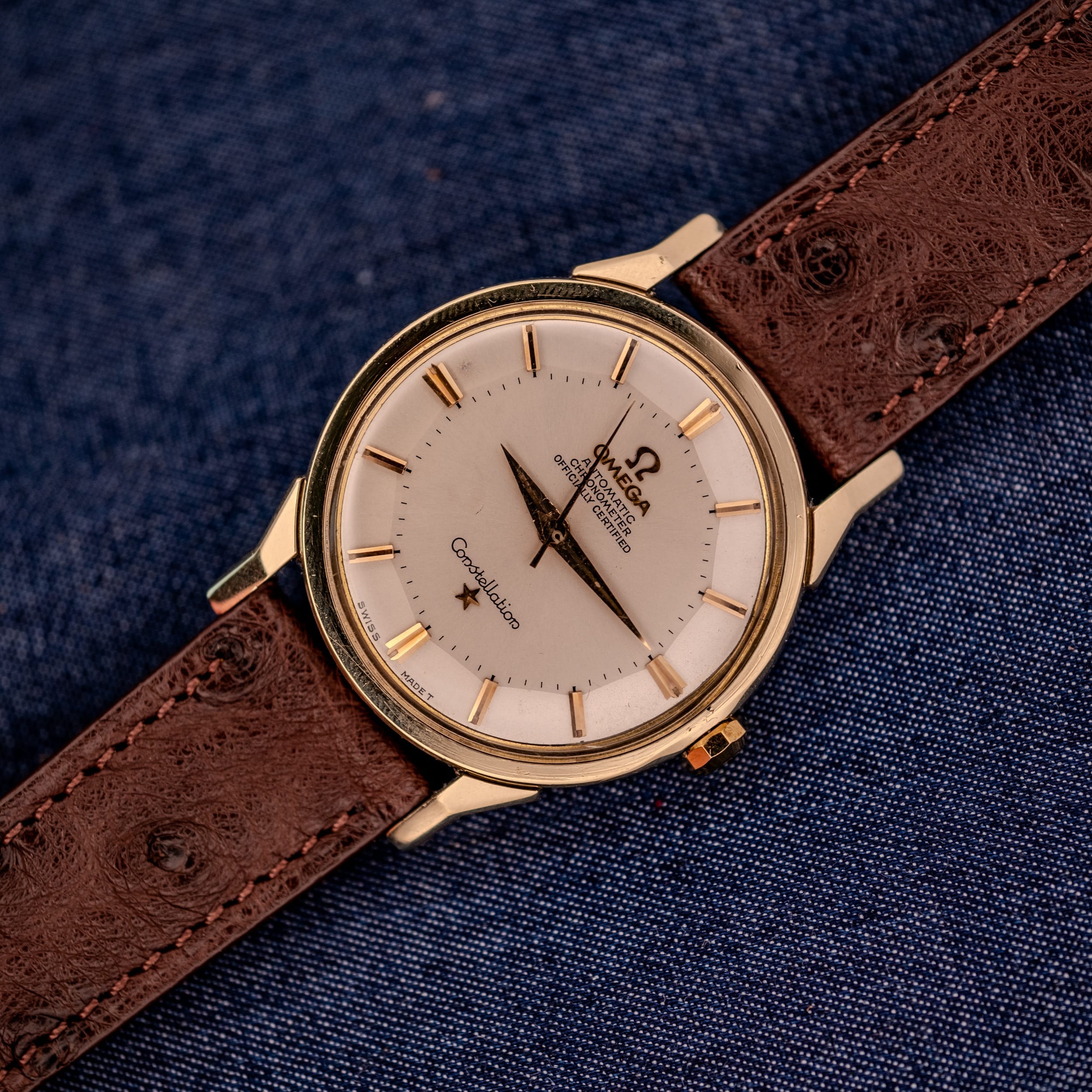
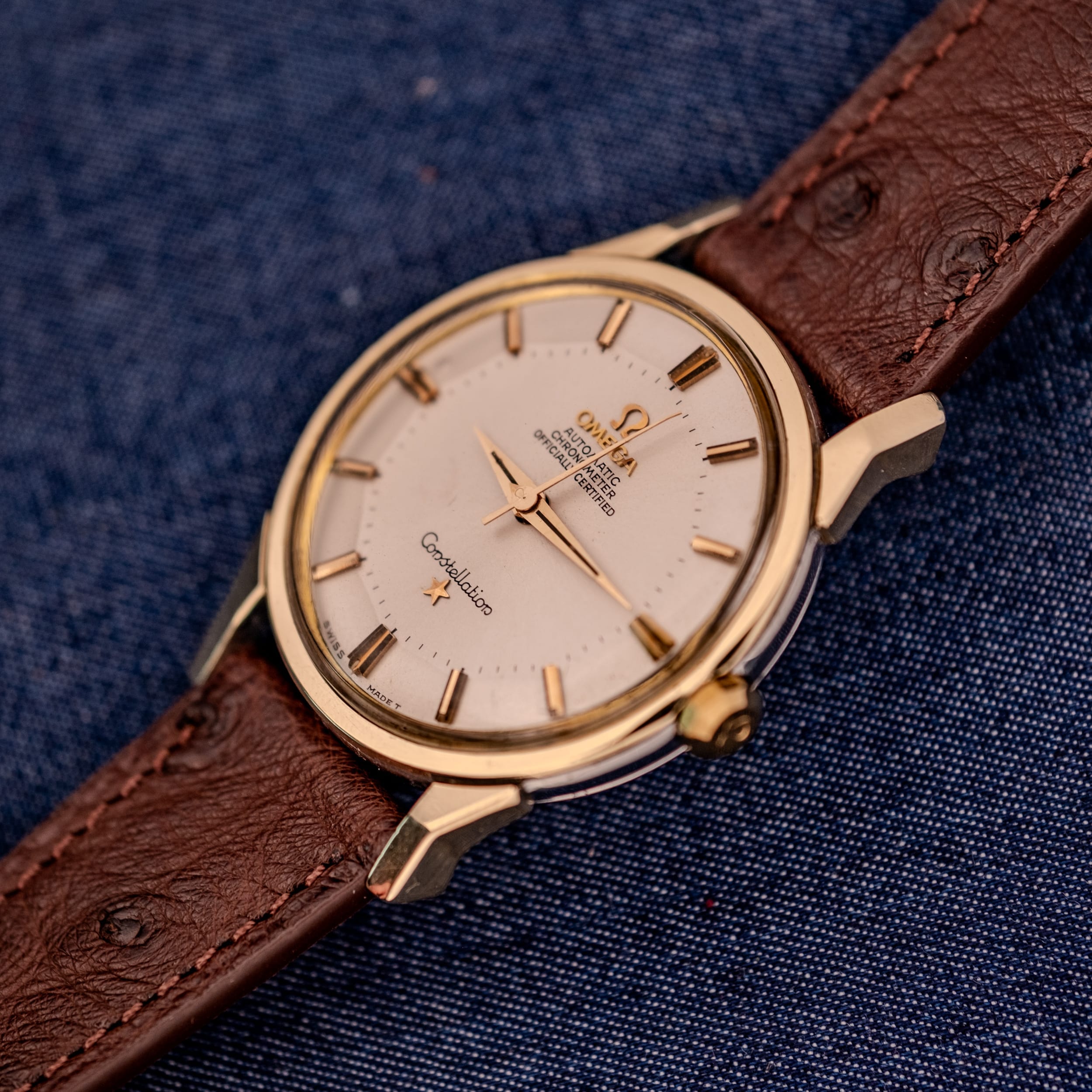
If there is a single vintage watch that collectors point to when they want to demonstrate that Omega once stood shoulder to shoulder with, and frequently above, Rolex in the hierarchy of Swiss watchmaking, it is the Constellation “Pie Pan.” The name itself has become shorthand for a certain kind of mid-century horological perfection, a watch that married chronometer-grade precision with a dial design so distinctive that it has become one of the most recognizable faces in all of horology. The faceted dial, with its gently angled outer chapter ring stepping down to the recessed center, catches light in a way that no flat dial ever could, creating a subtle interplay of shadow and reflection that shifts constantly on the wrist. It is a design detail that seems almost too simple to be revolutionary, and yet it is precisely that simplicity that has made the pie-pan dial an enduring object of desire for over six decades.
The Constellation line was born in 1952 as Omega’s flagship chronometer collection, developed from the highly successful Centenary models that celebrated the brand’s first hundred years of watchmaking. From the outset, every Constellation movement was submitted for official chronometer certification, a distinction that Omega took more seriously than perhaps any other manufacturer of the era. During the late 1950s and throughout the 1960s, Omega held more observatory records for precision than any competitor, and the Constellation was the watch that carried this legacy on the wrists of discerning buyers around the world. The observatory medallion engraved on the caseback of every Constellation was earned, not decorative, representing Omega’s unmatched record at the Geneva and Neuchâtel observatories.
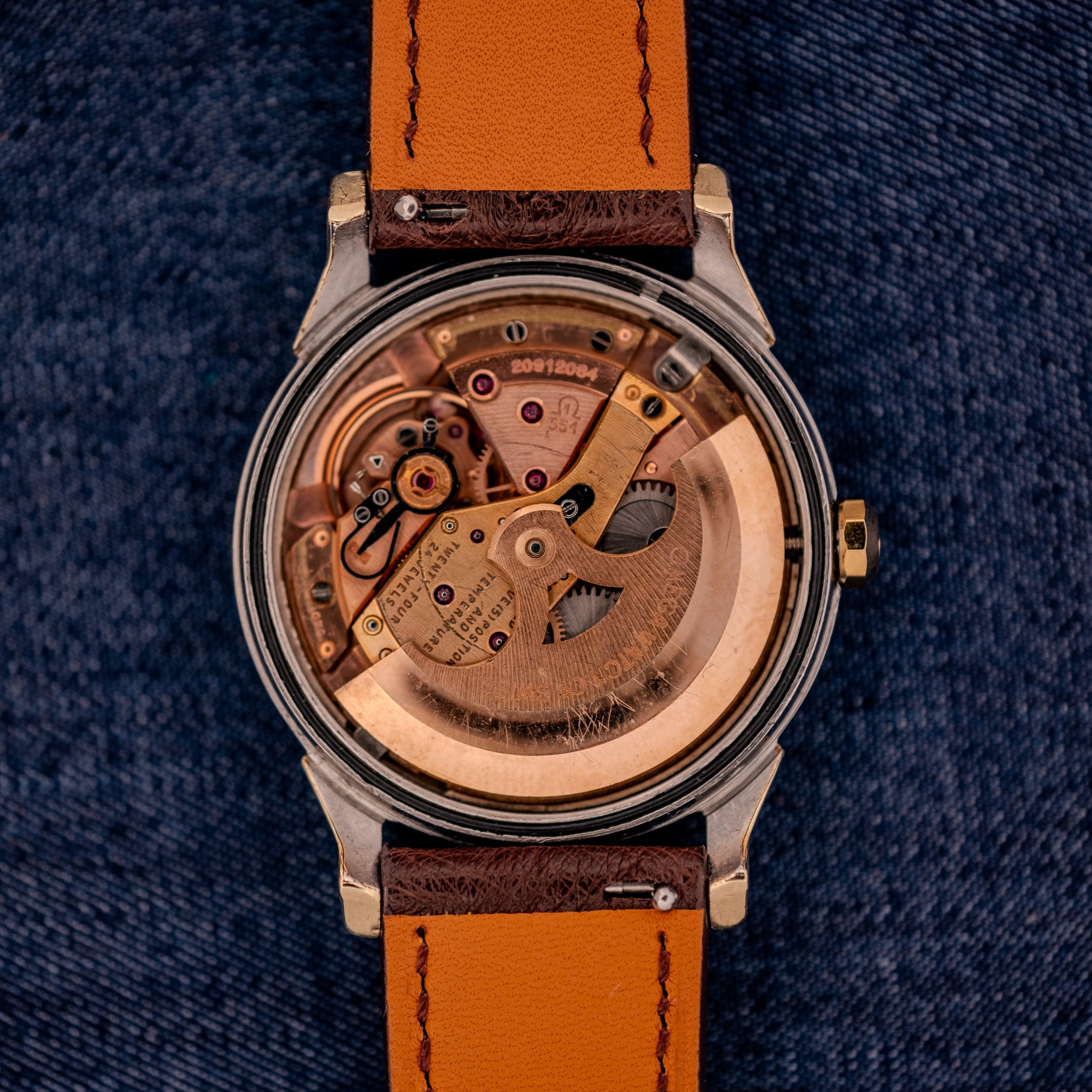
At the heart of this particular watch beats the Caliber 551, a 24-jewel automatic chronometer movement adjusted to five positions and temperature, and one of the most celebrated calibers in Omega’s storied history. The 551 belongs to Omega’s legendary mid-500 series of movements, a family that collectors consider the finest production calibers the company ever made. It was part of a remarkable run of over 100,000 Omega movements that met chronometer standards twice as rigorous as normally required, a feat of manufacturing consistency that has never been replicated. Beating at 19,800 vibrations per hour with approximately 50 hours of power reserve, the 551 is a no-date movement, which means the dial enjoys perfect, uninterrupted symmetry, a quality that many collectors prize above all else in a dress watch. The copper-plated beryllium-bronze finishing of the movement is visible through the opened caseback and is simply gorgeous, with its warm rose-gold toned bridges, generous jeweling, and impeccable fit of every component.
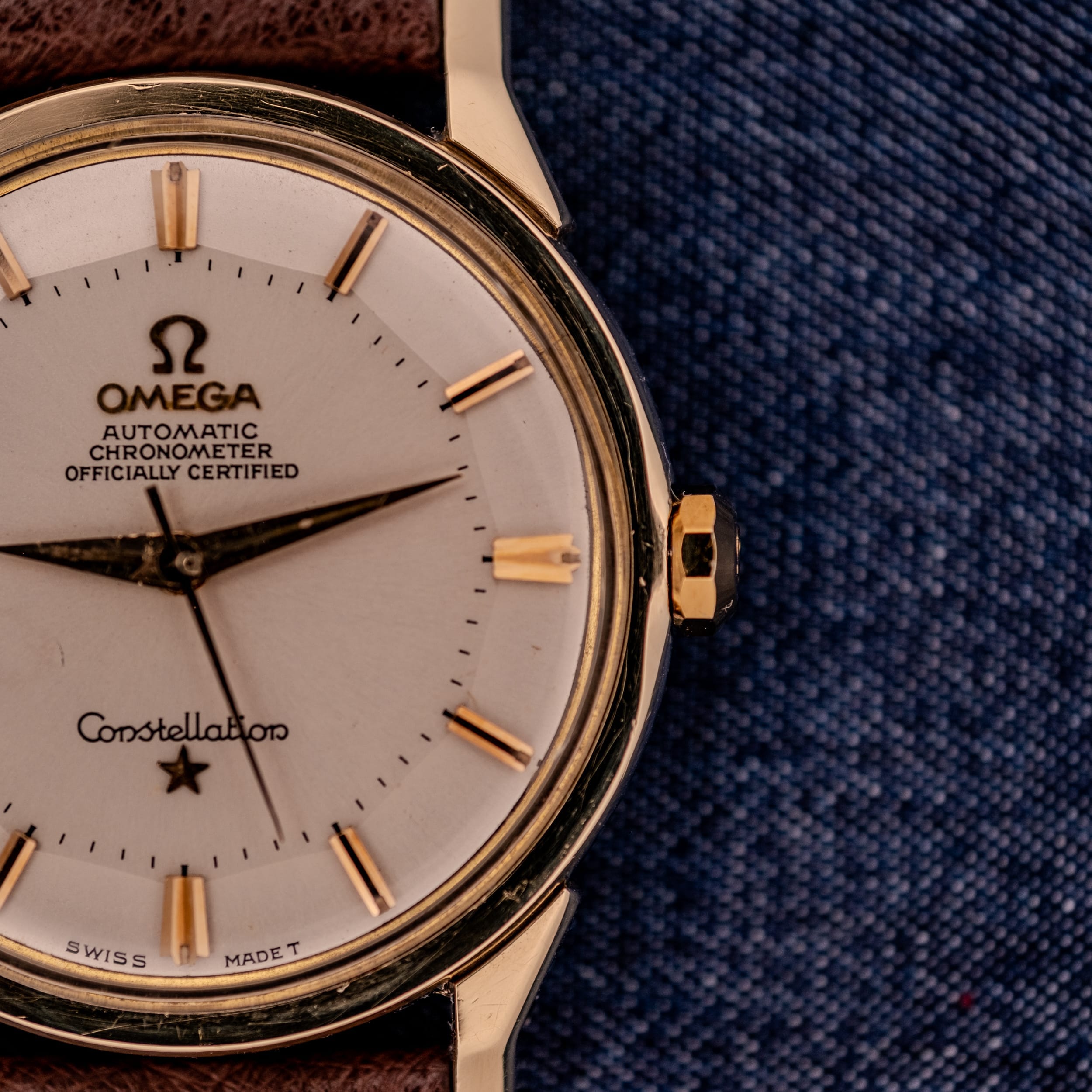
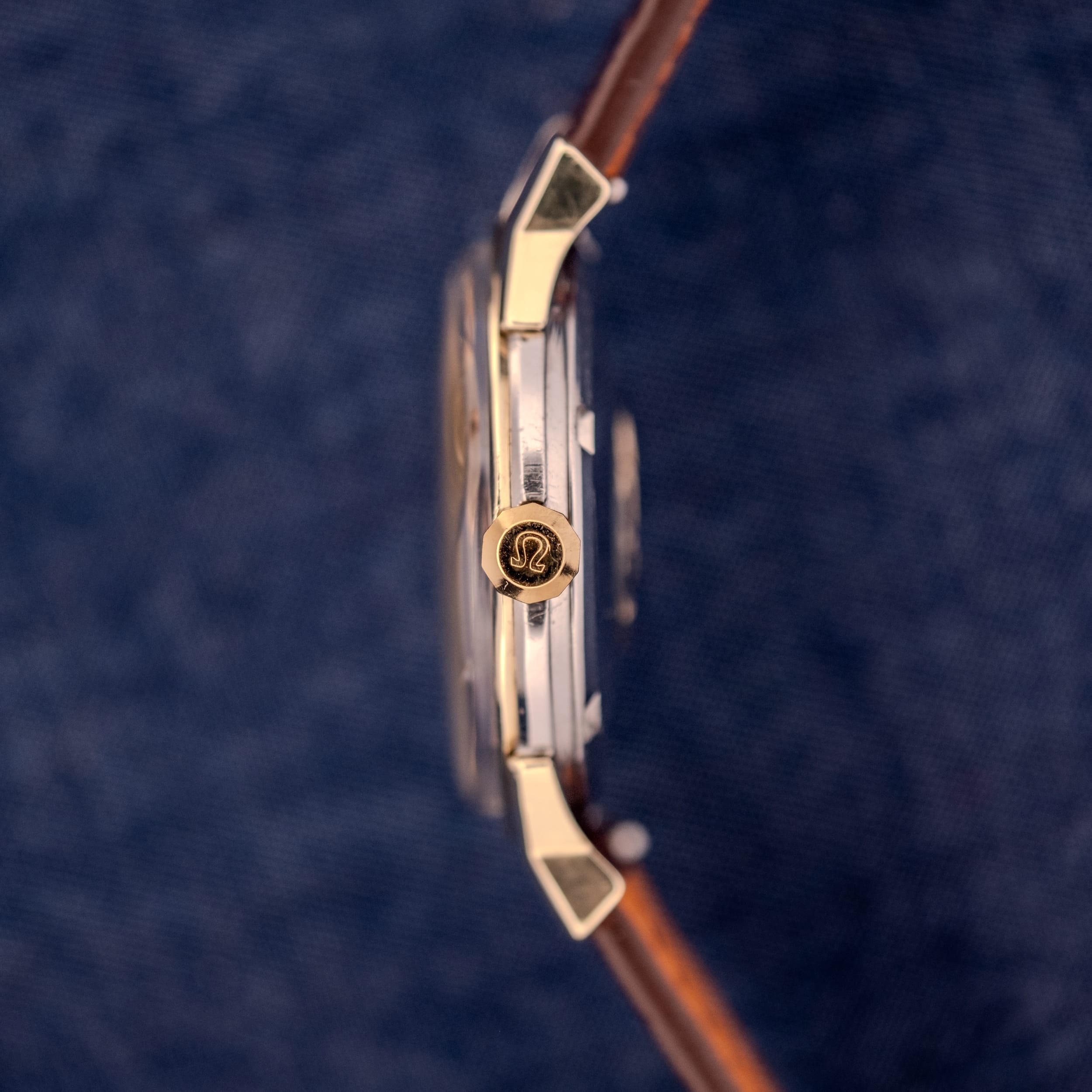
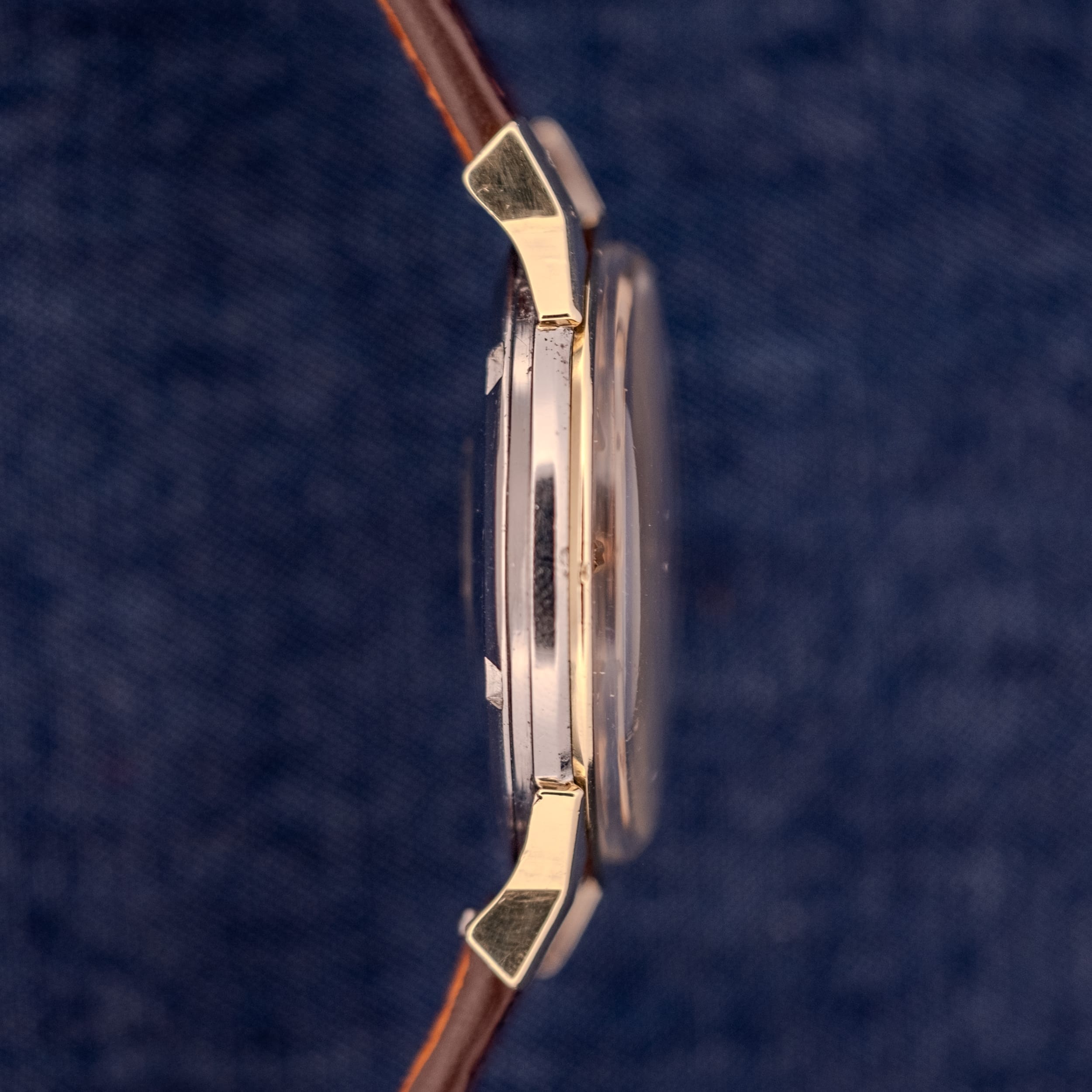
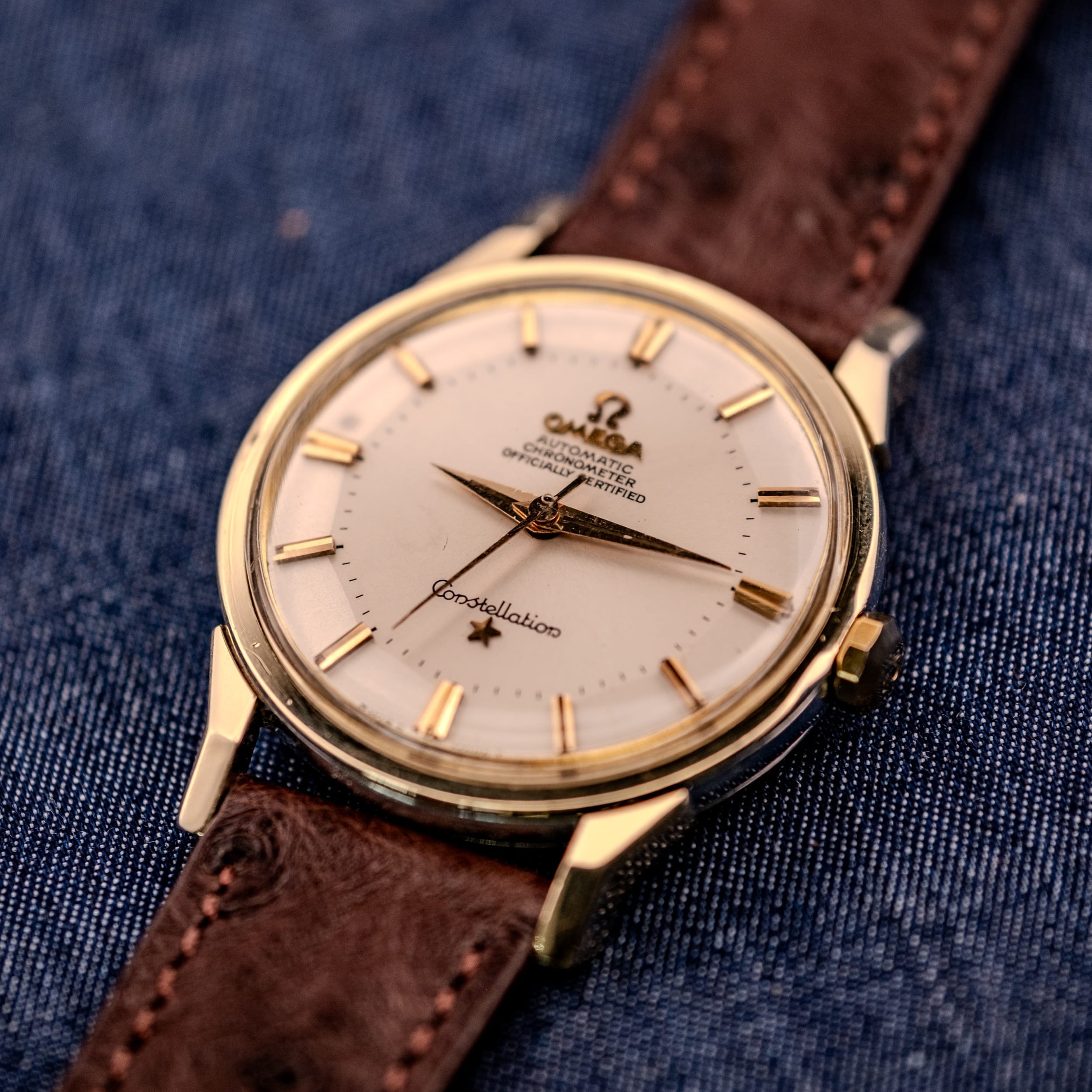
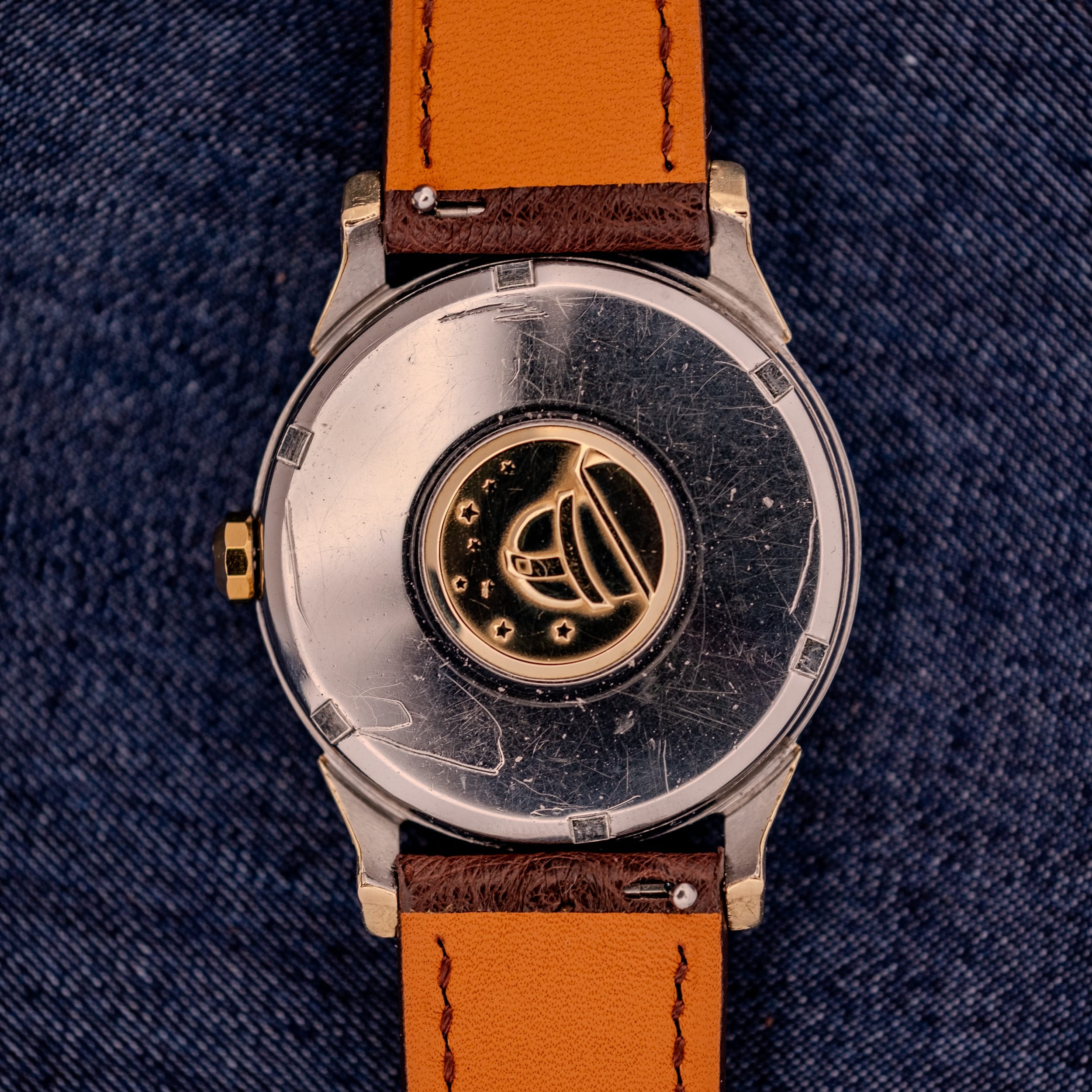
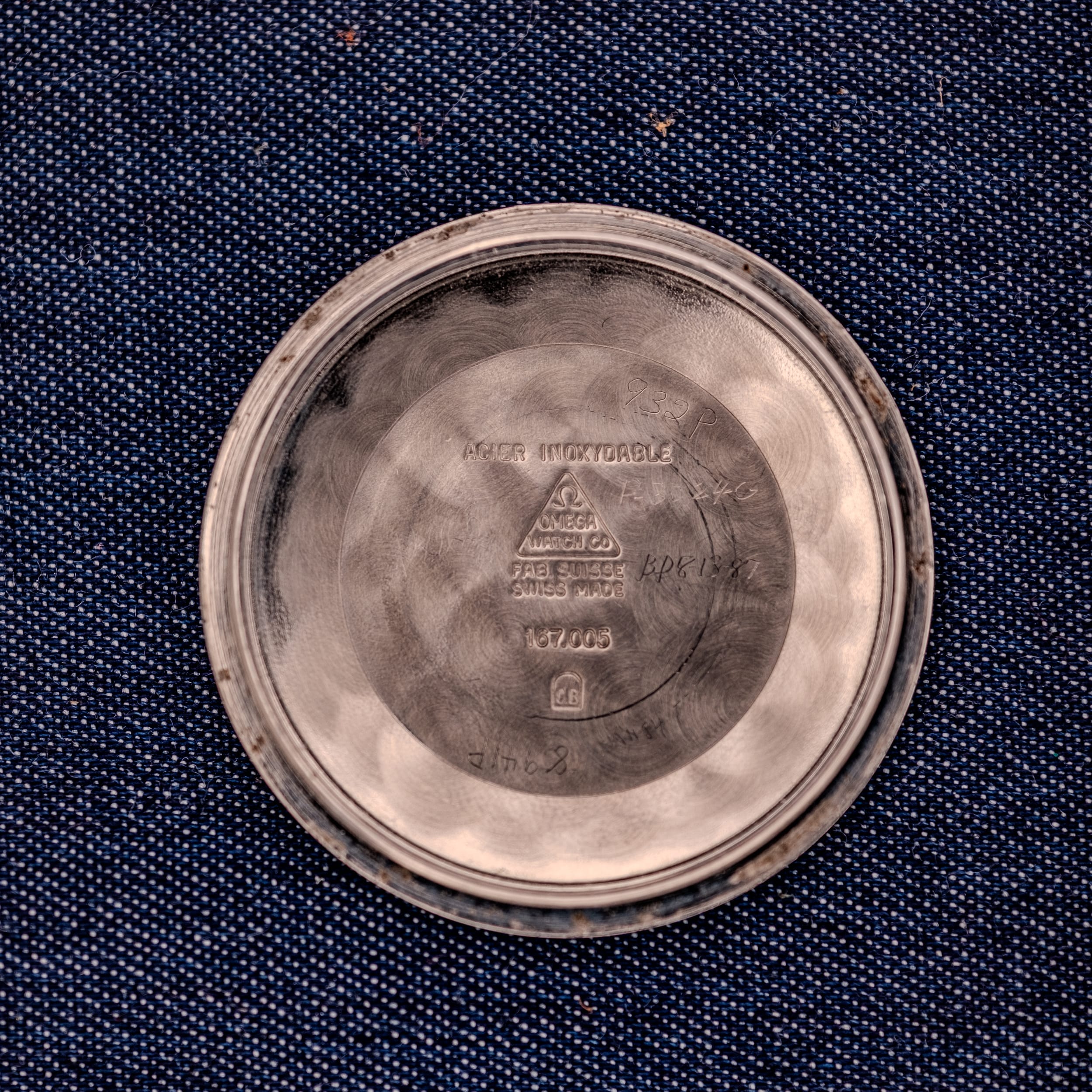
This particular example, with movement number 20912084, dates to approximately 1963, placing it squarely in the golden era of the Constellation line. The 14K gold capped case measures 34mm and features the iconic dog-leg lugs that are synonymous with the 167.005 reference. These angular, sharply defined lugs give the watch a visual presence that extends well beyond its nominal diameter, and on this example they retain excellent definition and crispness. The case sides are clean and well preserved, and the original Omega-signed gold crown remains in place with clear logo definition. The caseback exterior features the gold observatory medallion surrounded by eight stars in satisfying relief, the universal hallmark of the Constellation collection. The interior is correctly stamped “Acier Inoxydable,” “Omega Watch Co,” “Fab Suisse, Swiss Made,” and the reference number 167.005.
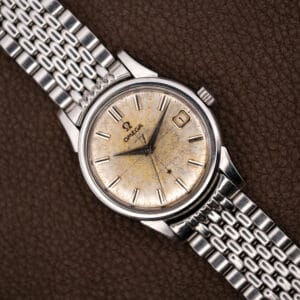
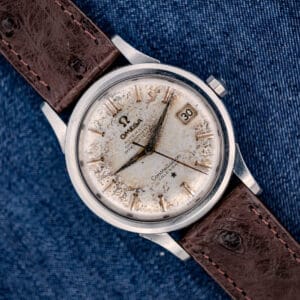
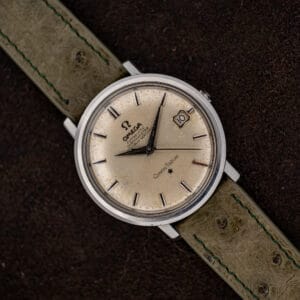
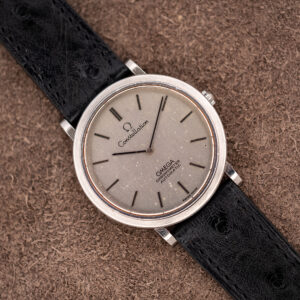
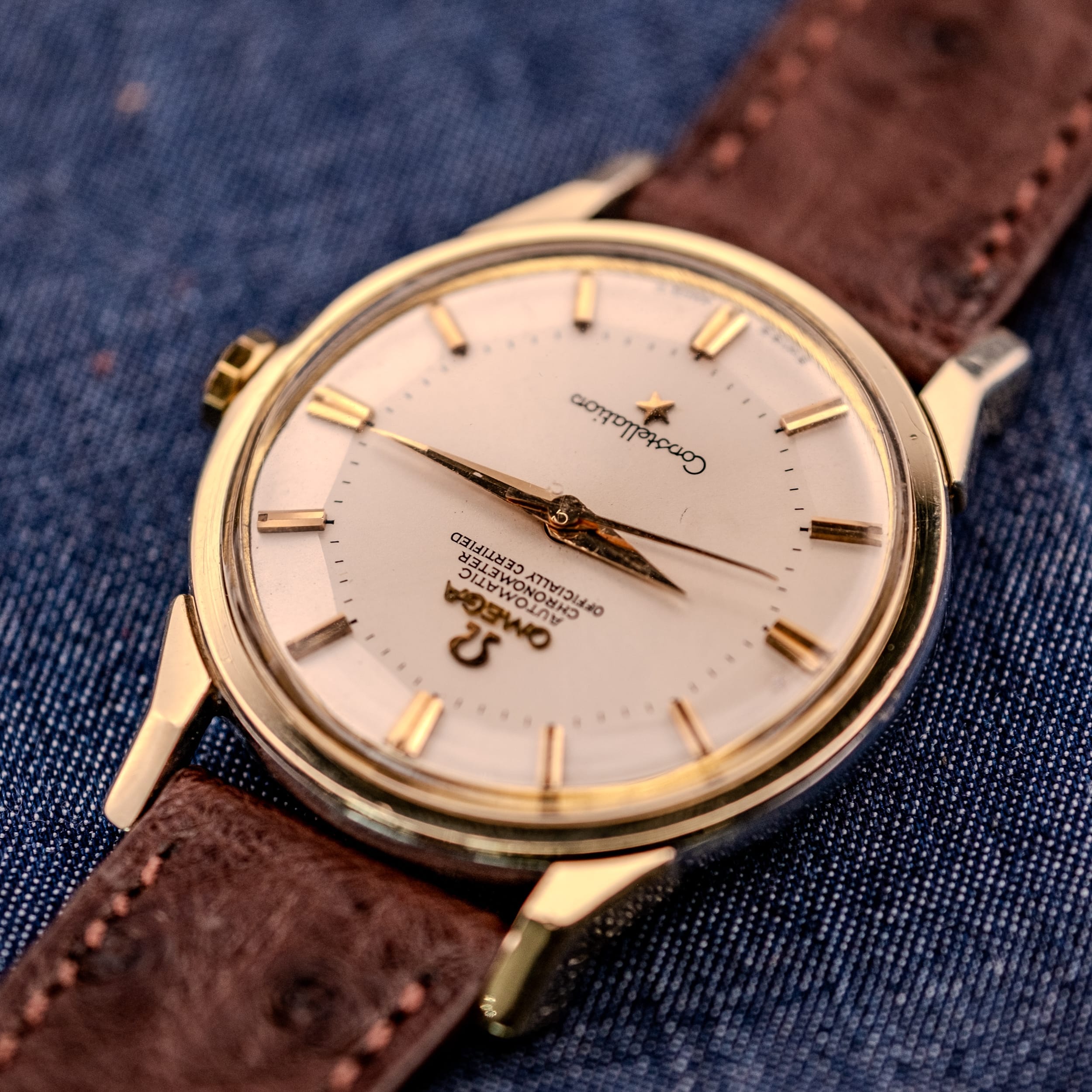
The silver pie-pan dial is in excellent condition overall, with the faceted outer ring and recessed center both displaying their characteristic light play beautifully. The applied gold baton indices are all present and firmly seated, and the printed text for “Omega,” “Automatic Chronometer Officially Certified,” and the cursive “Constellation” script with its accompanying star are all crisp and legible. There is a small spot visible near the 10 o’clock marker, a minor instance of the kind of lacquer aging that is common on dials of this vintage and that in no way diminishes the overall impression of the piece. The “Swiss Made T” designation at 6 o’clock confirms the presence of tritium luminous material. The original broad arrow dauphine hands retain their shape and show gentle, honest aging consistent with the dial.
In our opinion, the no-date Constellation Pie Pan powered by the Caliber 551 represents something close to the platonic ideal of the mid-century dress watch. There is no cyclops lens to disrupt the bezel line, no date window to break the symmetry of the dial, and no unnecessary complication standing between the wearer and the pure expression of time. It is a watch that looks equally at home with a suit as it does with a casually rolled sleeve, and the warmth of the 14K gold capped case gives it a richness that a pure steel example simply cannot match. For the collector who understands that Omega’s mid-century chronometers represent some of the finest value in all of vintage watchmaking, and for anyone who simply appreciates a beautifully proportioned, historically significant timepiece, this Constellation 167.005 is the quintessential entry point into one of horology’s great traditions. Presented on an OTTUHR brown ostrich strap.