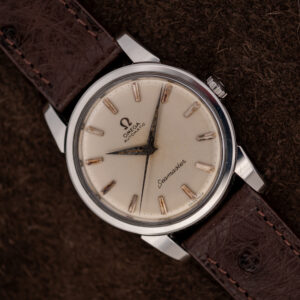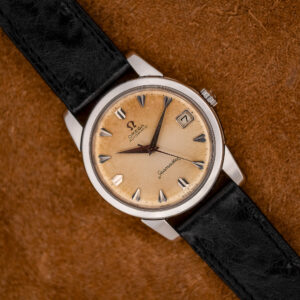
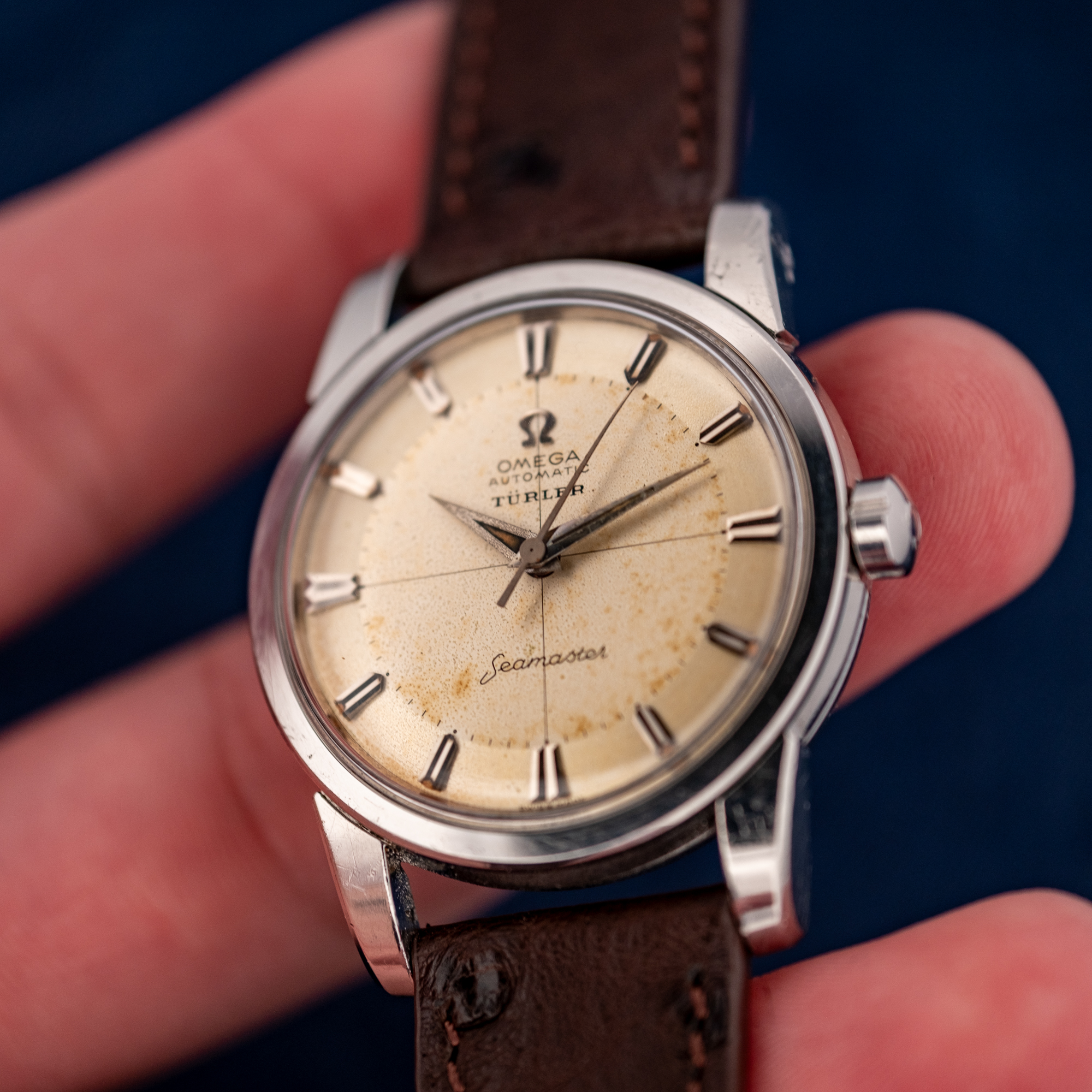
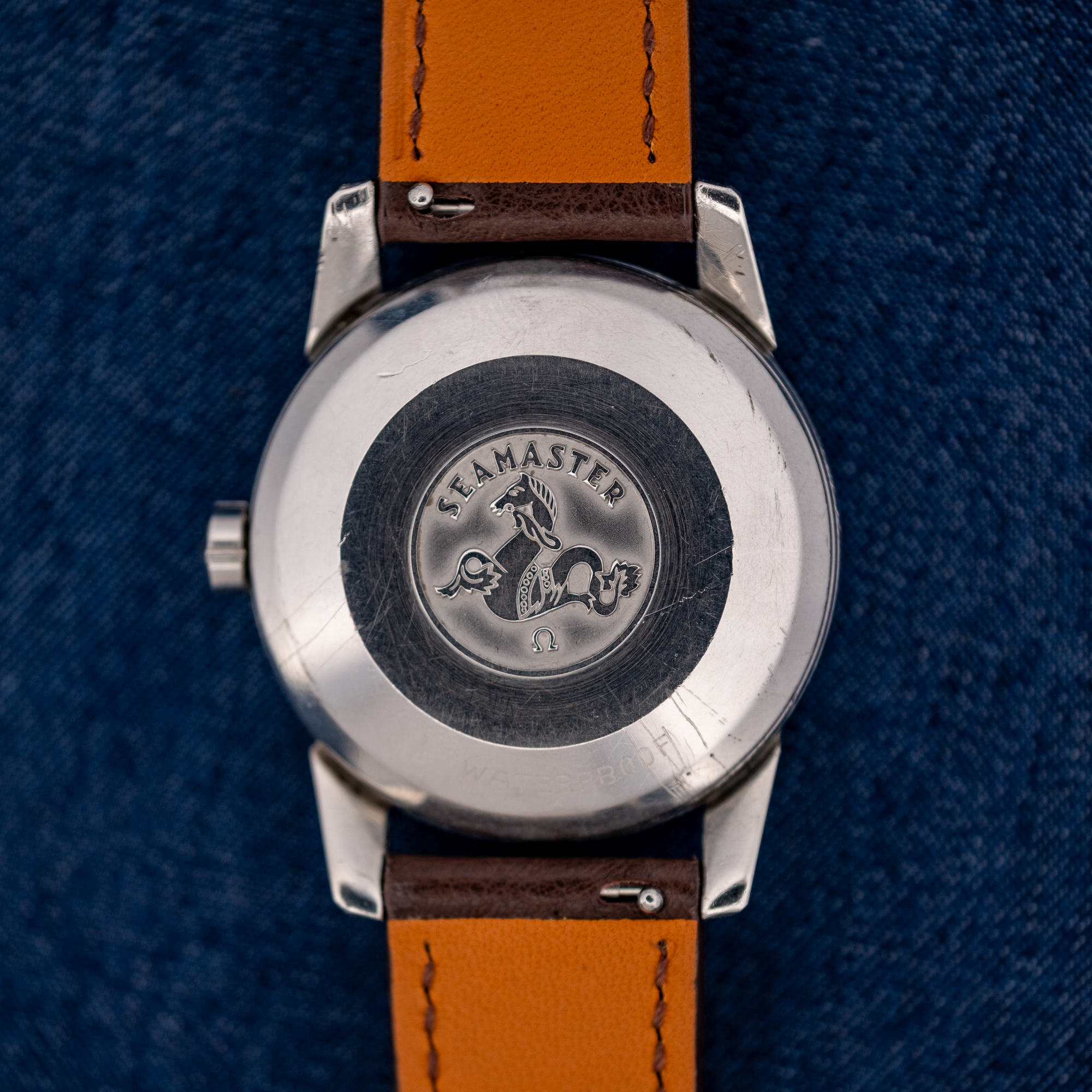
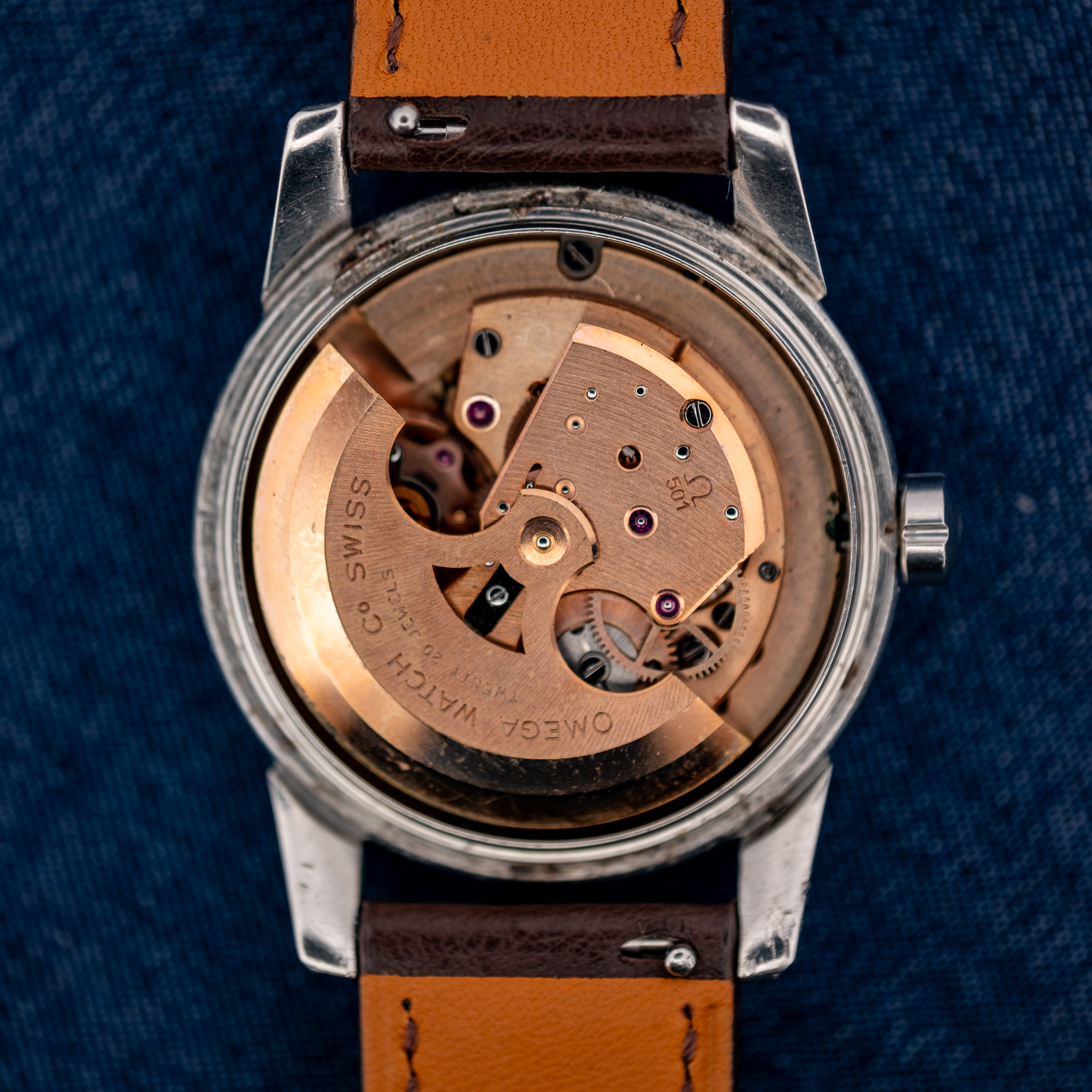
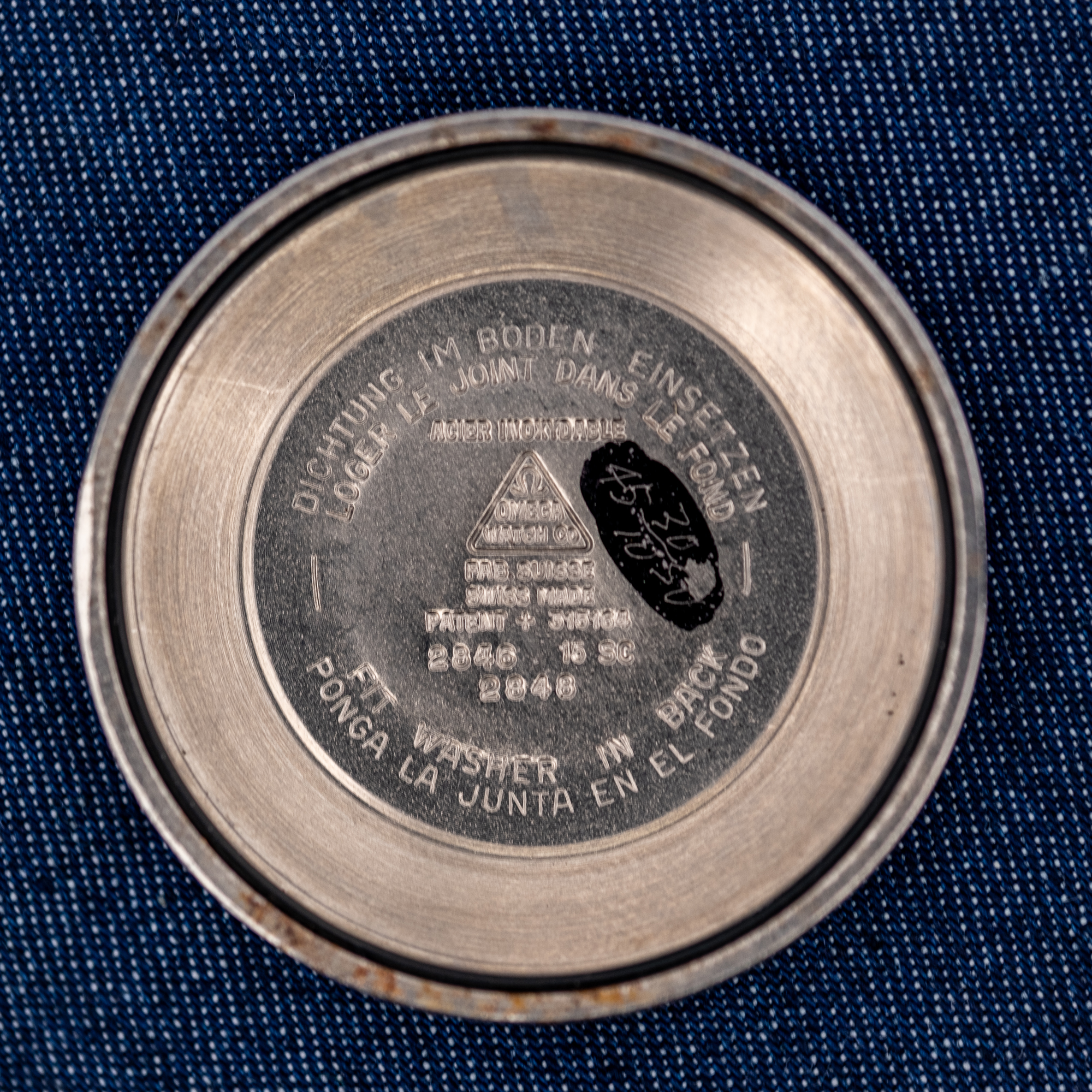

A cross and six digits sit among the stamps inside the back of this Omega Seamaster 2846-15 SC: PATENT + 315164. The cross marks a Swiss patent. The number belongs to a waterproof watch case that Omega filed in April 1954, naming its technical manager, Henri Gerber, as inventor, and the patent was published in July 1956.
Gerber’s case closes with a back that snaps into place over a synthetic-rubber O-ring. Earlier gaskets took the closing pressure unevenly around the joint. Gerber wanted a ring that sealed the same at every point and could be swapped for a spare at the bench.
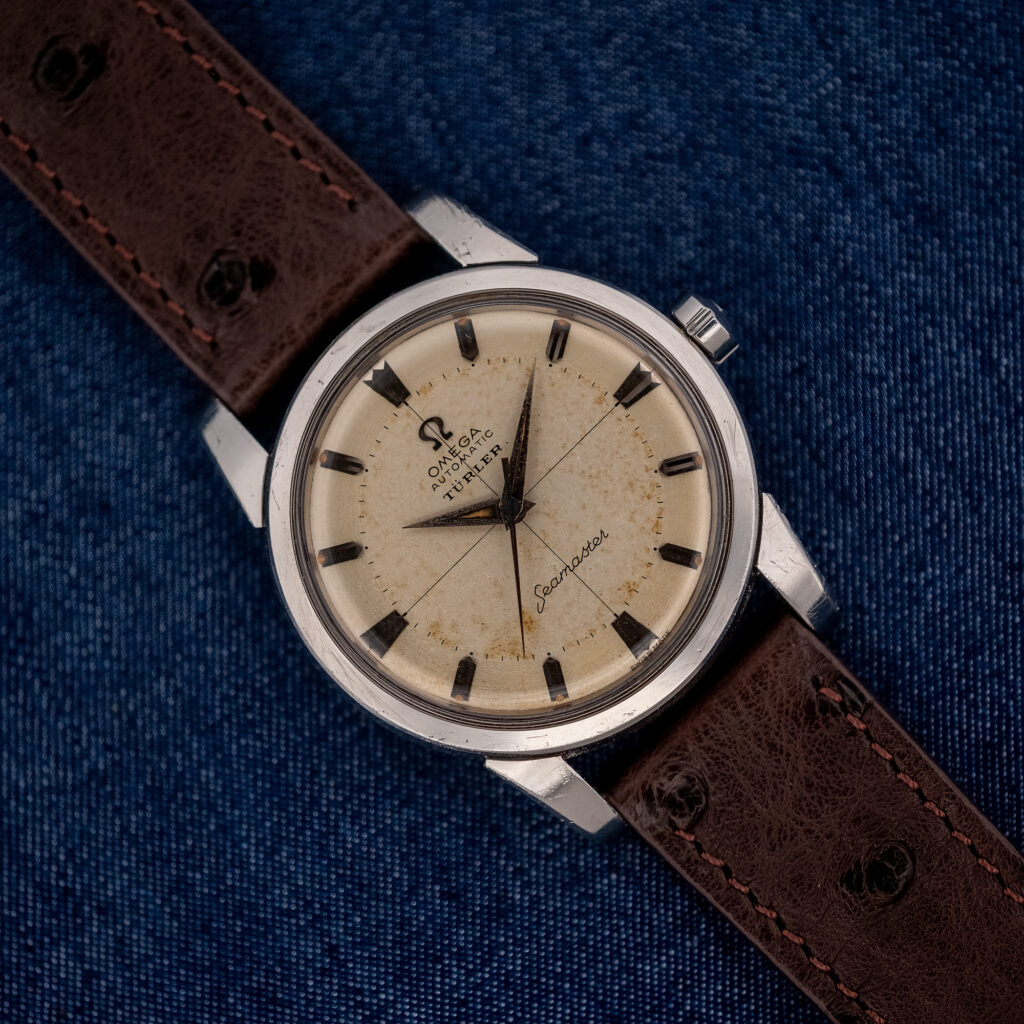
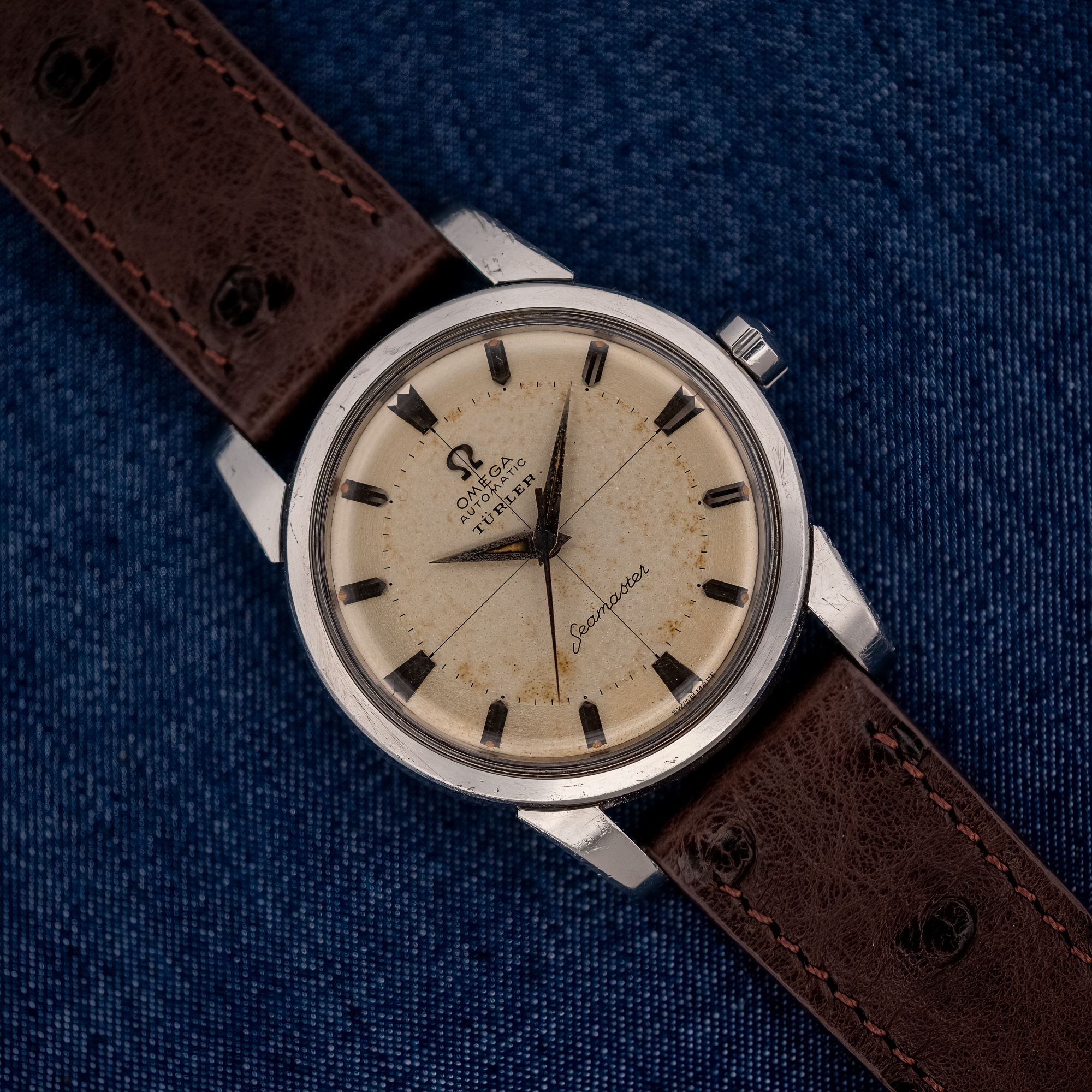
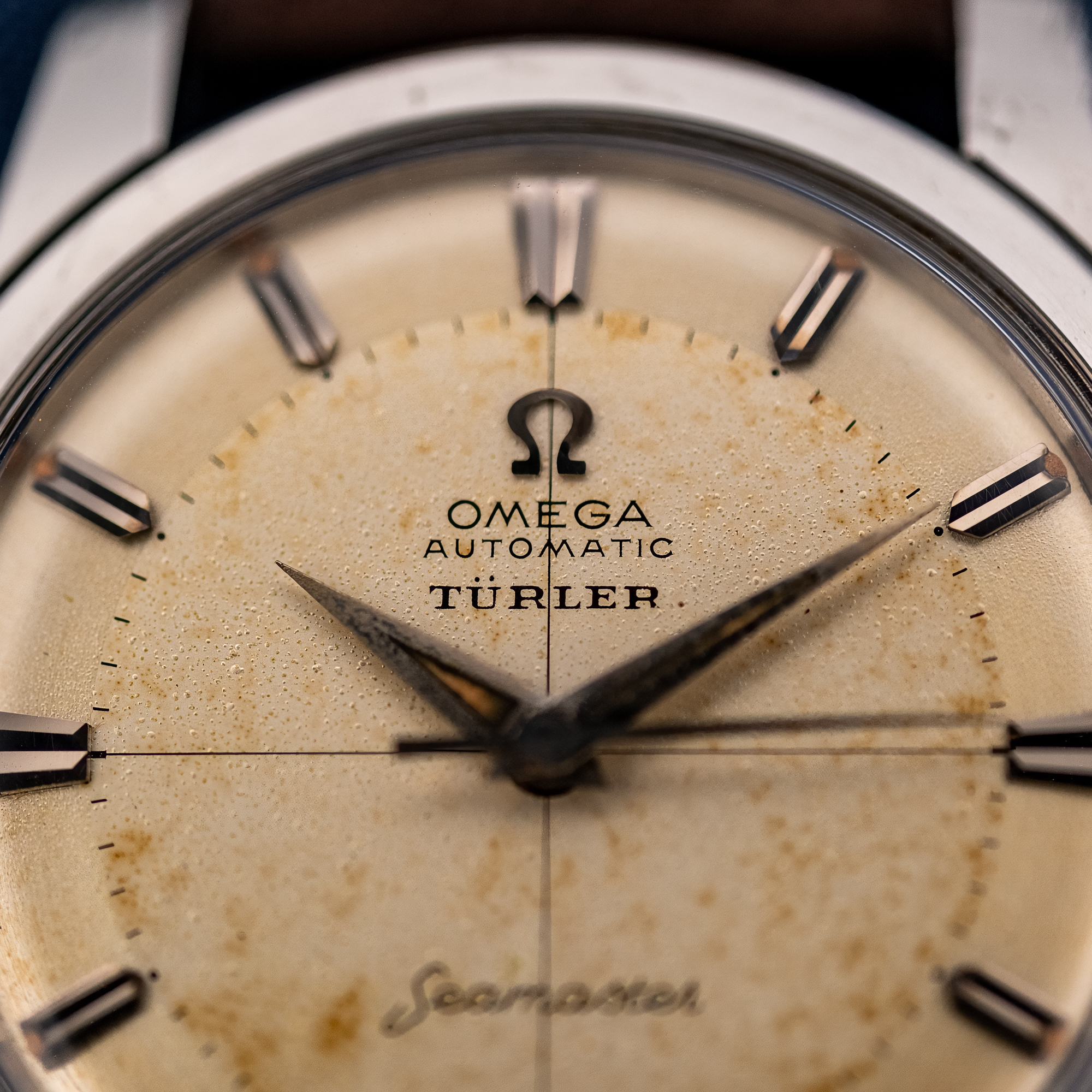
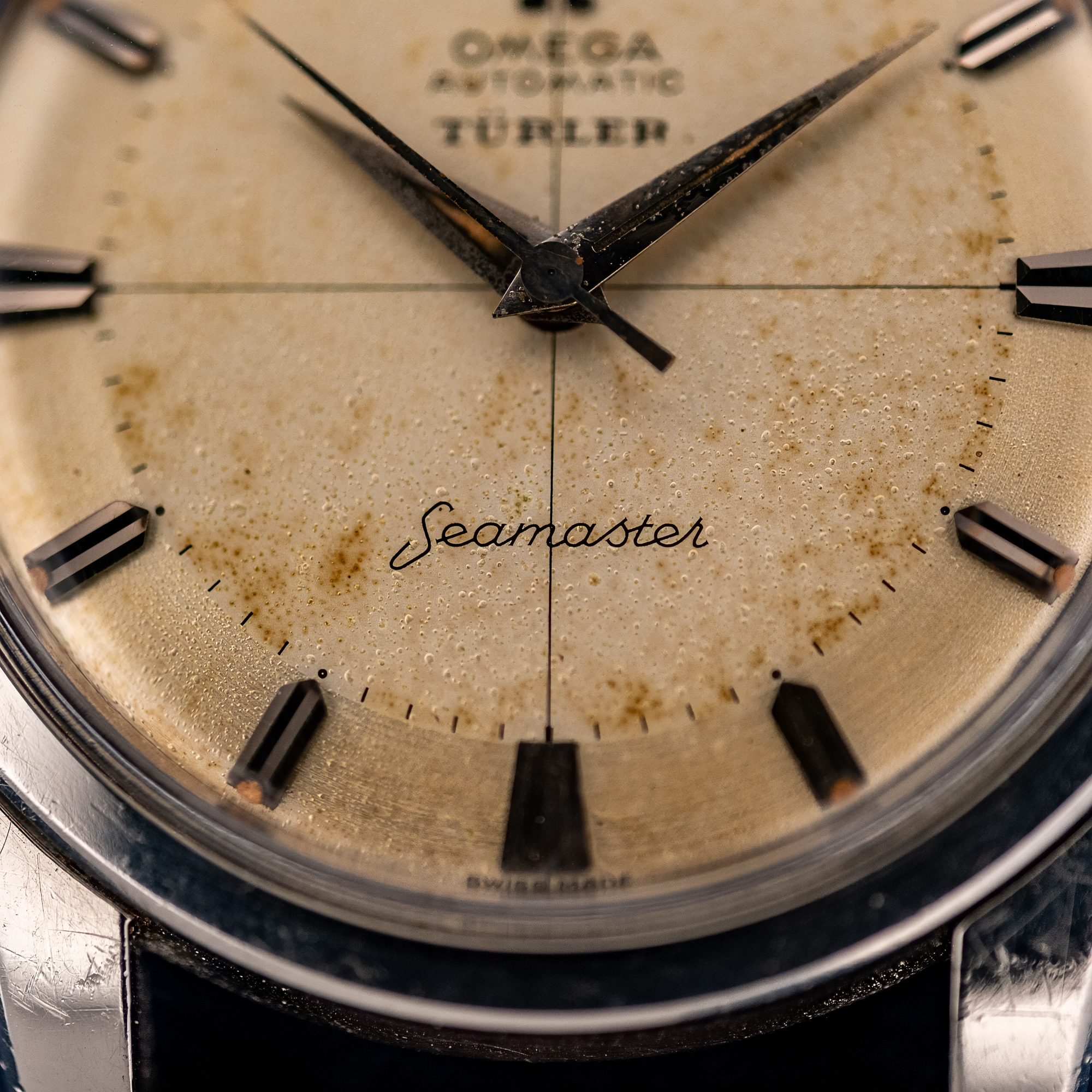
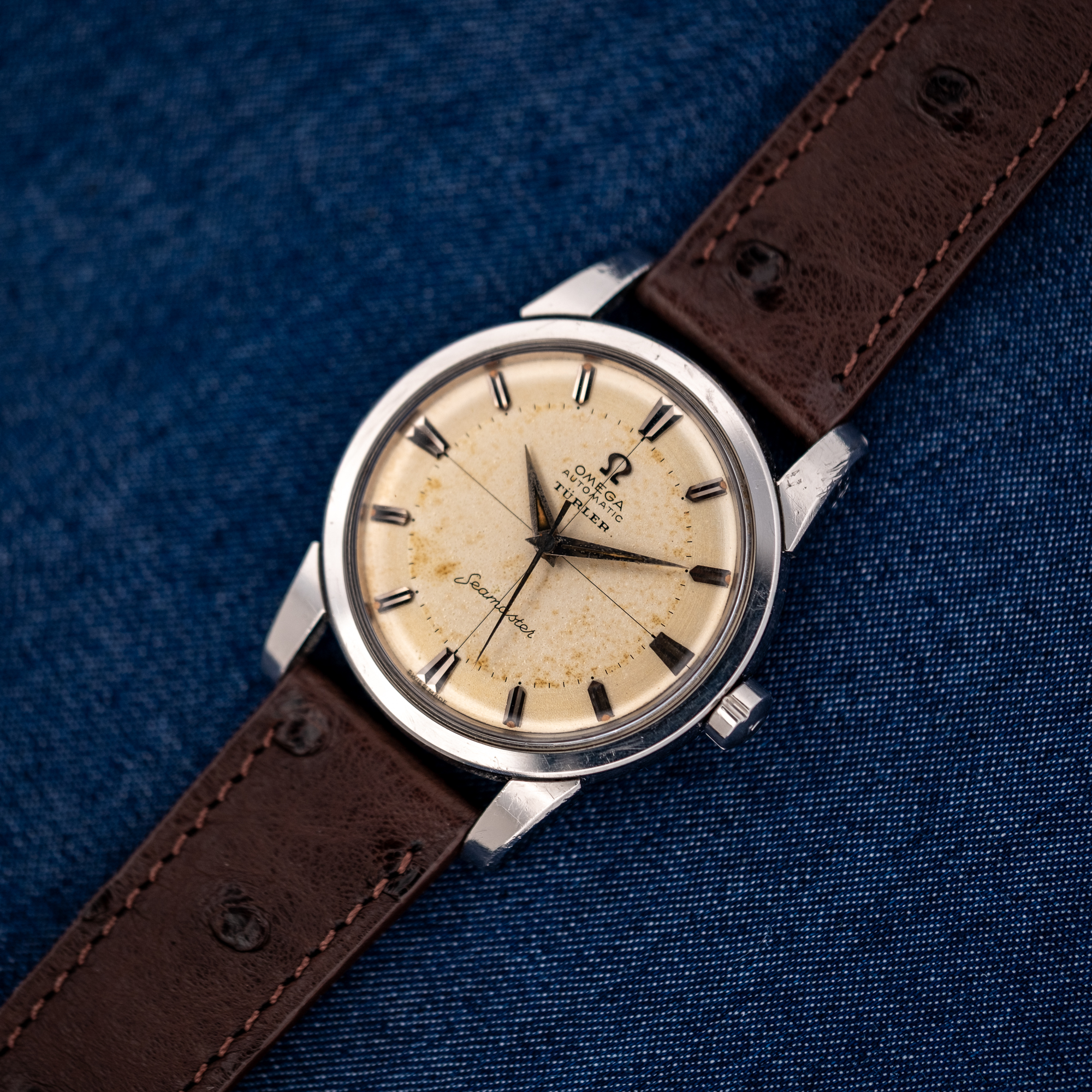
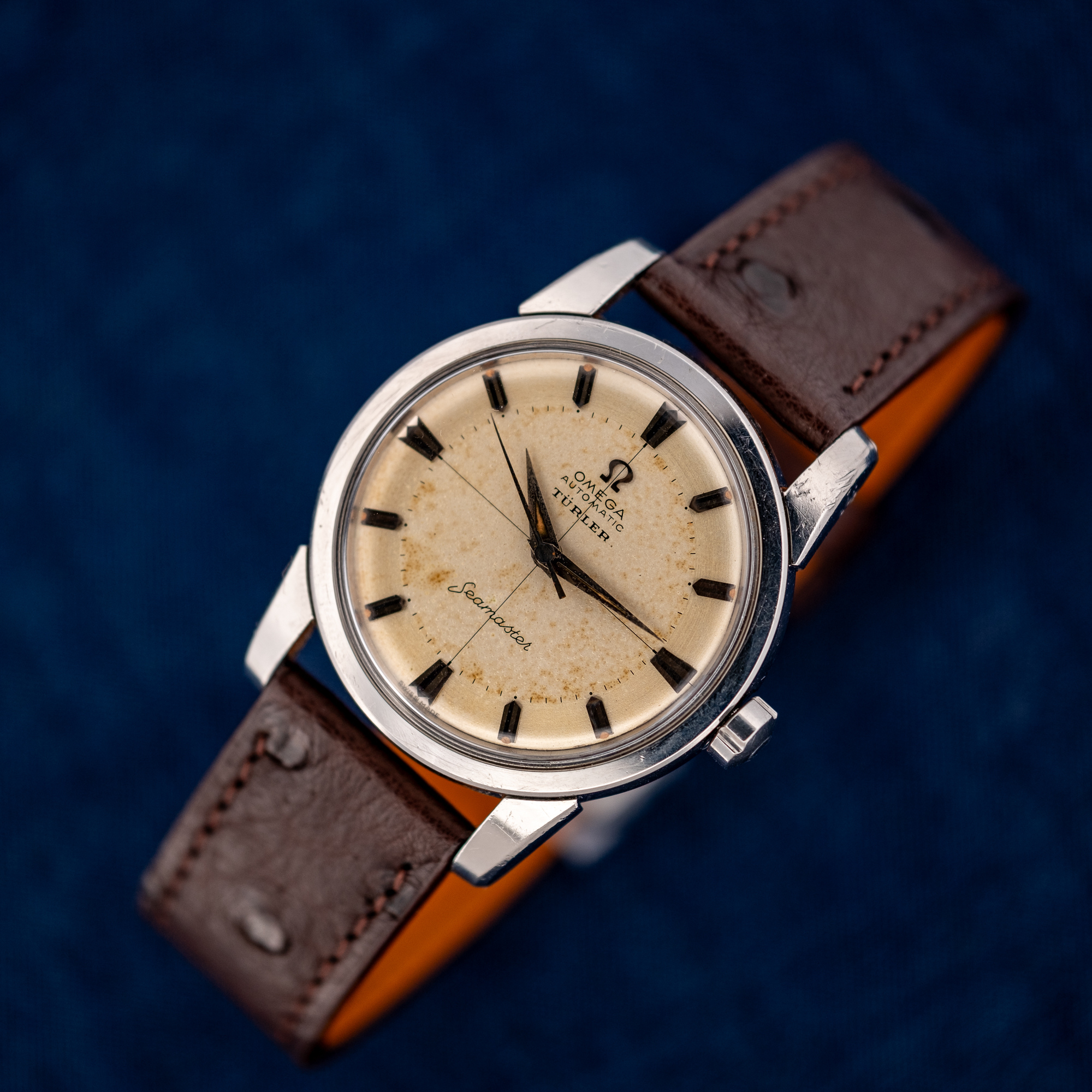
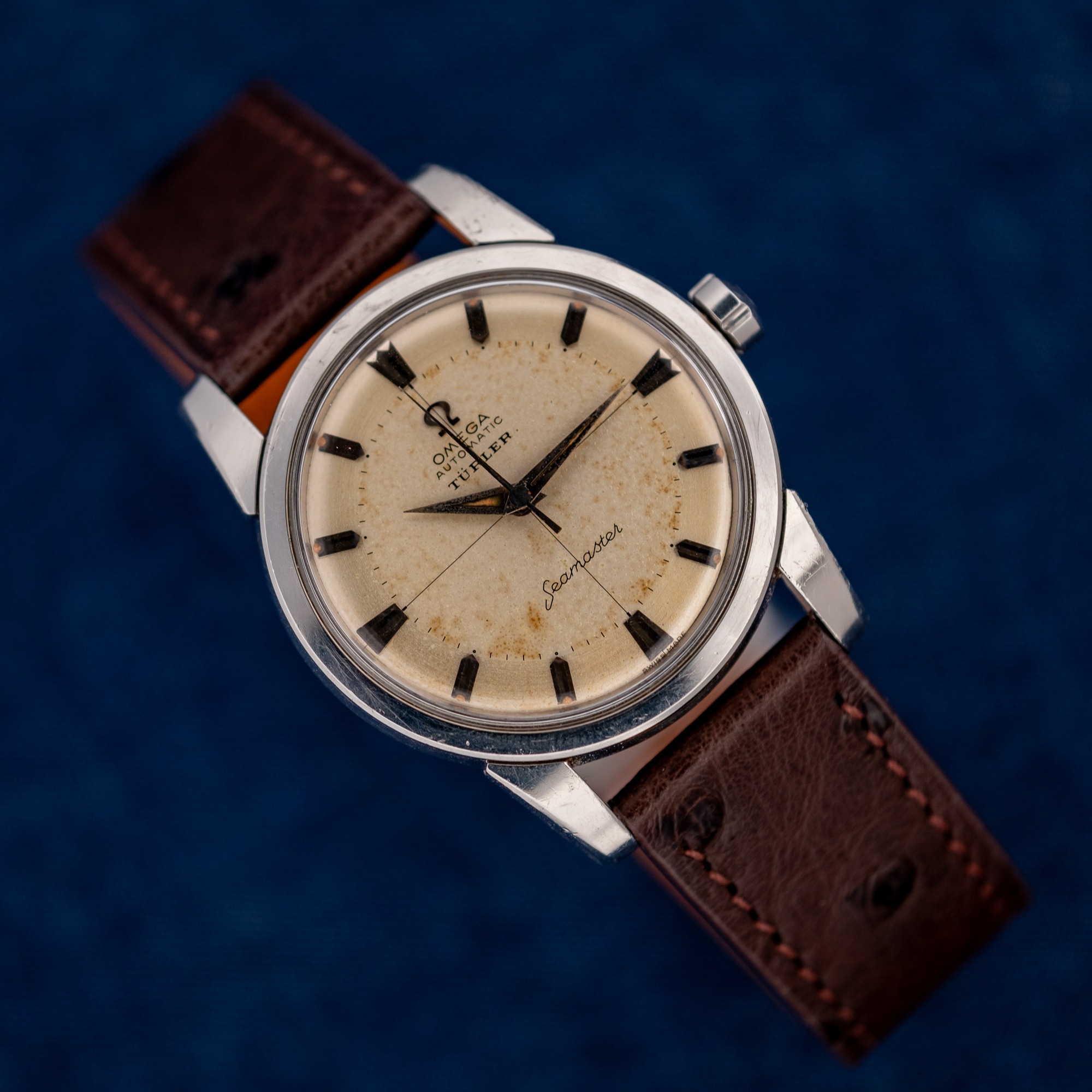
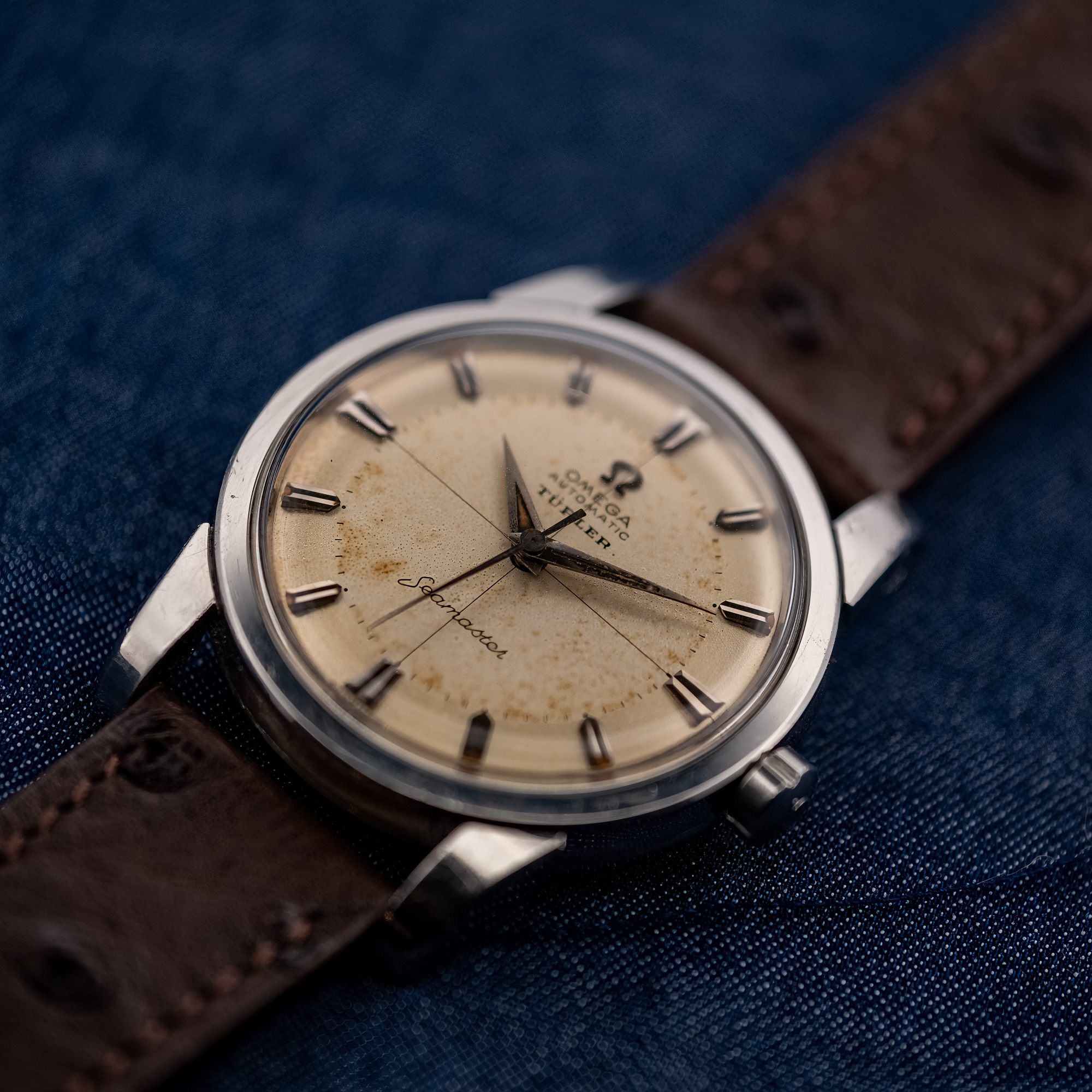
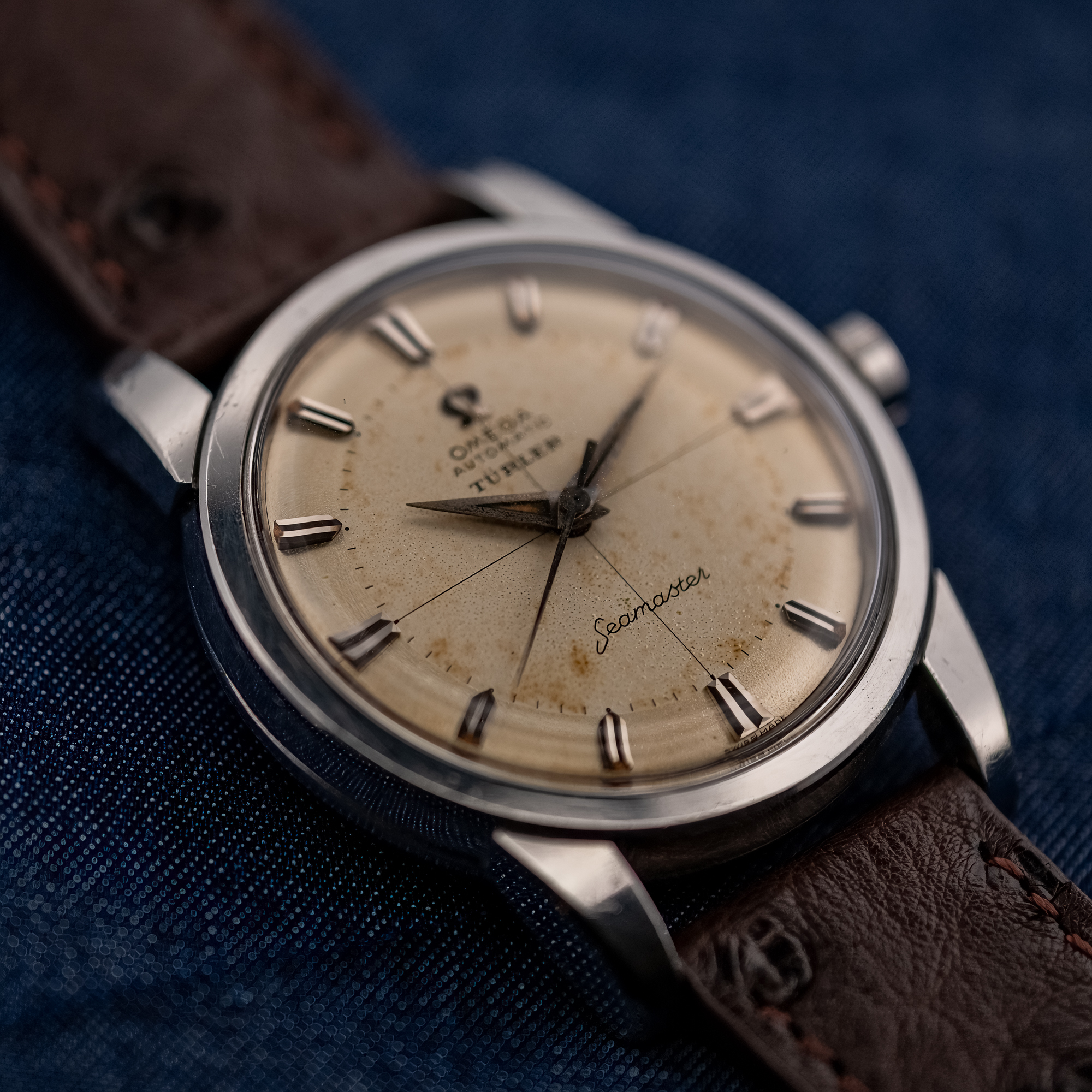
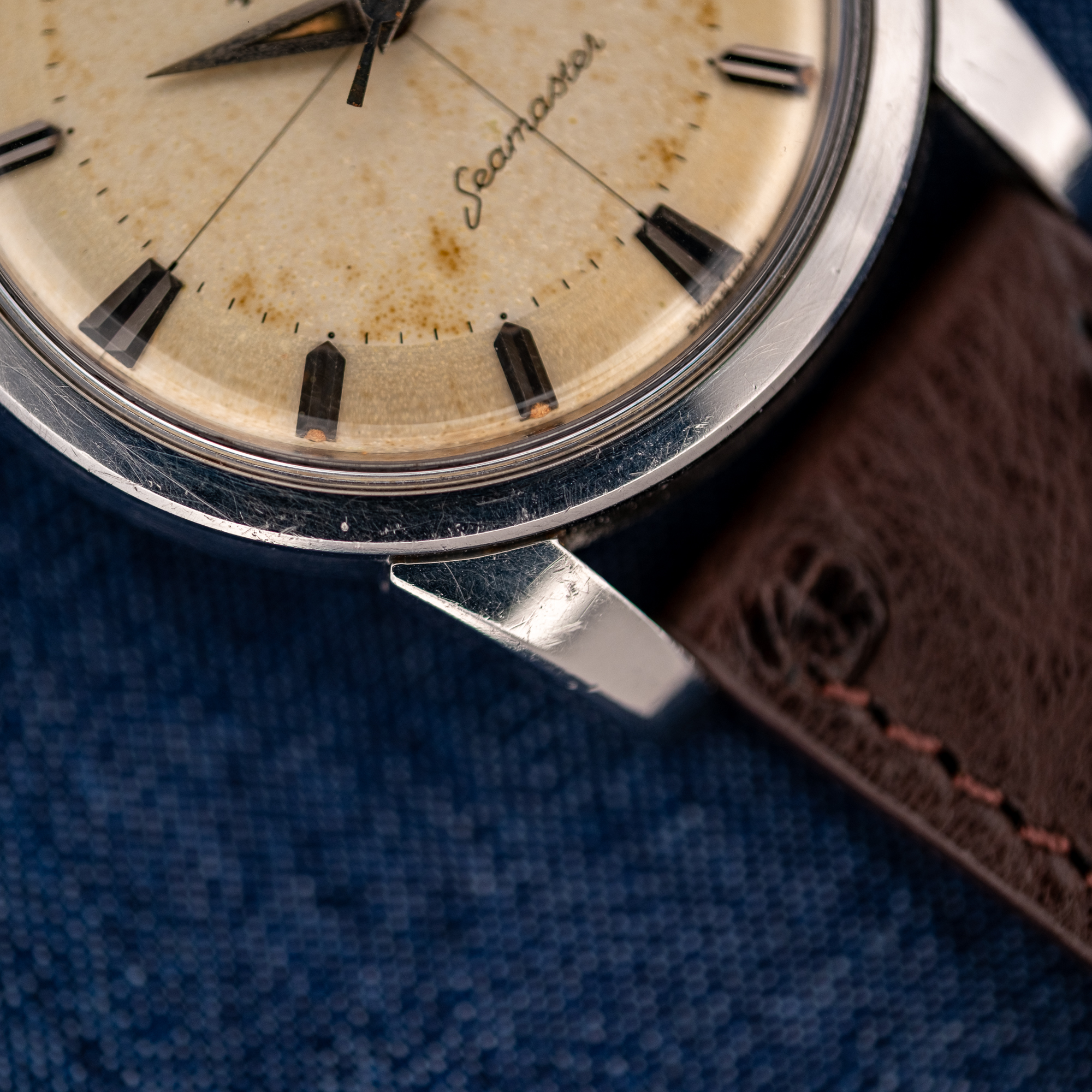
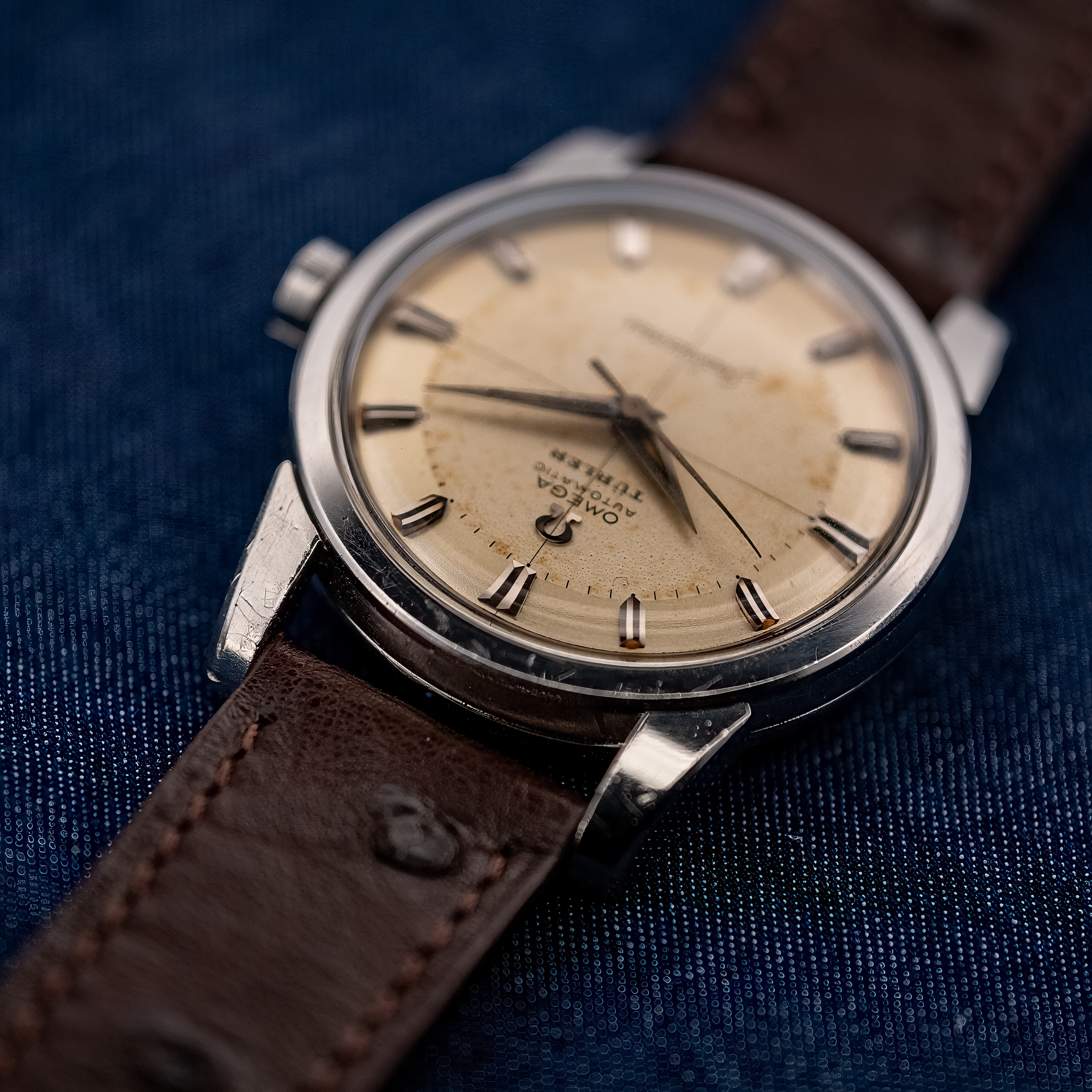
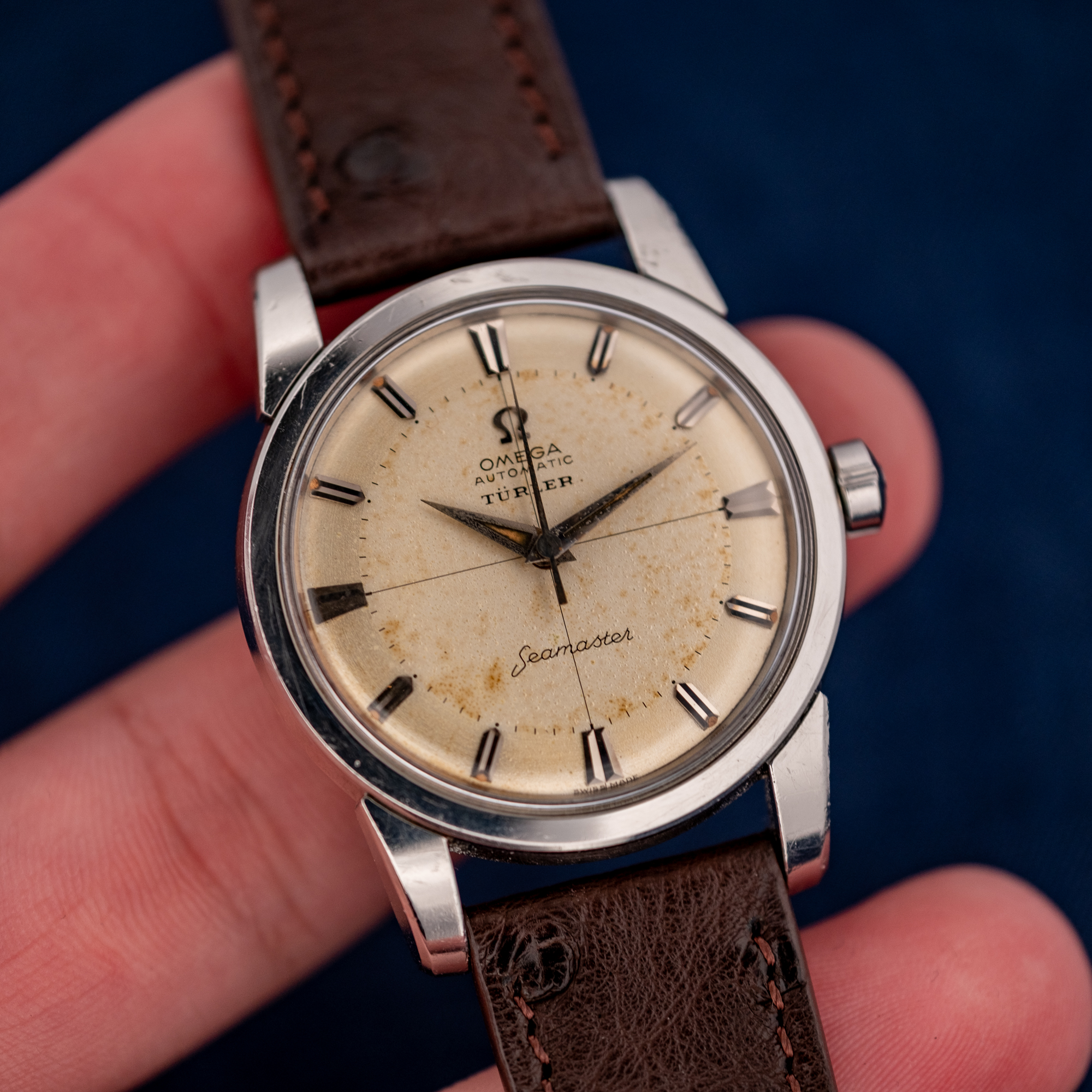
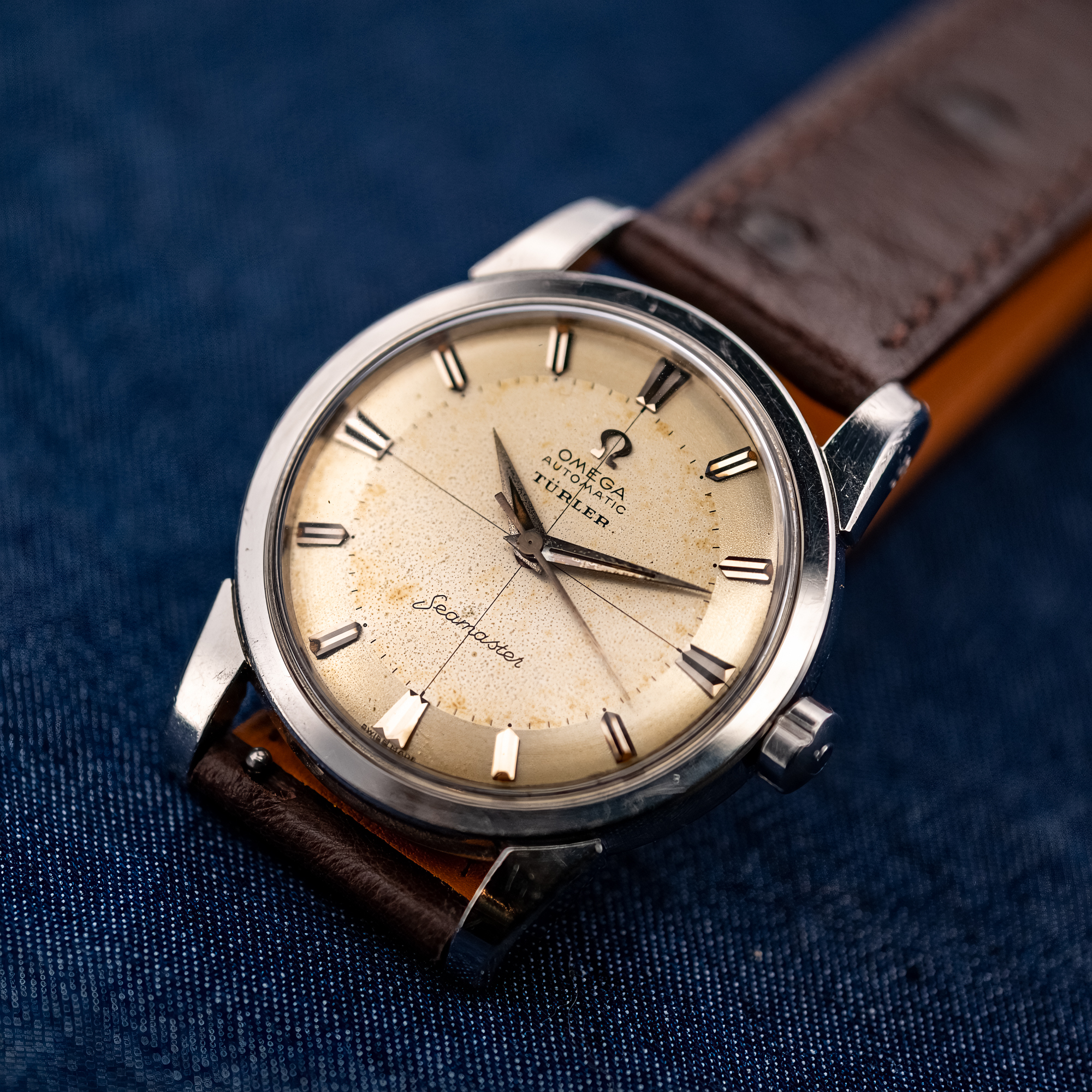
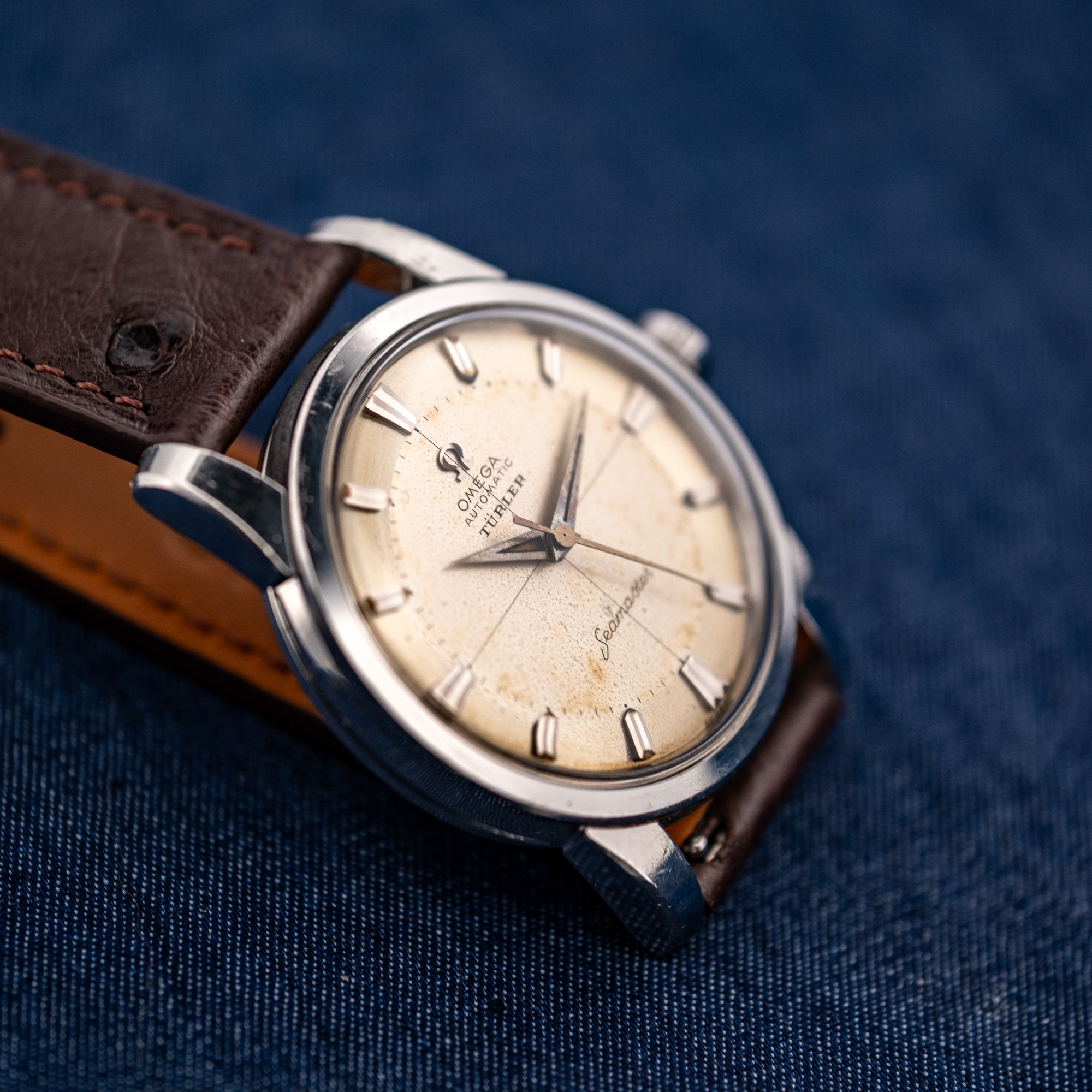
The dial carries a second signature. TÜRLER is printed directly beneath AUTOMATIC, the name of a Swiss jeweler founded in Biel in 1883 by Jean Henri Türler and his brother César Alexander. A retailer’s name on the dial records where the watch was first sold, a receipt that cannot be misplaced.
Caliber 501 drives it, and the rotor is marked TWENTY 20 JEWELS. Omega launched the 501 in 1955 and built it in both 19-jewel and 20-jewel versions. It also carries a swan-neck regulator, a micrometer adjuster named for its curved spring, which lets a watchmaker set the rate in finer steps than a plain index lever allows.
Inside, beside 2846 15 SC, the back is also stamped 2848, because Omega made one case serve two references, the 2846 for center seconds and the 2848 for small seconds. On the outside, a seahorse medallion sits under SEAMASTER.
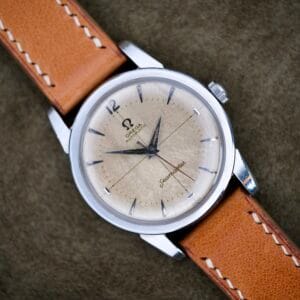
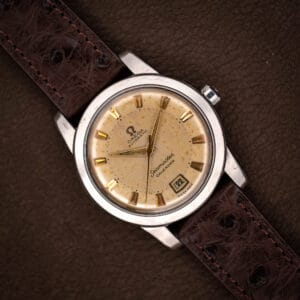
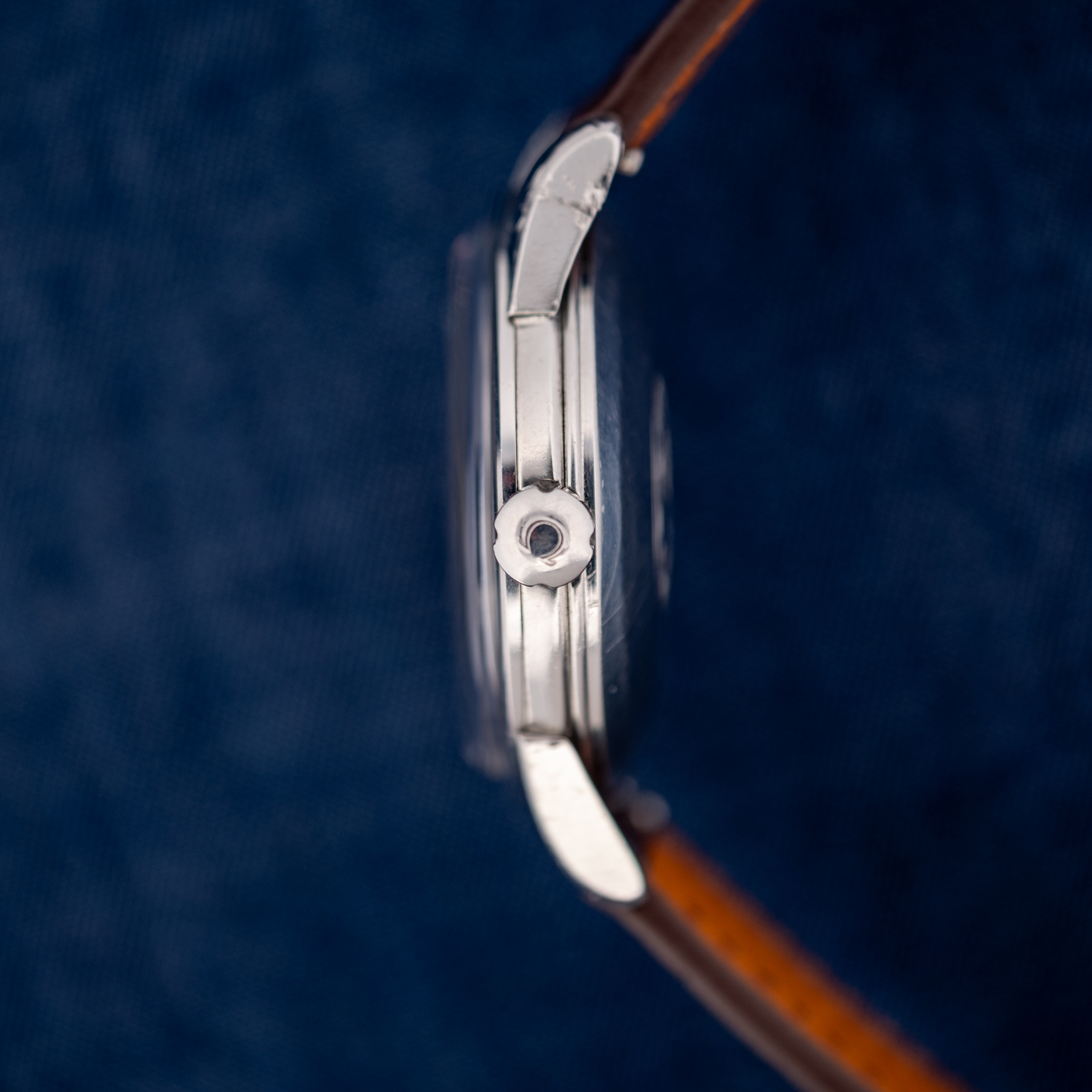
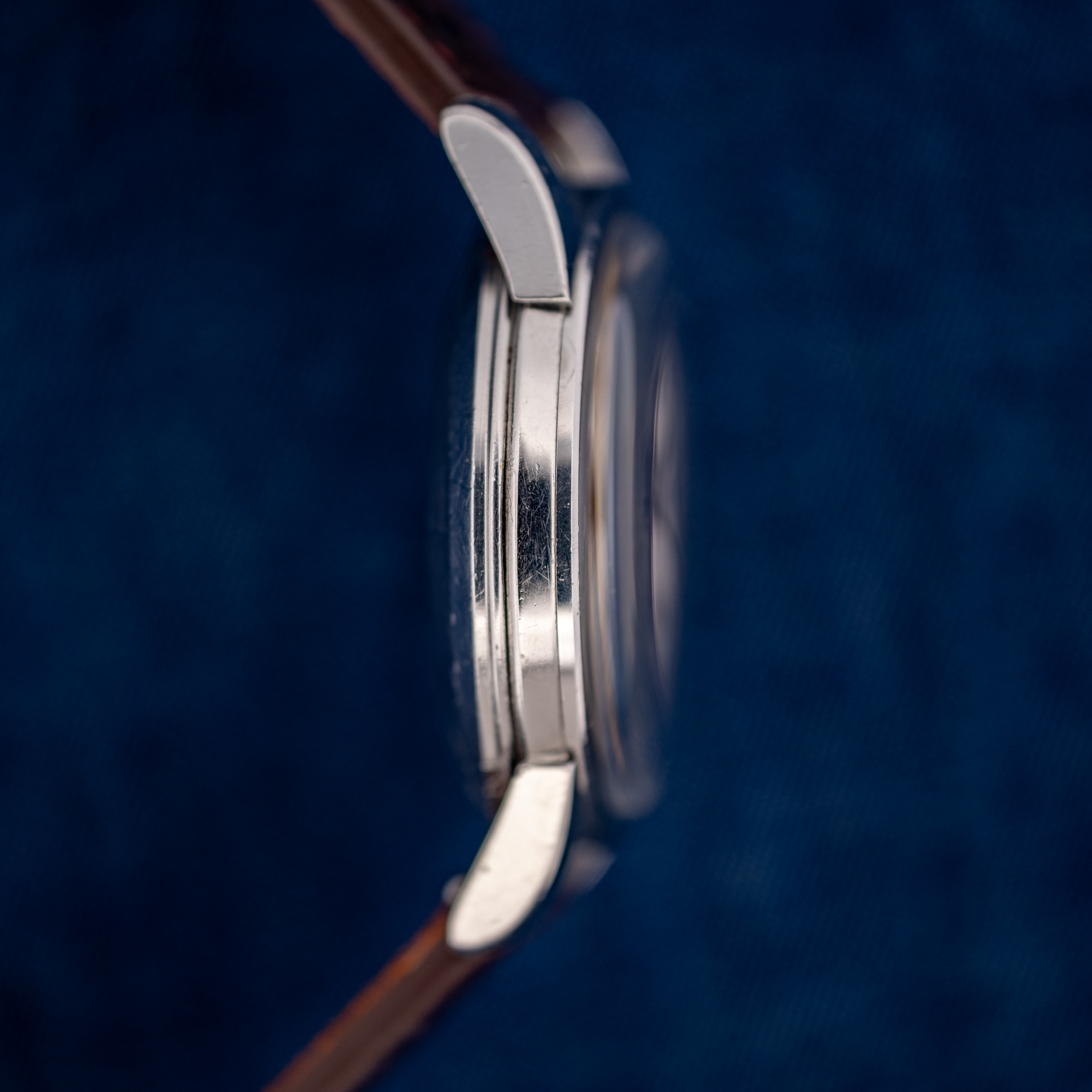
Under the signatures, the eggshell dial carries a fine tan speckle and printed crosshair lines that meet at the center. Faceted applied markers stand in for numerals, each with a small tan pip at its outer end. The pointed hands have darkened and their lume has turned amber. Light scratching marks the bezel and lugs of the 34mm steel case, which rides on a chocolate-brown ostrich strap.
Decades on, the back still tells the next watchmaker to FIT WASHER IN BACK, stamped into the same steel as the patent number that explains why.