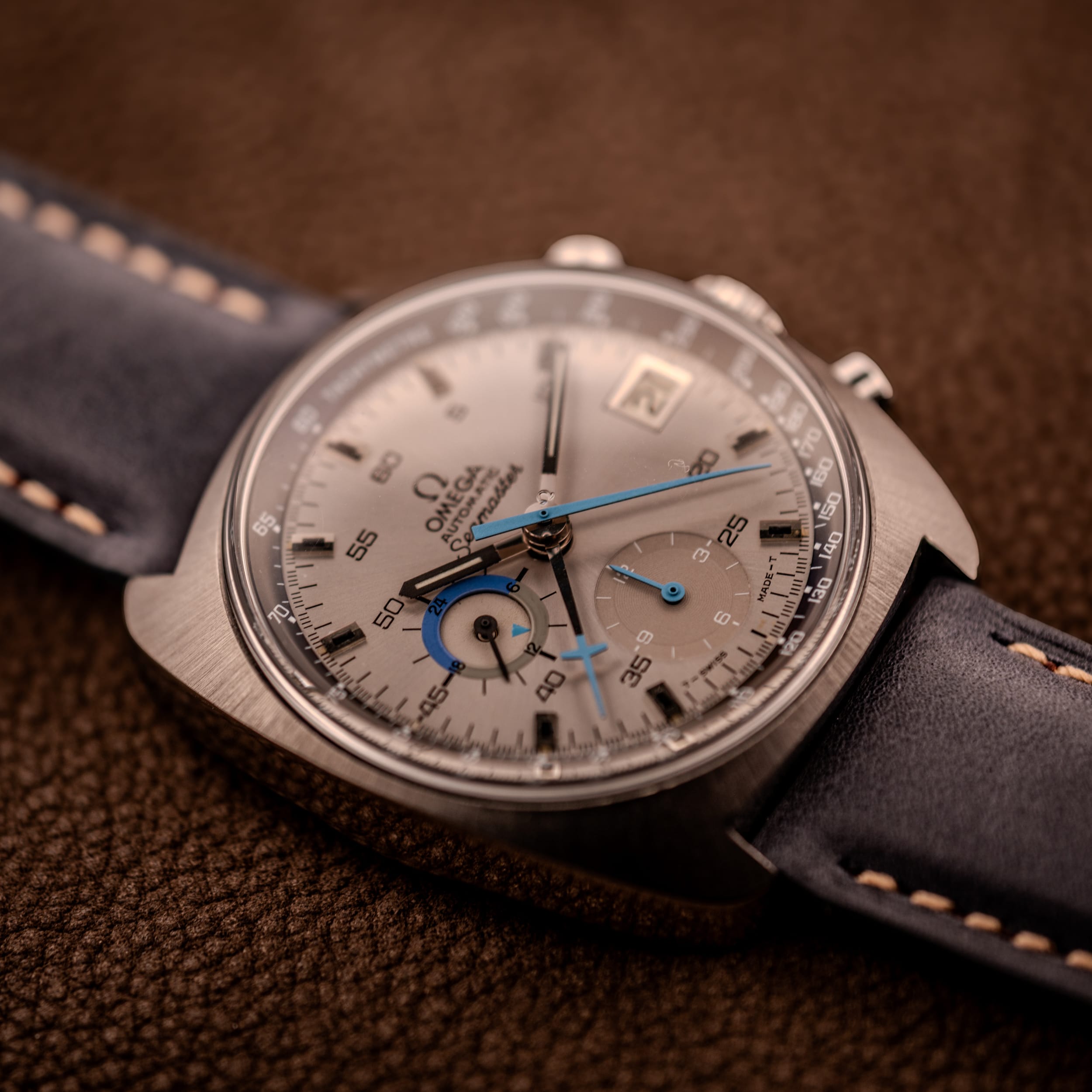
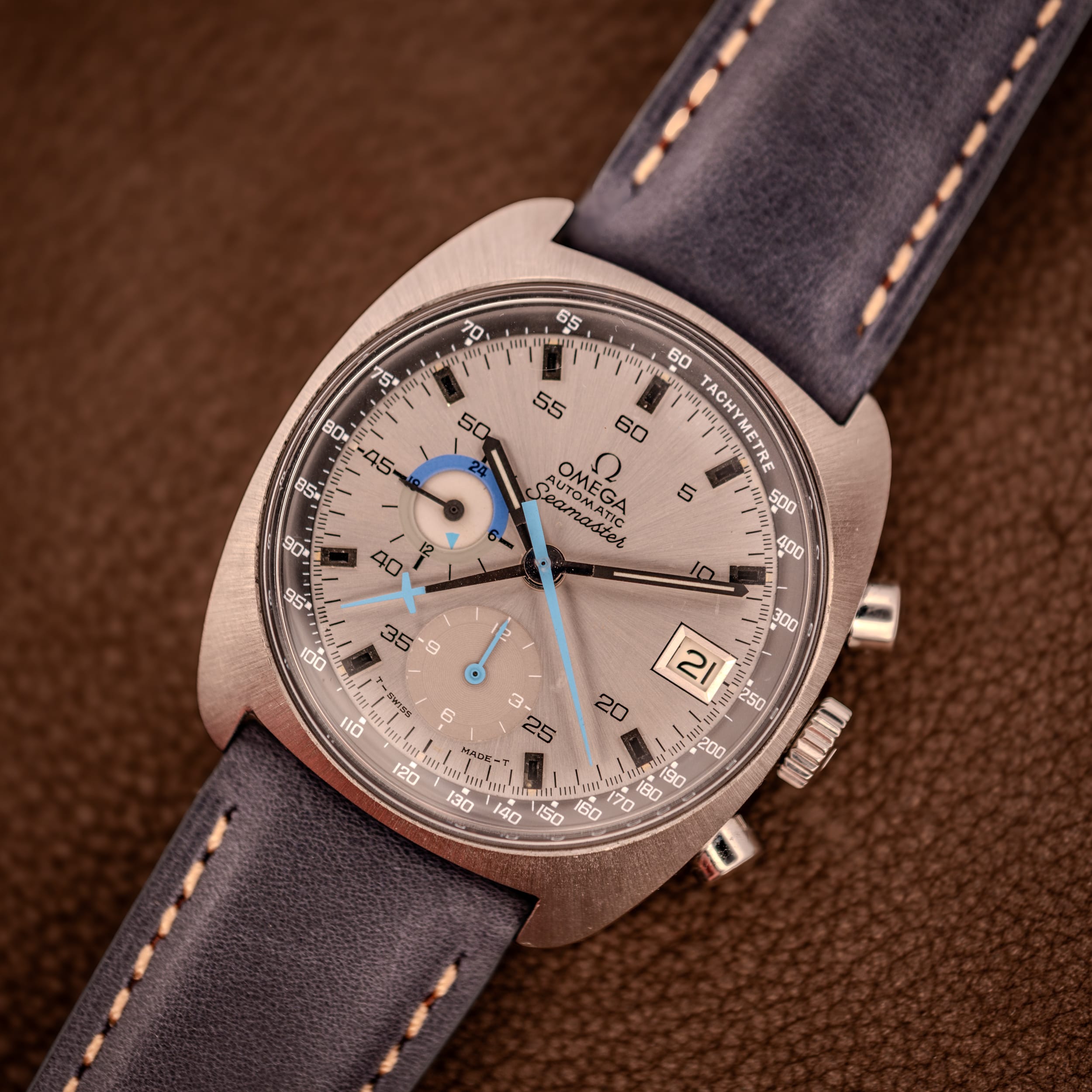
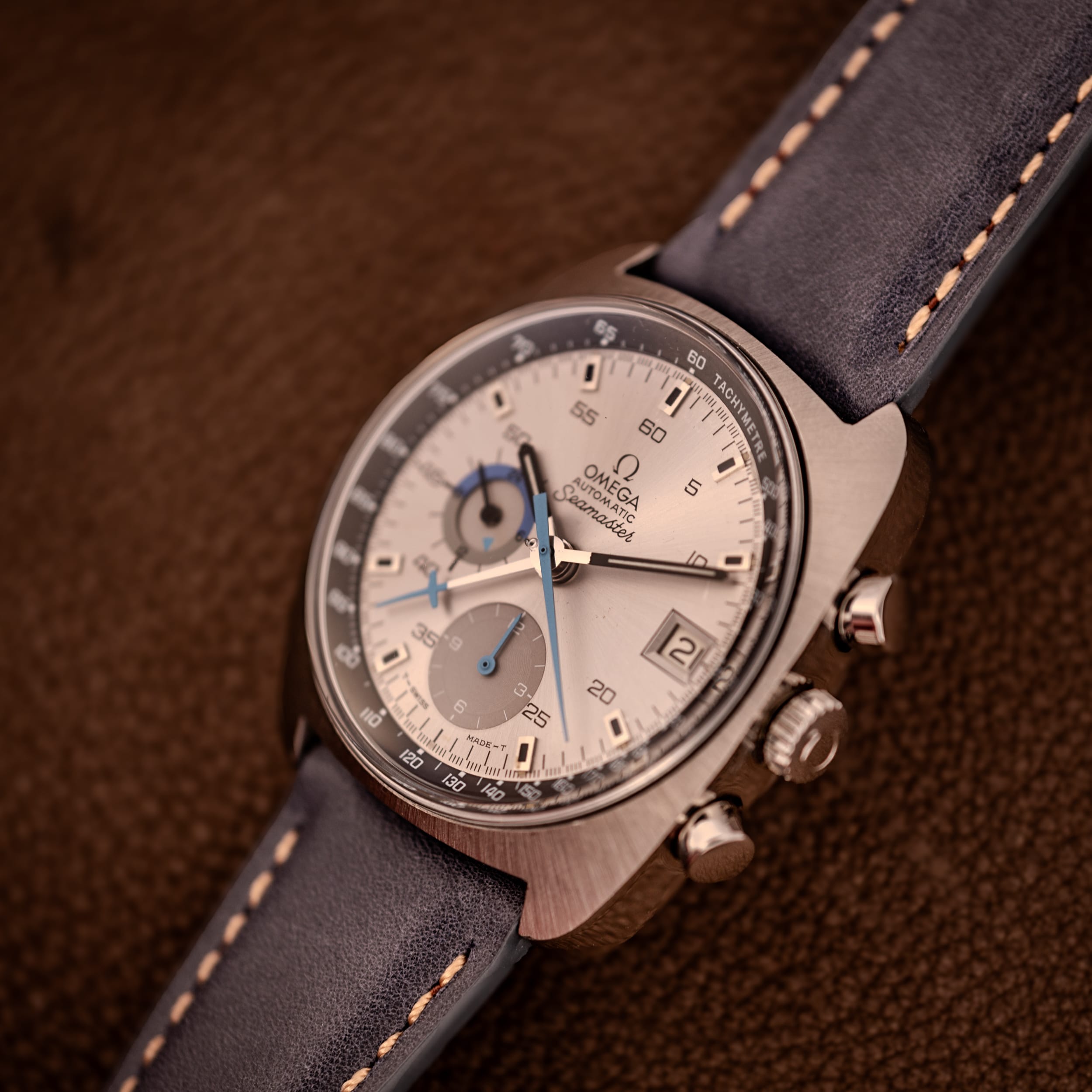
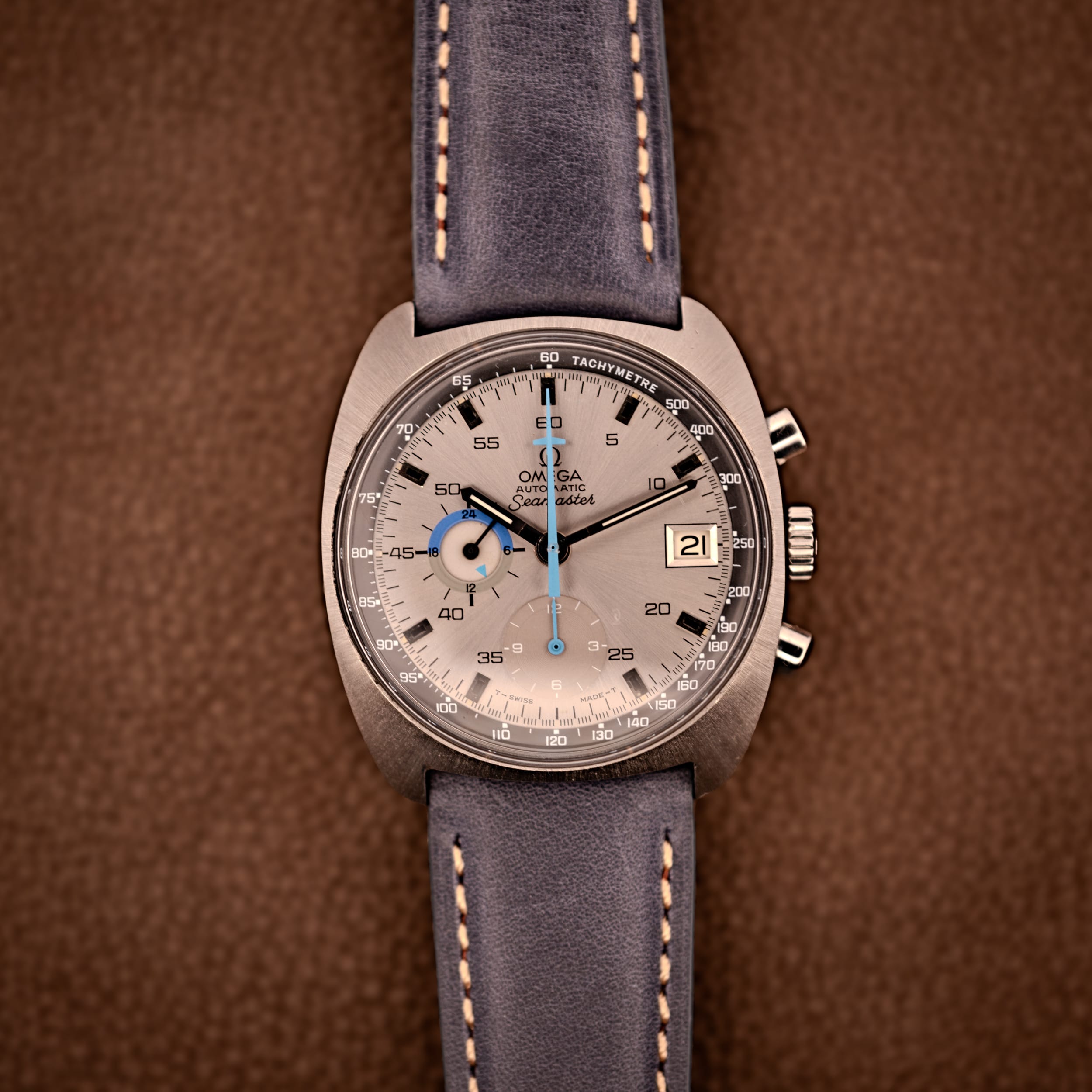
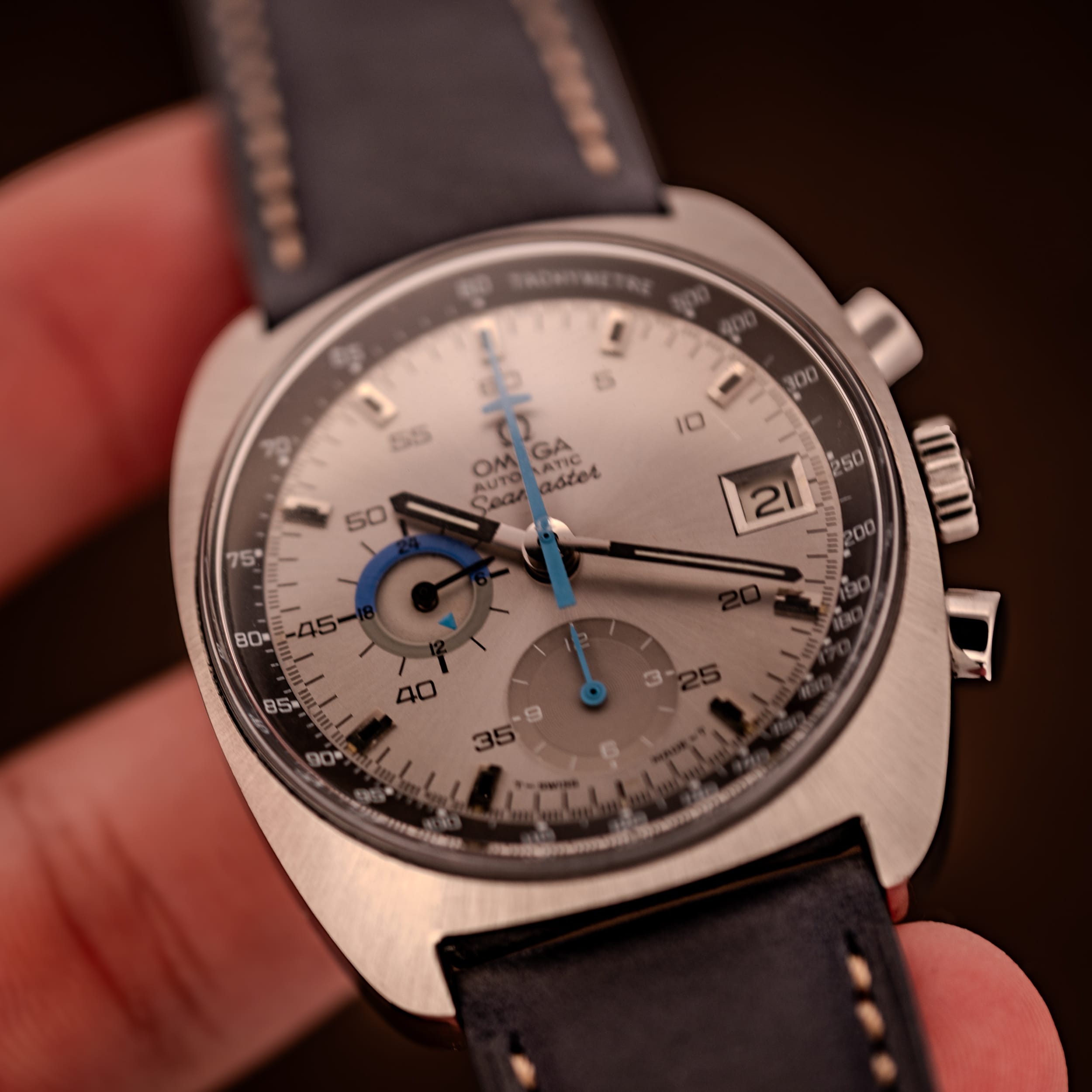
The caliber 1040 was Omega’s first automatic chronograph movement, built around a proper column wheel at a time when most of the Swiss industry had decided cam-actuated was good enough. It came out of Lemania, the same workshop that had produced the caliber 321 for the Speedmaster two decades earlier, and Omega put it into a cushion-cased Seamaster the broader market is still catching up to. To us, the 176.007 is the most interesting non-Speedmaster Omega chronograph of the early 1970s, and we never pass on a clean one when we can buy it.
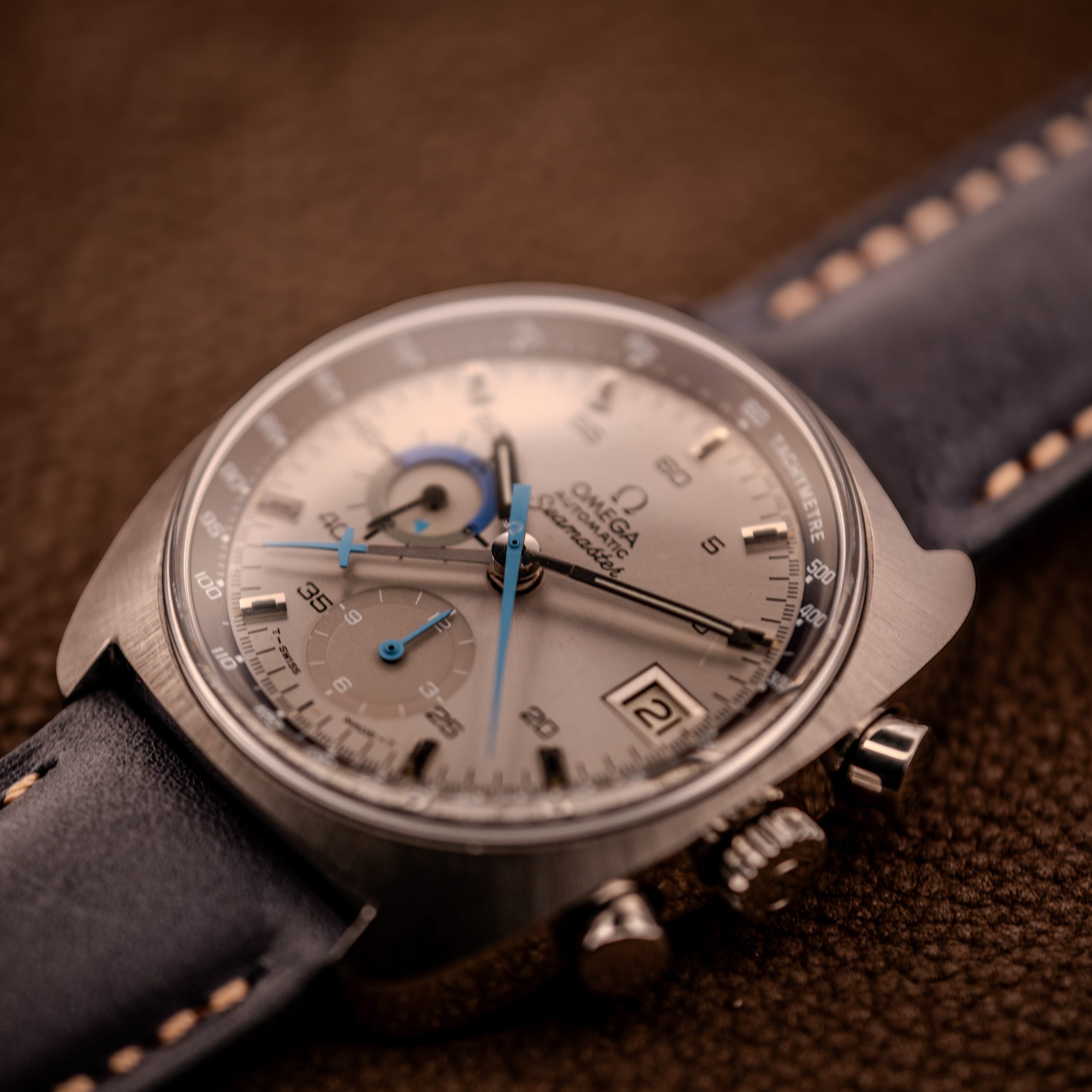
The Omega 176.007 was produced from roughly 1970 through 1976, available in stainless steel (the ST suffix), gold-plated (MD), and full 18k gold (BA). The cushion case sits just over 38mm across, and the example in hand wears it in the configuration we find most wearable today, a steel case on leather.
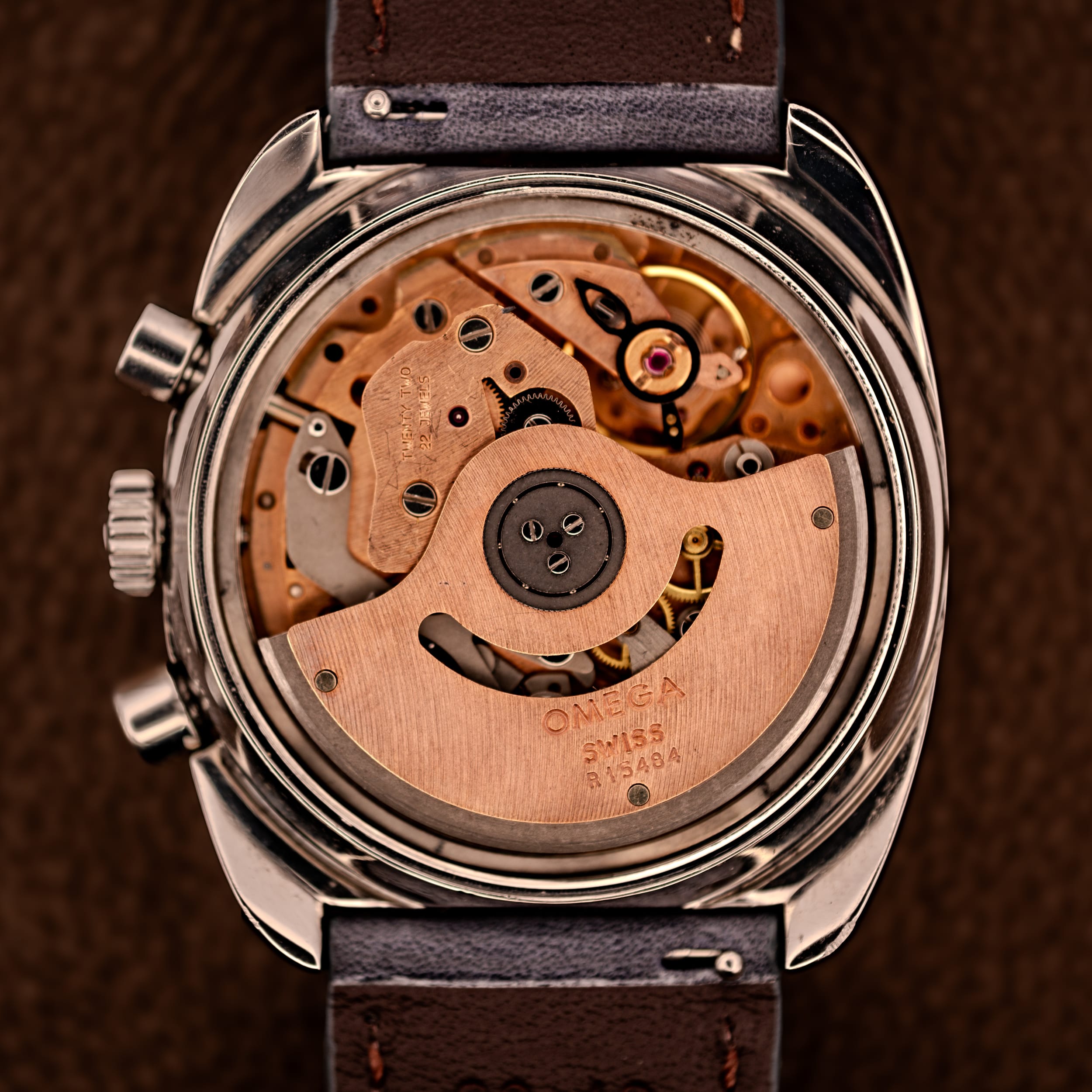
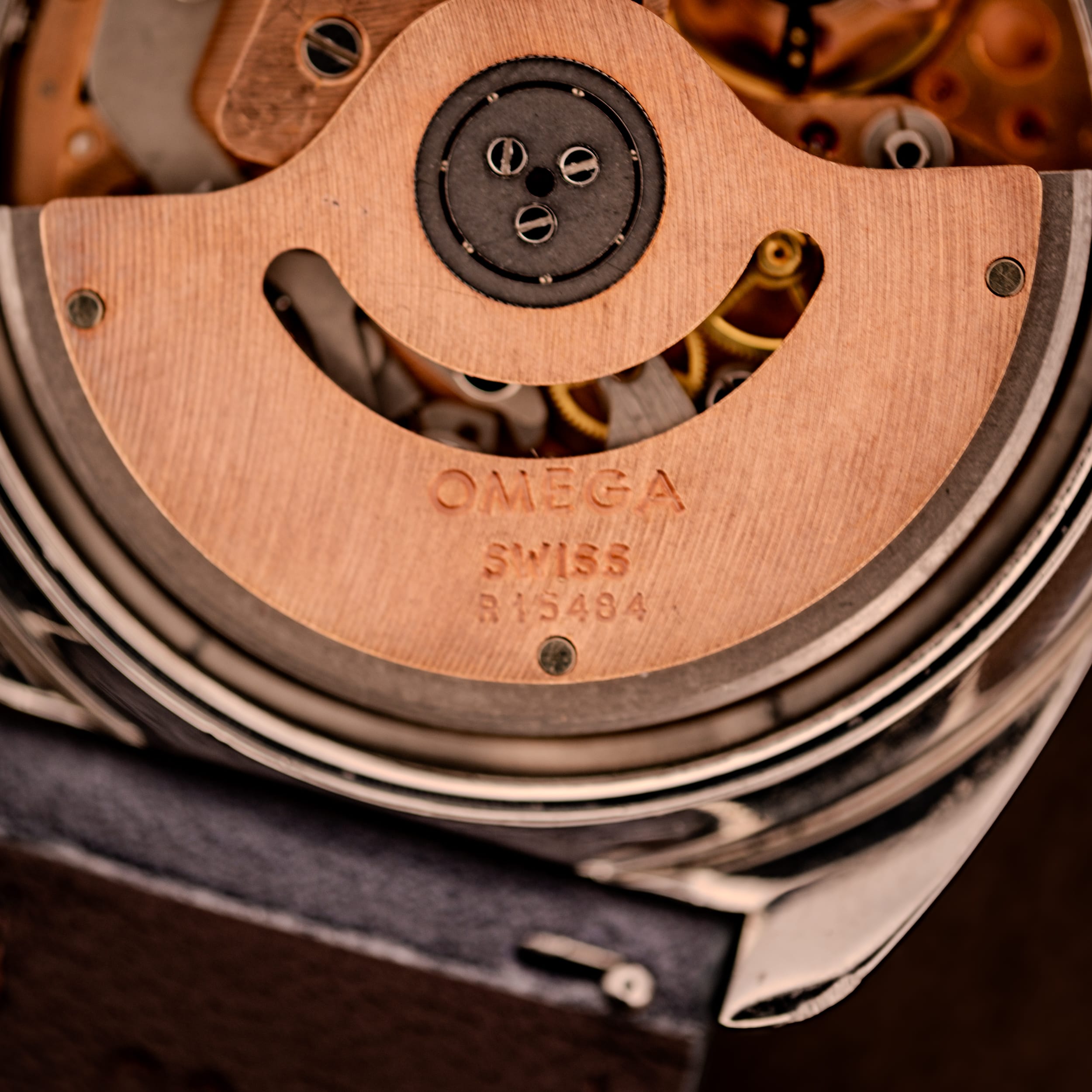
The headline is the caliber 1040, Omega’s first automatic chronograph movement and one of the more interesting automatic chronos of the early 1970s. It was developed at Lemania, then a sister manufacture inside the SSIH group, the same Lemania workshop that had produced the legendary caliber 321 for the Speedmaster two decades earlier. Where most automatic chronographs of the era used the cheaper cam-actuated approach, Omega built the 1040 around a proper column wheel and ran it at 28,800 vibrations per hour, with a date and a 24-hour totalizer rather than the more common hour register. The dial layout you see on the 176.007, with its subdials at 6 and 9 and a long center chronograph minute hand, comes directly from that mechanical architecture. As shown in our movement photograph, the rotor is signed OMEGA / SWISS with serial R 15484, and the copper-toned finishing across the bridges has aged exactly the way it should.
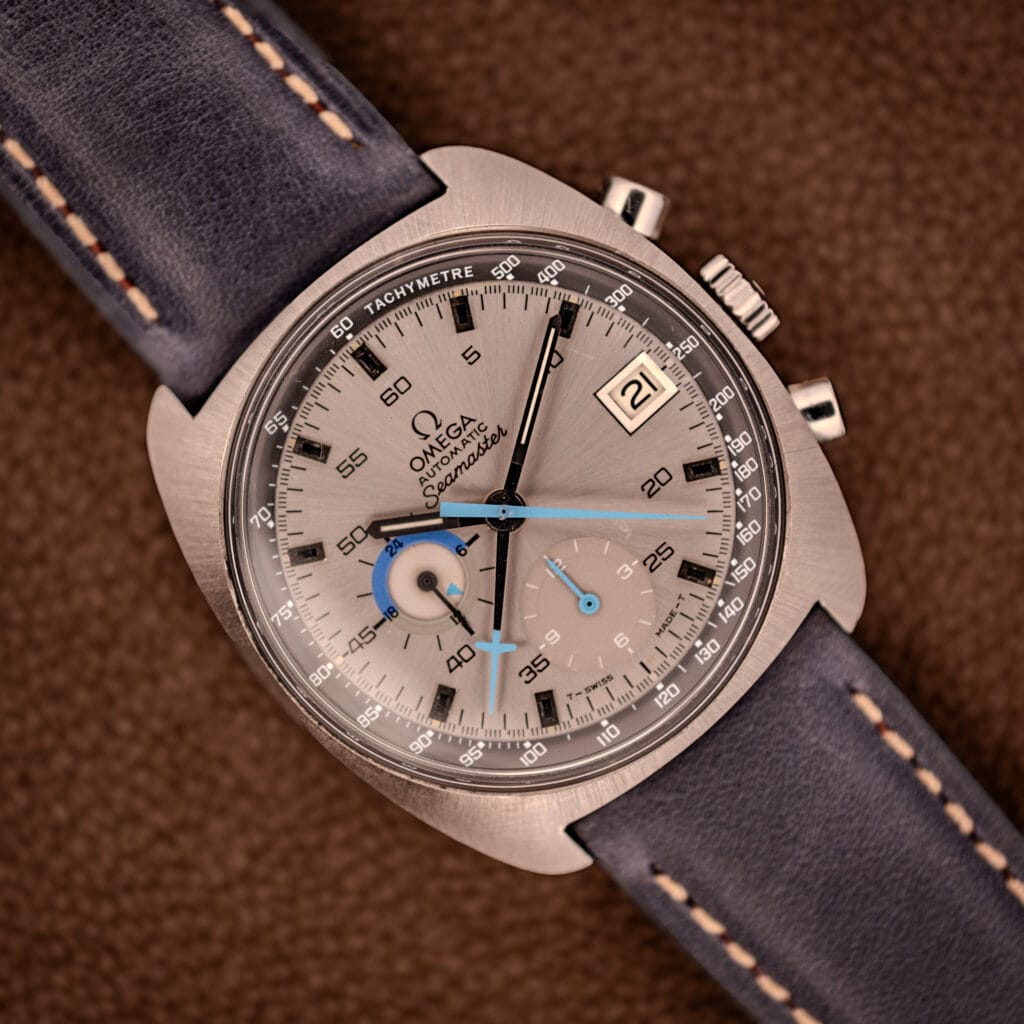
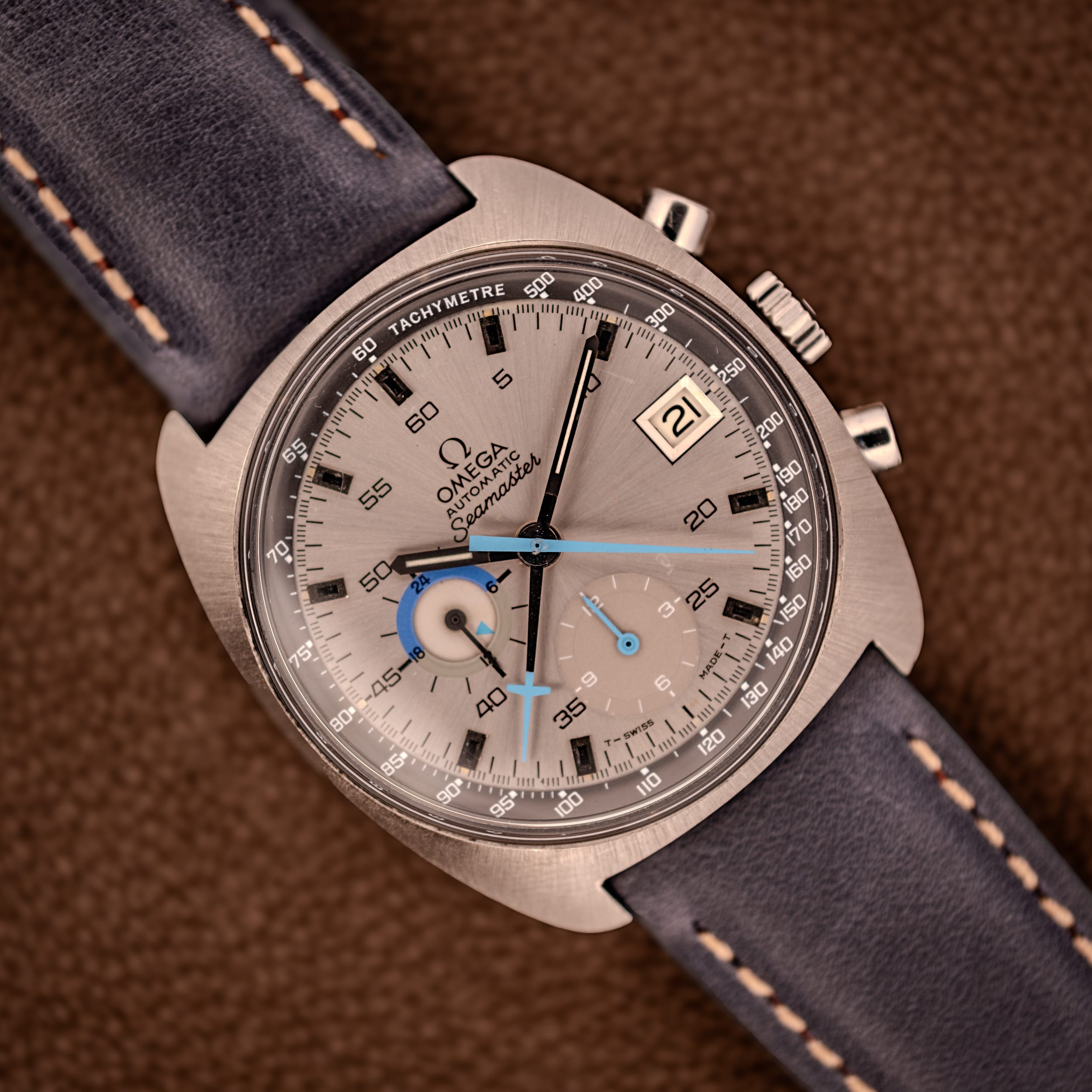
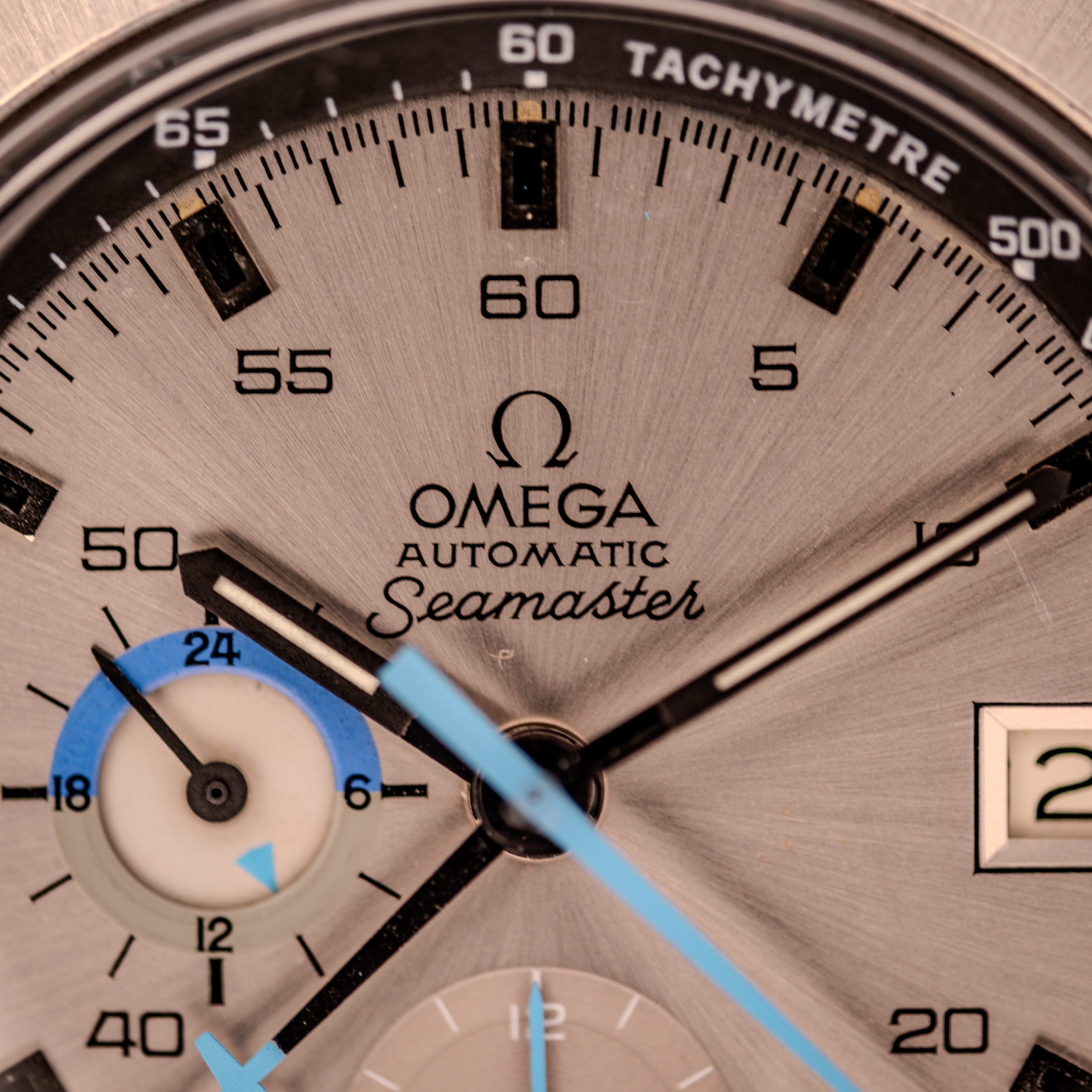
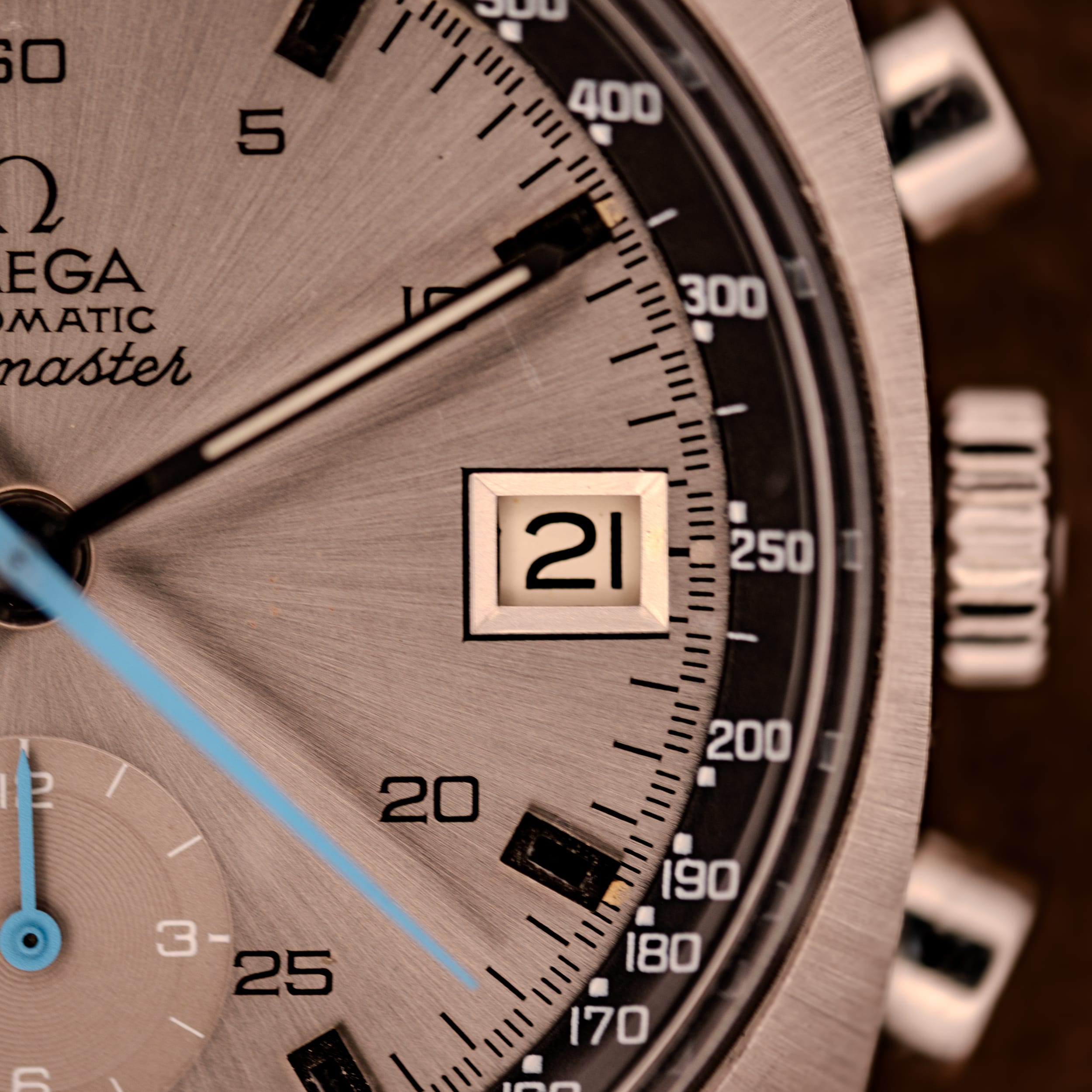
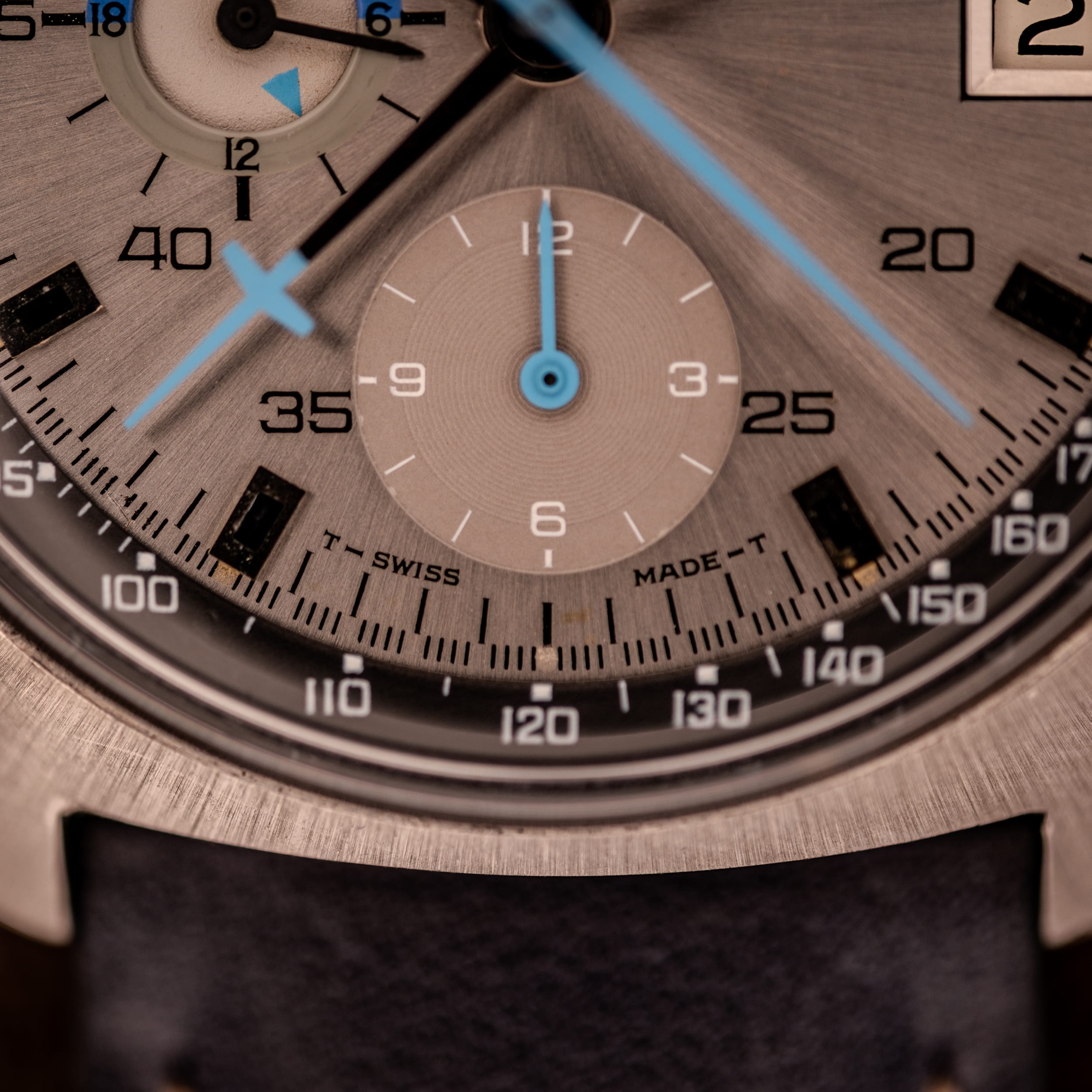
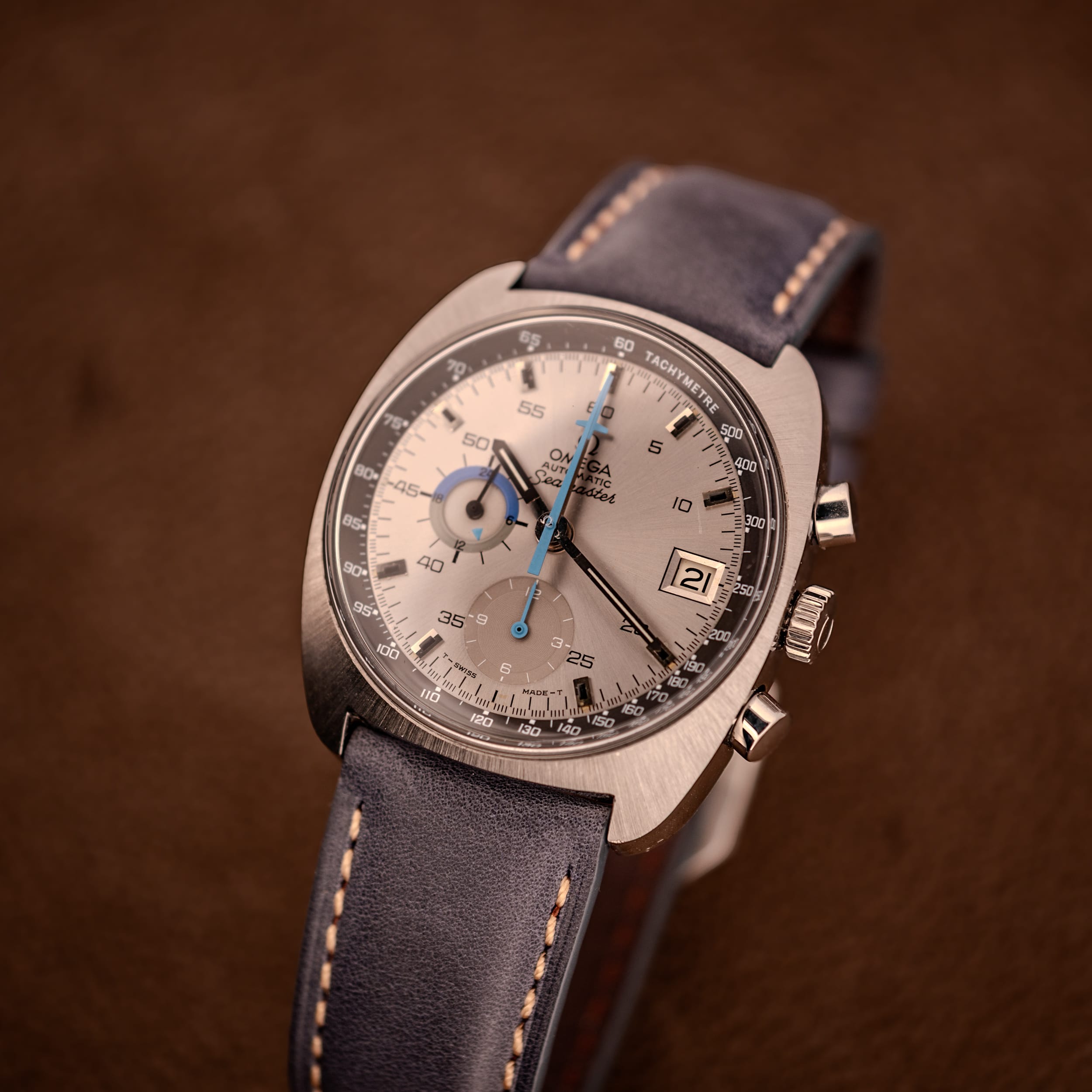
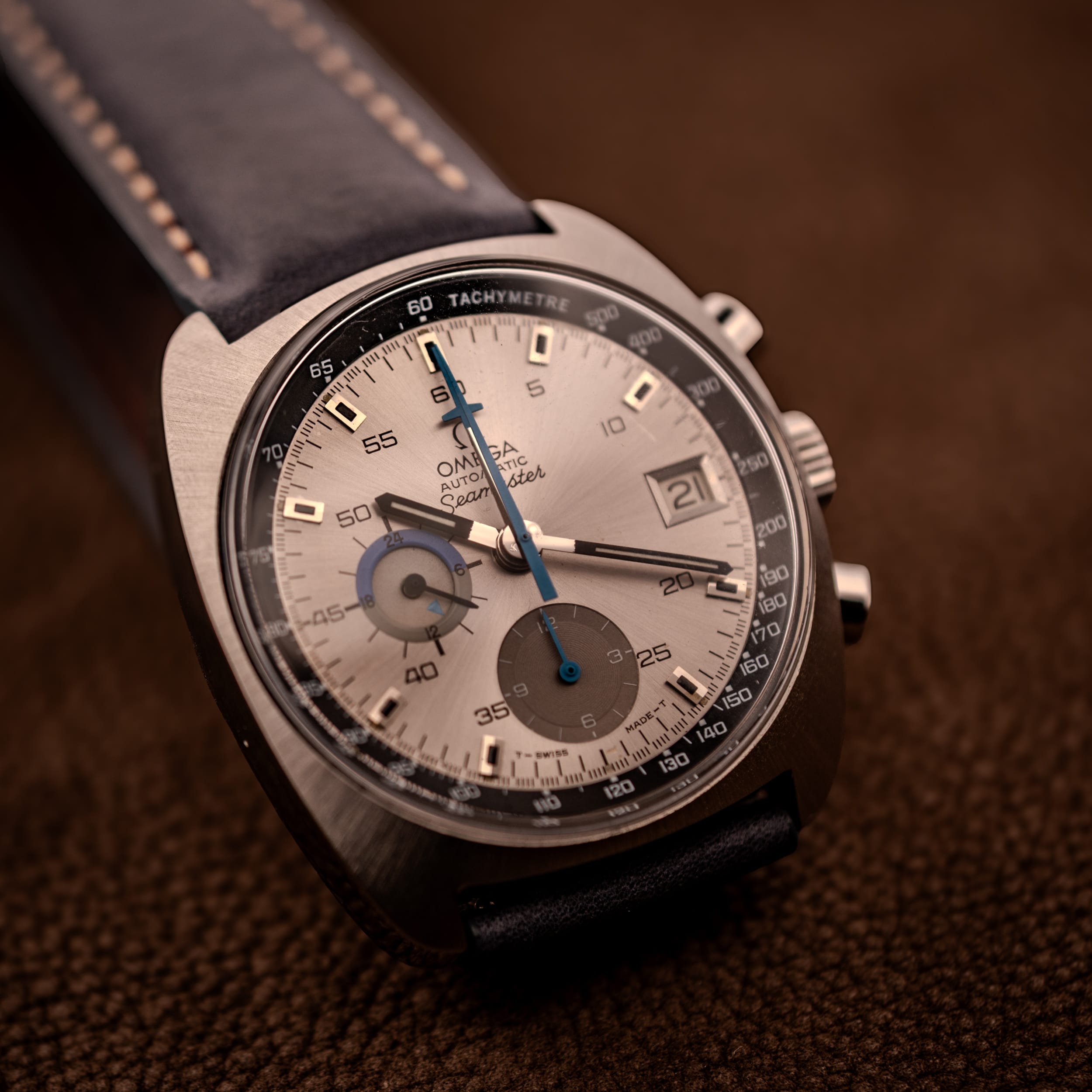
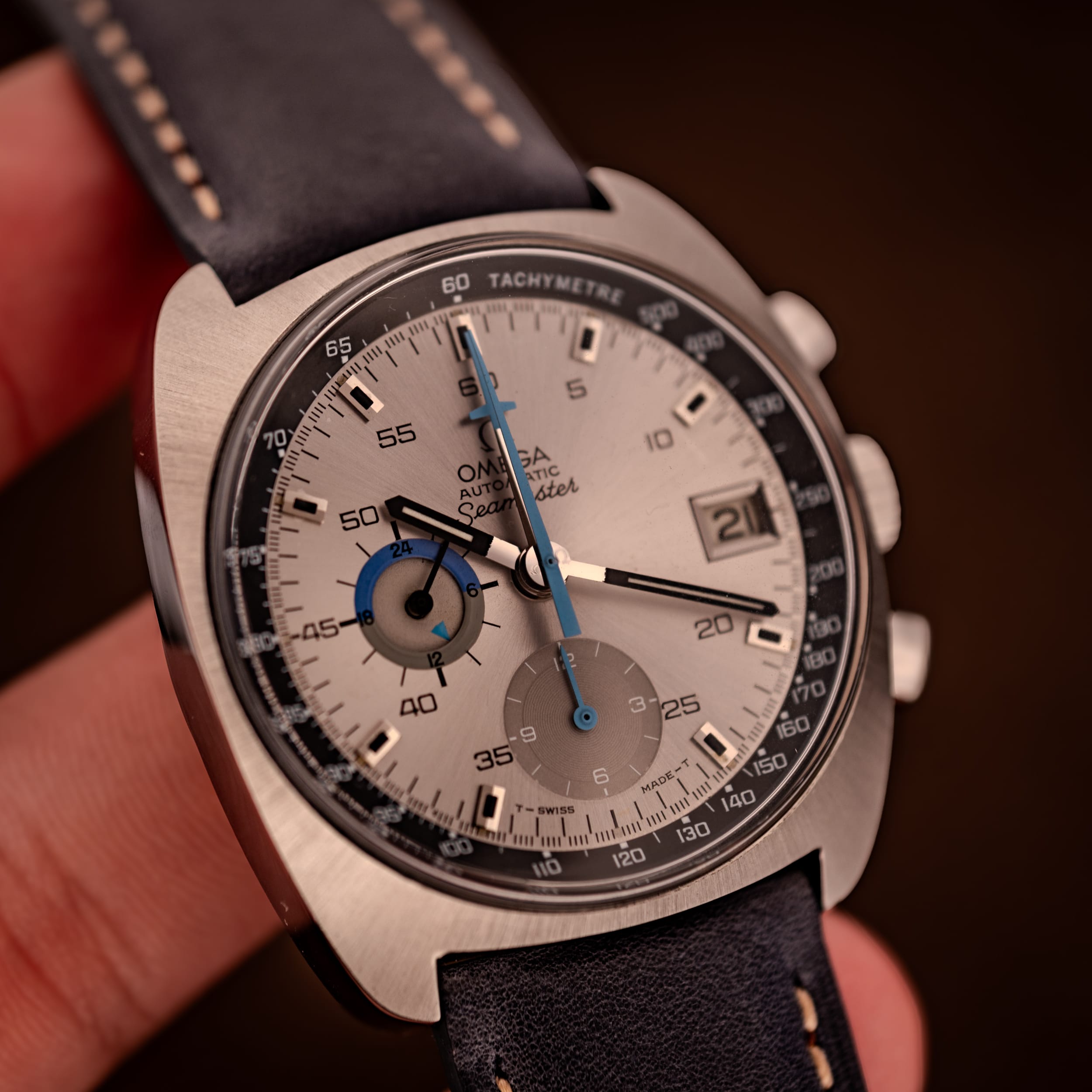
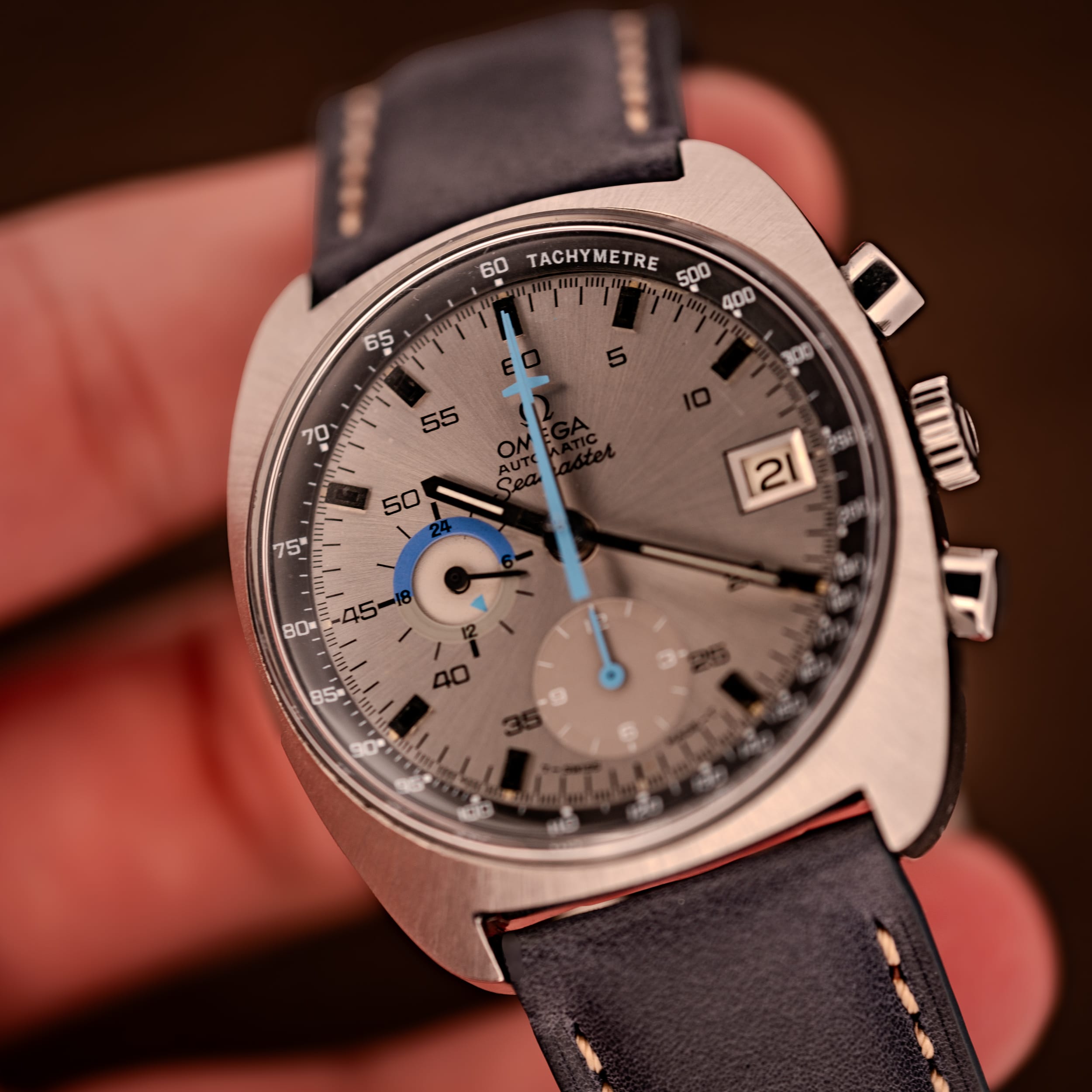
The “Blue Jedi” nickname is a little piece of collector folklore worth knowing. The late Omega historian Chuck Maddox coined the broader “Jedi” name for a family of late-1960s and 1970s Seamaster chronographs as part of a playful Star Wars naming convention, and the 2007 Omegamania auction catalog cemented the name against the cushion-cased 176.005 and 176.007 pair. The “Blue” qualifier comes from this dial’s sky-blue accents, visible across the 24-hour totalizer arc at 9 and along the long central chronograph seconds hand, set against an otherwise silver canvas. The dial itself is factory original and unrefinished, a brushed silver sunburst ringed by a black-bordered tachymetre scale graduated from 60 to 500 units per hour on the outer flange. Applied black baton hour markers carry aged tritium plots that have matured into a warm cream tone, with T SWISS MADE T at 6 confirming the tritium compound. Running seconds at 6 sit in a finely textured recessed disc with a crosshair, and the date at 3 reads cleanly through a polished aperture.
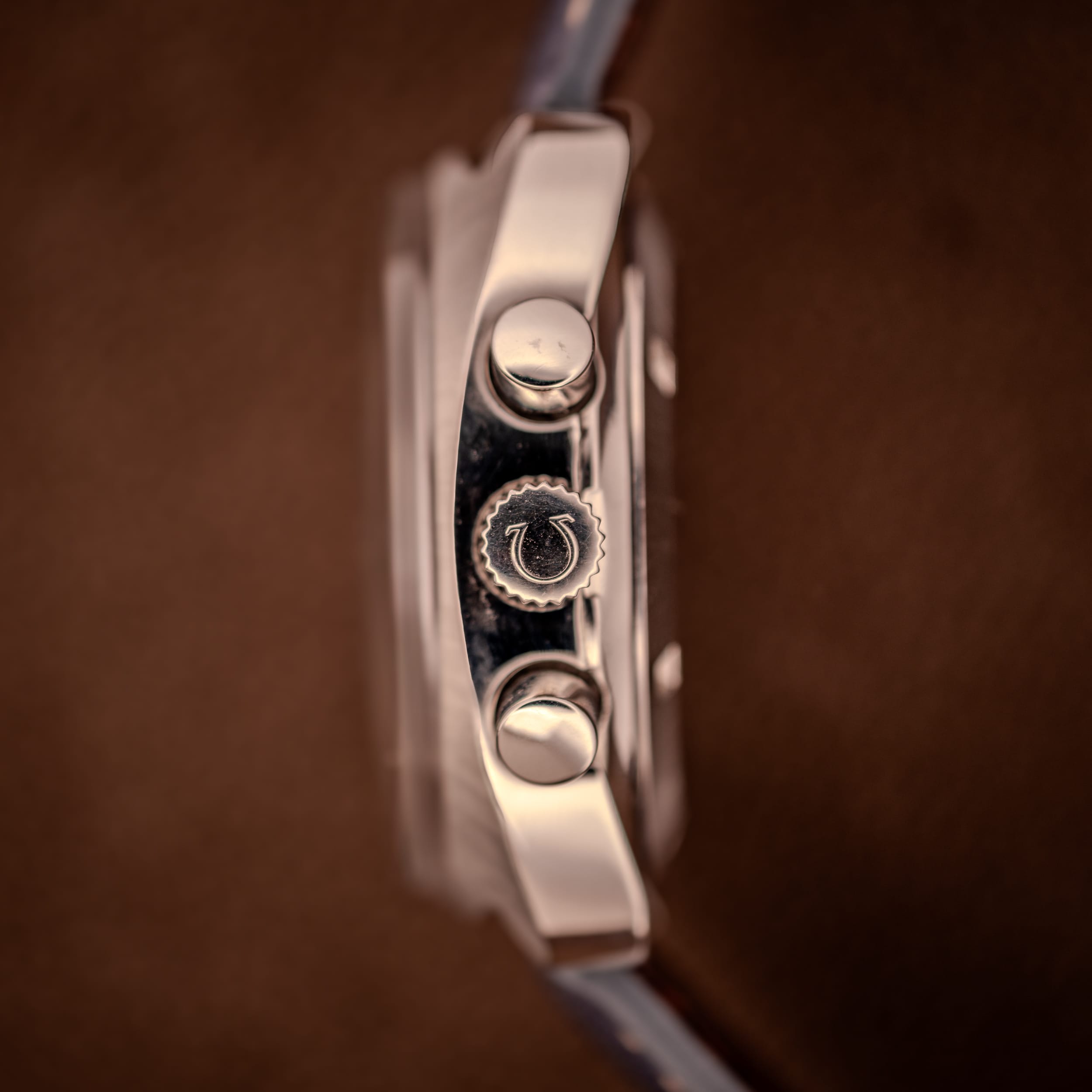
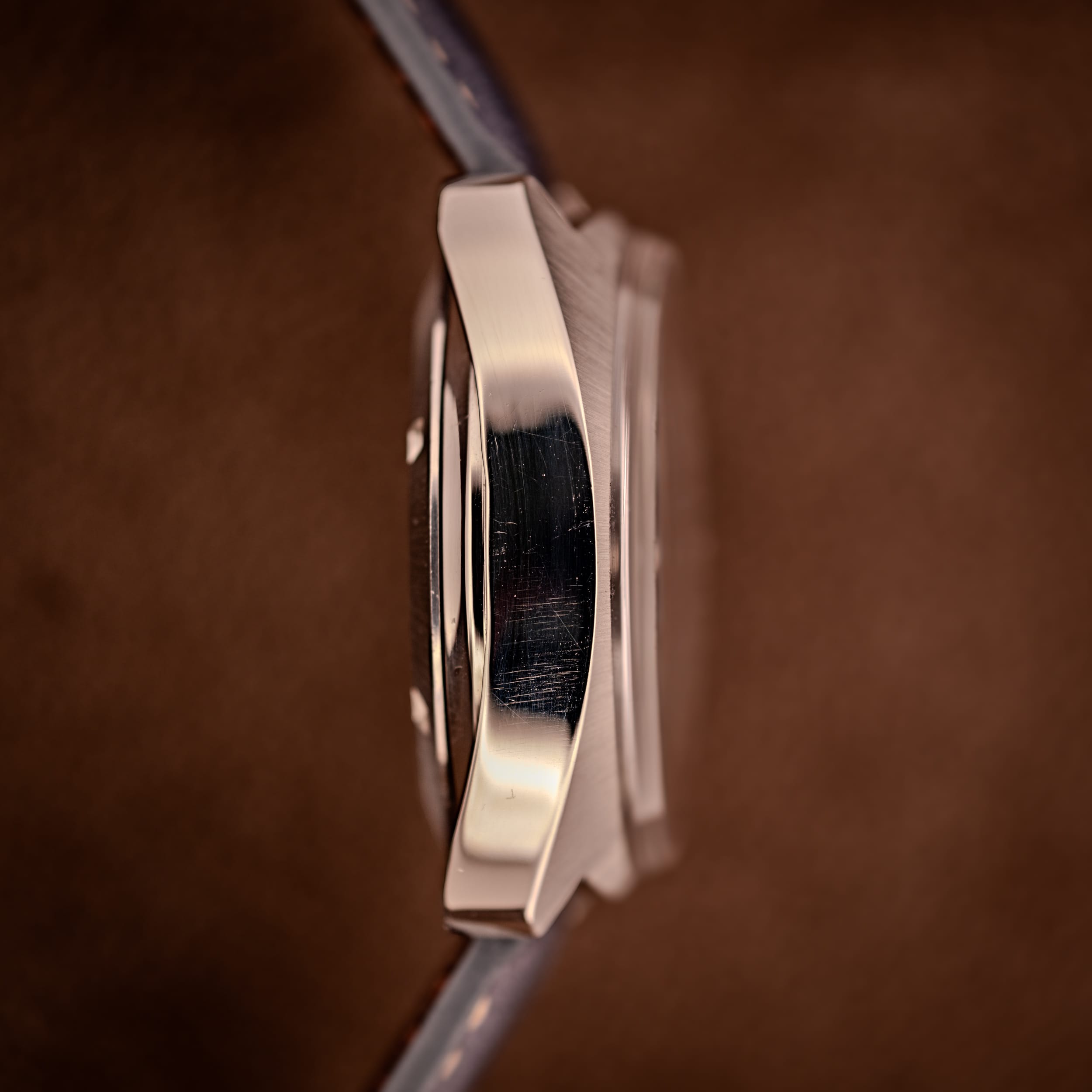
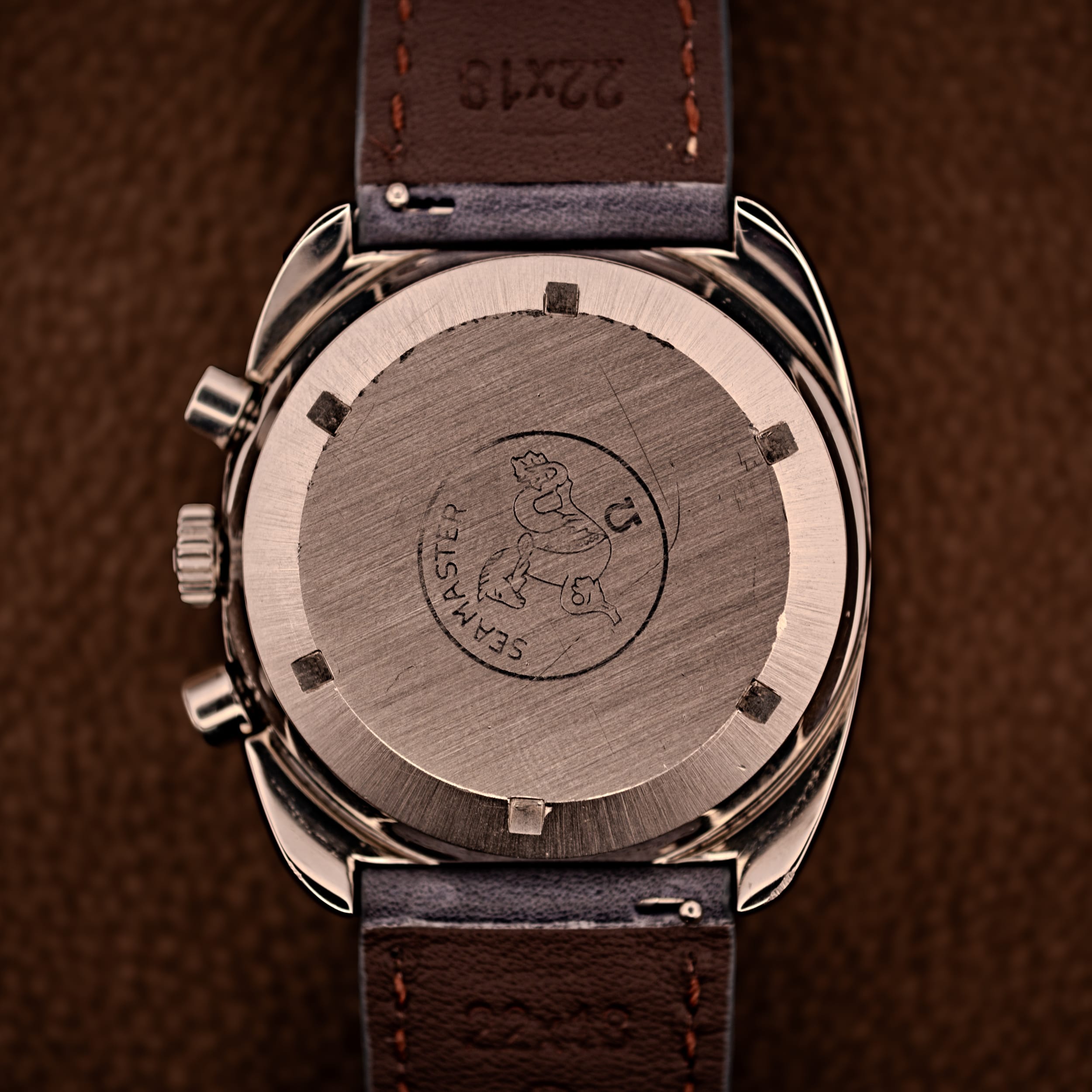
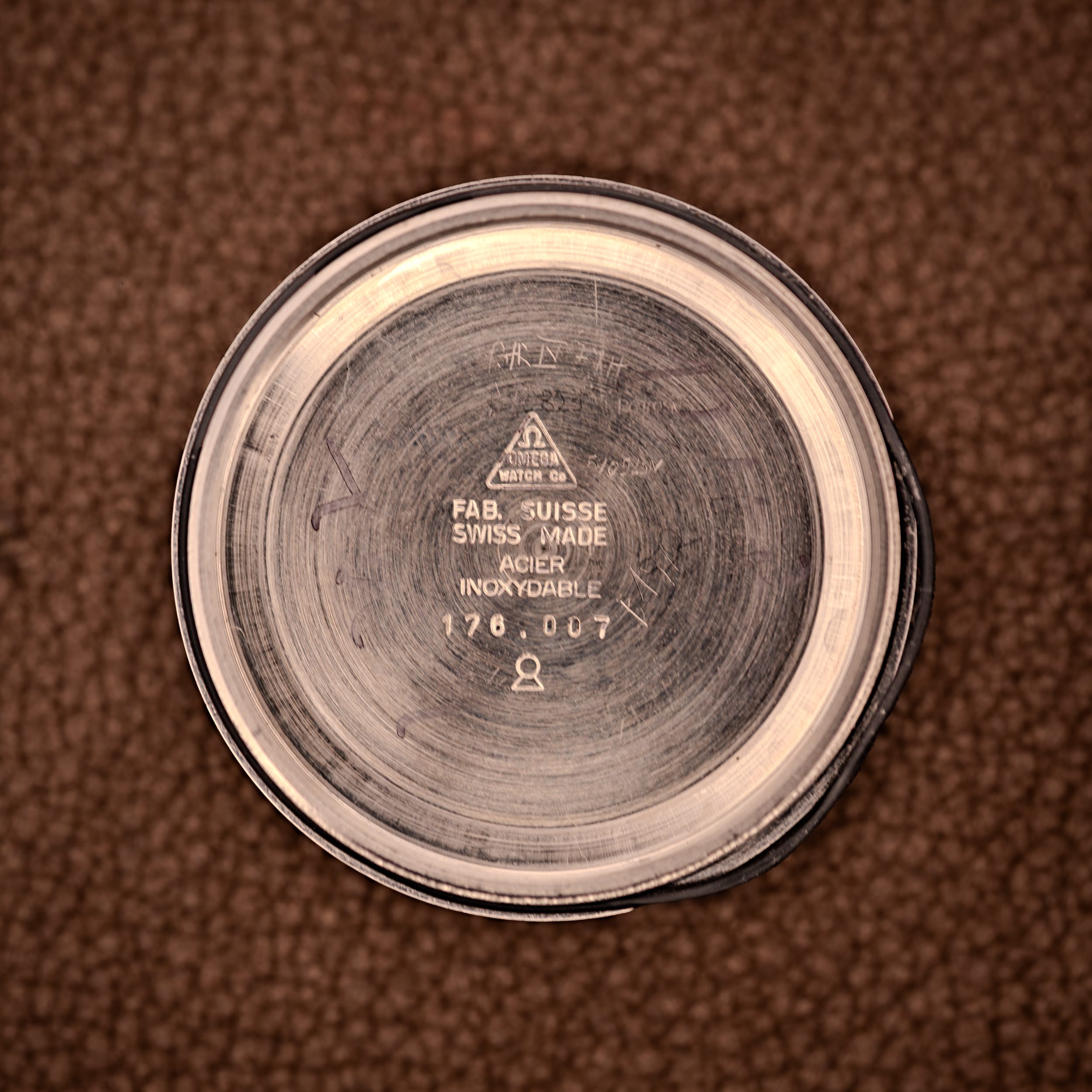
The 38.3mm stainless steel cushion case, 41.8mm lug-to-lug, 22mm lug width, shows honest wear across the brushed top and polished sides with the cushion silhouette still crisp through the lugs. The original Omega-signed crown sits at 3, flanked by twin pump pushers with the positive click a column-wheel chronograph should give. The handset is the factory configuration, black pencil hour and minute hands with matching tritium fills, sky-blue chronograph seconds sweeping from the center. The screw-down caseback carries the Seamaster Hippocampus emblem, and the inner caseback is stamped FAB. SUISSE / SWISS MADE / ACIER INOXYDABLE / 176.007 with the Omega Watch Co. triangle logo above, with light watchmaker service marks recording decades of careful maintenance.
We have paired the watch with a navy blue grained leather strap with cream contrast stitching and an OTTUHR signed buckle, a combination that picks up the dial’s sky-blue accents without competing with them and gives the package a clean, slightly nautical confidence that suits the Seamaster character.
Serviced in-house at OTTUHR and backed by our 2-year mechanical warranty, this is the kind of vintage Omega chronograph we get genuinely excited about. Factory dial, original crown, matching handset, and the column-wheel caliber that puts the 176.007 in the same Lemania family tree as the Moonwatch. For the collector who has already worked through the obvious Speedmaster references, who appreciates the engineering ambition of vintage Omega’s quieter corners, and who wants a chronograph with a real story attached to it, this is exactly the kind of watch we love bringing in.