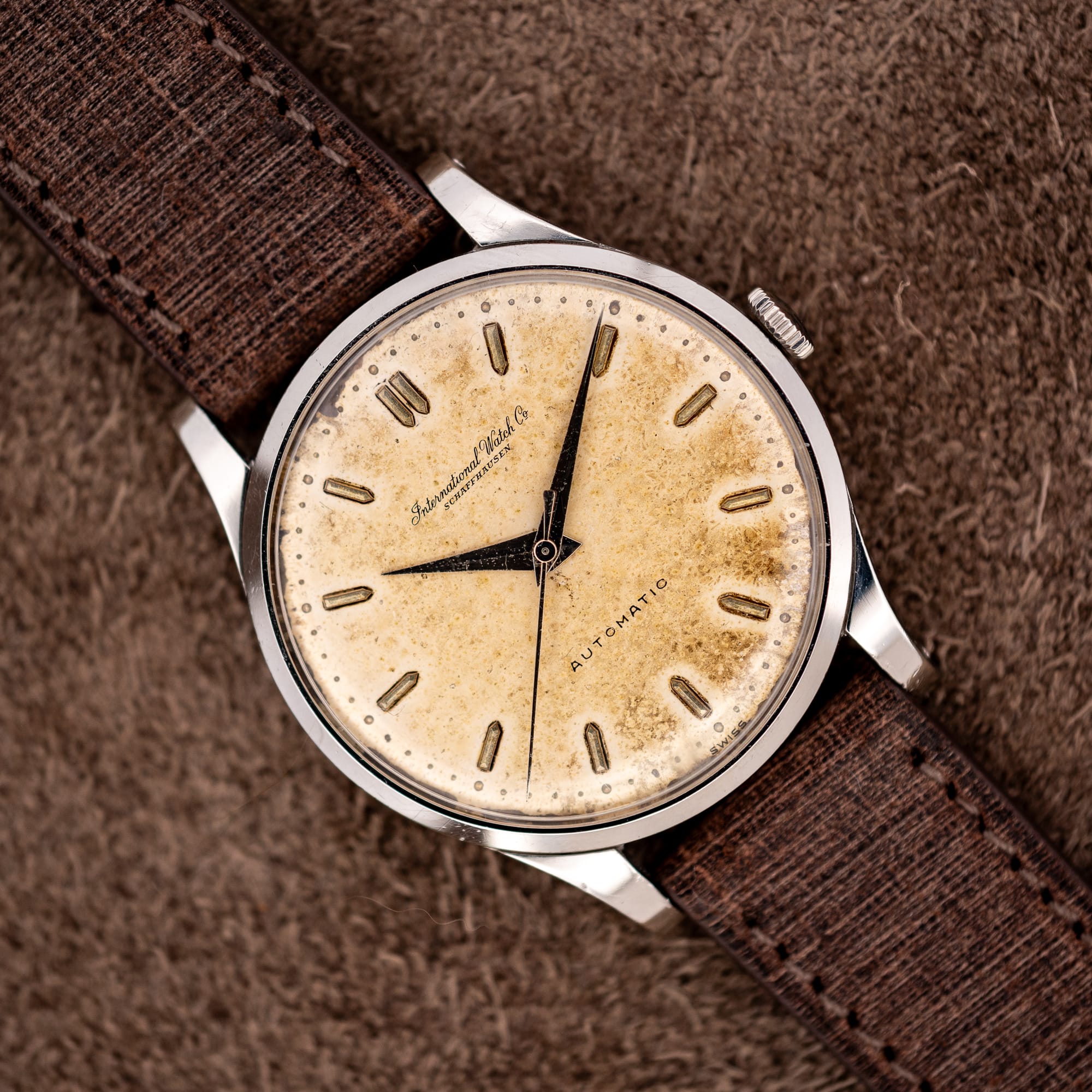
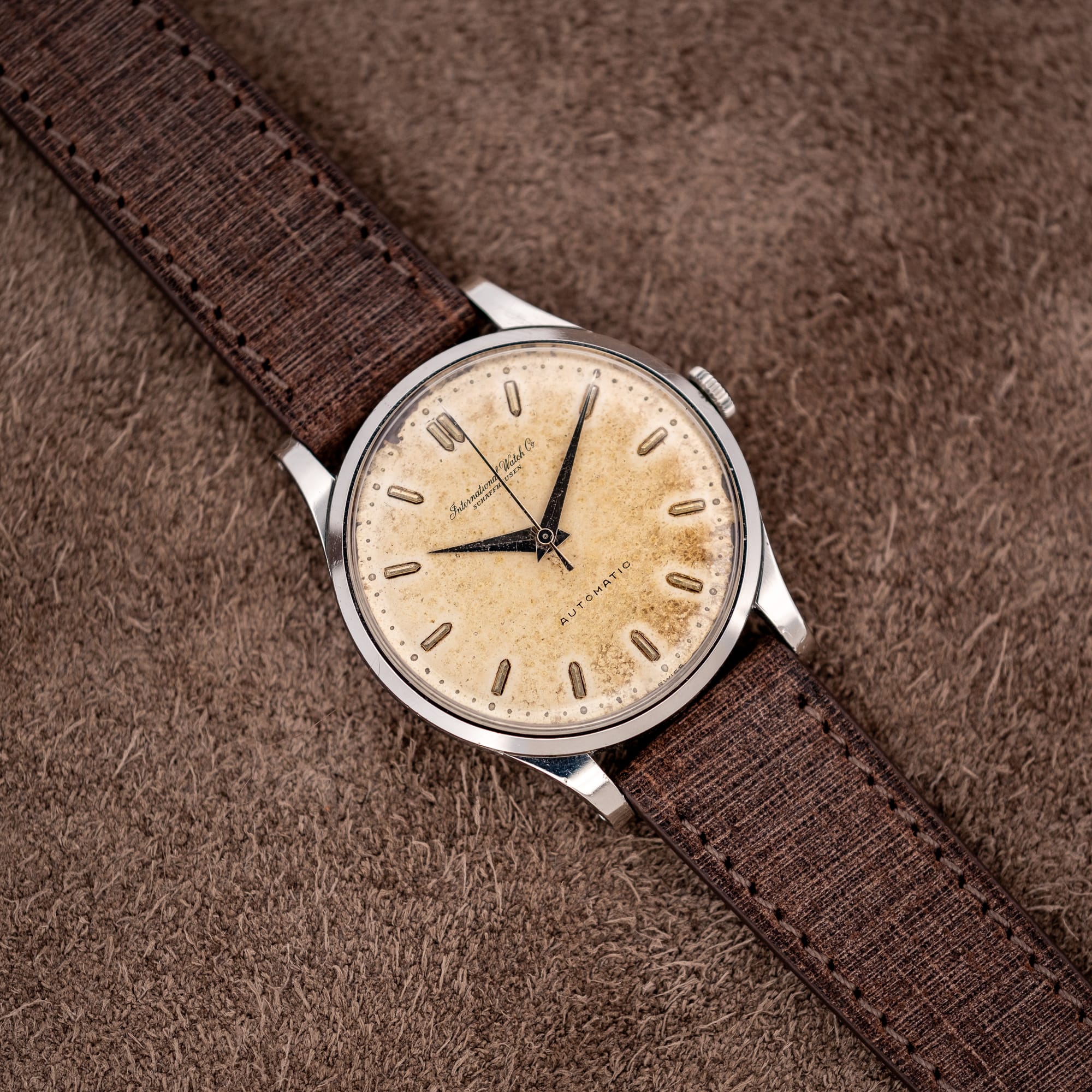
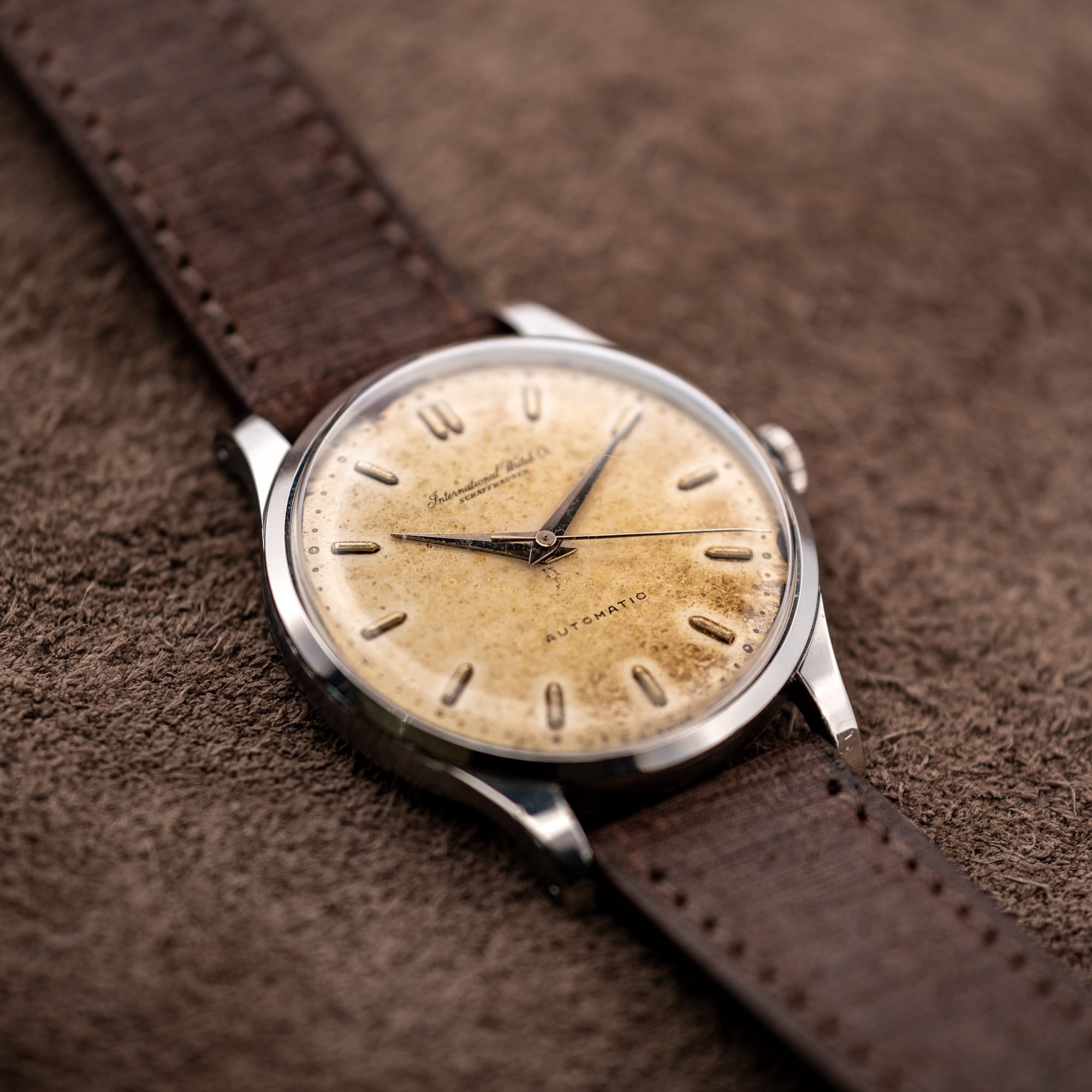
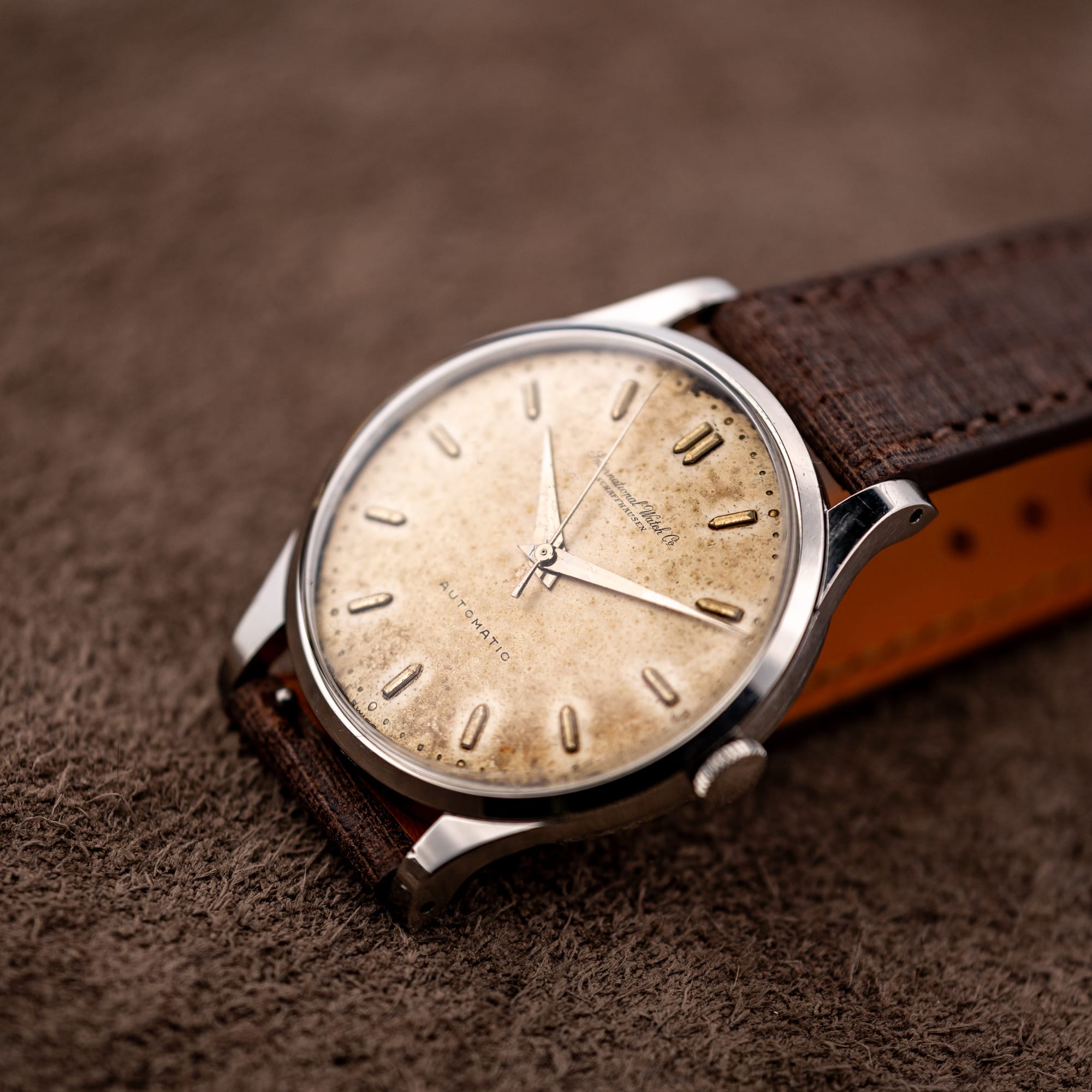
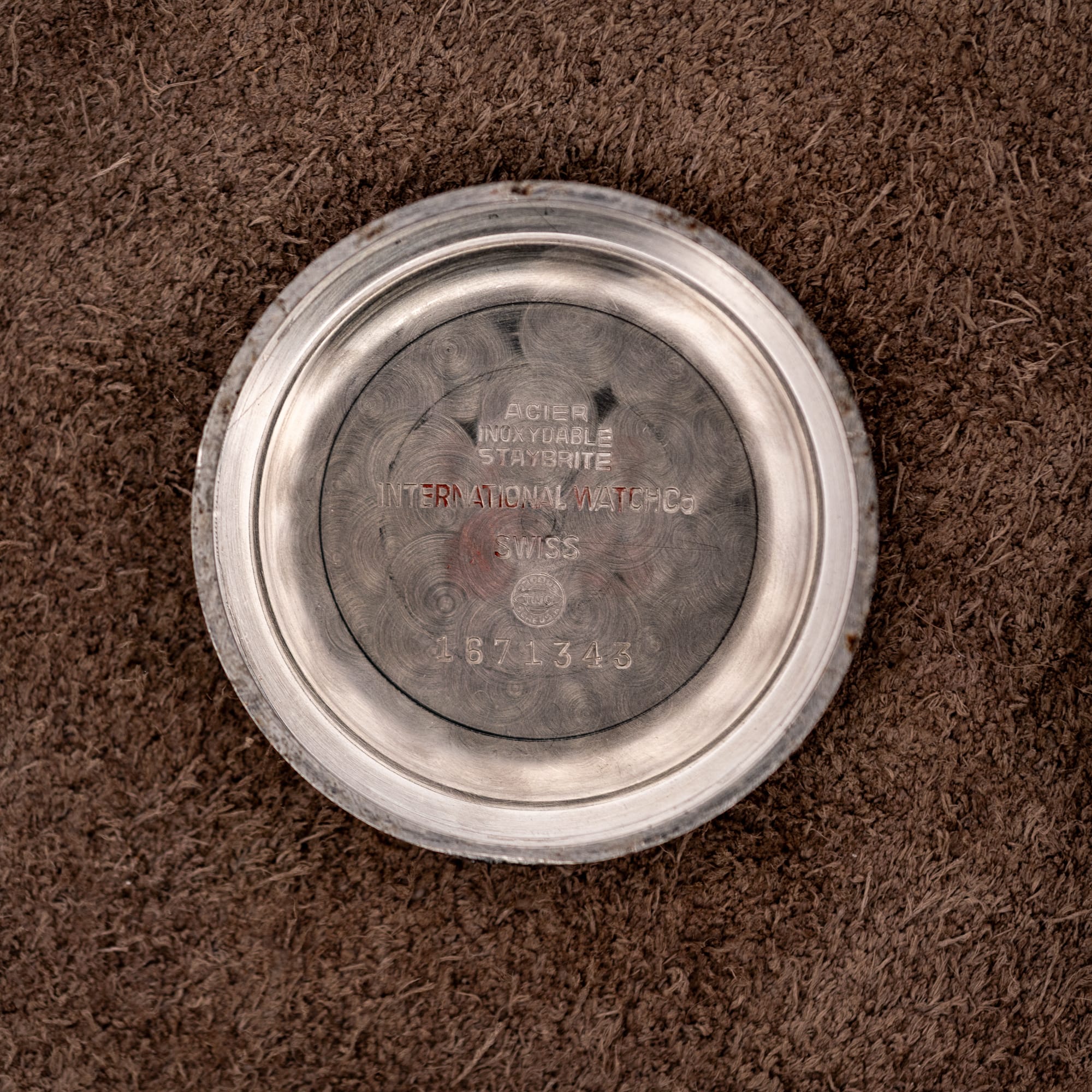
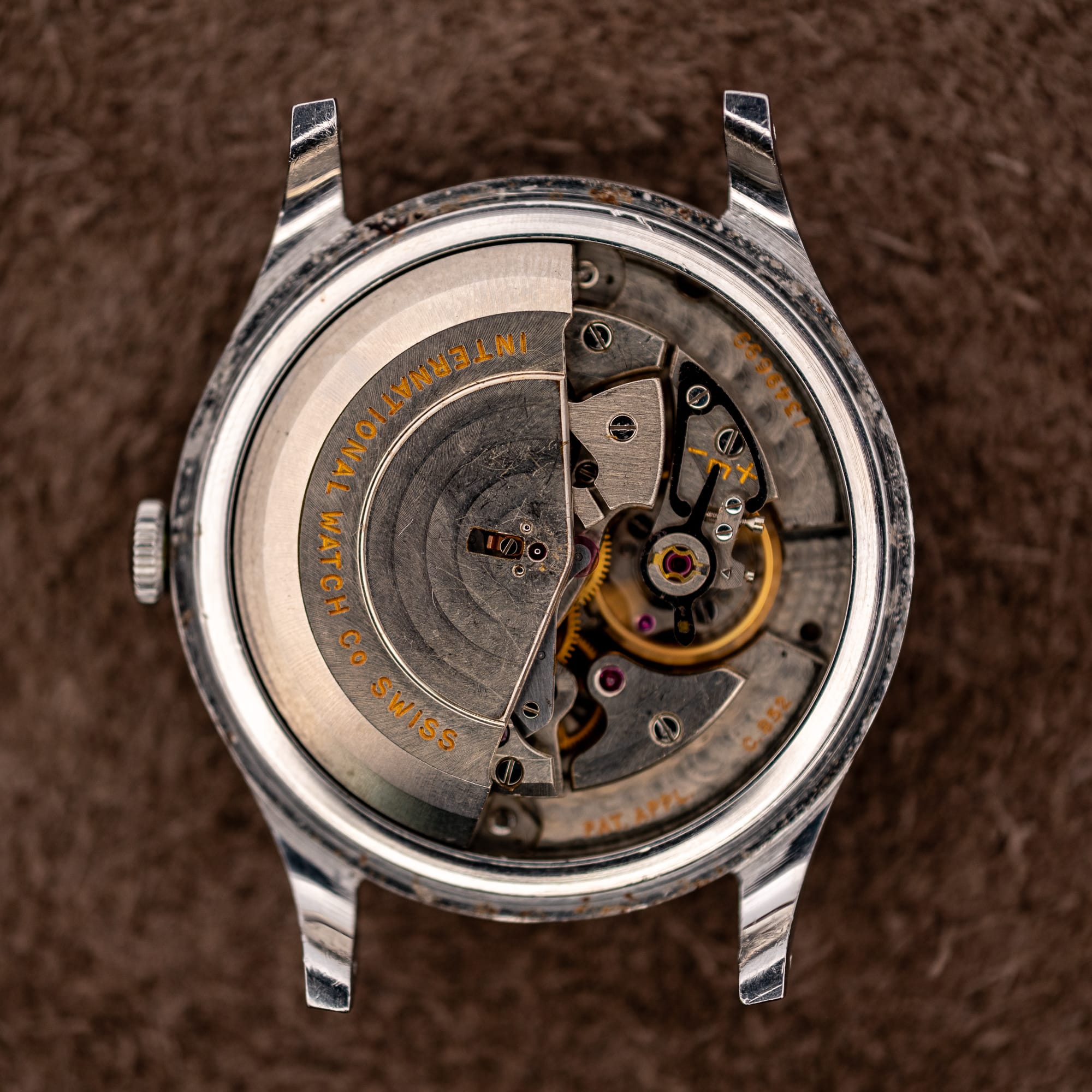
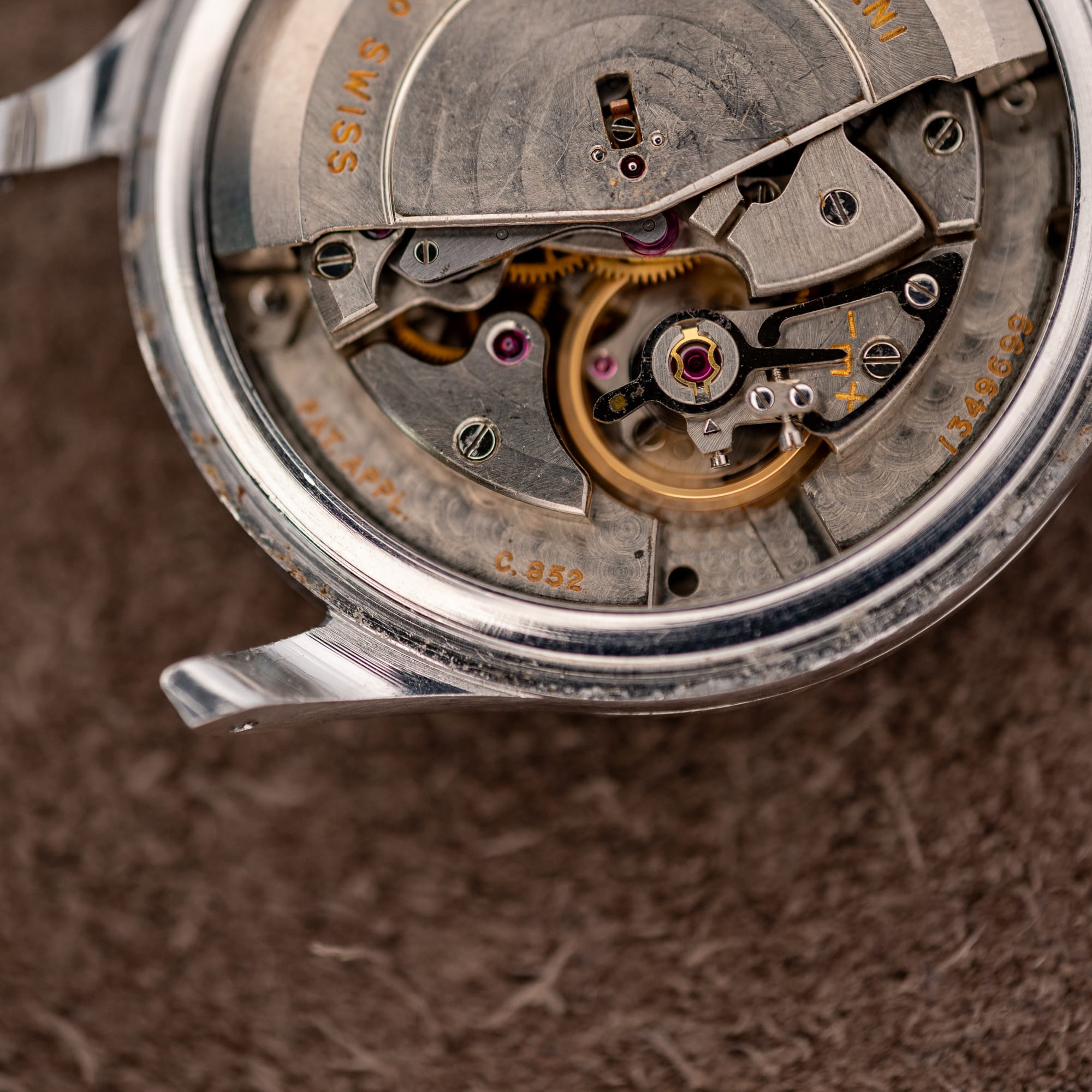
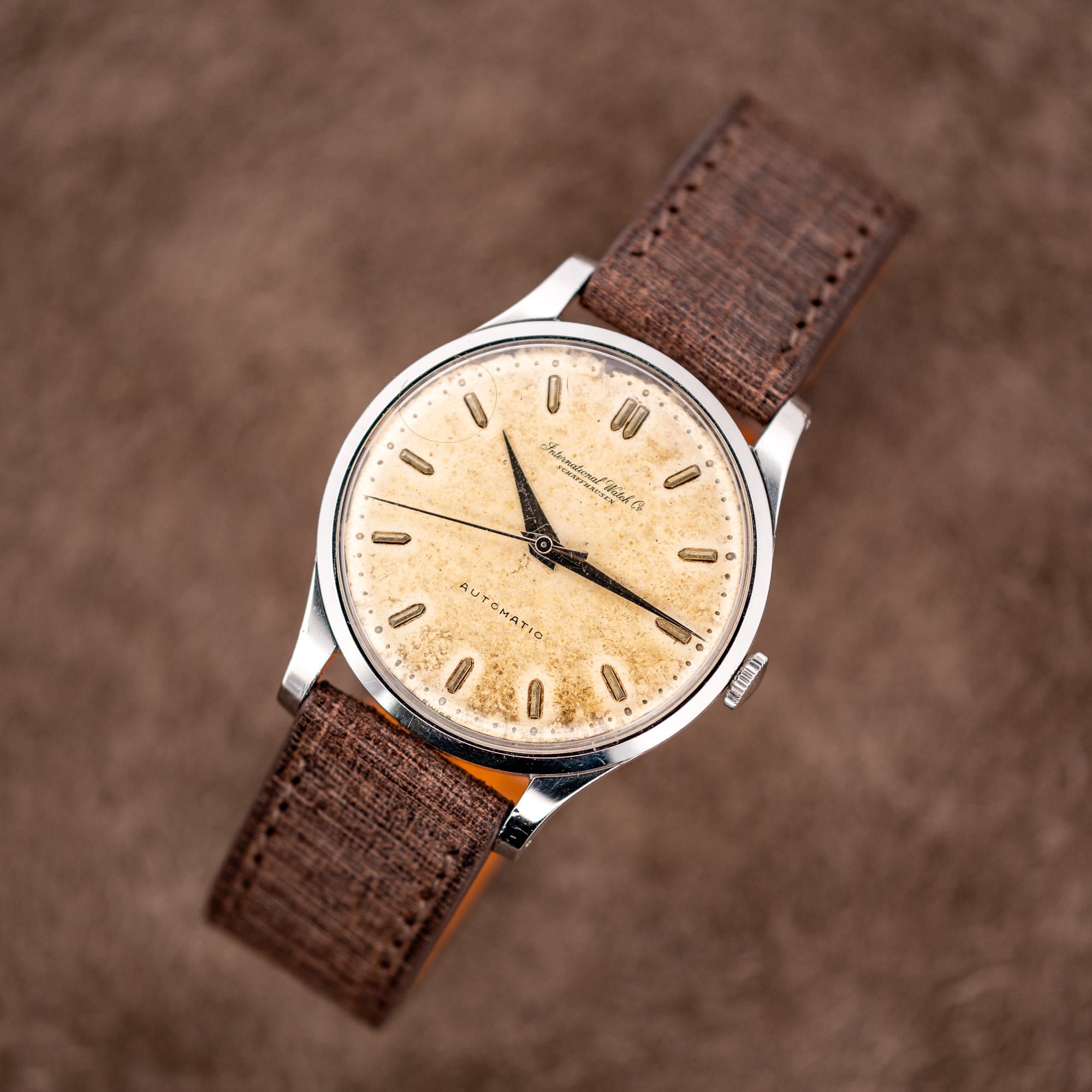
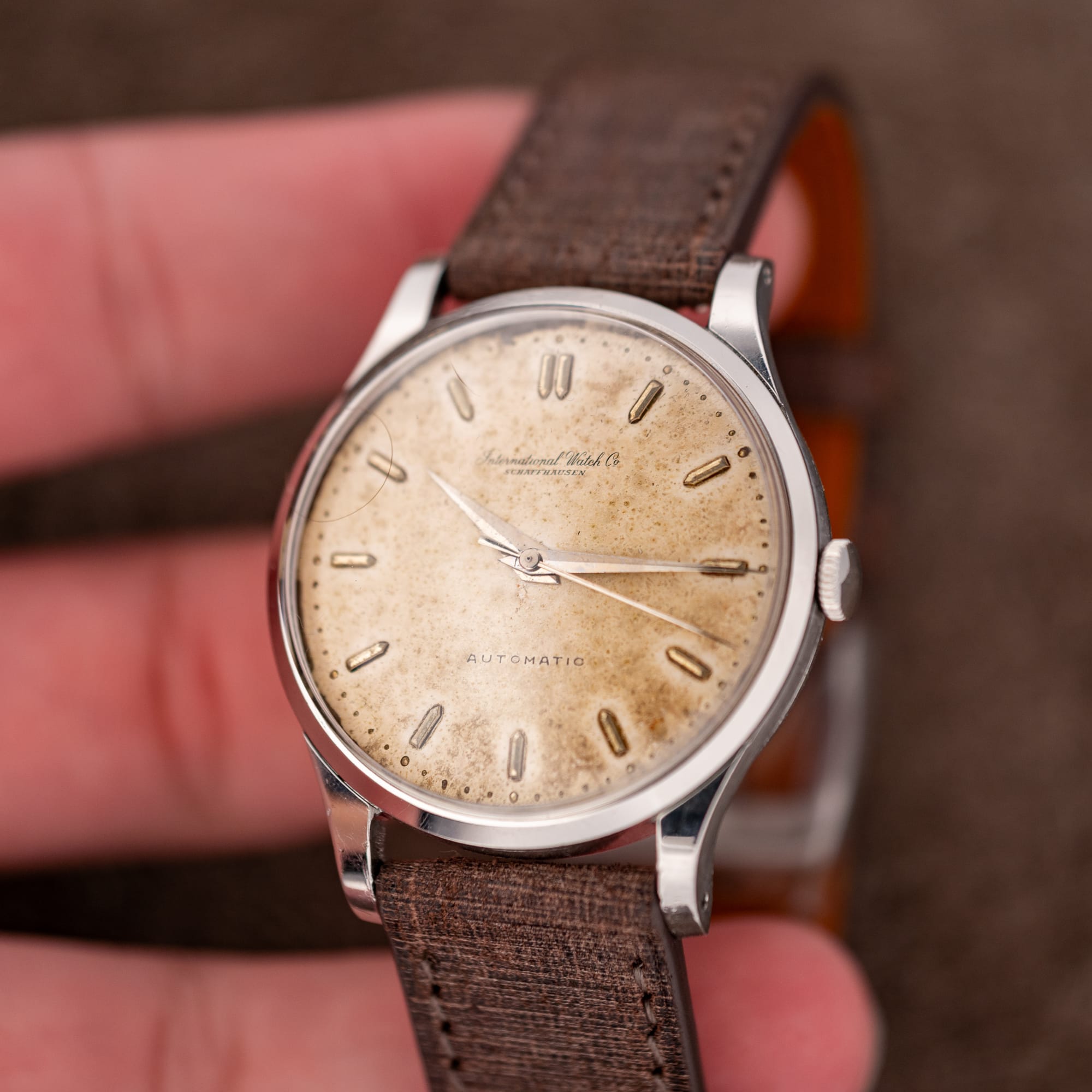
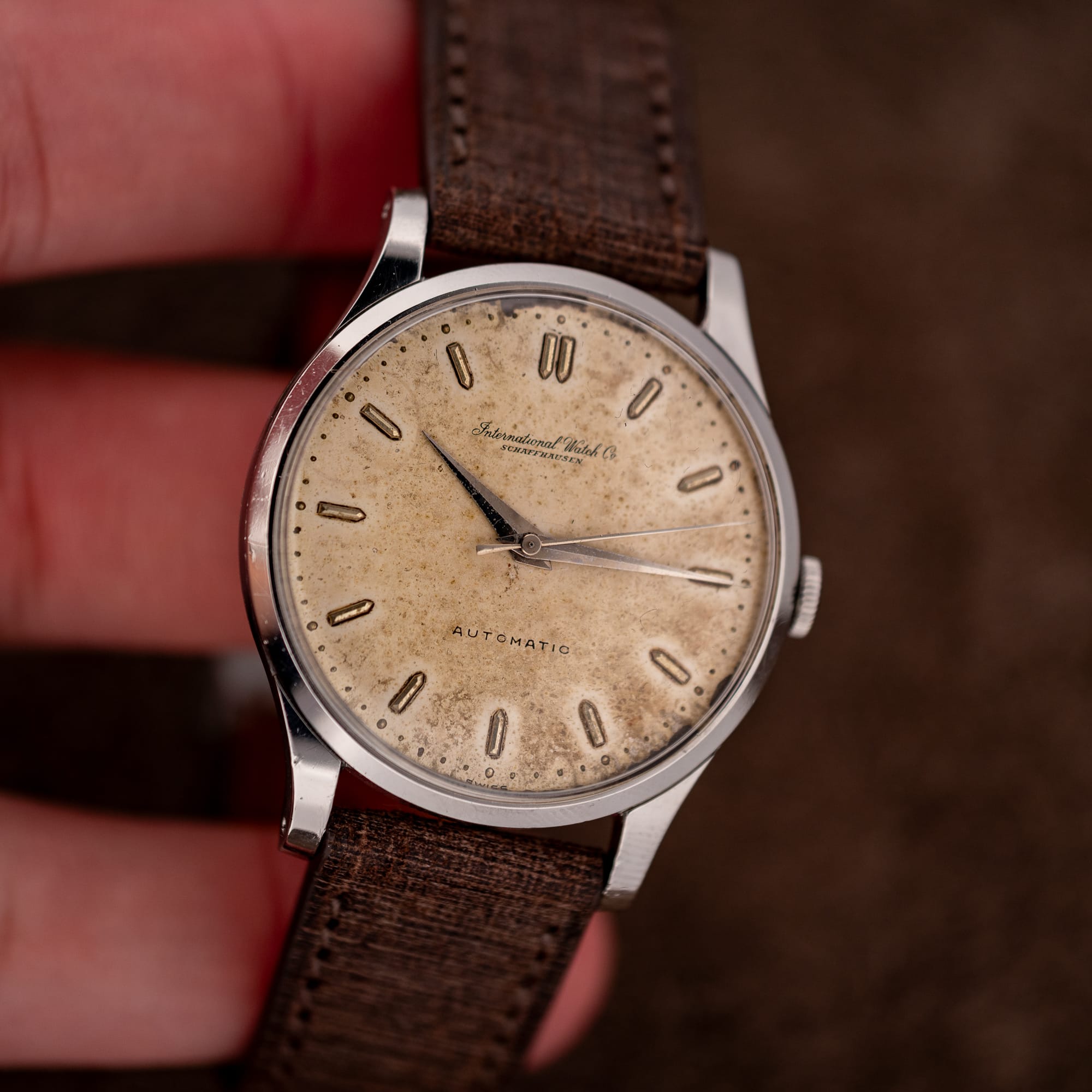

In 1955 IWC introduced the Ingenieur, an automatic built for engineers, technicians, chemists, pilots and doctors. Its movement sat inside a soft-iron inner case that kept magnetic fields away from it, and the version without a date, reference 666 A, was powered by the caliber 852. That same caliber runs this vintage IWC automatic. Here it comes in a slim 35mm stainless steel dress case, under an eggshell dial with no Ingenieur name on it.
The 852 takes its winding from Albert Pellaton. From a family of Le Locle watchmakers, he designed movements at Vacheron Constantin before joining IWC as technical director in 1944, and an efficient automatic was his first priority. Many self-winding systems of the day wound the mainspring with the rotor turning one way only. Pellaton’s design winds it whichever way the rotor swings, so more of the wearer’s everyday movement goes into the mainspring. IWC never retired the idea. Its in-house automatic movements still use Pellaton winding today, now with ceramic parts.
IWC filed its Swiss patent on the system in 1950. On this movement’s edge, near the caliber number, is the stamp “PAT. APPL.”, patent applied for. It is a small mark, and it is there in the movement photo for anyone who looks.
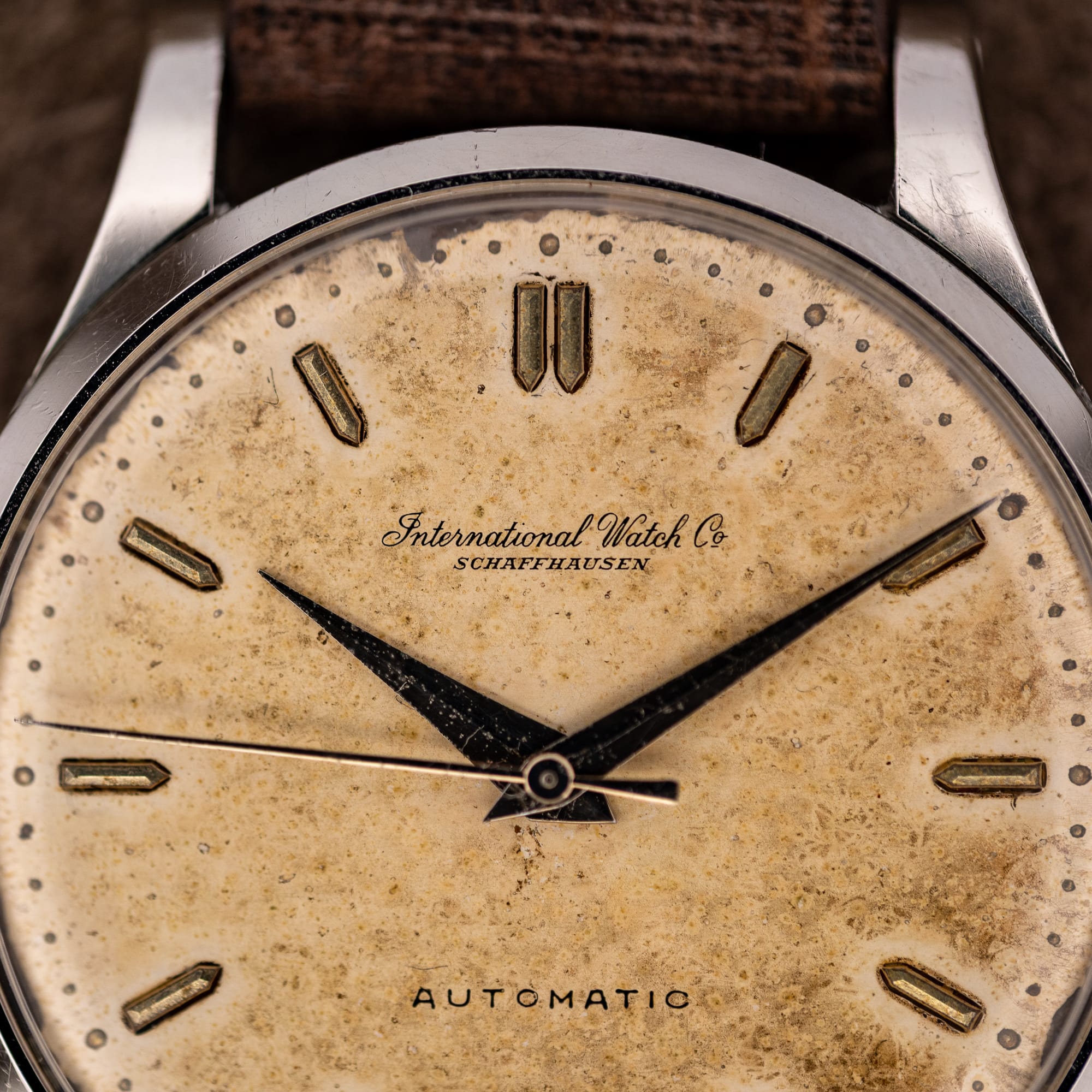
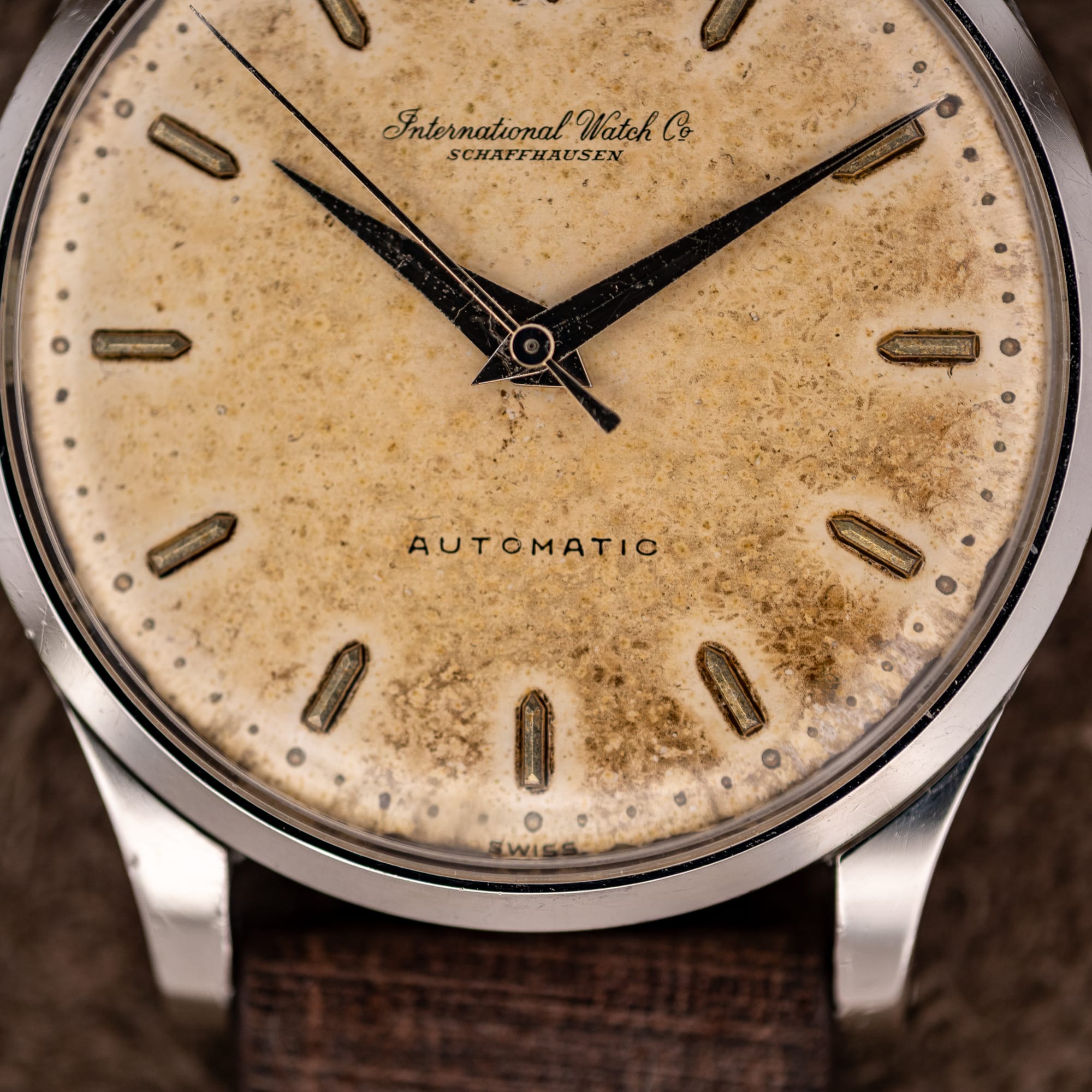
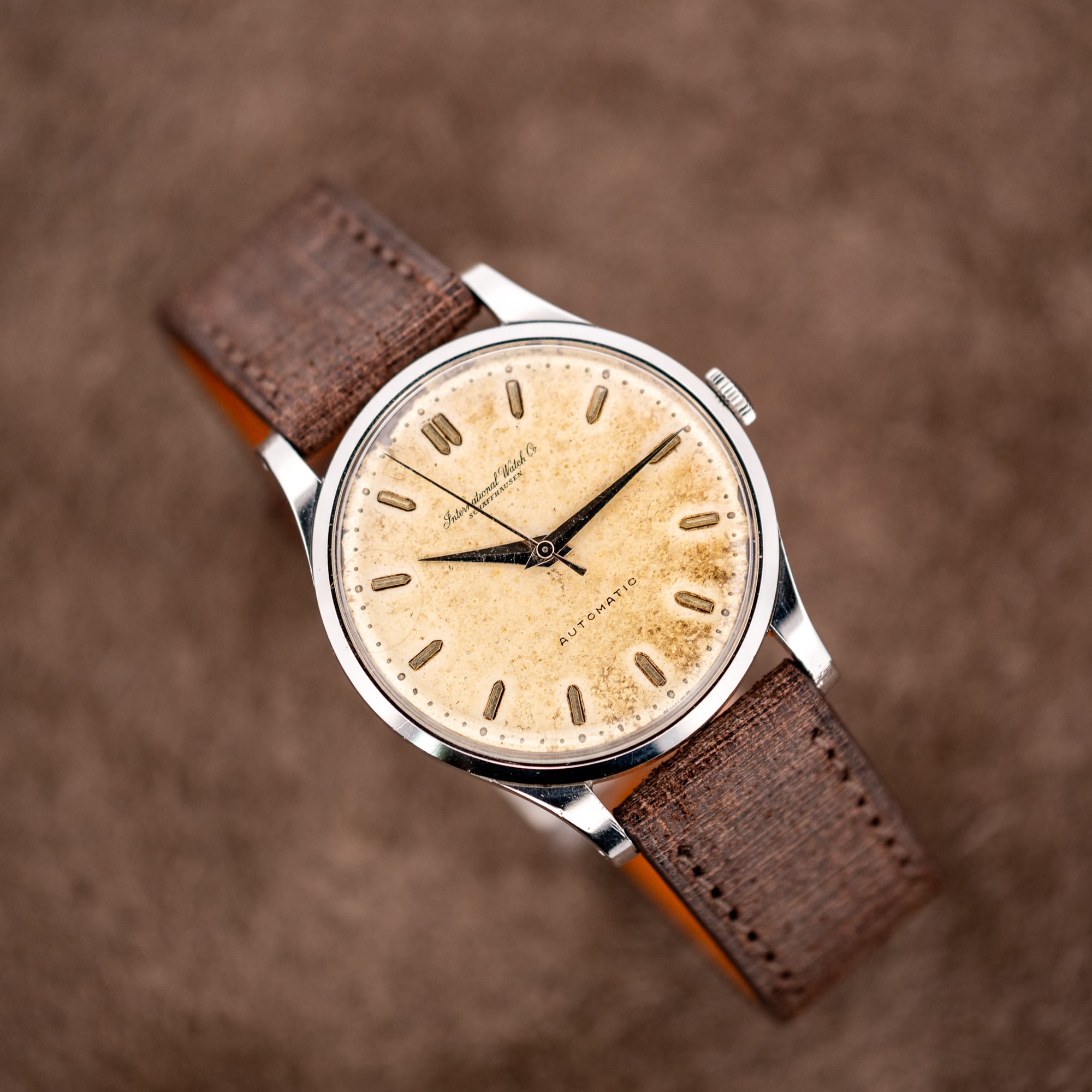
The dial has a story of its own. Above SCHAFFHAUSEN, the signature reads International Watch Co, in English, on a watch made in German-speaking Switzerland. The company was founded in 1868 by an American, Florentine Ariosto Jones of Rumney, New Hampshire. When he enlisted in the Civil War he gave his occupation as watchmaker, and after the war he worked for the Boston firm E. Howard & Co. His plan was to pair American factory machinery with Swiss handwork and sell the watches in the United States. By 1880 the company had passed to the Rauschenbach family of Schaffhausen. The English name stayed.
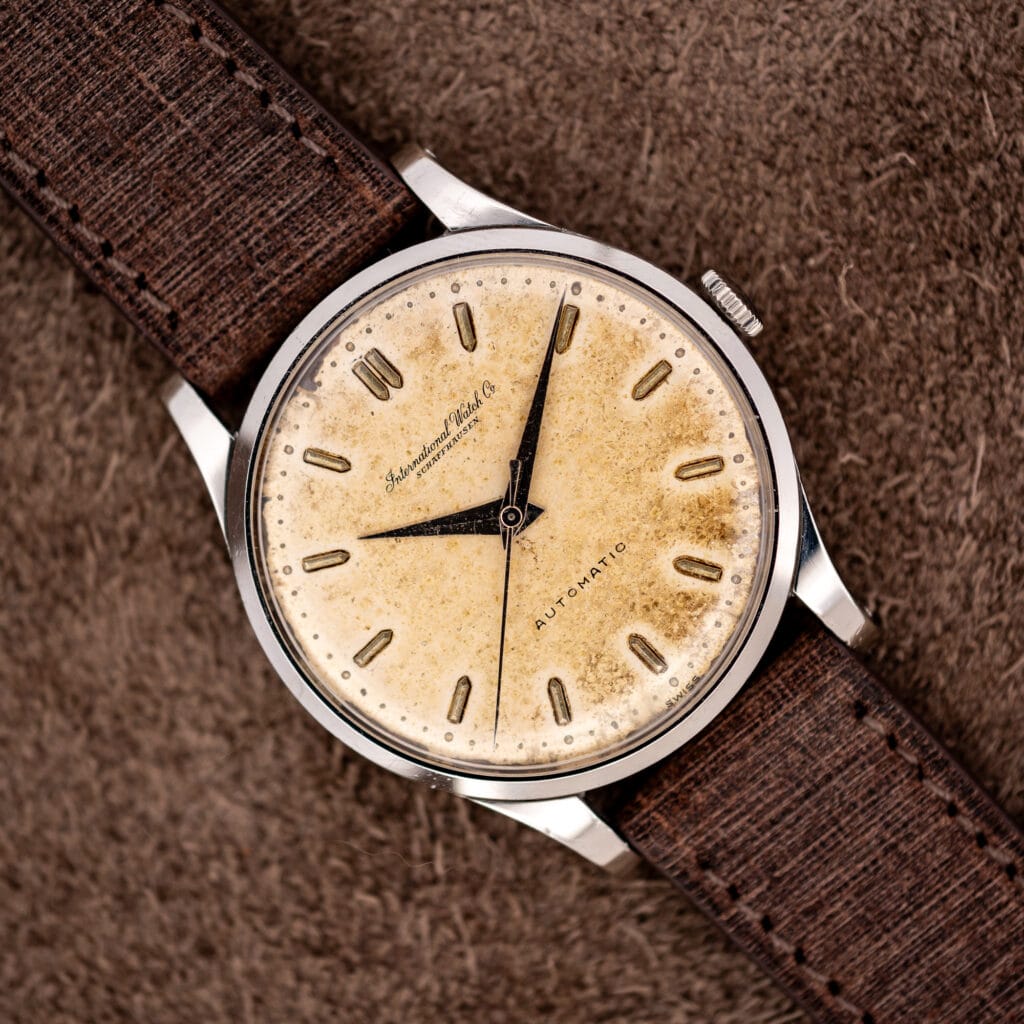
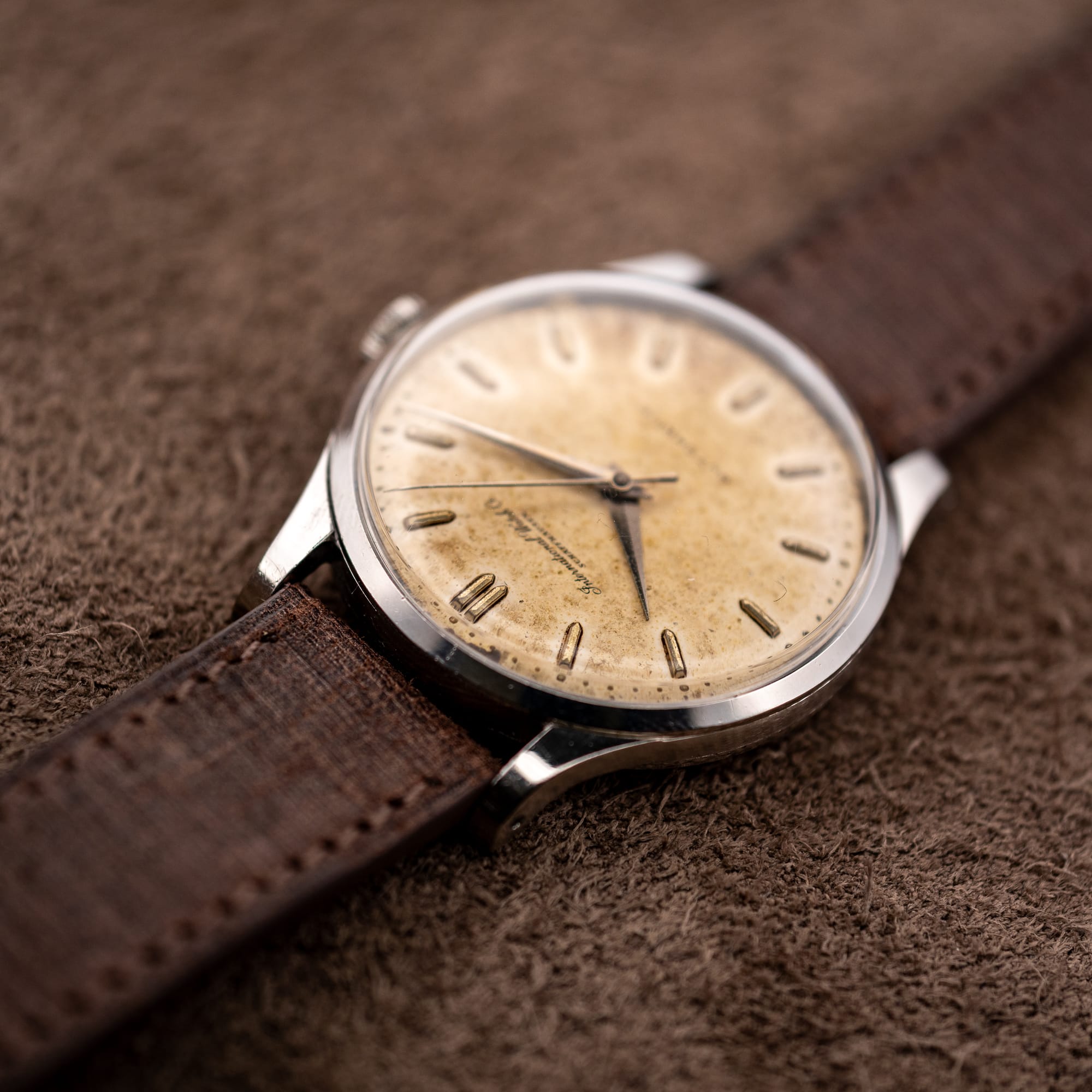
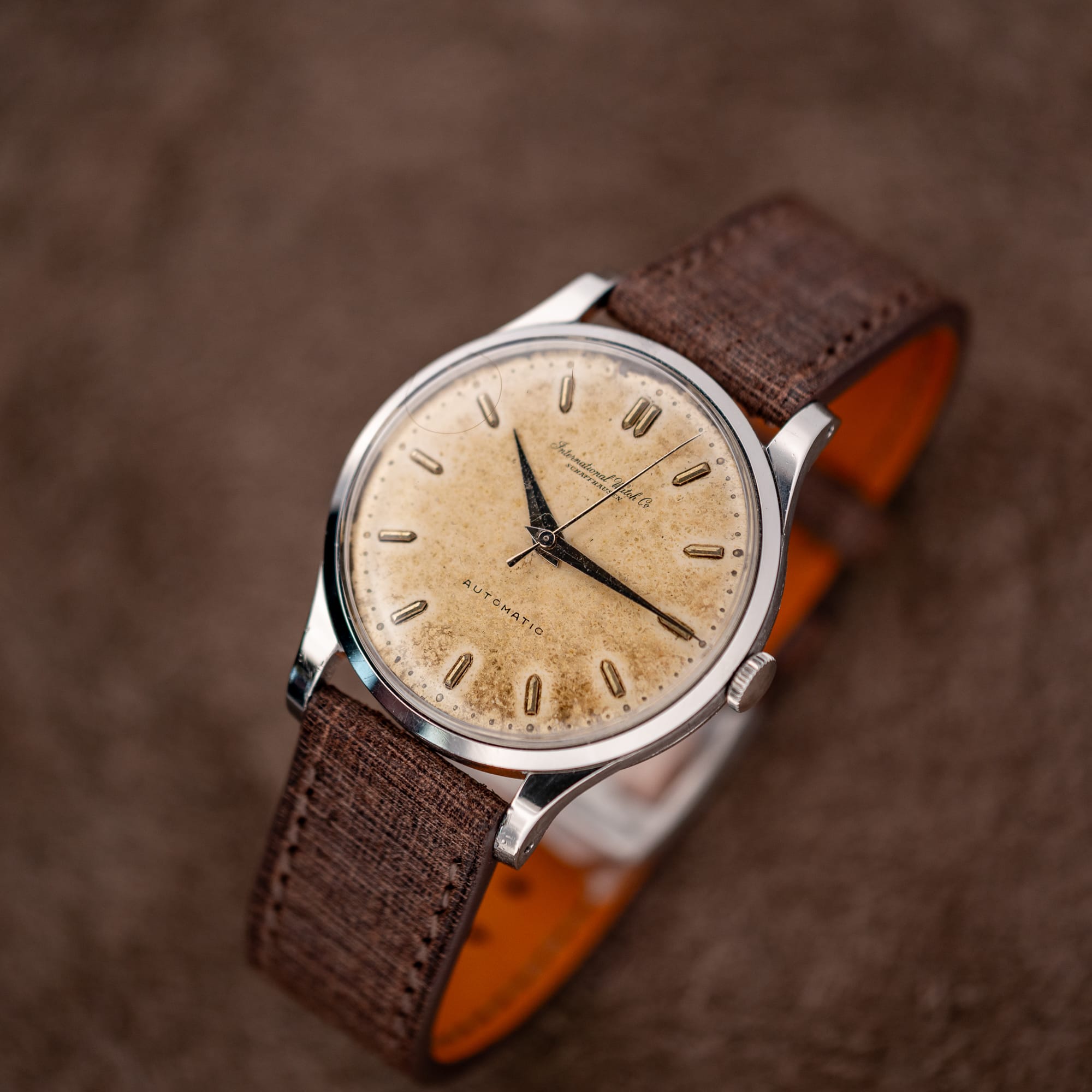
The eggshell ground has mottled heavily and unevenly, darkest toward the right and lower edges, with a small dark patch near 11:30. It is the first thing you see in the photos. Against it, the applied batons are faceted and pointed at the ends, doubled at twelve, with a dotted minute track around the edge and AUTOMATIC spaced out above SWISS. There is no date window, only a central seconds hand, so nothing breaks up the dial.
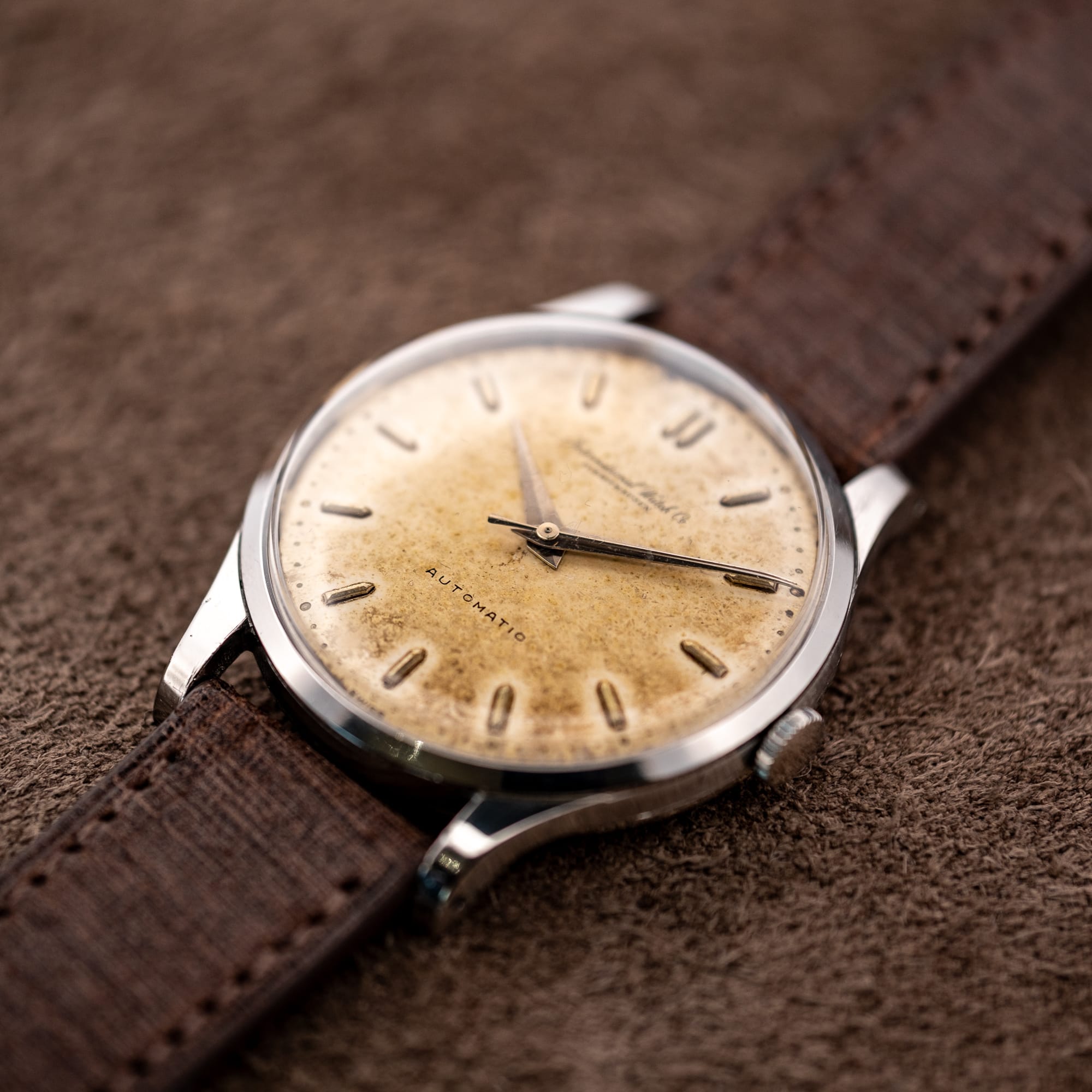
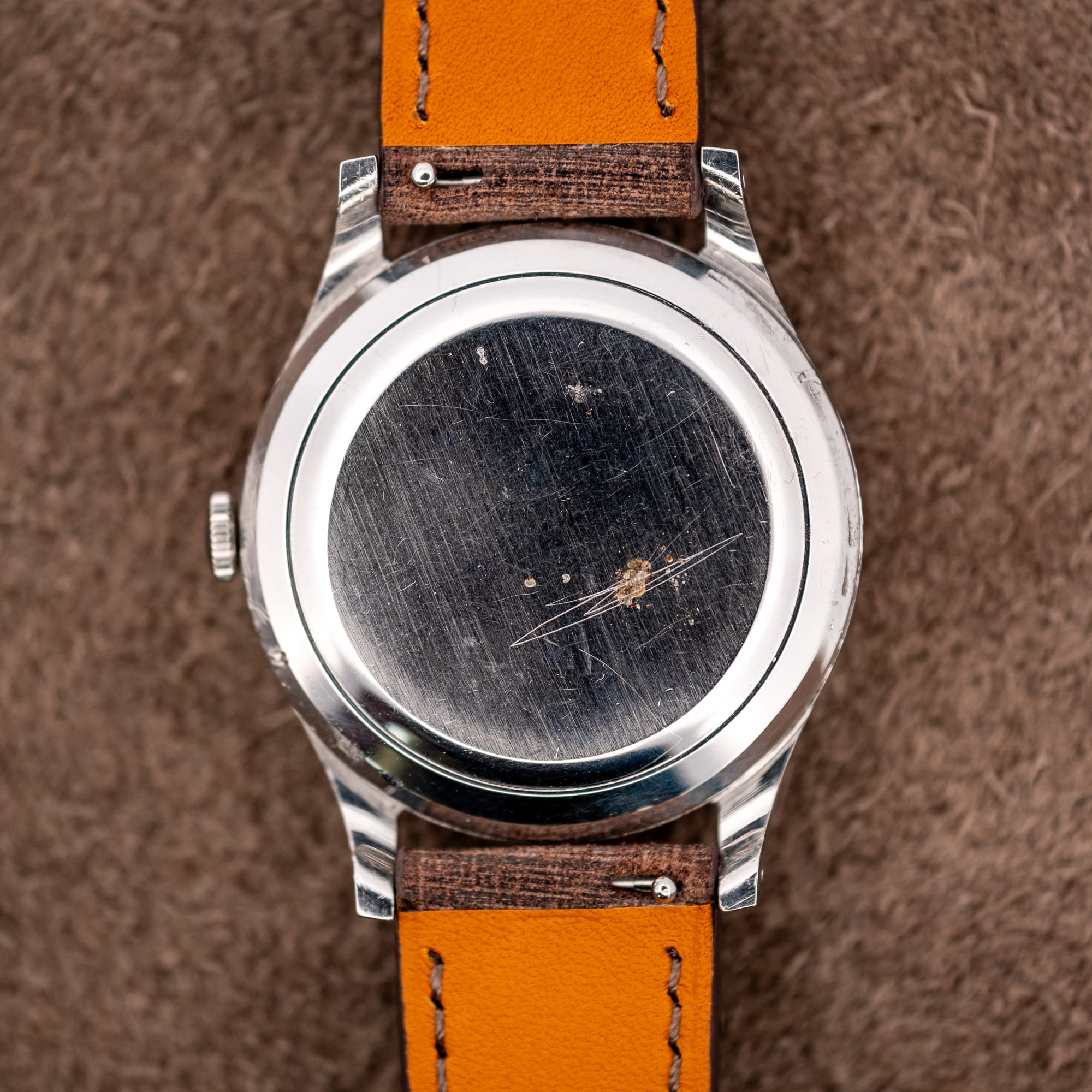
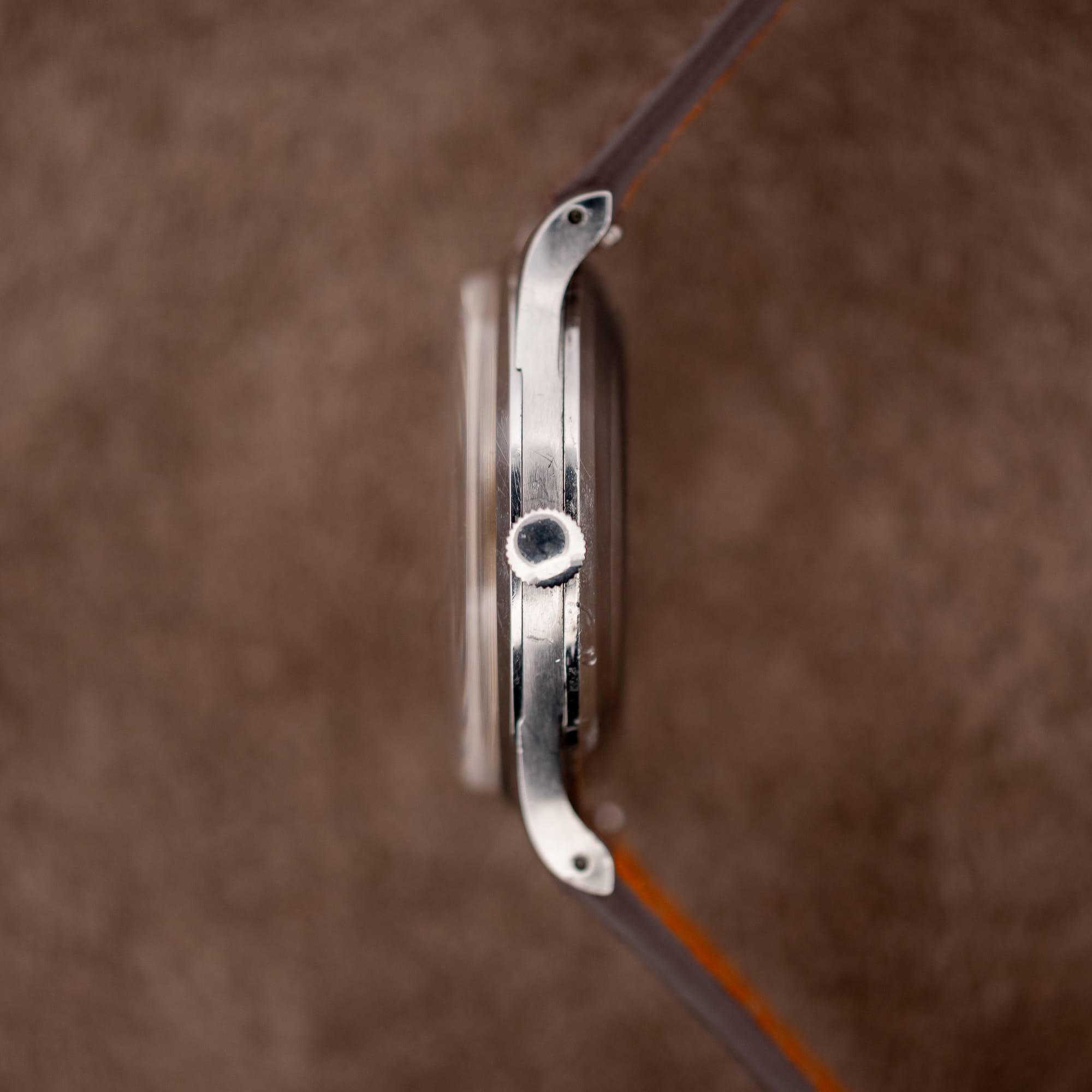
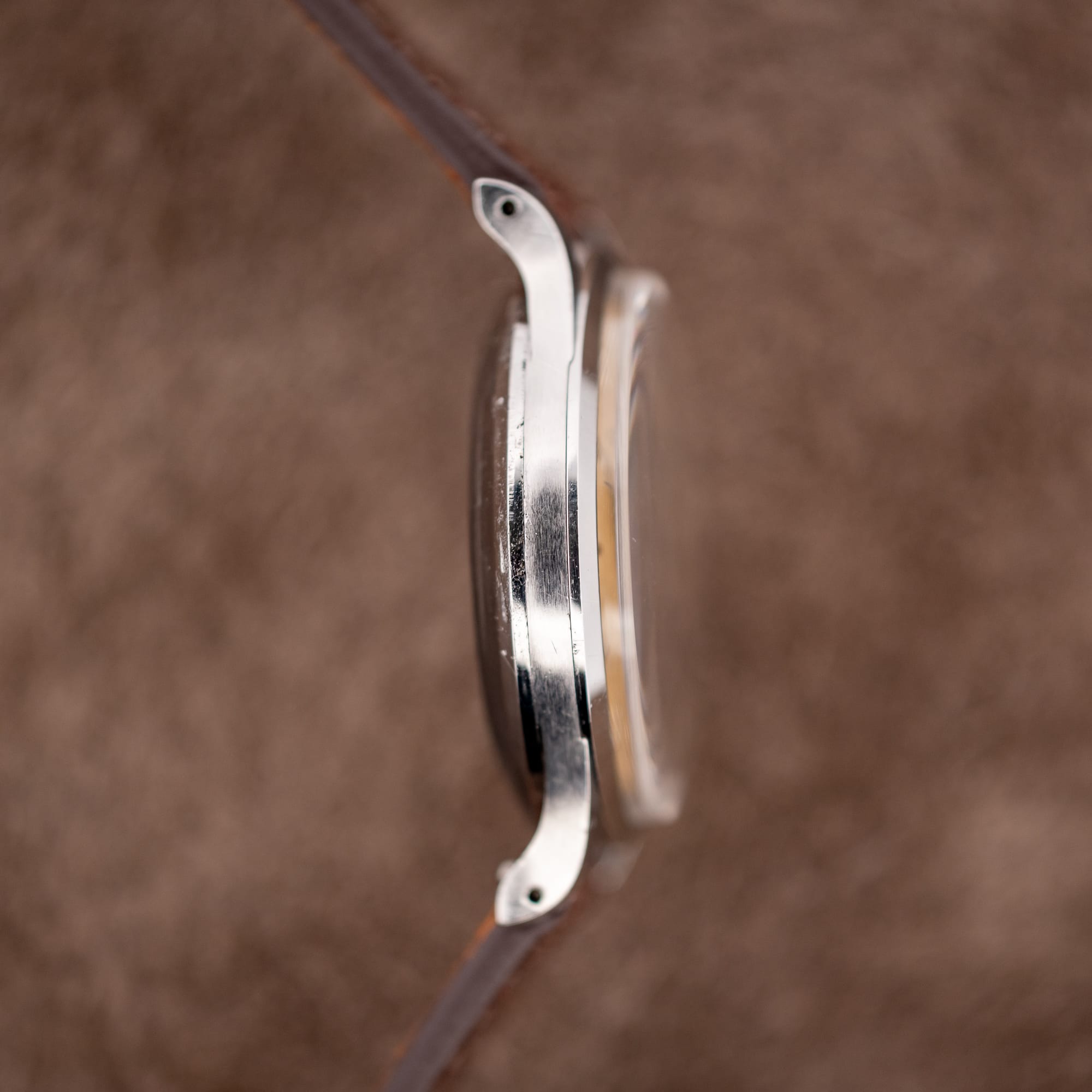
The case is 42.5mm from lug to lug, with a slim smooth bezel, curved lugs drilled through at the tips and a domed crystal that stands proud of the bezel in profile. The outside shows light scuffs from wear. Then there are the hands. The faceted dauphine hands look almost black at some angles and flash bright silver as the watch tilts toward the light, and of everything on this watch, that change is what we like most.