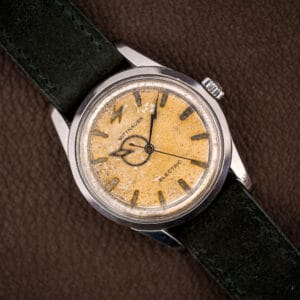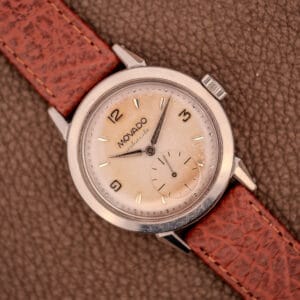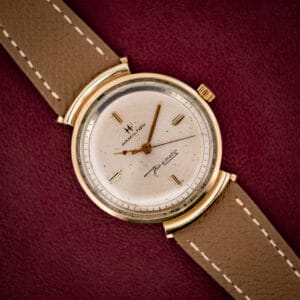

New York, Geneva, Montreal. Three cities went inside the casebacks of the Longines-era Wittnauers, and they are the compressed version of the story behind a vintage Wittnauer Automatic like this one, a story that starts with a teenager on a boat. Albert Wittnauer came into New York in 1872, sixteen years old, and went to work for his brother-in-law Eugene Robert, an importer of Swiss watches. He reached a conclusion there that shaped the next century of the business: America had room for a Swiss watch built to a lower price, quality intact.
By 1880 the firm held the exclusive American sales agency for Longines. By 1885 Albert had taken the business over and put his own name on it. For decades after, the company sold Longines to America and sold Wittnauers alongside them, two catalogs running through one distributor, separate movements in each. Then Longines bought the company outright. The importer had become the imported, and the house style that came out of the arrangement stayed consistent: Swiss movements, American cases, and a name that answered to three cities at once.
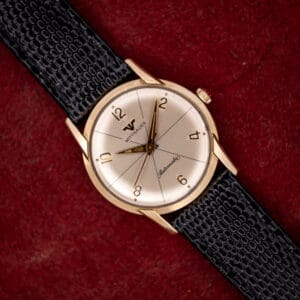
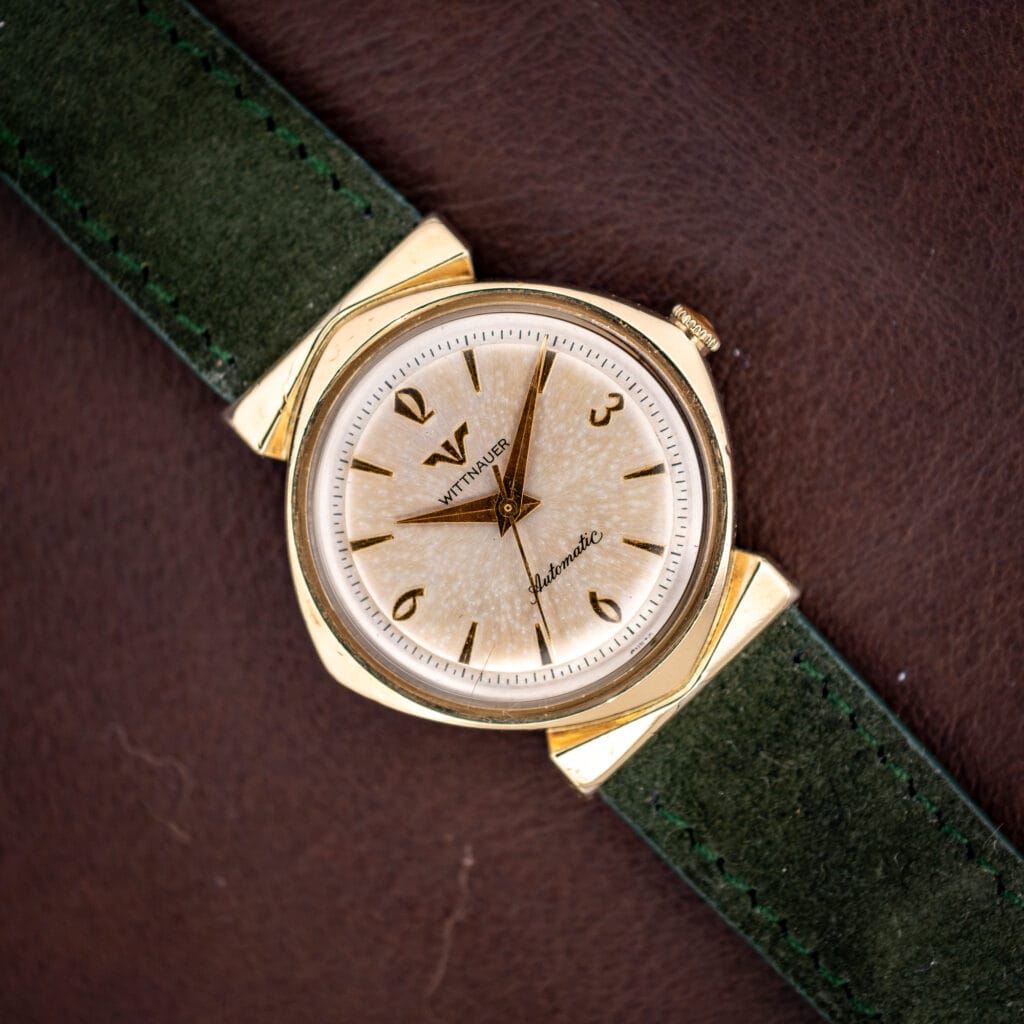
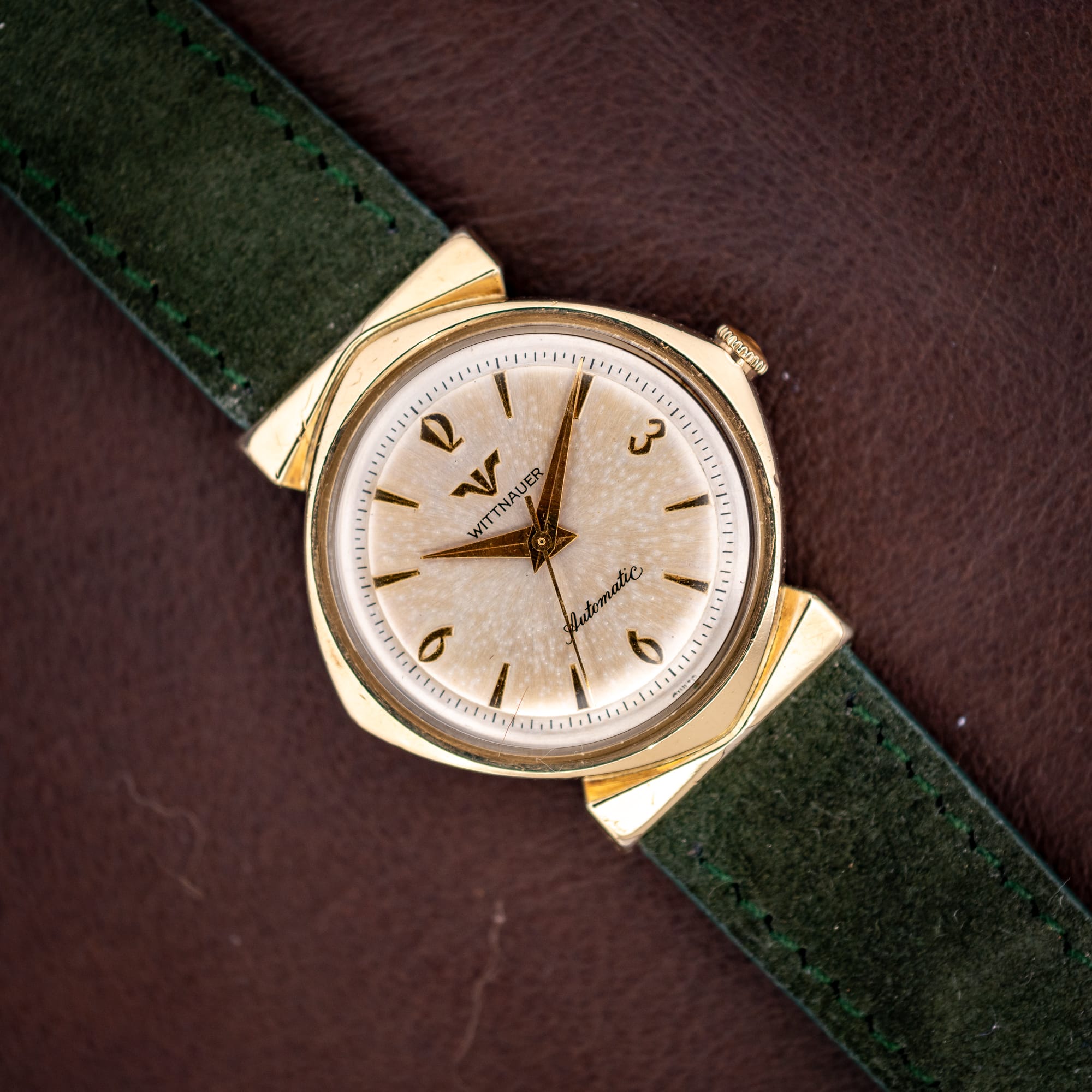
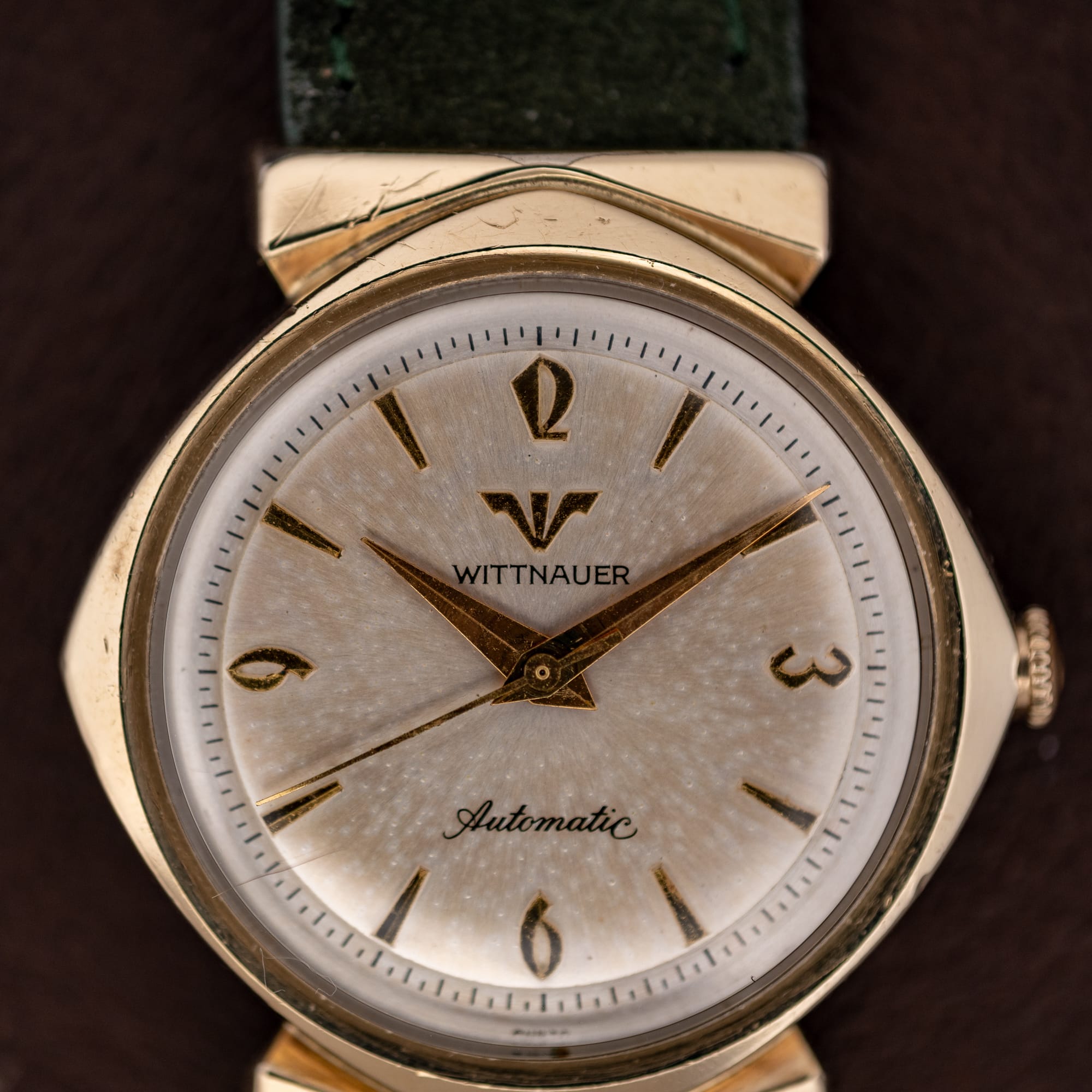
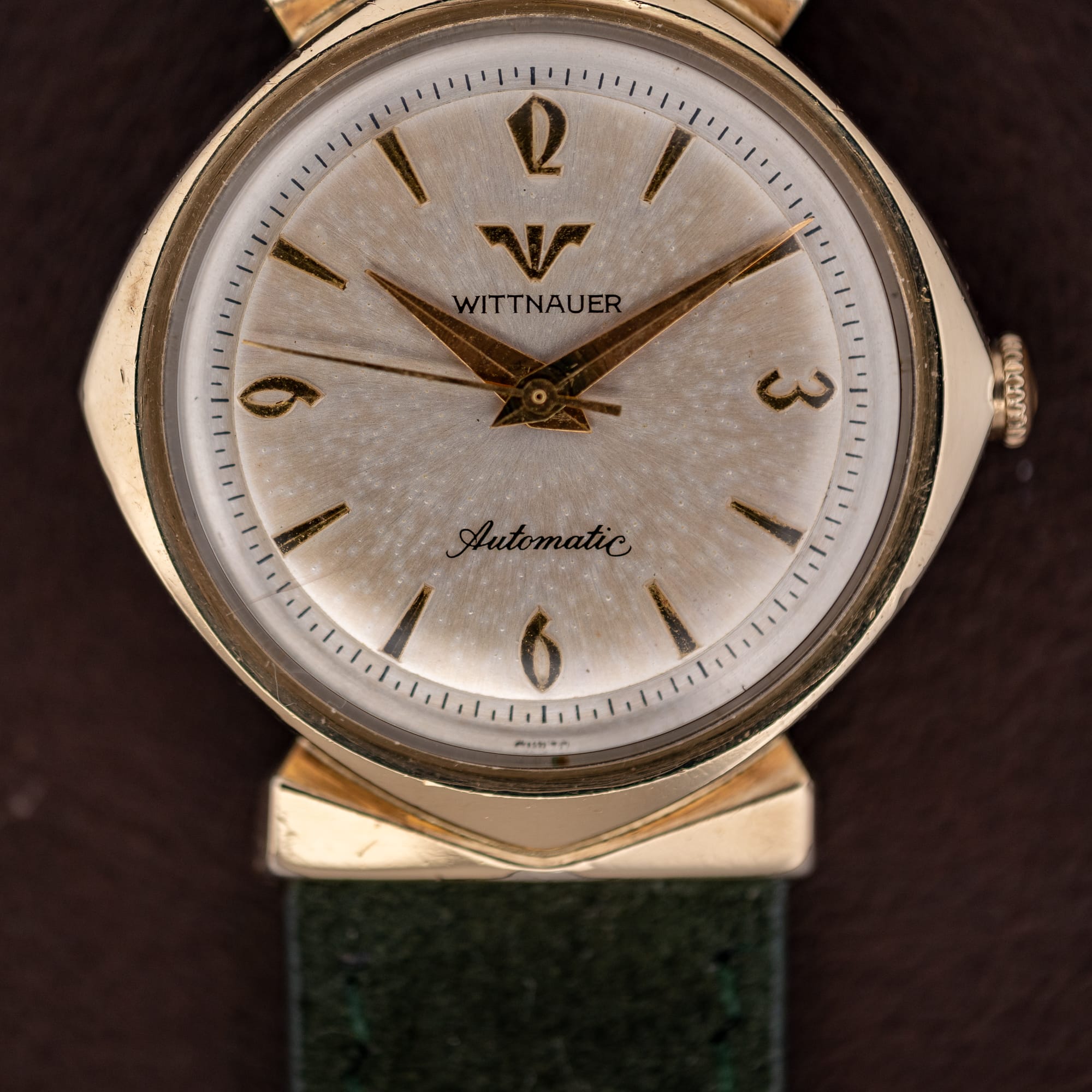
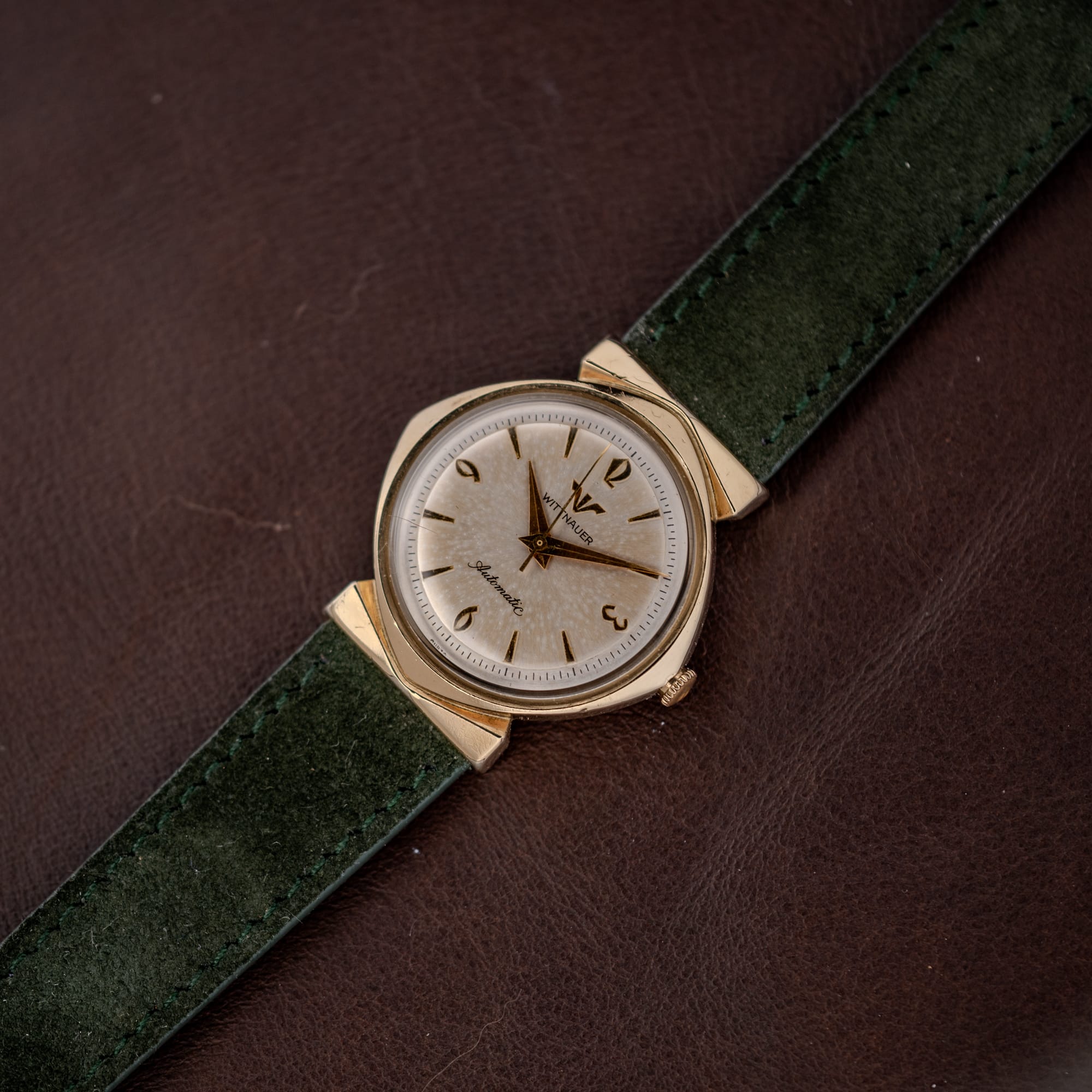
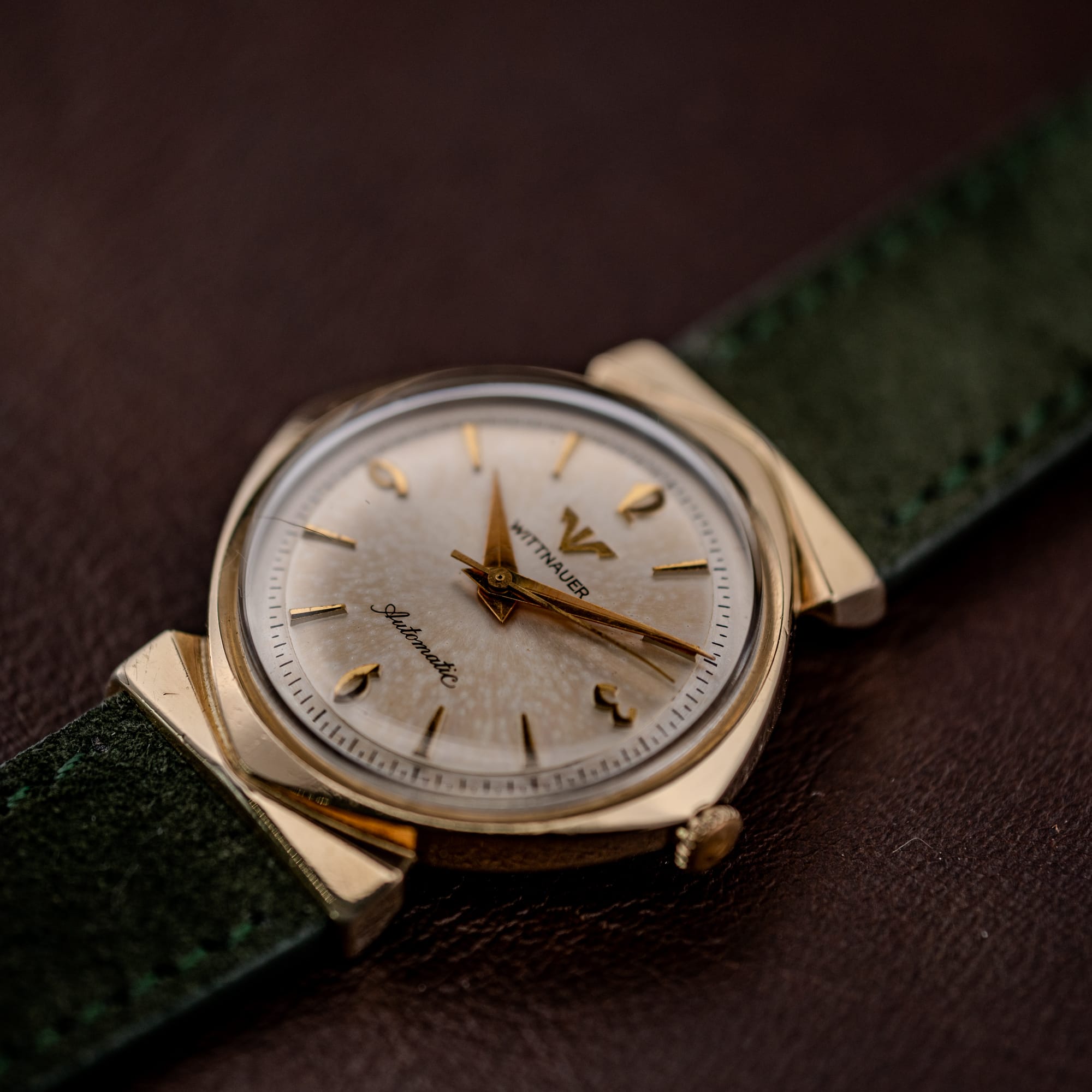
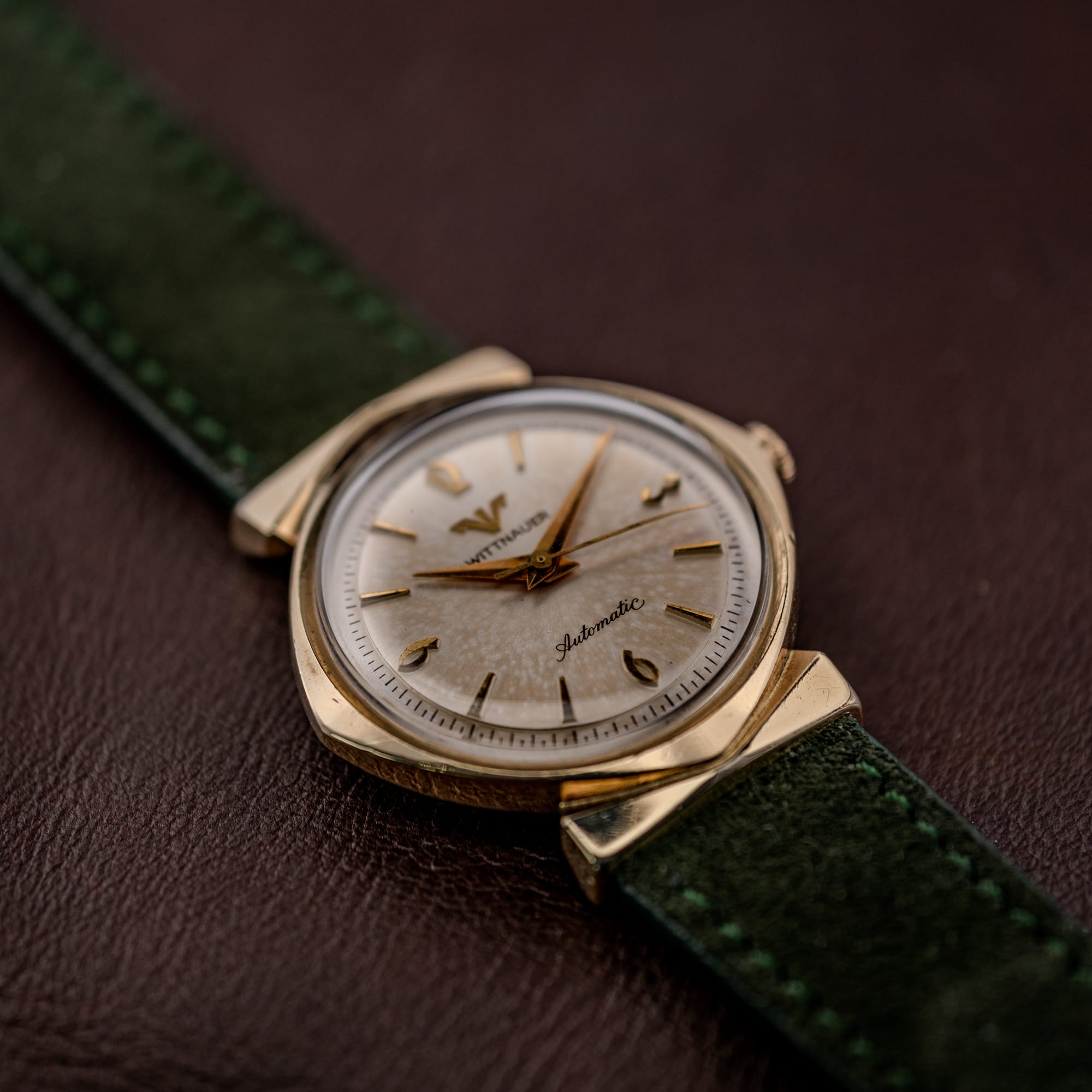
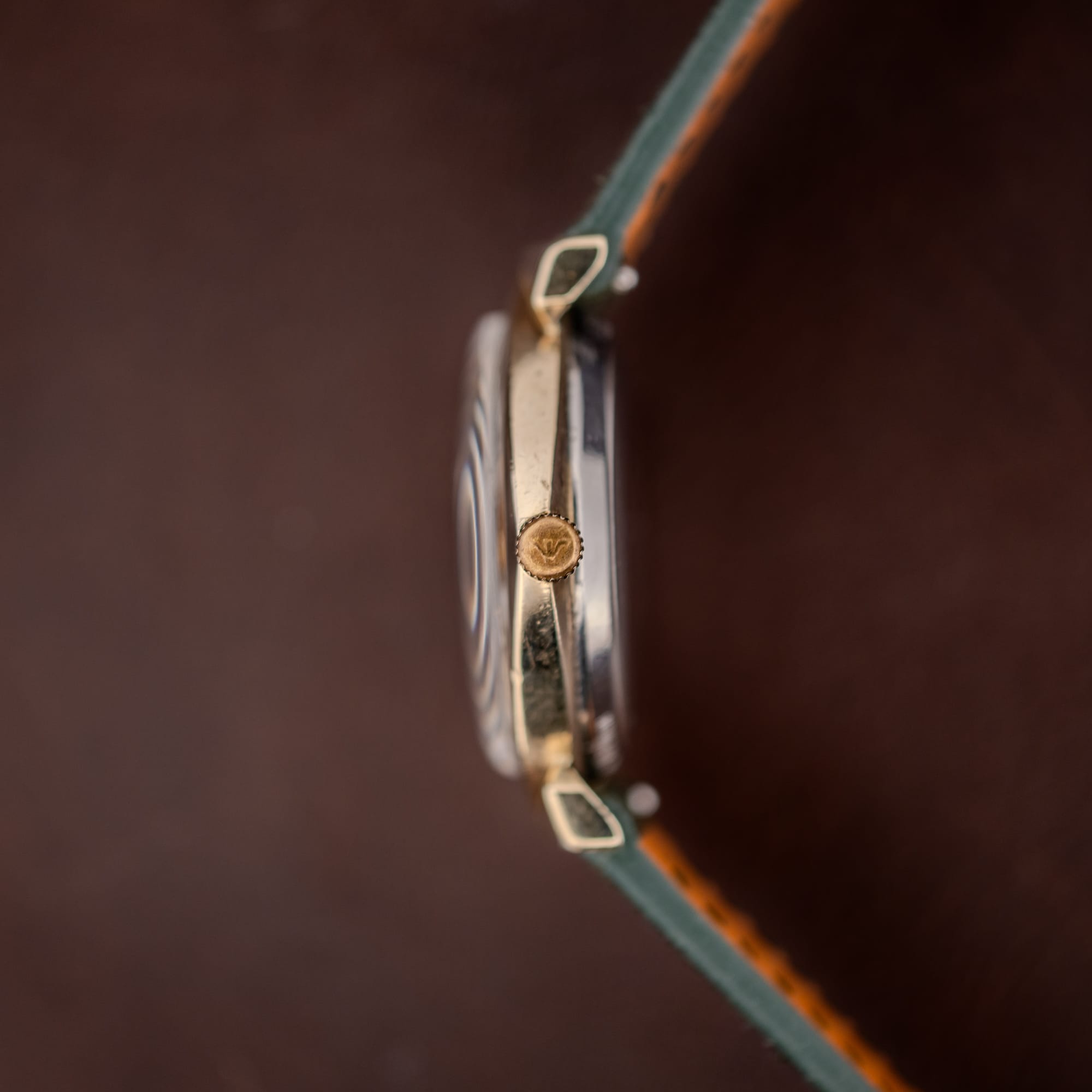
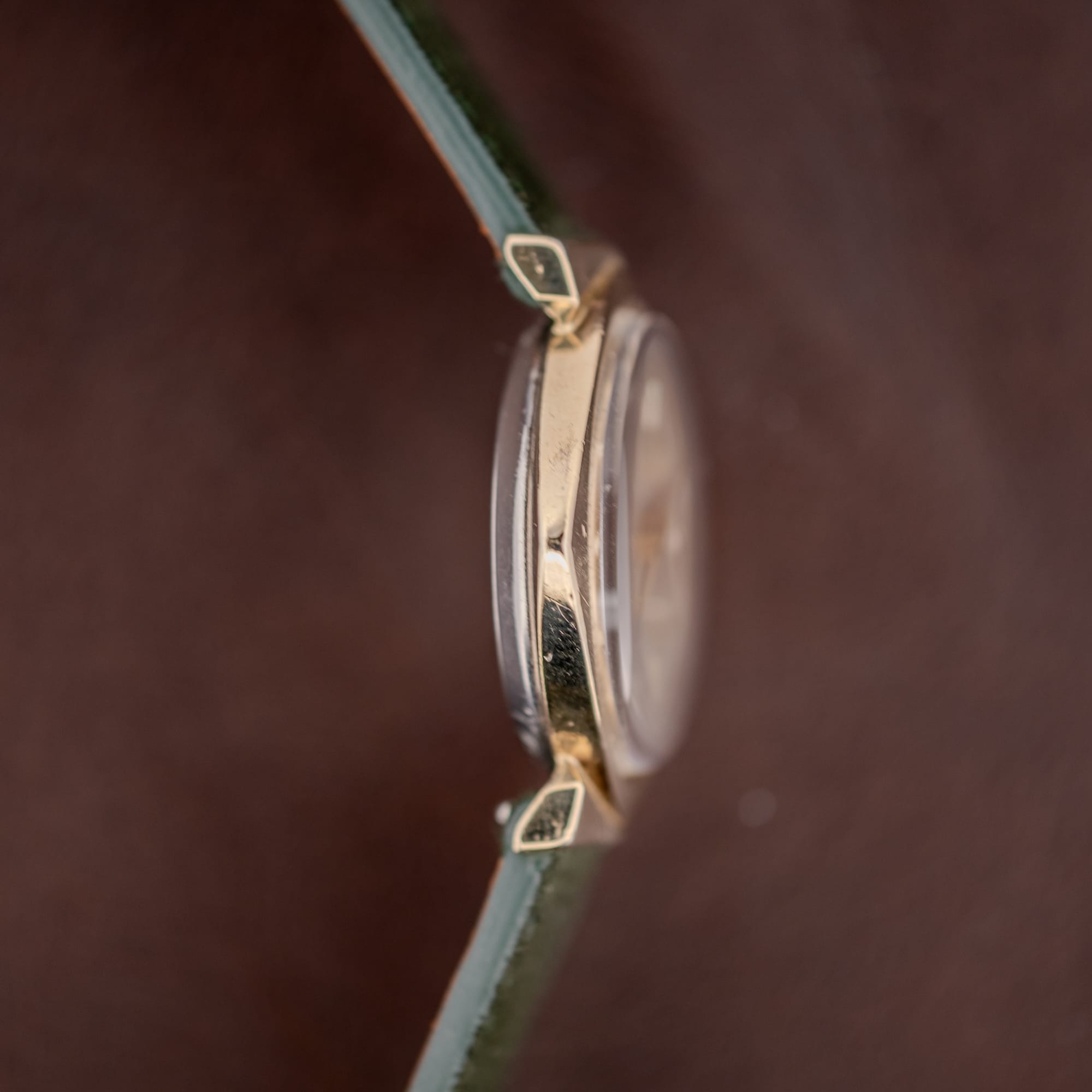
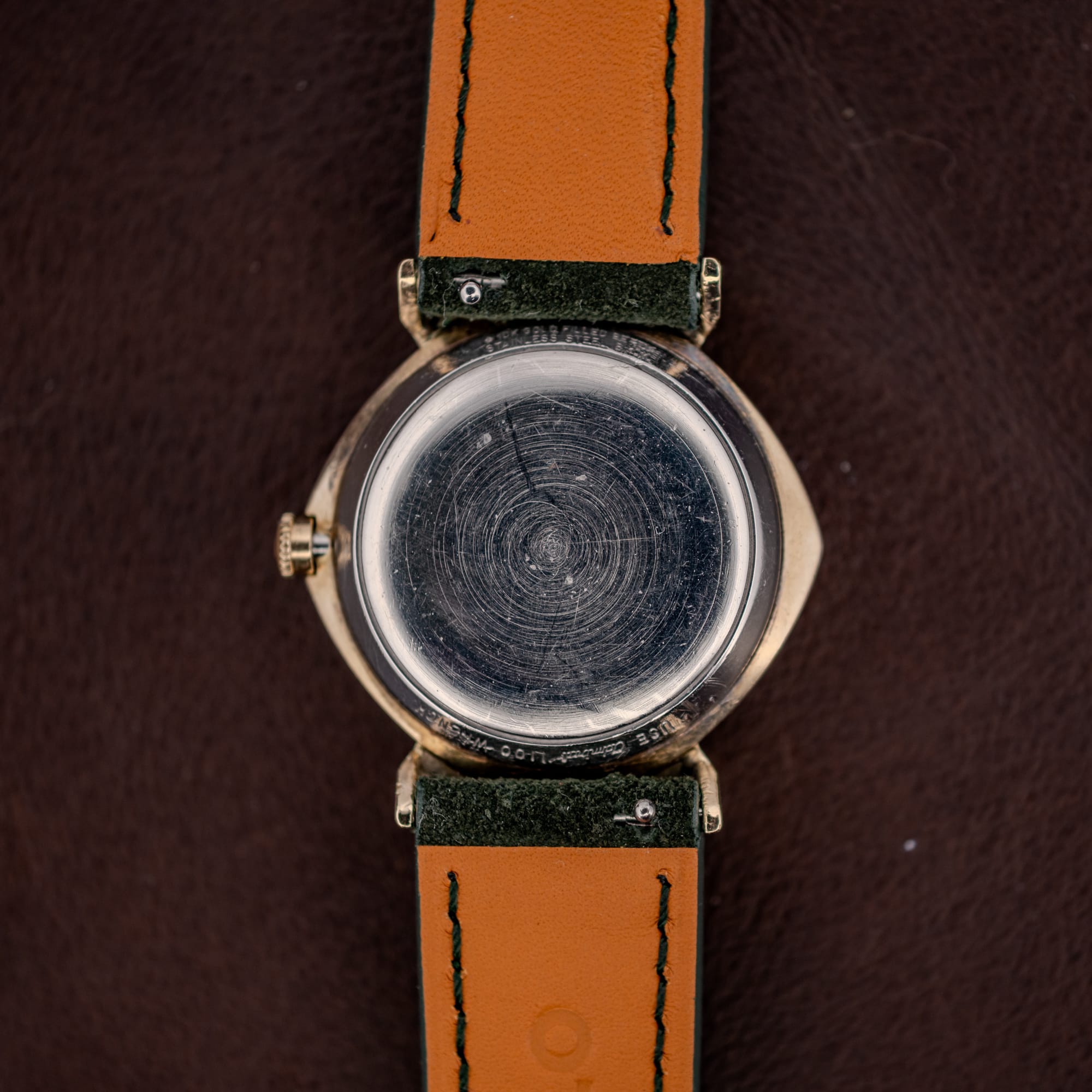
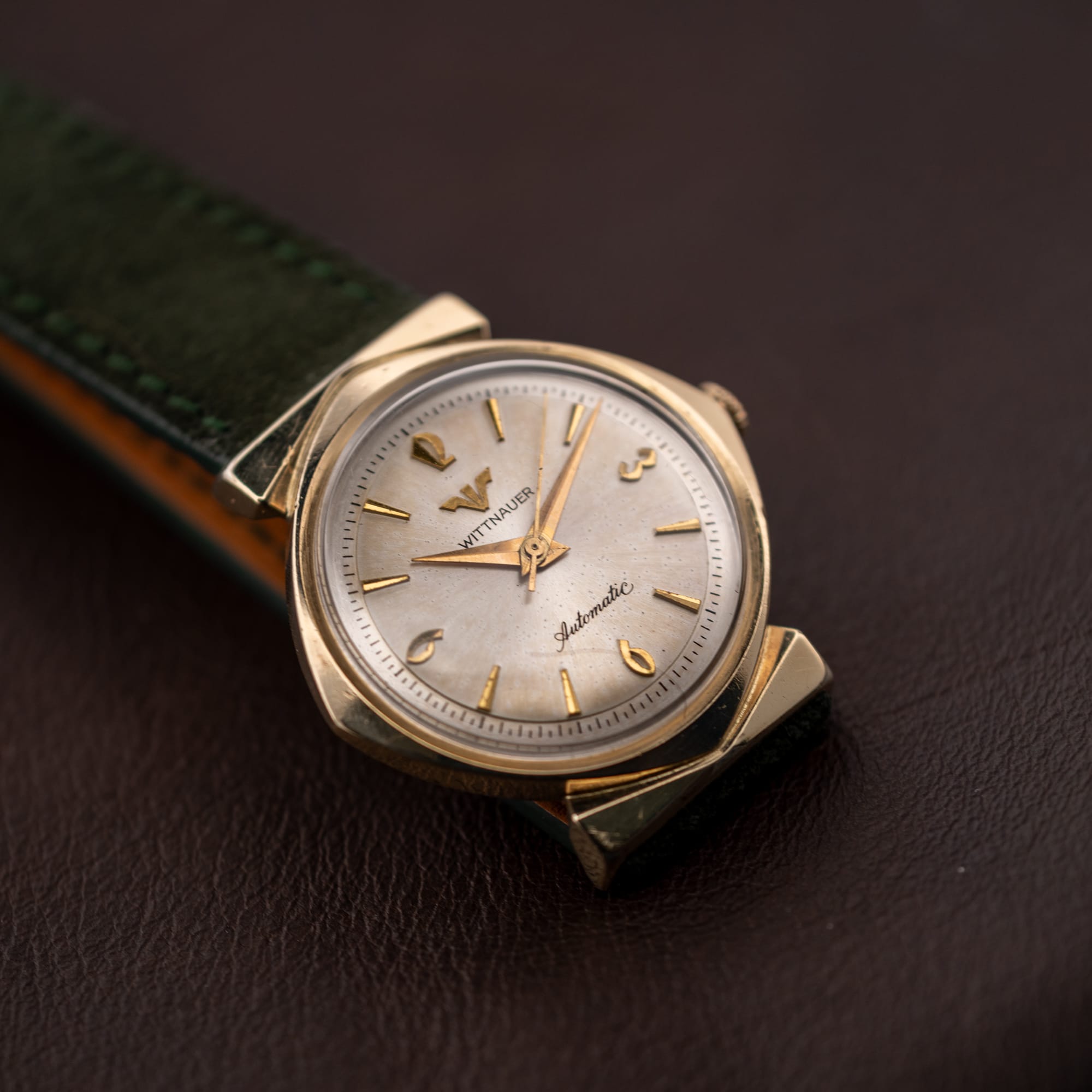
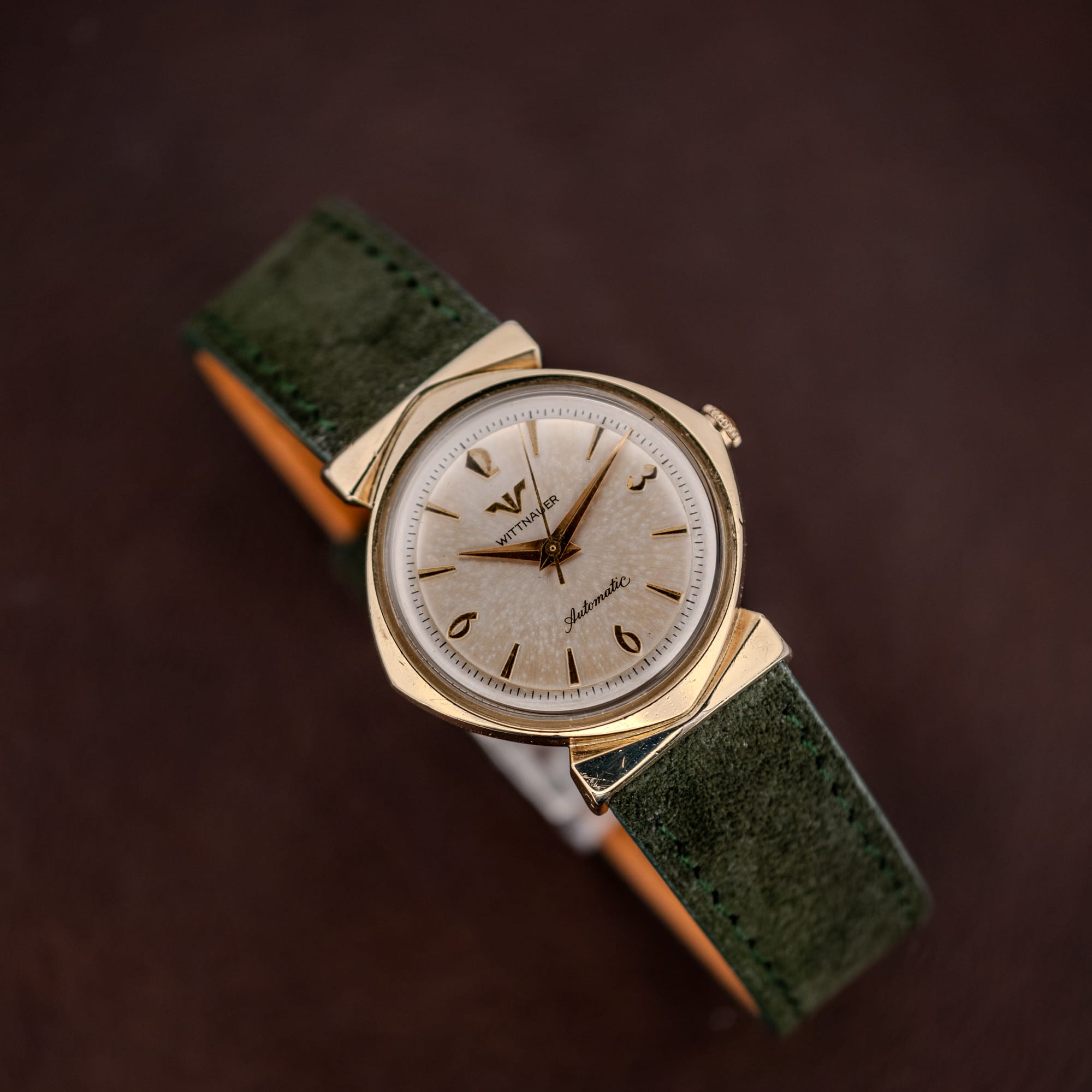
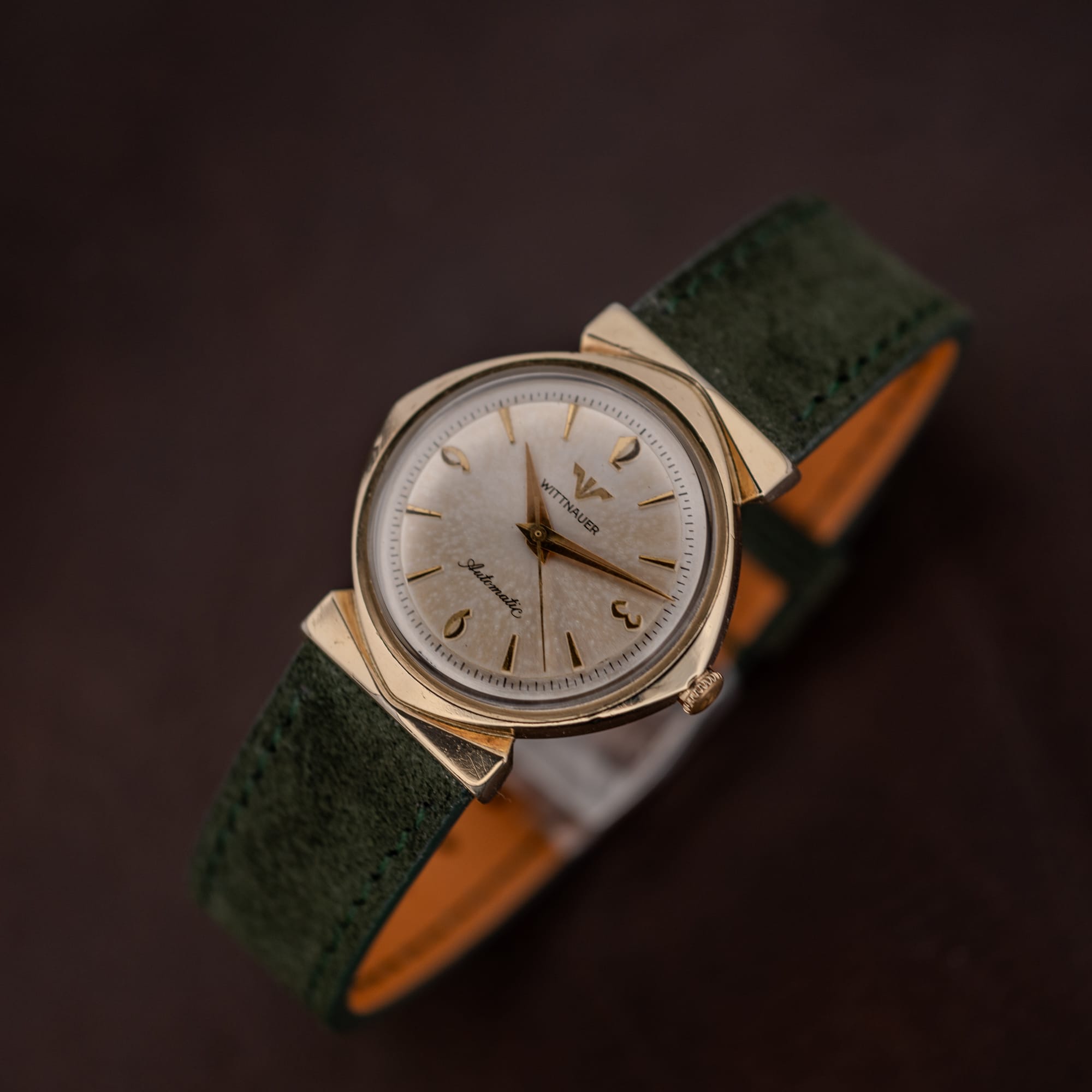
This is that arrangement on a wrist, mid-1950s as best the case styling dates it. The back is stamped 10K G.F. BEZEL over STAINLESS STEEL BACK, which is the American case convention of the period stated plainly: gold filled where it shows, steel where it sits against the skin. The hooded lugs are the reason to look twice. That treatment, where the case metal arcs over the strap end and swallows the spring bar, ran from the late 1930s through the 1950s and then largely disappeared. It shortens the watch visually, feeds the strap into the case instead of hanging it off two posts, and gives the profile a continuous line that straight lugs never manage.
Inside is the Wittnauer-designated automatic caliber 11SR, seventeen jewels, winding itself and driving a sweeping center seconds. Wittnauer bought its ebauches from the Swiss trade and stamped them with house numbers rather than the maker’s, which is why an 11SR names what Wittnauer called the caliber and not who cast the plates.
The case measures 33mm across and 36mm top to bottom, asymmetrical by design, on 18mm lugs under a domed acrylic crystal. The silver dial has gone mottled, a fine speckled patina spread across the surface that reads as seventy years of quiet oxidation, and the printing sits crisp and unbroken on top of it. Applied gold-tone markers and stylized Arabic numerals are all present, with matching dauphine hands. The wear is real and we would rather name it: the crystal carries scratches, the caseback is heavily marked, concentric and random both, and there is a small nick in the case flank.
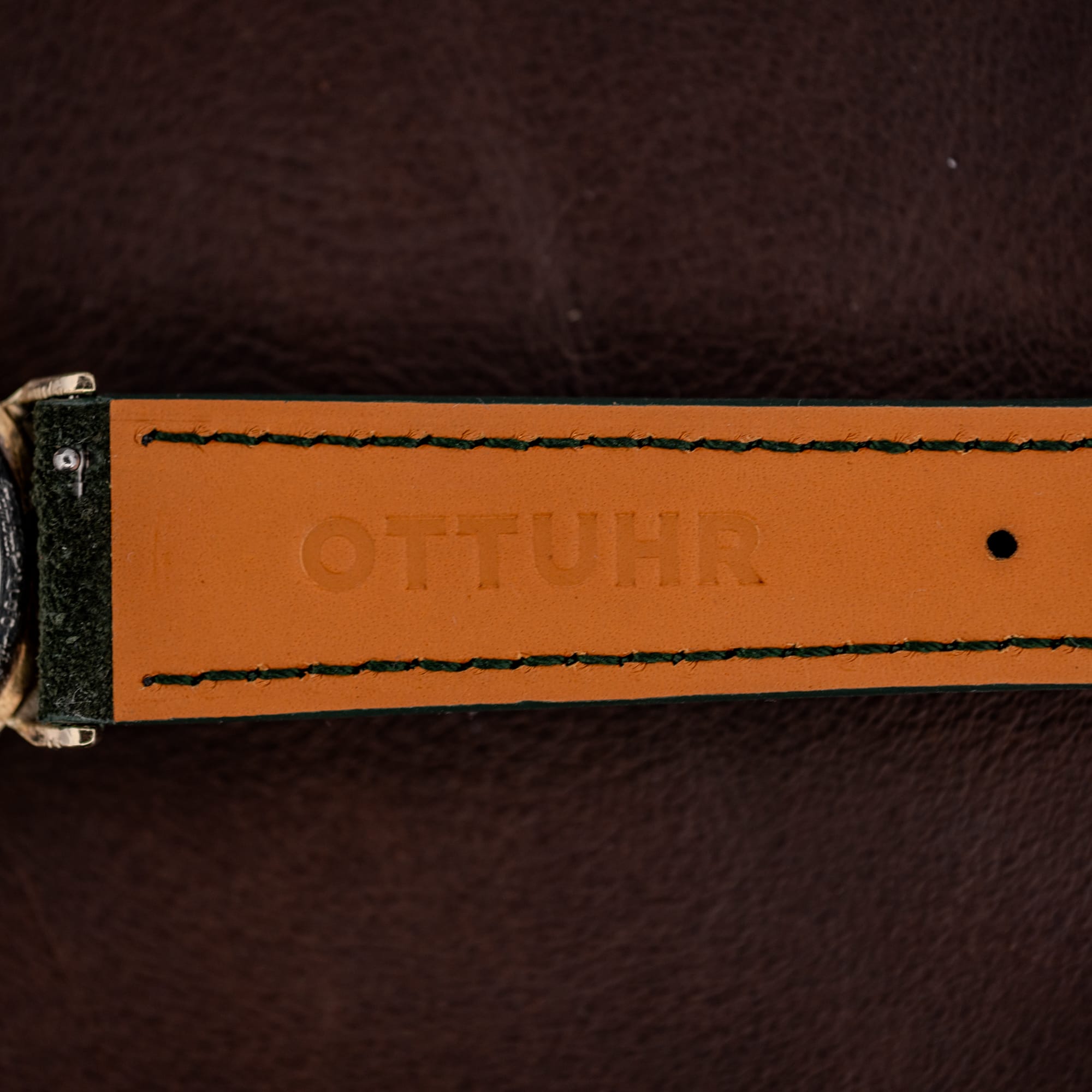
Serviced in-house at OTTUHR and backed by our 2-year mechanical warranty, holding inside fifteen seconds a day, on a forest green Italian suede strap with our own buckle. The whole arrangement existed to put a Swiss watch on an American wrist. Seventy years of scratches on the back say it worked.