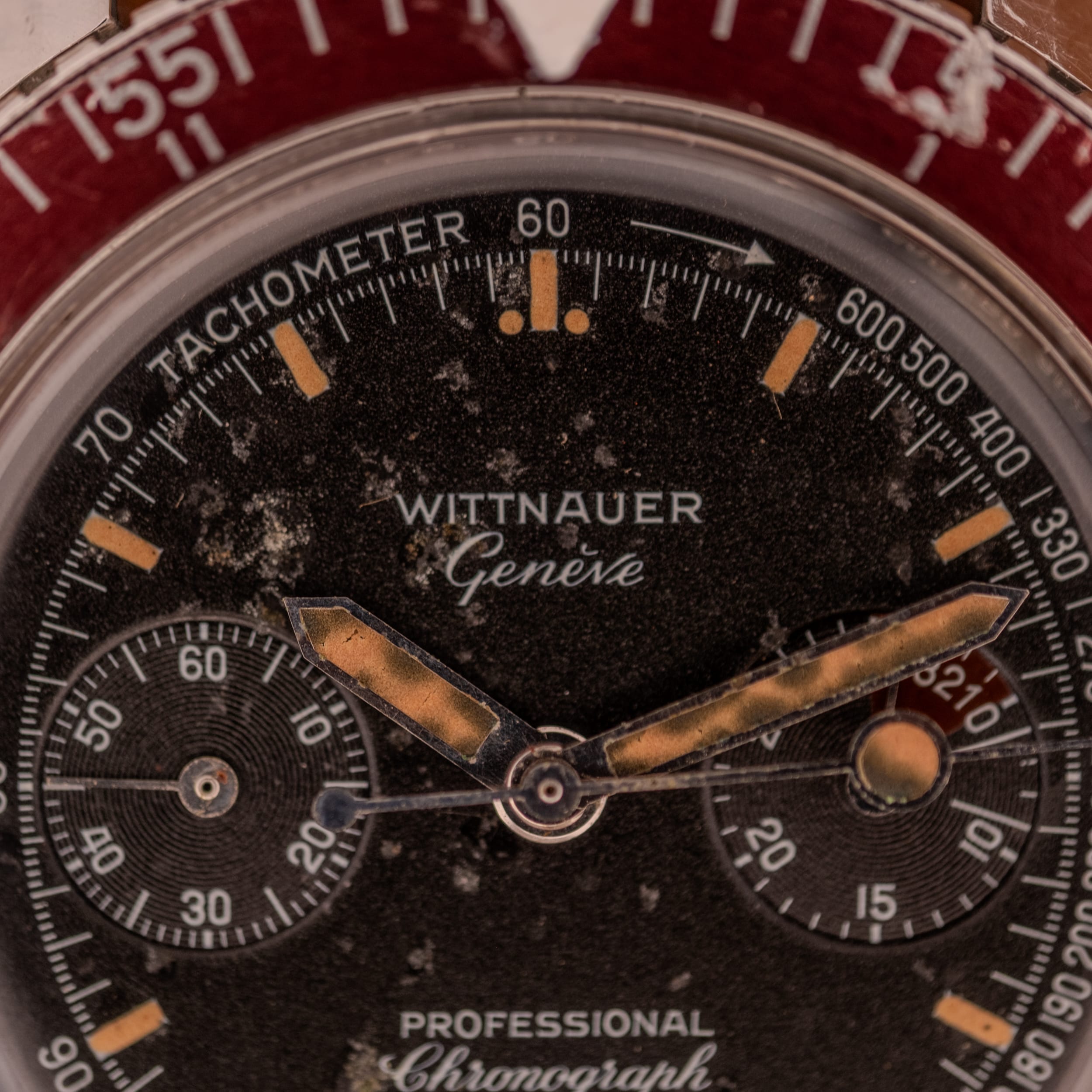
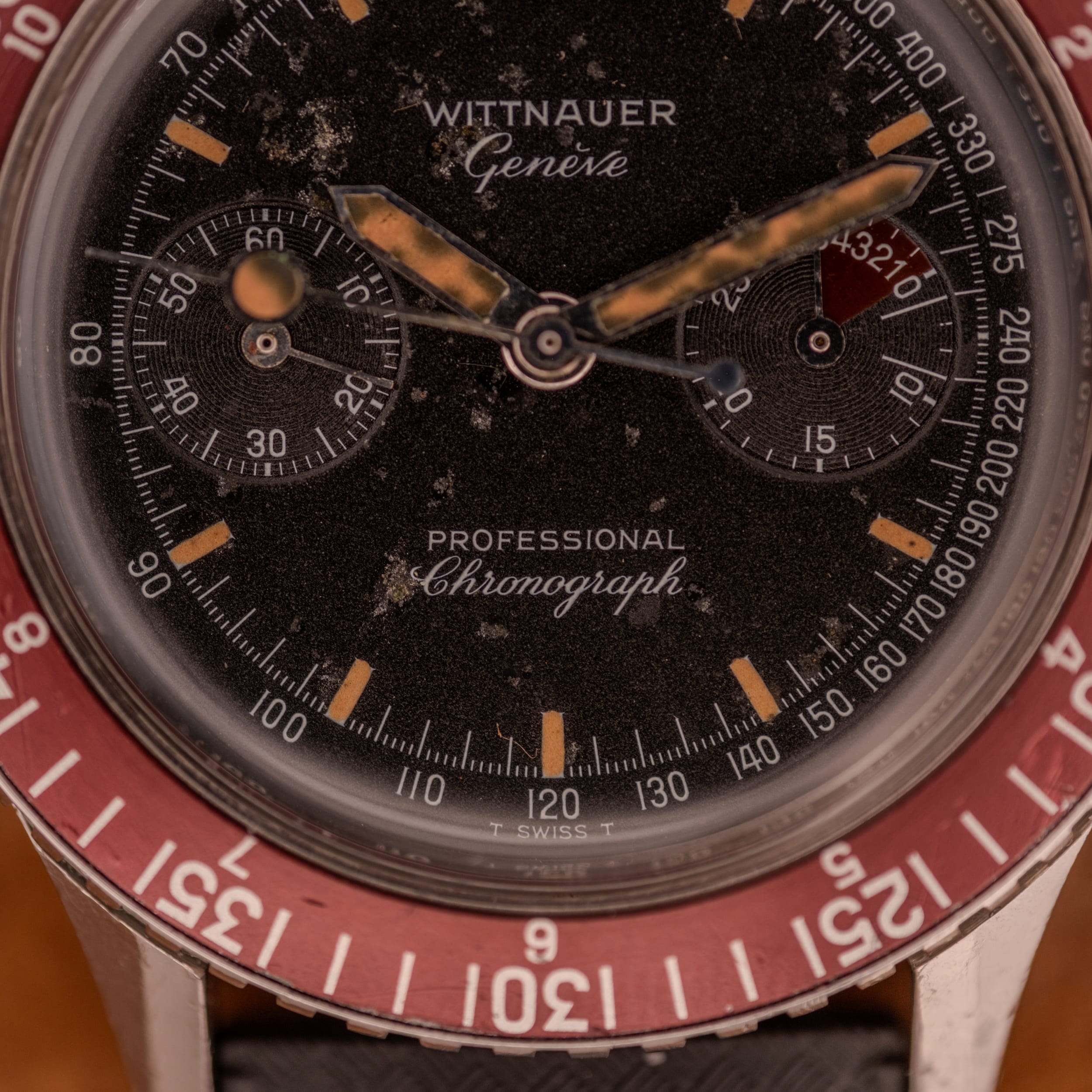
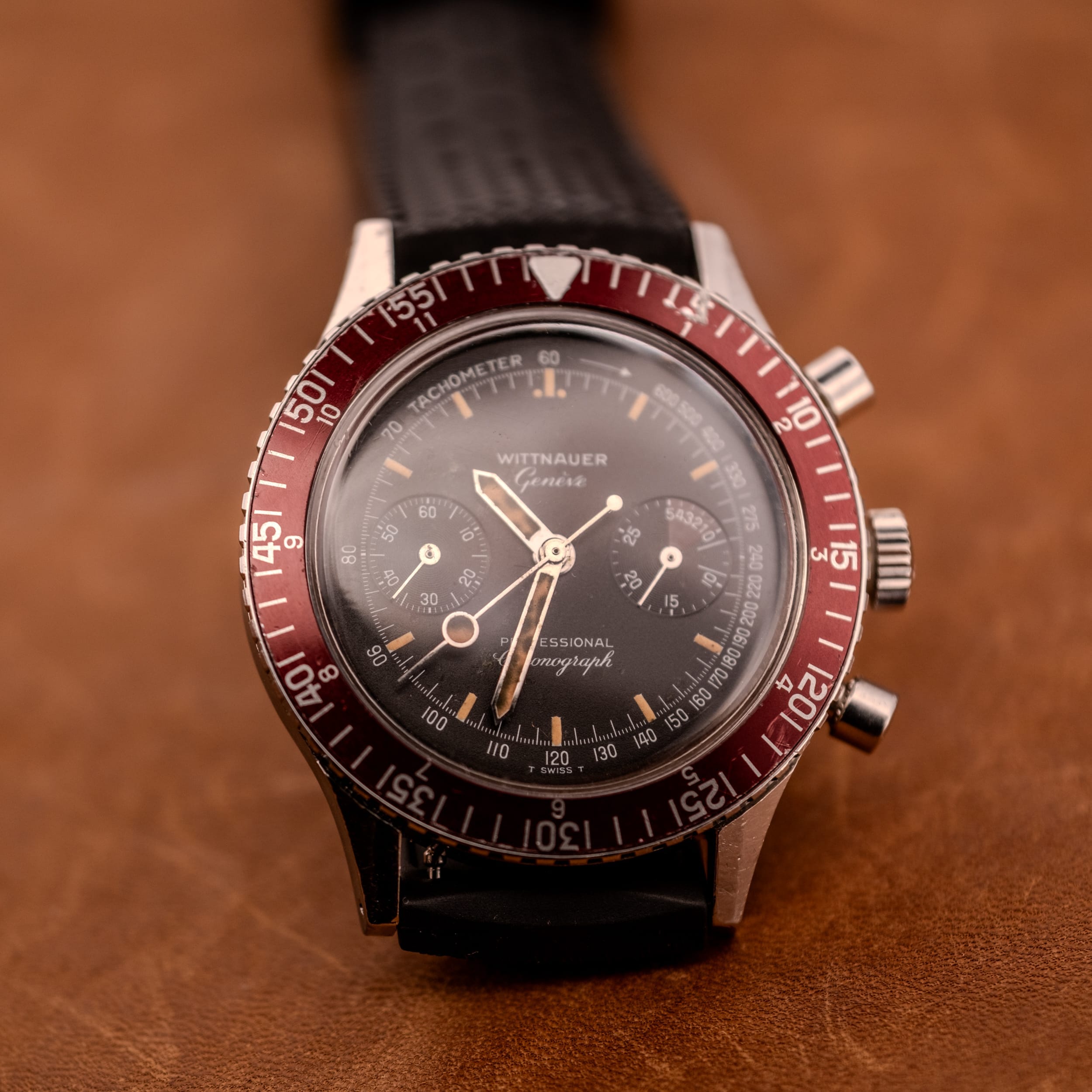

The burgundy bezel does the work first. The matte black dial does the work second. By the time you have walked the Wittnauer Professional Chronograph Ref. 7004A the long way around, from the lollipop sweep hand to the caramel tritium plots to the cam-actuated Landeron pulsing underneath, you understand why this is, in our opinion, one of the quietly underrated chronographs of the 1960s. It does not announce itself the way a Speedmaster does, and that is precisely the appeal.
Wittnauer’s mid-century identity is rooted in its long partnership with Longines, distributed in the United States under the Longines-Wittnauer banner and trading on the same Swiss engineering credentials at a cleaner price tag. The Professional Chronograph line was Wittnauer’s bid at the rotating-bezel sports market that Heuer, Breitling, and the early Tudor Submariner derivatives were chasing in the same decade, and the 7004A is the most recognizable expression of that line. Cased in stainless steel, fitted with a rotating bidirectional bezel for elapsed-time tracking, and finished with a chronograph layout that is unmistakably professional in intent.
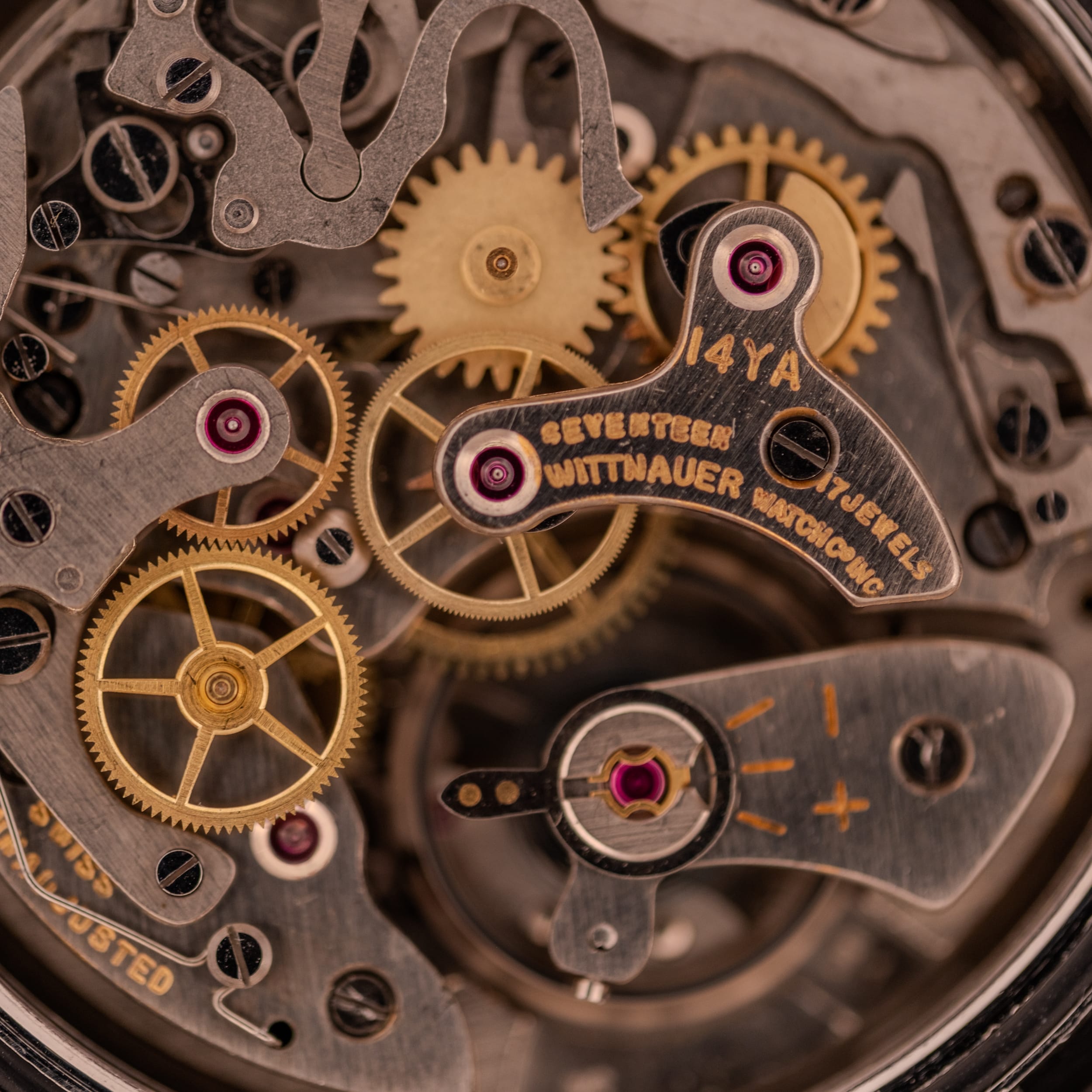
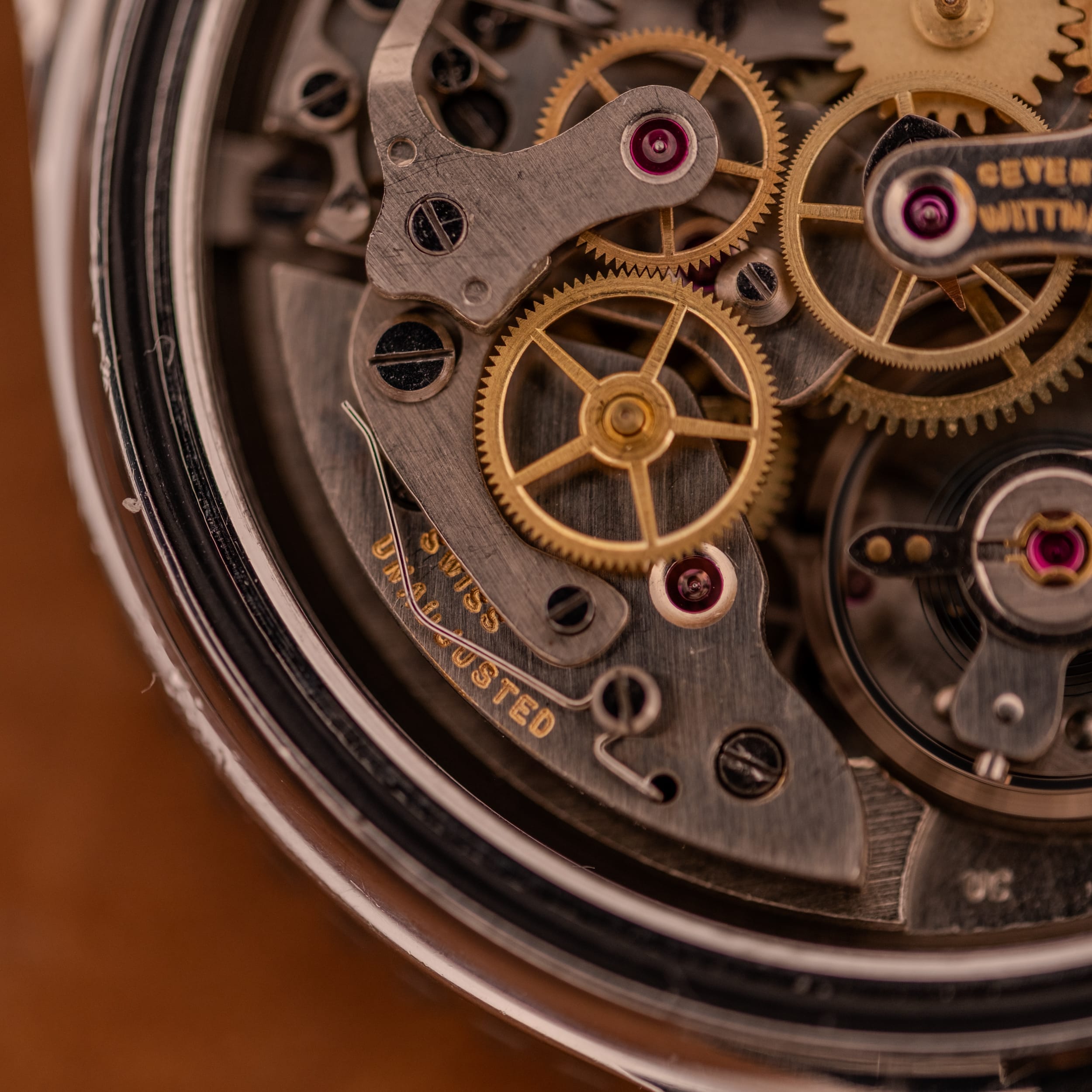
Underneath sits the Landeron caliber 248, a 17-jewel manual-winding chronograph whose history is more interesting than its name suggests. The Landeron 48 family started in 1937 with the cal. 47, which was the world’s first cam-switching chronograph movement. The motivation was not aesthetics. Column-wheel chronographs were expensive to build and fragile in the field, and the military buyers Landeron wanted to keep had grown tired of paying for both problems. Charles Hahn and Marcel Dèpraz worked out a cam-actuated coupling that could be regulated and serviced at a fraction of the cost, and Landeron rode that architecture through roughly 3.5 million examples and four decades of production. The 248 is the third iteration, refined and matured, and it is the caliber that powered most of Wittnauer’s chronograph output through the late 1960s before the brand transitioned to the Valjoux 7733 around 1970. Pop the back on this watch and the movement is signed verbatim “WITTNAUER WATCH CO INC” with “SEVENTEEN” and “17 JEWELS” flanking the bridge stamp, the caliber identifier “14 YA” set above, and “SWISS UNADJUSTED” stamped in gilt at the lower edge. The gilt gear train runs cleanly and the ruby chaton settings still hold their color.
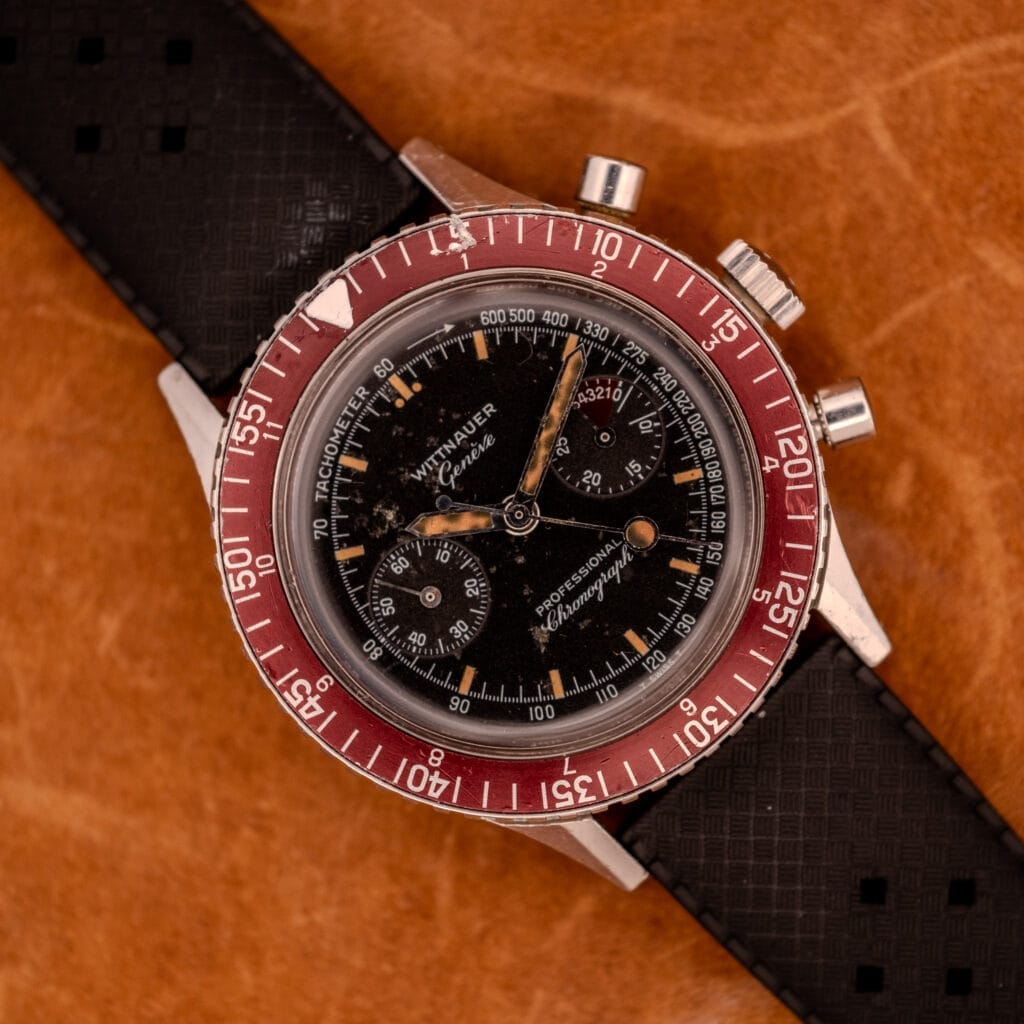
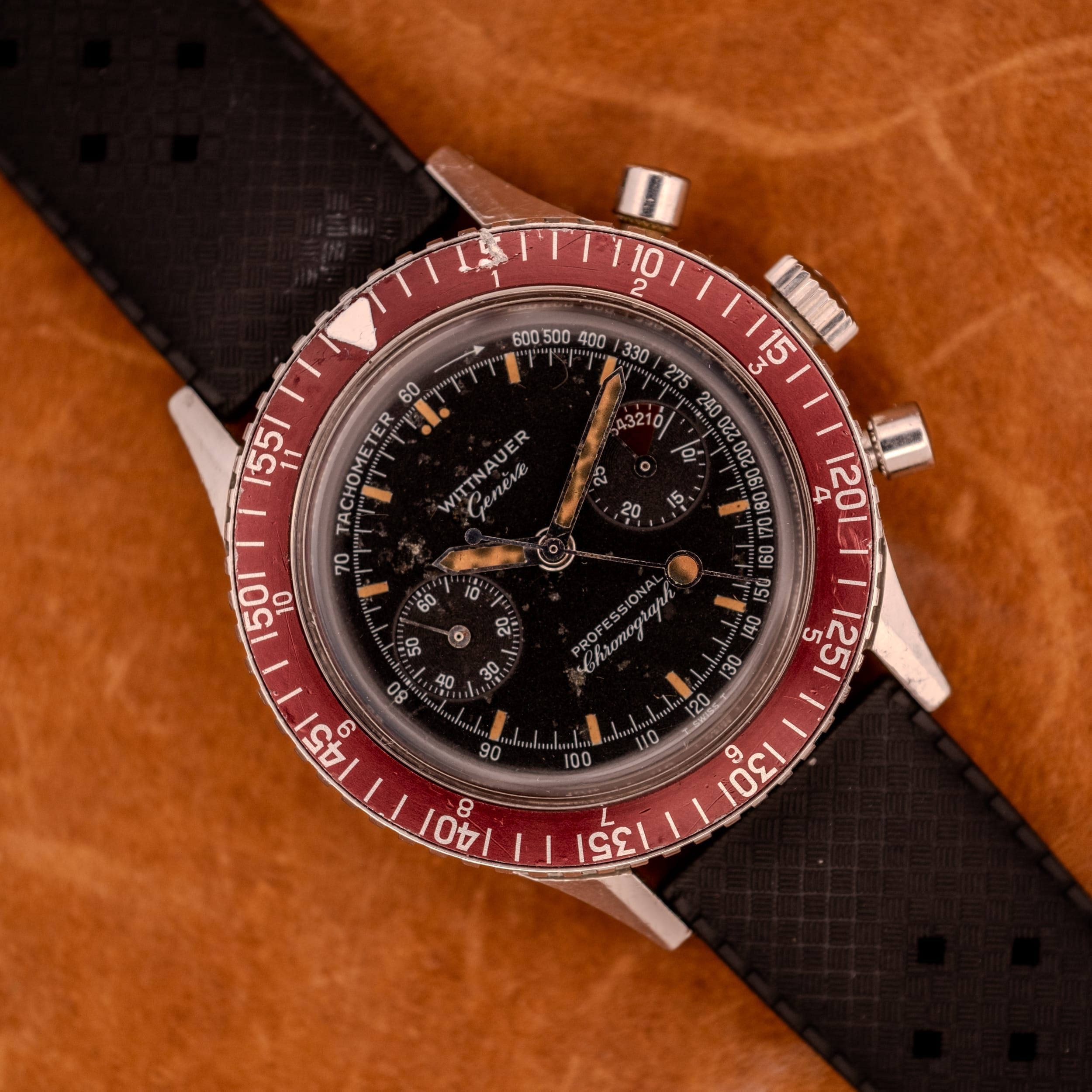
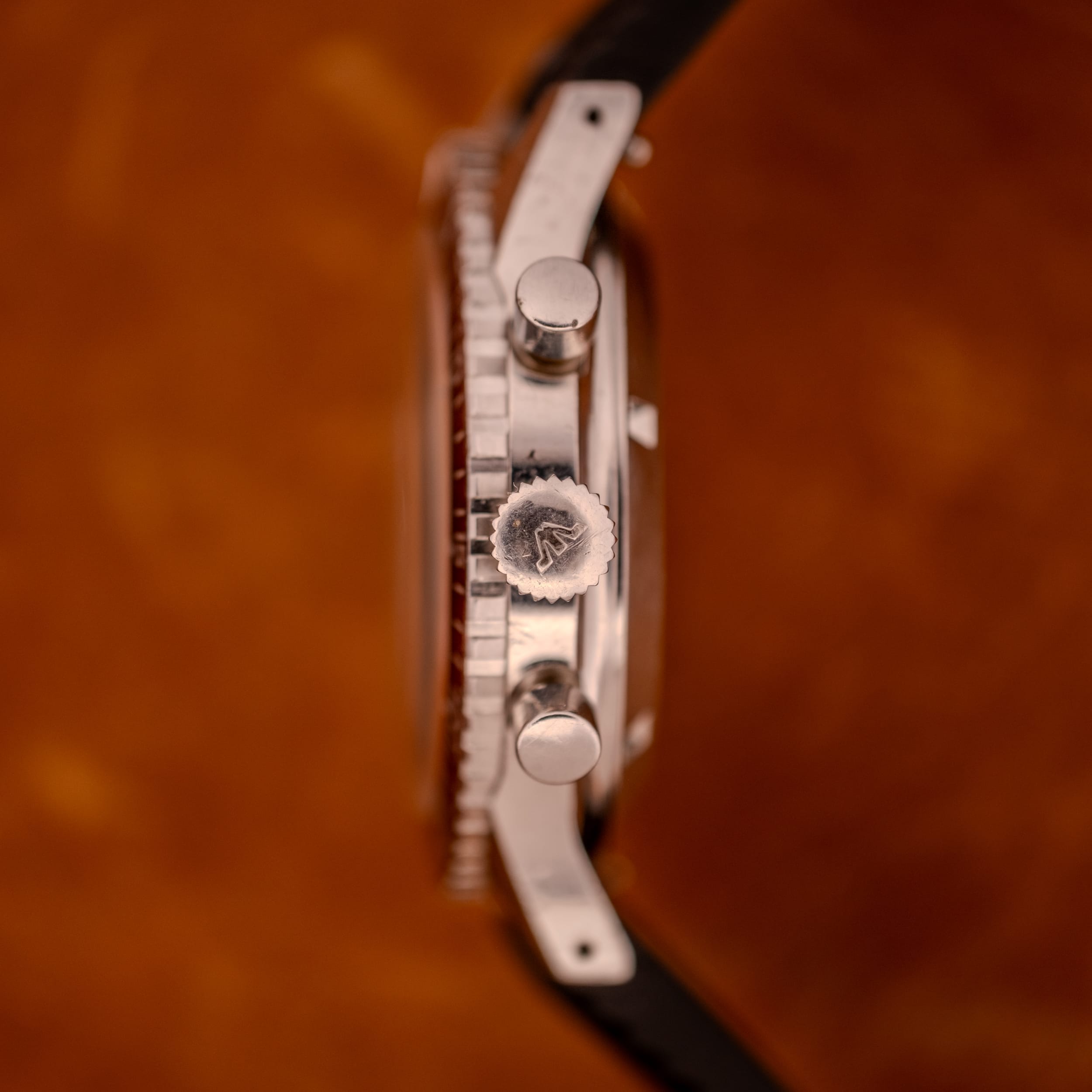
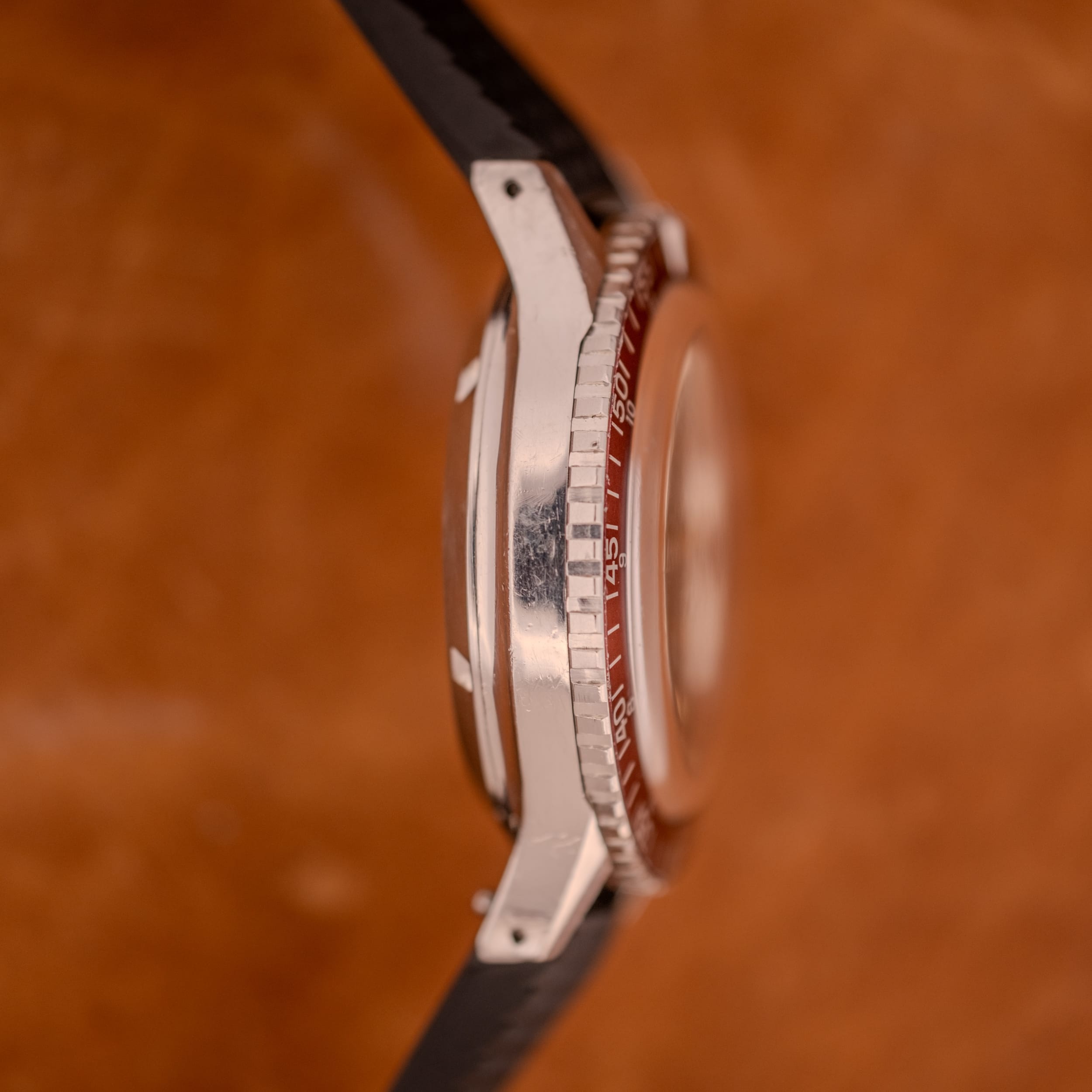
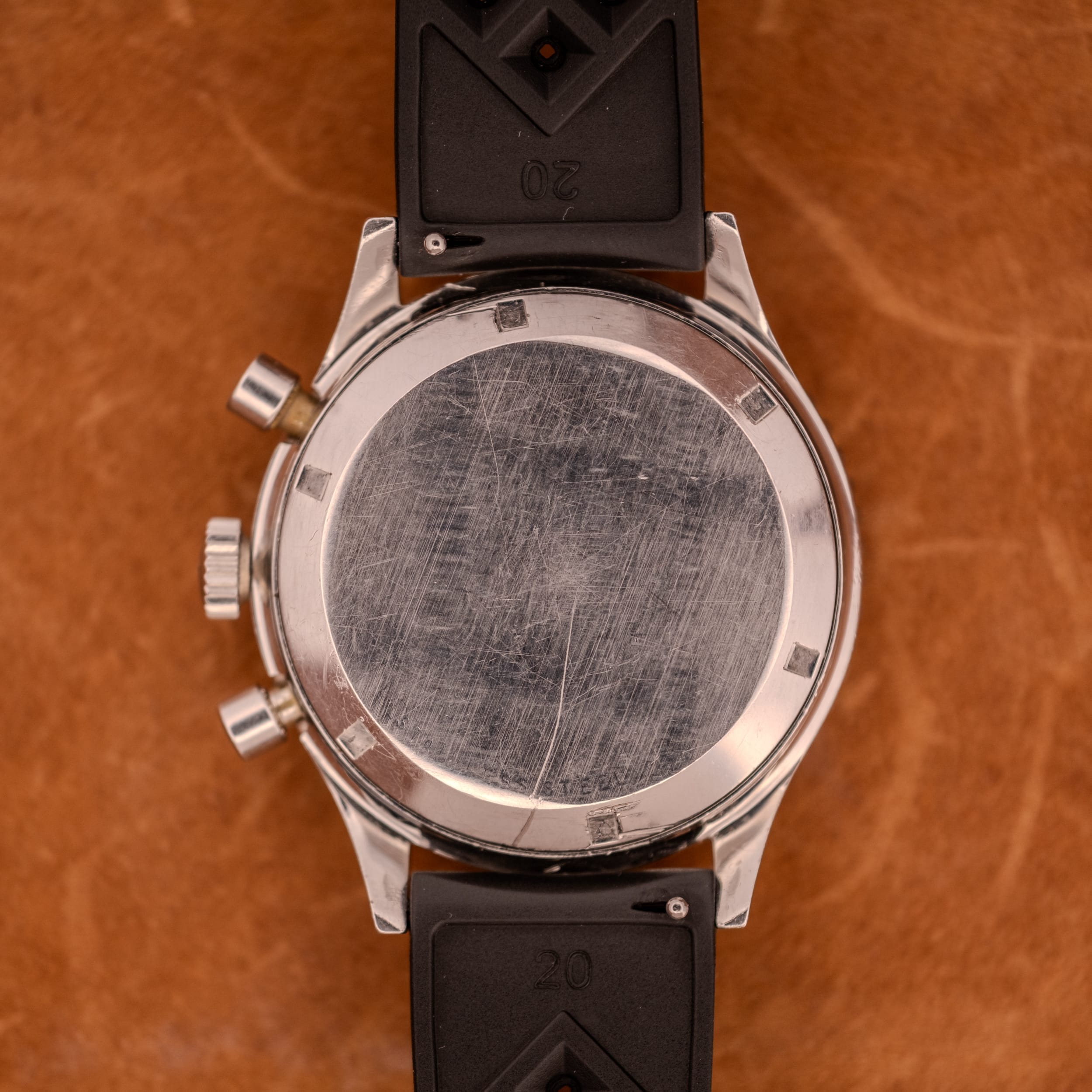
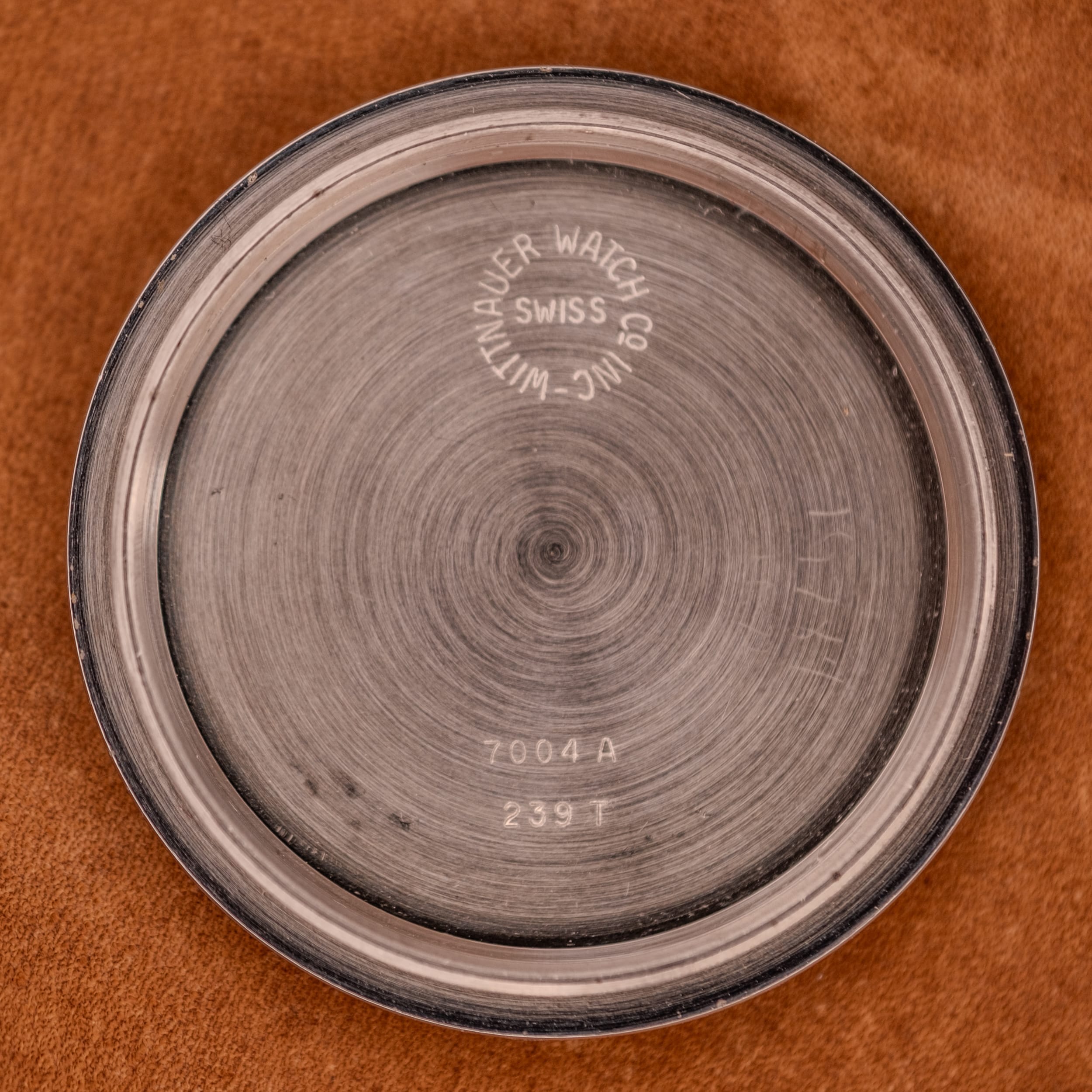
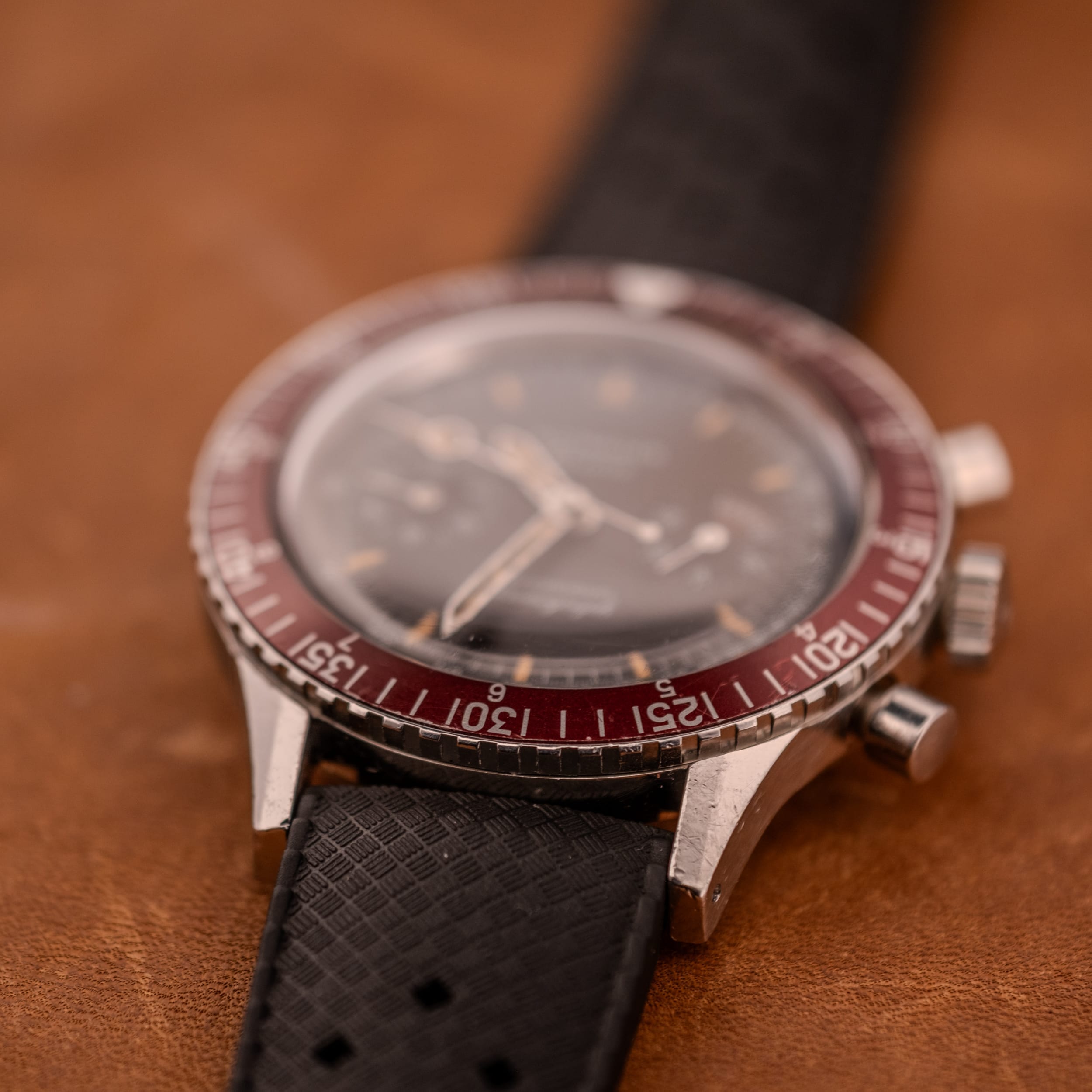
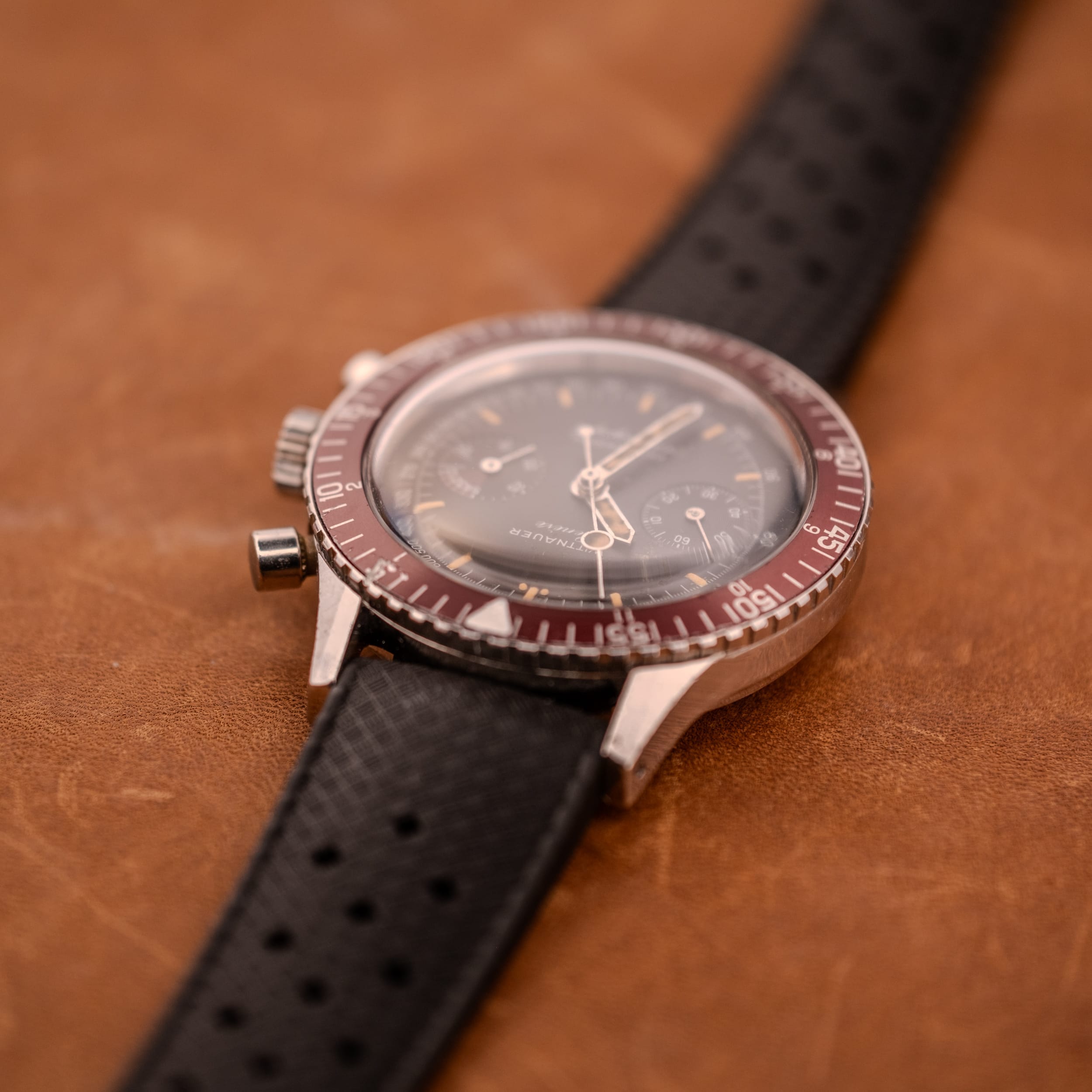
The case is a 40mm stainless steel round with a 45mm lug-to-lug, a 20mm lug width, and drilled lug holes that telegraph the era as clearly as anything on the dial. Pump-style chronograph pushers flank the signed Wittnauer “W” crown on the three o’clock side, polished and unmodified. The bezel rotates bidirectionally on a knurled grip with a pearl triangle at twelve, and the burgundy insert carries a dual scale: a tachymeter outer ring printed in white from 60 to 600, and an inner sixty-minute count-up scale in five-minute increments. The outer caseback is brushed steel with the deep concentric finish that vintage watch backs picked up across decades of opener marks and pocket wear. Pop it off and the inner side reads, verbatim, “WITTNAUER WATCH CO INC” in an upper arc with “SWISS” centered beneath, then “7004A” and “239 T” stamped lower down. That stamping is what locks the reference. The exterior carries the honest mid-grain hairlining you want from a sixty-year-old steel sports case, and we have not polished it out.
The dial is the reason you remember this watch. Matte black, factory-original, with the faint freckling that a six-decade-old painted surface earns honestly. “WITTNAUER” sits printed in white block above center, with “Genève” in italic script directly beneath. “PROFESSIONAL” and “Chronograph” in cursive sit below the central pinion, and “T SWISS T” prints quietly at six o’clock, the lume designation that places this dial firmly in the tritium era. Applied baton indices ring the dial with tritium lume inserts that have aged to a warm caramel, the same tone you see on every hour and minute hand. The hands themselves are broad sword profiles with the lume sitting in mottled patches, beautifully irregular and characterful in person. The long chronograph sweep seconds carries the lollipop tip that vintage chronograph collectors specifically look for in this reference. Two subsidiary registers anchor the layout: a running seconds counter at nine o’clock and a thirty-minute totalizer at three, both with concentric snail-finished surfaces and white printed scales. A printed tachymeter scale rings the lower half of the dial in white, running from 60 through 600 across the flange.
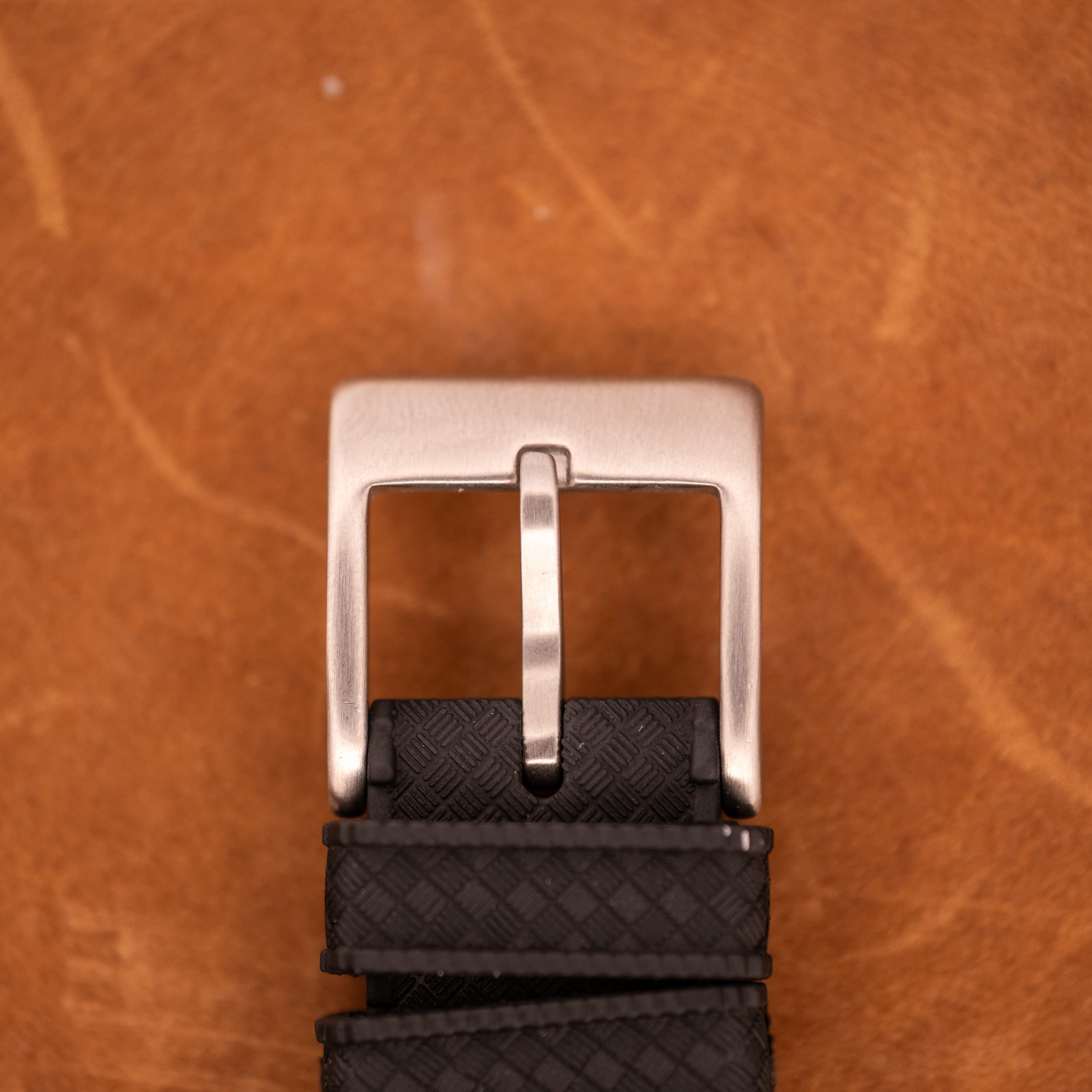
We are presenting this Wittnauer Professional Chronograph on a black textured rubber strap with a brushed steel tang buckle. The choice is deliberate: a vintage rotating-bezel chronograph belongs on something it can actually be worn in, and rubber lets the burgundy bezel and matte dial do their work without competing for attention. The strap can be swapped without ceremony if a different look fits the wrist, and the 20mm lug width opens up the broader vintage-strap market when that day comes.
Serviced in-house at OTTUHR and backed by our 2-year mechanical warranty, this 7004A is for the collector who would rather buy the under-the-radar cam-actuated chronograph that runs cleanly on the wrist than spend the same money on a more obvious badge. To us, that has always been the better trade.