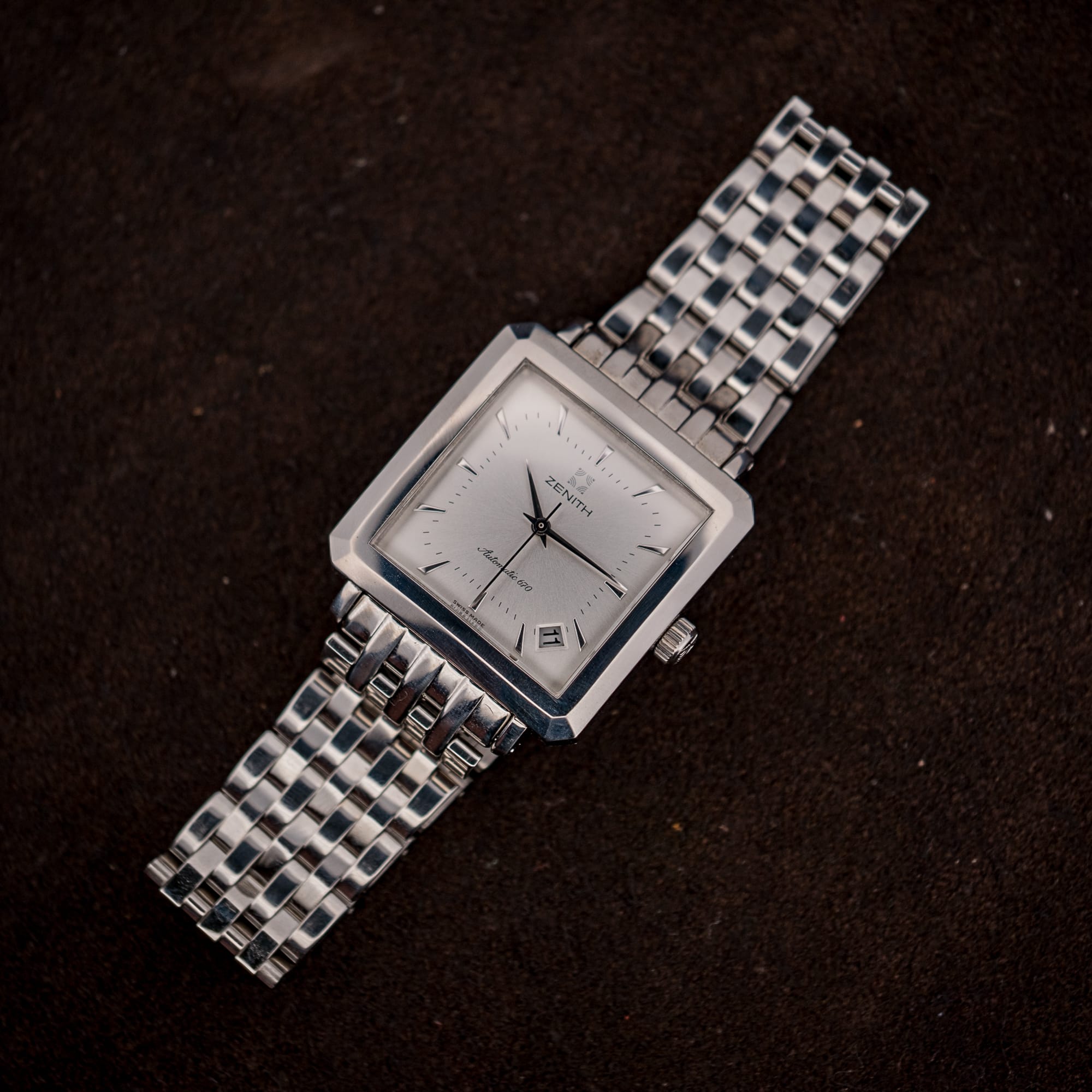

This Zenith Elite is a square steel automatic, and its story starts, a little oddly, with a chronograph it has nothing to do with. By the late 1970s, Zenith had nearly been talked out of mechanical watchmaking altogether. New American owners had decided quartz was the future and ordered the old mechanical tooling scrapped. A watchmaker named Charles Vermot could not bring himself to carry out the instruction. He catalogued the machines and the plans for the El Primero chronograph and hid them in an attic at Le Locle, where they sat until the company came looking for them again.
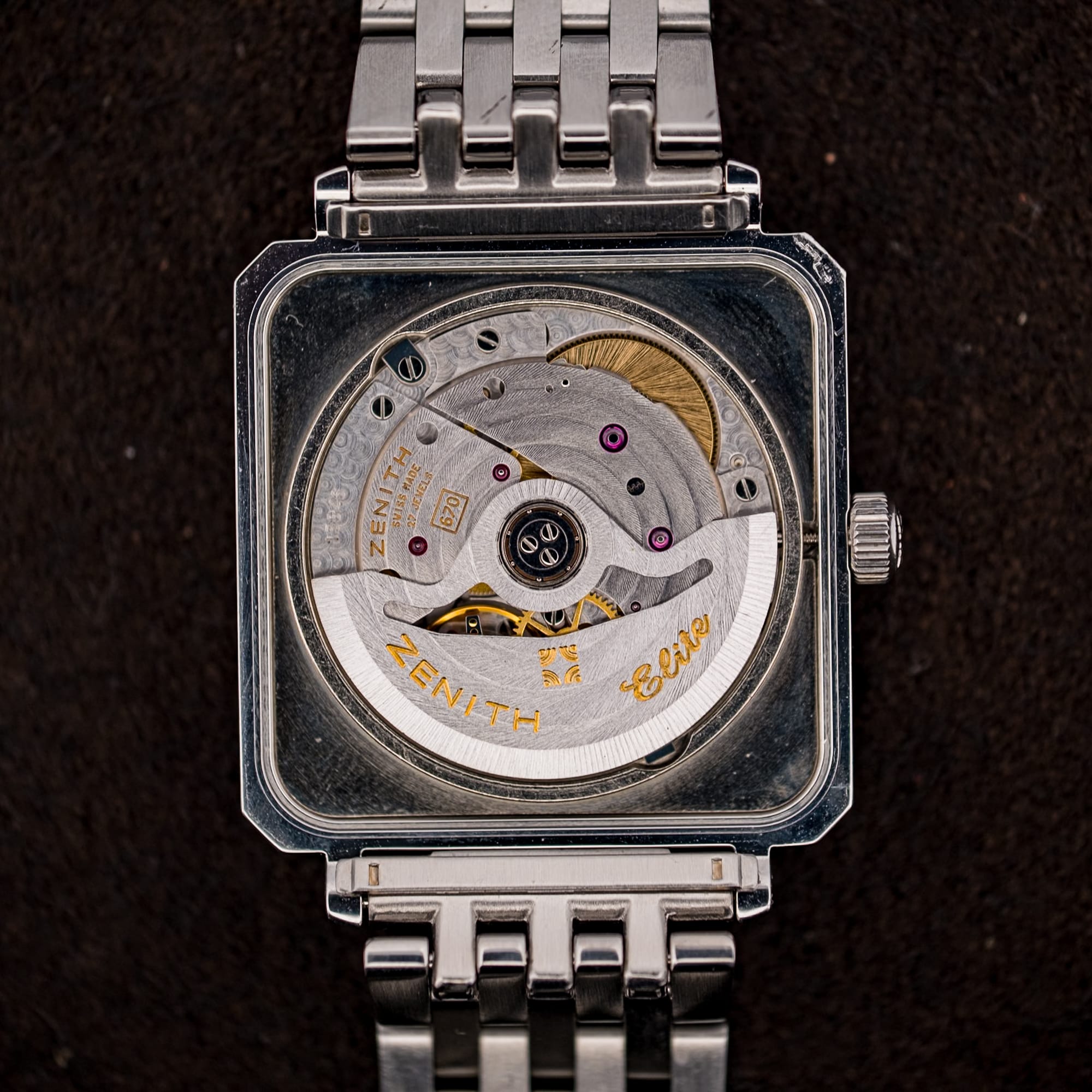
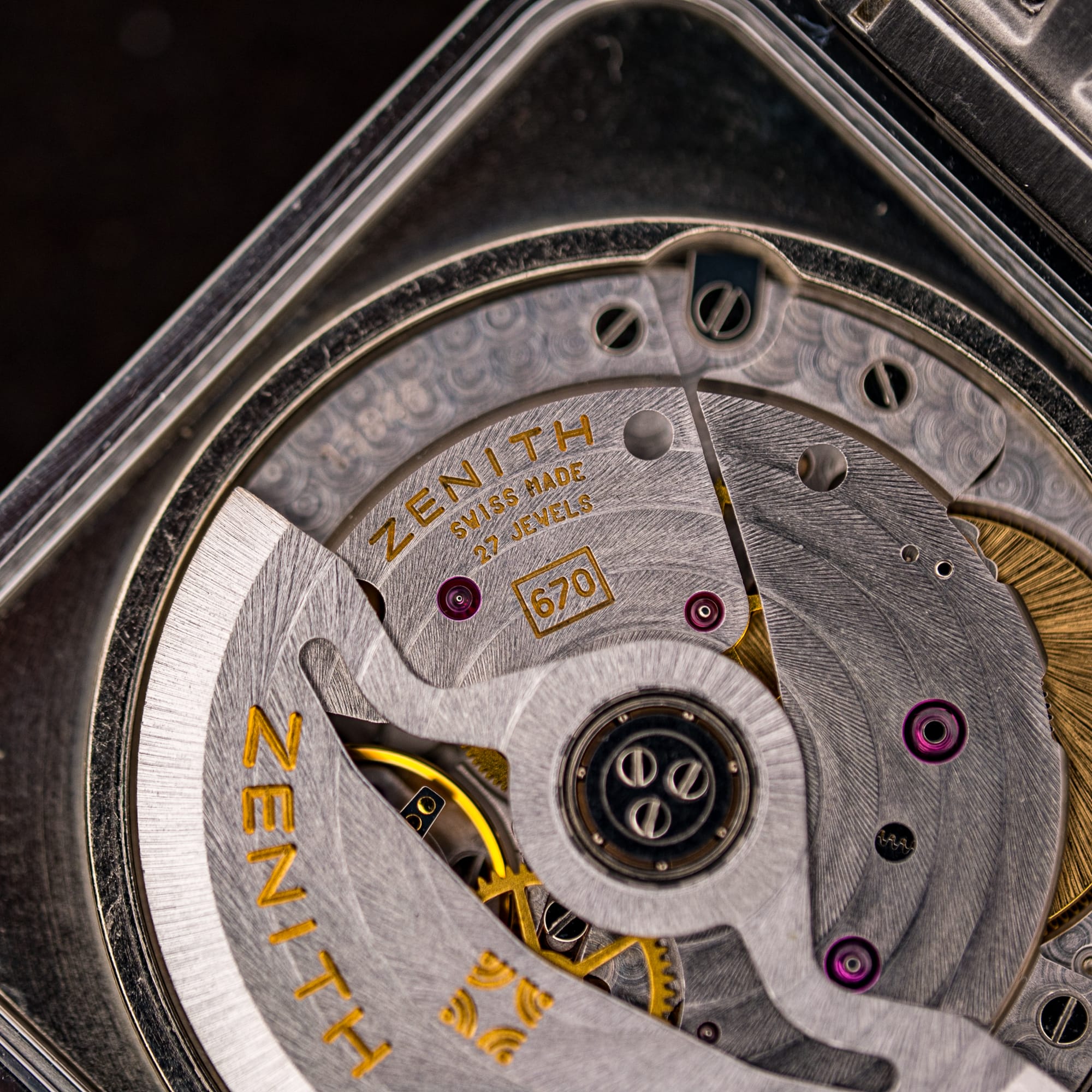
That act saved Zenith’s chronograph. It did not, on its own, make Zenith modern again. The El Primero was a specialist’s high-beat movement, and a manufacture also needs an everyday automatic to sit under its dress watches. So in 1991, under technical director Jean-Pierre Gerber, with the movement designer Carole Forestier consulting, Zenith started from a clean sheet. The result was the Elite, the first movement the company drew with computer-aided design, shown at Basel in 1994. Zenith did not rebuild it from Vermot’s saved parts. It designed something new, thin and efficient, meant to be adapted across a whole collection of watches. It worked. The Elite is still in Zenith’s catalogue three decades later, and the family grew past twenty variations, though the 670 in this case is one of the two calibers it started with in 1994.
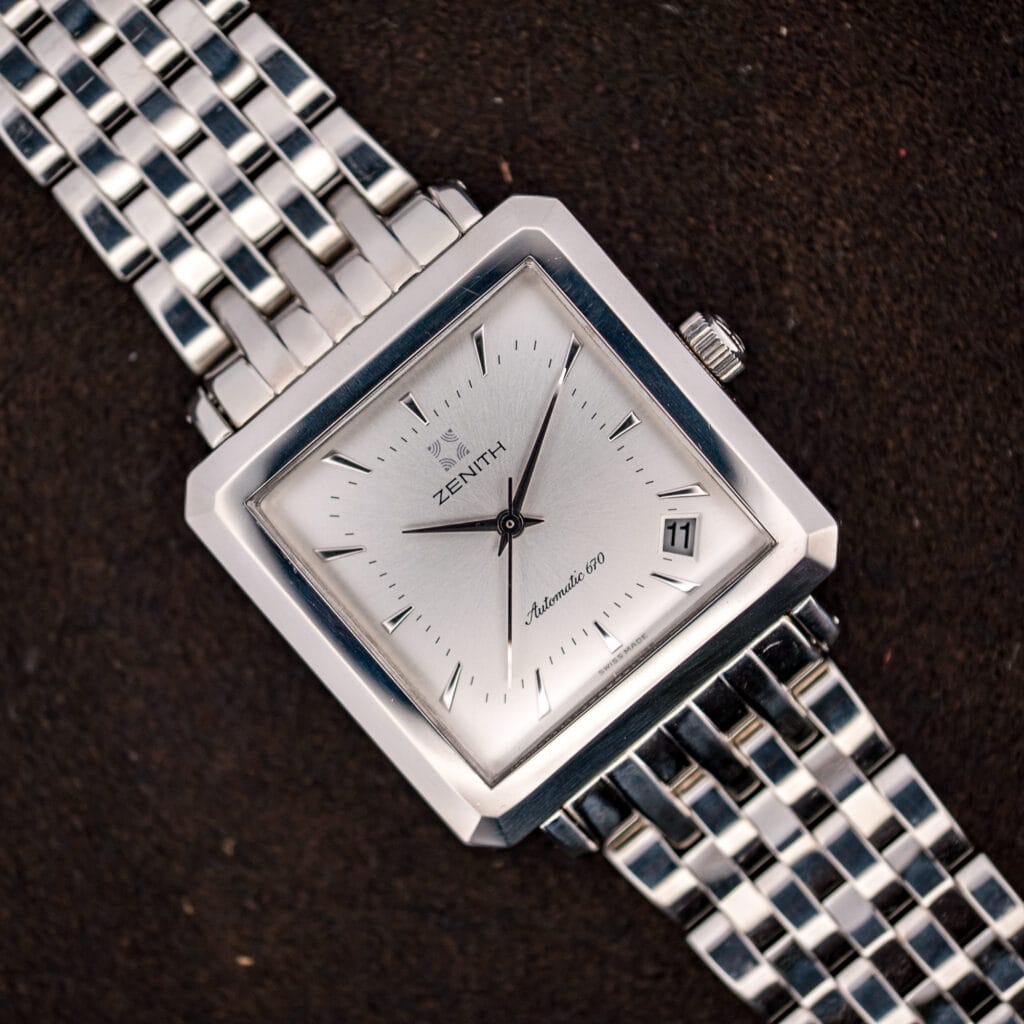
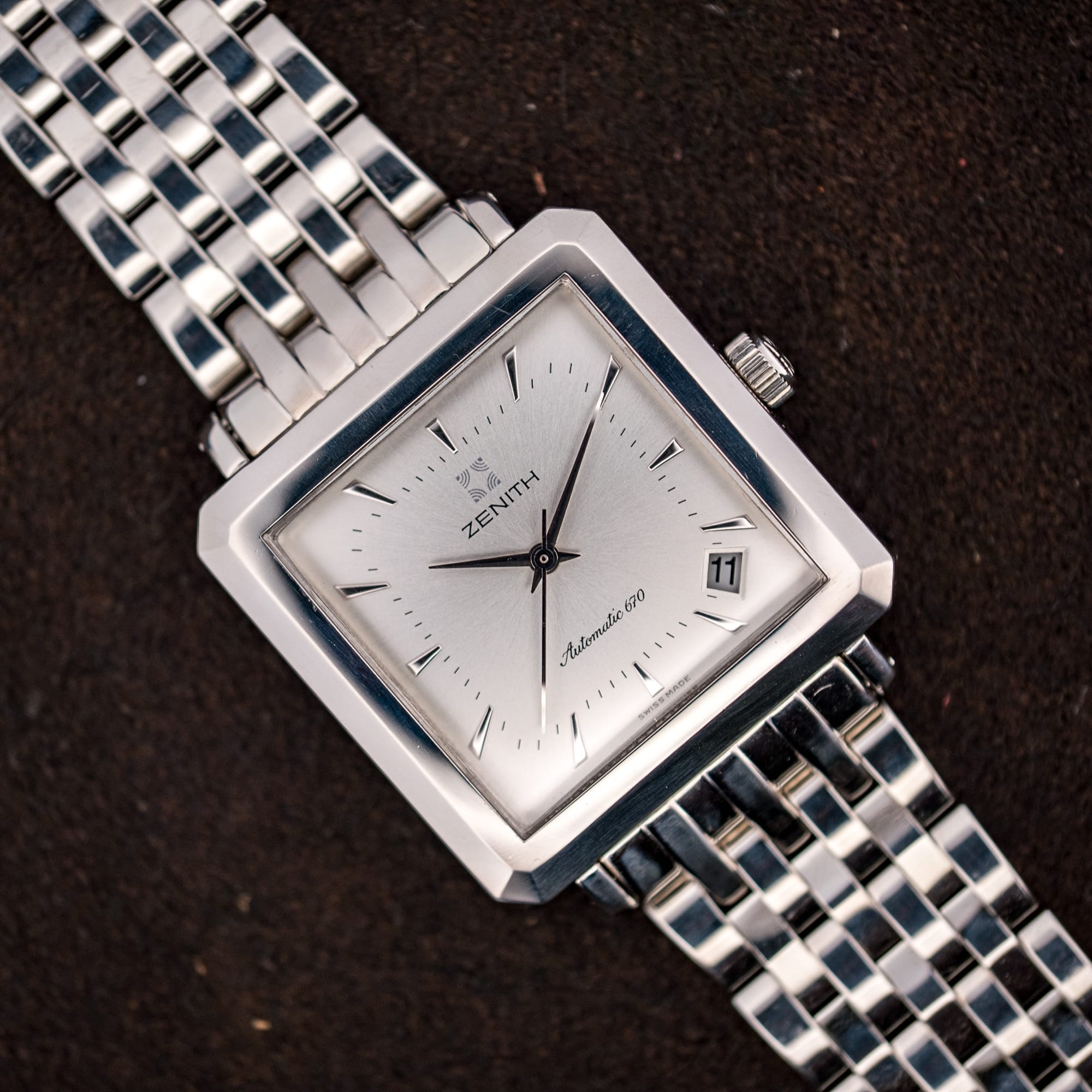
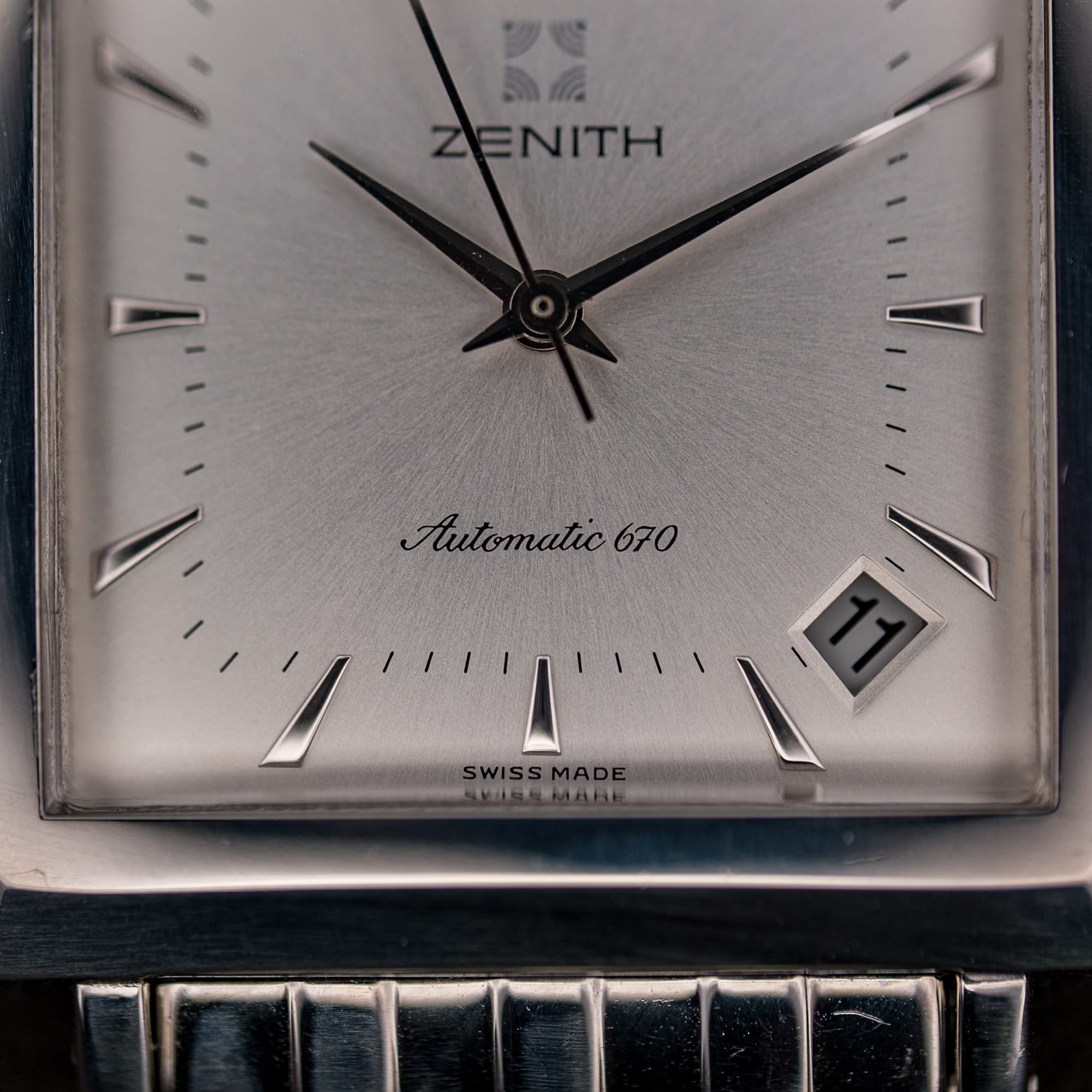
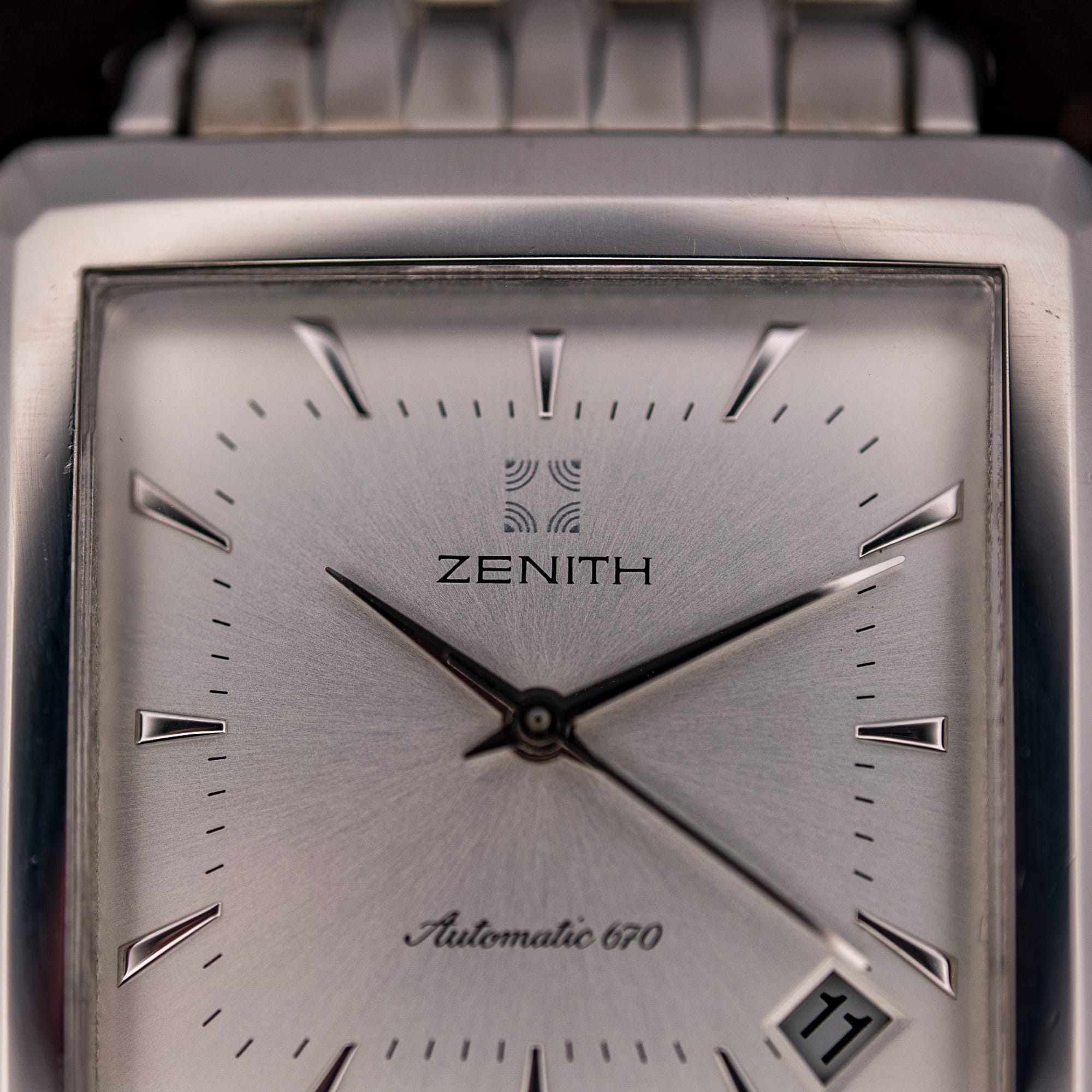
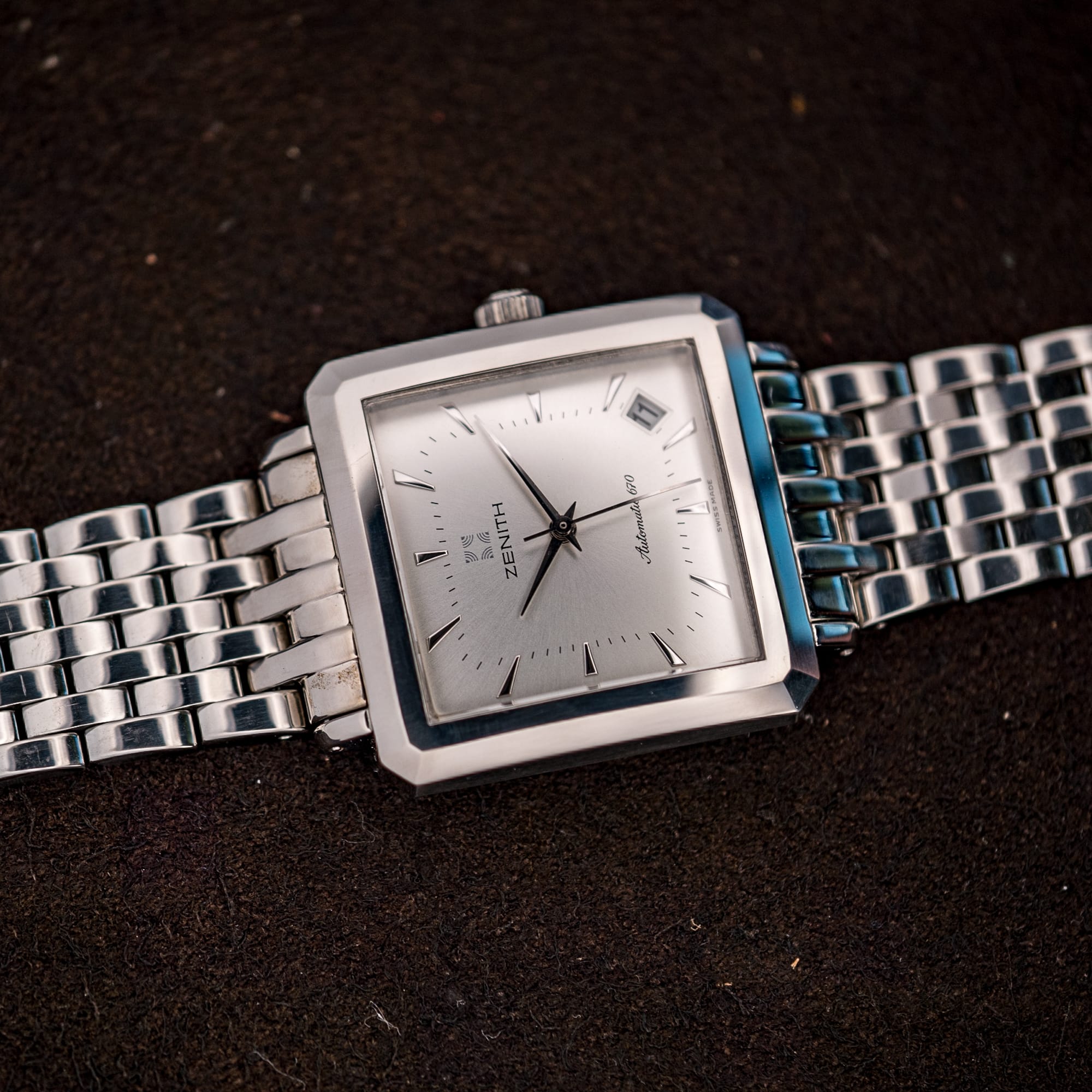
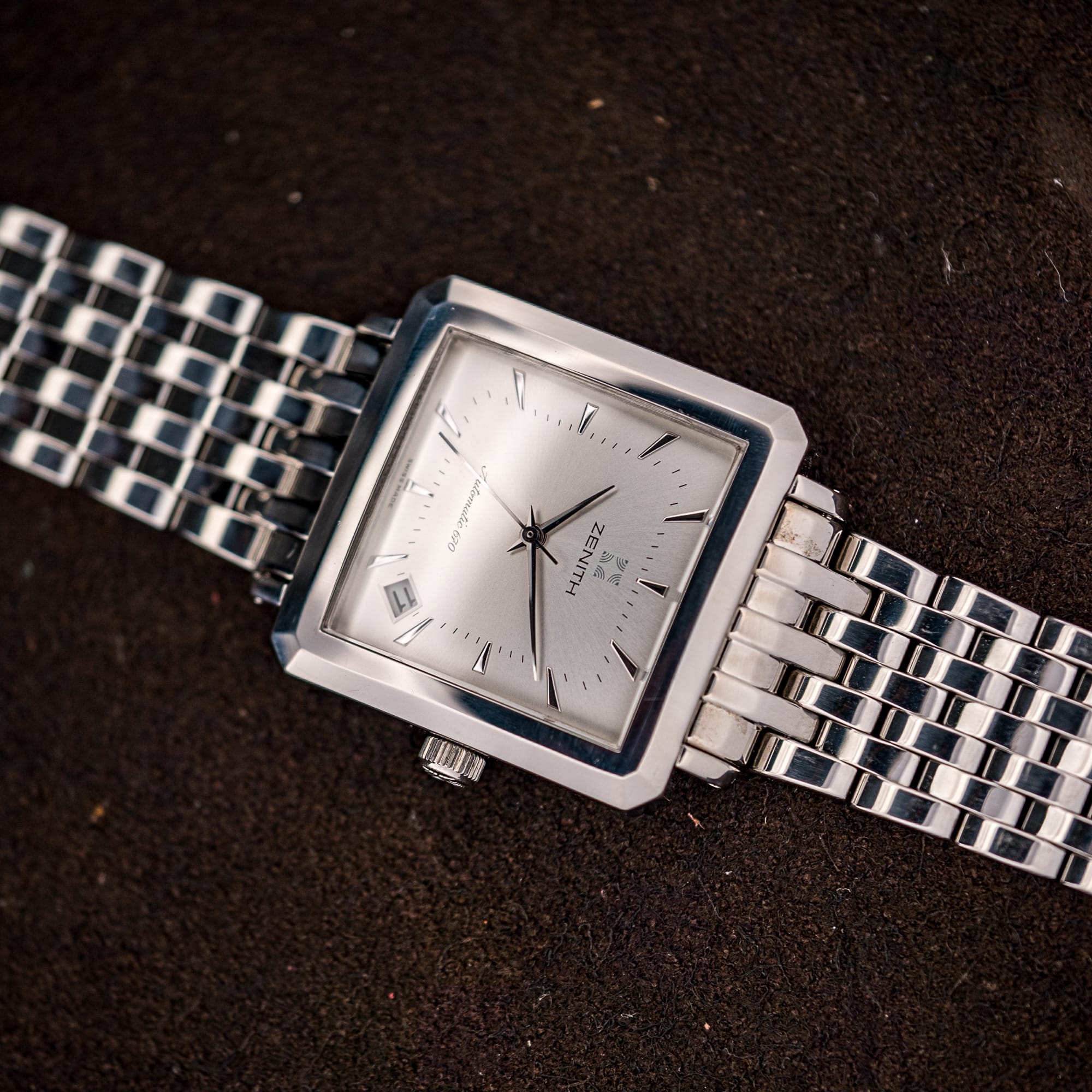
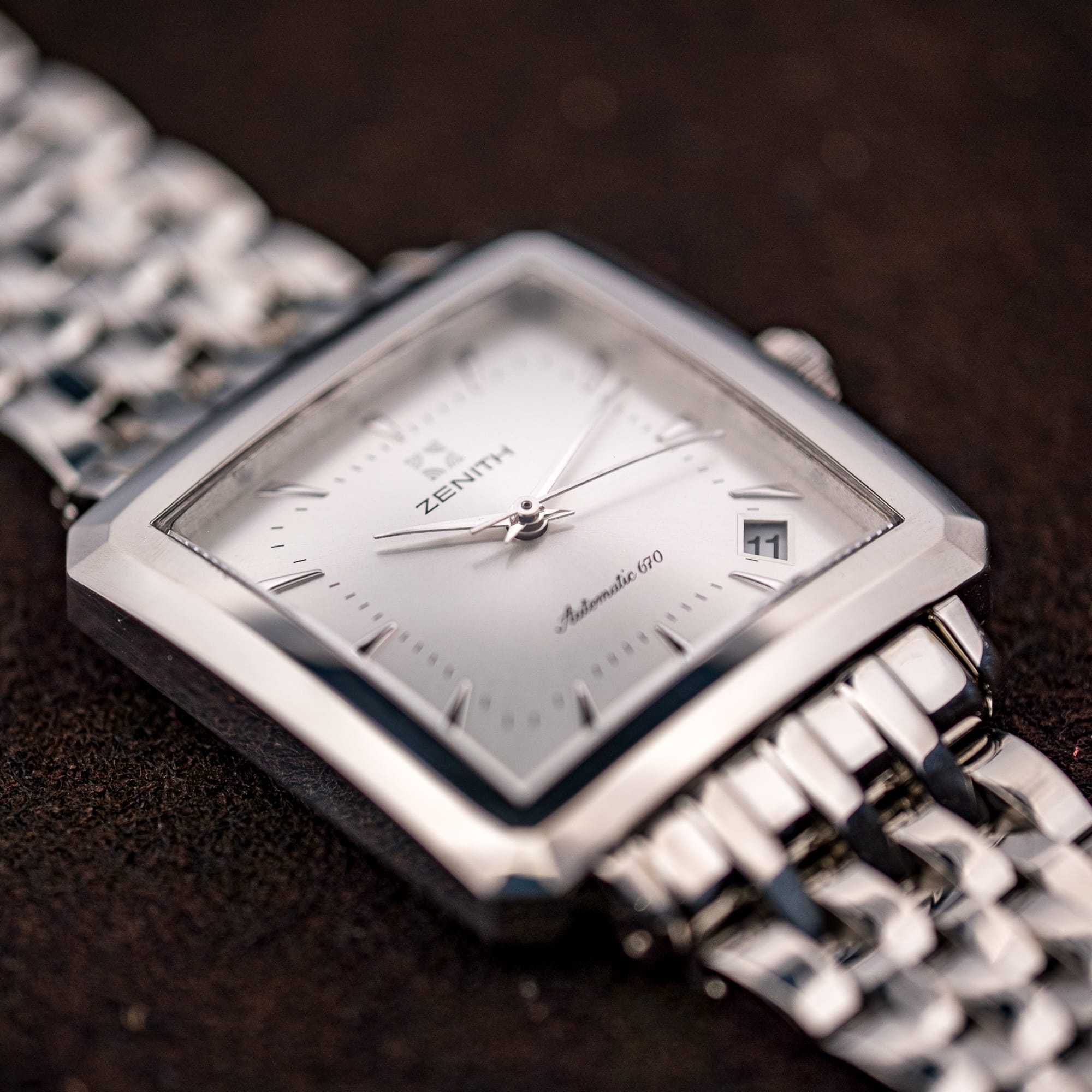
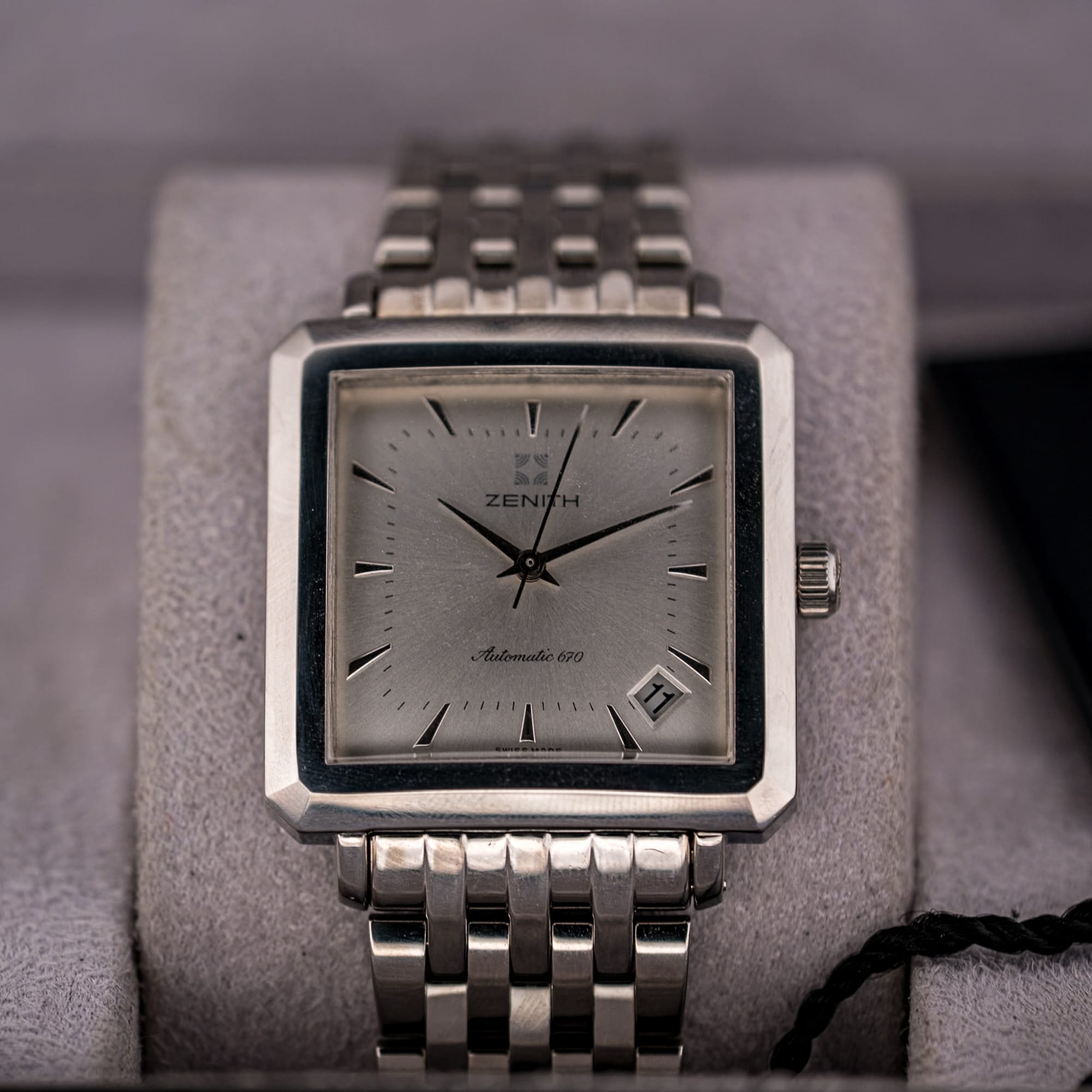
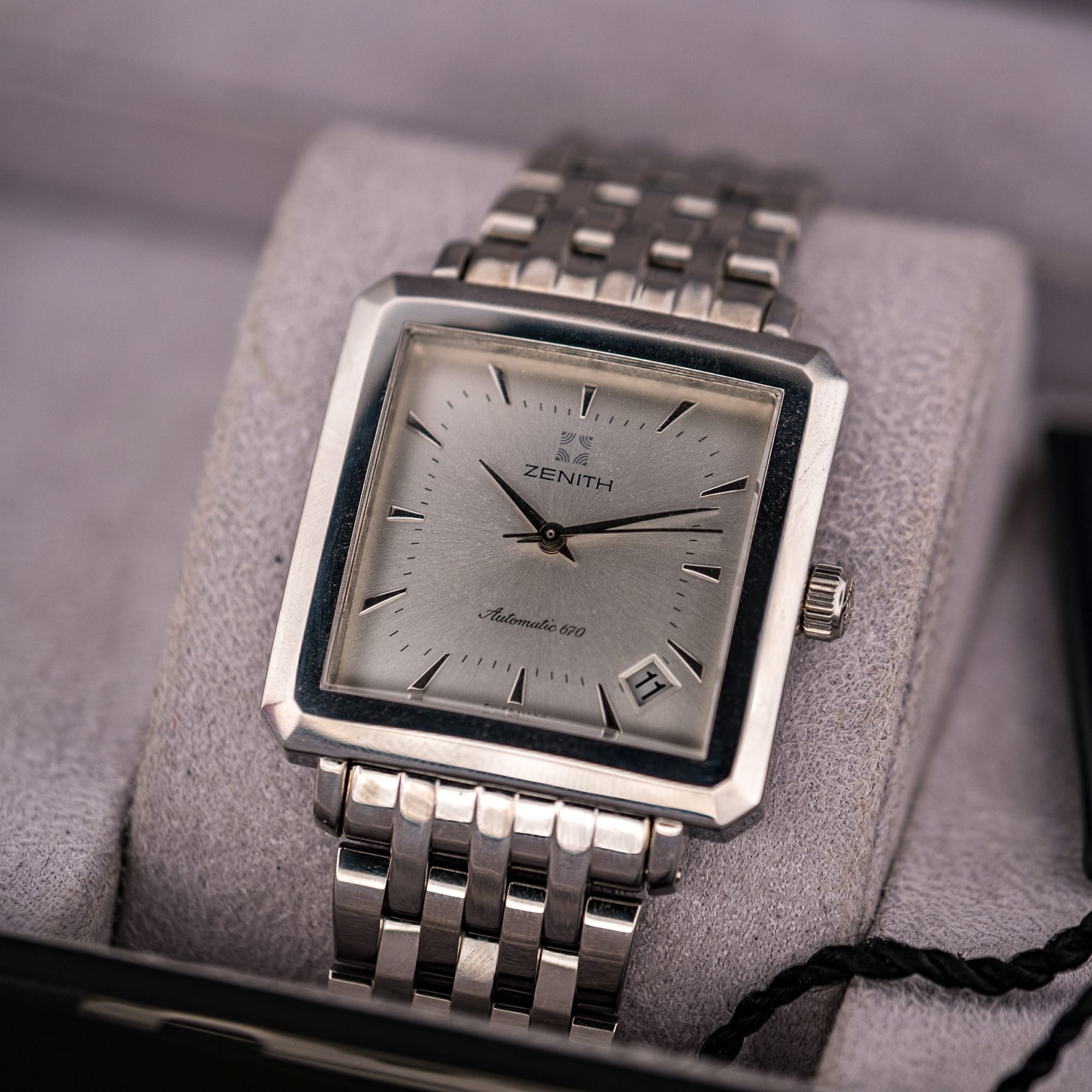
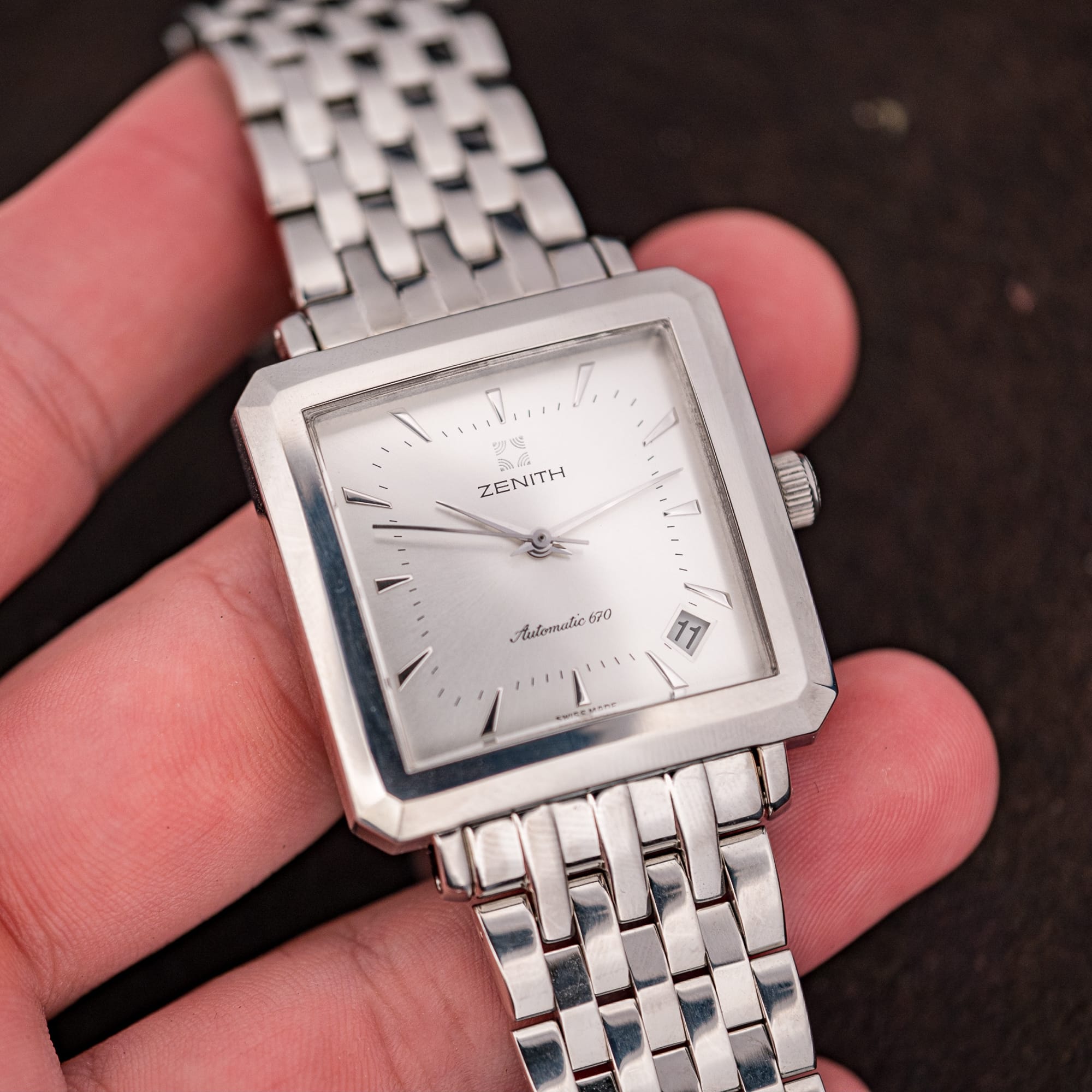
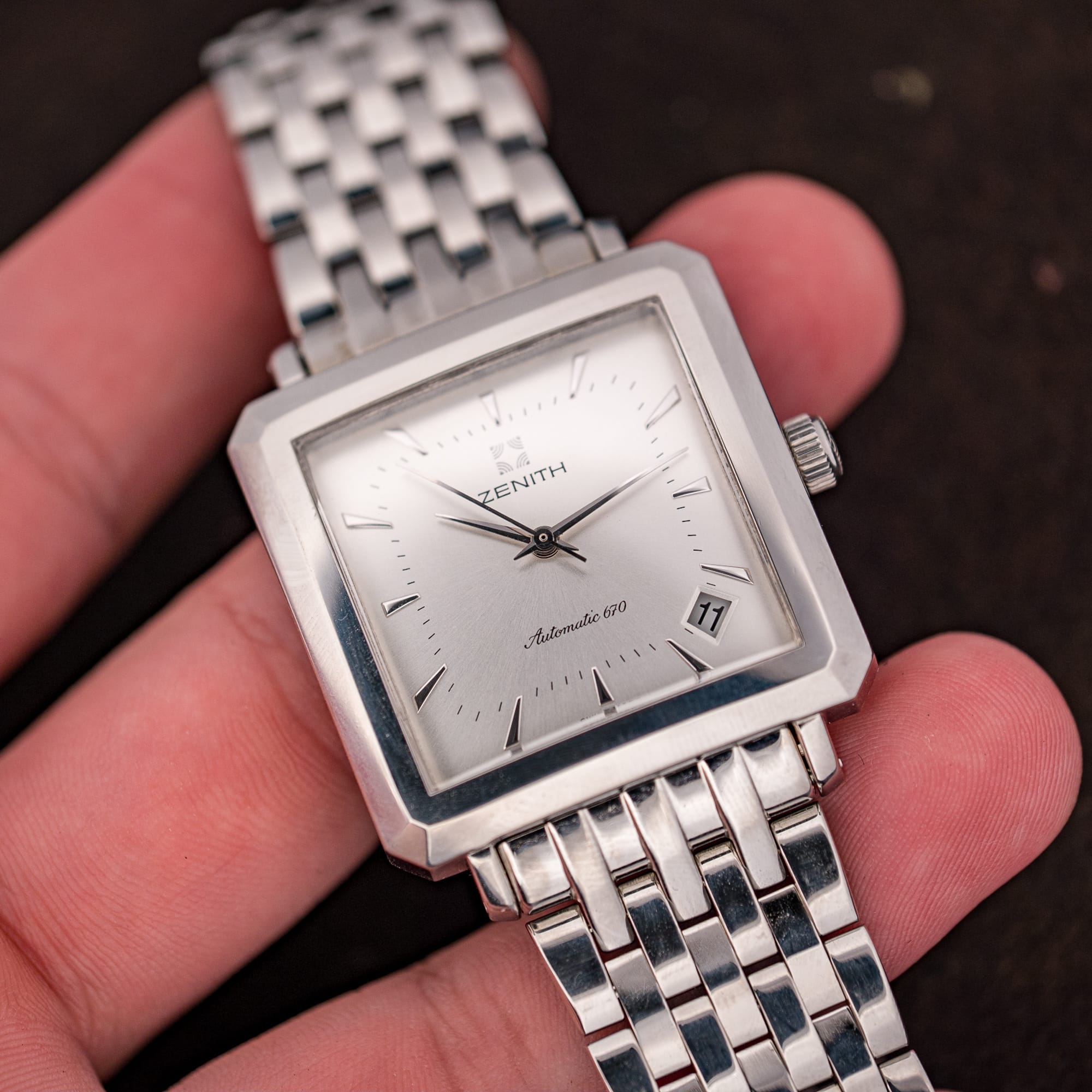
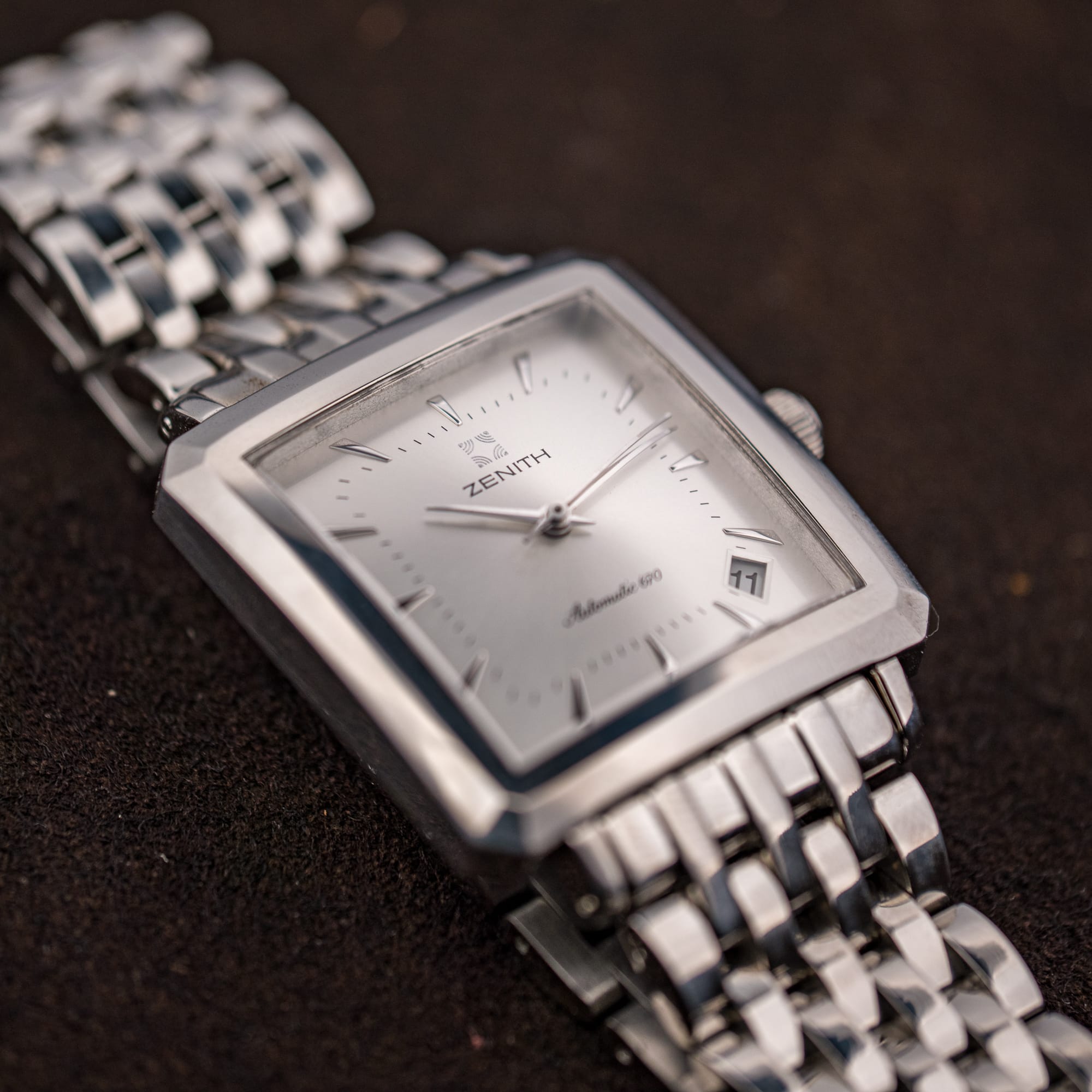
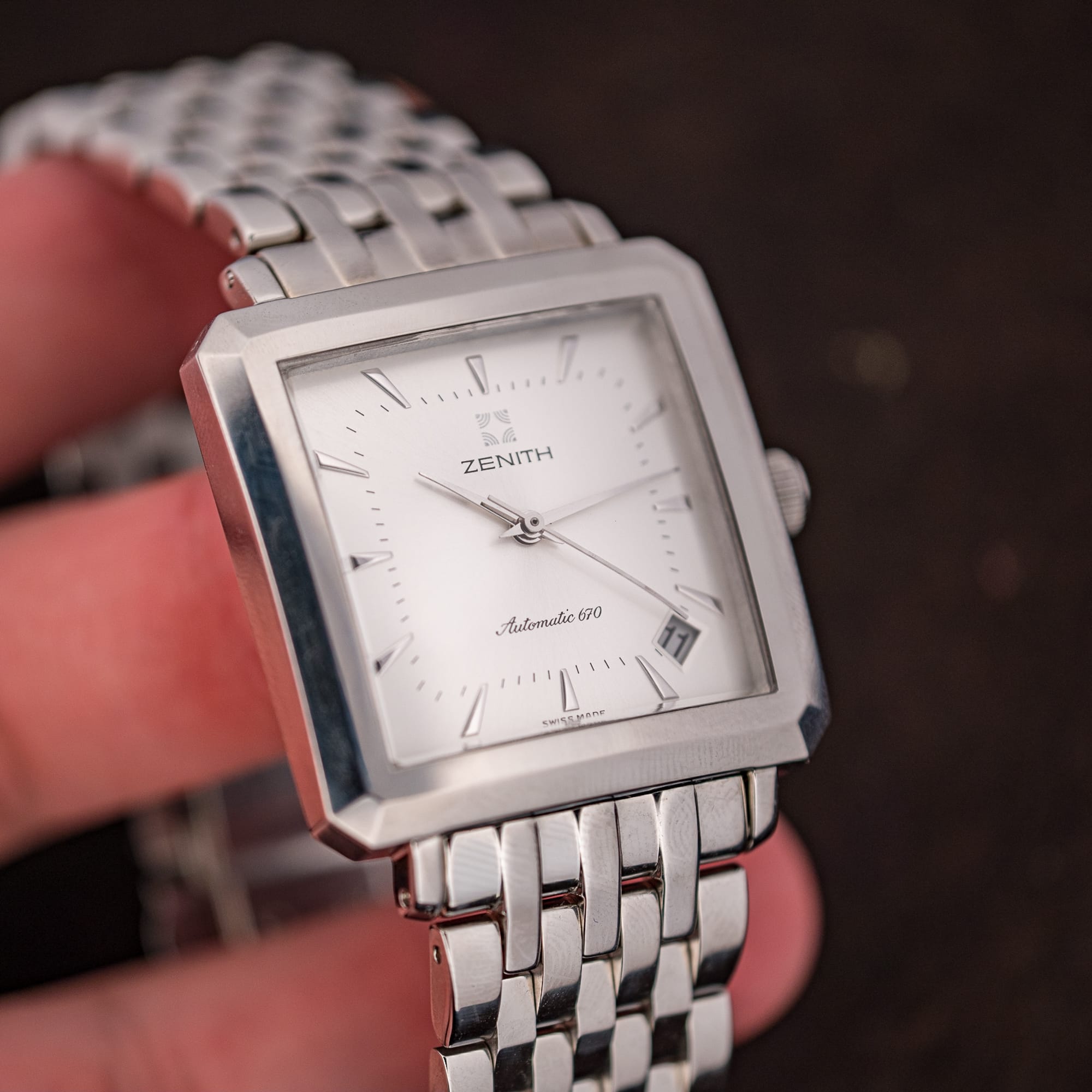
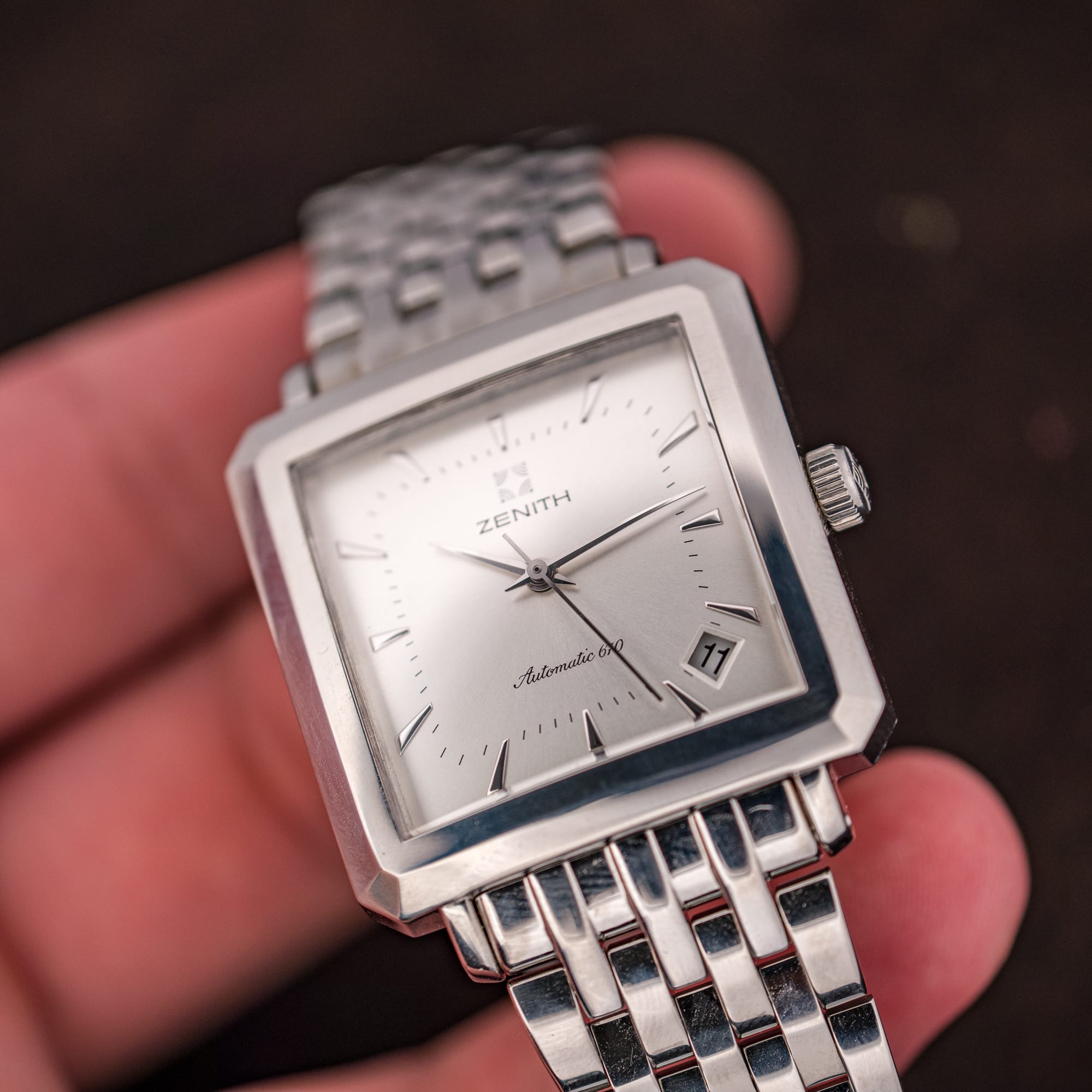
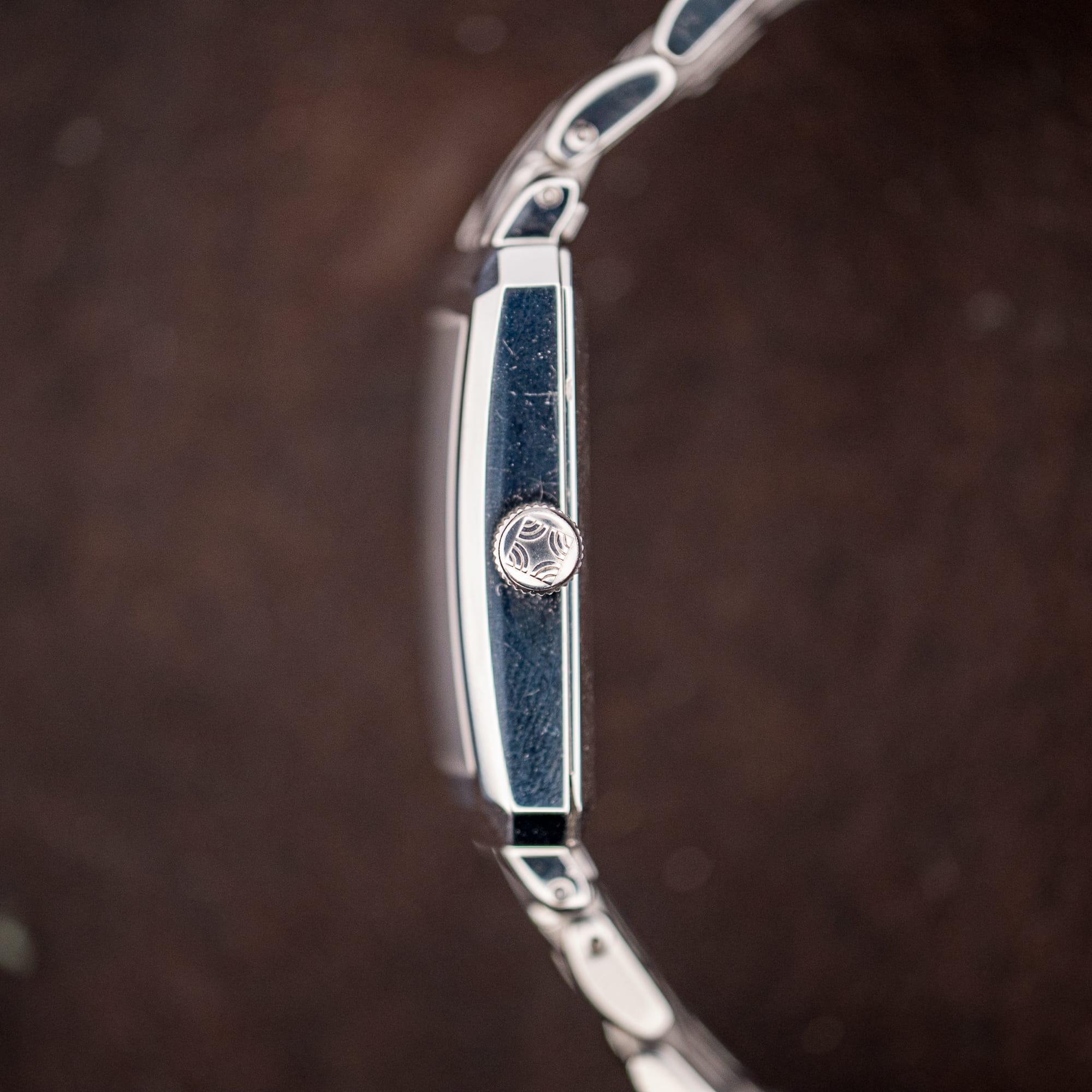
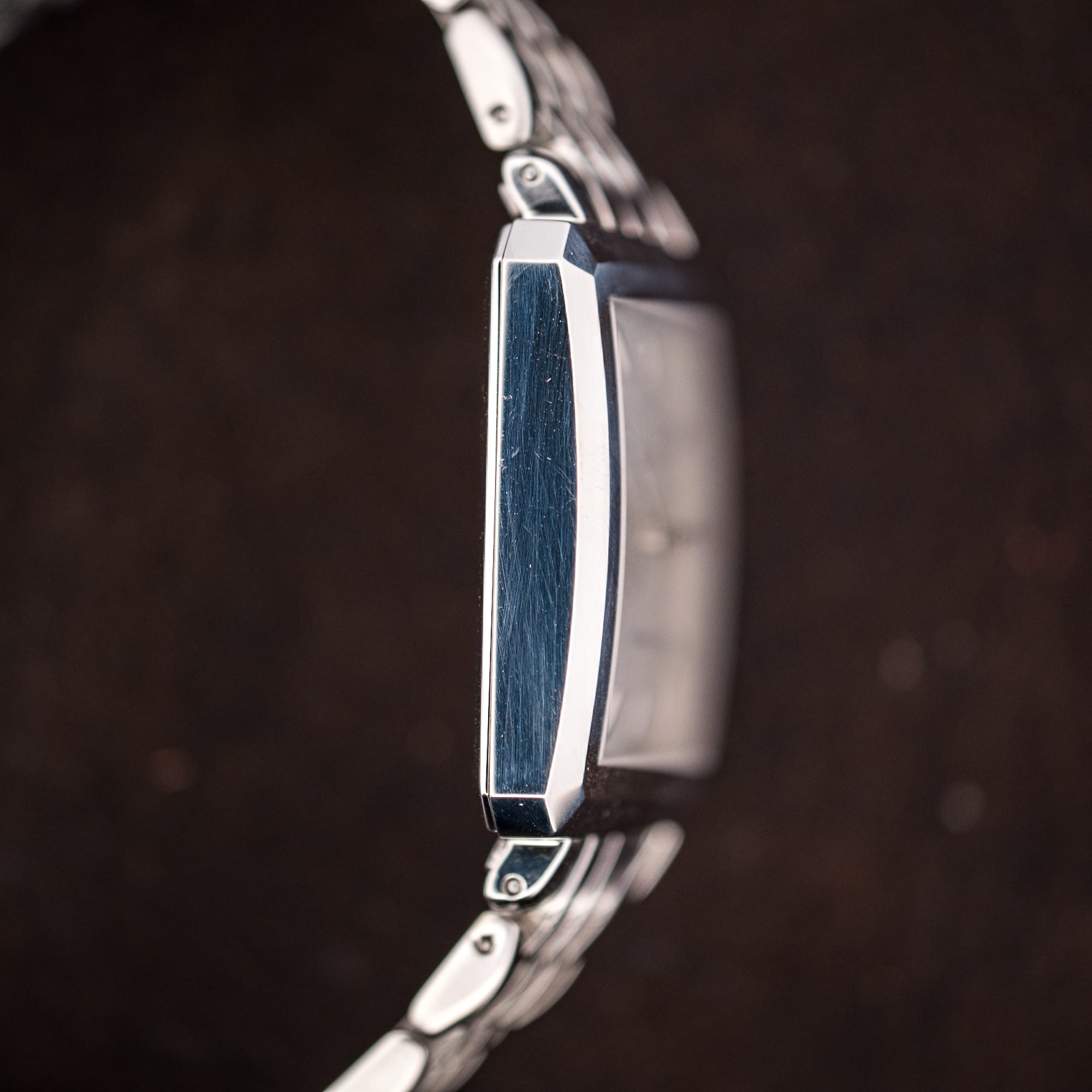
This is the central-seconds and date version of that movement, the Elite 670, and the dial names it plainly in script above six o’clock. It sits in a square steel case with cut corners, a shape Zenith drew from its own earlier catalogue, and it stays low on the wrist because the caliber underneath is a little over three millimeters thick. The silver dial is finished in a sunburst that gathers light as the wrist turns, with applied faceted markers, a date at three, and the faceted Zenith star set below twelve. On the wrist the square case and the bracelet read as one continuous line, which is what gives it a dressier presence than the round Elites in the same family.
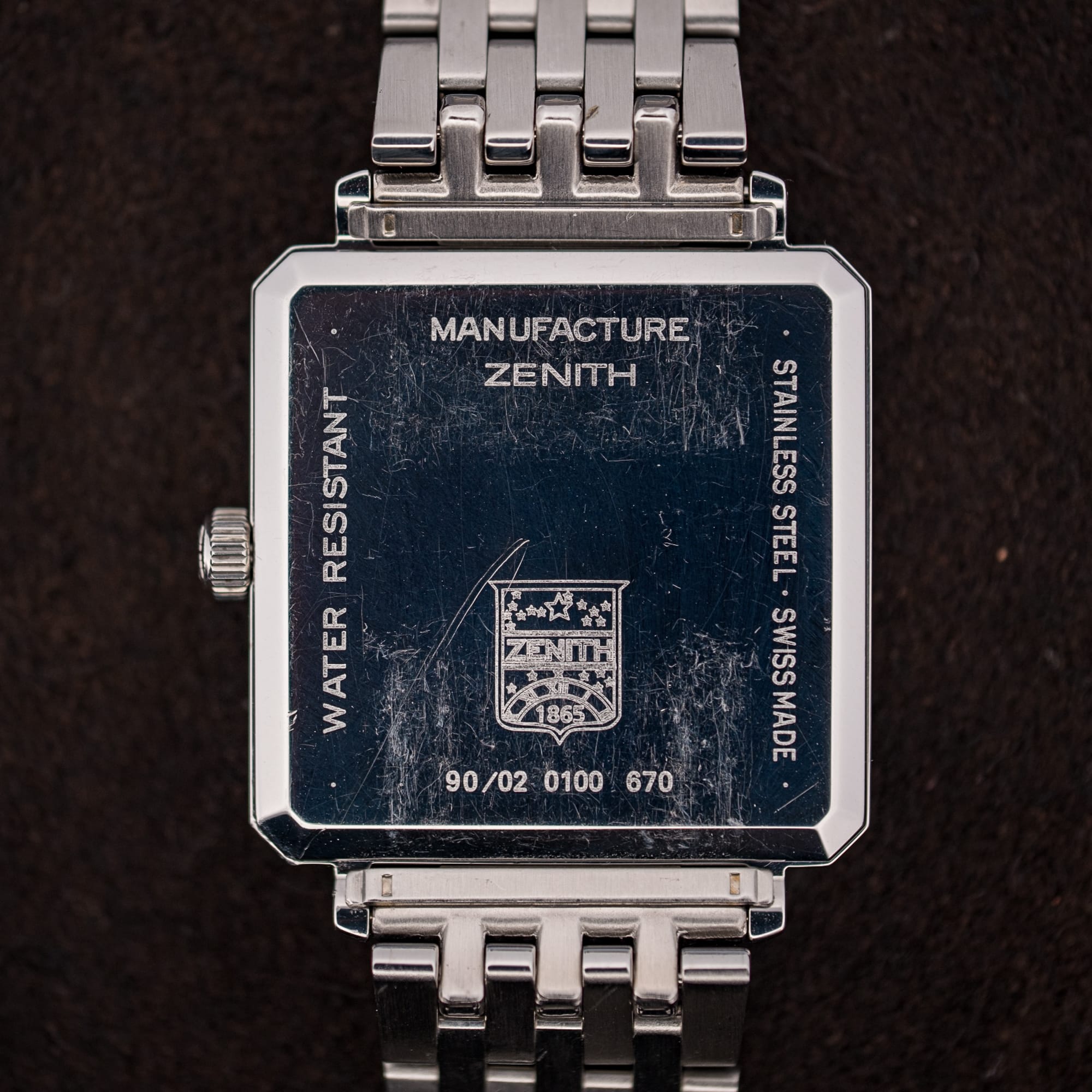
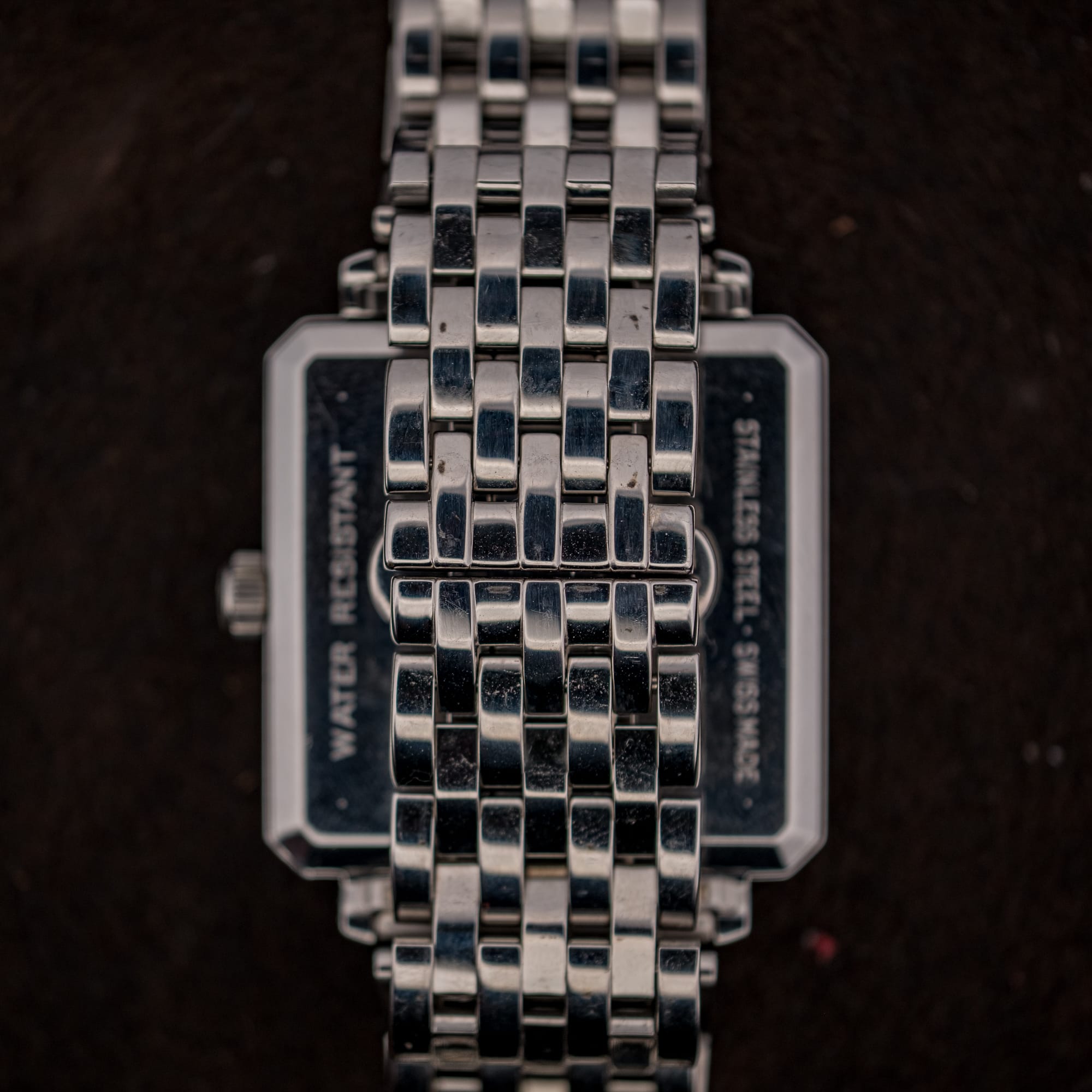
The Elite 670 runs at 28,800 beats an hour on a Glucydur balance, winds through a ball-bearing rotor, and holds close to fifty hours off the wrist. Twenty-seven jewels, hacking seconds, an instant date change. The caseback is solid steel, engraved with the Manufacture Zenith crest, the 1865 shield, and the reference 90.02.0100.670. The polished bracelet carries the same steel through to a folding clasp.
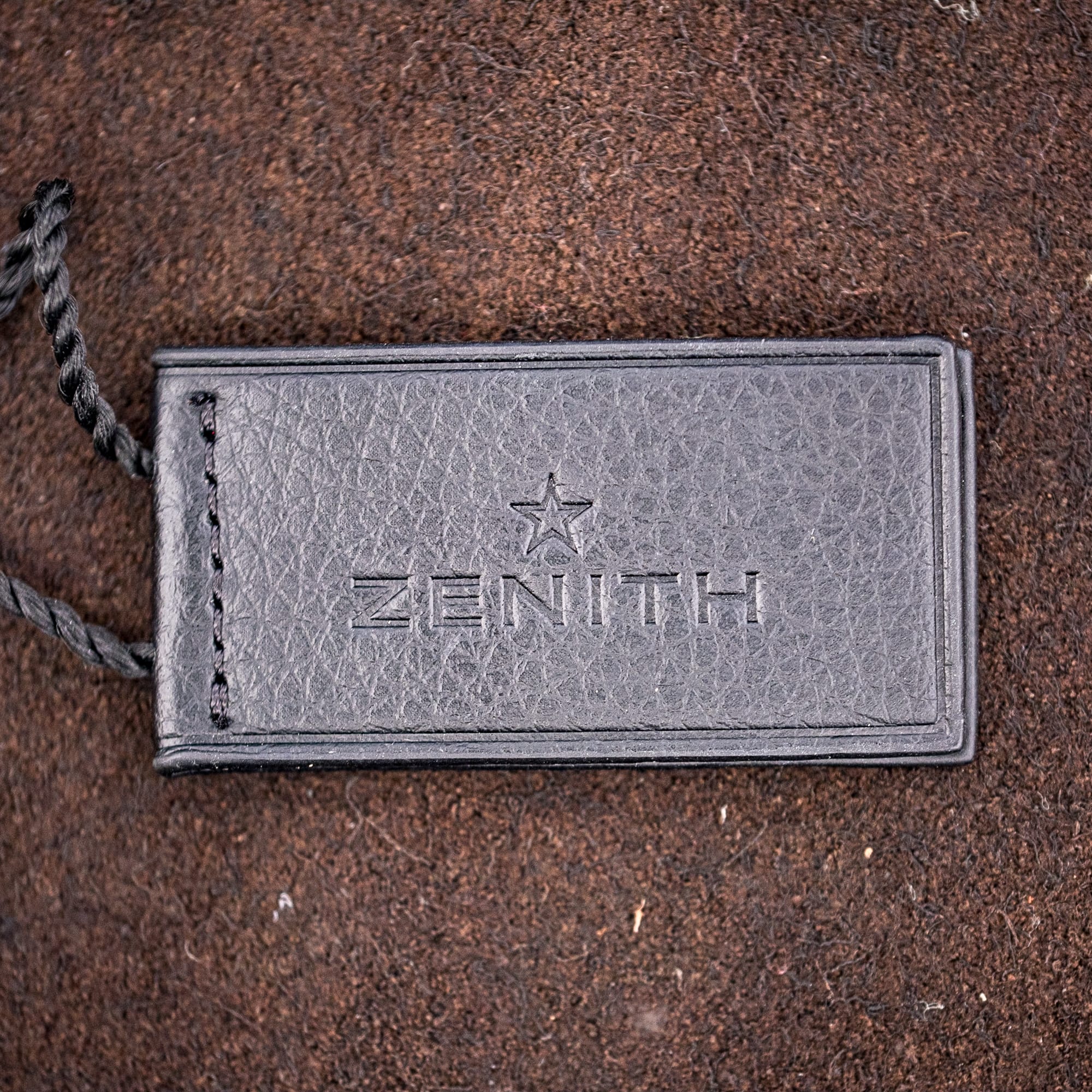
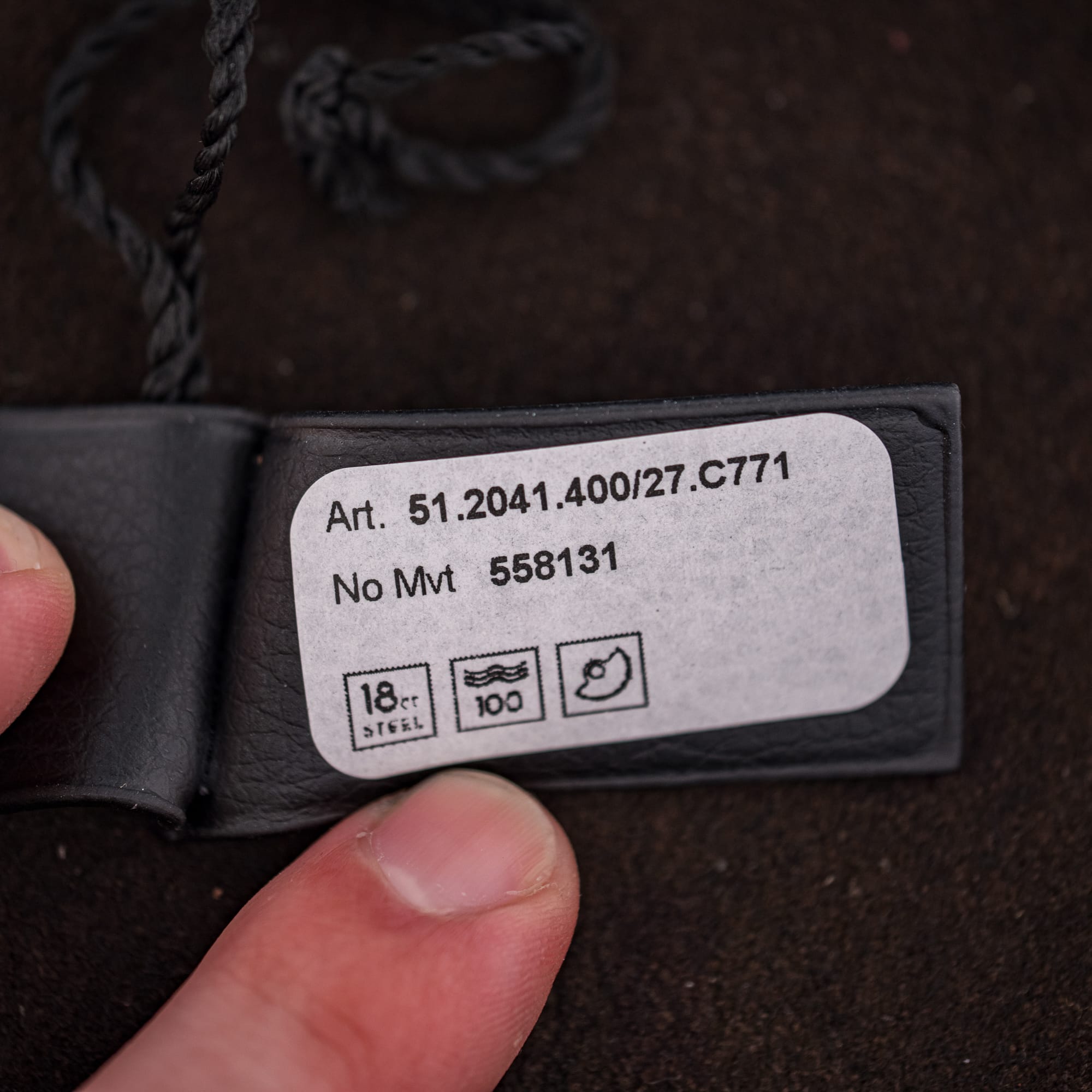
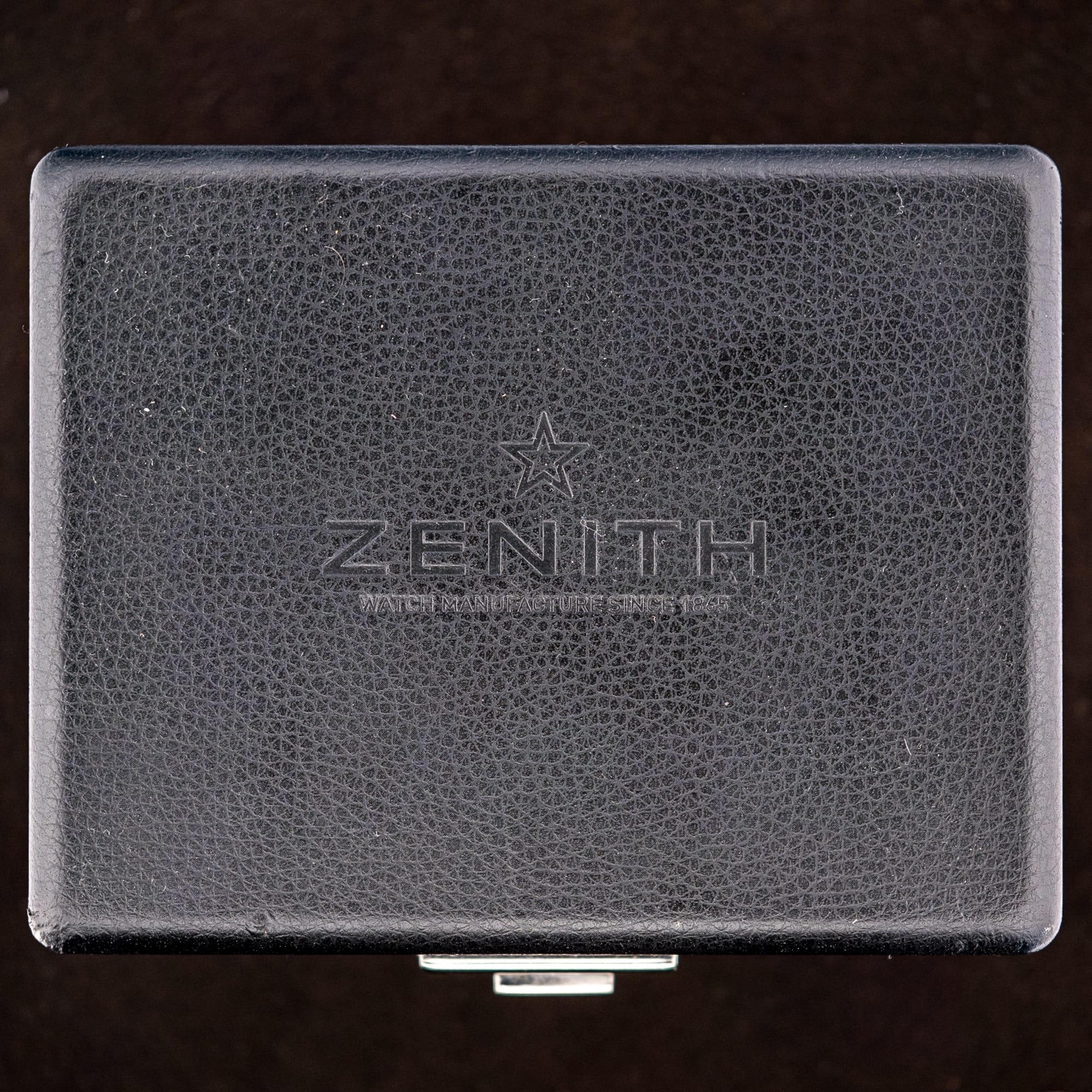
The watch shows its age honestly. There are light hairlines across the case flanks and the caseback, the kind that come from a watch that was worn rather than shelved, while the dial has stayed clean. It comes with its Zenith presentation box and the brand’s leather hang tag. There are no papers with it, so what you are buying is the watch itself, correct to the reference and running as it should.