Martha Wittnauer had worked in her family’s watch business for years before it became hers. Her brother Albert had come to New York from Switzerland in 1872 to work for a relative by marriage who imported Swiss watches, and the company that later carried the family name grew out of that trade. Louis and Albert, two of her three brothers, died in turn, and when Emile died during the First World War, the official company history records the business passing to their sister. The name on the dial of this Wittnauer power reserve automatic is the one she ran the company under. She led it through the war years, the 1920s and into the Depression, nearly two decades by 1935.
When writers from The New Yorker visited her office at 402 Fifth Avenue in 1935, they found her at a desk in an oak panelled room with forty clocks and two hundred watches ticking around her, most of them old. The clocks still struck the hour. A number of them had once played tunes as well, and the tunes had been stopped because they broke up business conferences. One clock was built into the frame of an oil painting on the wall, and Walter Lugrin, who had been with the company for thirty five years, had disconnected its musical works. The same visit recorded that Lugrin wound her clocks and watches every Monday, and that it took him all morning.
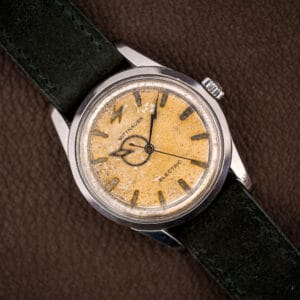
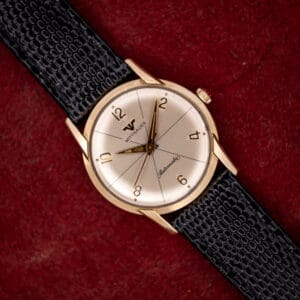
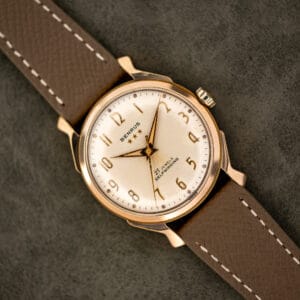
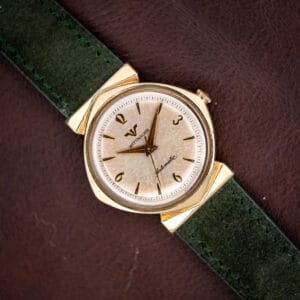
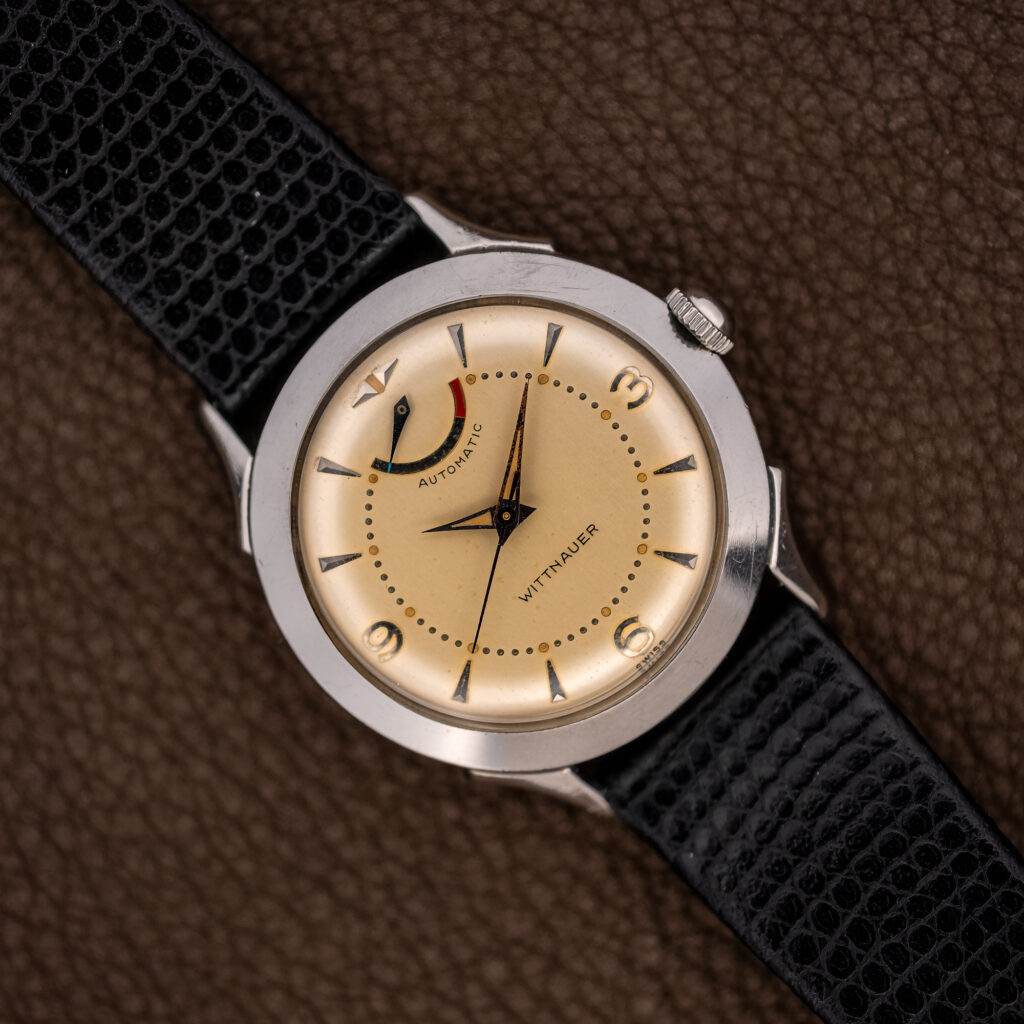
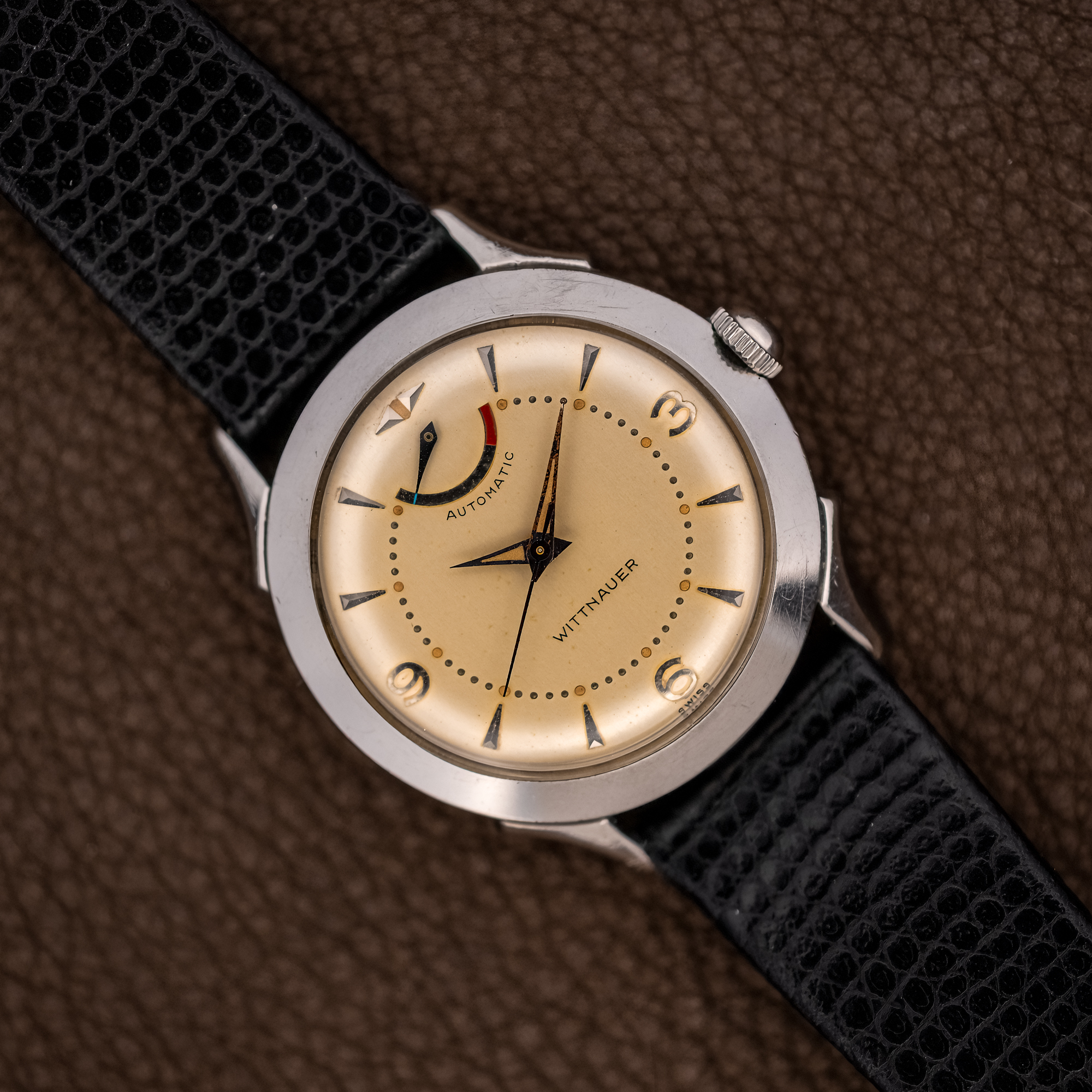
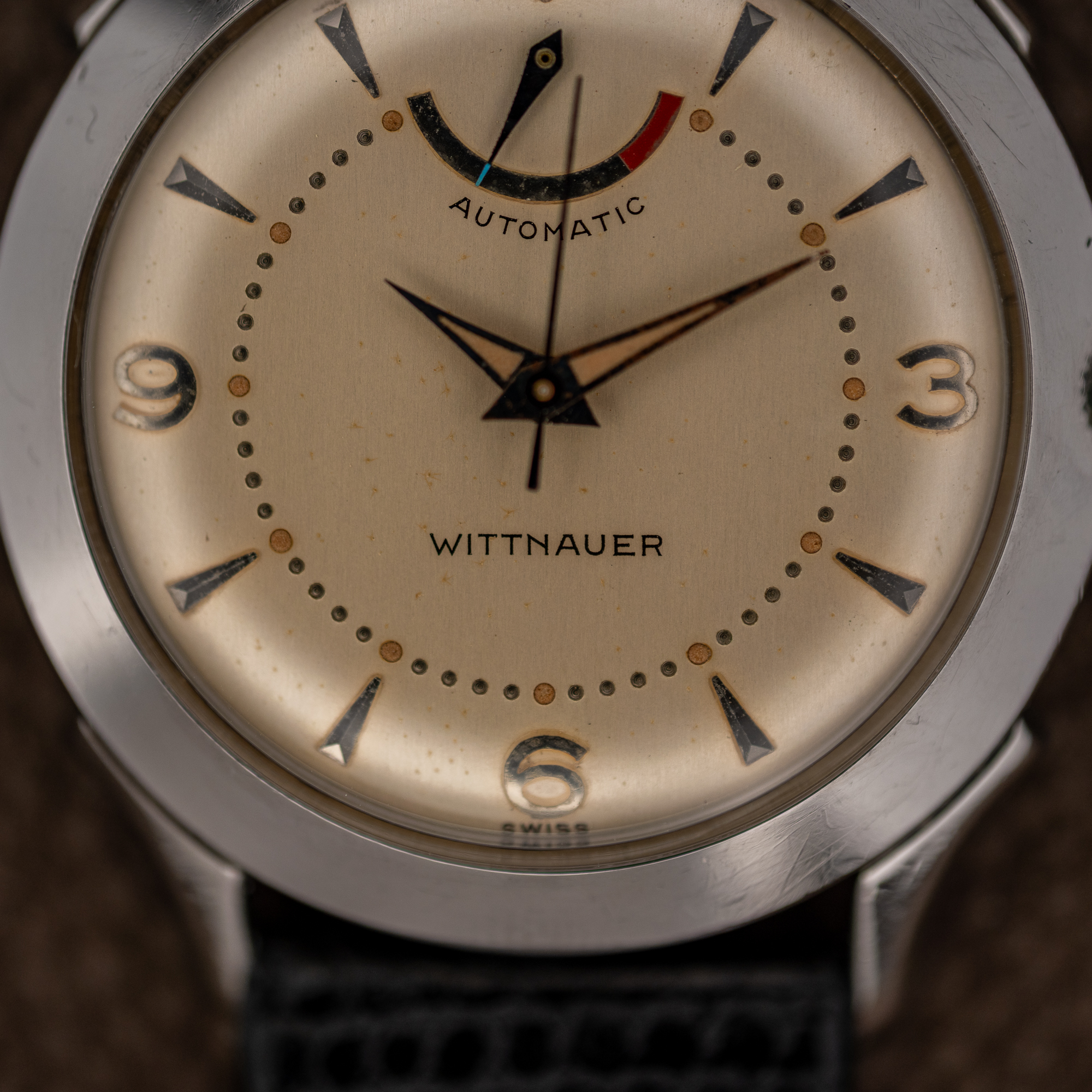
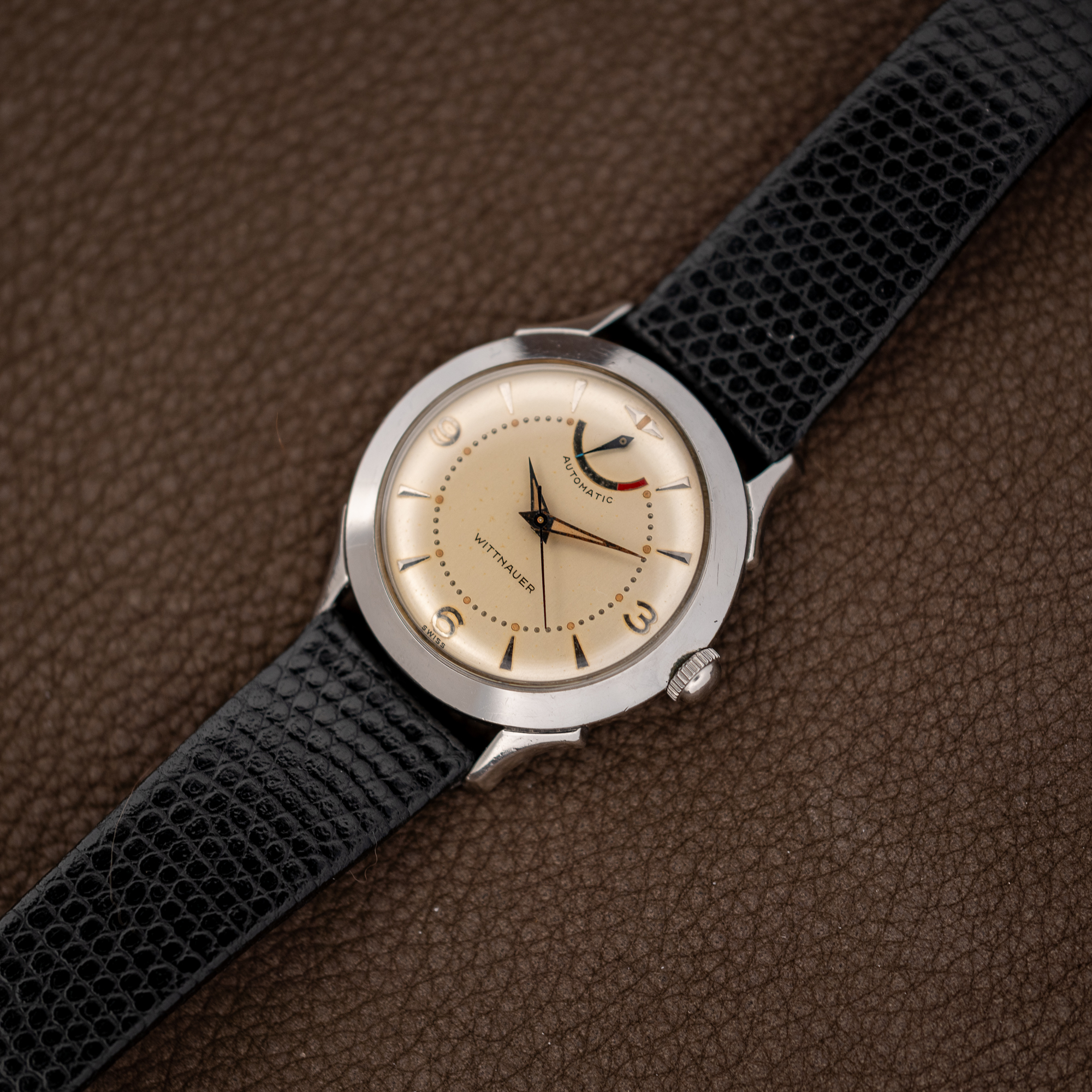
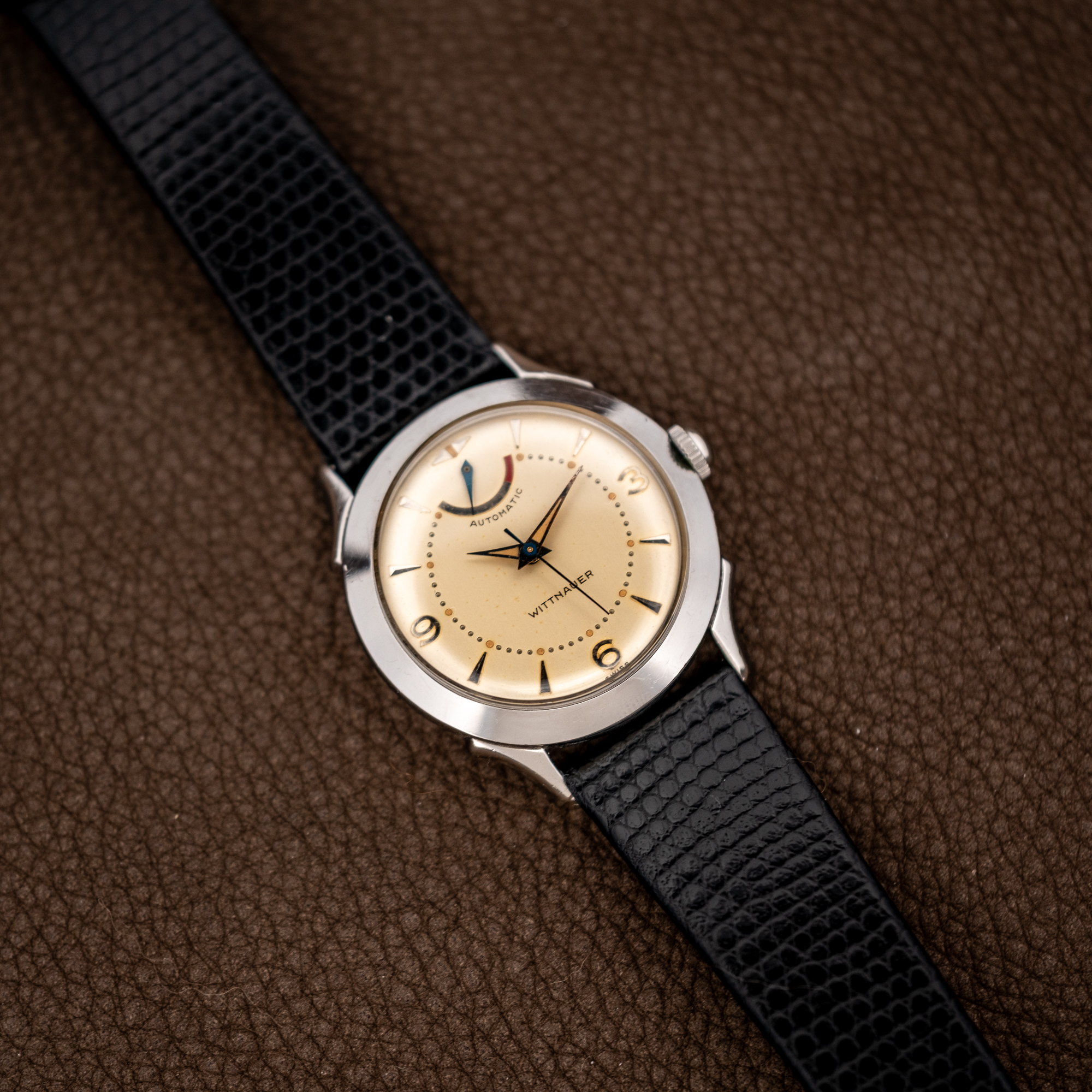
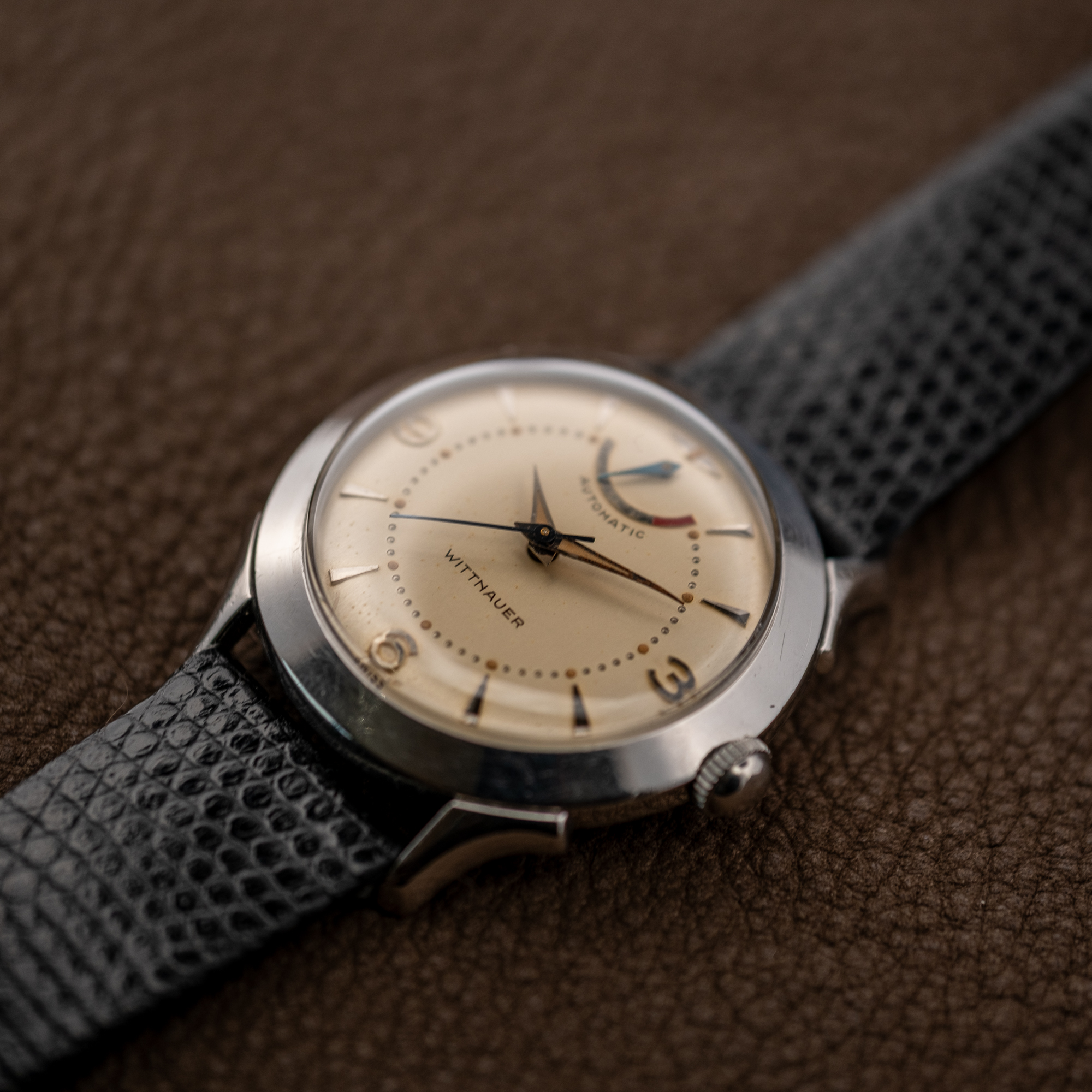
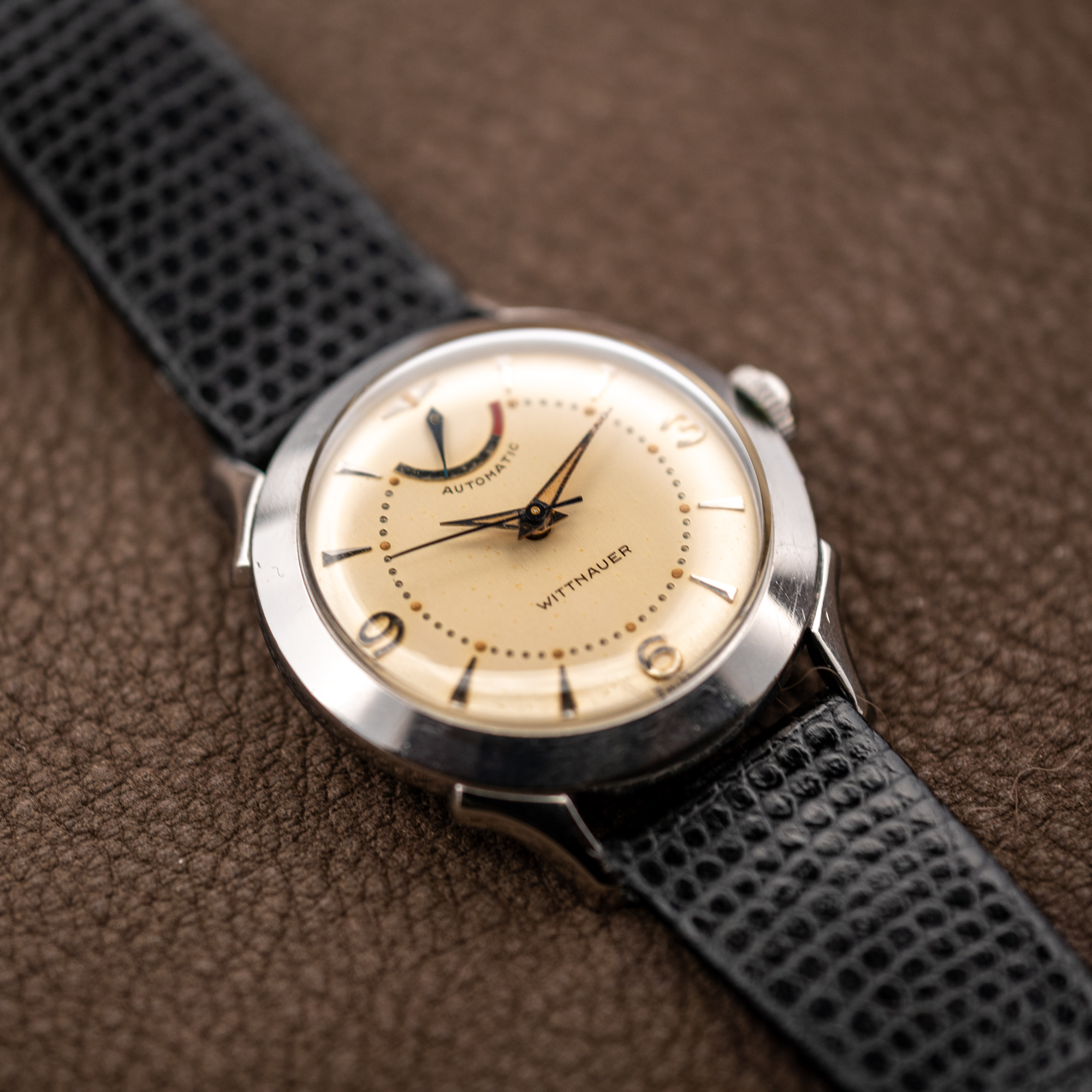
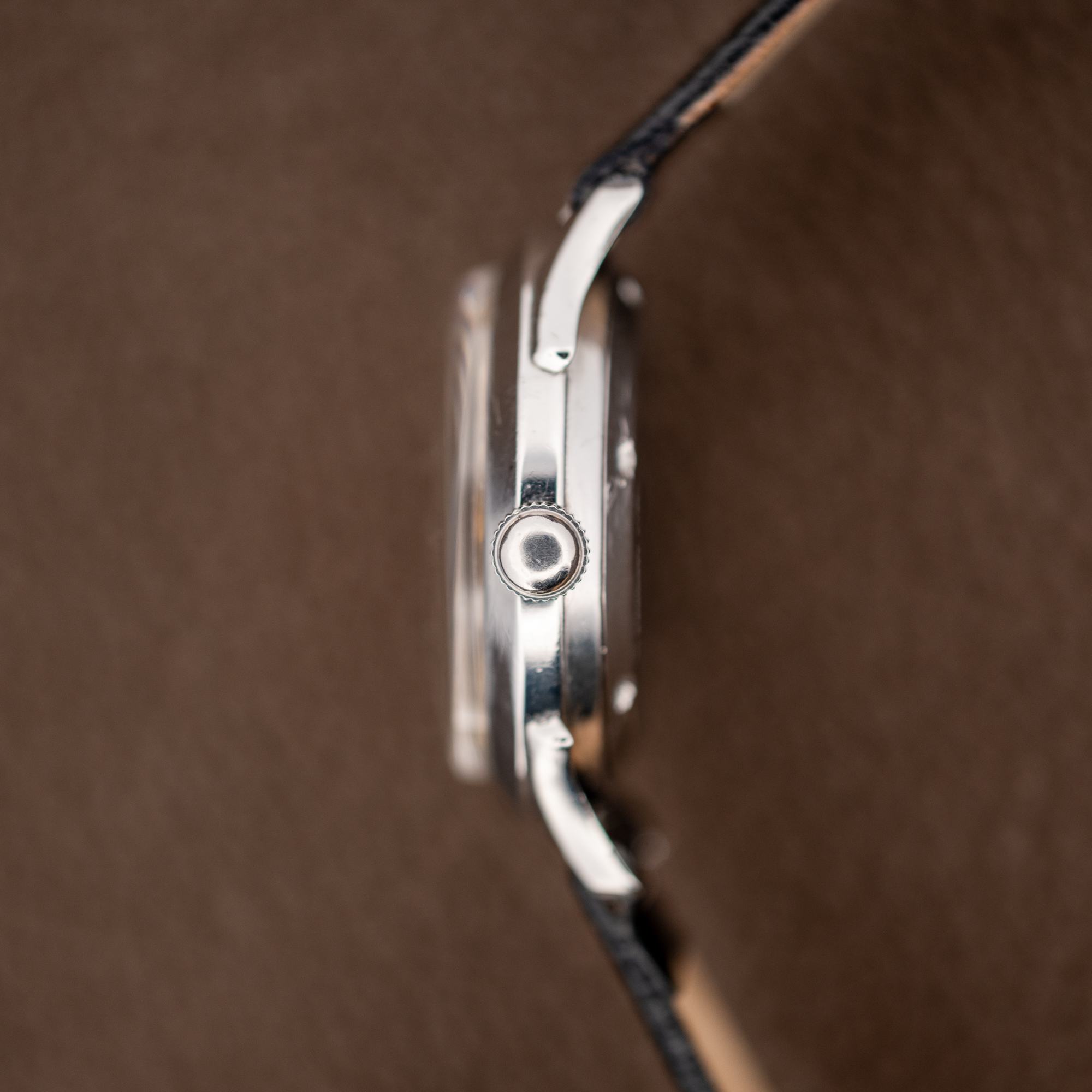
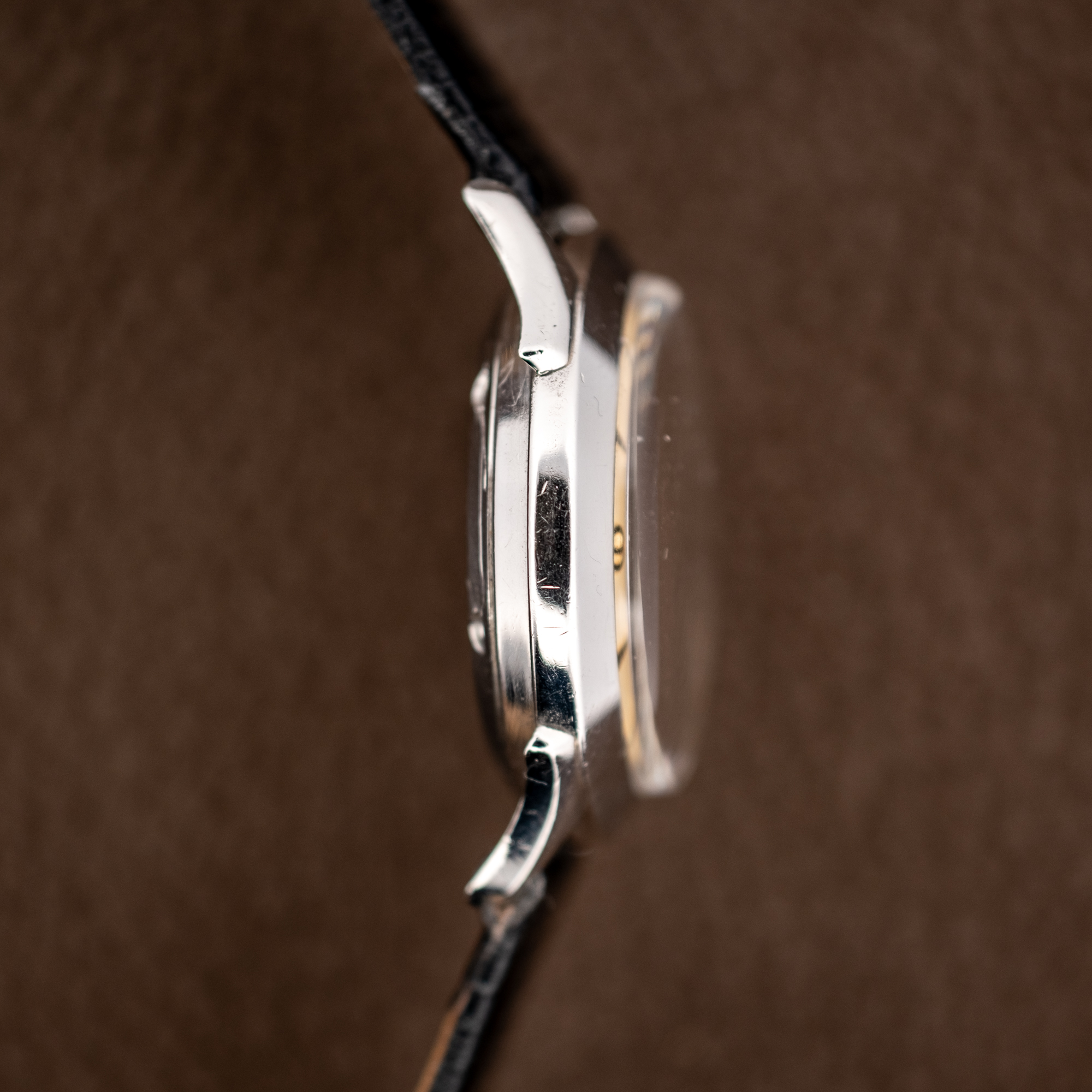
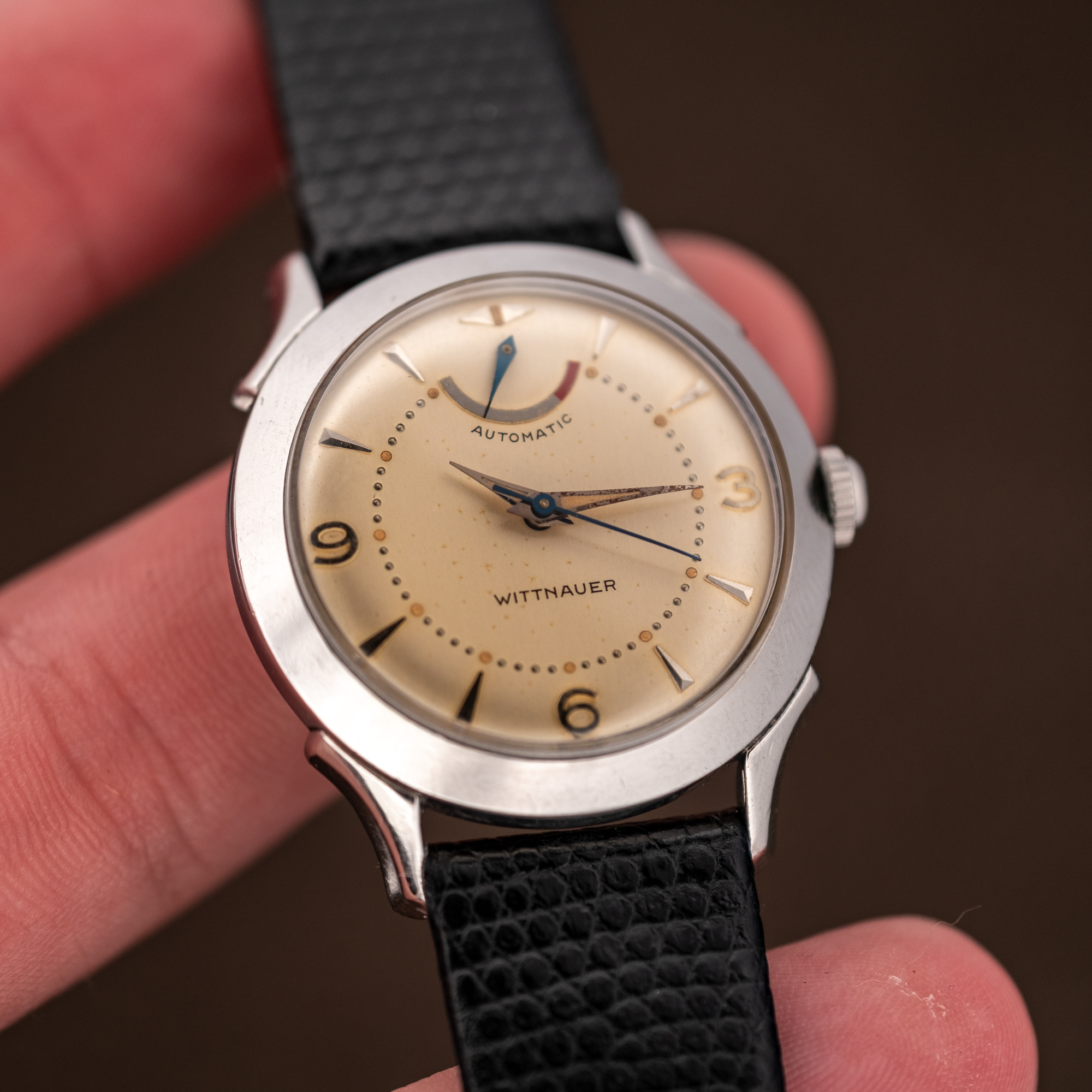
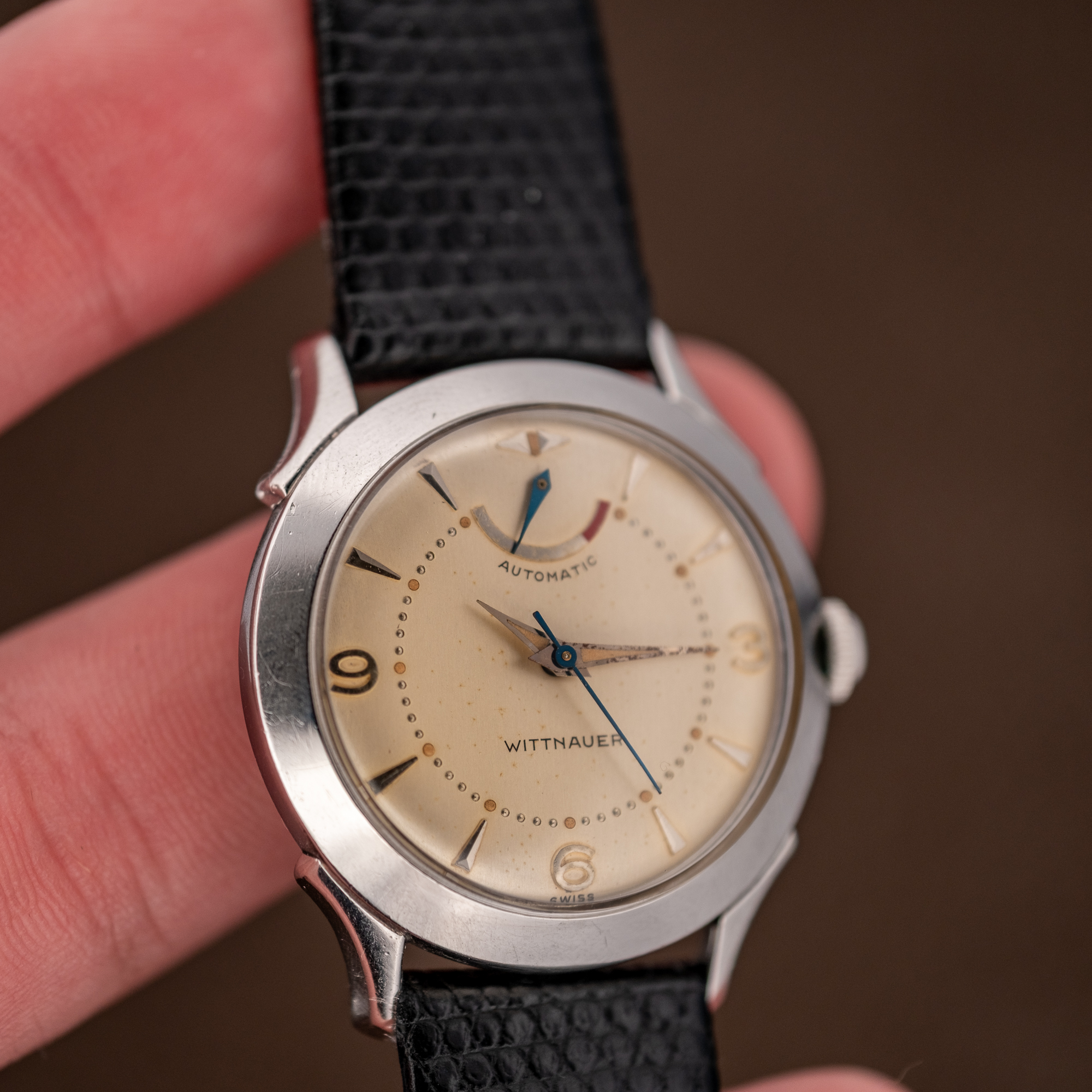
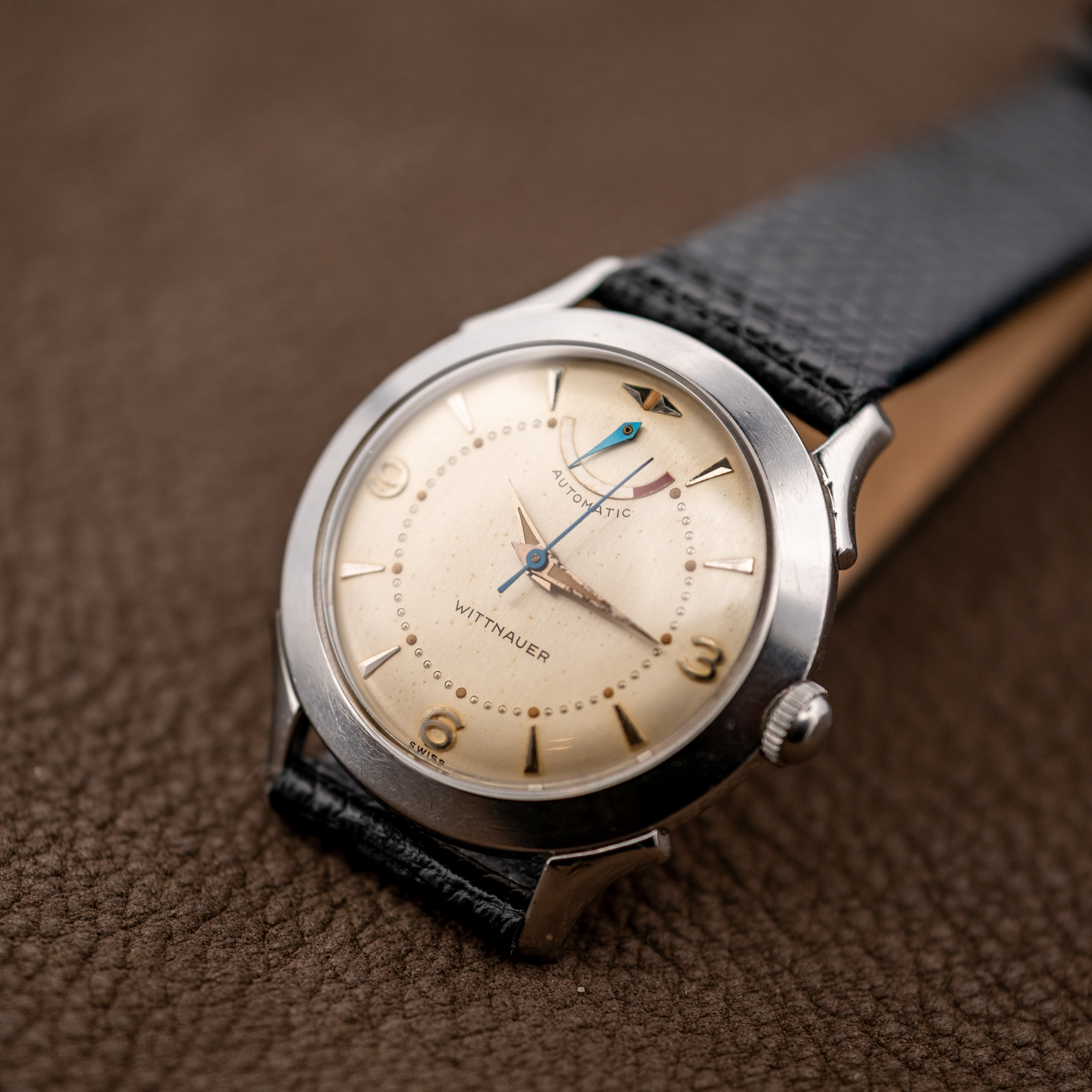
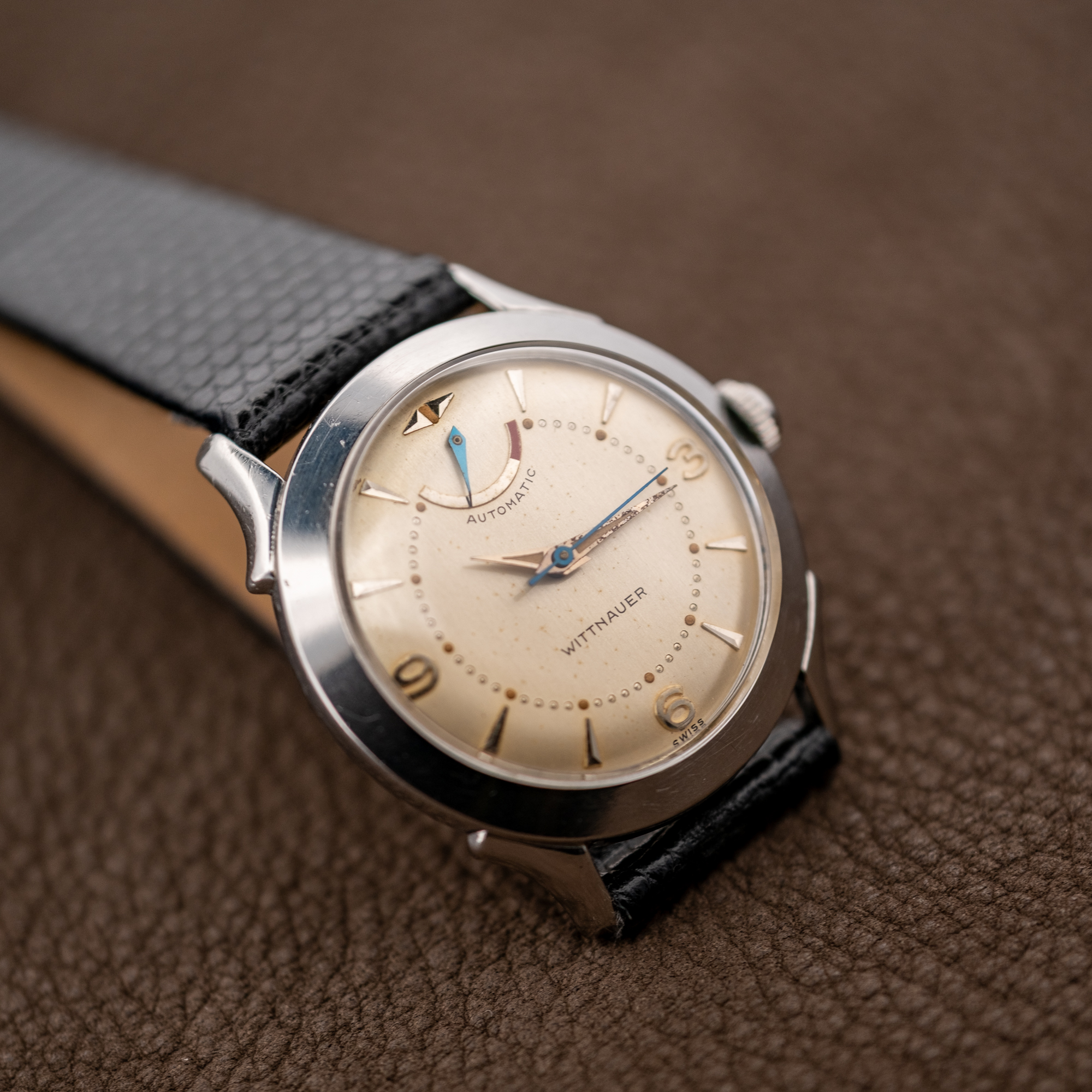
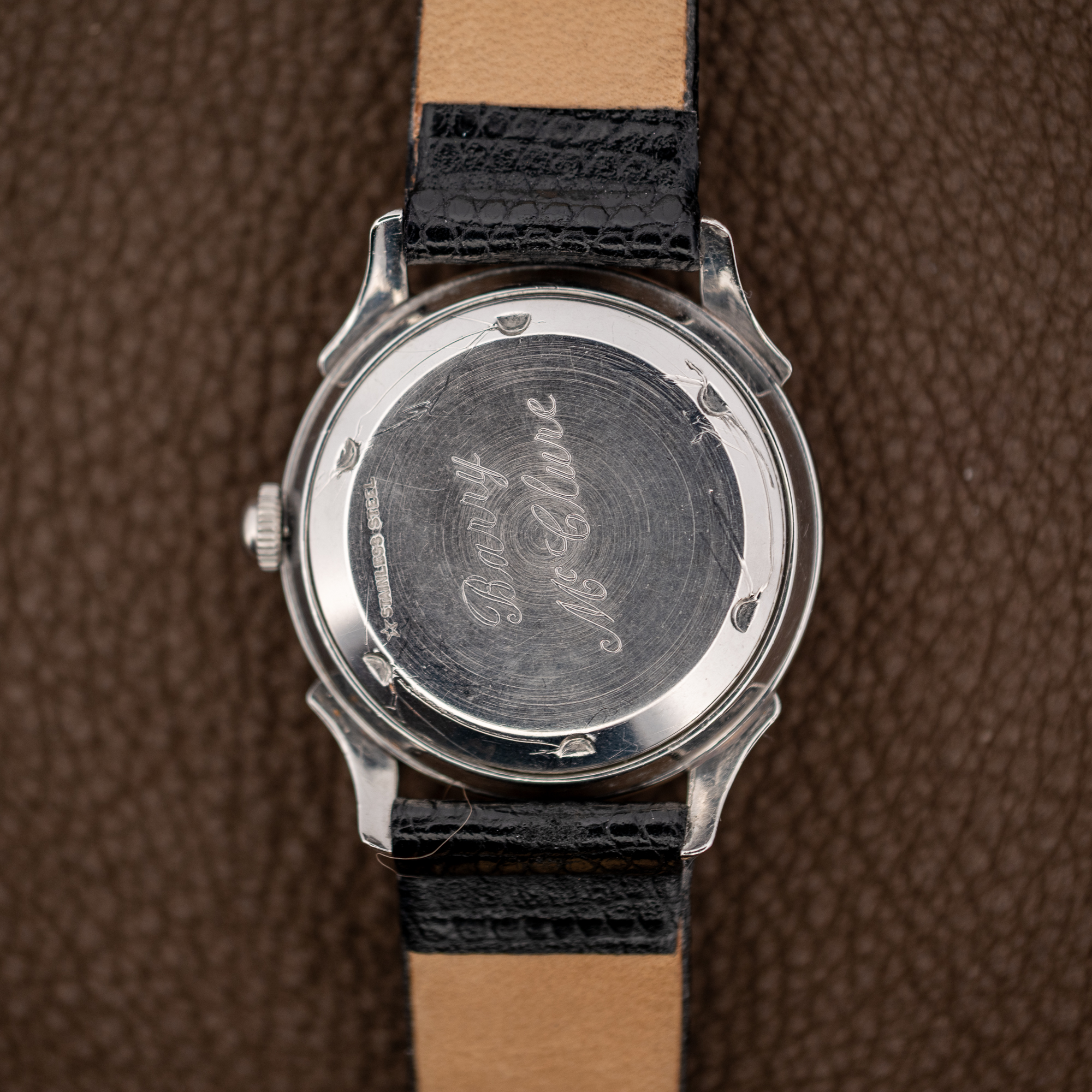
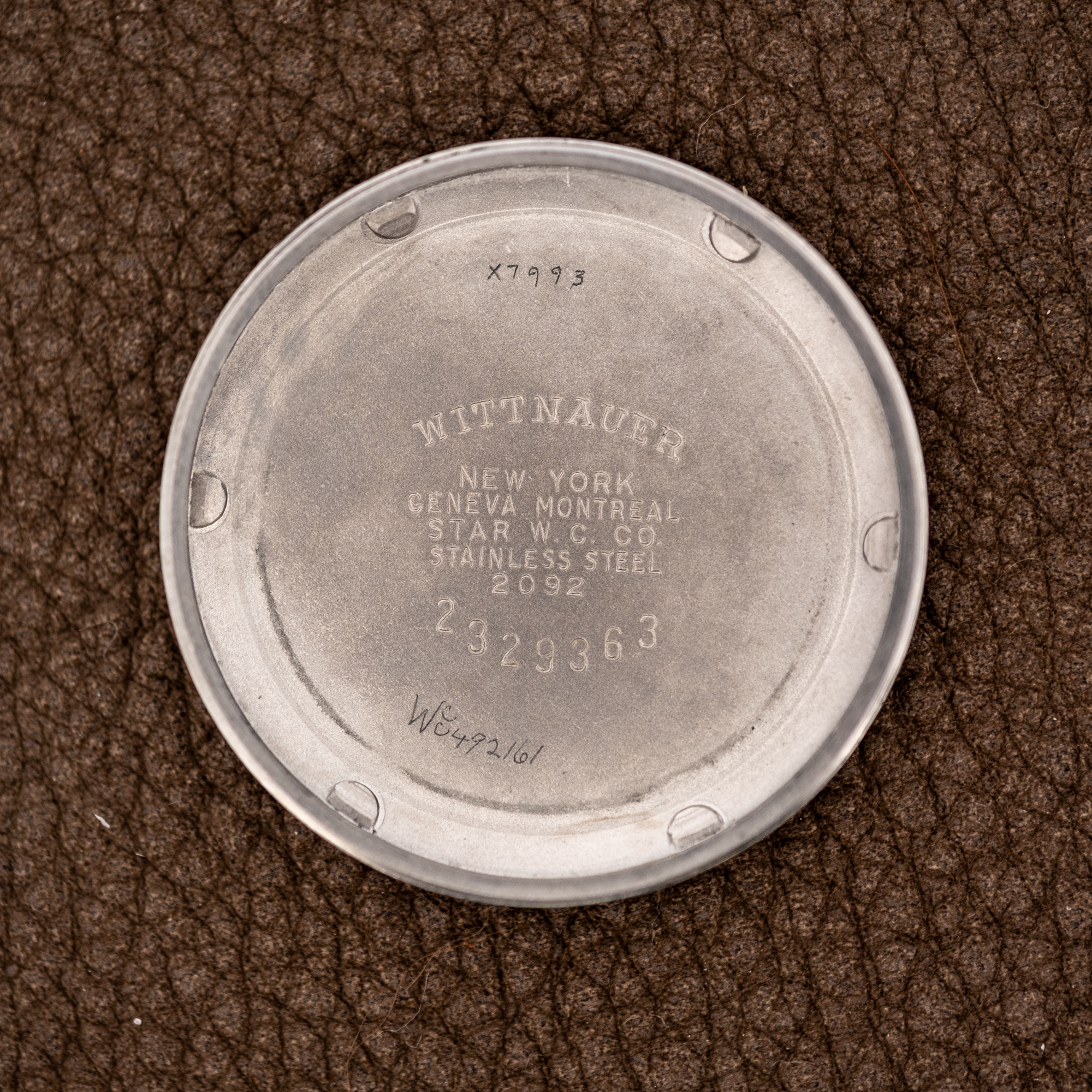
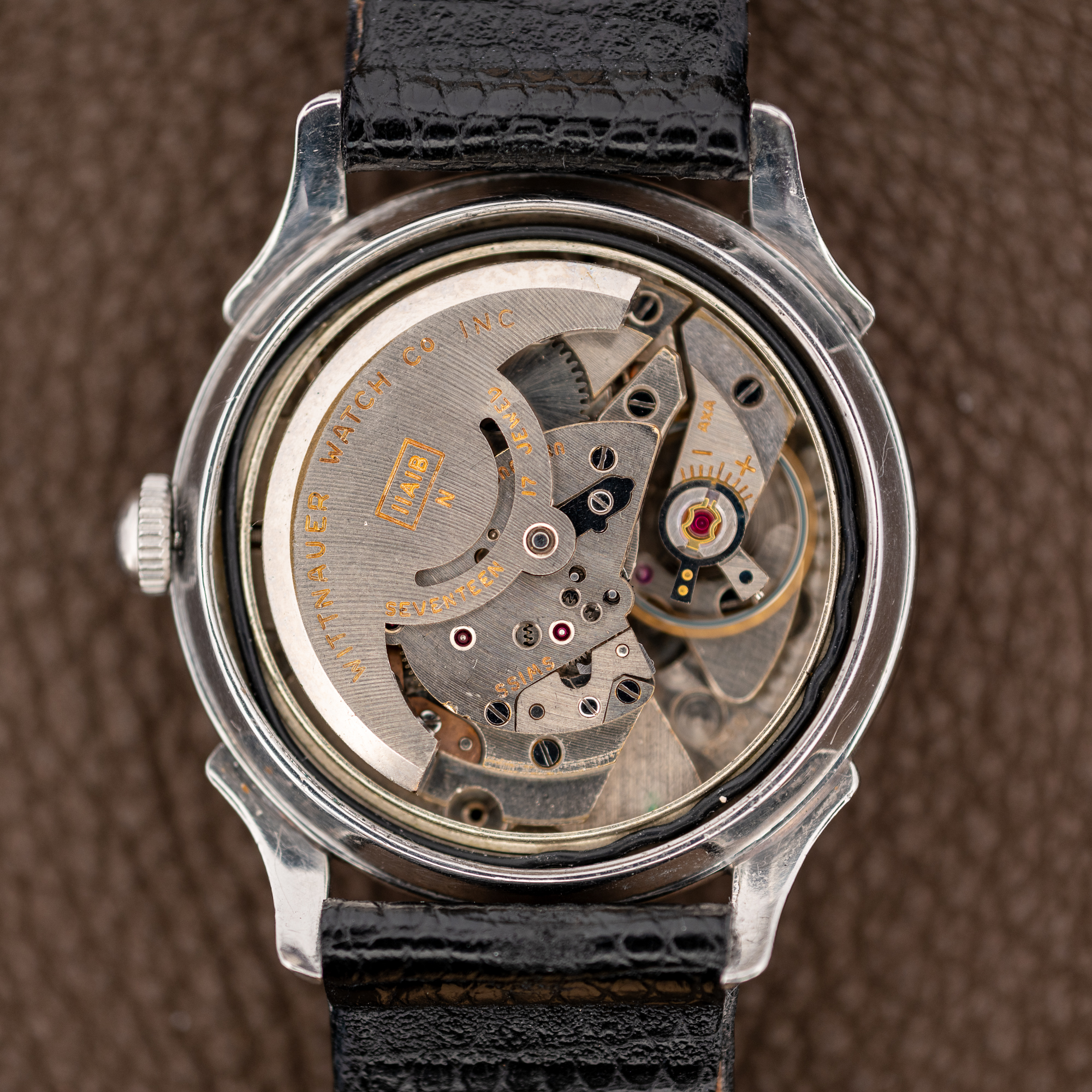
Makers showed the state of an automatic’s wind in more than one way, some behind a small aperture, others with a separate pointer, and Wittnauer chose the pointer for reference 2092. On this Wittnauer power reserve automatic it sits beneath twelve against a short curved scale, black with a red segment at the end, set there to indicate the state of the mainspring’s wind. The round stainless steel case measures 33mm across and 38mm lug to lug, with a broad fixed bezel, raised domed crystal, curved lugs and plain domed crown. The cream dial has applied Arabic numerals at three, six and nine with wedge markers between them, a dotted minute track, central seconds and no date, and light spotting across its surface. The steel back carries a short cursive engraving, the seventeen jewel automatic movement is the Wittnauer 11AIB, and it comes on a black textured leather strap that fits wrists up to 7.75 inches.
We find it fitting that a company whose head worked among a roomful of striking clocks put its name on an automatic built to show the state of its own wind.