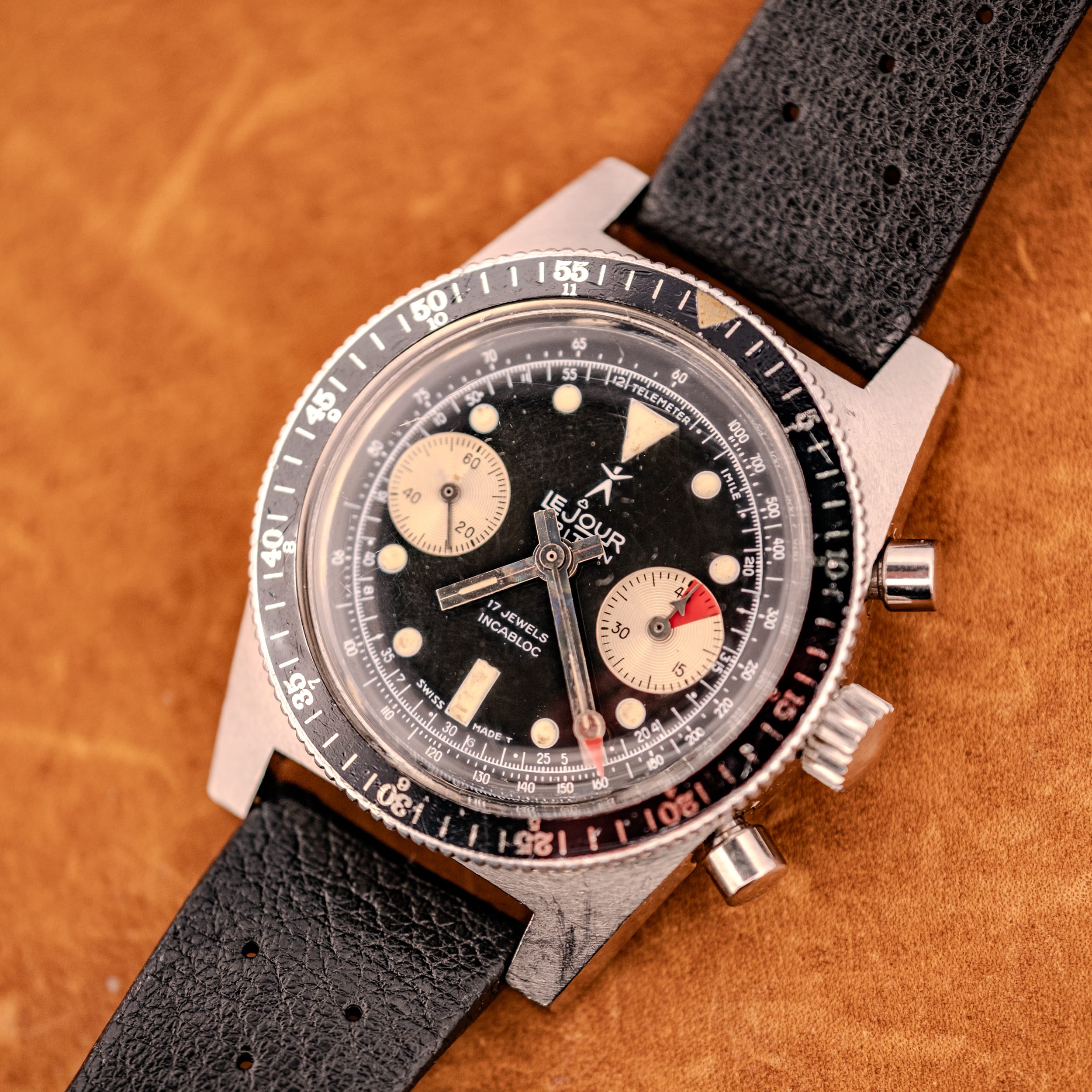
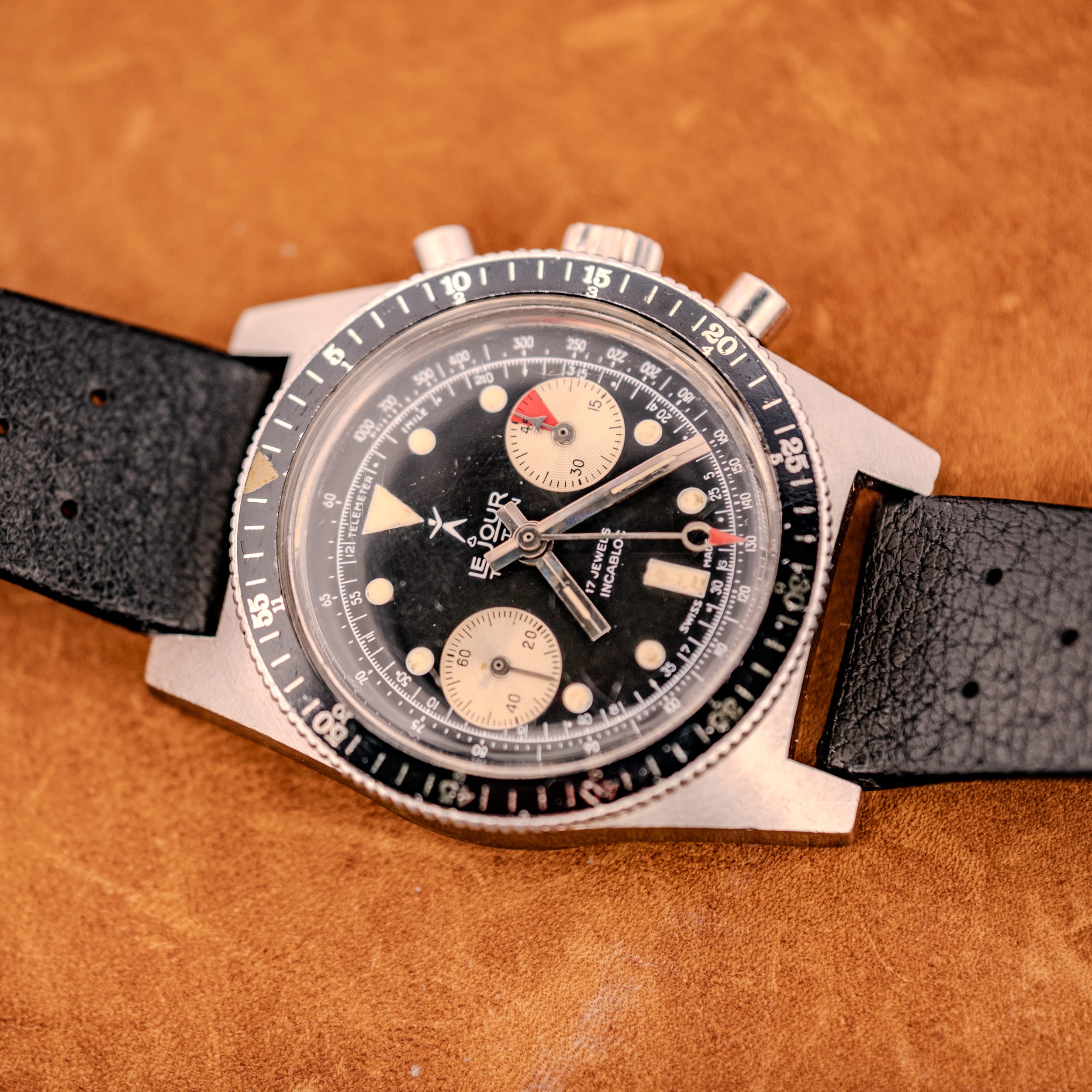
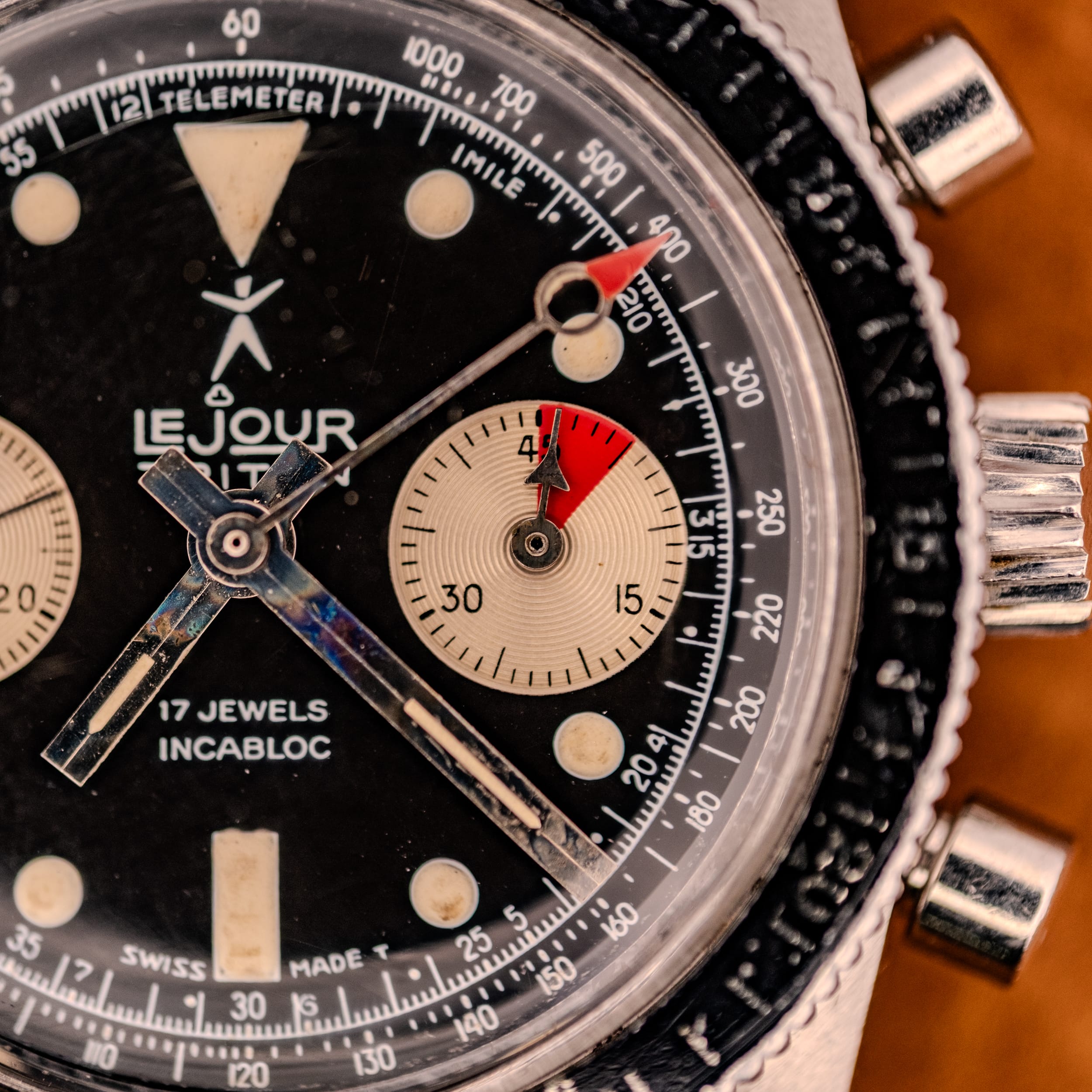
The Le Jour Triton is the kind of late-1960s Le Jour chronograph that punches well above its weight on the wrist. In our opinion, this is exactly the kind of watch the vintage market quietly rewards: a real Landeron 248 inside, dressed in a properly engineered dive-style case with a rotating bezel, presented on its period-correct Tropic Star strap, and trading at a fraction of what an equivalent Heuer or Breitling would command. The Triton was not trying to be a Carrera or an Autavia. It was trying to be a genuinely useful tool for the American collector who wanted a real Swiss chronograph without paying Geneva prices, and we think it succeeded handsomely.
Le Jour itself has one of the more characterful backstories in vintage chronograph collecting. It started as a French distributor that became the US-market label for chronographs built by other Swiss and French houses. Most famously, Le Jour later struck a deal with Heuer to retail Heuer-built chronographs under the Le Jour name in America, which is why so many Le Jour pieces from the early 1970s share casework with Carreras and Autavias. The Triton sits just before that Heuer partnership era, when Le Jour was sourcing ébauches from Landeron and casing them into their own designs. That makes this watch a real piece of pre-Heuer-era Le Jour history, and a quietly important one to us.
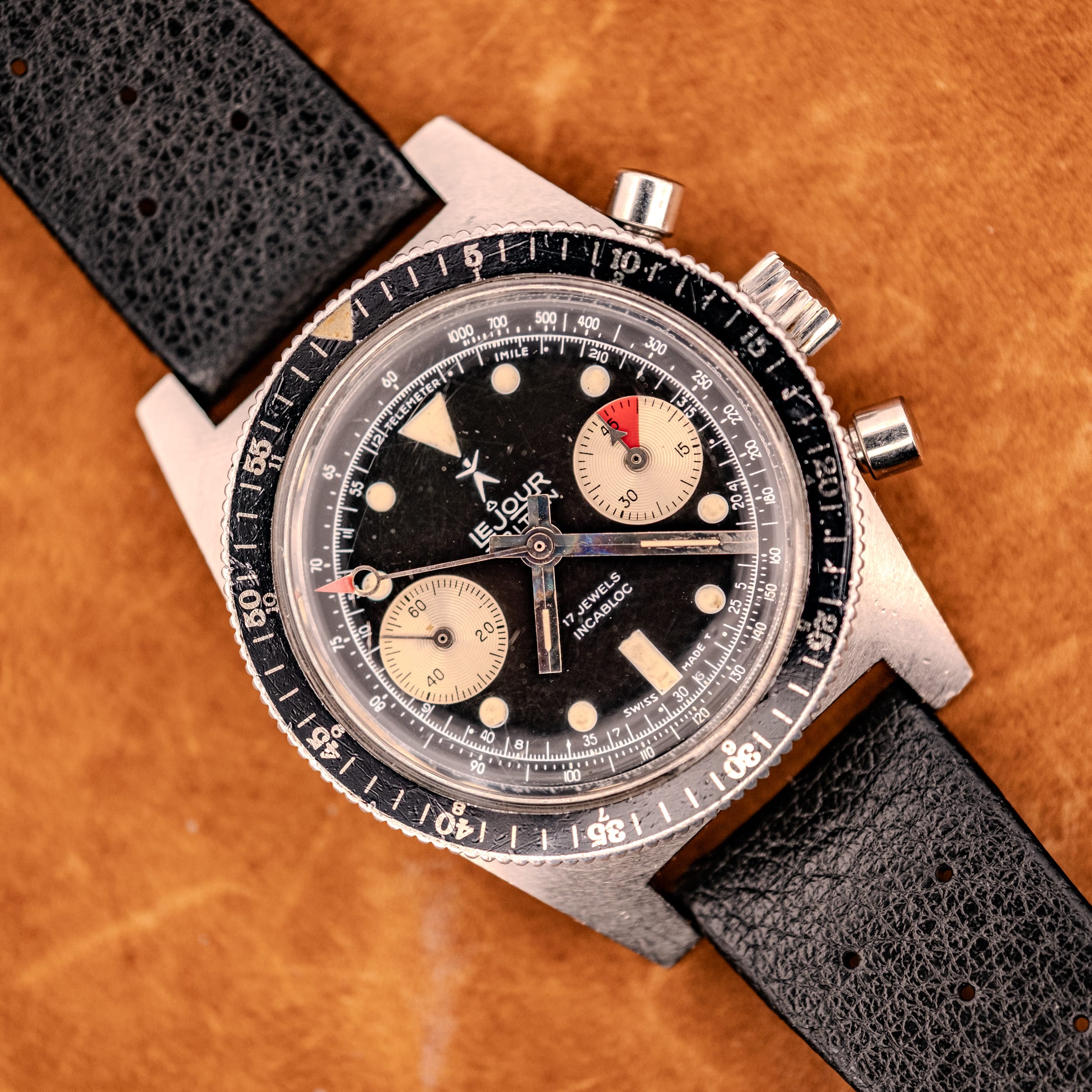
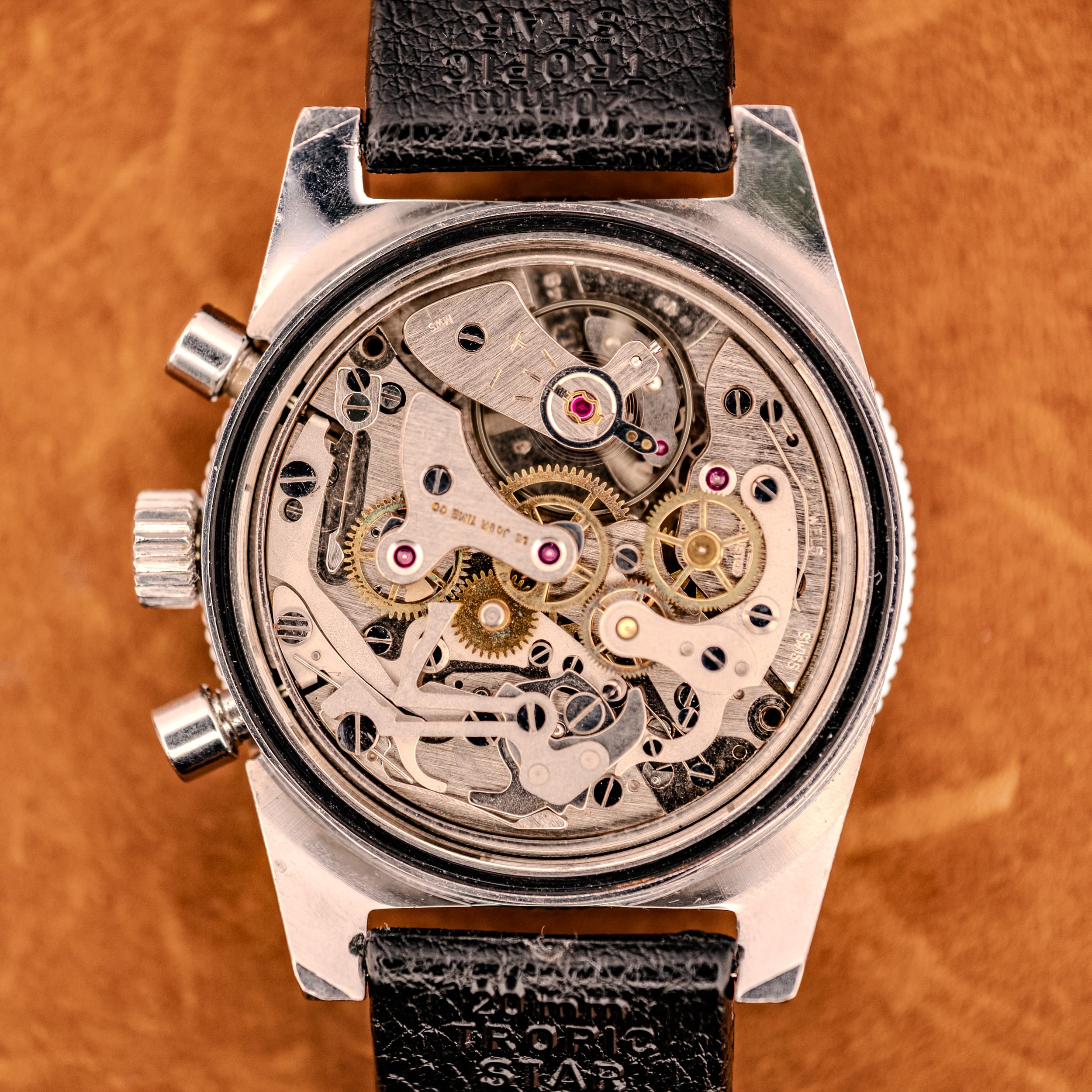
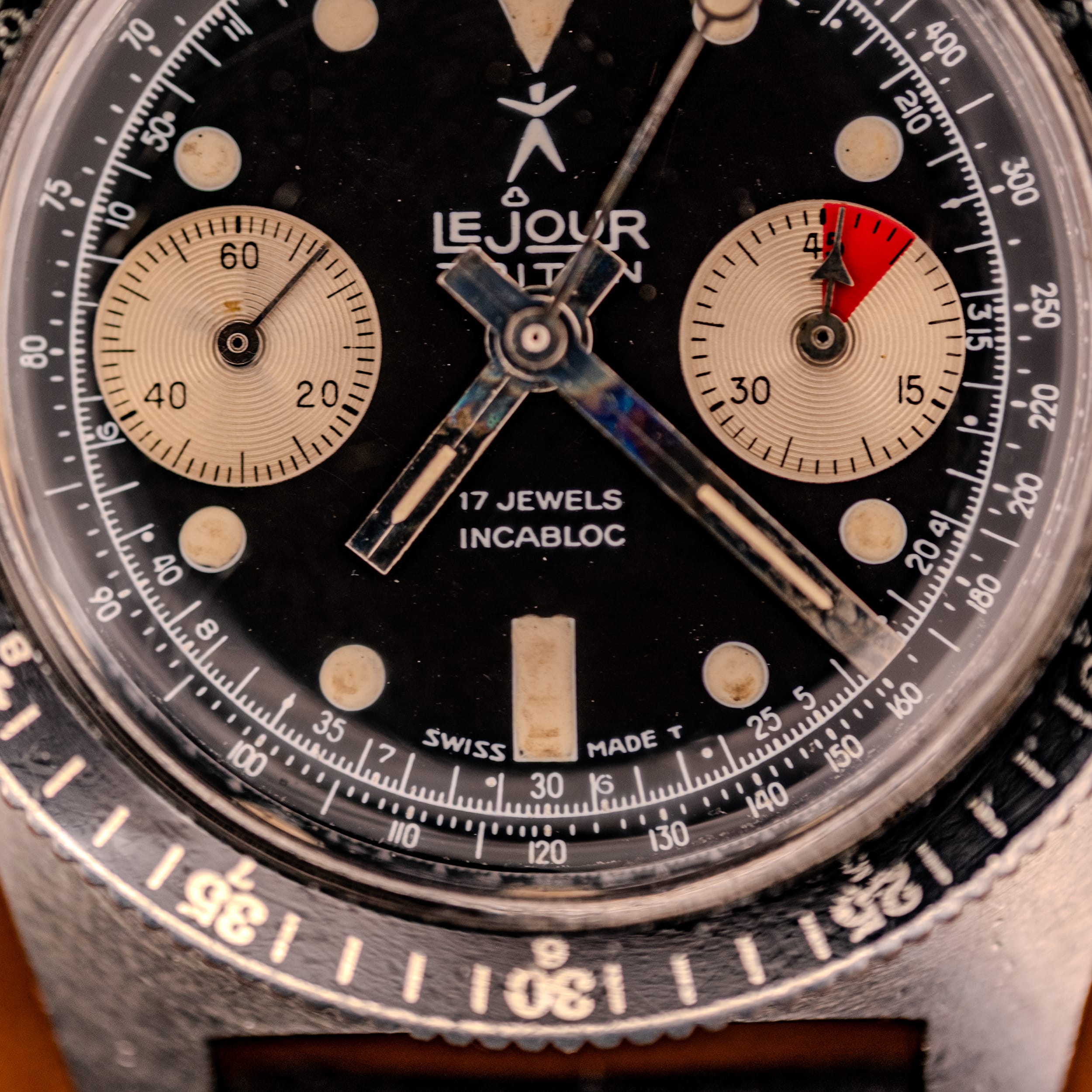
The caliber is the headline. The Landeron 248 is the final and most refined evolution of the storied Landeron 48 family, which became, by some accounts, the most-produced chronograph movement family ever made. The 248 is cam-actuated rather than column-wheel, runs at 18,000 vibrations per hour, and carries 17 jewels with Incabloc shock protection. Its real party trick is the “alternative action” pusher logic: the top pusher both starts AND stops the chronograph, and the bottom pusher resets. It is a different muscle memory than a column-wheel chrono, and it is wildly satisfying once you get used to it. The 248 also uses an oscillating pinion to engage the chronograph train, the same elegant solution Heuer would later popularize in their own chronograph movements. The Landeron 248 was offered in both 30-minute and 45-minute counter configurations, and this Triton carries the rarer and more characterful 45-minute version, complete with the red zone covering the final fifteen minutes.
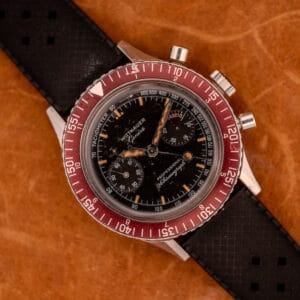
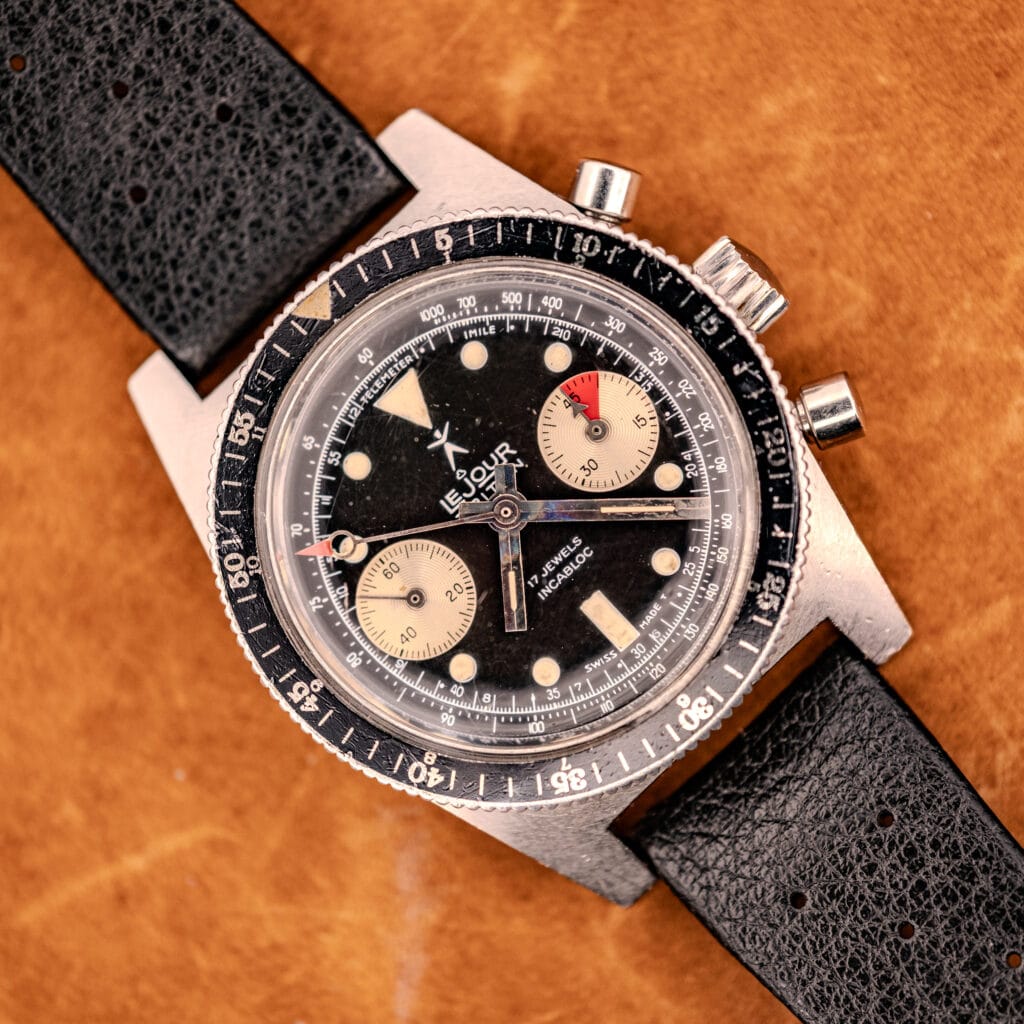
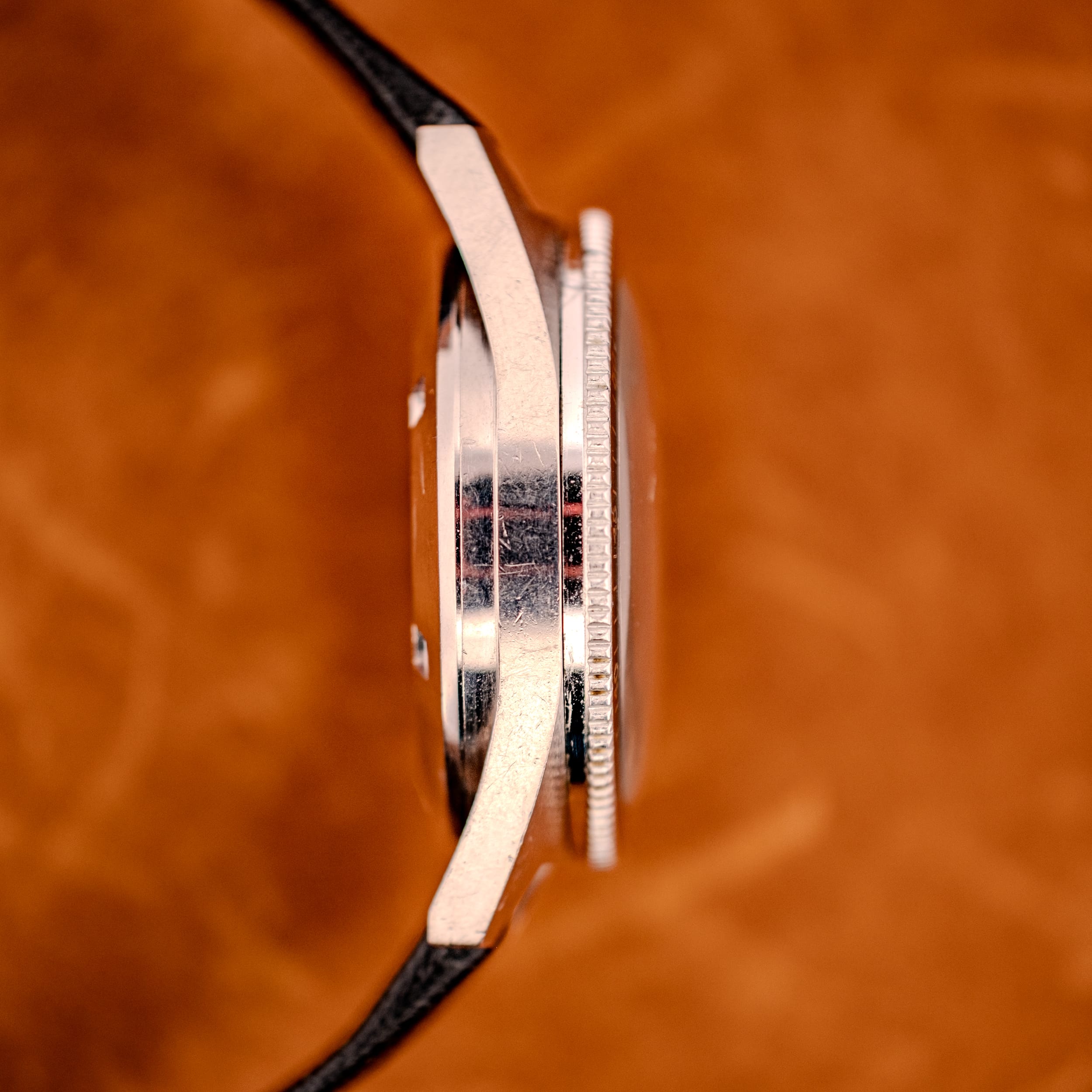
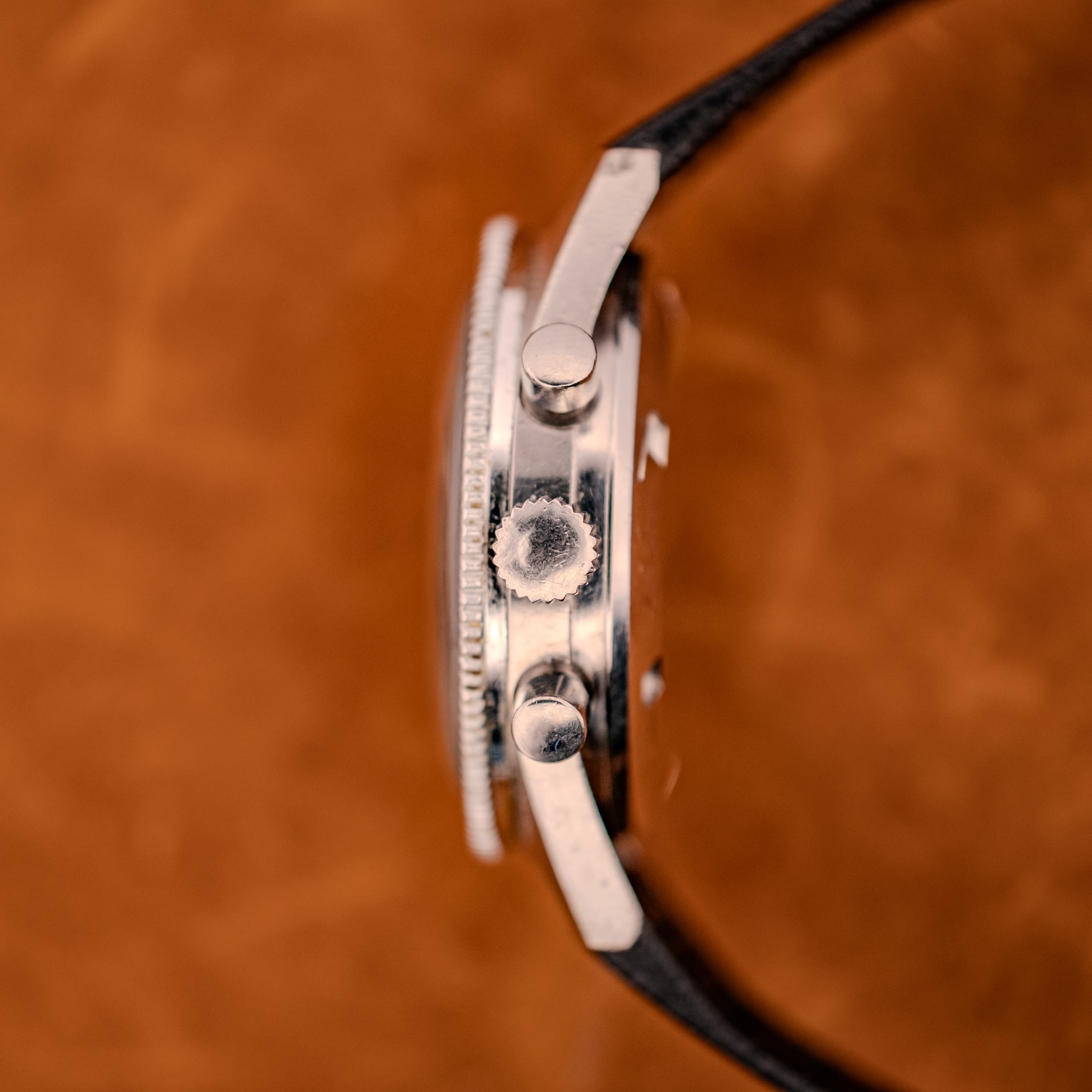
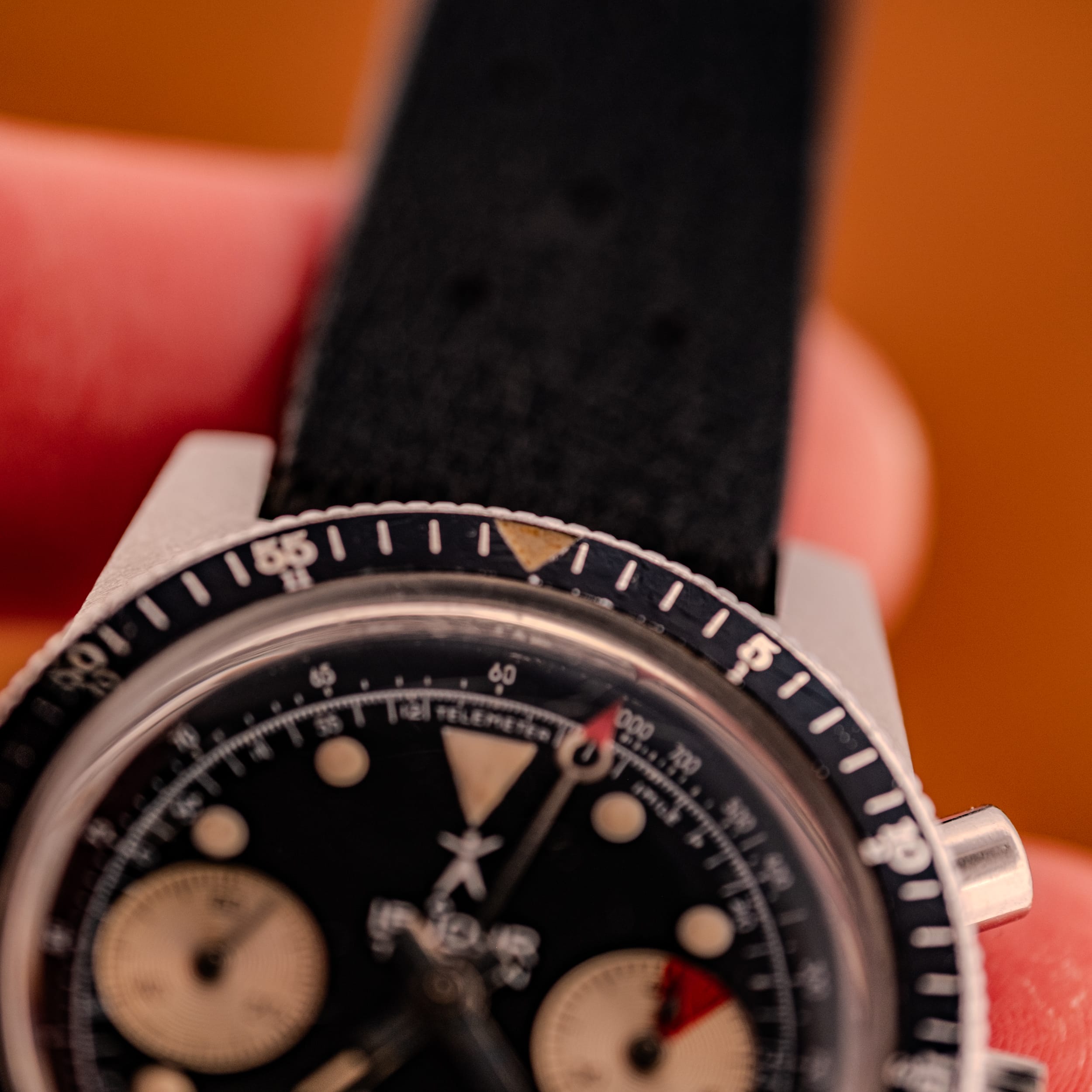
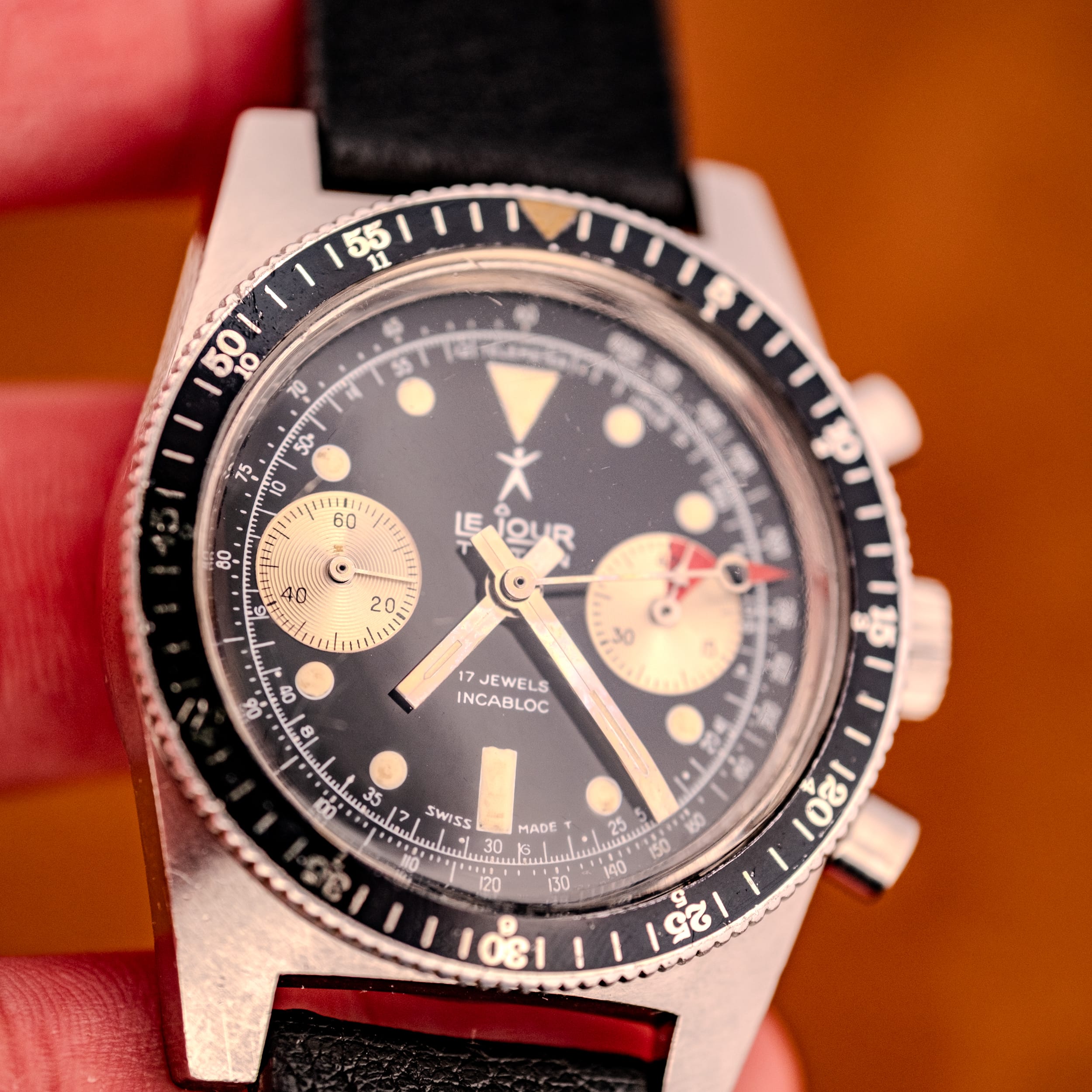
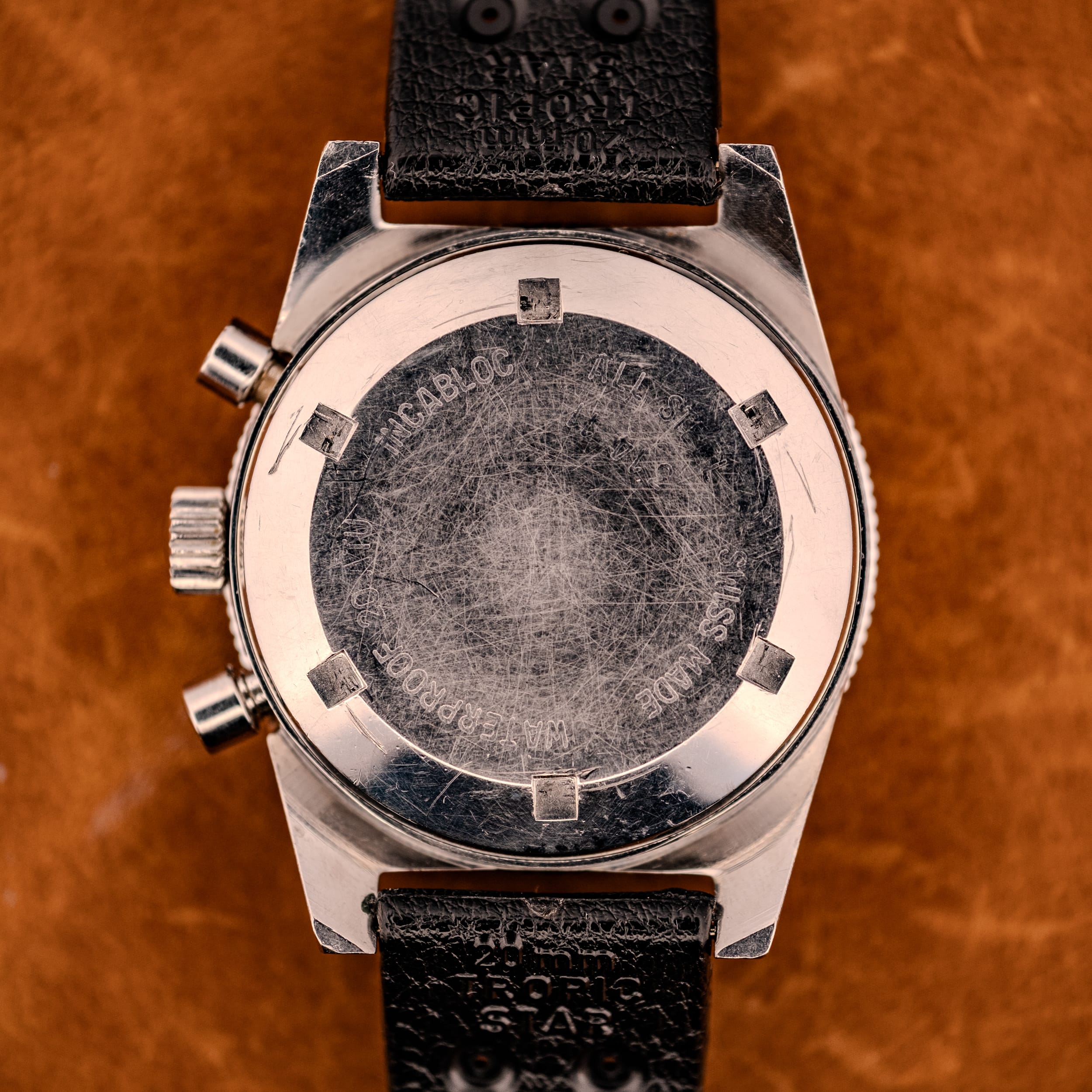
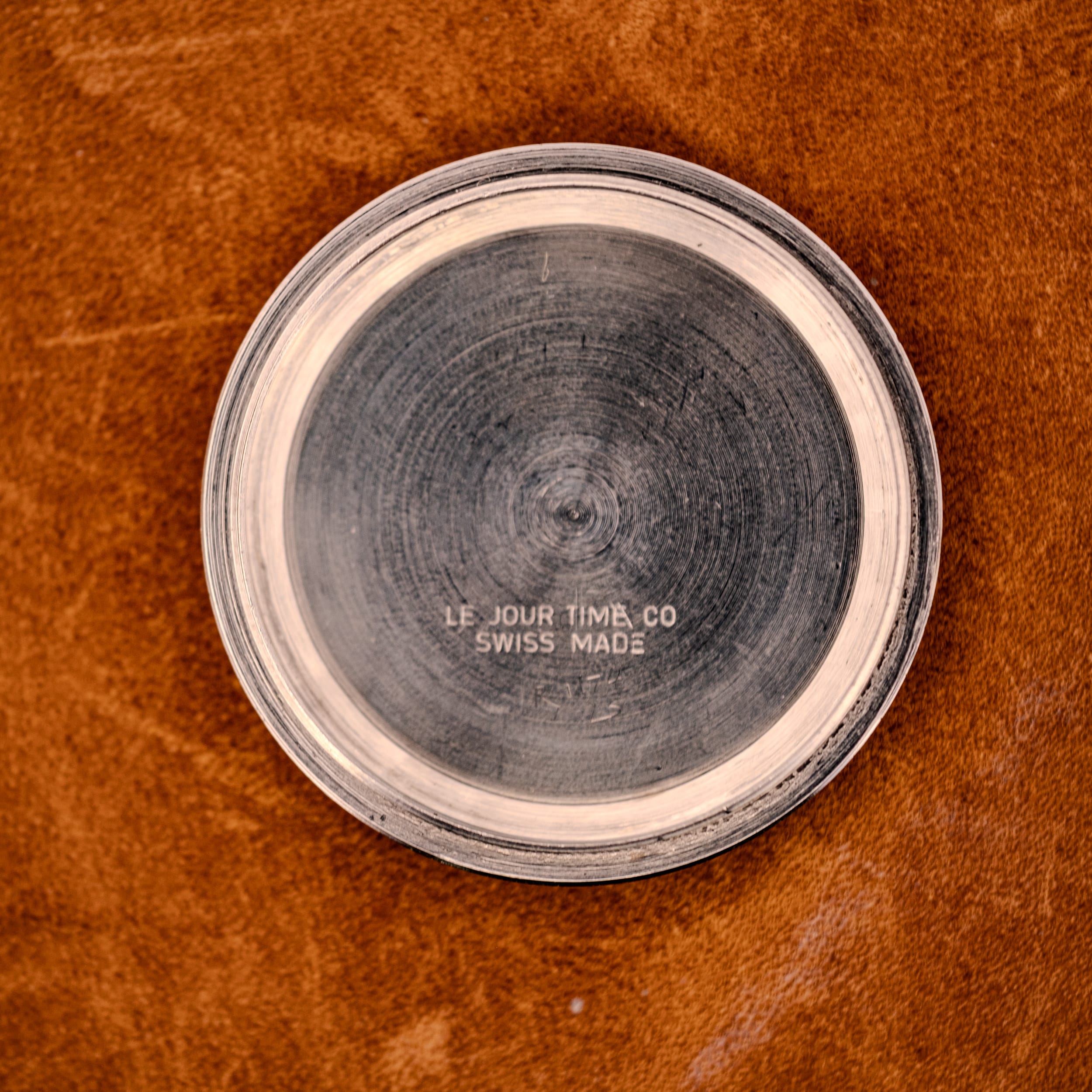
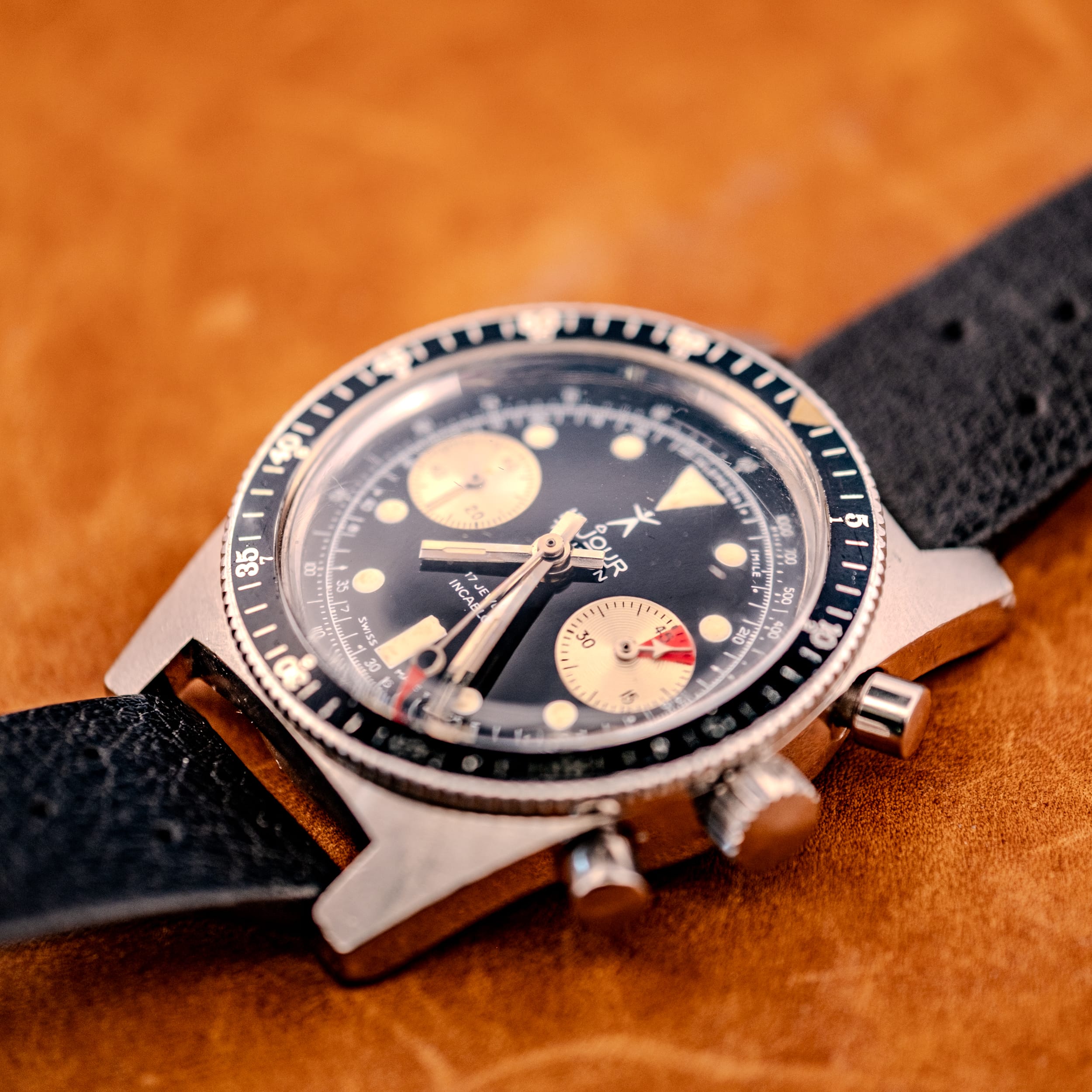
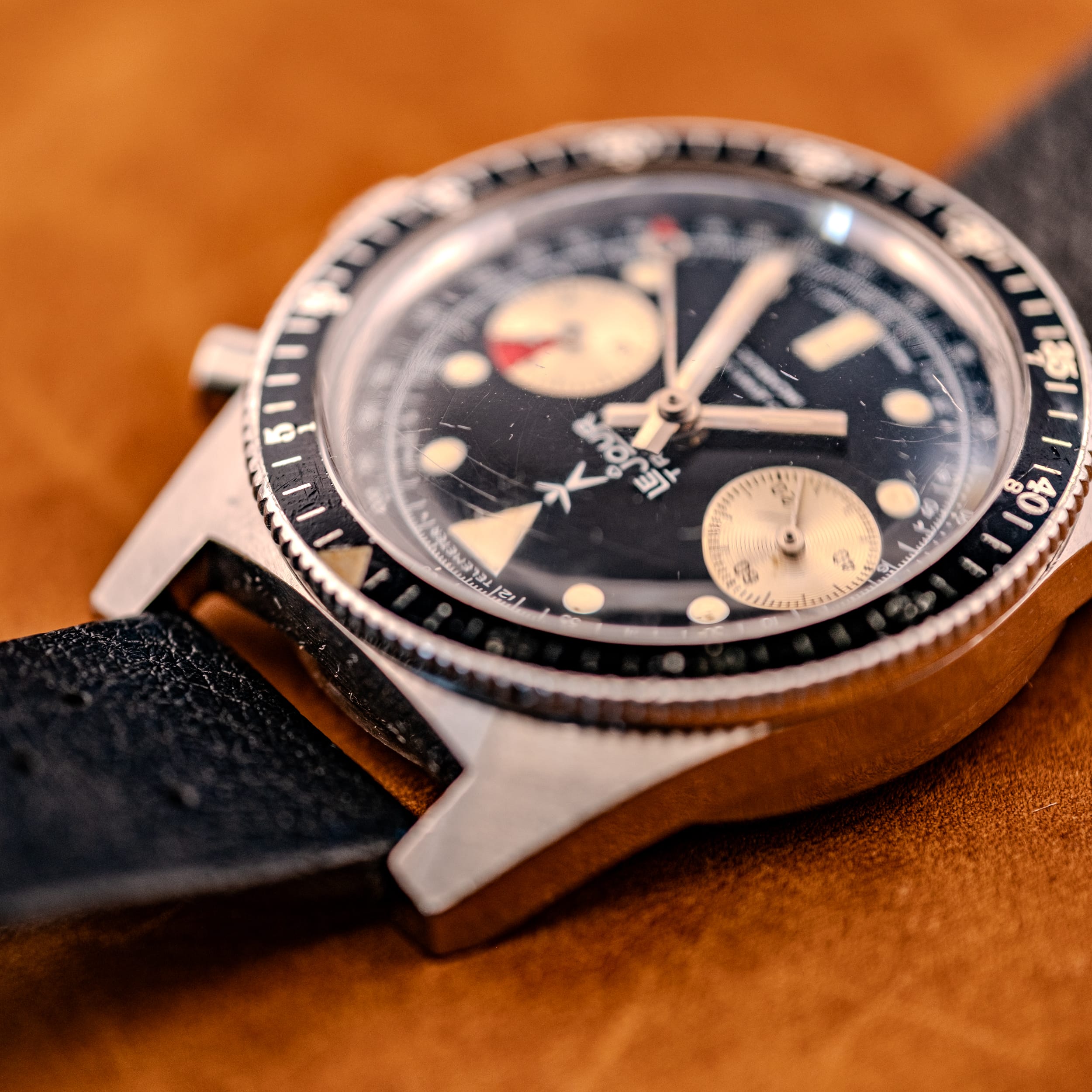
The case is a wonderfully tool-watch interpretation of the late-1960s dive chronograph idea. It measures 38mm wide with a 46.5mm lug-to-lug and 20mm lug width, in stainless steel, with sharp faceted lugs and broad straight flanks that give the watch a real visual mass on the wrist. The rotating black bezel insert is fully present with its 60-minute elapsed-time scale and lume pip at zero. The screw-down caseback is original and carries the worn but legible engraving “LE JOUR TIME CO” and “SWISS MADE” on the inner side, with characterful turning marks across the outer surface that we love. The crown is unsigned and sits at 3 o’clock between two pump pushers at 2 and 4, all original and operating correctly.
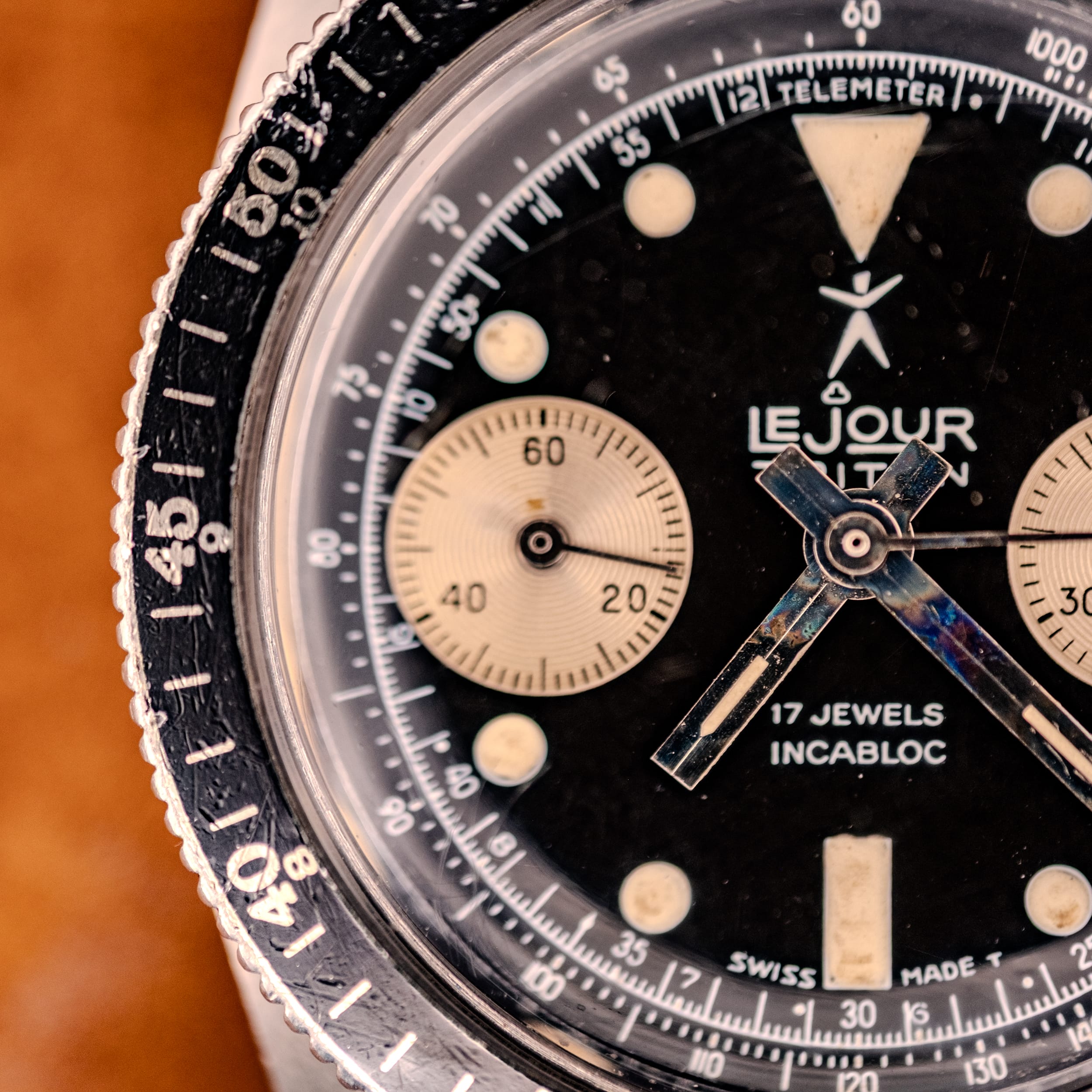
The dial is honestly the headline visual. It is a deep glossy black with two cream-white engine-turned subdial cups, running seconds at 9 reading to 60, and the 45-minute counter at 3 with that pop of red across the final third of the scale. The applied dot indices retain warm tritium plots at every hour position, with the triangular marker at 12 and the rectangular bar at 6 carrying matching aged lume. The Le Jour and Triton signatures and the runner-figure logo are crisp and original, with “17 JEWELS / INCABLOC” below the center pinion. The text “SWISS MADE T” at 6 confirms the tritium era, and we date this Triton to the late 1960s based on the dial signature style and the 248 caliber. The sword-style hour and minute hands have aged to a quietly mesmerizing blue-violet iridescence under direct light, and the chronograph sweep hand still carries its red arrow tip. Inside the dial you get a printed telemeter scale and an outer tachymeter track running to 1000 units per hour, both legible and complete.
It comes mounted on a black Tropic Star perforated rubber strap, which is the right call for a watch of this style and era, and pairs with the 20mm lug width on a buckle clasp that will fit up to an 8.5 inch wrist. If you want to take it dressier we would put it on a black or tobacco leather rally, but the Tropic Star is the period-correct move and we would honestly leave it alone.
Serviced in-house at OTTUHR and backed by our 2-year mechanical warranty. For the collector who values story and movement quality over brand-name premium, who would rather own a real Landeron 248 chronograph with the alternative-action pusher logic and a 45-minute counter than another safe Speedmaster, the Le Jour Triton is, to us, one of the most satisfying vintage Le Jour chronographs you can put on your wrist this year.