

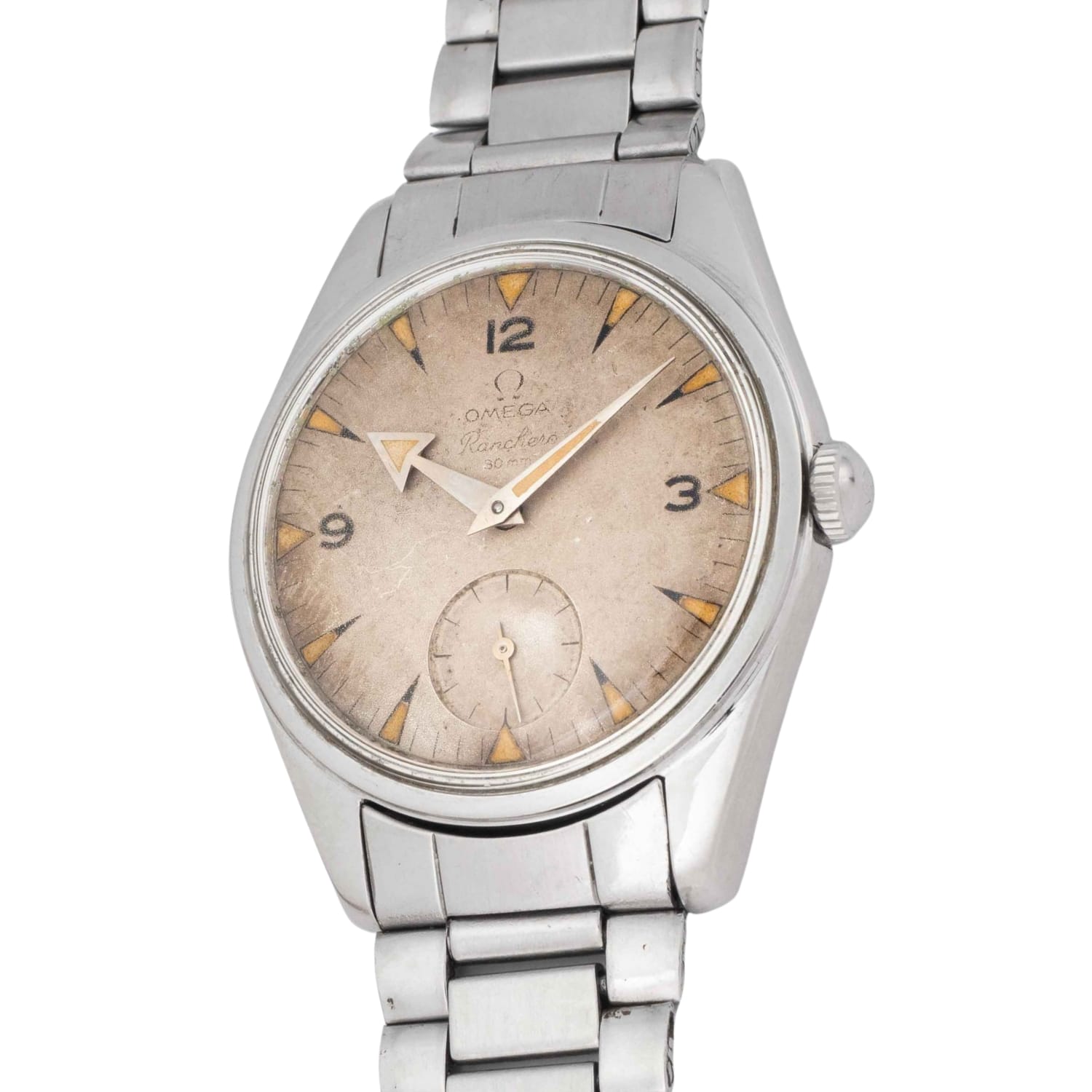
In the pantheon of vintage Omega tool watches, the 2990 occupies a paradoxical position. Introduced in 1958 as an affordable companion to the legendary 1957 trilogy (the Speedmaster, Seamaster 300, and Railmaster), this watch was a commercial disaster that lasted barely two years in production. Yet this very failure has transformed the CK 2990 into one of the most coveted and rarest vintage Omega sports watches available today. For collectors, it represents a fascinating convergence of superb design, brief production, and historical intrigue, a watch that deserves serious consideration despite (or perhaps because of) its original unpopularity.
The CK 2990 is colloquially known as the “Ranchero,” though this designation comes with significant caveats that make the reference particularly interesting from a collecting standpoint. Not all examples carried the Ranchero signature, some bore only “Seamaster” text (earning them the nickname “Seachero”), while others featured both designations on a single dial. This naming confusion reflects Omega’s desperate attempts to salvage a watch whose Spanish name, meaning “ranch hand,” proved catastrophically unmarketable in both Spanish-speaking regions and upscale watch markets worldwide.
History & Production Period
Omega released the CK 2990 in 1958, precisely one year after the groundbreaking 1957 trilogy that redefined professional sports watches. The timing was strategic: Omega sought to capitalize on the design language and prestige of its three celebrated tool watches while offering a more accessible, versatile timepiece at a dramatically lower price point. Where the Railmaster commanded 245 Swiss francs in the 1959 catalog, the Ranchero retailed for just 147 francs, positioning it as an entry-level offering that borrowed heavily from its more expensive siblings.
The watch shared the broad arrow hands of the 1957 trilogy, Arabic numerals at 3, 6, 9, and 12 o’clock (though in a different configuration than the Rolex Explorer), and the same robust construction philosophy. However, Omega deliberately gave the CK 2990 a slimmer profile and thinner case compared to the Railmaster or Seamaster 300, intending it to function as a true “do everything” watch that could transition from field to formal settings with equal ease.
This strategy proved fundamentally flawed. The “Ranchero” name generated resistance in Spanish-speaking markets, where potential buyers balked at wearing a watch branded with a term for agricultural laborers. In other markets, the name simply confused consumers or failed to convey the prestige associated with tool watches. Sales flatlined almost immediately.
Omega responded by experimenting with dial variations. Some watches delivered to certain markets (particularly Sweden and Germany) featured “Seamaster” text instead of or in addition to “Ranchero”. Evidence suggests that Swedish agents may have even retrofitted some Ranchero dials with Seamaster variants to improve sales prospects. These “Seachero” watches, while originally a sign of desperation, have become highly prized variants today.
Production ceased by late 1959 or early 1960, with remaining inventory sold through 1959 and into 1960. The entire production run lasted approximately two years at most, with some sources suggesting production was effectively limited to a single year (1958). This extraordinarily brief window makes the CK 2990 among the rarest vintage Omega sports watches ever produced.
References with production serial numbers ranging from approximately 15.8 million through 17.6 million have been documented, dating primarily to 1958-1960. Omega maintained records of these deliveries, and the company’s Extract from the Archives service can confirm original specifications and delivery destinations for surviving examples.
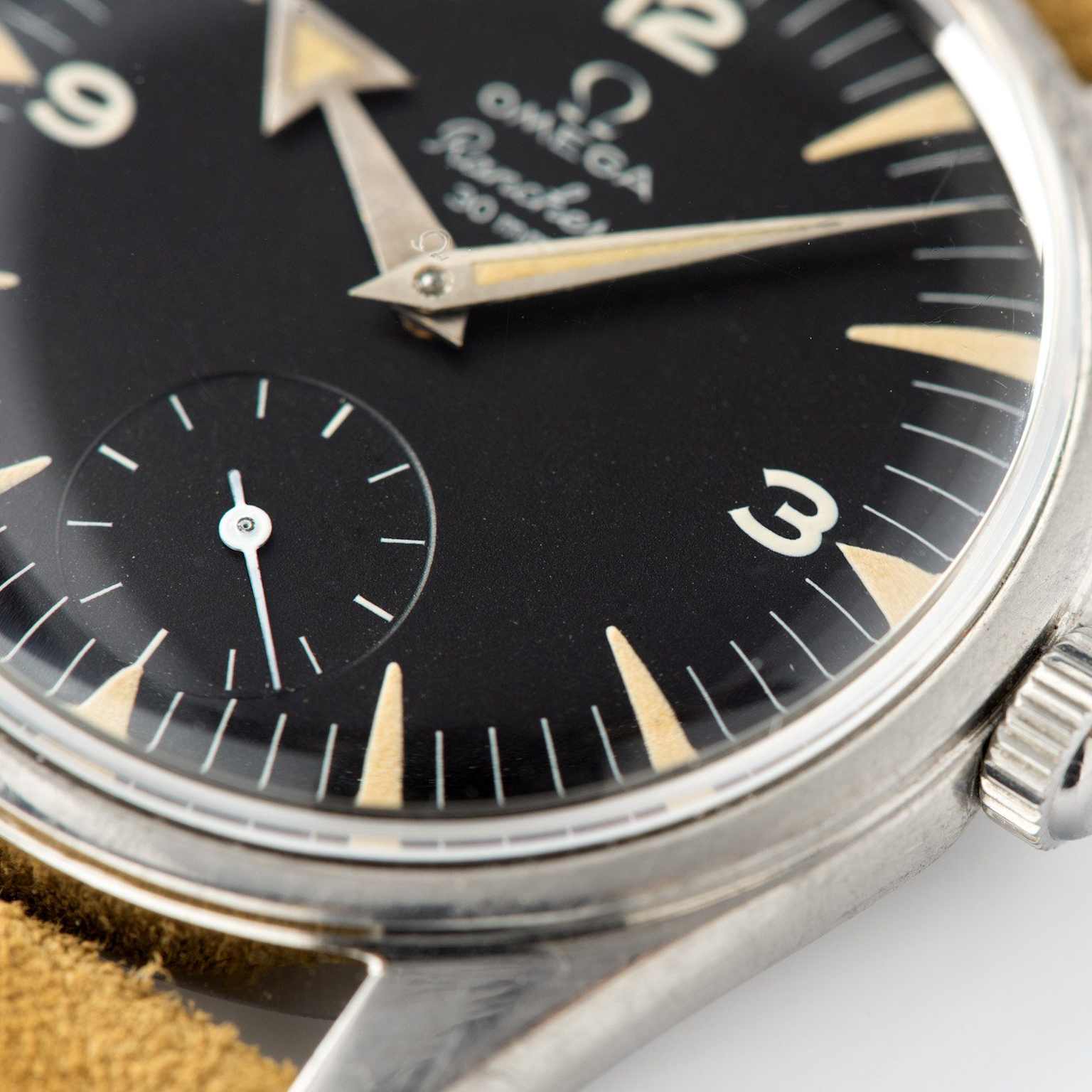
Omega Ranchero CK2990 Broad Arrow Hands and Archive Extract
Technical Specifications
The CK 2990 presents deceptively modest specifications that belie its significance:
The 36mm diameter places the CK 2990 in the sweet spot for vintage sizing, large enough to maintain presence without overwhelming the wrist, yet compact enough to slip under a dress shirt cuff. The 10mm thickness contributes to the watch’s remarkably slim profile, particularly when compared to the chunkier Railmaster or dive-oriented Seamaster 300.
The case construction follows Omega’s waterproof design practices of the era. The snap-on caseback features an O-ring rubber gasket to provide water resistance, while the crown likely utilized a compression seal. The caseback typically bears “OMEGA,” the reference number (2990-1 or variants), “STAINLESS STEEL,” and the “WATERPROOF” designation, along with the “SC” suffix indicating the snap case construction.
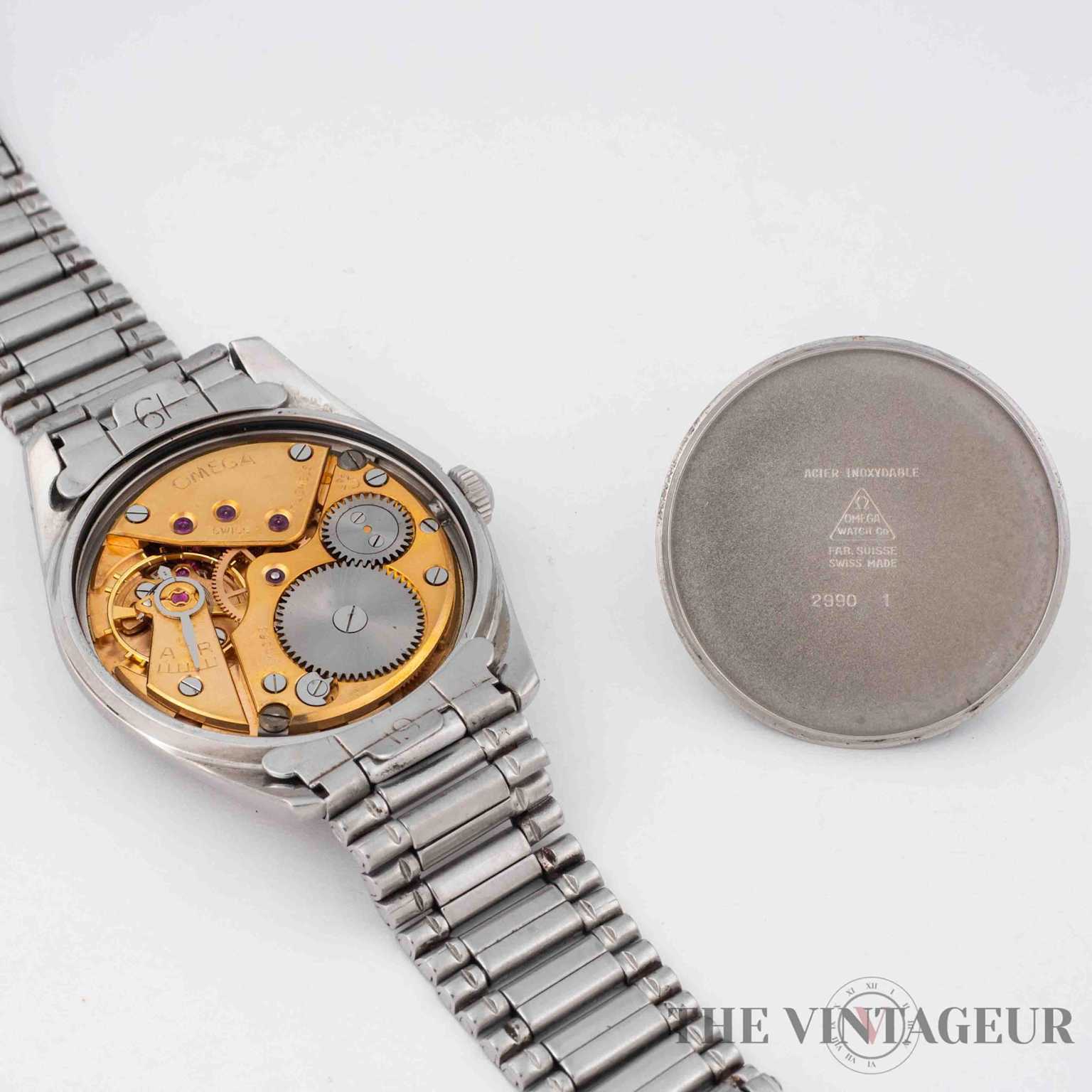
Movements/Calibers
The CK 2990 was powered by movements from Omega’s celebrated 30mm caliber family, a series of hand-wound mechanisms that formed the backbone of Omega’s production from 1939 through the early 1960s. Multiple calibers appeared across the production run:
Caliber 267 (Primary Movement)
The Caliber 267 represents the most common movement found in CK 2990 references, particularly in sub-seconds variants marked 2990-1.
The Caliber 267 dates to 1956 in its final form, though it represents an evolution of Omega’s 30mm series that began in 1939. The movement features indirect center seconds (with the minute hand indirectly driven), allowing for a large balance wheel that contributes to excellent timekeeping. Surviving examples, when properly serviced, regularly achieve accuracy within +3 to +10 seconds per day, exceptional performance for a watch of this vintage.
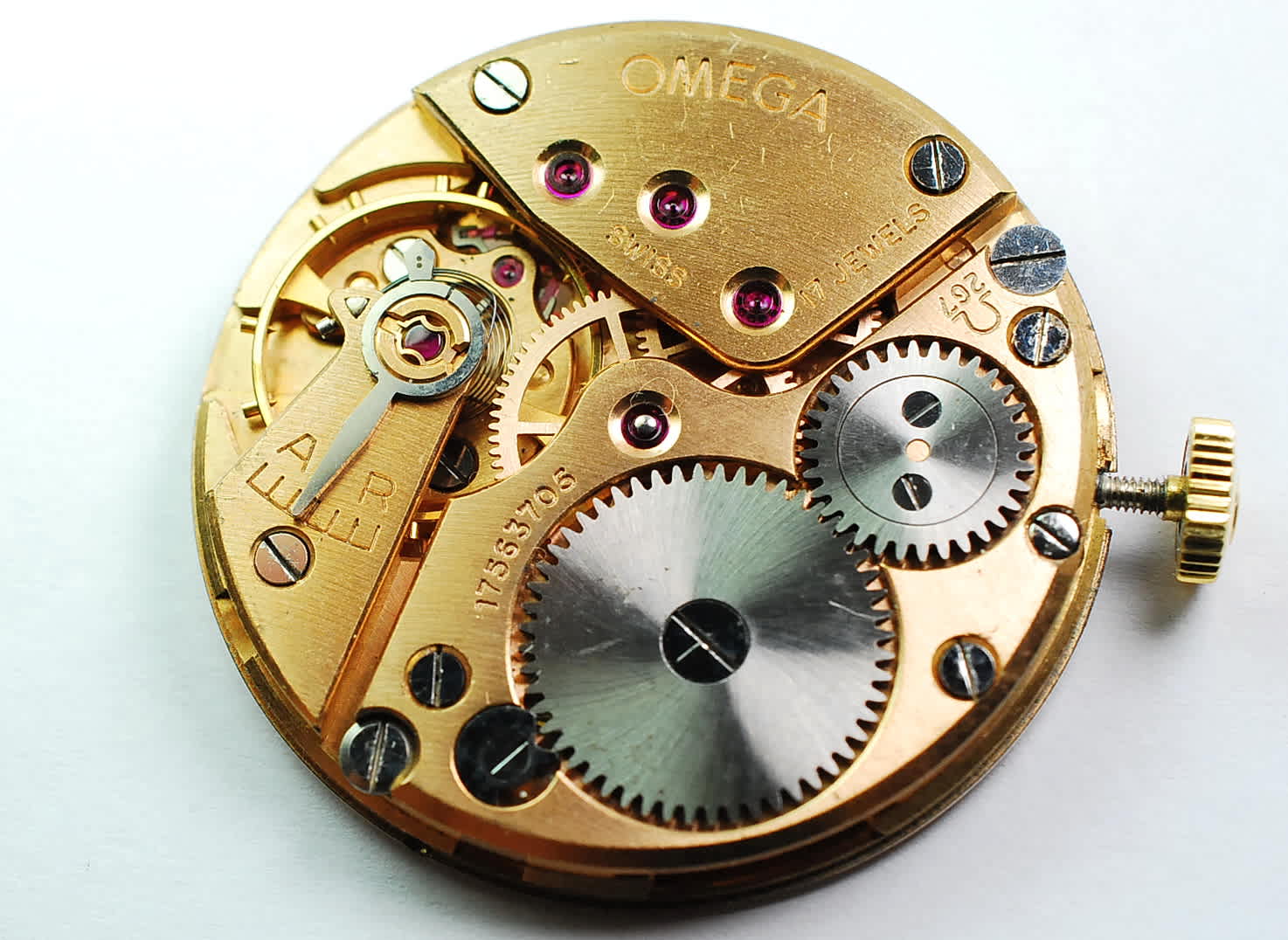
( RESERVED ) OMEGA caliber 267 complete and working – mechanical with manual winding – year 1960
Caliber 268 (Alternative Movement)
Some CK 2990 references, particularly later examples from 1960-1962, housed the Caliber 268. This movement shares the 30mm family architecture but features sweep seconds rather than sub-seconds:
The Caliber 268 represents a later evolution of the 30mm series, incorporating improvements like the Novochoc shock protection system and refined balance design. Its appearance in CK 2990 cases may indicate Omega’s attempts to use remaining Ranchero cases after discontinuing the original Caliber 267-equipped version.
Calibers 284 and 285 (Center Seconds Variants)
The related reference 2996, which shares the Ranchero case design but features center seconds and different dial configurations, typically houses Caliber 284 or 285. These movements enable the center seconds complication found on “Seachero” variants and later transformations:
- Caliber 284: Center seconds, part of the 30mm family, used in reference 2996-1 and related variants
- Caliber 285: Similar specifications to 284, also found in 2996 variants
The variety of calibers reflects both the watch’s brief production evolution and Omega’s practical approach to utilizing available movements across different case designs during this period.
Dial Variations
The CK 2990’s dial variations tell the story of a watch in crisis, with Omega experimenting desperately to find a winning formula. These variations now represent some of the most fascinating aspects of collecting this reference.
Standard Ranchero Dials
The original, “pure” Ranchero configuration features specific design elements:
Matte Black Dial (Most Common)
- Matte black finish with high contrast against luminous elements
- “OMEGA” logo at 12:00
- “Ranchero” printed in script below the logo
- “30mm” printed above the sub-seconds register at 6:00
- Applied luminous triangular hour markers at 3, 6, 9, and 12 o’clock
- Printed minute track around perimeter
- Sub-seconds register at 6:00 position
- Original radium luminous compound in markers and on hands
The “30mm” printing refers to the movement caliber size, not water resistance, an unusual choice that some find technically honest and others consider awkwardly literal.
Matte White Dial (Less Common)
- White or cream matte finish
- Same layout as black dial variant
- “OMEGA” logo, “Ranchero,” and “30mm” text
- Applied luminous triangular markers
- Radium lume that typically develops warm “pumpkin” or golden patina
- Sub-seconds at 6:00
White dial Rancheros are notably scarcer than black dial versions and command premium prices when they surface. The white dial’s tendency to develop attractive, even patina makes pristine examples particularly desirable.
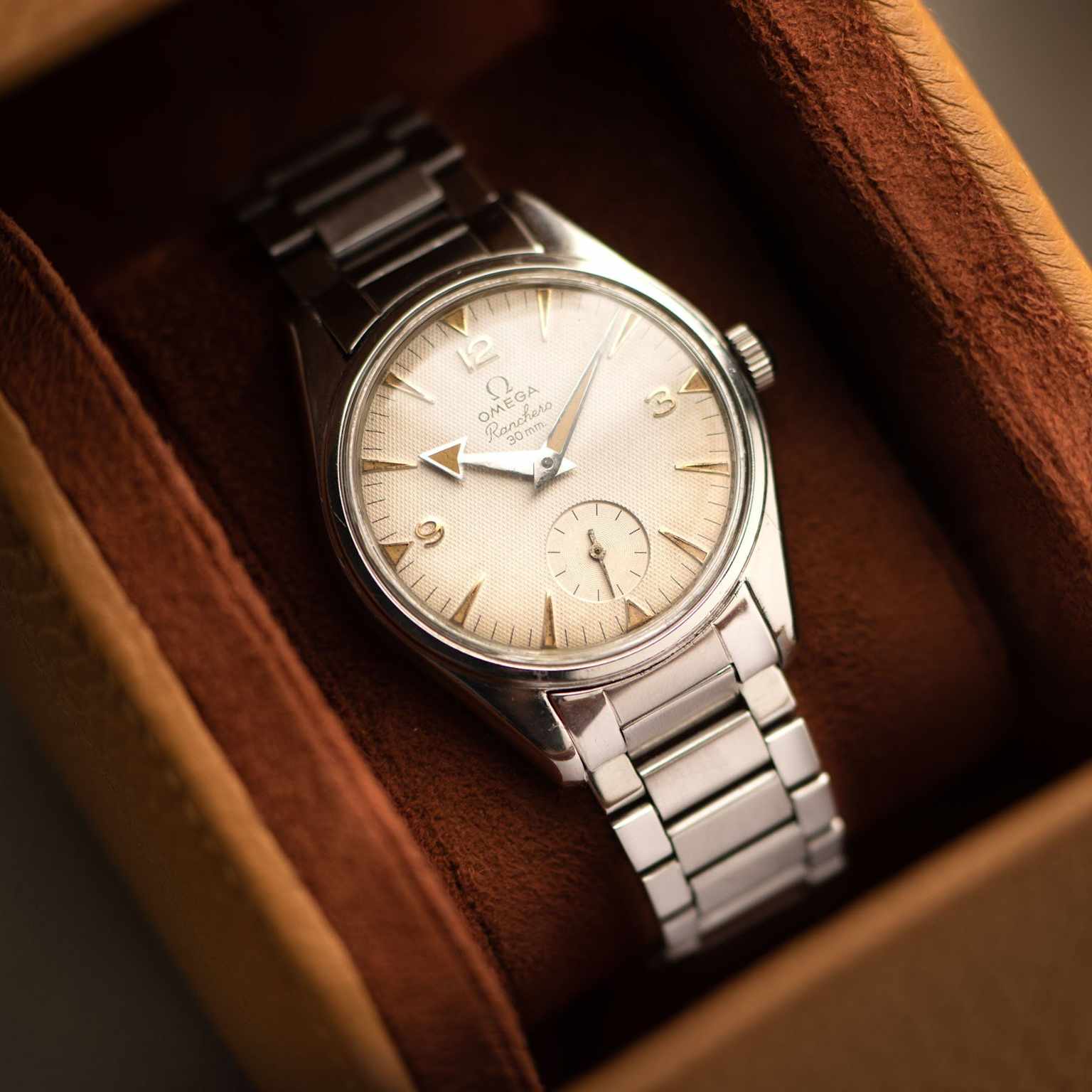
Omega Ranchero White Waffle Dial 2990 with Archive Extract
“Seachero” (Seamaster-Signed) Dials
Perhaps the most intriguing variant, “Seachero” dials feature “Seamaster” text instead of “Ranchero”:
- “OMEGA” logo at 12:00
- “Seamaster” printed in script below the logo
- “30mm” above sub-seconds at 6:00
- Same applied markers and layout as Ranchero versions
- Both black and white dial variants exist
These watches share identical case references (2990-1) with standard Rancheros, and Omega’s archives confirm them as factory-original configurations delivered to specific markets, particularly Germany and Sweden. The Swedish connection is particularly well-documented, with evidence suggesting Swedish distributors may have ordered these variants specifically or even retrofitted Ranchero dials to improve marketability.
Double-Signed Dials (Extremely Rare)
The rarest dial configuration features both “Ranchero” and “Seamaster” designations on a single dial:
- “OMEGA” logo at 12:00
- “Ranchero” printed below logo
- “Seamaster” printed above sub-seconds register (replacing or alongside “30mm”)
- Most commonly seen on watches delivered to military units or specific markets
Double-signed dials appear most famously on watches delivered to the Fuerza Aérea del Perú (Peruvian Air Force), where they bear “FAP” engravings on the caseback. These military-issued variants represent the absolute apex of CK 2990 collectibility.
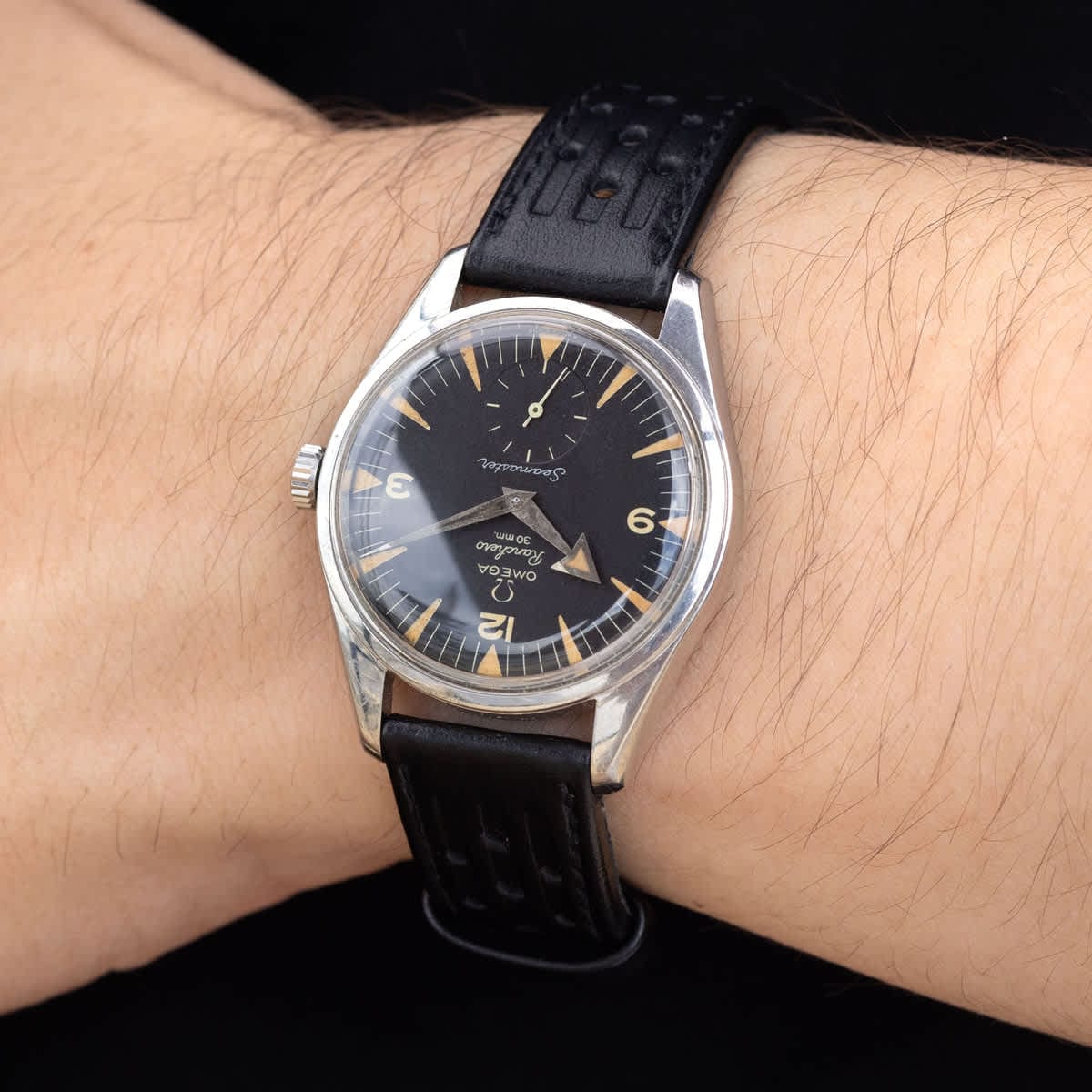
Omega Ranchero Seamaster / Double Signed Dial ref.2990-1
Waffle/Honeycomb Dial Variants
An especially unusual variant features a textured “waffle” or “honeycomb” dial surface:
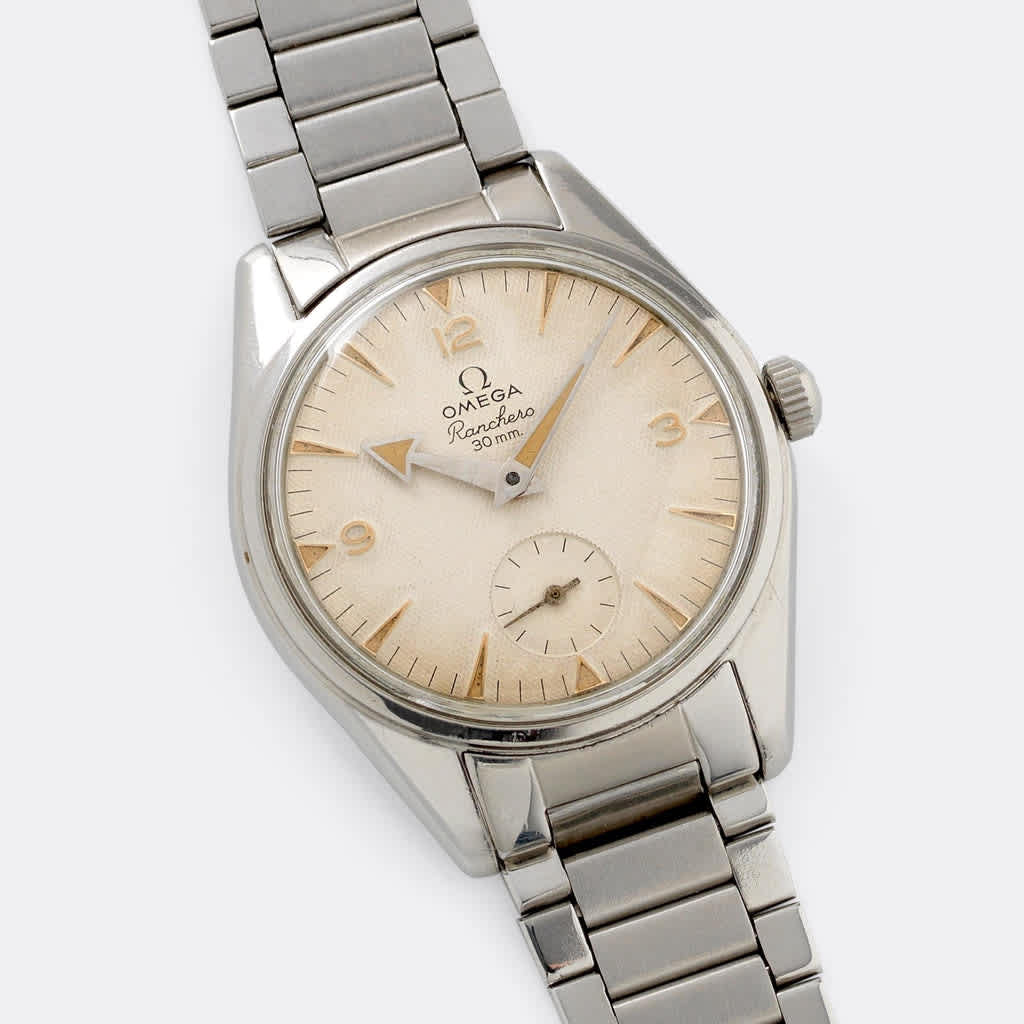
Omega Ranchero White Waffle Dial 2990 with Archive Extract
- Honeycomb-textured dial finish (radial or geometric pattern)
- Applied hour markers (typically 3-6-9 configuration)
- Can appear in gold-plated or steel cases
- Extremely rare and highly distinctive
- Both black and white/champagne backgrounds documented
The honeycomb texture adds visual depth and interest, creating a dial that stands apart from the standard matte finishes. These variants are exceptionally scarce and command significant premiums.
Dial Material and Luminous Compound
Original CK 2990 dials from 1958-1960 feature radium-based luminous compound on both the applied hour markers and hands. Omega discontinued radium use around 1963, making all original CK 2990 dials radium-equipped. The radium lume no longer glows after six decades but remains radioactive with a 1,600-year half-life.
Testing with a Geiger counter can confirm authentic radium lume, which typically reads around 10 µSv/hr with the crystal in place. The radium develops characteristic patina over time:
- Golden/yellow patina (most common aging)
- “Pumpkin” orange patina (highly desirable)
- Warm cream/tan coloration
Tritium replacement hands, identifiable by their different patina color (usually greenish or bluish undertones), indicate service replacements from the 1960s onward. Original radium hands matching the dial’s patina represent a key authenticity marker.
Case & Bezel Variations
The CK 2990 case design prioritizes versatility and slim proportions over pure tool watch robustness, distinguishing it from the chunkier 1957 trilogy watches.
Case Reference Designations
CK 2990-1 (Standard Sub-Seconds)
- Stainless steel
- Snap-on caseback with O-ring gasket
- Sub-seconds configuration (Caliber 267 or 268)
- “SC” suffix denoting snap case construction
- Stainless steel
- Snap-on caseback
- Center seconds configuration (Caliber 284 or 285)
- Same external case dimensions as 2990-1
- Often found with “Seachero” dials
- 40-micron gold plating over stainless steel case and bezel
- Steel caseback (not plated)
- Same dimensions as steel versions
- Considerably rarer than steel variants
Case Construction Details
The three-piece case consists of:
- Removable bezel: Polished, beveled edge design
- Main case body: Integrated lugs with short, downturned profile
- Snap-on caseback: Compression fit with rubber O-ring gasket
The caseback typically displays:
- “OMEGA” logo or text
- “STAINLESS STEEL” (or gold-plated variants omit this)
- Reference number: “2990-1,” “2990 1,” “2996-1,” etc.
- “SC” designation (snap case)
- “WATERPROOF” marking
- Movement serial number inside
The slim case profile measures just 10mm in thickness, substantially thinner than the Railmaster or Seamaster 300. This slimness, combined with the moderate 36mm diameter and 44mm lug-to-lug measurement, creates a watch that wears comfortably and unobtrusively.
Bezel and Crown
The bezel is a simple polished steel ring without markings or timing functions, contributing to the watch’s dress-watch versatility. Unlike the rotating bezels of dive watches or the tachymeter scales of chronographs, the CK 2990’s plain bezel reinforces its role as an everyday, go-anywhere timepiece.
The crown is Omega-signed with a domed profile typical of 1950s dress and sport watches. It lacks the oversized grip or guard found on purpose-built dive watches, keeping the case profile slim. Crown dimensions and tap sizes are period-specific, original crowns should match the watch’s production era.
Polishing and Case Condition
Vintage CK 2990 cases have frequently been polished over the decades, and truly unpolished examples with sharp, defined edges are exceptionally rare. Collectors should examine:
- Lug thickness: Original lugs should be thick and symmetrical with crisp edges
- Case angles: The transition from case sides to lugs should be sharp and well-defined
- Caseback condition: Over-polishing often rounds off caseback edges and diminishes engraving depth
Sympathetic polishing that preserves case proportions is generally acceptable in the vintage market, but cases polished to the point of distorted proportions (thin lugs, rounded edges) command lower prices.
Bracelet & Strap Options
Unlike the 1957 trilogy watches, which often shipped on Omega’s reference 7077 flat-link bracelet, the Ranchero was sold without a specific factory bracelet recommendation. This left considerable latitude for dealers and customers to select straps according to preference.
Period-Correct Options
Leather Straps (Most Common Original Configuration)
- Brown or black leather
- 18mm lug width
- Omega-signed pin buckle in steel
- Various leather types: calf, crocodile, lizard
“Beads of Rice” Bracelet (Popular Period Addition)
- Multi-link articulated bracelet with rounded bead-like links
- Excellent flexibility and comfort
- Often seen on vintage Rancheros but not original-issue
- Omega signed clasp
Expansion/Stretch Bracelet (Period Option)
- Stainless steel expansion bracelet
- Common aftermarket addition from the era
- Prone to stretching and wear over time
Reference 1036 Bracelet (Documented Original)
- Stainless steel bracelet stamped “No. 12 1036”
- Fitted to some original examples
- Likely a dealer or customer choice rather than factory standard
The absence of a definitive factory bracelet gives collectors flexibility in strap selection while making it difficult to definitively confirm “correct” bracelet references beyond general period-appropriateness.
Identifying Original vs. Replaced Parts
The CK 2990’s vintage status and relative value make authentication crucial. Several factors help distinguish original components from service replacements or outright fakes.
Dial Authenticity
Original Dials Display:
- Consistent, even patina development across the surface
- Radium lume with matching patina color in both markers and hands
- Sharp, well-defined printing with period-correct fonts
- Applied markers securely attached with no lifting or misalignment
- No under-dial corrosion or water damage spots
Service/Replacement Dials Show:
- Overly bright, fresh printing inconsistent with age
- Mismatched lume colors between dial and hands
- Incorrect font styles or text placement
- Painted rather than applied markers (on variants that should have applied)
- Perfect condition with no signs of aging (suspicious for a 65+ year old watch)
The proliferation of refinished dials in the vintage market makes careful examination essential. Under magnification (10x loupe minimum), original dials should show micro-texture in the matte finish and subtle aging that refinishers struggle to replicate authentically.
Hand Authenticity
Original Hands Feature:
- Broad arrow profile on hour and minute hands
- Radium lume matching dial patina exactly
- No flaking, lifting, or lume degradation visible under UV light
- Counter-balanced seconds hand (sub-seconds variants)
- Period-correct luminous compound composition
Replacement Hands Display:
- Tritium lume (post-1963) with characteristic greenish or blue-tinted patina
- Luminova or SuperLuminova (modern service replacements) with bright white or greenish glow
- Different hand shapes (dauphine, stick, etc.) inconsistent with original specification
- Mismatched patina colors between hour, minute, and seconds hands
Some watches received legitimate tritium hand replacements during 1960s-1970s services, making them period modifications rather than modern alterations. However, collectors generally prefer completely original radium hands and dials with matching patina.
Case Authenticity
Genuine CK 2990 Cases Exhibit:
- Correct reference numbers inside caseback: 2990-1, 2996-1, etc.
- “SC” designation for snap case construction
- “WATERPROOF” marking
- Omega-signed crown with appropriate wear
- 36mm diameter, 10mm thickness, 44mm lug-to-lug
Incorrect Cases Show:
- Wrong reference numbers or missing designations
- Overly polished/distorted proportions with thin lugs
- Incorrect case diameter or profile
- Non-Omega or incorrect crown
- Missing or incorrect O-ring gasket
Movement Authenticity
Original CK 2990 movements should correspond to documented period-correct calibers:
- Caliber 267: Most common, sub-seconds, serial numbers in 15.8-17.6 million range
- Caliber 268: Later sub-seconds and some center seconds variants
- Caliber 284/285: Center seconds in reference 2996 cases
Movement serial numbers can be verified against Omega’s production records and should align with the watch’s documented manufacture and delivery dates. The movement should be properly signed “OMEGA,” show correct jewel count (17 jewels typically), and display finishing consistent with 1958-1960 production.
Collector Notes & Market Context
The CK 2990’s transformation from retail failure to collector icon represents one of vintage watchmaking’s most compelling ironies. What originally sold for 147 Swiss francs, the cheapest watch in Omega’s 1959 professional lineup, now commands prices rivaling and sometimes exceeding its more famous siblings.
Market Positioning and Values
Current market values (as of 2024-2025) reflect the watch’s rarity and growing collector recognition:
Black Dial, Standard Ranchero-Signed Variants:
- Entry-level examples (refinished dials, heavy polishing): $2,500-4,000 USD
- Good condition (original dial, moderate wear): $4,500-7,000 USD
- Excellent condition (sharp case, original patina): $7,000-10,000+ USD
White Dial Variants:
- Generally command 20-40% premiums over black dial equivalents
- Excellent examples: $8,000-12,000+ USD
“Seachero” (Seamaster-Signed) Variants:
- Similar to standard Ranchero values when condition equals
- Some collectors prefer the Seamaster designation, others the Ranchero
Double-Signed Dials:
- Standard double-signed: $10,000-15,000+ USD
- Military-issued (FAP, etc.) with provenance: $15,000-25,000+ USD
Waffle/Honeycomb Dial Variants:
Gold-Plated (PK) Variants:
These values represent significant appreciation from just a decade ago, when clean Rancheros could be acquired for $3,000-5,000. The watch’s increasing recognition as the “Fourth Musketeer” and growing appreciation for its rarity have driven substantial price increases.
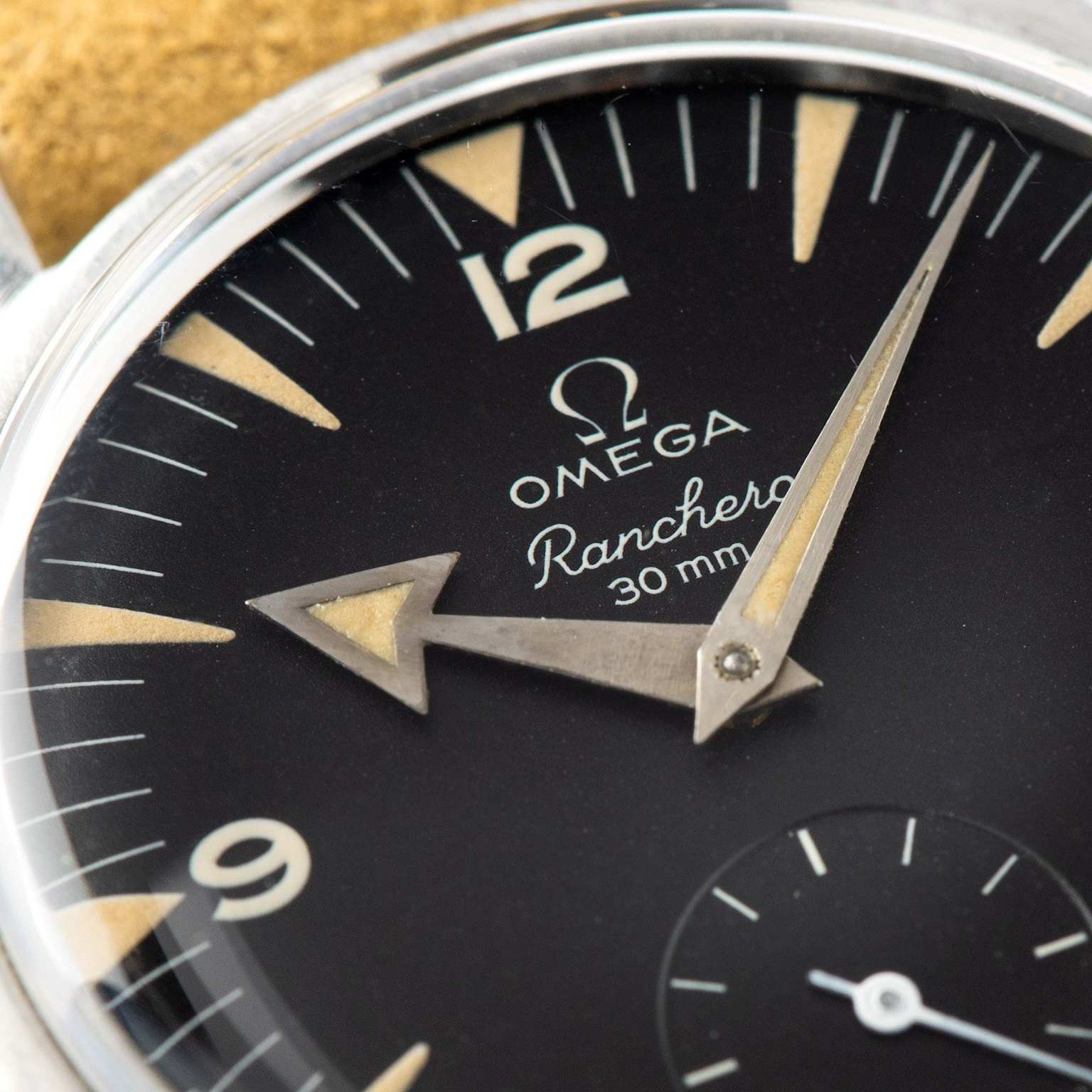
Omega Ranchero CK2990 Broad Arrow Hands and Archive Extract
What Drives Premiums
Several factors command premium prices:
Originality: Completely original watches with matching radium patina on dial and hands, unpolished cases with sharp edges, and correct period details bring top dollar.
Documentation: Omega Extract from the Archives confirming original specification and delivery significantly enhances value and buyer confidence.
Dial Variants: White dials, double-signed dials, and waffle dials command substantial premiums due to scarcity.
Condition: The rarity of unpolished cases and original dials in excellent condition cannot be overstated—most CK 2990s show significant wear and modification from 65+ years of use.
Provenance: Military-issued examples, particularly FAP watches, bring extraordinary premiums when documentation supports the history.
Collecting Pitfalls
Prospective CK 2990 buyers should be aware of common issues:
Refinished Dials: The majority of vintage CK 2990s on the market have refinished dials, and some dealers may not disclose this or may not even know. Careful examination and comparison with documented original examples is essential.
Frankenwatches: Cases, dials, and movements from different references and eras sometimes get combined, particularly given the cross-pollination between CK 2990, CK 2996, and related Seamaster references. Verify that all components match documented period-correct specifications.
Swedish “Transformations”: Evidence suggests Swedish dealers converted some Ranchero-signed dials to Seamaster variants, creating “Seacheros” that, while period, may not have left the factory in that configuration. These remain collectible but represent a gray area in originality.
Radium Concerns: Original radium lume is radioactive, and while gamma radiation exposure from normal wear is minimal, collectors should be aware of the safety considerations, particularly regarding dial and hand servicing. Never attempt to remove or disturb radium lume without proper protective equipment.
Polishing: Overly aggressive polishing that thins lugs, rounds edges, or distorts case proportions significantly diminishes value. Insist on photographs showing lug thickness and case edge sharpness before purchasing.
Related References to Consider
Collectors interested in the CK 2990 should also explore:
CK 2996: The center seconds sibling, often with “Seachero” dials, same case design, typically housing Caliber 284 or 285. Often more affordable while offering similar aesthetics.
CK 2938: Sub-seconds Seamaster that shares some design DNA with the Ranchero but with different case design.
1957 Trilogy Watches: The Speedmaster CK 2915, Railmaster CK 2914, and Seamaster 300 CK 2913 represent the direct inspiration for the Ranchero and have become blue-chip vintage watches.
Investment Perspective
The CK 2990 occupies an interesting position in the vintage watch market. Its extreme rarity (production measured in thousands rather than tens or hundreds of thousands) combines with growing recognition to create strong long-term appreciation potential. However, buyers should be aware that condition and originality dramatically affect value, a refinished example may appreciate marginally, while a pristine original-dial, unpolished example could see substantial gains.
The watch’s story, its status as Omega’s “most hated” that became a grail, ensures continued collector interest. As the 1957 trilogy watches have become increasingly unaffordable for many collectors (original Speedmaster CK 2915s now command $50,000-200,000+), the CK 2990 offers an alternative entry point into high-quality 1950s Omega tool watch design at a fraction of the price