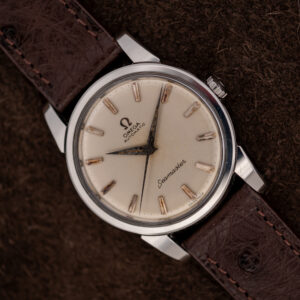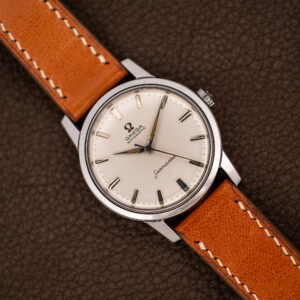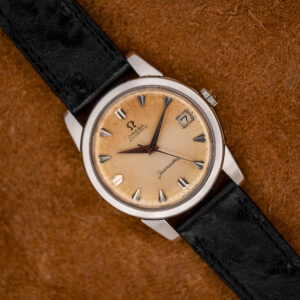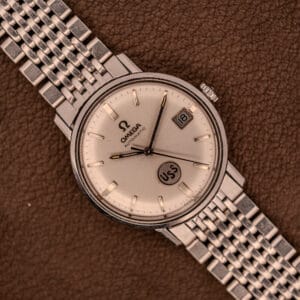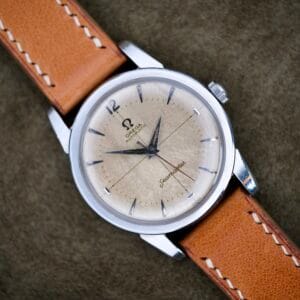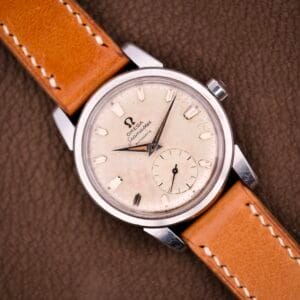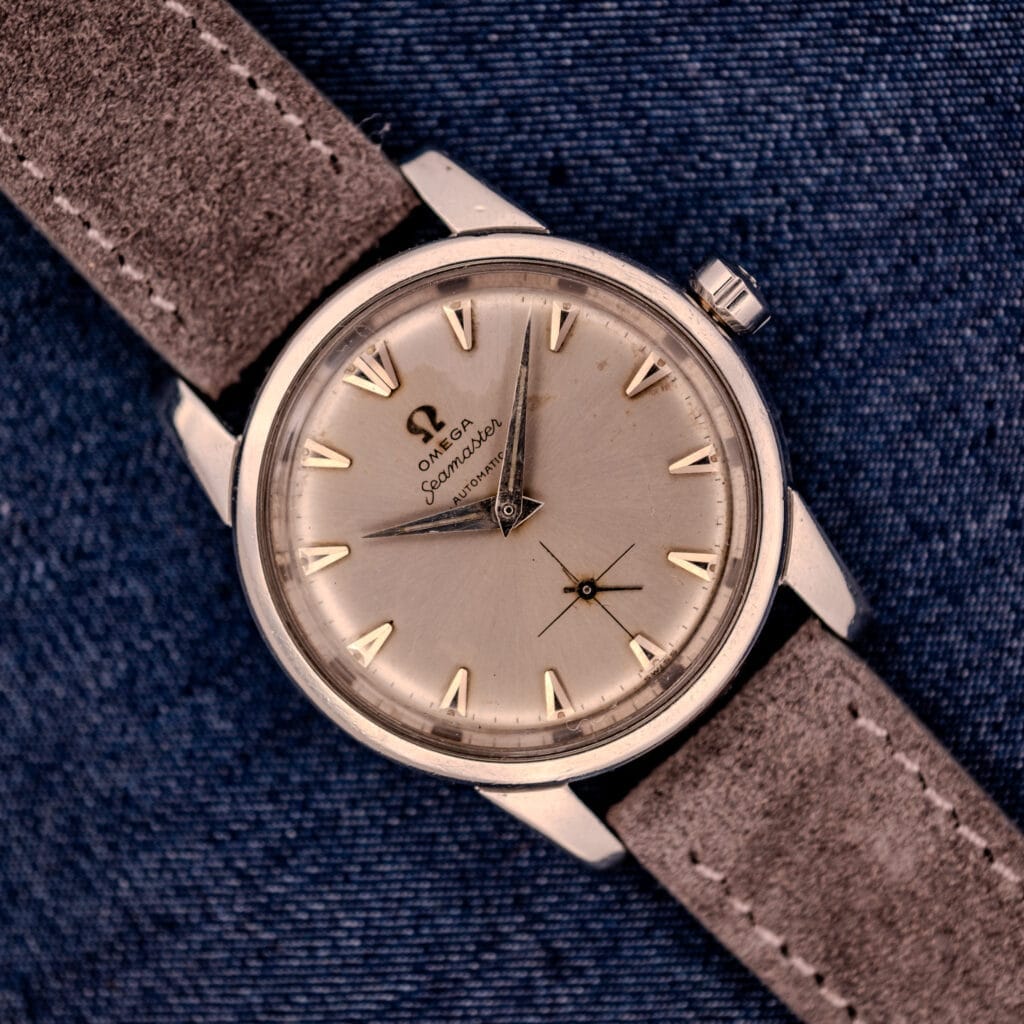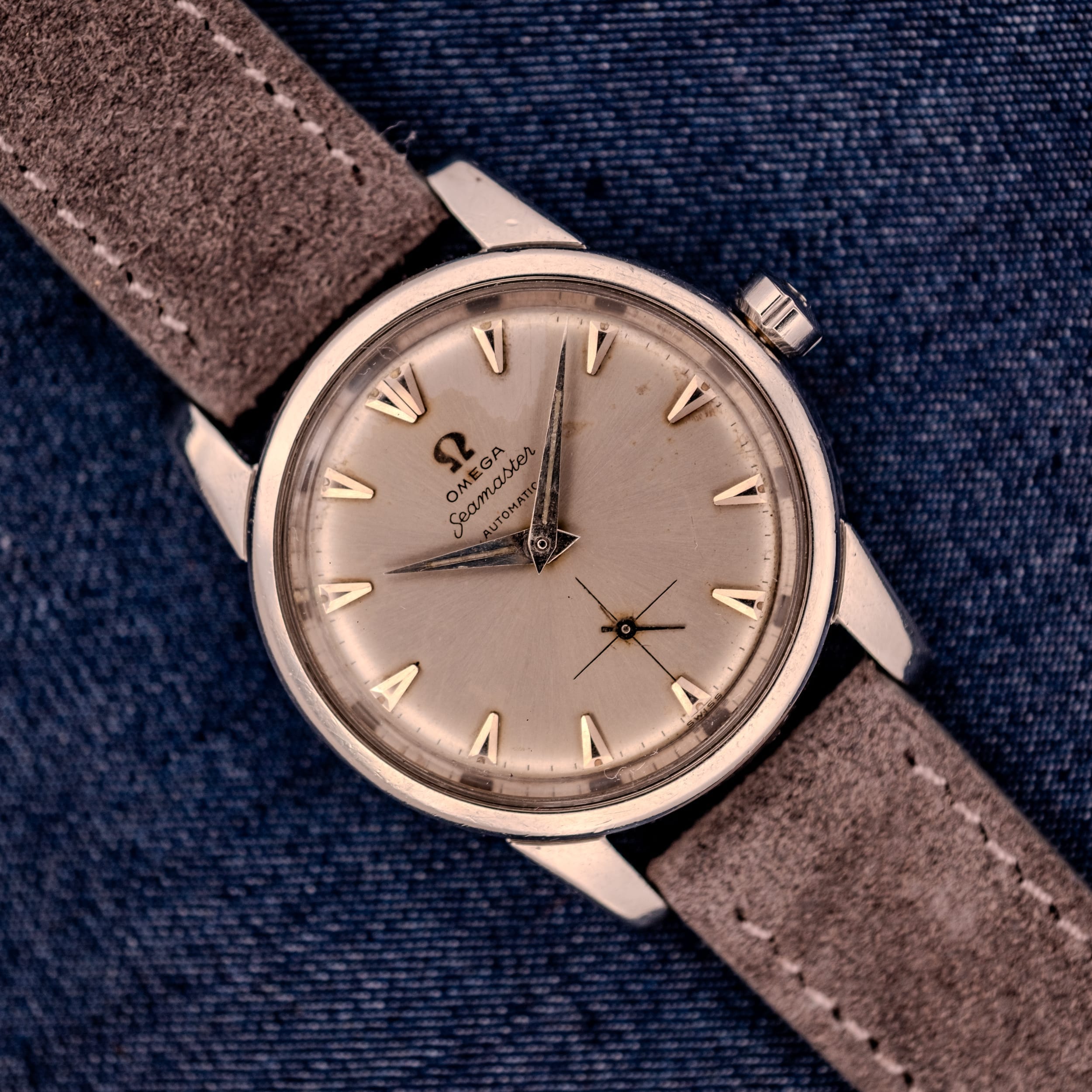
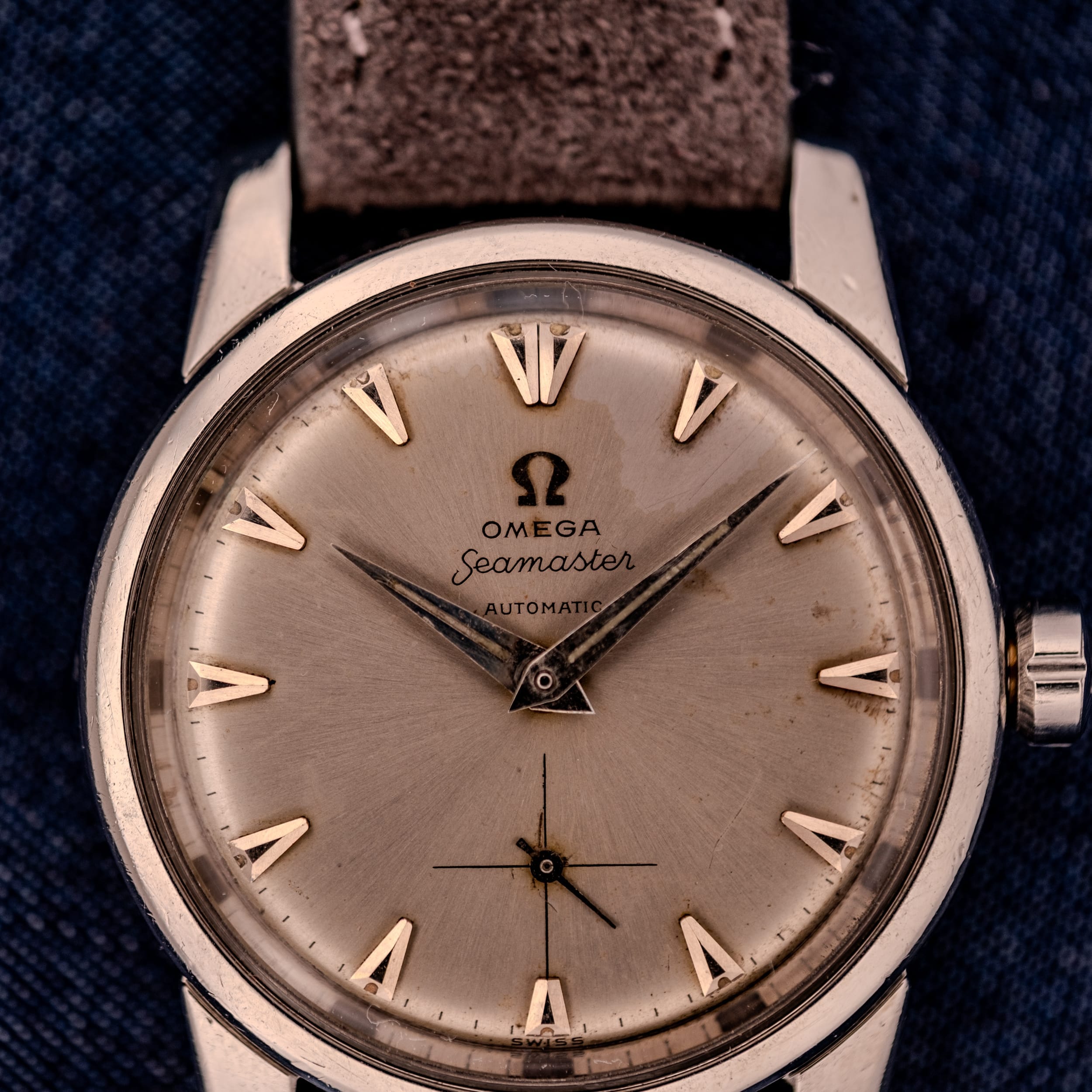
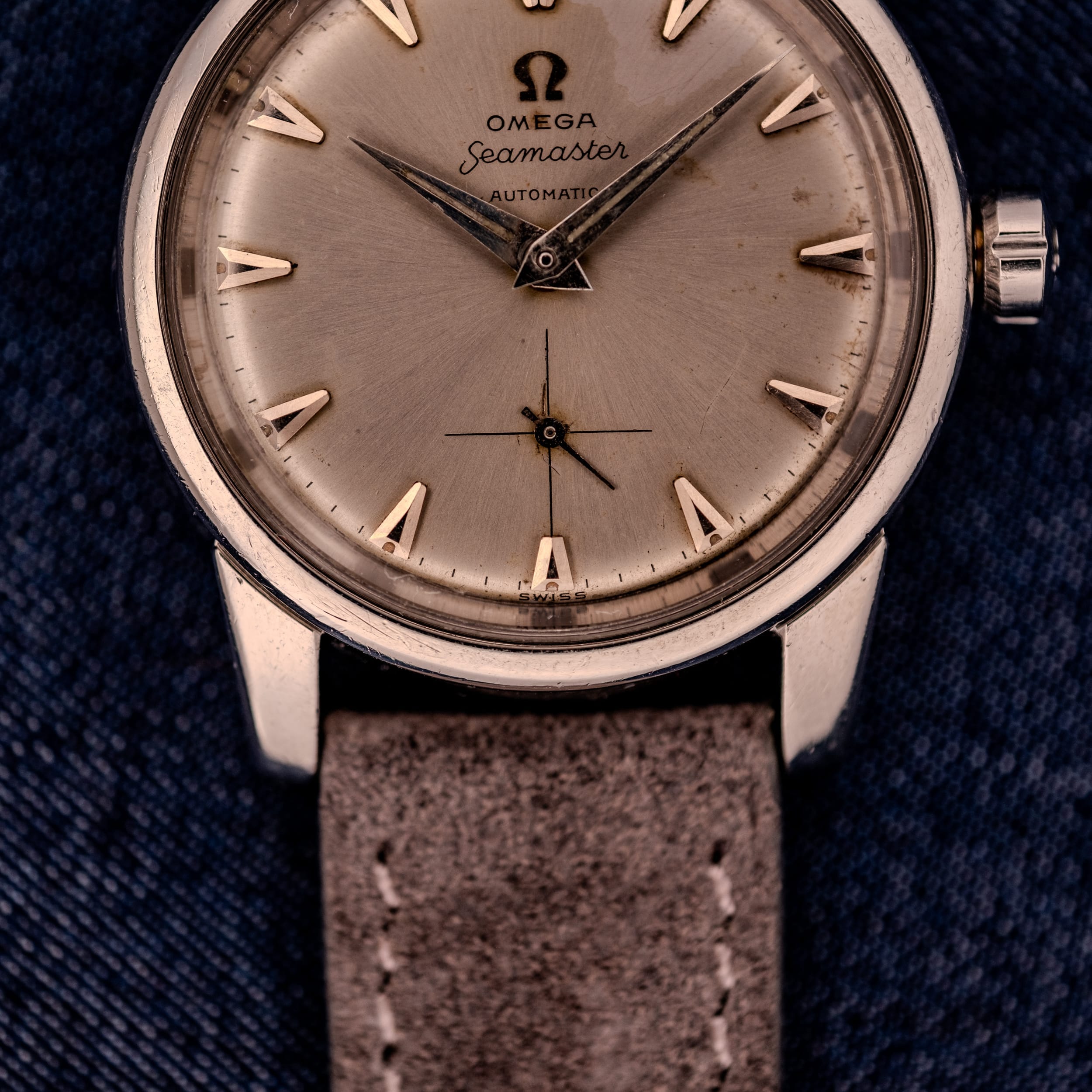
The Seamaster 2846 is, in our opinion, the moment in Omega’s mid-century catalog where the post-war Seamaster idea fully settled into the shape it would hold for the next decade. The bumper-automatic era was effectively over, the new full-rotor calibers were on the bench, and the cases coming out of Bienne carried the right combination of slim profile, downturned lugs, and quietly confident dial typography that defined the dressier side of the line. This particular Seamaster 2846 lands in that pocket with a dial finish we do not see often on the reference, and once you have it on the wrist the appeal is immediate.
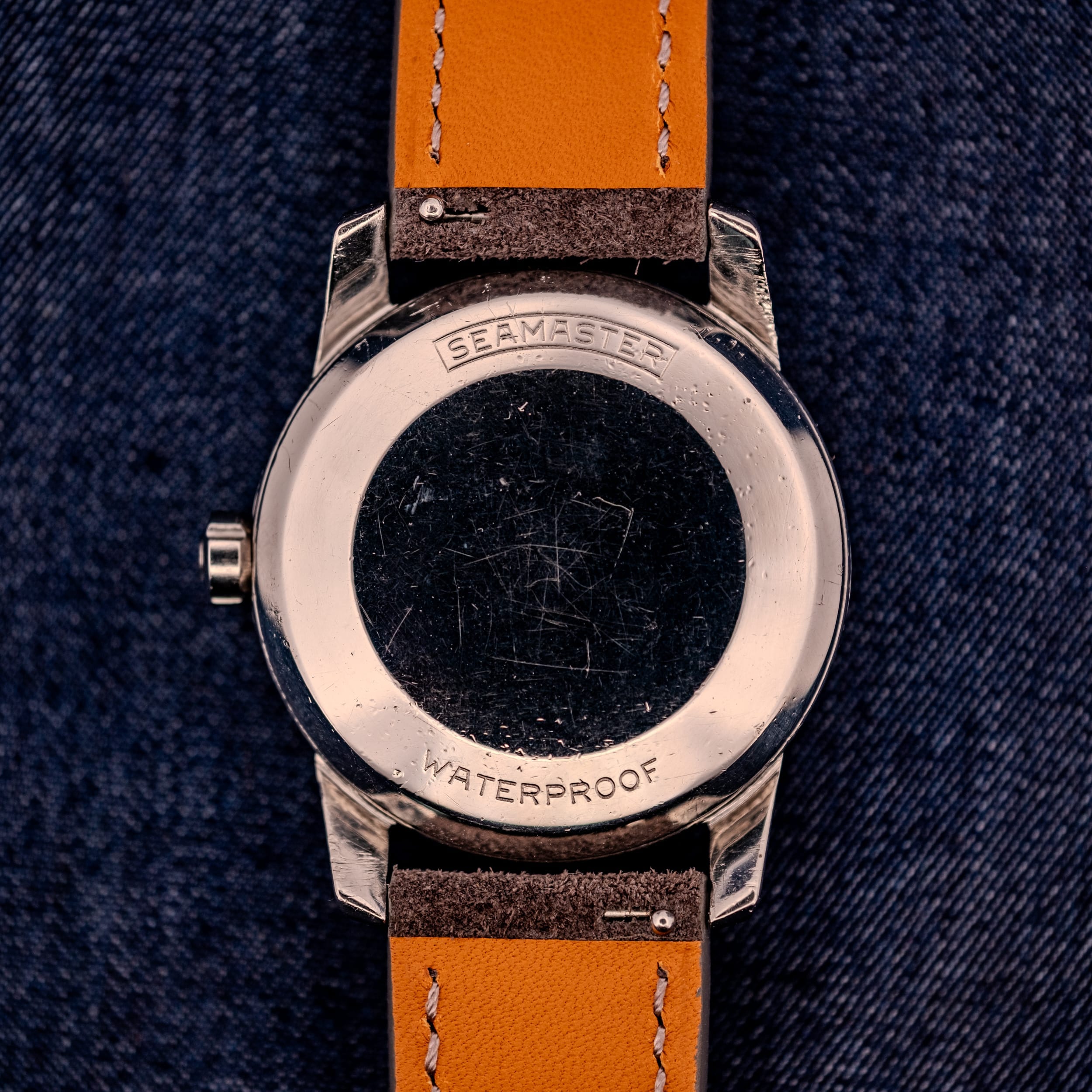
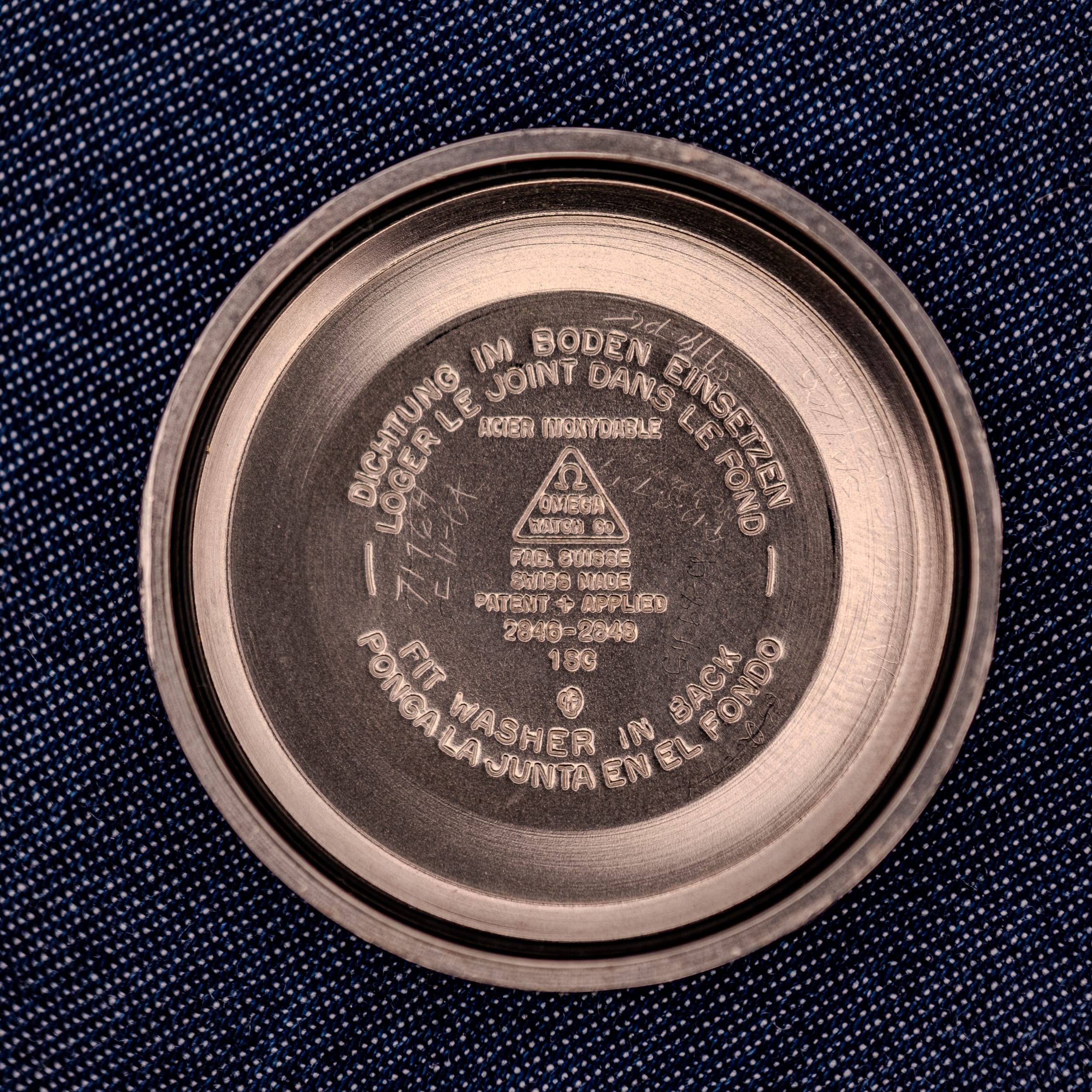
The Seamaster nameplate dates to 1948, introduced for Omega’s centennial and drawing on the water-resistant case work the company had supplied to the British forces during the war. By the time the 2846 case was in production in the mid-1950s, the Seamaster had moved from a single-watch concept into a working product family that quietly anchored the catalog. The reference 2846-2848 is the case-and-back combination, with 2846 designating the case and 2848 designating the snap-on caseback that mates to it, and the early production examples carried the clean SEAMASTER over WATERPROOF caseback engraving without the seahorse medallion that arrived from 1958 onward. The caseback on this watch reads exactly that way, which is one of the small period details we look for when we evaluate a 2846.
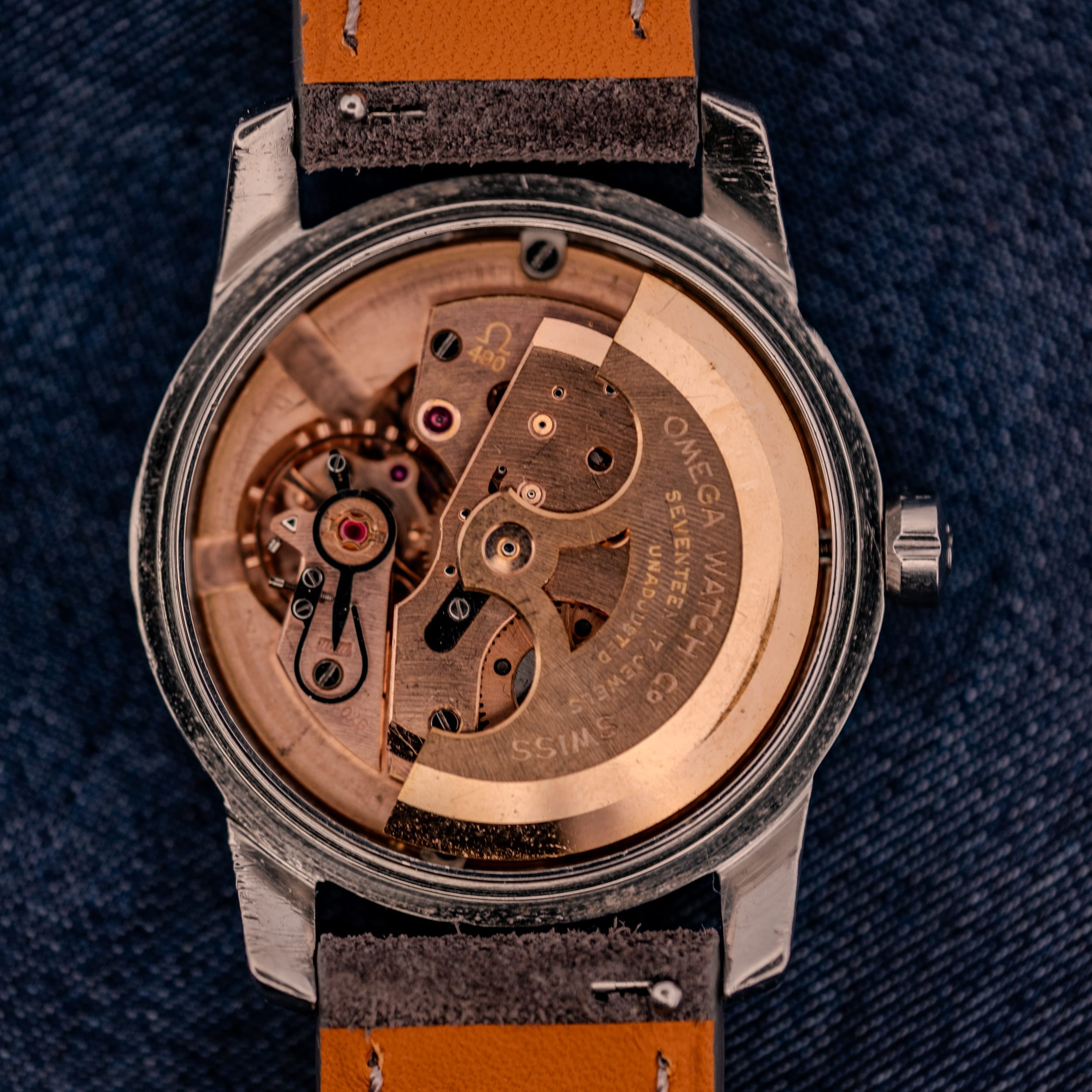
The movement is the Omega caliber 490, and the movement photograph here shows the signature clearly with the small Ω 490 stamp on the bridge and the full OMEGA WATCH CO, SEVENTEEN 17 JEWELS, UNADJUSTED, SWISS engraving across the rotor. The 490 is part of the 470/490/500 family that arrived in 1955 as Omega’s first generation of full-rotor automatics after a long run of bumper calibers. The 490 is the sub-seconds variant of the family, which is why this dial carries the small running-seconds register at six rather than a sweep center seconds, and the warm copper-toned rhodium plating that these calibers were finished with is plainly visible in the caseback view. It is a quietly handsome movement to look at, and a well-documented one to live with.
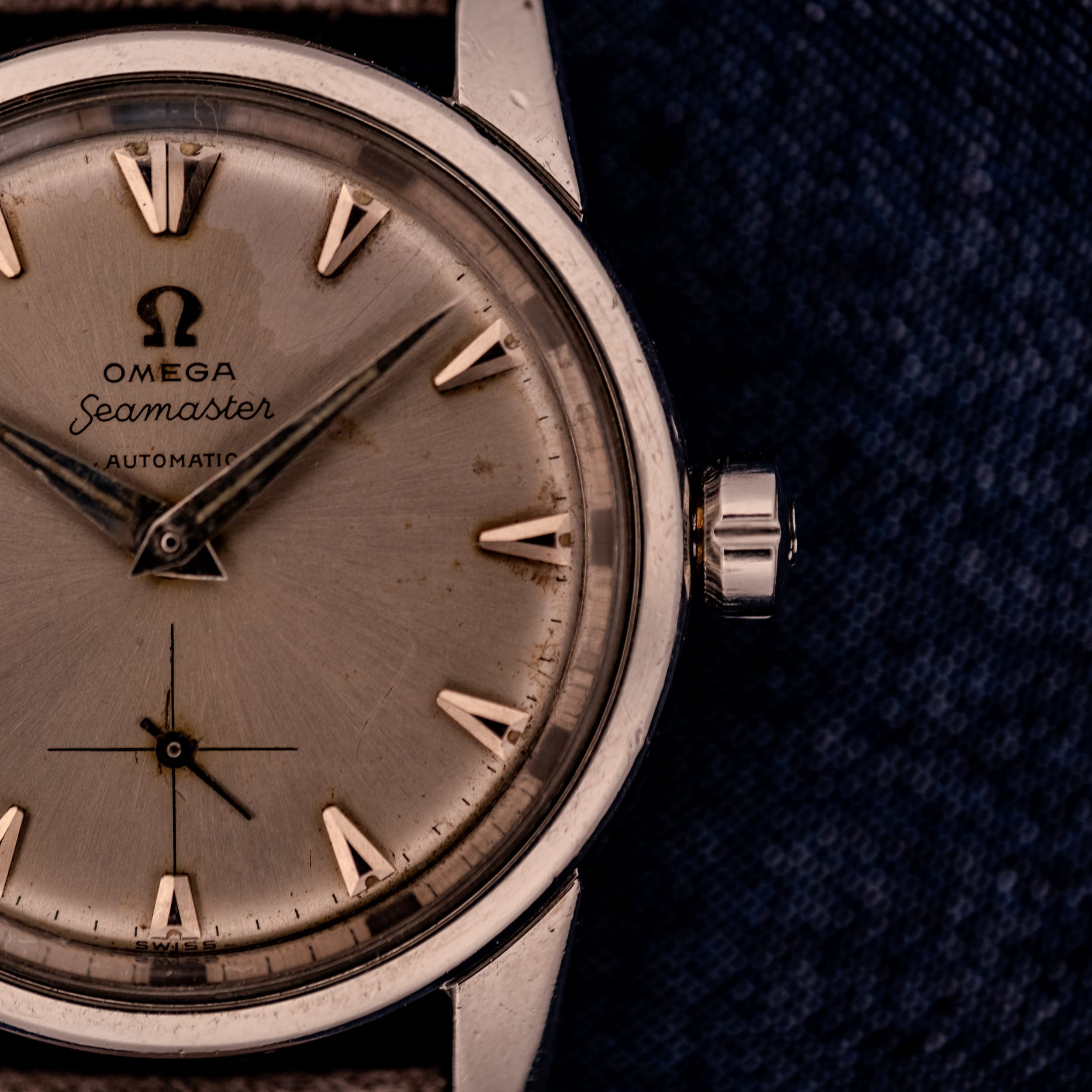
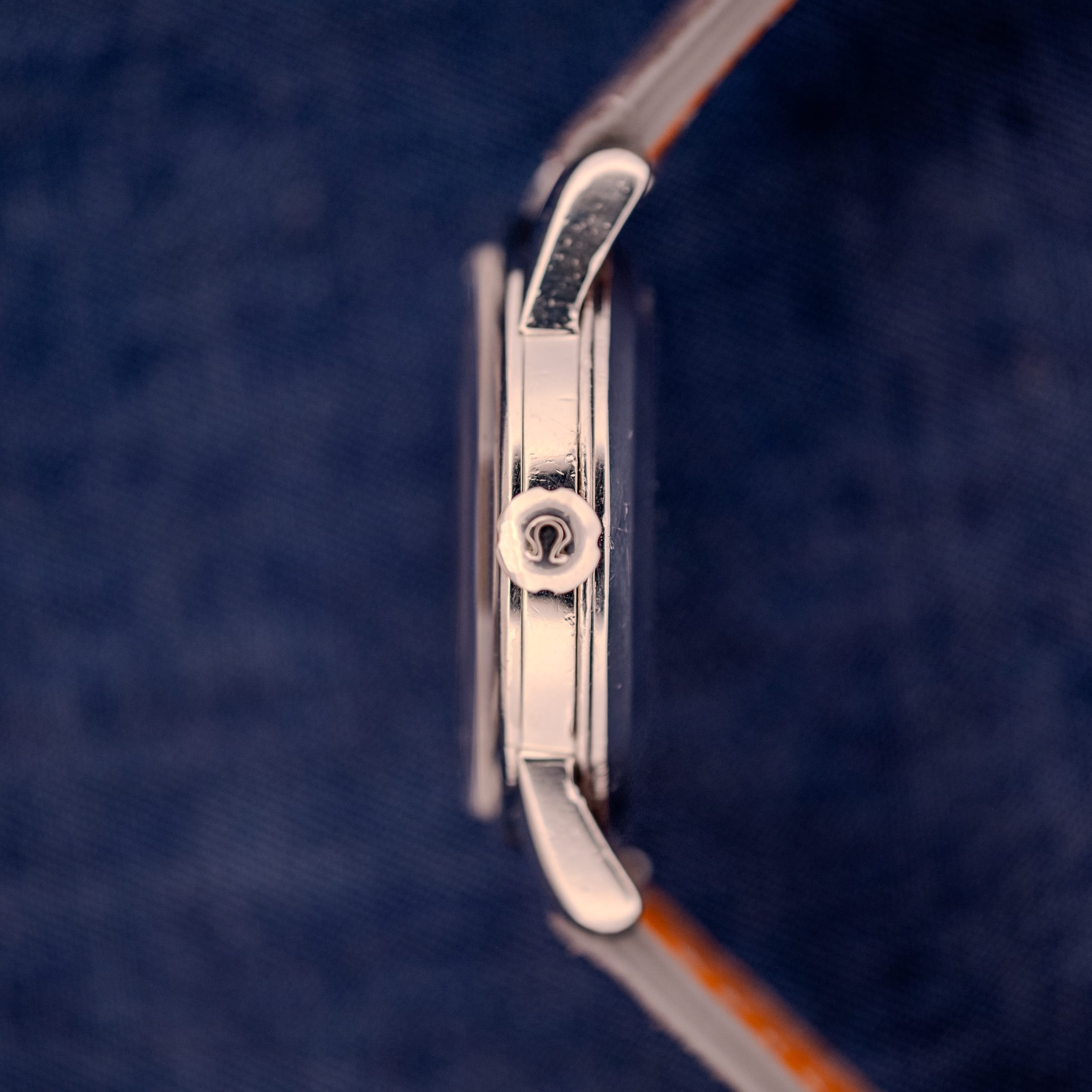
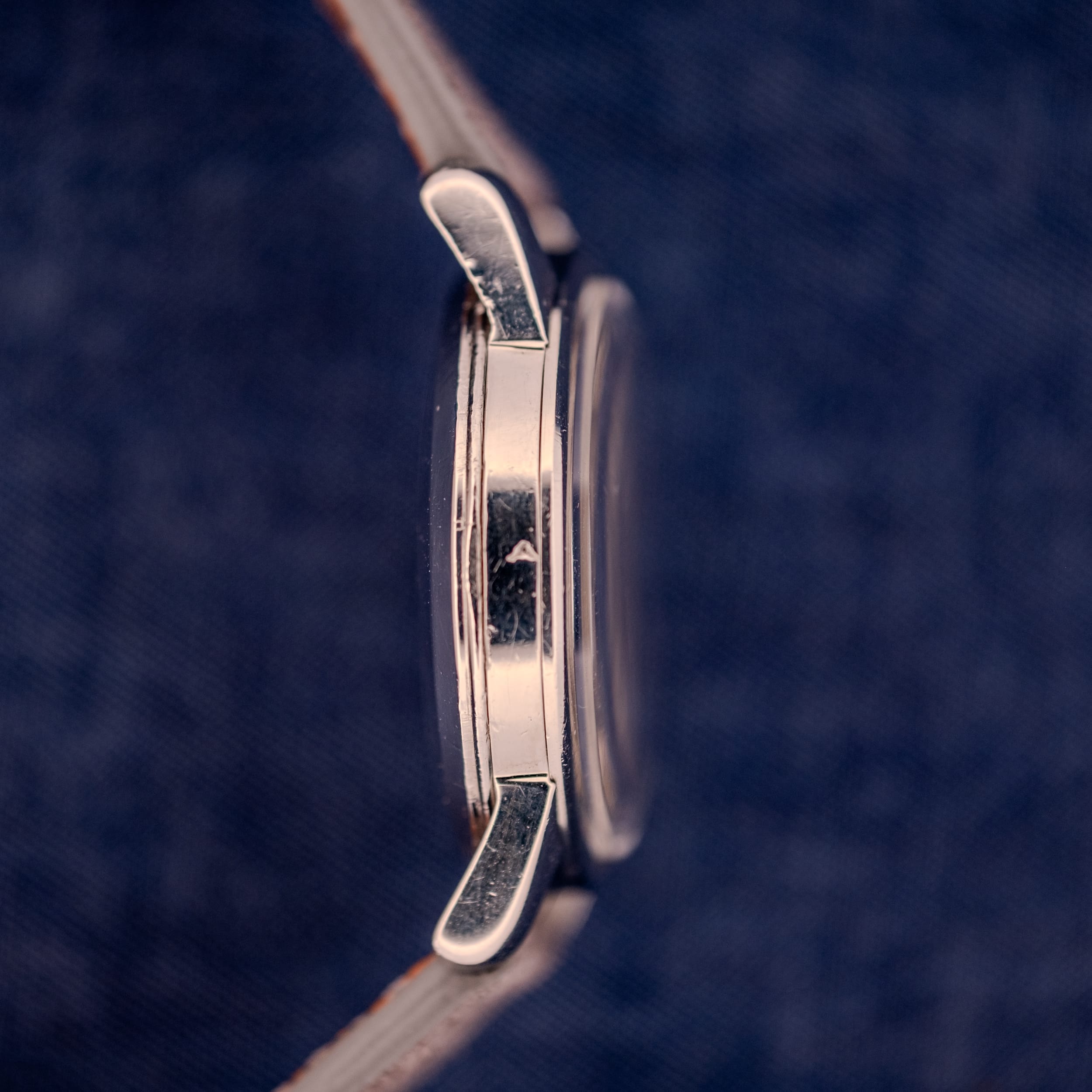
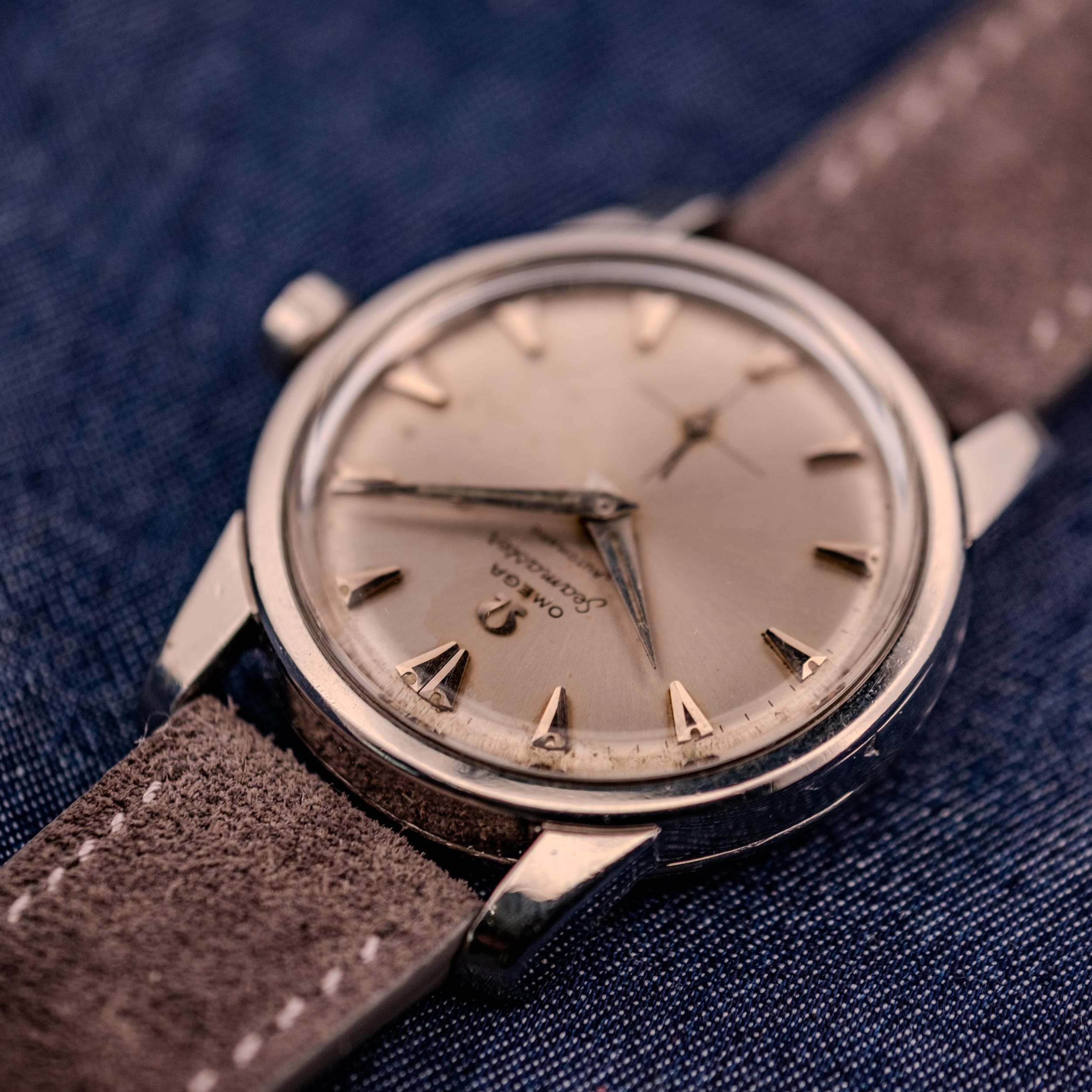
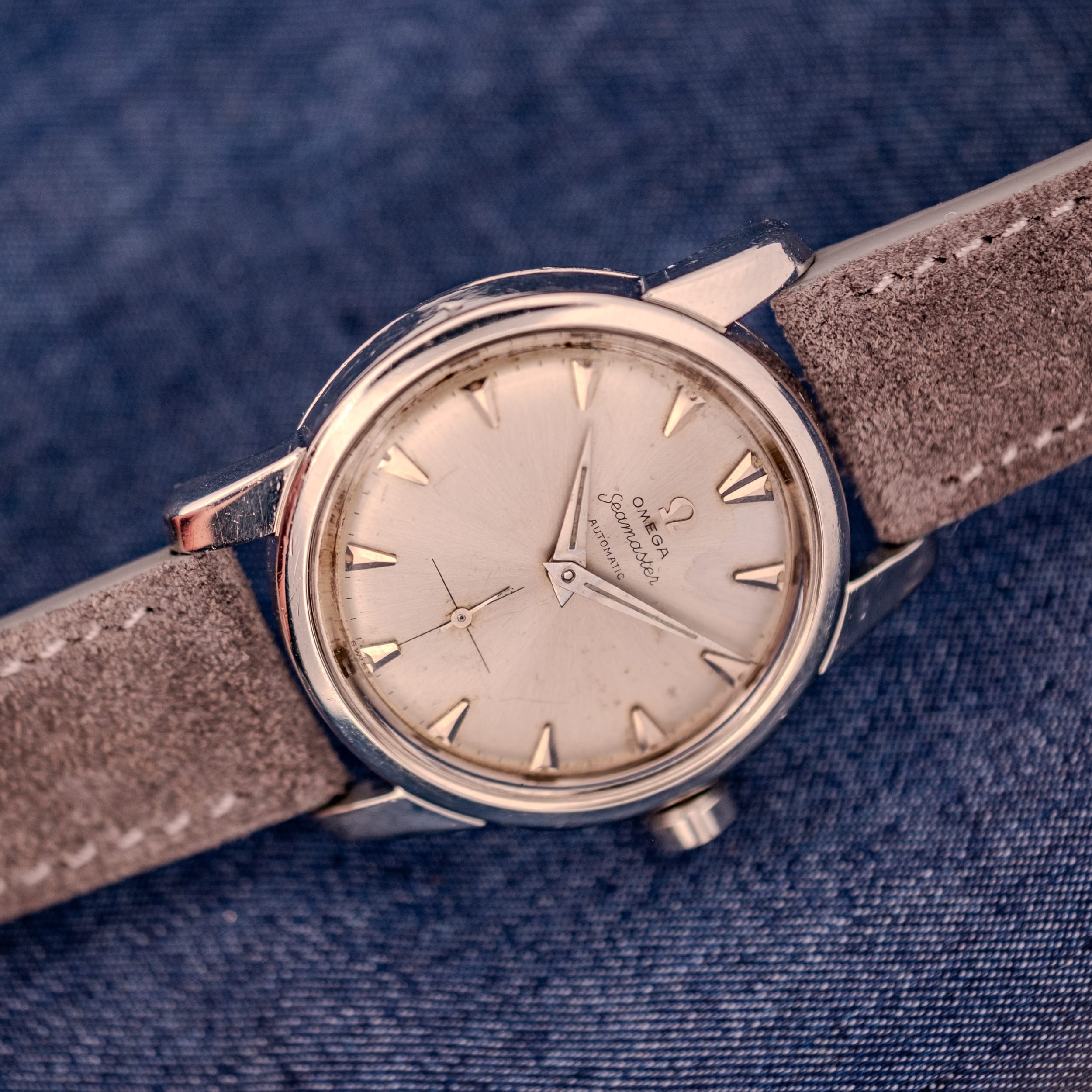
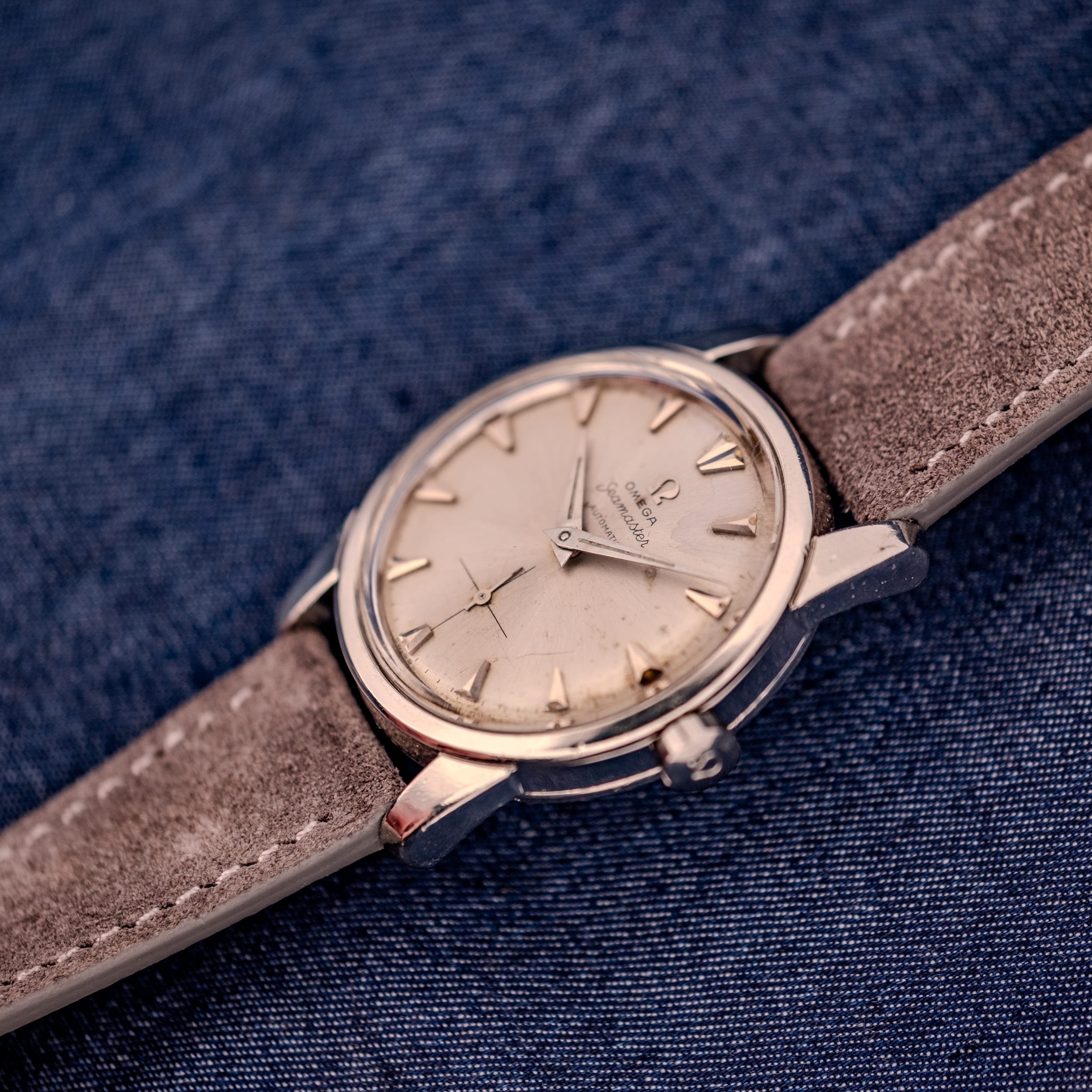
The case is stainless steel at 34mm across with an 18mm lug width and a 41mm lug-to-lug, dimensions that wear true to a mid-century dress-leaning sports watch and pair well with shirt cuffs. The profile shots show the slim case band, the chamfered downturned lugs that give the 2846 its characteristic seated stance on the wrist, and honest surface wear across the case flanks and lug tops from decades of being worn. The smooth polished bezel frames the dial cleanly. The Omega-signed crown at three o’clock carries the horseshoe logo in clear relief inside a finely fluted profile. Flip the watch and the outer caseback is engraved SEAMASTER arched at the top and WATERPROOF arched at the bottom, no seahorse, with the centerfield showing the kind of light hairline scratching that comes naturally with a 70-year-old case. The inner caseback is fully stamped with DICHTUNG IM BODEN EINSETZEN and LOGER LE JOINT DANS LE FOND arched around the perimeter, ACIER INOXYDABLE near the top, the Ω OMEGA WATCH CO triangle hallmark, FAB. SUISSE, SWISS MADE, PATENT APPLIED, the case reference 2846-2848, the case material code 18G, and FIT WASHER IN BACK with PONGA LA JUNTA EN EL FONDO completing the multilingual gasket instructions across the bottom arc.
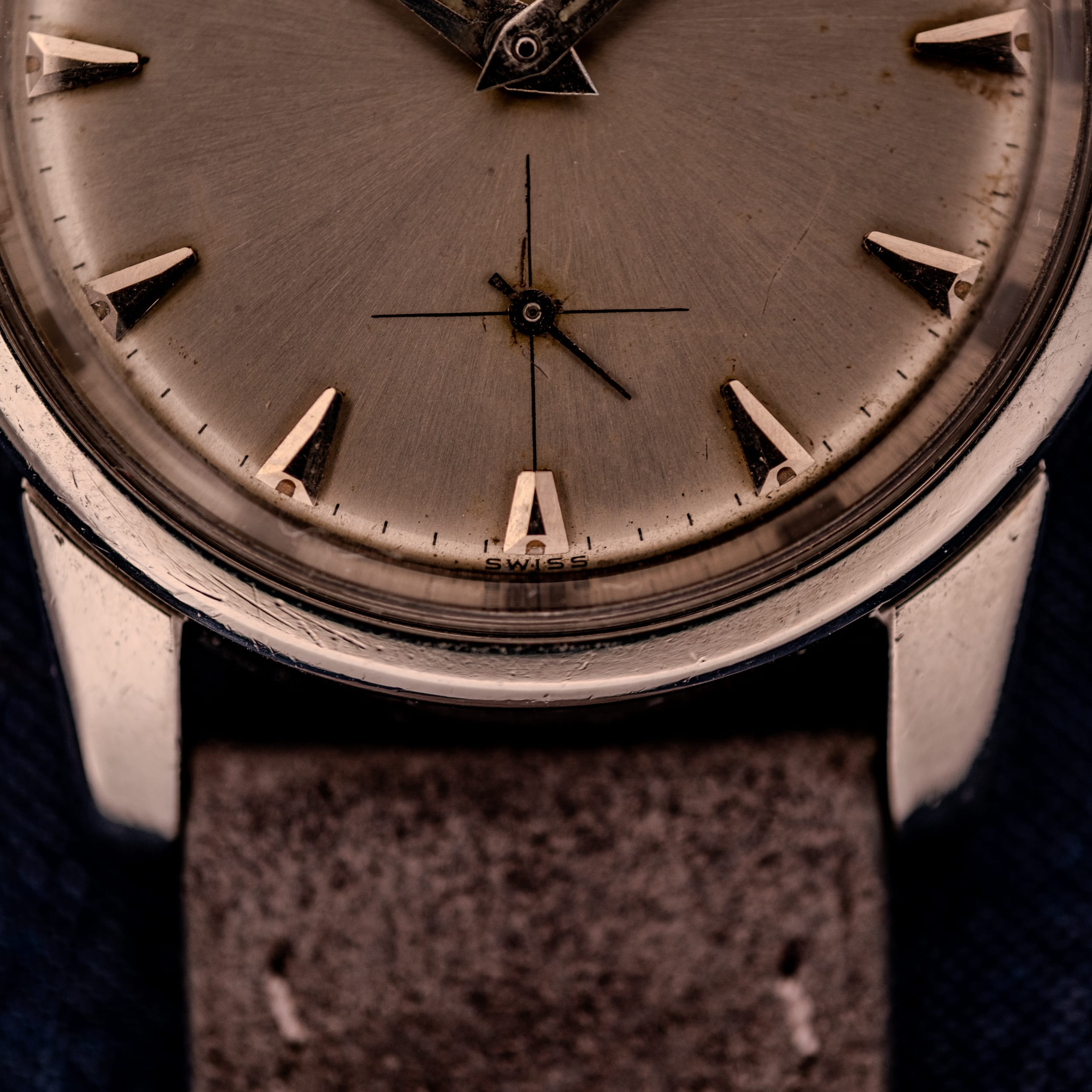
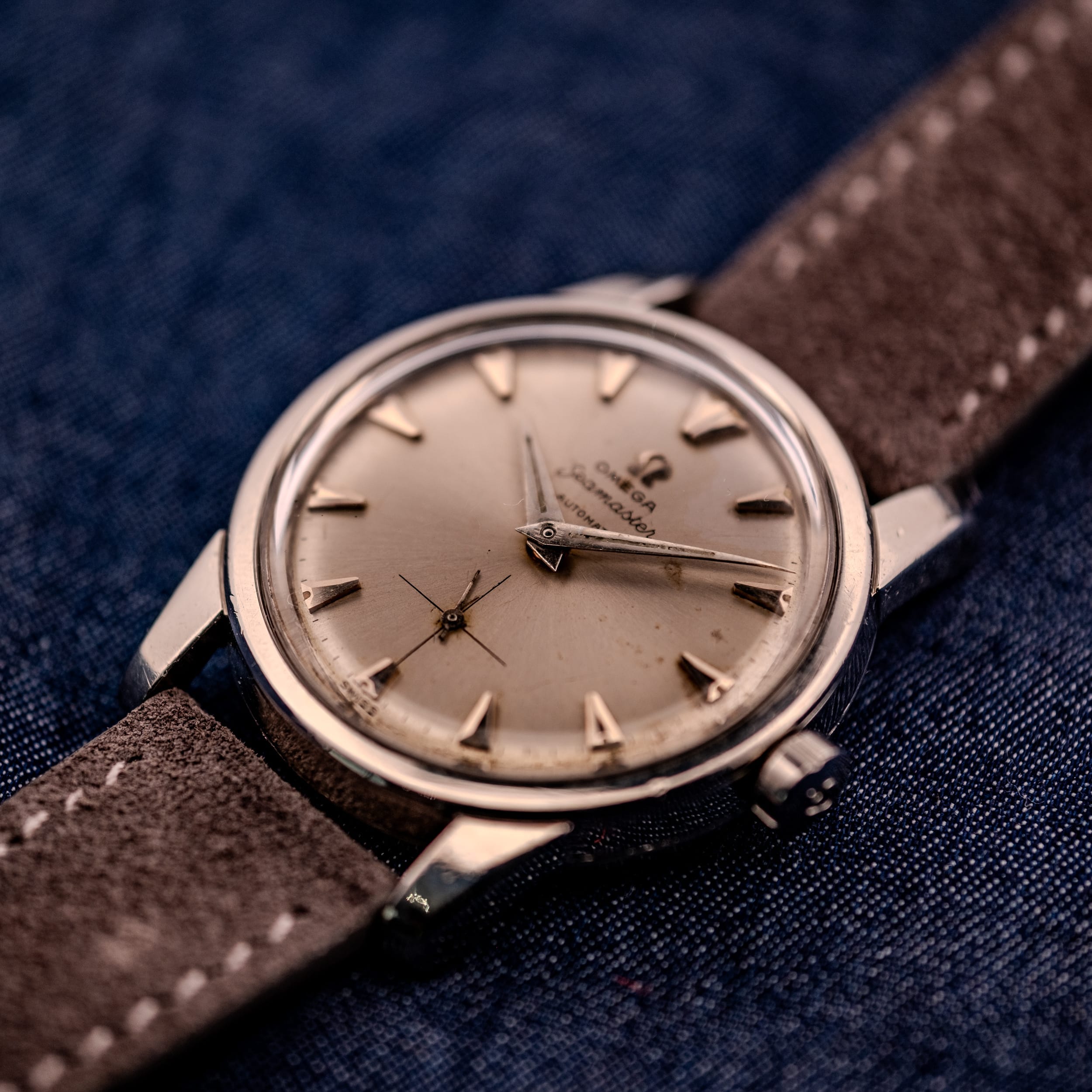
The dial is the centerpiece of this Seamaster 2846 and the reason we wanted to give it a careful write-up. The finish is a genuine radial sunburst rather than the flatter matte or honeycomb dials more commonly seen on the reference, and the brushing is intact across the whole dial face. In the light it shifts from a cool silver to a warmer champagne tone depending on the angle, which is the behavior a real sunburst dial produces and a flat dial cannot. The applied indices are the classic Omega arrow style of the period, faceted steel chevrons with a lume fill at the inner point of each marker that has aged to a soft warm cream consistent with the watch’s age and its pre-tritium era. The dauphine hour and minute hands are original and have oxidized into a darker tone with noticeably stronger darkening toward the tips, which is the kind of evidence of factory hands left alone that we genuinely prefer over a service-replacement set. The sub-seconds register at six o’clock is a fine crosshair pattern with a slim baton hand. The dial printing reads OMEGA below the horseshoe logo at twelve, Seamaster in the familiar italic script directly below, Automatic underneath, and a small SWISS at the dial foot with no T-SWISS-T tritium markers, consistent with the pre-tritium production window. There is honest spotting and patina across the dial, with a darker cluster between one and two o’clock and lighter scatter toward the lower half, and to us this is exactly the kind of dial that tells you the watch has been left alone rather than tidied up.
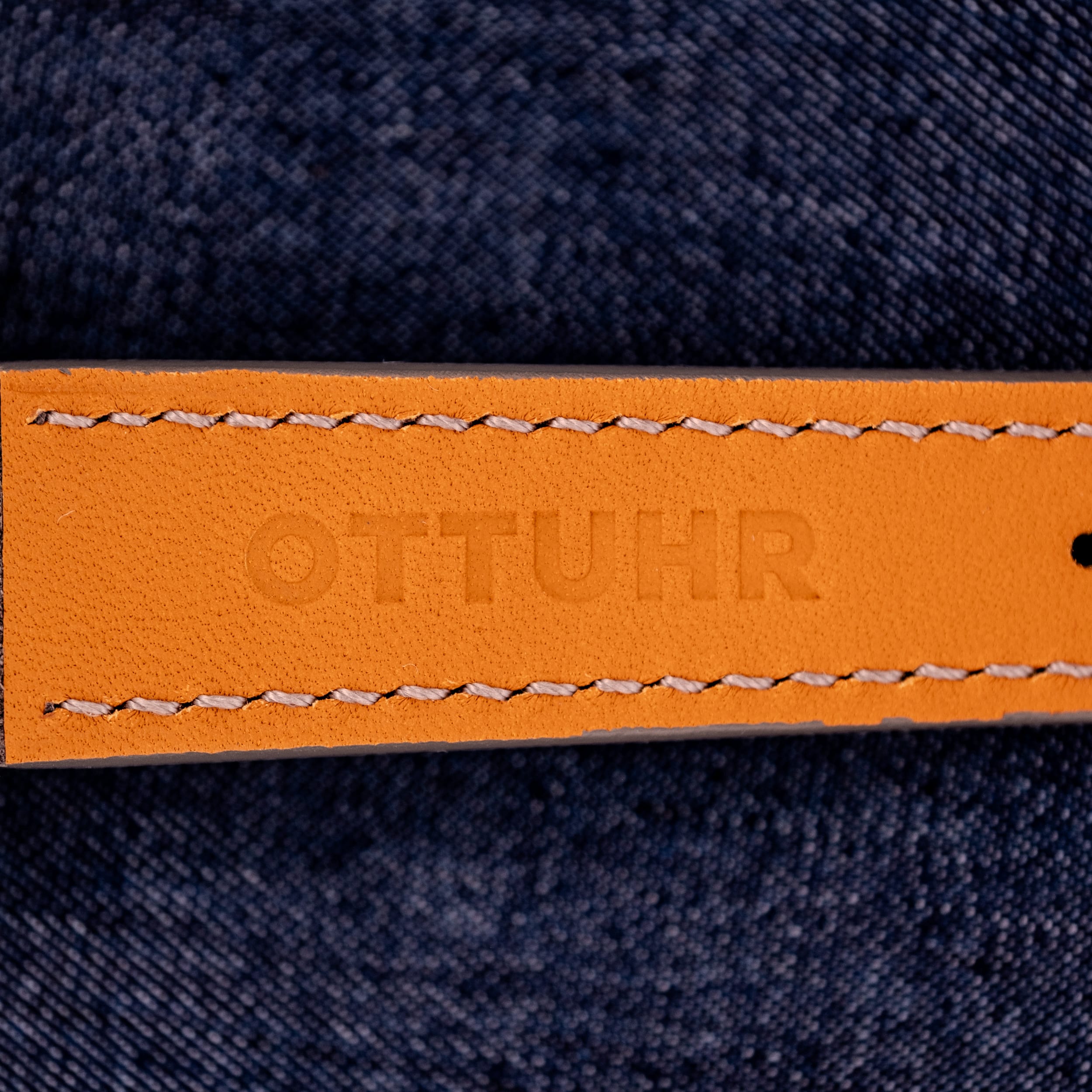
We have paired the watch with an OTTUHR anthracite Italian suede strap, signed OTTUHR on the keeper, fastened with our brushed steel buckle. The cool grey of the suede sits next to the silver dial without competing with it and lets the warm patina on the markers and hands carry the visual weight, and the strap dresses the watch up cleanly for an office day while staying relaxed enough for a weekend.
Serviced in-house at OTTUHR and backed by our 2-year mechanical warranty, this Seamaster 2846 is an honest entry into mid-1950s Omega collecting at a price that, in our opinion, still does not fully reflect what is on the wrist. A full-rotor caliber 490 with the sub-seconds layout, the pre-seahorse SEAMASTER WATERPROOF caseback, an unusual sunburst-finish dial that catches light from every angle, and 34mm proportions that wear correctly on a modern wrist without feeling small. For the collector who reads a dial finish before they read a model name, who values an untouched factory dial with its own character over a clean refinish, and who appreciates a Seamaster that lands on the dressier end of the early line, this 2846 is, to us, a quietly compelling piece.