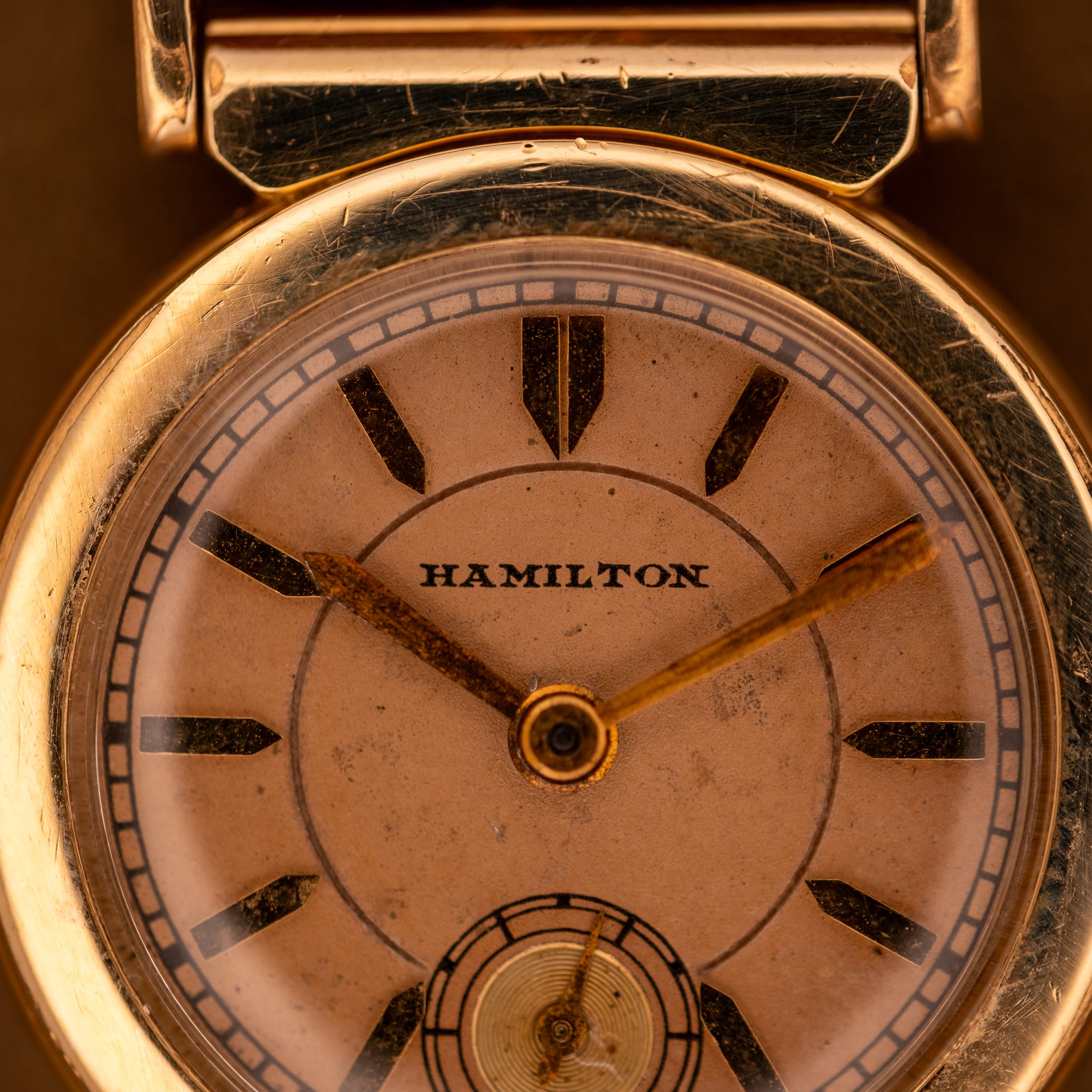
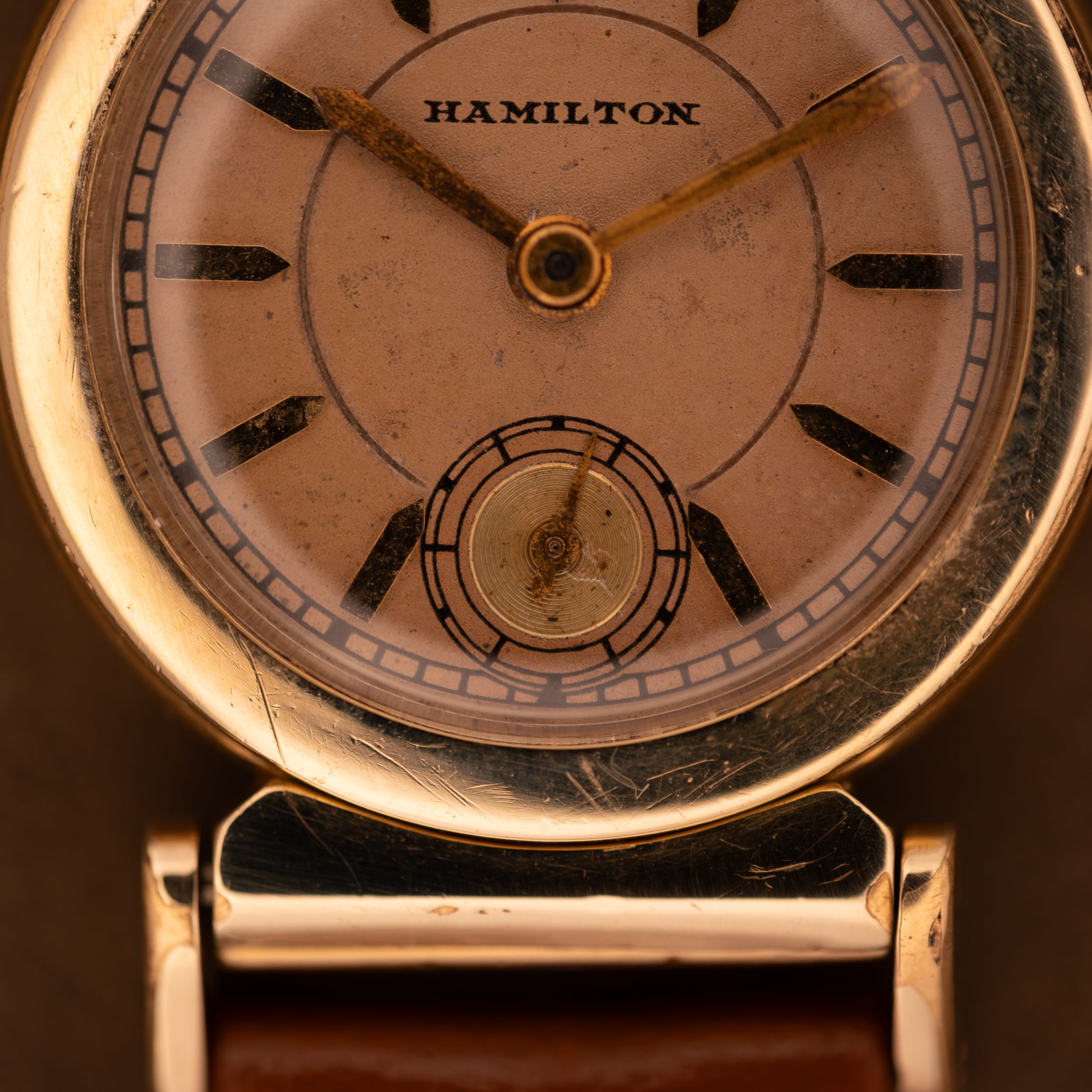
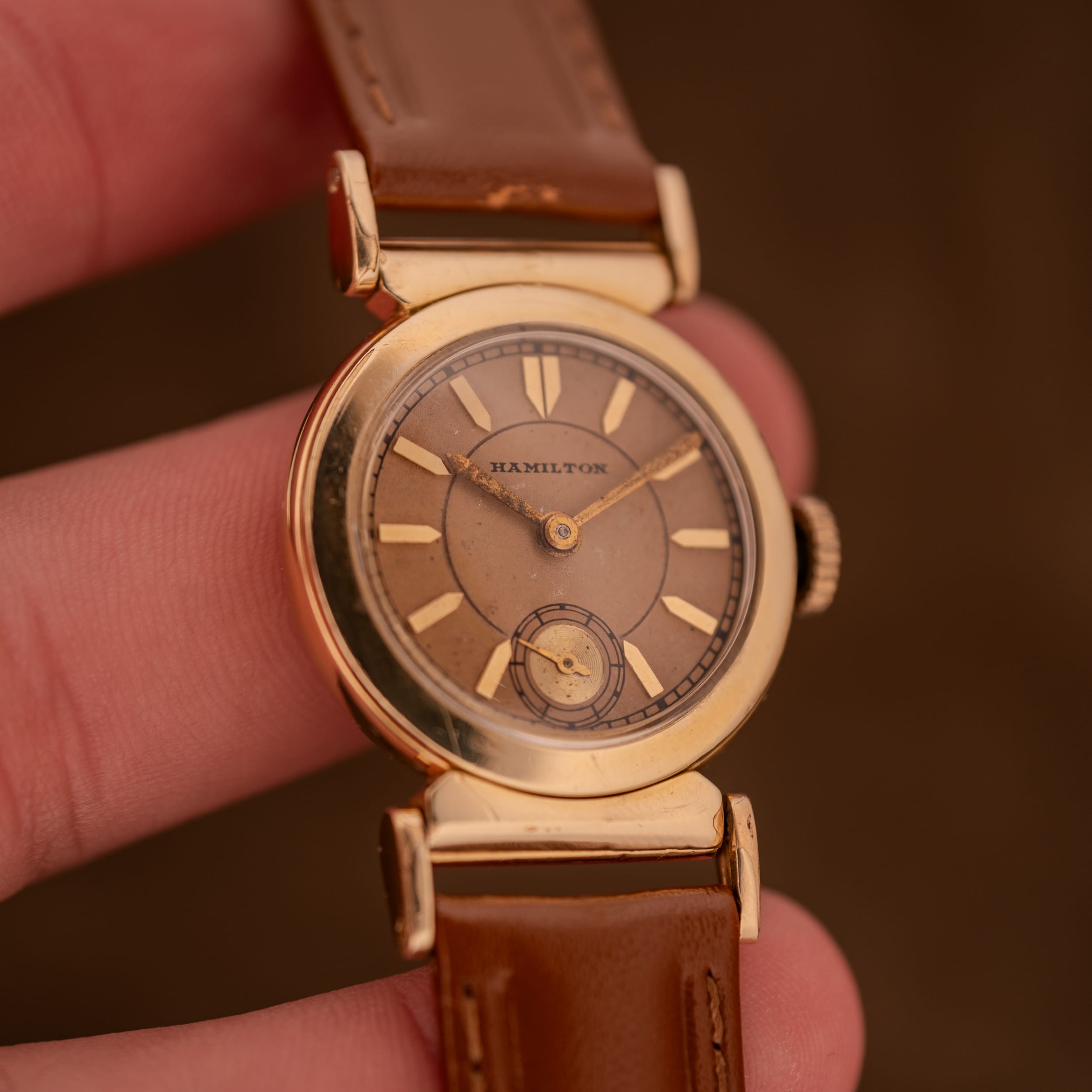
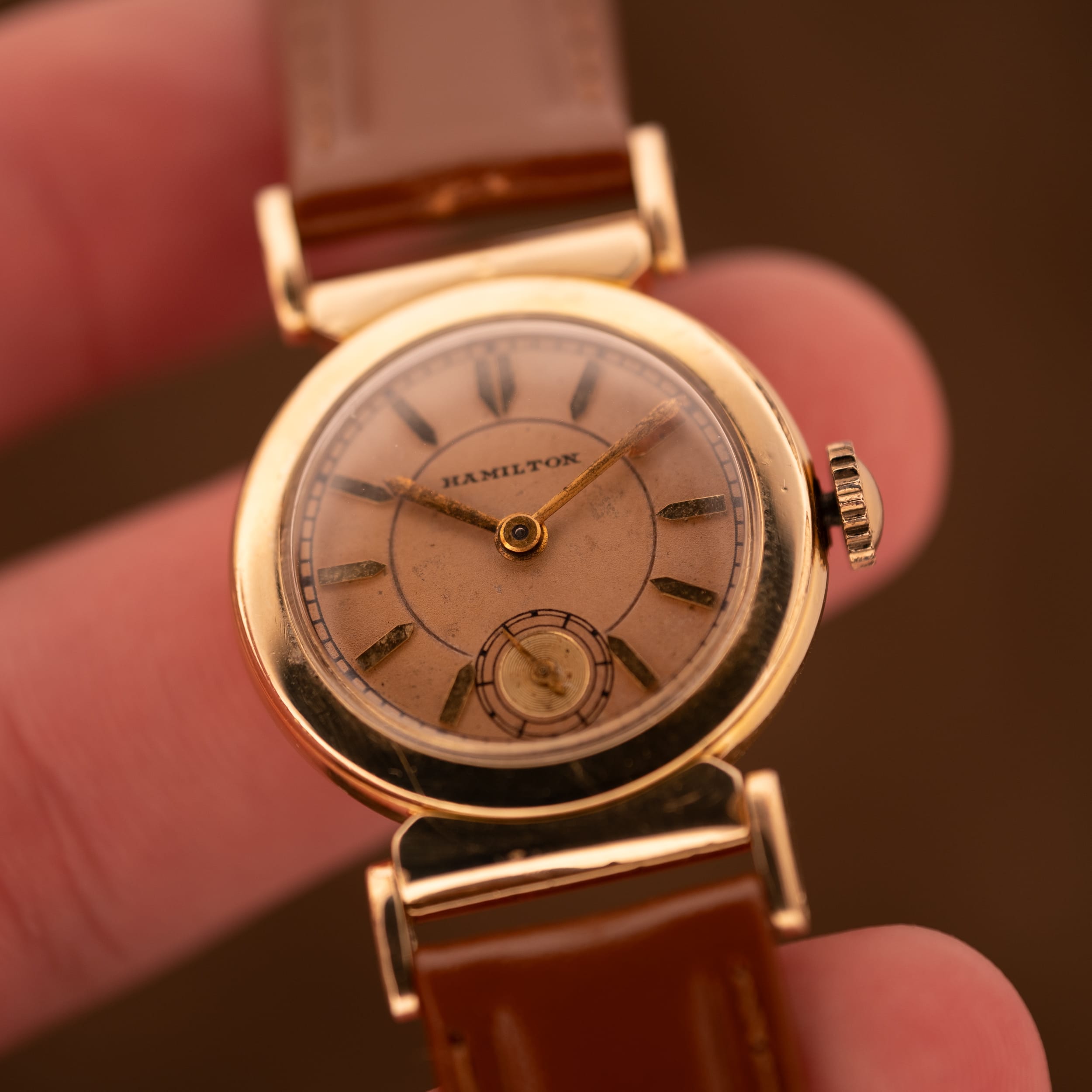
Lancaster, Pennsylvania, 1935. Hamilton was still building both pocket and wrist movements in the same Lancaster manufacture, the company catalogue still leaned hard on rectangles and tonneaus, and the Prescott arrived as the model where Hamilton committed to a properly round case. To us, this reads as the first modern round Hamilton wristwatch, in our opinion one of the quietly important pre-war American dress references. The scarab silhouette, the stepped capped lugs, the warmly patinated factory dial, and the 14k yellow gold filled construction together make this one of the more genuinely Art Deco American watches of the period.
Hamilton was founded in Lancaster, Pennsylvania in 1892, and through the entire prewar era the company designed, finished, and assembled its movements and cases inside that one factory complex. By the mid-1930s Hamilton had spent two decades building a reputation as the railroad watchmaker of the United States, and that prestige carried directly into the wristwatch catalogue once the form took over after the First World War. Hamilton named its dress wristwatches after places and people in the American canon, and “Prescott” sat alongside Ellsworth, Donovan, Mason, and Seneca across the 1935 to 1936 catalogue lineup. The Prescott was a limited-production model with total production of roughly 14,200 units in the 14k yellow gold filled case, and that scarcity has made surviving examples genuinely collectible today.
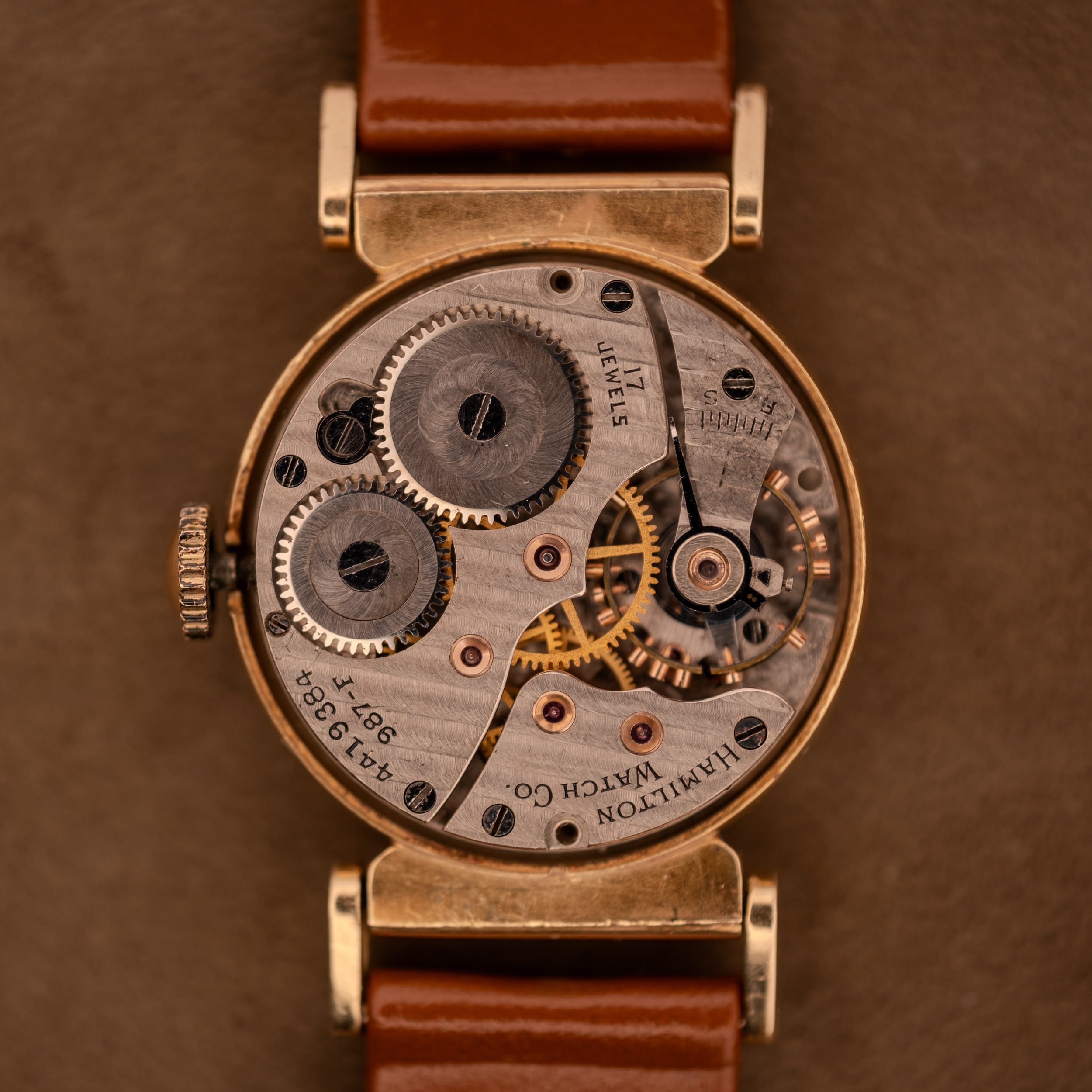
The caliber is the Hamilton 987-F, the friction-jeweled evolution of the brand’s 6/0 workhorse, introduced in 1929 and produced through 1935. The “F” denotes the friction-set jewel system that replaced the screw-held chaton design of the original 987, and the caliber sits in the family alongside the later 987-E with its Elinvar hairspring and the wartime 987-A. Seventeen jewels, manual wind, and the kind of period American watchmaking that runs for decades when properly serviced. Our movement-side photograph reads “HAMILTON Watch Co.” in the curved cartouche along the lower bridge, “17 JEWELS” stamped clearly, the caliber designation “987-F” called out on the train bridge, and the matching factory serial “421 9384” running below.
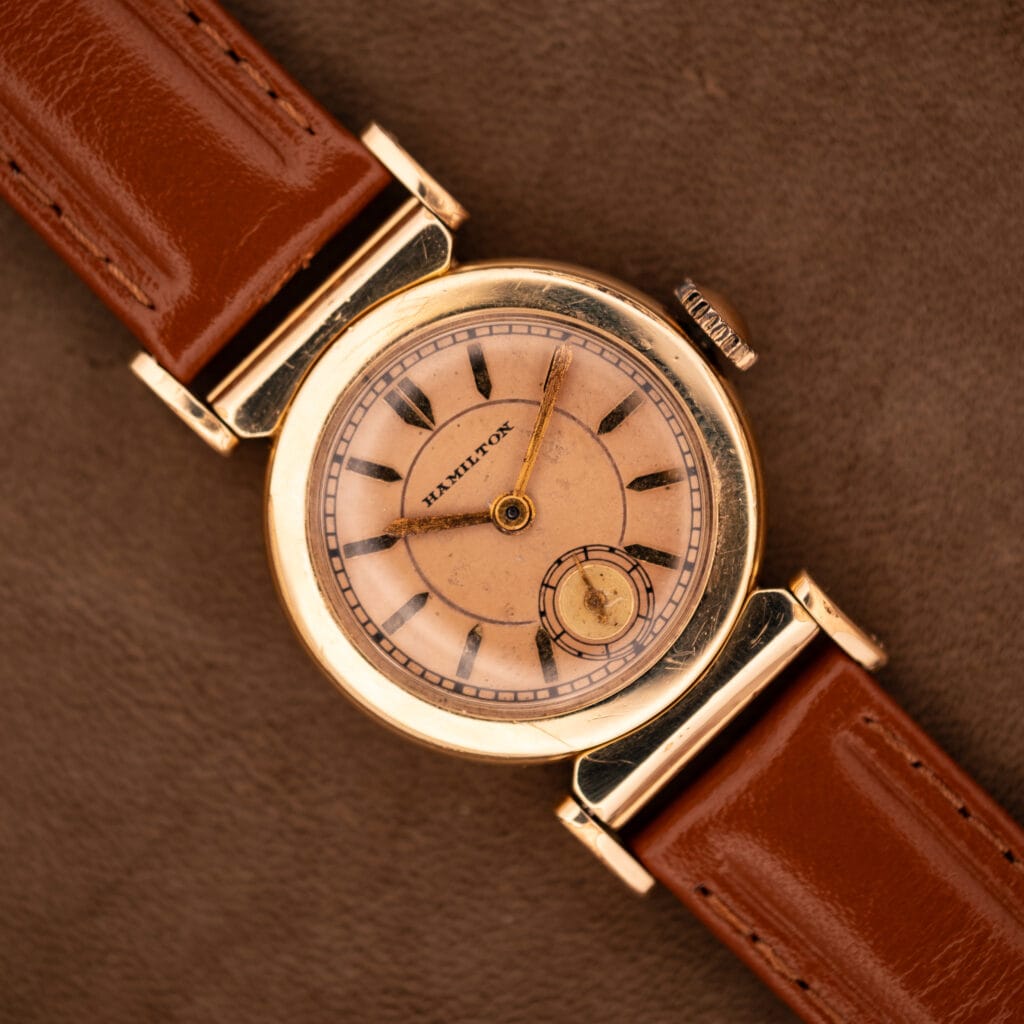
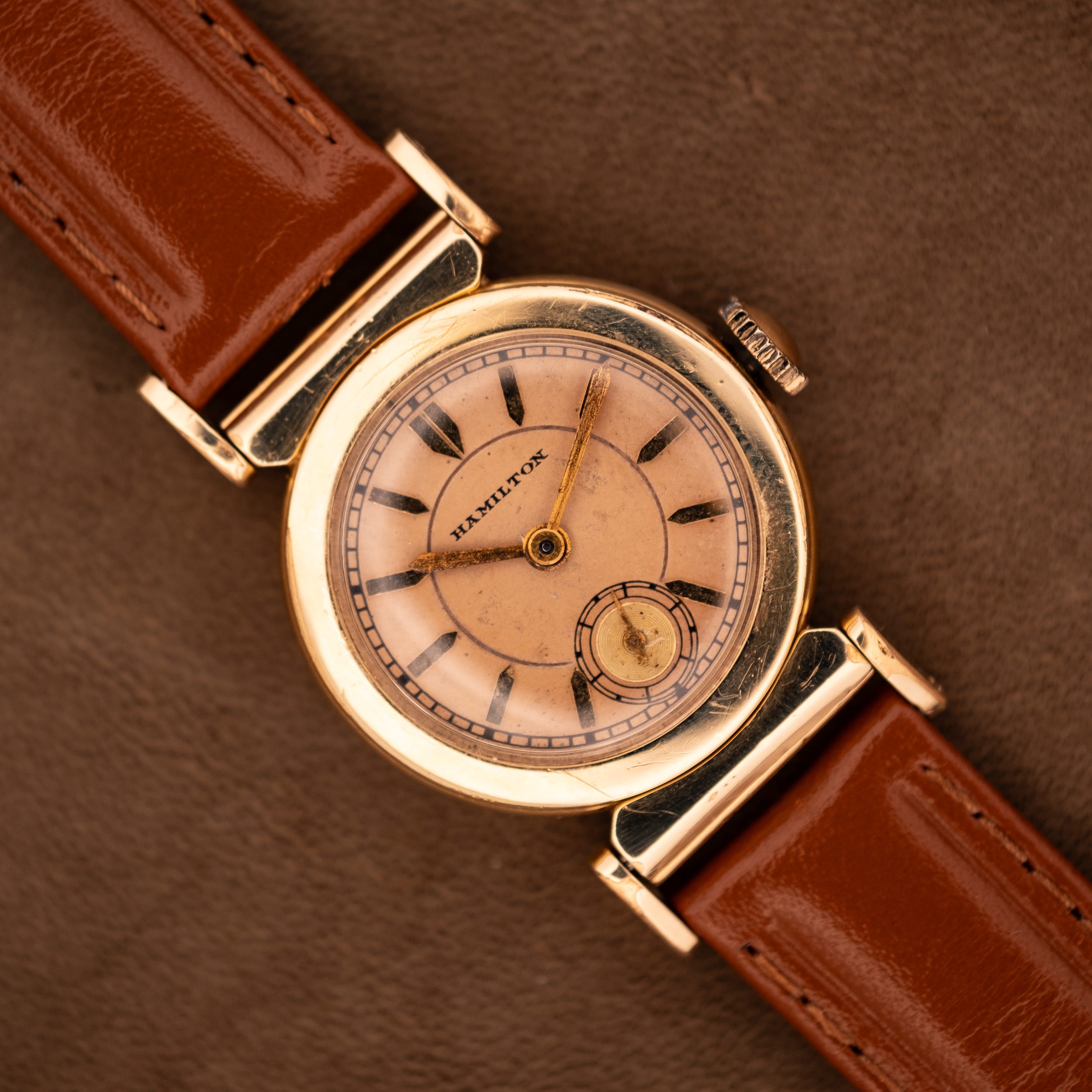
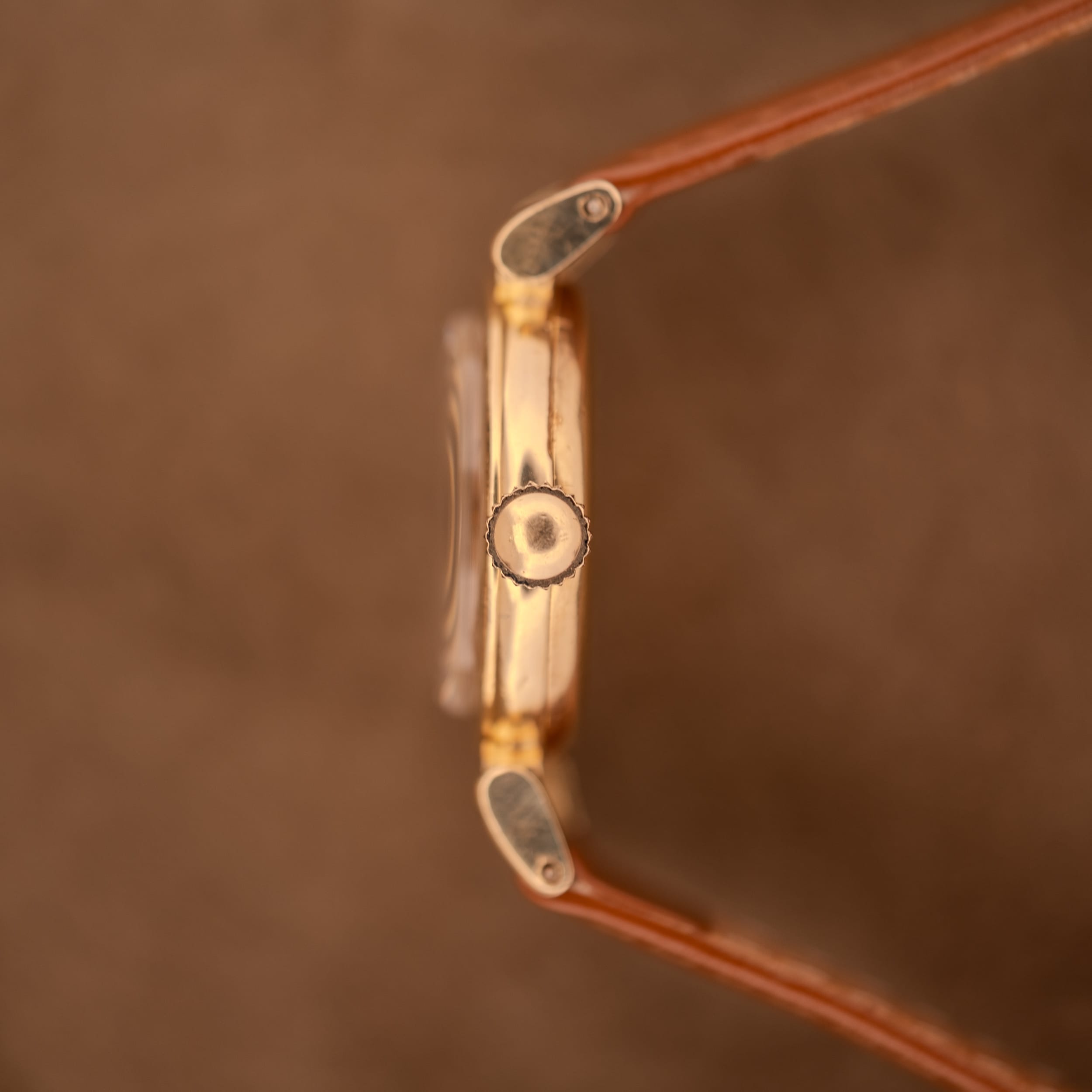
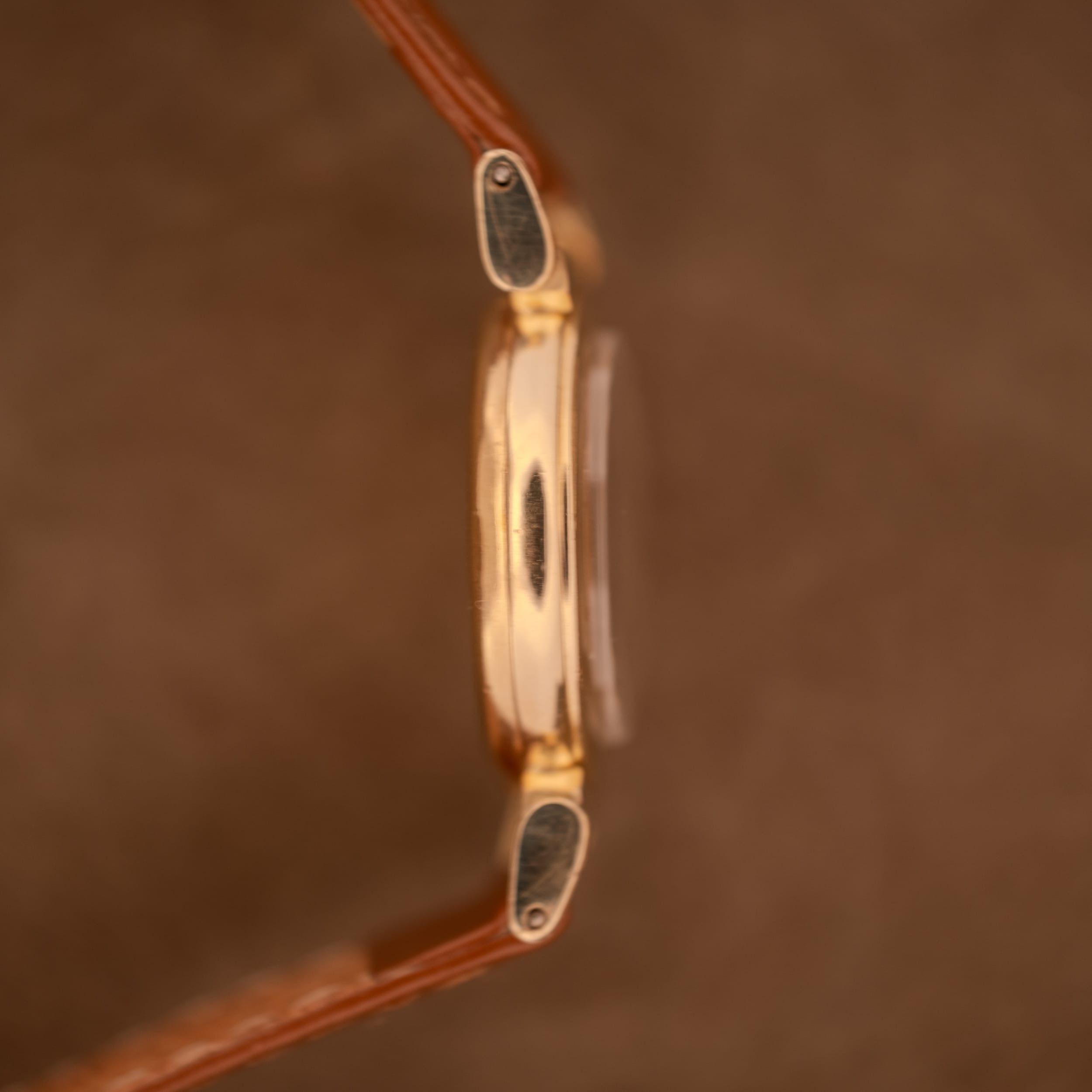
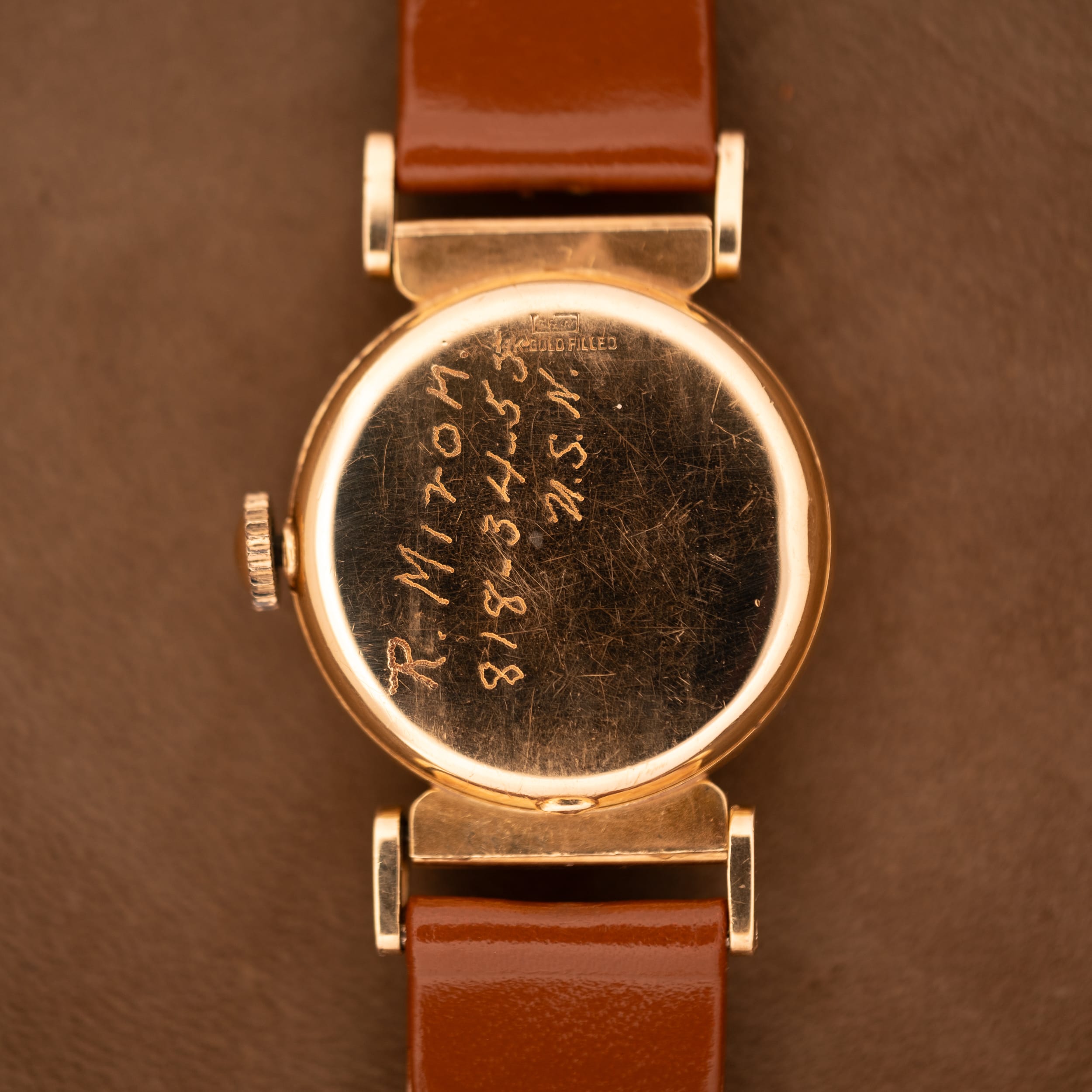
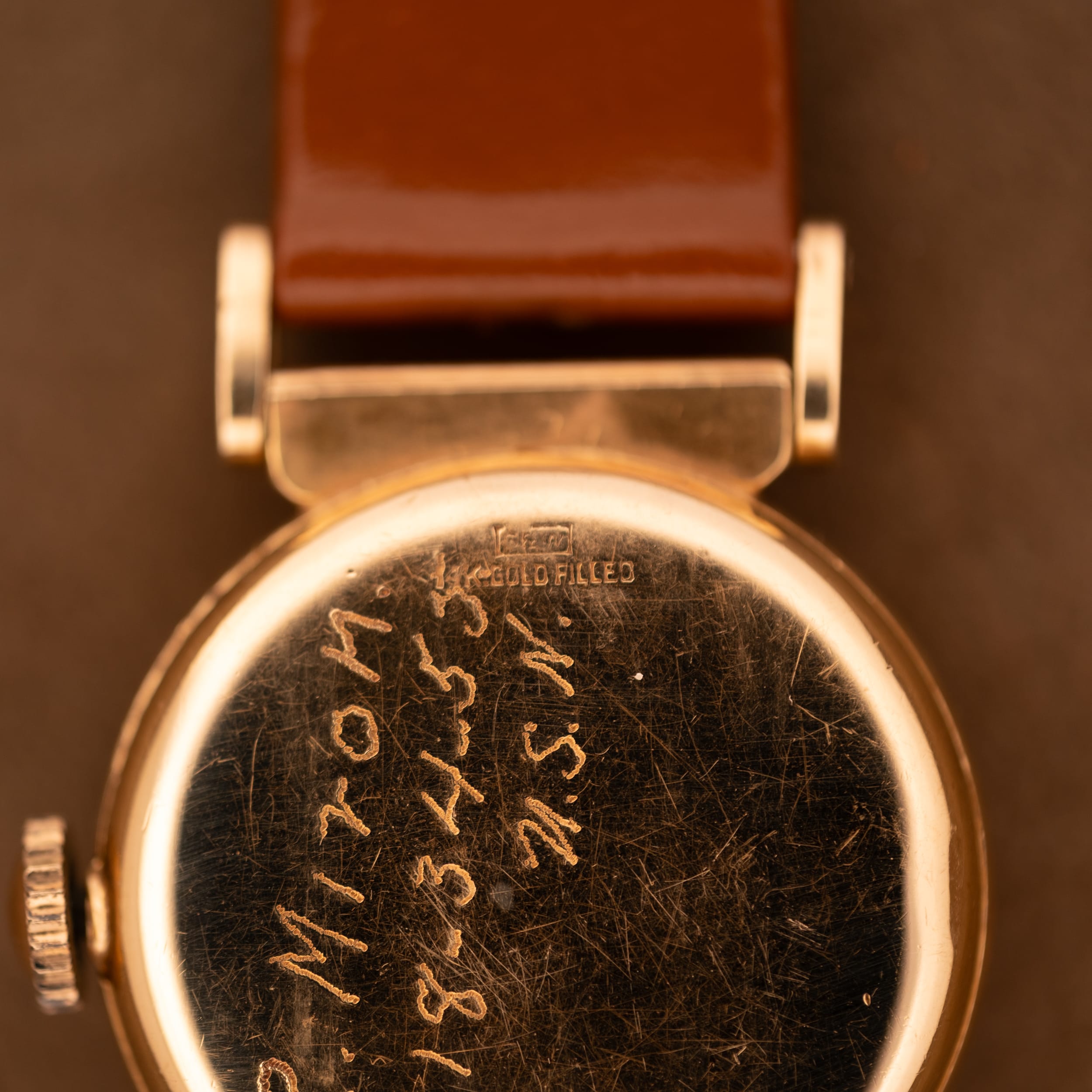
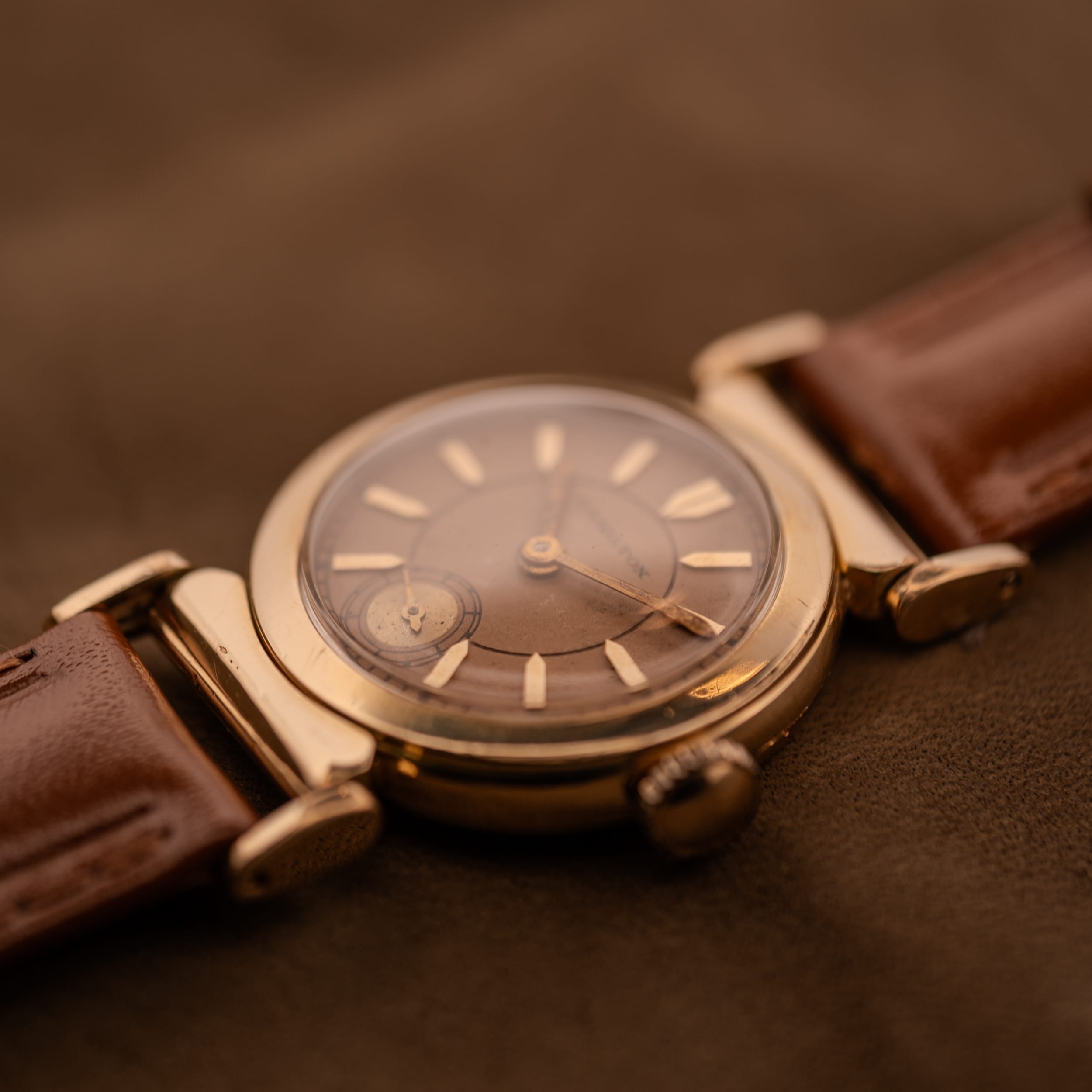
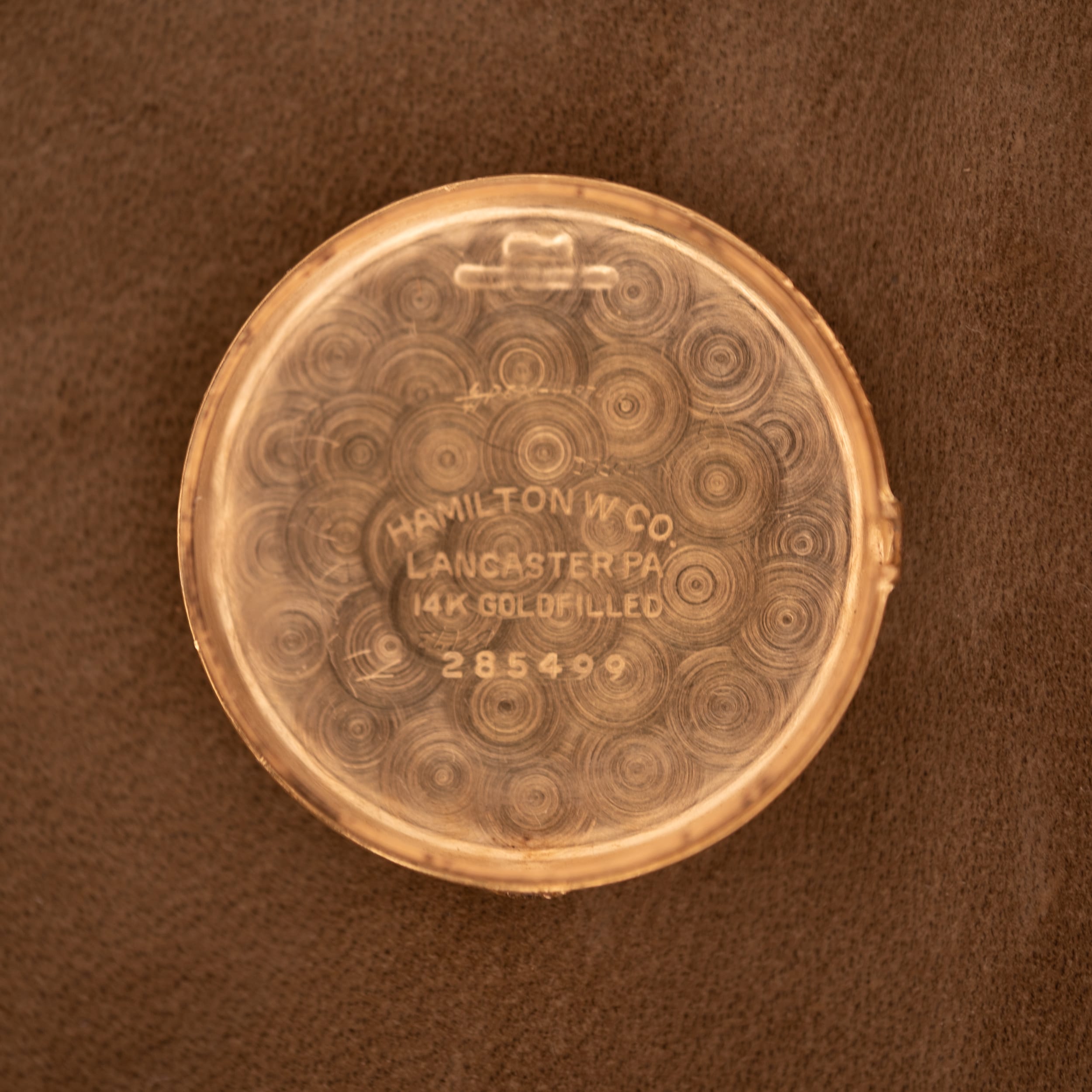
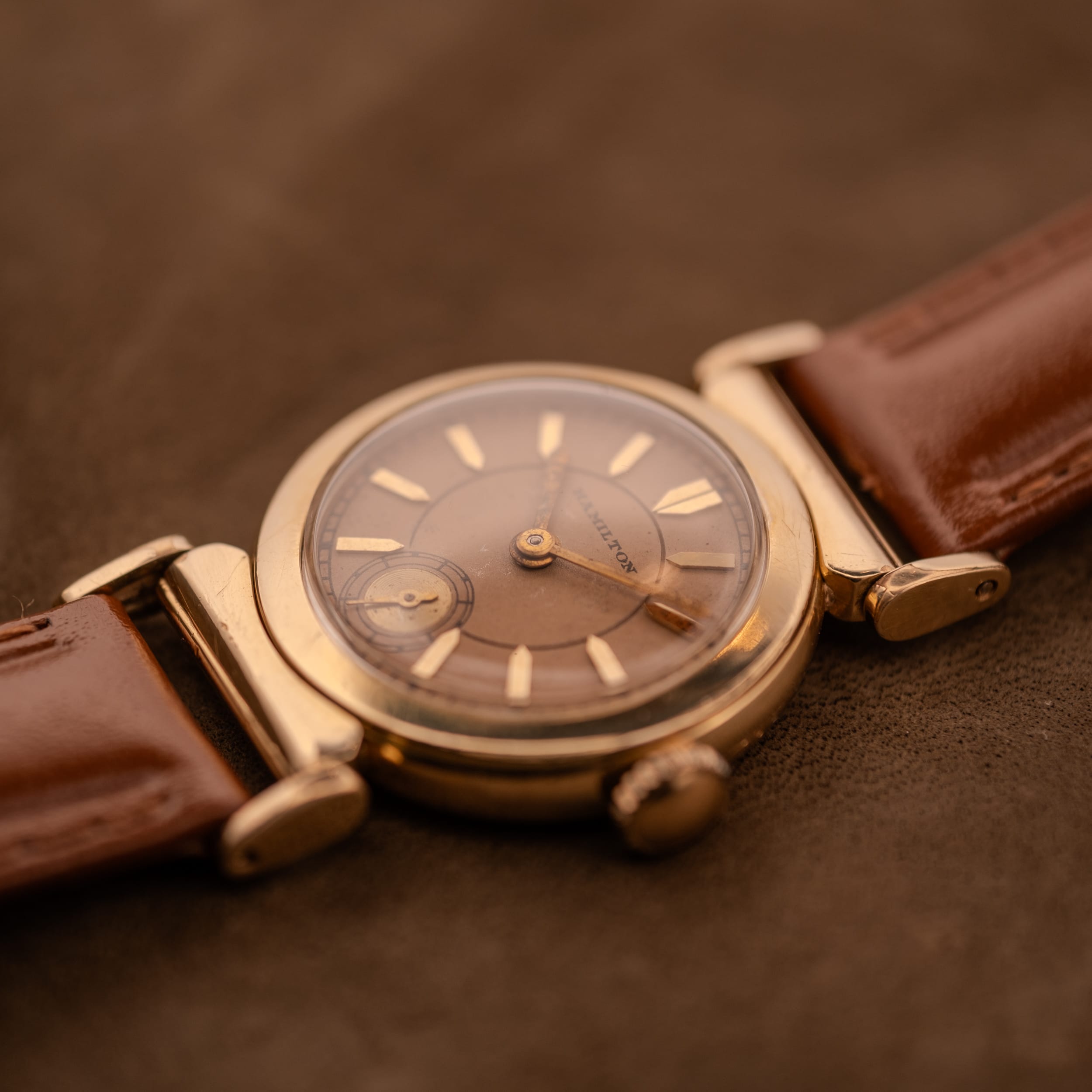
The case is where the design earns its keep. A round scarab-style outer profile measures 27.3mm across with a 40mm lug-to-lug span and a 16mm lug width, the stepped capped lugs flaring slightly downward and finished in mirror-polished gold filled. To us, the capped lug detail is one of the most distinctive design choices in the 1935 to 1936 Hamilton catalogue and gives the Prescott its instantly recognizable silhouette. The construction is 14k yellow gold filled, the higher-quality bonded build of the period, a thick layer of solid 14k yellow gold metallurgically bonded to a base-metal core that wears with a depth thinner gold-plated finishes cannot match. Honest wear scatters across the case sides and the capped lug tops exactly as a watch worn for nine decades should look. Open the back and the inner caseback is stamped with the period Hamilton cartouche reading “HAMILTON W. CO.” across the upper edge, “LANCASTER PA” beneath, “14K GOLDFILLED” along the lower line, and the case serial “285499” running below, all set against the guilloché spotted-circle pattern Hamilton used across its 1930s cases. The outer caseback carries the Hamilton brand cartouche alongside a partial “GOLD FILLED” stamp, and the lower face is engraved with a period souvenir inscription reading “P. MITON / 818-345 / N.S.N.”, the kind of personalisation that cannot be faked and that anchors the watch in its own history.
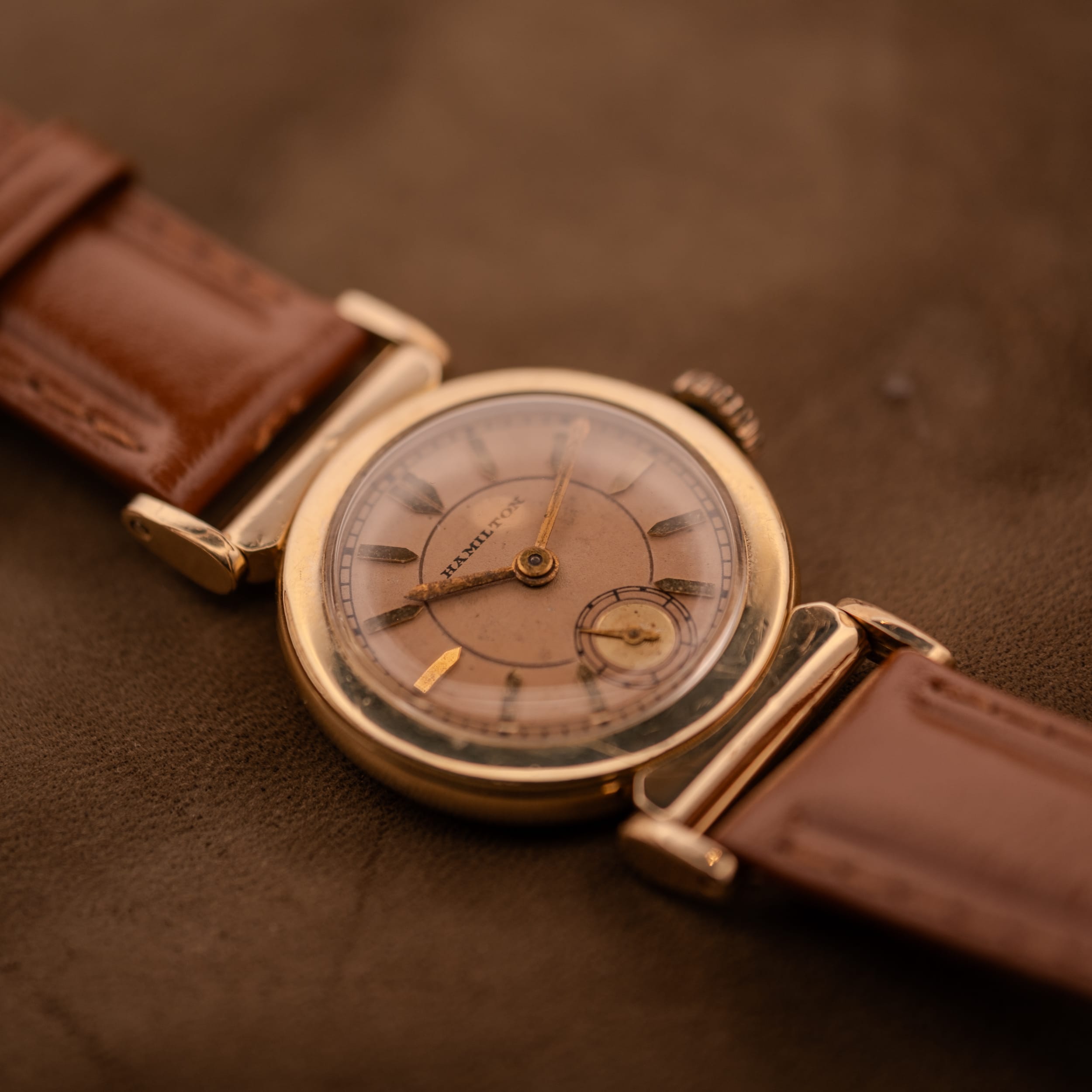
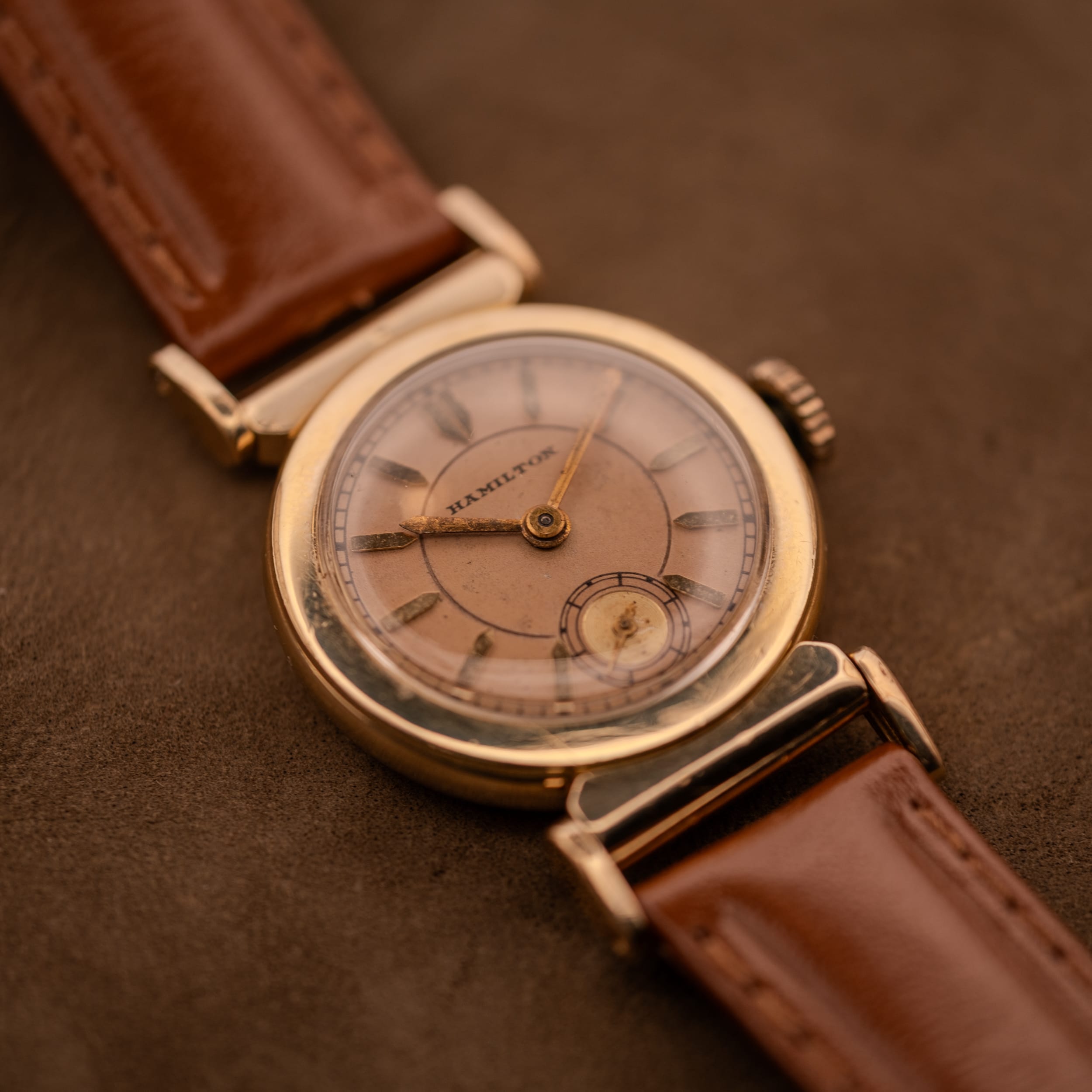
The dial is the headline. A factory original white dial has aged across ninety years into one of the warm patinated surfaces we genuinely love handling, the cream centre fading toward a deeper copper halo at the periphery and brown spotting scattering gently across the field. A subtle sector layout divides the dial into an inner zone around the central wordmark and an outer ring carrying the hour markers, the dividing circle still visible through the patina. Ninety years of light, air, and quiet wear have walked an originally white dial into copper at the edges and cream through the center, and that arc is the entire reason this Prescott is interesting. This is the original factory dial in unrestored condition. Slim black painted dagger-style hour markers ring the dial at every position, with doubled longer markers anchoring the cardinal points at twelve, three, and nine, and the printed black “HAMILTON” wordmark sits in the centre cartouche exactly where the 1935 catalogue drew it. A printed black outer minute railroad frames the dial, and a properly recessed subsidiary seconds register cuts into the lower half at six o’clock, finished with its own concentric black ring and a small gilt seconds hand still tracking cleanly. The Prescott is a pre-tritium era dress watch built without luminous compound on the markers, exactly correct for a 14k gold filled catalogue model of this period. The slim gold dauphine-style hands are a matched factory pair aged to a warm brown that picks up the dial colour exactly, with no replacement and no reluming. To us, a factory dial that has walked from white into this warmly patinated two-zone field on a 1935 Hamilton Prescott is one of those quiet accidents of chemistry and time that cannot be designed, and the value lives in leaving it alone.
The crown is the period-correct Hamilton component with the toothed edge intact and operates with the positive engagement a properly serviced 987-F should give. The acrylic crystal sits clear above the dial with the gentle doming that helps the warm off-white tones play across its surface in light. We have paired the watch with one of our cognac brown leather straps and an OTTUHR signed buckle, the warm brown reading as a natural counterpart to the gold filled case and picking up the copper halo of the dial directly.
Serviced in-house at OTTUHR and backed by our 2-year mechanical warranty, this is the kind of prewar American Hamilton we get genuinely excited about. Factory original dial in warmly patinated off-white, matched factory hands, Lancaster Pennsylvania manufacture, 14k yellow gold filled scarab case in honest unrestored condition, period engraved owner inscription, and the Hamilton-signed 987-F running cleanly. As a Hamilton 14k gold filled vintage watch from the first year of the Prescott reference, this is one of the more honest entry points into prewar Lancaster manufacture. For the collector who values originality over polish, who reads patinated dials as character rather than damage, and who wants a piece of mid-1930s American Art Deco watchmaking with a real story attached, this is exactly the kind of watch we love bringing in.