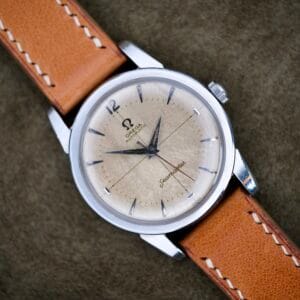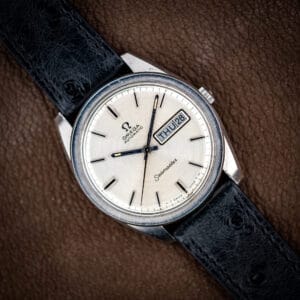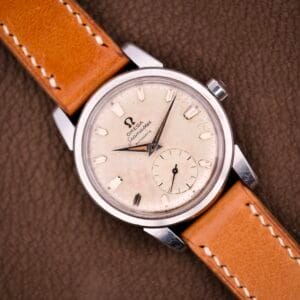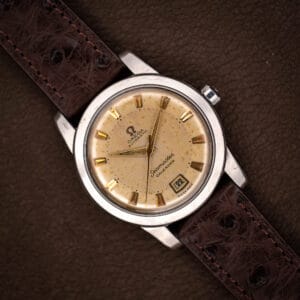
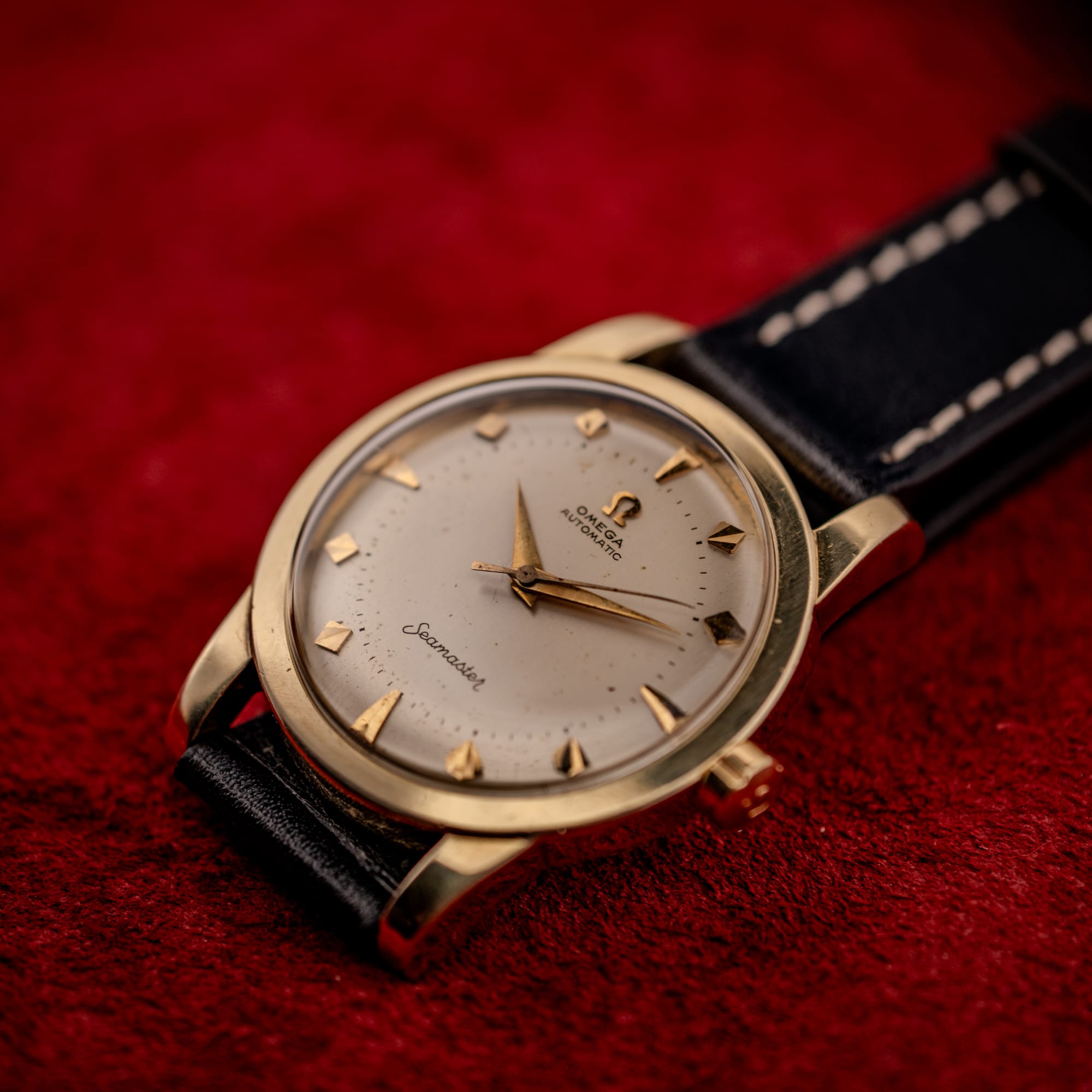
Wind a modern automatic and you feel nothing. Wind this one and the weight swings to the end of its arc and bumps, softly, against a spring before reversing direction. That small mechanical knock is what a bumper automatic does, and in our opinion it remains one of the most charming ways a watch has ever wound itself. This Omega Seamaster bumper, reference 2577-22, is a gold-capped expression of that early self-winding era, and it has aged exactly the way we like to find them.
Omega introduced the Seamaster in 1948 to mark the brand’s centenary, adapting the waterproof case construction it had refined for the British military during the Second World War into a dress watch the postwar market could actually buy. The earliest Seamasters were not the dive watches the name would later imply but quietly capable everyday automatics, sealed against the weather and built to be worn hard. This example sits in that first chapter of the line, when an Omega Seamaster bumper was still defined by its movement rather than a bezel.
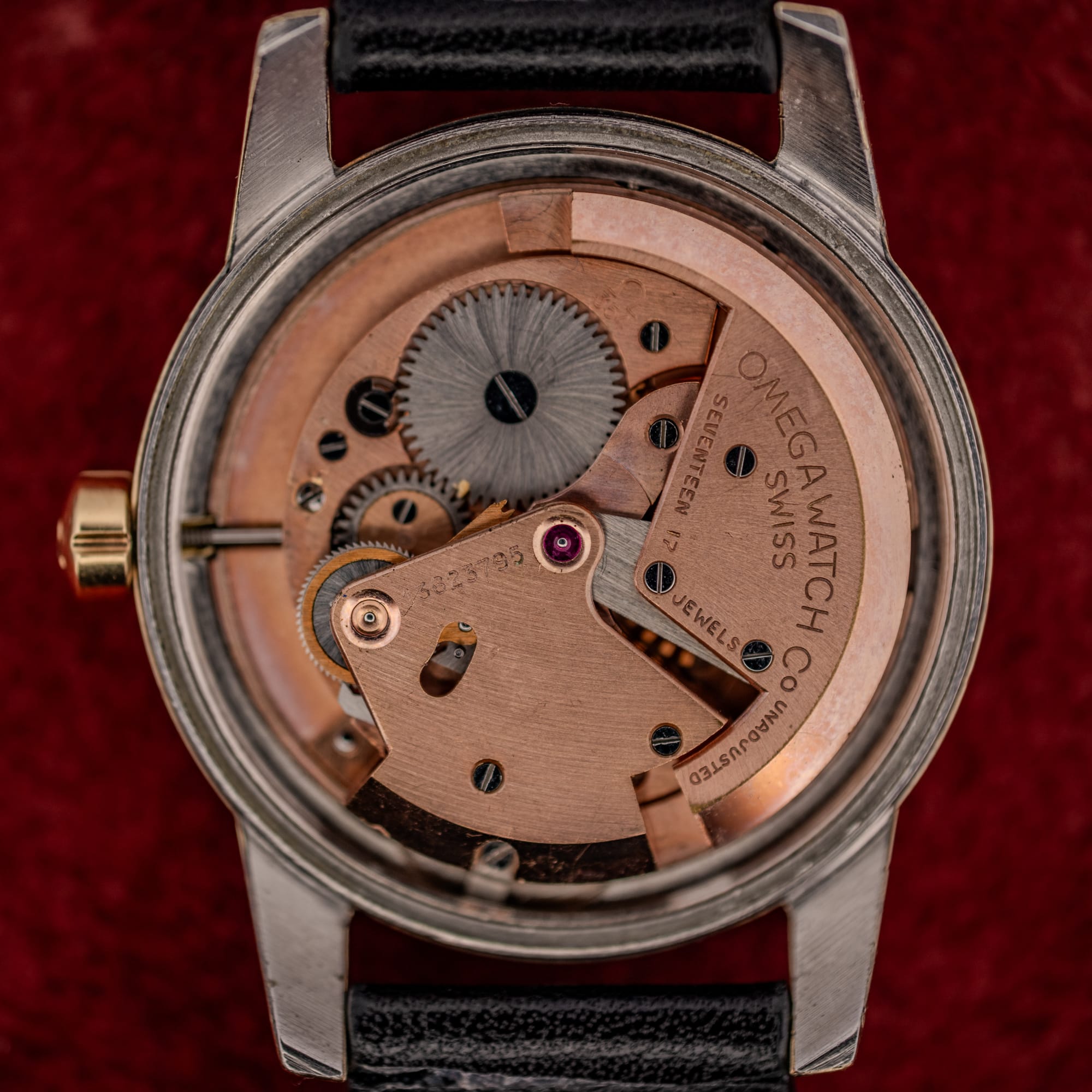
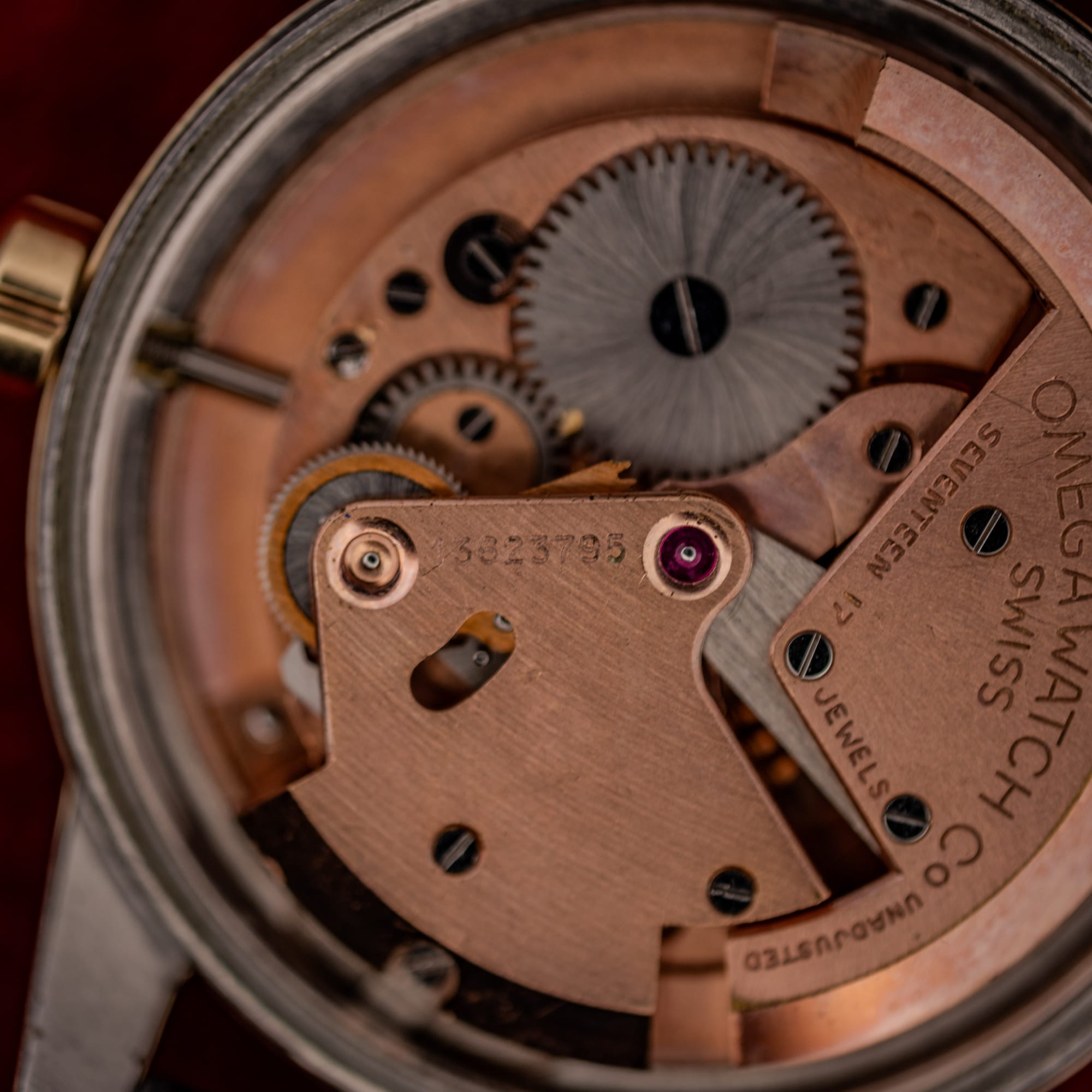
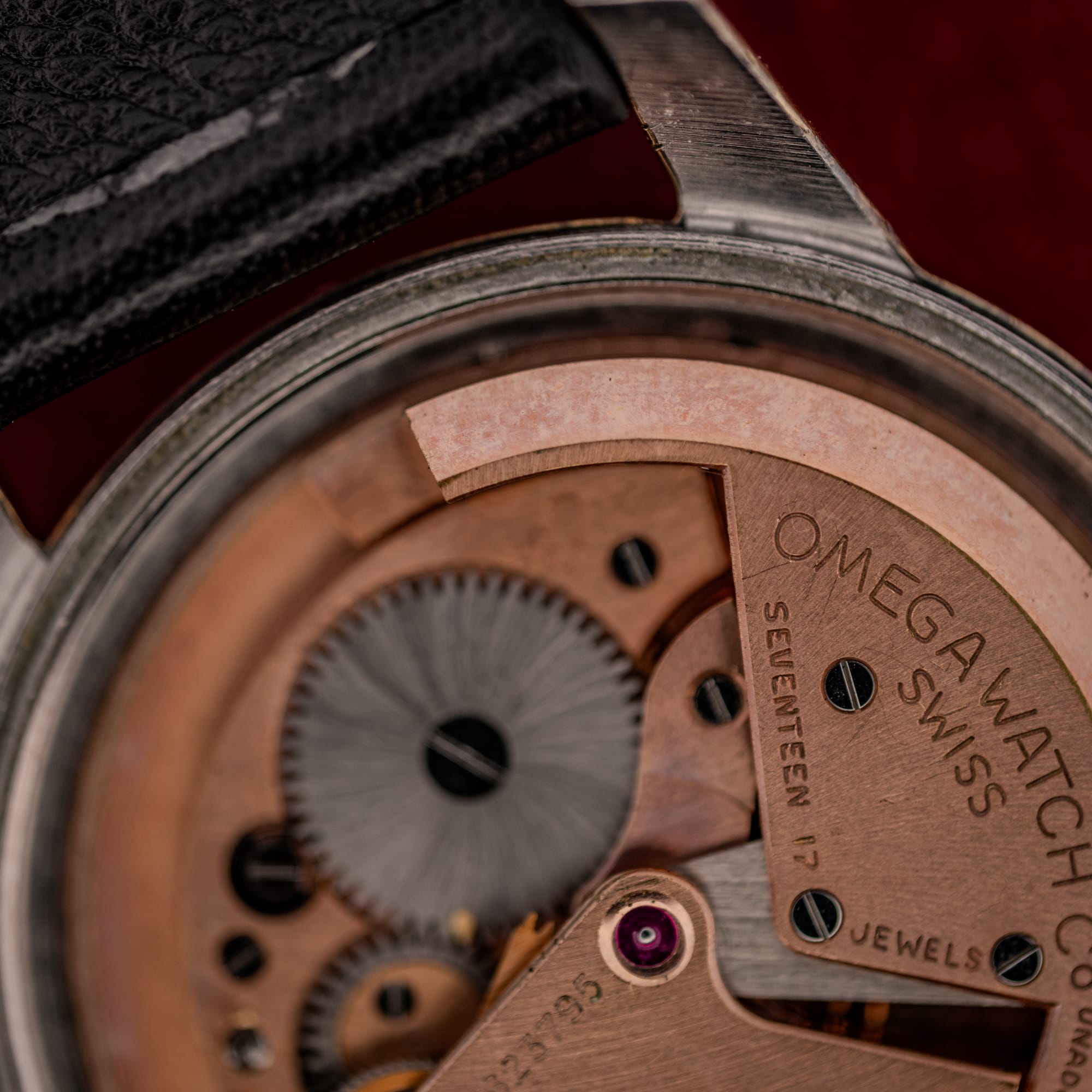
The caliber 354 is the reason to pay attention here. It belongs to Omega’s bumper automatic family, movements built around an oscillating weight that travels part of a circle and bumps against two sprung buffers at either end of its swing rather than spinning a full rotation. Omega built them this way for a specific reason: Rolex held the patent on the full 360-degree winding rotor, and until it lapsed the rest of the Swiss industry, Omega included, engineered around it with the back-and-forth bumper. Omega made more than a million of these bumper calibers between 1943 and 1955, and the 354 is the mature, final generation of the design, arriving just before the full-rotor 500-series took over. Ours is the standard, non-chronometer grade, and the movement says so plainly: the bridge is stamped OMEGA WATCH Co, SWISS, SEVENTEEN 17 JEWELS, UNADJUSTED, and the serial places it in the early-to-mid 1950s. We point out the grade because the 354 also shipped in chronometer trim, and we would rather state exactly what this is than borrow a pedigree it never carried.
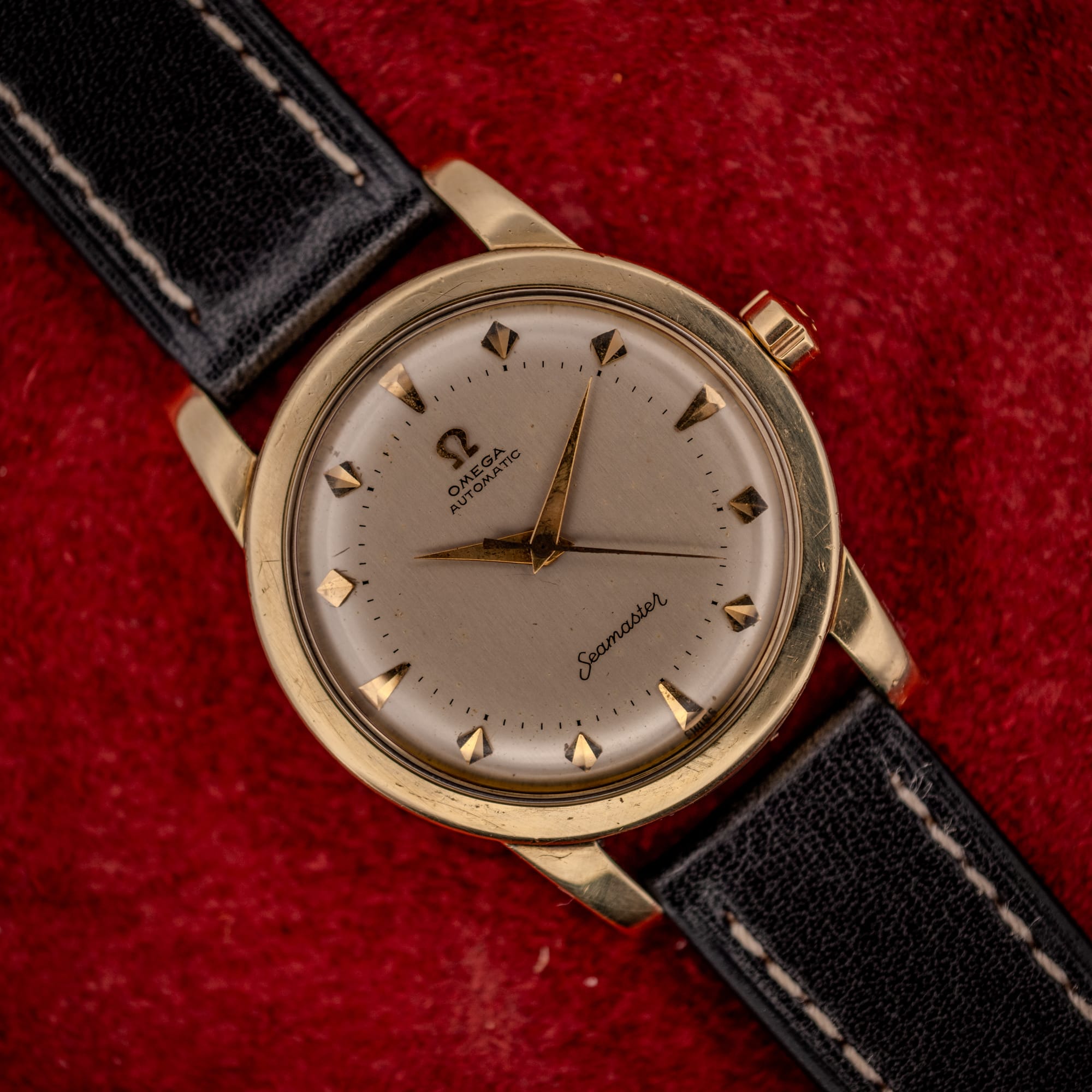
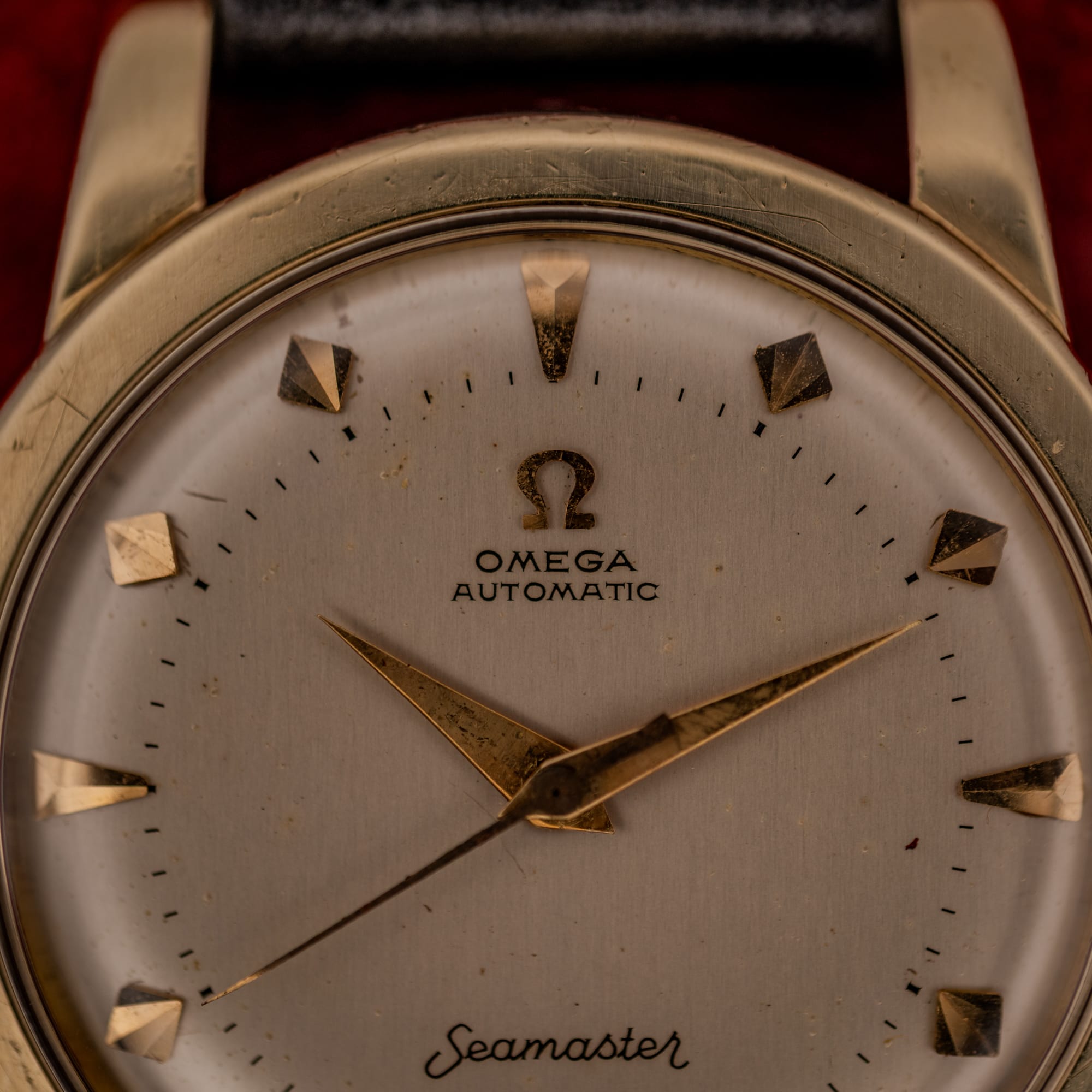
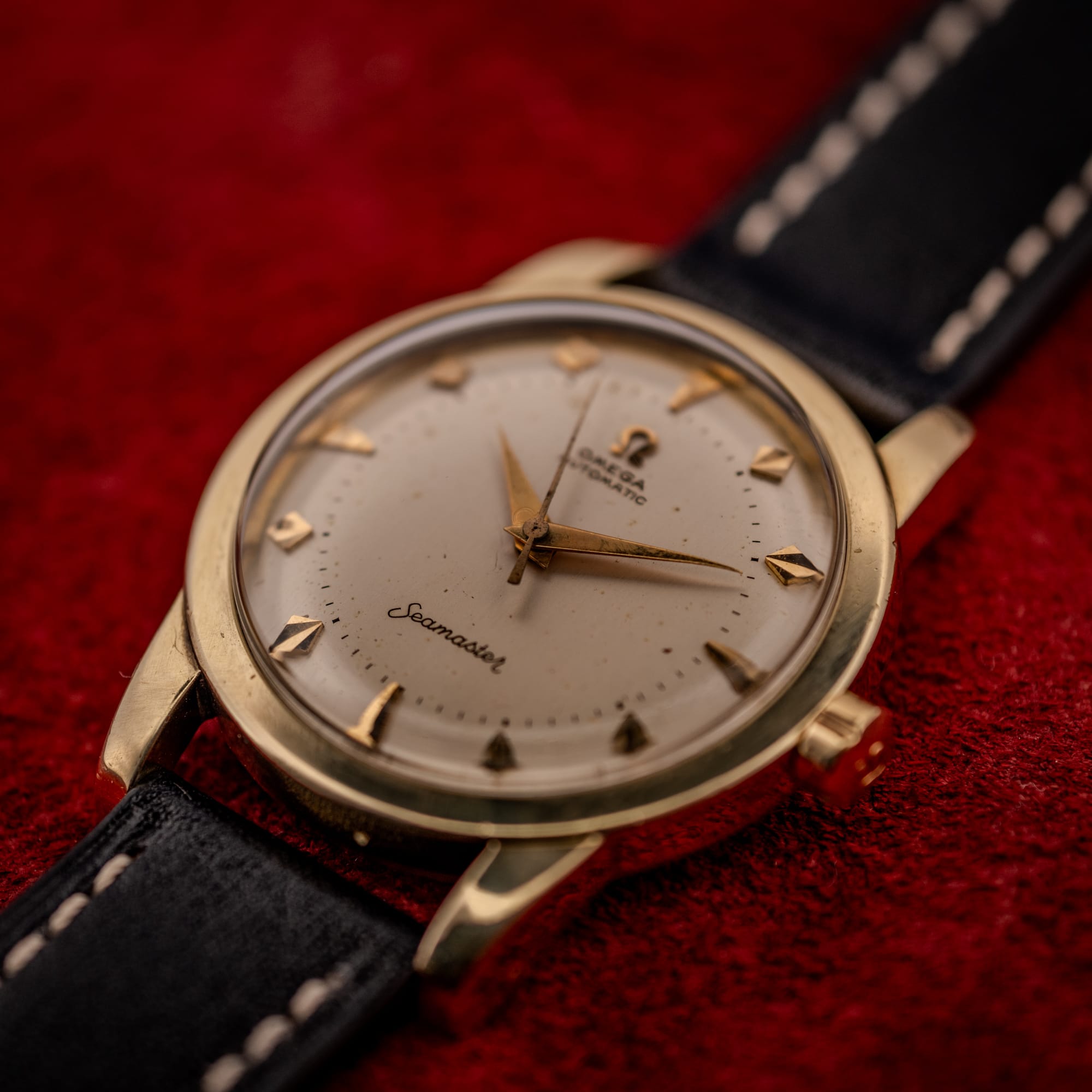
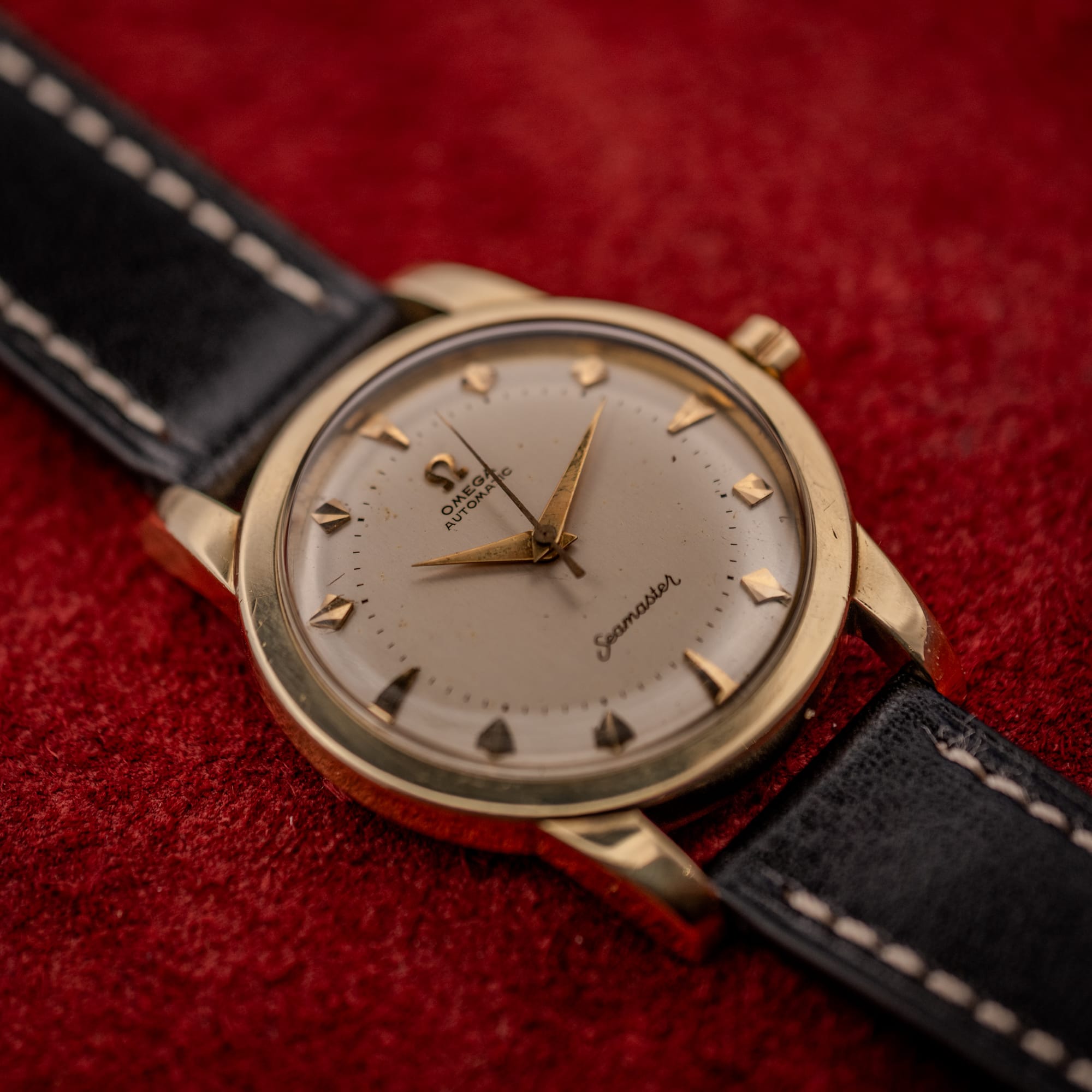
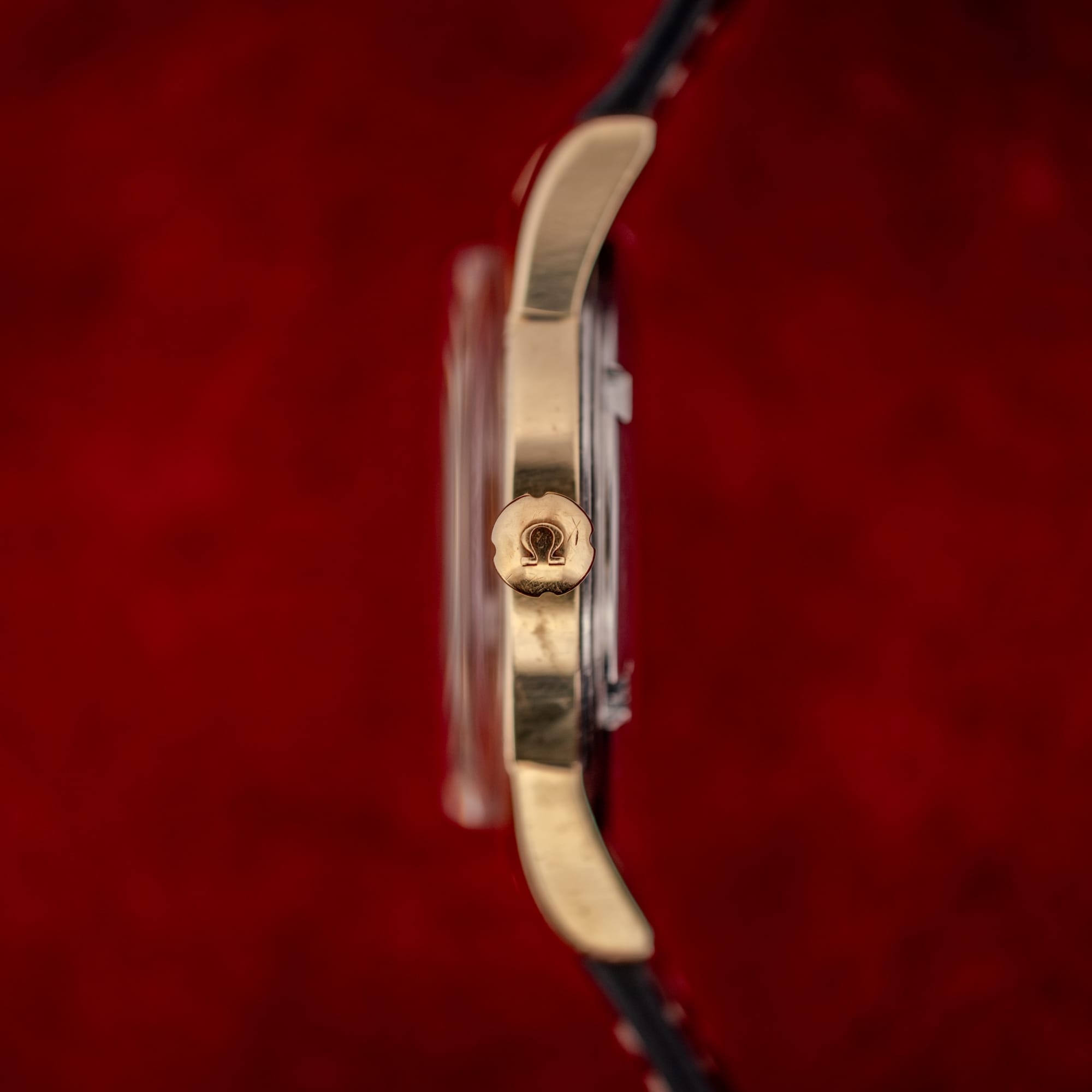
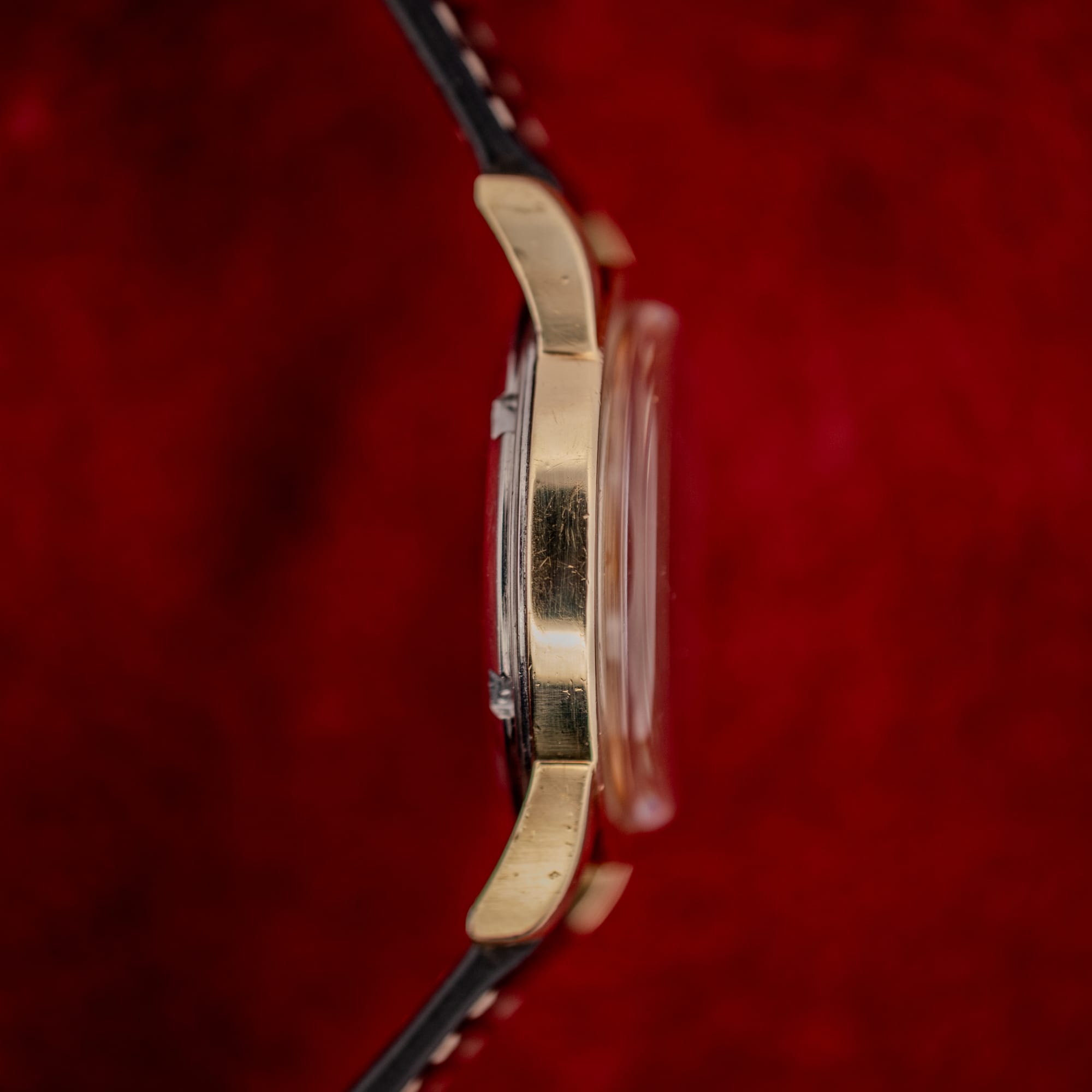
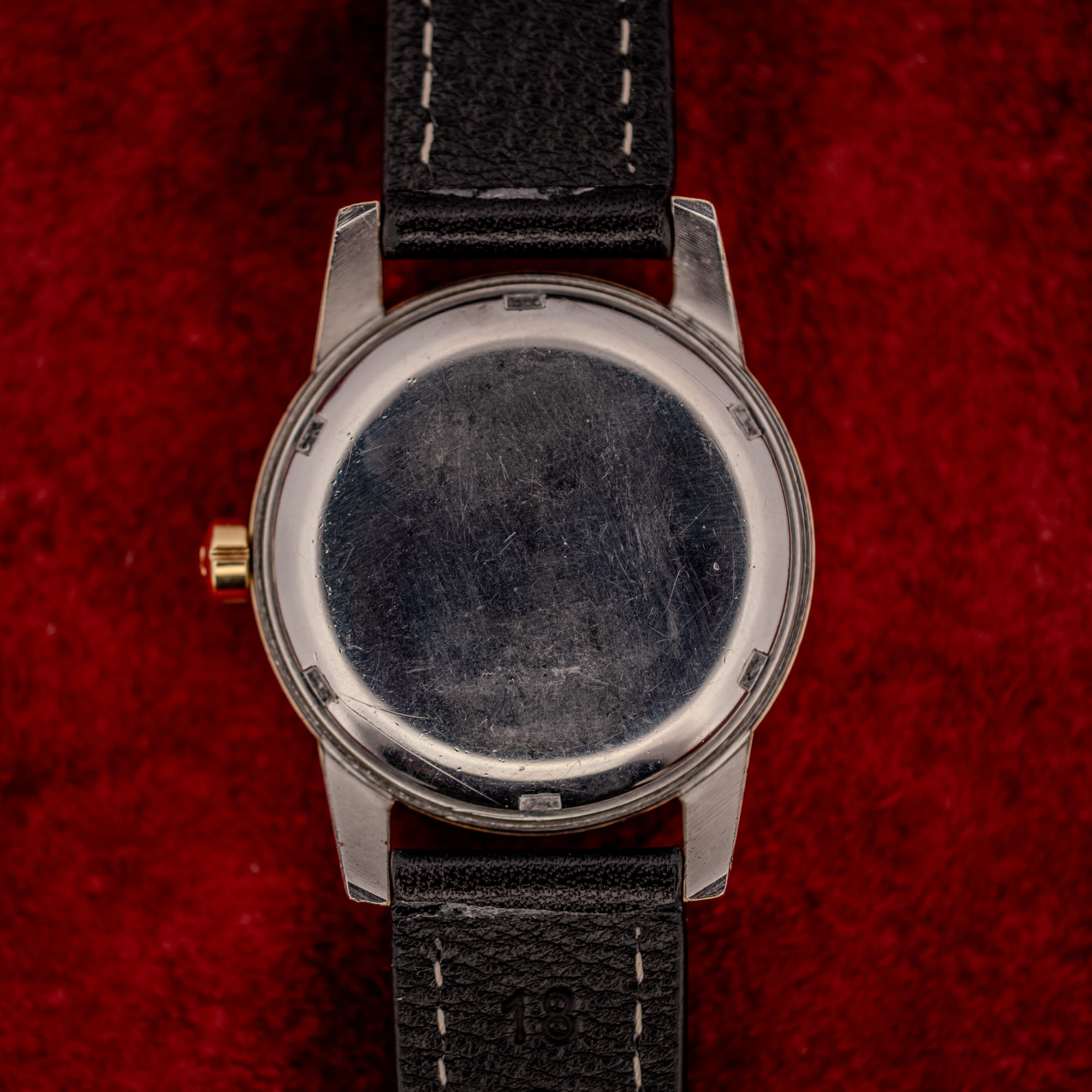
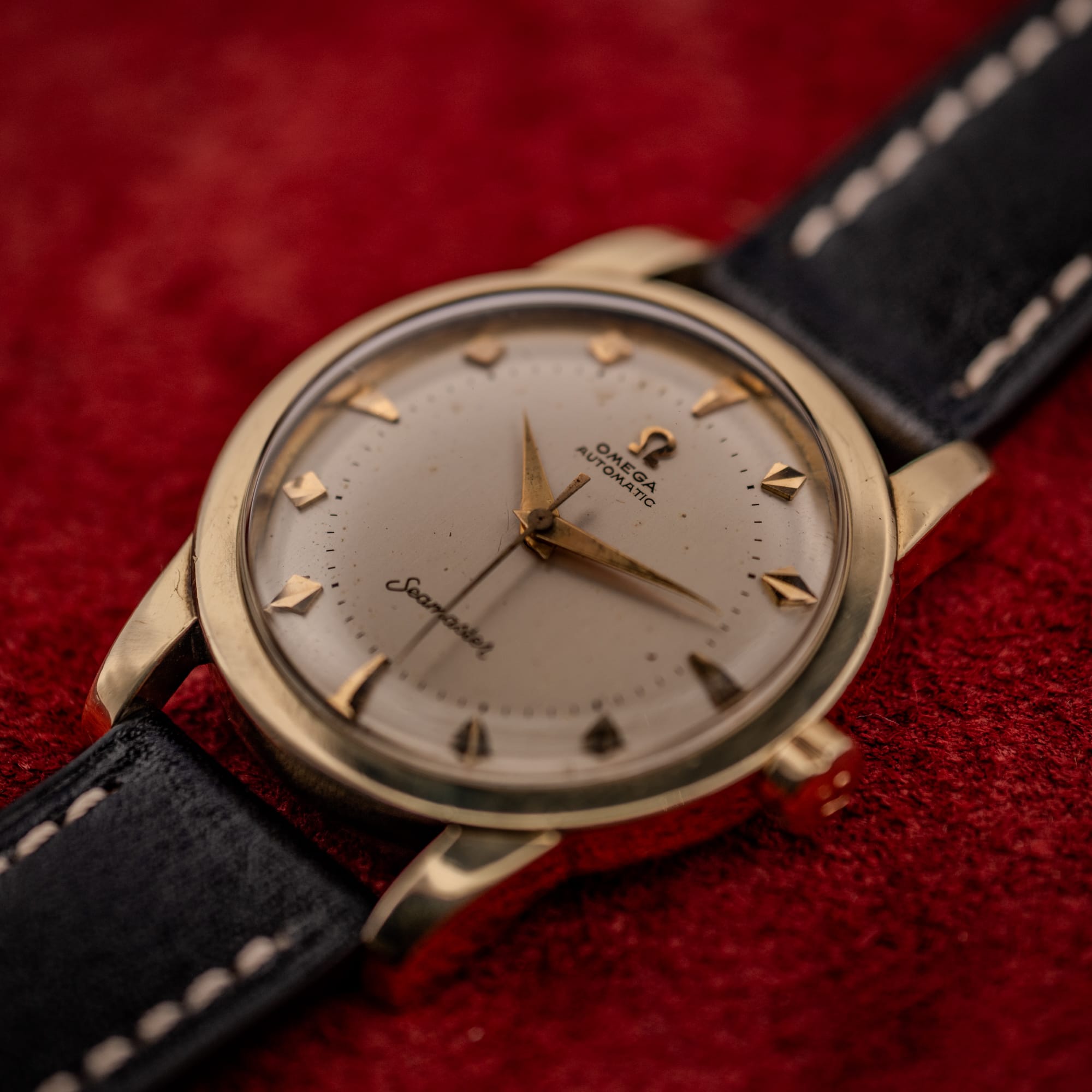
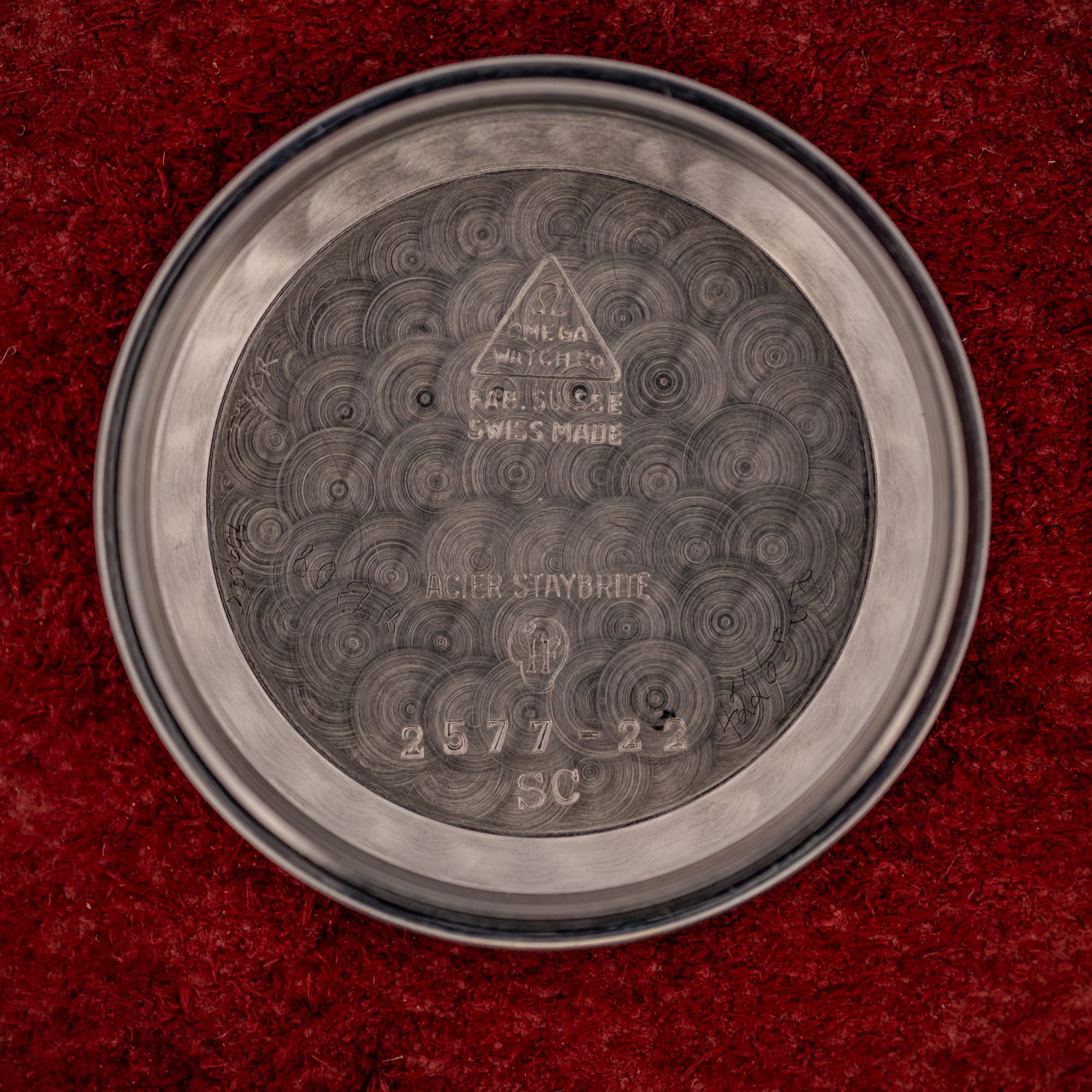
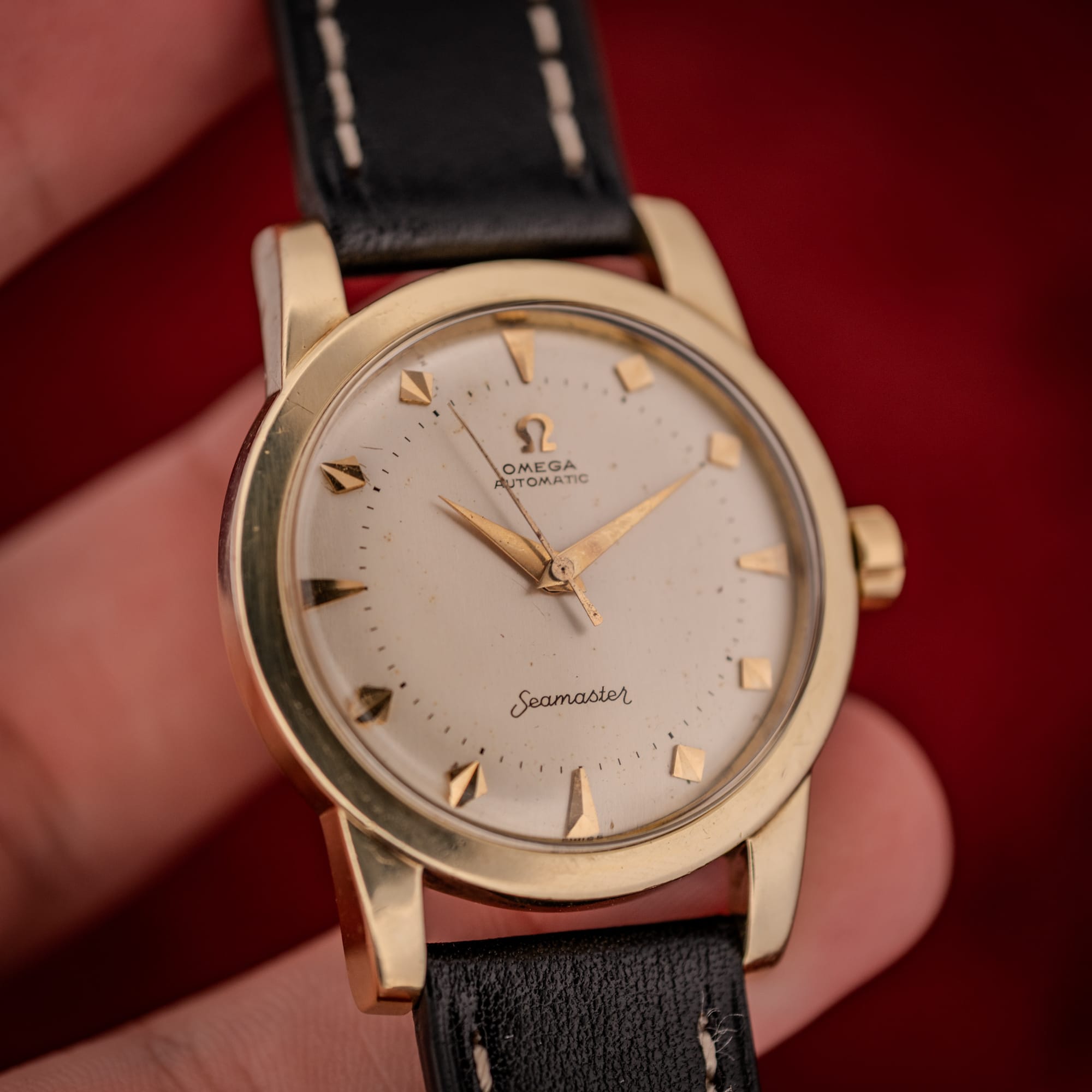
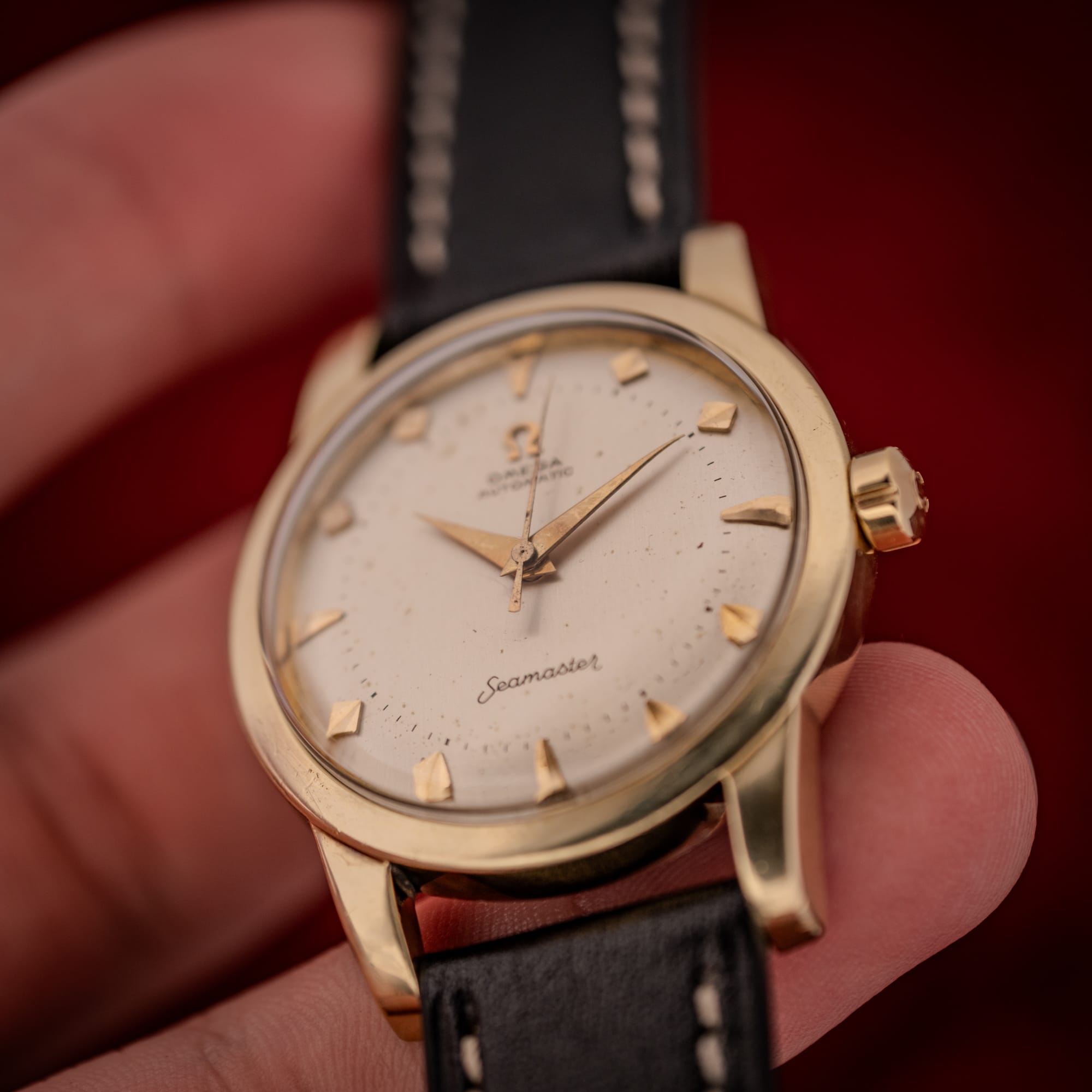
The case is the construction Omega reserved for its better dress pieces, a solid gold cap bonded over a stainless steel core, distinct from gold plating and far more durable than the description suggests. It measures 34.5mm across, 42.5mm lug to lug, with an 18mm lug width, a restrained mid-century footprint that sits cleanly under a cuff. The gold has worn honestly at the high points of the lugs and bezel edge, the soft brassing that only decades of real wrist time produce, and we have left it exactly that way. Lift the stainless caseback and, beneath the Omega Watch Co triangle, the inner cover reads FAB. SUISSE, SWISS MADE, ACIER STAYBRITE, 2577-22, and SC, the last being Omega’s shorthand for seconde centrale, the sweep center seconds. The signed Omega crown is intact, its applied symbol still crisp under a loupe.
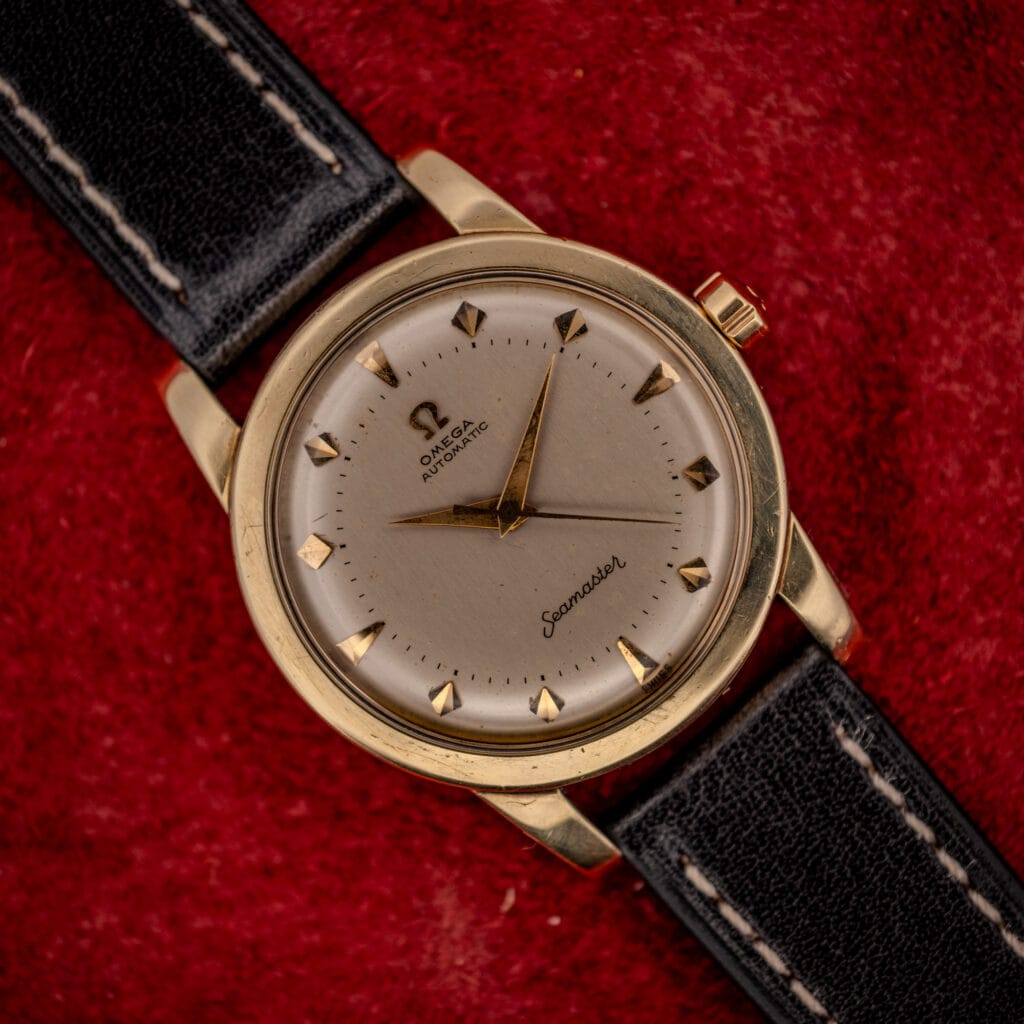
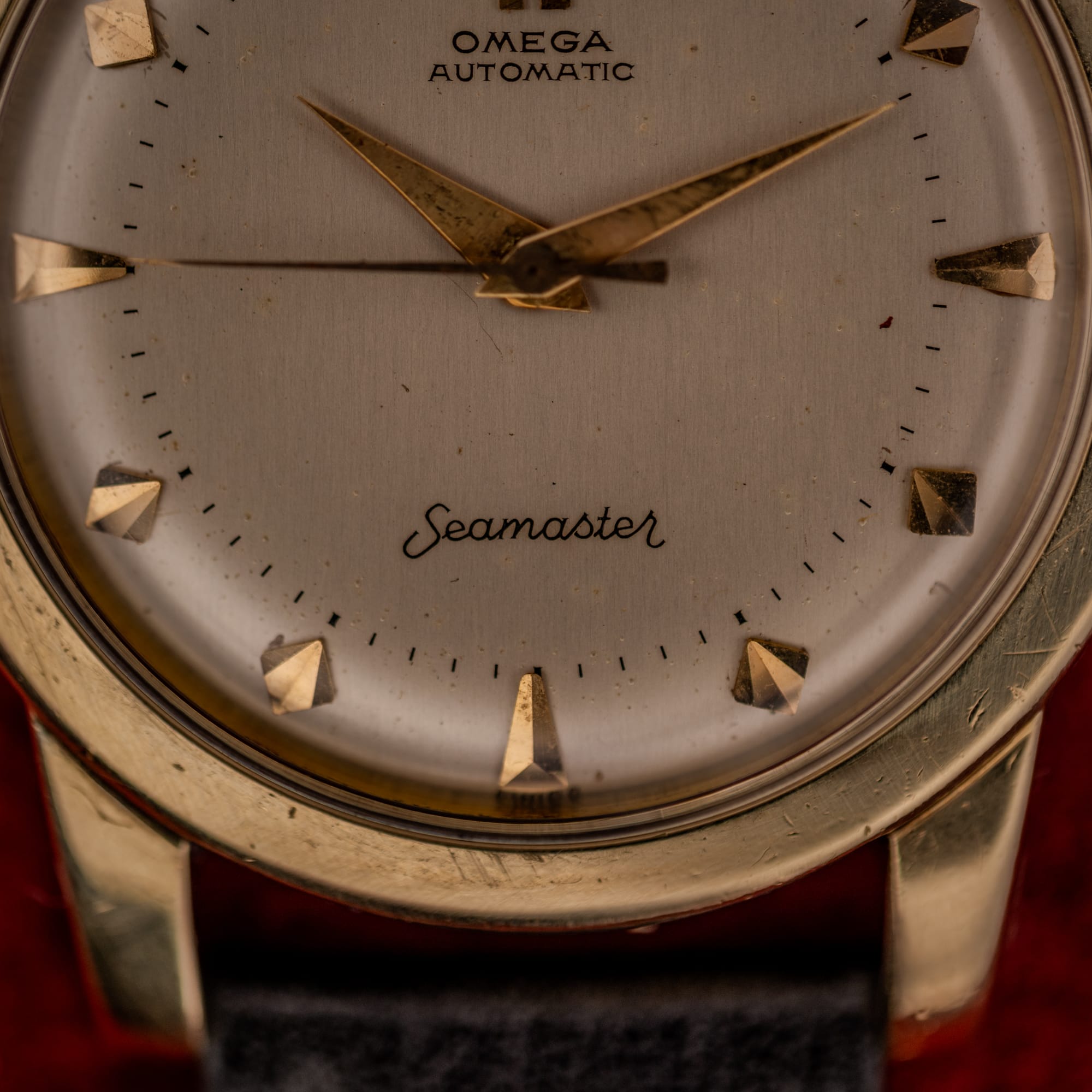
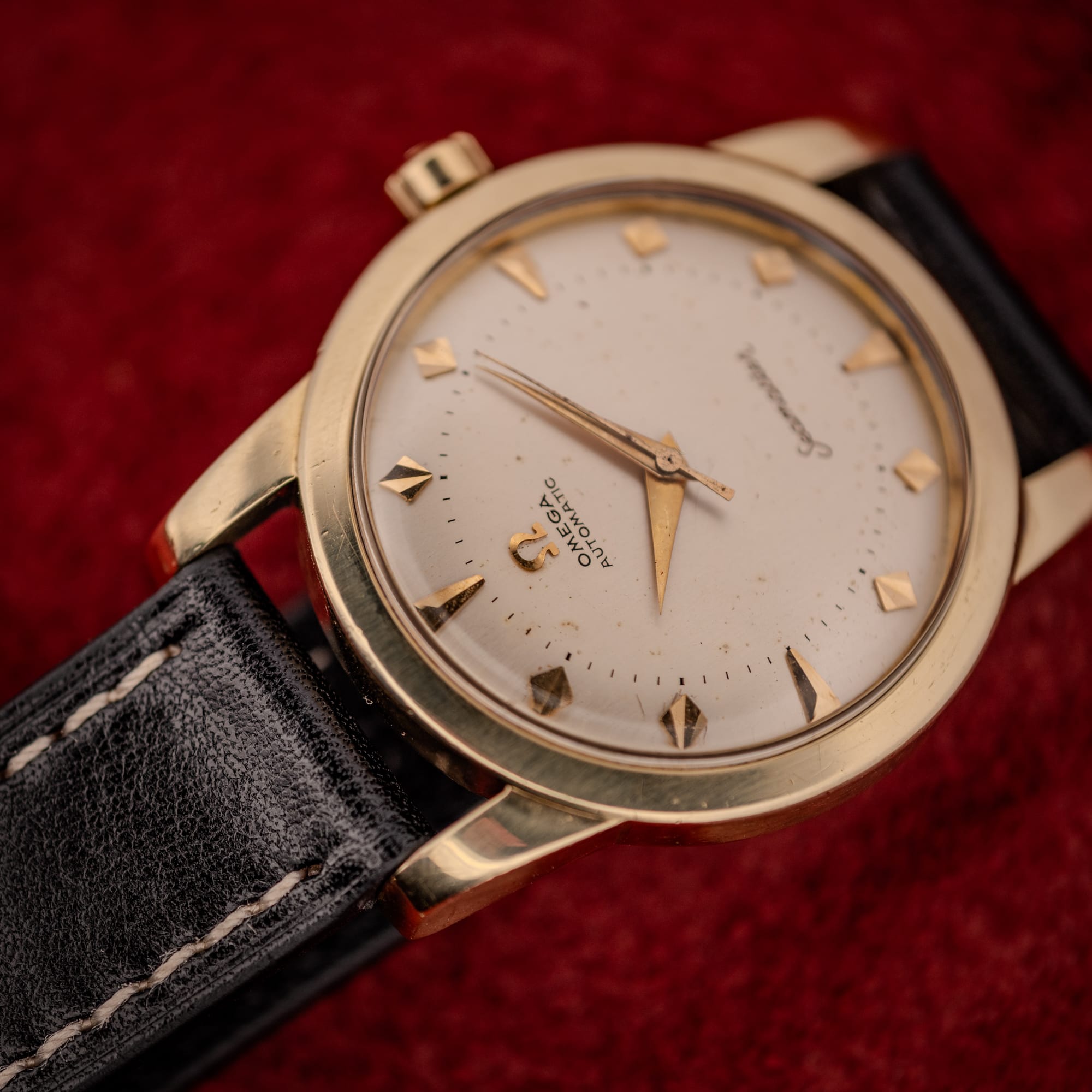
The cream dial is built in two tiers, a raised center section stepping down to a recessed minute track at the rim, with the Omega symbol and OMEGA AUTOMATIC printed below twelve and the cursive Seamaster signature above six. Applied faceted dart markers ring the hours, catching light against gold dauphine hands and a slim center seconds. Age has touched it the way age should, a fine and even scattering of speckle across the surface and a warm tarnish settling into a few of the markers, the kind of patina no refinished dial ever shows. To us that is the entire point of buying vintage. Compact, characterful, and honestly worn, the dial is the strongest argument this watch makes.
We have paired it with a black leather strap with cream contrast stitching and an OTTUHR signed buckle. The black grounds the warm gold of the case without fighting the cream dial, and the stitching picks up the lighter tone at the rim, a quiet pairing that lets a seventy-year-old Seamaster look its age without apologizing for it.
Serviced in-house at OTTUHR and backed by our 2-year mechanical warranty, this is a Seamaster for the collector who would rather feel a movement work than read a spec sheet about it, who values an honest original dial over a flawless restored one, and who understands that the bumper was a clever answer to a patent rather than a compromise. The watches that earn the most wrist time are rarely the loudest ones in the box. To us, this gold-capped Seamaster is exactly that kind of quiet, and that is the highest thing a vintage watch can be.