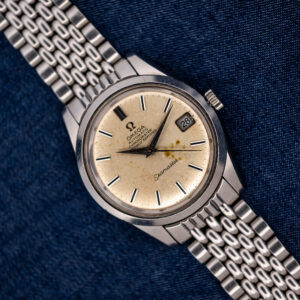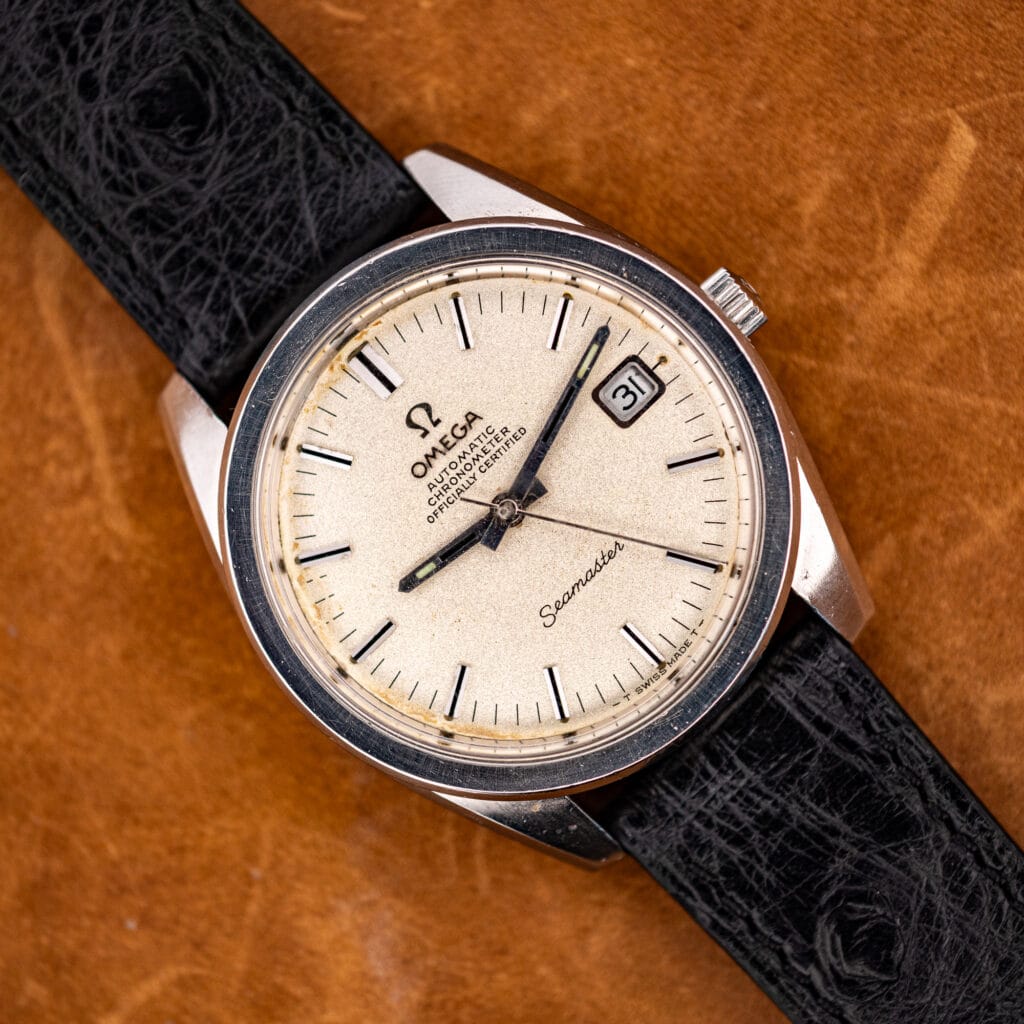
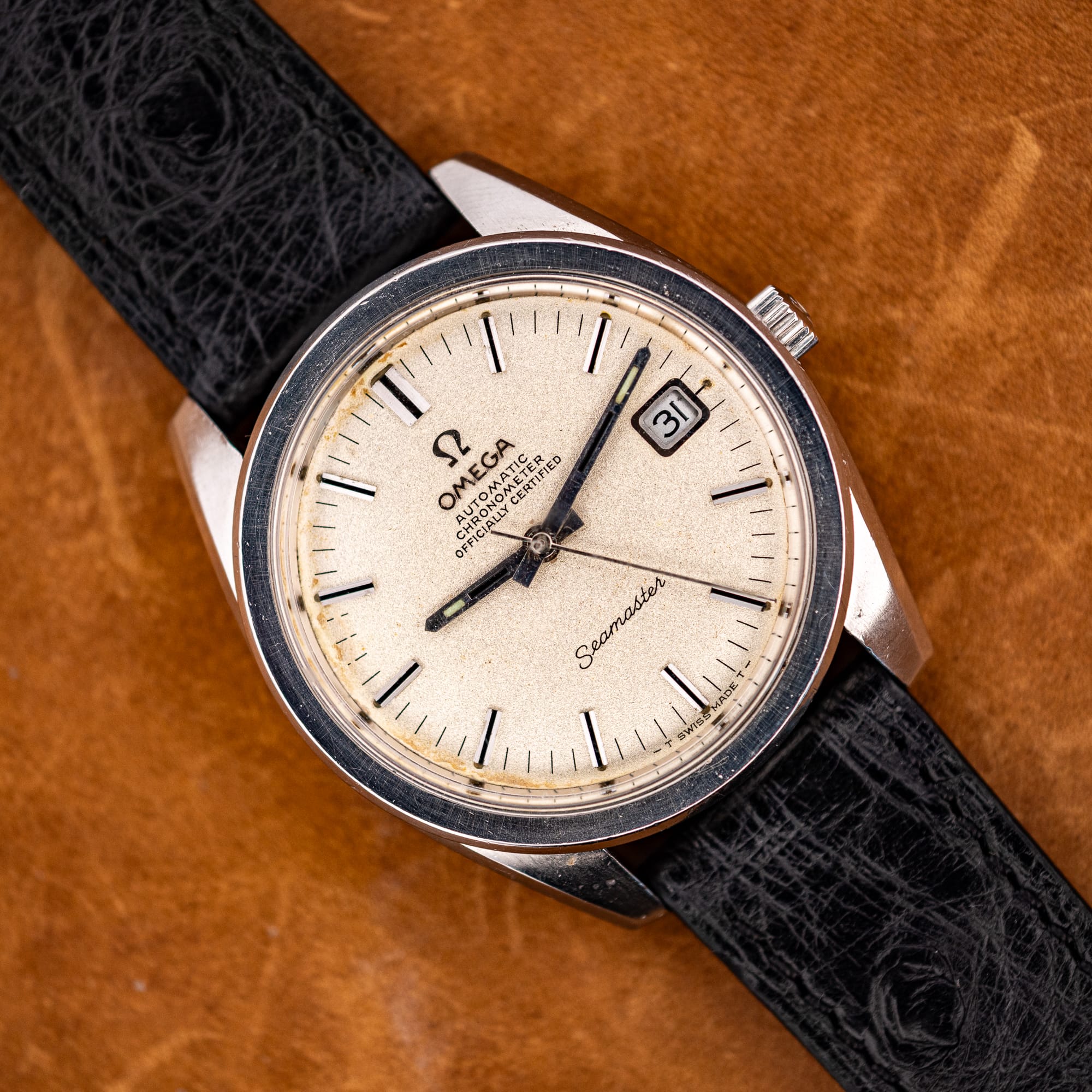
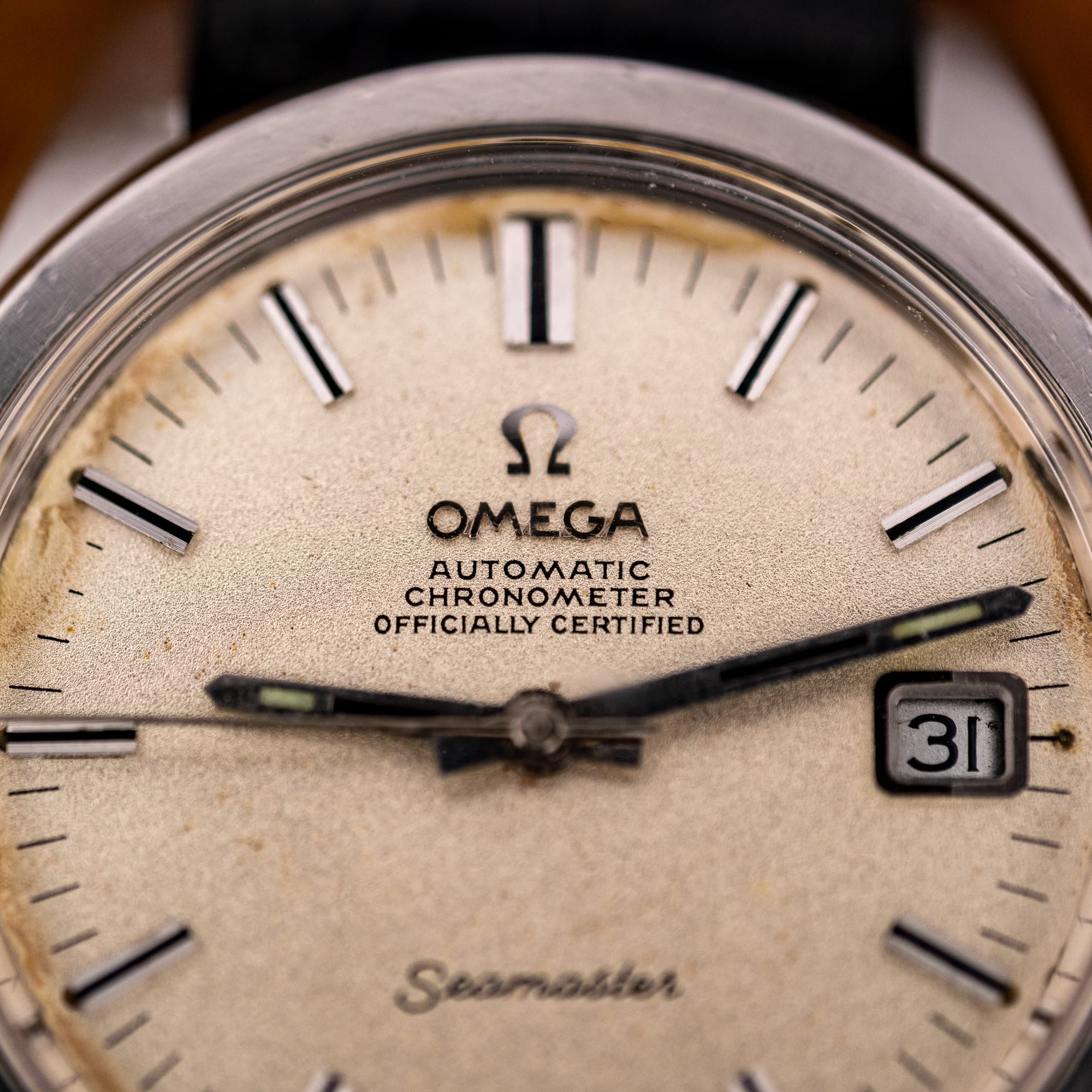
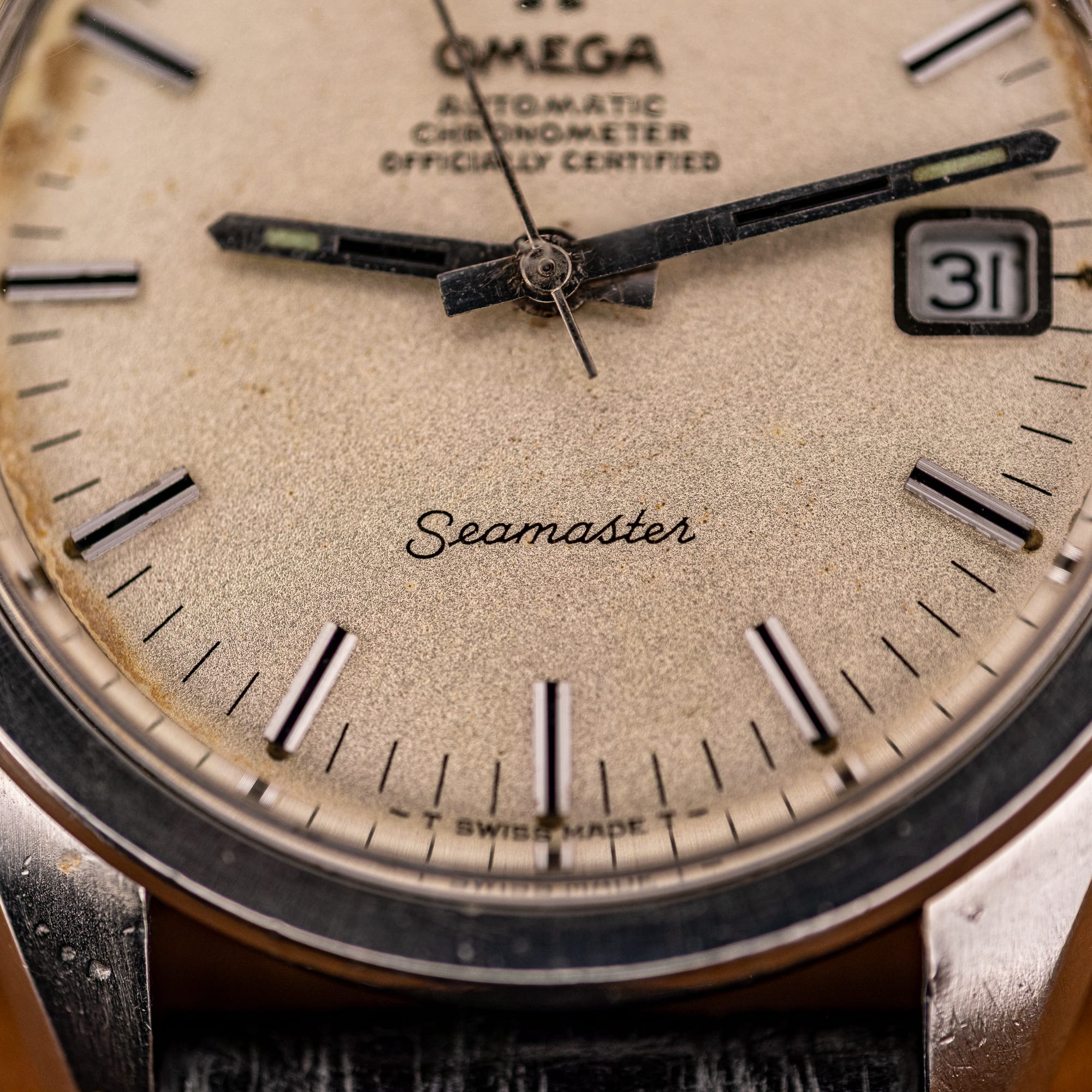
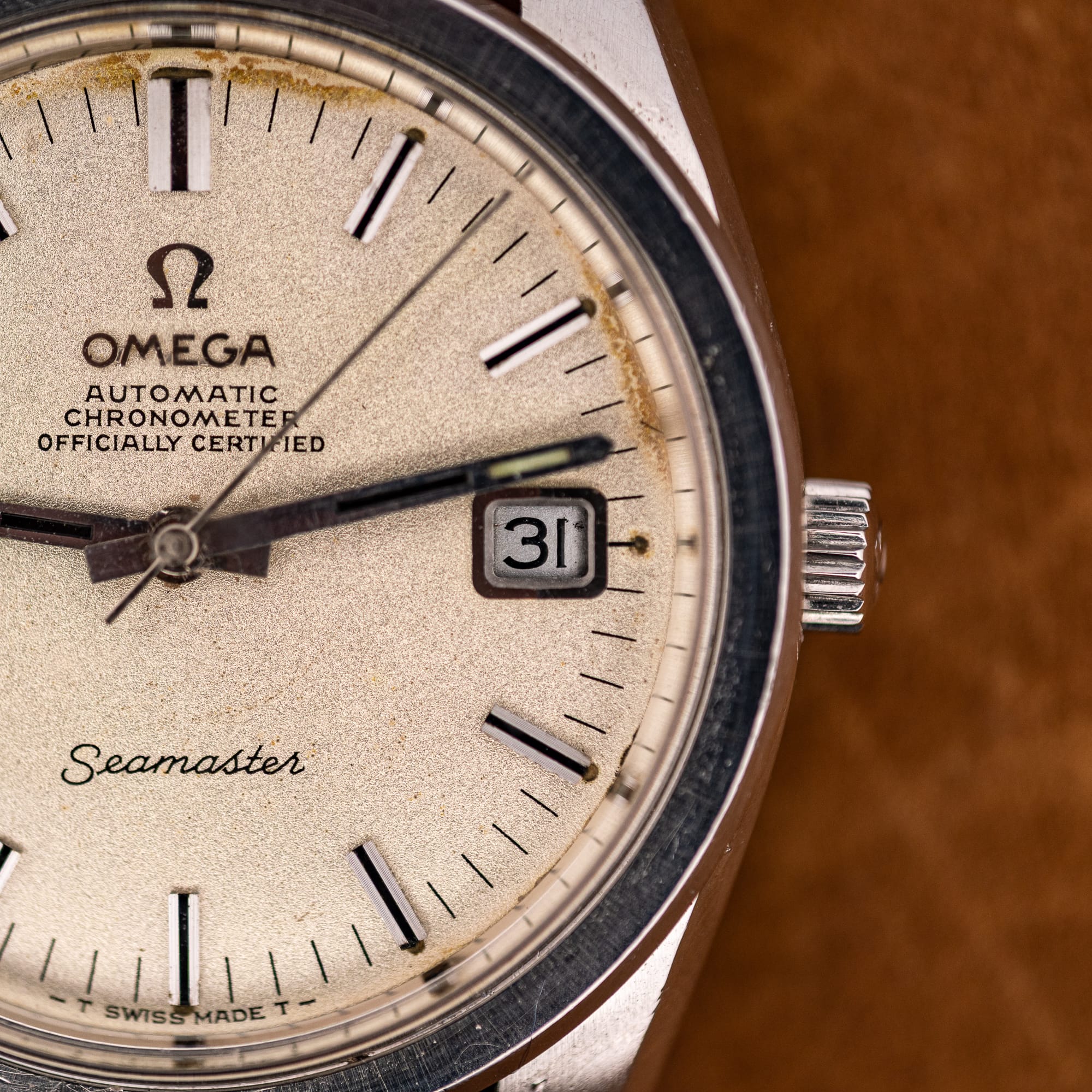
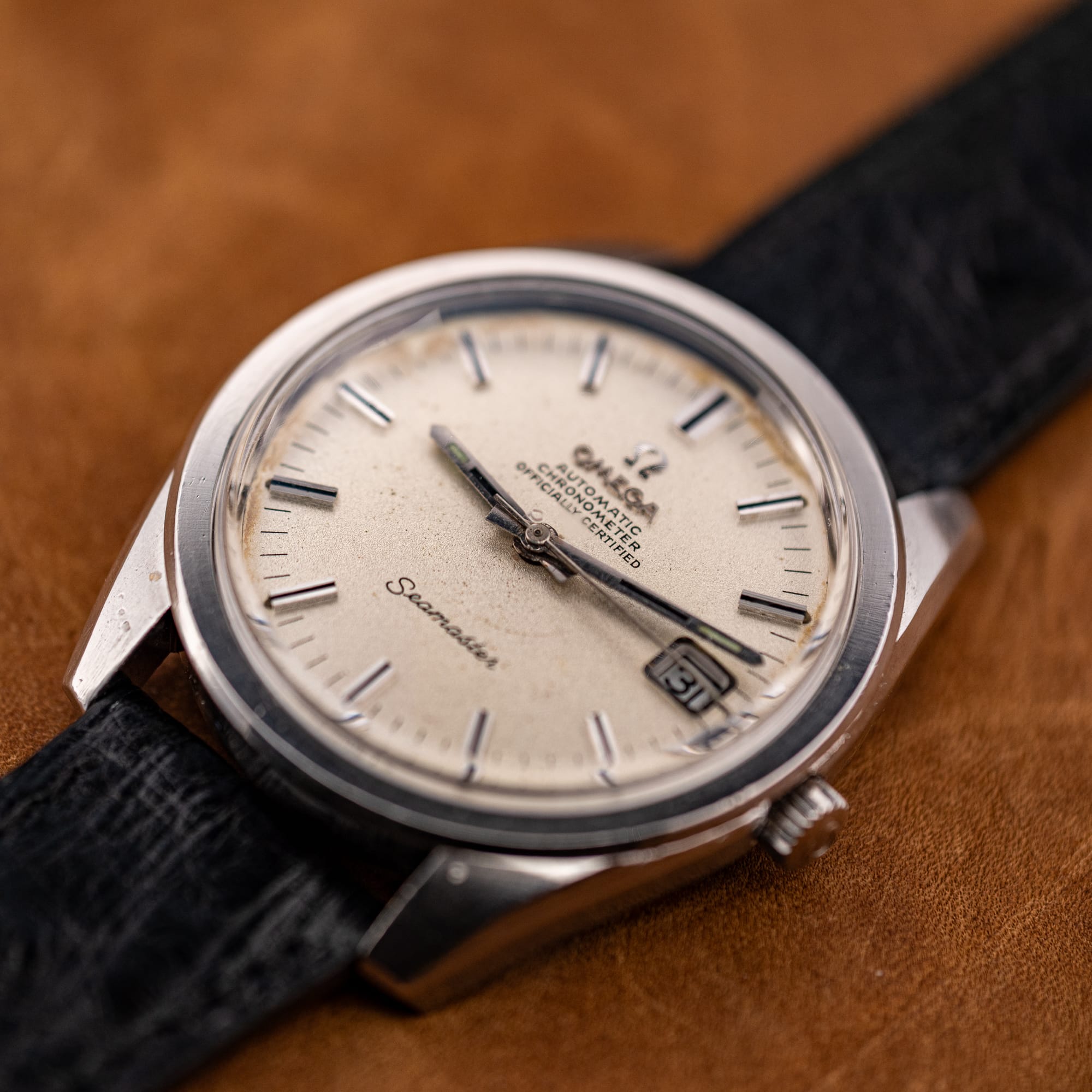
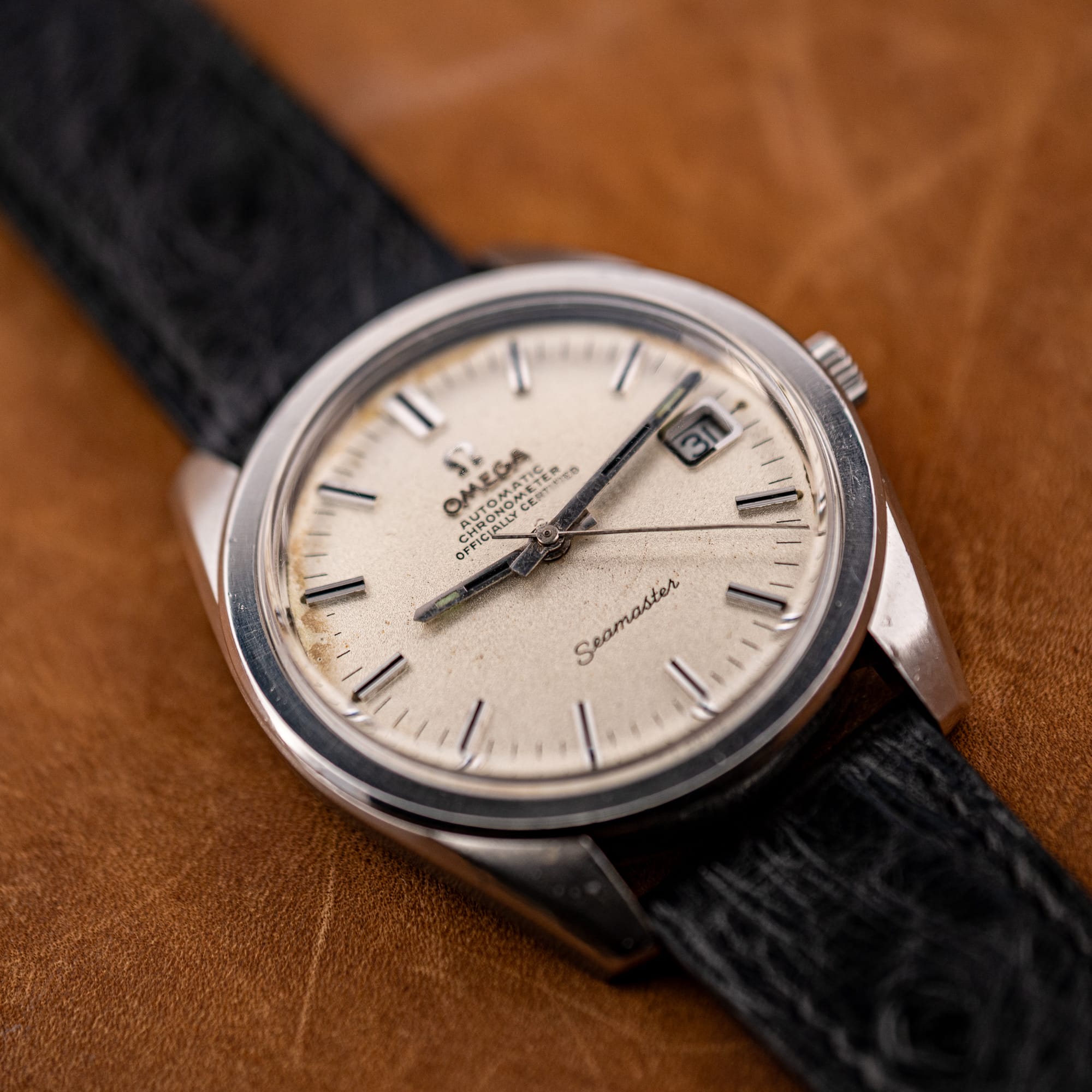
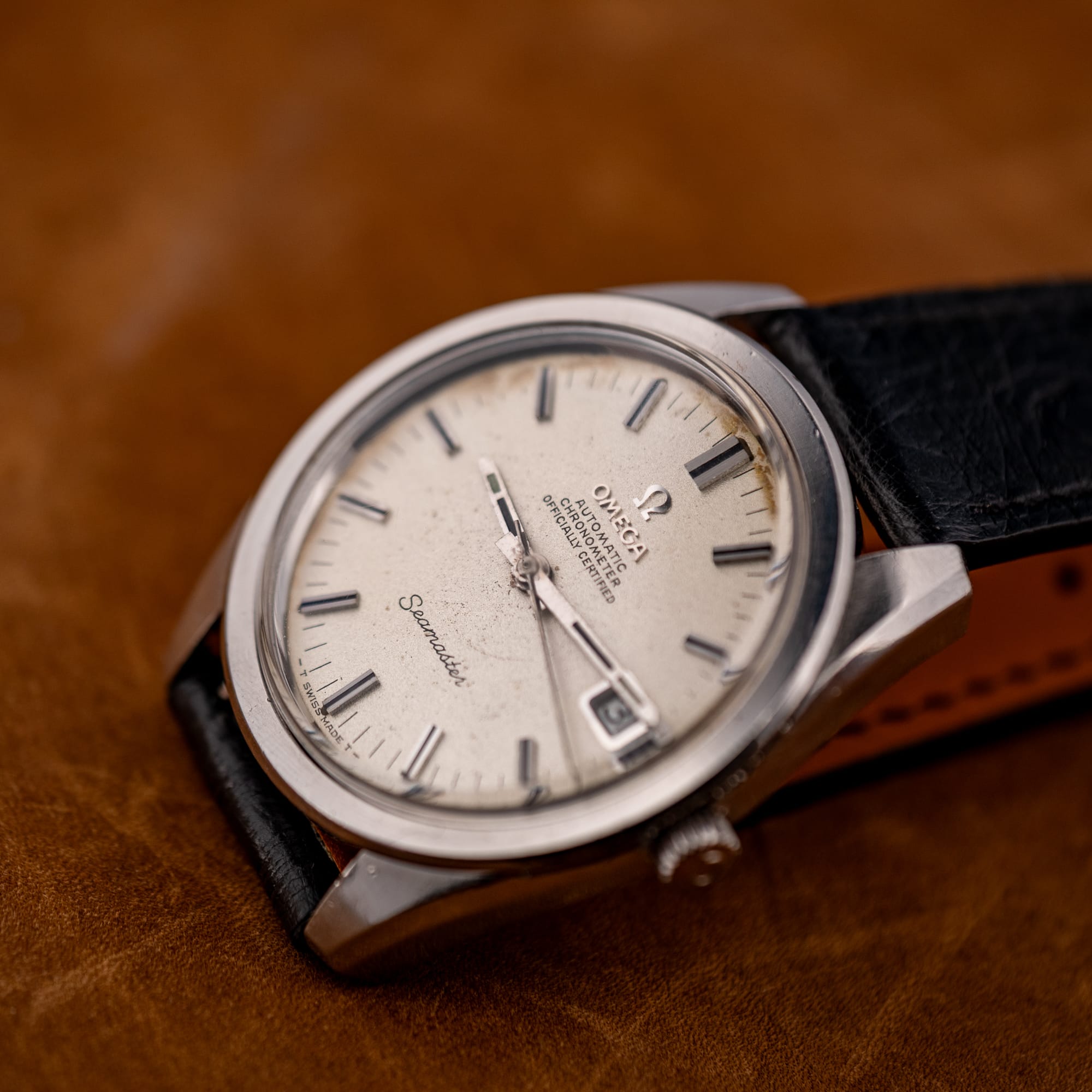
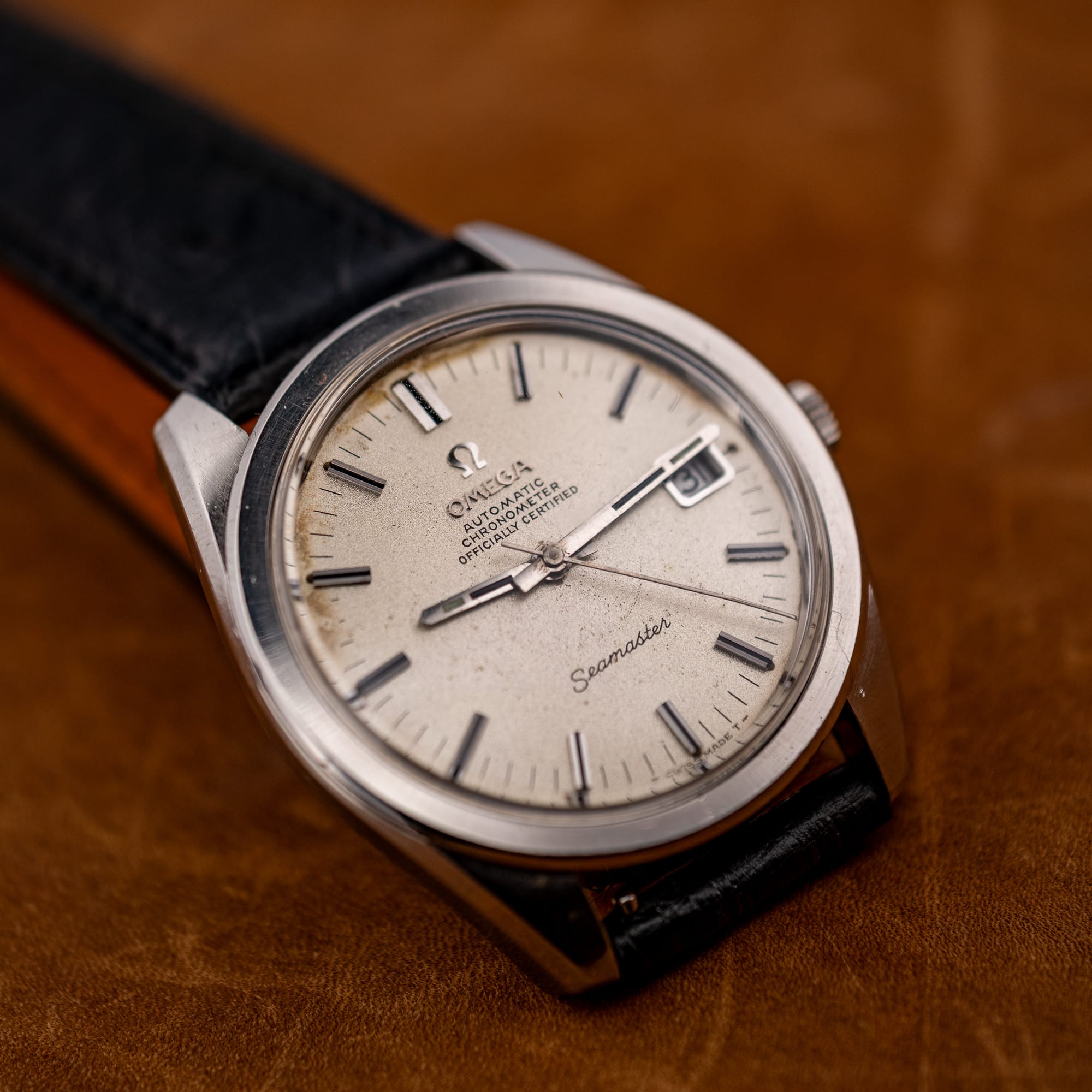
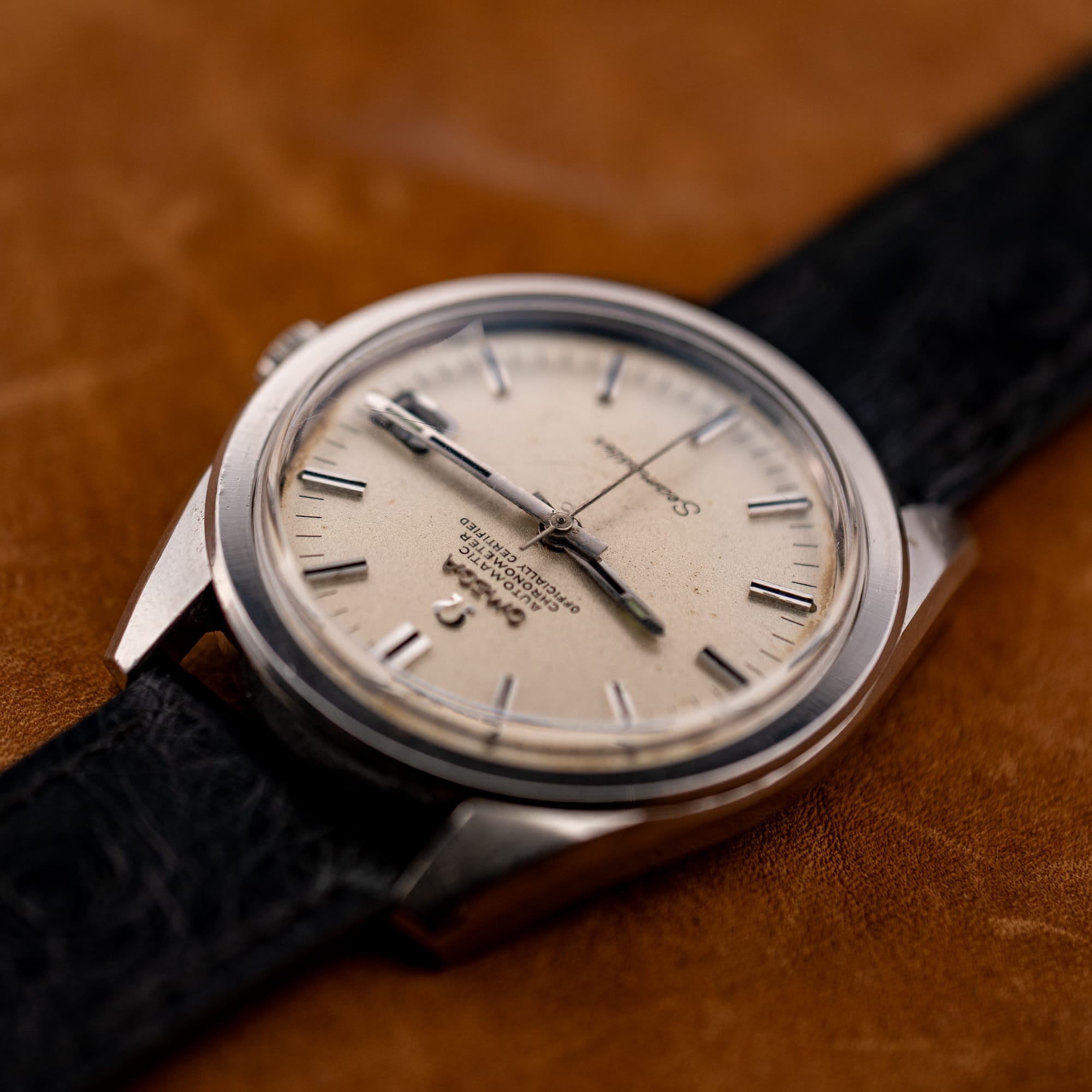
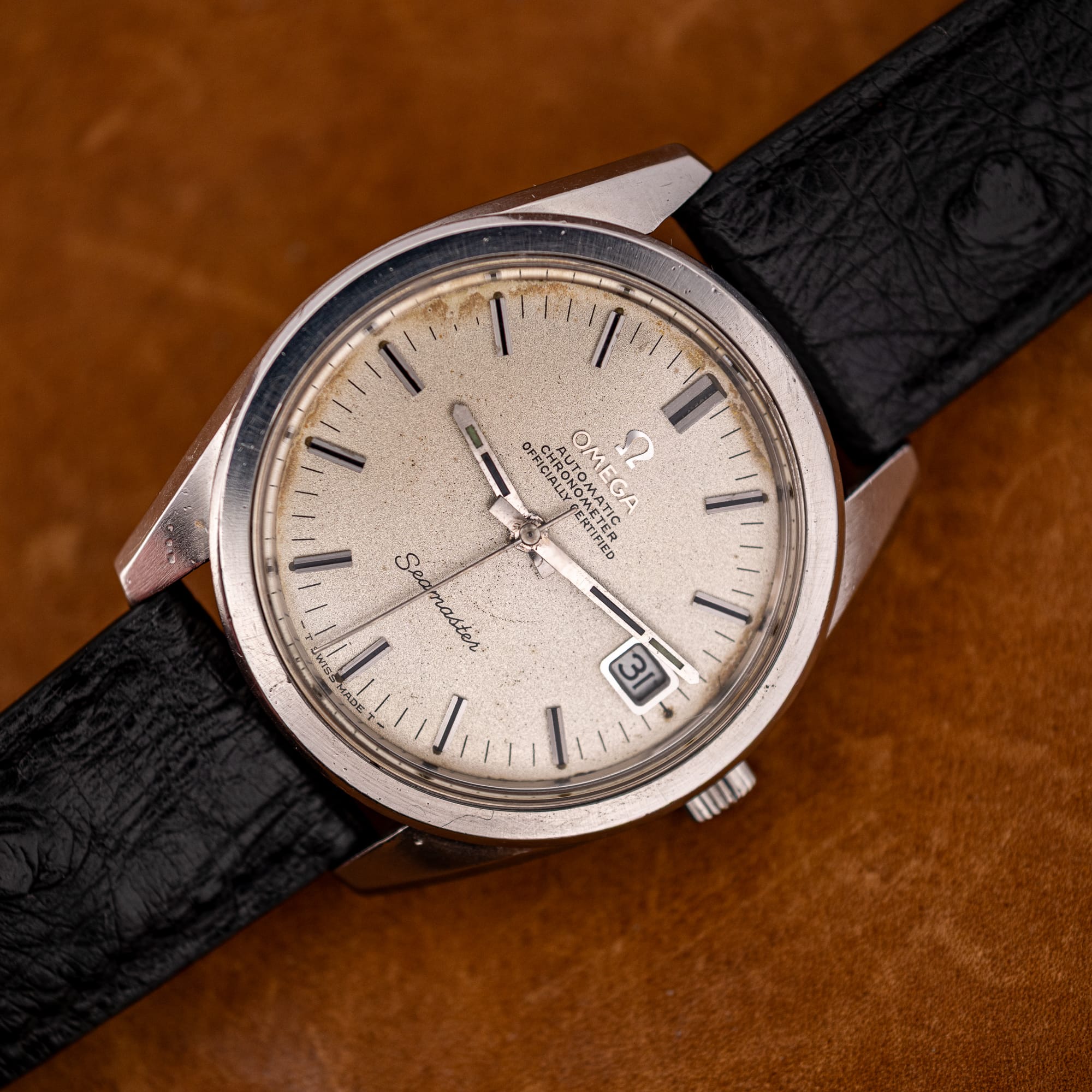
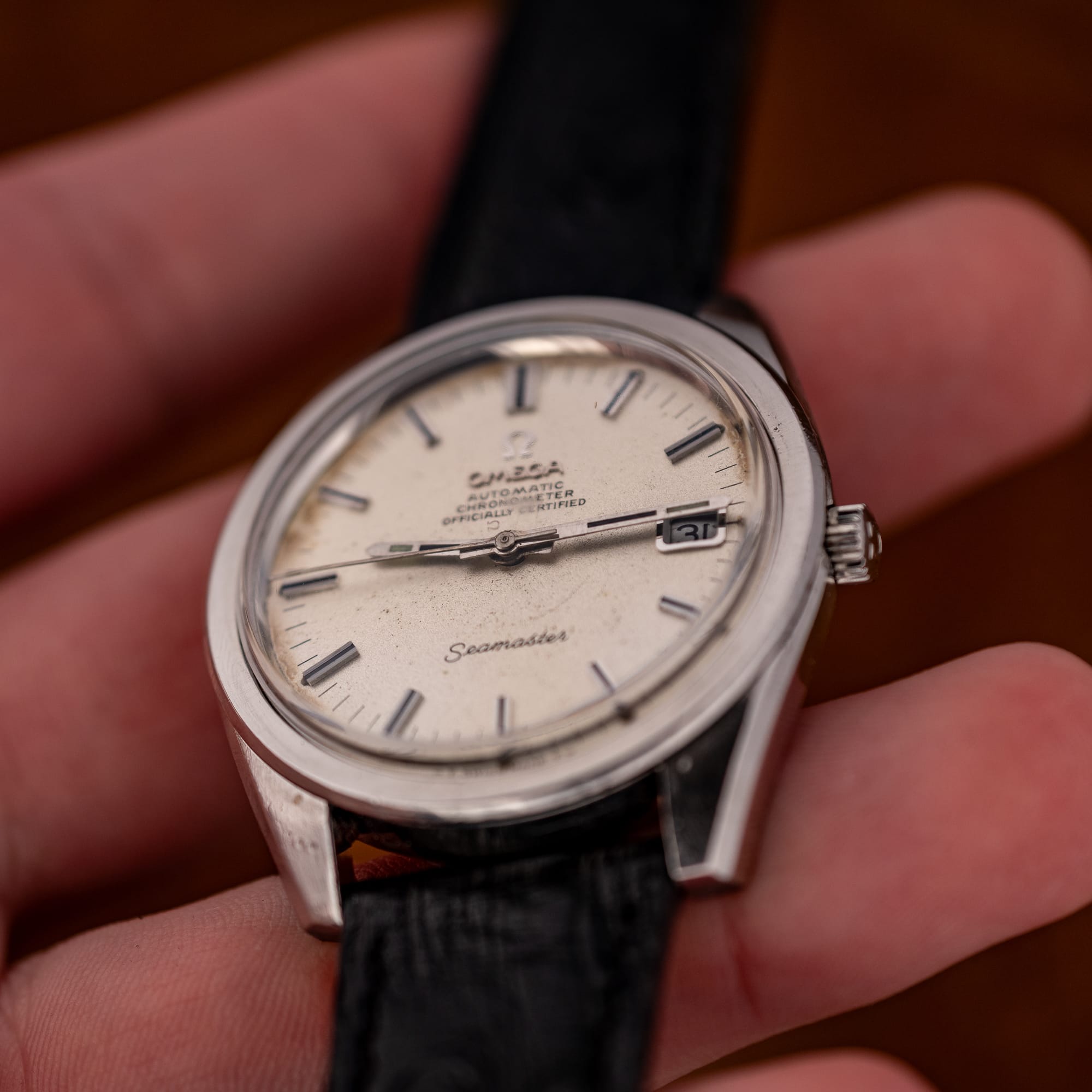
In the late 1960s, an Omega Seamaster 168.022 and its standard-grade twin could sit in the same dealer’s case, share the same steel body, and wear the same frosted silver dial, yet only one of them had been to the observatory. This is that one.
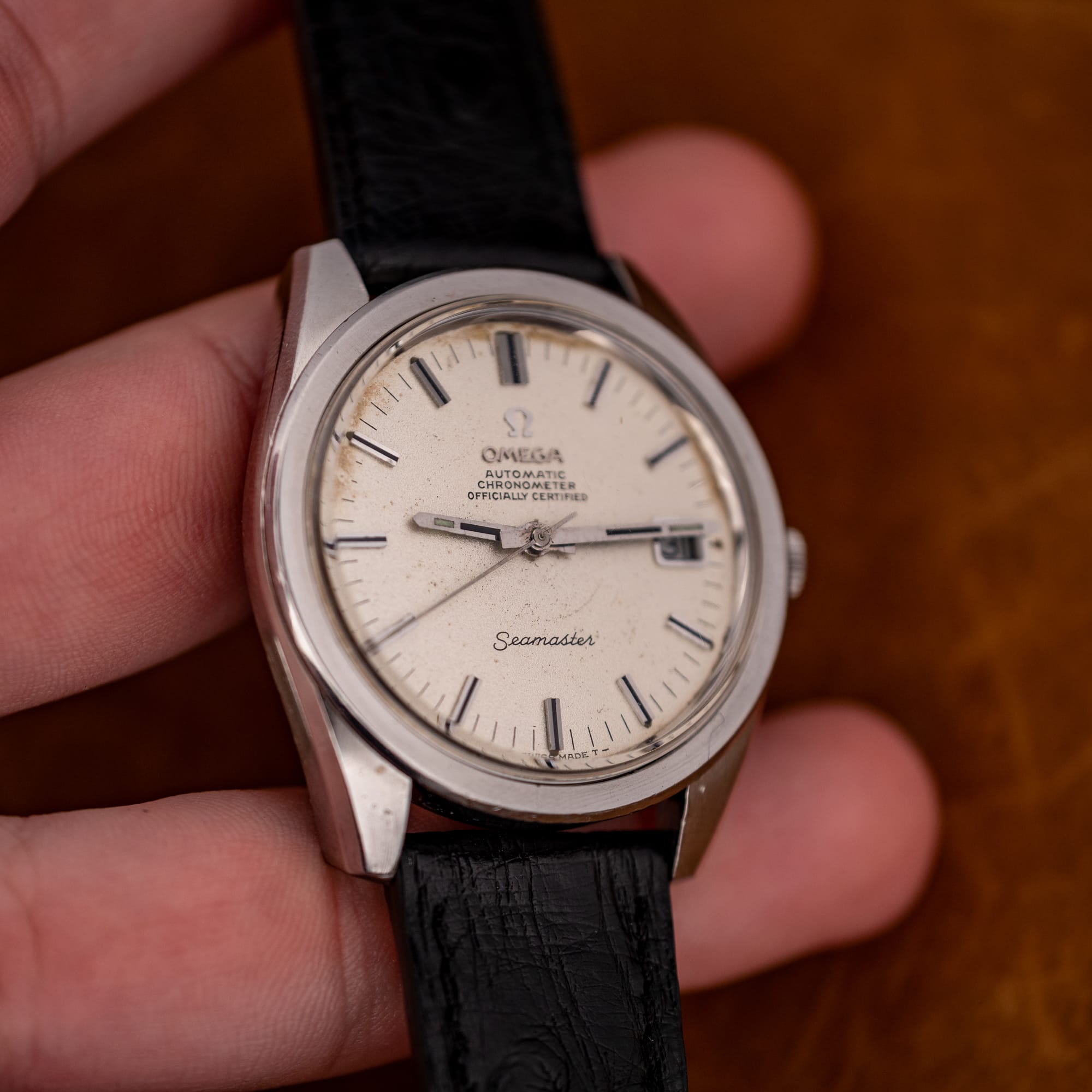
The tell is four words printed under the Omega logo: Automatic, Chronometer, Officially Certified. In that era a chronometer designation was not marketing. Each movement went to an independent Swiss testing bureau and spent roughly two weeks being measured in five positions and across changes in temperature, and only the examples that held their rate inside a narrow tolerance earned the certificate. Omega submitted, and passed, more of these than any other house, which is exactly why the achievement is easy to overlook now. It was the everyday version of extraordinary.
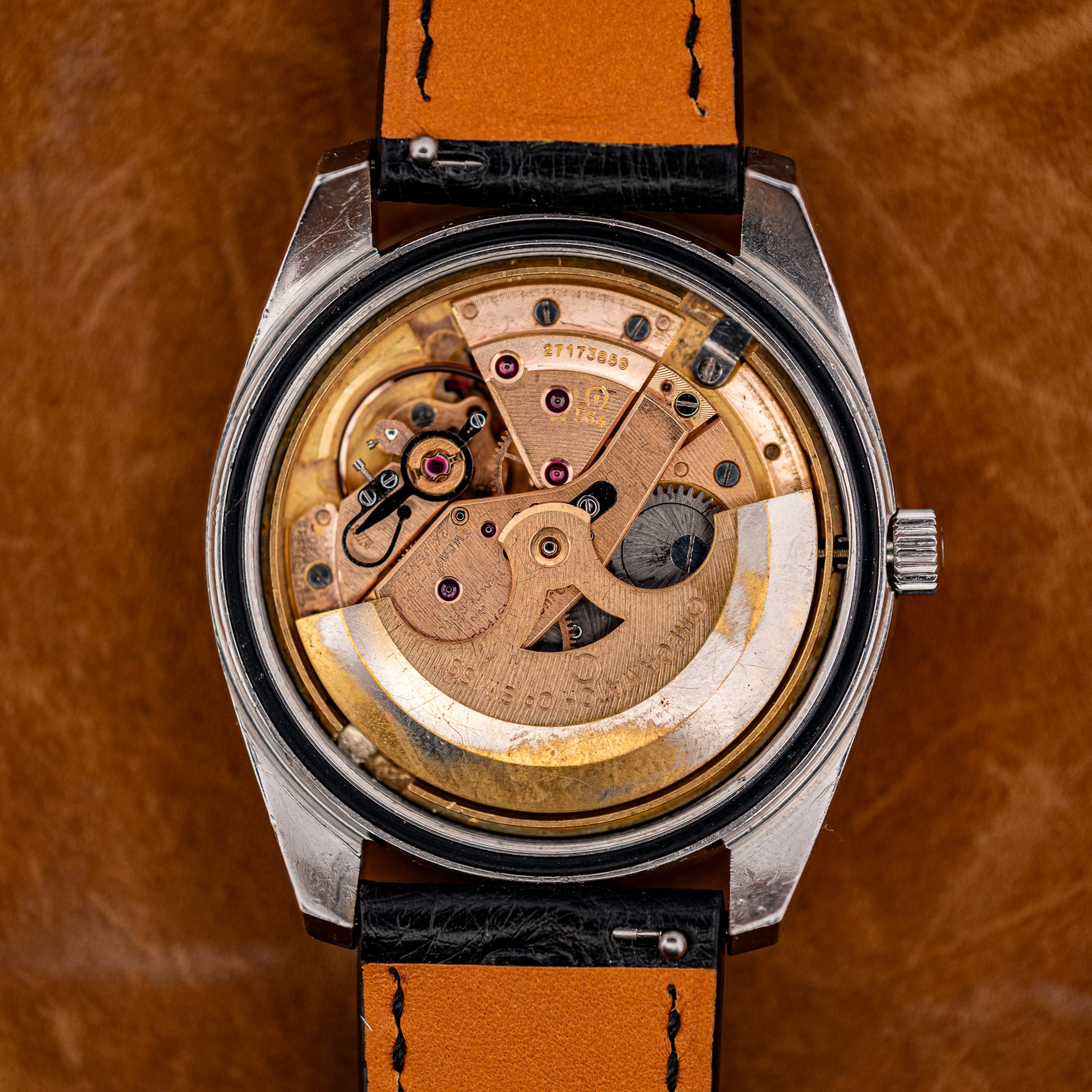
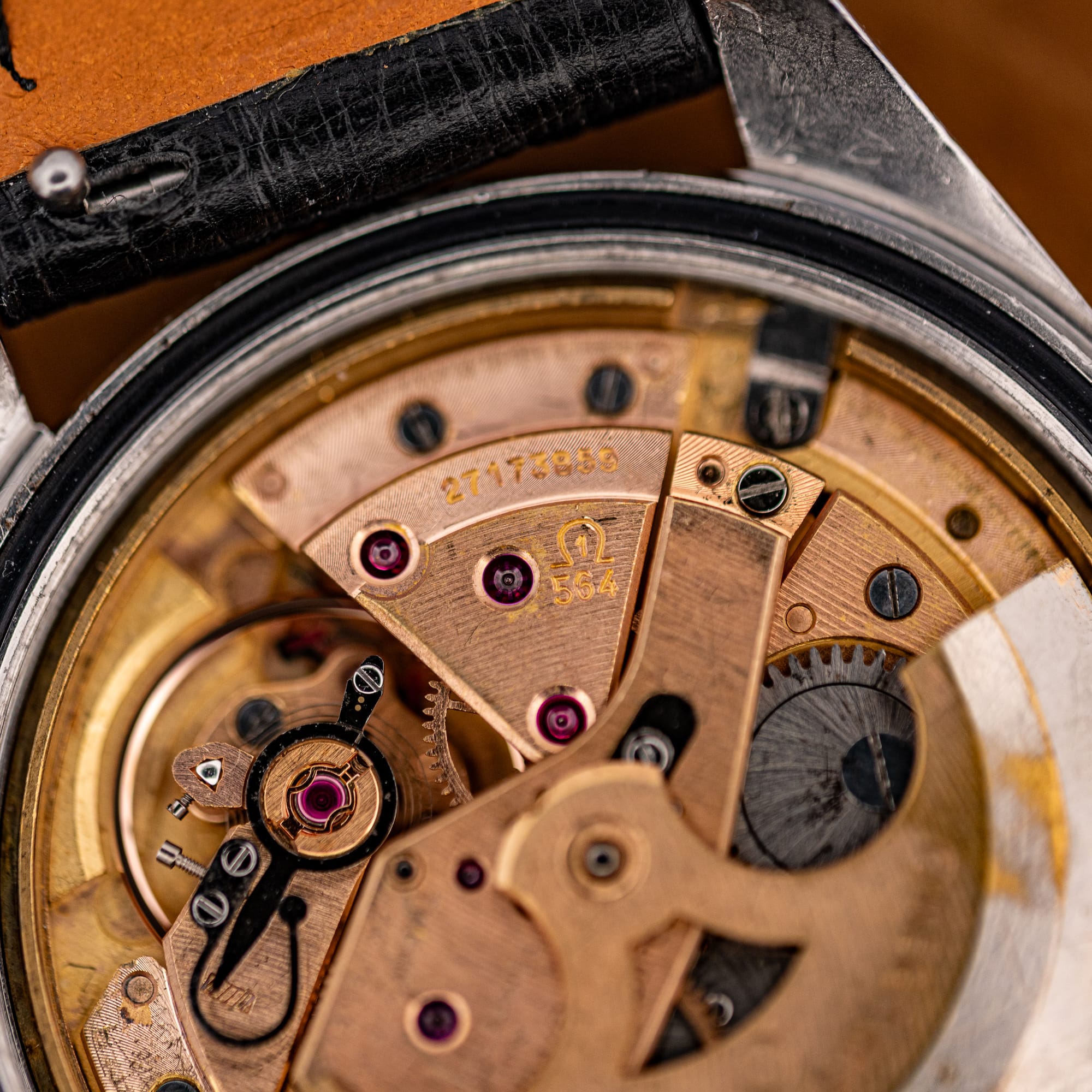
Behind the caseback the reason reveals itself. This is Omega’s caliber 564, the automatic that the standard Seamaster of the day did not receive. Its standard-grade siblings, the 563 and 565, ran the same architecture but never went to the bureau. The 564 was the quiet upgrade: adjusted, regulated, and signed, here still showing its serial 27173859 and the rose-gilt bridges that separate it from the ordinary version. Read the dial and the movement side by side and the story closes on itself.
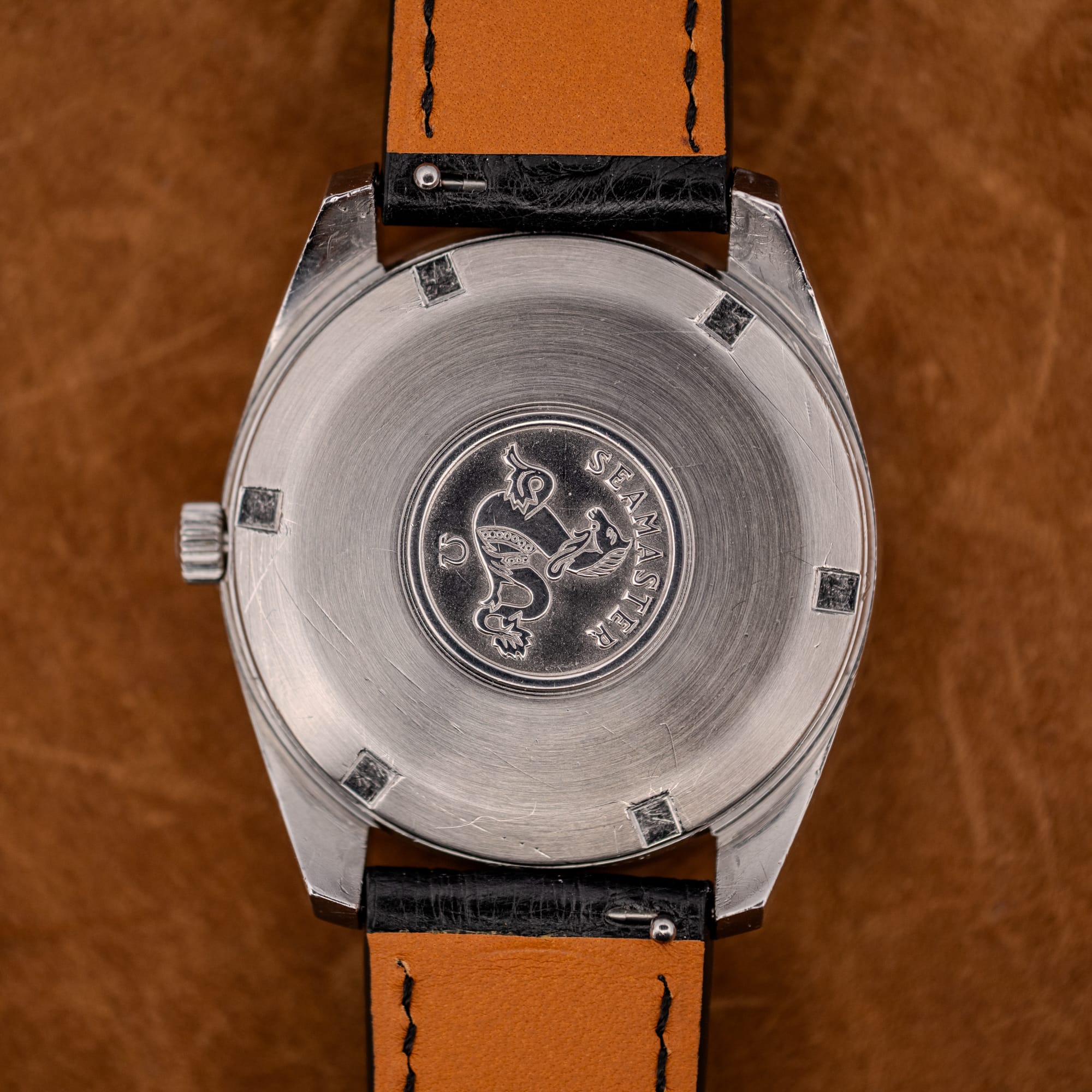
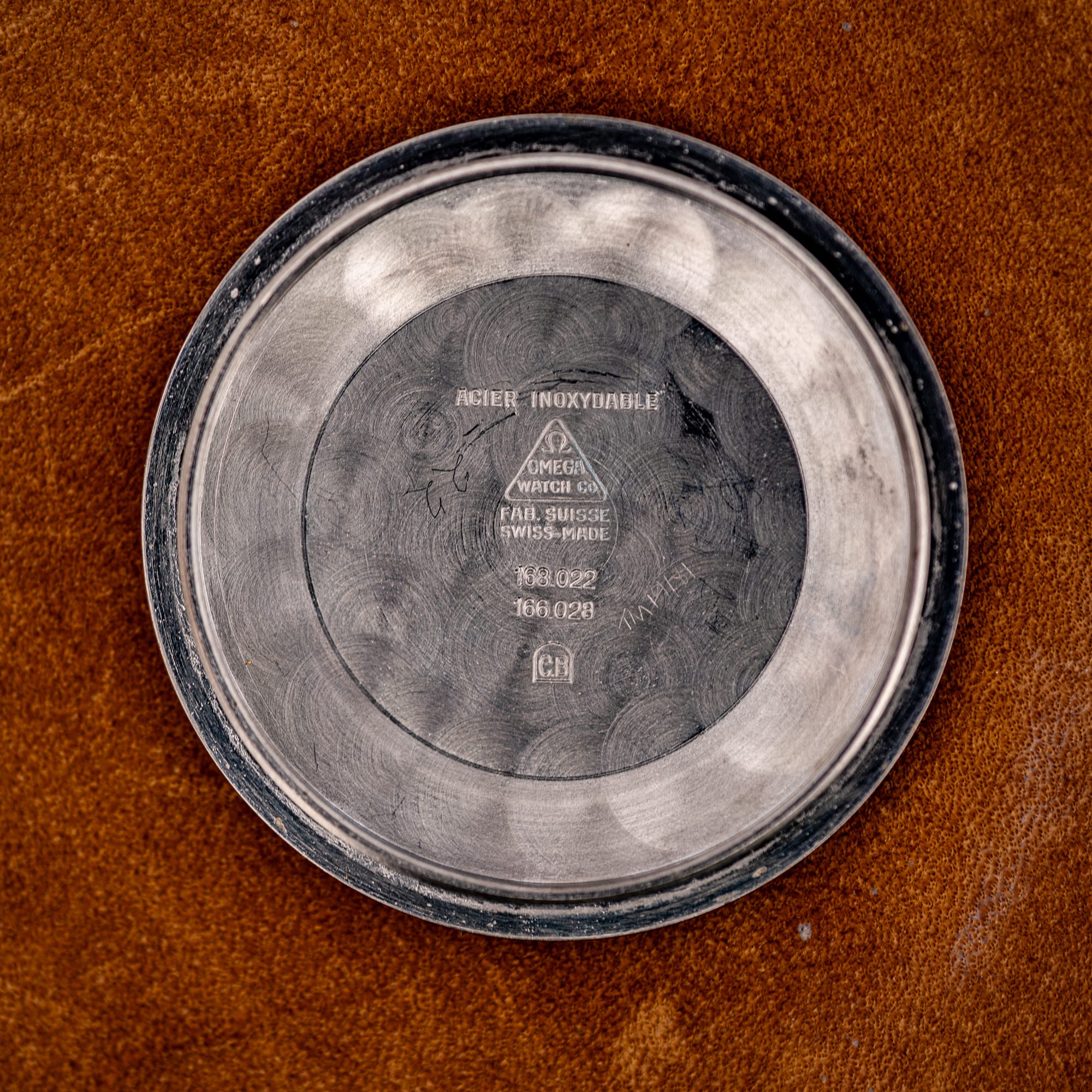
Reference 168.022 is the chronometer body, and the inner caseback confirms it by carrying both 168.022 and 166.028, the paired numbers Omega stamped on this shared case. This is normal, not a mismatch. The exterior back wears the raised hippocampus, the Seamaster’s seahorse, softened by decades of cuffs and wrists.
Honesty about the dial: the grained silver surface is original, and it has aged the way these frosted finishes do. There is foxing, a warm speckled toning gathered in the upper arc and scattered toward the edges. It is genuine, it is period, and it is the opposite of a refinish. If you want a watch that looks untouched, this is not it. If you want one that looks lived-in and honest, it is precisely it.
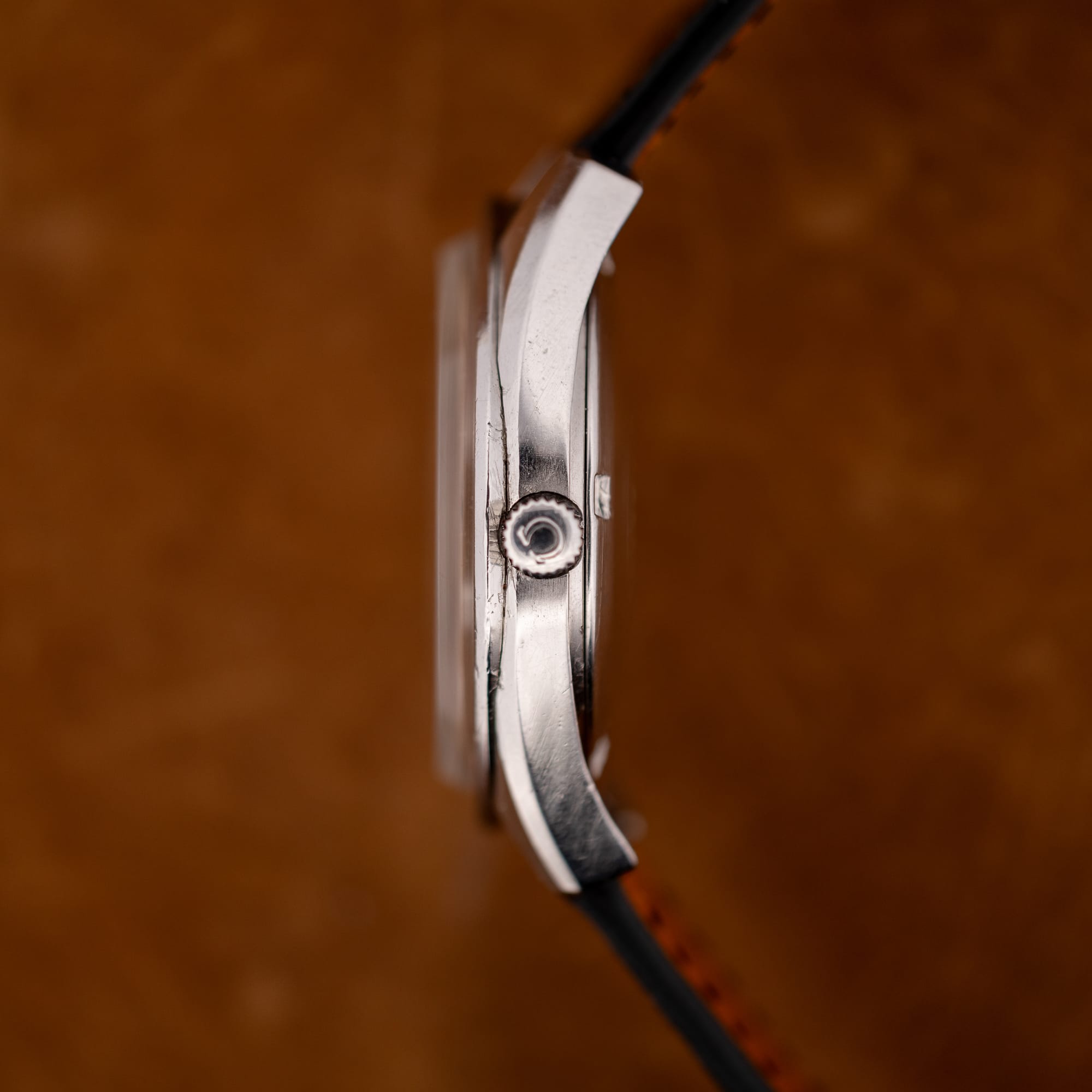
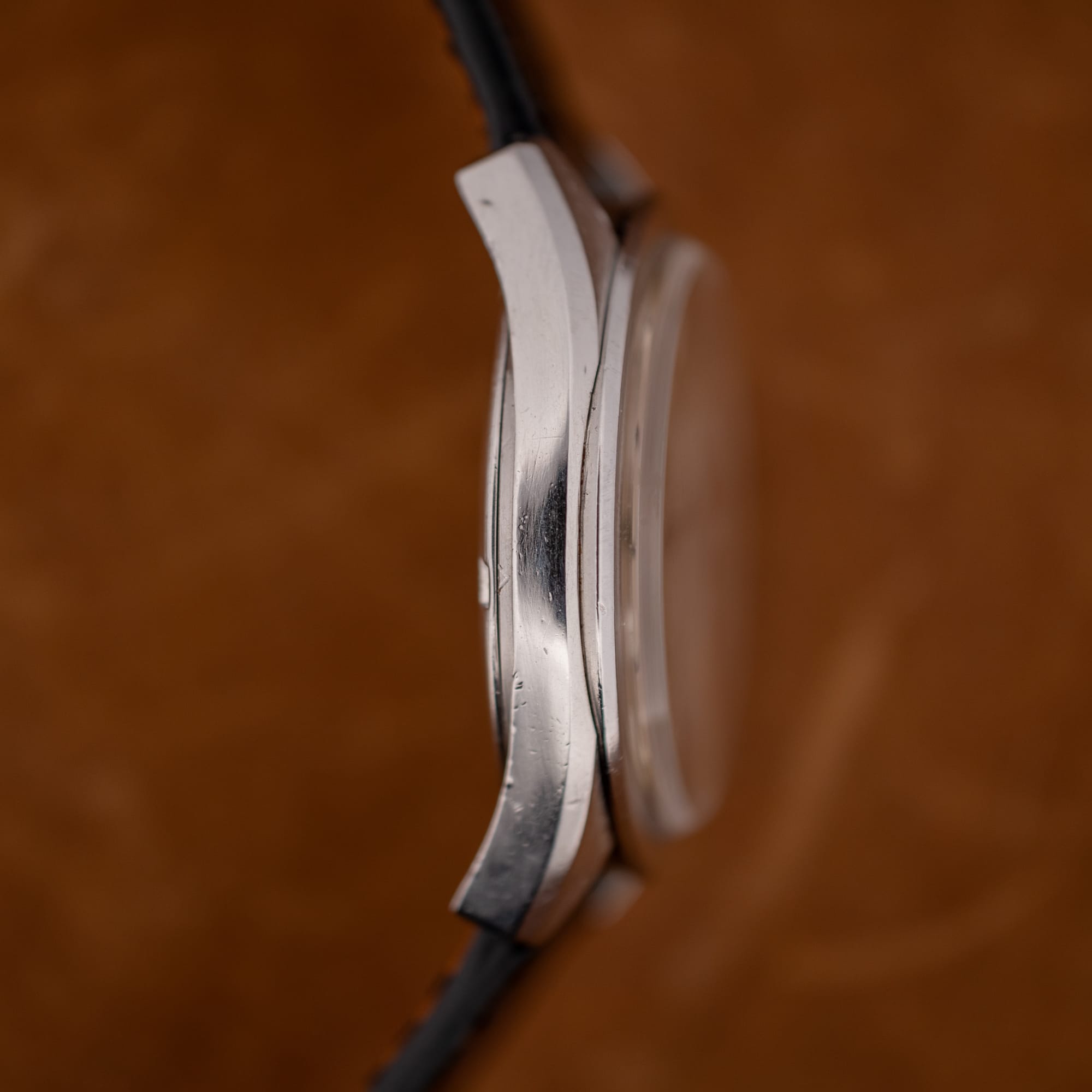
The particulars, briefly. Stainless steel case, 36.5mm across and 42mm lug to lug, on a fixed bezel that has taken on a darker patina. Applied baton markers with black onyx inlay, a framed date at three, and hands that still carry their aged luminous plots. Automatic caliber 564, rated to within five seconds. It rides on a black ostrich strap with our own buckle, fitting a wrist up to 8.25 inches. No box, no papers, which is the usual state of a watch this age that was worn rather than filed away.
What you are buying is a certificate made physical. In the late 1960s a chronometer rating meant a stranger in a Swiss testing room had watched this movement for fifteen days and put its accuracy in writing. That paper is long gone. The watch that earned it is still here, still keeping its promise.