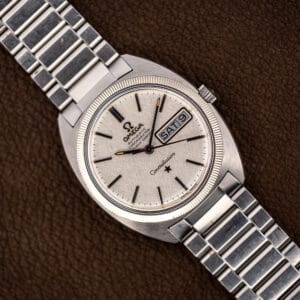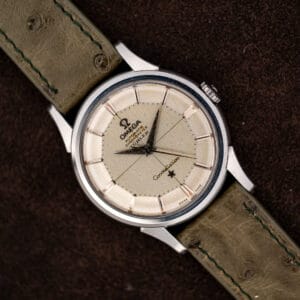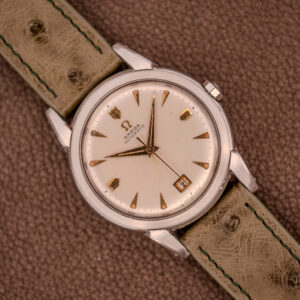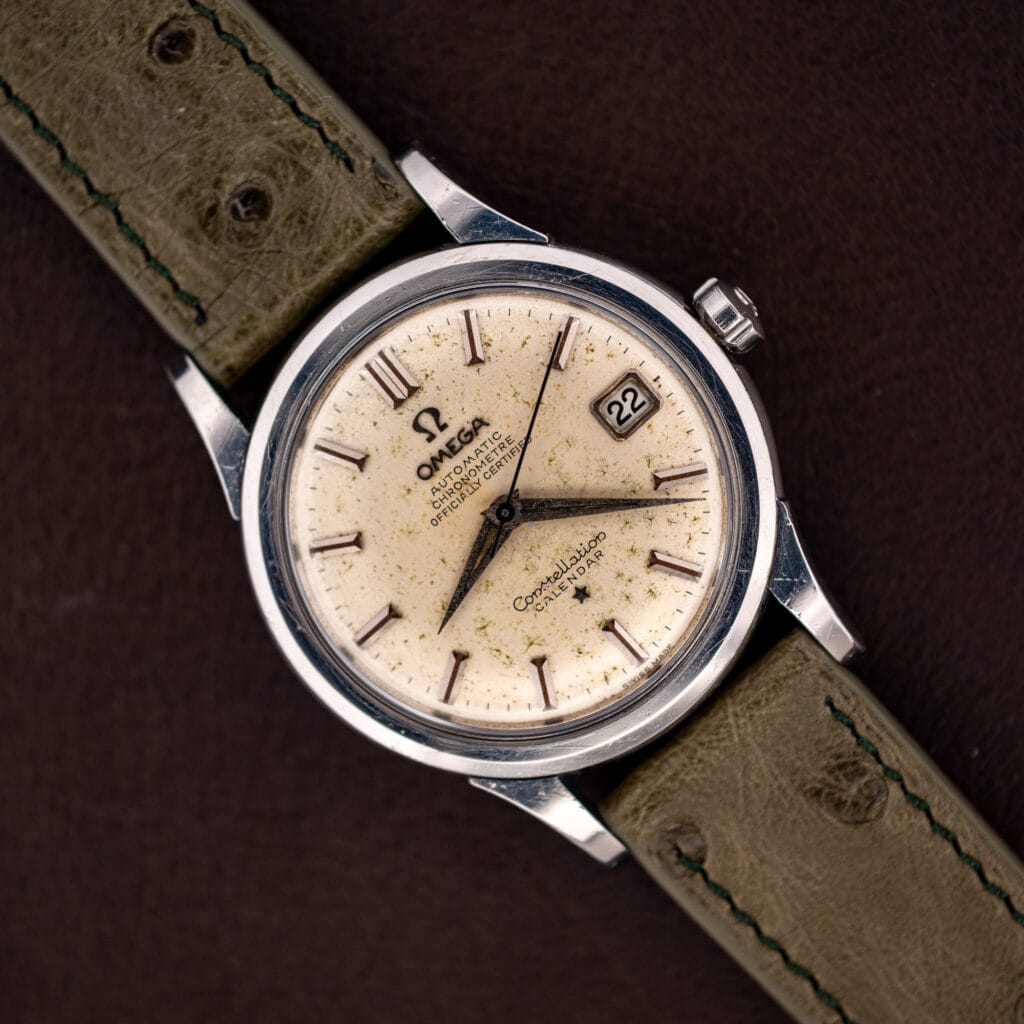
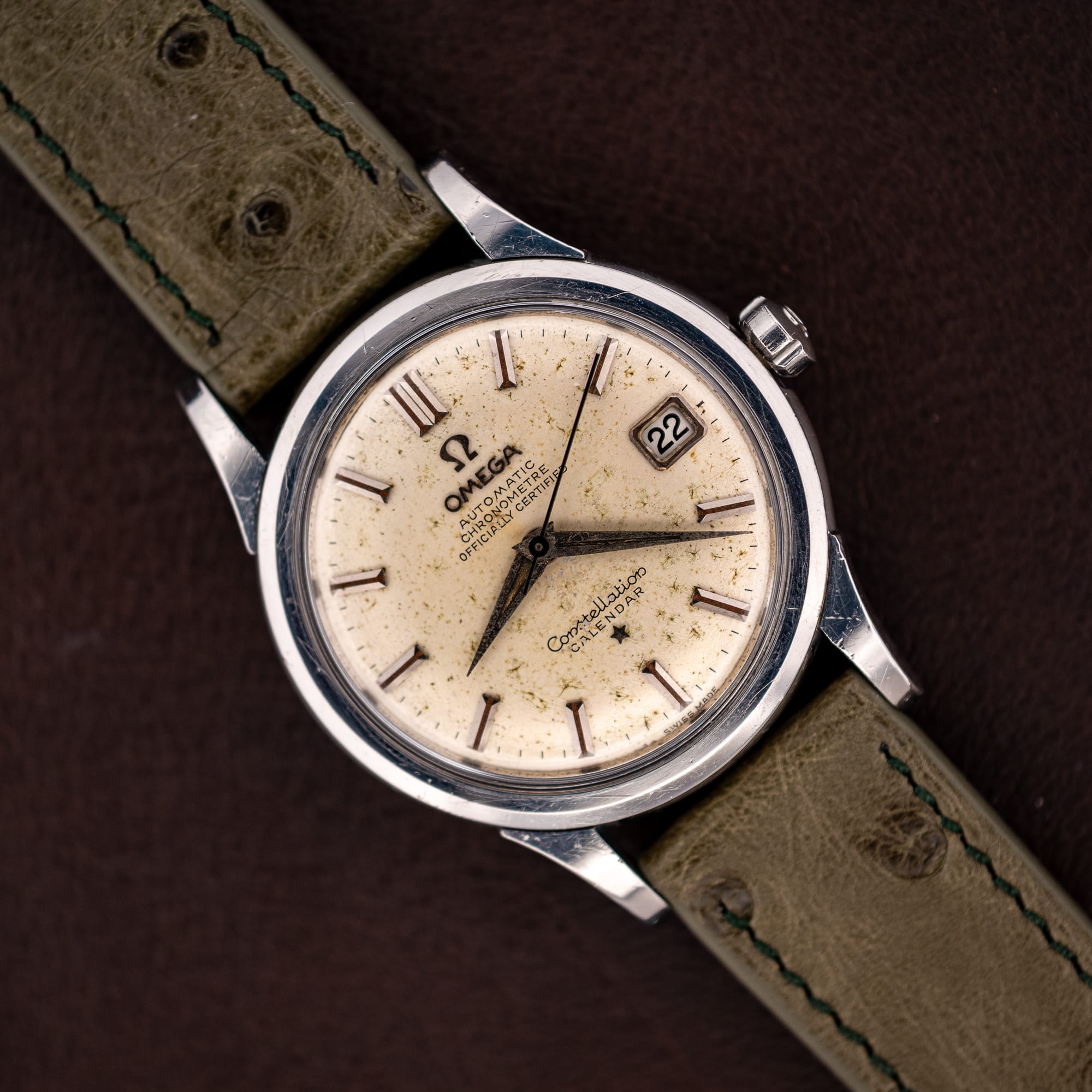
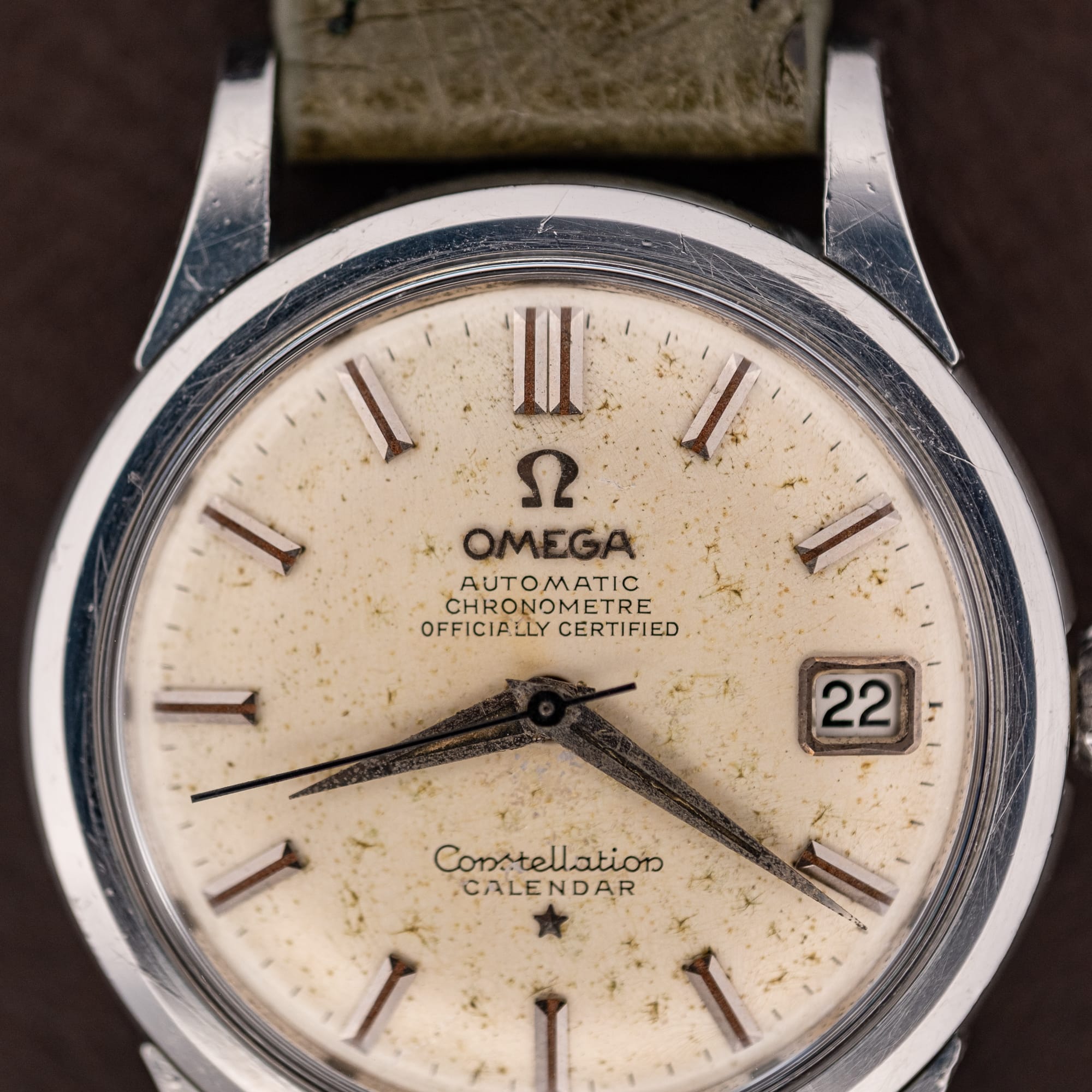
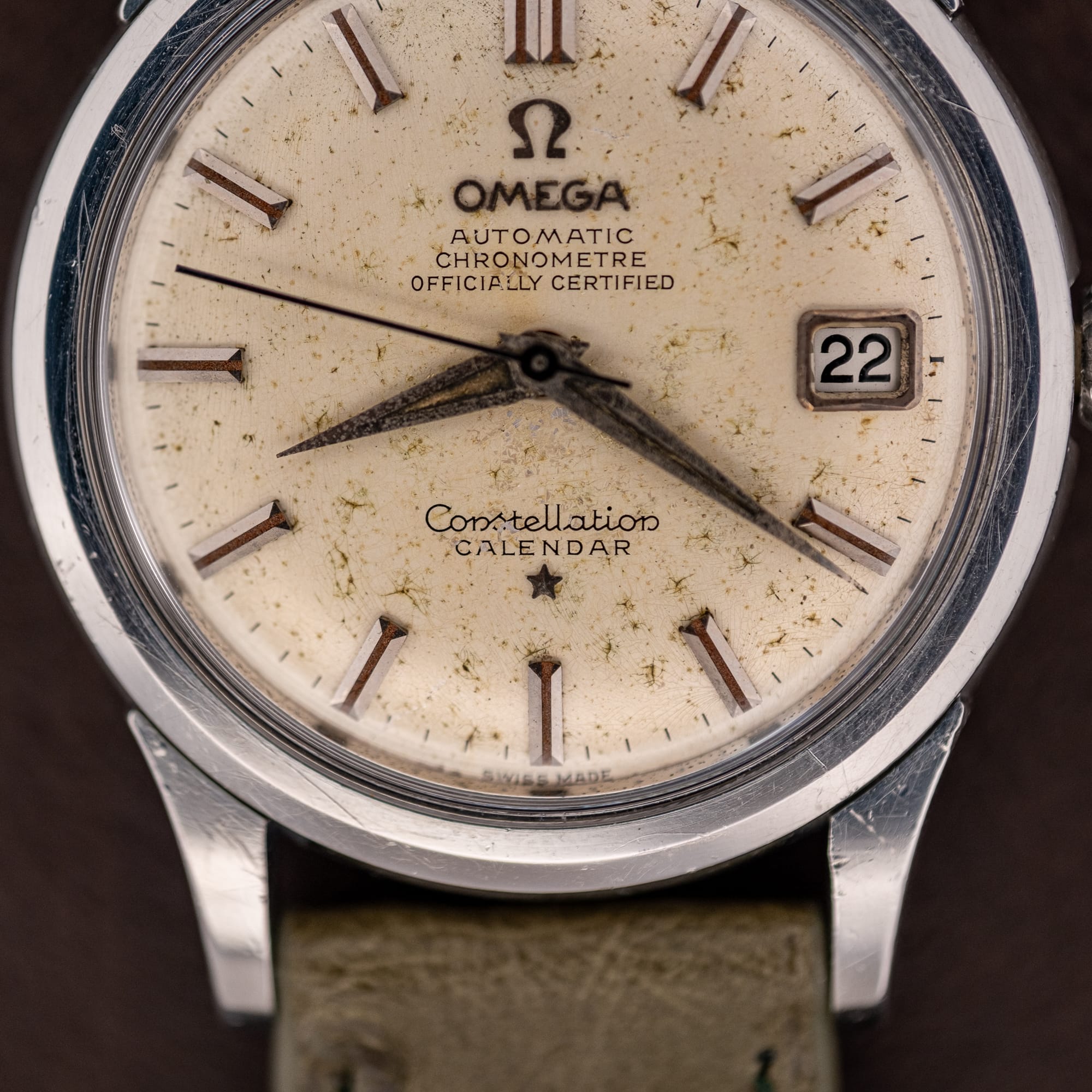
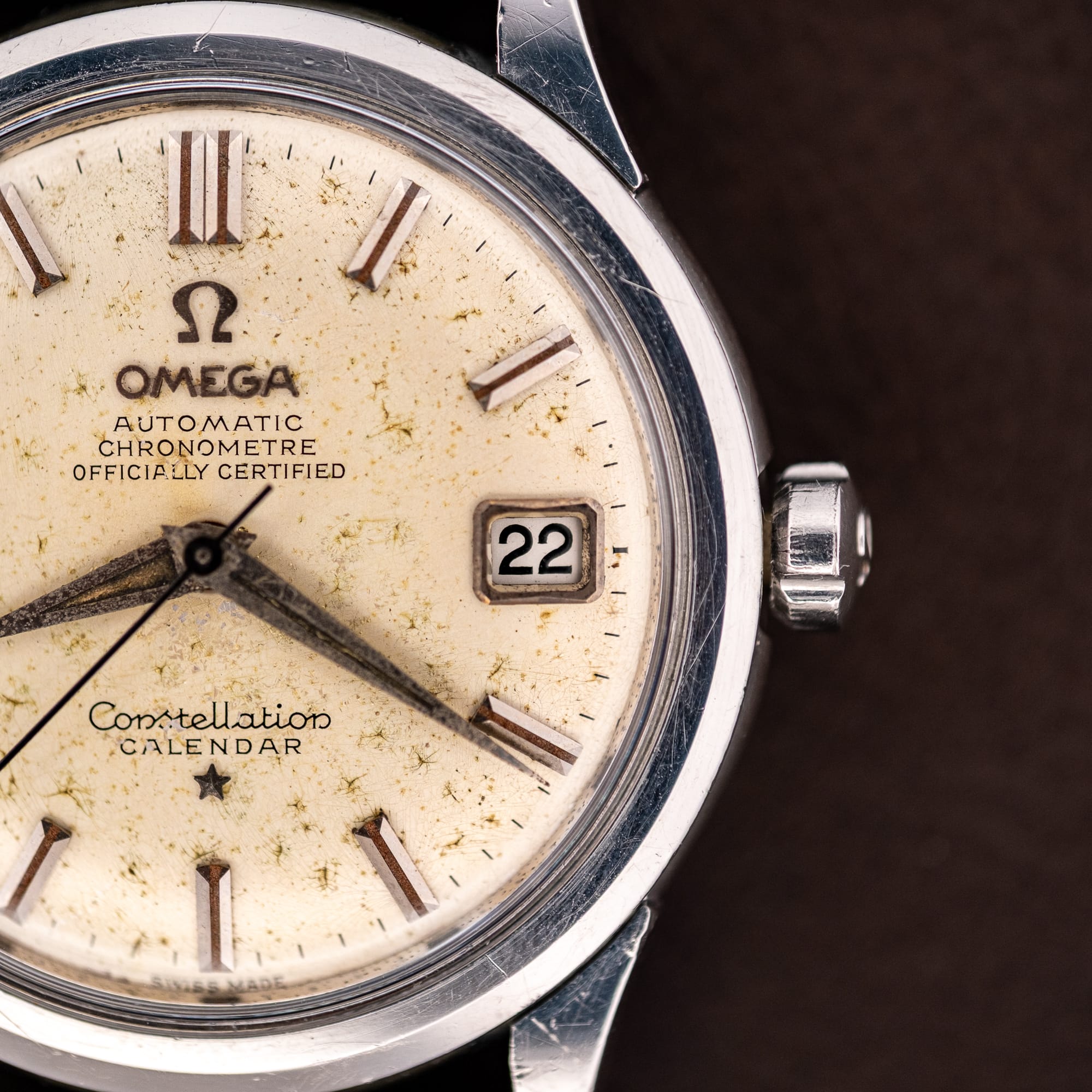
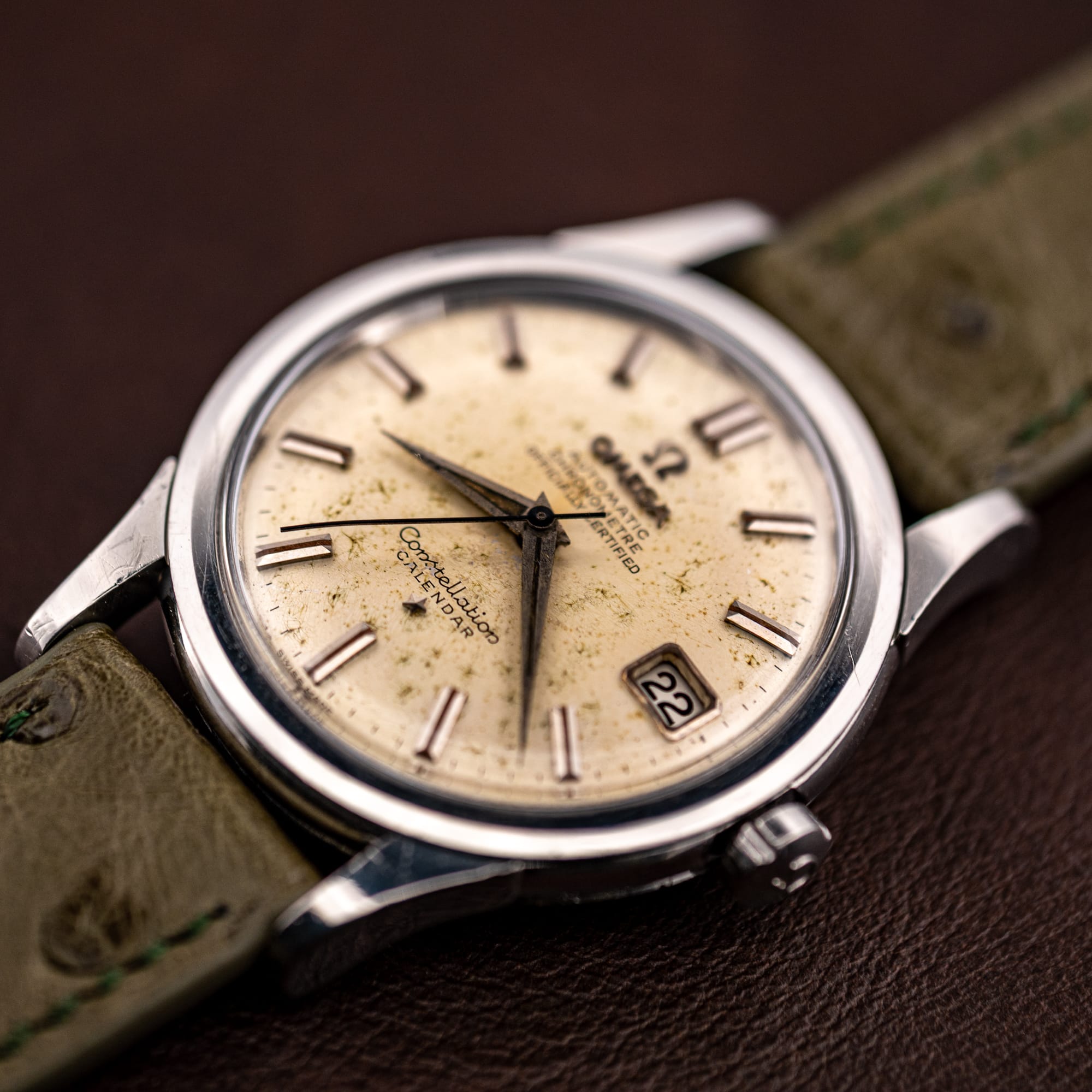
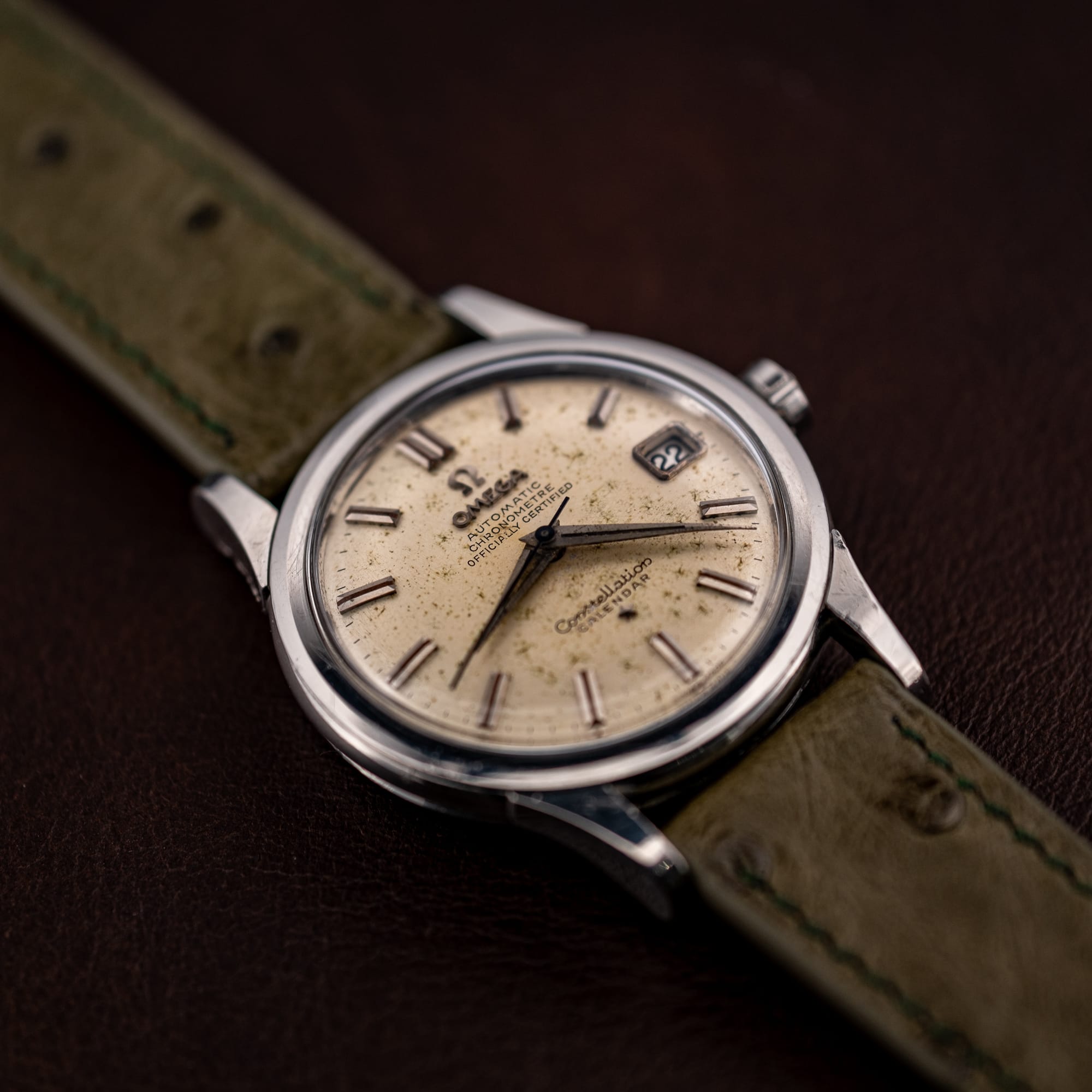
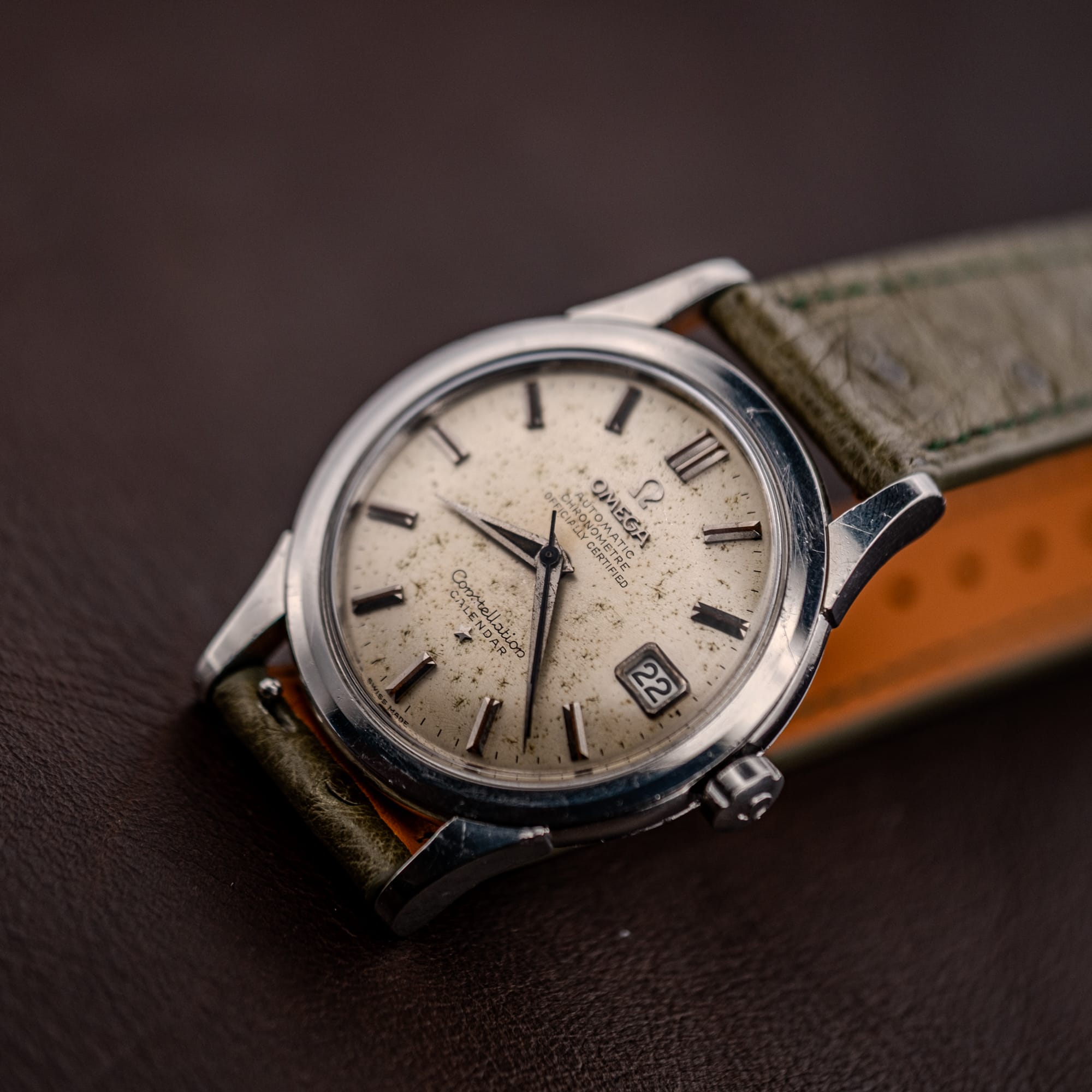
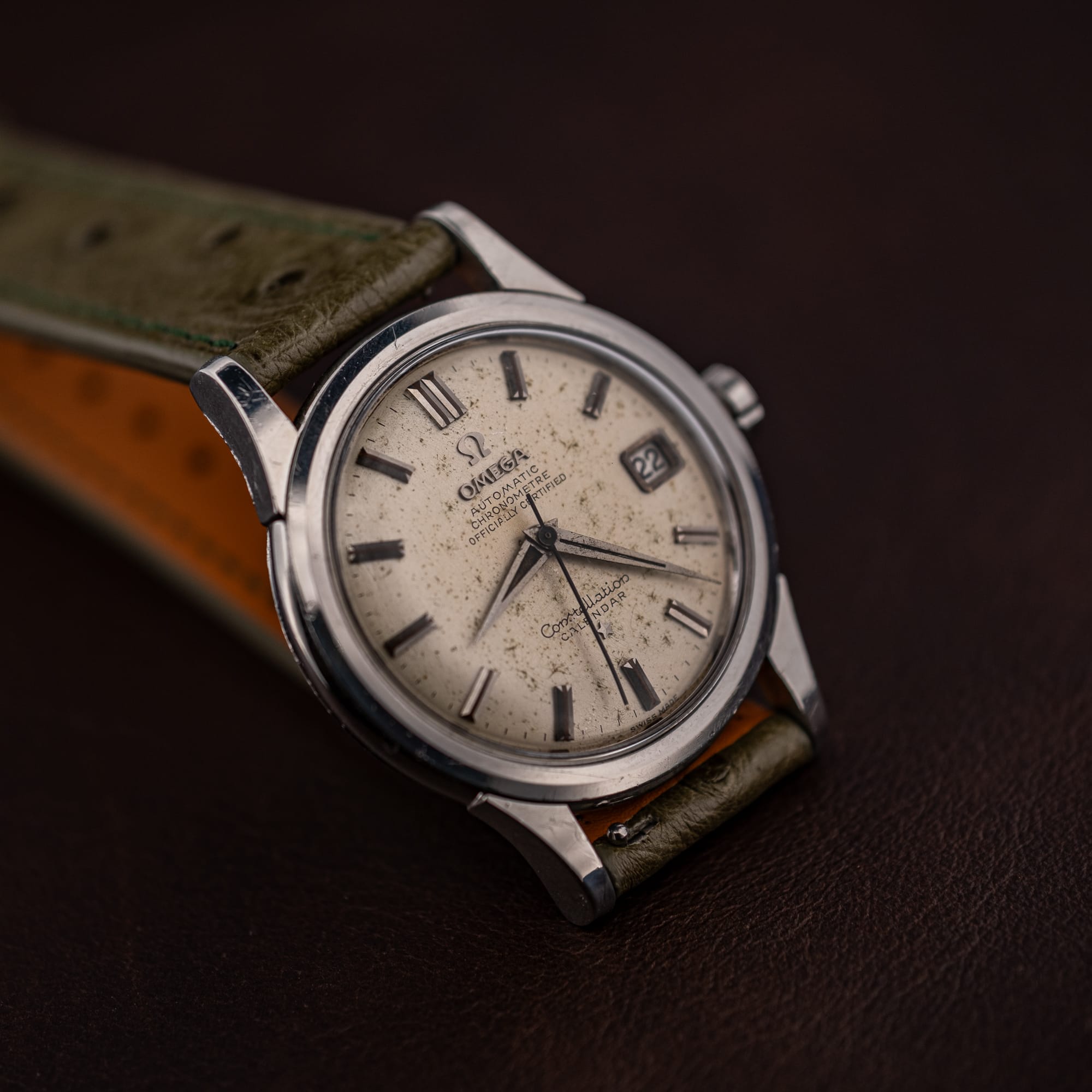
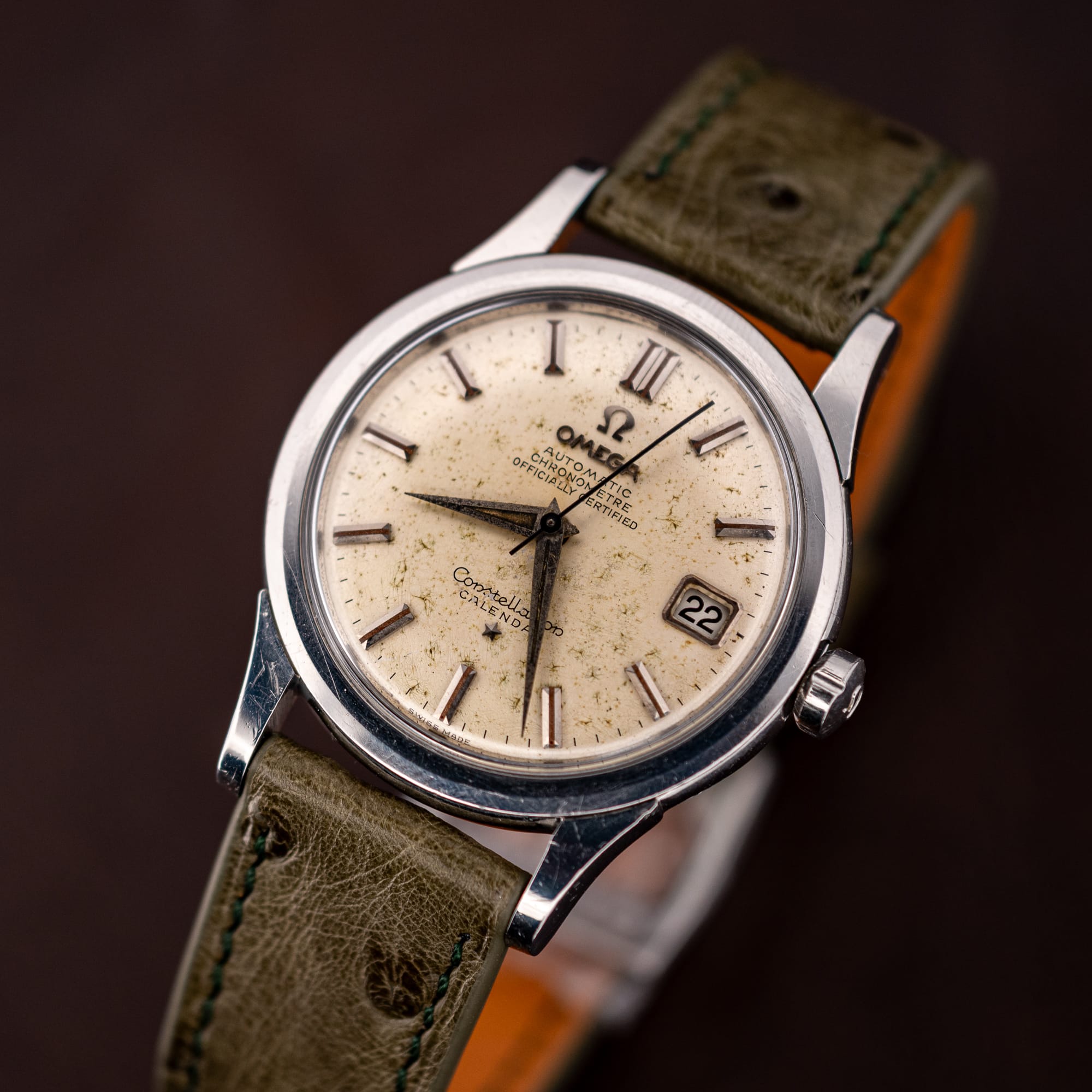
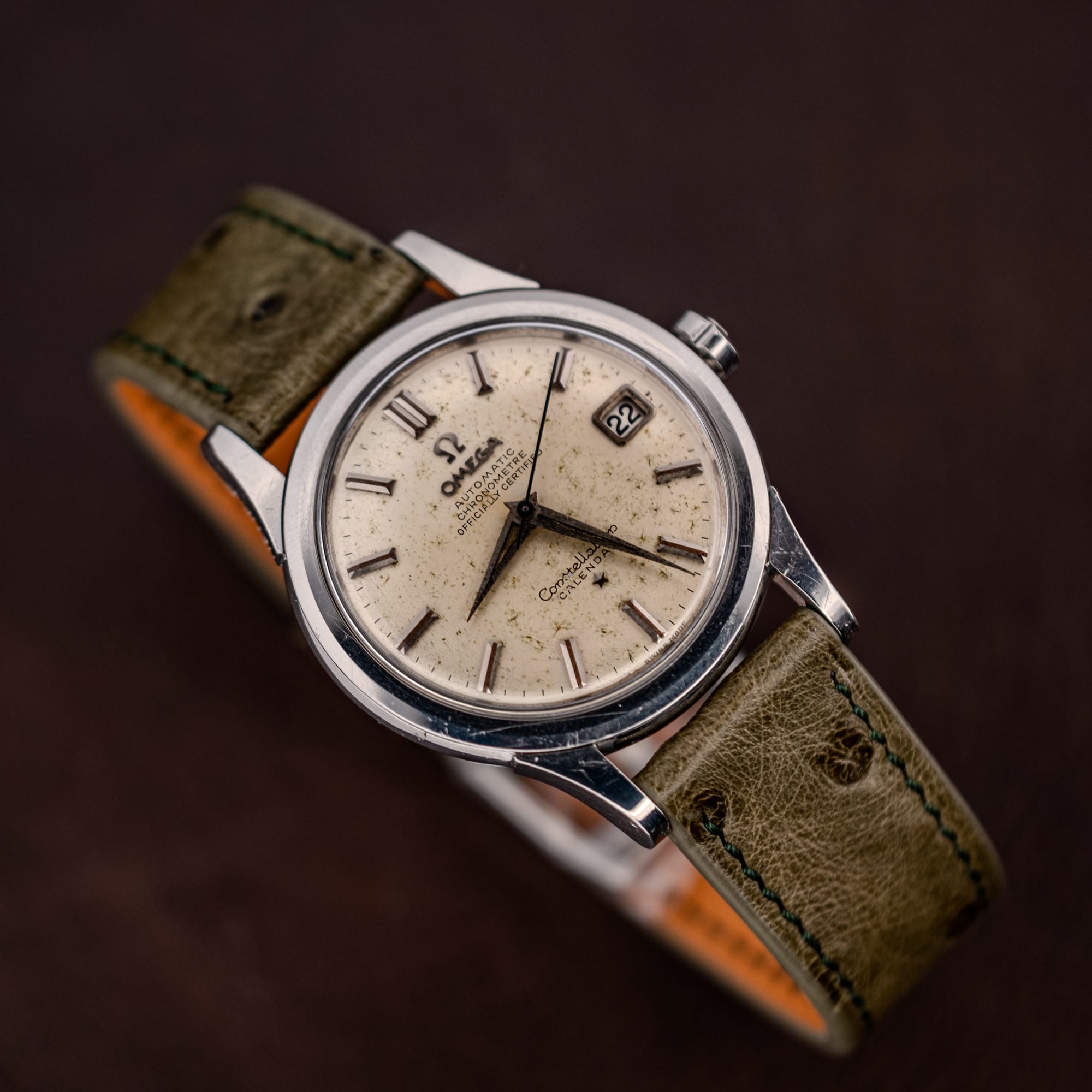
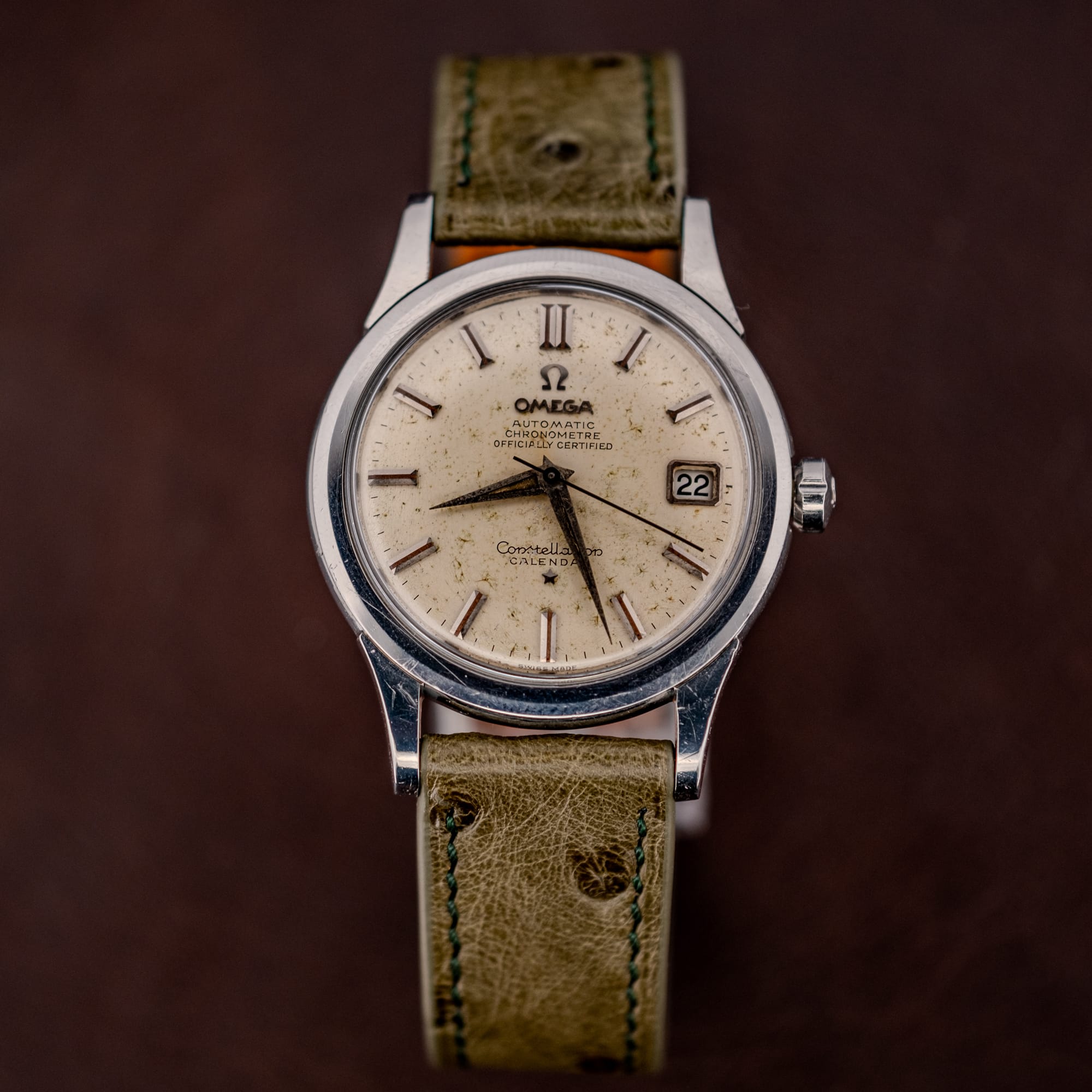

Three lines of small black text sit under the Omega logo on this dial: AUTOMATIC, CHRONOMETRE, OFFICIALLY CERTIFIED. When this Omega Constellation 2943-2 was new at the close of the 1950s, that last line was a legal claim rather than a flourish. In 1951 the Swiss industry had closed the loophole that let the word chronometer onto a dial without an independent test, and from then on a watch could wear it only if an official bureau had certified the specific movement inside it.
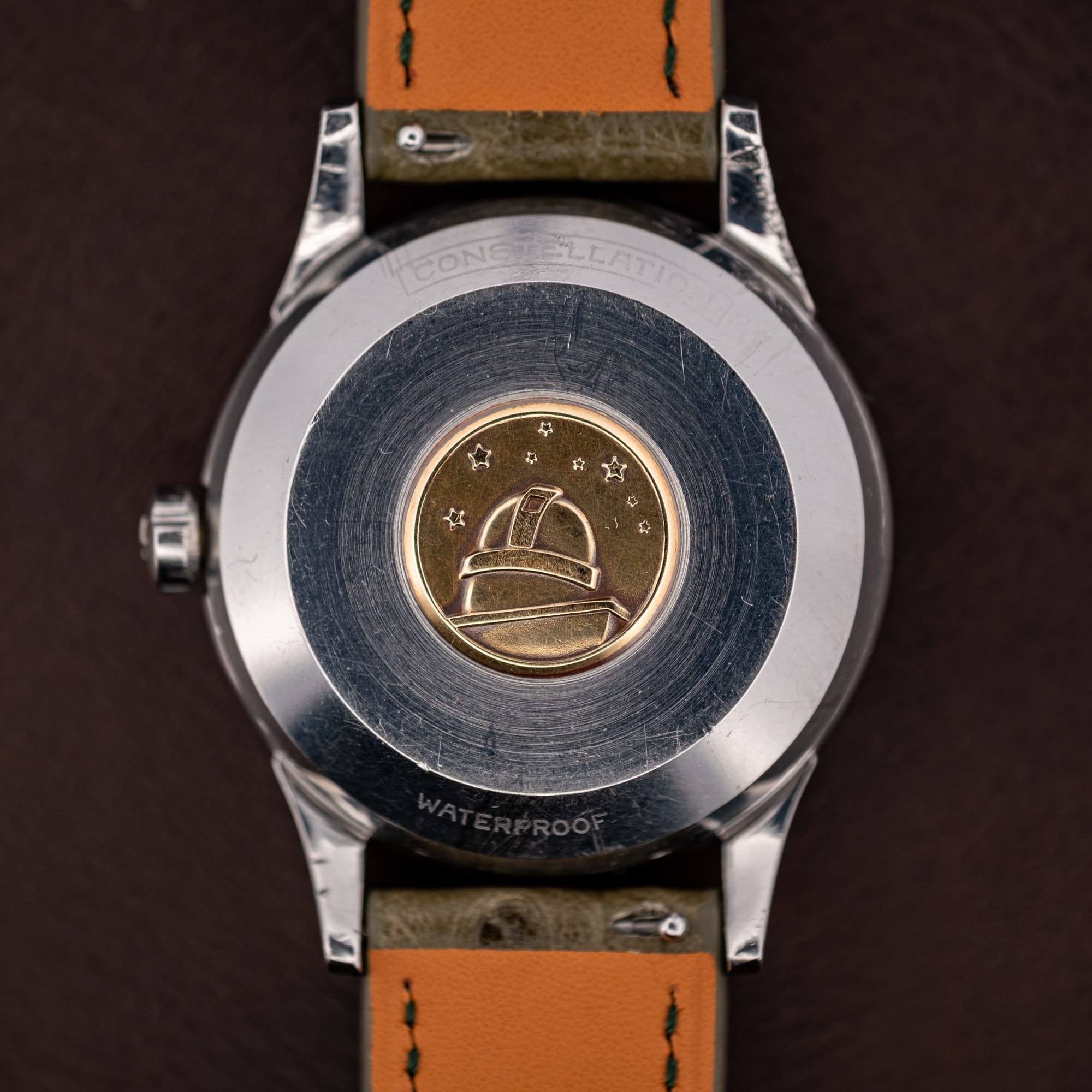
Certification in that era was not a factory formality. The finished movement travelled to one of the cantonal Bureaux Officiels de Contrôle, the testing offices seeded through the watchmaking towns, and ran there for fifteen days across five positions and three temperatures before anyone was permitted to call it a chronometer. For the buyer at the counter that was the whole argument: not that Omega built good watches, but that this one, individually, had been measured and had passed. The best results earned an extra line on the paperwork, a mention, which is the kind of distinction only a Swiss testing bureau would think to formalise. Omega had earned the right to make that argument the hard way. In 1948, for its hundredth birthday, it built the Centenary, a run of roughly six thousand gold watches and the first Omega wristwatches to pair an automatic movement with chronometer certification, designed by René Bannwart, who would later leave to found Corum. It sold well enough that Omega decided the idea deserved a production line, and in 1952 that line became the Constellation, its casebacks carrying eight stars for the observatory records the company had been collecting since 1933.
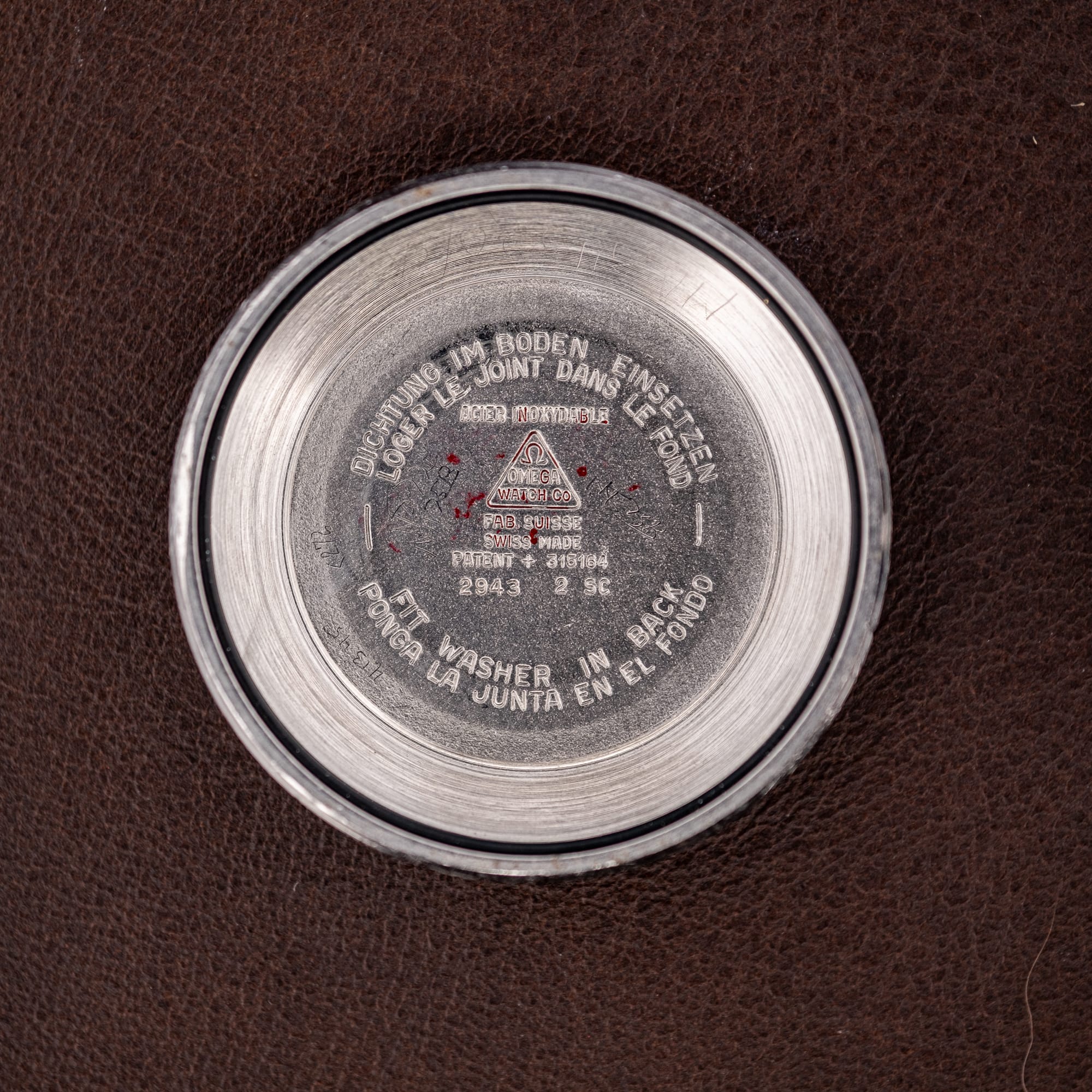
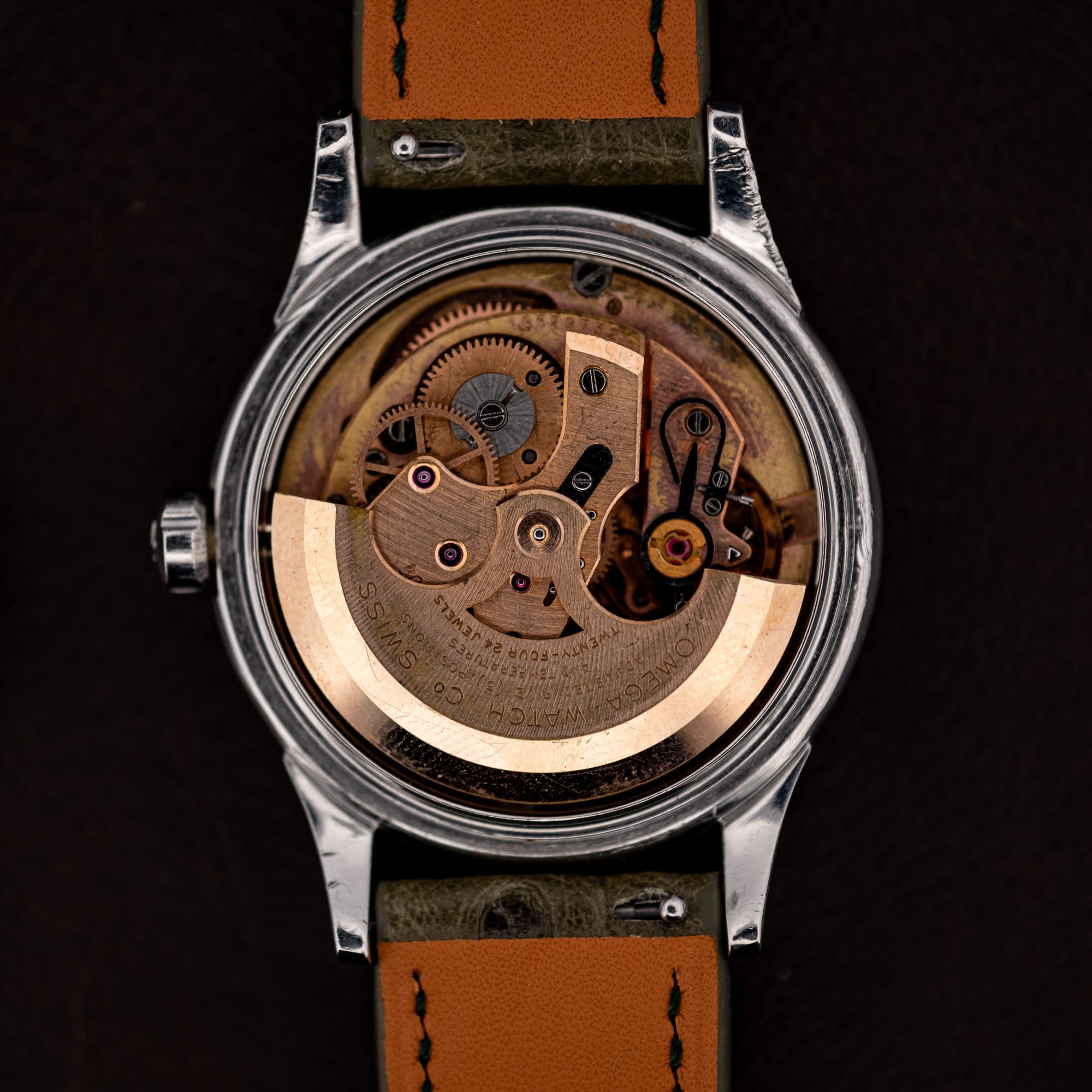
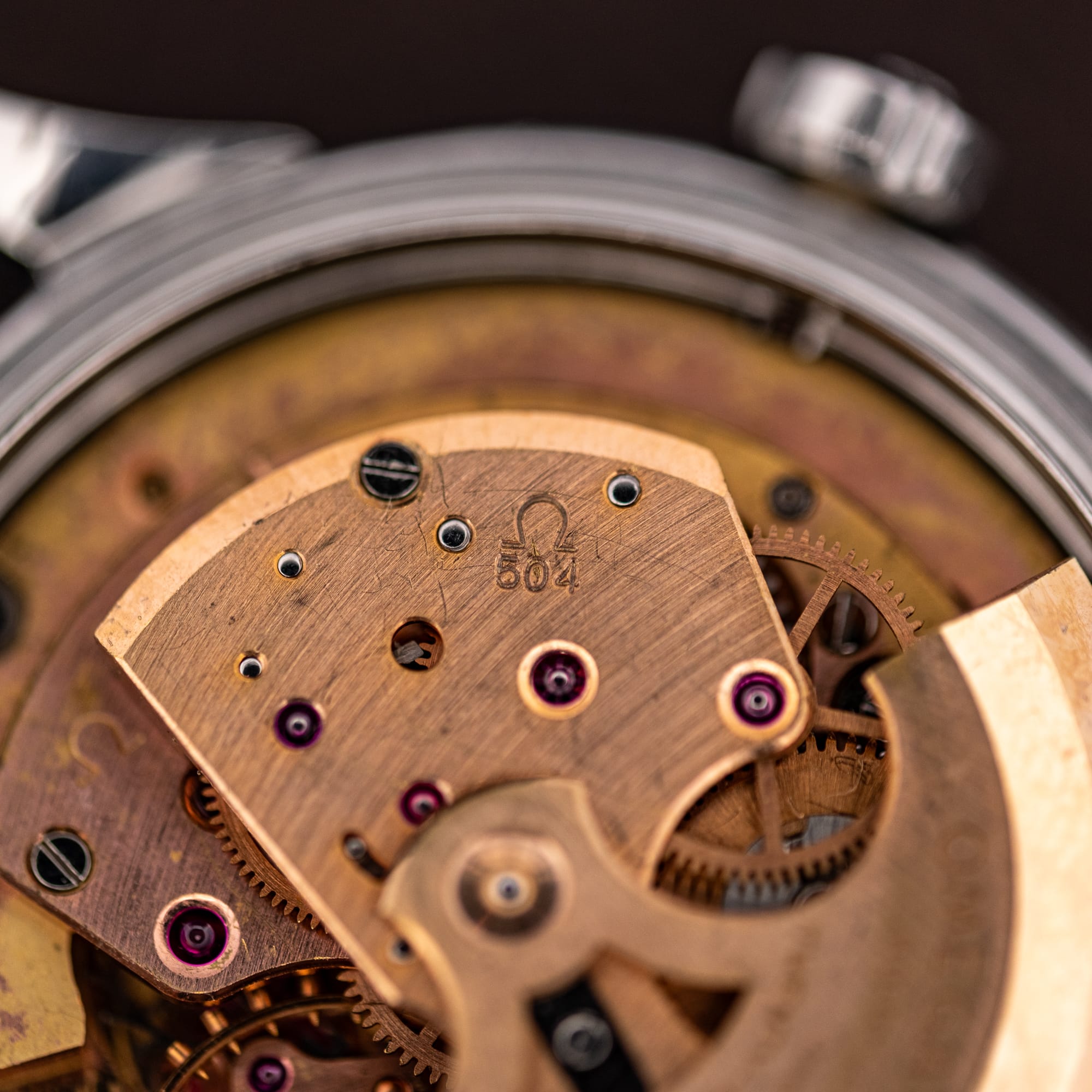
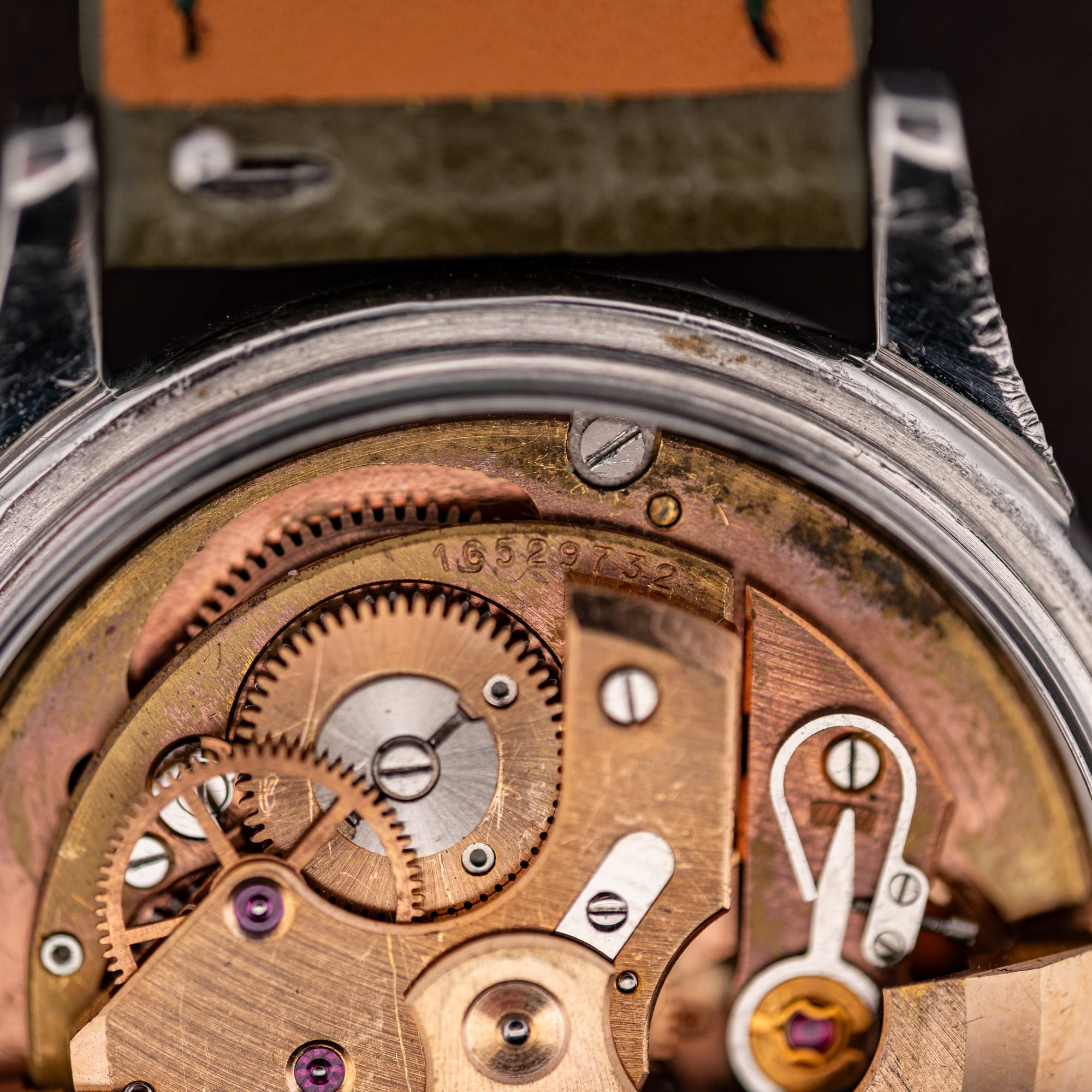
The 2943 is where that program picked up a complication. It is the first-generation Constellation Calendar, the reference that put a date window on a line built entirely around rate, and it runs the caliber 504, the first Constellation movement to carry one. Under the caseback we can still read what the movement says about itself: OMEGA WATCH Co SWISS, ADJUSTED FIVE (5) POSITIONS AND TEMPERATURES, TWENTY-FOUR 24 JEWELS. The serial beneath it reads 16529732, which puts assembly in 1958 or 1959.
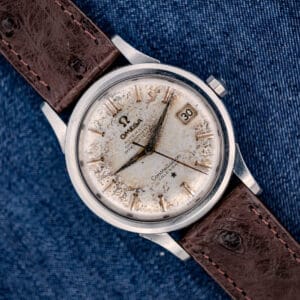
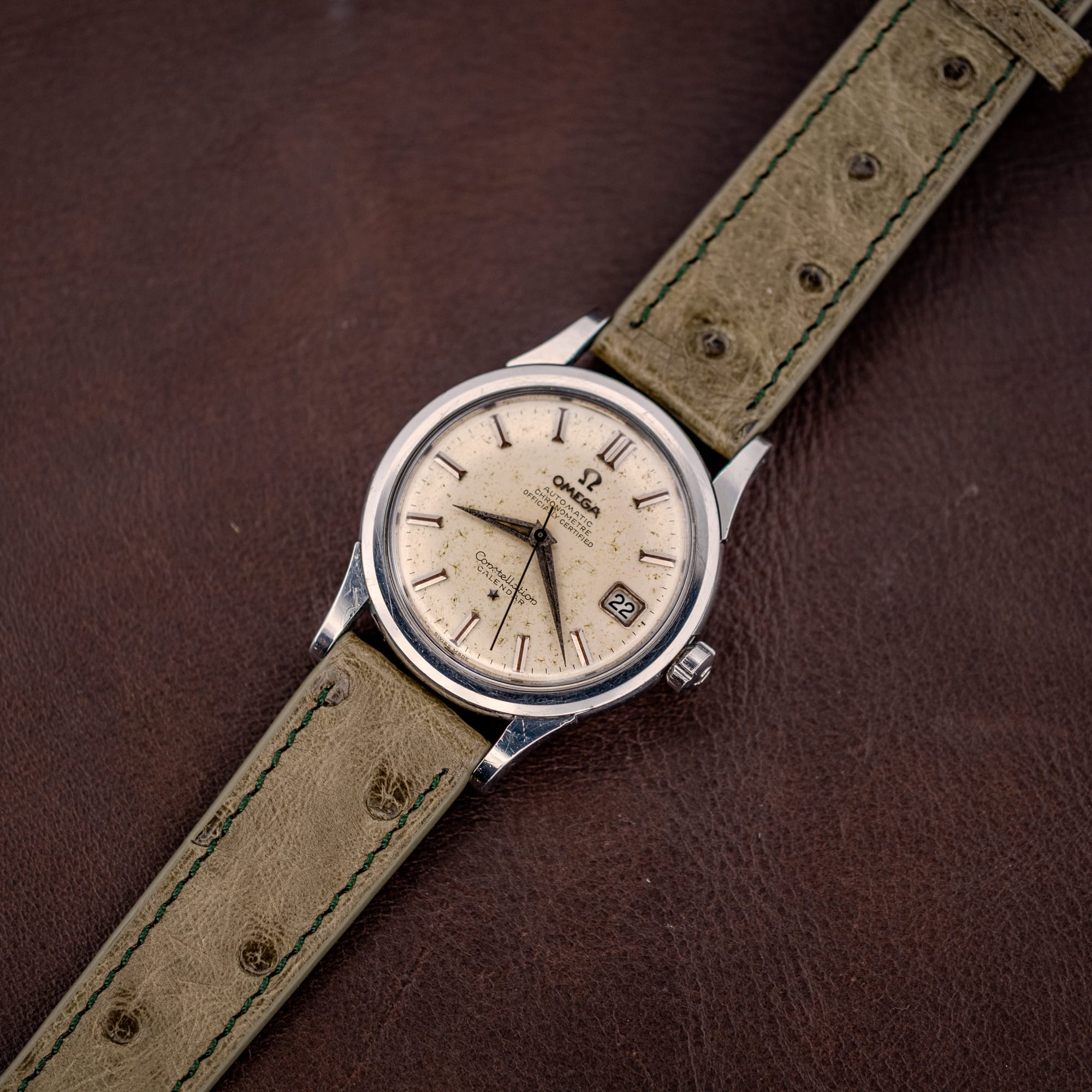
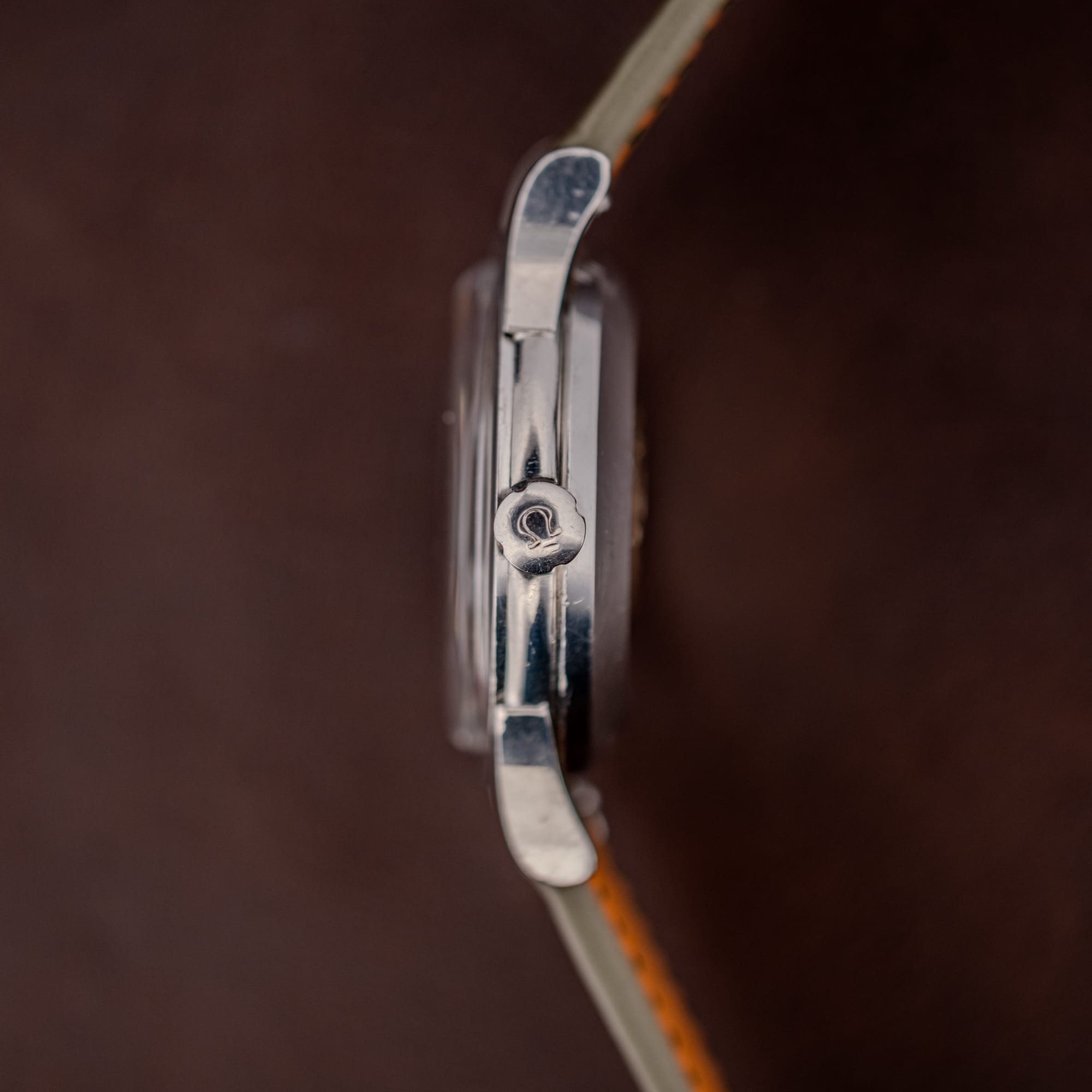
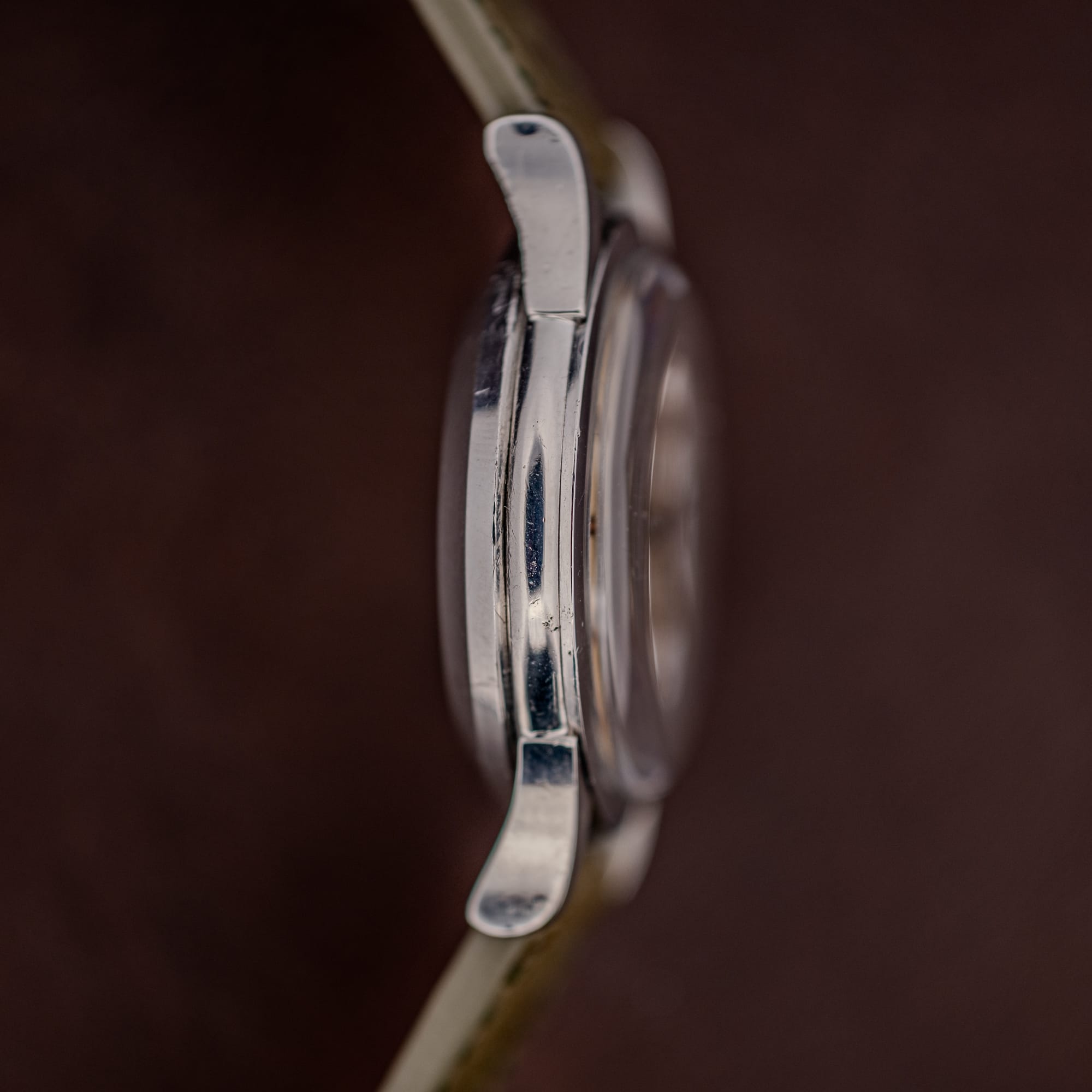
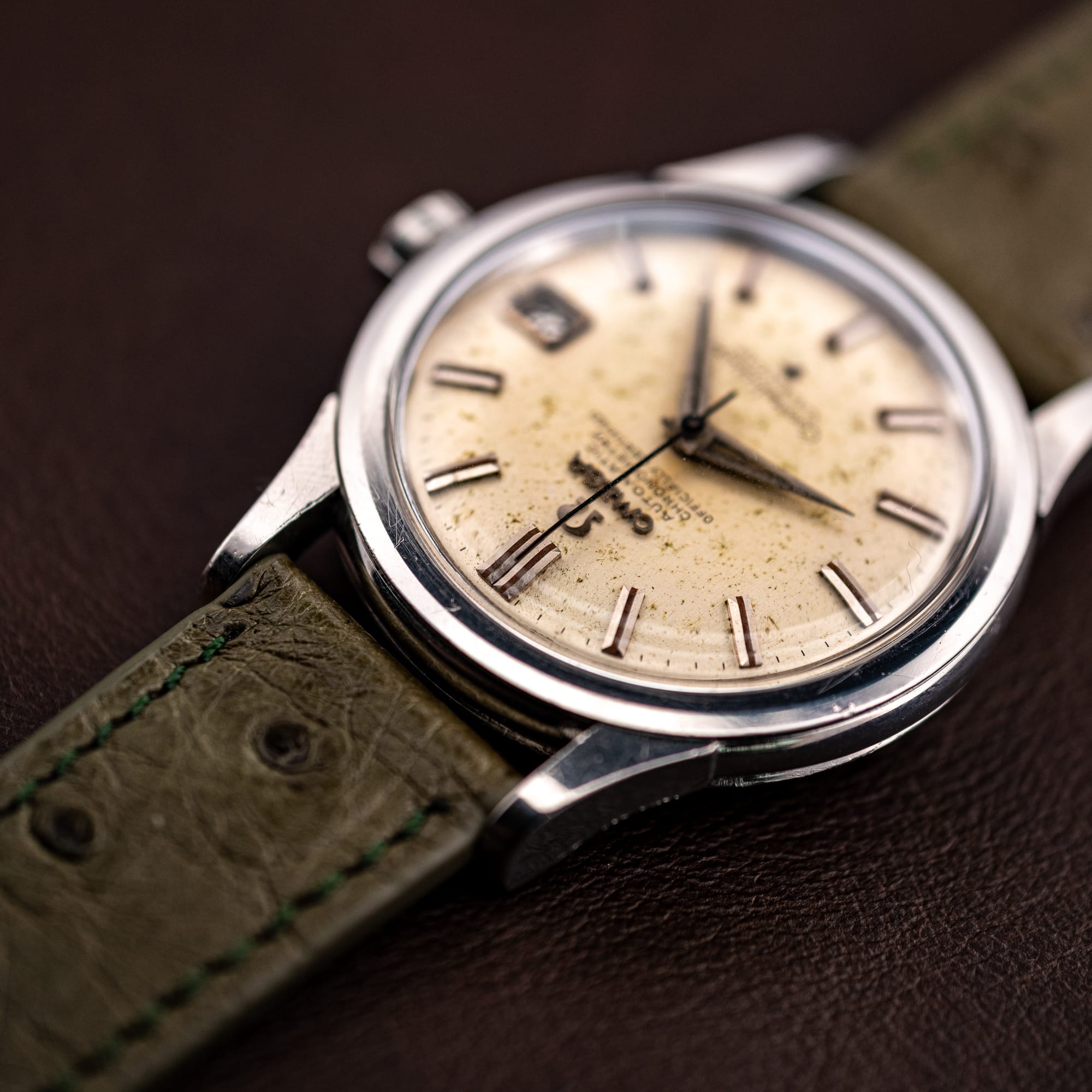
The case is 35mm of stainless steel with faceted, downturned lugs and a plain polished bezel, the Omega-signed crown crisp under the thumb, the crystal domed over an off-white dial that has spent nearly seven decades quietly blooming. Fine greenish-gold speckling now spreads across the whole field like frost across glass, dense toward the centre and thinner at the chapter ring, and the applied faceted batons, three of them stacked at twelve, sit proud of it. The dauphine hands have gone dark and grainy, the date sits at three in a stepped metal frame, and SWISS MADE alone at six places this dial in the years before tritium. Nothing has been refinished or relumed, and the surface wear on the case reads to us as a life rather than a restoration.
Serviced in-house at OTTUHR and backed by our 2-year mechanical warranty, paired here on an olive ostrich strap that picks up the dial’s aged green without arguing with it. The paper that came with movements like this one is long gone, as it nearly always is. The proof Omega stamped into the metal is still turning.