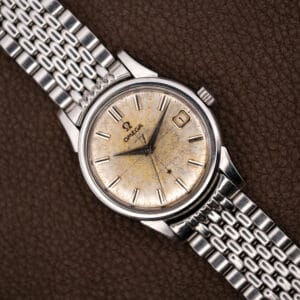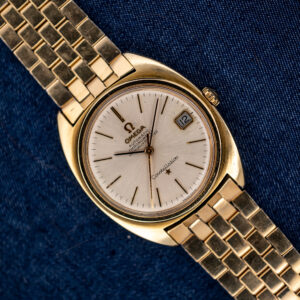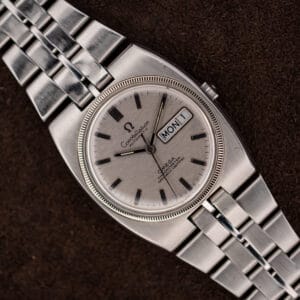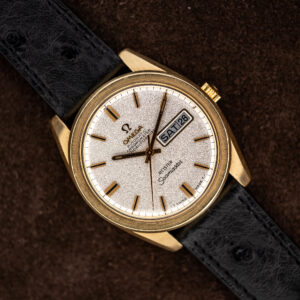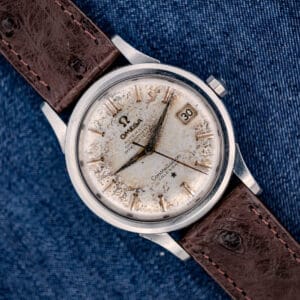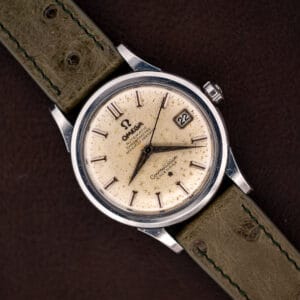
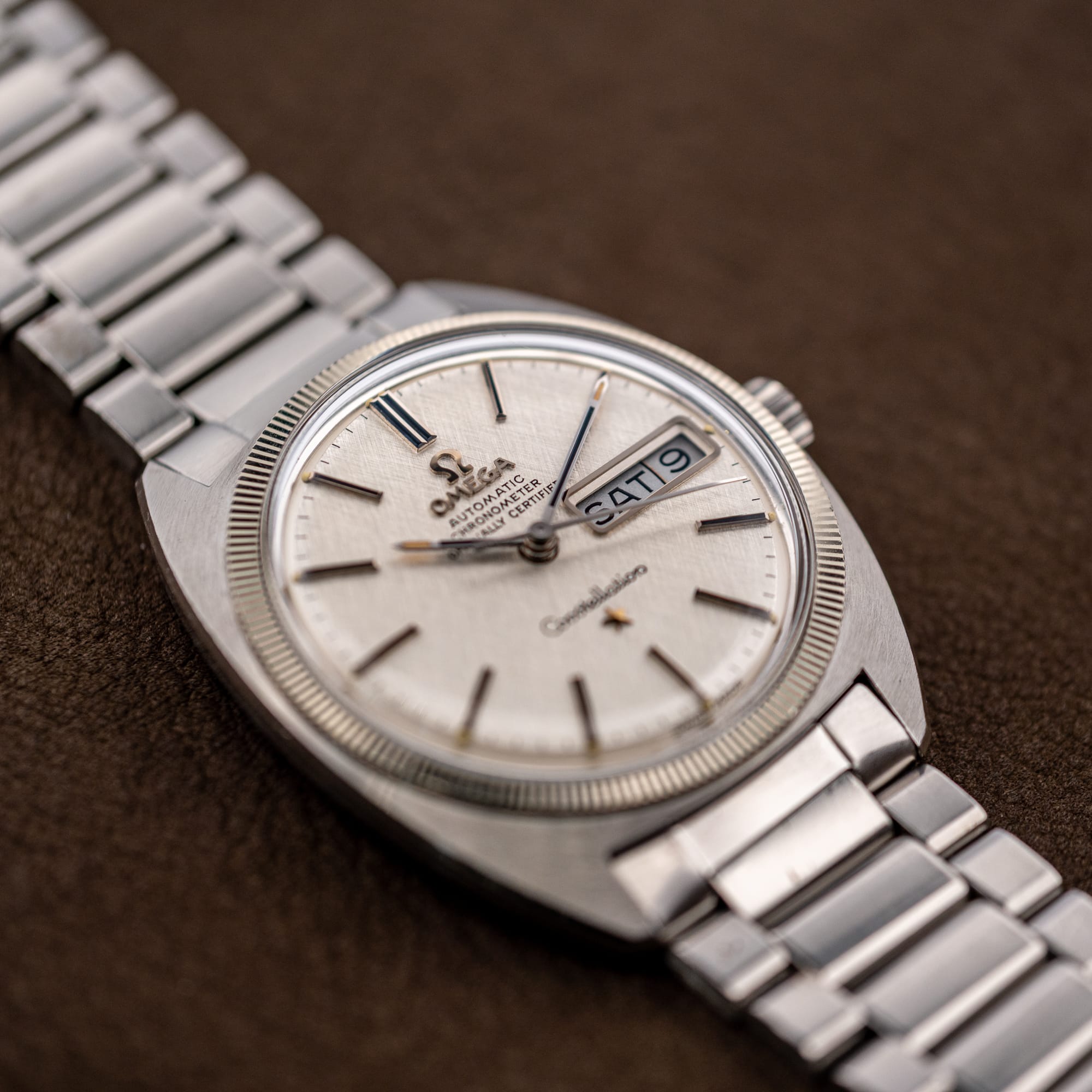
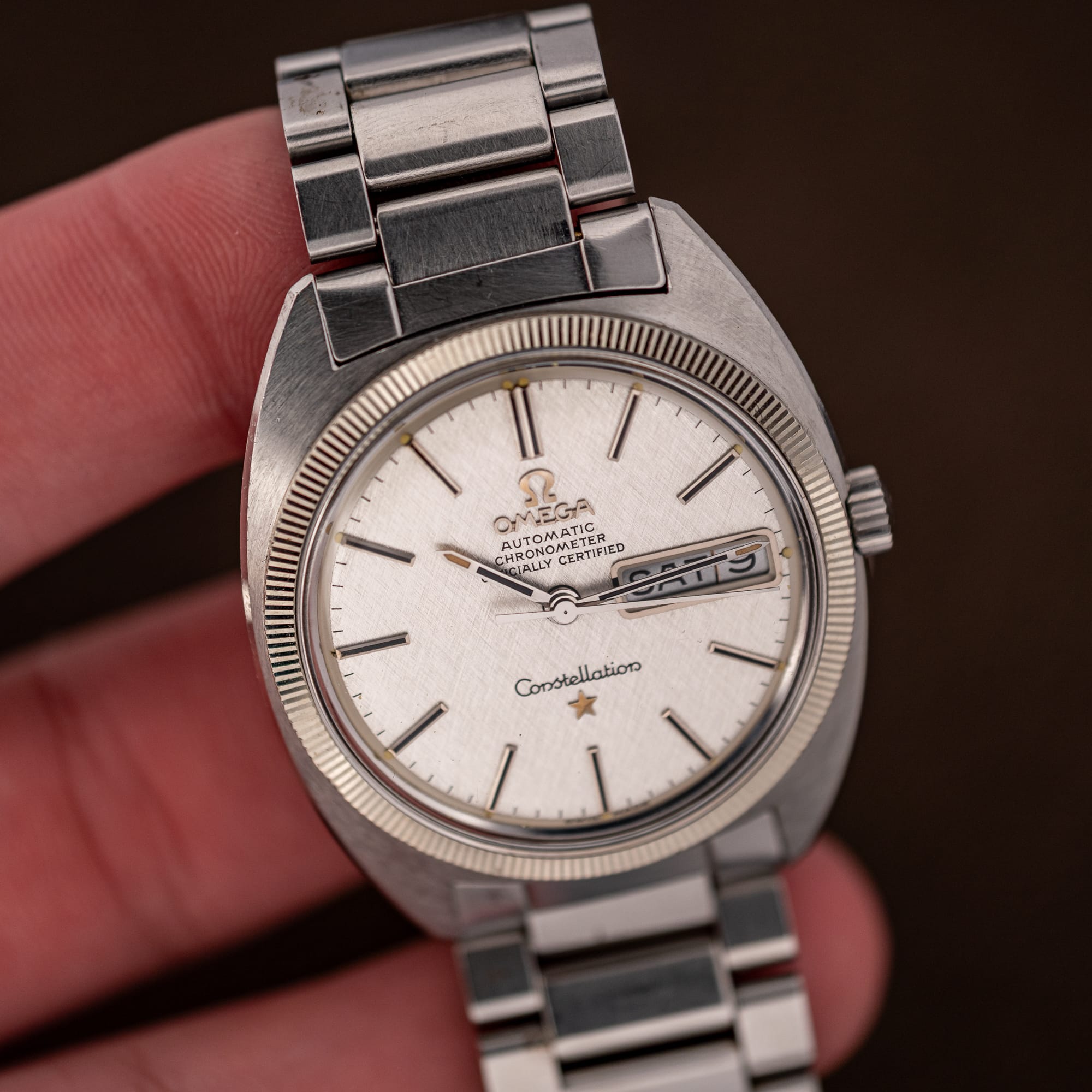

No watch ever scored higher at the Kew-Teddington observatory trials in England. The Omega Constellation 168.029 linen dial descends from that result: in 1936 an Omega caliber 47.7 pocket watch movement, regulated by Alfred Jaccard, posted 97.8 points out of 100 there, and the mark stood until 1965. Omega turned scores like that into a product.
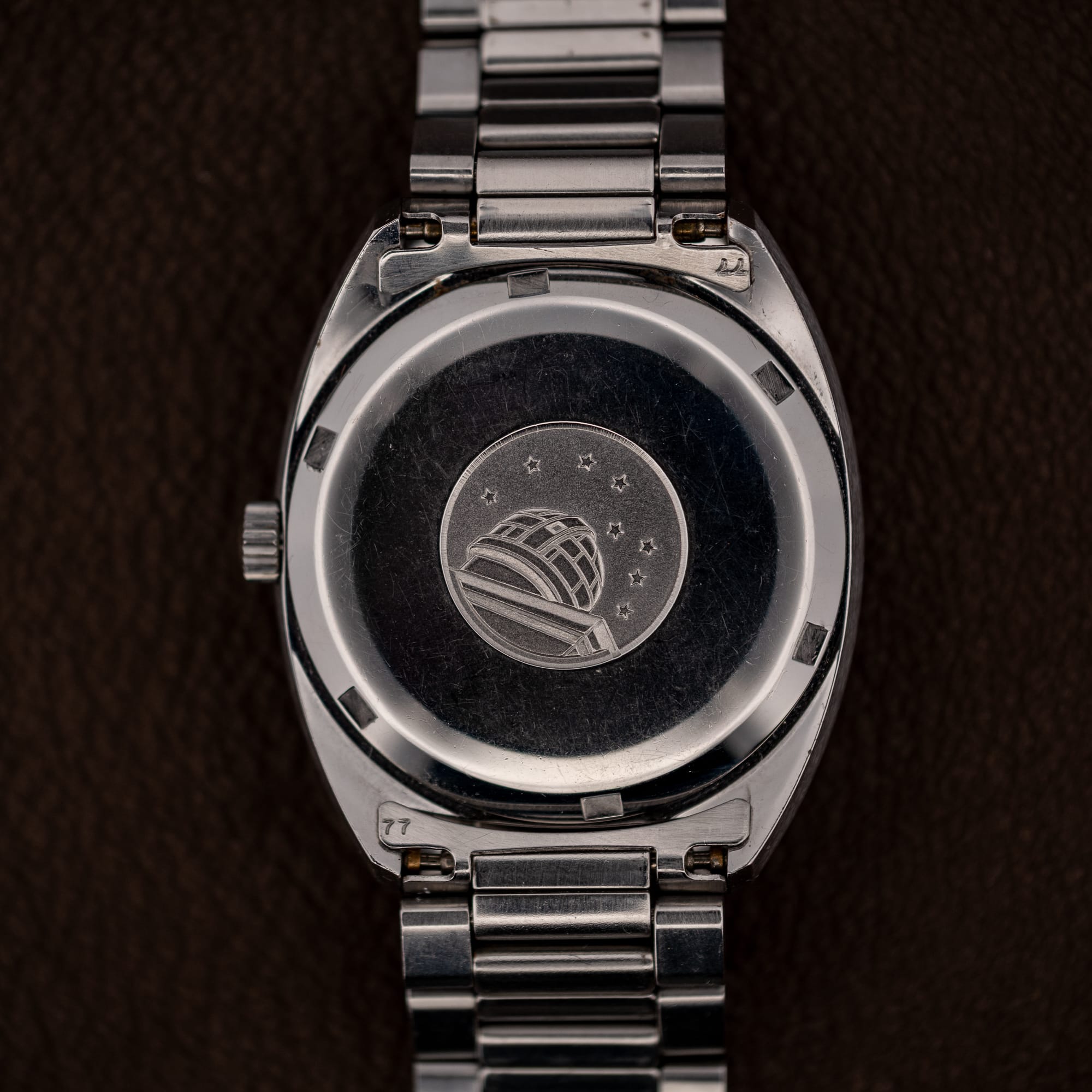
Omega spent two decades collecting results of that kind at the observatory trials, then did the obvious commercial thing with them. In 1952 it launched the Constellation, not as a model but as a family, and the first family Omega ever built in which every single watch was a certified chronometer. The observatory medallion went onto the caseback, a cupola beneath eight stars for the achievements that earned the name, and it has been there on every Constellation since.
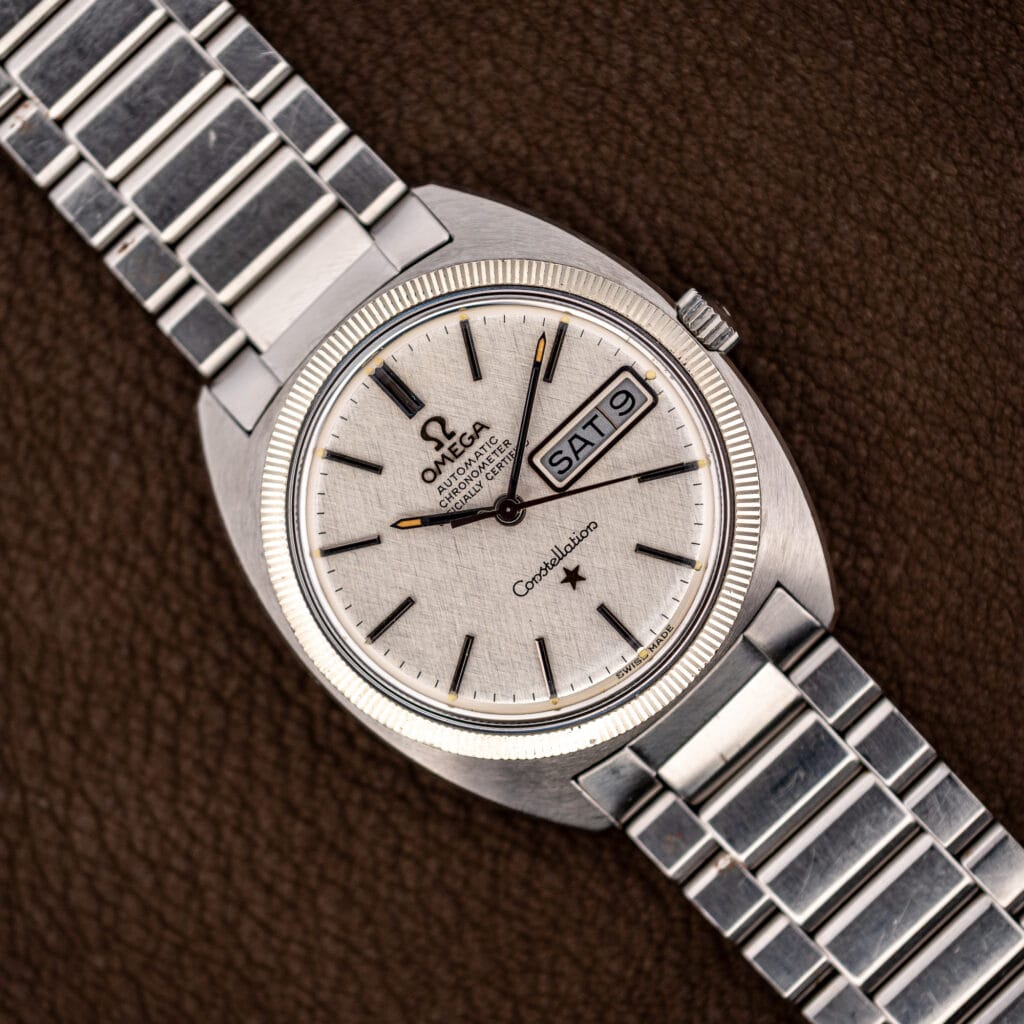
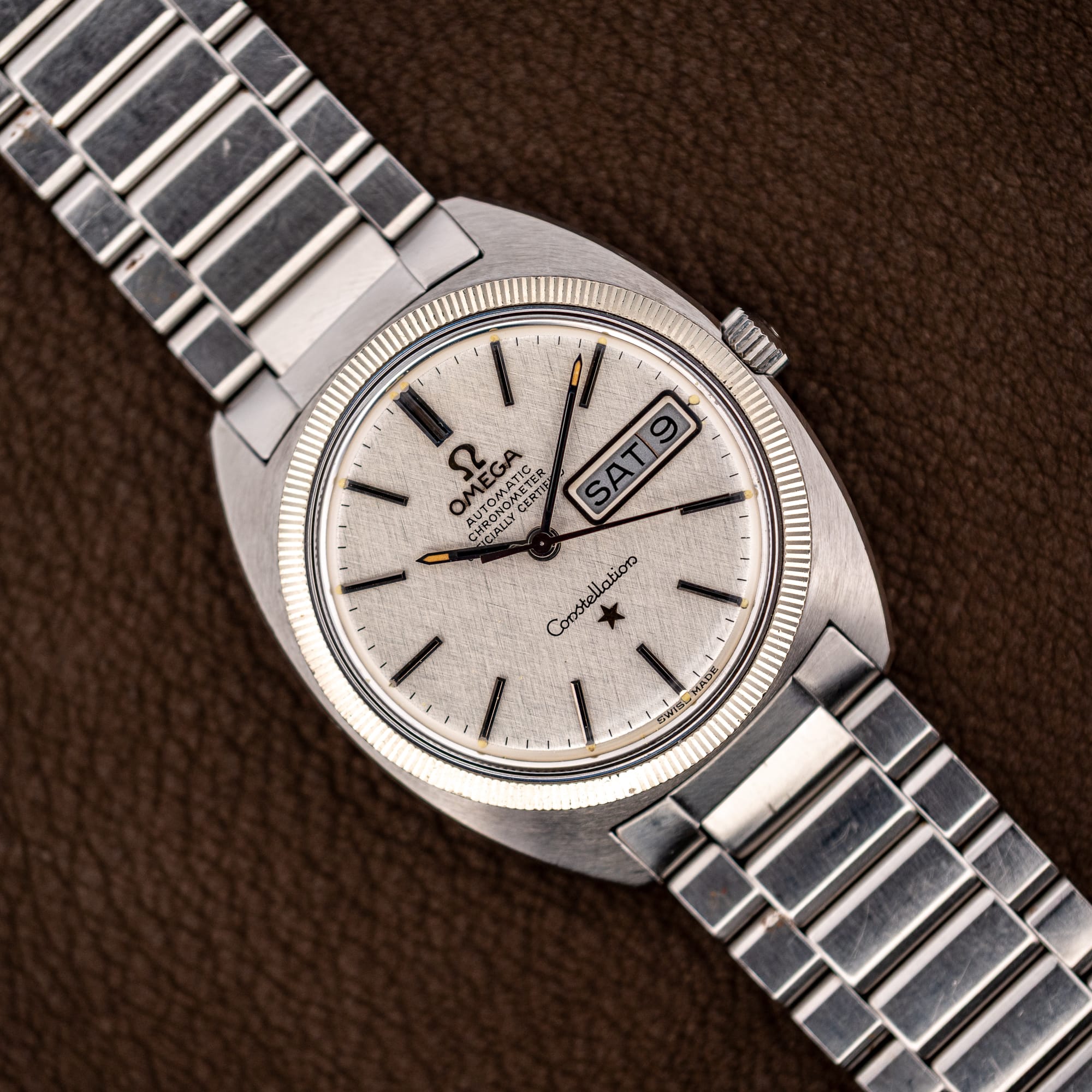
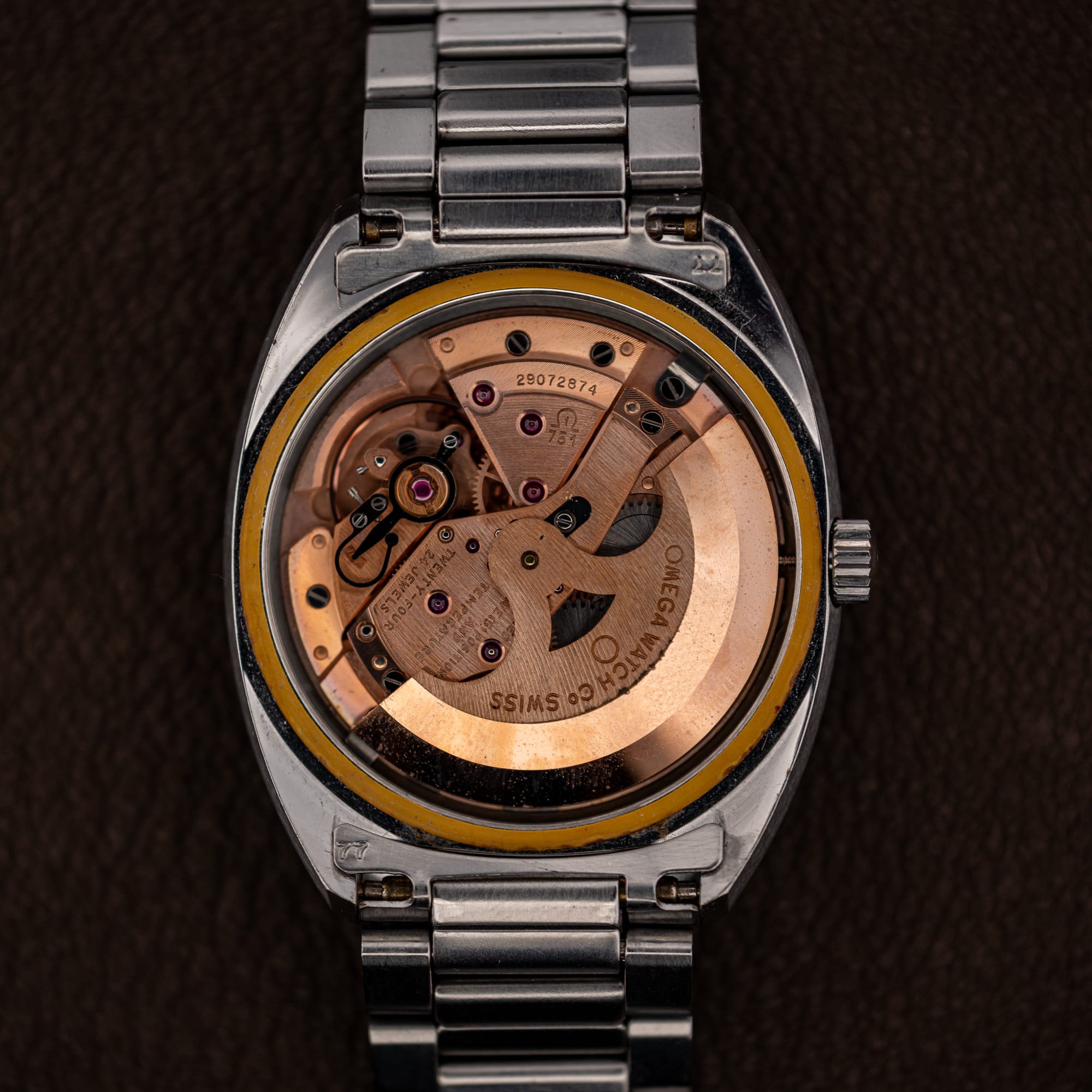
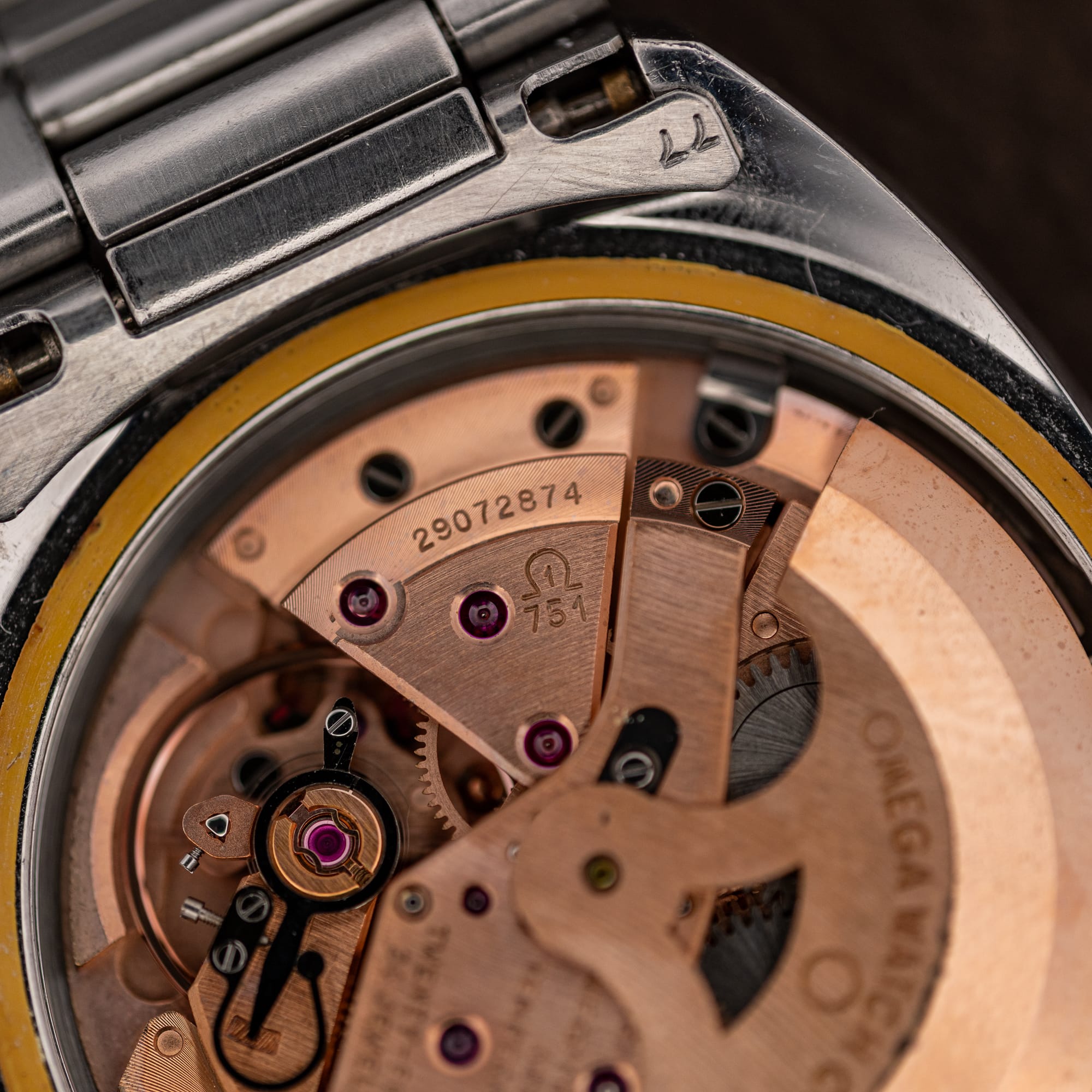
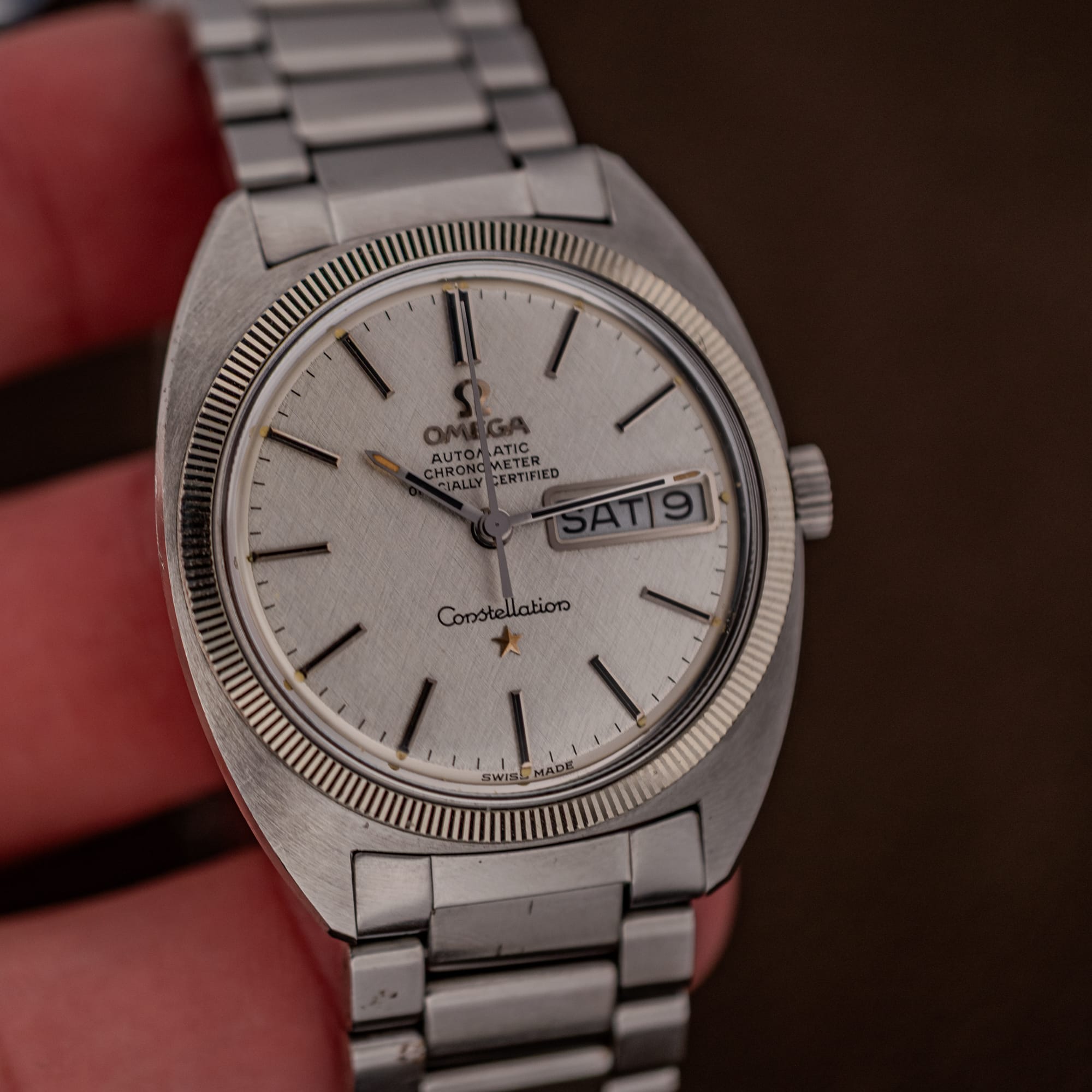
What officially certified meant when this watch was built is more specific than the phrase suggests. Certification came from the regional Bureaux Officiels rather than COSC, which would not exist until 1973, and the standard in force from 1961 held a chronometer to a mean daily rate between minus one and plus ten seconds across five positions. That was the bar a movement had to clear before Omega could print the words on a dial: AUTOMATIC CHRONOMETER OFFICIALLY CERTIFIED. Behind that dial sits the caliber 751, twenty-four jewels, day and date, adjusted and marked as such on the movement. Omega ran the 751 from 1966 to 1975, which makes it one of the last of its great pre-quartz production movements.
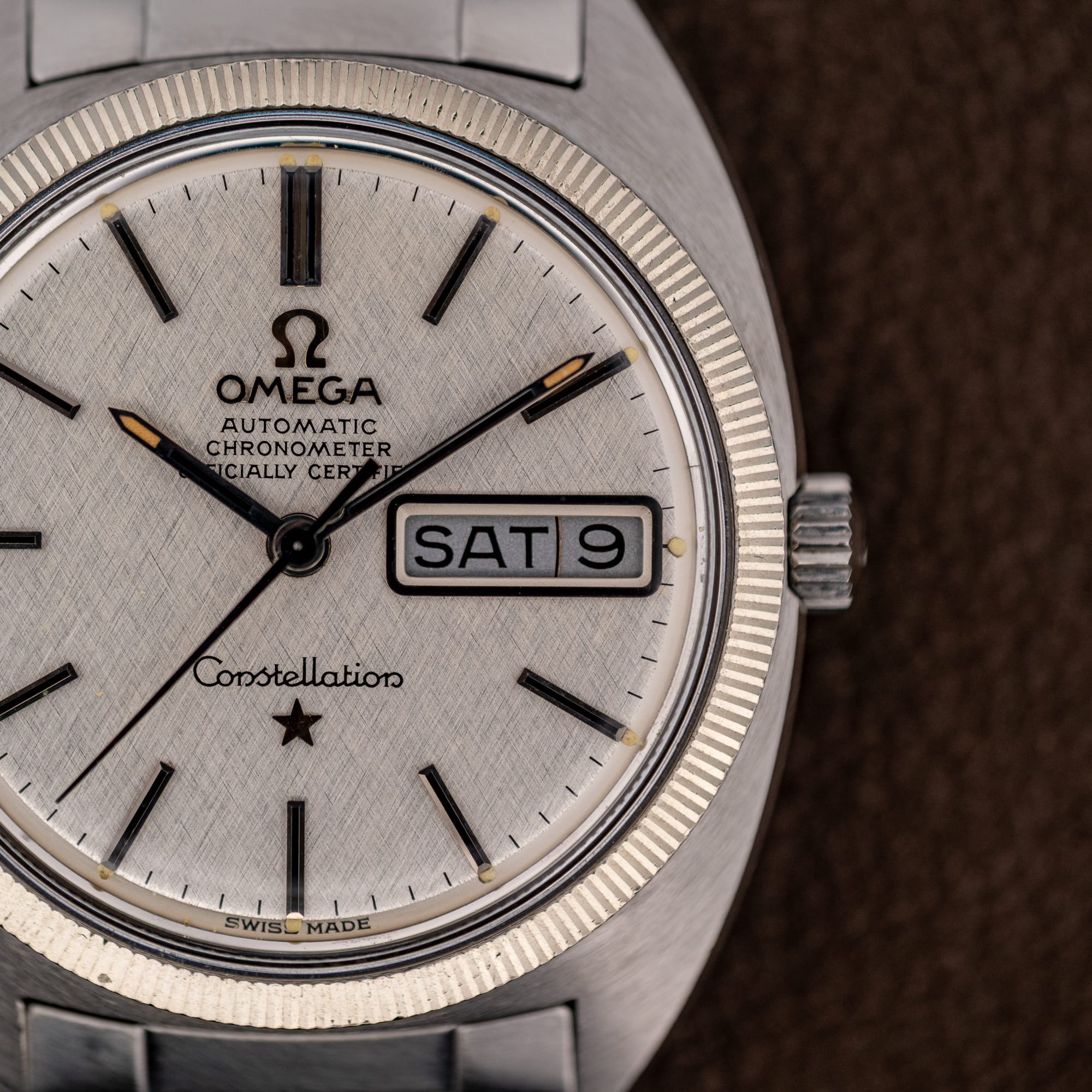
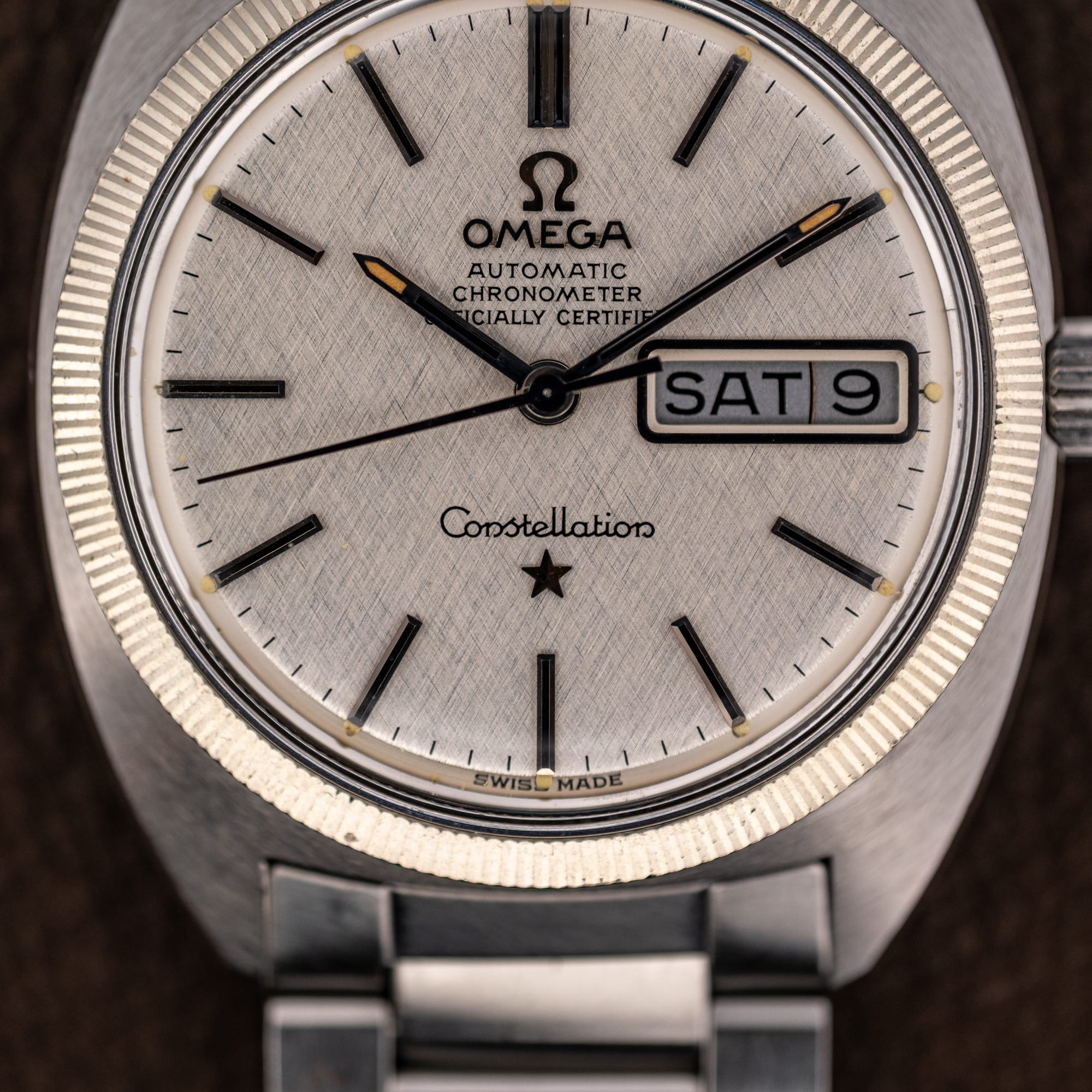
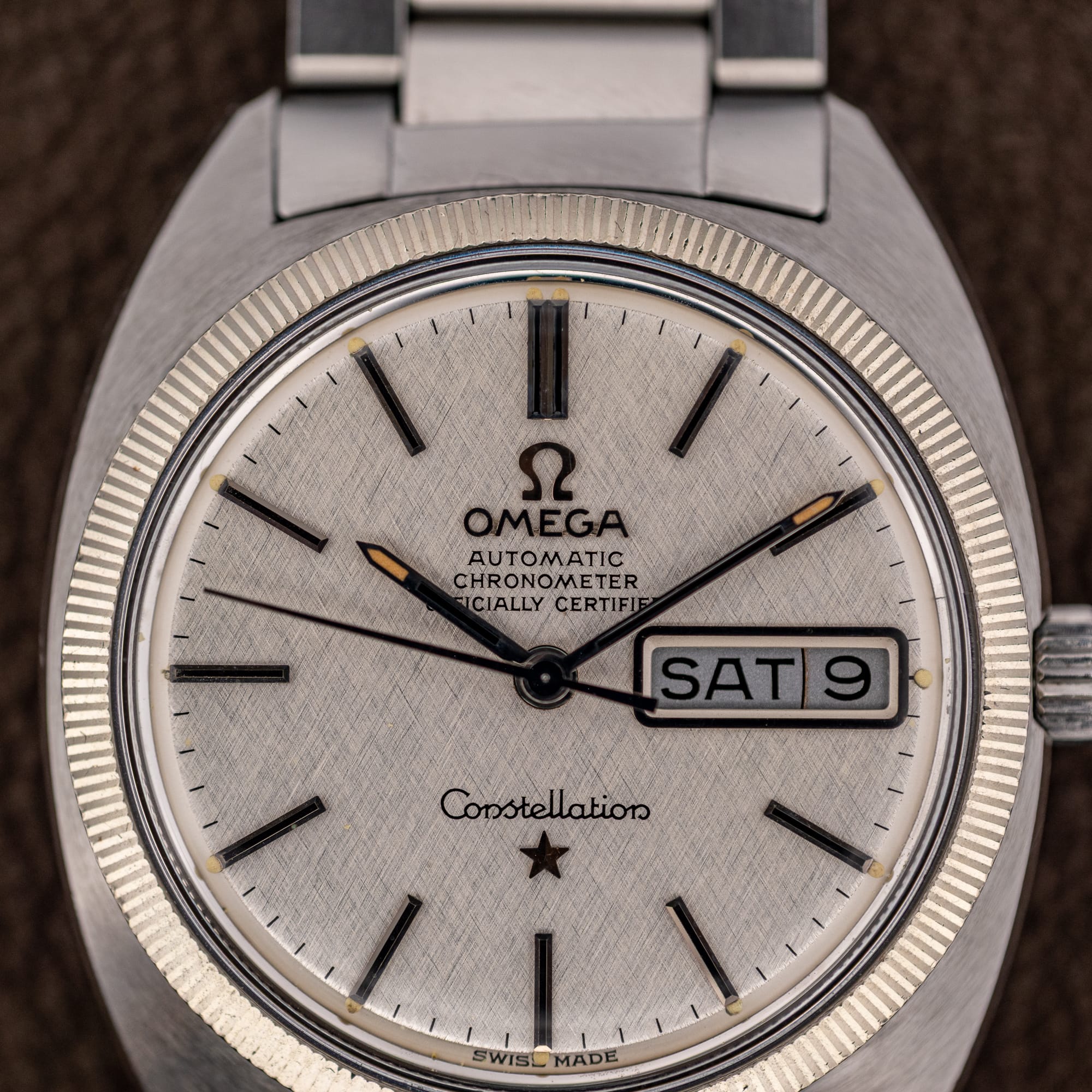
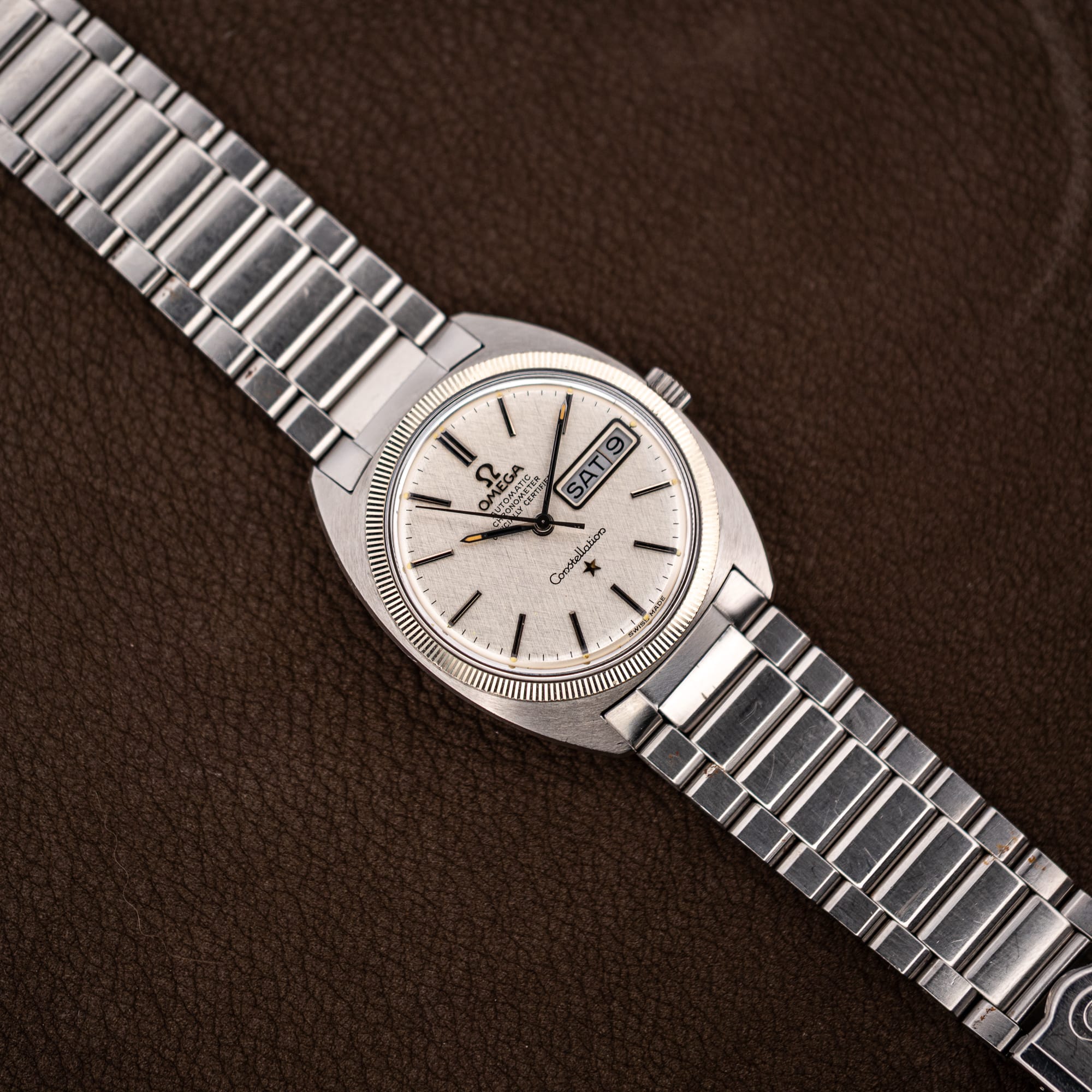
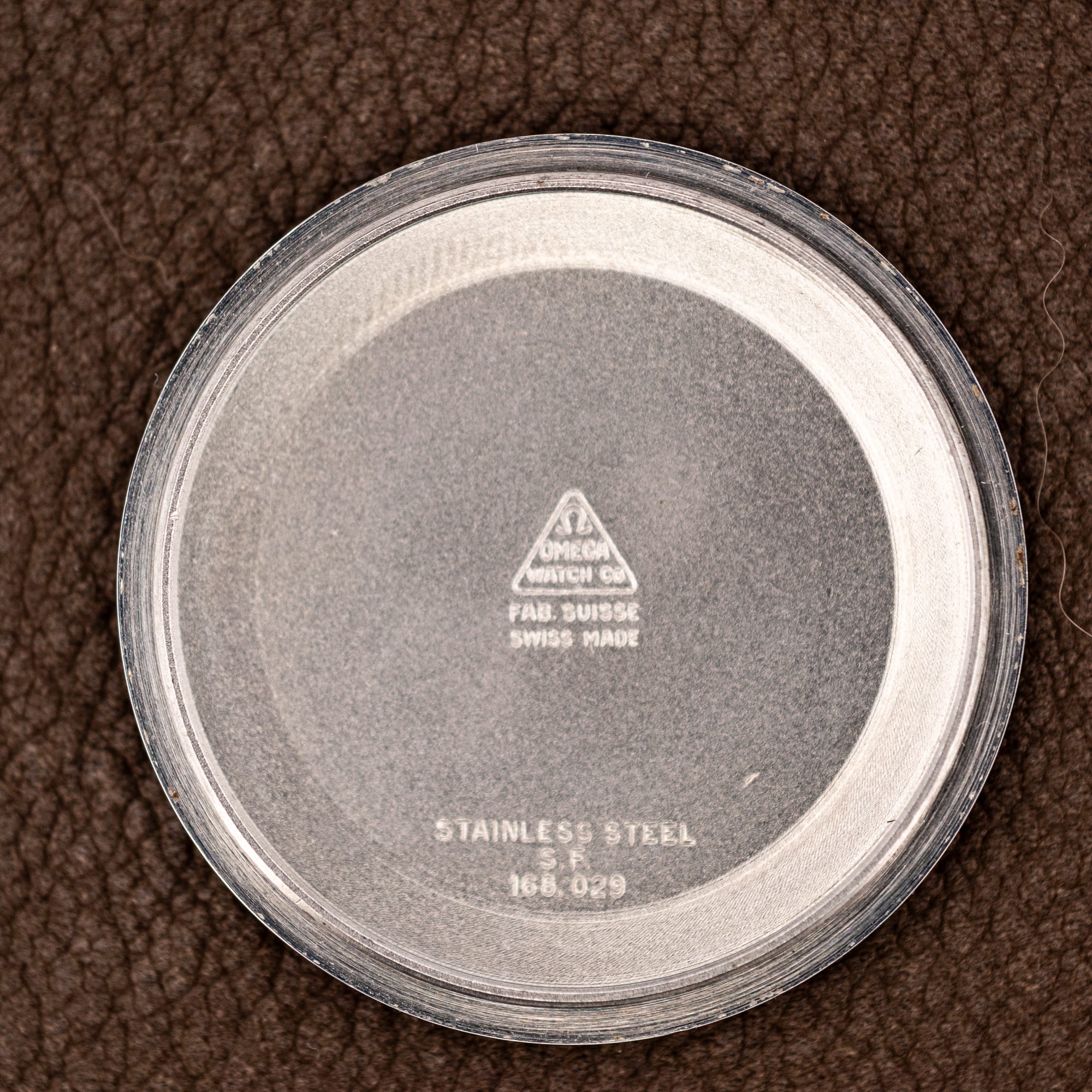
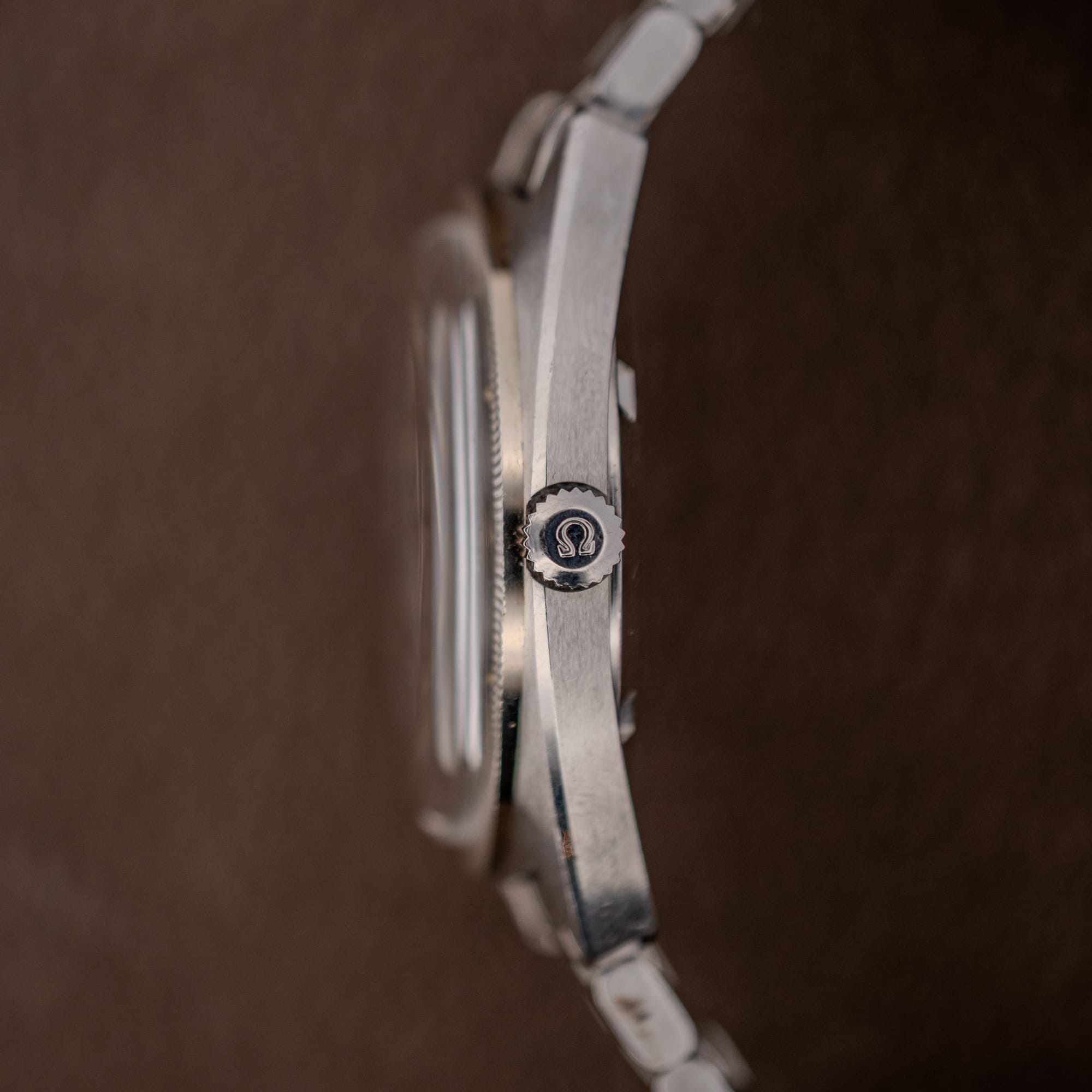
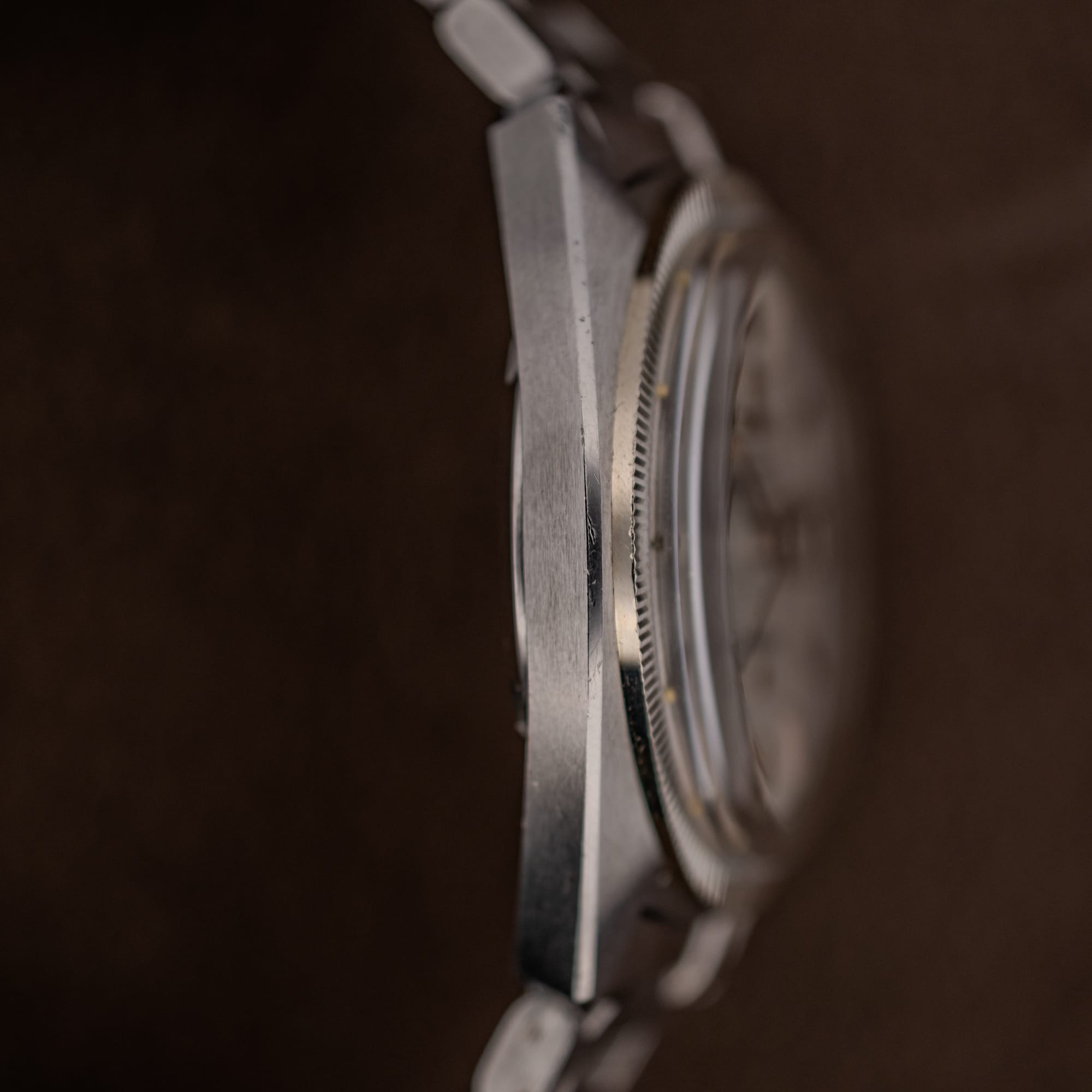
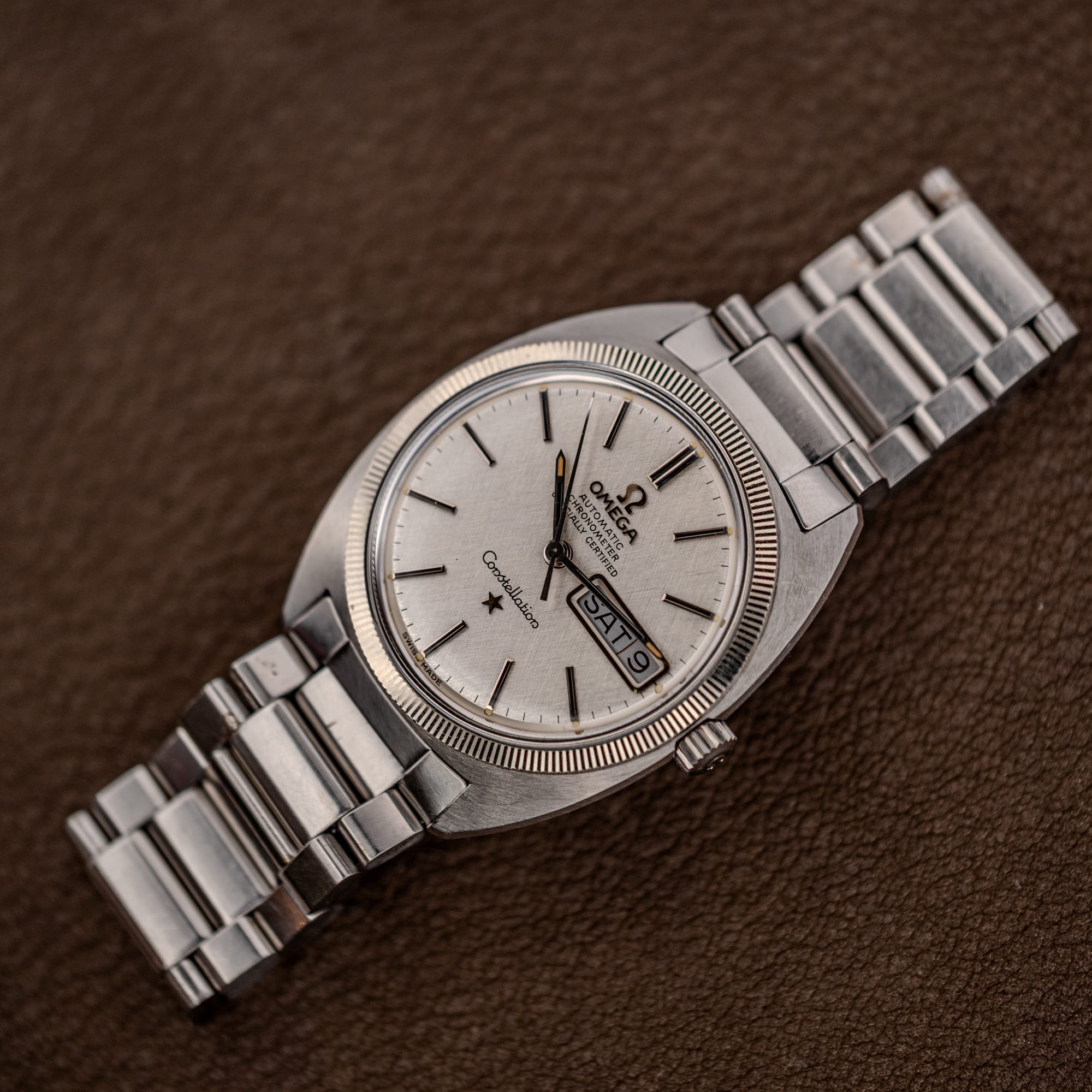
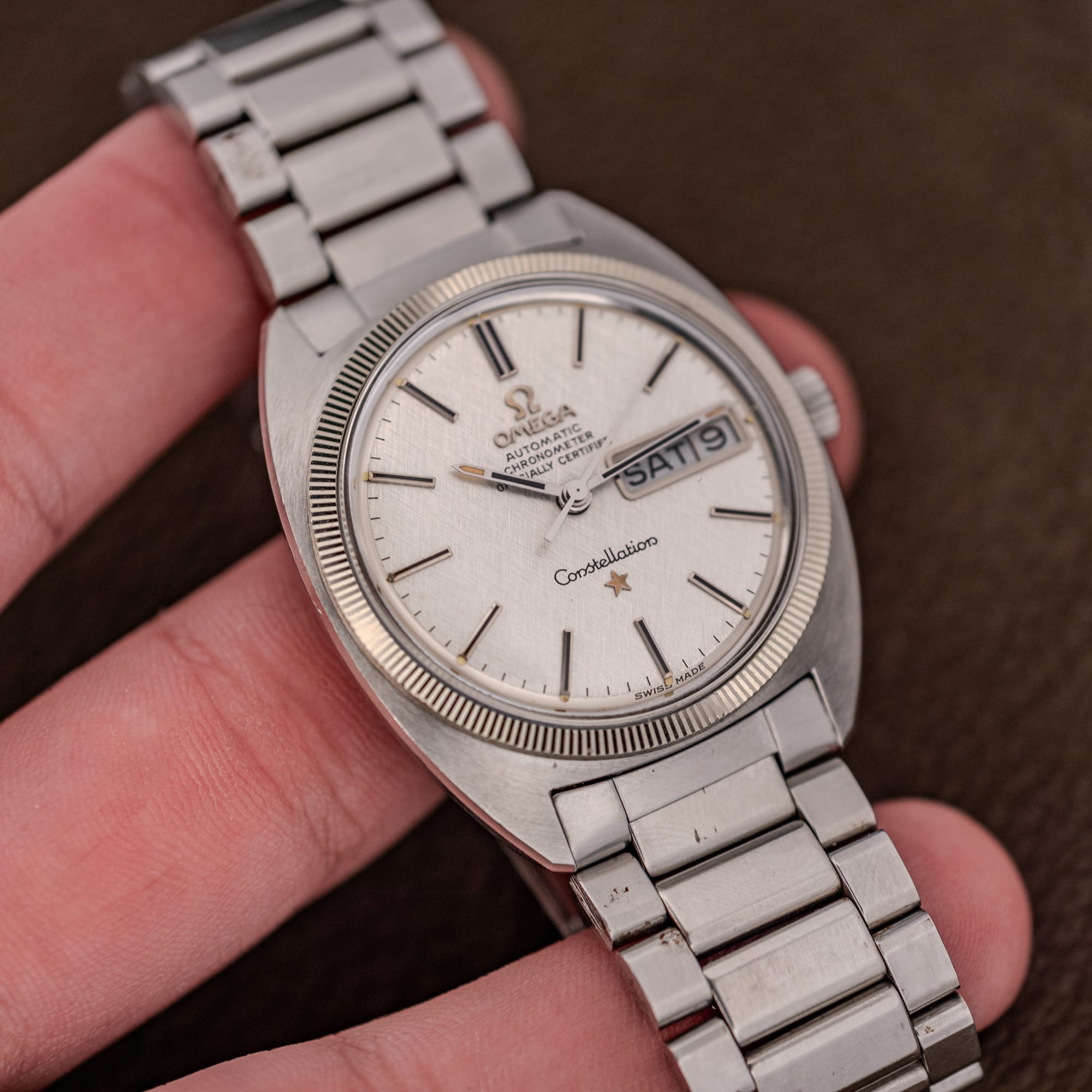
The case is 35 millimeters of stainless steel in the cushion C-shape Omega ran through the back half of the sixties, and the fluted bezel, the version Omega documented in 18k white gold on this reference, is the whole difference between this reference and the flat-bezel 168.019 beside it in the catalog. The dial is why we took it. Its linen weave is a fine cross-hatch worked across the surface, a finish that catches raking light the way a flat dial does not, and it has come through more than fifty years with the printing sharp and the weave even, carrying only a few age flecks that need a loupe to find. Applied black batons sit at every hour, doubled at twelve, with an applied gilt Constellation star and the day and date framed at three. The lume plots have aged unevenly from cream to dark tan, deepest around four, five and nine, and the hand lume matches the darker ones. Fluting has gone soft along the lower left and the bottom arc while the upper right stays sharp, and the caseback bevel carries the dense hairlines of a watch that got worn, but the medallion is still crisp enough to count all eight stars. The inner caseback is stamped 168.029, and the bridge serial 29072874 puts the build at 1969 or 1970.
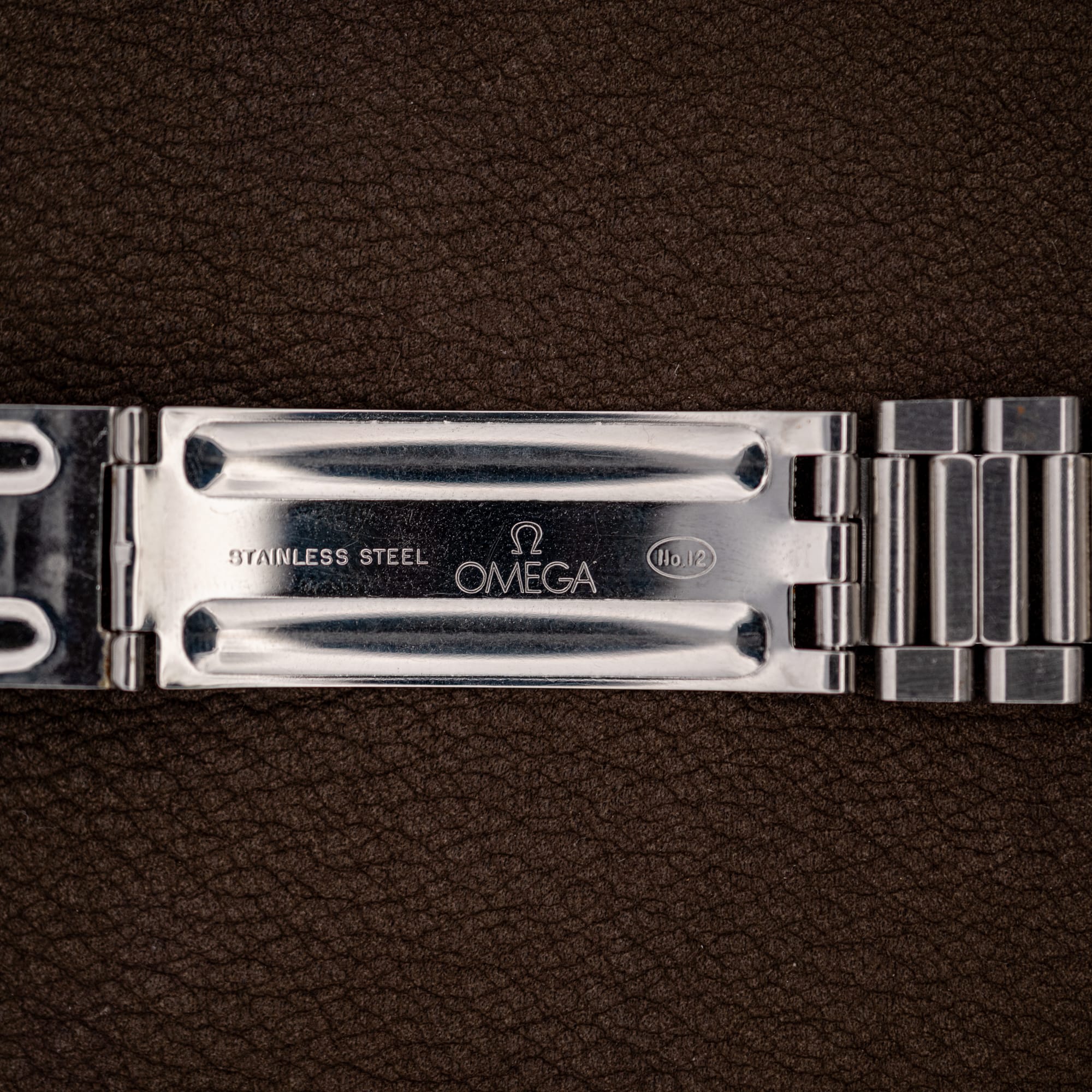
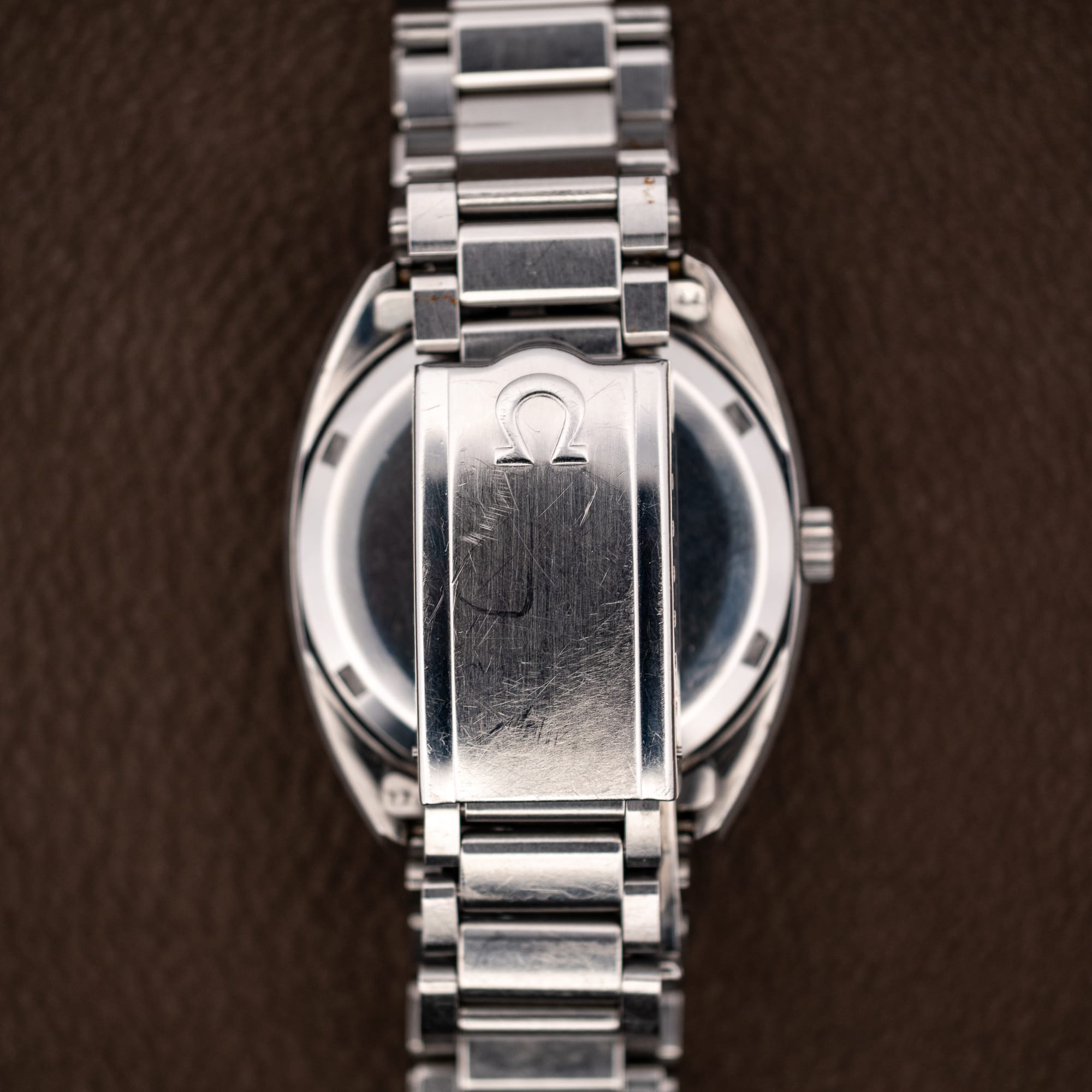
Serviced in-house at OTTUHR and backed by our 2-year mechanical warranty, on its Omega signed stainless steel bracelet and folding clasp. Both carry their history openly: fine scratching through the links, a little brassing at the pivots, and a clasp cover criss-crossed from decades of being opened. We would leave every mark of it alone. For a stretch of the last century a Swiss watch could not simply claim accuracy, it had to submit and be graded. This one came back certified, and its dial has said so ever since.