Omega missed the automatic chronograph. In 1969 three teams got there and every one of them beat Omega to it: Zenith showed the El Primero in Geneva that January, the Chronomatic consortium of Heuer, Breitling, Buren and Dubois Depraz went public in March, and Seiko’s 6139 was on Japanese wrists by May. Omega, whose hand-wound Speedmaster would be on the moon by July, was in none of those rooms. The Omega Seamaster 176.007 is what came out the other side of that.
Omega’s answer arrived in 1971 as the calibre 1040, its first self-winding chronograph, built by sister firm Lemania under engineer Raoul-Henri Erard alongside Albert Piguet, Lemania’s veteran chronograph designer. Rather than stack elapsed minutes into a subdial, as was standard for the era, they gave the minute counter its own central hand, a fourth hand sweeping the full width of the dial. Collectors call it the jet hand. The stopwatch reads across the whole watch instead of into one corner of it. Self-winding chronographs carried a premium to match: in Omega’s 1973 US catalogue the automatic Speedmaster 125 listed at $425 against $225 for the hand-wound Moonwatch.
The nickname came later, and by accident. In April 2007 Antiquorum ran an Omega sale called Omegamania, and its catalogue described a reference 176.005 as the so-called Jedi. Collectors had been using that name for a different watch, the 145.024. The correction never caught up with the catalogue. Jedi spread across calibre 1040 references, this cushion-cased 176.007 included, and the blue-accented dials picked up Blue Jedi along the way. Chuck Maddox, who coined the Darth Vader and Anakin Skywalker names for the 145.023, never applied it here; his own reference table lists this one plainly as a cushion case automatic. We keep the name because the market kept it, not because Omega ever said it.
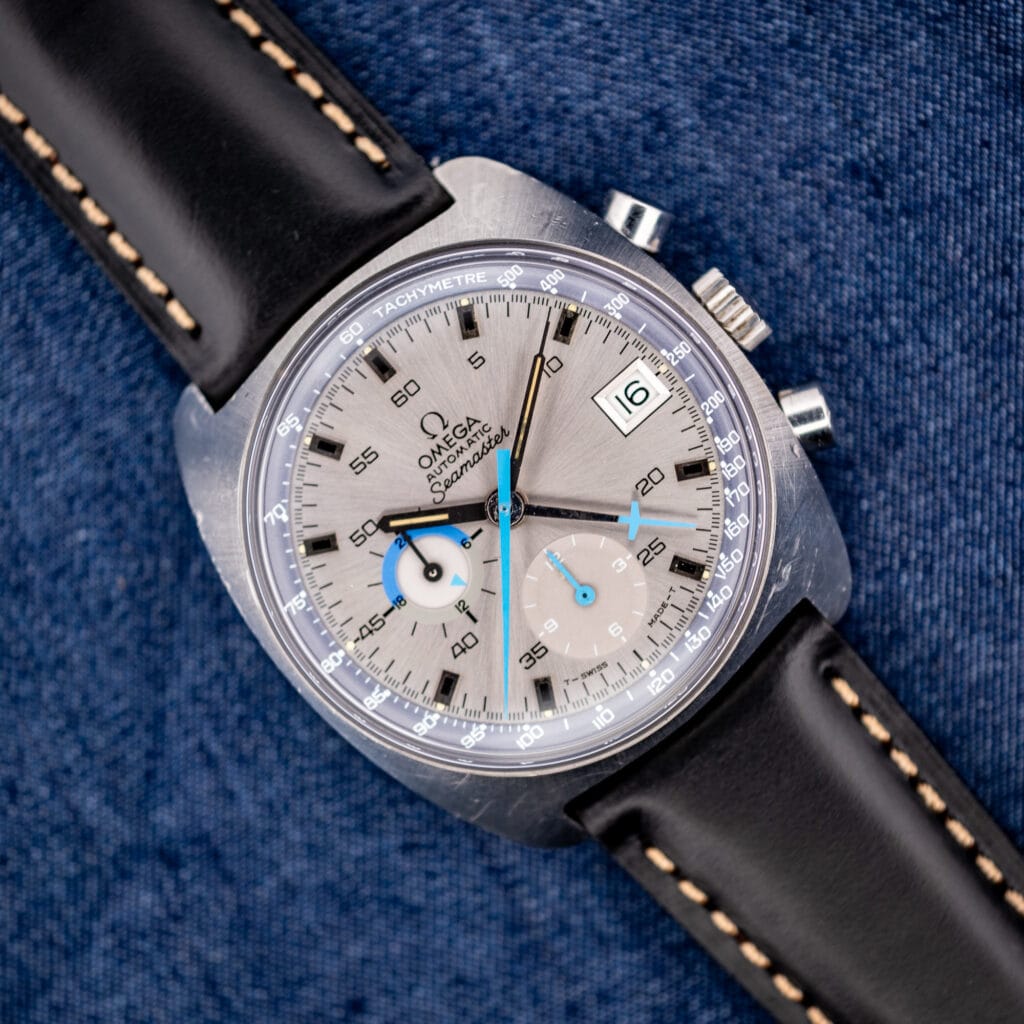
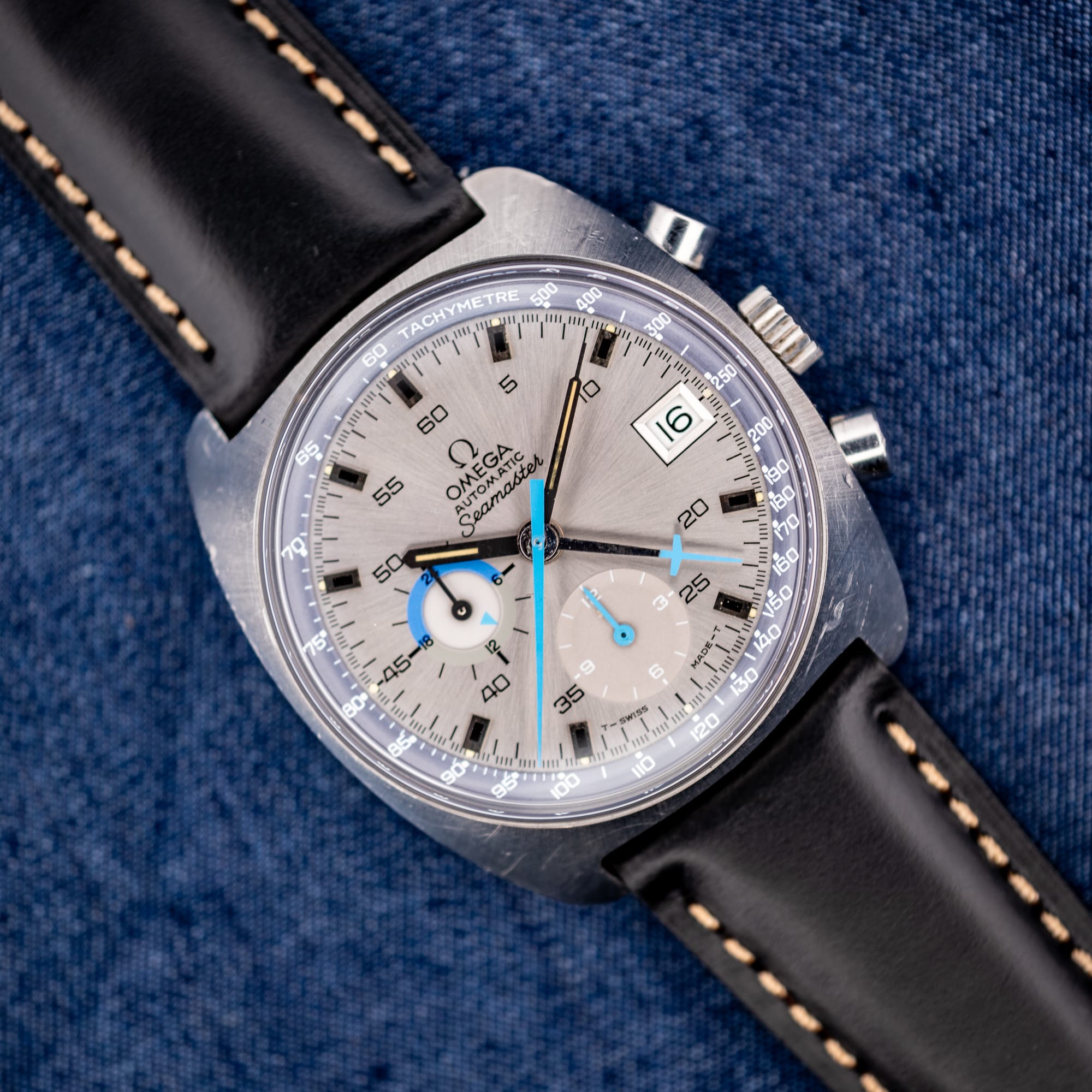
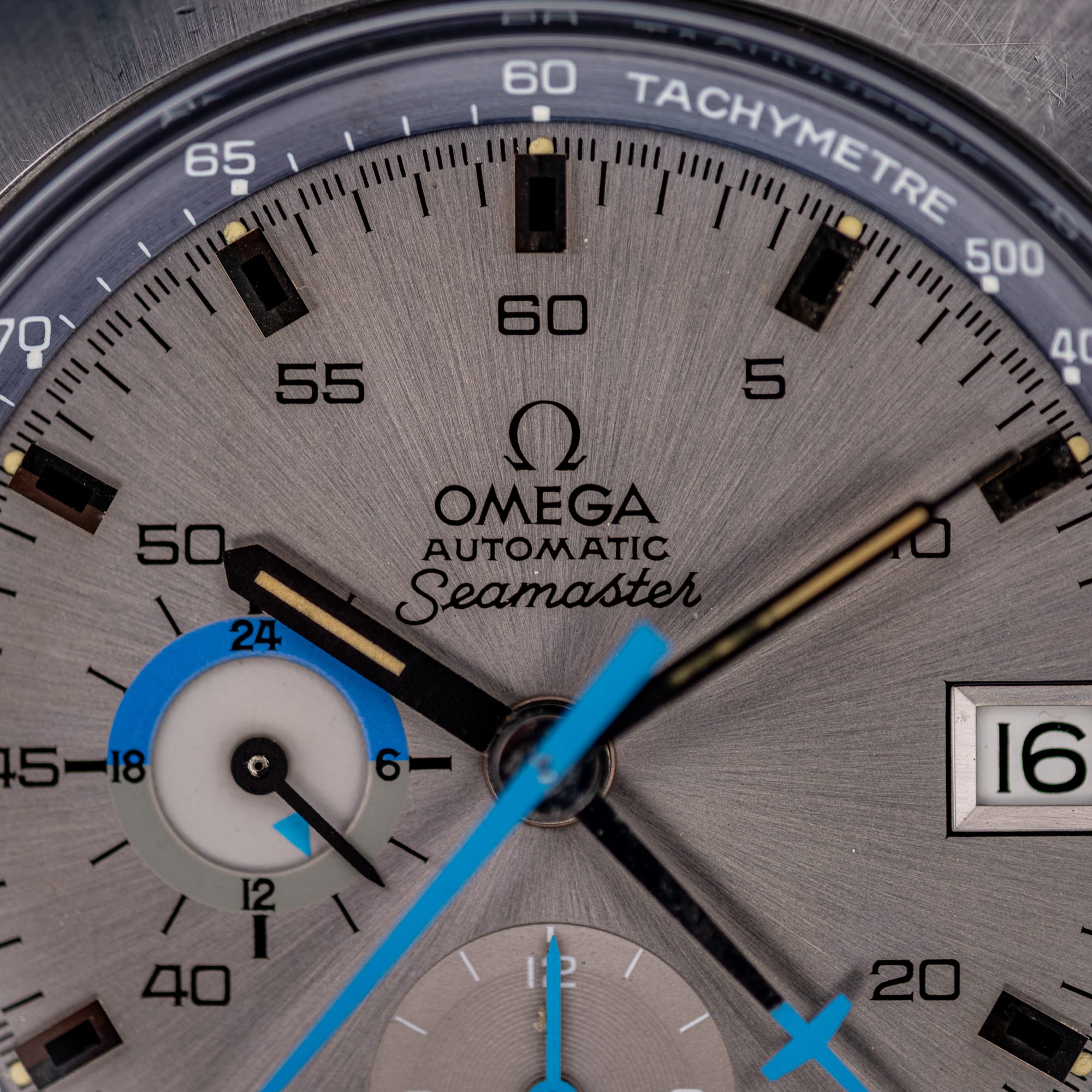
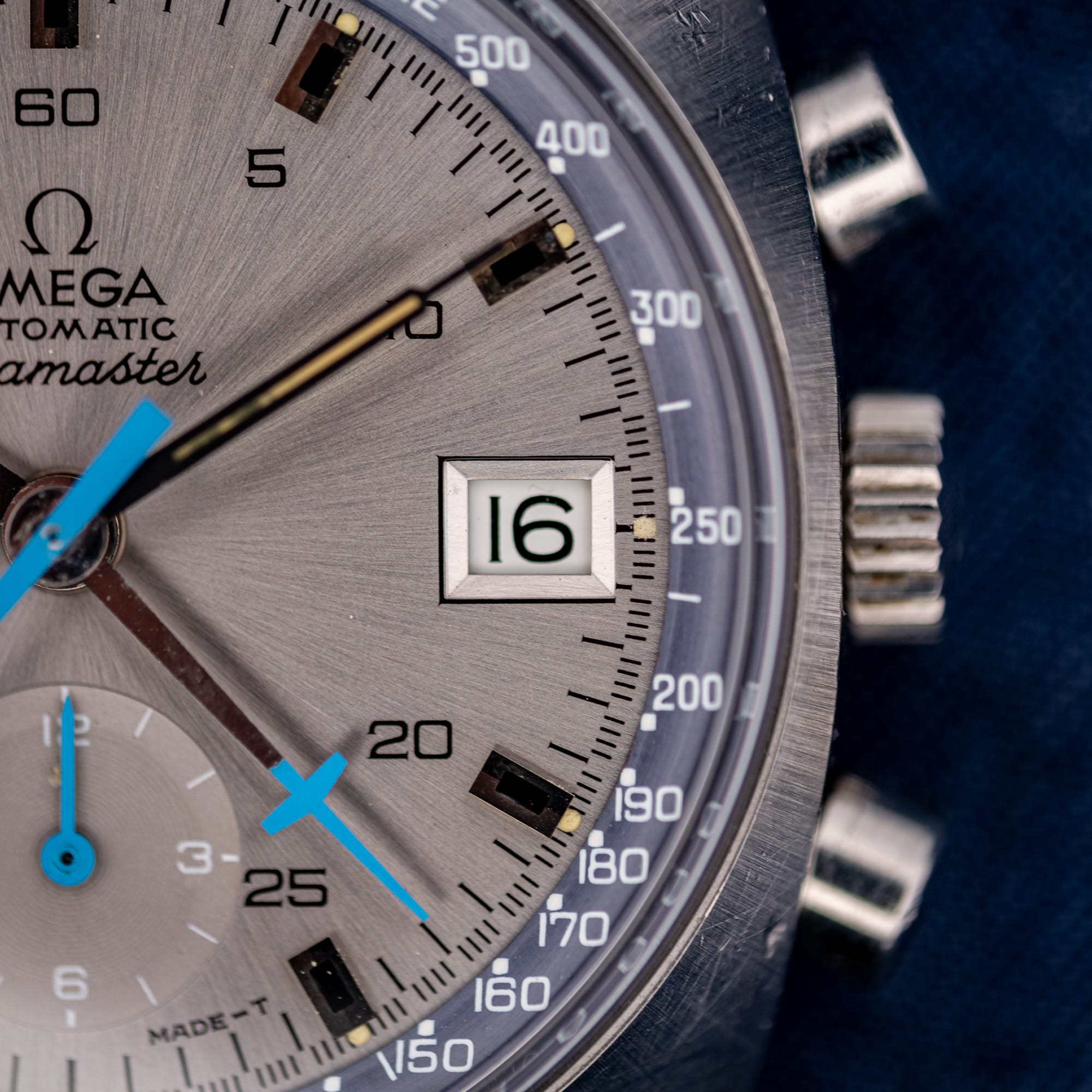
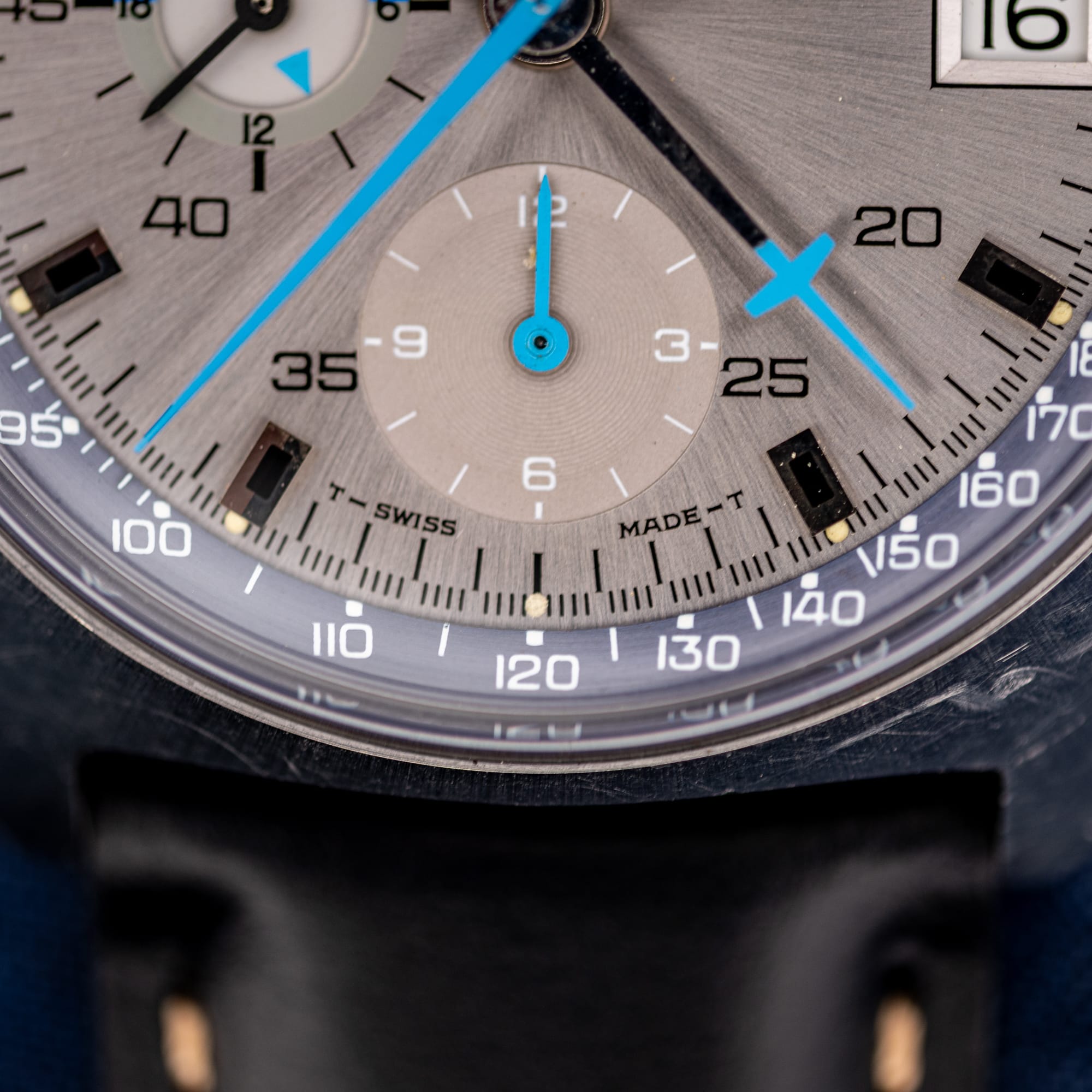
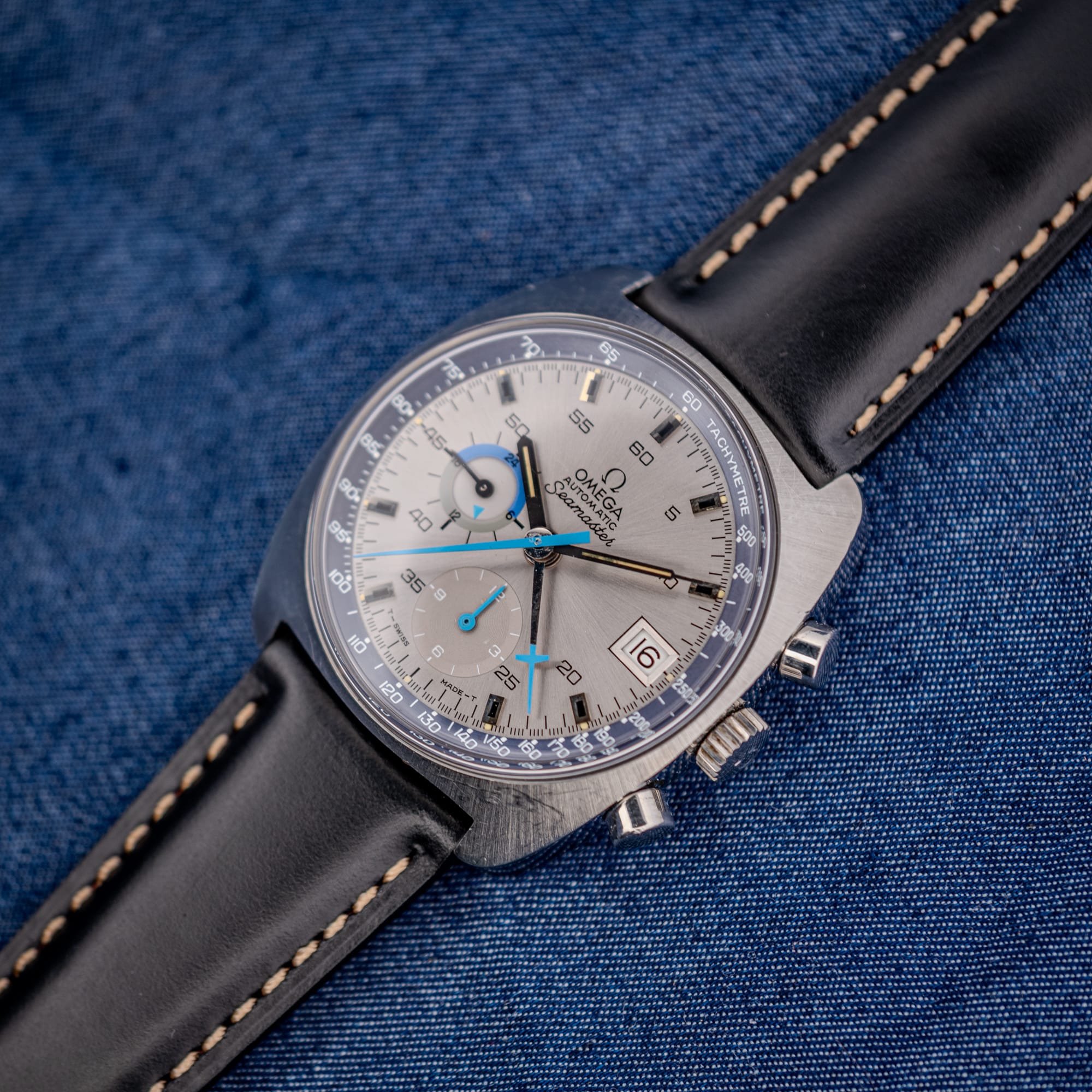
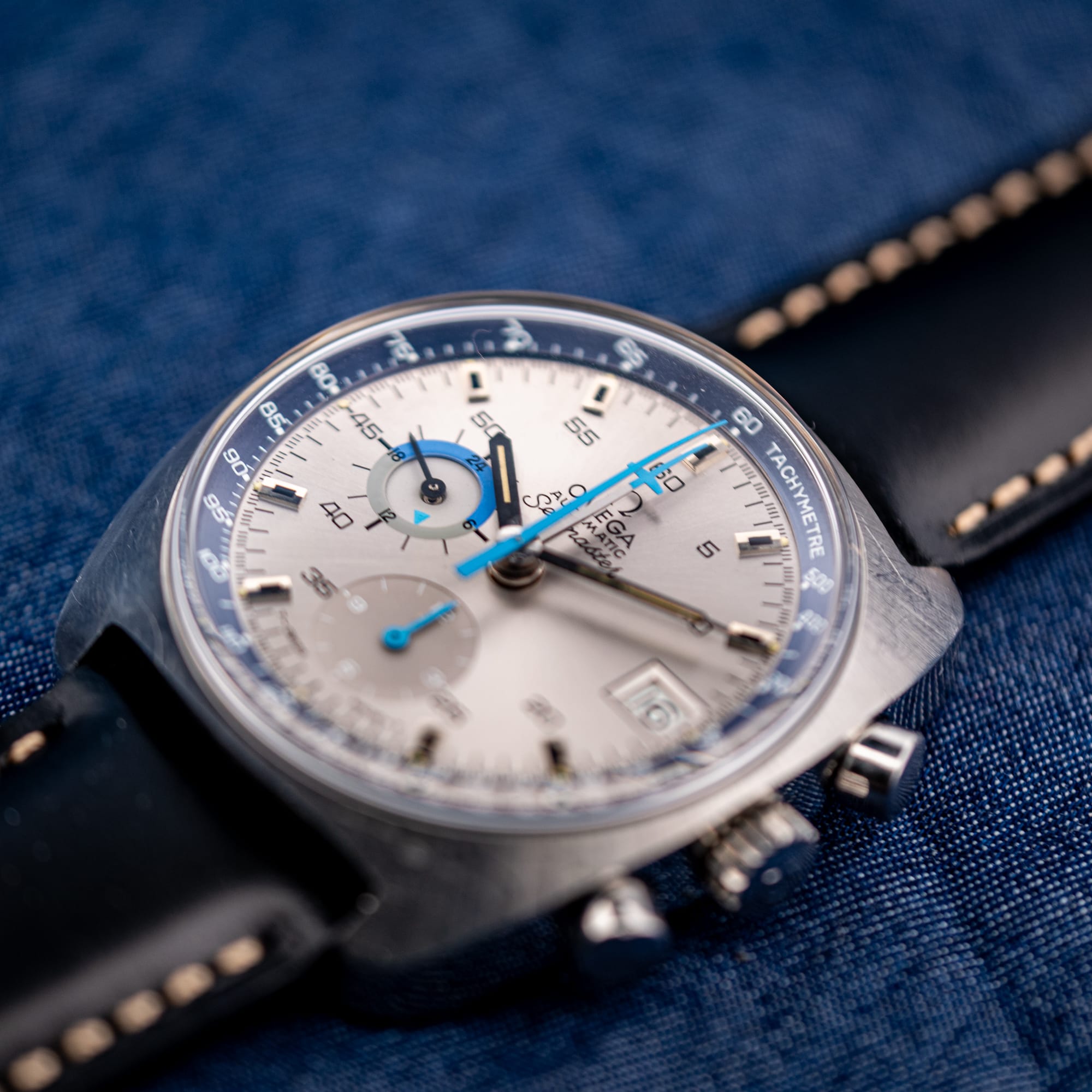
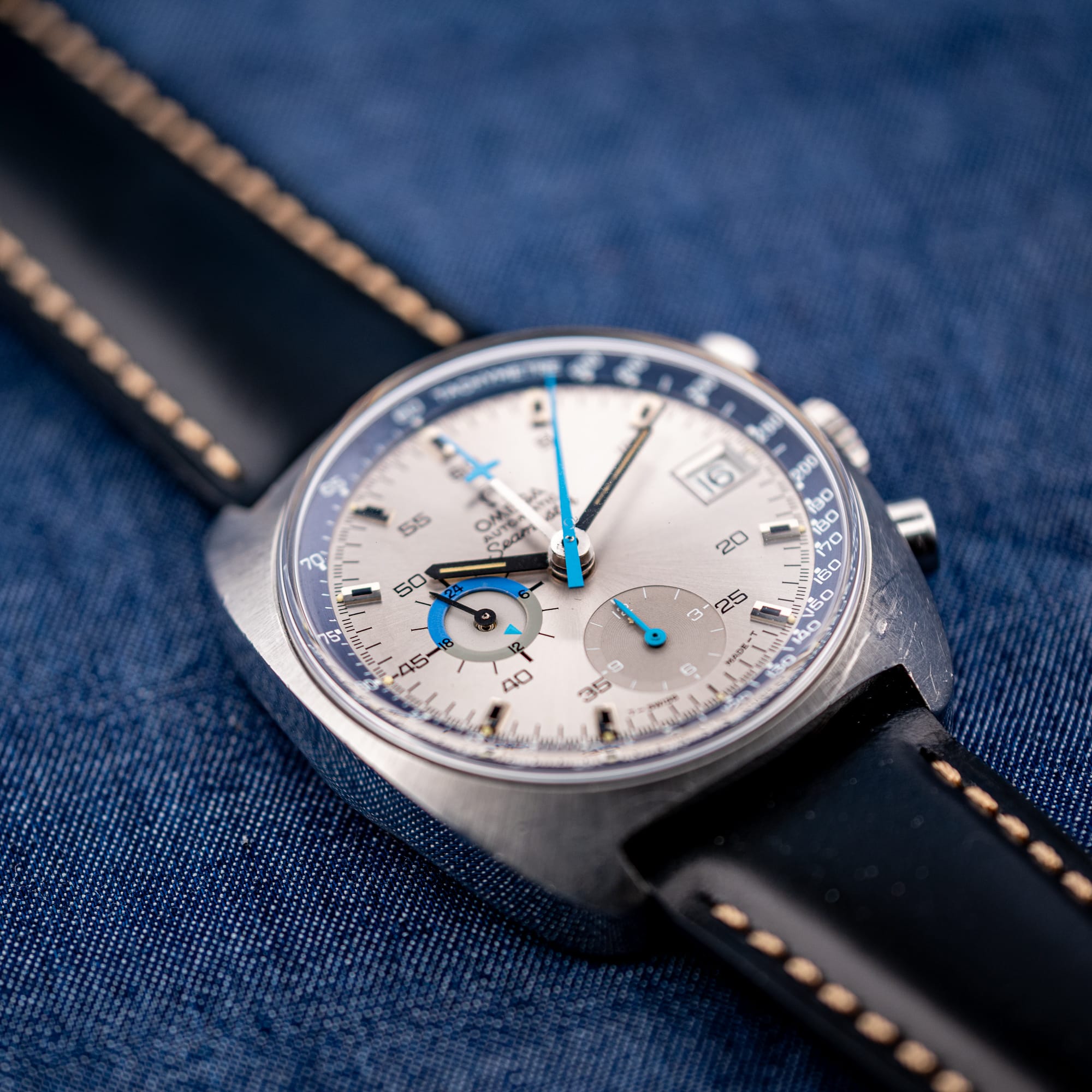
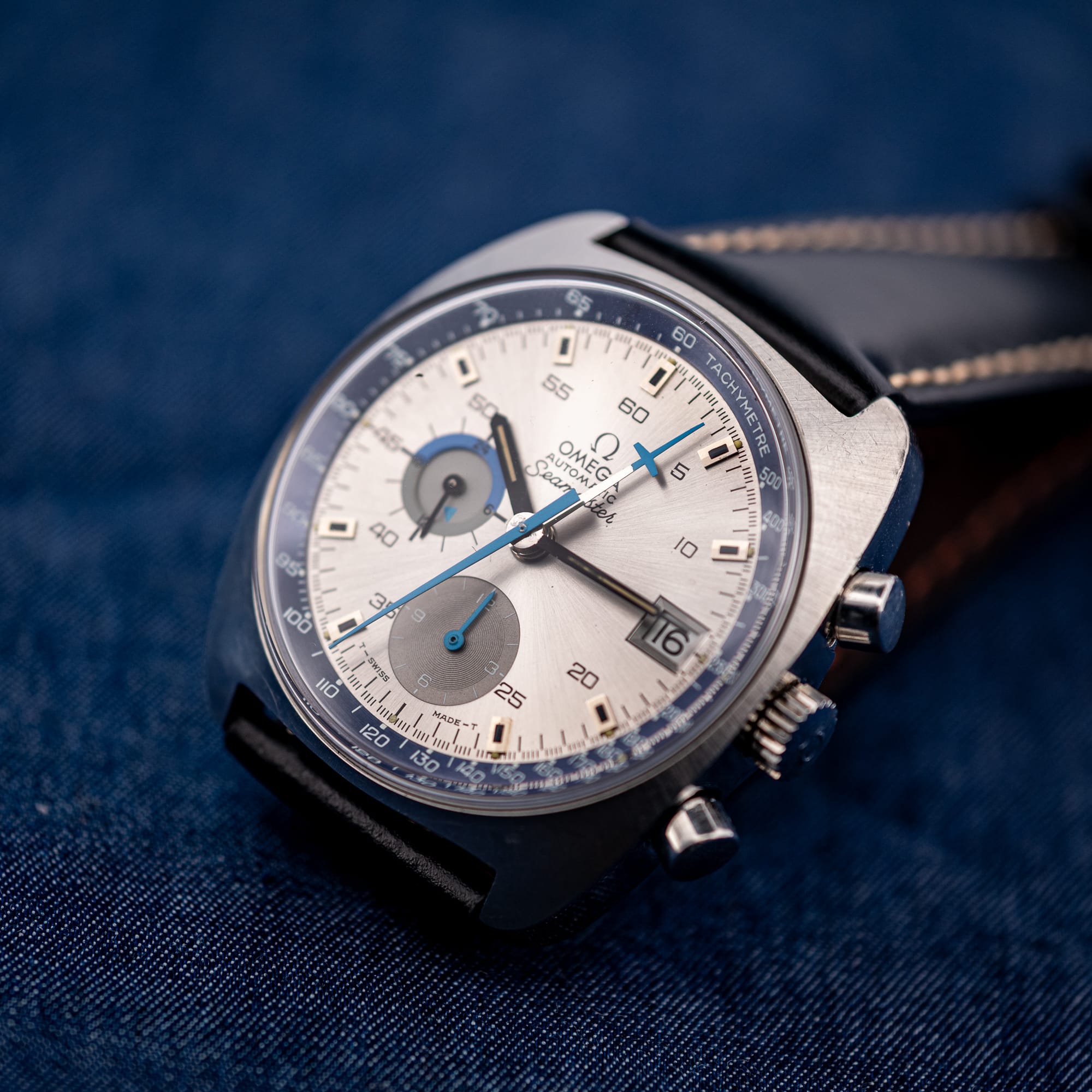
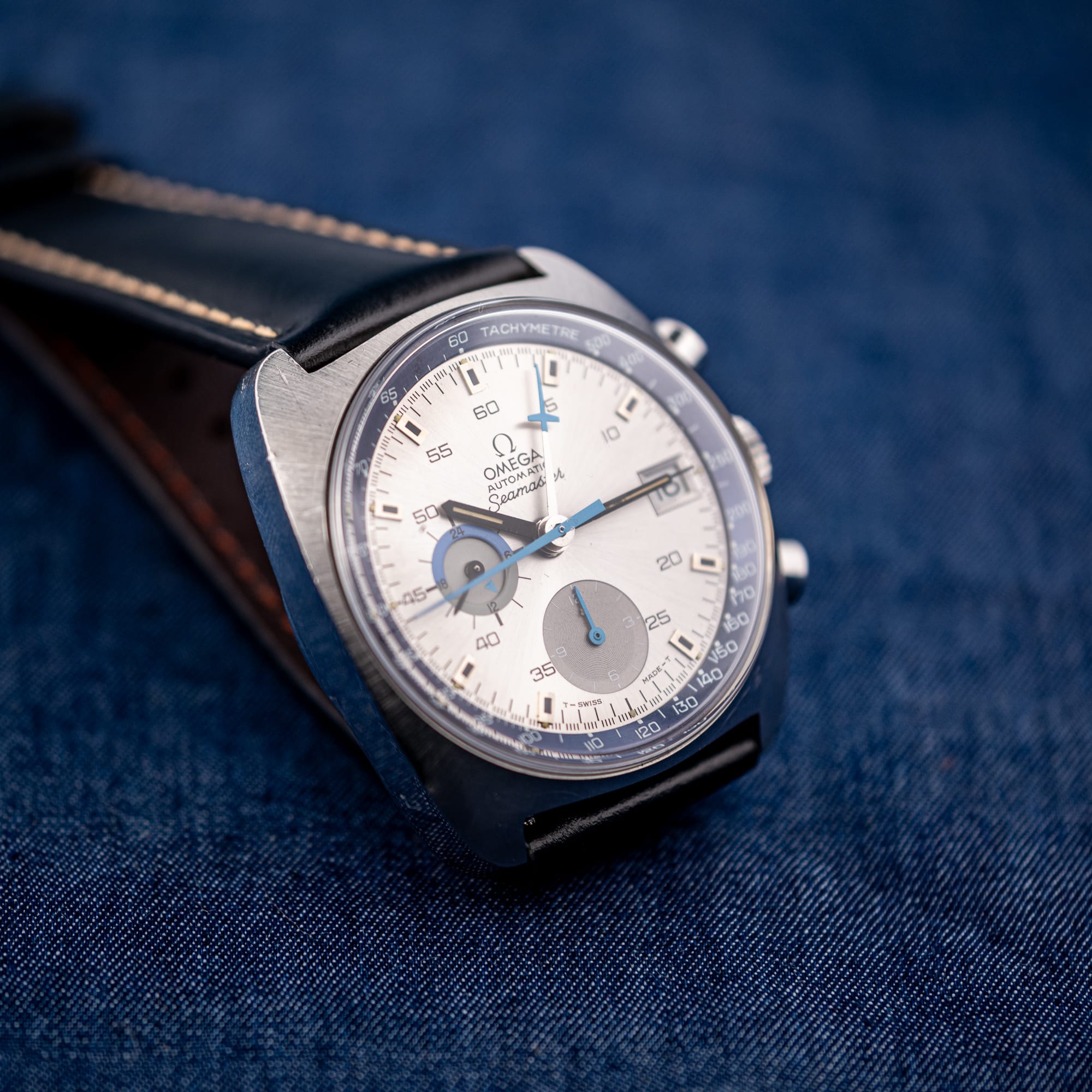
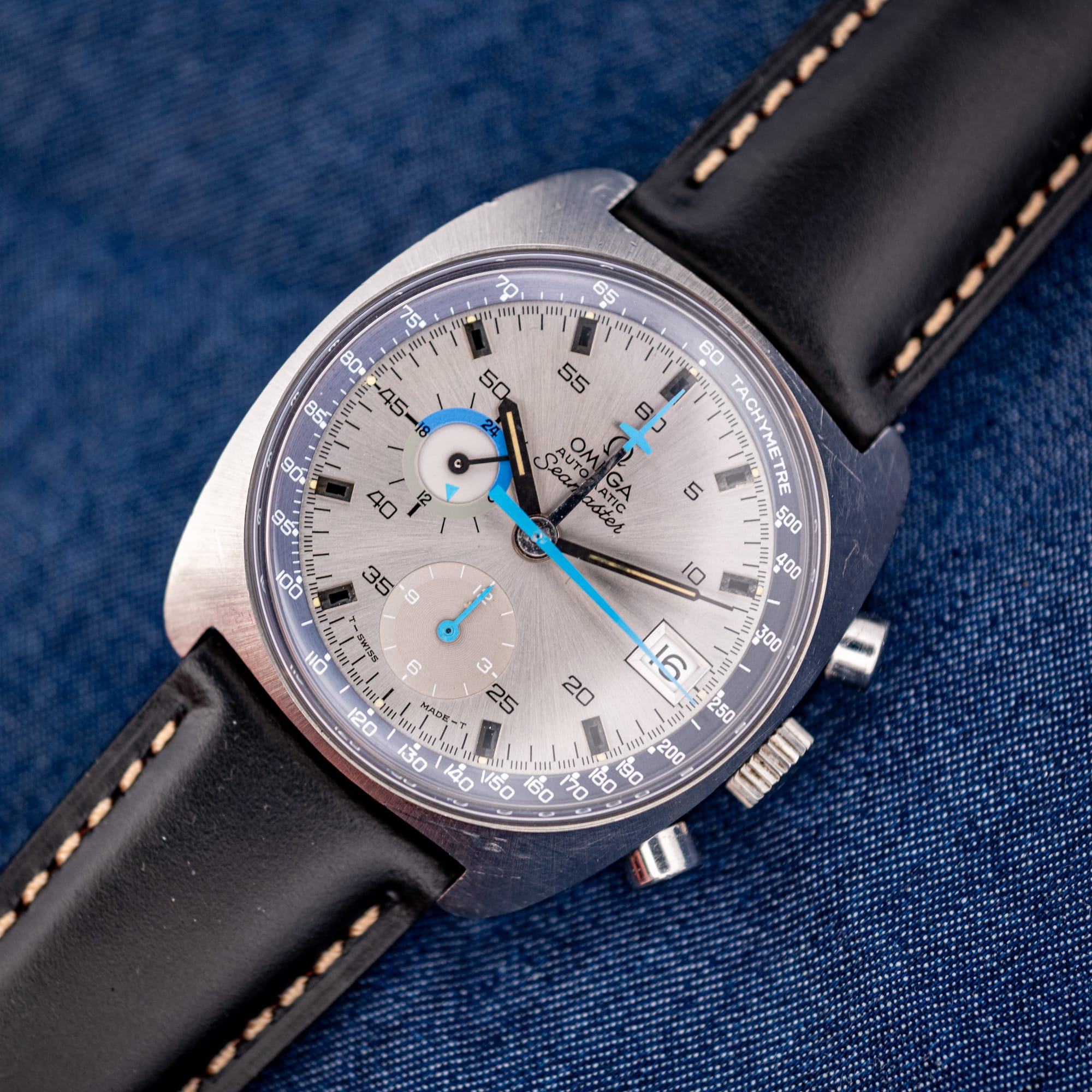
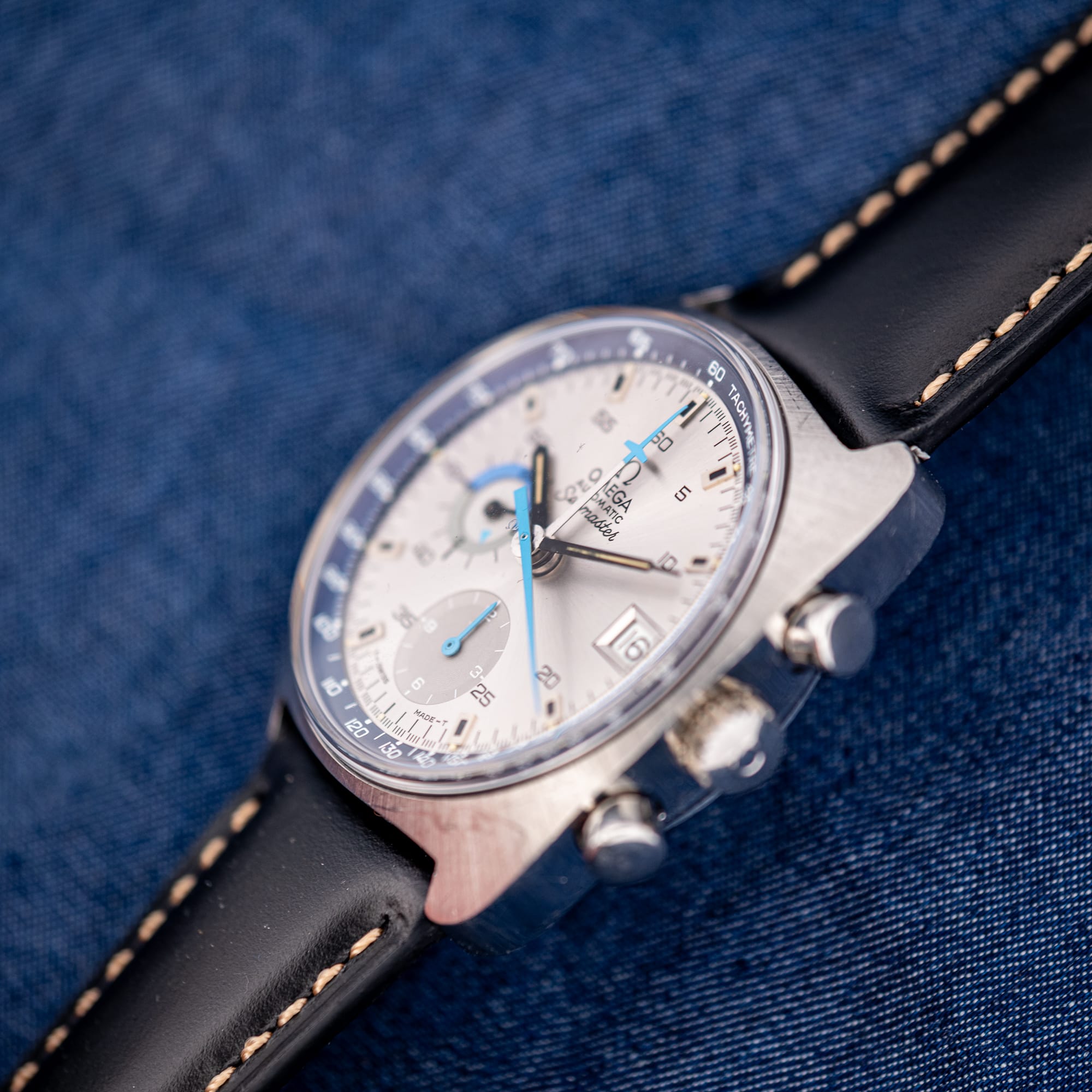
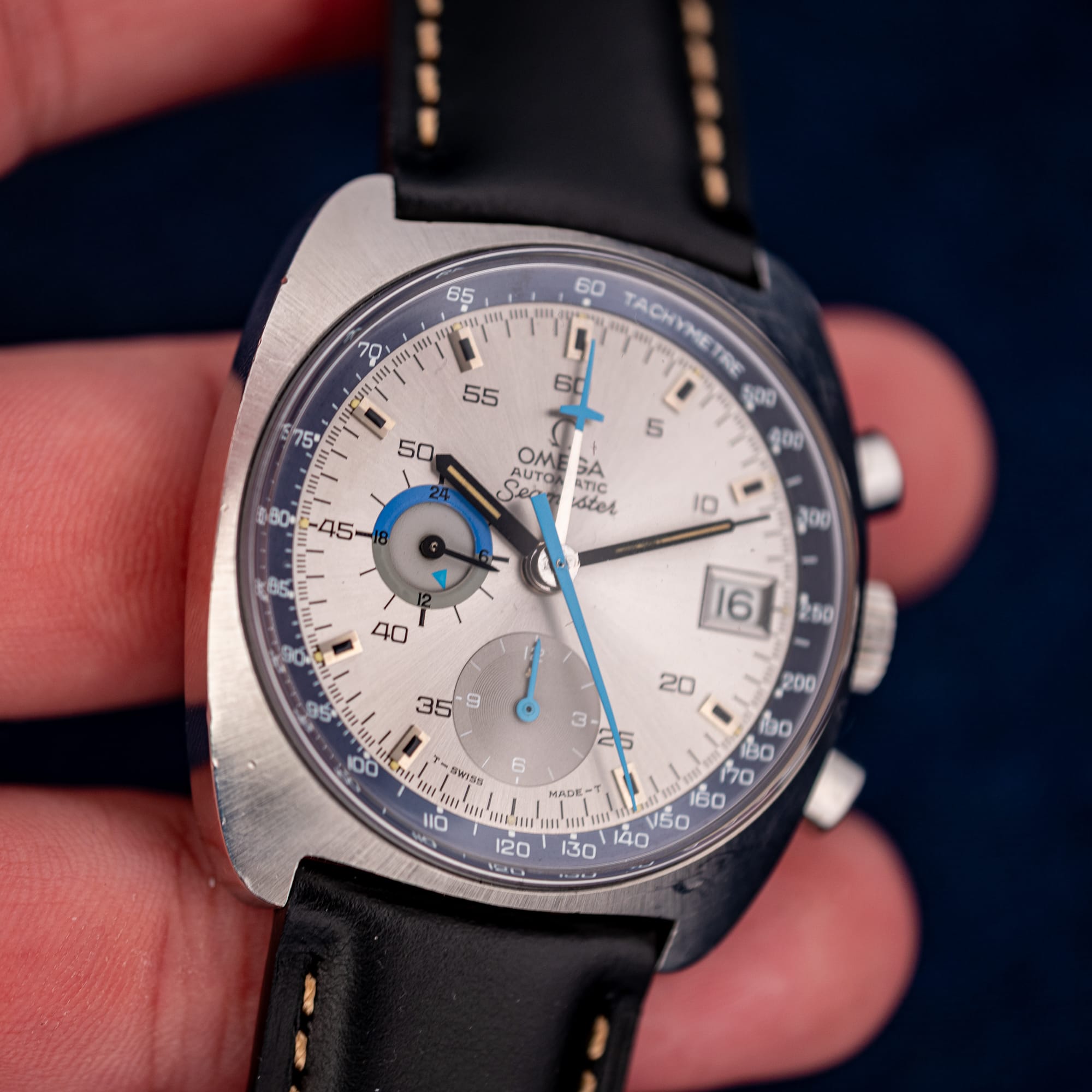
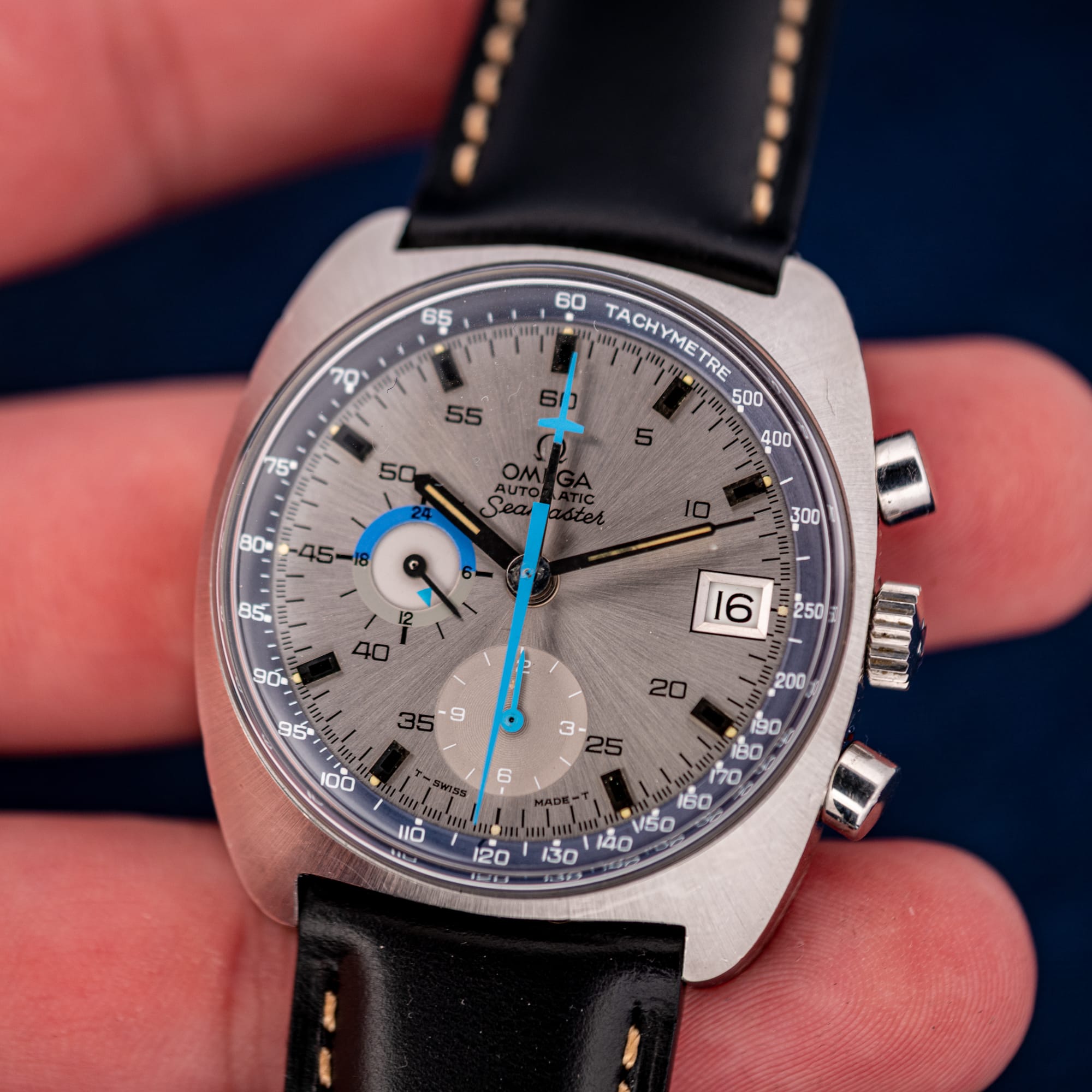
On this Omega Seamaster 176.007 the story is legible in about two seconds. The jet hand is there in pale blue, cross-tipped, laid over a silver sunburst dial that shifts from near-white to grey as it turns. The twelve-hour totaliser sits at six with a matching blue hand, and the register at nine carries the running seconds together with a day and night indication, its blue arc standing for the hours after dark. Blue on silver, and the elapsed minutes left off the subdials entirely.
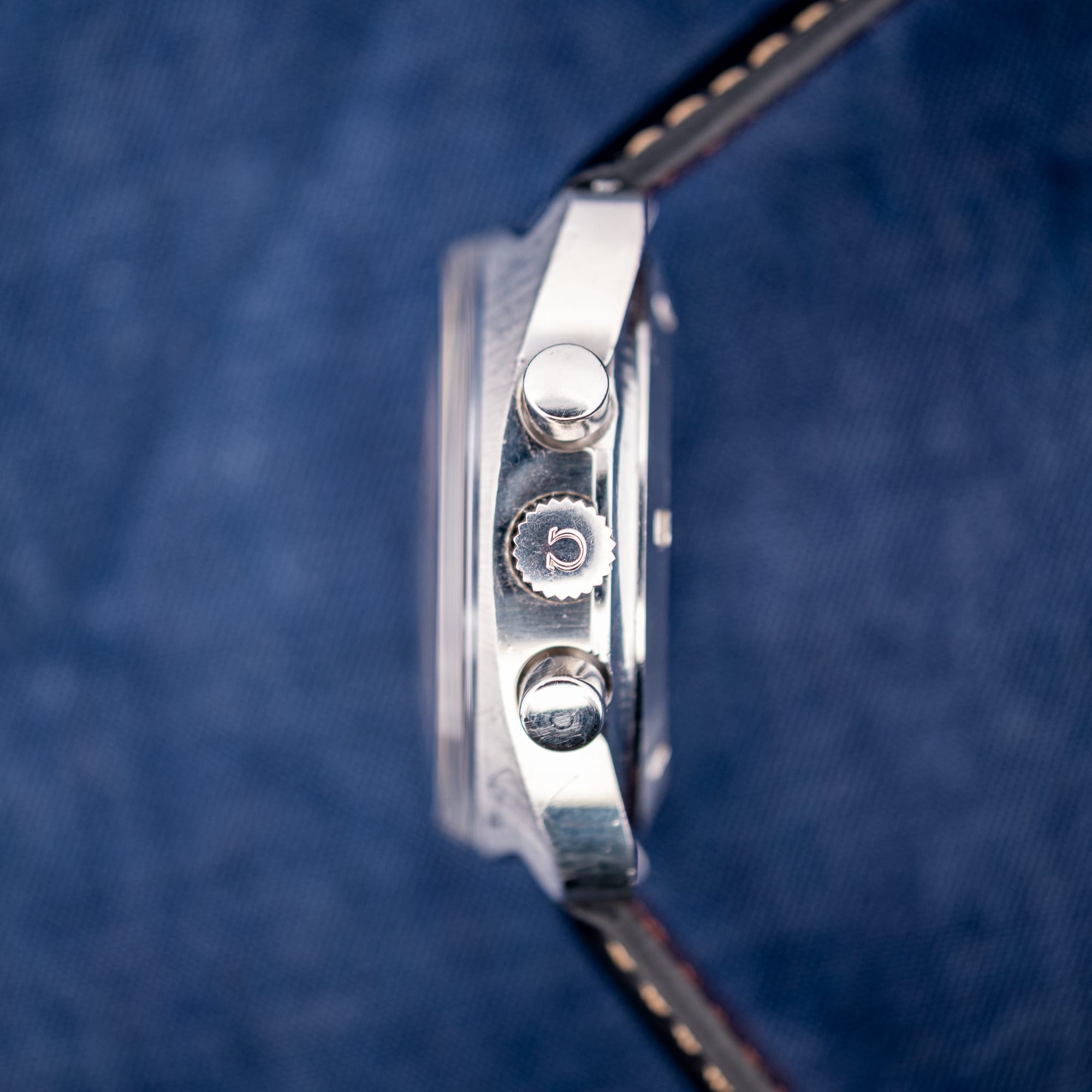
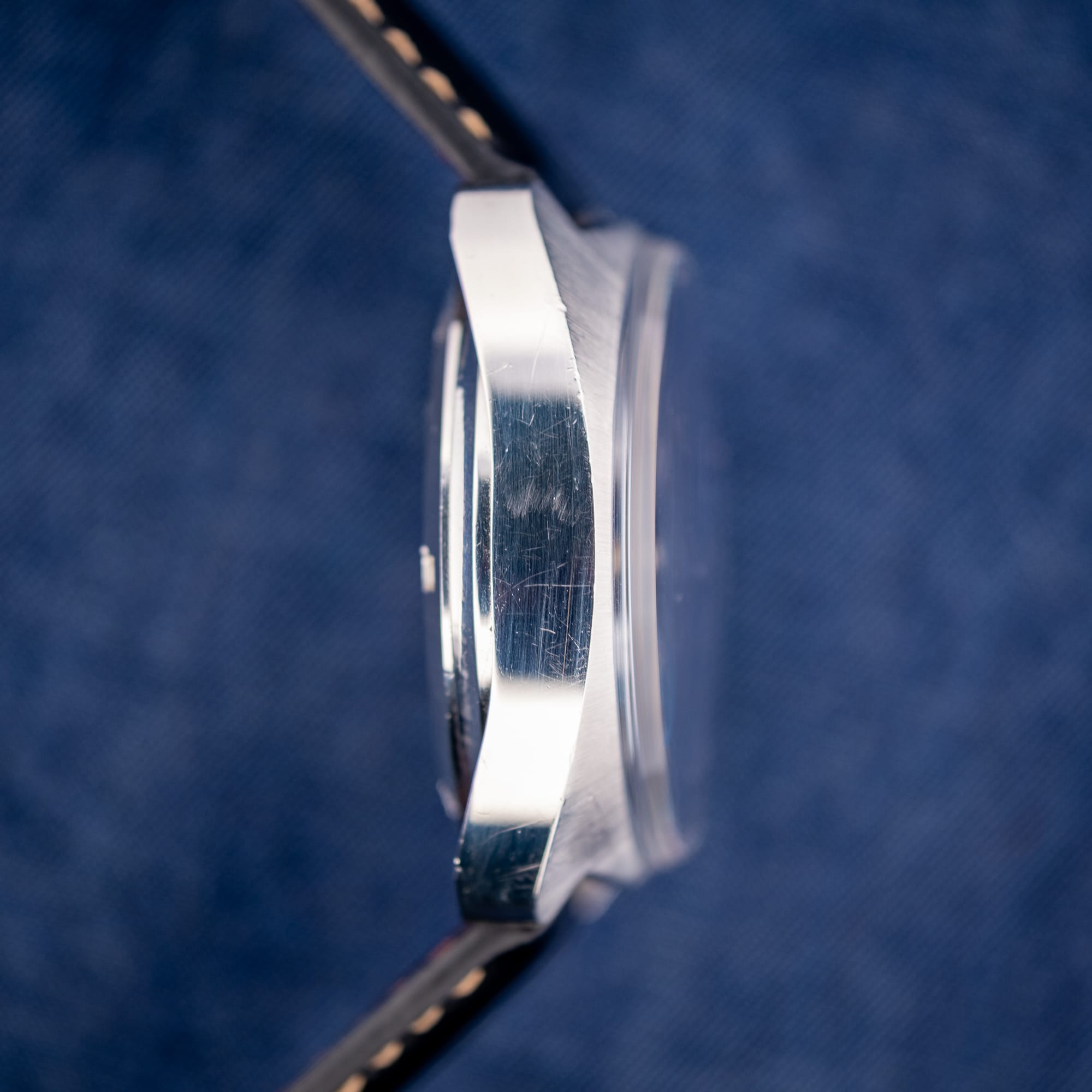
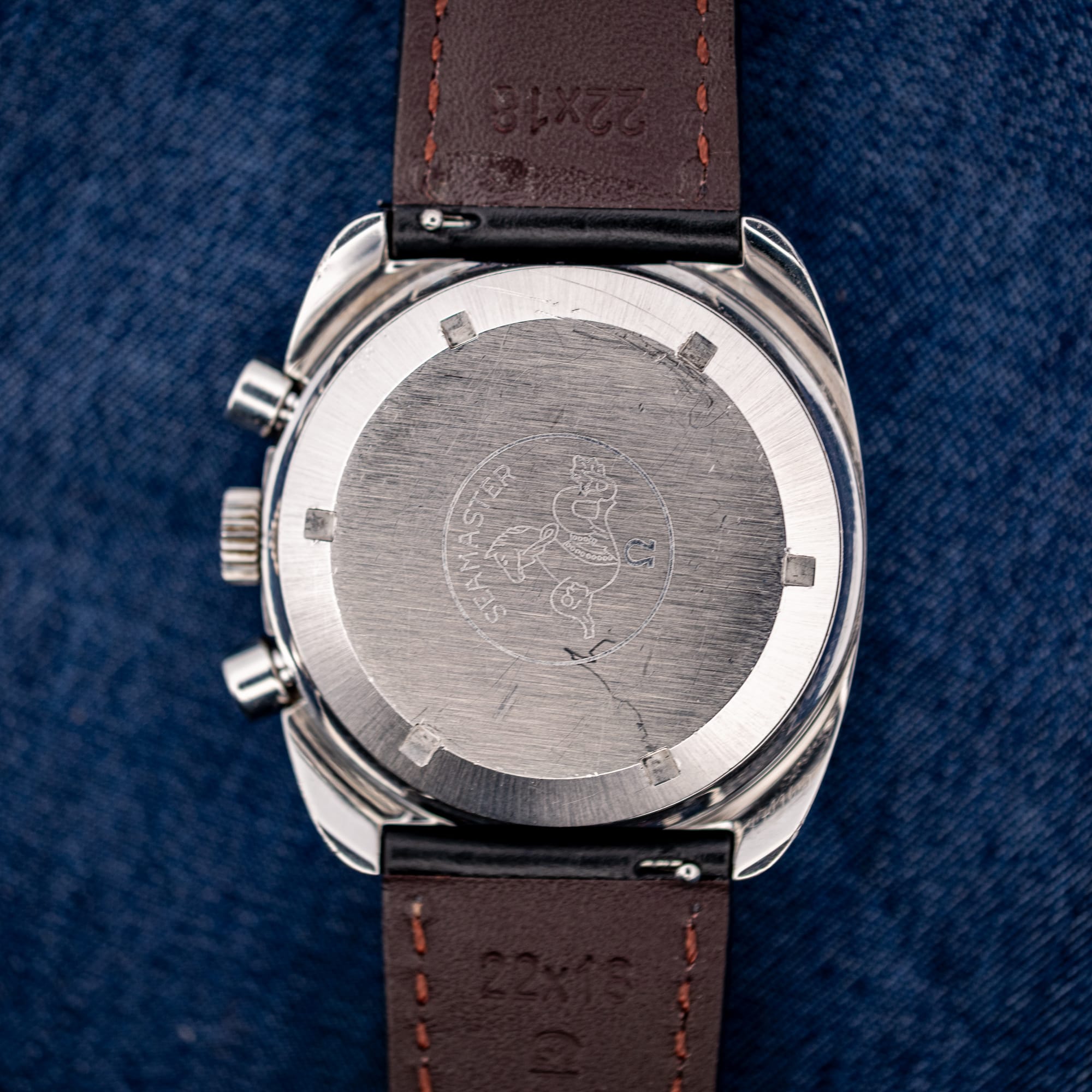
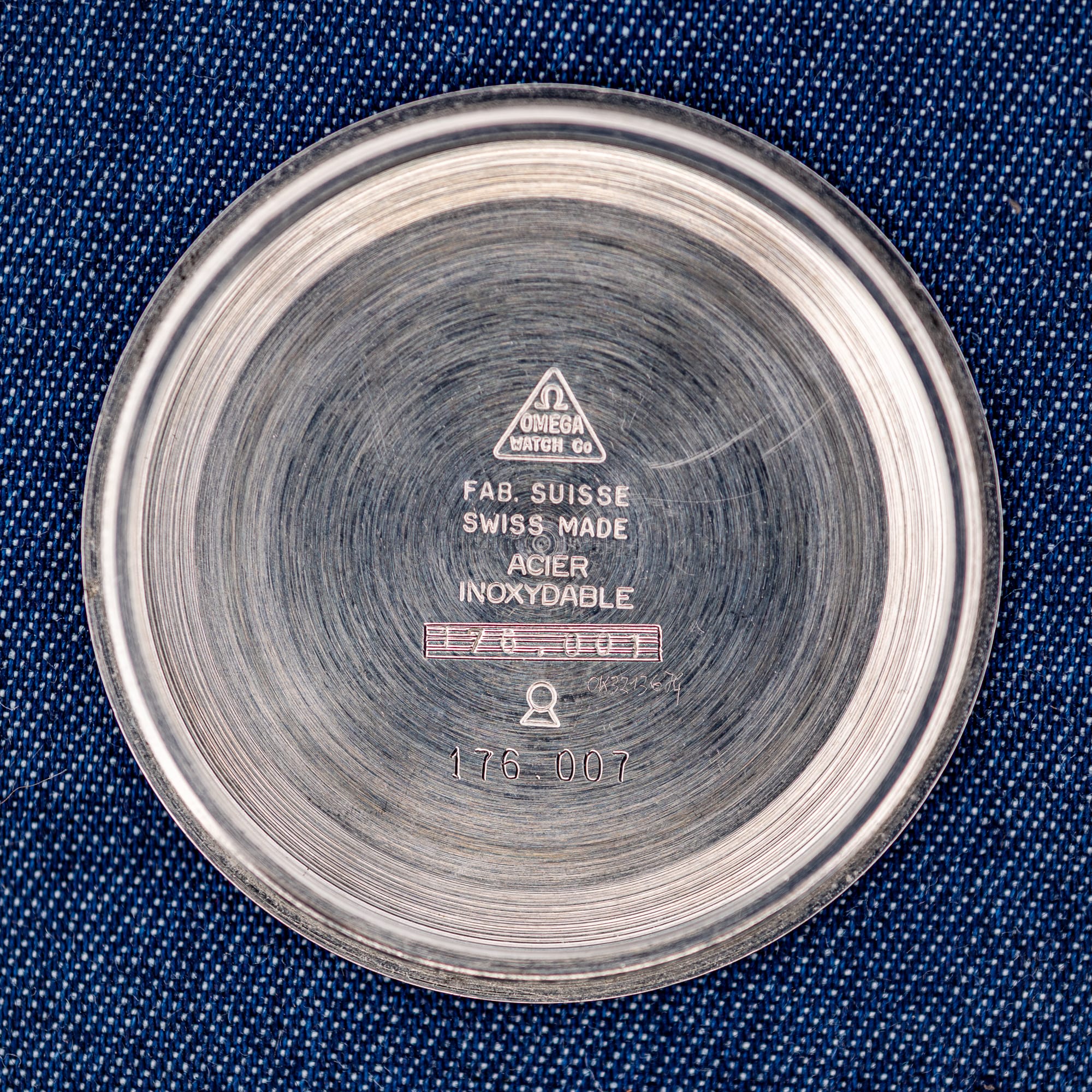
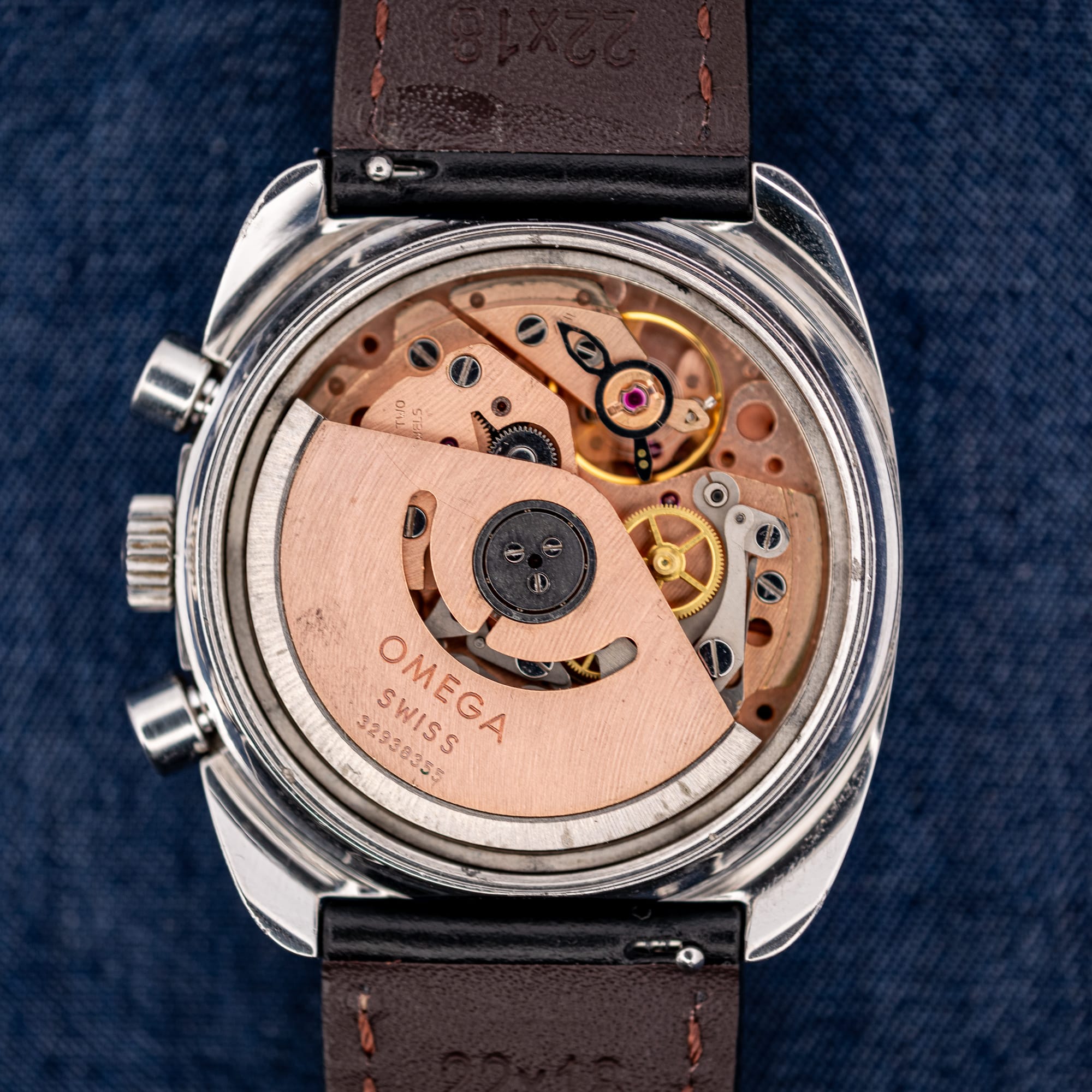
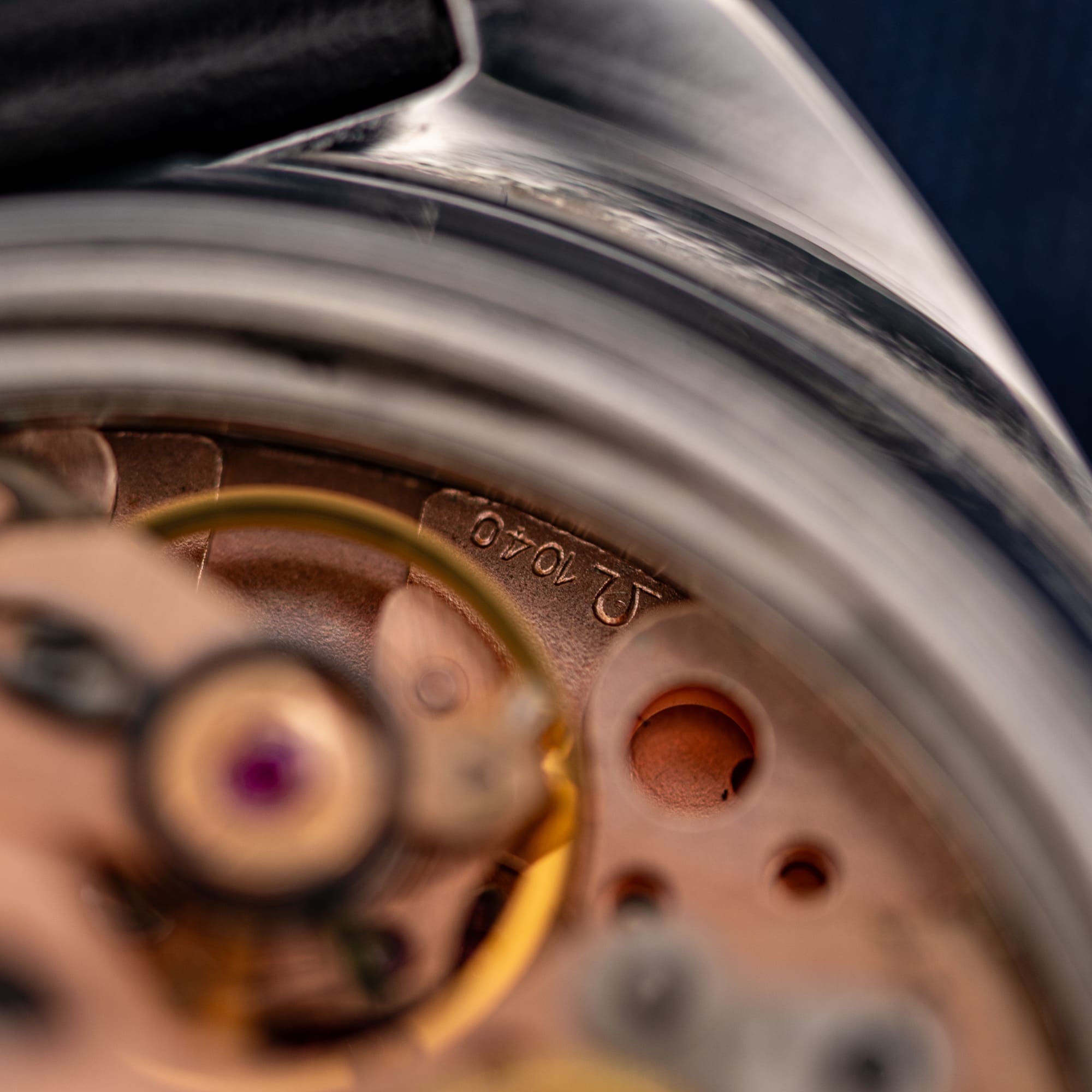
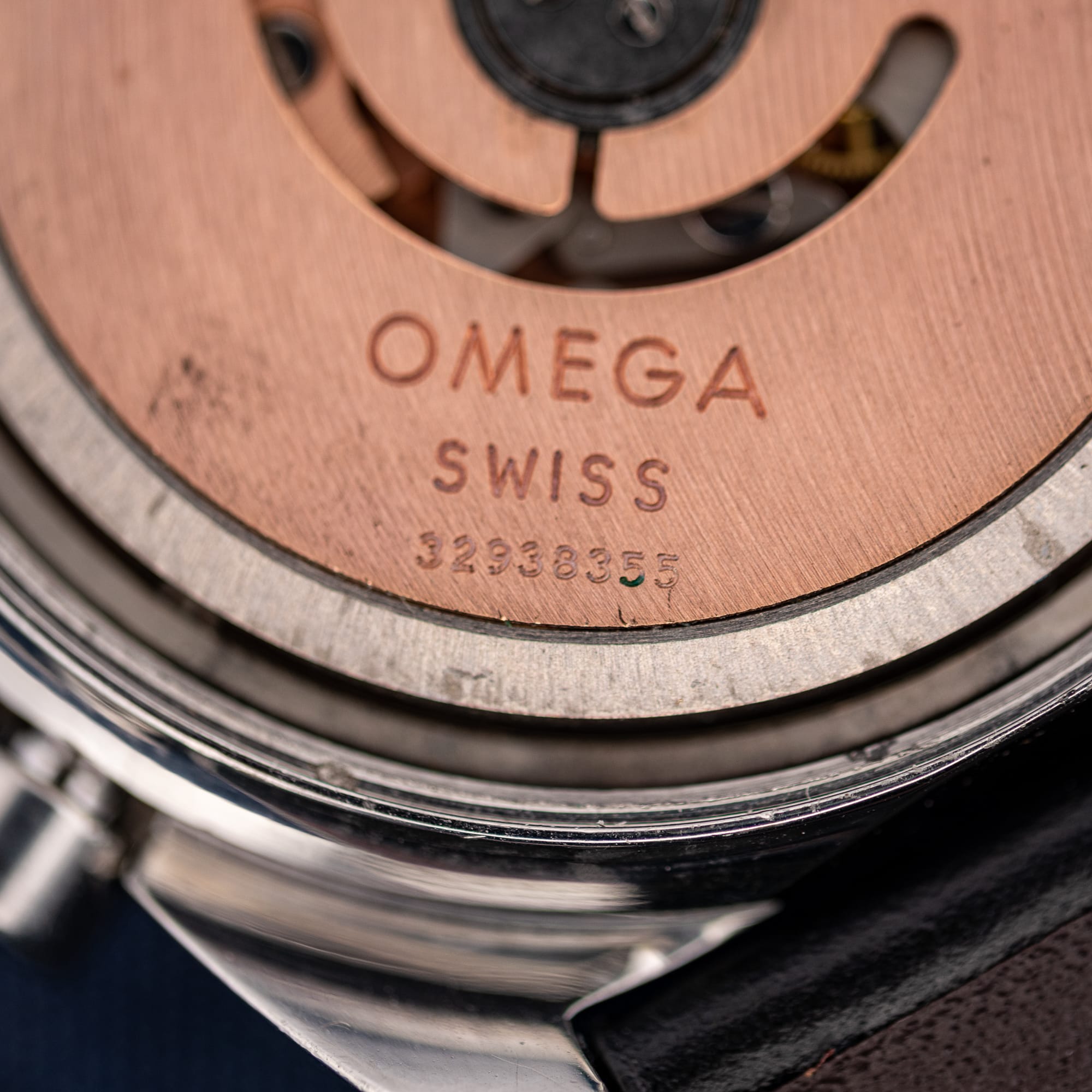
The cushion case runs 38.3mm across and 41.8mm lug to lug in stainless steel, brushed on top and mirrored down the flanks, with a signed Omega crown between two pump pushers and a domed acrylic crystal over a smoky blue-grey tachymetre flange. Applied black baton markers hold tritium gone soft cream. The flanks carry the fine scratches of a watch that got worn rather than stored. Inside the caseback, the stamping reads 176.007. The movement beneath is copper-plated and signed Omega Swiss, serial 32938355, its bridge marked 1040.
Serviced in-house at OTTUHR and backed by our 2-year mechanical warranty, on a black leather strap with our own buckle. Omega lost the race by two years, then spent them building a chronograph that gives up its answer at a glance.