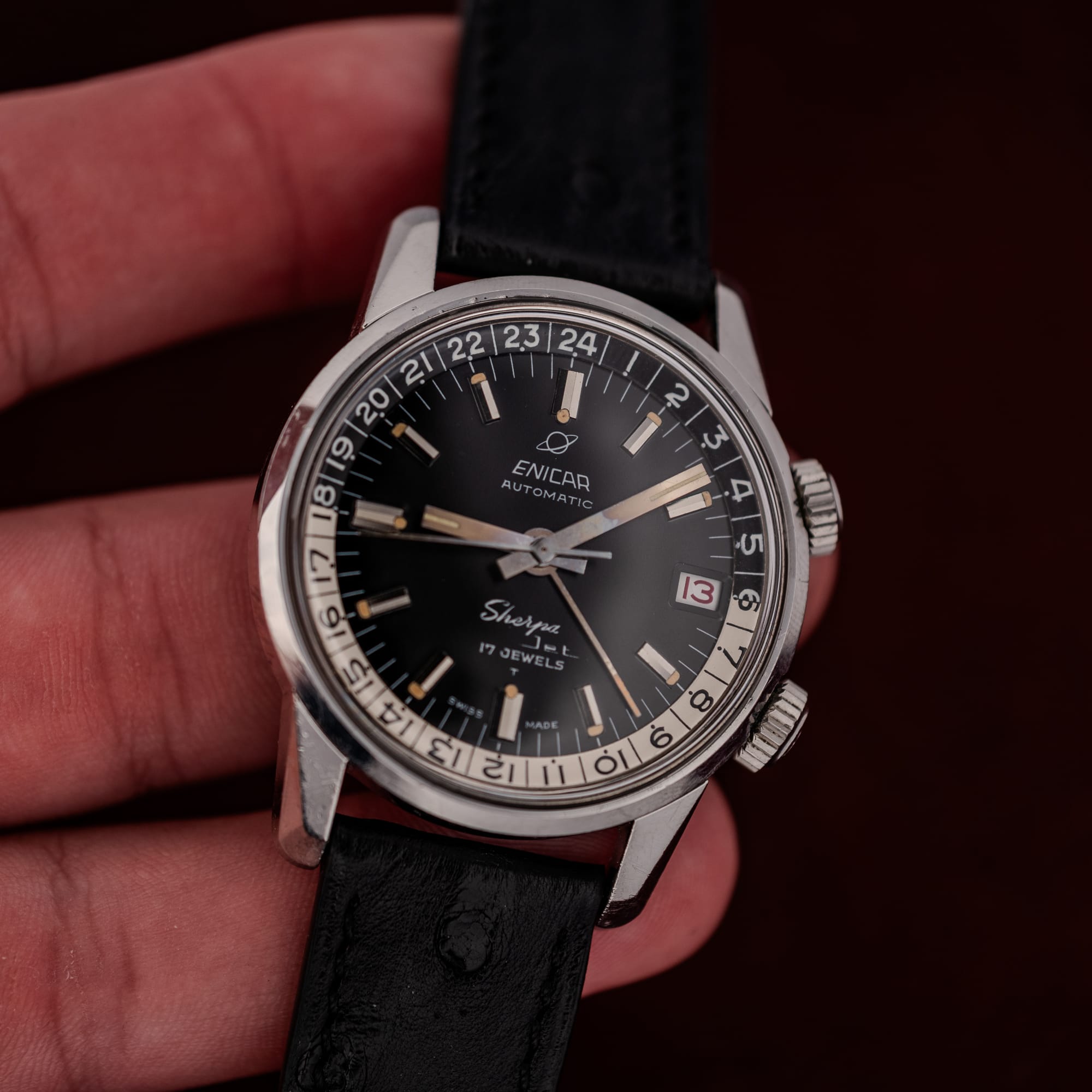
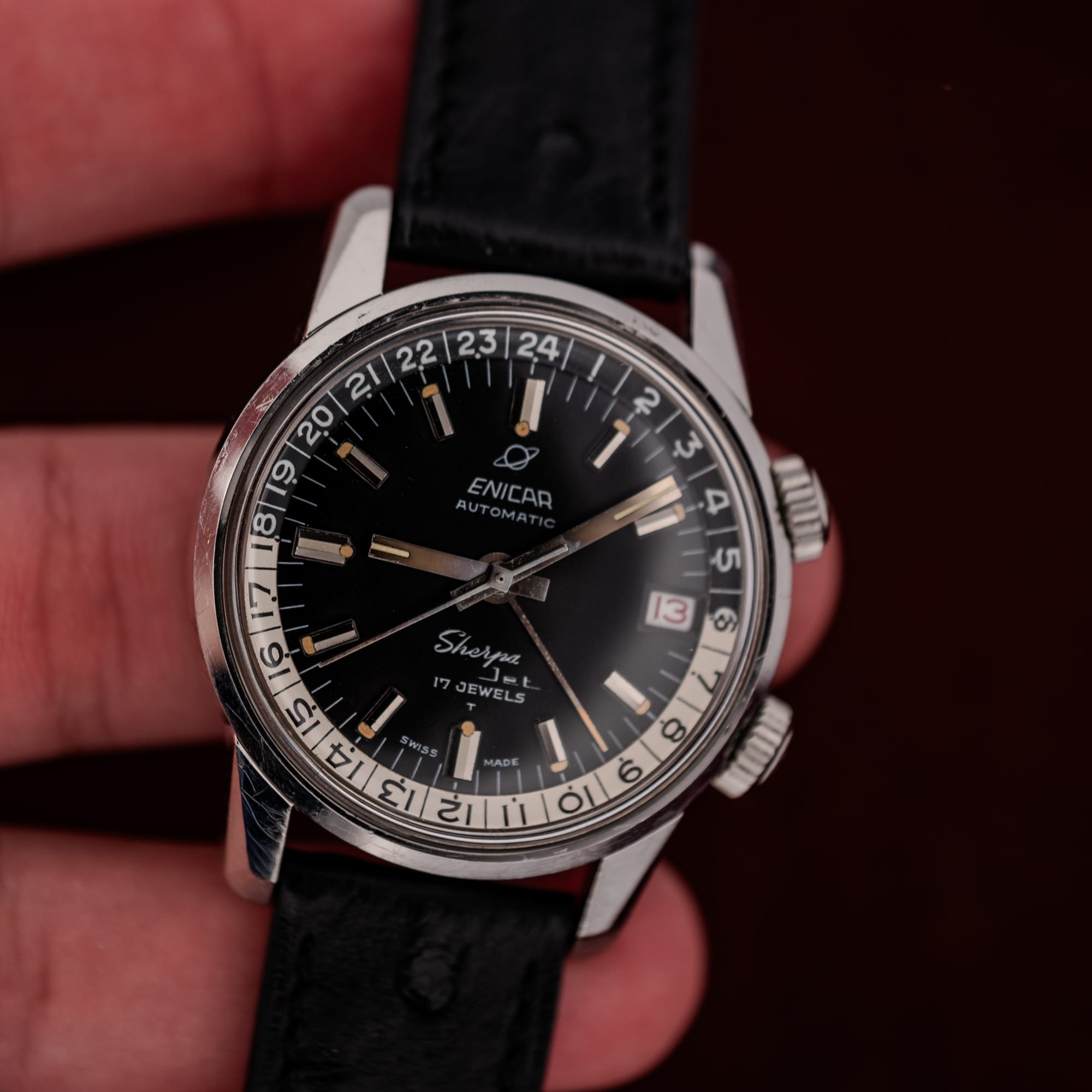
Lhotse rises 27,890 feet, and in May 1956 it was the highest mountain on earth still unclimbed. The Enicar Sherpa Jet took its name from what happened there, seven years before the watch itself existed. A Swiss expedition under Albert Eggler put Fritz Luchsinger and Ernst Reiss on that summit, then sent Ernst Schmied and Jurg Marmet up Everest five days later, only the second time anyone had stood there. The team ran on a telegraph schedule between camps, and by Enicar’s own published account of the climb, the precision of the Enicars on those wrists is what kept that schedule honest. Advertising that followed claimed the watches held accuracy from minus 49 to plus 113 degrees Fahrenheit and called them “faithful and relentless as a Sherpa.” On November 6, 1956, Enicar registered Sherpa as a trademark, naming the line for the 22 guides who carried the expedition.
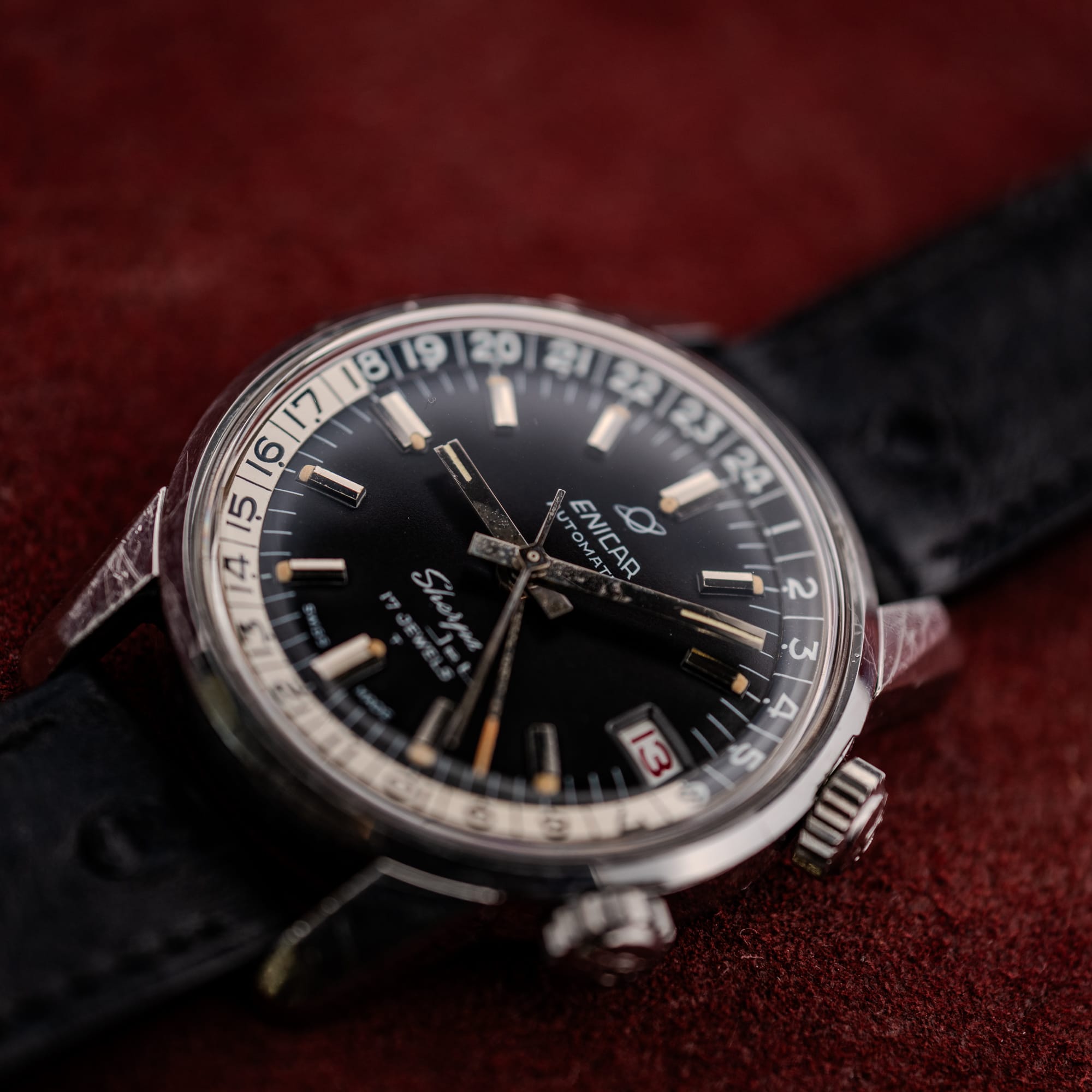
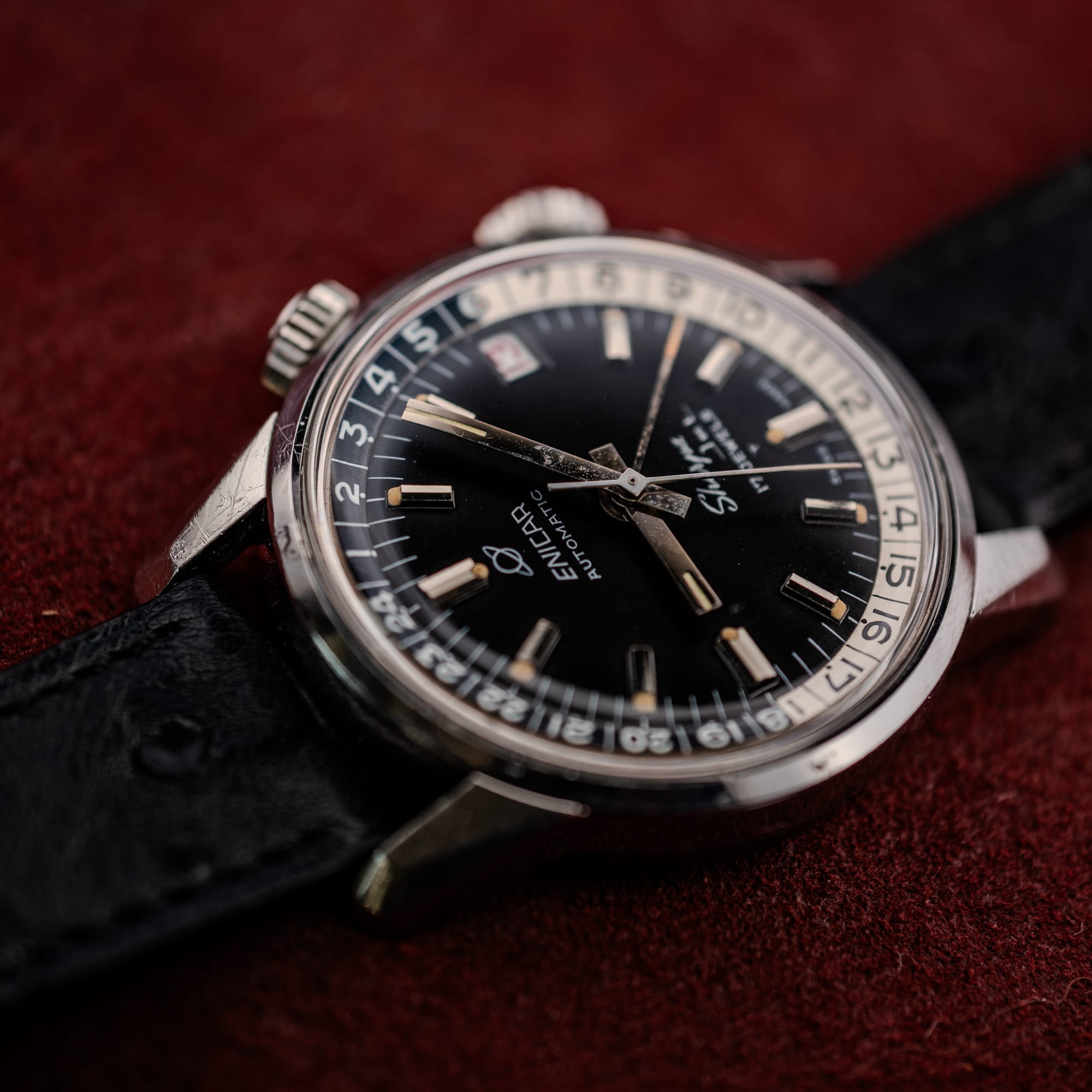
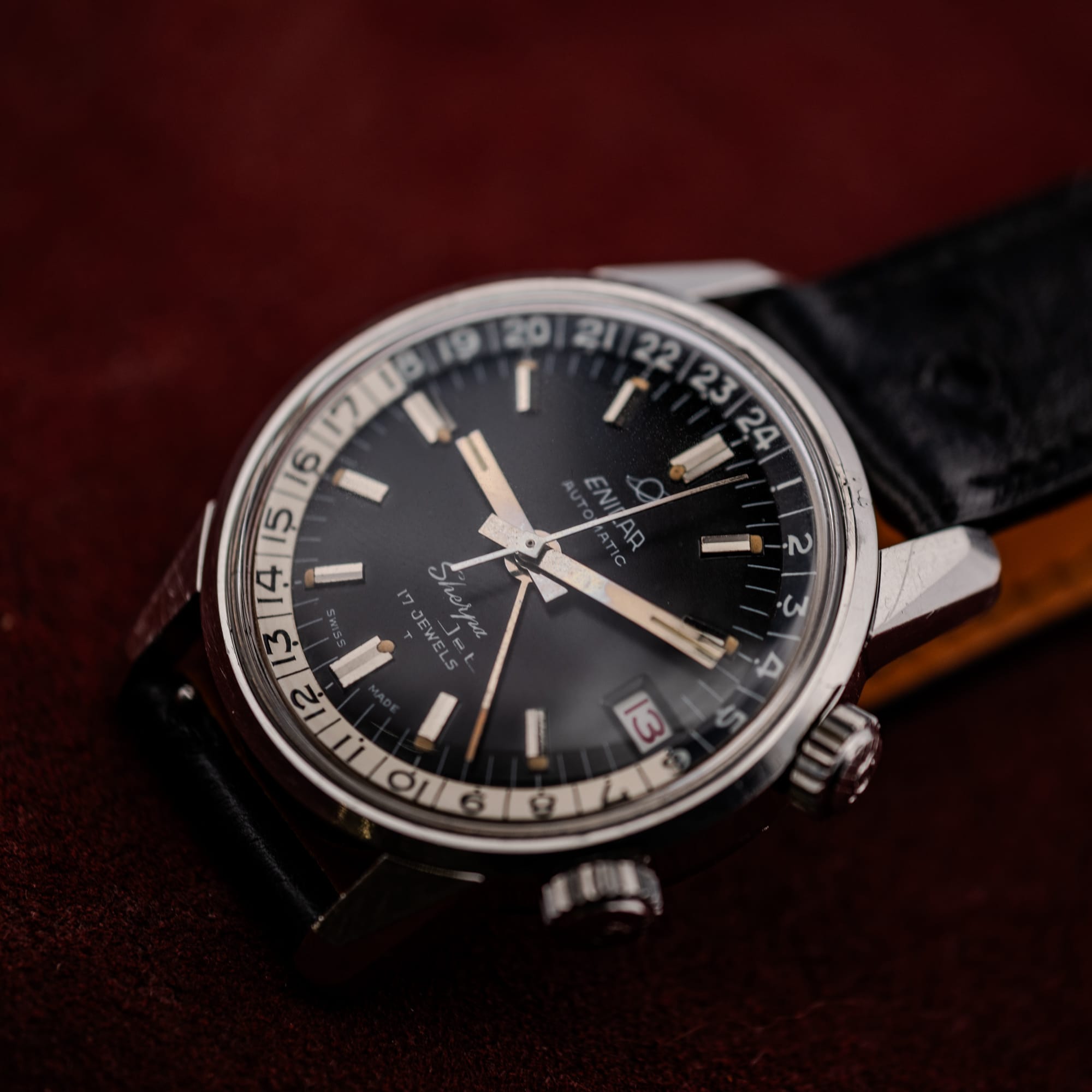
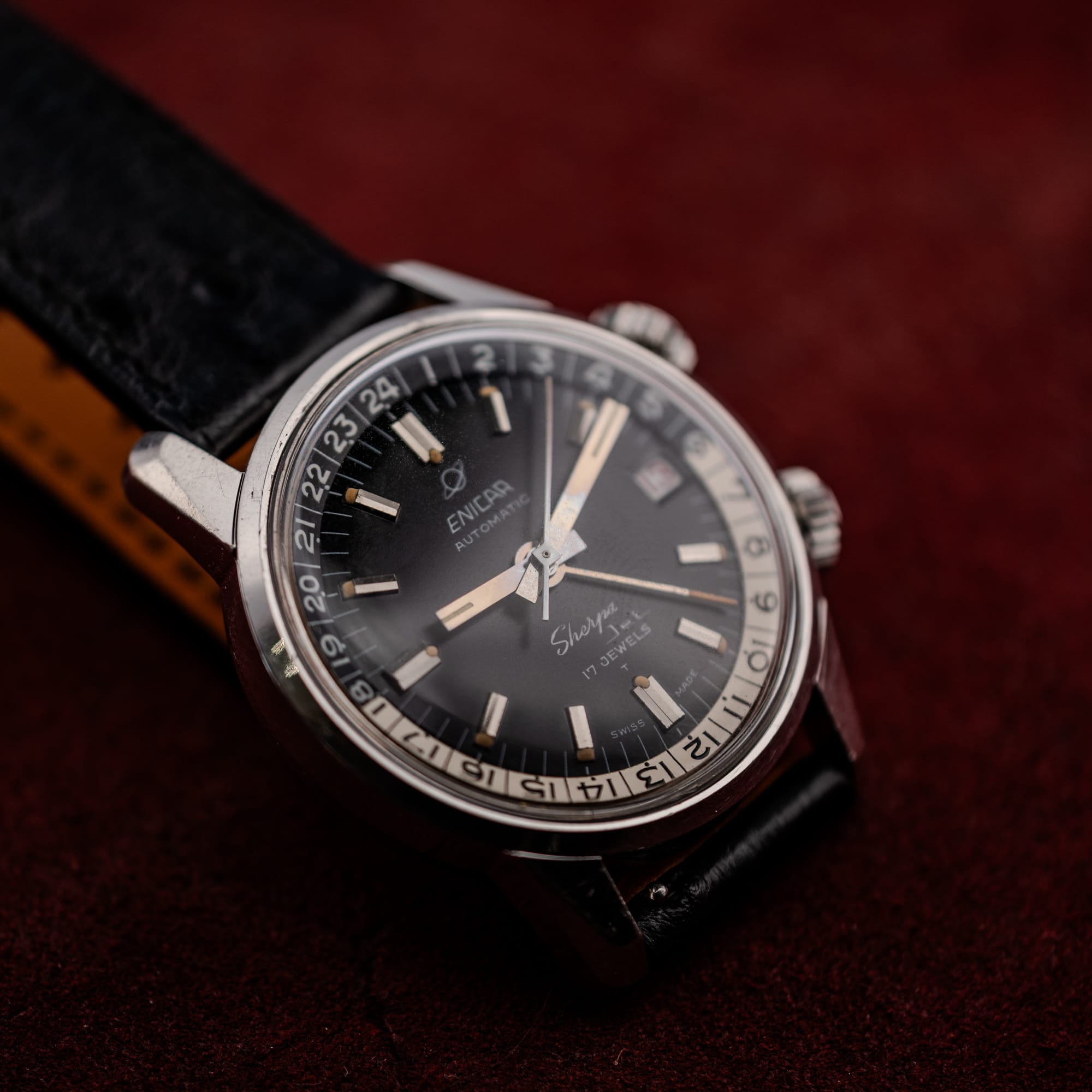
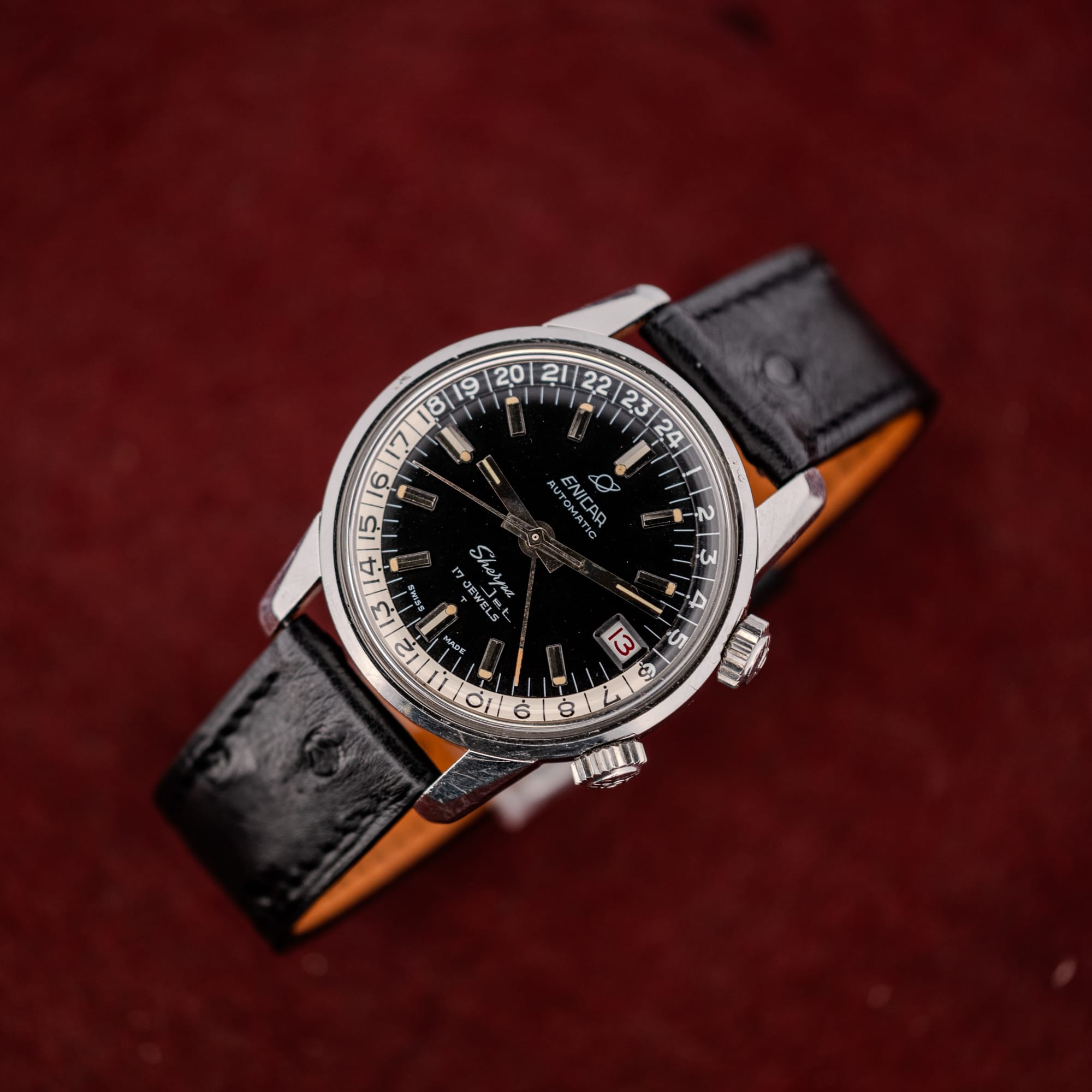
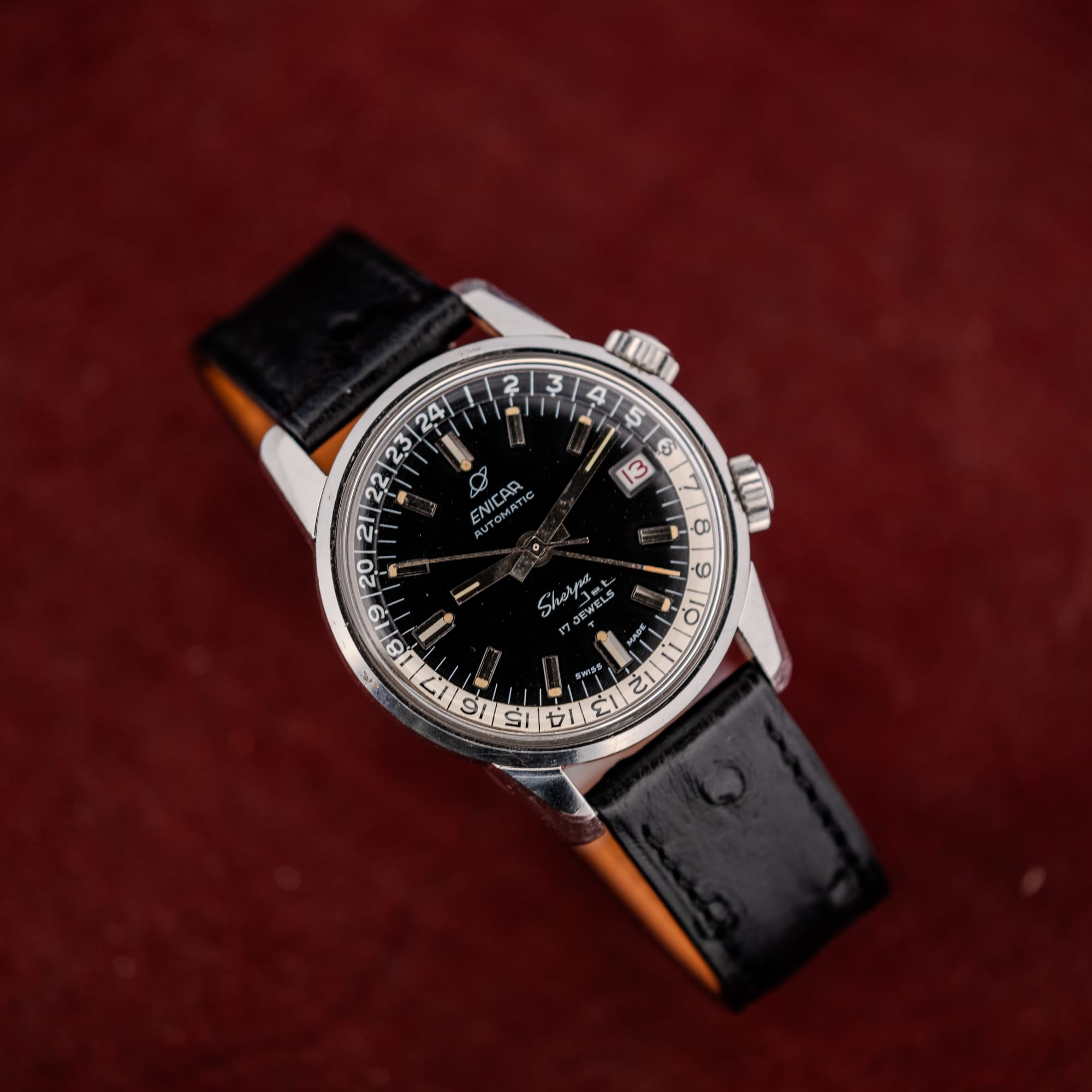
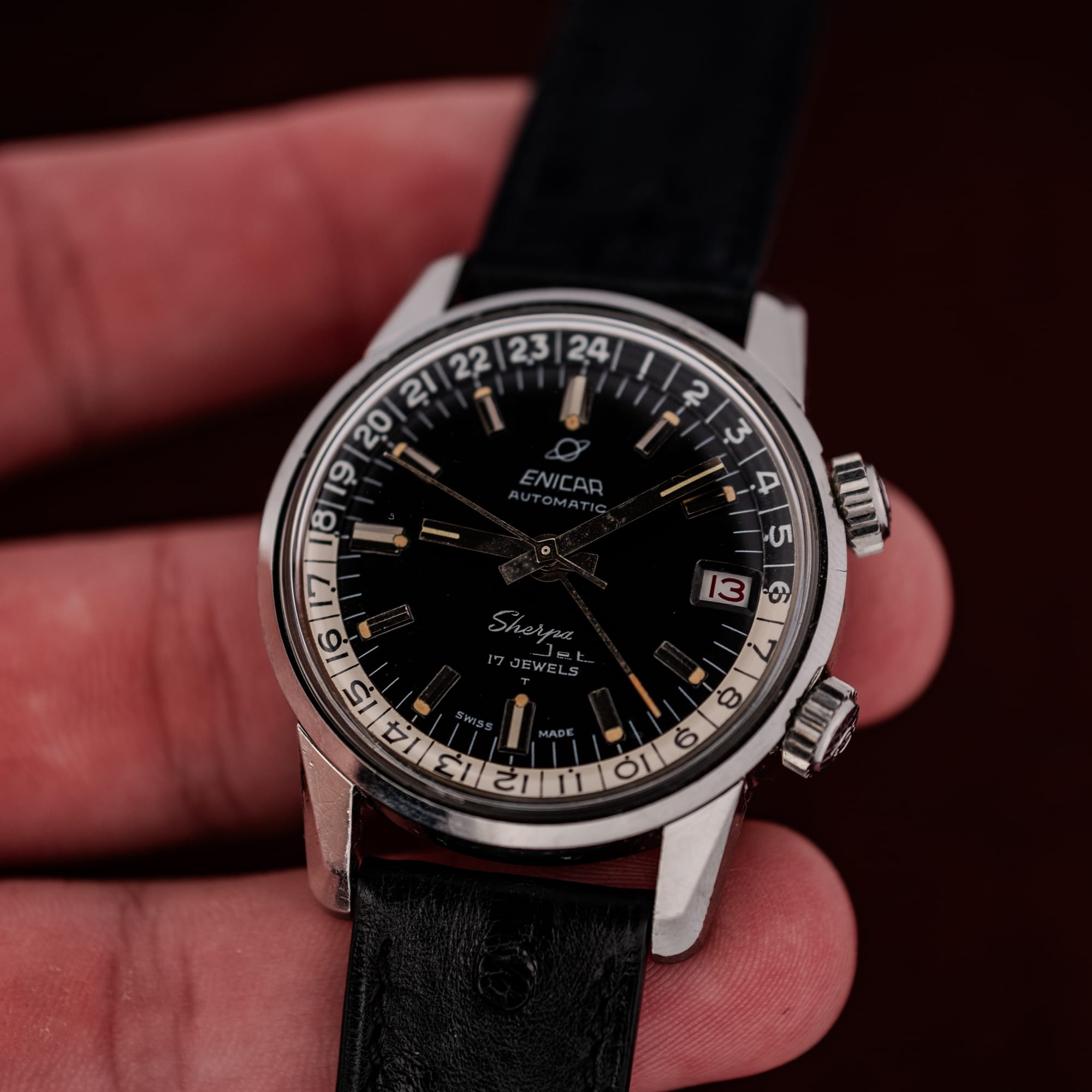
Seven years later Enicar pointed that name at a problem with no altitude in it at all. Civil aviation had made two time zones an ordinary daily nuisance, and Rolex had answered in 1955 by wrapping a 24-hour scale around an external bezel. Enicar aimed first at the people already living the problem, building the Sherpa World Time and the Steward and Stewardess for cabin crews, though those had rotating bezels and no fourth hand. The oversized Sherpa Guide of 1960 finally added a true GMT hand in a 42mm case nobody would call discreet. Announced to the watch press in early 1963, the Jet was the resolution: the 24-hour ring moved inside the crystal, driven by a crown of its own, with no exposed bezel left to snag or fade.
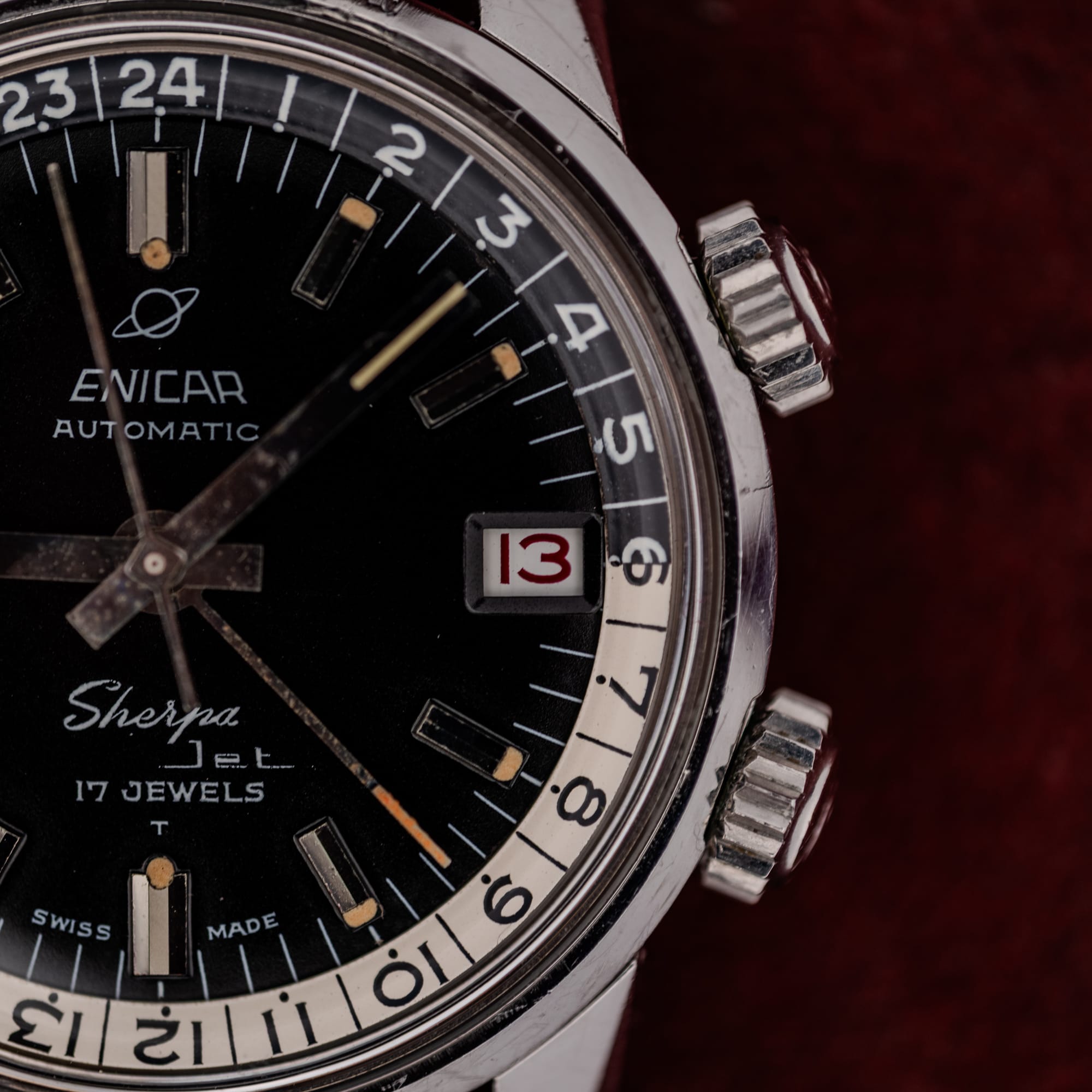
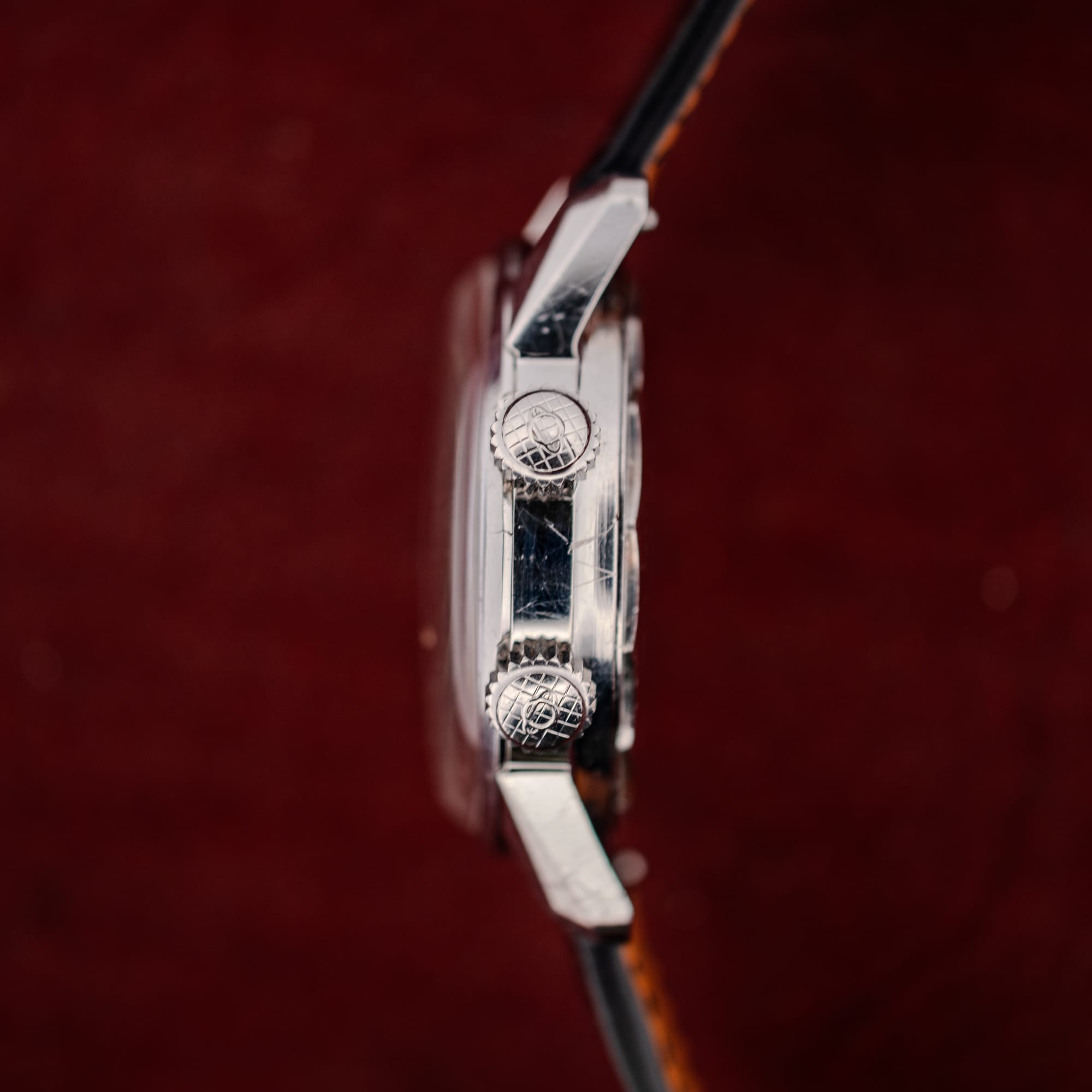
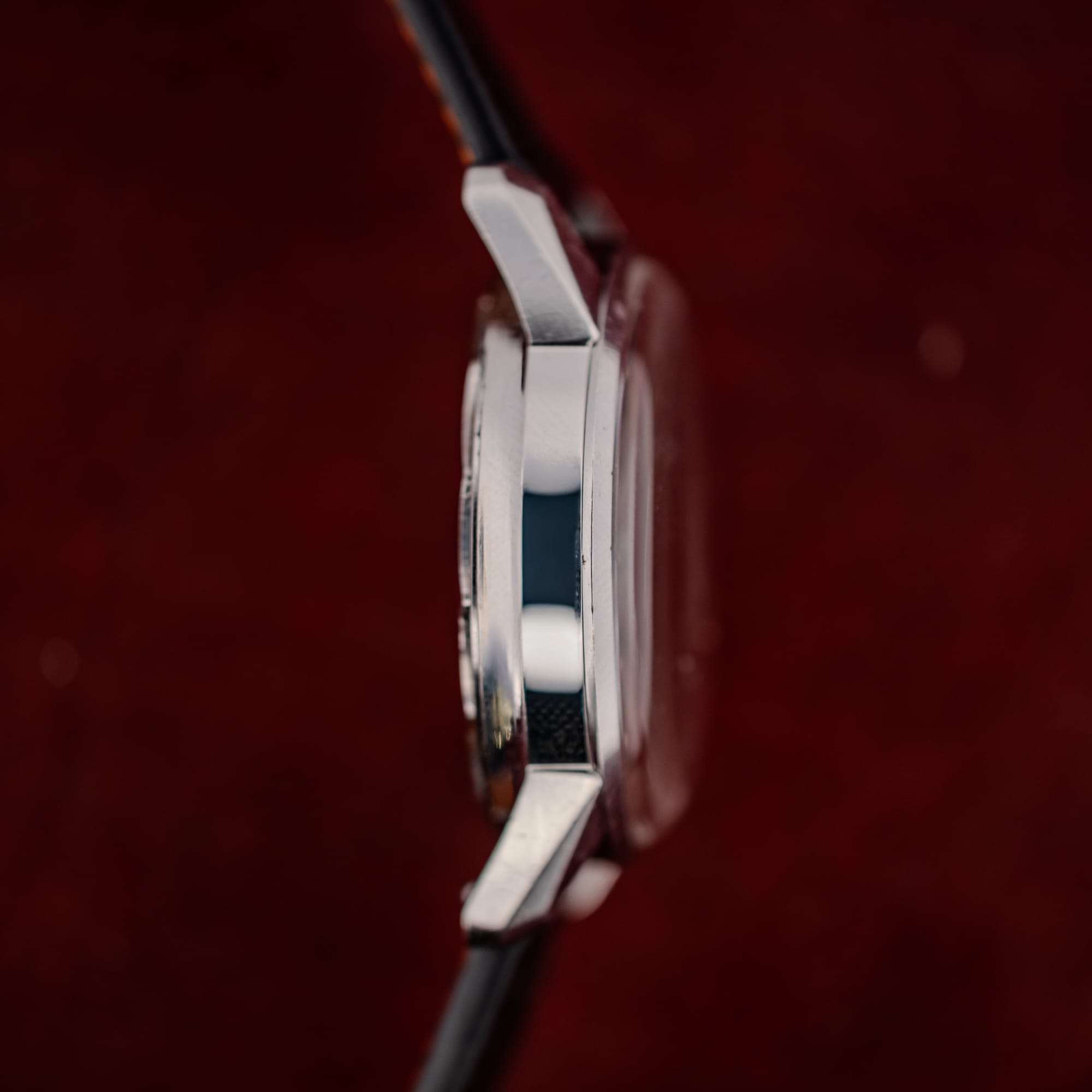
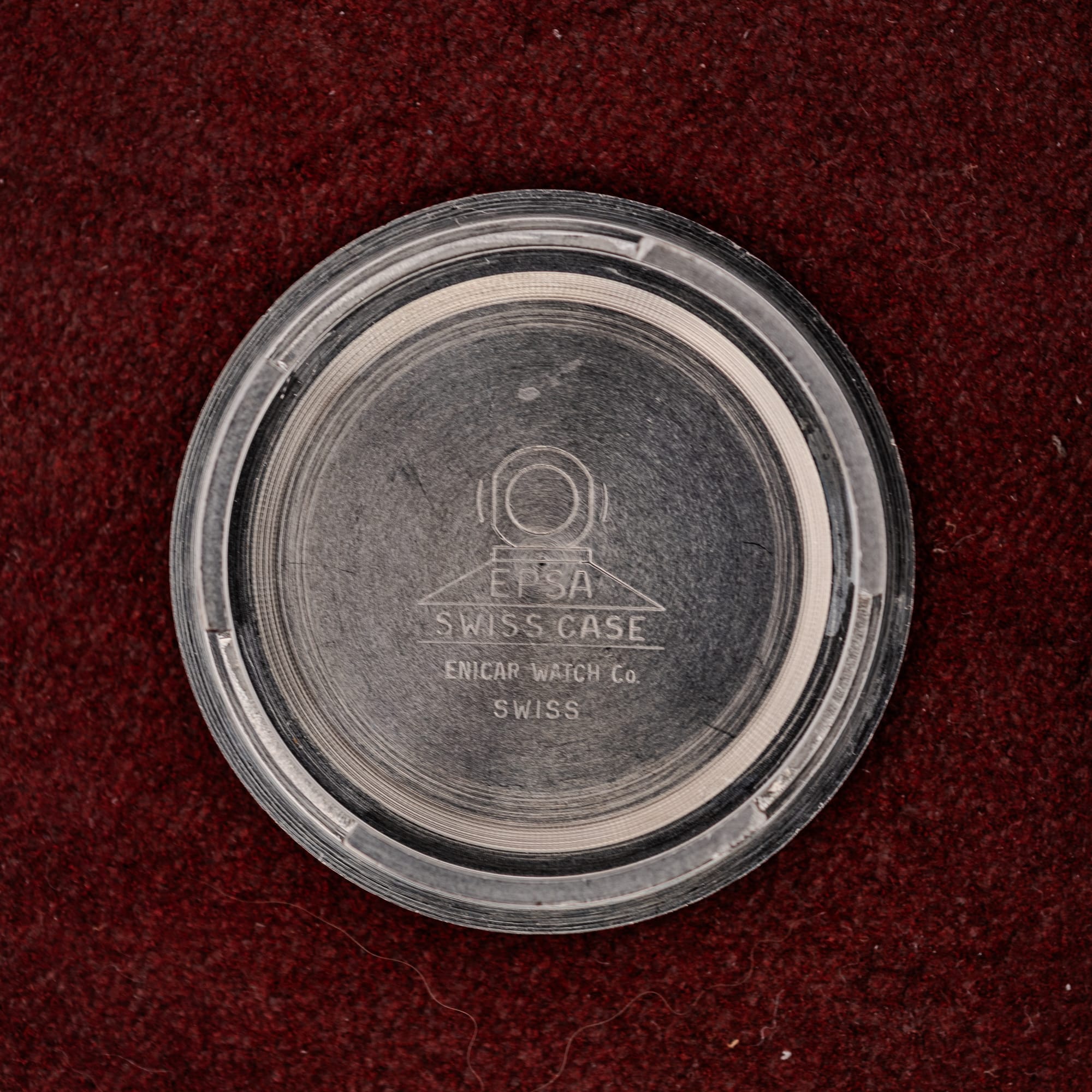
Moving the bezel inside took a particular case, and that came from Ervin Piquerez S.A. The EPSA Super Compressor patent turned water pressure into an ally rather than an enemy, using a spring loaded back that presses harder into its gasket as outside pressure climbs, so the seal tightens under precisely the conditions that defeat a conventional caseback. Enicar was EPSA’s largest client, and the twin crowns here are that idea in its purest form: one to wind and set, one to turn the inner ring, both crosshatched and sealed into a case designed to be squeezed. EPSA signed the work with its diving helmet mark inside the back, and the same motif is embossed on both crown faces.
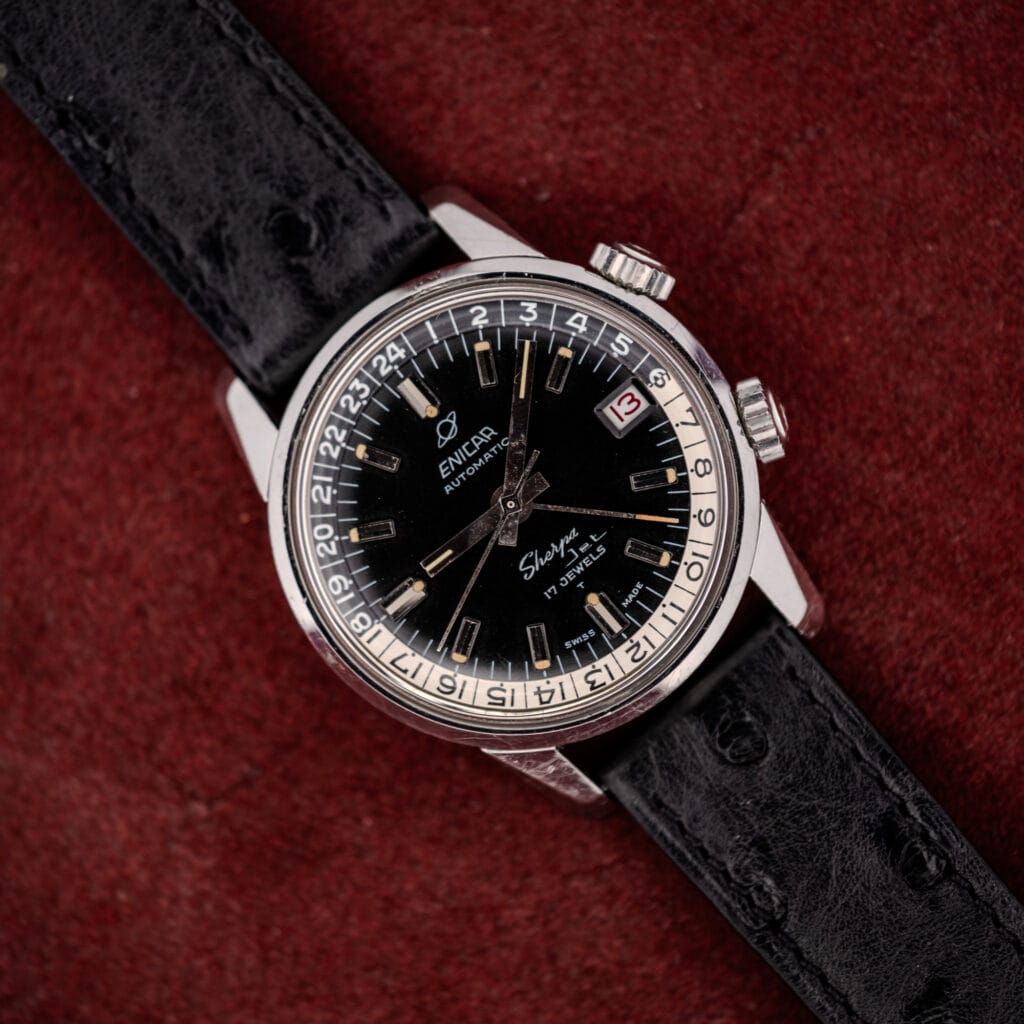
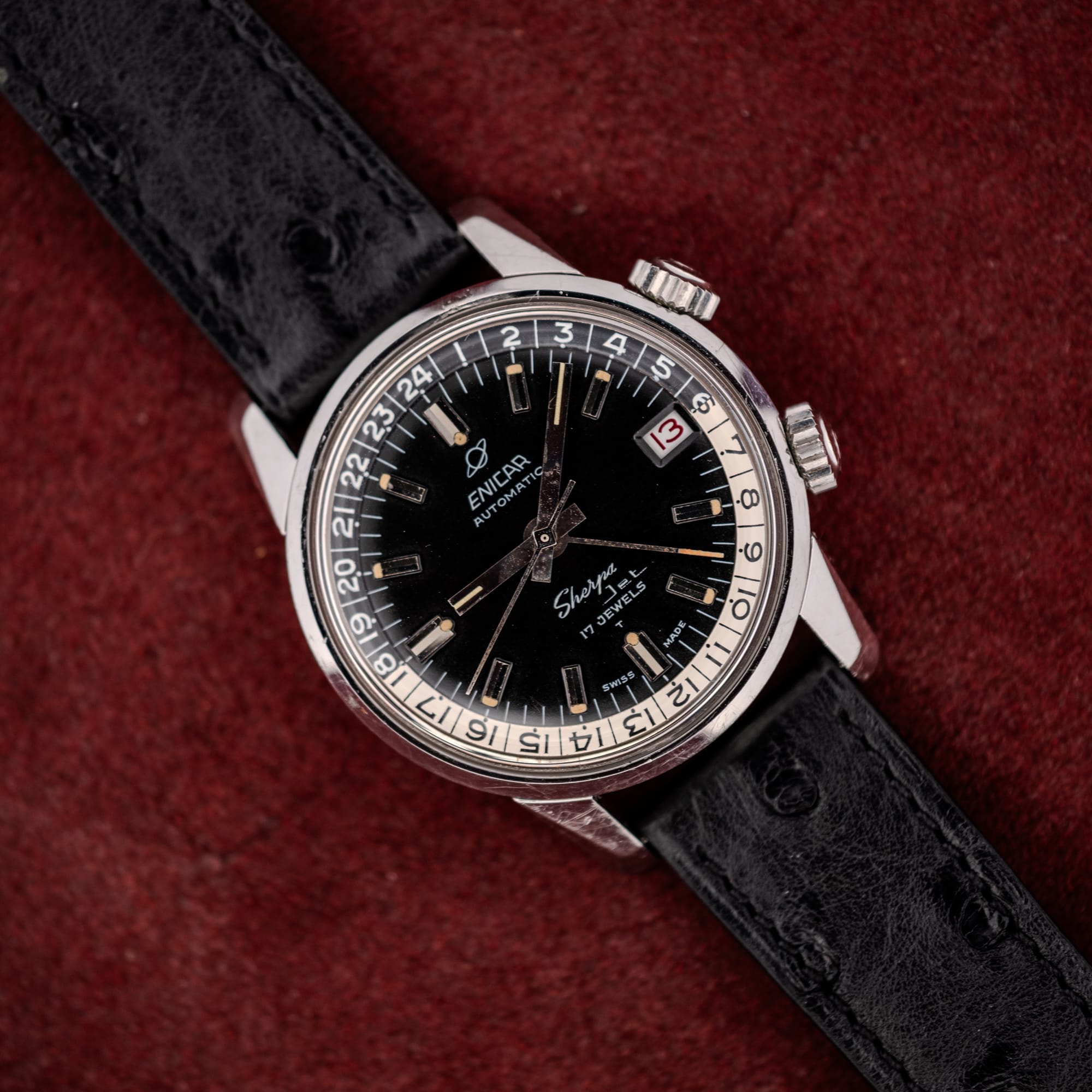
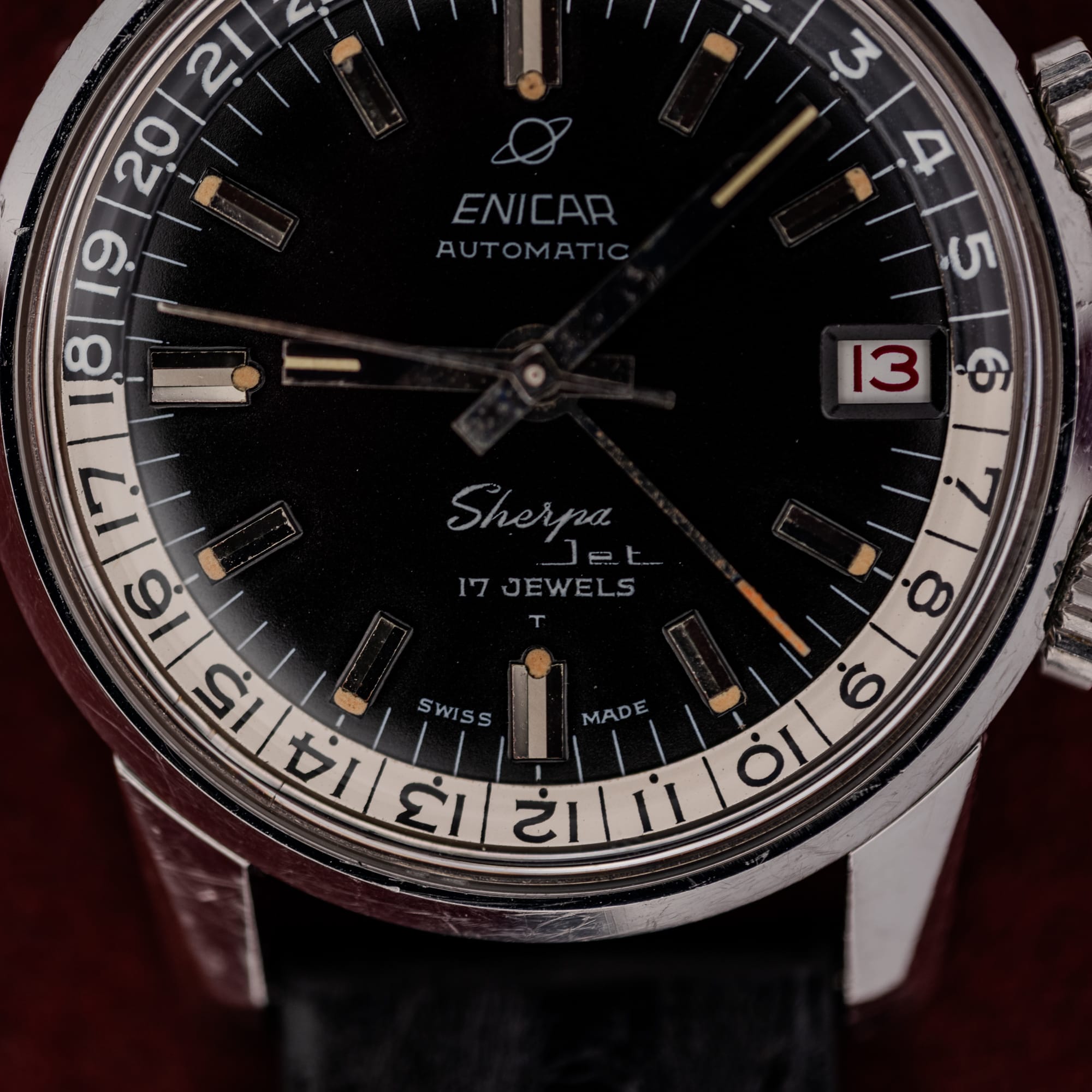
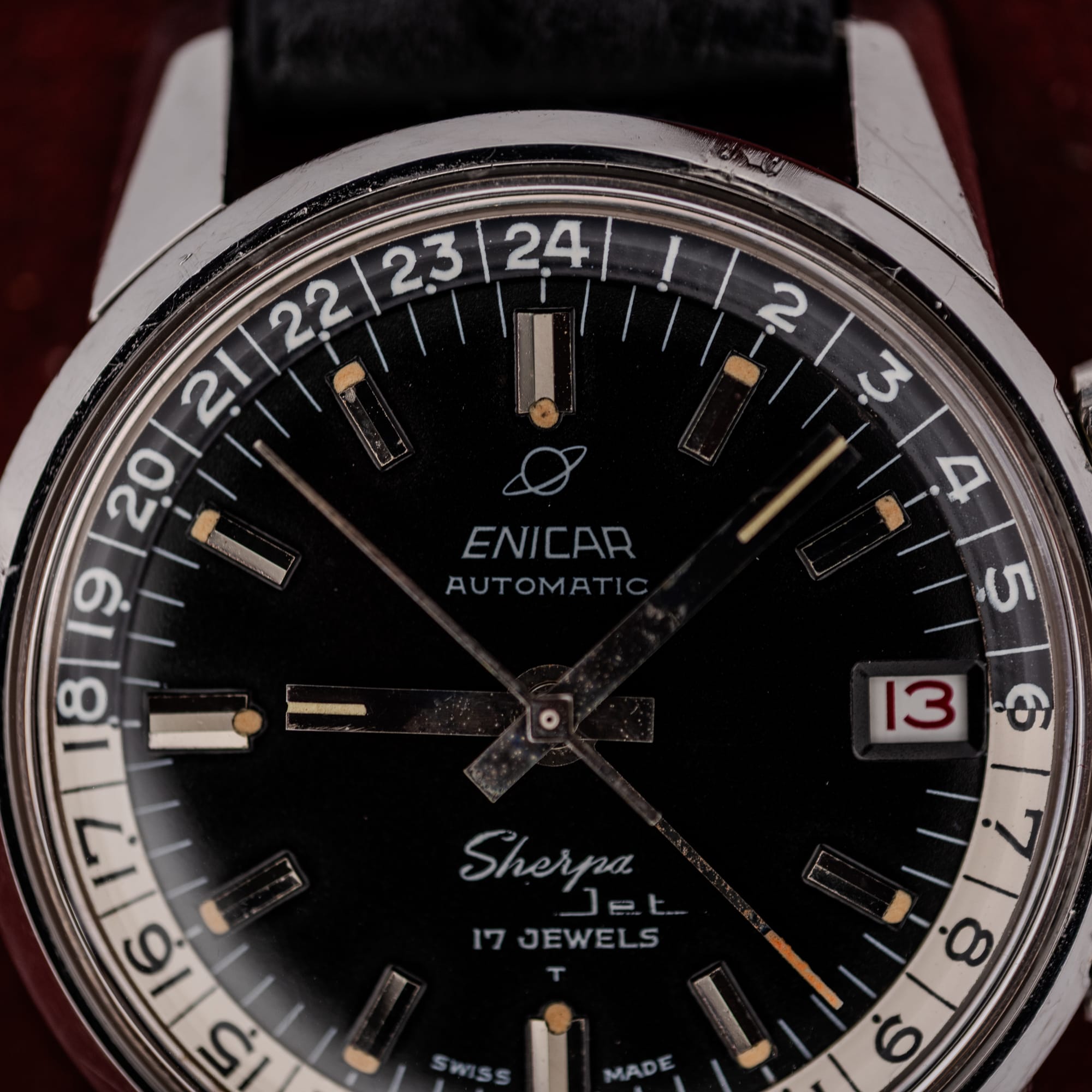
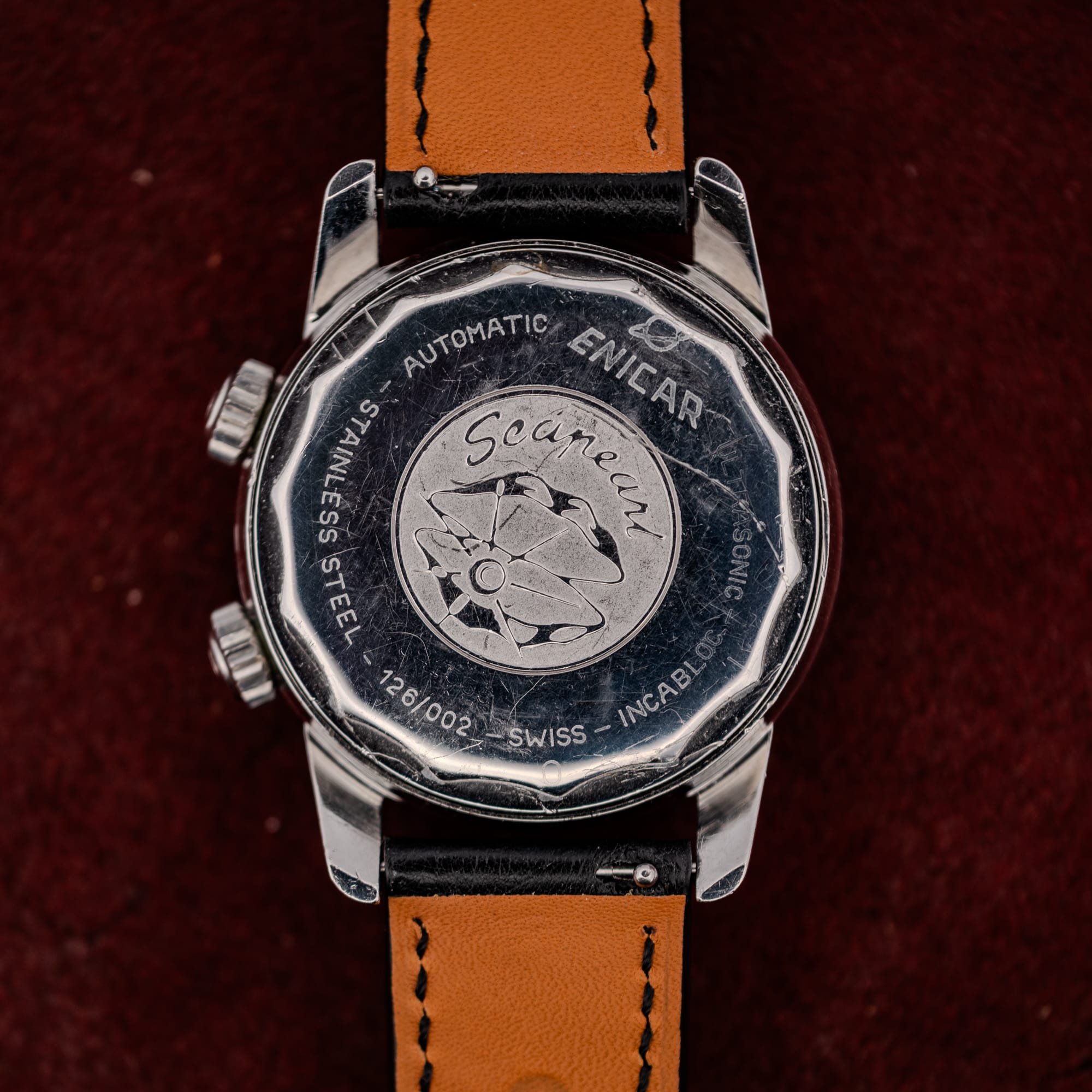
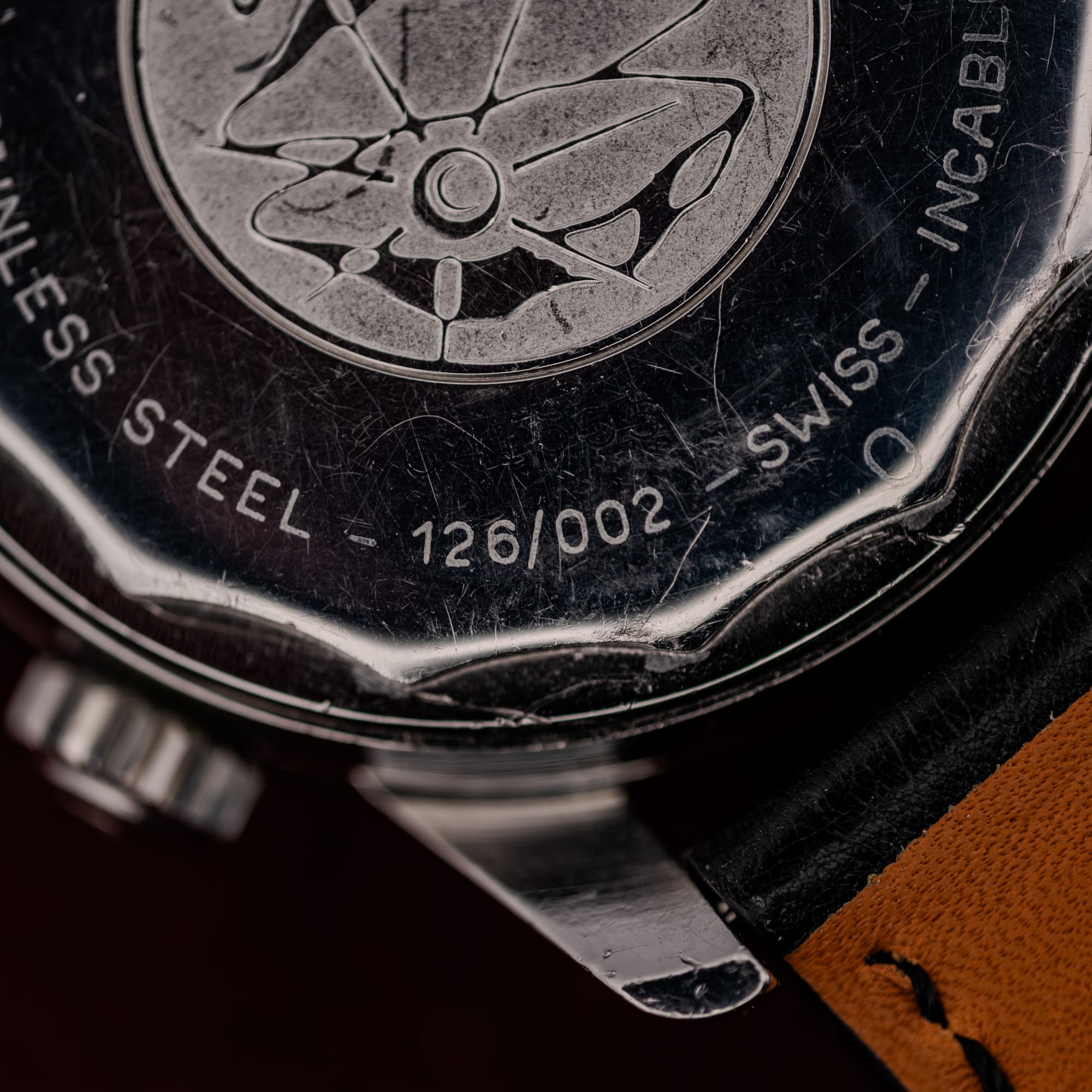
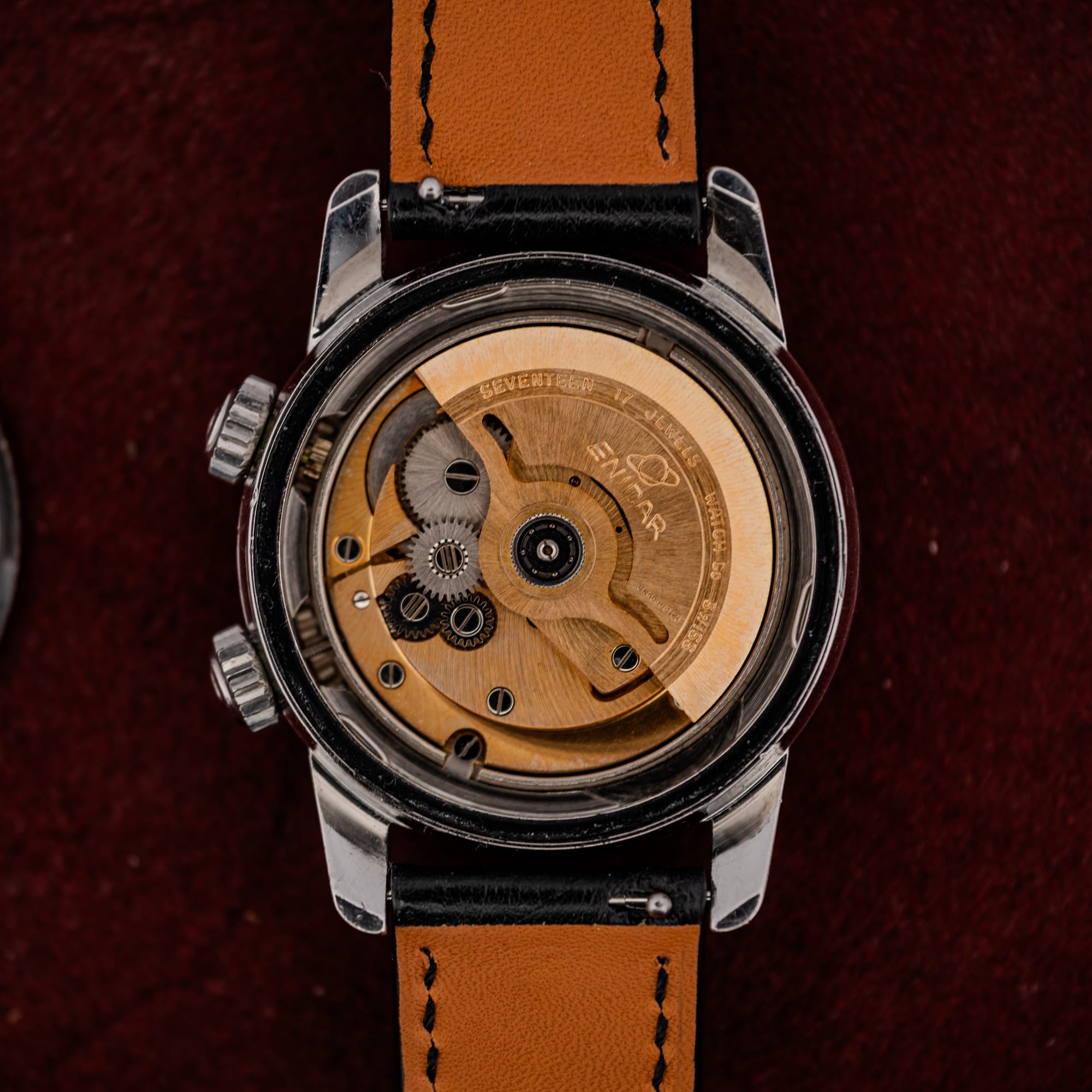
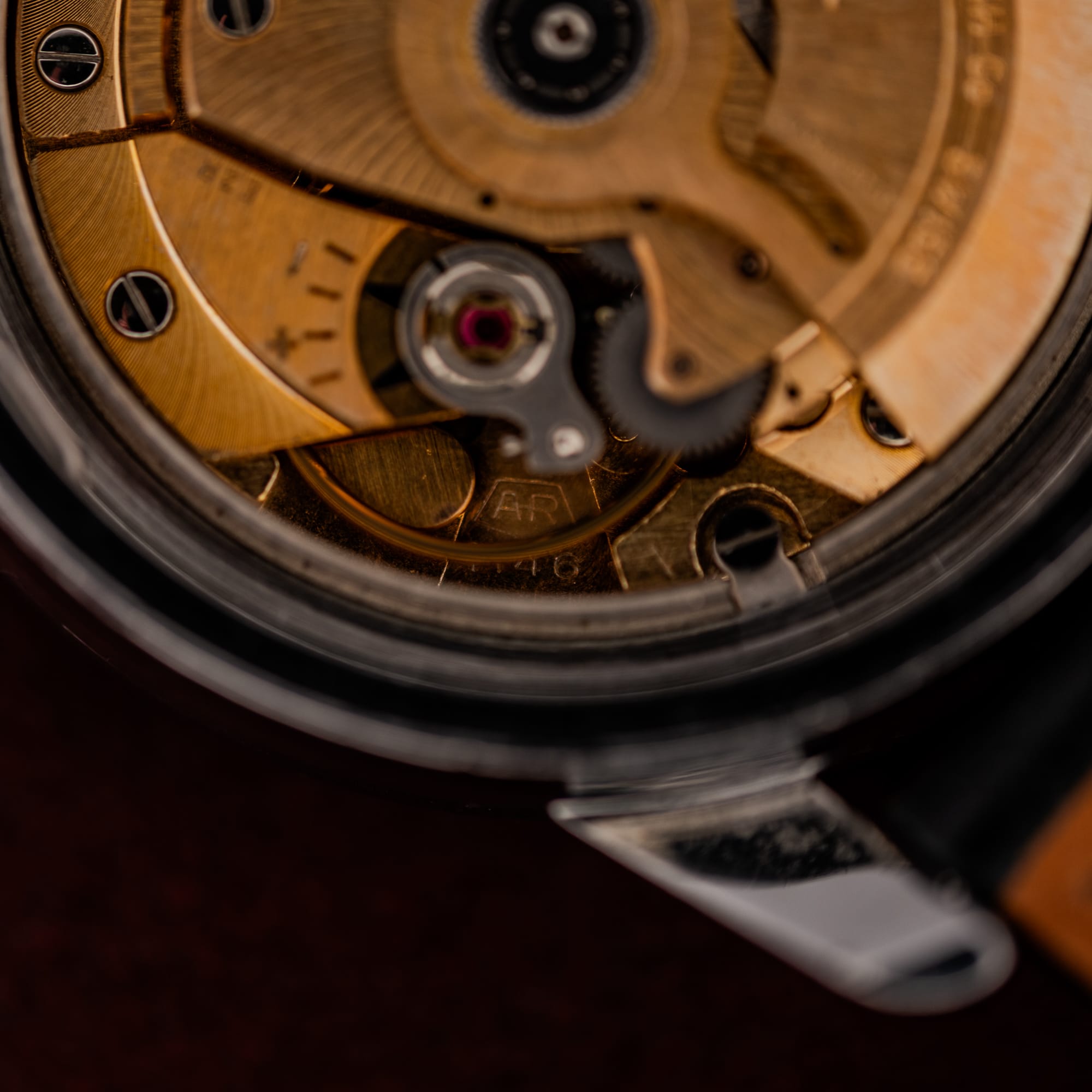
Wear tells the honest half of the story. The 36.5mm steel case, 44mm across the lugs, shows bright flattened scratch fields along the lug edges, a few small nicks around the bezel, and a caseback hairlined diagonally across its raised Seapearl medallion. That medallion belongs there. Seapearl was the waterproof case system registered back in 1953, and Enicar Sherpa Jet casebacks carried the mark through the model’s early years. The ring around it still reads clearly, “- AUTOMATIC – ENICAR – ULTRASONIC – INCABLOC – SWISS – 126/002 – STAINLESS STEEL -“. Against all that the dial has barely aged: glossy black, printing crisp, every applied baton in place with its tritium gone evenly cream, and the red date sitting at three. The hands have fared less well, carrying a fine dark speckle of tarnish, and the lume on the slim 24-hour hand has gone browner toward its tip than the markers below it. A gilt full rotor, Enicar signed and marked for seventeen jewels, does the winding.
Serviced in-house at OTTUHR and backed by our 2-year mechanical warranty, on a black ostrich strap that leaves the dial alone to do the talking. Enicar earned this name at 27,890 feet, then took it to cruising altitude. The mountain and the jet turned out to want the same thing from a watch.