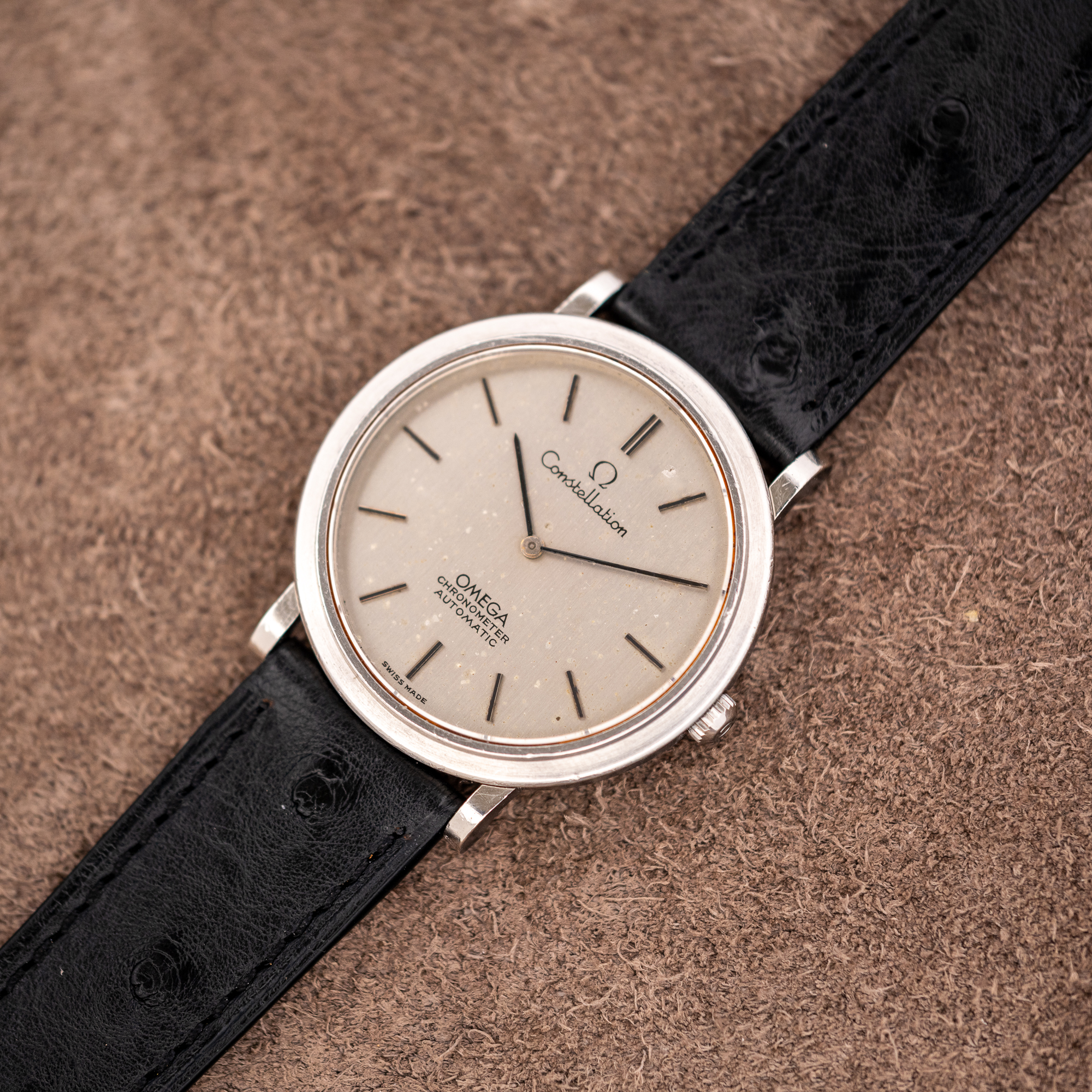
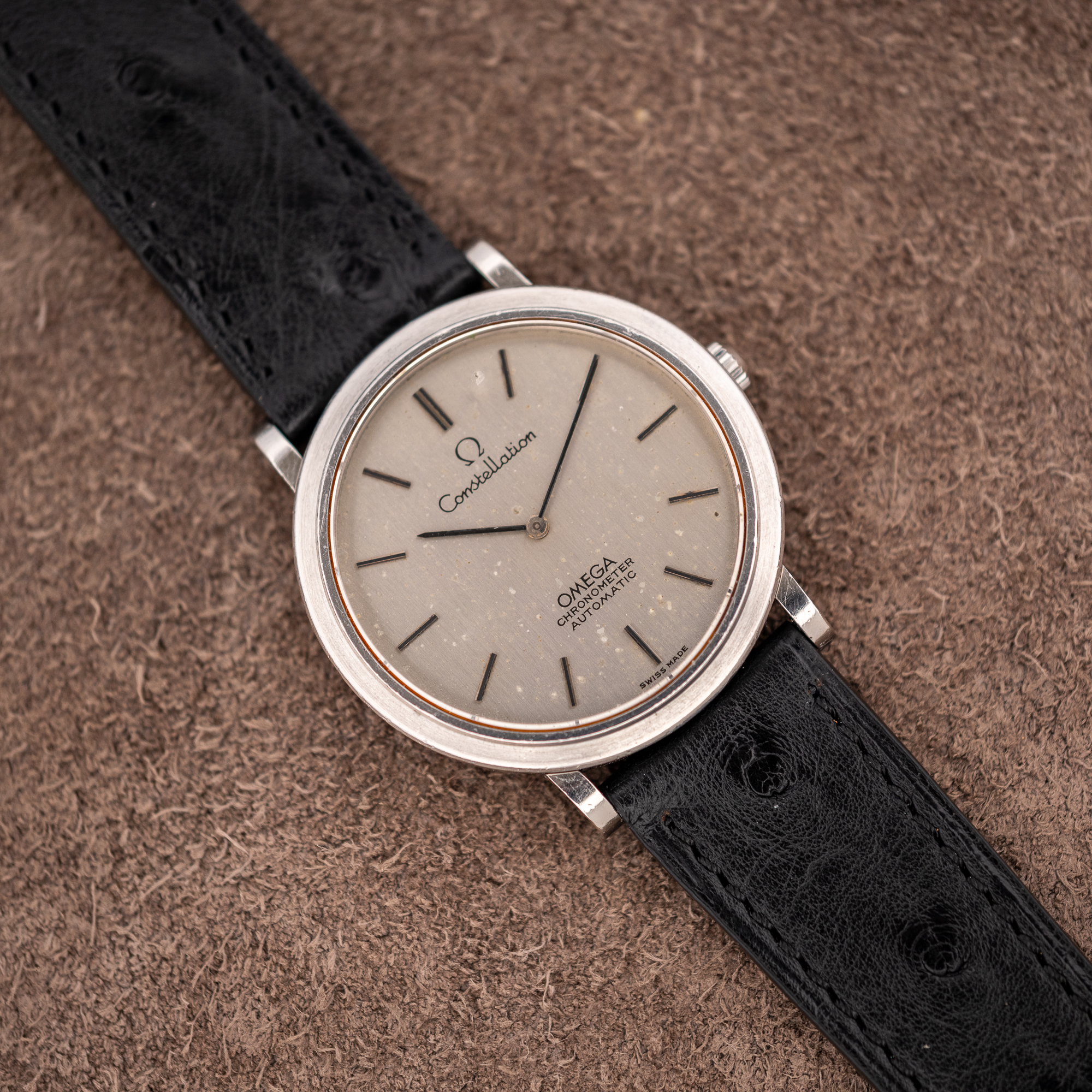
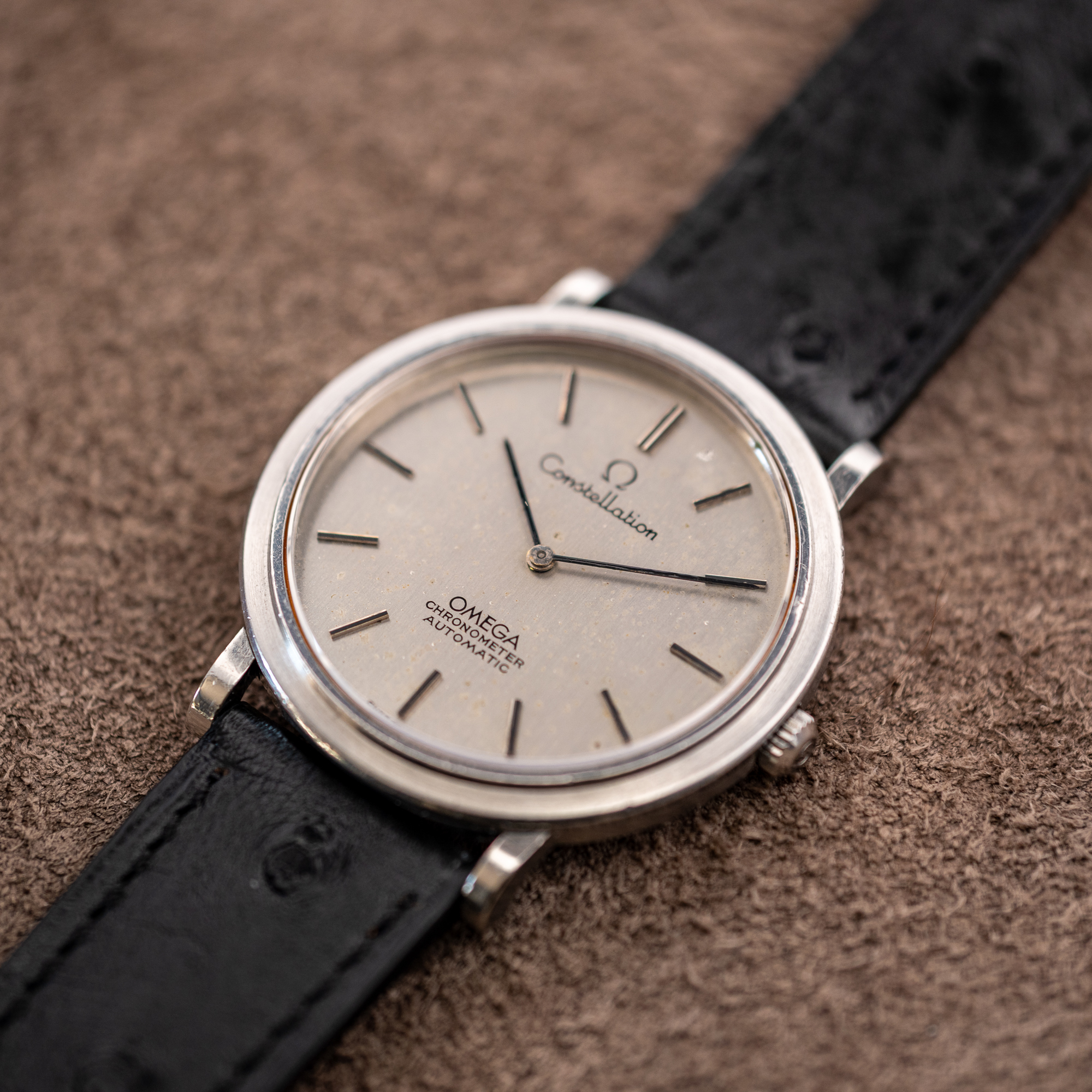
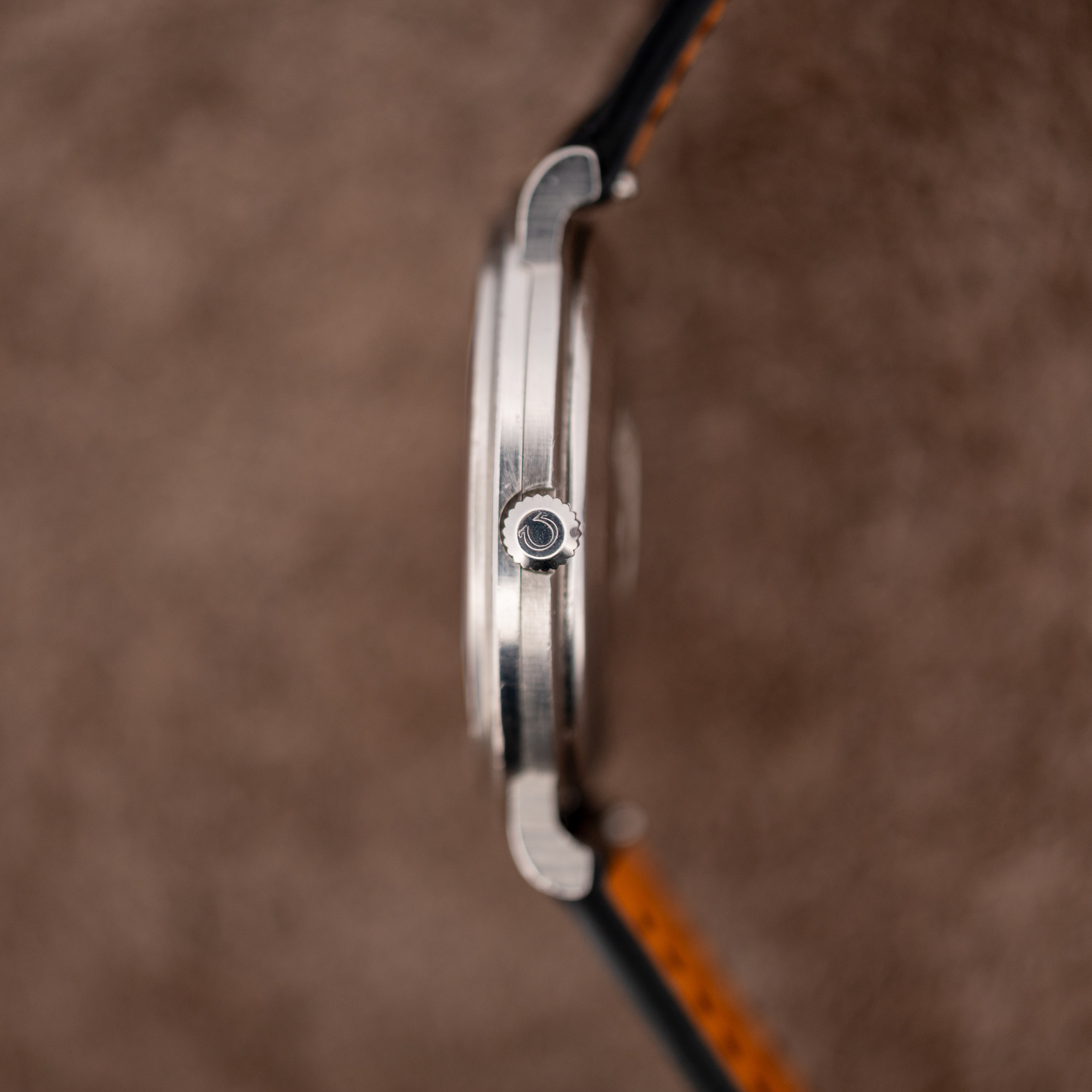
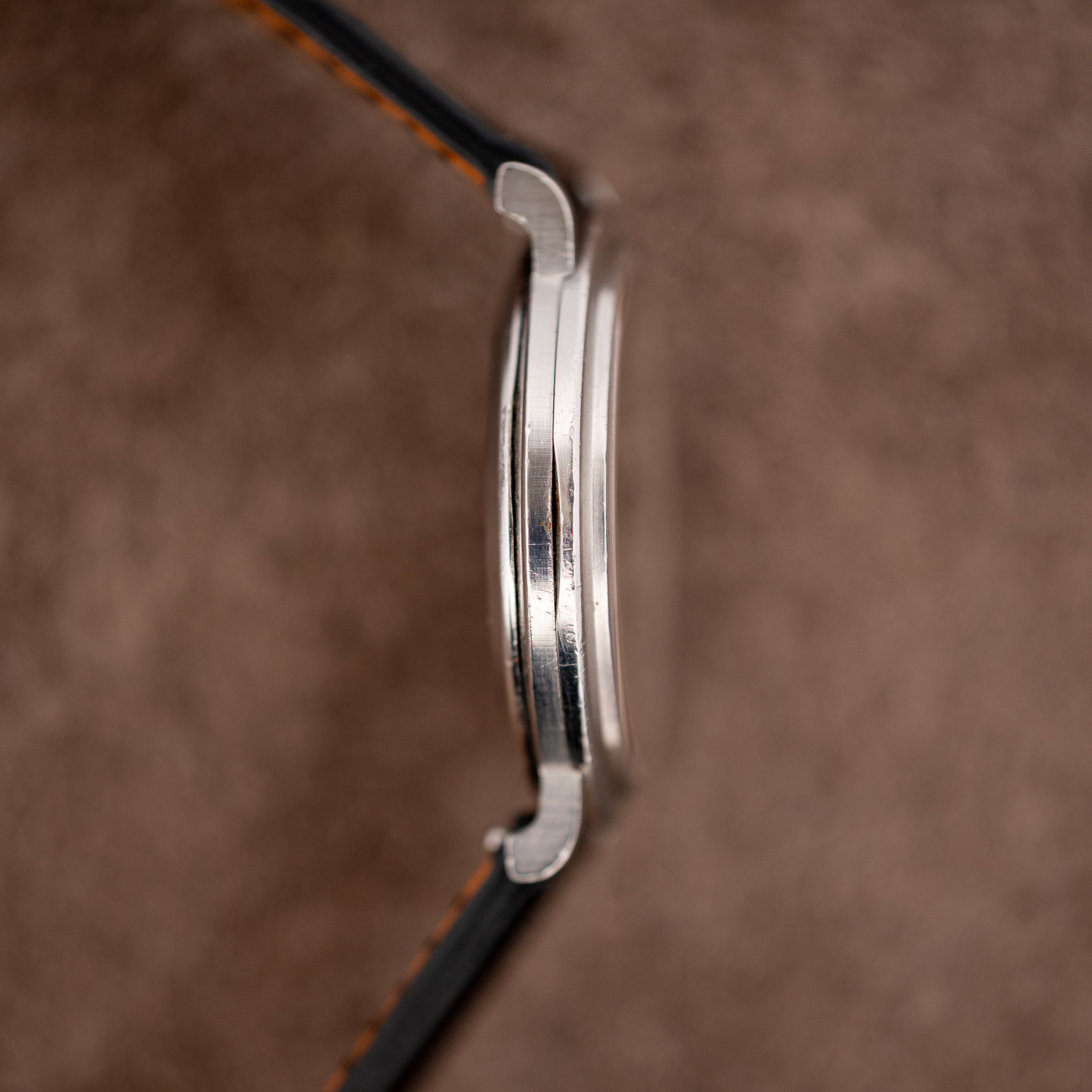
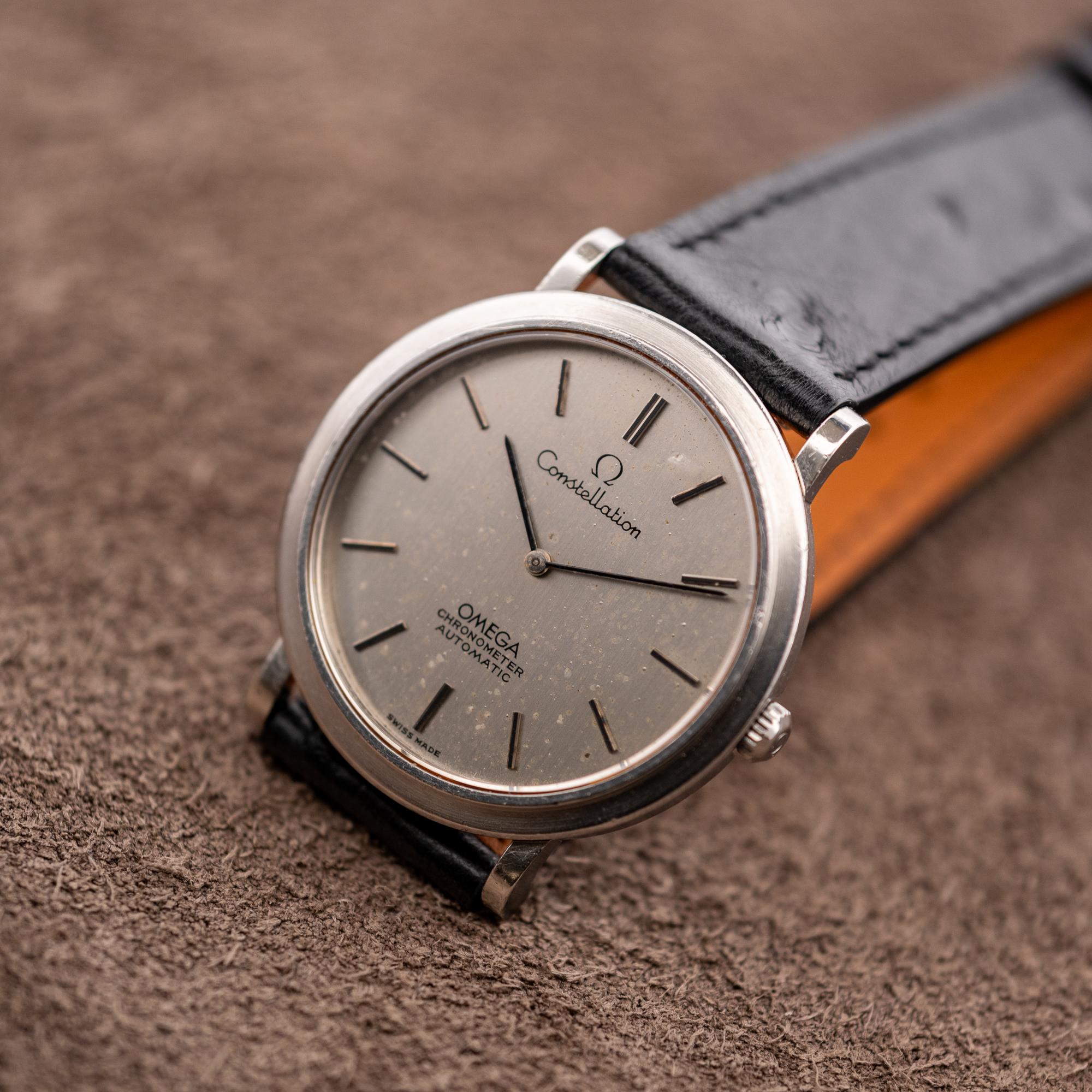
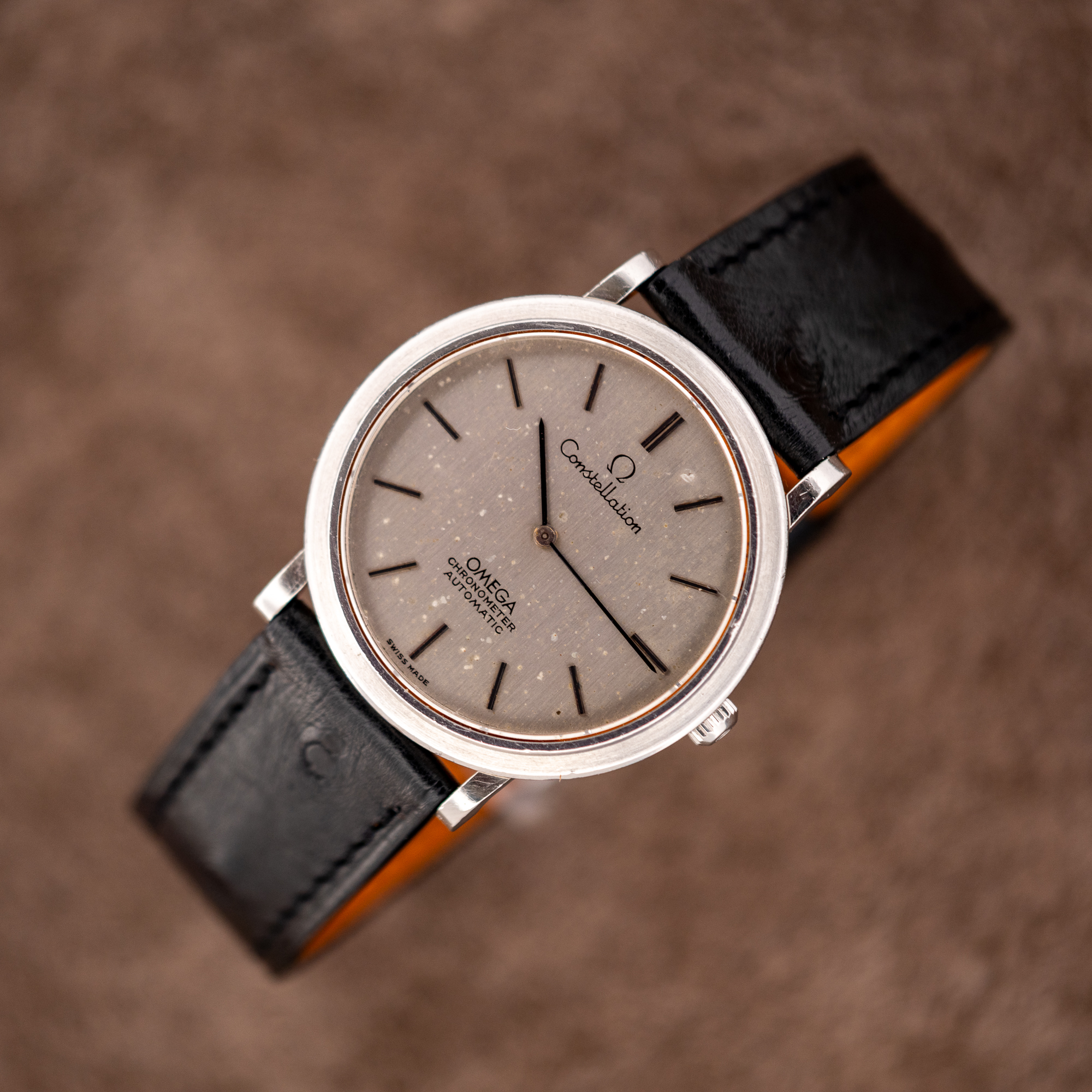
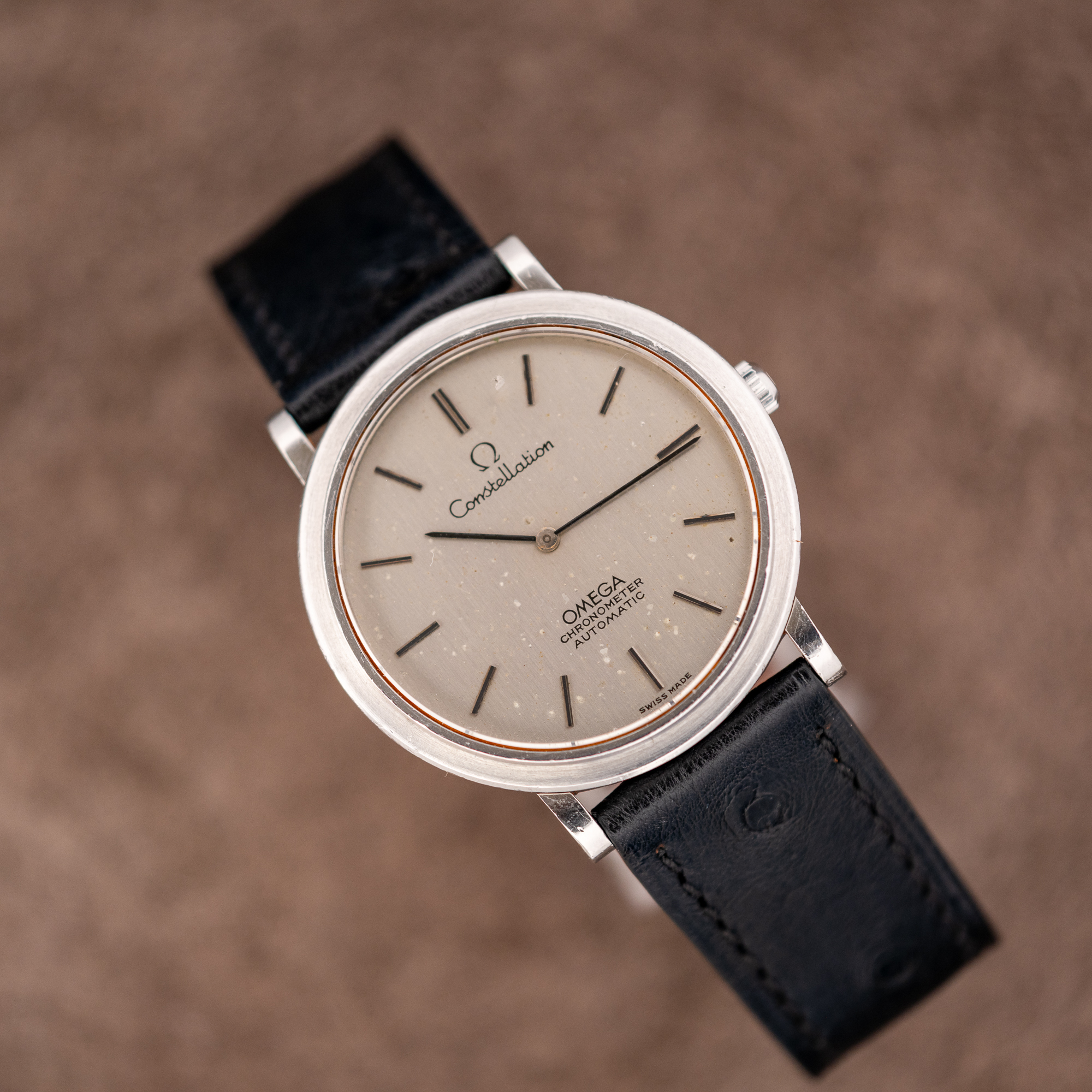
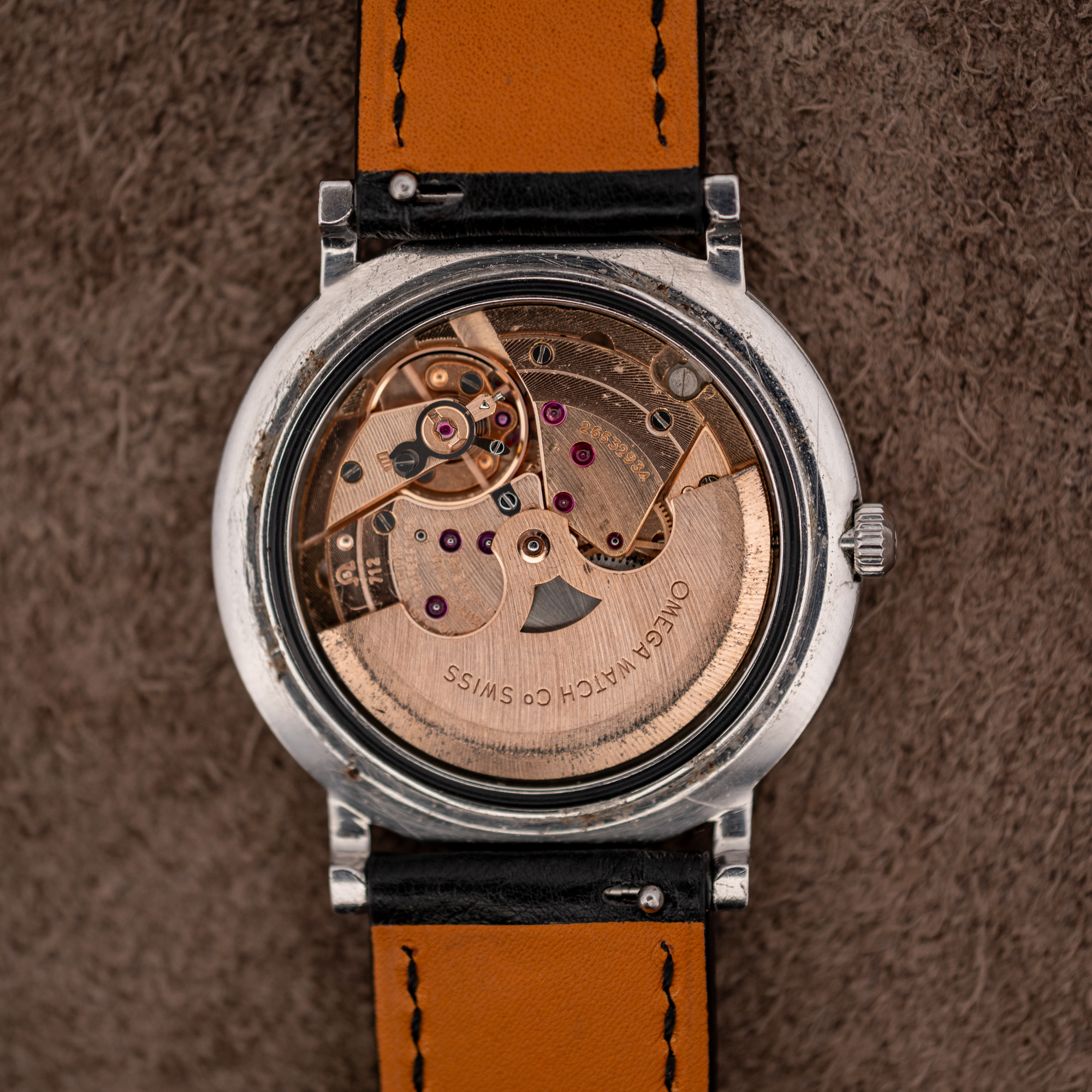
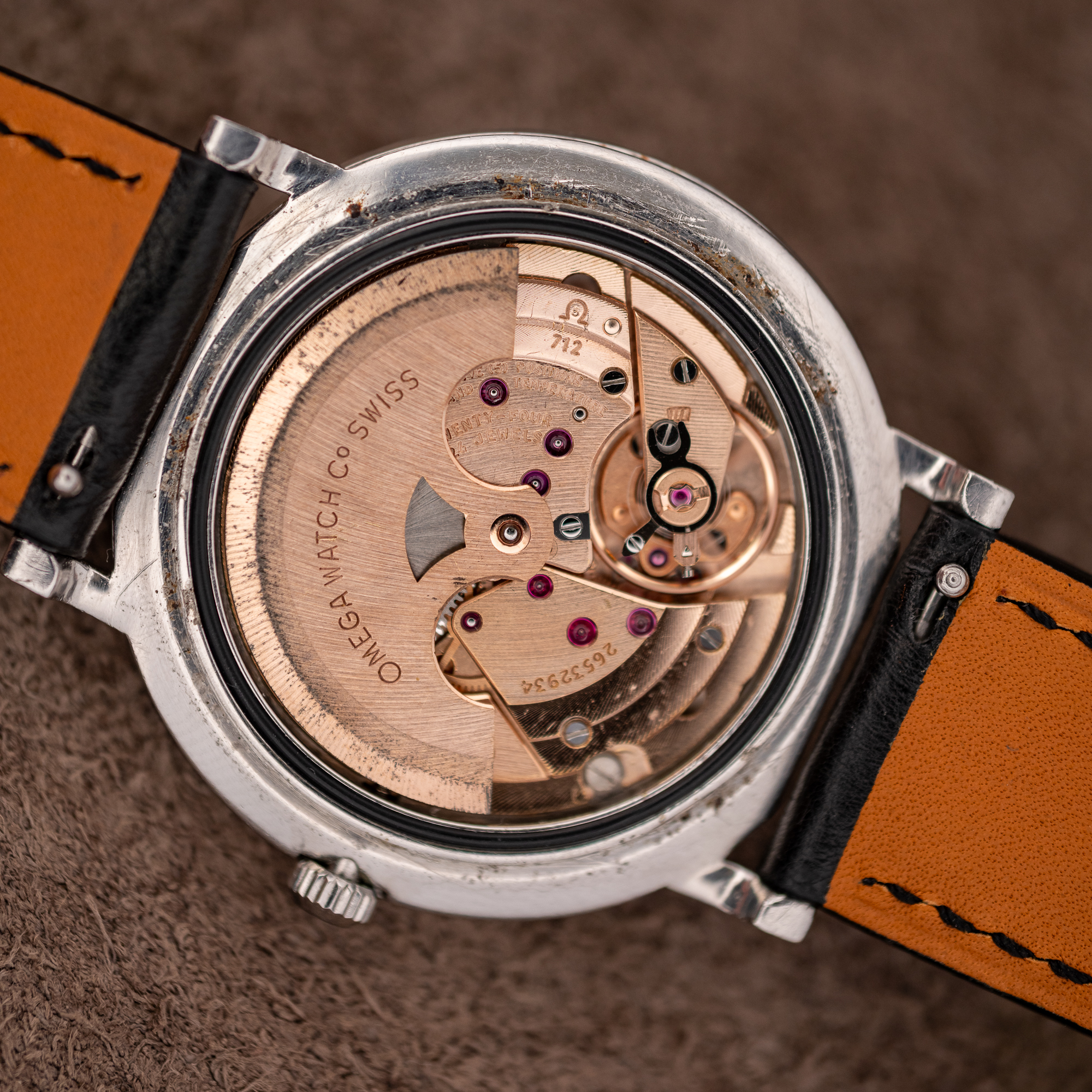
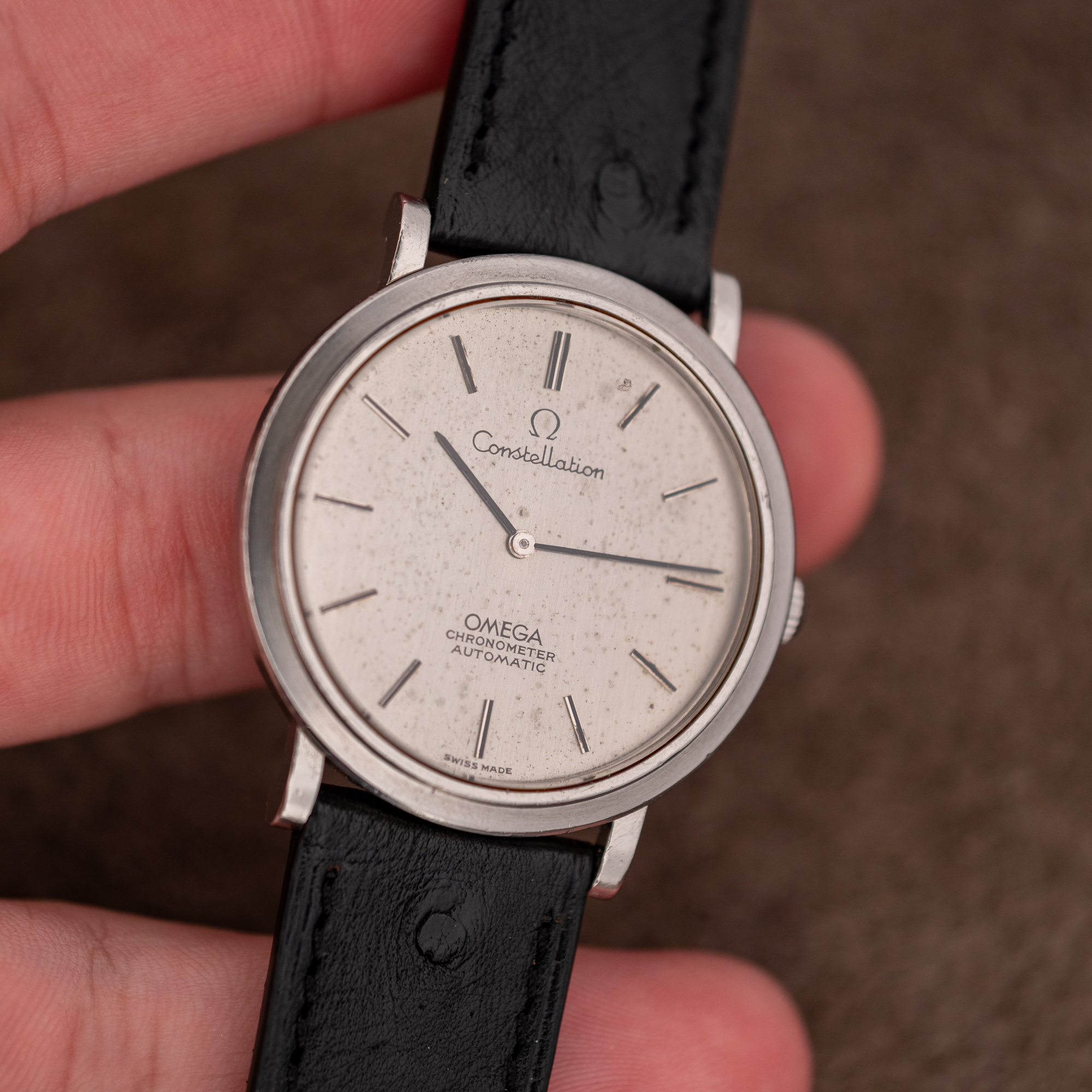
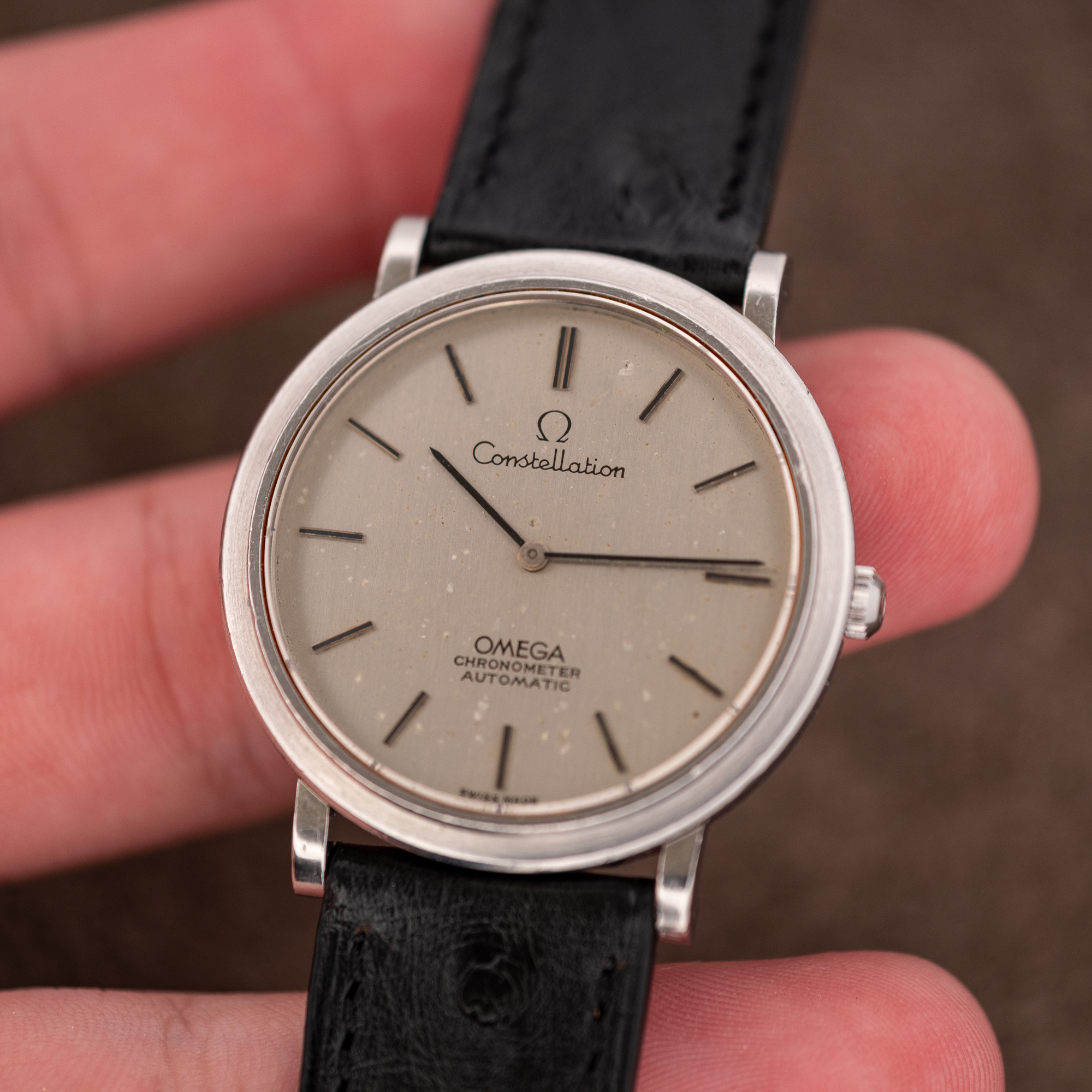

Three millimeters is the full height of the movement inside this Constellation, and Omega never made an automatic thinner. Caliber 712 belongs to the slimmest self-winding family in the company’s history, and reference 157.0001 was drawn around it, with a narrow bezel and lugs that turn down toward the wrist.
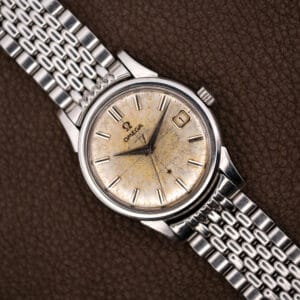
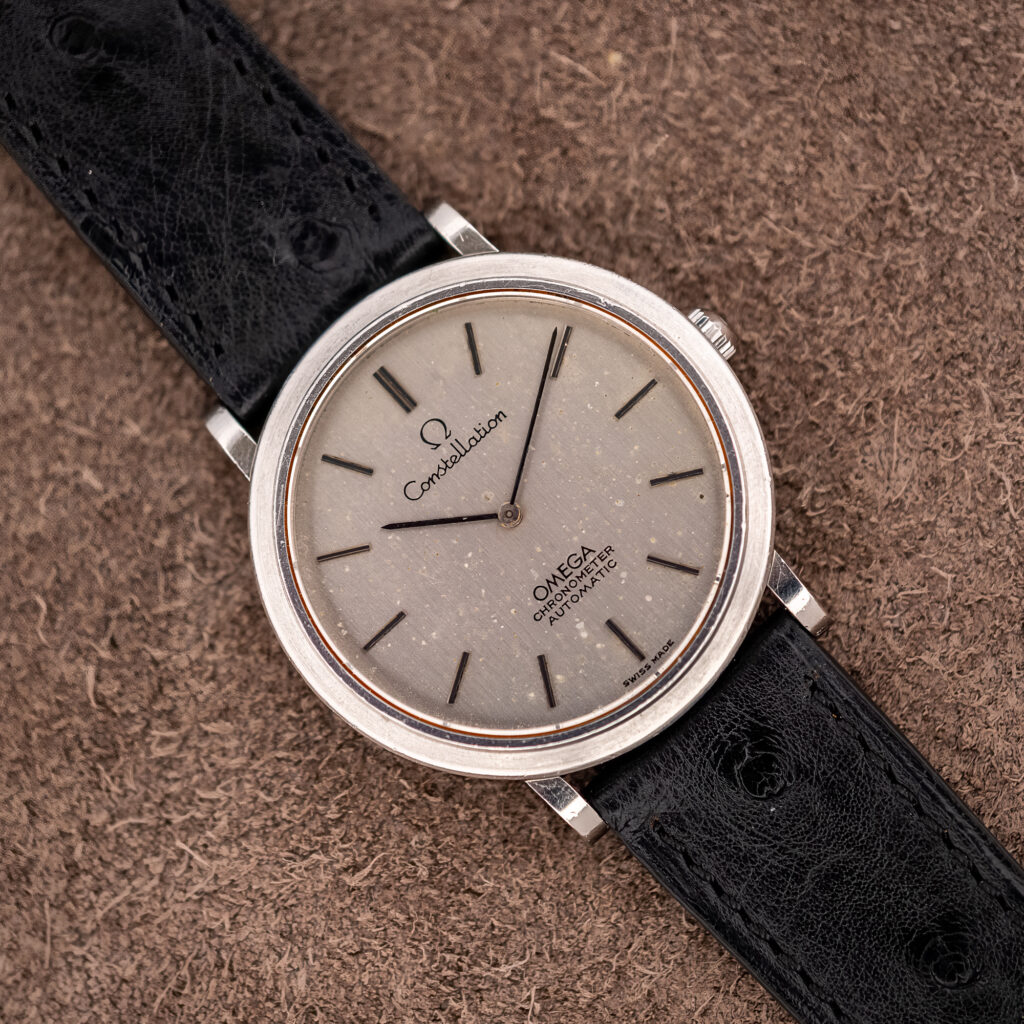
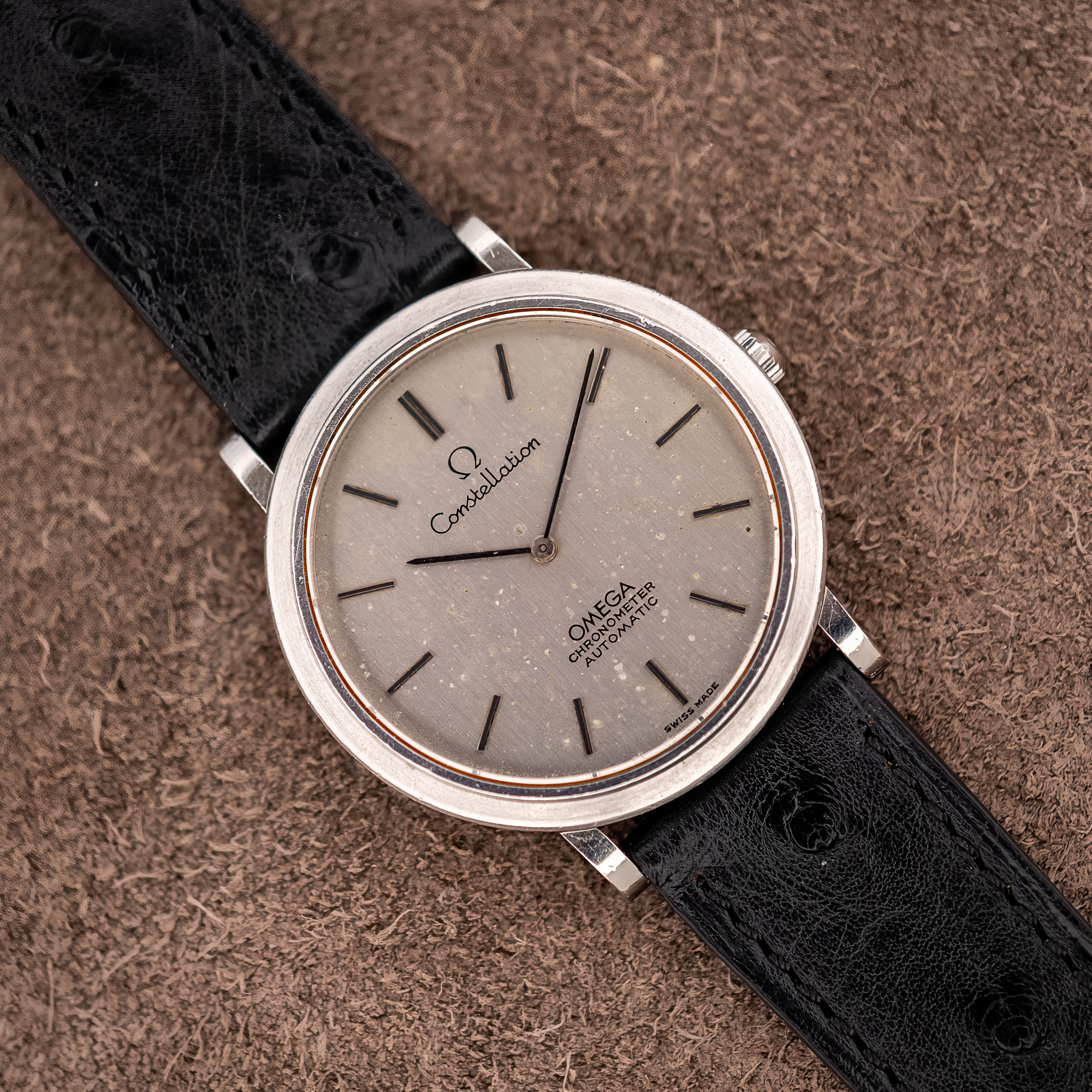
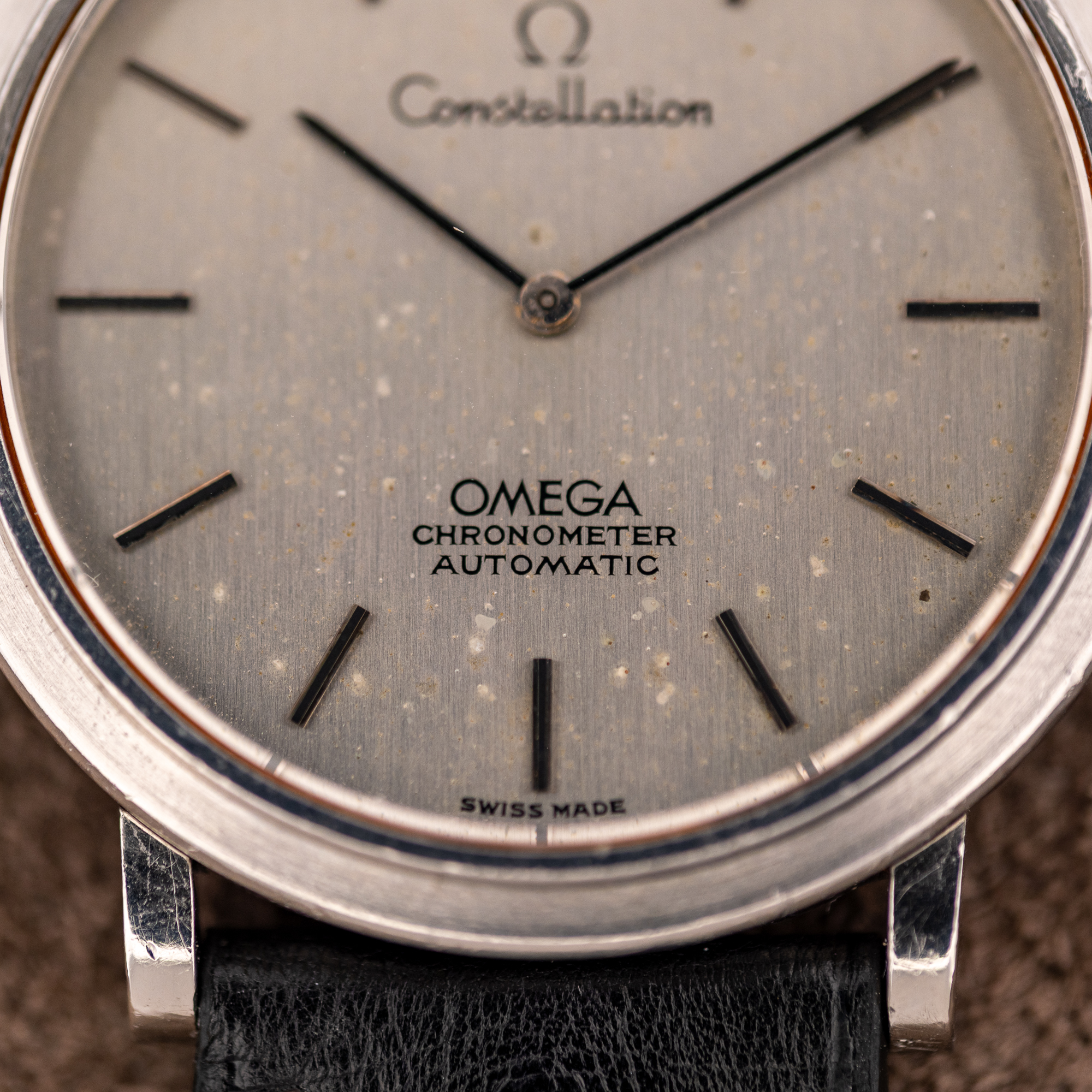
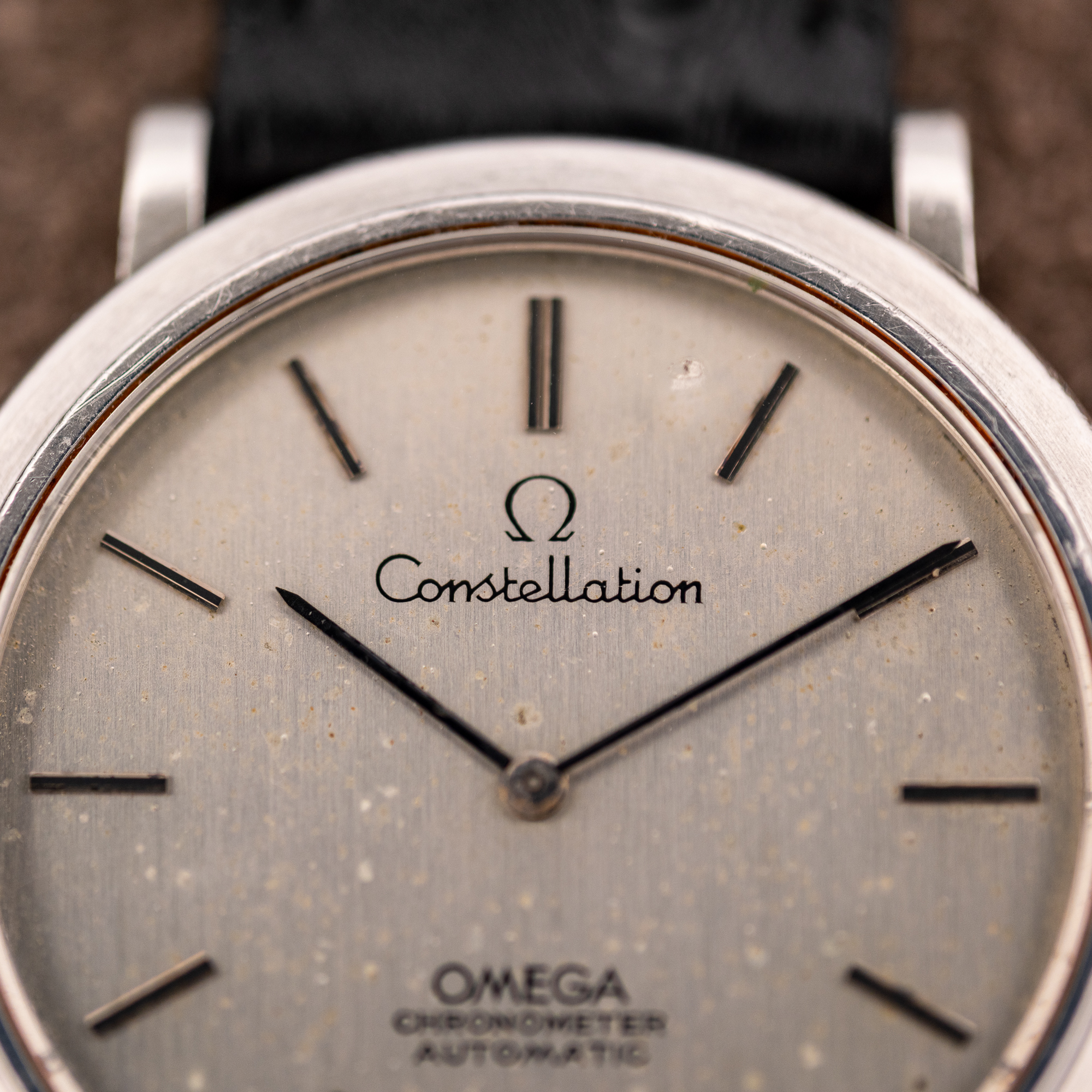
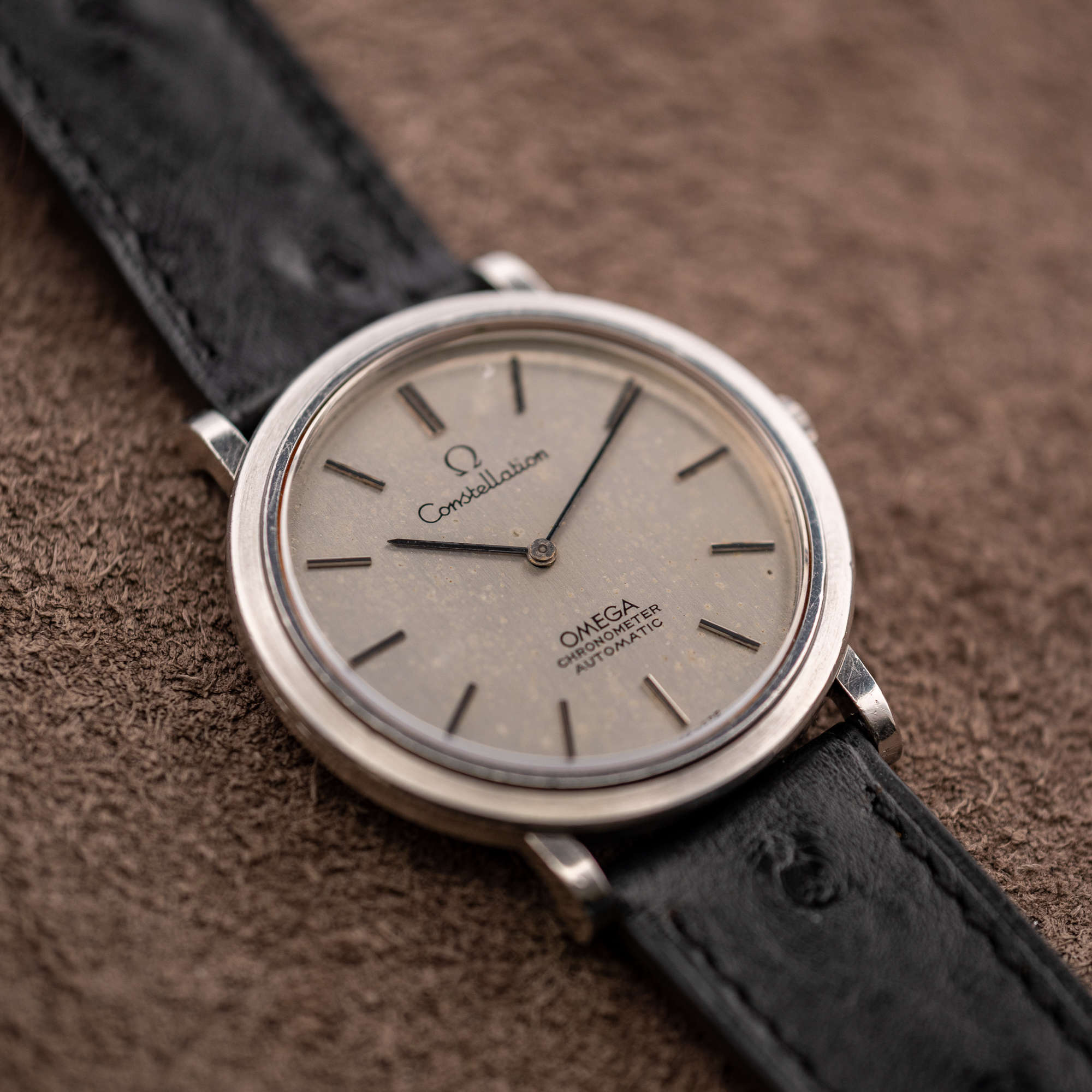
When this example was made, an Omega Constellation 712 was a watch for formal wear. Ultra-thin watches of the period were dress pieces for occasions, usually cased in precious metal, and dress designs of the day commonly left out the center seconds hand. This one keeps to that brief in stainless steel. It has two hands, no date and no star on the dial, only a vertically brushed silver field, baton markers and a doubled marker at twelve.
The caliber family began at the Rayville factory in Villeret, the old Blancpain works, which Omega’s parent group SSIH bought in 1961. Rayville’s specialty was compact calibers for ladies’ watches, and that small-movement skill, not the Blancpain name, was what SSIH was buying; the name was shelved and eventually sold off in the early 1980s. The movements were built for Omega alone and never made outside the group. Of its versions, the 712 was the chronometer grade, and the dial records it with a single word under the Omega name.
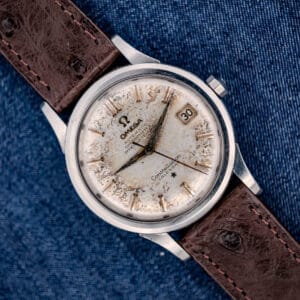
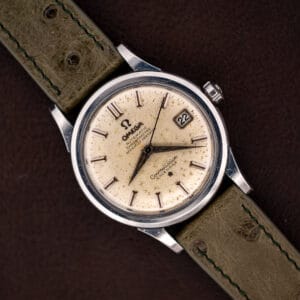
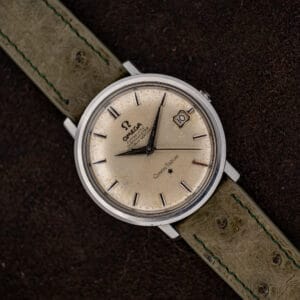
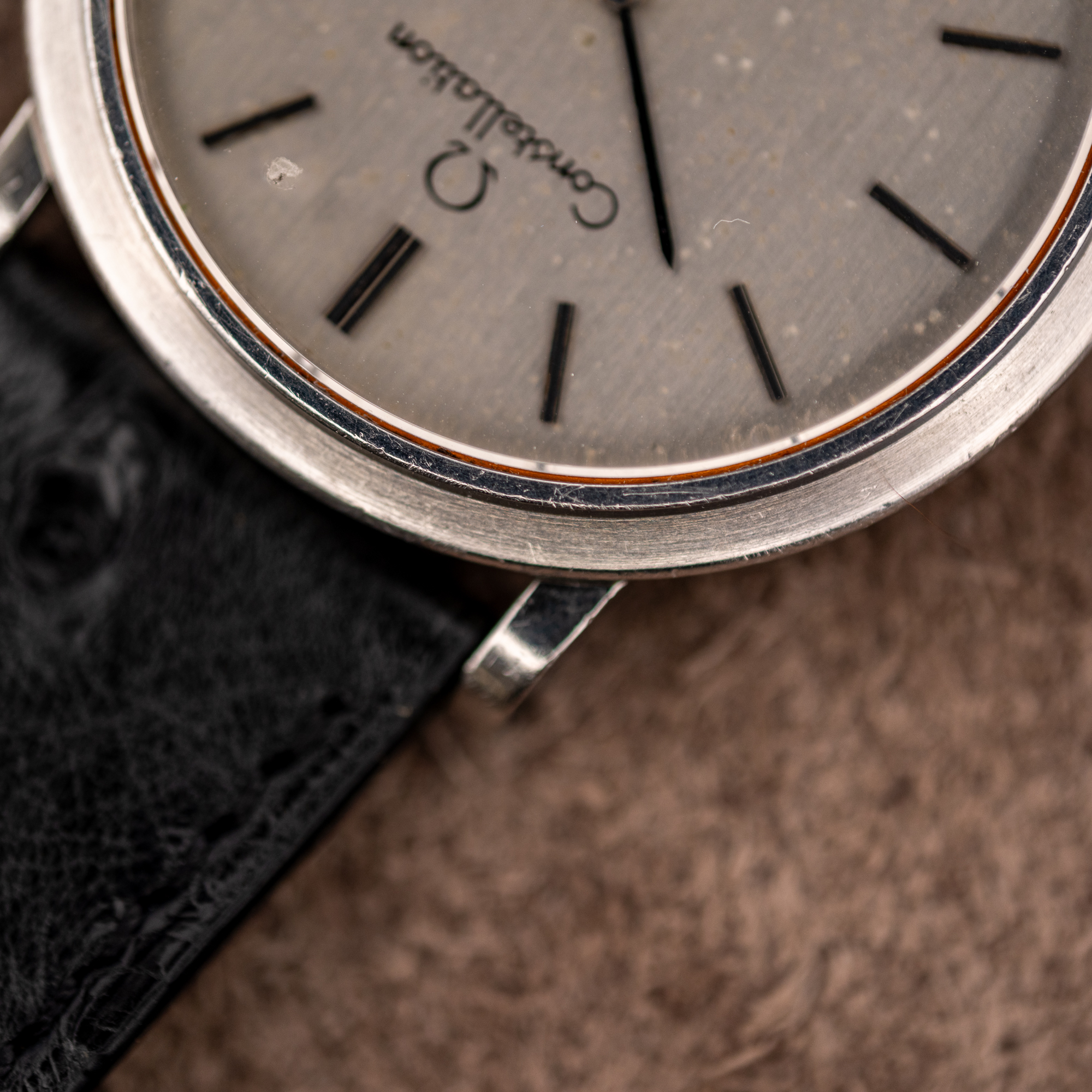
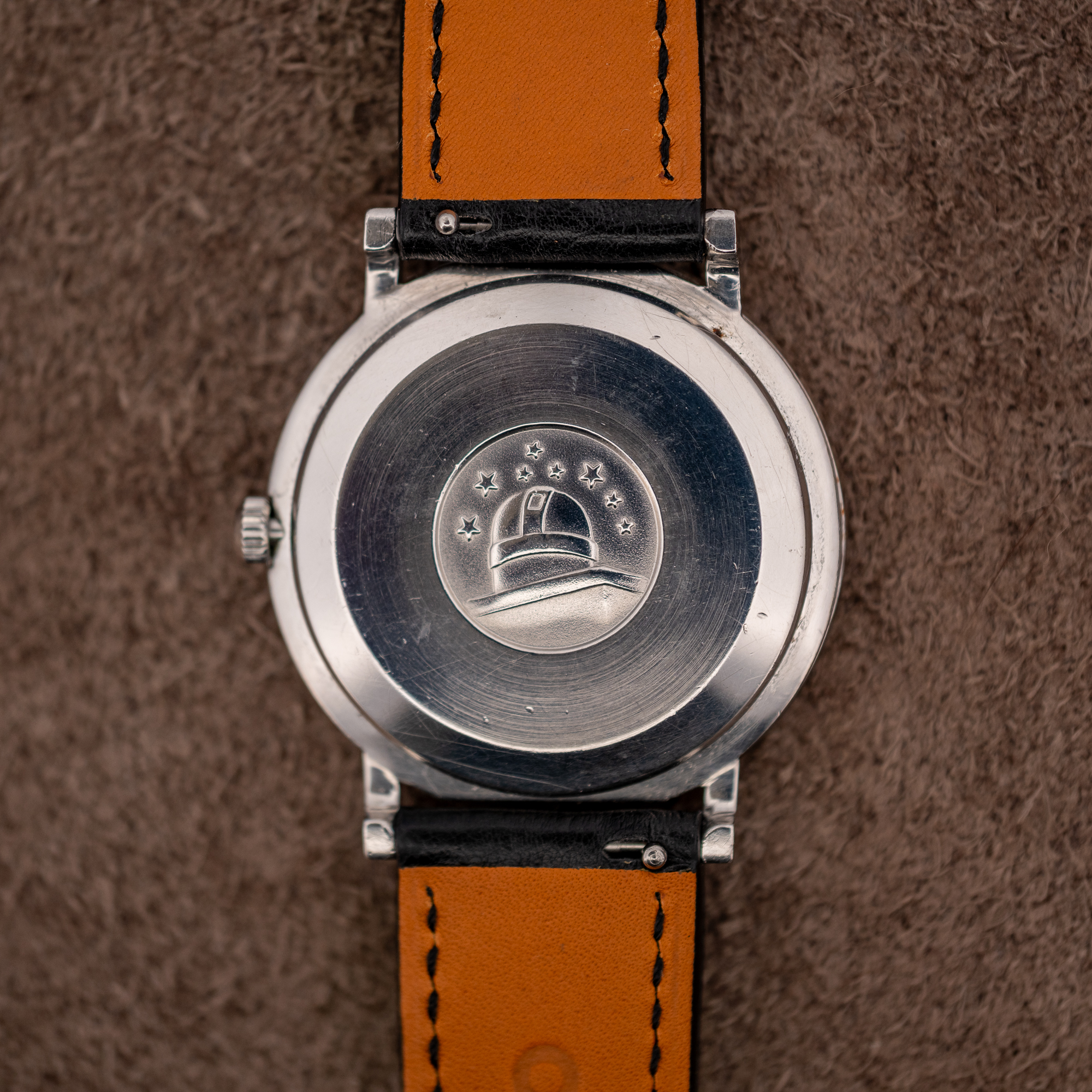
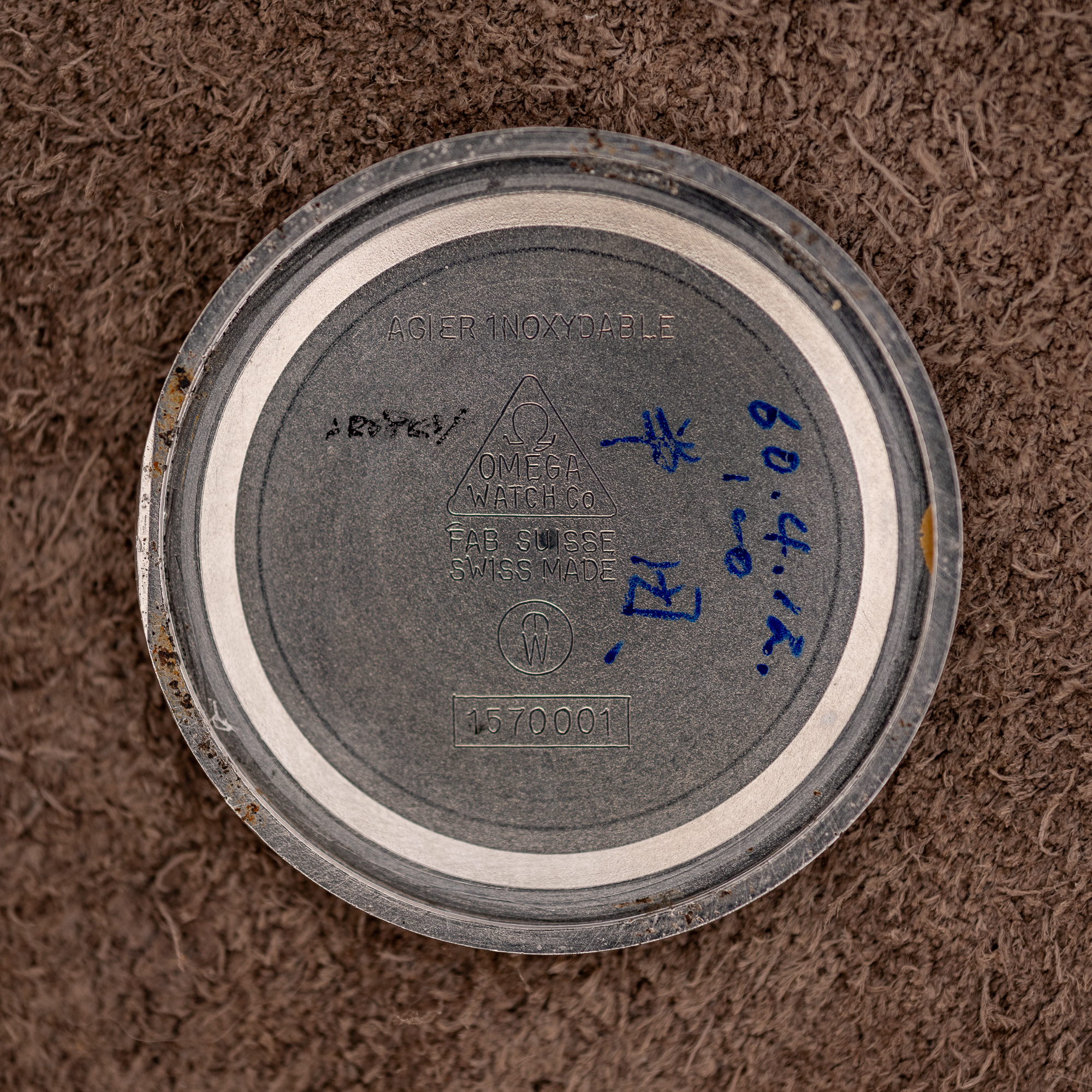
This watch’s movement is numbered 26532934, which dates it to about 1968, and the inside of the caseback is stamped 1570001, the reference set in a small box beneath the Omega marks. The outside carries the Constellation observatory with its eight stars. Pale flecks, and a few darker spots, are scattered across the brushed silver dial. Fine scratches run along the case flanks, lugs and bezel. The strap is black ostrich.
The design outlasted the dress-watch era it was made for. When Omega launched its Louis Brandt collection in the mid-1980s, it went back to this ultra-thin family as the base for perpetual calendar and moonphase models. The movement family beneath a plain two-hand dial from about 1968 ended up carrying a perpetual calendar.